Wednesday, 6 June 2012

Ajuonuma, four others bought last-minute air tickets

Five passengers, including the General Manager, Corporate Affairs, Nigerian National Petroleum Corporation, Dr. Levi Ajuonuma, who died on the Dana Air flight that crashed in Lagos on Sunday, were not originally on the passengers’ list, The PUNCH investigation has shown.

Ajuonuma and the four other victims bought the tickets of passengers that did not make it to the airport for the departure of the ill-fated aircraft. Dana Station Manager at the Nnamdi Azikiwe Airport, Abuja, Mr. Ade Kayode, confirmed that the late NNPC spokesman and the others travelled in place of those who did not make it to join the flight. Kayode said, “You know so many people buy tickets online. So there were many passengers that bought tickets online that could not show up. Their tickets were sold to passengers that wanted to travel. Levi Ajuonuma was among them. “Unfortunately I cannot give you the names of those that did not show up because they are no longer on our system.

However, any passenger that bought the ticket but could not travel can come forward for refund because they did not use their tickets.” He said the names of all the passengers that eventually travelled were put on the manifest.

When reminded that the manifest had the names of 146 passengers while the aircraft had capacity for only 140 passengers, he said that 140 passengers were adults while the remaining six were infants that travelled in company with adults.

The disclosures came amid denial by the Ministry of Aviation that the airspace was closed against the crashed plane in order to facilitate President Goodluck Jonathan’s wife’s movement on Sunday.

Meanwhile, the National Emergency Management Agency said on Tuesday that it had stopped further search for bodies at the crash site. Spokesman for NEMA in the Lagos zone, Ibrahim Farinloye, said the agency was satisfied that it had recovered all it could for the time being. He added that the stoppage would pave the way for the Accident Investigation Bureau to take over and conduct investigations into the causes of the crash and how a reoccurrence could be prevented. He said, “From our records, we have 86 males, 49 females and 12 children. We have yet to determine the sex of the remaining corpses.

Out of these 153 bodies, only 40 were identifiable; we have to do what we call Disaster Victim Identification on the rest.” Farinloye added that the corpses had been taken to the mortuary at the Lagos State University Teaching Hospital to allow their relations to have access to them for burial. He said NEMA would still be at the site to assess the level of danger that the crash posed to the community. “We are not ruling out fumigation of entire area. There will also be counselling of the victims’ relatives and we have to find a way of rehabilitating internally displaced persons,” the NEMA spokesperson said.

He added that property belonging to 24 of the victims had been identified and tagged. He said the property were bags, identification cards, BlackBerries, Ipads, laptops and foreign currencies among others.

 Farinloye explained that five families were affected in the two storey building that was hit by the plane. He said one of the flats was unoccupied. “We learnt that the tenant moved out of the apartment on Sunday morning, a few hours before the crash,” he said. Wednesday 6 June 2012 http://www.punchng.com/news/ajuonuma-four-others-bought-last-minute-air-tickets/

continue reading

Tuesday, 5 June 2012

All-out chaos engulfs Lagos neighborhood after plane crash

LAGOS — Chaos broke out in the densely-populated Lagos neighbourhood where a passenger jet crashed Sunday, as rescue workers faced heavy crowds and aggressive soldiers while trying to access smoldering wreckage. All 153 people on board the Dana Air flight were presumed dead and more were believed to have been killed on the ground after the plane plowed into the impoverished neighbourhood near the airport in the city of some 15 million. Thousands of onlookers had partially blocked access to the crash site, prompting soldiers to try to clear the area out. They used rubber whips, their fists and even threw a wood plank at those crowded around. The strong-arm tactics likely did more harm than good. Looking to evade the troops’ aggression, people took off in several directions, trampling their neighbours as they tried to avoid being crushed themselves. Some locals snaked a fire hose hoisted on their shoulders from a truck parked on the road towards the impact area. But this effort was also interrupted by the security forces, whose aggression eventually broke up the human chain. Some reacted by throwing stones at the troops, creating a crossfire of hailing rocks over the narrow street adjacent to the site. The area also plunged into all-out pandemonium when a helicopter tried to land amid the crowd, kicking up clouds of ash and light debris that again scattered people in various directions. After the crash, it appeared only a handful of rescue vehicles had managed to fight through the chaos to reach the site. People in the neighbourhood near the airport are used to seeing planes flying low overhead, but they said it was immediately clear that the Dana Air Boeing MD83 flight was imperiled. “The pilot was struggling to control it,” said Yusuf Babatunde, 26, who mimicked wings recklessly swaying from side to side when asked to describe what the plane looked like as it went down. The impact caused an immediate fire and sent people running, but they quickly returned, and within hours of the crash the roofs and balconies of the surrounding ramshackle buildings were flooded with those surveying the damage. Some, according to one 50-year-old resident, sought to gain financially from the disaster. “The looting started right away,” said Tunji Malomo, who told AFP he locked up his nearby bar as soon as he heard news of the crash. “This is busy, busy area,” said Martin Ajebayo, 38, a local who said he witnessed the plane go down. “People are living there,” he added, while gesturing to the area where the plane crashed, which locals said included a printing business, a church and a two or three story residential building. Rescue workers said several people had been pulled out alive, but few believed there would be many survivors following a high impact crash in a contained, urban area. “Nobody can rescue them,” Gift Onibo, 23, told AFP. Sunday 3 June 2012 http://www.rawstory.com/rs/2012/06/03/all-out-chaos-engulfs-lagos-neighborhood-after-plane-crash/

continue reading

Heavy rains slow search in Nigeria plane crash

LAGOS, Nigeria (AP) — Heavy seasonal rains and strong winds in Nigeria have torn through the site where a commercial airliner with 153 people onboard crashed, slowing rescue and investigation efforts. The heavy rains began Tuesday morning before dawn, flooding roads and bringing down power lines and trees in Lagos, Nigeria's largest city. Yushau Shuaib, a spokesman for Nigeria's National Emergency Management Agency, said the rains had stopped searchers from returning to the crash site near Lagos' Murtala Muhammed International Airport. Shuaib said rescuers also were worried a three-story apartment building struck by the MD-83 aircraft might collapse. The plane crashed Sunday, killing all 153 people onboard. Rescuers worry more people likely were killed on the ground. Tuesday 5 June 2012 http://www.google.com/hostednews/ap/article/ALeqM5gHmjSdl8Uk9xPfxY3zJOlzkLiLkA?docId=7c9fd5e22a454c959ee8a77504f4d508

continue reading

Lagos to conduct DNA on crash victims for identification

FOLLOWING the manner bodies of the victims of the DANA Airline plane crash was burnt beyond recognition, the Lagos State government, on Monday, said it will conduct DNA test on some of the recovered bodies for identification purposes. The development came even as the Director-General of the National Emergency Management Agency (NEMA), Alhaji Muhammad Sani-Sidi, said most of the passengers in the business class were still trapped in the topmost floor of the two-storey building hit by the aircraft. The state government said the evacuation exercise would have come to an end by the end of operations on Monday, while those not much mutilated as a result of the burnt would be taken to mortuary. Speaking at the crash site, the Chief Executive Officer of the Lagos State Emergency Management Authority (LASEMA), Dr Femi Oke-Osanyintolu, said the bodies would be taken to the Lagos State University Teaching Hospital (LASUTH) for specialised test. Also, Oke-Osanyintolu said the state government had prepared an emergency place for residents of the building at Agbowa area of Lagos. He lauded all the security agencies, including the Federal Road Safety Corps (FRSC), Nigerian Security and Civil Defence Corps (NSCDC), Red Cross, National Emergency Management Agency (NEMA), the Nigerian Police and the military, for their cooperation. While appealing to well-meaning Nigerians to cooperate with the government in the area of disaster and emergency control; the LASEMA officer declared; “We are evacuating them to LASUTH where they are going to conduct a specialized test on them. However, the residential people are being treated at the hospital. Four of them have been discharged while those who are critically ill are being treated by the state government and it is free of charge. “We want to make this place safe and as you can see, we are taking all the debris to another place. So far so good, the operation is safe and well coordinated with little challenges, but we have been able to conquer that. I’m the incident commander, we want to save lives and properties here.” The NEMA boss who also confirmed the movement of the bodies to LASUTH, however, most of the economy passengers were burnt beyond recognition. He could not however give specific numbers of the recovered bodies in the crash site, but explained that substantial bodies had been recovered by all the security agencies at the site. “The exercise will come to an end today (yesterday) because we have made a lot of progress so far. As you can see, all the concerned agencies are all here, but the violation of the accident scene by the residence is a bad a bad thing. It is the responsibility of the media to help enlighten and inform these people about their role in a situation like this. it is a collective responsibility.” Besides, the Comptroller General of Fire Service, Mr. Olusegun James said that his men have been up to the task in the recovering of the bodies through the dousing of the inferno, which enveloped the whole building. “All the security officers on ground are carrying out the recovery of the dead bodies. Although, it is taking them time to do it and I’m sure they will soon be through with it. More so, when there is no serious life that is being threatened for now. “I won’t be able to give you the numbers, but you know a lot of reports have gone that all the passengers of the plane were said to have died. So, I think they are trying to recover all the bodies and identify them too. “I think by the end of today (Monday), we should have come to a close of the whole thing. The corpses would be taken to the mortuaries and the one that are not totally mutilated would be taken by their relatives.” Tuesday 5 June 2012 http://tribune.com.ng/index.php/news/42049-lagos-to-conduct-dna-on-crash-victims-for-identification

continue reading

SAR efforts end, while Sukhoi crash investigation begins

Jakarta (ANTARA News) - The search and rescue efforts with regard to the Sukhoi Superjet 100 victims` remains and the ill-fated aircraft`s wreckage were declared to be completed, after the finding of the plane`s flight data recorder (FDR) on May 30 and the transferring of the victims` remains to their families on May 23, 2012. "As we have found the FDR, I declare that the evacuation process is completed. Concerning the plane`s debris, I leave it to the Sukhoi company," the chief of the National Search and Rescue Agency (Basarnas), Vice Marshal Daryatmo, stated at Halim Perdanakusuma air force base, East Jakarta, on May 31, 2012. The Russian-made SSJ-100 crashed into Mount Salak, between Sukabumi and Bogor districts, West Java, on May 9, 2012, during a demonstration flight. All the 45 passengers and crew members on board the plane were killed in the accident. The terrain of the crash site was extremely difficult. The plane had hit a steep cliff and its wreckage and the victims` remains were scattered across a deep ravine of Mount Salak. After painstaking search for the victims` remains and reconstruction of their body parts, Transportation Minister EE Mangindaan led a ceremony to symbolically hand over the victims` remains to the respective families at Halim Perdanakusuma airport in Jakarta, two weeks after the air crash. The minister, on behalf of the Indonesian government, expressed his deepest condolences to the victims` families. Mangindaan also conveyed his appreciation to everyone, including the military, students, nature lovers and locals, who helped find and recover the victims. He said the evacuation of the crash victims on the slopes of Mount Salak took some time because the location was very difficult to reach and the terrain had an inclination of about 85 degrees, not to mention the adverse weather conditions. "We also wish to express our appreciation to the identification team for their ward work in obtaining data of the victims` fingerprints, DNA, teeth, and other relevant information," Mangindaan added. However, several days later, the public was rather surprised when 13 residents of Cicurug sub-district, Sukabumi district, claimed to have found more remains and several identity cards of the SSJ-100 victims at the area around the crash scene. "The villagers, who are members of the Non-Timber Forest Product Society (AMPHHBKI`s Sukabumi chapter), discovered an intact body of a Caucasian man, believed to be a Russian crew member, several body parts, as well as several business cards, ID cards (KTP), and flight ID cards," AMPHHBKI Sukabumi branch chairman Junaidi Abdullah told ANTARA on May 28. "We found the remains during our week-long stay near the location of the air crash in Mount Salak, to be exact, at about 500-700 meters from the crash site," he said. On the first day of their stay (May 20), the group spotted body parts such as fingers and hands around the location, and several days later, they discovered an intact human body and several identity cards. The villagers did not evacuate the remains, but they collected the ID cards, because they went down to the ravine not for evacuation, but as part of their routine activities. After receiving the news from the local villagers, a joint SAR team was dispatched to the crash site for further evacuation. "The search and evacuation of the remains of the Sukhoi victims is led by Sukabumi`s district military command 0607, Captain Sanusi, who will be assisted by 29 personnel," the Commander of the military resorts, Colonel AM Putranto, told reporters on May 29. The SAR team - comprising personnel from Indonesia`s national defense forces, the national police, the mountain and jungle explorer association, as well as several residents - first focused on the location where some residents of Cicurug sub-district found the body parts of the victims. Putranto explained the remains and belongings might have been washed away by a mudslide to another location, thanks to the downpour that occurred when the national SAR team ceased its operations. The team found more body parts and carried those in two body bags to Keramat Jati Police Hospital for identification by Indonesia's Disaster Victim Identification (DVI) team. "We have received two body bags containing more remains for identification," Executive Director of DVI Indonesia Senior Commissioner Anton Castilani said on May 30. He explained that since the body parts were almost decomposed, it would take a long time to identify them. The DVI team had earlier completed the identification process of the victims` body parts, which had arrived in 30 body bags. After the finding of more body parts, local residents of Cijeruk found the FDR at the crash site on Mount Salak, on May 30, 2012. The plane`s cockpit voice recorder (CVR) was found on May 15, 2012. The FDR and CDR, which constitute the plane`s black box , are important because they may hold vital clues about what really happened on the afternoon of May 9, 2012. Daryatmo previously said although the joint Indonesian and Russian team had officially stopped the search operation on May 21, a small team of the agency was still looking for the FDR. "The radius of the search has been expanded at the crash site. The FDR is small, weighing only around 4.5 kg. It might be somewhere inside the bushes. Although the terrain is very difficult, we don`t give up," Daryatmo said at a hearing in the parliament. When the nine Cijeruk residents found the FDR, the device was buried in a location around 20 meters away from the plane`s tail. They later handed it over to the joint SAR team, which was led by Colonel AM Putranto of the Suryakencana Military Command 061. The Basarnas chief handed over the FDR to the head of the National Committee for Transportation Safety (KNKT), Tatang Kurniadi. Tatang said KNKT already had the device needed to read the FDR`s data, which would include information about the plane`s speed and altitude. It would take around three to four hours to open the FDR, while its data analysis process would require around 20 hours, he added. Indonesia`s House of Representatives (DPR RI`s Commission V), summoned on May 28, among others, Minister of Transportation EE Mangindaan, the Basarnas chief, the KNKT chief, the Meteorology, Climatology, and Geophysics Agency (BMKG), PT Angkasa Pura II, and PT Trimarga Rekatama to a meeting regarding the air accident. Minister Mangindaan said Sukhoi`s demonstration flight was conducted after the necessary permits were obtained, which include Diplomatic Clearance from the Foreign Affairs Ministry (on April 20, 2012), the Security Clearance from the National Defense Forces (TNI), and the Flight Clearance from the Air Transportation Directorate General (on May 7, 2012) with regard to its route (Saigon-Halim Perdana Kusuma-Vientiane). The Commission demanded faster results from the investigation of the accident, in which 35 Indonesians, eight Russians, one Frenchman and an American were killed. Commission Chairman Yasti Soepredjo Mokoagow and Deputy Chairman Mulyadi urged the KNKT chief to announce the results of the investigation at a press conference within the next six months. In his response, Tatang explained the accident report could not be done in a rush because the KNKT`s credibility was at stake. He asked the public to be patient and wait for the investigation to be completed. The Parliament has planned to set up a working group to investigate into the cause of the air crash. The group will also monitor the insurance compensation payment for the victims` families and work towards improved regulations in the aviation industry in order to minimize accidents. (*) Tuesday 5 June 2012 http://www.antaratv.com/en/news/82681/sar-efforts-end-while-sukhoi-crash-investigation-begins

continue reading

Two dead, 32 displaced as mudslide sweeps through Sironko

Residents say unusual torrential rains pounded the area for about three hours, destroying seven houses, gardens and animals and burying two people under the rubble. The Bugimwera LCI chairman, Mr Stephen Makwasi, identified the dead as Francis Wamboga, 42, and Zita Nafuna, 72, whom he said were reportedly in their house at the time of the disaster. Rescue measures The Sironko RDC, Mr Hussein Matanda, said from the assessment carried out, about 130 homesteads also need to be evacuated from the areas of Bugimwera and Gombe at the slopes of Mt. Elgon as the rain intensifies. “It is sad that the two people who were buried under the rubble were in their house at about 3am when the mudslides rolled down. Our appeal is that people be evacuated from the slopes of Mt. Elgon to the lowlands for safety,” Mr Matanda said yesterday. Ms Diana Nandawula, the eastern regional police spokesperson, confirmed the deaths and asked residents to relocate. The Uganda Wildlife Authority warden in-charge of tourism, Mr Richard Matanda, said the disasters at the slopes of Mt. Elgon have become common because of the growing population which is putting pressure on the land. He revealed that most people living at the slopes of Mt. Elgon have cut down trees on the mountains and destroyed vegetation as they search for land to cultivate and settle. This is the third time in the recent past that mudslides are occurring in the Mt. Elgon area. In March 2010, a mudslide buried about 355 people in Bududa District. While in September another mudslide struck Bulambuli and killed about 32 people, a disaster that forced the government to relocate residents around the Mt. Elgon area to Kiryandongo, in Western Uganda. Environment experts have warned that there is a growing crack across the Mt. Elgon that has since deepened to 30 centimetres, a sign of a great damage for the settlers. Sironko LC5 Chairman James Nabende says the heavy rain is likely to cause a lot of disasters in the district because of the poor cultivation methods that have left the ground bare. Monday 4 June 2012 http://in2eastafrica.net/two-dead-32-displaced-as-mudslide-sweeps-through-sironko/

continue reading

EULEX to Exhume Suspected Mass Grave in Mitrovica

EULEX is waiting for a green light from a court in order to start exhuming a suspected mass grave in northern Kosovo, after local residents found two bodies during construction works. Mortal remains of at least two people were discovered during construction works at a private property in the southern part of Mitrovica, near former Yugoslav Army barracks. EU rule of law mission to Kosovo, EULEX, experts from the Department of Forensic Medicine, together with investigators of the War Crimes Investigation Unit, visited the site in Mitrovica on Saturday. Local inhabitants and associations of the families of missing persons, suspect that the two bodies found wrapped up in a blanket at the site, are victims of the Kosovo war. Blerim Krasniqi, EULEX spokesperson, told Balkan Insight on Monday that EULEX is waiting for the detailed analysis. “Bone samples were taken in order to determine if they are of forensic interest, meaning if they belong to people who died between 1 January 1998 – 31 December 2000, as a consequence of the 1998-1999 war in Kosovo,” confirmed Krasniqi. The period is determined by the Kosovo Law on Missing Persons, based on which the Department of Forensics Medicine operates. Six months ago, close to the same area in the vicinity of the former Yugoslav Army barracks, 55 bodies were recovered. But the forensic teams found that the remains are from World War II, and not the 1999 Kosovo-Serbia war. Some 1,400 victims of the Kosovo war are still missing. The associations of families of missing persons and Pristina authorities have recently called upon Belgrade to reveal what happened to their loved ones who went missing during the 1999 war, who are presumed to have been killed by the Serbian security forces. The same call has been made to the international community to urge Serbia to reveal the information. Monday 4 June 2012 http://www.balkaninsight.com/en/article/eulex-to-exhume-suspected-mass-grave-in-mitrovica

continue reading

Mass grave discovered in southern Colombia

Colombian authorities discovered at least 300 unidentified body remains in what they believe to be a graveyard belonging to the FARC in the southern department of Caqueta, independent newspaper La Nacion reported Monday. The mass grave was discovered May 30, when a committee from the Prosecutor General's Office found at least 100 graves, each containing the remains of three bodies. The site, in Caรฑo Gafas, in the jurisdiction of Cartagena del Chaira, is the largest of its kind to ever be discovered in Colombia. Authorities believe there are likely many more mass graves in the department which they have been unable to search thoroughly due to the high risk of attack. The Prosecutor's Office sent in a team anthropologists, photographers, surveyors and field assistants to try and identify the bodies which they believe are former FARC guerrillas killed in combat, government soldiers and civilians. Exhumation will likely continue for many weeks. The authorities assume that at least 300 unidentified remains rest in a land located in Caรฑo Eyeglasses jurisdiction of Cartagena del Chaira. THE NATION, Florence Staff Attorney General's Office, managed to reach Caรฑo Glasses in Cartagena del Chaira (Caquetรก), where they say that there may be more than 300 bodies buried in mass graves. Glasses Cano, a point located within the vast territory of the municipality of Cartagena del Chaira, has been one of the closed areas for the authorities to carry out exhumation of remains of missing persons. However, on 30 May, a committee of the Attorney General's Office was able to enter the site and check what was suspected by intelligence information, that were located on the site at least a hundred mass graves are presumed dozens missing. According to judicial sources, the authorities have also identified various points in the jurisdiction of the Union Peneya, Milan, Cartagena del Chaira, El Doncello, Paujil, Puerto Rico, San Vicente del Caguan or Solano, where it is virtually impossible to enter at the risk of an attack of the FARC. However, for the search committee from entering to Caรฑo glasses are required at least 2 or 3 groups of counter-insurgency, backed by aircraft and helicopters, to move to the site that has been called the largest mass grave from the FARC . In August 2010, Cano Glasses, army units were heavy clashes with the FARC and managed to recover the area. The operations were in charge of Counterinsurgency Battalion 25 'Hรฉroes de Paya'. The place has strong gang presence Ismael Mejia "of the FARC, which is part of the Southern Bloc of the FARC. Meanwhile, it was found that six bodies have been exhumed from two mass graves. THE NATION was established that the site would be at least 100 graves in which they would be mortal remains of three each. Thus, it is expected that the operation later exhumation at least every week. This finding has been called the largest mass grave of the FARC, above which was located in the Union Peneya and where lay the remains of 'El Mocho Cesar. However, it would be different because the cases in Caรฑo glasses have buried the guerrillas not only guerrillas, but also soldiers and civilians. In this sense, military sources said that the bodies located in Caรฑo glasses belong to guerrillas, soldiers and civilians "executed" by the FARC or killed in action. Similarly, the authorities are handling the hypothesis that within the nasal military bodies would also disappeared in the guerrilla takeover of El Billar Caquetรก, which occurred in 1998 and where 64 soldiers were killed, 19 wounded and 43 kidnapped. To determine with certainty what would be the identities of the missing, the prosecution and Glasses Cano sent a team of anthropologists, photographers, surveyors and field assistants escorted by command of Joint Task Force Omega, with strong presence in the area. Although Cano glasses, has been called the largest mass grave of the FARC, not forget that there are still closed areas in the department to reach the authorities to verify intelligence reports that account for the existence of more cemeteries underground, where they would be missing the last decades of arduous military confrontation in the Caquetรก. Monday 4 June 2012 http://colombiareports.com/colombia-news/news/24398-farc-cemetery-discovered-in-souther-colombia.html http://www.lanacion.com.co/2012/06/04/descubren-cementerio-de-las-farc/

continue reading

Monday, 4 June 2012

25 killed as bus falls into ravine in N. Pakistan

At least 25 people were killed and over 60 others injured when a passenger bus fell into a deep ravine in Pakistan's northern city of Kahuta in the wee hours of Monday, police said. District civil administrator Saqib Zafar said that the passenger bus with over 100 wedding guests on board plunged in Nurh area of Kahuta, a hilly area at about 33 km away from the country's capital of Islamabad. He said that driver of the ill-fated bus lost control of the vehicle at a sharp turn due to over speeding. The driver jumped out of the bus and police arrested him when he was trying to escape from the accident site, he said. The accident happened at midnight when the bus was on its way back to northern city of Chakwal after attending a wedding ceremony in Kahuta. Eye witnesses said that at least seven women and 4 children were also among the killed. Over 40 injured people including women and kids have been shifted to a hospital in Kahuta and over 20 critically inured passengers were sent to District headquarters hospital Rawalpindi. Hospital administration has said that death toll may further rise as at least 26 people were in critical condition. Rescue work is still underway and more bodies could be recovered from the site. Talking to media, Deputy Commissioner Rawalpindi Imdadullah Bosal has said that rescue teams were facing difficulties in the operation due to the insufficient facilities. "Emergency has been declared in various hospitals in Kahuta and Islamabad," he said, adding that the army was also called to carry out rescue operation. Monday 4 June 2012 http://www.china.org.cn/world/2012-06/04/content_25555929.htm

continue reading

Crash: 109 Corpses So Far Recovered, Says LASEMA

Dr Femi Oke-Osanyintolu, the General Manager, Lagos State Emergency Management Agency, on Monday said that 109 victims had so far been recovered from the crashed Dana Air plane. The plane crashed on Sunday at the Iju-Ishaga area of Lagos State, killing all 153 people on board. The number of those killed on the ground has yet to be determined. Oke-Osanyintolu told journalists at the scene of the crash that 25 of the bodies were still intact while the remaining ones were burnt beyond recognition. He said that DNA tests on the corpses had been started by the Lagos State Ministry of Health to ascertain the identities of the burnt persons. The general manager said that 15 families displaced by the crash had been taken to the state relief camp at Agbowa-Ikosi in Epe, Lagos State. He also said that counselling centres had been established by the state government for the bereaved families. “The major challenge we had yesterday was crowd control which hindered our gaining access to the scene but with the presence of security personnel, the evacuation has been easy,” he said. “It is a national disaster; we urge the people to stay away to avoid more danger as the affected buildings will be pulled down. “The place has to be epidemic-free as it is a residential area,” he said. Monday 4 June 2012 http://newsnet.com.ng/newsnet/news/04/06/crash-109-corpses-so-far-recovered-says-lasema

continue reading

Plane crashes in Nigeria, all 153 aboard dead

LAGOS, Nigeria - Police dogs sniffed for dead bodies Monday in the rubble of buildings destroyed when an airliner crashed into them, killing all 153 aboard, as cranes lifted away heavy pieces of debris in the grisly aftermath of Nigeria's worst air disaster in nearly two decades. A Nigeria Red Cross report said 110 bodies had been recovered, with more being dug out from the rubble. A U.S. official said American citizens had been aboard the flight. The Dana Air jetliner smashed into businesses and crowded apartment buildings near Lagos' Murtala Muhammed International Airport, the worst air disaster in Nigeria in nearly two decades. The airline said an investigation had begun into the cause of Sunday's crash. The aircraft's black box recorders where flight data is stored had still not been found by Monday, said Harold Demuren, the director-general of the Nigerian Civil Aviation Authority. In Washington, a State Department official confirmed that there were "a number" of American citizens on board, most, if not all, of whom were dual U.S.-Nigerian nationals. The official said consular officials in Lagos, Abuja and Washington were still reviewing the flight manifest to determine exactly how many Americans were on the plane. The official spoke on condition of anonymity because he was not authorized to discuss the matter publicly. Rescue officials said they fear many more people may have perished on the ground. "The fear is that since it happened in a residential area, there may have been many people killed," said Yushau Shuaib, a spokesman for Nigeria's National Emergency Management Agency. The twin-engine jet appeared to belly-flop into an apartment building in a densely-populated suburb of Lagos close to Murtala Muhammed International Airport, reports Tony Guida. The plane tore through roofs, sheared a mango tree and rammed into a woodworking studio, a printing press and at least two apartment buildings before stopping. The plane was heading to Lagos from Abuja, the capital, when it went down. A white, noxious cloud rose from the crash site that burned onlookers' eye. Pieces of the plane were scattered around the muddy ground. Thousands of residents swarmed the smoking ruins taking cell phone pictures. The crowd was so large that ambulances, sirens wailing, could not get through. A Nigeria Red Cross report said that 48 bodies had been recovered, with more being dug out from the rubble. Dozens of residents pitched in to drag a fire hose to the crash site. The dead included at least four Chinese citizens, the official Chinese news agency Xinhua reported late Sunday, citing Chinese diplomats in Nigeria. Officials at the Chinese embassy in Nigeria could not be reached for comment by the AP. Two of the crash victims were Lebanese, according to state-run Lebanon's National News Agency. The NNA identified them as Nadim Chediac, an architect who has a Lebanese father and Nigerian mother, and Roger Awwad, an investor. In the wake of the crash, Nigeria's president has declared 3 days of national mourning. On Monday morning the debris still smoldered. Some people wore masks to try and protect themselves from the stench of the dead, as police with cadaver dogs searched for bodies inside the wreckage. Overnight officials had brought in a large crane from a local construction company to lift pieces of debris away, and blow torches to cut through what remains of the plane. Using the crane rescue workers lifted the tail of the aircraft; the metal shrieked as it was raised skyward and then dropped down. Nigerian President Goodluck Jonathan spent about 20 minutes looking at the wreckage with federal lawmakers and said the crash was a setback to Nigeria's growing aviation industry. "We will make sure this will not repeat itself in this country," he said, a pledge that will be hard to keep in a nation with a history of major passenger plane crashes in the last 20 years. The cause of the crash remained unclear. The pilots radioed to the Lagos control tower just before the crash, reporting engine trouble, a military official said. The official spoke on condition of anonymity as he was not authorized to speak to journalists. Demuren said the Nigerian registration number of the Boeing MD-83 was 5NRAM. Aviation databases show the plane was exported to Nigeria in early 2009. It was first delivered in 1990 with the U.S. registration number N944AS to Alaska Airlines and it suffered two minor incidents while in the Seattle-based airline's service, according to databases of the Federal Aviation Administration and the Aviation Safety Network. On Nov. 2, 2002, the plane made an emergency diversion due to smoke and electrical smell in the cabin, and on Aug. 20, 2006, the plane was evacuated after landing at Long Beach, Calif., because of smoke in the passenger cabin. Boeing said in a statement on its website that the company is ready to provide technical assistance to the Civil Aviation Authority on Nigeria through the U.S. National Transportation Safety Board. Monday 4 June 2012 http://www.cbsnews.com/8301-202_162-57446477/fears-of-on-ground-deaths-in-nigeria-plane-crash/

continue reading

Sunday, 3 June 2012

10 killed in cargo plane crash in Ghana's capital

ACCRA – Grieving family members gathered at a morgue in Ghana’s capital Accra on Sunday after a cargo plane overshot an airport runway and crashed into a passenger bus, killing at least 10 people. The four crew members from the Boeing 727 Allied Air cargo plane survived Saturday night’s accident, and Ghanaian President John Atta Mills visited at least two of them at the clinic where they were being treated. “I pray that all of you have survived and wish you speedy recovery,” Mills said, but did not speak directly to reporters. One witness reported seeing the plane come down and hit the bus, killing those inside. "I closed from work, walking home in the rain, only to see the plane falling and people in the Benz bus crushed to death," said Kofi Anor. A senior military officer said the plane crash-landed and also spoke of 10 dead. The bus was severely damaged, while the plane's wings and tail had broken off from its body. The bodies of those killed were taken to a morgue at a nearby military hospital where a small crowd had begun to gather trying to identify the dead, an AFP reporter said. Some at the morgue cried out, fearing that their relatives were among those killed, but they declined to talk to reporters. The plane crashed in an area just outside a stadium, near the airport and a military base. It did not appear to strike any houses, and scores of people gathered in the area seeking to get a view of the crash. At a military hospital morgue where the bodies of victims had been taken, family members gathered to identify remains and spoke of their grief. “My life has been destroyed,” a teary-eyed Zenab Ayesha, the wife of one of the victims, told AFP. “He was my husband, and the breadwinner of the family is gone.” She said she heard from a friend that her husband was among the dead. “I was waiting for him to come back from work and he did not show up,” Ayesha said. Fred Aneba, who was at the morgue to identify his 27-year-old brother, called his death “a disaster for my family.” “How will I communicate the death of my brother to our 80-year-old mother? I have lost my only brother,” he said. The government meanwhile ordered the creation of a committee to investigate the crash, which saw the cargo plane barrel into a minibus in an area near the airport in the capital. The flight operated by Allied Air, a Nigerian-based firm, had left the Nigerian economic capital Lagos before attempting to land in Accra. The crash left the minibus destroyed and the plane badly damaged, though its body remained largely intact, allowing the crew members to escape. Ghanaian police on Sunday sought to control hundreds of residents converging on the site of the crash to gape at the badly damaged bus as well as the plane’s wing and tail, which had broken off from the body. Sirens blared as the police tried to contain the chaos. “I have never seen anything like this in my life before,” John Asiedu, one of the onlookers, told AFP. Ghana’s Vice President John Dramani Mahama told reporters at the airport in the hours after the crash that a thorough investigation would be carried out. “No early conclusions should be drawn,” he said before heading toward the scene of the accident. “We should allow investigations to arrive at the actual cause of the accident. But I can assure Ghanaians that the situation is under control.” A person who answered at a number listed for Allied Air in the Nigerian oil hub of Port Harcourt identified the company as Nigerian-owned but said only officials at the Lagos office could comment on the crash. Repeated calls to the company’s other listed numbers have gone unanswered. Tunji Oketunbi of Nigeria’s Accident Investigations Bureau described Allied Air as a small Nigerian cargo airline but declined to comment on the crash. Ghana’s airport operator, Ghana Airports Company Limited, said operations had returned to normal after the crash and that flights were continuing as scheduled. Kofi Kportufe, head of Ghana’s national disaster management agency, applauded the response of the emergency services. “We are grateful for the military (and) fire service for the quick response which averted further disaster,” he said. “We want to assure Ghanaians and the entire world that everything is under control. There’s no cause for alarm.” Ghana, a west African nation of some 24 million people, is not known to have had any recent plane crashes. 03 June 2012 http://www.nation.com.pk/pakistan-news-newspaper-daily-english-online/international/03-Jun-2012/10-killed-in-cargo-plane-crash-in-ghanas-capital

continue reading

Wednesday, 30 May 2012

Italian quake toll rises to 17, last victim found

MIRANDOLA, Italy - Italian rescue workers removed the last earthquake victim from the rubble Wednesday, bringing the death toll to 17 as the government approved measures to rebuild the quake-hit area so crucial to Italy's economic health.

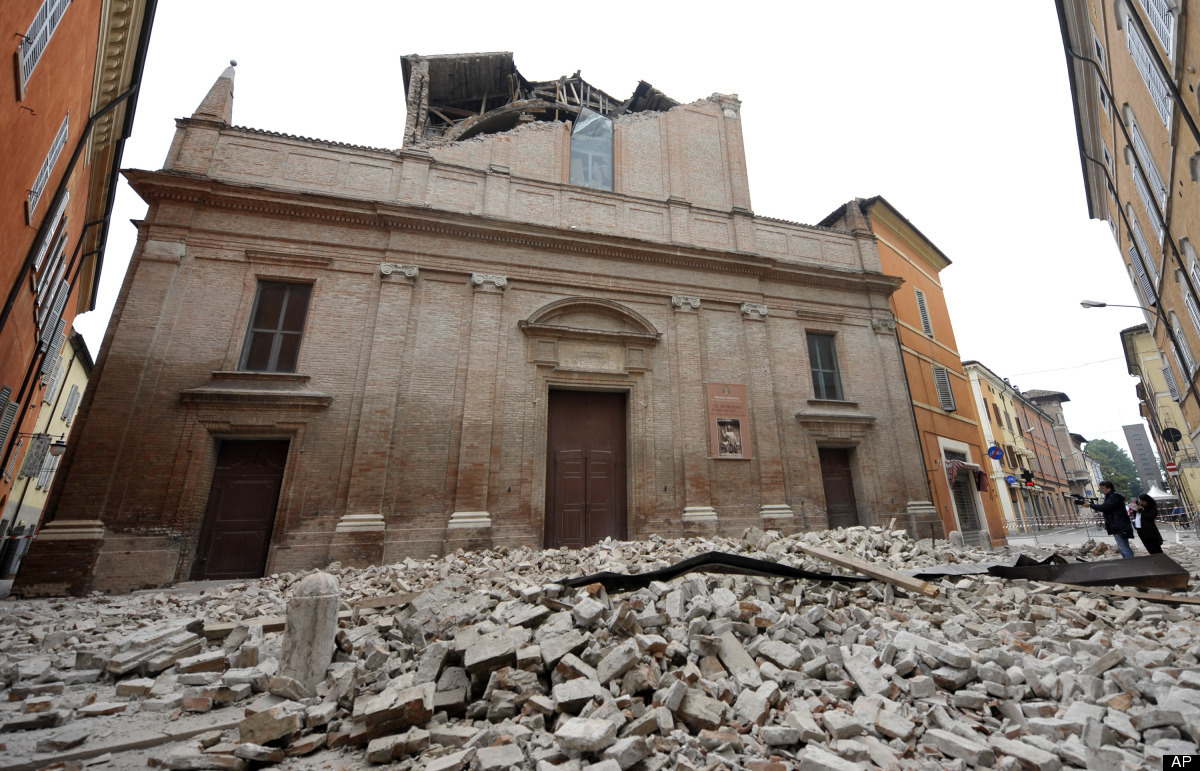
The magnitude 5.8 temblor north of Bologna on Tuesday felled old buildings and new factories and warehouses alike, many of them already weakened by a stronger quake May 20 that measured 6.0 and killed seven people.

In both quakes, the death toll was disproportionately workers toiling in factories, leading to some questions about Italy's building codes or possible corruption. "I remember with sorrow the deaths in Emilia, who died while working, mostly workers but also entrepreneurs," Interior Minister Anna Maria Cancellieri said in Rome.

Premier Mario Monti has promised the government would do whatever is necessary to rebuild the region.

On Wednesday, the government approved measures, including raising the price of gas by .02 cents a liter, to begin the reconstruction of homes, businesses and historic structures, including many churches, in the stricken area.

 Crews on Wednesday pulled the last body from the rubble of a factory in the town of Medolla. Three others also died in the structure.

Civil Protection authorities in Rome say no one else is known to be missing. The quake, which also injured some 350 people, dealt another blow to one of the country's most productive regions at a time when Italy is struggling to restart its anemic economy amid Europe's debt crisis.

Italy's economic growth has been stagnant for at least a decade and the economy is forecast to contract by 1.2 percent this year.

 The area encompassing the northern cities of Modena, Mantua and Bologna is prized for its super car production, churning out Ferraris, Maseratis and Lamborghinis; its world-famous Parmesan cheese, and less well-known but critical to the economy - its machinery companies. The ground continued to shake through the night, rattling the nerves of residents.

Many spent the night in tent camps or their cars, too afraid to sleep at home. In the tent camp, residents had basic needs met but carried profound scars. "I had a psychological breakdown," said Annalisa Caiazzo, 34, from Mirandola near Modena as she began her day in a makeshift tent camp. "After so many aftershocks, I did not expect that everything would have restarted again. We are all collapsed."

 Civil protection coordinator Carmine Lizza said counselors were on hand to help rattled residents who have lived through two terrifying quakes in two weeks in an area not considered particularly quake-prone. "They will need weeks to recover, because the earthquake is a deep wound," Lizza said.

Wednesday, 30 May 2012

http://www.heraldtribune.com/article/20120530/API/1205300617?p=2&tc=pg

continue reading

Tuesday, 29 May 2012

At least ten killed in 5.8-magnitude earthquake in Italy

MILAN, Italy -- An earthquake struck northern Italy on Tuesday, killing at least 10 people, damaging buildings and spreading panic among thousands of residents still living in tents after a tremor shook the region just over a week ago, destroying their homes. Officials and a source from the Italian Red Cross said several people were trapped under the rubble of houses and warehouses in the Emilia-Romagna region. Police said 10 people were confirmed dead but the toll was likely to rise. The United States Geological Survey said the 5.8-magnitude quake, which struck at 9:00 a.m. local time (3 a.m. ET), was centered 25 miles northwest of Bologna and was felt across much of northern and central Italy. "The situation is very serious, some people are stuck under the rubble," Alberto Silvestri, the mayor of San Felice sul Panaro, one of the towns near the epicenter, told SkyTG24. Prime Minister Mario Monti said: "I want to assure everyone that the state will do all that it must do, all that is possible to do, as fast as it can to guarantee the return to normality in a region so special, so important, so productive for Italy." Italian media also said a tower in San Felice sul Panarohad collapsed. The quake hit the same region where a stronger temblor measuring 6.0 on May 20 killed seven people, most when factories working overnight collapsed. That quake destroyed hundreds of buildings, including ancient churches and castles, and forced more than 7,000 people to sleep outdoors in tents. It also hit production of some of the area's most internationally famous produce, including Parmigiano Reggiano cheese. Farmers estimated the damage to agriculture in one of Italy's most fertile zones at more than 200 million euros. People trapped under rubble On Tuesday, officials said operations to rescue people from the rubble had been hampered by disruption to the mobile phone network. "The town has been largely damaged. There are people under the rubble, we don't know how many," a police officer from Cavezzo told Reuters. Train services around Bologna, near Modena, were disrupted, media said, and schools and other public buildings had been evacuated as far south as Florence. "We felt a very strong tremor," said Raffaella Besola, a resident of Bologna. Television footage on ITV News showed evacuees from the previous quake peering out of shaking tents in disbelief. 29 May 2012 http://worldnews.msnbc.msn.com/_news/2012/05/29/11931934-at-least-ten-killed-in-58-magnitude-earthquake-in-italy?lite

continue reading

Three More Body Parts of Sukhoi Victims Found

The National Search and Rescue Agency said on Tuesday that a group of 13 local people found three additional body parts from the victim’s of the Sukhoi Superjet crash on May 20. “Only three body parts were found and it is normal in the search process,” Gagah Prakoso, spokesman of the National Search and Rescue Agency (Basarnas) told the Jakarta Globe. “I don’t think it is a big deal that should be blown up. Have pity on the family. If we find a hand, does the family have to reopen the coffin?” Locals alleged they found an entire body, not just body parts. A local, Junaidi, told Antara that they found a body 500-700 meters from the crash point and they also found an identity card of a Russian citizen nearby. The National Search and Rescue Agency on May 21 decided to terminate the search and evacuation process of the victims, claiming that the Disaster Victim Identification Team from the National Police had identified all 45 victims from the Sukhoi accident. However, on Monday Sukabumi police chief Adj. Sr. Comr. M. Firman said he had received a report from local people that some body parts including a thigh, part of a chest and a hand were found near the crash point. Gagah on Monday denied the finding. “They do not belong to bodies of Sukhoi’s victims,” Gagah said as quoted by Vivanews on Monday. He reversed his stance on Tuesday. Following the finding, 29 personnel from the Indonesian military, national police, outdoor organization Wanadri, Forest Police and local people teamed up on Tuesday morning and started searching and evacuating the body parts that were scattered on the mountain. “Search and evacuation of Sukhoi victims was led by Sukabumi military commander Capt. Sanusi with 29 personnel,” Bogor military commander Col. AM Putranto said. The team is headed to the location where local people from the Cicurug district found the body parts and belongings of the victims. Putranto said he expected the evacuation could be done in a day and that all the body parts could be evacuated at the latest by 4 p.m. today. “The bodies will be taken to Kramat Jati police hospital using the ambulance,” Putranto said. “Seven body bags and two ambulances have been prepared to evacuate and carry the remains left at the crash point of the airplane.” Revising his statement on Monday, Gagah explained that there was heavy rain recently that unearthed the body parts that had been buried and could not be found earlier. He said the small Basarnas expert team was still sweeping the area trying to find the flight data recorder and any other body parts or belongings that may have been unearthed. “Some body parts were unearthed due to soil erosion after heavy rains,” Gagah said. “But the body parts do belong to the existing 45 victims, not to another victim.” Gagah said Basarnas terminated the search on May 21 because the agency was limited by time in searching for the bodies. “Though we’re no longer searching for the victims on a massive scale, we still have a small team sweeping the area and looking for the flight data recorder,” he said. Locals also found identity cards, social security cards, insurance cards, ATM cards, vehicle registration certificates and several name cards belonging to Edi Satrio, Herman Suladji and Desiyanti Amalia. Edi and Herman were on the list of 45 victims. Desiyanti’s name was not on the victim list, so it remains unclear why her identity card was found at the crash scene. The Sukhoi Superjet crashed on May 9. 29 May 2012 http://www.thejakartaglobe.com/news/three-more-body-parts-of-sukhoi-victims-found/520776

continue reading

Qatar Villaggio mall nursery fire kills 19 people

THE New Zealand children killed in a fire in a nursery in a Doha shopping mall are two-year-old triplets. Firefighters didn't know where the nursery was which caught fire in Qatar, says a New Zealander who was at the scene where three New Zealand children are believed to have been among 19 killed overnight . New Zealand Prime Minister John Key has confirmed that two-year-old triplets were killed in the fire. Seven girls, six boys, four teachers and two firefighters were believed to have died from smoke inhalation. Former New Zealand journalist Tarek Bazley was in the Doha mall when the fire broke out, saying he heard a benign alarm which sounded like a repeating doorbell, but he was told by an attendant that "it's usually a false alarm". "About 10 minutes later someone else, a member of the public, raced through this area and said 'everybody out, you've got to get out now, the other half of the mall is on fire'." Mr Bazley understood there was no way to escape for those in the nursery as both entrances to the Gympanzee were blocked by smoke, and those that were rescued escaped through a hole in the roof cut by firefighters. "The Ministry for the Interior, which runs the Civil Defence and the Fire Brigade, said they didn't know where that nursery was. They had no plan of the mall," he said. "In my estimation that's the first thing any fire brigade should know." It was reported some sprinklers and fire alarms either did not work or did not operate properly. Reports from the Doha News and Al Jazeera suggest that there were also children from Spain, France, Japan, South Africa and the Philippines killed, along with three Filipino teachers and one teacher from Africa. Unconfirmed reports said two managers were arrested and may face charges in court, Doha News reported. A New Zealand teacher living in Doha told NZ Newswire there were a number of Kiwis living in the country and he understood the family lived at a compound with other New Zealanders. "It won't be a happy day at school tomorrow," he said. Temperatures in Doha were around 40C at the time of the fire around midday local time. A website for the nursery said it catered for children aged between 12 months and four years and it had a waiting list for places. The Villaggio opened in 2006 and is one of Qatar's most popular shopping and amusement destinations. Monday 28 May 2012 Read more: http://www.news.com.au/world/qatar-villaggio-mall-nursery-fire-kills-19-people/story-e6frfkyi-1226370848953#ixzz1wFJXP5pE

continue reading

Monday, 28 May 2012

Burial ceremony honours mystery victim of crashed nuclear bomber

The remains of an American airman found 60 years ago in Canada have finally been laid to rest — along with one of the Cold War’s most enduring mysteries: the identity of the only recovered victim from the so-called “Broken Arrow” incident of February 1950, when a crippled U.S. bomber dropped an atomic bomb into the Pacific Ocean before crashing into a British Columbia mountaintop. In a poignant Memorial Day ceremony on Friday at cemetery in San Francisco, a few small bones from the body of U.S. Air Force Staff Sgt. Elbert W. Pollard were interred in the presence of his daughter, 64-year-old Betty Wheeler. She had learned just a few months ago, thanks to advanced DNA testing, that a man’s foot and parachute plucked from coastal waters by a B.C. fisherman in 1952 belonged to her father. Pollard, a decorated veteran of the Second World War and a U.S. Air Force gunner at the height of the Cold War, was one of 17 airmen involved in a simulated Soviet attack on San Francisco on Feb. 13, 1950. But their mammoth B-36 bomber — carrying an Mk-4 nuclear bomb en route to California from an airbase in Alaska — was disabled by an ice buildup in stormy weather approaching B.C.’s Queen Charlotte Islands. The bomb — which contained five tonnes of conventional explosives and some unenriched uranium, but not the plutonium core of a fully-armed nuclear device — was dropped and exploded over the ocean before the crew bailed out of the failing aircraft. It eventually crashed into Mount Kologet near Stewart, B.C., about 500 kilometres north of Vancouver near the southern tip of the Alaskan panhandle. The crash site, now protected by the Canadian government because of its significance in Cold War history, has given rise over the decades to both scholarly research and wild conspiracy theories about the possibility of a lost A-bomb on Canadian soil. Canadian Cold War historian John Clearwater, who curated the 2007 “Lost Nuke” exhibit about the incident at the Western Canada Aviation Museum in Winnipeg, said at the time that the B-36 crash “was a crucial event, both for understanding the nuclear age and Canada’s role in it.” The accident and the myths it gave rise to highlighted “the paranoia and secrecy that surrounded everything to do with atomic bombs,” he said. Twelve of the men from the doomed B-36 parachuted to safety and were later rescued by a fishing boat and a Royal Canadian Navy warship. But five others, including Pollard, were lost and presumed drowned or killed in difficult landings along the remote and rugged B.C. shore. In 1952, a fisherman in waters off the Queen Charlottes snagged a parachute and military-issued boot containing a man’s left foot. It was repatriated to the U.S. and — though not linked to a specific individual — was buried at a military cemetery in St. Louis in a ceremony commemorating Pollard and the four other airmen killed in the 1950 crash. In 2001, after a request by family members of one of the five victims — Lt. Holiel Ascol — the foot bones were exhumed and scientifically sampled to try to determine which of the men they belonged to. Those DNA tests proved inconclusive, but more advanced experiments conducted recently identified Pollard as the man whose boot and parachute were pulled from B.C.’s Hecate Strait in 1952. “I feel such joy that I am being given my father,” Wheeler said last week to a newspaper in Texas, where the B-36 had been scheduled to land after its planned mock attack on San Francisco in 1950. Wheeler, who lives near Sacramento, Calif., attended Friday’s burial of her father’s remains — with full military honours — at the U.S. national cemetery in the Presidio, a historic San Francisco military compound within sight of the Golden Gate Bridge. “I feel some kind of reverence and a strong desire to honour him,” Wheeler told the Fort Worth Star-Telegram in advance of the ceremony. “I chose the Presidio because it’s one of the most beautiful places I’ve ever been. With all my father went through and all the places his bones have travelled, I wanted him to finally be in a place of beauty.” Monday 28 May 2012 http://www.canada.com/news/Burial%20ceremony%20honours%20mystery%20victim%20of%20crashed%20nuclear%20bomber/6687220/story.html

continue reading

27 killed in accident on Mumbai-Pune expressway

Twenty-seven members of a marriage party, including four children, were killed and 26 others injured when a speeding auto rammed in a stationary bus at Khalapur on the Mumbai-Pune Expressway. The incident took place in the wee hours around 1 am when the tyres of one of the mini-buses carrying a marriage party got punctured on the highway and was parked on the roadside while another bus was stationed just behind the vehicle, helping it out with the repairs, they said. The mishap occurred when a high-speeding auto lost control and rammed into the second mini bus from the rear, crushing people seated on the road between both the vehicles, police said. The deceased including women and children were returning to Pune after attending a wedding at suburban Ghatkopar in Mumbai, they said. The injured have been admitted to MGM hospital at Panvel and Pune's Sassoon hospital, where three victims were pronounced dead on arrival, police said. The deceased have not been identified yet. The auto driver has been detained at Khalapur in Raigad district, they added.

continue reading

Thursday, 24 May 2012

Argentina identifies Dirty War victim from 1976

Argentine forensic experts have identified the remains of a body that washed ashore in Uruguay in 1976. DNA tests showed that the remains were of Roque Orlando Montenegro, who disappeared a month before the Argentine military took power. Evidence suggests he was on a death flight, in which political opponents were thrown alive into the sea. Mr Montenegro's daughter, Victoria, was brought up by an army couple and only discovered her own identity in 2000. She fought back tears as she announced that her father had been identified thanks to the "unwavering work" of the Argentine Forensic Anthropology Team. "We have recovered my father's remains, Roque Orlando Montenegro, known as Toti, who was only 20 years old when he disappeared," she said. Her parents were left-wing militants from the People's Revolutionary Army (ERP). In February 1976, a month before the military coup, the Montenegros, including Victoria who was just a few days old, were kidnapped and disappeared. She was raised by an army colonel's family. Twenty-four years later, using DNA tests arranged by the human rights movement Grandmothers of the Plaza de Mayo, Ms Montenegro found out about her real identity. Her DNA sample helped the forensic anthropologists to establish that an unnamed body discovered in a cemetery in Colonia del Sacramento in Uruguay was that of her father. The remains of her mother, Hilda Ramona Torres, have never been found. Human rights groups estimate that up to 30,000 people were killed or disappeared in Argentina's "dirty war" from 1976 to 1982. The Grandmothers of the Plaza de Mayo, whose own children were disappeared, have identified dozens of sons and daughters of victims of the military repression. But some adopted children have said they would rather not know their origins, especially if the information implicates their adoptive parents in illegal acts. Friday 24 May 2012 http://www.bbc.co.uk/news/world-latin-america-18187255

continue reading

Sunday, 20 May 2012

Sukhoi victims’ identification concluded: Police

The National Police’s Disaster Victim Identification (DVI) unit has concluded the identification process of the 45 people onboard the ill-fated Sukhoi Superjet 100. All of the remains have been identified. “The identification process has been concluded,” National Police medical unit chief Brig. Gen. Musadeq Ishak told a press conference on Sunday. He said that the team needed more time to reconcile the remains before handing them over to the families. “We will notify the victims’ families and they can see the remains on Tuesday at the Soekanto Police Hospital before we close the caskets. They can retrieve them on Wednesday at the Halim Perdanakusuma Airbase,” he said. Musadeq said the DVI team had used various methods during the process, including fingerprint identifications, forensic pathology, forensic anthropology and odontology. According to the team, of 45 victims, 31 were men and 14 were women. There were 35 Indonesian nationals among the identified victims. The Russian-made aircraft slammed into Mt. Salak in Bogor, West Java, on May 9 while flying an exhibition flight. 20 May 2012 http://www.thejakartapost.com/news/2012/05/20/sukhoi-victims-identification-concluded-police.html

continue reading

Italy Earthquake: Finale Emilia Quake Near Bologna Kills At Least 4

SANT'AGOSTINO DI FERRARA, Italy — A strong earthquake shook northeast Italy early Sunday, killing four people, tearing off chunks of church facades and sending panicked residents into the streets. Aftershocks wreaked more havoc in the region, including knocking down a clock tower and injuring a firefighter. The magnitude-6.0 quake struck at 4:04 a.m., with its epicenter about 35 kilometers (22 miles) north of Bologna at a relatively shallow depth of 5 kilometers (3.2 miles), the U.S. Geological Survey said. Civil defense agency official Adriano Gumina described it as the worst quake to hit the region since the 1300s. The four people killed were factory workers on the overnight shift when their buildings, in three separate locations, collapsed, agency chief Franco Gabrielli said, In addition, he said, two women died – apparently of heart attacks that may have been sparked by fear. Sky TG24 TV reported one of them was about 100 years old. Dozens of people were believed to be injured. Two of the dead were workers at a ceramics factory in the town of Sant'Agostino di Ferrara. Their cavernous building turned into a pile of rubble, leaving twisted metal supports jutting out at odd angles and the roof mangled. "This is immense damage, but the worst part is we lost two people," fellow worker Stefano Zeni said. News reports said one of the dead had worked the shift of an ill colleague. Elsewhere in the town, another worker was found dead under factory rubble. In the town of Ponte Rodoni di Bondeno, a worker also died as his factory collapsed, news reports said, citing emergency workers. Nearly 12 hours after the quake, a sharp aftershock alarmed the residents of Sant'Agostino di Ferrara and knocked off part of a wall of city hall. The building already had been pummeled by the pre-dawn quake, which left a gaping hole on one side of it. The same aftershock knocked down the clock tower in the town of Finale Emilia, injuring a firefighter. Images from Sky TG24 showed the firefighter lying in the street near the rubble. The national geophysics institute assigned an initial magnitude of 5.1 to the aftershock. The quake Sunday came as Italy was still reeling from Saturday's bombing that killed one person at a school in the country's south. Pope Benedict XVI, in his traditional Sunday appearance from his studio window overlooking St. Peter's Square, said he was `'spiritually close" to those affected by the quake, and asked people to join him in prayers for the dead and injured. Emilio Bianco, receptionist at Modena's Canalgrande hotel – housed in an ornate 18th century palazzo – said the quake "was a strong one, and it lasted quite a long time." The hotel suffered no damage and Modena itself was spared, but guests spilled into the streets as soon as the quake hit, he said. The fear was palpable in Sant'Agostino. Resident Alberto Fiorini said there was `'pandemonium" during the night. 'I took shelter under the bed and I prayed," he told Associated Press. His house was not damaged, he said. Many people were still awake at 4 a.m. and milling about town since stores and restaurants were open all night. The epicenter was between the towns of Finale Emilia, San Felice sul Panaro and Sermide, but the quake was felt as far away as Tuscany and northern Alto Adige. One woman in Finale Emilia told Sky a child had been trapped in her bedroom by falling rubble for two hours before she was rescued. The initial quake was followed around an hour later by a 5.1-magnitude temblor, USGS said. And it was preceded by a 4.1-temblor. In 2009, a temblor killed more than 300 people in the central city of L'Aquila, where the historic center is still largely uninhabited and in ruins. Sunday 20 May 2012 http://www.huffingtonpost.com/2012/05/20/italy-earthquake-finale-emilia-bologna_n_1530822.html

continue reading

Saturday, 19 May 2012

Search for Sukhoi Victims Ended After 10 Days

Search efforts for the victims of the crashed Sukhoi Superjet 100 were officially brought to a close on Friday, 10 days after the plane carrying 45 people collided with Mount Salak in West Java. The decision was marked with a small ceremony at the evacuation command post in Cijeruk, Bogor, led by a military coordinator of the team, Putranto. “In accordance with the National Search and Rescue Agency’s [Basarnas] decision, evacuation operations are officially ended. We will, however, continue to comb the [crash] site to search for some materials of the plane,” Putranto told journalists after the ceremony, which included joint prayer for the dead victims. The dispersed joint search team consisted of hundreds of personnel from Basarnas, the Indonesian Military (TNI) and police, as well as some volunteers and a team from Russia. The effort to find some of the materials from the crashed plane, which already turned up the cockpit voice recorder, one of two "black boxes" on the plane, will continue with 45 personnel, the same number of people that died in the accident. The team will include members of the Army’s special forces (Kopassus). “We will coordinate with the police and the Russian SAR [search and rescue] team,” Putranto said. While Basarnas led the larger team that was looking for the victims of the crash, the new, smaller team will be headed by the Bogor command of the TNI and will officially start its work on Saturday, Putranto said. As of Friday, the Basarnas-led team had sent 37 bodybags believed to contain the remains of all 45 of the passengers to the National Police Hospital in Kramat Jati, East Jakarta, to undergo identification processes. Police announced earlier on Friday that they had so far managed to identify 15 of the victims — 13 Indonesians and two foreigners. There were 10 men and five women. I Ketut Parwa, the Basarnas official who led the first team, said there were probably more remains buried beneath the wreckage. “But it’s already the 10th day,” he said. “It will be very difficult to find and evacuate those remains.” Saturday 19 May 2012 http://www.thejakartaglobe.com/home/search-for-sukhoi-victims-ended-after-10-days/518673

continue reading

Indonesia needs finger print database

JAKARTA - It is time for Indonesia to have finger print database as it has many functions. For example, the database could also ease the identification of disaster victims of Sukhoi Superjet 100 crash, the Executive Director of Disaster Victim Identification (DVI) of Sukhoi SJ 100, Dr Anton Castilani, said on Saturday. DVI team is still having a hard time on identifying the data of the victims through the finger prints despite the ante mortem data is completely gathered. The obstacle is that the ante mortem data given by the family is different with the body parts found by the evacuation team. "The family sent us the certificate containing three finger prints from left hand, but unfortunately we found the right one. It does not match," Anton gave an example. DVI team, he added, successfully identified 15 victims. Yet, none of the identification uses the finger prints. "It is conducted by using their DNA," he explained. Saturday 19 May 2012 http://en.republika.co.id/berita/en/national-politics/12/05/19/m49np1-indonesia-needs-finger-print-database

continue reading

Tunnel Blast Kills 19 at Chinese Construction Site

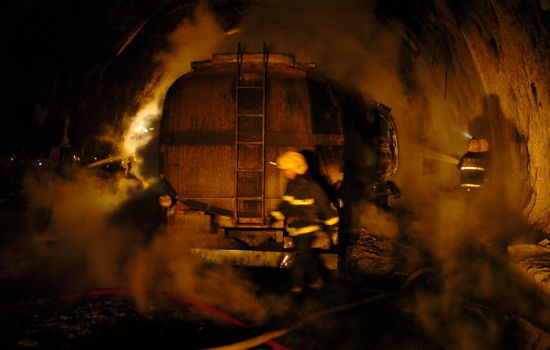
A blast in a tunnel killed 19 workers at a central Chinese highway construction site on Saturday, authorities said. The explosion in Hunan province also injured one person, said two officials from the provincial work safety bureau who would only give their surnames, Li and Yang, a practice that is common among Chinese government employees. The blast occurred when a vehicle was unloading explosives in the tunnel of the highway that is being built between Yanling and Rucheng in Hunan province, the official Xinhua news agency said. A total of 24 people were working at the tunnel when the blast occurred. Four were pulled out, including one in critical conditions, the Hunan provincial transport department said in a statement. Accidents and explosions are common in China due to weak safety standards and lax building practices. In November, a massive explosion near an expressway ramp in southwestern China killed at least seven people and injured about 200. That blast was caused by three explosives-laden vehicles that caught fire, also destroying a garage and a food warehouse. Saturday 19 May 2012 http://abcnews.go.com/International/wireStory/tunnel-blast-kills-19-chinese-construction-site-16384577#.T7ejDXj82W8

continue reading

Abertay University student's system uses digital networks to plot real-world disasters

The way emergency crews search for missing people following a natural disaster could be revolutionised by the work of a Dundee student. David Kane, a computing and networks student at Abertay University, has developed a programme whereby broadband routers are used to detect whether a building is still standing. By ''pinging'' internet addresses in areas affected by disasters such as tsunamis and hurricanes, David's software could provide information to assist rescue teams, detailing the extent of the disaster and the areas worst hit. David, whose work has been exhibited at the university's degree show, said: ''Responding to disasters is immensely difficult and any extra accurate information can make the difference in saving lives. ''I wanted to prove it was possible to use an ordinary piece of technology we all have, a home broadband router, to map natural disasters in real-time.'' Using Google Maps, the system shows live data from ''safe'' areas from which signals have been received from routers. It could be assumed that areas from which no signal is returned have been worse hit, allowing rescue crews to focus their efforts on saving lives there. ''The idea definitely works and I've built it so anyone can take this code and improve it,'' he added. Saturday 19 May 2012 http://www.thecourier.co.uk/Living/Digital/article/22808/abertay-university-student-s-system-uses-digital-networks-to-plot-real-world-disasters.html

continue reading

Friday, 18 May 2012

15 victims of Sukhoi crash identified

JAKARTA: Forensic experts from the Indonesian police Disaster Victim Identification (DVI) team, Friday, said that they had identified 15 victims of the Sukhoi Superjet 100 which crashed at Gunung Salak, Bogor, last May 9. The victims, 10 men and five women, comprised 13 Indonesians and two of other nationalities. Head of the Indonesian Police Hospital at Keramat Jati here, Brigadier General Agus Prayitno, at a media conference which was broadcast live by several television stations, said the victims were identified through their finger prints, dental records, DNA and personal possessions. However, he said the bodies had yet to be handed over to their next of kin as some of their body parts were still missing. Until today, the hospital had received 30 body bags of the victims’ remains and belongings which were recovered from the site of the crash. The ill-fated aircraft, with 45 passengers on board, was on a demonstration flight on May 9 when it suddenly lost communication with the air control tower. The plane’s wreckage was spotted on Gunung Salak the following day Friday 18 May 2012 Read more: http://www.theborneopost.com/2012/05/18/15-victims-of-sukhoi-crash-identified-new/#ixzz1vFfrYGaE

continue reading

At least 36 dies in bus accident in Vietnam

Hanoi, Vietnam - At least 36 passengers died when a bus carrying nearly 60 passengers broke the banisters of Serepok Bridge on National Highway 14, which connects Dak Lak and Dak Nong provinces in central Vietnam, and fell into the river on Thursday night, the Vietnam News Agency reported on Friday. According to the initial report, the bus, owned by a transport cooperate in Dak Lak province, some 960 km south of capital Hanoi, was on the way to Ho Chi Minh City. At around 10 p.m., while crossing the Serepok Bridge, the vehicle suddenly crashed into the banister and fell into the river, from the height of 18 meters. Rescue workers and local people were mobilized to save victims. By 3 a.m., rescue works finalized. A total of 34 people were dead on the spot and other two victims died in Dak Lak hospital, according to the report. Friday 18 May 2012 http://www.antaranews.com/en/news/82196/at-least-36-dies-in-bus-accident-in-viet-nahm

continue reading

Thursday, 17 May 2012

Another mass grave was found today on Balambo Mountain in Halabja

A mass grave was found Wednesday on Balambo Mountain including children and women remains. “The corpses of the mass grave might be victims of the chemical attack in the late 1980s,” Goran Adham Halabja town commissioner told Press. He said that they have indicated the location with the cooperation of Halabja Martyr association and have informed the KRG ministry of Martyr and Anfal affairs to dig up the corpses. “There might be also three other mass graves there,” he added. Halabja is a Kurdish town in Northern Iraq, located about 150 miles (240 km) north-east of Baghdad and 8–10 miles from the Iranian border. The former Baath regime bombarded Halabja with internationally banned chemical weapon in April 1988, killing 5 thousand innocent people and displacing thousands others. Those who were dead were buried nearby Halabja randomly. Wednesday 16 May 2012 http://www.komalnews.net/%28A%28tlc5BDBqzQEkAAAAMGQ3OWQ2Y2QtZmZiOC00Mjc2LTlmYWUtMmY4MDc3YmZiNWVj79RK3hAKpaskK5NhKbv1971f20Q1%29%29/En/Detail.aspx?id=15765&LinkID=88&AspxAutoDetectCookieSupport=1

continue reading

Police identification unit summons Sukhoi victims` family members

Jakarta (ANTARA News) - The Disaster Victim Identification (DVI) unit of the police has summoned a number of family members of the Sukhoi Superjet 100 victims to the Said Sukanto National Police Hospital in Kramat Jati, Jakarta, to help in the victim identification process. The unit will attempt to match the family members` DNA data with that of the bodies found at the crash site in Mount Salak, West Java. "The victims` families have been summoned to obtain some fingerprint, DNA and teeth samples, and this process is not yet complete," the chief of the hospital`s medical and health division Mussadeq Ishaq told reporters here on Thursday. According to Mussadeq, the families have been summoned to enrich the incomplete data stored in the DVI unit`s data base. "After this, the DVI team can do its job optimally, with almost 100 percent correct results," he remarked. As of Thursday morning, Mussadeq noted, the unit had received as many as 35 body bags containing the remains of the ill-fated plane crash victims. "We have received a total of 35 body bags - 30 of them contain the victims` body parts, while the other five contain the victims` property," he said. Mussadeq also asked for blessings from all parties so that the Sukhoi Superjet 100 victim identification process could be completed soon. The Sukhoi Superjet 100 jetliner slammed into the dormant volcano at nearly 800 kph (480 mph) during a light rain. Russian and French officials have now joined the investigation into the cause of the disaster. The ill-fated Superjet was carrying representatives from local airlines and journalists on what was supposed to be a 50-minute demonstration flight. Barely 21 minutes after the plane took off from a Jakarta airfield, its Russian pilot and co-pilot asked for permission to drop from 10,000 feet to 6,000 feet; the plane disappeared from the radar immediately afterwards. Thursday 17 May 2012 http://www.antaranews.com/en/news/82183/police-identification-unit-summons-sukhoi-victims-family-members

continue reading

Wednesday, 16 May 2012

Bodies of Sukhoi Victims Kept in Containers - “The capacity of the existing container is not enough, so we bring more.”

The evacuation of the victims of the crashed Russian Sukhoi Superjet-100 through land is still underway. This morning, one body bag arrived at the Sukamto Police Hospital, Kramat Jati, East Jakarta. The body bag arrived at the Police Hospital today was temporarily kept in the mortuary before being stored into a cooling container. A joint forensic team from the Disaster Victim Identification (DVI) and Police's Inafis brought one cooling container used to store the victims’ bodies. Earlier, Director of DVI Indonesia, Chief Commissioner Anton Castilani, said the container is used to prevent the victims’ body parts from decaying. “The capacity of the existing container is not enough, so we bring more,” said Anton. The white container came at 4.30 PM on Tuesday, May 15. The container was brought into the post mortem unit in the forensic building of the hospital with the help of two forklifts. The identification process of the victims’ body parts is still in progress. A total of 30 body bags have been evacuated to Jakarta including five bags which contain the victims’ belongings. The forensic team has recapitulated the post mortem data, namely the DNA, then the DNA samples will be sent to the Police Headquarters’ laboratory for identification and matched with the ante mortem data taken from the victims’ family members. As many as 45 passengers were in the SSJ-100 when it crashed into the cliffs of Mount Salak. Until the seventh day of the evacuation, there has not been any sign of life from the victims. Wednesday 16 May 2012 http://us.en.vivanews.com/news/read/314358-bodies-of-sukhoi-victims-kept-in-containers

continue reading

Tuesday, 15 May 2012

8 000 corpses still unidentified in Mexico

Even if someone had not chopped the heads, hands and feet off the victims first, the chances of investigators identifying the 49 bodies dumped on a road in northern Mexico this weekend would have been far from certain. More than 8 000 corpses left across Mexico since 2006 have not been identified, according to the National Human Rights Commission, a government-run body. At the same time, more than 5 000 people who have disappeared during the drug violence sweeping the country have never been tracked down, according to the commission. The failure to find and identify victims of massacres and murders has spurred criticism of the war on drug gangs waged by President Felipe Calderon since he took office in late 2006. The thousands of grieving families searching for lost loved-ones are also likely to haunt Calderon's successor, who will be chosen in presidential elections on July 1. “When you can't find your family member it completely destroys you,” said Irma Hidalgo, whose 18-year old son was dragged from her home in Monterrey in 2011. “We just want to know if he is alive - or if not, then lay him to rest.” Hidalgo immediately called the Monterrey morgue following the discovery of the pile of dead outside the city on Sunday, but police told her not to come in because they said the bodies were so badly mutilated they were only identifiable with DNA. She has already given her DNA samples to state and federal police and is assured they will be compared with the victims. The sheer scale of the carnage makes it difficult for authorities to handle the murder cases. The latest violence has pushed the total number of drug-related deaths to around 55 000 since Calderon assumed power in December 2006. Emergency teams have had to confront mass graves with more than 200 corpses, dozens of bodies thrown into mine shafts and massacres such as the 49 headless corpses left on a road about 29km east of this industrial city. State-employed forensic scientists complain it is an almost insurmountable task. “I used to just deal with traffic deaths and the odd crime of passion. I never thought I would see this kind of devastation in my country,” said a forensic scientist in Monterrey, who asked his name not be used. “I had a day recently when I had to look at five bodies that had been shot in one street, then three in another and then five corpses that had been cut up.” “At first you feel sick when you have to take evidence from bodies that have been decapitated and mutilated. But then you get used it and you don't feel anything,” he said. It has also been a challenge to store so many corpses. Following the killings on Sunday, forensics vehicles needed to make several trips to take all of the 49 cadavers back to a morgue located in a public hospital in Monterrey. Hospital officials said they just managed to fit the corpses in their fridges. In other cases, such as when mass graves were found by the nearby town of San Fernando in 2011, the government had to send refrigerated trucks to store all the victims. Calderon defends his offensive by saying his government has made record seizures of marijuana, cocaine and methamphetamine, and arrested or shot dead dozens of major traffickers. “There are people who criticise my government for fighting criminals, but what do they want? To invite (criminals) for a cup of coffee?” Calderon asked as he inaugurated a hospital in Mexico State recently. “If someone doesn't want to fight criminals, they shouldn't be in government.” But critics point out that even as soldiers and police round up drug smugglers, they fail to solve most murders. Fewer than 20 percent of homicides in the last two years have led to arrests and convictions, according to police and court statistics. With such a backlog, cases of disappearances are given even less priority, family members complain. Jorge Varestegui has been searching for almost two years for his brother and nephew, who were taken by armed men at a road block near his town of Parras in northeast Mexico. “Police don't take the cases of disappearances seriously. They say the person probably ran away or something, even when you bring evidence to show they were kidnapped,” he said. With so many crimes unsolved, police cannot identify if many of the victims were actually criminals killed over the fight to smuggle drugs or simply civilians caught up in the bloodshed. “The government gives a simplistic explanation that this is just criminals killing criminals. But how do they know, if they don't solve the crimes?” asked Indira Kempiris, a human rights activist in Monterrey. “Many of the victims are from the most vulnerable sections of society with no means to seek justice.” A day after the 49 bodies were dumped, police said they had not yet identified any victims nor had reports of a mass disappearance lately, signaling the victims may have been foreign migrants passing through Mexico to the United States. Graffiti at the crime scene bore the letter “Z”, a symbol for the Zetas drug cartel, known to dominate the area. As well as from drugs, the Zetas make money from human trafficking and extorting migrants, and have murdered many who fail to pay them. In 2009, the Zetas were blamed for a massacre of 72 foreign migrants, again in San Fernando. With many families of victims living in poor communities in Central and South America, it is even harder to identify them. Many of them are undocumented migrants, further complicating their identification. The continued failure to put names on so many victims leads to a vicious circle, in which gangs are encouraged to think that they can get away with murder, said Victor Clark-Alfaro, director of the Bi-national Centre for Human Rights in Tijuana. “Over the years, the state has accumulated a huge sack of dead people on its back without resolving the cases or punishing those responsible for them,” he said. - Reuters Tuesday, 15 May 2012 http://www.iol.co.za/news/world/8-000-corpses-still-unidentified-in-mexico-1.1296689

continue reading

Russia’s top DNA profiler to assist Sukhoi’s victims’ identification

Russia’s leading DNA expert, Pavel Ivanov, is slated to arrive in Jakarta on Tuesday to help the National Police’s Disaster Victim Identification (DVI) unit in identifying the victims of Russian-made Sukhoi Superjet 100 that crashed on Mt. Salak, West Java last week. An official from Raden Said Sukanto National Police Hospital in Kramat Jati, East Jakarta, said late on Sunday that Ivanov would help analyze the remains of the ill-fated aircraft’s victims. “Ivanov will help the DVI unit to identify the victims through DNA profiling,” said the hospital’s medical and health division chief, Mussadeq Ishaq, as quoted by tribunnews.com. Ivanov is a Russian geneticist from the Engelhardt Institute of Molecular Biology at the Russian Academy of Sciences in Moscow, and is one of the experts who investigated the remains of Russia’s slain royal family Romanov through DNA analysis. According to Mussadeq, Indonesia’s forensic teams hoped that the helping hands from the Russian teams would make the identification process easier. Separately, Russian forensic expert Andrey Kovalev said that the Russians would conduct their jobs in accordance with Interpol standards. Previously, officials prepared six teams comprising 60 experts in forensic medicine, fingerprint identification, and DNA analysis to identify victims’ remains. The team consists of experts from Gadjah Mada University (UGM) in Yogyakarta, Airlangga University in Surabaya, East Java, and the University of Indonesia in Jakarta. As of Sunday morning the hospital had received 18 body bags that were sent directly to forensics teams for identification. (asa) Mon, 05/14/2012 http://www.thejakartapost.com/news/2012/05/14/russia-s-top-dna-profiler-assist-sukhoi-s-victims-identification.html

continue reading

Police identify 22 fingerprints of the ill-fated Sukhoi’s victims

A total of 22 fingerprints of the ill-fated Russian-made airliner’s victims have already been identified by the National Police’s Disaster Victim Identification (DVI) unit, a spokesman says. The National Police spokesman Sr. Comr. Boy Rafli Amar was quoted by tempo.co on Tuesday as saying that the 22 fingerprints were identified from the 18 body bags that had been received by the victims’ identification team. As of Monday, a total of 25 body bags had been sent to the officials at R. Sukanto National Police Hospital in Kramat Jati, East Jakarta. Four out of 25 body bags contained victims’ personal items, such as wallets, ID cards, shoes and electronic gadgets. The forensics team helping to identify victims remains has examined 18 body bags of remains, while three additional body bags arrived to the hospital on Monday and currently undergoing testing. DVI chief Sr. Comr. Anton Castilani said that the 22 fingerprints would be cross-referenced with the DNA data that was submitted from the victims’ families. He added that the team had yet to sort out which partial remains belonged to Indonesians or to foreign citizens. The Russian-made aircraft Sukhoi Superjet 100, with 45 people onboard, disappeared from radar screens last Wednesday before an Air Force helicopter spotted its wreckage at an altitude of 5,800 feet in the foothills of Mt. Salak’s in Cidahu, Sukabumi, the day after. Search and rescue teams found that the bodies of the Sukhoi passengers were no longer intact. Eight Russian crew members, one American citizen and one French passenger were onboard along with 35 Indonesians. (asa) Tue, 05/15/2012 http://www.thejakartapost.com/news/2012/05/15/police-identify-22-fingerprints-ill-fated-sukhoi-s-victims.html

continue reading

Monday, 14 May 2012

22 body bags of Sukhoi plane crash victims checked

Jakarta (ANTARA News) - The Indonesian police hospital in Kramat Jati, East Jakarta, has examined 22 body bags of the victims of the Sukhoi Superjet 100 plane that crashed on Mount Salak in West Java last Wednesday. "Until last night, the disaster victim identification (DVI) team of the Indonesian police had examined 22 body bags, of which 18 contained body parts and four contained property," the head of the hospital, Brig Gen Agus Prayitno, said on Monday. "Three more body bags were sent to the hospital on Monday morning. The bags arrived at Halim Perdanakusuma airport in Jakarta at 8.05 a.m., after being flown from a command post near the plane crash site in Mount Salak," he added. "The three body bags are now undergoing a post-mortem check," Agus explained. He said since last night the DVI team had evaluated the post-mortems conducted after the body bags of Sukhoi Superjet 100 crash victims arrived at the hospital. "The results of the post-mortem checks will be compared with ante-mortem data to identify the victims," Agus added. "The medical center and health laboratory of the Indonesian police had started work ever since DNA samples were taken from the relatives of the victims. The DNA laboratory had begun comparing the DNA samples with the body parts of the victims,� he said. "We hope all of this will not take too long. We have done our best," Agus added. The Sukhoi Superjet 100 was carrying 45 passengers, including 34 Indonesians, eight Russians, two Italians, and one Frenchman. The plane crashed during a demonstration flight for potential Indonesian buyers. The National Committee of Transportation Safety (KNKT) earlier said it had located the black box of the ill-fated aircraft. "We have located it, but it has not yet been collected because it is buried under plane debris," KNKT chief Tatang Kurniadi said on Sunday. Monday 14 May 2012 http://www.antaranews.com/en/news/82091/22-body-bags-of-sukhoi-plane-crash-victims-checked

continue reading

37 dead in NW China storms

MINXIAN, Gansu - The death toll had risen to 37 and 19 others remained missing as of 6 pm Friday after hail and torrential rains battered a mountainous county in Northwest China, authorities said late Friday. As of 6 pm, the storms had affected 358,000 people in Minxian county, Gansu province, forcing the evacuation of nearly 30,000 local residents. Another 40 people had been hospitalized. Roads were blocked, houses collapsed, and farmland destroyed by the extreme weather, according to Minxian county civil affairs bureau. China's National Disaster Reduction Committee and the Civil Affairs Ministry raised the level of emergency response from level 4 to level 3 on Friday afternoon. A disaster relief team led by Sun Shaocheng, deputy minister of civil affairs and consisted of officials from nine ministries is heading to the disaster-hit area. About 2,000 officials, as well as 800 soldiers and militiamen, have trudged through mud and water into storm-battered areas to rescue trapped villagers. Gansu provincial Red Cross said it was sending 1,000 quilts and 1,000 coats to Minxian to help with disaster relief efforts. The provincial finance bureau, meanwhile, has earmarked 2 million yuan ($317,460) to repair damaged water control facilities. Food and water had been allocated to the evacuated residents by local authorities. Minxian's civil affairs bureau said the stormy weather lasted just from 5 to 6 pm, but wreaked havoc in all of the county's 18 townships. In the worst-hit areas, precipitation measured nearly 70 mm.
Hail and torrential rain cut power in six townships, damaged several homes, hospitals and schools, disrupted traffic on two interprovincial highways and destroyed over 7,000 hectares of crops, county authorities said. Minxian is a mountainous county in the city of Dingxi with a population of 450,000. It is located 150 km from Zhouqu county, where a rain-triggered mudslide killed more than 1,500 people in August 2010. Thursday's rains also triggered floods in two other counties in Dingxi, as well as parts of the city of Longnan and the Gannan Tibetan autonomous prefecture. No deaths have been reported in those areas. The national flood control and drought relief headquarters on Friday issued fresh warnings to northwestern provinces, urging them to step up weather monitoring and flood prevention efforts. The provincial observatory said more rains were likely from late Friday to Sunday in Minxian. Sunday, 13 May 2012 http://english.sina.com/china/p/2012/0511/466968.html

continue reading

11 Indians among 15 dead in Nepal plane crash

Eleven Indian pilgrims were among 15 people killed when a private plane crashed in northern Nepal today after hitting a hill top while trying to land at high-altitude Jomsom airport. The Dornier aircraft belonging to the Agni Air went down when it hit the top of a hill while landing at the Jomsom airport in northern Nepal, said an official at the Rescue Coordination Committee of Tribhuvan International Airport. “Eleven Indian nationals, two Danish nationals and two Nepalese crew members were killed in the crash,” the official said, adding rescuers have so far recovered nine bodies from the wreckage. Six people on board, including a crew member and five Indians, have been rescued alive from the crash site, he said. The injured people were taken to a hospital in Pokhara where condition of the three Indians was critical. There were altogether 18 passengers including 16 Indians and three Nepali crew members in the ill-fated aircraft. The aircraft was heading towards Jomsom in the morning from Pokhara when it hit the hill, the official said, adding that there are possibilities of a technical fault. The passengers had chartered the flight to take them from the central tourist hub of Pokhara to Muktinath, a famous Hindu pilgrimage in Jomsom near Tibetan border at the foot of the Thorong La Himalayan mountain pass, the official said. The high-altitude Jomsom airport, about 200 km northwest of the capital, is a gateway to a popular tourism and trekking destination situated more than 2,600 m above sea level. The plane turned into pieces but did not caught fire. The bodies of Pilot Prabhu Sharan Pathak and Co-pilot JD Maharjan have been recovered. When contacted, Indian Embassy officials said they were trying to collect the details as there was some confusion over the nationalities of the passengers on board the ill-fated plane. Agni Air marketing manager Pramod Pandey said two Danish nationals were among the passengers, although their condition was not known. “It’s not that much difficult to land at the Jomsom airport. We are using experienced pilots over there,”he added. Monday 14 May 2012 http://www.thehindu.com/news/international/article3417494.ece?textsize=small&test=2

continue reading