Showing posts with label Korean War. Show all posts

Friday, 18 September 2015

Korean War: Julie Bishop in renewed push to find 43 Australian servicemen still missing in action


Foreign Minister Julie Bishop will lead a renewed diplomatic effort to retrieve the remains of Australian servicemen still listed as missing in action in Korea.

Of the 17,000 Australians who served in the conflict, 340 were killed and the bodies of some of those men were never brought home.

There are 43 Australian servicemen officially classified as MIA in Korea.

The Federal Government will again ask North Korea for access to sites along its demilitarised zone and attempt to recover any Australian remains.

Assistant Defence Minister Stuart Robert has a personal interest in the Korean War. His uncle was the first RAAF pilot shot down over North Korea in July 1950.

Although his uncle's body was brought home, Mr Robert knows many others families were left in limbo.

"I have enormous empathy for the families of the ... Australians whose remains aren't recovered," Mr Robert said.

While Pyongyang was not "welcoming us with open arms", he said the Government remained hopeful the North Koreans would grant Australia access to these sites.

"We hope for a break in the ice, as our Foreign Minister connects slowly with theirs," he said.

"But this may be a long waiting game."

'I'll give up when they identify remains'

Private John Philip Saunders was among the Australian soldiers who never returned from Korea.

Ian Saunders was just four years old when his father left for the war.

He has spent decades trying to locate the remains of his father and the other Australian servicemen.

"I'll give up when they identify remains, preferably all," Mr Saunders said.

He has maintained daily email contact with a tight-knit group of families and veterans, and written countless letters to defence bureaucrats and politicians in Australia and overseas.

Mr Saunders has been recognised with an OAM for his service to the families of Australian MIA soldiers in the Korean War.

US Army recovers 1,000 remains, almost 400 unidentified

"We do believe that there have been some [remains] recovered and they could only be described as unknown," he said.

The United States Army has recovered the remains of some 1,000 Korean MIAs, but almost 400 are yet to be identified.

Some of those bodies are stored at a US defence facility in Hawaii.

Mr Saunders believes some Australians could be among them and he has collected dozens of DNA samples from relatives of the missing men.

He now wants the Government to work with the Americans to try to find a match.

The Government said it was open to the idea.

"We've certainly made it very clear to our American friends that if they choose to do that work, then we'd be very keen to see what the results are," Mr Robert said.

More than anything else, Mr Saunders wants a headstone for his father and the 43 other men still listed as MIA.

"Let's drop the tag that it's the 'Forgotten War' and do something about it and don't forget to bring them back," he said.

Friday 18 September 2015

http://www.abc.net.au/news/2015-09-18/fresh-push-to-locate-bodies-still-missing-from-the-korean-war/6787500

continue reading

Friday, 8 May 2015

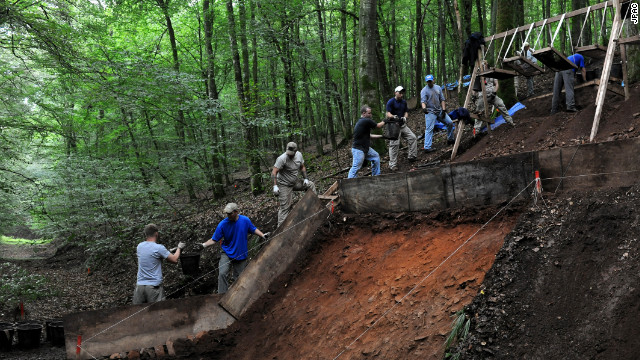
South Korea, US experts excavate for Korean War remains


South Korea and the United States have begun exhuming the remains of soldiers killed during the 1950-53 Korean War. The project is not the first of its kind – since 2000 the South Korean military has conducted excavations of war remains, Yonhap reported.

To date, most of the 9,500 bodies recovered have been identified as South Korean soldiers.

The U.S. Defense POW/MIA Accounting Agency, or DPAA, sent a team to jointly excavate the remains on Wednesday in the South Korean region of Masan in the southeast, reported South Korean newspaper Donga Ilbo.

In August 1950, the area was the scene of brutal fighting between North Korean forces and the Allied Command, which consisted mostly of South Korean and U.S. soldiers. Due to the high number of casualties, soldiers called the area "Death Valley."

The three-day excavation began on Wednesday and will involve 15 South Korean experts and eight U.S. analysts from the DPAA.

According to the U.S. team chief, the bodies of 8,000 dead U.S. soldiers remain unaccounted for. In Masan, the U.S. 25th Infantry Division under the command of Maj. Gen. William Keen repelled North Korean incursions toward the port city of Busan. In the course of bloody battles, however, many lives were lost.

South Korea's defense ministry decided to launch an investigation in Masan after ministry staff member Hwang U-ung said he heard stories about the area from his mother and suggested an investigation.

According to Hwang, locals said U.S. soldiers were buried in a nearby mountain, and superstition suggested digging in the area would bring bad luck.

The Korean War began in June 1950, when North Korean forces invaded Seoul, and continued for three years until a truce was signed in 1953.

Friday 8 May 2015

http://www.military.com/daily-news/2015/05/07/south-korea-us-experts-excavate-for-korean-war-remains.html

continue reading

Monday, 26 May 2014

Opportunities to identify war dead abound as DOD overhauls troubled recovery efforts


On Tarawa, bodies of fallen Marines, still wrapped in ponchos or wearing helmets, were just below the island’s trash-ridden top soil.

About 10,000 bones, hundreds of pounds of gear and dozens of dog tags were recovered over the past two years on the densely developed Pacific island, generations after a bloody World War II battle there, said Mark Noah, whose private group, History Flight, initiated the search effort.

The remains were so numerous and buried in such shallow ground that in one servicemember’s grave site “a local trash pit had been dug right into his chest,” Noah said.

Tarawa is not an isolated instance. Opportunities to finally identify America’s war dead — including some who have been missing for more than 70 years — and return them to family members abound as the Department of Defense prepares to overhaul its troubled national recovery efforts, according to advocates for missing servicemembers who gathered for a conference in Washington, D.C. Friday.

More than 83,000 servicemembers are still listed as missing from War World II, the Korean War, Vietnam, Iraq and other conflicts, according to the Defense POW/Missing Personnel Office.

Advances in DNA analysis, the use of global positioning software and aerial drones, and clues gleaned over decades from historical records are already pointing the way toward closure for scores of those servicemembers, speakers at the POW-MIA Awareness Conference said.

“Many hundreds or thousands of cases remain unknown and could easily be solved with today’s technology,” Noah said.

Noah used a drone to snap photos of Tarawa and GPS programs to match up archive photos and maps to find remains. He and colleagues pored over the history of the battle and documents connected to the burial area.

Meanwhile, nuclear DNA tests, pioneered 20 years ago during the war in Bosnia-Herzegovina, now allow researchers to identify U.S. servicemembers from bone fragments, increasing the ease and likelihood that those who perished decades ago will be found, said Ed Huffine, vice president of humanitarian projects for Bode Technology, a leading forensic testing company.

Huffine said a “quantum leap” is underway in DNA testing, providing “a very powerful tool that will be able to assist in the identification of loved ones.”

So, it should be a good time to find the missing. Instead, government efforts to close those cases have sputtered and drawn intense criticism over the past year.

Stars and Stripes found that the Joint POW/MIA Accounting Command, a DOD agency that conducts global operations to recover tens of thousands of missing remains, and DPMO officials ignored those leads, prematurely declared missing servicemembers deceased, and argued against examining remains in government custody that appeared to be identifiable.

JPAC was so incompetent and mismanaged that it risked descending from “dysfunction to total failure,” according to an Associated Press report last summer.

Defense Secretary Chuck Hagel has ordered the Pentagon to restructure the effort to recover missing servicemembers and consolidate JPAC and DPMO into a single agency that handles all accounting, research and field operations.

On Thursday, the Senate Armed Services Committee backed the changes and approved an amendment sponsored by Sen. Claire McCaskill, D-Mo., to create a new accounting command with one federal official in charge. McCaskill’s office called it a “first step” in overcoming the deep problems uncovered in JPAC and DPMO over the past year.

The overhaul may mean more attention for the cases that have been delayed or overlooked.

JPAC has said it is trying to press ahead and meet a congressionally mandated 200 identifications per year. The agency is now focusing on the exhumation of 400 World War II sailors buried in Hawaii as unknowns after dying aboard the USS Oklahoma, though the Navy has opposed disturbing the graves.

Hundreds might still be unidentified on Tarawa — Noah said his group’s examination of National Archive records puts the death toll at 1,260 instead of the official count of 1,009.

The remains of hundreds more Korean War missing in action might be even closer to home, said John Zimmerlee, historic researcher with the Korea and Cold War POW-MIA Network.

After working several weeks per year for about 20 years, Zimmerlee said his amateur research discovered that remains of 355 unidentified servicemembers buried at the National Memorial Cemetery of the Pacific in Hawaii, which is known as the Punchbowl, had included enough evidence to make tentative identifications when they were recovered. But the clues were never followed up and family members were never notified, he said.

Furthermore, seven had been fully identified and were mistakenly buried without names or notifications, Zimmerlee said.

The recovery and identification should be easy to correct, he said. “But here’s the obstacle — and this is a big one — the bodies are in the National Cemetery 8.6 miles from JPAC, and somebody has to go get them.”

Monday 26 May 2014

http://www.stripes.com/news/opportunities-to-identify-war-dead-abound-as-dod-overhauls-troubled-recovery-efforts-1.285323

continue reading

Thursday, 17 April 2014

S. Korean military begins excavating Korean War remains


The South Korean military has begun a seven-month project to excavate remains of fallen soldiers who fought in the 1950-53 Korean War, the defense ministry said Thursday.

About 100,000 soldiers will dig out sites in 74 regions across the nation until the end of November to find remains of missing servicemembers, the ministry said.

The excavation team will analyze the registry of missing soldiers and conduct DNA tests to trace their families after retrieving their remains, it said.

Since 2000, the South Korean military has yearly conducted the excavation project based on records of former battle sites and registered soldiers during the three-year conflict to repatriate the remains to their family.

A total of 8,744 bodies have been recovered, with 7,658 of them identified as South Korean soldiers, according to the ministry.

Thursday 17 April 2014

http://www.globalpost.com/dispatch/news/yonhap-news-agency/140417/s-korean-military-begins-excavating-korean-war-remains

continue reading

Saturday, 5 April 2014

DNA tests for 437 Chinese People's Volunteer soldiers' remains returned to China


DNA will be collected from the remains of Chinese soldiers killed in the 1950-53 Korean War, official sources have said.

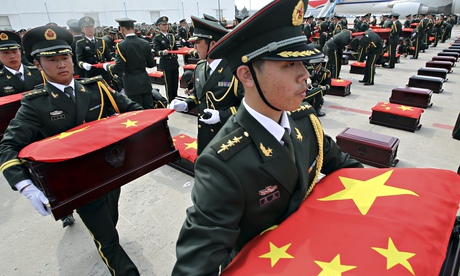
The remains of 437 Chinese People's Volunteer (CPV) soldiers were brought from the Republic of Korea (ROK) to China last week to rest in a "martyrs' park" in Shenyang, capital of northeast China's Liaoning Province.

A database will identify the dead and DNA tests will be available on request from relatives of the soldiers, said an unidentified official with the veterans bureau of the Civil Affairs Ministry Saturday.

China has been working with the Democratic People's Republic of Korea (DPRK) to protect (CPV) memorials in the DPRK. Renovation of CPV cemeteries in the DPRK will begin this year.

More than 2 million CPV soldiers fought alongside the DPRK army in the Korean War from 1950 to 1953. Some 180,000 of them were believed killed, with most buried in the DPRK or ROK.

Last year on a trip to China, ROK President Park Geun-hye offered to return the remains of 437 CPV soldiers to China. The two sides had an initial consultation in Seoul and reached agreement on the transfer in December of last year and excavation commenced. In Beijing in January, the protocol for the return of the remains was agreed and a transfer ceremony was held on March 28 at Incheon International Airport, when the coffins and belongings of the fallen were passed to a Chinese delegation.

The remains were previously buried at a cemetery in the ROK border city of Paju and most have not been identified. This is the first move in long-term cooperation on return of CPV remains from the ROK.

According to agreements between China and the DPRK, the bodies of soldiers killed and buried in the DPRK, including Mao Anying, son of Mao Zedong, will not be returned to China.

China has 25,000 domestic war memorials and others in 20 countries. More efforts will be devoted to protecting these war memorials, the official said.

Saturday 05 April 2014

http://english.eastday.com/e/140405/u1a8017407.html

continue reading

Friday, 28 March 2014

South Korea returns bodies of hundreds of Chinese soldiers


South Korea on Friday repatriated the remains of 437 Chinese soldiers killed during the Korean War six decades ago, making a gesture symbolic of warming ties between the two nations.

China sent a flood of soldiers to help its Communist ally North Korea, which invaded South Korea in June 1950. Its intervention saved the North, whose forces had been pushed back toward the country’s northern corner by American-led United Nations forces later that year. The three-year war ended in a cease-fire, leaving the divided Korean Peninsula technically in a state of war.

Over the years, when South Korea discovered the remains of hundreds of Communist soldiers in old battle sites, it kept them in a tucked-away, little-known temporary burial ground north of Seoul, until recently known as “the enemy cemetery.”

That it took six decades for the bodies of the fallen Chinese soldiers to return home bore testimony to political uneasiness rooted in a war that, while it long ago ended, was never formally put to rest.

Between 1981 and 1989, North Korea accepted the remains of 42 Chinese soldiers from South Korea and handed them over to Beijing. But it has never been willing to negotiate for the return of its own fallen soldiers. Accepting their return home would be seen as a gesture of closing the war, which North Korea insists will not be over until Washington signs a peace treaty with it.

After accepting the remains of another Chinese soldier in 1997, North Korea refused to accept any more, leaving the 437 Chinese soldiers stranded in the inter-Korean deadlock.

A breakthrough came last June when President Park Geun-hye of South Korea visited China to cultivate warmer ties with China. She offered to send the Chinese remains home as a good-will gesture, and Beijing welcomed it.

“The repatriation today will be a landmark for the two countries in healing the trauma from the past and moving toward coprosperity,” Vice Defense Minister Baek Seung-joo of South Korea said during a ceremony held at Incheon International Airport, west of Seoul.

During the ceremony, the Chinese ambassador, Qiu Guohong, placed Chinese flags on dark brown boxes that contained the remains. Chinese soldiers carried them aboard a Chinese plane, which flew them to the Resist America and Aid Korea Martyrs Cemetery, the resting place for China’s Korean War dead, located in Shenyang, in northeastern China.

China remains North Korea’s last remaining major ally, while the United States is South Korea’s No. 1 military ally. But China has overtaken the United States as South Korea’s biggest trading partner since it normalized relations with Seoul in 1992. Each year, millions of Chinese visit South Korea as tourists.

Still, the existence of Chinese remains, and the “enemy cemetery” itself, has drawn little attention in South Korea, even though some Chinese tourists began visiting it in recent years. Built on a hillside, it is difficult to find.

Now with their Chinese companions gone, the remains of 770 North Korean soldiers stay marooned in the cemetery only a few miles south of the inter-Korean border, their forlorn grave markers emblematic of unresolved Cold War hostilities that still divide the Koreas. Their graves all face north, looking homeward, in contrast to the Korean tradition of aligning graves toward the south.

Also buried there are dozens of postwar North Korean agents, including commandos killed in an unsuccessful 1968 attack on the presidential palace in Seoul and a North Korean agent who killed himself after planting a bomb on a South Korean jetliner that exploded over Myanmar in 1987 with 115 people aboard.

The bodies of the agents cannot go home because their government has not acknowledged their missions.

Estimates of the number of Chinese killed in the war vary from 110,000 to over 400,000.

South Korea said it would continue to repatriate Chinese remains if it discovered more while excavating battle sites for its own war dead.

Friday 28 March 2014

http://www.nytimes.com/2014/03/29/world/asia/south-korea-returns-bodies-of-hundreds-of-chinese-soldiers.html?_r=0

continue reading

Friday, 27 December 2013

South Korea identifies remains of police killed in Korean War


A South Korean police officer who was killed in the Korean War has been identified 63 years after his death in battle, the defense ministry said Friday, marking the 10th set of remains sent home for burial through DNA testing.

The Defense Ministry's Agency for Killed in Action Recovery and Identification (MAKRI) retrieved his remains in Chuncheon in Gangwon Province in May last year, along with his uniform, personal equipment and belongings.

The police officer, Kim Se-han, was dispatched to the battle site shortly after the Korean War broke out in June 1950. Kim died five days after the dispatch at the age of 24, the ministry said.

The military recovery team discovered his identity through a DNA test, as his daughter, now 64, had registered her DNA samples in search of her father's remains six decades after the three-year conflict.

MAKRI has collected 26,673 DNA samples from bereaved families to verify the identities of the fallen soldiers so that their remains can be returned to their loved ones. The agency has retrieved 8,744 remains of fallen soldiers since 2000 and collected DNA samples from 6,373 bodies.

The agency has only been able to return 83 sets of remains to families, while the rest of the remains are awaiting DNA and other forensic tests.

Friday 27 December 2013

http://www.globalpost.com/dispatch/news/yonhap-news-agency/131226/s-korea-identifies-remains-police-killed-korean-war

continue reading

Friday, 6 December 2013

South Korea enshrines 666 sets of remains of Korean War dead


South Korea enshrined the remains of 666 soldiers on Friday, more than 60 years after they were killed in the three-year Korean War that ended in a truce in 1953.

Prime Minister Chung Hong-won, Defense Minister Kim Kwan-jin and 400 other government and military officials attended an enshrinement ceremony at Seoul National Cemetery for the remains excavated this year.

A total of 731 sets of remains were recovered after searching 77 former battlefield sites from March to November, of which 666 have been confirmed to be those of South Korean soldiers, according to a government report.

The other remains have been determined to be those of enemy forces, meaning North Korean and Chinese troops.

Following the ceremony, the Defense Ministry's Agency for Killed in Action Recovery and Identification (MAKRI) will begin analyzing the remains to identify them, the report said.

The agency, which has collected 26,490 DNA samples of bereaved families, will use the data to verify the identity of the fallen soldiers so that their bodies can be returned to their loved ones, the ministry said.

Meanwhile, the remains of North Korean and Chinese soldiers will be temporarily buried at the so-called "enemy cemetery" in Paju, just south of the demilitarized zone that separates the two Koreas, it said.

In 2000, the South Korean army launched a three-year mission to search for the remains of its soldiers killed in the Korean War. With widespread public support, the government established MAKRI in 2007 with troops with expertise in history, forensic science and archeology.

MAKRI has been conducting operations nationwide to find the remains of the 130,000 soldiers still unaccounted for out of the 160,000 who are classified as missing or killed during the Korean War.

A total of 7,658 bodies have been recovered since 2000, but it has only been possible to return 83 of them to their families. The rest of the remains are awaiting DNA and other forensic tests.

Friday 6 December 2013

http://www.google.co.uk/search?q=bodies+missing&safe=strict&rlz=1C1SVED_enGB390GB390&espv=210&es_sm=122&source=lnms&tbm=nws&sa=X&ei=RaOhUuiyCYuBhQfsqoDoAw&ved=0CAwQ_AUoBA&safe=strict

continue reading

Sunday, 18 August 2013

Pentagon analyst who tracks down military remains thinks there’s a chance body of Medal of Honor recipient Kapaun could be found


The senior Pentagon analyst in charge of finding Korean War troops missing in action says there is a “better than even” chance that the body of Medal of Honor soldier Father Emil Kapaun will eventually be found buried in a national cemetery in Hawaii.

Finding Kapaun’s remains would be big news, not only to the U.S. military – which awarded him the Medal of Honor in April – but to the Catholic Church, which is deciding whether the Kansas native and Army chaplain will become a saint.

“It would be wonderful,” said Maj. Gen. Donald Rutherford, a Catholic priest who is the chief of chaplains for the U.S. Army. “It would be great, especially as the church is moving toward canonization.”

Friends of Kapaun’s who were prisoners of war say Chinese Army guards buried Kapaun in a shallow unmarked grave after he died of starvation and disease in a North Korean prison camp in May 1951. The assumption since then by the Army has always been that Kapaun’s remains are still there.

But Pentagon analyst Philip O’Brien, an authority on Korean War soldiers missing in action, said he thinks Kapaun’s remains may have been resting since 1954 in the National Memorial Cemetery of the Pacific, the cemetery in Hawaii better known as the “Punchbowl.” Hundreds of unknown soldiers and other veterans from several wars lie there.

“My best belief, a presumptive belief, is that we have a good chance, better than even, of having Father Kapaun in possession right now,” O’Brien said.

Korean War historian William Latham says the fact that O’Brien is saying this on the record is significant.

“When Phil says it’s true, it’s true,” Latham said.

Buried in Korea

Kapaun, a native of Pilsen in Marion County, and other survivors of the 8th Cavalry were overrun and captured in the November 1950 battle of Unsan in North Korea. They were forced to march north to camps picked out for them just south of the Yalu River, on the border with China.

Of the 4,000 Allied prisoners herded into the camp in the village of Pyoktong in late 1950 and early 1951, about 1,600 – including Kapaun – died of starvation, disease and exposure.

Bodies were sometimes stacked up six high outside huts as men died by the dozens overnight. Camp guards gave the prisoners only a handful of grain apiece to eat every day and no water. Prisoners scraped snow off the ground with their fingers to get hydrated.

POW friends of Kapaun’s have told The Eagle for years that they – and sometimes Kapaun himself – helped carry many of the dead across a frozen backwater of the Yalu River to ground on the far side. They buried most of the dead in shallow trenches scratched into frozen rocks and snow there.

They also said some prisoners, including Kapaun, died on the village peninsula in an old pagoda Chinese guards called a “hospital.” The Allied prisoners called it a “death house.”

There, prisoners already near death were deliberately isolated from food and water and left to die. Kapaun’s body was rolled into a single grave near the death house, POWs said.

O’Brien has known these stories for years. He also knew, he said, that when the war ended in a ceasefire in 1953, the Chinese Army dug up about 560 American bodies in and around the hill where the death house stood – and repatriated them home.

One thing the American body recovery teams did, O’Brien said, was unfortunate to future identification. Faced with packages of crumbling bones, they dumped preservative solution on them, not realizing that this would destroy most of what later would be called DNA evidence, which might have helped to identify remains.

Since then, O’Brien’s office has collaborated with military scientists who have meticulously examined bodies a few at a time, slowly identifying which bodies belonged to which long-missing prisoners of war. So most of the “unknown” bodies from Pyoktong “have been identified and been sent, and accepted, by their families,” O’Brien said.

O’Brien said they are down to “55-odd” bodies, and he thinks they will more than likely find Kapaun’s among them.

They are not deliberately looking for Kapaun’s body among those graves, any more than they are looking for anyone else, O’Brien said. But he said it has occurred to them that they might be able to narrow the possibilities.

They know most American soldiers from that war were 20 years old and about 5 feet, 9 inches tall. Kapaun was 35 when he died and was about 6 feet tall, according to his family. Forensics experts can often tell the approximate age of a man from bones.

For Kapaun and many other soldiers, they also have dental records and chest X-rays taken during routine Army medical examinations. The X-rays show what their clavicles and vertebrae looked like, which are good forensic evidence for identification, O’Brien said, because those bones have distinctive edges and marks, “not as good as fingerprints,” but pretty good.

Ray Kapaun, reached at his home near Seattle, said the Army long ago obtained DNA material from his father, Eugene, who was Emil Kapaun’s brother. O’Brien said there is some hope that new advances in DNA research might also allow examiners to use DNA to determine identity even though the bones were treated in the preservative solution.

Identifying remains

Latham, the historian whose book “Cold Days in Hell: American POWS in Korea” came out earlier this year, said he has consulted O’Brien for years during his research.

He said O’Brien for nearly 20 years has been a beloved figure among families of the thousands of Korean War missing. They like him because he does relentless detective work and has often been able to tell families of many of the missing what actually happened to their fathers or husbands or grandfathers.

“He’s beloved not only among the children but the grandchildren of many these missing men,” Latham said.

O’Brien and others in his office have spent years interviewing surviving soldiers, including former prisoners of war who knew Kapaun and many other men who died in Camp 5 in Pyoktong.

In April, when President Obama presented the Medal of Honor to Kapaun’s family, O’Brien showed up, not only to witness the ceremony but also to spend two days with POW friends of Kapaun’s who survived and still have memories. He took notes, accepted documents and questioned a few of them about what happened to Kapaun and other servicemen who died in Pyoktong.

O’Brien, 66, a retired Air Force captain, works for the Defense Prisoner of War/Missing Personnel Office, based at the Pentagon. The office coordinates with civilian and military people around the world to find and return the remains of 83,000 missing Americans lost in many wars. They also collect data and stories.

“I have always felt like we owe it to those men we lost to preserve their stories,” O’Brien said.

O’Brien’s office does what often is a difficult job, given the strained relations between the U.S. and North Korea. He and his office try to find bodies and facts concerning the 7,908 American service personnel still listed as missing in action from that war.

His office also coordinates with scientists who exhume and examine bodies in Hawaii of unknown soldiers from the war. Over the past 18 years since he went to work for the Pentagon, O’Brien said, this work has matched identities to more than 200 bodies, which were then sent to their families decades after the war. Hundreds more were identified before O’Brien started work. Church’s interest

Father John Hotze, the Wichita Diocese priest in charge of the Kapaun sainthood investigation for the Vatican, said finding Kapaun’s remains would be huge news.

The church would step in immediately and coordinate with the family to protect the remains from theft, relic hunters or any other harm, he said.

That’s because the church has historically put more emphasis on venerating saintly relics – such as clothing or bone fragments – than other religions, Hotze said. For example, tiny pieces of Kapaun’s clothes from before he went to Korea have been attached to prayer cards and used in prayer services for the sick.

“The proper use of a relic is to help us honor those people that have lived a virtuous life,” Hotze said. “We ask for their intercession as we pray for our own needs.”

‘A true … hero’

Rutherford, the chief of the Chaplains Corps, said it would be “a great thing” if Kapaun’s remains were ever to be identified. Rutherford gave the invocation and benediction at the White House ceremony when Obama handed the Medal of Honor to Kapaun’s nephew Ray.

Rutherford said he and others are using Kapaun’s story to recruit for and inspire the Chaplain Corps, which he said is in need of priests.

Rutherford said that when he joined the service, there were nearly 200 priests among the 1,600 clergy serving the Army as chaplains. But war has taken a toll.

The work in the war zones can be dangerous; Rutherford himself said he survived several close calls in combat in both Afghanistan and Iraq, including an IED explosion that has left him hard of hearing. The Chaplain Corps is down to about 100 priests now, he said.

“If he’s found, we’d be repatriating a true, proclaimed hero who gave his life for the soldiers and for his nation,” Rutherford said.

Sunday 18 August 2013

http://www.kansas.com/2013/08/17/2948898/pentagon-analyst-who-tracks-down.html

continue reading

Thursday, 4 July 2013

Bodies of hundreds of China’s Korean War dead could be returned home


The remains of hundreds of Chinese soldiers killed in the Korean War may finally return home, 60 years after an armistice ended the fighting.

On a recent visit to China, South Korean President Park Geun-hye offered to send back the remains of about 360 Chinese soldiers buried in a cemetery outside the city of Paju, a friendly gesture highlighting warming ties between the former combatants.

“Families in China must be waiting for their return,” Park said to Chinese Vice Premier Liu Yandong, according to a statement from Park’s office.

Liu promised to pass the message to China’s top leaders, though it’s unknown whether Beijing will accept the offer. Foreign Ministry representative Hua Chunying said Wednesday she didn’t know where China stood on the offer, but that the issue should be “resolved on the basis of humanitarianism.”

The bodies are buried on a hillside just south of the heavily guarded border with North Korea. Most of the Chinese dead have never been identified.

Several hundred North Korean soldiers are also buried at the site because Pyongyang refuses to take back the bodies.

While China remains North Korea’s only real ally, it has also established close ties with the South since the nations normalized diplomatic relations in 1992. China has overtaken the U.S. as South Korea’s biggest trading partner, with two-way commerce hitting $215 billion in 2012.

Beijing has never given a precise number for its Korean War dead because it claims Chinese troops all volunteered to defend a communist ally from what was portrayed as U.S. aggression. However, estimates of Chinese war dead run as high as 900,000, the bulk of them killed in the final year of the war, when the U.S. and its allies unleashed overwhelming firepower to force an end to the conflict.

With its hundreds of fading white wooden grave markers surrounded by forest and rice paddies, the cemetery has become a popular stop for Chinese tourists visiting Paju, according to Kim Dong-hun, the head of a group responsible for maintaining the cemetery.

Despite the potential loss of Chinese visitors, Kim said he was “very positive” about Park’s offer. Sorting and repatriating the bodies would likely take some time, and new Chinese and North Korean remains continue to surface, he said.

Thursday 4 July 2013

http://www.vancouversun.com/news/Bodies+hundreds+China+Korean+dead+could+returned+home/8613394/story.html

continue reading

Monday, 1 July 2013

South Korea’s Truth and Reconciliation Commission uncovers thousands of killings in 1950


With US military officers sometimes present, and as North Korean invaders pushed down the peninsula, the southern army and police emptied South Korean prisons, lined up detainees and shot them in the head, dumping the bodies into hastily dug trenches. Others were thrown into abandoned mines or into the sea.

Women and children were among those killed, many of whom never faced charges or trial.

The mass executions — intended to keep possible southern leftists from reinforcing the northerners — were carried out over mere weeks and were largely hidden from history for half a century.

They were “the most tragic and brutal chapter of the Korean War,” said historian Kim Dong-choon, a member of a two-year-old government commission investigating the killings.

Hundreds of sets of remains have been uncovered so far, but researchers say they are only a tiny fraction of the deaths. The commission estimates at least 100,000 people were executed, in a South Korean population of 20 million.

That estimate is based on projections from local surveys and is “very conservative,” said Kim. The true toll may be twice that or more, he said.

In addition, thousands of South Koreans who allegedly collaborated with the communist occupation were slain by southern forces later in 1950, and the invaders staged their own executions of rightists.

Through the postwar decades of South Korean right-wing dictatorships, victims’ fearful families kept silent about that blood-soaked summer. American military reports of the South Korean slaughter were stamped “secret” and filed away in Washington. Communist accounts were dismissed as lies.

Only since the 1990s, and South Korea’s democratization, has the truth begun to seep out.

In 2002, a typhoon uncovered one mass grave. Another was found by a television news team that broke into a sealed mine.

Further corroboration comes from a trickle of declassified U.S. military documents, including U.S. Army photographs of a mass killing outside this central South Korean city.

Now Kim’s Truth and Reconciliation Commission has added government authority to the work of scattered researchers, family members and journalists trying to peel away the long-running cover-up.

The commissioners have the help of a handful of remorseful old men.

“Even now, I feel guilty that I pulled the trigger,” said Lee Joon-young, 83, one of the executioners in a secluded valley near Daejeon in early July 1950.

The retired prison guard said he knew that many of those shot and buried en masse were ordinary convicts or illiterate peasants wrongly ensnared in roundups of supposed communist sympathizers. They didn’t deserve to die, he said. They “knew nothing about communism.”

The 17 investigators of the commission’s subcommittee on “mass civilian sacrifice,” led by Kim, have also been dealing with 215 cases in which the U.S. military is accused of the indiscriminate killing of South Korean civilians in 1950-51, usually in air attacks.

The commission last year excavated sites at four of an estimated 150 mass graves around the country, recovering remains of more than 400 people. It has officially confirmed two large-scale executions.

In January, then-President Roh Moo-hyun, under whose liberal leadership the commission was established, formally apologized for the more than 870 deaths confirmed at Ulsan, calling them “illegal acts the then-state authority committed.”

Photos taken by an American Army major and kept classified for half a century show the macabre sequence of events.

White-clad detainees — bent, submissive, with hands bound — were thrown down prone, jammed side by side, on the edge of a long trench. South Korean military and national policemen then stepped up behind, pointed their rifles at the backs of their heads and fired. The bodies were tipped into the trench.

Scattered reports of the killings did emerge in 1950 — and some did not.

British journalist James Cameron wrote about mass prisoner shootings in the South Korean port city of Busan — then spelled Pusan — for London’s Picture Post magazine in the fall of 1950, but publisher Edward Hulton ordered the story removed at the last minute.

In 1953, after the war ended in stalemate, after the deaths of at least 2 million people, half or more of them civilians, a US Army war crimes report attributed all summary executions here in Daejeon to the “murderous barbarism” of North Koreans.

Such myths survived a half-century, in part because those who knew the truth were cowed into silence.

The immediate concern of the Truth and Reconciliation Commission is resources. “The current government isn’t friendly toward us, and so we’re concerned that the budget may be cut next year,” commission president Ahn Byung-ook said.

South Korean conservatives complain the “truth” campaign will only reopen old wounds from a time when, even at the village level, leftists and rightists carried out bloody reprisals against each other.

The life of the commission — with a staff of 240 and annual budget of $19 million (€12.3 million) — is guaranteed by law until at least 2010, when it will issue a final, comprehensive report.

Later this spring and summer its teams will resume digging at mass grave sites.

By exposing the truth of such episodes, “we hope to heal the trauma and pain of the bereaved families,” the commission says.

It also wants to educate people, “not just in Korea, but throughout the international community,” to the reality of that long-ago conflict, to “prevent such a tragic war from reoccurring in the future.”

Monday 1 July 2013

http://may131969.wordpress.com/2013/07/01/death-squads-and-mass-graves-the-full-horror-of-the-korean-war-finally-unearthed/

continue reading

Tuesday, 25 June 2013

Bodies of 130,000 fallen Korean War servicemen still missing


Eighty-six-year-old Kim Oh-joon still remembers the day he was told the tragic news that his brother had been killed in battle during the Korean War.

He still hopes that one day the remains of his brother will be found, and he can be laid peacefully to rest.

"My very last wish before I die is to bury my fallen brother in the National Cemetery, to place a tombstone, and to offer a flower for him. I don't want anything more than that."

Some 150-thousand South Korean soldiers were killed during the three-year conflict, but 130-thousand are still missing.

Their remains unaccounted for. It's estimated about 70 percent, or the remains of some 95-thousand South Korean troops are somewhere in South Korea, and the rest are in North Korea.

Since the 2000s, the South Korean government has operated a team to identify remains buried in fields and mountains nationwide.

So far, they have excavated about 8-thousand bodies - 7-thousand South Korean soldiers and around 1-thousand North Korean and Chinese soldiers.

Sadly for the families, only about 80 soldiers have been identified through DNA testing.

The Defense Ministry says it will continue its active excavation projects, in the hope of giving some peace of mind to the families of those who bravely laid down their lives for South Korea.

Tuesday 25 June 2013

http://www.arirang.co.kr/News/News_View.asp?nseq=148564

continue reading

Thursday, 11 April 2013

Korean War: Soldier's remains found in North Korea to be buried in Arlington National Cemetery


The remains of a Korean War Medal of Honor winner from southern Indiana that were recovered nearly a decade ago with the cooperation of North Korea have been identified and will be buried in Arlington National Cemetery this month, the Defense Department said Wednesday.

The remains of Lt. Col. Don C. Faith Jr. of Washington, Ind., who was posthumously awarded the highest U.S. military honor for valor during the battle of Chosin Reservoir in late 1950, will be buried April 17, the department said.

Faith was part of a battalion that was advancing along the eastern side of Chosin Reservoir in North Korea in late November 1950, when Chinese forces encircled and attempted to overrun the U.S. position, the department said. When Faith’s commander went missing, he took charge of the unit, withdrew it to a more defensible position, and led an assault on a Chinese position.

Eyewitness reports and other records compiled after the battle “indicated that Faith was seriously injured by shrapnel on Dec. 1, 1950, and subsequently died from those injuries on Dec. 2, 1950. His body was not recovered by U.S. forces at that time.”

More than half a century later, in 2004, a joint team of personnel from the U.S. and North Korea and “surveyed the area where Faith was last seen. His remains were located and returned to the U.S. for identification,” the department said in a news release.

Scientists from the Joint POW/MIA Accounting Command and the Armed Forces DNA Identification Laboratory determined they were Faith’s through mitochondrial DNA matching Faith’s brother and other means.

Although current U.S.-North Korean relations are tense amid militaristic statements by the Asian nation’s new leader, Kim Jong Un, in the past the two countries have worked jointly to repatriate the remains of U.S. soldiers who died in the Korean War. The remains of a western Indiana soldier, Pfc. Henry Martin Gustafson of Williamsport, were among those of about 400 American servicemen returned by North Korea in 1993 from mass burial grounds. His remains were identified in 2011 and buried in Williamsport.

More than 7,900 Americans remain unaccounted for from the Korean War, the department said.

Thursday 11 April 2013

http://www.indystar.com/viewart/20130410/NEWS/304100106/Remains-Indiana-Medal-Honor-winner-found-North-Korea-buried-Arlington-Cemetary

continue reading

Thursday, 14 March 2013

Korean War Remembered


In the heart of South Korea's capital, nestled on the side of a hill lay the remains of some of country's fallen heroes.

Grave after grave, row after row are victims of the brutal and devastating Korean War.

It began in the summer of 1950 when North Korean founder Kim IL Sung sent troops to invade his southern neighbor.

The Korean peninsula had been divided after World War II following 35 years the Japanese occupation.

Russia took control of the north; the United States - the south -- with the border marked along the 38th parallel, also known as the DMZ.

"it was the first hot war of the cold war, the first UN war, the first time free world troops invaded a Communist country and the results of that were absolutely horrific."

The North Korean regime invaded and pushed all the way to the southern tip of the peninsular before US and UN reinforcements pushed them back.

And then the Chinese arrived with a tactic that still haunts surviving allied soldiers to this day.

"The Chinese used a tactic called the human wave, a very large mass of men attack at very short range. Most of the fighting took place on hills, rugged terrain at night at very close range. It was traumatic and some guys I know 6 decades later still can't sleep without the lights on."

One man who still has nightmares is In-Joon Chang.

He joined the South Korean military at the age of 20 desperately wanting to defend his country.

The most brutal thing was watching my friends die and I wasn't able to save them. My scars remind me of this every single day.

Shot in the leg, the 82 year old tells me a story about how he managed to escape after coming under attack one night.

"I couldn't see anything in front of me and suddenly there were bodies everywhere. There was no way to avoid stepping on them. I tried not to step on their faces but rather their arms and legs because there stomachs were soft as tofu. I kept falling but we had to keep going otherwise we would have been killed."

"While the Korean War lasted for only 3 years, the loss of life here on the Korean Peninsular was extraordinary. Conservative estimates put the number of dead at around 2 million but with no official records out of North Korea, experts believe the total figure could be as high as 5 million."

In the end, North Korea was devastated and at midnight on the 27th July 1953 the armistice agreement was signed - effectively ending the Korean War.

And as Pyongyang now threatens to nullify the cease fire, this grandfather of 8 says the stories of the Korean War are now more important than ever.

"We must teach the younger generations because they know nothing about the suffering we endured. God forbid they need to prepare in case there in another war."

Thursday 14 March 2013

http://www.wltz.com/story/21570681/korean-war-remembered

continue reading

Sunday, 4 November 2012

Korean War soldier’s body identified after 62 years

A Korean War soldier who went missing 62 years ago has been buried with full military honors in a North Carolina veterans cemetery after his remains were finally identified.

The Fayetteville Observer reported Saturday that Army Pfc. James Curtis Mullins was buried in Sandhills State Veterans Cemetery in Spring Lake. It was the third burial of his remains.

His older brother, Clayton Mullins, said Friday’s service brought closure.

“It brings closure to a lot of questions I had in my mind,” he said. “Where he was at. What could possibly have happened to him. It made me happy that they finally identified him, and it made me sad in another way.”

James Mullins was 18 when he headed for South Korea at the onset of the Korean War in June 1950. He went missing a month later, when his unit was overrun and scattered near the village of Yugong-ni.

Remains of nine U.S. soldiers were recovered from the battlefield. Only one body could not be identified – now known to be Mullins’.

All nine were buried in South Korea.

The bodies were exhumed a year later. Mullins’ remains were recorded as X-14 and sent to the Army’s identification unit in Japan for analysis. Still unidentifiable, the remains were transferred to Hawaii and reburied in the National Memorial Cemetery of the Pacific.

They were exhumed again this year and identified through radiography, dental records and other evidence.

Mullins was presumed dead on Dec. 31, 1953. Records show that Army units had searched the battlefield and surrounding areas in 1952.

Clayton Mullins, a retired master sergeant with Fort Bragg’s 505th Parachute Infantry Regiment, said their father never stopped hoping his little brother survived.

When he encouraged his father to think of other things, he responded, “It’s just hard to do. You can’t think of nothing but where he’s at, what he’s doing.”

Mullins says of his father, “He had hopes that he (James) was just lost out there. He kept hoping until he left here.”

He said he last saw his younger brother in boot camp at Fort Jackson, S.C.

The military counts 7,940 troops still unaccounted for from the Korean War. Of those, 196 are from North Carolina.

Technology advances are allowing more remains to be identified – 39 in 2011, and 31 so far this year, said Maj. Carie A. Parker, a spokeswoman for the Department of Defense POW/Missing Personnel Office.

Sunday 4 November 2012

Read more here: http://www.charlotteobserver.com/2012/11/03/3642433/korean-war-soldiers-body-identified.html#storylink=cpy

continue reading