Showing posts with label Stampede. Show all posts

Wednesday, 7 October 2015

Indonesian forensic experts help identify haj disaster victims


Indonesian forensic experts are in Saudi Arabia to help identify those still missing from the country which suffered one of the heaviest losses in last month's haj disaster, an official said Tuesday (Oct 6).

Arsyad Hidayat, the senior Indonesian official in Mecca, told AFP that 11 specialists had arrived three days ago from police headquarters in his country, the world's largest Muslim-populated nation.

"They have special capability in forensics," including fingerprint data, he said, adding that Indonesia's death toll has now risen to 103, with 25 still missing.

Iran has reported the largest toll from the Sep 24 disaster, with 464 dead, followed by Egypt at 146.

More than 20 countries around the world have reported a total of 1,112 dead, mostly from official sources, far in excess of the Saudi figure of 769 killed issued after the stampede at Mina, near the holy city of Mecca.

It is unclear whether other countries have sent their own forensic specialists but Saudi Arabia's Al-Madina daily reported last week that 20 teams from the Saudi passports department were visiting Mecca-area hospitals to record fingerprints of the dead and of unidentified injured.

Saudi Arabia's regional rival Iran has repatriated 218 bodies of the 464 people it declared dead in the stampede, while accusing Riyadh of incompetence in its handling of haj safety. Tehran has also criticised the slow pace of identifying the victims.

In Indonesia's case, Hidayat said "there have not been meaningful obstacles" encountered by his country's teams of military and police officers. The teams, headed by a colonel from Indonesia's Kopassus special forces, have been gathering data, checking hospitals and searching for and identifying dead bodies.

"God willing, we are hopefully getting near to the final result," Hidayat said

Wednesday 7 October 2015

http://www.channelnewsasia.com/news/asiapacific/indonesian-forensic/2173914.html

continue reading

Tuesday, 6 October 2015

Mecca stampede: DNA extracted from unidentified bodies to find missing pilgrims


Results of DNA samples, extracted from nails of unidentified dead pilgrims to compare them with the relatives of the missing Egyptians, will be announced after 10 days, the Minister of Health Ahmed Emad announced Sunday.

The samples were extracted by Saudi authorities. There are a total 96 Egyptians reported missing during the annual event of Hajj, meaning pilgrimage.

The Saudi authorities first took hand prints of all the deceased, “which is no longer useful and accurate due to the decomposition of the body,” Rady said in a Sunday statement. He added that DNA under fingernails gives more conclusive results within not more than 14 days.

Saudi Arabia previously announced it had agreed to receive DNA samples from Egyptians whose relatives have been missing to compare them with the bodies of unidentified victims.

Rady also said that five Egyptian pilgrims are the total death toll in an accident that took place right ahead of Hajj season, when a construction crane fell on pilgrims in the Mecca’s holy mosque killing more than 100. Seven out of 28 Egyptians injured in the accident are still receiving treatment in Saudi Arabia hospitals.

Some of the pilgrims suffered memory loss during the season, due to being subjected to “sunstroke,” said Rady; the temperature degrees during the season hit high in the kingdom.

The Ministry of Awqaf (Religious Endowment) has announced that the death toll of Egyptian pilgrims in a stampede in Mecca hit 138.

The five-day rituals of Hajj started Sept. 26, since then, an Egypt Air bridge has been transporting pilgrims back from Saudi Arabia.

Tuesday 6 October 2015

http://www.thecairopost.com/news/170133/news/dna-extracted-from-unidentified-bodies-to-find-missing-pilgrims

continue reading

Friday, 2 October 2015

Mecca stampede: Indonesian RI haj team continues pilgrim search, body identification


More bodies of Indonesian haj pilgrims are expected to be identified in the coming days as the government steps up its efforts following the arrival of dozens of containers carrying the victims of a recent stampede in Mina, Saudi Arabia, at hospitals on Wednesday.

As of Wednesday, the Indonesian death toll in the accident had reached 57 of the more than 700 who died, with around 78 Indonesian pilgrims “yet to return to their groups” since the deadly crush, the worst of its kind in 25 years, that occurred on Thursday last week.

The government has yet to confirm the whereabouts of the 78 people, whether they “got lost” after the stampede or were among victims’ bodies currently being examined at dozens of hospitals in Saudi Arabia, especially in Mecca and Medina.

Religious Affairs Ministry spokesman Rosyidin told The Jakarta Post on Wednesday night that five Indonesian pilgrims who were injured during the stampede had been receiving medical treatment at different hospitals in Saudi Arabia, adding that all identified Indonesian victims confirmed dead had been buried in the kingdom. “Tonight [Wednesday] there are several containers that have been opened.

There were also four other containers shipped to Jeddah to be identified at one of the hospitals in the city,” Rosyidin said.The ministry said the government of Indonesia would try its best to find the missing pilgrims and would keep family members updated about the search.

Meanwhile, according to data from the Indonesian haj team in Saudi Arabia, the number of missing pilgrims comprised nine people from Batam, 17 from Surabaya, 40 from Jakarta, 10 from Makassar, six from Solo, one from Balikpapan and one from Lombok. The head of the Religious Affairs Ministry’s Mecca office, Arsyad Hidayat, said on Wednesday that the Indonesian haj team had established three separate groups to expedite attempts to identify bodies unloaded from containers in several cities.

The first team was tasked with counting the number of Indonesian pilgrims yet to return to their groups by visiting all groups of Indonesian pilgrims in Mecca, while the second team would visit hospitals in Mecca and Jeddah to find injured victims. “The third team is to identify bodies of victim at [crisis center] Majma’ Ath-Thawari Bil Mu’aishim by identifying pilgrims’ paperwork [and] haj attributes such as bracelets, shawls and bags,” Arsyad said on Wednesday.

As victims’ bodies have begun to decompose, the third team, according to Arsyad, would cooperate with Saudi Arabia’s disaster victim identification (DVI) unit to get data on pilgrims’ fingerprints recorded when they first arrived in the kingdom. “We hope that with the use of fingerprints it will be easier for us to identify the bodies [of Indonesian pilgrims].

In addition, if we don’t find any haj accessories then we will confirm [the identity of] victims’ bodies with their respective group heads,” Arsyad added.Commenting on authorities’ slow progress in identifying the victims, House of Representatives Deputy Speaker Fahri Hamzah urged the government to exercise more political clout in dealing with the Saudi administration’s closed-lid stance on the resolution of the tragedy.

Fahri, who leads the House’s haj monitoring team, said that Saudi authorities should have provided unrestricted access and open communications to assist in the monitoring and handling of the situation, especially since Indonesia is home to the world’s largest Muslim population and sends the biggest number of pilgrims to Mecca every year.

“Indonesia has not shown the communicative prowess to [confront] Saudi Arabia [about disaster mitigation],” Fahri told reporters during a press conference at the House complex on Wednesday. House Speaker Setya Novanto corroborated his colleague’s claims by saying that Saudi officials had initially prevented the haj monitoring group from entering hospitals, despite having flaunted the Saudi Kingdom’s crest to prove that they were guests of Saudi King Salman bin Abdulaziz al-Saud. “Eventually we waited until a car passed by and we snuck in,” Setya said on Wednesday. He claimed not to have seen any Indonesian officials in the hospital that day, despite the presence of several injured Indonesian citizens.

Friday 2 October 2015

http://www.thejakartapost.com/news/2015/10/01/ri-haj-team-continues-pilgrim-search-body-identification.html

continue reading

Wednesday, 30 September 2015

Hajj stampede: Saudi officials clarify toll after questions


Saudi officials have denied reports that more than 1,000 people were killed in a stampede near Mecca last week while undertaking the Hajj pilgrimage.

A Nigerian official told the BBC the bodies of 1,075 victims had been taken to mortuaries in the city of Jeddah - higher than the official toll of 769.

Other countries also said they had been sent the photos of some 1,090 bodies.

But the Saudi officials said the photos included unidentified people who died at the Hajj - not just in the stampede.

Spokesman Maj Gen Mansour al-Turki told the Associated Press that some were foreign nationals who lived in Saudi Arabia and carried out the Hajj without the required permits

Others were among the 109 people who were killed when a crane collapsed at the Grand Mosque in Mecca on 11 September, he said.

Confusion about how many people died in last week's stampede mounted after Indian Foreign Minister Sushma Swaraj tweeted on Sunday that the Saudi authorities had released photos of 1,090 pilgrims who died.

Pakistani and Indonesian officials also indicated that they have been sent more than 1,000 such images.

On Tuesday, a Nigerian Hajj official from Kano, Abba Yakubu, told the BBC's Yusuf Ibrahim Yakasai that he had been to Jeddah, where the dead from the stampede were being processed.

Mr Yakubu said that in total, 14 lorries loaded with bodies were brought to the city.

He added that so far 1,075 bodies had been offloaded from 10 lorries and taken into the morgues. Four lorries had yet to be dealt with, Mr Yakubu said.

Several countries have been severely critical of the way the Saudi authorities have handled the accident's aftermath, notably Saudi Arabia's regional rival Iran, which lost at least 228 people in the disaster.

The stampede was the deadliest incident to hit the Hajj in 25 years.

The crush occurred as two large groups of pilgrims converged at right angles as they took part in the Hajj's last major rite - stone-throwing at pillars called Jamarat, where Satan is believed to have tempted the Prophet Abraham.

As well as the fatalities, 934 people were injured.

Saudi Arabia's most senior cleric, Grand Mufti Sheikh Abdul Aziz bin-Abdullah al-Sheikh, has defended the authorities, saying the stampede was "beyond human control".

King Salman has ordered a safety review into the disaster.

Deaths reported so far by nationality

◾Iran: at least 228
◾Morocco: 87 (media reports)
◾Egypt: 74
◾India: 45
◾Pakistan: 44
◾Cameroon: at least 20
◾Niger: at least 19
◾Chad: 11
◾Somalia: 8 (media reports)
◾Senegal: 5
◾Algeria: 4
◾Tanzania: 4
◾Turkey: 4
◾Indonesia: 3
◾Kenya: 3
◾Nigeria: 3
◾Netherlands: 1
◾Burundi: 1
◾Burkina Faso: 1
◾Other nationalities (numbers not yet known): Benin


Wednesday 30 September 2015

http://www.bbc.com/news/world-middle-east-34391055

continue reading

Tuesday, 29 September 2015

Mina crush: More bodies identified


Many countries on Monday announced that they had identified dozens more bodies from a stampede in Mina four days ago.

The number of Indonesians killed in the stampede rose to 41 Monday with scores more still missing, an official said.

Indonesia, the world’s most populous Muslim-majority country, initially indicated only a handful of its citizens died in the stampede but the death toll crept up over the weekend, and the Religious Affairs Ministry confirmed Monday that it now stood at 41.

In addition, 10 Indonesians were being treated for their injuries in hospital while a further 82 remain missing, although senior ministry official Abdul Djamil said it was not clear if they were caught up in the stampede.

Many pilgrims’ bodies were mutilated in the crush, and Djamil said that officials were identifying Indonesian victims through such methods as checking clothes and Haj ID bracelets against their records.

“Our team has been working hard day and night to look for the pilgrims whose whereabouts are still unknown, and to identify the pilgrims who died,” he added.

Pakistan’s minister for religious affairs said authorities have tracked down 217 Pakistanis who went missing following the stampede.

Sardar Muhammad Yousaf, speaking to Pakistan Television Sunday night from Saudi Arabia, said 85 Pakistanis were still missing and efforts were under way to locate them. He said 36 Pakistanis were killed and 35 injured in the stampede.

Egypt’s Minister of Religious Endowments Mohammed Mokhtar Gomaa told the Middle East News Agency that 55 Egyptian citizens are among the dead. He said another 120 Egyptian pilgrims are still missing and 26 are receiving treatment for injuries sustained during the disaster.

India also updated its list of the dead. Ten more Indian pilgrims were identified in Al-Moaissem mortuary near Mina taking the toll to 45.


Indian Consulate General also released a list of 50 injured pilgrims and the name of hospitals they are under treatment.

There are three pilgrims under treatment at King Faisal Hospital, five at King Abdullah Medical City in Makkah, seven at Al-Noor Hospital in Makkah, six at Mina ER Hospital, one at Hira Hospital in Makkah, one at Nimra Hospital in Arafat, five at Al-Jasr Hospital in Mina, two at Mina Al-Wadi Hospital, two at Al-Jadid Hospital in Mina, five at Shesha Hospital in Makkah, one at Mina dispensary, 10 at Security Force Hospital in Makkah, two at King Abdulaziz National Guard Hospital in Bahra.

The largest number of casualties identified thus far is from Iran. Iran’s state TV raised the death toll for Iranian pilgrims from 155 to 169. More than 300 Iranians are still missing and around 100 were wounded in Thursday’s incident.

Tuesday 29 September 2015

http://www.saudigazette.com.sa/index.cfm?method=home.regcon&contentid=20150929258089

continue reading

Monday, 10 August 2015

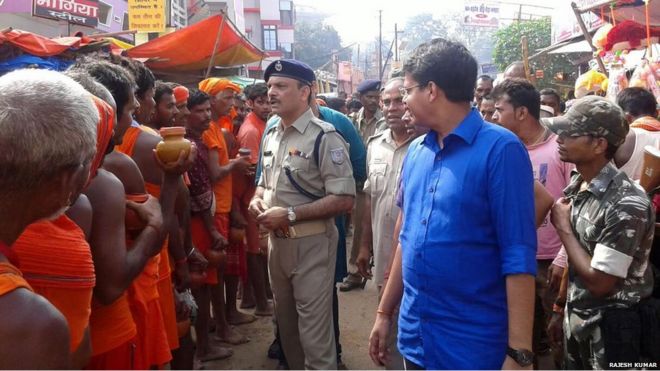
India temple stampede in Jharkhand leaves 10 dead


At least 10 people have been killed and 20 injured in a stampede at a temple in the eastern Indian state of Jharkhand, officials say.

Pilgrims have been marking a Hindu religious festival in Deoghar town.

It happened as pilgrims tried to make their way into the complex, a district official told BBC Hindi.

Deadly stampedes are common during Indian religious festivals, which attract large crowds with few safety measures in place.

The stampede at the Baidyanath Jyotirlinga temple began after pilgrims surged towards the shrine shortly after the doors opened early on Monday, an official told the AFP news agency.

Monday is considered an auspicious date to visit the shrine, which includes a main temple and 21 smaller ones devoted to Shiva, the god of destruction.

Pilgrims sleeping in the 6km (four miles) long queue were trampled as others pushed towards the doors, senior police official SN Pradhan said.

"Many tried to rush to the head of the queue which led to chaos and as some of them fell, the devotees got trampled."

"Ten people including one female devotee are now confirmed dead. Another 15 to 20 people have received injuries," he said

In October, some 91 pilgrims, mostly women and children, were killed in a stampede at a Hindu festival near the Ratangarh temple in Madhya Pradesh state.

In 2011, more than 100 died at a festival in the southern state of Kerala.

Monday 10 August 2015

http://www.bbc.com/news/world-asia-india-33844083

continue reading

Tuesday, 14 July 2015

Pushkaram Stampede: Death toll rises to 27


Twenty-nine pilgrims, 23 of them women, were crushed to death in a stampede on the first day of Godavari Maha Pushkaralu, considered the 'Mahakumbh of south', on Tuesday.

Around 50 people were hospitalized; the condition of 15 of them is critical.

Sources said 5,000 pilgrims were thronging Pushkara Ghat in Andhra Pradesh's Rajahmundry at 8.30 am with another 1 lakh people queuing outside the main venue when the stampede broke out.

Most of the victims were women and some of them have not been identified yet. The injured were rushed to Government Hospital in the city. The stampede occurred at around 8.30 am, about an hour after chief minister N Chandrababu Naidu left the ghat. Preliminary information indicates that a large number of pilgrims were kept waiting due to the presence of VVIPs including the chief minister and his cabinet colleagues besides a large group of bureaucrats and other VIPs for more than two hours.

Huge crowd, poor crowd-control, closing of the ghat for more than two hours after pushkaram began since VIPs were taking holy dip apparently led to the stampede at Rajahmundry.

Soon after the VVIPs left the premises after the inauguration, pilgrims jostled with one another reach the ghat. As crowds swelled, the pilgrims pushed each other resulting in the stampede near the Fort gate of the Kotagummam. Adding to the chaos, the police personnel used mild force to control the crowds. Minutes later, several women were found unconscious and a dozen others were injured. They were all rushed to the hospital but to of no avail. The condition of 14 others who are under treatment is reported to be critical.

According to eye witness accounts, the stampede took place because the devotees were anxious to have holy dip in the pushkar, which is the main ghat in Rajahmundry though there are quite a number of ghats along the river bank. They said that the barricading of the pushkar ghat has in fact led to the stampede as the pilgrims did not move in the queue but tried to squeeze through the barricades to enter the ghat as there the rush was unimaginable.

Another problem was that the authorities had arranged only one passage into the ghat as a result of which those who were getting in and those who are getting out pushed each other in opposite directions. "When such a huge crowd collects, the movement should be unidirectional only. If the passage is meant for pilgrims moving in both the directions it is the perfect recipe for disaster. At Pushkar ghat this is what has happened," an official on condition of anonymity, said.

As this time, the pushakaram is called Maha Pushkaram, the crowd that descended on this fist sized town was quite huge, beyond the expectations of the officials. This apart, though there is VIP ghat, the VIPS including Chief Minister N Chandrababu Naidu chose to take holy dip at pushkar ghat only. This has forced the officials to close the ghat for more than two hours and the crowd kept swelling outside the ghat. After Naidu et al left at about 8 a.m., the ghat was thrown open to ordinary pilgrims and all of them tried to move at once. This apart, those who had already taken the holy dip began coming out of the ghat and the two streams of the people began pushing the other away.

"The people were packed like sardines at the ghat. There is not even an inch of room left between one person and the another. In this kind of situation, if a small portion of the crowd loses balance, it would lead to a domino effect. This is what has happened," the official said. Though Saraswathi Ghat has been prepared for the VIPs, which is less than one km away from the pushkar ghat, the chief minister and the other ministers took the holy dip at the pushakar only. This apart, the vehicles of the chief minster and the ministers were parked on the road which drastically reduced the space necessary for easy movement of people, eye witnesses said.

Chandrababu Naidu who is reviewing the situation with his deputy Nimmakayala China Rajappa asked the officials to stagger the crowds so the pilgrims would be distributed evenly to other ghats but the officials are not able to make much progress in implementing his direction. Naidu later vistied the victims undergoing treatment.

Tuesday 14 July 2015

continue reading

Friday, 10 July 2015

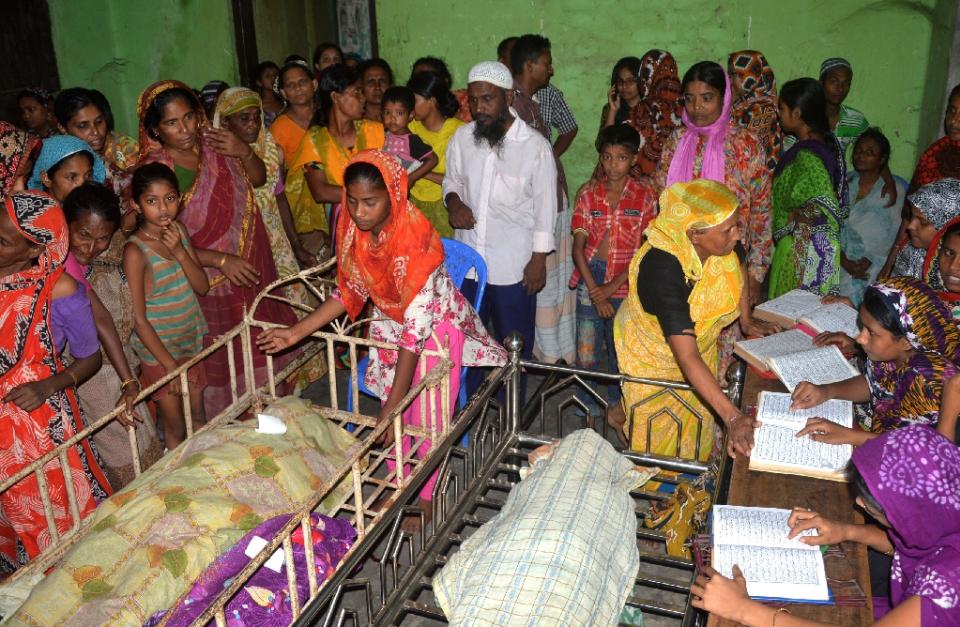
24 dead in Bangladesh charity handout stampede


A stampede during a Ramadan charity handout killed at least 24 people in Bangladesh on Friday as hundreds of desperately poor people tried to get their hands on free clothing, police said.

The stampede in the northern city of Mymensingh erupted when crowds of people tried to force their way into a factory compound through a small gate after massing outside before dawn, according to local police chiefs.

Television footage from the site showed scenes of utter devastation, with hundreds of torn and blood-spattered sandals abandoned at the gate of the chewing tobacco factory, which is located around 120 kilometres (75 miles) north of the Bangladeshi capital Dhaka.

"We have so far recovered 24 bodies. Most of the dead are poor and emaciated women and two children," Mymensingh police chief Moinul Haque told AFP, putting the number of injured at more than 50.

Kamrul Islam, the senior officer at a police station near the factory, said the death toll was likely to rise further while local media said scores of people had also been injured.

"We have handed over 24 bodies to the relatives," Islam said.

Many of the victims were ferried by cycle rickshaws to a nearby hospital with television footage showing relatives rushing through the entrance and corridors, cradling the lifeless bodies of their loved ones in their arms.

"My wife had gone there to collect some clothes for herself and for our children," Mohammad Robiul, a rickshaw-puller, told the Somoy Television news channel.

"I don't know what will happen to my kids," Robiul, who lost his wife in the tragedy, added before bursting into tears.

A witness told the bdnews24 website that the stampede began when a number of people fell to the ground as a melee erupted.

"As the gate was opening, everybody ran towards it, pushing and shoving each other and then they started falling," said rickshaw-puller Dulal Mia.

"Once one person fell to the ground, another 15 to 20 people fell, too. The people got killed when they closed the gate."

Prime Minister Sheikh Hasina expressed deep shock over the tragedy, according to the state-run BSS news agency.

In a condolence message, the Prime Minister offered prayers and "conveyed profound sympathy to the bereaved families", the agency said.

Meanwhile, the religious affairs ministry said it would pay each family 10,000 taka (around $125) to cover the cost of the funerals of their relatives.

Police and local officials said that the owner of the factory and six other people have been arrested for failing to ensure public safety.

"Legal action will be taken against them," District Governor Mustakim Billah told reporters.

A special police committee has been set up to investigate the tragedy and is due to report its findings within the next three days.

Police said up to 1,500 people had massed outside the factory at around 4:45 am (2245 GMT on Thursday) after the owners had announced they would distribute free clothes to poor people in accordance with Islamic ritual.

Rich Bangladeshis often distribute free clothes to poor people during the Muslim holy month of Ramadan, which began on June 19.

But the handouts have sparked several deadly stampedes over the years.

Around 40 people were killed in a similar stampede at a garment factory in the northern city Tangail in 2002.

Factory safety has been a major issue in Bangladesh since the collapse of a clothing manufacturing complex in April 2013 that left more than 1,100 people dead, making it one of the worst industrial accidents in history.

Friday 10 July 2015

http://news.yahoo.com/17-dead-bangladesh-charity-handout-stampede-police-035032984.html

continue reading

Saturday, 11 April 2015

Remembering The Ellis Park Stadium Victims


Today, Saturday, 11 April 2015, marks 14 years since the Ellis Park Stadium disaster, which is remembered for claiming the lives of 43 people in a Soweto Derby between Kaizer Chiefs and Orlando Pirates.

The South African football fraternity will forever remember the 43 fans who never returned home, after having gone to watch the biggest game in the Premier Soccer League’s calendar on 11 April 2001.

Benedict Vilakazi had just equalised for Pirates, after Tony Ilodigwe had scored for Chiefs earlier on that evening when the game was halted.

At that moment it had become evident to the powers-that-be and almost everyone at the stadium that tragedy had stricken.

The stadium had been overcrowded, which made it difficult for the security personnel to control the fans on that fateful evening.

The score was 1-1 when the game was abandoned before the end of the first half.

The scenes of the bodies of the deceased that were laid on the pitch that evening will forever be in the memories of the masses associated with arguably the most-loved sport in Mzansi.

As this day marks the memorial service of the late Steve ‘Kalamazoo’ Mokone, as well as the funeral service of the late Richard Henyakane, Soccer Laduma would like to extend our heartfelt condolences to the families, friends and colleagues of all.

Mokone’s memorial service is being held at FNB Stadium. Henyekane’s funeral service is held in Galeshewe in Kimberley.

Saturday 11 April 2015

http://www.soccerladuma.co.za/news/articles/categories/south-africa/14-years-since-the-ellis-park-stadium-disaster/206438

continue reading

Saturday, 28 March 2015

10 die in stampede during Hindu religious gathering in Narayanganj


At least 10 people were killed and dozens more injured on Friday in a stampede during a Hindu religious gathering in Bangladesh, police said. The accident took place in Langalbandh, a Hindu pilgrimage spot on the banks of the Brahmaputra river, 12 miles southeast of capital Dhaka, according to police. The cause of the stampede was not immediately clear.

The annual religious bathing ritual in Bangladesh’s Narayanganj district draws thousands of Hindu devotees from Bangladesh and also neighboring India and Nepal.

At least 20 others were injured in the incident on Old Brahmaputra River bank at Langalbandh on Friday.

Witnesses say a rumour that a bailey bridge was collapsing triggered the stampede while many blamed mismanagement.

Police have denied the allegations.

Police say the bodies will be handed to families without post-mortem examinations.

The district administration announced Tk 25,000 to families of each victim for funeral.

President Md Abdul Hamid and Prime Minister Sheikh Hasina have mourned the casualties.

Langalbandh, 20 km southeast of Dhaka, is a Hindu holy site that hosts an annual ritual bath where pilgrims from home and abroad take part. The ritual’s origin is unclear.

An estimated 1.5 million devotees thronged Langalbandh on Friday.

Although the local administration prepared 16 quays, most devotees raced to the ancient Rajghat.

Local Union Parishad member Abdul Quadir said devotees had mostly thronged the Rajghat, Annapurna and Gandhi quays.

“The street is narrow but the bridge is narrower. People suddenly started running in a frenzy leading to the deaths”

What triggered the rumour is unclear.

Many blamed police inaction for the incident while others say lack of ambulances led to a rise in the toll.

Narayanganj Deputy Commissioner Anisur Rahman Mian blamed overcrowding for the stampede.

A senior police official in the district said that more police had been sent to the festival site after the accident and the bathing ritual had resumed after the stampede had been controlled.

Saturday 28 March 2015

http://www.cctv-america.com/2015/03/27/at-least-10-crushed-to-death-in-bangladesh-stampede http://bdnews24.com/bangladesh/2015/03/27/10-die-in-stampede-during-hindu-religious-gathering-in-nganj

continue reading

Monday, 9 March 2015

Bolton remembers 33 who died in Burnden Park disaster


Bolton Wanderers fans are today remembering the 69th anniversary of one of football's biggest tragedies.

The flag flies at half-mast over the Macron stadium today in remembrance of the 33 people who died in the Burnden Park disaster on March 9, 1946.

They were crushed to death in the crowd at a Bolton Wanderers home match at the club’s former Burnden Park stadium, which is now the site of an Asda supermarket.

A massive 85,000 people had crammed into the terraces to watch the FA Cup tie against Stoke, with many climbing over walls to get into the ground when the turnstiles were shut in the hope of seeing Stoke star Stanley Matthews in action.

The overcrowding at the Embankment end forced the barriers to collapse and bodies fell on top of each other and on to the pitch, suffocating many fans.

The dead and injured were laid out on the pitch as players were ushered back to their dressing room, but the scale of the disaster was not realised at the time and officials, fearing trouble if the game was abandoned, resumed the match.

Bolton Wanderers' club chaplain Phil Mason said: "The flag, as always, is lowered and the memorial book at the front of the ground will be opened He added: "It is important that we do not forget — it remains one of the biggest football disasters in history, which led to new legislation being passed.

"It unites us with other clubs who have gone through similar tragedies, and it intertwines the club with Liverpool."

He added: "At the memorial service at the end of the season the names of those who died in the Burnden Park disaster will be read out."

Wanderers will mark the 70th anniversary of the disaster — on March 9 next year — with the release of a custom designed third kit for next season.

The Macron-manufactured limited edition shirt will have the names of the 33 people who died that day printed in the fabric.

A total of 1,000 shirts will be made available for purchase, with £10 from each sale being donated to a Bolton-based charity chosen by the supporters.

The Lancashire rose and date of the Burnden Disaster — 09-03-1946 — will also feature on the reverse and collar of the shirt.

Keen Bolton Wanderers supporter Cllr John Walsh said: "I think it is very important Bolton reflects and remembers. It had a huge impact on the club and the town.

"Families suffered terribly and financially. There were fundraising appeals which showed once again how Bolton pulls together.

"My mother was at the match and I remember her telling me her mother was waiting for her on the doorstep — many people at the match did not know the scale of the tragedy, while those at home had heard it on the radio."

Monday 9 March 2015

http://www.thisislancashire.co.uk/news/11842045.Bolton_remembers_33_who_died_in_Burnden_Park_disaster/

continue reading

Friday, 2 January 2015

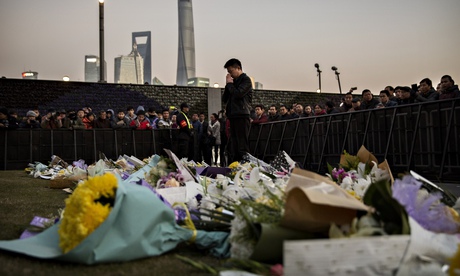
Grieving relatives ID bodies after China stampede


Grieving relatives identified the bodies of loved ones a day after a stampede during New Year's celebrations along Shanghai's historic waterfront area killed 36 people. Some families lashed out at authorities, accusing them of being unresponsive to their plight and failing to prevent the disaster.

Thirty-two of 36 people killed in New Year eve stampede at Shanghai's iconic waterfront area have been identified, authorities said today, as Chinese media and public criticised the administration's failure to prevent the tragedy that marred the gleaming financial hub's image.

The chaos began about a half-hour before what was supposed to be a joyful celebration of the start of 2015. In the end, dozens were dead and 47 people were hospitalized, including 13 who were seriously injured, according to the Shanghai government. Some of the victims had suffocated, said Xia Shujie, vice president of Shanghai No. 1 People's Hospital.

Seven of the injured had left hospitals by Thursday afternoon.

The Shanghai Municipal government has published the identity of 32 victims on its microblog, with the rest yet to be identified. Among them, the youngest was a 12-year-old boy while the oldest was 37.

Among those identified, 21 were female. A total of 25 women, mostly young college graduates, were killed in the incident.

The stampede's cause was still under investigation. It happened at Chen Yi Square in Shanghai's old riverfront Bund area, famed for its art deco buildings from the 1920s and 1930s. Throngs of people often jam the area during major events.

A day after the tragedy, some criticized the government, blaming it for failing to keep order at the city's most popular site and for miscommunications with victims' relatives.

"We were told my sister was still being rescued the minute before we were taken to the morgue, where she had been lying dead -- clearly for a while," said Cai Jinjin, whose cousin Qi Xiaoyan was among the dead. "There she was, cold and all by herself."

Other victims' relatives complained that authorities failed to notify them of the deadly stampede and had been unresponsive to their requests for information. In one case, relatives of 24-year-old victim Pan Haiqin said they were alarmed after Pan's employer reported a no-show at work on Thursday, and after traveling hours to Shanghai, got no answers from authorities before they finally were able to confirm Pan's death.

At one of the hospitals where the injured were being treated, relatives tried to push past guards, who used a bench to hold them back. Police later allowed family members into the hospital.

A grieving mother dragged a low-ranking municipal official out from a government compound, demanding answers. Police at one hospital brought out photos of unidentified dead victims, causing dozens of waiting relatives to crowd around. Not everyone could see, and young women who looked at the photos broke into tears when they recognized someone.

According to a man who returned to M18 to pick up his lost phone, some people did throw coupons out of the windows, but some just threw the "banknotes" into the air above their heads when the bar was filled with about 200 people, the Shanghai Daily reported. Shanghai has organised gala shows on the western bank of Huangpu River for new year countdowns in previous years, with a strong police presence on the riverside to control crowds and maintain order.

Witnesses said that in past years, hundreds of police officers, some armed, stood watch in the area during the celebrations, preventing crowds from walking on the terrace.

Shanghai police did not state how many police officers were at the scene at the time of the stampede, saying only that they sent 500 officers to help disperse the crowd at about 11:30 pm when they noticed the crowd on the stairs was not moving.

It took between five and eight minutes for the police to reach the staircase and it was already too late when they arrived, Eastday.com quoted police as saying.

There was no official estimate of the revellers in the area and estimates by mainland media varied between 100,000 and 150,000 people.

The Shanghai government has cancelled the lightshow and other major New Year celebration activities.

Survivors recounted the horrific experience when the brightest night turned into the darkest minutes before midnight.

Zuo Zhijian, a survivor, said: "You can't imagine this: you are suspended over the ground. Someone behind you grabs your hair to stand up. Right there in front of you, a girl begs you to save her life and says she is dying, while another just lies motionless."

"Two dozen people were lying on the ground with bags, cellphones, shoes and scarves scattered around," Zuo said.

China's top tourism authority made an urgent call to beef up precautionary measures against surging tourist numbers during holidays after the stampede.

The National Tourism Administration (NTA) has called on the government to step up the security arrangements, improve emergency response plans, and take strict measures to control tourist flows at scenic spots as the country braces for Chinese New Year Holiday falling next month during which millions visit the scenic spots.

NTA said under China's Tourism Law, scenic spots are obliged to inform tourists and report to the local government when tourist numbers could potentially exceed their maximum reception capabilities, so that measures could be taken to timely divert tourists in order to insure security.

Saturday 2 January 2015

http://www.thonline.com/news/national_world/article_94fe2b31-c45d-53c8-8030-7ac7b88afe24.html

continue reading

Wednesday, 30 July 2014

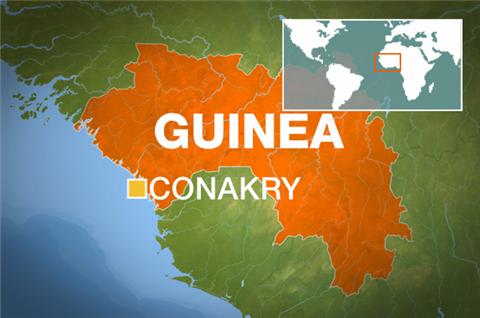
Guinea concert stampede kills 24


At least 24 people have died in a stampede at a beach concert in Conakry, the capital of Guinea, to mark the end of the Muslim holy month of Ramadan.

The president's office has declared a week of national mourning after what it called a "tragic drama" at a concert by the Guinean rap group Instinct Killers.

Dozens of people were injured, said police sources quoted by AFP.

The concert took place on Tuesday evening on a beach in Ratoma, a northern suburb of Conakry.

The authorities were "shocked by the tragic drama caused by mass movements at a cultural event," said a statement from the president's office.

Hospital sources said there were 13 girls among the dead.

Wednesday 30 July 2014

http://www.bbc.co.uk/news/world-africa-28558081

continue reading

Saturday, 24 May 2014

Lima 1964: The world's worst stadium disaster


The world's worst stadium disaster occurred exactly 50 years ago in the Peruvian capital Lima. More than 300 people died - but the full story has never been told, and possibly never will be.

"The police didn't let their dogs loose but they did let them tear his clothes off," recalls Hector Chumpitaz, one of Peru's football legends.

"The people were getting disturbed by the way in which they were taking the pitch invader away. It was driving them mad.

"We don't know what would have happened if they had removed him in a peaceful fashion, but we can't think about that now."

Chumpitaz went on to gain more than 100 caps for Peru. He captained the side at the 1970 and 1978 World Cups, but he almost gave up football after this disastrous match, at the start of his international career.

Hosting Argentina on 24 May 1964, Peru were second in the table at the half-way stage of South America's Olympic qualifying tournament. Confidence was high, but with Brazil awaiting in their last game, Peru realistically needed a draw at least against Argentina.

The stadium was packed to its 53,000 capacity, a little over 5% of Lima's population at the time.

"Though we were playing well, they took the lead," Chumpitaz recalls. "We attacked, they defended and this continued until a play came where their defender went to clear - and our player, Kilo Lobaton, raised his foot to block and the ball rebounded into the goal - but the referee said it was a foul, so he disallowed it. This is why the crowd began to get very upset."

In quick succession, two spectators entered the field of play. The first was a bouncer known as Bomba, who tried to hit the referee before being both stopped by police and manhandled off the field. The second, Edilberto Cuenca, then suffered a brutal assault.

"Our very own policemen were kicking him and beating him as if he were the enemy. This is what raised everybody's anger - including mine," says one of the fans in the Estadio Nacional that day, Jose Salas.

Within seconds, the crowd were launching a variety of missiles at the police. A couple of dozen more people were trying to reach the pitch. Reading the mood, Salas and his friends decided to leave.

"The five of us went down the stairs to go out on to the streets - as did many others - but we found the exit gate closed," he says. "So we turned round and started to climb the stairs, which is when the police started throwing the tear gas. At that point, the people in the stands ran into the tunnel to escape - where they met us - causing an enormous crush."

Salas was in the north stand, where the greatest number of tear gas canisters fell - between 12 and 20.

Salas thinks he spent some two hours in a human glacier that slowly edged down the stairs - so tightly packed, he says, that his feet did not touch the floor until he ended up at the bottom, trapped in a pile of bodies, some living some dead.

Records state that most victims died from asphyxiation. But what makes this stadium disaster different from others is what happened on the streets outside.

While some fans who escaped from the stadium managed to open the gates and free those trapped inside, others became involved in a battle with armed police.

"Some lads from my neighbourhood were going by and spotted me. I was quite skinny, and eventually they pulled me out," he says. "But then the shooting began and they started running. The shots were outside - bullets were everywhere. I started to run and didn't look back."

For most of this time, Chumpitaz was also unable to leave.

"After we made it to the dressing rooms, some people went outside and came back saying there had been two deaths. 'Two deaths?' we asked. One would have seemed a lot. We were in the dressing room for two hours before we could leave, so we didn't know the magnitude of what was going on.

"On the way back to our training base, we were listening to the radio and it was 10, 20, 30 deaths. Every time there was news, the number was rising: 50 deaths, 150, 200, 300, 350."

The official number of those who died is 328, but this may be an underestimate, as it does not include anyone killed by gunfire.

There are many eyewitness accounts of people dying of gunshot wounds, but the judge appointed to investigate the disaster, Judge Benjamin Castaneda, was never able to find the bodies to prove it.

Hearing of two corpses with gunshot wounds in Lima's Hospital Loayza, he rushed to inspect them, he told me when I interviewed him 14 years ago. As he arrived, a vehicle was just leaving.

"Reaching the mortuary, I met someone I knew," he said. "I asked him if there were two corpses with bullet wounds. 'Yes,' he told me, 'but they've just taken them away.'"

Some months after the tragedy, Castaneda was visited by an elderly man who said his two sons, both medical students, had travelled from the provinces to attend the game and never returned.

"Even though he had looked for their names among the dead, he could not find them," Castaneda told me.

"He had made further inquiries, but found nothing. So I told him I had news that some people had died after being shot and that, lamentably, I could never discover their identities as everything had been hidden from me."

In his report, Castaneda said the death toll given by the government did not "reflect the true number of victims, since there are well-founded suspicions of secret removals of those killed by bullets".

He went on to accuse the then interior minister of orchestrating the pitch invasion and the brutal police response, in order to incite the crowd to violence - thus providing a pretext for a violent crackdown. The show of strength was intended, he said, to "make the people learn, with blood and tears" the risks they ran if they challenged the authorities.

For its part, the government laid the blame for the trouble on Trotskyist agitators.

Jorge Salazar, a journalist and professor who has written a book about the disaster, says Peruvian society was at the time unusually turbulent.

"It was the sixties, it was Beatles time, Fidel Castro was in fashion - everything was changing in the world," he says.

"In Peru, people were talking for the first time about social justice. There were a lot of demonstrations, worker movements and communist parties. The left was quite powerful, and there was a permanent clash between the police and the people."

Many of the football fans who escaped from the tear gas, certainly wanted revenge on the police. Two policemen were reportedly killed inside the stadium, and battles continued on the streets outside.

Fifty years on, Peruvian Congressman Alberto Beingolea, who has called this weekend for a minute's silence to honour the dead, doubts that the violence was pre-planned by either the government or revolutionaries.

But he doesn't discount the idea that people died from gunshot wounds.

"Two such deaths are possible, especially if you are in a climate of chaos - as happened in that era," he says. "When one generates chaos, the police have to respond - and at any moment, that can result in shooting."

Peru has never made a serious attempt to get to the bottom of the Estadio Nacional disaster, and this may never now be possible.

What we do know is that those punished can be counted on two fingers.

Jorge Azambuja, the police commander who gave the order to fire the tear gas, was sentenced to 30 months in jail.

The other was Judge Castaneda himself. He was fined for submitting his report six months late, and for failing to attend all 328 autopsies as he ought to have done. His report was thrown out.

Now dead, he told me in 2000: "I asked everywhere about the bodies but never found anything. They said - without official confirmation of any kind - they were interred in Callao."

This year, the head of the Peruvian Institute of Sport - one of the country's four Olympic medallists, Francisco Boza - has made an unprecedented effort to contact families affected by the tragedy and to invite them to a long overdue mass, to be held at the Cathedral of Lima on Saturday.

But there is still no plaque on display at the Estadio Nacional to commemorate those who died in football's worst disaster.

Stadium disasters - estimated deaths

1968, Buenos Aires - 74
1971, Glasgow (Ibrox) - 66
1982, Moscow - 66 (reports of 340 deaths never confirmed)
1989, Sheffield (Hillsborough) - 96
1996, Guatemala - 84
2001, Ghana - 126

Saturday 24 May 2014

http://www.bbc.co.uk/news/magazine-27540668

continue reading

Tuesday, 13 May 2014

At least 15 dead in fan stampede at Congo soccer stadium


A stampede at a soccer stadium in Congo's capital killed at least 15 people after angry fans threw rocks from the stands, prompting security officers to fire tear gas that caused crowds to flee in panic, government officials and witnesses said Monday.

The stampede at the Tata Raphael Stadium in Kinshasa happened toward the end of a match Sunday between popular teams AS Vita Club and TP Mazembe.

At least 21 others were injured during the melee, said Gov. Andre Kimbuta, who has set up a commission to investigate the incident.

Congolese government spokesman Lambert Mende on Monday defended the actions of the security officers.

"It is false to say that the violence was started by the tear gas, which was used to protect people being threatened by elements in the stands who were acting like militiamen," he said.

Three of the injured remained in the hospital, Mende said.

Spectator Kanga Yves said the crowds were trampled as they tried to flee the tear gas, and that he had seen at least eight bodies.

Witnesses said angry fans threw objects onto the field including rocks late in the match on the last day of the league season. The home team, AS Vita, was losing 1-0.

The stampede caused a recently restored wall and gate to collapse, the Confederation of African Football said in a statement.

More than 20 people were killed on April 25 in the town of Kikwit in southwest Congo when generators failed during a festival honoring a popular singer, plunging the stadium into darkness and causing a stampede.

Sunday’s Kinshasa stadium stampede also came days after Ghana marked the anniversary of Africa’s worst football disaster. Over 120 people were killed on May 9, 2001 when police fired tear gas at a stadium in the Ghanaian capital Accra because of crowd trouble at a game, also causing a stampede in the stands.

Most recently, more than 70 people died in a riot at a football game in the Egyptian city of Port Said in February 2012. The riot was linked to political violence in Egypt following the overthrow of Hosni Mubarak as president.

Tuesday 13 May 2014

http://www.tampabay.com/sports/soccer/stampede-kills-15-in-congo/2179490

http://losangeles.cbslocal.com/2014/05/12/at-least-15-dead-in-fan-stampede-at-congo-soccer-stadium/

continue reading

Saturday, 18 January 2014

India: At least 18 dead in Mumbai stampede


A stampede killed at least 18 people in India's financial hub Mumbai on Saturday when a large crowd gathered to pay their last respects to a Muslim spiritual leader, police said.

More than 40 people were injured in the chaos that erupted shortly after midnight local time (1830 GMT) when the gates were shut to the residence of Syedna Mohammed Burhanuddin, who died aged 102 Friday.

"Organisers had closed the gates. The crowd was so huge that people started suffocating, some fainted and then people began running and falling on each other in a panic," Mumbai police chief Satyapal Singh told reporters.

In reply to a question, Singh confirmed that 18 people died and admitted there was a lapse in crowd control as police and organisers had failed to anticipate the huge turnout of devotees.

Singh added that he had ordered a thorough investigation into what led to the pre-dawn disorder.

Burhanuddin, who was due to celebrate his 103rd birthday in a few weeks, died of a heart attack at his home, a spokesman said.

He was a leader of the Dawoodi Bohra community, a sect of Shiite Islam.

Stampedes at public events in India are common as large numbers of people pack into congested areas.

Panic can spread quickly and, with few safety regulations in place, the result is often lethal.

Home Minister Sushilkumar Shinde told reporters: "I feel very sorry about the tragic incident", and expressed his condolences for the 18 deaths.

Thousands adorned in white scarves and skullcaps had gathered Saturday on the streets of Mumbai for the funeral procession of Burhanuddin, TV footage showed.

Narendra Modi, leader of the opposition Bharatiya Janata Party who has been vilified for deadly anti-Muslim riots in his Gujarat state in 2002, called the incident "unfortunate" on Twitter.

"Stampede near Syedna Sahib's residence is very unfortunate. Condolences to families of those who lost their lives & prayers with the injured," Modi tweeted.

The spiritual leader, succeeded by his 70-year-old son Syedna Mufaddal Saifuddin, led the Dawoodi Bohra community for nearly five decades.

Burhanuddin had succeeded his father Syedna Taher Saifuddin in 1965.

He was honoured with civilian titles such as the Star of Jordan and Order of the Nile by the governments of Jordan and Egypt.

The latest disaster comes just months after some 115 devotees were crushed to death or drowned on a bridge near a Hindu temple in October, when crowds panicked after rumours that the bridge was going to collapse in the central state of Madhya Pradesh.

In 2006, another stampede outside the same temple killed 50 people as they crossed a river, prompting authorities to build the bridge.

India has a long history of deadly stampedes at religious festivals, with at least 36 people trampled to death last February as pilgrims headed home from the Kumbh Mela religious festival on the banks of the river Ganges.

Some 102 Hindu devotees were killed in a stampede in January 2011 in the state of Kerala, while 224 pilgrims died in September 2008 as thousands of worshippers rushed to reach a 15th-century hill-top temple in Jodhpur.

Saturday 18 January 2014

http://www.google.com/hostednews/afp/article/ALeqM5g8i-B2Z-36-1chX8lLV77rycOxKw?docId=8bd16116-6ee2-40da-8075-0035c99ac2c5

continue reading

Monday, 6 January 2014

Stampede at China religious event kills 14


A religious temple was the scene of a stampede that killed 14 people and injured 10 others in northwestern China Sunday.

According to China’s Xinhua news agency, the stampede occurred during a ceremony commemorating a deceased religious figure at a temple and killed 14 attendees. The ceremony includes the handing out of traditional food to attendees, and it was during the distribution of this food that the stampede broke out, reportedly.

The site of the mishap was a temple in Guyuan city in the Ningxia Hui Autonomous Region of China.

Besides the 14 killed people in the stampede, four temple-goers were left in critical condition and six other Chinese were treated in hospital, Xinhua reported.

Monday 06 January 2014

http://www.reuters.com/article/2014/01/06/us-china-stampede-idUSBREA0500J20140106

continue reading

Sunday, 3 November 2013

Church stampede in Anambra, Nigeria, 'kills 17'


At least 17 people have been killed and many more injured in a stampede at the end of a religious vigil in eastern Nigeria, officials say.

The crusade, organized by Rev. Fr. Emmanuel Obinma for prayers, healing and spiritual retreat, attracts thousands of people, but the one that was held Saturday, on the Feast of All Saints turned tragic.

As estimated 100,000 worshippers attended the crusade because, apart from coinciding with the Feast of All Saints, it was also the first Saturday of the month.

Local media say that the death toll could be higher.

Anambra governor Peter Obi had been at the event and later returned to visit the injured in hospital.

The stampede took place at about 06:00 (05:00 GMT) on Saturday.

Anambra is about 300km (185 miles) south of Abuja.

"We have visited the hospital in Nkpor and found 17 corpses that were brought in from the scene of the disaster," spokesman Mike Udah told AFP news agency.

Sunday 03 November 2013

http://www.bbc.co.uk/news/world-africa-24792688

continue reading

Monday, 14 October 2013

Stampede on bridge leading to Ratangarh temple in Madhya Pradesh, death toll rises to 109 pilgrims (update)


The Navratra festivities ended in tragedy when 109 pilgrims including women and children were killed and more than 100 injured in a stampede on a bridge leading to the historic Ratangarh temple in Datia district of Madhya Pradesh on Sunday. It was a disastrous re-run of the 2006 stampede when more than 50 pilgrims had got washed away falling in panic into the Sindh river off the same bridge in 2006.

Large crowds began converging on the site from early morning, according to witnesses, as Hindus celebrate the end of the Navaratri festival.

The festival is dedicated to the worship of the Hindu goddess Durga, which draws millions of worshippers to temples, especially in northern and central India.

Hundreds of thousands of devotees had thronged the remote Ratangarh village temple in Madhya Pradesh state's Datia district to honor the Hindu mother goddess Durga on the last day of the popular 10-day Navaratra festival.

Up to 400,000 devotees were already inside or around the temple in Datia district, which is about 350 kilometers (220 miles) north of the state capital Bhopal, when the stampede took place.

Eyewitnesses said over-crowding of the bridge, which is 500m long and 10m wide, caused one of its railings to snap, which led some people to shout that the bridge was collapsing. With more than a lakh of people for the pilgrimage, this set off panic with people trying to rush to safety, which caused the stampede.

Unconfirmed reports said police lathi charge to control pilgrims from jumping a queue created alarm and drove people in one direction, leading to sudden surge of people on the bridge that caused one of its railings to snap, which in turn created the panic. Sindh, a tributary of the Yamuna, is engorged with rains in past weeks and many people also fell into the river, the reason why administrative officials fear that the death toll could rise.

It may also have been caused a rumour that a bridge to the Ratangarh temple in the central state of Madhya Pradesh was about to collapse after it was hit by a lorry.

Most died after being crushed underfoot but others are believed to have drowned after jumping into the river.

Ashok Argal, a federal lawmaker from the region, placed the blame on crowds trying to rush across the bridge.

"It is wrong to say there were any administrative lapses. The administration had taken steps and made fool-proof arrangements to avoid any untoward incident," he told AFP.

"Sometimes there is little cooperation from people and people are always in a hurry, because of which this unfortunate incident occurred."

The Times of India reported that crowds could be seen pelting police with stones as frustration grew over the rescue operation.

Efforts to reach the injured and ferry them to hospital were being hampered by the huge volume of traffic in the area.

The bridge itself was a ghastly sight with bodies sprawled even as rescue teams from Gwalior, a mere 75-odd km away, were delayed due to battered roads and a 10-km long traffic jam. Pilgrims said there were only nine constables and a sub-inspector manning more than one lakh people along the 500-metre bridge when the stampede occurred.

"We have counted 105 bodies so far. Several pilgrims died on way to hospital. The toll may rise," said chief medical and health officer RH Gupta. Director general of police Nandan Kumar Dubey put the toll so far to "around 85". Most of the lakh-odd pilgrims in Datia, around 405 km north of Bhopal, were from Madhya Pradesh and Uttar Pradesh.

The crush of the stampede killed mostly women and children. Many bodies were pulled from the river, but there were fears that some bodies may have been washed away.

Relatives crowded a state-run hospital to take the bodies after the autopsies and searched frantically for loved ones among the injured people being treated there. Volunteers and residents pulled many bodies out of the Sindh River, where people had jumped when the chaos started Sunday.

Chief minister Shivraj Singh Chouhan ordered a judicial inquiry into the tragedy and Congress president Sonia Gandhi has expressed shock and anguish. The Ratangarh temple is 55 km from the Datia district headquarters.

India has a long history of deadly stampedes at religious festivals, with at least 36 people trampled to death in February as pilgrims headed home from the Kumbh Mela religious festival on the banks of the river Ganges.

Some 102 Hindu devotees were killed in a stampede in January 2011 in the state of Kerala, while 224 pilgrims died in September 2008 as thousands of worshippers rushed to reach a 15th-century hill-top temple in Jodhpur.

Monday 14 October 2013

http://timesofindia.indiatimes.com/india/110-pilgrims-killed-in-stampede-on-bridge-leading-to-Ratangarh-temple-in-MP/articleshow/24110208.cms

continue reading

Sunday, 13 October 2013

Madhya Pradesh temple stampede: Over 70 dead including women and children


Over 70 pilgrims including children were killed and more than 100 injured in a stampede at Ratangarh temple in Datia district of Madhya Pradesh on Sunday morning. Chief minister Shivraj Singh Chouhan has ordered a judicial inquiry to probe the tragedy.

At least 50 were killed in stampede, while others drowned after jumping off the bridge in panic. The Ratangarh "Mata" temple located about 55km from district headquarters and 405km north of the state capital.

"Total of 68 bodies have been recovered so far, and the count is on. Some others have died on way to hospital, so the toll might three digits," said a senior intelligence officer.

The tragedy was allegedly caused by rumour that the bridge on Sindh River, through which the pilgrims were heading towards temple, was collapsing after a tractor trolley rammed into it and fell into the river. There were more than 50,000 devotees around the spot.

Eyewitness Manoj Sharma, 28, told TOI on phone that "police lathicharge during the panic run worsened the situation, forcing many to jump off the bridge." He is a resident of Bhander village in Datia district was along with his friends to visit the temple when the tragedy took place.

Huge traffic jam on way to the temple as a result of the incident has hampered relief work. Irate mob started pelting stones at the police. Subdivisional officer of police (SDOP) BN Basave was also thrashed.

"The figure could be more than 50. We are yet to recover bodies from the river," Chambal range DIG DK Arya told TOI on phone.

The tragedy occurred 55km from the district headquarters when the pilgrims were crossing the Sindh river bridge to attend a religious ritual on the ninth day of the Durga festival at the Mandula Devi temple. In 2006 more than 50 pilgrims were washed away when water was released from the Manikheda dam in adjoining Shivpuri district.

"The casualties could be in three figures, we are waiting for final reports," says DGP Nandan Kumar Dubey. Police officials are on the spot to recover the bodies and send injured to hospital.

Chief secretary, DGP and ADG intelligence have flown to the chopper on the spot.

Senior BSP leader and former Congress Rajendra Bharti alleged that the district collector and SP were busy with election management in Basai — 85km from the district headquarters — notwithstanding the fact that there would be a massive gathering near the temple. The administrative officials claim it otherwise.

Team of more than 20 doctors have been dispatched to the spot, and an alert has been sounded in surrounding Shivpuri district. The casualty wards of district hospitals have been vacated. Madhya Pradesh chief minister Shivraj Singh Chouhan, while announcing a compensation of Rs 1.5 lakh each. Leader of opposition Ajay Singh has appealed to the chief minister to increase the compensation amount.

It was a religious frenzy compounded by administrative failure led to a tragedy in 2006 when more than 50 pilgrims were killed while crossing Sindh river.

Sunday 13 October 2013

http://timesofindia.indiatimes.com/india/MP-temple-stampede-Over-70-dead-including-women-and-children/articleshow/24093310.cms

continue reading