Showing posts with label Avalanche. Show all posts

Monday, 21 March 2016

Two bodies recovered, nine still missing after Chitral avalanche


Rescuers on Sunday found the bodies of two schoolchildren hit by an avalanche in the mountainous northwest, while nine more remain buried beneath the snow.

The disaster struck on Saturday afternoon near the village of Susom, some 40 kilometres north of the town of Chitral in Khyber Pakhtunkhwa (KP), local police station chief Sultan Baig said.

Worried parents and authorities began searching for the ninth graders when they did not return from school. “The chances of finding any survivors are very low,” said local deputy mayor Mohammad Ali. “But you never know, people have been found alive buried under snow for nearly 20 hours.”

Meanwhile, Provincial Disaster Management Authority (PDMA) spokesperson announced the demise of at least eight students while claiming to have recovered two bodies. The casualties include Rehmat Bai, Imran Uddin, Faiz Ali, Ali Shan, Imran Khan, Elahi, Irshad Murad and Mubashir.

“So far two bodies have been recovered and due to the terrain and topography heavy machinery could not make their way to the area people are using local available equipment to recover the bodies,” the PDMA spokesperson said.

Talking to APP, an official of Police Control Chitral Fazaluddin said that soon after the incident, the Pakistan Army troops and Scouts rushed to the site in Susoom village of Karimabad. He said that of two bodies recovered so far, one is of a student and the other of a passerby. The recovered bodies were identified as Mubashir S/O Nouroz, resident of Susoom and Rehmat S/O Adina, also from Susoom village in Karimabad.

The official said that the rescue operation was halted due to bad weather and heavy rain. Due to the fear of another avalanche, the operation was stopped, he said.

Heavy rains have killed at least 79 people, injured 101 others and damaged 240 houses since March 9 across the country, according to the National Disaster Management Authority. It said landslides and collapsed roofs caused most of the fatalities.

Monday 21 March 2015

http://www.dailytimes.com.pk/national/21-Mar-2016/two-bodies-recovered-nine-still-missing-after-chitral-avalanche

continue reading

Friday, 28 August 2015

August 30, 1965: Worst avalanche disaster in Switzerland’s history.


Workers on the hydro electric scheme in the Saas Valley, high up in the Swiss Alps, had just finished up for the day and were settling down in their barracks when they were struck by an icy blast of wind. It bowled people over, flattened power poles and knocked down wooden buildings like they were matchsticks.

In the wake of the wind came a huge wall of ice, rocks and snow that tore through the small workers’ village burying almost 100 people.

The disaster, which happened 50 years ago this weekend, would claim the lives of about 90 people, one of the worst avalanche death tolls in Switzerland’s history.

SWISS PRIDE

Work on the dam had started in 1961, with a team of 400 Swiss, French and Italian workers. One of the major reasons for its construction had been to mitigate floods caused by meltwater from the Allalin glacier. Since the 17th century the spill of floodwaters from Mattmarksee (Lake Mattmark) had threatened villages in the valley below at least two dozen times. A dam would allow waters spilling over from Mattmark to be captured, preventing flash floods, but another benefit was that it would also provide electricity from a hydro electric plant. Cheap, clean energy especially through winter when it was needed most.

There were some concerns about the moving glacier dangling high above the dam, but it had not caused avalanches in the past.

In 1963, a team of experts examined the glacier during a period when it had been rapidly advancing, but deemed it no threat to the dam works below and work on the project continued.

Although some might have considered the construction an eyesore in what is otherwise a breathtakingly beautiful part of the world, the dam was a point of pride for the Swiss, an engineering marvel, part of a government initiative for hydro power.

It attracted bus loads of tourists, many of them from the holiday resorts Saas Fee and Saas Almagel several kilometres further down the valley. Some of them were visiting the site on August 30, 1965.

LETHAL ICE

What neither they nor the workers knew was that a great chunk of ice from the Allalin glacier was poised ready to snap off. It would later be understood that the glacier goes through cycles of retreat, followed every two to three years by rapid advances. In 1965 it began one of those advances which pushed the ice over a rock ledge.

It was thought this overhanging chunk of ice was disturbed by vibrations from the incessant rumbling of equipment in the valley below, as construction went on around the clock to get as much done as possible before the blizzard season. Day-shift workers had knocked off and were having dinner, with night-shift workers on their way to work. Others were resting in the barracks, socialising and playing cards.

Alois Hauser, a mountaineer from Zurich who was heading for a refuge hut high above the glacier, witnessed the moment the ice snapped. He said later it sounded like explosions, followed by a roar that shook the earth.

HELPLESS WITNESSES

Tourists on the dam wall also watched in horror as the ice rushed toward the workers’ camp, knocking over trucks and cars on the road down from the dam and flattening the camp. Miraculously, the dam and the tourists on it were spared.

Although the power was knocked out, a phone line stayed intact, enabling help to be summoned. Only five people were dug out alive. Some sources set the death toll at 88 although others report as many as 97 people died. More than 50 of the dead were Italian migrants.

Avalanches have been a constant danger in that part of the world. In the 1930s, a Commission for Snow and Avalanche Research was set up, primarily to protect soldiers stationed in the Alps after thousands had died during World War I. While research in the wake of disasters like the Mattmark Dam has helped to avert major disasters, avalanches still take lives in Switzerland. In 1999 Switzerland suffered a particularly bad season during which 1300 avalanches occurred, killing 17 people, including two in the ski resort of Evolene.

SWITZERLAND’S DEADLY RECORD

- 1618 the entire town of Plurs was buried by an avalanche, killed as many as 2500 people

- 1718 Two avalanches in one day flatten the town of Leukerbad,

killing 52. - 1888 200 people are killed by avalanches in the Wassen Valley

- 1951 A particularly destructive avalanche season saw more than 90 people killed.

Friday 28 August 2015

http://www.dailytelegraph.com.au/news/white-death-came-down-on-alps-village-with-a-roar-that-shook-the-earth/story-fnpoi7cy-1227501615379

continue reading

Wednesday, 10 June 2015

Families of quake victims must wait two weeks for DNA confirmation


The families of two Singaporean victims killed in last week’s earthquake must wait another two weeks for DNA confirmation before they will be allowed to take the bodies home.

Despite positive identification by the police, Queen Elizabeth Hospital director Dr Heric Corray said that the hospital is running DNA tests based on samples and data received from the families for final confirmation before they can release the bodies.

“We feel that DNA testing is required to be able to ascertain the bodies. This will be the final confirmation,” he said to reporters here today.

Yesterday, Prime Minister Datuk Seri Najib Razak said one victim’s family was in Kota Kinabalu to give a DNA sample while the other family had sent DNA data through e-mail and forensic experts are working round-the-clock to identify the remains.

Earlier today, Sabah police commissioner Datuk Jalaluddin Abdul Rahman said that body parts found on Mount Kinabalu were identified to be those of 13-year-old student Navdeep Singh Jaryal and 35-year-old teacher Mohammad Ghazi Mohamed from Tanjong Katong Primary School.

He said Malaysian police worked with its Singaporean counterpart to identify several body parts including arms, legs and torso picked up from the mountain summit using a disaster victim identification guide.

Meanwhile, Dr Corray said all the bodies have been claimed except for the family of the Japanese national who were likely to be arranging logistics to transport the body back following post mortem today.

“His body is still with us and we are just waiting for his family to take it. The last one was to the family of the Chinese national, who came here today,” he said.

The death toll from the magnitude 5.9 earthquake is now officially at 18, including six Malaysians, 10 Singaporeans and one Chinese and Japanese national each.

The deaths were caused by blunt trauma or injuries sustained from falling or being hit by a hard object, believed to be when the victim, who were climbing Mount Kinabalu, got hit by falling rubble from the quake.

The earthquake, some 16km northwest of the town of Ranau and in Kinabalu Park, is the largest to have hit Malaysia.

Wednesday 10 June 2015

http://www.themalaymailonline.com/malaysia/article/families-of-quake-victims-must-wait-two-weeks-for-dna-confirmation#

continue reading

Tuesday, 9 June 2015

Fog disrupts the search operation at Mt Kinabalu


The operation to locate two Singaporeans listed as missing at Mt Kinabalu following Friday's earthquake that hit Ranau has to be temporarily put on hold due to foggy conditions.

Ranau Police Chief Deputy Superintendent DSP Farhan Lee Abdullah called off the mission at about 5.30pm on Monday.

He said DNA tests on body parts believed to belong to the two missing would be speeded up to bring some closure to the search and rescue effort.

"As of today, the number of deaths still remains at 16," he told reporters, here.

Farhan also said 12 bodies have so far been claimed by family members.

Sabah is also considering the possibility of only allowing children aged above 15 years to climb Mount Kinabalu in the wake of the death of six children in Friday's quake.

State education director Jame Alip said he had spoken about the matter to state Tourism, Culture and Environment Minister Masidi Manjun, who is also the state executive councillor in charge of education.

Meantime Malaysian authorities have received DNA from families of the two Singaporeans missing. The DNA samples were taken from one of the families in Kota Kinabalu, and information on the other was received via email. Defence Minister Hishammuddin Hussein said the process of DNA matching will take time. In the meantime, the search and rescue operation will continue, until the DNA matching is done and victims are identified.

On Sunday, Sabah Tourism, Culture and Environment Minister Datuk Seri Masidi Manjun told reporters that 16 bodies had been recovered while two people were still classified as missing until post-mortem examinations were completed.

Those confirmed killed as a result of the 5.9-magnitude quake, that also rocked Southeast Asia's highest peak, were six Malaysians, seven Singaporeans, a Filipino, a Chinese national and a Japanese national. The two missing Singaporeans are a teacher and a pupil.

In Kota Kinabalu, several family members were seen waiting in a special room at the Queen Elizabeth Hospital where identification and post-mortem examinations were being conducted on the remains brought there.

Tuesday 9 June 2015

http://www.dailyexpress.com.my/news.cfm?NewsID=100423

http://www.channelnewsasia.com/news/singapore/search-for-two-missing/1902186.html

continue reading

Monday, 8 June 2015

Malaysia quake death toll reaches 16, search for bodies continues


Malaysian authorities said on Sunday 16 bodies had been recovered from the country's highest peak Mount Kinabalu after a magnitude 6 earthquake caused landslides and aftershocks.

The victims were 6 Malaysians, one from the Philippines, China and Japan, and 7 Singaporeans, including children who were on a school trekking trip.

Minister for Tourism, Culture and Environment Masidi Manjun told reporters in Kinabalu park that two people were listed as missing and that body parts had been found.

The search and rescue operations would continue on Monday, Manjun said.

Some climbers managed to make it down but more than 130 from 16 countries had been stranded on the mountain on Borneo island when the quake struck on Friday.

Rescue and recovery operations have been hampered by rubble and thick clouds which prevented helicopters from quickly retrieving the bodies.

"KM6.5 of the route was dubbed "river of stones" when earthquake struck early Friday which rendered the track impassable, trapping climbers," Manjun said on Twitter.

In Singapore, the prime minister's office said the children caught in the quake were from Tanjong Katong primary school.

Prime Minister Lee Hsien Loong declared June 8 a day of national mourning.

"State flags on all government buildings will be flown at half-mast," the prime minister said in a Facebook posting.

Malaysia's Deputy Prime Minister Muhyiddin Yassin said the country needed its own earthquake monitoring centre.

"In the latest incident, no one issued any warning. It may happen again and we do not have a department responsible to monitor impending disasters here," state news agency Bernama quoted him as saying at the Kinabalu site on Sunday.

The US Geological Survey said the epicentre of the quake was about 54 km (33 miles) from the state capital of Kota Kinabalu.

Monday 8 June 2015

http://www.dnaindia.com/world/report-malaysia-quake-death-toll-reaches-16-search-for-bodies-continues-2093321

continue reading

Thursday, 4 June 2015

Langtang locals returning home to recover their dead


After more than a month of sheltering at Yellow Gomba monastery at Swayambhu in the capital, the locals of Langtang VDC have begun to return to their villages in Rasuwa district in hopes of recovering the bodies of dead relatives and learning about the condition of their settlement.

The catastrophic 7.8 magnitude earthquake of April 25 triggered massive a avalanche in Langtang, which caused great loss of life and property. They locals were forced to relocate due to reoccurring avalanches.

With the earthquake aftershocks now slowly receding, they are heading back to Langtang in hopes of at least recovering the bodies of relatives who perished, if not finding them still alive.

"We've decided to go back as the government has been deaf to our requests to excavate the sites where our families remain buried, even a month after the incident," said Phinjo Tamang of Thangshap, Langtang-7.

Tamang lost his younger brother and mother in the avalanche. Like him, many locals remain unable to perform the final rites of their deceased as the bodies remain unrecovered.

Although the district administration office has prohibited entry to the incident site citing the hazards, 40 local quake victims are heading from Kathmandu to reach the site within two days. As many as 488 displaced locals from Langtang have been sheltering at the Yellow Gomba.

"Of late, the bodies of the deceased can be spotted as the snow has started melting," added Tamang.

Dawa Tsering Tamang of Langtang-5, who lost both his parents, said he is returning home in hopes of recovering their bodies. "Had the Nepal Army not rescued us on time, we too would have been buried. But we are returning as we've heard that tthe snows are melting," he added.

After losing his father, mother, brother and sister, Singey Tamang of Langtang-5 has hardly had any good sleep. He said another reason the locals are returning is that the climate in Kathmandu does not suit them. They are more used to colder climatic conditions.

Another local, Prenurba Tamang, also said that they found it very difficult to adjust to the climate in Kathmandu. Tamang, who lost six members of his family, said, "Mosquitoes don't let us sleep at night. Besides going back to recover our dead, we'd prefer the colder climate there despite the avalanche risks," he added.

"Although the government has categorized our family as 'missing' rather than 'dead', the hopes of finding them alive are very slim. We are returning to at least recover the bodies," said Singey Tamang.

They plan to start recovery operations as soon as they reach back there. They also said they will find safer places to settle in as the government failed to help them relocate properly.

As many as 210 people; including 70 locals, 40 tourists, their guides and porters, have been categorized as 'missing' from Langtang.

According to Gautam Rimal, assistant chief district officer of Langtang, 128 bodies have been excavated from the VDC so far, among which 14 are those of foreign nationals.

Thursday 4 June 2015

http://myrepublica.com/t20/item/22058-langtang-locals-returning-home-to-recover-their-dead.html

continue reading

Tuesday, 5 May 2015

Trekkers' bodies yet to be identified in Nepal


The bodies of 100 trekkers and villagers have been found where an avalanche hit outside Nepal's capital, triggered by last month's earthquake.

Police and local volunteers recovered the bodies over the weekend at the Langtang village, 60 kilometres north of Kathmandu, on a popular trekking route.

The entire village, including 55 guesthouses for trekkers, was wiped out by the avalanche.

Authorities say at least seven foreigners are included amongst the dead, but only two have been identified.

In Australia, the wait to hear the names of the dead is excruciating.

Adelaide man Brett White says it's believed his brother Tyronne reached the Langtang region while trekking the country to explore its beauty.

A Facebook message was Tyronne's last contact with home.

He hasn't been heard from since.

"I've called companies over there, like the trekking association. I've called the Australian embassy over in Nepal. I've tried to call... even there was one other random guy that said he was going to try and get a helicopter to go up there. And I've contacted him, if he went up there, to try and actually look for my brother. Things like that. I've just tried to call anyone and everyone."

Meanwhile medical aid agency Doctors Without Borders is in Nepal, setting up medical clinics and tent hospitals in Kathmandu, and helicopter flights into remote areas.

The organisation's emergency coordinator in Nepal, Anne Taylor, says adding to the tragedy is the quake's impact on remote regions, where access is difficult.

"The problem is that the only access really is by foot, and there's a lot of slips. Well there's been some slips since that have killed people even. We're using helicopters to get teams in, but again even with a helicopter we can't land. So it's this ongoing problem that won't go away, really."

More than 7,000 people have been killed in the disaster, but Nepalese Prime Minister Sushil Koirala expects the death toll could reach 10,000.

MSF's Anne Taylor says the reality is they still cannot put together a complete picture of the damage.

"I think it's going to be extremely ambitious to be able to get to all the villages that have been, you know, have really been damaged very very severely. So it's going to be very difficult to have it quantified very very specifically."

Aid workers are struggling to help those survivors in out of reach places.

Some haven't eaten since the earthquake struck on April the 25th.

But the United Nations World Food Programme Executive Director Ertharin Cousin says they will reach every person in need.

"We've prepared for this disaster, so we are ahead of the game of providing the support that is necessary. What we need is to continue to ensure that we receive the resources that are required, so that no person goes hungry and no person goes without the assistance that they need."

Meanwhile the Nepalese government has begun asking foreign teams to wrap up search and rescue operations, stating hope of finding people alive in the rubble has diminished.

And the families of the missing people remain uncertain of what news each day will bring.

Brett White considers going to Nepal to find his brother, but he doesn't know if it will make a difference.

"I, yeah, I'm considering it. But still, there's so many things happening over there, I'm not sure if I would actually help or not."

Tuesday 5 May 2015

http://www.sbs.com.au/news/article/2015/05/05/trekkers-bodies-yet-be-identified-nepal

continue reading

Sunday, 26 April 2015

Rescue efforts intensify in Nepal


A 6.7 magnitude aftershock has struck Nepal amid a desperate search for people trapped by the earthquake, which has killed more than 2,000 people.

The aftershock, felt as far away as New Delhi, sent people in Nepal's devastated capital running on to the street once again, witnesses reported.

"Massive aftershock. A wall of a old house next to mine has collapsed now. Kathmandu is in shock again. People on streets," one Kathmandu resident tweeted.

It hit as teams from all over the world headed to Nepal to search for survivors and provide food and shelter to people left homeless by Saturday's 7.9 magnitude quake.

Indian air force planes were among the first to arrive, landing on Sunday with 43 tons of aid, including tents and food, and nearly 200 rescuers.

UK teams set to join the relief effort include 14 volunteers from from UK charity Search and Rescue Assistance in Disasters.

They are heading to Kathmandu with 1.5 tons of specialist equipment to rescue people from collapsed buildings. The quake, which hit on Saturday, flattened houses and temples and triggered an avalanche on Everest which killed 17 – the worst ever loss of life on the mountain.

Police in the capital Kathmandu say bodies are still arriving at one hospital in the city.

Officer Sudan Shreshtha told reporters his team had brought in 166 corpses overnight.

Tens of thousands of terrified Kathmandu residents also spent the night outside in freezing temperatures fearing another major tremor.

Officials fear the death toll could rise as the desperate search for survivors continues. Many countries and international charities have offered aid to Nepal to deal with the disaster.

The shallow 7.8 quake struck at midday (local time) on Saturday in central Nepal, about 81 kilometres northwest of the capital Kathmandu. It caused massive damage in the Kathmandu Valley.

Victims have also been reported in India, Bangladesh, Tibet and on Mt Everest.

Australian authorities are trying to contact hundreds of their people, with about 350 still not confirmed as safe. Desperate rescue efforts underway.

The death toll could rise, as the situation is unclear in remote areas which remain cut off or hard to access. Many mountain roads are cracked or blocked by landslides.

Scores of bodies have been ferried to hospitals in the capital Kathmandu, many of which are struggling to cope with the number of injured.


More than 700 have died in the capital alone.

Medics are expecting a fresh influx of patients on Sunday as supplies run low. Rescuers in places used their bare hands to dig for survivors still buried underneath piles of rubble and debris overnight on Saturday.

Army officer Santosh Nepal told the Reuters news agency that he and his soldiers had to dig a passage into a collapsed three-storey residential building in Kathmandu using pickaxes because bulldozers could not get through the ancient city's narrow streets.

"We believe there are still people trapped inside," he told Reuters. Many historic buildings in the capital, including the Darahara Tower, have been destroyed.

Bodies recovered after avalanche

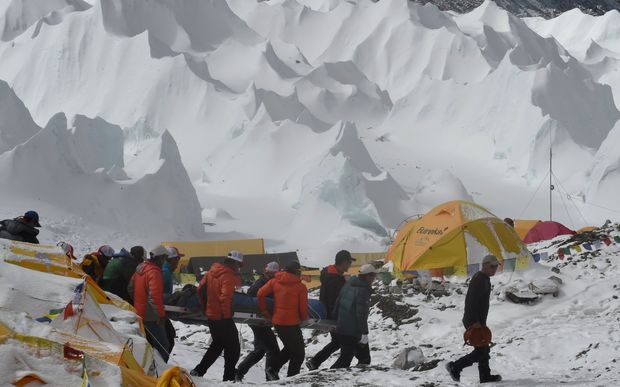
Seventeen bodies have been recovered after an avalanche triggered by the earthquake buried part of Mt Everest's Base Camp sparking fears for hundreds of climbers on the mountain.


Rescue team personnel carry an injured person towards a waiting rescue helicopter at Everest Base Camp. The Mountaineering Association said it was the worst disaster ever on the mountain.

It said a further 61 people were injured and the first rescue helicopters had only now been able to get in to fly them to a medical centre.

There are 100 climbers at Everest Camps 1 and 2 above base camp and all are safe, according to the Mountaineering Association.

But it said it will be difficult to evacuate them because the Icefall Route back to Everest Base Camp was damaged. It is the start of the main climbing season and officials estimate at least 1000 climbers including 400 foreigners were either at Base Camp or up the mountain when the quake struck.

Sunday 26 April 2015

http://www.dailymail.co.uk/news/article-3055731/Nepal-earthquake-nightmare-waiting-happen-Experts-knew-disaster-coming-Kathmandu-preparing-just-week-ago.html

https://uk.news.yahoo.com/rescue-teams-rush-nepal-earthquake-zone-054425473.html#FSiV8fJ

continue reading

Saturday, 25 April 2015

Mount Everest avalanche triggered by Nepal earthquake kills at least 18: reports


A powerful earthquake in Nepal has triggered an avalanche on Mount Everest, killing at least 18 people, according to reports.

An Indian army mountaineering team found 18 bodies on Mount Everest, after the avalanche swept through the base camp.

More than 1,000 climbers had gathered there at the start of the climbing season.

The earthquake hit Nepal and north India on Saturday afternoon, killing more than 1,300 people and collapsing buildings in Kathmandu.

Since then, climbers on the world's highest mountain have pleaded for help, saying an avalanche has destroyed camps and sent slabs of ice crashing in a "huge disaster".

"An avalanche from Mt Pumori has hit the base camp, burying a part of it," Nepalese tourism official Gyanendra Shrestha said.

"We don't have the details yet, but 10 have been reported dead so far, including foreign climbers."

"We are trying to assess how many are injured. There might be over 1,000 people there right now, including foreign climbers and Nepalese supporting staff."

Romanian climber Alex Gavan said on Twitter that there had been a "huge avalanche" and "many, many" people were up on the mountain.

"Running for life from my tent. Everest base camp huge earthquake then huge avalanche," he said.

"Huge disaster. Helped searched and rescued victims through huge debris area. Many dead. Much more badly injured. More to die if not heli asap," he later tweeted.

Another climber, Daniel Mazur, said Everest base camp had been "severely damaged" and his team was trapped.

"Please pray for everyone," he said on his Twitter page.

Rescue efforts hampered by snowy conditions

Rescue efforts are underway but heavy snow has prevented helicopters from reaching climbers, an official said.

AFP reporters on approach to the base camp said no rescue helicopters were on their way.

"We got caught in an earthquake on Everest. We are both OK ... snowing here so no choppers coming," they said.

But medics already at base camp for the climbing season were working hard to "save lives", doctor and mountaineer Nima Namgyal Sherpa said on his Facebook page on Saturday.

"Many camps have been destroyed by the shake and wind from the avalanche. All the doctors here are doing our best to treat and save lives," Dr Nima said.

Mohan Krishna Sapkota, joint secretary in the Nepalese tourism ministry, said the government was struggling to assess the damage on Everest because of poor phone coverage.

"The trekkers are scattered all around the base camp and some had even trekked further up. It is almost impossible to get in touch with anyone," Mr Sapkota said.

Choti Sherpa, who works at the Everest Summiteers Association, said she had been unable to call her family and colleagues on the mountain.

"Everyone is trying to contact each other, but we can't. We are all very worried," she said.

One climber, Arjun Vajpai, told India's NDTV that he had not been able to establish radio communication with anyone from his team.

"We had some 10 to 15 climbers including some sherpas up there and we still don't have any confirmation reports [of] whether they are OK or not," he said.

"It is snowing here for the past one and a half days. We haven't been able to establish radio communication with them."

An avalanche in April 2014 just above the base camp on Mount Everest killed 16 Nepali guides, making it the deadliest incident on the mountain.

April is one of the most popular times to climb Everest before rain and clouds cloak the mountain at the end of next month.

Saturday 25 April 2015

http://www.abc.net.au/news/2015-04-26/nepal-earthquake-triggers-deadly-mount-everest-avalanche/6422142

continue reading

Devastating Nepal quake kills over 1,300, some in Everest avalanche


A powerful earthquake struck Nepal and sent tremors through northern India on Saturday, killing more than 1,300 people, touching off a deadly avalanche on Mount Everest and toppling a 19th-century tower in the capital Kathmandu.

There were reports of devastation in outlying, isolated mountainous areas after the midday quake of magnitude 7.9, Nepal's worst in 81 years, centred 50 miles (80 km) east of the second city, Pokhara.

As fears grew of a humanitarian disaster in the impoverished Himalayan nation of 28 million, an overwhelmed government appealed for foreign help. India was first to respond by sending in military aircraft with medical equipment and relief teams.

A police spokesman said the death toll in Nepal alone had reached 1,341, about half of them in the Kathmandu Valley. A further 36 fatalities were reported in northern India, 12 in Chinese Tibet and four in Bangladesh.

The quake was more destructive for being shallow, toppling buildings, opening gaping cracks in roads and sending people scurrying into the open as aftershocks rattled their damaged homes.

Thousands prepared to spend the night outside, setting up makeshift tents, sitting around campfires and eating food provided by volunteers.

Indian tourist Devyani Pant was in a Kathmandu coffee shop with friends when "suddenly the tables started trembling and paintings on the wall fell on the ground.

"I screamed and rushed outside," she told Reuters by telephone from the capital, where at least 300 people died.

"We are now collecting bodies and rushing the injured to the ambulance. We are being forced to pile several bodies one above the other to fit them in."

An Indian army mountaineering team found 18 bodies on Mount Everest, where an avalanche unleashed by the earthquake swept through the base camp. More than 1,000 climbers had gathered there at the start of the climbing season.

Choti Sherpa, who works at the Everest Summiteers Association, was unable to call her family and colleagues on the mountain. "Everyone is trying to contact each other, but we can't," she said. "We are all very worried."

TOURIST TRAIL

A second tourism official, Mohan Krishna Sapkota, said it was "hard to even assess what the death toll and the extent of damage" around Everest could be.

"The trekkers are scattered all around the base camp and some had even trekked further up. It is almost impossible to get in touch with anyone."

Around 300,000 foreign tourists were estimated to be in various parts of Nepal for the spring trekking and climbing season in the Himalayas, and officials were overwhelmed by calls from concerned friends and relatives.

Nepal, sandwiched between India and China, has had its share of natural disasters. Its worst earthquake in 1934 killed more than 8,500 people.

Political instability does little to boost Nepal's resilience; it has still not upgraded its weather forecasting system despite being surprised by unseasonal blizzards last autumn that killed 32 in the Annapurna massif.

In 2001, Nepal made global headlines when the crown prince, Dipendra, gunned down 10 members of his family, including his father, King Birendra Shah, before killing himself.

A Maoist rebellion subsequently transformed the kingdom into a republican democracy and abolished the monarchy altogether in 2008. A new constitution has yet to be agreed, however.

"This earthquake is the nightmare scenario," said Ian Kelman of the UCL Institute for Risk and Disaster Reduction in London.

"The country has ... suffered terrible conflicts, poor governance, and heart-wrenching poverty, all of which created and perpetuated the vulnerability which has been devastatingly exposed."

TOWER TOPPLED

Among the Kathmandu landmarks destroyed by the quake was the 60-metre-high (100-foot) Dharahara Tower, built in 1832 for the queen of Nepal, with a viewing balcony that had been open to visitors for the last 10 years.

A jagged stump just 10 metres high was all that was left of the lighthouse-like structure. As bodies were pulled out of the ruins, a policeman said up to 200 people had been trapped inside.

At the main hospital in Kathmandu, volunteers formed human chains to clear the way for ambulances to bring in the injured.

Across the city, rescuers scrabbled through the rubble of destroyed buildings, among them ancient, wooden Hindu temples.

"I can see three bodies of monks trapped in the debris of a collapsed building near a monastery," said Pant, the tourist. "We are trying to pull the bodies out and look for anyone who is trapped."

EVEREST AVALANCHE

The Everest avalanches, first reported by climbers, raised fears for those on the world's loftiest peak a year after a massive snowslide killed 16 Nepali guides just above base camp.

Romanian climber Alex Gavan tweeted that there had been a "huge earthquake then huge avalanche" at base camp, forcing him to run for his life.

In a later tweet Gavan made a desperate appeal for a helicopter to fly in and evacuate climbers who had been hurt: "Many dead. Much more badly injured. More to die if not heli asap."

Another climber, Daniel Mazur, said the base camp had been severely damaged and his team were trapped. "Please pray for everyone," he tweeted.

The tremors were felt as far away as New Delhi and other cities in northern India, with reports that they had lasted up to a minute.

Indian Prime Minister Narendra Modi dispatched a military air transporter with three tonnes of supplies and a 40-strong disaster response team to Nepal. Three more planes were to follow, carrying a mobile hospital and further relief teams.

Saturday 25 April 2015

http://uk.reuters.com/article/2015/04/25/uk-quake-nepal-collapse-idUKKBN0NG07F20150425

continue reading

Monday, 2 March 2015

Receding glacier will reveal more bodies on Mt Cook


More bodies of lost climbers will surface at the foot of Tasman Glacier as the ice retreats and the lake expands, an alpine expert says. The remains of a two climbers have been found recently.

One find is believed to be a teenager killed in a slab avalanche in September 1973. The remains - potentially 42 years old - were found near the bottom of the glacier in late January and recovered last month by a police disaster victim identification team.

Police are awaiting DNA results before releasing the man's name.

Another set of remains were found at the bottom of the Hochstetter ice fall, as it enters the glacier, last week.

The finds were two of up to 70 people whose bodies have not been recovered after dying in Aoraki-Mt Cook National Park.

But Andrew Hobman, an avalanche and alpine safety expert with Mountain Safety Council, says the number of bodies found will start to rise now the glacier is receding and the lake it feeds into, Lake Tasman, gets larger.

"We'll see this more and more I think, more people showing up years, decades after they disappeared, as the lake grows and speeds up the melting," he told NZ Newswire.

"It happens from time to time (that bodies are found) but with temperatures rising, we'll find more." Body recovery would bring relief to families of missing climbers, many who struggle to accept that their loved one cannot be recovered at the time of the incident, he said.

The death toll at Aoraki-Mount Cook National Park now stands at 238.

In the most recent incident in late December, three men - Sydney doctor Mike Bishop, 53, and German father and son Raphael Viellehner, 58, and Johann, 27 - disappeared on the Linda Glacier.

Their bodies have not been recovered but Mr Hobman said it was very likely they too would turn up at the foot of the Tasman Glacier. "Who knows how long it will take but there's a very good chance that will happen."

Senior Constable Brent Swanson said one or two bodies are recovered this way each year in the park.

"It's not always possible to identify them but we're hopeful in this latest case that we'll be able to."

Monday 2 February 2015

http://www.3news.co.nz/nznews/receding-glacier-will-reveal-more-bodies-on-mt-cook--alpine-expert-2015030305

continue reading

Afghan avalanches, flooding death toll rises.


The number of those killed by the avalanches and floods which submerged entire villages throughout northern Afghanistan has risen to 310, officials said on Monday.

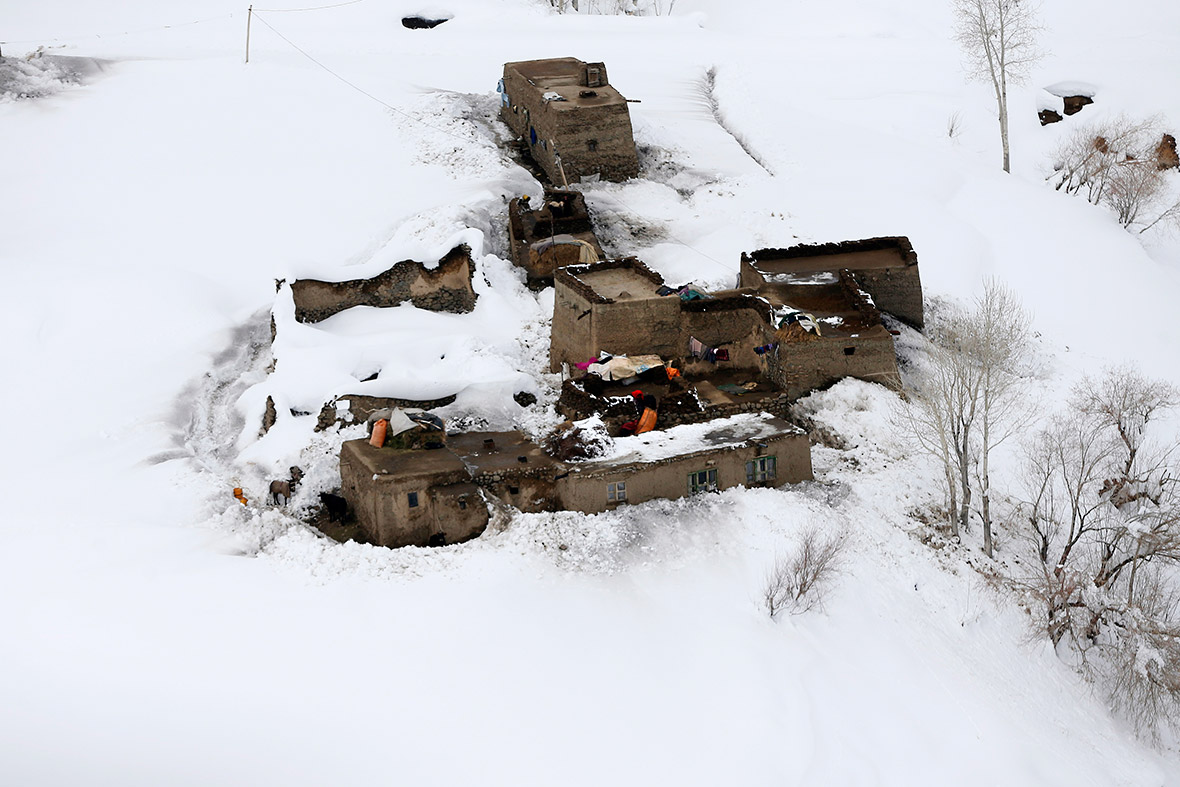
The Panjshir Valley, where 196 bodies have been recovered so far, was the worst hit, but snow slides and flash floods have caused death and destruction throughout northern Afghanistan over the last two weeks.

Officials said there were more avalanches earlier on Monday in Panjshir Valley.

Dr Abdullah Abdullah, Afghanistan’s chief executive and head of its disasters commission said a further 36 people had been killed in Badakhshan, while 12 had died in Nooristan, 112 in Faryab and ten in Daikundi.

The flash floods and avalanches had swept across the north of the country and claimed 316 lives and left several hundred wounded. The toll is expected to rise further.

Abdul Rahman Kabiri, acting governor of mountainous Panjshir, said Paryan and Dara districts had been worst affected by avalanches. Two more people were killed by avalanches in Abshar district on Sunday night and 14 people, including children, were wounded. Some of them are yet to be rescued.

“This is a terrible time for the people of Panjshir. Most of the wounded people are taken to hospitals but the helicopters cannot land in some parts of the rocky mountains where there is heavy snow, that is why a number of the wounded people are still in their areas”, he said.

President Ashraf Ghani pledged to set up a relief fund and called for assistance from the international community.

"The losses caused by this natural disaster are huge and there is a need for massive assistance," Mr Ghani said in a televised address. On Saturday, the president announced three days of national mourning after visiting worst-hit Panjshir province.

Gul Agha Panjsheri, 35, a resident of Panjshir’s provincial capital Bazarak, said that his cousin’s small village was hit by an avalanche three days ago.

“I was going to see them that day, but when I arrived there were a lot of people on the road and the village was missing under the snow,” he said. Two of his cousins and their parents were among the dead, he added.

Afghan authorities said it will take them at least three weeks to restore normal power to the capital.

Deadly avalanches are common in Afghanistan's mountainous areas in winter. One in the remote far northeast in 2012 left 145 people missing, presumed dead.

Monday 2 March 2015

http://www.telegraph.co.uk/news/worldnews/asia/afghanistan/11443833/Avalanches-kill-more-than-180-in-Afghanistan.html

continue reading

Friday, 27 February 2015

Afghanistan avalanche dead crosses 200


At least 100 more people were reported dead in avalanches in northern Afghanistan on Thursday, bringing the total death toll since Wednesday morning to at least 230 people, Afghan officials told.

The northeastern Panjshir province is so far the worst-hit area in the country, where authorities recovered 86 more bodies Thursday, bringing the toll since Wednesday morning to 186 in this province alone according to provincial police chief Gen. Aziz Ghairat

Ghairat said that there were more than 100 others who had suffered injuries in the avalanches and heavy snowfall in the area. He added that there were at least 100 others missing in the area.

"Several villages, including provincial capital were hit by avalanches; two villages totally disappeared from the face of the earth," Ghairat said.

He added that local aid workers and those sent by the central government were able to so far open only 18 kilometers of roads that connect the provincial capital with local districts.

Afghan Defense Ministry officials said that choppers at their disposal were unable to land on most of the avalanche-hit areas of Panjshir.

A provincial police spokesperson in northeastern Badakhshan province told AA on Thursday that at least 18 people were killed when an avalanche hit a remote village. Earlier this week, 10 people had lost their lives in avalanches in the same province.

Afghanistan’s Natural Disaster Management Authority's senior official Mohammad Aslam Sayas on Thursday told AA that emergency assistance, including medicines, food, tents and warm clothes were sent to disaster-hit areas.

"Apart from avalanches, heavy snowfalls and floods have caused human losses and destruction in several provinces, including Panjshir, Nangarhar, Laghman, Kapisa, Parwan, Nuristan and capital Kabul," Ayas said.

At least eight people, including women and children were also killed in heavy rains and snowfall in eastern Nangarhar and Laghman provinces, he added.

It is feared that there are scores more dead buried under the snow, which authorities are yet to discover.

On Wednesday, 13 people were reported dead in avalanches in Parwan province and five others in central Bamyan provinces.

Afghan President Ashraf Ghani in a statement offered condolences to the victims’ families and ordered authorities to do their best to help the people in the disaster-hit areas.

The Afghan national cricket team also dedicated their shock victory Thursday against Scotland at the ongoing cricket world cup in New Zealand to the Afghan victims.

Local Afghans along with government workers have been carrying out rescue operations in the disaster areas since Wednesday morning. Fazul Rahim, a local from Khenj district, told AA Wednesday via phone that at least 13 people were killed in his single village alone; two of his cousins were among the dead.

"We have discovered the bodies, but cold weather and snow-covered ground is not allowing us to bury our loved ones," Rahim added.

The Salang Tunnel Pass, which connects Afghanistan's northern provinces with the southern provinces remains closed because of more than 70 avalanches that have hit the country since Feb. 24.

Afghan capital Kabul and adjacent provinces, too, continue to suffer with many areas facing severe power shortages because of storms and heavy snowfall giving no respite to the war ravaged Afghan people.

Friday 27 February 2015

http://www.turkishweekly.net/news/180876/no-respite-for-afghanistan-as-avalanche-dead-crosses-200.html

continue reading

Wednesday, 22 October 2014

Death toll in Nepal's worst trekking disaster reaches 43


Rescuers on Tuesday pulled out three bodies of Nepali citizens killed in last week's freak blizzards and avalanches, taking the toll in the Himalayan nation's worst trekking disaster to 43.

The blizzards struck the Annapurna Circuit, a trail popular among Western hikers who walk around Mount Annapurna, the 10th highest mountain in the world and caught the tourists during the peak hiking season.

"Three new bodies were taken out from snow near Thorongla pass on Tuesday," said Baburam Bhandari, chief of Mustang district, the worst among the four districts hit by the blizzards triggered by the tail end of cyclone Hudhud that struck India this month.

Officials said 518 people including 304 foreign trekkers were rescued in the operation in which more than 70 sorties were made by army and civilian helicopters.

"This is the biggest rescue operation ever conducted in high Himalayan snow and difficult mountain slopes," said D.B. Koirala, chief of the Himalayan Rescue Association Nepal.

Wednesday 22 October 2014

http://uk.reuters.com/article/2014/10/21/uk-nepal-hikers-idUKKCN0IA1W620141021

continue reading

Monday, 20 October 2014

Three more bodies pulled from Nepal disaster zone


Emergency workers in Nepal pulled three more bodies from the snow today, as authorities prepared to end the full scale search for survivors of a deadly snowstorm that struck last Tuesday.

More than 500 people have now been airlifted to safety since heavy snow hit Nepal’s popular Annapurna region last Tuesday at the height of the trekking season, triggering avalanches and killing dozens of people.

Six helicopters fanned out over the affected areas this morning to rescue any trekkers still stuck in the region.

“Although smaller, regular rescues may continue, we hope to complete all emergency evacuations from the snowstorm today,” Ramesh Dhamala of the Trekking Agencies’ Association of Nepal (TAAN) told AFP.

Another TAAN official, Keshav Pandey, said that “a few Nepalese support staff are still unaccounted for”, although the industry body was not aware of any more stranded tourists.

Nepalese officials believe most of those affected have now been pulled to safety or walked out on their own, although it remains unclear how many trekkers were in the area when the storm hit.

Police official Bikash Khanal said 502 trekkers, guides and others have been rescued since operations started on Wednesday, including 299 foreigners.

“We have recovered two bodies from Manang, and another of an Israeli woman from the Thorong Pass,” Khanal told AFP.

It was not immediately clear whether these were included in the death toll of 40 previously given by the TAAN, which included trekkers who were missing and feared dead as well as those whose bodies had been recovered.

The victims include at least 26 hikers, guides and porters on the Annapurna circuit, three yak herders, and five people who were climbing a nearby mountain.

Thousands of people head to the Annapurna region every October, when the monsoon rains clear and the weather is usually at its best for trekking.

The disaster follows Mount Everest’s deadliest avalanche that killed 16 guides in April and forced an unprecedented shutdown of the world’s highest peak.

Impoverished and landlocked Nepal relies heavily on tourism revenues from climbing and trekking.

Monday 20 October 2014

http://www.themalaymailonline.com/world/article/nepal-pulls-three-more-bodies-from-disaster-zone-after-snowstorm

continue reading

Friday, 17 October 2014

Death toll rises in Nepal avalanche area


Rescuers have widened their search for trekkers missing since a series of blizzards and avalanches battered the Himalayas in northern Nepal earlier this week, leaving at least 29 people killed.

The government also announced on Friday the formation of a high-level committee that would monitor and co-ordinate rescue efforts following criticism that officials were not doing enough to help hikers who have been spotted but remain steanded along a popular trekking circuit.

A group of about 40 of the stranded trekkers tried to start leaving the area on Friday, not realising it was still blocked.

The incident prompted the army rescuers to abandon their operation to find survivors from under the snow on another mountain in order to airlift the trekkers.

Authorities have rescued 78 trekkers from Mustang and 157 from the neighbouring Manang district since Wednesday.

Minendra Risal, the country's information minister, said the new committee, ordered by the prime minister, would directly monitor the rescue operation and help wherever needed.

The committee would co-ordinate operations among the army, police, local administrations and the private operators now involved in the rescues.

The Annapurna trekking route, 160km northwest of the capital, Kathmandu, was filled with foreign hikers during the peak October trekking season, when the air is generally clear and cool.

There were also many Nepalese on the trails because of local festivals.

Two trekkers from Hong Kong and 12 Israelis were airlifted on Wednesday to Kathmandu, where they were being treated at a hospital. They said they survived by taking refuge in a small tea shop along the path.

The blizzard, the tail end of a cyclone that hit the Indian coast a few days earlier, appeared to contribute to an avalanche that killed at least eight people in Phu village in neighbouring Manang district.

The dead included three Indian and four Canadian trekkers as well as three villagers, said government official Devendra Lamichane.

The foreigners' bodies were buried in up to two metres of snow and digging them out will take days, Lamichane said.

Three Canadian trekkers who survived the avalanche were taken by helicopter to a shelter in a nearby town.

Authorities said five climbers were killed in a separate avalanche about 75km to the west, at the base camp for Mount Dhaulagiri.

The climbers, two Slovaks and three Nepali guides, were preparing to scale the 8,167-metre peak, the world's seventh tallest, said Gyanedra Shrestha of Nepal's mountaineering department. Their bodies were recovered on Thursday.

Friday 17 October 2014

http://www.aljazeera.com/news/asia/2014/10/death-toll-rises-nepal-avalanche-area-2014101773126516349.html

continue reading

Thursday, 24 April 2014

Mount Everest has claimed many lives


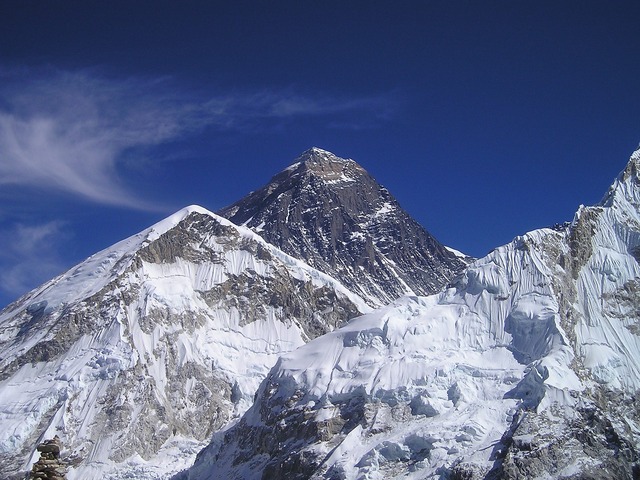
Mount Everest has recently claimed 16 lives from a deadly avalanche, which makes this the deadliest disaster that the mountain has ever seen in one day. Though this is a larger-than-usual tragedy, death on Mount Everest is not a rare occurrence. Since 1922 people from all over the world have attempted the grueling climb to the top. Climbers all attempt to stay alive for the totality of the climb, though Mount Everest often has a different fate in mind, continually adding victims to its huge list.

The first climbers in 1922, General Charles Granville Bruce and George Mallory, were the first in history to make it past 8,000 meters on a mountain climb. This group was the second in recorded history to attempt Mount Everest, the first made it just past 7,000 meters one year prior. Since this first record-setting climb many people have tested their endurance and skills by climbing the mountain.

Mount Everest reaches just over 29,000 feet in height, proving to be disastrously hard on the human body due to its lack of oxygen and frigid temperatures. Many climbers experience bodily rejection to the altitude, suffering from headaches and extreme frostbite if not properly prepared. The snowstorms on the mountain are extreme, often causing avalanches like the deadly one earlier this month. Throughout history Mount Everest has added victims to its already huge list, with a total that causes many to wonder why so many attempt the dangerous stunt.

By the year 2005 a recorded total of 186 people died from attempting to climb Everest. This is not counting the many unidentified or lost victims. While the recent avalanche claimed 13 victims in one fell swoop, Everest has a few years where the cumulative death toll rose higher than this. In 1996 Mount Everest stole 15 lives and in 1982 the mountain laid claim to 11. Some of the most iconic landmarks of the mountain are dead bodies. Green boots, an unidentified climber who froze to death on the mountain in 1996, marks a close proximity to the summit. At 8,000 meters high, ironically the height reached by record-breakers in 1922, is what climbers call the “death zone;” 200 plus bodies of Everest’s victims are littered here.

Dead bodies are not all one will find on a climb to the top of Everest. Unfortunately, many climbers leave behind trash and equipment; there is also remnants of a helicopter that crashed into the mountain years ago. Due to the dangerous nature and expenses of making a climb, no one follows after climbers to pick up left equipment or trash. Everest mostly sees wealthy individuals; a single climber will spend upwards of $30,000 to attempt the feat.

While the death toll of Mount Everest does not have an exact pattern, there are not more than one or two deaths a year for decades at a time in some cases. The first year saw 7 deaths; a number that high was not seen again until 1970, with eight lives claimed. The recent catastrophe has many wondering if Everest is becoming more dangerous than previous years to attempt. It is yet to be determined how much longer climbers will have the option to attempt Everest; the world may see a day where any attempt is not in a person’s best interest. Time will be the only indicator of whether or not Mount Everest will be able to continue adding to its huge list of total victims.

Thursday 24 April 2014

http://guardianlv.com/2014/04/mount-everest-total-victims-list-huge/

continue reading

Sunday, 20 April 2014

Nepal calls off search for missing guides on Everest


Nepal on Sunday called off the search for local guides still missing after the deadliest accident on Mount Everest killed 13 colleagues, as climbers recalled the terrifying moments when the avalanche hit.

Rescuers have retrieved the bodies of 13 sherpa guides and plucked another nine to safety since an ice and snow avalanche smashed into their expedition on Friday morning on the world's highest peak.

Authorities have ruled out any hope of finding more survivors, and with bad weather hampering efforts, they have now decided to end the search for the three guides thought still buried.

"We have decided to stop the search for the missing. We have been unable to identify the location of bodies and at this stage it is difficult to find them in the snow," tourism ministry official Dipendra Paudel told AFP.

The guides were among a large party that left Everest's base camp before dawn, carrying tents, food and ropes to prepare routes for international clients before the main climbing season starts later this month.

The avalanche hit them at an altitude of about 5,800 metres (19,000 feet) in an area nicknamed the "popcorn field" due to ice boulders on the route, which leads into the treacherous Khumbu Icefall.

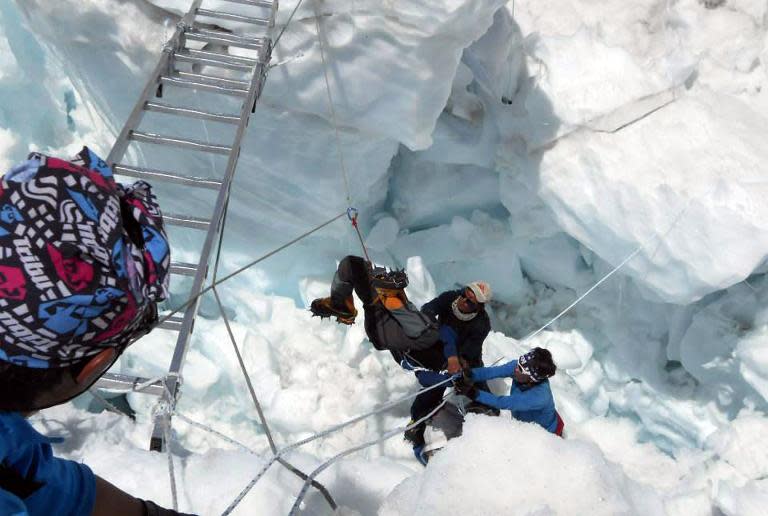
Dozens of guides were on the move when a huge block of ice broke off from a hanging glacier, before splitting into smaller chunks and barrelling down into the icefall, one of the most dangerous areas en route to the summit.

A guide on the mountain recalled how, moments after the avalanche struck, he and others spent hours digging through snow, pulling out bodies and rescuing injured colleagues.

"We heard a roar and when we looked up we saw a massive ball of snow coming towards us," said Namgyal Sherpa, who was climbing the icefall when the accident happened.

"My first thought was we were all going to die," the 38-year-old guide, who has summited the peak 11 times, told AFP.

Moments after climbers heard the sound of crashing ice, they sprang into action, calling helicopter companies for help and trudging through snow to rescue stranded colleagues.

"We could see hands, legs and bags above the snow," Sherpa said.

Joe Kluberton, Everest Basecamp Manager for Seattle-based Alpine Ascents International, told AFP the local and foreign guides' speedy response saved at least three lives.

"We got nine men off the mountain including three who were critically injured and needed immediate medical attention," said Kluberton, whose team lost four sherpas in the accident with another still missing.

Just 24 hours before the accident, Kluberton's team had held a day-long prayer ceremony at base camp, asking priests to bless their climbing gear and putting up Buddhist flags, in line with local customs which consider Mount Everest to be sacred.

"We basically ask the mountain for permission to climb, we don't cross base camp until we finish the puja (prayer)," he said.

Two young members of the team, Nima Sherpa and Mingma Nuru Sherpam who lost their lives in the accident, had recently been promoted to climbing guides after spending four years working at base camp.

"They knew the risks, we are all familiar with the dangers of Everest, but it doesn't make it any easier to lose your friends," Kluberton said, his voice cracking with emotion.

The disaster underscores the huge risks borne by local guides who ascend the icy slopes, often in pitch-dark and usually weighed down by tents, ropes and food for their foreign clients, who pays tens of thousands of dollars to climb the mountain.

News of the accident sent shockwaves among the mountaineers, leaving some climbers and sherpas considering whether to continue with their expeditions.

"At this point, we are in mourning, we are not ready to think of the future," Kluberton said.

More than 300 people, most of them local guides, have died on Everest since the first ascent to the summit by Sir Edmund Hillary and Tenzing Norgay in 1953.

Decades of mountaineering have seen Everest becoming the final resting place for many climbers, whose bodies do not decompose in the extreme cold.

The previous worst accident on the 8,848-metre (29,029-foot) peak was in 1996 when eight people were killed during a storm.

The government has issued permits to 734 people, including 400 guides, to climb Everest this summer season.

Sunday 20 April 2014

http://news.yahoo.com/bad-weather-halts-rescue-deadliest-everest-disaster-060732572.html

continue reading

Friday, 18 April 2014

Mount Everest avalanche: At least 12 Sherpa guides dead


Nepal's Sherpa community is confronting a dark tragedy after at least 12 guides were killed by an avalanche that swept down a climbing route on Mt Everest. A search was ongoing for at least three more guides still missing following the deadliest ever single day on the world's highest mountain.

Officials said the men were killed after the avalanche struck at around 6.30am on Friday as they were laying fixed ropes for other climbers. Rescue workers struggled to pull their bodies from mounds of snow and ice after they were struck just about Camp 2. Two men, who survived but suffered injuries, were lifted from the ice debris and flown by helicopter to Kathmandu.

A spokesman for Nepal's Tourism Ministry, Mohan Krishna Sapkota, told the AFP news agency that all the climbers involved were of Nepali origin and had been preparing the route ahead of the main spring climbing season, which starts in a matter of days.

"The sherpa guides were carrying up equipment and other necessities for climbers when the disaster happened," he said.

Friday's deaths easily surpassed the previous highest number of deaths on Everest. That occurred on May 11 1996 when eight foreign climbers were killed in bad weather, an event that featured in journalist Jon Krakauer's book Into Thin Air. Six Nepalese guides died in an avalanche in 1970.

Hundreds of foreign and local climbers have gathered at the base camp of Everest to prepare for attempts on the 29,035-foot mountain early next month when weather conditions become optimal and provide a small, brief window of opportunity for people to realise their ambitions. In preparation, teams of sherpas have been setting up fixed ropes that their clients, who pay many thousands of pounds to scale the peak, will attach themselves to while ascending the mountain.

The avalanche is said to have struck in an area situated at around 21,000ft and known as the "popcorn field". The area lies on the route towards the notorious Khumbu ice fall, an unavoidable passage which has claimed the lives of many climbers over the years.

In recent years the number of climbers in Everest, especially those with less experience, has soared and the Nepalese authorities have introduced measures to try and better organise the flow. Officials have been dispatched to base camp to spend the climbing season there and address any problems

Yet impoverished Nepal is loathe to deter climbers from scaling the peak because of the permit fees they pay and the employment they provide for sherpas and other support members. So far, a total of 334 permits have been issued to foreign climbers for the year, up from 328 last year. There has even been talk of reducing the cose of permits to encourage yet more mountaineers.

Climbers have complained that overcrowding on the mountain, especially at crucial points such as the Hilary step, has led to increasing numbers of unnecessary deaths.

More than 4,000 climbers have scaled the summit since 1953, when it was first conquered by New Zealander Edmund Hillary and Sherpa Tenzing Norgay. Around 250 people have died doing so.

Friday's deaths underscore the perilous work undertaken by the sherpas, who lug ropes, tents and supplies for foreign climbers. It was reported that Kathmandu-based climbing company Himalayan Climbing Guides Nepal had confirmed two of their guides were among the dead and other employees were among those still missing.

Friday 18 April 2014

http://www.independent.co.uk/news/world/asia/everest-avalanche-12-confirmed-dead-and-three-more-missing-9269303.html

continue reading

Wednesday, 9 April 2014

Avalanche in Upper Dir claims dozens of lives


Fourteen people, including children and women, were killed and four injured when an avalanche caused by rain and hailstorms struck homes and resulted in roof collapses in the southern and north western districts of Khyber Pakhtunkhwa, it emerged on Tuesday.

Ten persons from one family died when the avalanche hit a house and a shop in Upper Dir, police officials confirmed.

Thal police Station House Officer (SHO) Fazal Rabbi Khan told The Express Tribune that those killed include school-going children.

Locals teamed up with security forces and rescue teams to launch rescue operations in the Badran and Batal areas of Kohistan.

The incident occurred 150 kilometres away from the district headquarters in the east, near the border with Swat.

Khan said that the avalanche hit in the mountainous area of Makral Mohallah of Badran village early on Sunday.

The police official said that seven children belonging to one family were killed along with their parents after being trapped under debris in the house belonging to Gul Badshah. Locals complained of a delayed start in the rescue operation in the remote area. The incident took place 25 kilometers away from the Thal police station where it took government officials three hours to access the area.

“The rescue workers were successful in retrieving bodies from the debris after a hectic four-hour joint operation,” the SHO said, adding that moving scenes were witnessed when the mass funeral of the family members was held in the village.

Similarly, the second incident took place in the Batal Bazaar area of Usherai Dara on Monday.

A police official confirmed the deaths of four school-going children of grade five, adding that one body could not be identified.

He added that two persons were missing and that the partially injured were transferred to Timergara while the critically wounded were shifted to Lady Reading Hospital in Peshawar. Locals expressed fear that the death toll may increase.

Meanwhile, a statement issued by the ISPR from Swat said that the rescue operation was under way in two areas of the district. In a press release, it said that security officials were conducting rescue activities and dispatched ration for the affected families.

The statement confirms the deaths of 10 persons from one family in the Badran area of Kohistan, in which nine bodies have been retrieved while the search for one is ongoing.

The statement further adds that four persons died while four others wounded in the Batal area were shifted to the hospital.

Three of a family, including a father, mother and their daughter died when a roof collapsed in Orakzai Agency on Tuesday.

Assistant Political Agent Hayat Khan Wazir said the incident occurred due to the recent prolonged spell of rains in the agency. Locals demanded that the government extend relief efforts and compensate the damage.

In Bannu, a two-year-old died while four women were injured in a heavy downpour and hailstorm resulting in a roof collapse in the district. The rain spell continued till Monday night which caused severe damage to crops, orchards and houses.

Wednesday 09 April 2014

http://tribune.com.pk/story/693152/natures-fury-avalanche-in-upper-dir-claims-over-a-dozen-lives/

continue reading