Showing posts with label Mountain climb. Show all posts

Friday, 7 August 2015

Remains in Matterhorn Identified as 2 Japanese Missing Since 1970


Local police in Valais, Switzerland, said that remains found at the foot of the Matterhorn in 2014 have been identified as two Japanese climbers who had been missing for 45 years.

According to a police press release, the bodies were discovered in September 2014 at an altitude of about 2,800 meters. Forensic scientists had been conducting DNA testing and were able to identify the remains as two Japanese missing since Aug. 18, 1970. Searches at the time hadn’t located the two.

The Japanese foreign ministry confirmed that the bodies were the remains of Masayuki Kobayashi and Michio Oikawa, who were 21 and 22 years old when they went missing, respectively.

Local police said they have contacted the Japanese consulate in Geneva and have been in touch with family members of the two climbers in Japan.

The police said they have kept a record of those missing at the mountain since 1925. Bodies of some alpinists have been discovered as higher temperatures cause glaciers to retreat.

Friday 7 August 2015

http://blogs.wsj.com/japanrealtime/2015/08/07/remains-in-matterhorn-identified-as-2-japanese-missing-since-1970/

continue reading

Monday, 2 March 2015

Receding glacier will reveal more bodies on Mt Cook


More bodies of lost climbers will surface at the foot of Tasman Glacier as the ice retreats and the lake expands, an alpine expert says. The remains of a two climbers have been found recently.

One find is believed to be a teenager killed in a slab avalanche in September 1973. The remains - potentially 42 years old - were found near the bottom of the glacier in late January and recovered last month by a police disaster victim identification team.

Police are awaiting DNA results before releasing the man's name.

Another set of remains were found at the bottom of the Hochstetter ice fall, as it enters the glacier, last week.

The finds were two of up to 70 people whose bodies have not been recovered after dying in Aoraki-Mt Cook National Park.

But Andrew Hobman, an avalanche and alpine safety expert with Mountain Safety Council, says the number of bodies found will start to rise now the glacier is receding and the lake it feeds into, Lake Tasman, gets larger.

"We'll see this more and more I think, more people showing up years, decades after they disappeared, as the lake grows and speeds up the melting," he told NZ Newswire.

"It happens from time to time (that bodies are found) but with temperatures rising, we'll find more." Body recovery would bring relief to families of missing climbers, many who struggle to accept that their loved one cannot be recovered at the time of the incident, he said.

The death toll at Aoraki-Mount Cook National Park now stands at 238.

In the most recent incident in late December, three men - Sydney doctor Mike Bishop, 53, and German father and son Raphael Viellehner, 58, and Johann, 27 - disappeared on the Linda Glacier.

Their bodies have not been recovered but Mr Hobman said it was very likely they too would turn up at the foot of the Tasman Glacier. "Who knows how long it will take but there's a very good chance that will happen."

Senior Constable Brent Swanson said one or two bodies are recovered this way each year in the park.

"It's not always possible to identify them but we're hopeful in this latest case that we'll be able to."

Monday 2 February 2015

http://www.3news.co.nz/nznews/receding-glacier-will-reveal-more-bodies-on-mt-cook--alpine-expert-2015030305

continue reading

Wednesday, 22 October 2014

Death toll in Nepal's worst trekking disaster reaches 43


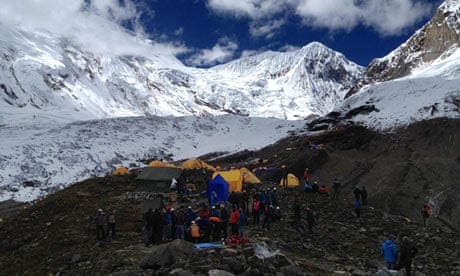
Rescuers on Tuesday pulled out three bodies of Nepali citizens killed in last week's freak blizzards and avalanches, taking the toll in the Himalayan nation's worst trekking disaster to 43.

The blizzards struck the Annapurna Circuit, a trail popular among Western hikers who walk around Mount Annapurna, the 10th highest mountain in the world and caught the tourists during the peak hiking season.

"Three new bodies were taken out from snow near Thorongla pass on Tuesday," said Baburam Bhandari, chief of Mustang district, the worst among the four districts hit by the blizzards triggered by the tail end of cyclone Hudhud that struck India this month.

Officials said 518 people including 304 foreign trekkers were rescued in the operation in which more than 70 sorties were made by army and civilian helicopters.

"This is the biggest rescue operation ever conducted in high Himalayan snow and difficult mountain slopes," said D.B. Koirala, chief of the Himalayan Rescue Association Nepal.

Wednesday 22 October 2014

http://uk.reuters.com/article/2014/10/21/uk-nepal-hikers-idUKKCN0IA1W620141021

continue reading

Monday, 20 October 2014

Three more bodies pulled from Nepal disaster zone


Emergency workers in Nepal pulled three more bodies from the snow today, as authorities prepared to end the full scale search for survivors of a deadly snowstorm that struck last Tuesday.

More than 500 people have now been airlifted to safety since heavy snow hit Nepal’s popular Annapurna region last Tuesday at the height of the trekking season, triggering avalanches and killing dozens of people.

Six helicopters fanned out over the affected areas this morning to rescue any trekkers still stuck in the region.

“Although smaller, regular rescues may continue, we hope to complete all emergency evacuations from the snowstorm today,” Ramesh Dhamala of the Trekking Agencies’ Association of Nepal (TAAN) told AFP.

Another TAAN official, Keshav Pandey, said that “a few Nepalese support staff are still unaccounted for”, although the industry body was not aware of any more stranded tourists.

Nepalese officials believe most of those affected have now been pulled to safety or walked out on their own, although it remains unclear how many trekkers were in the area when the storm hit.

Police official Bikash Khanal said 502 trekkers, guides and others have been rescued since operations started on Wednesday, including 299 foreigners.

“We have recovered two bodies from Manang, and another of an Israeli woman from the Thorong Pass,” Khanal told AFP.

It was not immediately clear whether these were included in the death toll of 40 previously given by the TAAN, which included trekkers who were missing and feared dead as well as those whose bodies had been recovered.

The victims include at least 26 hikers, guides and porters on the Annapurna circuit, three yak herders, and five people who were climbing a nearby mountain.

Thousands of people head to the Annapurna region every October, when the monsoon rains clear and the weather is usually at its best for trekking.

The disaster follows Mount Everest’s deadliest avalanche that killed 16 guides in April and forced an unprecedented shutdown of the world’s highest peak.

Impoverished and landlocked Nepal relies heavily on tourism revenues from climbing and trekking.

Monday 20 October 2014

http://www.themalaymailonline.com/world/article/nepal-pulls-three-more-bodies-from-disaster-zone-after-snowstorm

continue reading

Friday, 17 October 2014

Death toll rises in Nepal avalanche area


Rescuers have widened their search for trekkers missing since a series of blizzards and avalanches battered the Himalayas in northern Nepal earlier this week, leaving at least 29 people killed.

The government also announced on Friday the formation of a high-level committee that would monitor and co-ordinate rescue efforts following criticism that officials were not doing enough to help hikers who have been spotted but remain steanded along a popular trekking circuit.

A group of about 40 of the stranded trekkers tried to start leaving the area on Friday, not realising it was still blocked.

The incident prompted the army rescuers to abandon their operation to find survivors from under the snow on another mountain in order to airlift the trekkers.

Authorities have rescued 78 trekkers from Mustang and 157 from the neighbouring Manang district since Wednesday.

Minendra Risal, the country's information minister, said the new committee, ordered by the prime minister, would directly monitor the rescue operation and help wherever needed.

The committee would co-ordinate operations among the army, police, local administrations and the private operators now involved in the rescues.

The Annapurna trekking route, 160km northwest of the capital, Kathmandu, was filled with foreign hikers during the peak October trekking season, when the air is generally clear and cool.

There were also many Nepalese on the trails because of local festivals.

Two trekkers from Hong Kong and 12 Israelis were airlifted on Wednesday to Kathmandu, where they were being treated at a hospital. They said they survived by taking refuge in a small tea shop along the path.

The blizzard, the tail end of a cyclone that hit the Indian coast a few days earlier, appeared to contribute to an avalanche that killed at least eight people in Phu village in neighbouring Manang district.

The dead included three Indian and four Canadian trekkers as well as three villagers, said government official Devendra Lamichane.

The foreigners' bodies were buried in up to two metres of snow and digging them out will take days, Lamichane said.

Three Canadian trekkers who survived the avalanche were taken by helicopter to a shelter in a nearby town.

Authorities said five climbers were killed in a separate avalanche about 75km to the west, at the base camp for Mount Dhaulagiri.

The climbers, two Slovaks and three Nepali guides, were preparing to scale the 8,167-metre peak, the world's seventh tallest, said Gyanedra Shrestha of Nepal's mountaineering department. Their bodies were recovered on Thursday.

Friday 17 October 2014

http://www.aljazeera.com/news/asia/2014/10/death-toll-rises-nepal-avalanche-area-2014101773126516349.html

continue reading

Thursday, 16 October 2014

Nepal rescuers search for missing hikers, bodies in heavy Himalayan snow


The grim search for missing hikers and bodies buried under snow resumed Thursday against the dramatic backdrop of Nepal's Himalayas, a day after the news emerged that at least 17 trekkers had died in an exceptionally heavy snowfall.

Rescue crews combed the high altitude paths and passes of the popular Annapurna region as well as the neighboring Manang district.

Nine stranded Israeli tourists were rescued Thursday, as well as three Canadians and four Indians who were pulled to safety, according to the Trekking Agencies' Association of Nepal.

The trekkers' group said it deployed helicopters to rescue hikers stranded by snow, floodwaters and avalanches along the popular Himalayan trekking trails.

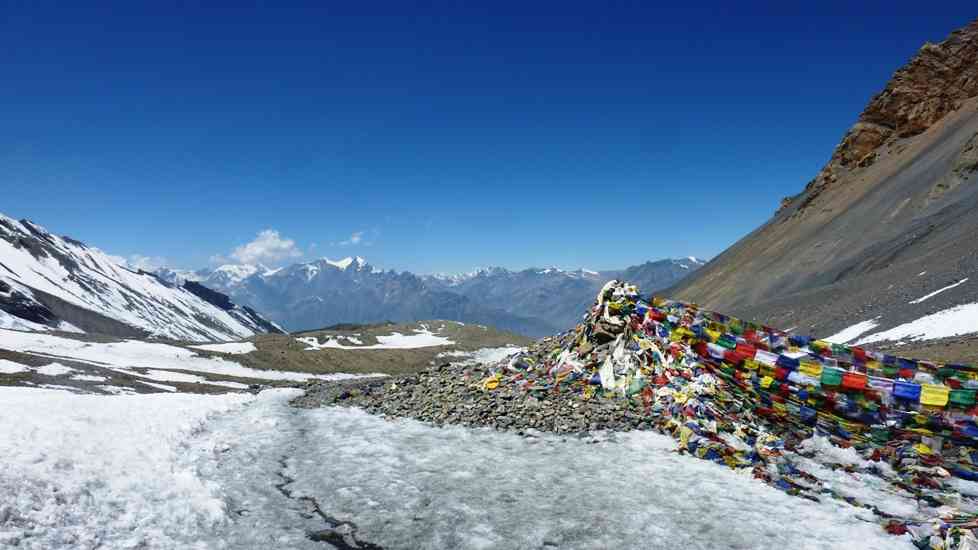
A dozen of the trekkers who died Tuesday lost their lives below the iconic 5,416-meter (17,770-foot) Thorung La Pass in Mustang district, the highest point of the highly popular 21-day Annapurna Circuit trek.

Four bodies were recovered Wednesday, while five more dead -- two Israelis, one Pole and two Nepalis -- were uncovered beneath the snow Thursday, said Baburam Bhandari, chief district officer of Mustang district. Three more remain buried.

Those who manage the steep ascent at energy-sapping high altitude to the Thorung La Pass are normally rewarded with breathtaking panoramic views. But on Tuesday morning everything changed.

Trekkers spend the night at local camps on either side of the mountain before they set out, sometimes as early as 4 a.m., to make the crossing, said Bidur Kuikel of Annapurna Conservation Area project.

"On Tuesday heavy snowfall began at about 8 a.m.," he said. "There was no visibility beyond three meters."

Since the tracks were covered by snow, people could have fallen down or become lost, he said. Those traveling on their own rather than in organized groups are usually most likely to lose their way, he said.

Officials did not provide a number on the people missing or their nationalities, but say they fear the death toll could rise.

As anxious families wait for news, army and police personnel continued to search the area below the Thorung La Pass in Mustang district on Thursday, Bhandari said.

A Facebook page, Annapurna Nepal Avalanche and Blizzard Info Share, has been set up to try to connect worried relatives with those in Nepal. Some trekkers who have made it down from the remote pass have posted updates to help others.

One, Virginia Schwartz, wrote: "Thank you to everyone for all the kind words and prayers, we are safe. We are trekking out of the avalanche danger zone and heading back down along the circuit."

Another, Nic Brdo from Perth in Western Australia, wrote: "I've just got out of base camp evac'd by heli and would advise to not go up. Flying to Pokhara the amount of snow in the pass (was) astounding."

This is already one of the deadliest such tragedies in the history of Nepal, a nation of about 26 million known worldwide for its spectacular mountain ranges, including Mount Everest.

Annapurna is far and away the most popular of its trekking areas, with some 90,000 trekking there in 2013, according to Narendra Lama, tourism officer of Annapurna Area Conservation Project.

"There have been incidents of trekkers being killed in snowstorms, landslides and avalanches in the past but not as many as this year," Lama said.

"But I do not think that this disaster will have a big impact since it is a natural disaster and not about a security situation," he said. "Trekking is adventurous in nature after all."

October is the best month of the year to do the Annapurna Circuit trek, meaning more visitors than usual may have been in the area when unusually heavy snow caused by Cyclone Hudhud in eastern India came down Monday and Tuesday.

Last year, about 20,000 foreign trekkers crossed the Thorung La Pass, almost 6,000 of them in October, according to Annapurna Conservation Area statistics.

Many remote Nepali communities rely on foreign trekkers and mountaineers for income and employment, meaning a drop in visitors could hit local people hard.

The deaths come only six months after tragedy last struck Nepal, on the slopes of Mount Everest.

Then, a bruising avalanche of ice swept 16 Sherpas to their deaths. After the accident, which came right before the peak season in May, many Sherpas refused to climb and at least six companies that lead Everest expeditions called off their 2014 climbs.

Thursday 16 October 2014

http://edition.cnn.com/2014/10/16/world/asia/nepal-snowstorm/

continue reading

Wednesday, 15 October 2014

Himalayan disaster: Heavy snowfall in Nepal from Hudhud kills at least 17 climbers, several missing


An avalanche in the Himalayan region of central Nepal has killed at least 17 climbers, including at least eight foreign nationals, officials said Wednesday. More than 100 people are reportedly missing in the blizzard, which was triggered by the tail of Cyclone Hudhud.

Some bodies of the deceased, who include Polish, Israeli and Nepalese citizens, were recovered from Thorong La pass, about 100 miles northwest of the capital, Kathmandu, while 40 others were rescued, Nepalese army official Niranjan Shrestha reportedly said. According to reports, 12 of the deaths were in the Annapurna region. The avalanche, which hit the area on Tuesday, was reportedly caused by the remnants of Cyclone Hudhud, which killed at least 24 people and caused widespread devastation in southeastern India over the weekend.

"There has been heavy snowfall in the area, up to three feet (91 centimeters)," a police official in charge of the rescue effort reportedly said. "Among the dead are two Polish trekkers and one Israeli. A Nepali was also buried by the snow," he reportedly said, without revealing any other detail.

Local police officials reportedly said that 152 foreign tourists in Mustang district in the Dhawalagiri zone of northern Nepal could not be contacted.

“The phone network is not very good so we have not been able to get in touch with the missing, but we hope to find them later today,” Mustang district official Baburam Bhandari said, ABC News reported. Bhandari also reportedly said that five Polish nationals, four Israelis and five German citizens had been rescued.

The rescue operation, which was hampered by heavy snow, reportedly resumed after the weather cleared up on Wednesday. According to BBC, Cyclone Hudhud is now moving from Nepal toward China.

Officials said that three villagers were killed Monday in the same district, about 160 kilometers (100 miles) northwest of the capital, Kathmandu, and their bodies were recovered on Wednesday.

In the neighboring Mustang district, four trekkers caught in a blizzard died on Tuesday. Rescuers recovered the bodies of the two Poles, one Israeli and one Nepali trekker from the Thorong La pass area.

Meanwhile, the bodies of five more trekkers -- four Canadians and an Indian -- who died Tuesday were recovered Wednesday in remote Manang district, Narayan Datta Chapagain, a local police official told.

It was initially thought the group had been caught in an avalanche, but government official Yam Bahadur Chokyal said by telephone from Mustang that the four trekkers instead had been caught in the blizzard and died.

He said another 14 foreign trekkers have been rescued so far, and two army helicopters were picking up injured trekkers and flying them to Jomsom town.

Chokyal said it was not possible to say how many trekkers were still on the route stranded by the deep snow but several of them have reached safe ground on Wednesday because of improved weather.

The rain and snow in Nepal were caused by a cyclone that hit neighboring India several days ago.

October is the most popular trekking season in Nepal, with thousands of foreigners hiking around Nepal's Himalayan mountains.

The Thorong La pass is also on the route that circles Mount Annapurna, the world's 10th highest peak.

An avalanche in April just above the base camp on Mount Everest killed 16 Nepalese guides, the deadliest single disaster on the mountain. Climate experts say rising global temperatures have contributed to avalanches on the Himalayan mountains.

Wednesday 15 October 2014

http://www.independent.co.uk/news/world/asia/nepal-avalanche-kills-four-trekkers-in-mountain-pass-with-dozens-still-missing-9795448.html

continue reading

Wednesday, 4 June 2014

Analysis: Over 100 climbing deaths on Mount Rainier


The six people lost on Mount Rainier last week adds to the growing number list of people who've died climbing the mountain, with 91 people perishing while either attempting to reach the summit or on the way down, and another 25 dying while climbing on the mountain, according to an analysis of National Park Service records.

While it's still unknown how the six died - they're believed to have fallen or been swept off the mountain while trying to climb the difficult Liberty Ridge route - the review of the NPS database reveals the dangers of the mountain itself and the surrounding environs.

Falling is the leading cause of fatalities on the mountain, with 90 people dying in falls while climbing, hiking or taking part in other activities on the mountain or in the park since its inception.

Occasionally, victims are never found, as in the case of 11 people swept to their deaths in an ice fall in 1981 in Mount Rainier's deadliest accident. The same is true of a non-alpine accident in which a cargo transport plane crashed into the mountain in 1946 - the bodies of 32 Marines remain entombed.

"The mountain is so inaccessible and can be inhospitable. We can't always retrieve everybody who is lost there, unfortunately," said Patti Wold, a spokeswoman with Mount Rainier National Park.

The bodies of the two guides and four climbers who fell to their deaths last week on the 14,410-foot glaciated peak may never be recovered because of the hazardous terrain, authorities say.

"The degree of risk in that area, due to the rock fall and ice fall that's continuously coming down from that cliff onto the area where the fall ended, we cannot put anybody on the ground," Wold said.

It's unclear whether the climbers were moving or camping at the time of the accident, Wold said this past weekend. Searchers located camping and climbing gear and detected signals from avalanche beacons buried in the snow at the top of the Carbon Glacier at 9,500 feet in elevation.

The most recent reported missing is Gerge Merriam, who disappeared in September 2013 on a day hike on the Pinnacle Peak Trail. He's believed to have fallen to his death.

The elements have claimed a number of victims over the years, with 11 people killed by hypothermia after getting lost or trapped on the mountain. The most recent happened in December of 2011 when snowshoer Brian Grobois became disoriented and descended into Stevens Canyon, where his body was found just above 4,600 feet.

The area will be checked periodically by air in the coming weeks and months, Wold said. They will also evaluate the potential for a helicopter-based recovery as snow melts and conditions change.

In 2012, park rangers recovered the bodies of three climbers about eight months after they disappeared during unrelenting storms on Mount Rainier.

In 2001, the body of a 27-year-old doctor was discovered more than two years after he vanished while snowboarding on the mountain. Also that year, the remains of three men were removed from the mountain after being entombed there for nearly 30 years after their small plane crashed. A hiker and former climbing ranger found the wreckage of the single-engine aircraft that crashed in January 1972.

In all, 411 people have died on the mountain or in the Mount Rainier National Park since federal government records were first kept.

The first death in the park was recorded in January, 1897, but it had nothing to do with climbing. E.H. Hudson died from "traumatic injuries" after a gun fell from his pocket and he was shot in the neck.

Wednesday 04 June 2014

http://mynorthwest.com/11/2535818/Analysis-Over-100-climbing-deaths-on-Mount-Rainier

http://www.komonews.com/news/local/Massachusetts-native-among-missing-Rainier-climbers-261556801.html

continue reading

Monday, 2 June 2014

Officials say search for missing Mt. Rainier climbers too risky


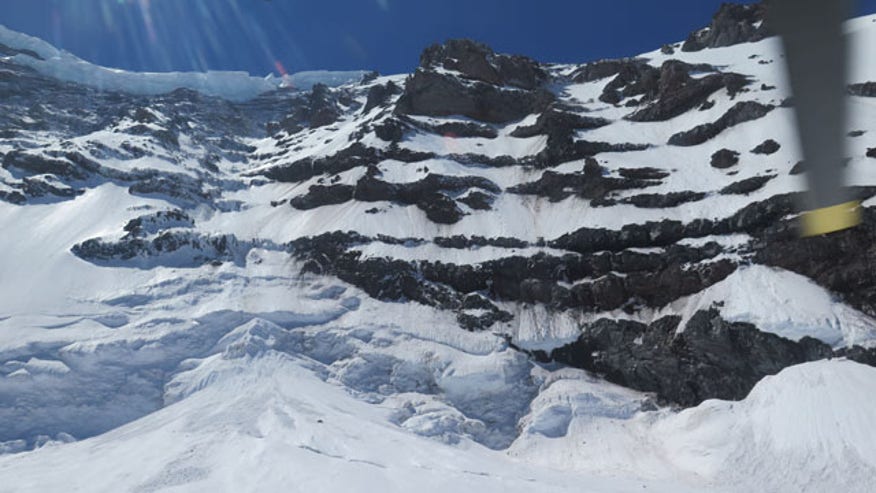
Park officials say it's currently too risky to send people in search of six climbers who likely fell thousands of feet to their deaths while attempting to scale 14,410-foot Mount Rainier.

Under safer conditions, crews could go in after the bodies. "The families, I'm sure, would like that closure," park spokeswoman Patti Wold said Sunday. But continuous falling ice and rock make the avalanche-prone area too dangerous for rescuers.

"People are very understanding that we cannot risk another life at this point," she said.

Park officials say that as in the case of some others who have died on the mountain, there's a possibility the two guides and four climbers believed to have fallen 3,300 feet from their last known location may never be found.

The climbers were last heard from at 6 p.m. Wednesday when the guides checked in with their Seattle-based company, Alpine Ascents International, by satellite phone. The group failed to return Friday as planned.

They are presumed dead in one of the worst alpine accidents on Rainier since 1981, when 11 people were struck and killed by a massive ice fall on the Ingraham Glacier.

Family and friends of the dead climbers arrived at the mountain Sunday to meet with park officials, but declined to speak with media that had gathered at the park's headquarters.

"They're just devastated," Wold said.

It's unclear whether the climbers were moving or camping at the time of the accident, Wold said. Searchers located camping and climbing gear and detected signals from avalanche beacons buried in the snow at the top of the Carbon Glacier at 9,500 feet in elevation.

It's also not known what caused the climbers to fall from their last known whereabouts at 12,800 feet on Liberty Ridge, whether it was rock fall or an avalanche.

Glenn Kessler, the park's acting aviation manager, said "they are most likely buried," making recovery efforts even more challenging. They may be in an area too hazardous for rescuers to reach on the ground.

The area will be checked periodically by air in the coming weeks and months, Wold said. They will also evaluate the potential for a helicopter-based recovery as snow melts and conditions change.

Wold initially said that the park on Sunday would release the names of the six who died but later said the park cannot release the names for privacy reasons.

Rob Mahaney told The Associated Press that his 26-year-old nephew, Mark Mahaney, of St. Paul, Minnesota, was among those presumed dead. He said the climber's father and brother flew to Seattle on Saturday after learning what happened.

Mahaney said his nephew had climbed Rainier before.

"He just loved to climb, he loved the outdoors, he loved the exhilaration of being in the wide open," Rob Mahaney said. "Even as a toddler he was always climbing out of his crib. His parents couldn't keep him anywhere -- he'd always find a way to get out of anything."

Last year, about 10,800 people attempted to climb the 14,410-foot glaciated peak southeast of Seattle, but only 129 used the Liberty Ridge route, according to park statistics. The vast majority use two other popular routes.

Gordon Janow, director of programs for Alpine Ascents International, said the group was on a five-day climb of the Liberty Ridge route.

The climbers had to meet certain prerequisites, and their ice and technical climbing skills as well as their biography were evaluated by a three-person team, Janow said.

The company's brochure says, at a minimum, those interested in the guided climb were required to be able to physically carry a 50-pound backpack on steep snow and icy slopes, ranging from 30 to 50 degrees in slope.

The guiding service lost five Nepalese guides in a deadly avalanche on Mount Everest in April that killed 16 Sherpa guides.

Sunday 02 June 2014

http://www.foxnews.com/us/2014/06/02/officials-say-search-for-missing-mt-rainier-climbers-too-risky/

continue reading

Thursday, 24 April 2014

Mount Everest has claimed many lives


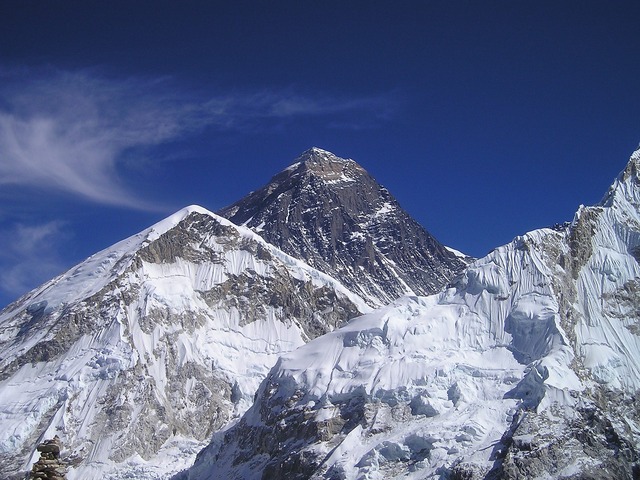
Mount Everest has recently claimed 16 lives from a deadly avalanche, which makes this the deadliest disaster that the mountain has ever seen in one day. Though this is a larger-than-usual tragedy, death on Mount Everest is not a rare occurrence. Since 1922 people from all over the world have attempted the grueling climb to the top. Climbers all attempt to stay alive for the totality of the climb, though Mount Everest often has a different fate in mind, continually adding victims to its huge list.

The first climbers in 1922, General Charles Granville Bruce and George Mallory, were the first in history to make it past 8,000 meters on a mountain climb. This group was the second in recorded history to attempt Mount Everest, the first made it just past 7,000 meters one year prior. Since this first record-setting climb many people have tested their endurance and skills by climbing the mountain.

Mount Everest reaches just over 29,000 feet in height, proving to be disastrously hard on the human body due to its lack of oxygen and frigid temperatures. Many climbers experience bodily rejection to the altitude, suffering from headaches and extreme frostbite if not properly prepared. The snowstorms on the mountain are extreme, often causing avalanches like the deadly one earlier this month. Throughout history Mount Everest has added victims to its already huge list, with a total that causes many to wonder why so many attempt the dangerous stunt.

By the year 2005 a recorded total of 186 people died from attempting to climb Everest. This is not counting the many unidentified or lost victims. While the recent avalanche claimed 13 victims in one fell swoop, Everest has a few years where the cumulative death toll rose higher than this. In 1996 Mount Everest stole 15 lives and in 1982 the mountain laid claim to 11. Some of the most iconic landmarks of the mountain are dead bodies. Green boots, an unidentified climber who froze to death on the mountain in 1996, marks a close proximity to the summit. At 8,000 meters high, ironically the height reached by record-breakers in 1922, is what climbers call the “death zone;” 200 plus bodies of Everest’s victims are littered here.

Dead bodies are not all one will find on a climb to the top of Everest. Unfortunately, many climbers leave behind trash and equipment; there is also remnants of a helicopter that crashed into the mountain years ago. Due to the dangerous nature and expenses of making a climb, no one follows after climbers to pick up left equipment or trash. Everest mostly sees wealthy individuals; a single climber will spend upwards of $30,000 to attempt the feat.

While the death toll of Mount Everest does not have an exact pattern, there are not more than one or two deaths a year for decades at a time in some cases. The first year saw 7 deaths; a number that high was not seen again until 1970, with eight lives claimed. The recent catastrophe has many wondering if Everest is becoming more dangerous than previous years to attempt. It is yet to be determined how much longer climbers will have the option to attempt Everest; the world may see a day where any attempt is not in a person’s best interest. Time will be the only indicator of whether or not Mount Everest will be able to continue adding to its huge list of total victims.

Thursday 24 April 2014

http://guardianlv.com/2014/04/mount-everest-total-victims-list-huge/

continue reading

Friday, 31 May 2013

Salvage mission at Mt Kanchanjungha called off


The search for the five climbers who went missing on Mt Kanchanjungha since May 20 and are presumed dead has been called off Thursday.

The families of the missing climbers including two Nepalis and three foreigners, and the expedition organizer Seven Summit Trekking Agency (SSTA) have decided to stop the search after the team sent for the rescue of the five returned citing extremely bad conditions. The rescue team said the thawing of snow with the advent of summer has made it extremely difficult to climb the mountain in eastern Nepal.

"Our agency tried its best to bring back the bodies. But, we could not continue rescue operation as thawing of snow has already started," said SSTA Manager Minga Sherpa. He also informed that rescuers themselves would be at risk as the snow start melting from the second week of May.

Two Hungarians, a South Korean national, and three Nepali climbers are believed to have died while returning to camp 4 [7,400 meters] after scaling the 8,586 meter peak.

The agency also tried to send a helicopter to bring back the bodies after the effort mobilizing the rescue team on foot failed. However, the chopper also could not reach the incident spot.

Hira Dahal, the pilot, who had attempted to land on the incident spot, said it was impossible to collect the bodies from the height of 7400 meter in bad weather.

"We tried but it is an impossible job to retrieve the dead bodies from the spot," Pilot Dahal said after making an unsuccessful attempt. He also said that the rescue operation would be costlier. "Moreover the bad weather was the greatest impediment in the rescue effort," Dahal added.

Friday 31 May 2013

http://www.myrepublica.com/portal/index.php?action=news_details&news_id=55446

continue reading

Saturday, 25 May 2013

5 climbers feared dead on world's third-highest peak in Nepal


Five men who disappeared earlier this week trying to climb the world’s third-highest mountain are feared dead, searchers leading the recovery effort in Nepal said on Friday, saying few could survive this long that high.

One of them is 45-year-old Hungarian climber Zsolt Eross, who has climbed 12 of the world’s 14 highest peaks and who was climbing this week with a prosthetic leg after a 2010 accident.

The group climbing the 28,169-foot Mount Kanchenjunga in the Himalayas included a South Korean, another Hungarian and two Sherpas, BBC said.

“All our efforts to trace them have failed,” an expedition organizer told BBC. “The weather is bad and we’ve run out of resources to recover their bodies.”

The men were identified as Namsoo Park, 47, Eross, Peter Kiss, 27, Bibash Gurung, 24, and Pho Dorchi, 23.

Eross was an experienced climber who reached the summit of Lhotse, the world’s fourth-highest peak, last year after losing his right leg below the knee in 2010.

According to the New York Times, there might have been a fall while the climbers descended from 25,900 feet.

A Hungarian news blog said it was Kiss who fell, and suggested subsequent recovery efforts are unlikely.

“The search and rescue operation is over,” expedition spokesman Szabolcs Vincze said. “The Sherpas did their best and they returned to a safe altitude once again without finding any traces of the climbers. … If Peter and Zsolt stuck at that altitude and spent the night outdoors, they had virtually no chance to survive.”

BBC called Kanchenjunga “technically challenging with high chances of blizzards and avalanches.”

May is considered the best month to attempt a summit in the Himalayas.

Saturday 25 May 2013

http://www.globalpost.com/dispatch/news/regions/asia-pacific/130524/5-climbers-feared-dead-worlds-third-highest-peak-nepal

continue reading