Showing posts with label Typhoon. Show all posts

Sunday, 8 November 2015

Philippines marks second anniversary of devastating Typhoon Haiyan


The Philippines Sunday marked the second anniversary of Typhoon Haiyan - with the bodies of possible victims of the disaster which left at least 7,350 people dead or missing still being uncovered.

Thousands of residents marked the two-year milestone in the city of Tacloban, which was devastated by the huge storm, as memorials were unveiled and masses held.

On Saturday authorities confirmed they found six new bodies.

The unidentified skeletal remains were found by a man scavenging for wood in the outskirts of the city, according to Tacloban fire chief Charlie Herson.

"These are possible victims of the typhoon. They were buried by debris, in piles of wood," he told AFP.

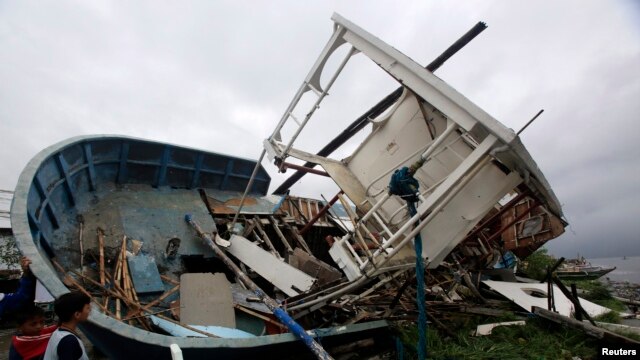
Haiyan, the strongest typhoon ever recorded to hit land, smashed into the central Philippines on November 8, 2013. The once-thriving city of Tacloban on the island of Leyte suffered the worst damage with hundreds of houses washed away by a storm surge.

To mark the tragedy Sunday, special memorials were unveiled and Roman Catholic masses were said for the victims, including the more than 2,400 mostly-unidentified bodies buried in a mass grave in Tacloban.

Thousands of Tacloban residents are still living in makeshift temporary homes as questions are raised about the speed of reconstruction.


President Benigno Aquino's spokesman Edwin Lacierda said there would "always be discussions" on the speed of reconstruction, adding: "We understand such sentiments."

But he added despite local critics, foreign agencies, including the United Nations, had said the Philippines was rebuilding faster than other developing countries struck by comparable natural disasters.

"What befell us was massive and we are continuing to provide assistance... always following our principle, to build back better," he said.

However, local congressman, Ferdinand Martin Romualdez, said "this is still not yet the old Tacloban. This is still not the old Leyte. It will still be a long time before things get back to normal."

Some Tacloban residents are still clinging to hope their missing loved ones are still alive.

Single mother Angelina Marquez, 17, said she hoped Remegildo, the father of her child, would reappear two years after he went missing during the storm.

"I still believe that he may have been washed away to a different place and the time will come, like in the movies, when he will come back to me," she said.

Sunday 8 November 2015

http://news.yahoo.com/philippines-marks-second-anniversary-devastating-typhoon-haiyan-100947198.html

continue reading

Typhhon Yolanda:6 more bodies dug up 2 years later


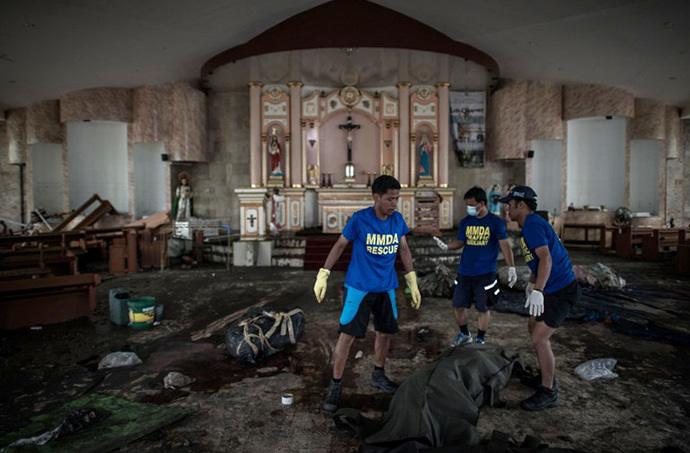
Six remains have been recovered under the debris two years after Typhoon ‘‘Yolanda’’ devastated the province of Leyte.

Mayor Alfred Romualdez said firewood gatherers found the bodies behind the San Jose National High School in Barangay 87 in this city’s San Jose district.

Only three of the remains have their skulls intact and one of them is believed to be a child because of the size of its skull.

“Running priest’ Robert Reyes and another priest blessed the bodies that could no longer be identified because only the skull and skeletons had remained of the victims who were believed to have been washed away by the storm surge during the Yolanda onslaught.

“Every now and then, we find bodies in the swampy areas,” the mayor said.

The congressman said bodies will continue to be found two years after the calamity.

Barangay Chairman Leo Bahin of Barangay 87 San Jose confirmed that the remains were indeed recovered at the back of San Jose National High School.

“Yung lima kanina (Saturday) lang nakita, yung isa two days ago pa nakita ng mga mangangahoy,” Bahin said.

According to Bahin, since 2013, there are incidents were firewood gatherers recovered bones and other body parts but this is the first time that they saw skulls.

Two of them were suspected to be woman because they still had their underwear and bra.

The remains were laid at the barangay hall awaiting for representatives of Bureau of Fire, who were tasked to make proper identification of the victims.


“Sa ngayon wala pang mag claim, mahirap naman ito ma identify kasi dalawang taon na silang nakabaon sa debris at buto na lang. Turn-over na lang namin, bahala na ang Bureau of Fire na mag identify,” Bahin said.

It was in San Jose where there were several casualties of Typhoon Yolanda were recorded.

“We still feel the pain. Nararamdaman pa rin namin ang lungkot na dulot ng Typhoon Yolanda,” Rep. Romualdez said.

The senatorial candidate of Lakas-CMD said the local government here continues to provide assistance to the survivors.

“We will see how we can help in identifying them, para maibigay sa kanilang pamilya at mabigyan ng disenteng libing,” the congressman added.

Meanwhile, a typhoon survivor-turned-author said that the victims still could not contain the surge of emotion two years after Yolanda (international name, Haiyan) hit the province.

“We are still healing and it will take a long time to process that but let that not waste away what we have worked so hard in rebuilding back our lives,” said Albert Mulles, a storm survivor from Tacloban City.

Out of his struggles to survive and immortalize the terrible experience he and his family had experienced, Mulles published a book entitled ‘‘Haiyan: Untold Story: A Story of Hope and Survival”.

The book’s launching came about as the province remembered the second anniversary of Yolanda, the world’s worst storm to hit land, survivors and their supporters around the country trooped to the city to pay tribute to the dead, whose numbers have reached over 7,500 mostly in Tacloban and nearby towns, according to government’s estimate.

“For us, it is important to remember—not only the most disastrous and fiercest supertyphoon in the world—but the courage and determination of people at the ground zero rising up forming the broadest survivor network and holding our government and world leaders accountable,” said Efleda Bautista, convenor of People Surge, a broad coalition of storm survivors in central Philippines.

“The stronger the rain poured the louder were the people’s chant. People Surge pushed through the march despite strong rain…Everyone was soaked in the rain but hearts filled with warmth and determination,” she added, as they welcomed thousands of fellow survivors from various parts of Leyte, Samar, and outside Eastern Visayas who marched to the city on Saturday.

Aside from holding a vigil to remember those who died, the group also led a protest marched dubbed as “Global Day of Rage against Neglect and Impunity” to what they said as government’s “criminal negligence” and “snail-paced rehabilitation” in Yolanda-hit communities, nothing that thousands of families are still in bunkhouses and temporary shelters two years after the storm.

They also assailed the government for its lack of transparency in spending the billions of donations and funds for the survivors.

“Watching the news on TV about how the government still does not reveal the real Yolanda casualty count even after two years, brings back painful memories... And confirms a lot about those in power. Well, for one, they still want to be in control of all those donations, and second, it will only prove how poor our disaster preparedness and handling are,” said Aaron Almadro, 32, a survivor in Palo, Leyte, expressing his frustration on the social media.

“We lost more than 20,000 loved ones, twenty thousand people, including both my parents and a lot of friends! Why can’t they say the numbers? They’re all busy campaigning for next year’s elections but they aren’t even finished with the rehabilitation and assistance. Yolanda happened, government. We will never forget. So, government, whatever you say, whatever you try to do, is already two years late,” he added.

Meanwhile, Fr. Amadeo Alvero of the Palo Archdiocese in Leyte, said that there are also enough reasons to thank for during this year’s commemorative event.


“Without them it would have been difficult for us to bring our life back to where we are now. But with them our life after Yolanda is getting better. Thanks to all who have helped us and brought us hope. Their sacrifices and love will always be remembered. I thank God for all of them,” he added.

“We in the Church gratefully recognize the role played by private charities, of international and national non-government organizations for the people’s recovery and healing. These organizations have been a vital source of relief and comfort,” also said Msgr. Ramon B. Aguilos of Palo Archdiocese.

Reflecting on the Yolanda tragedy, Aguilos wrote that: “Among the ‘blessings in the disguise’ that transpired is the opening of new links, partnership and relationships with development institutions.”

On January 17 this year, no less than Pope Francis visited Tacloban and Palo to bring comfort to pray for the victims and comfort to the survivors.

While many humanitarian organizations also came to revive the city immediately after the storm. “To date, PRC’s Haiyan Recovery program has built 66,011

homes out of the target 80,203 or 86 percent of the target number of houses to be built, amounting to around 2.2 billion pesos. The Red Cross Haiyan shelter program is spread across nine Haiyan-affected provinces: Aklan, Antique, Capiz, Cebu, Eastern Samar, Iloilo, Leyte, Palawan, and Western Samar,” said Philippine Red Cross chairman Richard Gordon.

In a statement, PRC said that “as of end of October, 884,228 people have benefitted from PRC’s Haiyan Recovery Program which includes services ranging from shelter, livelihood, cash relief assistance, water and sanitation, hygiene promotion, and rehabilitation of classrooms.”

“To the people of Tacloban, I am humbled to be called your mayor and honored to have been given a chance to serve a people who have shown to the entire Philippines and the entire world their admirable strength and resistance in the face of individual tragedies, their quiet courage to carry on despite their losses; their firm determination to make Tacloban a better City after the deluge.

“It is our vision to make Tacloban a livable city where every Taclobanon can sleep soundly in the safety and comfort of a humane shelter and live a decent quality life to live up to its potential of infinite possibilities for progress and growth.

“In the silence of our hearts, may that day be marked for posterity--never to be forgotten―never to be erased.

“May all who come this way remember―that on this piece of earth―the whole world converged to make Tacloban the template of a people’s firm resolve to rise above their sorrow and create the new landscape of their future. May God forever bless our bellowed city,” Tacloban Mayor Alfred Romualdez said in his commemorative message this year.

This followed as the local government has lined up various commemorative activities on Saturday, starting from the a holy mass in the coastal district of Anibong in the city, followed by the reading of dedication and unveiling of a memorial marker, a “Concert of Hope” by Philippine Madrigal Singer and Power Dance from Manila, and premier showing of documentary film “Fields of Hope.”

On Sunday, November 8, locals joined a commemorative walk around the city, followed by the holy Mass by Palo Archbishop John Du, ringing of church bells, siren blast and the sounding of the storm, and unveiling of another marker located in the Tacloban Astrodome Center.

Sunday 8 November 2015

http://thestandard.com.ph/news/-main-stories/top-stories/191374/6-more-bodies-dug-up-2-years-later.html

continue reading

Monday, 24 August 2015

Typhoon Ineng leaves 35 dead, missing


The death toll from the heavy rains brought by Typhoon Ineng (Goni) went up to 15 yesterday as rescuers retrieved four bodies among the miners trapped in a landslide in Mankayan, Benguet.

The Benguet provincial police said a total of 18 people went missing in the landslide, which happened early Saturday.

Two more remain missing in Bontoc, Mountain Province since Friday.

Seven shanties used by miners at Sitio Elizabeth in Barangay Taneg were reportedly washed out by a flood and buried by a landslide at around 3 a.m.

Cordillera regional police spokesperson Superintendent Cherry Fajardo said one body was retrieved Saturday night.

Office of the Civil Defense (OCD) – Cordillera regional director Andrew Alex Uy said the body was fished out from the Basig River while the remains of three others were retrieved yesterday morning.

The OCD–Cordillera said combined search and rescue teams from the police, local government units, civilian volunteers and personnel from the Gold Rich Expo International Mining Co. and Lepanto Mines were still conducting search and rescue operations as of yesterday afternoon. Officials said poor visibility and heavy rains posed challenges to the rescue teams.

The OCD Cordillera report and the landslide incident in Mankayan were not yet reflected on the official report released by the National Disaster Risk Reduction and Management Council (NDRRMC) yesterday morning.

The NDRRMC said the heavy rains and winds brought by Ineng also left ten people injured.

A total of 32,648 persons or 7,470 families were evacuated in the Ilocos region, Cagayan, Calabarzon (Cavite-Laguna-Batangas-Rizal-Quezon), and Cordillera.

Of the evacuees, 3,327 families or 13,159 persons were inside evacuation centers while 4,143 families or 19,489 individuals were with their families or friends.

The amount of agriculture and infrastructure damage caused by Ineng hit P125.82 million. Infrastructure sustained P121.48 million in damage while agriculture damage reached P3.34 million.

The typhoon also damaged 197 houses in Ilocos, Cordillera and Cagayan.

A total of 36 roads, six bridges, and one spillway have been affected in Ilocos Norte, Cagayan, Central Luzon, Mimaropa (Mindoro-Marinduque-Romblon-Palawan) and Cordillera.

Ilocos Norte was placed under a state of calamity as several areas in the province remained impassable due to flooding.

Despite the heavy rainfall, the regional disaster council in Central Luzon gave assurance that the dams in Nueva Ecija and Bulacan are not at spilling level.

This developed as the state weather bureau lifted all storm warning signals in Northern Luzon areas yesterday as Ineng moved further away from the country.

As of 4 p.m. yesterday, the eye of Ineng was spotted at 430 kilometers northeast of Basco, Batanes, packing winds of 140 kilometers per hour near the center and gustiness of up to 170 kph.

The typhoon slightly accelerated from 13 kph on Saturday to 15 kph yesterday as it moved north northeast toward Japan, according to the Philippine Atmospheric, Geophysical and Astronomical Services Administration (PAGASA).

If it maintains its present speed and track, Ineng was forecast to exit the Philippine area of responsibility (PAR) last night or early this morning.

However, monsoon rains would still prevail over the western section of Luzon, including Metro Manila, Calabarzon, Mimaropa, Ilocos region, the Cordillera and the provinces of Zambales, Bataan and the islands of Calayan and Babuyan in the next few days, PAGASA said.

The weather bureau warned residents of these areas against possible flashfloods and landslides.

It also continued to warn fisher folk against venturing out to the seaboards of Northern and Central Luzon and the western and southern seaboards of Southern Luzon due to big waves generated by Ineng and the southwest monsoon.

Monday 24 August 2015

http://www.philstar.com/headlines/2015/08/24/1491454/inengs-onslaught-leaves-35-dead-missing

continue reading

Thursday, 25 June 2015

Typhoon Kujira leaves 7 dead, 4 missing in Vietnam


Typhoon Kujira, which made landfall in Vietnam on Wednesday noon, has left seven dead and four others missing as of Thursday morning.

According to meteorological agency in Vietnam's northern Son La province, some 200 km west of capital Hanoi, the flood after typhoon Kujira has swept away 23 houses.

Rainfall from Wednesday night to Thursday morning hit 219 mm. Heavy downpours in a short period of time have flooded many districts in Son La province. Flash flood occurred in some areas, local VNExpress online newspaper reported on Thursday.

Making landfall in Vietnam's northeastern Quang Ninh province ( some 120 km east of capital Hanoi) and Hai Phong city (some 90 km east of capital Hanoi) on Wednesday noon, typhoon Kujira has brought about no casualties in these two localities.

However, the typhoon has caused heavy rain in all the country's northern region.

Kujira is the first typhoon hitting Vietnam so far in 2015.

Many districts in Son La were submerged in water.

As many as 23 houses were also wiped out by flood waters. The floods also eroded a number of roads, causing traffic congestion.

Typhoon Kujira has weakened into a depression, but heavy rains will still occur in northeastern provinces until Thursday, according to the National Hydro-meteorological Forecast Center.

Thursday 25 June

http://www.shanghaidaily.com/article/article_xinhua.aspx?id=289442

http://www.thanhniennews.com/society/7-dead-4-missing-as-typhoon-kujira-hits-northern-vietnam-47108.html

continue reading

Tuesday, 16 December 2014

300 ‘Sendong’ victims remain unidentified


Over 300 victims of Tropical Storm Sendong (Washi) buried in unmarked graves here and in nearby Iligan City have remained unidentified despite DNA tests conducted by the National Bureau of Investigation (NBI) medico-legal teams three years ago.

Dr. Tammy Uy, NBI-Northern Mindanao medico-legal chief, said money to buy the chemicals to complete the identification process had run out in 2012, forcing the agency to stop matching the extracted DNA with those of family members.

“We extracted the DNA from the bodily fluids of the cadavers, taken swabs from the family members but we cannot complete the matching with their family members. There is no more money for it,” Uy said.

No single death certificate for unidentified bodies

Tropical Storm Sendong inundated riverside communities in Cagayan de Oro and Iligan cities in the early morning of December 17, 2011, killing some 1,100 residents and affecting around 660,000 families.

Three years after Sendong, the NBI has yet to issue a single death certificate for the unidentified bodies.

Uy said NBI Disaster Victims Identification (DVI) teams took DNA samples from 200 unidentified bodies in Cagayan de Oro and 124 more bodies in Iligan.

He said the bodies were buried in an unmarked vault in Bolonsori Public cemetery in Cagayan de Oro and in a cemetery in Iligan.

He said over 800 family members came to the NBI office in Cagayan de Oro to have their DNA taken by the NBI DVI teams.

Three years after, Uy said the money to complete the DNA tests ran out in 2012.

The official said the NBI and the courts would only declare a person dead through dental identification, fingerprints and DNA tests.

He said many families in Cagayan de Oro and Iligan are left in limbo not knowing whether their missing relatives are among the unidentified bodies.

“I really pity the families. There are no closures for many of them,” Uy said.

Uy said around P25 million is needed to buy the chemicals to complete the matching process to identify the cadavers.

He said the NBI DVI office in Manila tried to get the money from the P200 million DNA test funds for Typhoon Yolanda (Haiyan) victims last year but did not continue because the Commission on Audit will not allow diversion of funds.

“If only someone or maybe the local government fork up the money and buy the chemicals. We will immediately complete the process,” he said.


Losing loved ones

In a small house at Phase 1, Sendong Relocation Center in Barangay Indahag, this city, Alma Beromoy, 36, and her neighbor, Jennilyn Anguis, 27, sat and talked about their missing children a day before the third anniversary of Sendong.

Beromoy lost all of her five children aged one to seven years, while Anguis also lost all of her three children -- the youngest was just a 13-day baby -- on that tragic night.

Both mothers went to the NBI office in Cagayan de Oro to have their DNA taken in the hope that the tests can identify their children among the bodies.

“It’s really difficult every time December 16 and 17 comes around. We simply cannot forget what happened to our children,” Anguis said.

Anguis said she went to the NBI office to have her DNA taken and hoped, but three years later, no word about her lost children came.

“No word came, not even a whimper. We heard there was no more money,” she said.

“We could have moved on if we only knew what happened to our children. The tests could have done it,” Beromoy added.

Beromoy said she spent a tidy sum of money to submit documents and papers that the NBA required. Earning P200 a day selling rags, Beromoy said a lawyer even asked P900 from her for notary fees.

Anguis said she too incurred expenses when she went to the NBI and was asked some documents to prove her claim.

“We decided not to go to the NBI anymore because of these expenses,” she said.

Tuesday 16 December 2014

http://www.sunstar.com.ph/cagayan-de-oro/local-news/2014/12/17/300-sendong-victims-remain-unidentified-382427

continue reading

Tuesday, 9 December 2014

Typhoon Hagupit leaves at least 21 dead, disaster preparedness saves lives


At least 21 people were killed by the storm, the Red Cross said, with the eastern island of Samar worst hit, but it caused far less damage than feared.

Thousands of people are heading home after about a million people were evacuated from vulnerable areas.

The city of Tacloban, which bore the brunt of Super Typhoon Haiyan last year, has emerged relatively unscathed.

Albay province, which evacuated more than half its population, has called for those people to go home.

After spending three days at a school in Polangi, families are packing into small military trucks, holding one or two plastic bags with the essentials they brought with them.

They worry about the state in which they'll find their homes but many are most worried about their rice fields, their only source of income.

One woman reached her house and found it flooded and uninhabitable. For her that means at least one more night in the evacuation centre.

Hagupit has been nowhere near as powerful as Typhoon Haiyan - known as Yolanda in the Philippines - which tore through the central Philippines in November 2013, leaving more than 7,000 dead or missing.

In Tacloban, Hagupit blew away roofs and flooded streets, but the area has escaped the wider devastation of last year.

"There were no bodies scattered on the road, no big mounds of debris," local woman Rhea Estuna told the Associated Press by phone from Tacloban. "Thanks to God this typhoon wasn't as violent."

Tacloban Mayor Alfred Romualdez told the BBC that the immediate task was assessing damage to the temporary shelters in which some people have been living.

He said that the weather was good now but that high tides were making it harder for waterways to drain, despite work to clear debris.

UN official Orla Fagan told Reuters that a lot of people have begun returning to their homes. "In Tacloban this morning, the sun is shining, people just started going back," she said.

The storm made its fourth landfall on Monday night, hitting Batangas province some 100km (60 miles) south of Manila with winds of roughly 100km/h.

At its height, as it approached land on Saturday, gusts of up to 250km/h were recorded.


Lessons learnt help Philippines avoid high death toll

As Typhoon Hagupit churned across the Philippines on Sunday, residents of the eastern part of the island nation expressed relief that they had joined the hundreds of thousands who had evacuated to safer ground.

Ms Eleanor Llaneta, 60, decided to follow the advice of her neighbourhood captain and leave her home in Albay province, on the south-eastern tip of Luzon Island, on Friday, more than a day before Typhoon Hagupit made landfall.

In past years, she might have considered staying put, but a year’s worth of news about the devastation of Typhoon Haiyan, which left more than 7,300 people dead or missing after hitting the Philippines in November 2013, convinced her that prudence was the best course. “We only knew about storm surges after Tacloban,” said Ms Llaneta, referring to the city that Haiyan left filled with mud, debris and dead bodies just over one year ago.

Typhoon Hagupit weakened into a tropical storm on Monday, leaving at least 21 people dead, and forcing more than a million people into shelters, but sparing most of the central Philippine region still haunted by last year’s monster storm.

While the worst was over in central island provinces, where the sun peeked out yesterday after days of stormy weather, Manila and outlying provinces braced themselves as Hagupit blew nearer with maximum sustained winds of 105kmh and gusts of 135kmh.

Forecasters said the storm was expected to slam into a Batangas provincial town about 110km south of Manila by nightfall. Although considerably weaker from its peak power, the storm remains potentially dangerous and could still whip storm surges that could overwhelm coastal villages, they said.

In Albay province, Ms Llaneta and about 560,000 others were evacuated ahead of the storm, said local officials. As of 4am on Sunday, more than 1.2 million people had been evacuated nationwide, Ms Gwendolyn Pang, secretary-general of the Philippine Red Cross, wrote on Facebook.


Hagupit is expected to hopscotch across islands as it makes its way west. Maximum sustained winds near the centre had dropped to about 160kmh by Sunday morning, but the slow churn over the nation could dump large amounts of rain, setting off floods and mudslides.

The Mayon volcano rises over Albay, adding a further risk of landslides to the wind, floods and storm surges that often follow typhoons. In 2006, Typhoon Durian dumped heavy rain on the area, setting off mudslides that buried villages below Mayon and killing more than 1,000 people.

One significant development in disaster preparedness in the Philippines is a much wider knowledge of the threat from storm surges, the walls of water pulled along by typhoons that can quickly flood low-lying coastal areas. In Tacloban last year, a wall of water from Typhoon Haiyan ripped across a peninsular neighbourhood known as San Jose, crumpling cement houses and causing many deaths.

An assessment of that disaster by a German government-funded sustainable development agency said many residents in Tacloban, where the storm surge was the cause of most of the fatalities, had not been familiar with the risks and did not evacuate. “Serious warnings and more effective evacuations along the coastline could have saved many lives,” the report said.

In the year since Haiyan, residents have been exposed to much more discussion about the risks of typhoons, and evacuees in the city of Legazpi said that had contributed to their willingness to leave their homes.

Tuesday 9 December 2014

http://www.todayonline.com/world/asia/lessons-learnt-help-philippines-avoid-high-death-toll-typhoon

http://www.bbc.co.uk/news/world-asia-30370012

continue reading

Wednesday, 15 October 2014

Himalayan disaster: Heavy snowfall in Nepal from Hudhud kills at least 17 climbers, several missing


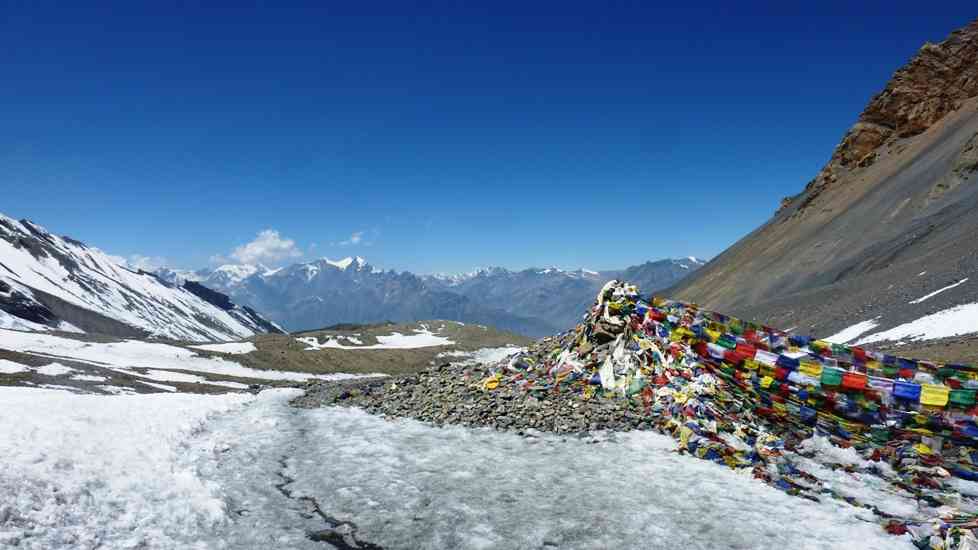
An avalanche in the Himalayan region of central Nepal has killed at least 17 climbers, including at least eight foreign nationals, officials said Wednesday. More than 100 people are reportedly missing in the blizzard, which was triggered by the tail of Cyclone Hudhud.

Some bodies of the deceased, who include Polish, Israeli and Nepalese citizens, were recovered from Thorong La pass, about 100 miles northwest of the capital, Kathmandu, while 40 others were rescued, Nepalese army official Niranjan Shrestha reportedly said. According to reports, 12 of the deaths were in the Annapurna region. The avalanche, which hit the area on Tuesday, was reportedly caused by the remnants of Cyclone Hudhud, which killed at least 24 people and caused widespread devastation in southeastern India over the weekend.

"There has been heavy snowfall in the area, up to three feet (91 centimeters)," a police official in charge of the rescue effort reportedly said. "Among the dead are two Polish trekkers and one Israeli. A Nepali was also buried by the snow," he reportedly said, without revealing any other detail.

Local police officials reportedly said that 152 foreign tourists in Mustang district in the Dhawalagiri zone of northern Nepal could not be contacted.

“The phone network is not very good so we have not been able to get in touch with the missing, but we hope to find them later today,” Mustang district official Baburam Bhandari said, ABC News reported. Bhandari also reportedly said that five Polish nationals, four Israelis and five German citizens had been rescued.

The rescue operation, which was hampered by heavy snow, reportedly resumed after the weather cleared up on Wednesday. According to BBC, Cyclone Hudhud is now moving from Nepal toward China.

Officials said that three villagers were killed Monday in the same district, about 160 kilometers (100 miles) northwest of the capital, Kathmandu, and their bodies were recovered on Wednesday.

In the neighboring Mustang district, four trekkers caught in a blizzard died on Tuesday. Rescuers recovered the bodies of the two Poles, one Israeli and one Nepali trekker from the Thorong La pass area.

Meanwhile, the bodies of five more trekkers -- four Canadians and an Indian -- who died Tuesday were recovered Wednesday in remote Manang district, Narayan Datta Chapagain, a local police official told.

It was initially thought the group had been caught in an avalanche, but government official Yam Bahadur Chokyal said by telephone from Mustang that the four trekkers instead had been caught in the blizzard and died.

He said another 14 foreign trekkers have been rescued so far, and two army helicopters were picking up injured trekkers and flying them to Jomsom town.

Chokyal said it was not possible to say how many trekkers were still on the route stranded by the deep snow but several of them have reached safe ground on Wednesday because of improved weather.

The rain and snow in Nepal were caused by a cyclone that hit neighboring India several days ago.

October is the most popular trekking season in Nepal, with thousands of foreigners hiking around Nepal's Himalayan mountains.

The Thorong La pass is also on the route that circles Mount Annapurna, the world's 10th highest peak.

An avalanche in April just above the base camp on Mount Everest killed 16 Nepalese guides, the deadliest single disaster on the mountain. Climate experts say rising global temperatures have contributed to avalanches on the Himalayan mountains.

Wednesday 15 October 2014

http://www.independent.co.uk/news/world/asia/nepal-avalanche-kills-four-trekkers-in-mountain-pass-with-dozens-still-missing-9795448.html

continue reading

Tuesday, 22 July 2014

Death toll from Typhoon Rammasun reaches 33 in China, at least 97 deaths in the Philippines

The death toll from Super Typhoon Rammasun has risen to at least 33 after seven more bodies were recovered, state-run media reported on Monday. The powerful storm made landfall in China on Friday after killing nearly 100 people in the Philippines.

Thirteen deaths were reported in south China's Hainan island province, nine in southwest China's Guangxi Zhuang Autonomous Region and eleven in neighboring Yunnan province. The death toll figures are based on tallies gathered from both central and local government agencies, according to the state-run news agency Xinhua.

Rammasun, the strongest typhoon to hit south China in four decades, caused gales, downpours and floods in many provinces across southern China, affecting more than 8 million people in the provinces of Hainan, Guangdong, Yunnan and Guangxi Zhuang Autonomous Region. Additionally, Rammasun severely damaged power and water facilities, ports and roads, as well as telecommunication networks, hampering transportation and rescue work.

Early Monday morning, a mudslide triggered by the remnants of the typhoon hit a village in Yunnan province, killing at least 10 people and leaving 10 others missing. Teams from the provincial disaster relief bureau and civil affairs department have been sent to assess the damage and begin rescue work, Xinhua reported.

A total of 608,000 people have been displaced by the storm and over 240,000 are in urgent need of basic necessities, according to government figures.

Direct economic losses in Guangxi and Hainan are each estimated at more than 6 billion yuan (965.9 million U.S. dollars), according to Xinhua. However, despite zero deaths thus far, Guangdong has suffered the worst economic losses, with an estimated loss of more than 12.7 billion yuan (2 billion U.S. dollars), and 7,800 houses and 110,000 hectares (271,800 acres) of crops demolished.

Reflecting on the disaster, Chinese Vice Premier Wang Yang told authorities to make people's safety a top priority when fighting floods and droughts. As China enters its peak season for natural disasters, Wang said that efforts in flood control and drought relief should be increased, calling attention to inadequate flood control facilities in some places and weak links in emergency response.

Wang also said authorities should ensure that disaster control and relief measures are implemented efficiently, as well as forecasts and early warnings being improved, according to Xinhua. In response to losses caused by Rammasun, Wang said the central government will set aside funds for rescue and relief.

Rammasun made landfall in the Philippines on Tuesday afternoon and exited on Thursday, leaving at least 97 people dead, 460 injured and 6 missing, according to the latest report issued by the National Disaster Risk Reduction and Management Council (NDRRMC) on Monday. More than 330,000 people were affected in the country and, of that number, more than 97,000 people were displaced and served at evacuation centers.

After leaving the Philippines, Typhoon Rammasun headed for China, making landfall in northern Hainan Island early Friday morning. Next, the deadly typhoon headed for a final landfall near the northeastern border of Vietnam and China, where it dissipated over the Chinese province of Yunnan on Sunday.

Rammasun, which is known in the Philippines as Typhoon Glenda, was part of the 2014 Pacific typhoon season which runs throughout the year, with most tropical cyclones forming between May and November.

Tuesday 22 July 2014

http://wireupdate.com/death-toll-from-typhoon-rammasun-reaches-33-in-china.html

continue reading

Thursday, 17 July 2014

Typhoon Rammasun kills 38 in Philippines


Typhoon Rammasun is headed for China after battering the northern Philippines, where it killed at least 38 people.

Philippine officials say eight people are also missing after the storm cut a path across the main island of Luzon on Wednesday.

Hundreds of thousands are still without power in the capital, Manila, and surrounding areas, where trees and power lines remain down.

Most of those killed were hit by falling trees or other debris. In the city of Lucena, at least three people died when a wall collapsed on them.

Forecasters believe the storm will regain its category three strength as it moves over the warm waters of the South China Sea in the direction of Hainan Island, which is home to nearly 9 million people.

Rammasun, which means "God of Thunder" in Thai, is now a category one storm, with sustained winds of up to 130 kilometers per hour and gusts of up to 160 kilometers per hour.

The storm, which is moving northwest at about 25 kilometers per hour, is expected to make landfall in southern China sometime on Friday.

China's official Xinhua news agency said strong gales, downpours and high tides are expected along the country's southern coast.

It said shipping will be halted indefinitely starting Thursday morning in the strait between Hainan and China's southern Guangdong Province.

Ahead of the typhoon, Philippine authorities evacuated more than 400,000 people. This was in an effort to prevent a repeat of last November's typhoon Haiyan, which killed 6,300 people with its tsunami-like sea surges.

About 20 major storms hit the Philippines every year.

Thursday 17 July 2014

http://www.voanews.com/content/typhoon-rammasun-kills-38-in-philippines-heads-for-china/1959294.html

continue reading

Monday, 12 May 2014

Typhoon Yolanda identification update


In Tacloban, residents still searching for missing loved ones may finally find closure six months after Yolanda devastated the city.

A team from the National Bureau of Investigation in Manila will conduct antemortem identifications of 2,255 bodies that remain unidentified.

Acting city administrator Jennylyn Manibay said the Tacloban government asked the NBI for help in identifying the victims. “This is the least the city government can do to provide comfort and closure to the relatives who had lost their loved ones,” Manibay said.

Of the bodies that had yet to be unidentified, 2,243 were buried in a mass grave at Holy Cross Cemetery in Barangay Diit.

Relatives of the missing can go to the Balyuan Convention Center beginning May 19 to register. The taking of blood samples and dental swabs will be done alphabetically. The samples extraction will end on July 7.

Qualified to give samples are parents and children of victims.

The samples will be sent to the NBI office in Manila. Their DNA will be matched with the DNA taken from the bones and tissues of unidentified victims.

Dr. Charina Labrador, NBI Disaster Victims Identification chief, said she could not say how long it would take to complete the procedure.

She said the matching would be done free of charge. Under ordinary circumstances, DNA matching costs P20,000.

Sunday 12 May 2014

http://newsinfo.inquirer.net/601215/govt-has-yolanda-recovery-report-after-all

continue reading

Thursday, 24 April 2014

More typhoon ‘Yolanda’ bodies found


Five months after Supertyphoon “Yolanda” leveled large swathes of the Eastern Visayas, dead bodies continue to turn up.

Seven bodies were recovered in Tacloban City over the weekend as government workers scoured the area for victims of one of the most destructive typhoons to hit the country, the National Disaster Risk Reduction and Management Council (NDRRMC) said Tuesday.

The NDRRMC said the death toll from Yolanda now stood at exactly 6,300, most of them still unidentified, while the typhoon left almost P89.6 billion worth of property and infrastructure damage.

It said 1,061 persons remain missing and a total of 28,689 were injured in different typhoon-related incidents.

The typhoon, which made landfall six times before leaving the Philippine area of responsibility, affected some 3.4 million families composed of 16 million individuals in nine regions.

The NDRRMC said Yolanda, which triggered storm surges several meters high, displaced four million individuals as it knocked down one million houses.

Thursday 24 April 2014

http://newsinfo.inquirer.net/596636/more-yolanda-bodies-found

continue reading

Wednesday, 26 March 2014

Yolanda victims’ bodies still being found; identification process to last 3 years


Vernabeth Amarilla and her family were both relieved and heartbroken when the authorities recovered the body of her grandmother last Sunday.

Although the body was now in an advanced state of decay, they were able to identify her through her clothes.

She was found inside a ruined radio station in Tacloban City by authorities who were cleaning up rubble. A victim of Typhoon Yolanda, her body had lain there since November, while all this time her family searched for her and feared the worst.

Only 8 out of 2,241

What happened to Vernabeth's grandmother is not an isolated case. According to the National Bureau of Investigation, bodies of Yolanda victims are still being discovered almost five months after the super typhoon devastated central Philippines late last year.

"Actually, last week may dumating na 15 bodies [sa amin]," NBI Disaster Victims Identification team leader Dr. Nicacio Botin told reporters on Wednesday.

The Bureau of Fire Protection retrieves the bodies, which are then transferred to the NBI for identification.

The United Nations Development Programme provided sniffing dogs that made retrieval operations more thorough, Botin added.

Last Sunday, the NBI finished its postmortem investigation of 2,241 bodies that were temporarily buried in Holy Cross Memorial Cemetery (189), or permanently buried in Brgy. Suhi (1,200) and Brgy.Basper (852).

Out of the total number of identified bodies, only eight have been claimed.

Identification process to last three years

The anti-post-mortem phase of the identification will commence after Holy Week. During this stage, the NBI will ask the relatives of those still missing to come forward and provide identification documents, photos, and DNA samples. This stage will take about six weeks, Botin said.

However, he added, the matching of the identifying documents and DNA could take as long as three years.

There are currently eight members of the NBI's Disaster Victims Identification team, on rotational basis. At the height of retrieval activities, the team has about 21 members. This number does not include the volunteers.

Wednesday 26 March 2014

http://www.gmanetwork.com/news/story/354237/news/regions/yolanda-victims-bodies-still-being-found-identification-process-to-last-3-years

continue reading

Tuesday, 25 March 2014

Typhoon Haiyan: Storm victim’s body left to hang on a tree


The body of a boy was dug up in this city almost five months after super typhoon “Yolanda” devastated the Eastern Visayas region, but the authorities just left the boy’s cadaver in a body bag literally hanging from a tree branch for two weeks.

The body was found in San Jose district’s Barangay Cogon by a canine search team on March 11 in a shallow grave near an old chapel.

Barangay Cogon residents said no one in the village could identify the boy so he could not have been a resident of the barangay, but residents decided to temporarily bury the boy in the grounds of the village’s chapel.

Under current arrangements, bodies of Yolanda fatalities are usually sought with canine teams and dug up by a search team. Crime scene investigators will then take photographs and DNA samples from the cadaver for possible identification.

After processing, the Bureau of Fire Protection is supposed to retrieve bodies for burial at one of the mass grave sites in the city.

But in the case of the body dug up in Barangay Cogon, the BFP never came for the body although village leaders repeatedly told them over a period of two weeks about the body abandoned in their barangay.

“The stench of the corpse that they dug up was already horrid and everyone could smell it because they hung it on a fallen tree by the road side,” one resident said in the vernacular after asking not to be identified.

“Residents are already afraid of catching disease so we are pleading with the authorities to please get the corpse,” the resident added.

Village chief Arlie Go-Perez said she repeatedly told the BFP about the body and it took them two weeks to return and get the body.

When asked about the incident, the local police’s crime scene investigators disavowed knowledge of the body that was dug up last March 11 and they claimed that that was the first time they heard about the matter.

Later in the day, however, the authorities finally retrieved the body and buried it in a mass grave in Barangay Suhi.

The incident has become common in the city, where 2,669 are known to have died, excluding the deaths from nearby towns and provinces. More than half of the Tacloban number come from the San Jose district.

The government’s confirmed death toll is at 6,268 with 1,785 still missing, but the data has not been updated for a month and information on the dead or the missing cannot be found on the website of the National Disaster Risk Reduction and Management Council.

The NDRRMC could not explain why the fatality figure has not been updated, although its spokesman Reynaldo Balido confirmed that bodies were still being found in Tacloban four months after the diaster.

“Sometimes they find two or three a day, then there are days where they find none,” Balido earlier told a news wire agency.

United Nations undersecretary-general for humanitarian affairs herself was shocked that bodies were still turning up when she visited the city last month.

Tuesday 25 March 2014

http://manilastandardtoday.com/2014/03/25/storm-victim-s-body-left-to-rot-on-a-tree/

continue reading

Monday, 17 March 2014

Typhoon Yolanda (Haiyan) death toll at 6.268


Twenty three more unidentified bodies were recovered from Eastern Visayas, five months after typhoon Yolanda ravaged the area, bringing the death toll to 6,268, the National Disaster Risk Reduction and Management Council said on Saturday. The agency said that the 23 bodies (1, Guiaun, 8, Barauen, Eastern Samar: Carigara-3, Dagami-6, Dulag-3 and Magta-Ob-2, all in Leyte province) were all recovered Friday. It said that the missing persons at the height of Yolanda’s fury rose to 1,061 from the previous count of 1,039. The latest NDRRMC posting is part of its 107th situational report of Yolanda’s effect, saying that the injured victims climbed to 28,689 from 28,626 with an additional 63. Leyte had the highest fatalities at 5, 370. The NDRRMC posting also showed the death toll in other areas hit by typhoon Yolanda (19 in Palawan; 2 in Quezon; 1 each in Batangas, Albay, Camarines Norte, Bohol and Zamboanga City; 179 in Iloilo; 4 in Masbate; 14 Aklan; 86 in Capiz; 13 in Antique; 2 in Negros Occidental; 73 in Cebu; 267 in Eastern Samar; 5,370 in Leyte; 225 in Samar and 8 in Biliran). Monday 17 March 2014 http://manilastandardtoday.com/2014/03/16/yolanda-deaths-6-268-and-counting/

continue reading

Sunday, 16 March 2014

Forensics expert says Yolanda death toll could reach 18,000


More than 18,000 lives may have been lost during typhoon “Yolanda,” according to forensic pathologist Raquel Fortun of the University of the Philippines Manila.

“The casualties could surpass that of Fukushima which claimed 18,000 lives,” she said.

“Yolanda claimed over 18,000, probably tens of thousands,” she told Malaya Business Insight. “That’s my gut feeling.”

The victims “may have died in whole families, meaning, nobody was left to report the missing and the dead,” she said in a scientific conference on emergency health management convened by the Philippine Council for Health Research and Development, Department of Science and Technology.

The running official record stands at some 6,200 dead and at least 1,000 missing. The toll could surpass that from the magnitude 9 earthquake off Fukushima in Japan in March 2011, which claimed some 18,000 lives.

“If you ask me, Yolanda claimed more,” Fortun said. “In disasters, you can’t recover all.”

Fortun was in Tacloban when the typhoon hit in November last year. She brought what order she could in the identification and proper burial of fatalities.

As a forensic pathologist, Fortun is a medical doctor trained to perform autopsies and postmortem examinations to determine cause of death.

Fortun knows what she speaks of. She was at the Ozone Disco Club in Quezon City after it was razed by fire before midnight in March 1996. The fire claimed at least 162 lives, the worst fire in Philippine history and among the 10 worst nightclub fires in the world.

Fortun was also at an orphanage in Manila after it was hit by a fire in December 1998, killing 29 children. And she was in Payatas, Quezon City, in July 2000 shortly after a mountain of trash buried more than 300 people alive in a landslide.

So, has forensic pathology improved since? “Yes, we now have body bags; that’s about it,” Fortun said.

In Yolanda’s wake, the problems were just too “enormous” in the confusion that followed. Fortun was able to bring some order to the burial of body bags so that, when future identification is required, individual graves can be traced.

In Tacloban, together with a physician and three morticians, Fortun opened body bags one by one, systematically tagging them. It was Day 2 and decomposition was starting.

“I don’t think there was a systematic gathering of the dead, they were picking up bodies as they found them,” she said.

She showed photos to physicians who attended her lecture on disaster victim identification. “Remember, this is minus the stench.”

EVERYTHING EXCEPT AN ID

She said there were a lot of wallets containing money, SIM cards and many other things – except identification cards. “If you’re anticipating a disaster, carry an ID.” Her team found a lot of cellphones and these will be useful as they can be traced, she said.

And “the bodies kept coming,” said Fortun as she gave an overview of where current forensic science is. “The Philippines has no death investigation system,” she said simply.

That’s the bad news, she said. The good news was, “we knew Yolanda was coming. I was already counting bodies in my mind,” she said. “And we can now do DNA identification.”

“In a disaster, it’s critical that you have pre-planning. You must have provisions for the collection, accommodation, examination and disposal of the dead in large numbers,” she said.

Mass disaster management is a health issue, she said, and should be handled by the Department of Health and not by the National Bureau of Investigation or the police.

‘PROPER CLOSURE’

The number one forensic issue is the identification of the victims, she said, and law enforcers do not have the capability to establish the fact of death, identify the deceased, and determine the cause and manner of death. “They are not capable of handling mass identification.”

She said it is necessary to investigate deaths so that victims are declared legally dead and bodies officially released. This way, the surviving spouse, for example, can remarry or heirs can get the inheritance. And if the deceased has a criminal case, it becomes moot and academic.

“It is most important that DNA analysis provides proper closure for relatives of the dead, especially when emotions are high as in disasters,” said Dr. Maria Corazon A. De Ungria who heads the DNA Analysis Laboratory at the Natural Sciences Research Institute, UP Diliman.

The PCHRD is funding the laboratory’s two-year study – “Human DNA Forensic Analysis Procedures for Human Remains Identification” – that started January last year. Another two-year research funded by the PCHRD is the Human DNA Forensics Program to develop DNA procedures that would be useful in the formulation of a national forensics strategy.

Sunday 16 March 2014

http://www.malaya.com.ph/business-news/news/forensics-expert-says-yolanda-death-toll-could-reach-18000

continue reading

Thursday, 27 February 2014

Corpses still being found after Haiyan


Four months after Super Typhoon Haiyan hit the Philippines, bodies are still being found, though the government hasn't updated the death toll of 6201.

Bodies are still being found under the wreckage almost four months after Super Typhoon Haiyan ravaged the Philippines as survivors struggle to rebuild their lives.

The government's confirmed death toll of 6201 has not been updated for a month, as officials investigate whether the recently-discovered corpses are among the 1,785 listed as missing.

UN undersecretary-general for humanitarian affairs Valerie Amos recounted the shock of discovering the dead during a visit on Wednesday to the devastated central city of Tacloban.

"As the debris is cleared, they are finding more dead bodies. We experienced that for ourselves," she told reporters.

Amos visited Tacloban to inspect the progress of the UN-aided rehabilitation effort and check on the condition of survivors of one of the strongest typhoons ever to hit land.

The government's National Disaster Risk Reduction and Management Council confirmed bodies are still being found.

"Sometimes they find two or three a day, then there are days where they find none," its spokesman Reynaldo Balido told AFP.

The latest casualty figures were a month old and did not reflect any subsequent corpse retrievals as the authorities work to reconcile the numbers, he added.

Balido said residents have learnt to adapt to the sight of newly found corpses.

Haiyan raked across the central Philippines on November 8 last year, wrecking 1.1 million houses and displacing more than four million residents of some of the country's poorest provinces according to the UN.

The worst damage was inflicted by huge tsunami-like surges of seawater into Tacloban and other coastal communities.

Thursday 27 February 2014

http://www.sbs.com.au/news/article/2014/02/27/corpses-still-being-found-after-haiyan

continue reading

Thursday, 20 February 2014

30 more Typhoon victims recovered in Tacloban in two weeks


More than three months have passed since Yolanda devastated the city but authorities continued to recover more dead bodies from different areas in Tacloban.

In the recently concluded Regional Disaster Risk Reduction and Management Council (RDRRMC) Meeting held at Leyte Sports Development Center, in this city, Task Force Cadaver headed by Senior Superintendent Pablito Cordera of the Bureau of Fire Protection in the region has reported that 30 dead bodies were recovered by the team from February 4 until February 17, 2014 in different places in the city.

Most of the cadavers were retrieved in San Jose District, one of the coastal barangays hardly hit by the storm surges.

Eleven(11) of the cadavers were found on February 4. 2014, One(1) in February 6, Two (2) in February 8, five(5) in February 11, three(3) in February 13 and eight(8) were retrieved in february 17. All of these were brought to the grave site at Holy Cross Cemetery.

This brings to a total of 2, 622 cadavers recovered by the task force since November 16, 2013 until February 18, this year.

The task force cadaver comprises personnel from the Philippine National Police, National Bureau of Investigation, City Government of Tacloban, Armed Forces of the Philippines, Department of Health and the Bureau of Fire Protection (BFP) which is the lead agency.

Thursday 20 February 2014

http://news.pia.gov.ph/index.php?article=2681392712124

continue reading

Thursday, 6 February 2014

The volunteers who provided dignity for the dead following Typhoon Haiyan


The snap of latex gloves in the back of the truck is the only sound as a group of Philippine Red Cross volunteers tasked with one of the most difficult jobs in the typhoon aftermath head out to work.

They are the body retrieval team and they have just had call out.

The team of four have been undertaking this grim task since the day after the disaster. They have collected dozens of victims and although they admit it is a grisly and often traumatic job, they recognise they’re helping those survivors who are desperate to determine the fate of their loved ones. On this particular day, the team had been called to collect two bodies in the San Fernando area of the city.

As the Red Cross truck pulled up on the roadside close to where the remains were believed to be, Annalou Atterberry approached. The 27-year-old teaching assistant said she had come to Tacloban from Manila to bring basic supplies for her family in Leyte and Samar. When she arrived, she was told her 15-year-old nephew Romuel Capilos was missing.

Romuel had quit school in order to earn extra cash for his family and two days before Haiyan hit, he took up a gruelling job in a fish processing factory in Tacloban. He was working up to 21 hours a day for 1,500 pesos a month – the equivalent of about $35 US dollars.


He and between 15 and 20 of his colleagues had worked on the day of the typhoon instead of evacuating.

Annalou hitched a ride from Bongdo Julita village in Leyte, where most of her family live, and came to find Romuel. And that morning she did find him – she found his body wedged under a wall. She’d crawled over the rubble of his workplace until she caught sight of the green t-shirt and shorts she knew he had been wearing on the day of the storm.

She explained Romuel’s mother had been having a recurring dream that her son was trapped underneath something. “That’s why I came,” Annalou said. “Because she kept having the dream that he was saying ‘mum, please help me, please get me out.’ Hopefully, now we can.”

The retrieval team went to assess the scene and deemed it too dangerous. They enlisted the help of the police and their heavy-lifting equipment before heading off to continue collecting the two bodies from the initial call out. The team found them next to each other – they were the bodies of an adult woman and a baby girl, about one year old. The skilful volunteers were able to retrieve the pair and prepare them for burial with dignity, as a crowd of neighbours look on.

Francis Hidalgo, 36, has been a central member of the retrieval team since the operation began. As a father, he admits the job can be harrowing and led to nights when sleep evades him but he said: “It makes me think of my family and how I want to be with them and keep them close. But helping people gives me and all the guys energy. This is one part of being a Red Cross volunteer and I feel it is very important.”

Thursday 06 February 2014

http://www.ifrc.org/en/news-and-media/news-stories/asia-pacific/philippines/the-volunteers-who-provided-dignity-for-the-dead-following-typhoon-haiyan-64363/

continue reading

A family's struggle to find a missing loved one in post-Haiyan Philippines


The poster shows two pictures of a smiling boy - one in a shirt, tie and trousers looking dapper, and the other in the arms of a family member. “Have you seen this boy?” the headline asks in thick black letters.

Three-year-old Tarin Sustento has not been seen since the morning of Nov. 8, 2013 when Typhoon Haiyan bore down on the central Philippines with tree-snapping winds and tsunami-like waves. Mildly autistic, Tarin cannot speak and does not know his name.

The boy is one of the 1,785 people the government has declared as missing following the storm, which killed more than 6,000.

The bungalow in Tacloban that Tarin used to share with his parents and four other relatives is now an abandoned wreck.

“Keep walking, nothing to see here,” ordered a message scrawled in capital letters on the white metal gate. Yet the remaining members of the family have not given up hope of finding him.

“We’re hopeful somebody took him in because my brother placed a lifejacket on him,” said Joanna Sustento, Tarin’s aunt and one of two known survivors in the family, as she sat in the living room of a relatives’ house in Palo, a town next to Tacloban.

Tacloban, a coastal city that bore the brunt of the storm, is slowly beginning the long and difficult task of rebuilding. For people whose loved ones remain missing, moving on is a challenge. Posters asking for information of their whereabouts still adorn the walls of churches and bus stops three months after the typhoon, locally known as Yolanda.

“Even if we gave people food, shelter and water, the psychological trauma from being separated from their families is still a big problem for them,” said Beverly Kalingag, social services officer with the Philippines Red Cross (PRC), which has been tracing missing people with support from the International Committee of the Red Cross (ICRC).

LOVED ONES SWEPT AWAY

The posters of Tarin, whose father was a well-known tattoo artist, and a Facebook campaign set up by his other aunt, received many responses. Most were from people asking for money but that has not deterred Tarin’s relatives in tracking down each lead.

“A friend of my brother’s said that a doctor he knows told him that another doctor brought a three-year-old child from Tacloban to Manila about two months ago”, Sustento said.

“But we’re not sure if the child’s a boy or a girl,” added Sustento, who lost her parents, her eldest brother and his wife during a harrowing two-hour fight for survival.

On the day of the storm, strong winds woke up the whole family in the early hours. Around seven at the breakfast table they noticed water coming in through the kitchen door.

“Our house is near the coast but we have not experienced flooding before, and we never expected a storm surge,” Sustento said.

Within minutes, the water was at chest level. As they rushed out of the house, she saw a snake, she recalled.

“I freaked out but I tried to stay calm as I didn’t want to worry my father. He had a heart surgery in August and the doctors told us one more attack and that would be it,” she said.


“I looked at Tarin and even though he didn’t say anything I could see he was worried and afraid,” she added. Her sister-in-law got bitten in her thumb as they were struggling to hold on to the window grill. She sucked the poison out of her but when Sustento looked again, after helping her parents, her sister-in-law had drifted away.

Only Sustento and an unmarried brother survived the typhoon. The body of their father is yet to be found.

NEED FOR CLOSURE

The Philippines Red Cross set up a welfare desk immediately after the disaster and informed survivors they could request for help to find missing loved ones.

The ICRC, which has decades of experience in restoring family links, says it has resolved 504 cases of missing persons in two of the worst-affected provinces, Samar and Leyte.

This is done using rudimentary but effective methods such as making door-to-door enquiries and talking to neighbours and community leaders.

More than 120 cases remain open in Tacloban, including that of Tarin, according to PRC’s Kalingag. This means they have not been able to determine whether the person is dead or alive.

Sustento said Tarin’s family is exploring all options including waiting for the National Bureau of Investigations to process the dead bodies in Tacloban, of which 2,542 have yet to be identified. The government has warned it will be a costly and time-consuming task.

Bodies are still being recovered too. On the day this correspondent visited Tarin’s former home, almost three months after the storm, four fresh body bags lie on the side of the road some 100 metres away from the house.

“We are hoping that we will still find Tarin,” Joanna said. “Dead or alive. Just for closure.

Thursday 06 February 2014

http://www.trust.org/item/20140205115838-yncd7/

continue reading

Saturday, 25 January 2014

3 bodies a day still being found in Tacloban


More than two months after a super typhoon devastated Tacloban City, authorities continued to find an average of three bodies a day, Mayor Alfred Romualdez said on Thursday.

After earlier tangling over the government’s handling of Super Typhoon Yolanda’s aftermath, Romualdez shook hands with Interior Secretary Mar Roxas at the hearing on the law creating the National Disaster Risk Reduction and Management Council (NDRRMC).

As the government moved to carry out a massive rehabilitation plan, Romualdez said that city officials continued to retrieve bodies and ferry them to the National Bureau of Investigation for processing.

“In Tacloban, we’re retrieving an average of three bodies a day,” he told the oversight committee chaired by Sen. Antonio Trillanes IV and Muntinlupa Rep. Rodolfo Biazon.

In the city of 250,000, there were 2,000 fatalities and 700 missing, he said.

Romualdez, however, said he was puzzled why Tacloban appeared to be the only local government unit that was bringing bodies to the NBI for DNA processing for the sake of their loved ones.

Yolanda (international name: Haiyan), packing sustained winds of 315 kilometers per hour, tore through Eastern Visayas last Nov. 8, leveling mostly seaside villages and leaving more than 6,000 dead.

Moving forward, Romualdez proposed that the government build disaster-proof NDRRMC headquarters in every region.

He said he pitied Roxas and Defense Secretary Voltaire Gazmin because they had to move from City Hall whose roof had been blown away and seek shelter in a police station in the immediate aftermath of the storm.

“We should have NDRRMC headquarters in every region that is storm-proof,” he said.

No sparks flew between Romualdez and Roxas in their face-off at the hearing in the Senate and a news conference later. “Yes,” Romualdez said when asked if all was well between them.

In the hearing, Roxas clarified that the letter he demanded from Romualdez had to do with the city council’s failure to muster quorum to impose curfew.

Roxas said that when incidents of looting became widespread after the storm, policemen raised the concern of whether they could impose curfew without a city ordinance.

When he raised the matter with Romualdez, the mayor said the city council could not muster a quorum to pass the ordinance imposing the curfew.

“When they said they could not muster a quorum, I said let’s put in writing so that the police will have something in black and white, and avoid being charged in case they arrested people,” he said.

Roxas also clarified that he did not tell Tacloban city officials that they should fend for themselves.

“The help from the national government arrived nonstop not only for Tacloban, but for the entire Leyte and Samar provinces, and other areas ravaged by Yolanda,” he said.

Emergency measures

Roxas also confirmed telling Romualdez to be “careful” but in the sense that if an LGU stopped functioning, the President’s “residual general welfare powers and authorities” would come into play.

“The President didn’t want this to be misconstrued,” he said.

In earlier hearing, Romualdez said the national government sought the immediate passage of an ordinance imposing a city-wide curfew to check looting.

He expressed reservations because the prosecutor’s office and courts were still closed to entertain any violator who would post bail. He said checkpoints were effective.

Days later, Roxas called city officials to a meeting, and told Romualdez: “We have to legalize everything here.” “I asked him: What is to legalize here?” the mayor said. “He replied: Well, this is a gray area and the national government is coming in, and doing all this.”

“And then I told him: ‘Why is it illegal? As far as I know the President is the President of the Philippines and he’s also the President of Tacloban City. I don’t see anywhere in the law that you need a letter, an ordinance from me for you to come in, and do what you’re doing,’” he said then.

He recalled Roxas as telling him: “You have to be very careful because you are a Romualdez, and the President is an Aquino.” Who’s in charge?

On Thursday, Sen. Ferdinand Marcos Jr., who temporarily presided over the hearing, advised Roxas to be flexible when it came to determining who should be in charge in a disaster-stricken locality.

“Perhaps you should study the possibility of being more flexible. We should not be saying, ‘You’re the first responder, you back them up’… If the police, military are there, and a problem crops up like looting, then they should come in. We keep hearing first responders not being able to respond,” Marcos said.

The senator said the standard operating procedure should be amended so that people or agencies that are capable should be the first to respond to disasters.

Romualdez had lamented that while Roxas and Gazmin were in the city when the storm struck, the police and military were not mobilized soon enough to maintain law and order.

Roxas explained that the augmentation of 1,260 policemen took time because they had to be airlifted and then brought to the disaster areas by land.

“I don’t’ want to leave the impression that bureaucracy prevailed here,” he said. “Whoever responded, responded.” In the first days, Roxas said they used bicycles to scour the areas, and admitted they had no satellite phones.

“There was no load, eh,” he chuckled. Then turning serious, he said it was “an oversight on our part.”

Saturday 25 January 2014

http://newsinfo.inquirer.net/568561/3-bodies-a-day-still-being-found-in-tacloban

continue reading