Showing posts with label Unclaimed. Show all posts

Friday, 14 August 2015

Nigeria: 30 unidentified corpses lying at Mararaba Medical Centre


The management of Mararaba Medical Centre in Karu Local Government Area of Nasarawa State has said that 30 unidentified corpses are in its mortuary.

Dr Ibrahim Adamu, the Medical Director of the centre, made the fact known in an interview with the News Agency of Nigeria (NAN) in Mararaba on Thursday.

Adamu said that the situation was unhealthy and worrisome to both the patients and members of staff of the centre.

"These corpses have been here since 2013 with no record of ownership.

"They were brought or dumped here by the police as most of them happen to be victims of accidents or armed robbery.

"We are appealing to Karu Local Government authorities and the police to arrange for their burial.

"Evacuation of these corpses will promote, not only the health of our workers, but also health of our patients, especially those on admissions," he said.

Friday 14 August 2015

http://allafrica.com/stories/201508131889.html

continue reading

Thursday, 13 August 2015

Japan: Ashes of thousands of wartime dead still unclaimed


The remains of thousands of civilians killed during World War II still remain unclaimed by relatives and languish in storage at temples and other sites across the country, an Asahi Shimbun survey shows.

The families of more than 7,400 people have yet to claim ashes stored in eight cities across Japan, even though the deceased have been identified based on name tags and other items attached to their clothing.

Many of the victims were killed in U.S. air raids. But in Okinawa, the victims were caught up in shelling and fighting.

In an effort to tally the unclaimed remains, The Asahi Shimbun contacted local governments, private-sector organizations, temples and other parties. The study covered Okinawa and 71 cities where 100 or more people are said to have died in connection with the war.

Although the central government has been diligently working to return the remains of Japanese soldiers killed in the war to their families, there had been no detailed research on the uncollected remains of civilians killed in U.S. air raids and other means.

According to the survey results, the ashes of 3,701 people stored in Tokyo have been identified but remain unclaimed by relatives. The figures for Hiroshima and Nagasaki, which were both leveled by atomic bombing in 1945, are 815 and 122, respectively.

Each of the three cities annually receives several inquiries and ashes have been returned in some cases. But in many instances, ashes that have been identified cannot be claimed because all family members perished in the war, according to the Nagasaki Atomic Bomb Museum.

The ashes of more than 2,700 identified civilians remain unclaimed in Kamaishi, Iwate Prefecture, Yokohama, Hamamatsu, Osaka and Sakai, Osaka Prefecture. Because the bodies of victims were cremated and buried together in those five cities, relatives are now unable to collect the remains.

The Hiroshima and Nagasaki city governments publicly disclose names of the identified victims. In the case of Hamamatsu and Sakai, bereaved families can view lists of remains that have been identified by contacting the temples and private groups storing them. Tokyo and Osaka do not publicly disclose the identities of remains.

The Asahi Shimbun also learned that unidentified remains of more than 300,000 people were buried together at temples and other facilities in Okinawa, Tokyo and 11 other cities.

More than 500,000 civilians are thought to have perished in Japan in World War II, mainly as a result of U.S. air raids.

One reason behind the large number of unclaimed remains is that it was difficult for Japanese officials during the war to identify victims and locate their families in the face of intensified aerial attacks by the United States.

According to records on damage to Tokyo during the war and other source material, the police were responsible for examining and identifying those killed in airstrikes.

But police were overwhelmed by the number of victims in the Great Tokyo Air Raid of March 10, 1945. Corpses were laid out on city streets for several days so people could find their families. The bodies were later transferred to nearby parks and elsewhere for tentative burial because it was thought that leaving them laid out on the ground for a prolonged period could undermine the people's fighting spirit.

Victims of the Great Tokyo Air Raid were exhumed and cremated after the end of the war so they could be enshrined at a Tokyo government-run memorial facility.

Although some of the victims of the air raid were identified, those remains could not be returned to relatives because the bereaved families did not know where or even if the ashes were being stored.

Interviews with bereaved families showed they could not afford to claim their relatives’ ashes as they were caught up on the task of rebuilding their own lives. In some cases, ashes were not returned because authorities mixed up names.

“The wartime authorities prioritized hiding corpses rather than identifying them so as not to lower citizens’ morale,” said Katsumoto Saotome, director of the Center of the Tokyo Raids and War Damage. “If the authorities had actively sought bereaved families of the remains immediately following the war, more ashes may have been returned to their relatives by now.”

Thursday 13 August 2015

http://ajw.asahi.com/article/behind_news/social_affairs/AJ201508120070

continue reading

Wednesday, 8 July 2015

The 261 unclaimed bodies of the Karachi heatwave; why do they remain unclaimed or identified?


It’s a fear that stalks furtively, the fear of dying alone, unloved and unmourned. Blended in this are worries about physical helplessness, about the indignities of the processes of death. But above all, dying alone seems an indictment of how we have lived, as if the universe itself scrawled ‘could do better’ across a report card untainted by anything of note. As if we never mattered.

That is why, two weeks after the killer heatwave in Karachi left some 1,233 dead, many are still wondering about the 261 ‘unclaimed bodies’. Who were they, these people only Edhi wept over? Were they once distinguishable in a crush of humanity, these dead who are now a series of numbers in a communal grave? Did they ever matter, even to themselves?

The search for answers takes me to the Edhi morgue.

Set in the sprawling Edhi complex in Karachi’s stolidly middle-income Federal B Area, the morgue is the only one in the city that allows even the indigent the right to dignity in death. The beige marble of the cavernous, 18×24 main hall offers respite from the late afternoon sun and white energy savers dispel the gloam. Three fans suspended from the false ceiling lazily swish around swarms of flies as well as eddies of cool and hot air. And every once in a while, when you’re least expecting it, rises the stench of putrefying bodies.

It’s hard to describe this smell: a strange composition of the stewing juices of decomposing flesh, unwashed human bodies and rotting flowers, laced with traces of formaldehyde. Faint but perceptible are base notes of blood, piss, sweat and shit — reminders that this too was once human, alive. It’s less a scent than a physical being, which clings to and then wafts off the clothes, the bodies of the Edhi staff, pirouettes on the beams of sunlight slashing the marbled floor and seemingly vapourises in the afternoon heat.

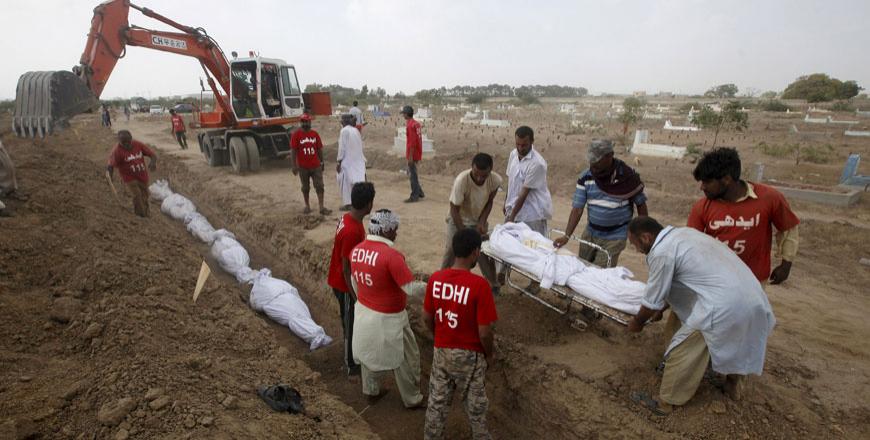
Ghulam Hussain has been working here for the last 10 years and we settle down for a chat on the marbled ledge that runs around the room. “It was so hot, you couldn’t sit here; the heat seared through the marble,” he says of the weekend of June 21. “We buried some 300 unidentified people that week, of which 39 were subsequently claimed by relatives.”

We’re interrupted by three women in abayas, stifling sobs; they are here to identify a body. Hussain skims through their paperwork, there’s a rapid-fire exchange in Sindhi. I hear “gunshot victim” and try to quell my curiosity by focusing on two pink spots on the floor (guava juice? bloodstains?) and then the light goes out. A volunteer appears with an emergency light and the three disappear, with their trailing abayas, into the cold storage area to the left.

So who were the 261 they buried? Vagrants? Heroin addicts? Professional beggars? The detritus of society?

Hussain recoils visibly. “No,” he says emphatically. “Some were heroin addicts — between 30 to 35 in total — but the rest were healthy, well-built, well-nourished people.” He seems to grapple for a word, a description that will convince me. “Kaam karne wale log the [they were working class people],” he concludes miserably, as he scans my face to see if I’ve understood.

Before I can cross-question him, the room erupts in wails. The women are back and for the next few moments, Hussain is transfixed. Does it still affect him? “I am a human being,” he says simply. “Doctors, policemen can’t afford to get emotional; it would affect their work. But we…” It’s an ethos Abdul Sattar Edhi personifies. A printed ‘appeal’ in Urdu hangs on the wall at the Edhi office near Mereweather Tower.

Employees and volunteers are reminded that Edhi himself begs for alms on the streets and any person who steps into Edhi offices to donate deserves to be treated with courtesy and respect. “If you can’t do so, please quit your job. This is God’s work; it will continue without you as well.” Under the shadow of this veiled threat, Edhi staff engage in the business side of their work: a man shuffles in, carrying four bright blue polyethene bags. “Kaffan hain [are these shrouds]?” asks Anwar Kazmi, who also functions as Edhi’s spokesperson. The man nods: “Cotton hai [it’s cotton cloth]” These men are intimately familiar with the modalities of death — Kazmi gives me a detailed account of how much graves cost in which part of the city — but, as Hussain shows, they have yet to lose their compassion.

So if less than 15 per cent of the unidentified dead were vagrants, beggars and addicts, why weren’t the other bodies claimed? One of the rumours swilling around the city puts forward economic reasons: meteoric demand fuelled a price hike and the cost of a grave rose from between Rs5,000 and Rs10,000 to as much as Rs50,000 in some cases. Those who couldn’t afford these rates were forced to step back and let Edhi bury their dead. Kazmi finds the idea plausible: “We received more than 10 times the amount of dead people we usually do so it is possible that the high cost of graves pushed people to leave bodies unclaimed.”

But Hussain disagrees vehemently. “It’s very difficult to identify decomposing bodies, even for relatives,” he says, as he leads me to the front desk of the morgue, which doubles as an office. As per procedure, an unidentified body is kept in the Edhi morgue for three days before burial. Apart from the standard autopsy-type details (gunshot/stab wound etc), the Edhi staff also makes a note of the precinct the body was discovered in and takes a photograph of the deceased before burial. These details, along with an assigned death number, are inscribed by hand in fat registers and help claimants identify their loved ones.

The first calls on June 21 started coming in around 11am, when people began fainting across the city. By the time the day ended, there were 280 bodies and Karachi’s administration had collapsed under their combined weight.

Hussain hands me a two-inch thick stack of 4×8 colour photographs, held together with a flimsy rubber band. All are headshots of people in advanced stages of decomposition. As the bodies of the heatwave victims putrefied, they released gases that contorted facial features. Hussain quietly watches me sort through the unending stream of bulbous eyes, protruding, mottled tongues and bloated, blackish-grey faces with thin trickles of blackish-maroon blood. There are faces where the flesh seems to be hanging on the face by a gravity-defying miracle, the skin stretched taut over eye sockets that could have been hewn from stone. There are others where the facial muscles lost the battle against the dead person’s canines and the premolars, the moment frozen in a grotesque grimace. And there are yet others whose features are indistinguishable behind thick plastic sheets.

“Some of the bodies were so decomposed, we had to wrap them in plastic just so we could bury them,” he explains softly. “It’s very hard to identify even your loved ones when they’re in this state.”

According to Kazmi, the first calls on June 21 started coming in around 11am, when people began fainting across the city. By the time the day ended, there were 280 bodies and Karachi’s administration had collapsed under their combined weight. The hospitals were overwhelmed, the city ran out of ambulances, the morgues were filled to capacity and yet the dead kept coming.

The city’s Samaritans are rightly credited for pulling themselves up by their bootstraps and rescuing a city in crisis: doctors at government hospitals pulled 72-hour stints, aid workers pushed themselves to exhaustion and beyond, citizens flooded hospitals with bottled water, ice blocks, juice and biscuits. But the suffocating blanket of heat that enveloped Karachi worked against everyone, undermined everyone’s effort. There were people who collapsed on the streets, Hussain reminds me, and by the time the bodies were picked up by an ambulance and taken to a hospital, pronounced dead and then ferried to a morgue, a couple of hours had passed. There were long queues everywhere: for ambulances, at hospitals, at the morgues, even for burial. “From the time a body arrived at our doorstep, there was a three to five-hour wait before we could put it in storage,” he says.

There was a two-hour wait for even those that brought their relatives to be bathed prior to the funeral. And all this while, the bodies baked in ambulances in the heat. “Do you wonder that people couldn’t recognise their relatives after such advanced decomposition? Some bodies were so bad, we couldn’t even wait the stipulated three-day period before burial,” he grimaces.

We return to the main hall and shortly after, the gunshot victim is wheeled out for bathing, the sheet slipping to show the exit point of the bullet on his forehead.

Now Hussain takes me inside the cold storage area, which comprises two 20×30 rooms. Three-tiered shelves run across both lengths of the first room, with neatly stacked bodies on them, while an empty rack stands in the centre. It’s sparsely populated today: just seven or eight bodies. The built capacity for the unit is 200 — Hussain says they get between 30 and 40 bodies per day on average.

But in the last week of June, the morgue had between 300 and 350 corpses here. “We took out this central stretcher to make space,” he tells me, as he gestures around the room, which is used by families who need to delay burials. “We just put sheets on the floor and began to pack the bodies in — there were three rows there under the AC, another row extending from this corner — there were just so many bodies.”

We walk further down, into the second room, where the corpses professionally trussed up by hospital staff give way to those casually draped with shrouds with ‘Edhi’ stamped across them in blood red. Even in death, the indigent are a separate social category unto themselves. Hussain points towards the exposed feet of one. “The addicts have this weather-beaten colour; just look at his long and dirty toenails, the matted hair and beard. The others are unidentified too but they don’t look like this.”

We return to the main hall and shortly after, the gunshot victim is wheeled out for bathing, the sheet slipping to show the exit point of the bullet on his forehead. A male relative comes up and asks sotto voce about the wound. “Don’t worry; we’ll clean him up well for the funeral,” Hussain murmurs, before he turns to talk to two Pathan boys carrying a child wrapped in a prayer mat. Yet another wants to know what the charges for bathing a five-day-old girl will be. “Don’t worry about that; just get her bathed. You don’t even need to get a receipt,” he says.

I’m suddenly desperate to leave so I make my excuses. Unlike everyone I’ve ever interviewed, Hussain doesn’t bother asking me when this article will be printed. As I walk towards my car, I’m hoping the afternoon sun will sterilise my being and remove the smell — that smell. After 10 minutes in the airconditioned car, I can’t smell it anymore and I relax.

Except the smell doesn’t really dissipate. It just lodges itself at the back of my throat, to rise again when I am safe at home and about to sip my first cup of tea.

Wednesday 8 July 2015

http://tns.thenews.com.pk/261-unclaimed-bodies-after-karachi-heatwave/

continue reading

Saturday, 27 June 2015

200 heatwave victims still unidentified, unclaimed; burial to complete today


Nearly 200 bodies remained unidentified and unclaimed at the Edhi morgue for days before over half of them were finally buried by the charity to make space for the bodies of other heatwave victims, said a representative of the country’s largest charity on Friday.

Among the dead included the old, the poor and those fasting, said Faisal Edhi, the representative of Edhi Foundation, while addressing a press conference along with Karachi chapter general secretary of the Pakistan Medical Association Dr Qazi Wasiq at Karachi Press Club. They suspected that most of the unclaimed bodies belonged to the people from other districts of Sindh and parts of Punjab province. Many of them could be beggars and drug addicts, Mr Edhi said.

Dr Wasiq said the deaths were unfortunate but everyone knew that it could happen not only because of the heatwave but due to multiple factors caused by negligence on the part of relevant authorities, local government, civil society and community.

He said the bodies which had not yet been claimed were being buried in the Edhi graveyard. Around 140 bodies had been buried so far, while all the remaining would be buried by Saturday, he added.

Saturday 27 June 2015

http://www.dawn.com/news/1190658/200-heatwave-victims-still-unidentified-unclaimed-burial-to-complete-today

continue reading

Wednesday, 24 June 2015

Fatal heatwave: Karachi running out of space for the dead


A stench surrounds the Edhi morgue. Bodies, some uncovered, others in a white shroud, lie scattered on the floor. Among them is a man with a white beard and shabby brown clothes, a fly sitting on his chest. Ambulances, parked outside, are also housing the dead until there is space available for them inside the morgue.

The fatal heatwave is making it difficult for the morgues to function, and the largest one in the city – the Edhi morgue at Sohrab Goth – is running out of space. By the scorching Tuesday afternoon, the morgue that has a capacity of 200 bodies had over 250 lying in and around it. Every few minutes, ambulances arrive at the entrance, bringing with them more deceased, mostly victims of the deadly heatwave.

In the last four days, more than 500 bodies were brought to this morgue, says Ghulam Hussain, one of the officials. “It is becoming difficult but we are trying to manage.”

Out on the streets

Umair Syed, an ambulance driver at the Edhi Foundation, parks his vehicle and hurries to shift the body into the cramped morgue. “Make space, make space,” he screams. He has brought a rickshaw driver from Basheer Chowk, who had even poured water over himself to beat the heat but could not make it. “He splashed water on himself but that didn’t help him against the heat. People are dying on the streets,” laments Syed.

Since the heatwave gripped Karachi, Syed has driven 15 bodies from hospitals, homes and outdoors to the morgue. On Tuesday alone, he brought four of them. The Baldia factory incident was the only other time that Syed has seen the morgue so full. He adds that he has never witnessed so many deaths due to the hot weather. “I am picking up bodies with swollen faces.”

Standing next to him, another driver, Afaq Ahmed, has brought a man who died in front of his eyes. The man was travelling on the roof of a W-11 bus when he started shaking and trembling violently. Ahmed had rushed him to the Civil Hospital, Karachi. “He died in front of me.”

The morgues, from the largest run by the Edhi Welfare Organisation at Sohrab Goth to smaller ones run by other charity organisations, such as the Khidmat-e-Khalq Foundation, Chhipa, Al-Khidmat and Thanvi Trust, are now out of capacity. There is no place for the dead. Meanwhile, these welfare organisations, who alone bear the mantle of running ambulance services in the country’s largest metropolis, are reeling under the pressure as the number of victims rises with each passing hour.

Families

A man who had come for the ghusl of his sister-in-law, Kishwar Aftab, said that the K-Electric was also to be blamed for the deaths. “People don’t have electricity in their homes. We didn’t have power for many hours in Moosa Colony. My sister-in-law had a high fever and she died.”

The smell emanating from the bodies made him and others cover their nose with their hands or clothes. To stay away from the blistering sun, people tried to huddle under the small shade. Fareed, a shopkeeper, said he had been called from his shop to be given the unfortunate news that his wife had died. She was fasting and had died because of the heat, he said with teary eyes.

Bodies being buried

To accommodate more bodies, the Edhi foundation is now burying the unidentified bodies within a day. They have buried 50 bodies in their graveyard so far.

The graveyards, too, are overbooked. The grave-diggers are taking full advantage of the opportunity and demanding double the standard rates. “Each grave is being sold for at least double the money,” said Shahzad, whose friend died in Gulshan-e-Maymar. “You are lucky for not being refused a grave at this time.”

Wednesday 24 June 2015

http://tribune.com.pk/story/908627/fatal-heatwave-karachi-running-out-of-space-for-the-dead/

continue reading

Friday, 1 May 2015

Volunteers burn Nepal’s unclaimed bodies as death toll rises


Morgues have no space for newly-arrived bodies in Kathmandu.
The crematory pyres outside the revered Pashupatinath Temple in Kathmandu spew grey-white smoke into the bright sun of Friday afternoon. Below, local women wade into the shallows of the revered Bagwati, splashing water on their arms to wash and cool down. At the water’s edge, families gather to bid goodbye to their loved ones. But six days after a 7.8 magnitude earthquake rattled this landlocked nation, officials are struggling to figure out where to store their unclaimed dead.

“We just do not have enough space in the refrigerators” says Bishnu Joshi, an officer with the municipal government in Kathmandu. Wearing a black athletic jacket and matching face mask, Joshi directs the large flatbed trucks lined with the dead, swarmed by flies. After entering the temple compound, the trucks must drive down a crude, mud-worn slope and into the Bhagwati River, through the shallows, and onto the grassy shoal at the river’s center. There, team of volunteers, wearing plain clothes, latex gloves, and medical masks, climb into the flatbed, lifting, dragging or pushing the bodies, wooden with rigor mortis, onto waiting stretchers for deposit atop hastily arranged funeral pyres.

Unlike the formal cremation ceremony, familiar to the thousands of visitors who pass through Pashupatinath each year, there was no pomp or circumstance to this afternoon’s procedure. The unclothed and uncovered bodies are simply tipped off the stretcher, two bodies to each pile, and set alight by the young volunteers as a small but vocal crowd looked on.

These bodies are the unclaimed dead housed at Tribhuvan University Teaching Hospital in Kathmandu. As the death toll has passed 5,500, the university is running out of areas to store the bodies.

Volunteers help move the bodies. “I just wanted to help this week,” said Ramos Tamang, an 18-year-old college student who studies management. As droplets of sweat dripped from his forehead to the edge of his medical mask, the smell of decomposed matter wafted up from his latex gloves. Tamang describes the job as a “horror”, but it is one he’s committed to. His uncle and grandfather were killed last weekend when the family home, in the town of Nuwakot, collapsed. With his friend, Suhesh Kattel, 17, Ramos has joined one of many groups distributing aid and providing assistance in the aftermath of the disaster.

Kattel was similarly moved after visiting his friend’s father, who had his hand amputated due to injuries sustained during the earthquake. “My family wasn’t a victim of this earthquake,” Kattel told TIME, looking beyond the river to the opposite bank where families wait for their loved one’s turn on the cremation pyre. “I feel so sorry for all these families.”

Down on the shoal, young men like Kattel and Tamang are joined by 13 volunteers from the Khawalung Monastery. The monastery’s students, like Tashi,19, have supplied all volunteers with latex gloves as protection while moving the bodies. The students, dressed in sleeveless red robes and bright yellow vests, have matching yellow baseball caps.

“I am pretty scared of the dead bodies,” says Tashi, his arms, legs and face still wet after washing up after the day. They had disposed of 20 bodies in just over 30 minutes, but through the hottest time of the day. Asked why he had decided to volunteer, particularly given his apprehension, he said he was eager to find some way he could help.

Officials expect the death toll to climb to 6,000 as rescue and relief teams move through the countryside. According to an official in the forensic unit at Tribhuvan University Teaching Hospital contacted Friday evening, there are 33 unclaimed bodies in the morgue, 26 have yet to be identified, and the hospital is adding an average of 10 bodies to the morgue each day.

Friday 1 May 2015

http://time.com/3843202/nepal-cremation-bodies/

continue reading

Friday, 27 February 2015

Mumbai railway cop gives dignity to unclaimed bodies


They may have had to lead their lives alone, but Nayna Devekar ensures that they have somebody with them at least on their final journey.

What’s more, Devekar makes sure that the last rites are conducted in strict accordance with the dictates of the deceased’s religion. Attached with the Kurla Government Railway Police since 2011, Devekar has laid more than 450 unclaimed bodies to rest, some of which were found on the city’s roads as well.

“On my first day with the GRP, a girl had died in a railway accident and nobody turned up to claim her body. After several days had passed, I decided to conduct her last rites according to the customs of her religion.

That experience touched my heart and I decided to ensure that the final rites are conducted properly for every person who dies in a railway accident,” said the constable. “Every day, I check the list of the people who die in railway accidents and later take custody of unclaimed bodies to conduct their last rites.

I believe that a railway accident is one of the worst ways for a person to die and I want to make sure that they don’t have to make their final journey alone,” she added.

‘Religion is key’

Devekar said she finds out the religion of the person with the help of the belongings found on the body. Once Devekar is sure of the deceased’s religion, she treats the body accordingly. She ensures that the body is taken to a crematorium if the person was a Hindu, to a burial ground for a Muslim, and so on.

“It is important not only for the last rites to be conducted, but for them to be conducted according to the religion of the deceased. During duty hours, I ensure that people do not cross the railway tracks and try to make them aware of the consequences, and conduct the funerals for the dead while I’m off duty.

People just don’t realise that they are playing with their lives by trespassing on the railway tracks,” said the constable. Devekar said that while most of the cost for the funeral is borne by the government, she bears the expenses of the things like ghee etc required for cremation and also pays small amounts to the workers involved. She said that she conducts the funerals before or after duty hours, depending on her shift.

Devekar’s superior, Deputy Commissioner of Police Rupali Ambure said, “We highly appreciate and admire her work and encourage her. She will be felicitated and given a reward on Women’s Day.”

Friday 27 February 2015

http://www.mid-day.com/articles/mumbai-railway-cop-gives-dignity-to-unclaimed-bodies/16021182

continue reading

Tuesday, 17 February 2015

Thane GRP shows pics of 104 unclaimed bodies at railway stations to get them identified


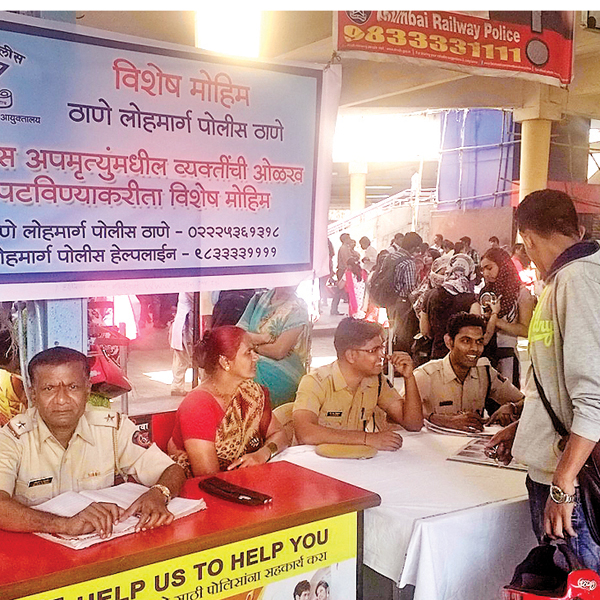
In a bid to lessen the number of unclaimed bodies, the Thane government railway police (GRP) on Monday set up a camp at Thane station. From morning till 8 in the evening, its officers showed commuters photos of last year's 104 unclaimed deceased to see if any would get identified.

Officers said in the coming days they will set up camps at other railway stations too.

Thane railway jurisdiction covers Thane, Diva, Kalwa and Mumbra stations on the central line and Airoli on the harbour line.

The GRP personnel said they plan to set up camps on one station daily to create awareness among commuters and take their help in getting as many deceased identified as possible. The officers said besides the photos, they have also kept a register for providing commuters any other details they may require in recognising the bodies.

Inspector AS Rane said, "It's a good initiative, a number of commuters have approached us till now. Through this, we aim to help those who don't know for sure what happened to their loved ones and are still searching for them. Also, in case a person has died, getting the body identified and informing his/her family members means they can seek compensation from railways. Same goes for life insurance, in case the deceased had taken a policy which his/her kin can file a claim for."

"We had undertaken a similar initiative last year, which helped us get identification for many unclaimed bodies. This year, apart from these camps that we will be holding, people can also log on to our official website www.shodh.gov.in for past records," said GRP commissioner R Singal.

Tuesday 17 February 2015

http://www.dnaindia.com/mumbai/report-thane-grp-shows-pics-of-104-unclaimed-bodies-to-get-them-identified-2061626

continue reading

Monday, 12 May 2014

Missing in America Project to bury 28 veterans' unclaimed remains


For four years, about 250 unclaimed bodies have been cremated and stored in plastic containers awaiting mass burial by the Allegheny County Medical Examiner's Office.

John Fabry, Pennsylvania coordinator of the Missing in America Project, suspected that some of them might have been veterans entitled to military funerals.

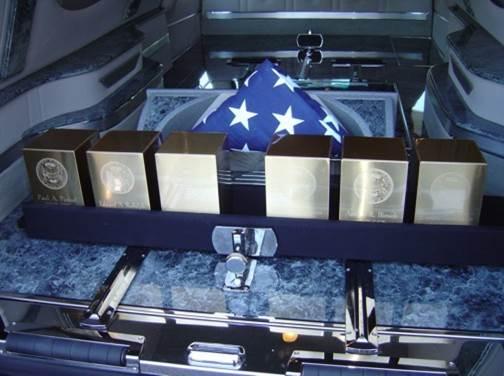
After talking with the military, the medical examiner's staff, a coroner and numerous funeral homes, he will bury 28 veterans with military honors on Thursday in the National Cemetery of the Alleghenies in Cecil.

“I'm glad we're able to do this,” said Michael Chichwak, manager of investigations for the Medical Examiner's Office.

The procession will start at 9:30 a.m. at Pittsburgh Institute of Mortuary Science on Baum Boulevard in East Liberty and reach the cemetery about 10:30 a.m. Fabry is hoping people will volunteer to drive in the procession, help with the ceremony, or simply pay their respects.

He needs a chaplain, volunteers to fire the salute and others to fold the flags.

His organization works to ensure that the inscription on grave markers — “Not forgotten” — rings true.

“These individuals served our country in either peacetime or wartime and for whatever reason ended up in our office. Now we're able to give them the proper, dignified burial they deserve, instead of being placed in a vault with 200 other unclaimed individuals in a pauper's grave that would be unmarked,” Chichwak said.

The Missing in America Project, a national program, says on its website that it has visited 1,560 funeral homes, identified the cremated remains of 2,144 people as veterans, and buried 1,882 of them.

The veterans in the burial on Thursday represent all branches except the Coast Guard. Most died after 2010, except one who died in 2005 and another in 1993.

If family members do not claim the ashes, funeral homes store them, Fabry said. The national organization once buried a Civil War veteran whose remains sat on a shelf in the South for 92 years, he said.

Fabry became involved with the organization about two or three years ago when he purchased what became the Goldsboro-Fabry Funeral Home in Fairchance in Fayette County.

Although not a veteran, he said he feels a kinship to those in the military. His father, John Fabry Sr., crossed the Rhine with Gen. George Patton during World War II and was shot below the ear. The bullet removed his tonsils and came out the other side. Totally disabled, his father died at 38.

Fabry said he has mixed feelings about his work identifying ashes as belonging to veterans.

“Once you find an individual is a veteran, you feel bad,” he said. “Here's a person who served his country, and now nobody wants to give him a proper burial.”

That sadness is balanced by the satisfaction he feels in providing that.

The project has the support of the Veterans Leadership Program of Western Pennsylvania, a nonprofit group that helps veterans with housing and job counseling.

“The service members have sacrificed on behalf of us. For the community to rally around in this way for the final farewell is exactly what the community should do,” said Albert Mercer, a Navy veteran who is executive director of the Veterans Leadership Program.

For info, see: http://www.miap.us/

Monday 12 May 2014

http://triblive.com/news/allegheny/6060854-74/pittsburgh-vietnam-army

continue reading

Friday, 11 April 2014

Ghana: 37 Hospital to bury 281 unclaimed bodies


The 37 Military Hospital on Thursday said it would carry out a mass burial of unidentified and unclaimed bodies at the hospital’s morgue to decongest it.

The bodies comprise 254 children aged between 12 days old and 27, adults between 14 – 67 years, which have been in the morgue since 2010.

A statement issued by Major E. N. Asamoah, Deputy Director Information and Press Relations, and copied to Ghana News Agency reminded families who have not claimed the remains of their relatives to do so within next 21 days to avoid the mass burial.

Friday 11 April 2014

http://www.ghanaweb.com/GhanaHomePage/regional/artikel.php?ID=305898

continue reading

Saturday, 22 March 2014

Foreign and deceased: Unclaimed bodies in Costa Rica


Since 2012, the cryogenic chambers of the Forensic Pathology section of the Judicial Branch in Costa Rica have served as the final resting place of 37 deceased individuals whose bodies have never been claimed. Many of the dearly departed were citizens of the United States, Nicaragua, El Salvador, Italy, Bulgaria, and ten other nations; however, a few Costa Rican citizens are also among the unclaimed.

According to an investigative report in daily tabloid Diario Extra, the accumulation of unclaimed bodies comes at a deep cost to the Judicial Branch. Many of the bodies should have already received proper burial, but financial constraints, hope and matters of religious faith often delay the process.

The Posthumous Chambers

When a physician in Costa Rica cannot determine that a death occurred under natural circumstances, agents from the Organization of Judicial are called in -even when the demise was accidental. The same goes when a criminal act or foul play is suspected, but there is one exception to this rule: If the decedent cannot be identified, he or she will be taken to the Forensic Pathology morgue at the Judicial Complex in San Joaquin de Flores, province of Heredia. This where they enter one of the two chambers where they will lie in wait.

Both cryogenic chambers are kept at three degrees Celsius (about 37 degrees Fahrenheit). The busy Chamber One houses up to 30 bodies; it is used when the dearly departed has been identified and relatives or loved ones are on their way to claim them. Chamber Two has a much higher capacity; this is where the unclaimed and unidentified lie in wait. Some have been here a few months; others have been here for a couple of years.

The Final Resting Place

Most autopsies in Costa Rica last about four hours; although some cases have required pathologists to take turns and work on a single body for 16 hours. In the past, the remains of the unidentified and unclaimed have been donated to medical schools where they are used as scientific cadavers. That has not been the case in the last three years due to internal rulemaking.

Some think that the unidentified and unclaimed should not be kept in the morgue for so long. In Costa Rica, however, a mindset of hope prevails; hope for relatives, loved ones or even Good Samaritans to eventually come forward and take the dearly departed home -or at least pay them final respects in solemnity.

By virtue of her Constitution, Costa Rica is a Catholic nation. Faith in the Paschal Mystery is strong, for in death we are reminded that God promised us eternal life; albeit one that is ephemeral here on Earth. Saint John Neumann Catholic Church of Sunbury, Ohio explains this very elegantly:

“[The] Church intercedes on behalf of the deceased. We are confident in the conviction that death is not the end nor does it break the bonds of family, friendship and community that are forged in life.

The Church through its funeral rites commends the dead to God’s merciful love and pleads for the forgiveness of their sins. The celebration of the Christian funeral brings hope and consolation to the living.”


Once the rules dictate that the unclaimed and unidentified are to be given the Paschal Mystery, a legal notice is published by Diario Extra. Although this notice can be published in any newspaper of record, it just so happens that the daily tabloid Diario Extra is known to sacrifice premium advertising space for the purpose of publishing legal notices and other items of special interest to immigrants and the poor in Costa Rica.

After the legal notice is published and embassies are notified (in the case of foreigners), forensic staff waits two weeks for someone to come forward and claim the dearly departed from Costa Rica; deceased foreigners are given two months. The Holy Burial is performed by a Catholic Chaplain along with forensic staff. The decedent are placed in a simple casket made of true pine or laurel before they are lowered into their own burial space, which is marked with what little information may be available about them. The cost to the Judicial Branch is about $2,000 per burial; this cost includes unpaid overtime and the cemetery plot.

Earth to earth, ashes to ashes, and dust to dust: The unclaimed rest at the Calvo Cemetery in the appropriately-named Sacred Heart of Jesus neighborhood, in the lovable city of San Jose. Should loved ones come forward after the burial, they will have a very nice place to visit and pay respects to their dearly departed.

Saturday 22 March 2014

http://news.co.cr/foreign-and-deceased-unclaimed-bodies-in-costa-rica/33991/

continue reading

Friday, 21 March 2014

Zambia: UTH records rise in number of unclaimed bodies


University Teaching Hospital management says dealing with over 30 unclaimed bodies every month is a huge challenge.

Hospital public relations manager Mwenya Mulenga said yesterday that the recent increase in the number of unclaimed bodies was also contributing to the shortage of space in the fridges at the hospital mortuary.

He said UTH disposes of over 30 unclaimed bodies every month and also spends about K7,000 every month to dispose the unclaimed bodies of.

"We have seen an increase in the number of unidentified bodies because of the so many unidentified patients that we have in the hospital that end up dying.

The unclaimed bodies are the ones that end up congesting our hospital fridges," Mulenga said. "Just two weeks ago, we disposed of about 33 bodies. There are many more that we need to dispose of this month. If we do not dispose them of this month, then the number accumulates and we can't allow that situation."

Mulenga said the high number of unclaimed bodies was contributing to the stench in the hospital and was also putting pressure on the compressors.

He said UTH was working with Lusaka City Council to ensure that many more bodies were disposed of as quickly as possible.

Mulenga said it was unfortunate that many families were neglecting their sick relatives at the hospital.

"When they die, no one comes to claim the body. One measure we have put in place is that when they are registering, they have to indicate their full physical addresses, but at times even if they do this, when their relative dies, they are nowhere to be found. They switch off their phones and when we try to follow them up; we at times discover that they have relocated," he said.

He said there was need for the general public to stop neglecting their sick relatives and make efforts to visit the hospital to identify their missing relatives.

Friday 21 March 2014

http://www.postzambia.com/post-read_article.php?articleId=46574

continue reading

Thursday, 21 November 2013

Washington D.C. sees increase in unclaimed remains


A growing number of Washington DC-area families are failing to show up to claim loved ones who’ve passed away, according to documents obtained under the Freedom of Information Act by the News4 I-Team.

Maryland, Virginia and Washington, D.C. health officials all reported spikes in the number of “unclaimed remains” being handled by local medical examiners.

The Maryland State Anatomy Board, which released records showing a 100 percent increase in “unclaimed” and donated remains since 2000, cited economic struggles for the surge.

Ronn Wade, director of the board, said families are increasingly unable to afford the costs of burial and are forgoing the pickup of remains at local medical examiners’ offices.

“There are families, because of circumstances, who don’t have the means to do pretty much anything," Ward said.

Virginia has experienced a 33 percent increase in unclaimed remains over the past year, according to documents reviewed by the News4 I-Team. The District's “unclaimed” remains jumped from 62 cases in 2010 to 97 cases in 2011.

Taxpayers are ultimately paying for the handling of those remains. Financial records obtained by the News4 I-Team show Maryland officials spent approximately $224,000 to handle hundreds of unclaimed and donated bodies between October 2012 and October 2013.

Rising homelessness, reported by homeless advocacy groups throughout the D.C. region, has also triggered in spike in unidentified remains at local health departments.

The homeless, a large number of whom do not carry identification, are difficult for authorities to connect with families. Rosemary Ward, a Germantown, Md. federal employee, spent eight years searching for the whereabouts and remains of her 32-year-old son, Matthew.

He died in an abandoned Baltimore rowhouse while living homeless in 2003, but was unidentifiable to authorities who recovered his remains. He was buried in 2006 alongside hundreds of other unclaimed or unidentified Maryland men and women at the state’s community grave site for the unclaimed at Springfield Hospital in Carroll County.

Ward finally learned of her son’s death in 2011 after reviewing the website MarylandMissing.com, which tracks unidentified bodies being processed by the state's health officials. Ward said the long wait was painful.

“Always not knowing and not having a sense of where he was," she said.

The Maryland Department of Health and Mental Hygiene and its Sykesville-based mental health staff stage an annual burial ceremony for the “unclaimed” in June. Ward attended and spoke at one of the recent ceremonies.

“Matthew was with me for 32 years, so he’ll always be with me,” she said.

Thursday 21 November 2013

http://www.csnbaltimore.com/article/metro-dc-sees-increase-unclaimed-remains

continue reading

Thursday, 7 November 2013

Naivasha hospital: Mortuary to bury unclaimed bodies in 21 days


Public health department in Naivasha has issued a 21-day notice to bury 35 unclaimed bodies lying at the Naivasha district hospital mortuary.

The department called on members of the public whose kin had been missing to check with the hospital before the bodies are disposed.

Issuing the notice, Naivasha district public health officer Mr Samuel King’ori noted that some of bodies were badly decomposed.

King’ori said that the bodies had exceeded the required 21 days in the mortuary and hence the move to dispose them.

“The hospital hereby issues a twenty one day notice for the bodies to be claimed failure to which they will be buried in a mass grave at the municipal cemetery,” reads the notice in part.

Among the bodies set for disposal are 12 minors below four years who had died in the hospital.

King’ori expressed his concern over the high number of relatives abandoning their kin in the hospital once they died.

“Majority of the minors died in the hospital wards and their relatives decided to abandon them and hence the crisis,” he noted.

The superintendent in charge of the hospital Dr Joseph Mburu confirmed the crisis in the mortuary.

He said that services in the facility whose capacity is twelve bodies were overstretched and hence the move to dispose the bodies.

Mburu however noted that one of the bodies had been identified, collected and buried by relatives.

“The hospital currently has over fifty bodies against a capacity of twelve and this is affecting our services,” he said.

The doctor noted with concern over certain communities that were abandoning their babies in the hospital wards whenever they passed on.

“We have come to realize that some communities do not bury their minors and have been abandoning them in the hospital,” he noted.

He said the bodies are taking their toll on the hospital's budget as the number increases by the day. Mburu said the mortuary capacity is 12 but they currently have about 50 bodies.

“We have issued a notice through the courts to bury the 26 unclaimed bodies, which have been in the mortuary for more than three months,” he said.

hospital superintendent Dr Joseph Mburu said majority of the unclaimed bodies were brought in by police who had collected them from accident scenes and other areas.

He said the hospital has the highest number of unclaimed bodies in Kenya. The doctor said there is an urgent need to open a council mortuary in the town to deal with the high number of unclaimed bodies.

He said that a council mortuary constructed by an investor in the 1990s needs to be refurbished as it had been vandalised.

He said the hospital has the highest number of unclaimed bodies in Kenya. The doctor said there is an urgent need to open a council mortuary in the town to deal with the high number of unclaimed bodies.

He said that a council mortuary constructed by an investor in the 1990s needs to be refurbished as it had been vandalised.

Thursday 07 November 2013

http://www.the-star.co.ke/news/article-142709/naivasha-hospital-bury-unclaimed-dead

http://www.standardmedia.co.ke/?articleID=2000065434&story_title=Kenya:%20Mortuary%20to%20bury%20unclaimed%20bodies%20in%2021%20days

continue reading

Thursday, 22 August 2013

Beggars, junkies and mentally-challenged persons among 18,000 bodies found in Mumbai railway premises in 5 yrs


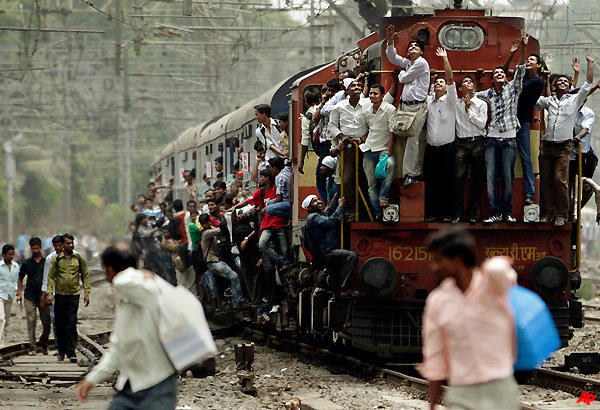
The Mumbai Government Railway Police (GRP) disposed of as many as 6,190 unclaimed bodies found on the Mumbai railway premises over the past five years.

The GRP, which provided these shocking figures, said that the deceased included beggars, drug addicts and the mentally challenged.

A total of 18,084 persons were found dead within the jurisdiction of the Mumbai Railway Police Commissionerate, of which 11,894 bodies were claimed by relatives. The Mumbai GRP later disposed of the remaining unclaimed (6,190) bodies, or one-third of the lot.

They said each year, thousands of people migrated to Mumbai, the nation’s commercial capital. Many settled near religious places or on the premises of railway stations. The problem arose when these settlers died due to starvation or illness on the premises.

“If the body of an unidentified person is found on the railway premises, the police take a photograph of the deceased and later circulate it to police stations across the state, the police headquarters of other states through the state DGP’s office and Doordarshan to trace the relatives or next of kin of deceased.

The body is kept in the morgue of a government or civil hospital for eight days until a claimant comes,” said an officer attached to the Mumbai Railway Police. If nobody comes forward, the railway police dispose of the body.

Deputy Commissioner of Police of Mumbai GRP SN Sirsat said It’s a challenge to trace the relatives of a beggar, drug addict or a mentally challenged person.

“Thanks to the joint efforts by GRP personnel and Manavta, an NGO, we have succeeded in bringing down the figure of unclaimed bodies from 1,392 in 2008 to 1,111 in 2012.”

He added the GRP commissioner Prabhat Kumar launched the website http://shodh.gov.in in July 2012 to identify the accident victims. People can trace missing persons by furnishing their physical description on the website.

Railway activist Sameer Zaveri, who filed a PIL in the Bombay High Court in 2008, said, “As per HC’s direction, the Western and Central Railways in Jan 2011 started their websites to post details of accident victims.”

Thursday 22 August 2013

http://www.dnaindia.com/mumbai/1878024/report-beggars-junkies-and-mentally-challenged-persons-among-18000-bodies-seen-in-mumbai-railway-premises-in-5-yrs

continue reading

Sunday, 18 August 2013

In a year, over 2,000 corpses in Mumbai unclaimed


You have seen them at railway stations, on busy roads and near bus stops. They either stare blankly ahead or indulge in strange antics while speaking incoherently to themselves. These are the 'homeless zombies' who nobody cares for. A recent RTI query revealed that, on an average, more than 2,000 such individuals die unknown in Mumbai, Thane and Navi Mumbai out of the total 95,000 deaths registered every year.

In America, the unidentified dead are often called John Doe or Jane Doe, depending on their gender.

"In our country those who die unknown are mostly the homeless with mental sickness such as schizophrenia, dementia or other problems. They keep wandering around like dazed zombies as there is no help forthcoming,'' said Anil Galgali, RTI activist and chairperson of the Mumbai based NGO Athak Seva Sangh.

Based on his recent RTI findings, Galgali said, "According to the latest National Crime Record data, Maharashtra recorded 5,906 unknown deaths in 2012. This figure includes 1,100 unclaimed bodies in Mumbai's government railway police (GRP) jurisdiction itself. Beyond the railway zone, every year, more than 800 unknown deaths are registered in Mumbai, Thane and Navi Mumbai,'' said Galgali.

Galgali had written to chief minister Prithviraj Chavan to start a dedicated helpline and shelters for the homeless. Despite repeated attempts, Chavan could not be reached.

Pastor Biju Samuel of Panvel's SEAL (Social & Evangelical Association For Love) Ashram for the homeless, said, "It is mainly private NGOs which pick up the really bad homeless cases from the streets to treat them. Otherwise, they do die as John Does or Jane Does, and end up in municipal crematoriums. Why isn't the state government doing anything for these poor, helpless souls?''

Pastor Samuel added that even if conscientious citizens call up the police emergency number '100' to help a homeless person in distress, the aid comes rather late and reluctantly.

"The state government must certainly have a special helpline for mentally ill homeless persons, as they are completely clueless and not even able to beg to survive," said Brijesh Arya of Beghar Adhikar Abhyan. Arya added that on June 25 this year, two women hawkers died in the heavy rains at Mumbai's Girgaum Chowpatty beach as they could not find a proper shelter.

"If the normal homeless can also die due to lack of roof over their heads, imagine what the mentally ill face all alone in their warped frame of mind,'' said Arya.

In 2010, the Supreme Court had ordered night shelters in 62 major Indian cities. BMC also declared seven shelters in Mumbai. Arya, though, said that these shelters are already occupied by permanent residents such as street children. "Why can't the state reserve a few spaces only for the homeless?'' said Galgali.

Monday 19 August 2013

http://timesofindia.indiatimes.com/city/mumbai/In-a-year-over-2000-corpses-in-Mumbai-unclaimed/articleshow/21888965.cms

continue reading

Wednesday, 14 August 2013

Mirzapur Police dumping unclaimed bodies in Ganga River, instead of proper cremation


The inhuman face of the state police was bared when an unclaimed dead body was tied to a heavy stone and then thrown in Ganga River. The incident took place within the jurisdiction of Kotwali Katra police station in Mirzapur district.

Instead of properly cremating the body, which costs only Rs. 50, the police personnel wrapped it in a white cloth and threw into the river.

However, this is not the sole instance. The police have thrown several bodies in the river, in the past as well. Suraj, who helps the police in throwing the body into the river, says he has so far drowned 10 unclaimed bodies in the same way. "The police station gets Rs. 2,700 every month for cremation of unclaimed bodies, but the amount is not spent on it. They (cops) ask me to throw the bodies, saying they will tackle if anyone raise objection," he revealed.

On camera, a policeman and a rickshaw-puller are seen carrying a dead body wrapped in a white sheet to the ghats of river Ganga. They then tie its legs with a rope and abandon it in the water. The footage, filmed by local media in Mirzapur in Uttar Pradesh, led to a constable being suspended.

Constable Gulab Singh, said in his defense, "we are just following the instructions of the senior inspector who asked us to get rid of this body."

The Ganga flows through the heart of this city, 100 kms from Allahabad.

For the last few weeks, bodies have been washing up on the river banks, prompting local reporters to investigate.

The picture that is emerging is that of corrupt policemen exploiting a government scheme that provides Rs. 2700 for the cremation of any homeless person in the state.

Instead of last rites being performed, the bodies are being abandoned in the river.

Sanjay, a rickshaw-puller, makes his living by ferrying dead bodies from the mortuary of the local state-run hospital to the ghats along the river banks. He usually gets paid Rs. 500 per. For homeless or unclaimed bodies, he says, he is offered Rs. 50. "I'll give another Rs. 200 to the boatman," he says. "We are doing this on the instructions of the inspector, who asks us to get rid of the bodies."

Senior police officials refused to comment on the signs of venality in a ritual meant to endow some dignity and humanity on those who have died without anyone to care for them.

They did not vouchsafe for an inquiry.

Wednesday 14 august 2013

http://daily.bhaskar.com/article/UP-up-police-dumping-dead-bodies-in-ganga-river-instead-of-proper-cremation-4347199-PHO.html

http://www.ndtv.com/article/india/in-up-cops-caught-on-camera-abandoning-dead-bodies-in-river-406182

continue reading

Sunday, 4 August 2013

A day’s toil in the suicide bombers’ graveyard


In a city with no shortage of hard jobs, Khwaja Naqib Ahmad lays claim to one of the toughest of all — burying the unclaimed dead.

Mr. Ahmad, left, with his colleague Ghulam Sarwar. They work at a graveyard where suicide bombers are buried.

Interred in his graveyard are orphans, homeless people and other nameless victims, who are sent off with a prayer and a tablet-shaped headstone. But increasingly the bodies that turn up here belong to another class of the unwanted: suicide bombers.

Mr. Ahmad has been a municipal government courier for the last five years, responsible for shuttling bodies between the morgue and his sloped and barren plot of rocky soil on the eastern edge of Kabul. It has been a period marked by a steady stream of suicide attacks, which were virtually unheard-of in 2001, when the war began.

The work has grown harder for Mr. Ahmad, exacting as much of an emotional toll as a physical one. He says virtually nothing of his work to strangers, seeking comfort in the Koran. The scent of decomposed flesh lingers on his clothes. In the winter, when the roads are impassable, he hoists the corpses on his shoulders and carries them. The cemetery sits on a slight hill overlooking an emerald lagoon, incongruously beautiful.

“I look at them as humans and treat their bodies with respect because I believe that they were full of hope and life when they were alive,” he said. “I do not think about what they do. I become sad when somebody cuts a tree, let alone when people kill each other.”

For years he has searched for a replacement, someone to handle the physical challenge — turning the unyielding earth in sun and snow — and the mental tax the work exacts. They all turn him down. So the 52-year-old father of eight with a salt-and-pepper beard carries on, often with the help of a friend.

Three times a week, he visits the site, situated just past a mud village on the way out of town. He comes to tend to the graves and to ensure that no one has tampered with his work. He lives in fear that the Taliban will come to reclaim the bodies of their bombers. Only once has a family tried to collect remains.

“Normally no one claims the bodies,” he said. “Most of these people don’t have families.”

Having made peace with the worst of his work, Mr. Ahmad has found ways around the grim details. Every time there is a suicide attack, he says, his colleagues circle his desk at the municipal center in central Kabul, smiles edging up their faces.

“My colleagues make fun of me: ‘Khwaja, be prepared, there is another attack!’ ” he said.

“What can you do?” he continued. “Afghanistan has been at war for the last 30 years. One of the ways we have survived is a sense of humor.”

Empathy for the authors of indiscriminate violence is scarce here, but Mr. Ahmad finds his humanity in Islam.

“Every single Muslim’s duty is to bury his Muslim brother, no matter how rich he is, poor he is or what social status he comes from,” he said. “To me, my job is important. I don’t care who I am burying. I see no difference between the addict or the bomber.”

Suicide attacks have remained somewhat steady since 2009, averaging about 150 a year, according to statistics from the NATO-led coalition. But the complexity of attacks and the number of bombers have increased.

Violence has been especially focused on Kabul this summer, as the insurgency targets the heart of the national government. At least a half-dozen major suicide attacks have rattled the city in the last three months, striking American convoys, international aid agencies, the Supreme Court and a hotel believed to house Western intelligence personnel.

Attacks come in many forms, and typically at the hands of young men. Often educated in madrasas in Afghanistan or neighboring Pakistan, they have memorized religious scriptures day after day. The more sophisticated insurgent groups plan their attacks for months or longer, training their attackers in weapons and explosives before carrying out orchestrated assaults on high-value targets.

Some, like the bombers that attacked the Ariana Hotel in June, near the presidential palace, speak English and are well financed. In that attack, the insurgents drove vehicles outfitted to look armored. They wore American military uniforms and carried high-quality counterfeit coalition identification badges, according to coalition officials.

At the International Organization for Migration, an agency that has worked with the United Nations and another target this summer, six insurgents stormed the compound and fired rockets on it from neighboring rooftops, staging a six-hour battle in the heart of the city. For these long battles, they bring little to sustain themselves: often just water, pistachios and a pocketful of Pakistani rupees.

The insurgents usually fight to the death, leaving a trail of carnage in their wake. When the bloodshed ends, Mr. Ahmad is there to collect the bodies.

On a clear day last month, Mr. Ahmad and his colleague, Ghulam Sarwar, arrived at the cemetery to bury three anonymous bodies. Were they among the attackers who had recently carried out the assault on the Ariana Hotel? The men would not say, but often the bodies of attackers are kept for weeks as they undergo forensic examination, breaking with the Islamic tradition of burying the dead within 24 hours.

The corpses arrived in white shrouds, their stench faintly masked by a rose perfume. The men took the bodies to the top of the graveyard, where crude tombstones jut into the air like crooked teeth. White and blue latex gloves used to handle the departed covered the ground.

With a pickaxe and shovel, the men widened the pre-dug graves, raking stones from the earth the size of melons. Sweat poured from their brows.

They placed the bodies into the ground and covered them with the sun-bleached earth. When they finished, Mr. Ahmad tucked a flat black stone at the head of each grave and marked them with a number. The men poured water over the mounds, rubbed their hands and faces, and turned toward Mecca to pray.

Sunday 4 August 2013

http://www.nytimes.com/2013/08/04/world/asia/a-days-toil-in-the-suicide-bombers-graveyard.html?_r=0

continue reading

Thursday, 11 July 2013

4 bodies yet to be identified after Secunderabad hotel collapse


Three days after the City Light Hotel collapsed in Hyderabad, relatives of four victims are yet to be informed about the death of their loved ones. Of the 17 people who perished in the incident, bodies of four that were extricated from the rubble on Monday are yet to be identified and are lying unclaimed in the Gandhi Hospital mortuary. Investigating officials said these deceased hotel workers hail from Odisha and presumed that their relatives did not turn up as they were unaware of the mishap.

Every year, several hundred people migrate to the city from states like Odisha, Bihar, Assam and Madhya Pradesh looking for work. Experts said the latest deaths underscore the lackadaisical way in which most of these workers are recruited. Employed mostly in small eateries, owners do not have a clue about their original addresses and in some cases, do not even bother asking their names, they said. The fact that they are provided free food and accommodation lures them to these jobs. Several such workers were present at the City Light Hotel as well.

Ch Srinivasulu, a sub-inspector attached to Mahankali police station, said attempts are on to trace the victims' family members. "Their pictures have been pasted on hospital mortuary walls and information has also been disseminated via other means. We have collected their fingerprints and preserved their DNA," said Srinivasulu. He added that other hotel employees were helping them identify the bodies.

Meanwhile, another injured person, who had earlier sought treatment at a private hospital, got himself admitted at the Gandhi Hospital on Tuesday evening. Currently, 17 people who escaped with injuries in the incident are undergoing treatment at the state-run hospital.

Even three days after the mishap, the hospital is filled with the cries of relatives, with nurses and other staff trying to console them. Many among the dead, including M Ramesh, 40, were the lone breadwinners of his families. His eldest daughter aged 18 is also physically challenged. Doctors said they tried to do everything to save the victims, from surgeries to ventilator support.

Thursday 11 July 2013

http://timesofindia.indiatimes.com/city/hyderabad/4-bodies-yet-to-be-identified/articleshow/21009530.cms

continue reading

Saturday, 29 June 2013

Relatives identify missing loved ones at display


Sisters Sangita Jadhav and Asmita Yadav spent almost two years searching for their brother Deepak Zende, who had been missing since September 2011. Their search met a tragic end on Friday when they found Zende's photograph among the thousands of photographs displayed by the Pune police on the premises of the police headquarters in Shivajinagar.

The Pune police organized a display of as many as 2,227 photographs of unclaimed bodies and murder victims who remain undetected. Besides the sisters, four more people found their missing relatives were able to ascertain the identities of their relatives through the photographs at the display.

Relatives of the missing persons kept coming to the headquarters since morning and anxiously went through the photographs. One of them was 72-year-old Salima Siddiqui.

She had come to the police headquarters to look for her 40-year-old daughter, Nasreen Siddiqui, who is missing for the last two years. "I have checked the photographs displayed by the Pune police as well as those put up at police stations in other cities. But, I could not find her," Salima said. adding, "We are searching for her since she went missing."

Asmita Yadav said, she and her sister were tirelessly searching for their brother Deepak, who was missing since September 15, 2011.

"It is very painful for us is that we came to know that our brother is no more. That, too, on a day when we are performing rituals marking the completion of three months of our father's demise,after our father's death"she said.

Yadav said that while checking the photographs in the display all of sudden she noticed the picture of her brother. She further said, "I was shocked to see the picture of my brother at the display. We will not be able to even perform his last rites as his body has already been disposed of as it was unclaimed. We are now informing our relatives that Deepak is no more."

Rajendra Bhamare, assistant commissioner of police (crime), said as per the directives of the director general of police Sanjeev Dayal, the city police arranged the display of the photographs of persons found dead without any claimants for the bodies and undetected murders.

"Along with the city police, the photographs obtained from the Pune rural police, Ahmednagar police, Satara police and the government railway police were also display," Bhamare said.

He said the Pune police displayed 155 photographs, which included 126 people found dead and 29 photographs of undetected murders, which took place between 2008 and 2013.

The Pune rural police have sent 182 photographs; Satara police, 99 and the Ahmednagar police, 24 for the display. The government railway police have sent 1,767 photographs," Bhamare added.

He said the police received huge response from the people.Since morning the people have started visiting the display.

"We have asked all the police stations in the city to send their data of such persons for the display. Apart from that, we have also sent detailed information about the display to all the complainants, who have lodged the missing person's complaints with the police stations," Bhamare added.

Bhamare said he had maintained a register of such persons, when he was in charge of the social security cell. "We have also kept the register at the display," he added.

Bhamare said along with Deepak Zende (35), the identities of Rameshchandra Karva (50), Satish Pardeshi (40), Shivaji Pawar (60) and Ganpat Kamble (81) were also ascertained by their relatives. "We are expecting more people to visit the display on Saturday," Bhamare said. The display will be open on Saturday between 12 pm to 5 pm.

Saturday 29 June 2013

http://timesofindia.indiatimes.com/city/pune/Relatives-identify-missing-loved-ones-at-display/articleshow/20825990.cms

continue reading