Showing posts with label Argentine. Show all posts

Wednesday, 5 February 2014

Argentina's forensic anthropology is finding 'disappeared ones'


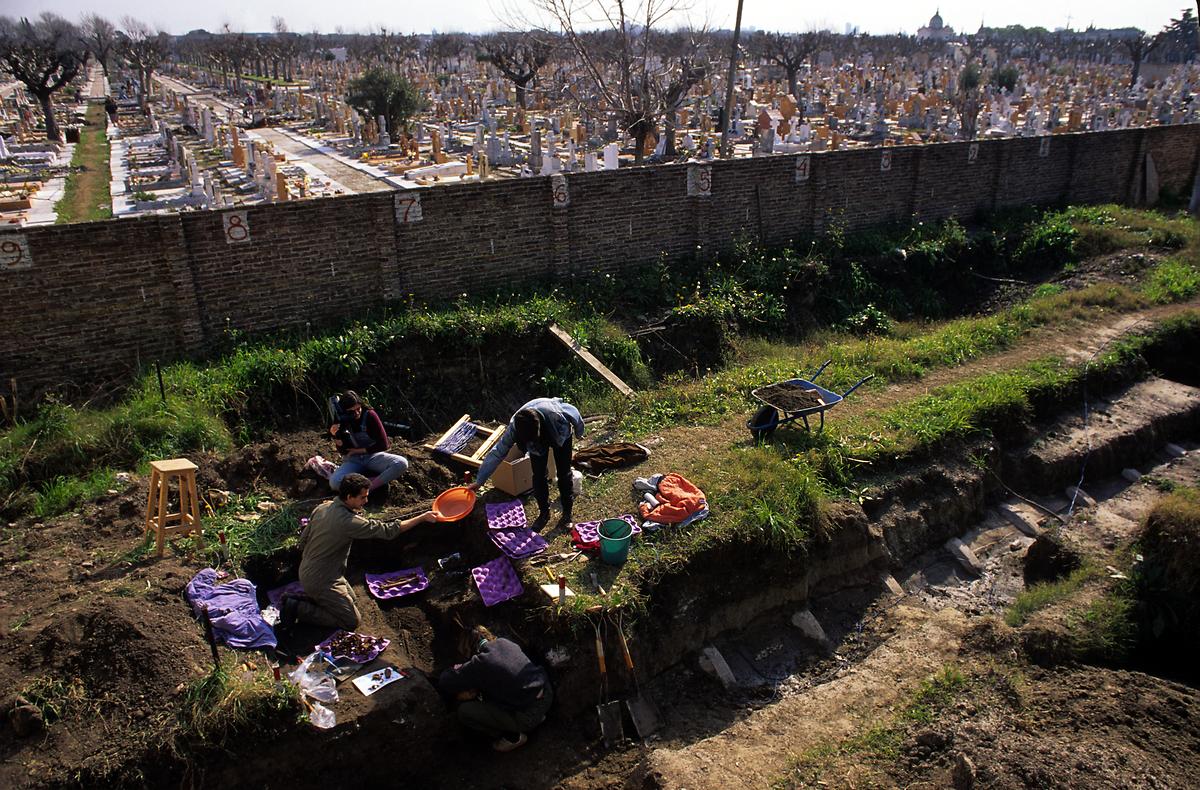
In the decades since a brutal military crackdown in Argentina in the late 1970s, when thousands of disappearances occurred, the country has been driven by activist pressure to become a global leader in forensic anthropology, a field that holds lessons for other post-conflict countries trying to identify missing people, say experts.

“The trauma of disappearance is universal - not to know if your loved one is alive or dead, not to have a grave - that grief is universal for families everywhere,” said Luis Fondebrinder, a forensic anthropologist with the Argentine Forensic Anthropology Team (EAAF), an NGO based in Buenos Aires, the capital, that investigates large-scale disappearances.

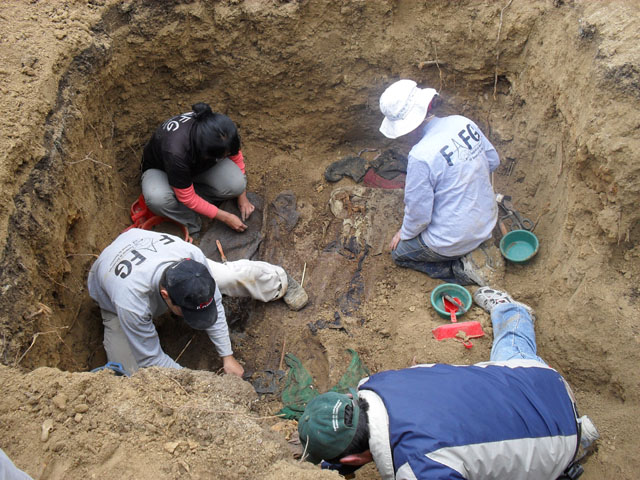
Forensic anthropology - combining the sciences of archaeology and human biology to identify human remains in criminal investigations - has been used in Argentina to locate mass burial sites in the provinces of Buenos Aires, Tucuman, and Cordoba.

At the urging of human rights groups, Argentina was the first country to employ the technique on a large scale to investigate human rights abuses under a military dictatorship from 1976 to 1983, in what became known as the “Dirty War”. Scientists have so far exhumed and identified around 600 of thousands of skeletons, using DNA samples provided by the families of missing persons.

“Enforced disappearances are a denial of the person who disappeared... it is a human rights violation that affects not only the rights of the person who disappeared, but also the rights of their relatives,” Ariel Dulitzky, the chair of the Working Group on Enforced or Involuntary Disappearances (WGEID) in the UN Office of the High Commissioner for Human Rights (OHCHR) told IRIN. The UN has stressed the importance of forensic anthropology in helping citizens fight such disappearances.

Worldwide, nearly 54,000 unsolved cases have been submitted to the WGEID since its inception in 1980, according to the International Coalition Against Enforced Disappearances (ICAED), a global network of 50 NGOs that researches incidents and works to raise awareness of this crime.

Human rights groups say many cases go unreported because families feel that “if investigated… the information might be used against them, and that the same disappearance might happen to any [other] member of the family,” said Candy Diez, a research and documentation officer with the Asia Federation Against Involuntary Disappearances (AFAD), a network of more than 10 human rights groups based in the capital of the Philippines, Manila. The organization says there are at least 7,400 unsolved disappearances in Sri Lanka, the Philippines, Nepal, Timor-Leste, Indonesia, Thailand and Bangladesh.

“Silence and fear shroud enforced disappearances. In several cases, individuals who reported a disappearance were themselves detained,” said a 2013 paper on Syria by the UN OHCHR, noting that the missing include doctors suspected of treating anti-government protesters.

A story only bones can tell

Exhuming and identifying the dead can take anywhere from weeks to years, depending on a government's willingness to cooperate, the type of records kept by alleged perpetrators, the geographic location of bodies, and obtaining DNA samples - as well as the laboratory capacity to analyze them - according to WGEID and the Argentine EAAF.

The organizations use government files to identify the mass graves closest to where a person was last seen, and archaeological techniques to analyze the soil to detect past activity at suspected burial sites, before locating and digging up remains.

Information from surviving family members is key. “You need circumstantial information, how the person disappeared, and also physical and biological information, including any bone fractures, how were the teeth, etc.,” said Fondebrinder, who added that many diseases can alter bones. Scientists then construct a biological profile based on the remains, which are often skeletal, using bone size and shape to estimate a person’s age, sex, and stature.

The story of a person's life helps to find them in death, say forensic anthropologists. “Science is not one hundred percent, usually we say it is the person 'beyond reasonable doubt',” Fondebrinder said. “Only with DNA [can we know the percentage of accuracy of our identification efforts]. Usually you say, ‘Yes, it is identified, or no [it is not]’.”

The bones can also tell how the person died, according to EAAF. The Simon Fraser University (SFU) Museum of Archaeology and Ethnology based in Vancouver, Canada, notes that if the person was hit with a blunt object, the skull could shatter or bones might fracture; sharp objects often make puncture marks, and a gunshot or knife wound can cause deep trauma in a small area.

The challenges of finding remains

Finding bones is not always straightforward, especially in cases where the alleged perpetrators have destroyed bodies or buried them in mass graves to cover up human rights violations, said EAAF, which searches for people on the official Argentine government list of some 10,000 registered as missing, but has only identified 600.

The UN WGEID reports resolving around 10,000 disappearances worldwide since it was founded in 1980, with 45,000 cases remaining open to date. “Sometimes you can only find small pieces of bones, or else there are hundreds or thousands of remains all mixed up,” said Dulitzky.

The Working Group's progress in resolving disappearances often depends on government cooperation, as forensic anthropology is a legal investigation that requires official consent. Without state cooperation, it can be next to impossible to find a missing person.

“Even where courts are willing and make findings against the police, [the] army or others, there is no effective remedy when the authorities refuse to cooperate,” said Brad Adams, in the Asia Division of Human Rights Watch.

While 93 of the 193 UN member countries have signed the International Convention for the Protection of All Persons from Enforced Disappearance, the UN lists only 42 that have passed national legislation to implement it.

Closing the circle of grief

Knowing what happened is fundamental if families are to have closure, said many forensic anthropologists IRIN interviewed in Argentina, who had often entered the profession because their parents had lost loved ones during the period of military rule.

“Many relatives, even if they know they will not be able to find the body, they want to know how the person was killed, when, and by whom,” said Dulitzky.

In Argentina, the trials of alleged perpetrators were broadcast. The government also made a public apology to the families of those who had disappeared, and paid reparations of US$200,000 per family. “[It] is one of the countries in the world that has achieved much in terms of finding the truth, seeking justice, and [recording the] memory [of the collective trauma],” said Fondebrinder.

But with only .06 percent of all officially recorded disappearances in Argentina solved, most of the families are still waiting for scientists to examine and identify the thousands of bone fragments stored in the EAAF laboratory.

Snapshots of the missing

Sri Lanka - The UN registered 5,676 persons missing in the civil war, 1984-2009.
Nepal - an estimated 5,000 people disappeared during the 10-year conflict between Maoists and the government that ended in 2006 .
Colombia - The International Commission on Missing Persons (ICMP), a US government-funded identification programme, says human rights watchdogs estimate between 3,000 and 15,000 people have disappeared in internal armed conflict since the mid-1960s.
Syria - Since March 2011, increasing numbers of people have reported missing family members, abducted by pro-government militias from hospitals, homes, and road checkpoints, the UN said.

Wednesday 05 February 2014

http://www.irinnews.org/report/99593/argentina-s-forensic-anthropology-is-finding-disappeared-ones

continue reading

Monday, 6 January 2014

Experts find in 2013 remains of 20 missing in Argentina


After arduous and meticulous research, Argentine forensic anthropologists managed to find and identify in 2013 the remains of 20 people, victims of repression during the State terrorism of the last civil-military dictatorship (1976-1983).

In this task, dedicated to restoring the truth and memory, participated and coordinated the work mainly the Argentine Forensic Anthropology Team, and was supported, for example, by the Group of Anthropology Memory and Identity of Tucumán, among others .

The summary of the findings of the remains, among which is the young Cuban diplomat Jesús Cejas, was reported by Telam news agency.

The remains of Cejas were found in May in a metal drum of 200 liters capacity, filled with cement, in an area of the town of Virreyes, Buenos Aires Province, where excavations were carried out in search of victims of the military dictatorship.

Cejas was kidnapped on August 9, 1976 in the neighborhood of Belgrano, along with his fellow countryman Crescentius Galañena, whose body was found and identified in late 2012.

Among other bodies identified in 2013 are those of six missing in the so-called Pozo de Vargas, province of Tucumán

Monday 06 January 2014

http://www.plenglish.com/index.php?option=com_content&task=view&id=2235231&Itemid=1

continue reading

Monday, 9 December 2013

Identifying victims of Argentina's 'Dirty War'


The lab in Buenos Aires houses row after row of boxes, each containing the unidentified remains of a long-missing son, daughter, father or mother. The neatly-stacked boxes of skeletal fragments are held in a lab belonging to the Argentine Forensic Anthropology Team.

For nearly 30 years, the group has examined the remains of countless dead from all over the world, including those of revolutionary icon "Che" Guevara, who was executed in Bolivia more than 40 years ago.

But its dozens of scientists are at work now on a task closer to home – identifying the remains of hundreds of victims from Argentina's "Dirty War" of the 1970s and 1980s.

The bones, retrieved from mass graves, are among the 30,000 Argentines who "disappeared" during the dictatorship, and presumably were murdered by the regime.

The work is a joint effort involving anthropologists, biologists, archaeologists and forensic specialists.

These scientists over the years have uncovered the identities of some 600 leftists who went missing during the military regime – work they said is at once painful and painstaking.

"One identification can take years," explained Luis Fondebrider, an anthropologist from the University of Buenos Aires.

This month marks 30 years since the end of the bloody dictatorship in this South American country, where military rulers reigned from 1976-1983.

Written on some of the boxes are the letters, "NN" for "no name." Each bone fragment is carefully numbered and labeled in red ink.

Identifying victims without a name

Two of the "no names," examined on a wooden table covered in black cloth have bullets in the skulls, and one of the skulls has multiple fractures, a sign of likely torture.

The Mothers of the Plaza de Mayo – a rights group of family members whose loved ones disappeared during the dictatorship – praised the work of these scientific experts.

"It gives us great pain – first comes the disappearance," said Nora Cortinas, president of the group.

Then, she said, there is the second blow, when the scientist confirm the identity of a deceased loved one.

"That is the harsh reality we have to live with," Cortinas said.

The walls of the Argentine lab are covered with pictures of skeletons in various positions – graphic images showing the position of the bodies when they were found in a mass grave in northern Argentina.

Their work has led to hundreds of trials and helped lead to the convictions of more than 400 members of the regime.

The massive effort of identifying the remains has been under way for four years, and has involved collecting blood samples from relatives of the missing, and comparing it with genetic samples belonging to the victims.

"We need more relatives to come forward to donate blood," Fondebrider said, adding that an effort is under way to collect DNA samples in some 60 hospitals throughout the country, as well as at Argentina's overseas embassies.

"We have received many [samples] in Spain, France, Denmark and Norway," he said.

The office next door to the lab houses files pertaining to hundreds of places which functioned as clandestine prisons, and where additional genetic material from the victims might be found. Dental records, which commonly are used to identify missing people in other countries, are less useful here.

"Teeth give clues, but in Argentina there is no law requiring dentists to keep the records belonging to their patients," Fondebrider said.

The anthropologist added that one of the hardest parts of his job is returning the remains to the families, after the rigorous job of identifying the bones is completed.

"Some take a long time to pick up [the bones] – it's not easy. It's an emotional process," he said.

"It's as if the person died all over again. ... It is probably the worst part of our work."

Monday 9 December 2013

http://www.ticotimes.net/More-news/News-Briefs/Identifying-victims-of-Argentina-s-Dirty-War-_Sunday-December-08-2013

continue reading

Tuesday, 2 July 2013

Bereaved mother who defied Argentina’s ‘dirty war’ dictators


It was 1977 and Argentina was in the grip of a military dictatorship. Outside the presidential palace in Buenos Aires, women in white headscarves began demonstrating to demand news of their children who had mysteriously disappeared. Laura Bonaparte had lost three offspring, their father, two sons-in-law and her son’s girlfriend; she became one of these original “Mothers of the Plaza de Mayo”.

Bonaparte, who has died aged 88, went on to work for Amnesty International, reporting on alleged human rights violations by Israeli forces in Lebanon and by the armed forces of war-torn El Salvador and Guatemala. She would later campaign in Bosnia on behalf of Muslim women who had been victims of ethnic cleansing and, back home, for abortion rights as well as for equal treatment of those whose sexuality defied the country’s traditionally macho culture.

All the while, she continued to press the judiciary and successive Argentine governments for information on the fate of an estimated 30,000 desaparecidos (“the disappeared”) during the “dirty war” conducted by the military against domestic opponents until 1983.

Bonaparte lost her 24-year-old daughter Noni even before the 1976 coup against president Isabel Perón. Facing an armed struggle by various leftwing groups, Perón had empowered army and police to “annihilate subversion”. A feared far-right paramilitary death squad called Triple A (Argentine Anticommunist Alliance), joined in. On Christmas Eve that year, Bonaparte learnt that Noni, who had ties to the armed leftwing Revolutionary Army of the People, had been killed.

Her body was never returned. “They offered to give us her hands, conserved in a jar, but I refused and told them: ‘I want my daughter in one piece’,” the mother said. She later assumed that Noni, minus her hands, had been dumped in a mass grave.

Soon after the March coup, Noni’s husband Adrián was assassinated by soldiers but his body never found. In June, soldiers kicked down the door of Laura’s ex-husband, the Jewish biochemist Santiago Bruchstein, shouting: “How can a Jewish bastard judge the armed forces?” She later heard he had been set fire to and burnt to death. The following year, Bonaparte’s son Víctor and daughter Irene disappeared, as did Víctor’s girlfriend Jacinta and Irene’s husband Mario.

Mothers such as she started arriving at the Plaza de Mayo, the square in front of La Casa Rosada (the Pink House of Evita fame), to demand news of their loved ones. One afternoon in 1977, more than a dozen appeared, separately. The authorities had forbidden gatherings of more than three people and told them to leave. Instead, they split into pairs and paraded around the square.

The white headscarves were adopted as a symbol and the Mothers’ ranks swelled to a few thousand as more and more family members vanished. Late that year three of the original Mothers themselves “were disappeared”. Their bodies, as well as those of several sympathisers including two French nuns, were found washed up on the banks of the Rio Plata. Retired naval captain Adolfo Scilingo later said opponents of the military were routinely taken on board vuelos de muerte (death flights), drugged, stripped naked and dumped into the Atlantic so that salt water and fish would destroy the evidence.

Then came June 1978, when journalists from around the world descended on Buenos Aires for the World Cup football tournament and stumbled on the story of las Madres de la Plaza de Mayo. The Mothers went what would nowadays be called viral. In 1986, however, with differing political ideologies, they split into two factions: Bonaparte set up the more moderate Madres de Plaza de Mayo – Linea Fundadora (“founding line”), while Hebe de Bonafini headed the original Asociación Madres de Plaza de Mayo.

In 1988, Bonaparte successfully fought president Carlos Menem’s plan to privatise the Esma naval academy in Buenos Aires, which had “processed” many of the disappeared. Instead it was preserved as a memorial, museum and human rights centre.

Bonaparte was born in the province of Entre Ríos, close to the Uruguayan border, in 1925, daughter of a socialist judge. By the age of 13, encouraged by her father, she was teaching women prisoners to read and write. After qualifying as a psychologist, she helped female hospital patients, many traumatised by abortion issues, in the city of Lanús.

Her work strengthened her belief in women’s rights and she divorced her husband at a time when that was widely considered a shameful sin. They had had five children, one of whom died as a baby, the other four raised in an ambience of art and music, variously playing piano, harp or cello.

Her son Luís Bruchstein, now a journalist, is the only one remaining. Grandchildren Hugo and Victoria Ginzberg, who were babies when Irene and Mario disappeared, also survive her and are involved in human rights. The family story was told in the book Una Madre de Plaza de Mayo – Contra el Olvido (“lest we forget”) by French writer Claude Mary.

This week, Laura Bonaparte’s white headscarf was buried with her.

Tuesday 2 July 2013

http://www.ft.com/cms/s/0/12c7f8e2-de78-11e2-b990-00144feab7de.html

continue reading

Monday, 15 April 2013

Mass Graves Excavated in Argentina


Forensic experts in Buenos Aires are working around the clock to identify some of the thousands of victims of Argentina's military dictatorship in the 70s and 80s.

With the start of the Condor Trial, excavators, medical examiners and others are still uncovering some of the thousands of anonymous corpses buried throughout Argentina during the "Dirty War."

Luis Fondebrider, founder of the Argentine Forensic Anthropology Team works daily with human remains in an effort to produce a biological profile.

At his headquarters in Buenos Aires, several hundred bodies a year are brought in for examination and hopefully identification.

Currently there are still about 10,000 missing people in Argentina whose remains have not been identified or found.

While current government officials estimate about 13,000 people died during the military junta years, human rights groups claim the number is as high as 30,000

As recently as 2011, mass graves containing the remains of victims of the Dirty War have been found. Kidnapped and killed by the military regime, the victims were accused of being leftists.

Monday 15 April 2013

http://www.huffingtonpost.com/jerry-nelson/mass-graves-excavated-in-_b_3080034.html

continue reading

Monday, 25 March 2013

Painful search for Argentina's disappeared


Marcos Queipo grew up in a place where dead bodies would fall from the sky.

In the late 1970s he was a mechanic who worked in the different islands of the Parana Delta, 200km (12.4 miles) north of the capital, Buenos Aires.

"I remember seeing these military planes throwing these strange packages over the area. I did not know what they were," he says.

"But I then saw these packages floating on the river banks. When I opened them I was aghast. The packages were dead bodies."

These events happened when Argentina's last military government was in power - from 1976 to 1983.

"At first, we did not know what these packages carried inside. But then it became known that they were human bodies”

The junta was then leading a brutal crackdown on political dissidents, a period known as the "Dirty War". Official accounts say almost 20,000 people were "disappeared" by the regime, but human rights groups say the figure is at least 30,000.

Fewer than 600 have been found and identified since then by the Argentine Forensic Anthropology Team, a non-governmental scientific organisation.

The disappearances have left a deep scar in Argentine society for decades - in particular on those who had a relative taken away by the security forces at the time.

The pattern was similar for those arrested. Many were taken from their homes in the middle of the night, tortured at clandestine detention centres and then disposed of.

After years of investigations, it is thought that some bodies were destroyed with dynamite and others buried in unknown common graves, but the majority were thrown from planes into the Atlantic Ocean.

Now a new book could help provide some answers to one of Argentina's long lasting mysteries.

Written by journalist Fabian Magnotta, it is based on numerous and never-heard-before witness accounts, is pointing towards the Parana Delta as a possible mass graveyard for the disappeared.

'Death flights'

"You would see the planes in the sky, opening their hatch and dropping the packages over the area," remembers Jose Luis Pinazo, who for 40 years has driven the school boat of the area, transporting the children that live on the delta's islands.

"Sometimes you would see them every day, at other times twice a week."

"At first, we did not know what these packages carried inside. But then it became known that they were human bodies, many found on the river banks," he adds.

Mr Magnotta's book collects accounts from islanders in the delta who found bodies hanging from tree tops - in one case a body fell straight into someone's house.

"I would tell the children not to look at the bodies in the river. It was not something nice," says Mr Pinazo.

The testimonies gathered in this investigation have now been handed over to prosecutors in the current trial about the "Death Flights", in which seven people (including several former military pilots) stand accused of throwing prisoners from planes after the military seized power in 1976.

"The things I saw were not something you would talk about with others. Those were difficult times," says Mr Pinazo.

Marcos Queipo remembers that when he started finding bodies along the river, he decided to go to the police to report them.

"But they told me: 'Shut up or the same will happen to you.'"

After the junta's coup, officers at all police stations in Argentina were interviewed by the military. Many have been convicted for their roles in human rights abuses that occurred at the time.

"The people in the Parana Delta are known to be very reserved and not likely to open up to outsiders. But they also kept quiet because of fear of the military," says Mr Magnotta.

Slow process

Mr Magnotta lives in the nearby city of Gualeguaychu. For years he slowly worked to gain the trust of the islanders with the help of a local friend who lives in the delta's main town, Villa Paranacito.

Many were initially wary of speaking out, but the trials and convictions of former military officers that have taken place in Argentina in recent years have given courage to those who were afraid of telling what they knew.

Both Mr Queipo and Mr Pinazo only agreed to speak to the BBC if their names or faces were not shown. But after doing the interview, they both changed their minds and accepted being identified.

"Since my book was published more and more people have come forward to give testimony of the horrible things they saw here during the dictatorship," says Mr Magnotta.

He says that now, at least twice a week, he is getting emails or calls from people who want to add information to his research.

"The publication of this investigation has helped those who were reluctant to speak before," he adds.

Hope

Families of the disappeared are watching closely to see what this new research can add to their decades-long search.

"I still have hopes of finding the remains of my son. If I ever find them it will help me enormously," says Santa Teresita Dezorzi, who at 82 is still politically active. She is the leader of the human rights organisation Mothers of May Square of Gualeguaychu.

Her son Oscar was kidnapped by security forces on 10 August 1976. He was arrested in the middle of the night, forced half naked into a vehicle, and never seen again.

He was a member of Montoneros, an armed guerrilla group which fought the military in the late 1970s.

"Of course I have thought long about the possibility that his remains are here, in the nearby delta. How can I not think about that?," she says.

At the time of his arrest Oscar had a five-month old son, Emanuel, who is now 37. As for his grandmother, the disappearance of his father is a burden he has carried all of his life.

"I remember when I was a child that people would look at me as if they knew something I did not. Families like ours, who have lived with a situation like this, are different. We are not a normal family," says Emanuel.

Last December a court found four former military and police officers guilty of the illegal arrest, torture and disappearance of Oscar Dezorzi and three other left-wing activists from Gualeguaychu.

But for the Dezorzis, the trial produced no information on where Oscar's remains might be.

"I don't know why they still have to keep hurting us. My grandmother has done nothing wrong. I have done nothing wrong. Then why not tell us where my dad is," says Emanuel Dezorzi.

"There are many families in Argentina destroyed by this, just like us. We have gone through 37 years of not knowing. To have a relative disappeared is a wound that does not close until the person appears again."

Sunday 24 March 2013

http://www.bbc.co.uk/news/world-latin-america-21884147

continue reading

Thursday, 29 November 2012

Trial over junta's `death flights' starts in Argentina

A major trial for crimes, including the so-called "death flights," during Argentina's 1976-83 dictatorship started Wednesday in Buenos Aires.

Several pilots involved in the death flights - in which illegal detainees were thrown alive from planes to their death in the sea - are among the 68 people standing trial for crimes committed in the Navy Officers School of Mechanics, or ESMA, which is believed to have held about 5,000 illegal detainees during the junta.

The regime is believed to have killed about 30,000 people, although they technically are still regarded as "desaparecidos" (missing), because most of the bodies have never been found.

In this case, the courts are dealing with 789 crimes against humanity and are set to hear 900 witnesses. Most of the defendants were Navy officers and petty officers during the dictatorship, although there are also civilians, including former finance secretary Juan Alemann. Some of these people are already serving sentences for other crimes committed in the ESMA.

The opening of the trial was broadcast live at an auditorium in the Room for Memory Institute, which has been created at the facilities of the former ESMA in the Buenos Aires neighborhood of Nunez.

The existence of the death flights has been reported by survivors of the ESMA illegal detention camp and also by former Capt. Adolfo Scilingo, who is serving a jail sentence in Spain after confessing to courts there that he had thrown into the sea 30 detainees who were anesthetized at the time.

The Argentine Forensic Anthropology Team identified in 2005 several bodies found in the country's Atlantic coast in 1977. It also certified that they showed fractures that probably were caused by a fall from great altitude and the subsequent impact on the water.

Thursday 29 November 2012

Read more here: http://www.bellinghamherald.com/2012/11/28/2783134/trial-over-juntas-death-flights.html#storylink=cpy

continue reading

Saturday, 8 September 2012

Argentina torture victim identified as Chilean

BUENOS AIRES, ARGENTINA -- Forensic scientists have finally identified a mutilated corpse that washed up on the shore in 1976 as that of a Chilean leftist who was among the first victims of the Argentine dictatorship.

The Argentine Forensic Anthropology Team used genetic evidence and fingerprints taken by Uruguay's military government at the time to identify the body as Luis Guillermo Vega Ceballos, an activist with Chile's Revolutionary Workers Party.

Vega Ceballos had been detained in Buenos Aires on April 9, 1976, along with his pregnant Argentine wife Laura Gladis Romero, whose body has never been found. The human rights group Grandmothers of the Plaza de Mayo believes she was among hundreds of dissidents killed after giving birth in captivity, and whose babies were raised by military or police families. The child would be turning 36 years old this month.

The discovery was announced Thursday night in Uruguay, where Peace Commission Secretary Graciela Jorge said "it closes a small chapter" in the history of the dirty wars that right-wing militaries fought against leftist revolutionaries in the 1970s.

Vega Ceballos' corpse showed clear signs of torture when it washed up on the coast of neighboring Uruguay, which also was ruled by a dictatorship, from 1973-1985. He had been mutilated and his hands were tied. Still, Uruguayan authorities followed their laws and took fingerprints that eventually enabled forensic scientists to identify the body.

In all, eight bodies that had washed up on the coast and been buried in a cemetery in Colonia, Uruguay were sent this year to the forensics team in Argentina. Of them, three others have been identified: Argentines Horacio Adolfo Abeledo and Roque Montenegro, and Uruguayan Alberto Mechoso Mendez, she said.

Abeledo was a 22-year-old salesman who was detained on July 21, 1976, according to Argentina's official registry of the disappeared. Montenegro disappeared along with his wife, Hilda Torres Montenegro, six weeks before Argentina's March 24 coup.

Their daughter, Victoria Montenegro, learned in May that her birth father had been identified. She recovered her true identity in 2000 with the help of the Grandmothers, and it was her blood that provided the match to her father's remains.

"No word exists to describe my feelings," she wrote in an open letter months ago. She described "the sadness of knowing my father's final destiny," along with "this feeling of peace that only comes with the truth."

She thanked the rights activists and forensics team for enabling her to recover her father's dignity, "so that he would no longer be an unknown body in a grave on the coast of Uruguay," and pleaded with other relatives of the disappeared to donate their blood to Argentina's genetic database.

"It makes us better, as Argentines, each time we can identify them and sing more strongly, 'we have not been beaten'," she wrote.

Rights activists suspect the victims were thrown from Argentine military planes into the wide Rio de la Plata that separates Uruguay and Argentina. Witnesses in Argentina have described torture victims being drugged and flown alive into the sea on the so-called "death flights."

Alberto Breccia, secretary to Uruguayan President Jose Mujica, said the identifications disprove critics who complain of misspent efforts to identify dirty war victims. He said Uruguay's program includes 35 people whose work includes unearthing cadavers, updating archives and adding to a database that now includes genetic information from 85 percent of the families of Uruguay's disappeared.

Saturday 8 September 2012

Read more here: http://www.kansascity.com/2012/09/07/3802021/argentina-torture-victim-identified.html#storylink=cpy

continue reading

Thursday, 24 May 2012

Argentina identifies Dirty War victim from 1976

Argentine forensic experts have identified the remains of a body that washed ashore in Uruguay in 1976. DNA tests showed that the remains were of Roque Orlando Montenegro, who disappeared a month before the Argentine military took power. Evidence suggests he was on a death flight, in which political opponents were thrown alive into the sea. Mr Montenegro's daughter, Victoria, was brought up by an army couple and only discovered her own identity in 2000. She fought back tears as she announced that her father had been identified thanks to the "unwavering work" of the Argentine Forensic Anthropology Team. "We have recovered my father's remains, Roque Orlando Montenegro, known as Toti, who was only 20 years old when he disappeared," she said. Her parents were left-wing militants from the People's Revolutionary Army (ERP). In February 1976, a month before the military coup, the Montenegros, including Victoria who was just a few days old, were kidnapped and disappeared. She was raised by an army colonel's family. Twenty-four years later, using DNA tests arranged by the human rights movement Grandmothers of the Plaza de Mayo, Ms Montenegro found out about her real identity. Her DNA sample helped the forensic anthropologists to establish that an unnamed body discovered in a cemetery in Colonia del Sacramento in Uruguay was that of her father. The remains of her mother, Hilda Ramona Torres, have never been found. Human rights groups estimate that up to 30,000 people were killed or disappeared in Argentina's "dirty war" from 1976 to 1982. The Grandmothers of the Plaza de Mayo, whose own children were disappeared, have identified dozens of sons and daughters of victims of the military repression. But some adopted children have said they would rather not know their origins, especially if the information implicates their adoptive parents in illegal acts. Friday 24 May 2012 http://www.bbc.co.uk/news/world-latin-america-18187255

continue reading