Showing posts with label Nigeria. Show all posts

Tuesday, 16 April 2013

“Mass burial for accident victims is almost inevitable”


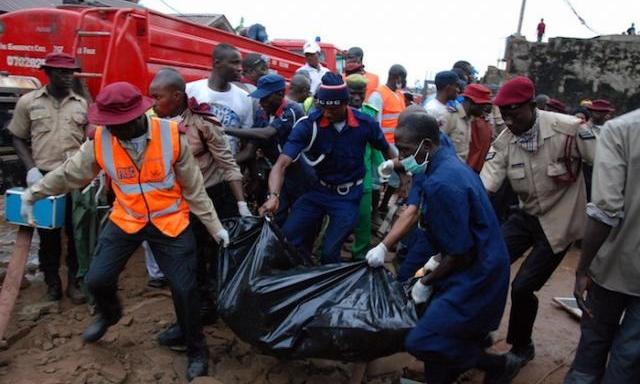
For victims of fatal accidents, mass burials are often inevitable. Recently, the authorities of the University of Benin Teaching Hospital (UBTH), held a mass burial for the over 60 persons burnt to death in a road accident which occurred along the Benin-Ore expressway on April 5.

With different burial rites and traditions overlooked and the feeling of having to choose the burial site of a family member neglected, many victims are often buried alongside other bodies, because of circumstances of identifying the victims’ bodies. The Nigerian Tribune conducted an opinion poll, asking Nigerians if they supported mass burial for accident victims. Respondents commented on our Facebook page and Doyin Adeoye brings the excerpts:

Ojoawo Iyanuoluwa: No, I don’t support it because I feel it is not honourable and befitting, except for security forces who were killed on duty or those who died in the course of serving the country, but for ordinary citizens, I don’t think it is appropriate. Corpses should be given to family members of the deceased and should only be given a mass burial if no family member was found.

Ahmed Medlat Olatidoye: I feel it is a two way thing. If the family members could be present to identify their deceased, then they should be handed the corpse. However, at times, the deceased might not be easy to identify due to extreme burns and at other times, no family member may come forth to claim the body, so in such situation, mass burial is inevitable.

Ogedengbe Muhammed Sikiru: Where the body of the victim could still be identified either by the government agent or the deceased’s family members, such body should be released to the family, but if otherwise, mass burial is the only option. Blessing Adewale: Mass burial for accident victims is not really proper if the victims could be identified by their relatives, because various tribes have their own means of carrying out burial rites. So the issue of mass burial is not really appropriate, unless if the accident is extremely fatal to the extent that victims cannot be identified.

Adeyinka Aremu: I don’t believe in mass burial, so far family members of the deceased are still alive. No matter what, the families should be contacted and handed over the corpse.

Grace Ebunoluwa Ameh: No, in the sense that the deceased have their own family members who may want to take the corpse to their village. So if bodies could still be identified, then the families should be given the corpses.

Peterside Ajakaiye Omo Ajakaiye: Yes, I would support mass burial if the bodies cannot be recognised, or not claimed.

Samson Sepete Kunle: I do not support giving people mass burials.

Abefe Ayodeji Ismail Adelani: Yes, I support it because, the best thing is to give them mass burial so as to avoid wrong disposition of corpses to family members, where people would be given bodies of victims that do not belong to them.

Victoria Ayo: Mass burial for accident victims that could not be recognised is appropriate.

Egbeleke Ademola: If they cannot identify their victims, then I think a mass burial is the only option.

Gbenga Olayiwola: I don’t support mass burials in any way because some cultures require that their sons and daughters should be buried on their land or in some cases, burial rites are highly important. Mass burial obviously would not put this into consideration and some cultures are highly traditional.

Salau Lukman Isaac: I think it depends on the nature of the accident. If the accident is very fatal and the bodies of the dead could not be identified, then a mass burial is the best option. But if the identity of the dead can be recognised, then I don’t think mass burial is necessary. Mass burial for accident victims should be conditional.

Quadri Balogun: I think mass burials are almost inevitable in most cases, because when a victim is burnt beyond recognition, then there is no other choice than to bury the victims in mass graves.

Comrade Immunity: Yes, I support mass burials for accident victims on two occasions, first, if the body is not complete or damaged beyond recognition, and secondly, if their relations could not be contacted.

Tunmise Diamond: I think giving mass burials to accident victims is the best way to sort them out, especially when there is no one to claim the bodies. I believe that would be a relief, even to the families, from the shock of the gory sight of the corpses and the emotional stress of the burial. Comrade Akorede Sha

kir: Talking from the religious perspective, a man’s soul is highly valued by the creator. Hence, there should be an extreme sympathy and human feelings for accident victims, by giving immediate attention to their bodies. For instance for a hit and run victim, attending to such person, shows a sense of humanity. So for accident victims, I totally support mass burial.

Tony Clement: Whoever dies, knows nothing about how he or she is buried or whoever he or she is buried with. In my opinion, accident victims with no form of identity or whose people could not be contacted, have automatically become the state’s property. So, such victims should be given mass burial. I don’t believe it is awkward.

Oluwatosin Olatunji: When the bodies are badly burnt beyond recognition. Then there is no way the bodies can be identified. And also, the hospitals cannot continue to hold on to the bodies of victims, so mass burial is, in some cases, appropriate. Tuesday 16 April 2013

continue reading

Wednesday, 10 October 2012

Northeast Nigeria hospital overwhelmed by dead bodies

MAIDUGURI, Nigeria - Nigerian officials dumped dozens of corpses in front of a hospital in northeast Nigeria after soldiers opened fire and killed more than 30 civilians. The hospital, overwhelmed by the scale of the violence, had to turn away the dead as its morgue had no more room.

The killings Monday come as besieged, underpaid and enraged soldiers remain targets of guerrilla attacks by the extremist Islamist sect, Boko Haram, which holds this city in the grip of bloody violence.

That anger among the enlisted men and officers stationed throughout Nigeria's northeast has seen civilians harassed, arrested, tortured and even killed — raising concerns that Monday's attack may just be the tip of killings committed by security forces, human rights activists warn.

"This is just the latest in a number of incidents in Maiduguri where soldiers have allegedly committed serious abuses, including extrajudicial killings of community members following Boko Harm attacks," said Eric Guttschuss, who studies Nigeria for Human Rights Watch.

A bombing Monday morning by suspected members of Boko Haram that a soldier said killed a lieutenant sparked the violent retaliation. The troops opened fire with assault rifles and heavy machine-guns mounted on armoured personnel carriers on a busy street in Maiduguri, near the local headquarters of the Nigerian Union of Journalists.

An Associated Press journalist saw more than 50 shops and homes burned in the attacks Monday, with the bodies of civilians lying alongside the streets. The dead carried no weapons, nor any sign they belonged to the sect or posed a threat to the soldiers.

Footage aired Tuesday afternoon by the state-run Nigerian Television Authority showed people trying to splash water on their burning homes after the attack, while others fearfully raised their hands above their heads as a government motorcade sped past.

On Tuesday, a worker at Maiduguri General Hospital told the AP that officials collected 32 corpses after the attack. The hospital turned away other bodies as its morgue was full, the worker said, with bodies of the dead on the floors for hours. The worker spoke on condition of anonymity, out of fear of angering soldiers.

The worker said the remaining bodies were taken to the nearby Umaru Shehu Ultra-Modern Hospital. Officials there declined to talk Tuesday to an AP journalist.

In statements Tuesday, military spokesman Lt. Col. Sagir Musa denied that soldiers killed civilians and blamed the resulting fires and damage that went on for blocks on the single bomb that targeted soldiers earlier that morning. He did not explain how the dozens of civilians were shot dead.

While widely considered to have one of the strongest militaries in Africa, Nigeria's armed forces have been accused of killing civilians in the past — including after abandoning military rule for an uneasy democracy. In 1999, ethnic Ijaw activists claimed more than 200 civilians were killed by the military in Odi in Bayelsa state. In 2001, soldiers burned down seven villages in Benue state and killed at least 150 civilians in the midst of ethnic violence there.

Another military raid in Nigeria's oil-rich Delta state against militants there killed 100 people, activists said, though soldiers blocked AP journalists from reaching the area at the time.

Lucy Freeman, who studies Nigeria for Amnesty International, said her advocacy group remained concerned about the killings Monday in Maiduguri and called for an independent investigation.

"To execute a person who is already in the custody of security forces or otherwise under their control ... (can) constitute a crime under international law for which those responsible must be brought to justice," Freeman said Tuesday.

The killing of civilians comes as Boko Haram continues its bloody guerrilla campaign against Nigeria's weak central government. The sect, whose name means "Western education is sacrilege" in the Hausa language of Nigeria's north, is blamed for killing more than 690 people in drive-by killings and bombings this year alone, according to an AP count. The sect has demanded the release of all its captive members and has called for strict Shariah law to be implemented across the entire country.

The sect has killed both Christians and Muslims in their attacks, as well as soldiers and security forces. Nigeria's military has claimed it has killed a number of the sect's senior leadership in recent days, including operational commanders and the sect's spokesman, who used the nom de guerre Abul Qaqa. However, the sect's leader, Abubakar Shekau, has eluded capture and continues to make Internet videos that taunt and threaten further violence against Nigerian government officials and security forces.

For now, activists worry that while Boko Haram remains a shadowy and hidden group, soldiers will take their rage out on civilians nearby. And as Nigeria's military continues to publish body counts following its operations, some fear those tallies may include innocent bystanders caught up in the violence simply by living nearby.

Meanwhile, the country's leaders remain apparently unable to halt the mounting casualties, including the killings of more than 20 university students recently in the nation's northeast.

Nigeria's leaders "barricade themselves behind tall, reinforced concrete fences and bulletproof cars. They move with a fearsome retinue of guards, soldiers and police," columnist Okey Ndibe wrote in Tuesday's edition of The Daily Sun newspaper. "They don't realize that their so-called security is a lie, a huge illusion. They don't reckon that the monster abroad in the land is growing stronger and fiercer by the day, and will soon lay siege on their doors."

Wednesday 10 October 2012

Read more: http://www.ottawacitizen.com/news/Northeast+Nigeria+hospital+overwhelmed+dead+bodies+after+soldiers/7362862/story.html#ixzz28t93jUpf

continue reading

Monday, 1 October 2012

Pipeline fire in southeast Nigeria kills 20

ABUJA, Nigeria (AP) — A government spokesman says 20 people in southeast Nigeria died when a broken gasoline pipeline caught fire, burning alive those gathering the fuel.

The fire happened in a remote village in Abia state, near Nigeria's oil-rich southern delta. Abia state government spokesman Ugochukwu Emezue said Monday that the fire happened Sept. 23, but it took days for the information to reach officials.

Pipeline ruptures remain common in Nigeria, an oil-rich nation where militants and criminals routinely tap into lines to steal crude oil and refined gasoline. Fires can easily and accidentlally be sparked by those attempting to gather the fuel.

In September, Nigeria's state-run oil company said suspected thieves shot dead three of its workers in southeast Ogun state after rupturing a gasoline pipeline to steal fuel.

Monday 1 October 2012

http://news.yahoo.com/pipeline-fire-southeast-nigeria-kills-20-111318939.html

continue reading

Thursday, 20 September 2012

Paternity Testing: 50% Nigerian first born children belong to other men – Expert: incidences recorded at Dana investigation

Geneticists claim rising cases of deceptions, infidelity and adultery among couples have made the need to popularise Deoxyribonucleic Acid testing otherwise known as DNA test inevitable, BUKOLA ADEBAYO writes

Deoxyribonucleic Acid, also known as DNA testing is still not a very popular procedure in Nigeria. However, experts say there is a need to increase awareness on the dynamics of the test .

The importance of DNA testing came to the fore after a Dana plane crashed in Lagos on June 3 killing all 153 passengers including crew members on board and others on ground.

Most of the bodies were burnt beyond recognition. To ensure that the right bodies were given to the right family, the right compensation given to the deserving spouse, child, sibling or relative, the Lagos State Government directed the Forensic and Pathology team of the Lagos State University Teaching Hospital, Ikeja headed by Prof. .John Obafunwa to carry out DNA testing on the deceased and their families to erase all doubts.

This decision, according to a source at the Forensic unit unravelled many mysteries. No one was more surprised than the two children of Mr. Taiwo Akinsanya (not real names) when they were told that their DNA profile did not match that of their father, who had died in the plane crash.

One of the distraught children, who spoke with our correspondent at the unit when the hospital refused to release the bodies to them, challenged the credibility of the whole exercise and accused the officials of conniving with their extended relatives to cause chaos in the family.

“I demand that the tests be repeated. They have been compromised by some relatives. They do not want to release the body to us and our mother who could have claimed the body died two years ago. They are raising unnecessary suspicion within the family.”

As the drama unfolded, a reliable source at the unit told our correspondent that following the DNA testing, some bodies could not be released, due to cases of mismatch and until proven otherwise, the bodies would be kept by the hospital.

The source said, “Another family was almost torn apart when the DNA testing of all the three siblings did not match that of the deceased and their grandparents were dead. It was also an emotional exercise for the families as paternity disputes continued to arise.”

Experts have said there is need to increase awareness and facilities for DNA testing in the country, as statistics have revealed that more children are living with parents that are not biologically theirs.

According to a forensic geneticist, Dr. Abiodun Salami, 30 per cent of fathers are unknowingly nurturing and investing in children who are not biologically theirs. Salami, who is also the Chief Medical Director, DNA Centre, Lagos, revealed that 50 per cent of the all paternity tests carried out in his laboratory came out negative and mostly affected were first born children.

He said, “Several surveys have shown that approximately three men in 10 are living under the deception that they are the fathers of another man’s children and with advances in genetic testing, they are more likely than ever to find out the shocking truth. Half of the paternity disputes and tests we carried out in two years showed that the fathers were not biologically related to their children especially when the dispute arose on paternity of first born children.

“We have seen cases of paternity disputes where even the two men claiming paternity to a child are excluded as the biological fathers from test results leaving the mother to look elsewhere for the child’s biological father. I have witnessed shocking cases where men discover that three or four children out of five they had were not fathered by them.”

Salami attributed the increase in paternity disputes and deceptions to infidelity, adultery and increase in sexual recklessness among Nigerian couples.

“This percentage is increasing because of sexual recklessness. Recent trends in sexual health especially in Nigeria suggest that unprotected sex and multiple partners’ relationships are a common occurrence. Another issue is poor family planning among women. Most first born pregnancies are still unplanned.

“I have seen and discussed with women who for one reason or other decide in their own wisdom to give another man’s child to their husbands without the husband’s knowledge.

“As a geneticist, I deal on a daily basis with the fall-out of adultery and other manifestations of selfish behaviour of spouses to their partners. Reproductive deception is morally similar to rape,” he said.

Naturally, when a case of paternity dispute arises in a family, relatives, husbands are quick to accuse the woman. It is assumed that a mother should be able to accurately disclose who the biological father of her child is.

However, Salami noted that only a DNA test could be used to confirm who fathered a child.

According to him, more babies are increasingly being switched without their mothers’ knowledge by nurses, birth attendants and health workers in hospitals.

He noted that baby switches were happening at a disturbing rate in Nigerian hospitals and the geneticist attributed these mix-ups to avoidable errors or malfeasance.

Salami condemned the use of corresponding ID bracelets between mothers and their babies, the most prevalent method in Nigerian hospitals ,which he said, often lead to mix-ups since such bracelets could fall off babies’ ankles or wrists and lead to nurses misreading infants to mothers’ bracelet information.

Apart from the ID mix-ups, he said bed mix-ups by health workers often happen especially in general wards especially after babies have been removed for bathing or treatment.

Salami, sharing an experience said, “I witnessed a case where a friend gave birth to a child and I went to visit, only for the father who was present at the delivery of the baby to come back to the hospital in the evening to say, to the surprise of everyone present that the baby the hospital presented was not his baby because his baby was born with dreadlocks just like him.

“He had to escort the doctors to identify his baby inside one of the cribs. This happened right inside one of the biggest and well known hospitals in Ikeja, Lagos.

“In the light of some of these shortcomings, we encourage maternal DNA testing because if we exclude her, we have established a case of infidelity against her, whereas her baby was switched at the hospital.”

He also urged mothers who doubt or suspect that their babies have been switched to voice their concerns as such cases could be investigated and documented for future references.

“Many people get home and look at a child and wonder if they brought home the right baby. In some reported cases, mothers have voiced their concerns while at the hospital, but did not get the chance to find out the truth until years later through DNA tests.

“To an ordinary person, this may look rare or even sound strange as most cases of babies switched at birth are either undocumented or unknown,” Salami added.

However, as beneficial as paternity DNA testing is, the importance of the DNA testing is still unpopular and often times regarded as irrelevant in Nigeria.

Salami said that most Nigerians often use physical resemblance to fathers as a test of paternity.

“Unfortunately, Nigerians still use physical attributes to determine the paternity of a child. We have seen numerous cases where a child resembles a father, but accurate DNA test results show that such child and father are not related.

“Determination of paternity using physical attributes has led to a situation where illegitimate children have caused untold hardships to families,” he explained.

Shedding more light on the importance of the test as a means of identification, a haematologist with the Lagos University Teaching Hospital, Idi-Araba, who pleaded an anonymity because he is not the hospital’s official spokesperson, called on government to provide DNA testing and banking (storing) facilities.

He said with these facilities, families could still make DNA verification after parties involved are dead.

Olowoshelu said a sample of the deceased tissues that had been stored could be used and if no biological samples from the alleged father are available, grand parentage testing could be a viable option.

“ If one or both paternal grandparents are unavailable for testing, other family relationship tests–such as genetic reconstructions and siblings’ tests, using the deceased brothers or sisters may be performed to indirectly determine a child’s paternity,” he said.

Earlier, Salami stated that poor DNA profiling and documentation due to lack of facilities and personnel had made this procedure a luxury to many Nigerians. He noted that such stored samples could help solve legal and financial disputes.

“Nigerians must take DNA testing and profiling and banking seriously. There are different reasons to establish paternity including the need to lay claims to a financial support.

“Government must provide DNA testing facilities such that we can have reference DNA for individuals should their remains need to be identified especially for those in high-risk employment such as the military, police, pilots, air hostesses and even those that fly the Nigerian airspace on regular basis.

“We can bank their DNA as a reference in cases of future paternity tests should some parties contest or make claims on inheritances that are not theirs,” he said.

Thursday 20 September 2012

http://myondostate.com/w3/paternity-testing-50-nigerian-first-born-children-belong-to-other-men-expert-2-incidences-recorded-at-dana-investigation/

continue reading

15 Die in Southwest Nigeria Truck Crash

LAGOS, Nigeria (AP) — Police in Nigeria's southwest say at least 15 people have died in a crash involving two trucks and many other vehicles.

Ogun state police spokesman Olumuyiwa Adejobi said Wednesday a truck driver collided head-on with cars and motorbikes on a highway leading to the commercial capital of Lagos on Tuesday.

He said the truck driver was trying to avoid hitting a truck coming from another road at a major intersection, but that his speed was too high.

Adejobi said the junction, which has no traffic lights, is notoriously dangerous.

Ogun State Federal Road Safety Commander Ayobami Omiyale said authorities could not immediately give a tally of those who had been killed and injured because they were taken to different hospitals.

Crashes are common on Nigeria's poorly maintained road network.

Thursday 20 September 2012

http://www.nytimes.com/aponline/2012/09/19/world/africa/ap-af-nigeria-truck-crash.html?_r=0

continue reading

Monday, 17 September 2012

25 bodies found in northeast Nigeria after flood

Nigerian Red Cross officials say they've found 25 corpses after a massive flood washed through northeast Nigeria.

Officials said Sunday they recovered the corpses from the Benue River in Adamawa state. Red Cross state secretary Abubakar Ahmad said he believed the corpses may have come from neighboring Cameroon as no one in the area could immediately identify the dead. Click here to find out more!

Ahmad said there could be more dead after the flooding as others are still missing. Officials previously recovered at least 45 bodies from the flooding, which they blamed on officials in Cameroon opening up a dam. Cameroon warned Nigeria before relieving pressure on the overwhelmed dam.

Nigeria is experiencing its annual rainy season. Flooding recently killed at least 68 people in Plateau state in central Nigeria.

Sunday 17 September 2012

http://www.timesonline.com/news/world/africa/bodies-found-in-northeast-nigeria-after-flood/article_faadc8b6-a0b8-53ac-b2d6-766609e1afdc.html

continue reading

Friday, 14 September 2012

Dana Crash: Lagos issues 89 death certificates to victims’ families

Ikeja – No fewer than 89 families of victims of the June 3, ill-fated Dana plane crash have been issued death certificates.

Gov. Babatunde Fashola of Lagos State disclosed this on Thursday while speaking to newsmen shortly after holding a closed-door meeting with some of the families at the Government House, Ikeja.

He said that those who were issued certificates were families of 141 victims whose bodies had been successfully identified so far, adding that 51 families were yet to collect the certificates.

The governor also said nine bodies were yet to be identified, explaining that the DNA samples of five were not initially supplied by their families while the remaining four could not be identified immediately.

“We have, however, taken fresh samples of the five bodies and have in fact sent them abroad.

“If that is successful, it will leave us with how to proceed with the remaining bodies because we cannot identify them,” he said.

Fashola said talks were in progress with the families on holding a memorial service to honour the victims and build a cenotaph around the crash site or any other site to immortalise them.

He praised the understanding and patience of the victims’ families, saying even in their moments of grief, they worked with the government in resolving the problem of identification of the bodies.

“The crash, though very regrettable, should make the nation ponder about all that is wrong about the aviation sector and do the right things to reposition it,” the governor said.

Speaking with newsmen, family members of some of the victims demanded a total overhaul of the aviation sector to forestall a recurrence of the mishap.

One of them, Mr Seke Somolu, urged the Ministry of Aviation to publish the findings of the investigation into the crash.

He said if the report was not published and the whole process was not made transparent, it could mean that the authorities and the airline were unwilling to inform Nigerians about the actual cause of the incident.

Somolu also queried what he described as “the hasty restoration of Dana’s operating licence”, saying, “it portrays insensitivity of what families of the victims are going through.”

Mrs Onyinye Okocha, who lost her husband to the crash, said the only thing that could provide some consolation to the families was for the government to make the country’s skies safer.

She said the country’s aviation sector was bedevilled by many problems, calling on the Federal Government to take radical steps to address the problems.

Okocha commended the Lagos State Government for the `compassionate way’ it had handled the unfortunate incident so far, and for DNA analysis of victims, which she said was highly appreciated.

Dana’s aircraft carrying 153 passengers crashed at Iju-Ishaga, a suburb of Lagos, on June 3, killing everyone on board.

Friday 14 September 2012

http://www.vanguardngr.com/2012/09/dana-crash-lagos-issues-89-death-certificates-to-victims-families/

continue reading

Wednesday, 29 August 2012

18 bodies recovered as Cameroon dam floods 250 Nigerian villages

UPI – A massive release of water from a dam in Cameroon submerged 250 villages in neighboring Nigeria and killed an unknown number of people.

Eighteen bodies were recovered Monday from the Benue River in the Nigerian state of Adamawa, The Guardian reported.

Kobis T. Ari, secretary to the state government, told journalists Adamawa officials received a letter from the Cameroon government on Friday advising that water would be released from the Lado Dam, at the upper reaches of the Benue River.

Ari said the release was done before villagers could be told to leave flood-prone areas.

Cameroon regularly releases water from the dam.

Ari said Cameroon should compensate the victims of the flooding and enter an agreement with its neighbor on how to avoid the “yearly disaster.”

He said the flooding was the worst since 1958.

Schools, hospitals and government offices also were submerged.

Medical workers have been dispatched to the area to help prevent an outbreak of disease, he added.

Wednesday 29 August 2012

http://www.pilotafrica.com/2012/08/28/18-bodies-recovered-as-cameroon-dam-floods-250-nigerian-villages/

continue reading

Monday, 27 August 2012

Flooding Kills 10 in Northeast Nigeria

An emergency management official in northeast Nigeria says 10 people were killed in floods that swept through the region.

Adamawa state Emergency Management Agency official Shadrach Daniel Baruk said others remained trapped by the flooding Sunday.

Baruk blamed the release of water from a dam in the neighboring nation of Cameroon for the flood. He said heavy rainfall in the rural region of farms and cattle ranches also contributed to the deadly deluge. He said thousands of people had been displaced.

The flooding in Adamawa state comes as flooding recently killed at least 68 people in Plateau state in central Nigeria.

Nigeria is experiencing its annual rainy season, which sees torrential rains fall throughout the West African nation.

Monday 27 august 2012

http://abcnews.go.com/International/wireStory/flooding-kills-10-northeast-nigeria-17083592#.UDswffvcz3U

continue reading

Tuesday, 14 August 2012

Nigeria: Scores Missing, 28 Killed As Floods Ravage Plateau Again

No fewer than 28 persons have been killed, while scores of others are still missing in a renewed flood rage in nearly all the villages of the southern zone of Plateau State at the weekend.

More corpses are still been picked in villages around the affected areas.

Also about a hundred communities and over a thousand houses are said to have been affected by the flooding.

Also, hundreds of houses and bridges linking the area with Lafia, capital of Nasarawa State and Taraba state were summarily sweep away by the flood waters.

A residence of Langtang, an affected area, Mr Nandom said "iced blocks were literarily falling on their roofs all through early hours of Sunday," before their homes and farmlands were washed away.

The transition committee chairman of Shendam Local Government, an affected area, Kemi Nshe told Newsmen that two hundred hectares of farm land was also washed away by the flooding in his local government council alone.

Muslims in the state this time have extended invitation to their Christian counterparts to join them at the Central Mosque to feast during the sallah, as a mark of reconciliation.

Tuesday 14 August 2012

http://allafrica.com/stories/201208131343.html

continue reading

Friday, 10 August 2012

Lagos begins release of bodies of Dana crash victims today

THE Lagos State government will this morning start the release of 132 bodies of Dana plane crash victims.

The charred bodies are to be given in batches and in alphabetical order from today till Saturday to the families. The identities of the bodies scheduled for release have been pasted at the information centre of the Dana Air Crises Centre at the Lagos State University Teaching Hospital, (LASUTH), Ikeja.

Families and friends of the victims and representatives of the state government at a meeting yesterday in LASUTH heard that 132 bodies had been fully identified through their DNA samples tested abroad while 16 others have not.

The Commissioner for Health, Dr. Jide Idris, told The Guardian that the bodies would be released in batches to reduce chaos, “as there are other documents that they are going to fill for legal reasons.”

“These include the issue of next of kin, who authorises releases and the processes of release. We are releasing another 132 bodies now that are fully identified,” Idris said.

Members of the 200 families and friends that attended the meeting were still in mourning mood. Some of them expressed displeasure against state officials, whom they blamed for keeping bodies of the deceased for more than two months after the disaster.

Following the June 3, 2012 plane crash in Iju, Lagos, about 45 bodies were identifiable, 97 burnt beyond recognition and six bags containing body parts were gathered, requiring DNA test overseas.

On why some of the 45 identifiable bodies would not be released, Idris said it was to ensure that they were given to the right families. He noted that there were cases where two families had come forward for the same body.

“Some of the identifiable bodies were wrongly tagged at the crash site, while some tags fell off in the course of taking them to the morgue. So, what we are doing is to reduce the pains that the bereaved families are going through. We gain nothing by keeping the bodies,” he said.

Pathologist and Chief Examiner in the inquest, Prof. John Obafunwa, said the DNA test recorded 88 per cent success rate and the process is still continuing to identify the remaining 16 bodies.

The state government also disclosed that arrangement for the bodies of foreigners on-board the ill-fated plane, would be worked with the relevant embassies.

Information from the Ministry of Justice showed that processes for the issuance of death certificates would begin on Monday. Meanwhile, an Assistant General Manager of Airports Rescue and Fire Fighting Services, Mr. John Ekpe, at the ongoing hearing of Coroner Inquest into the crash, told the court yesterday that they could not access the actual site of the incident immediately because of the crowd.

Ekpe told Magistrate Oyetade Komolafe they had an emergency plan and disaster emergency team but the search and rescue functions outside the airport falls on the National Emergency Agency.

In his testimony before the court, he said the rescue team was at the crash site with two fire trucks and a water tanker before any other agency, but could not access the actual site of the incident because of the crowd.

Another witness, Sanni Enessi, the Chief Fire Fighter Station Commander of the airport, said the Federal Airport Authority of Nigeria has a checklist of agencies it calls for emergency plan.

The inquest continues tomorrow with Federal Road Safety Commission, Total Oil, Forte Oil and two other witnesses for appearance.

Friday 10 August

http://ngrguardiannews.com/index.php?option=com_content&id=95013%3Alagos-begins-release-of-bodies-of-dana-crash-victims-today&Itemid=559

continue reading

Monday, 30 July 2012

13 die in Nigeria’s ghastly road crash

No fewer than 13 passengers died in a motor accident on the Benin-Ore road, the Federal Road Safety Commission (FRSC) confirmed on Sunday.

In a statement issued by Mr Bisi Kazeem, Deputy Corps Public Education Officer, the commission stated that the accident happened at kilometre 53, before Ohosun town, zone 5.12 toll gate unit command in Edo State at 7.45 a.m on Sunday.

Kazeem said the accident, which involved two vehicles, was caused by the driver of the Anambra Mass Transit Toyota Hiace bus, with registration number YB 610 EPE (Lagos), who for no reason drove against traffic on the Benin-Ore lane.

The driver faced an oncoming Iveco truck descending a slope, resulting in head-on collision.

The bus was coming from Lagos carrying traders dealing in electronics and 13 out of the passengers in the bus died, while three people survived including the truck driver.

The victims, according to FRSC, have been taken to Shiloh Hospital, Ugbogui in Edo for treatment while corpses were deposited at the mortuary of the same hospital.

The Commission said the obstruction caused as a result of the accident had been promptly cleared

Monday 30 July 2012

http://pmnewsnigeria.com/2012/07/29/13-die-in-nigerias-ghastly-road-crash/

continue reading

Dana air crash inquest: update

John Obafunwa, Chief Medical Examiner at the Lagos State University Teaching Hospital, said that some of the passengers on the ill-fated flight died from inhalation of toxic fumes after the crash. “They must have been alive to inhale the smoke,” said Mr. Obafunwa, a professor of Forensic Pathology.

Mr. Obafunwa cited fume inhalation and multiple injuries as the causes of more than half of the deaths.

“Fractures to the skull, damage to the brain, punctures in the lungs, severe blood loss. All of these things can individually cause death,” he added.

Mr. Obafunwa also stated that the test results of the DNA tests carried out for unidentifiable bodies would be available next week. “We asked for samples from parents, siblings, and offsprings. These are what we'd use to compare victims' DNA profile and confirm the identity,” Mr. Obafunwa said.

Haphazard response 

The inquest, which began last month, continues to shed light on the uncoordinated and haphazard operations of the nation's emergency rescue agencies.

Testimonies given by the Fire Service, the police, and other emergency response teams showed that although relevant agencies arrived minutes after the crash, lack of appropriate equipment delayed rescue efforts.

 Julius Berger, a private construction company, had to bring in her cranes and other heavy duty equipment, over an hour after the crash, before rescue and response could be undertaken.

In a deposition to the inquest signed by Tanko Ashang, the National Emergency Management Agency (NEMA) stated that crowd control was a major issue that hampered rescue efforts at the accident site.

 “Another clog in the wheel was co-ordination of the various stakeholders. Regular joint simulation exercises and informal meeting between members of various organizations will engender more effective collaboration in future operations,” said Mr. Ashang, NEMA's legal adviser. “A de-briefing meeting will soon be organized for all stakeholders by NEMA in order to gain from lessons learnt from this operation for better performance in future,” Mr. Ashang added.

Monday 30 July 2012

http://premiumtimesng.com/news/national/6228-DANA-CRASH-Police-blunder-Dana-air-crash-inquest-infuriates-coroner.html

continue reading

Tuesday, 24 July 2012

Flooding in central Nigeria's Jos kills at least 35

Heavy rainfall in central Nigeria forced a dam to overflow, causing flooding that left at least 35 people dead and destroyed or damaged some 200 homes, the Red Cross said Monday.

"We have recovered the bodies of 35 people that drowned in the overnight flooding," said Manasie Phampe, head of the Red Cross in Plateau state, where Jos is the capital. "About 200 homes have either been submerged or destroyed."

The confirmed victims so far included a 90-year-old woman and a three-month-old baby, adding that the toll could rise, he said. "Rainwater and water from the Lamingo dam which overflowed swept across several neighbourhoods in the city," he explained. "We are still searching for more bodies as many people have been declared missing."

The downpour in Jos began at roughly 9:00 pm (2000 GMT) Sunday when many of the city's residents were at home for the night. "I have lost seven of my children in this disaster," said Alhaji Abdulhamid Useini, who described heavy rain pounding his neighbourhood for nearly three hours, which also swept away some of his livestock.

The area coordinator for the National Emergency Agency (NEMA), Alhassan Danjuma Aliyu, called the flood "devastating" and said police and other rescue bodies were searching the affected areas in hopes of finding survivors.

NEMA was also trying to quickly bring in added relief materials to care for those who lost their homes, Aliyu explained. "We hope to get these materials to them before the end of today," he said.

The head of search and rescue committee of the Muslim community in Jos, Sani Shuaibu, said the search was still on for 25 bodies still missing. "We are still looking for 25 other bodies that are still missing and the figure of the missing may rise as families come forward to register their missing family members," he said. "Most of the dead were children between three months and 13 years that were swept away by the flooding in their sleep. We picked the drowned along the river bank... We have two camps where around 700 displaced people are sheltering with little food and water supplies."

Much of the country has been affected by heavy seasonal rainfall, including Jos in the centre of the country and the economic capital Lagos in the south, where flooding has caused several road closures and other damage.

The rainy season typically runs from March to September. Last week, at least three people were killed by flood waters some 150 kilometres (90 miles) north of Lagos in Ibadan, an area where 102 people died following torrential rains last year.

At least 20 people died from flooding in Lagos last year, while 24 were killed after rains inundated a neighbourhood in Nigeria's largest northern city of Kano.

Nigerian papers have in recent weeks been filled with commentary criticising officials for failing to put in place measures to mitigate the impact of the annual, often severe floods.

The largest cities in Nigeria, Africa's most populous nation, are overcrowded, with many residents living in haphazardly constructed slums. Drainage systems are also often poorly maintained and contribute to the problem of floods.

In 2010, flooding affected roughly half a million people in two-thirds of Nigeria's 36 states.

Tuesday 24 July 2012

http://www.newvision.co.ug/news/633318-flooding-in-central-nigeria-s-jos-kills-at-least-35.html

continue reading

Tuesday, 17 July 2012

Okobe petrol fire disaster death toll rises to 124

Abuja – The death toll from Okobe petrol tanker disaster rose to 124 on Monday, up from 95, the Rivers Sector Commander of the Federal Road Safety Commission (FRSC), Dr Kayode Olagunju, said.

Olagunju said that the number was arrived at, based on additional deaths from various hospitals. “We are still battling with the actual injury figures as a lot of victims were transferred from one hospital to the other which could result in multiple counting. “Some victims initially went home for traditional treatment while some headed for private clinics,’’ Olagunju said, adding that the commission would liaise with other agencies and the Rivers Government to collate a more realistic figure.

The Okobe tragedy occurred around 6.30 a.m on Thursday following the crash of a petrol-carrying tanker and three other vehicles on the Ahoda-Mbiama east-west road in Rivers.

People around thronged the scene scrambling for spilled petrol, resulting in the flame which consumed the dead and the injured, according to FRSC which added that 34 motor-cycles were also burnt during the incident.

The 87 bodies burnt beyond recognition were given mass burial at the scene of the disaster on the same day, while six identified bodies were released to family members.

Crashes are common on Nigeria’s pot-holed and poorly maintained roads, and in a region where most people live on less than $2 a day the chance to collect spilling petrol is too much of a temptation, despite the high risk of fires.

Tuesday 17 July 2012

http://www.vanguardngr.com/2012/07/okobe-petrol-fire-disaster-death-toll-rises-to-124-frsc/

continue reading

Friday, 13 July 2012

Nigeria holds mass burial for tanker explosion victims

Casualties of Thursday’s tanker fire in Okobie village on the East-West Road in Ahoada West Local Government Area of Rivers State have been given a mass burial at the scene of the incident.

State sector commander for the commission Kayode Olagunju told reporters in Port Harcourt, the state capital that 89 of the 95 persons who died in the petrol tanker explosion were given a mass burial at Okobe village in the Ahoada West Local Government Area of Rivers State.

They were buried on Thursday evening.

The Sector Commander for the Rivers State Command of the Federal Road Safety Commission, Dr. Kayode Olagunju, stated this in a post on Facebook at 8.02p.m.

The incident occurred while some villagers were allegedly scooping fuel after the tanker was involved in a crash with three other vehicles.

He stated that 95 persons died in the incident, of which 87 bodies were burnt beyond recognition.

The FRSc chief listed the vehicles involved in the crash as the tanker, a Toyota Corolla car, Toyota Hiace bus and a Maza bus.

A total of 34 motorcycles were also involved in the crash and were consumed by the inferno along with the Mazda bus.

Large excavators were brought to the site on a major inter-state highway to dig a mass grave for victims whose bodies were too badly damaged to be transported or recognised. "They couldn't be moved," Semenitari said, putting the number of those already buried at more than 85.

Some of those being treated at the hospital were also burned beyond recognition, said Geoffrey Ikogha, a local chief in Ahoada, near the oil hub of Port Harcourt.

Children were among those killed, while dozens more were badly burned, despite a warning from troops who arrived at the crash site that a blaze could ignite at any moment.

Given the severity of the burns suffered by some at the hospital, the toll could yet increase, Semenitari told AFP. "There is a chance that we could lose 10 to 15 more... medically, they are in a bad state," she said.

The number of family and friends at the General Hospital in Ahoada was huge, with many sobbing uncontrollably. "Security people are having a tough time controlling the surging crowd," said Ikogha. "The situation is tragic and pathetic."

Many of the dead were motorcycle taxi operators, known locally as "Okada", who raced to fill up their tanks after learning of the crash, according to an AFP photographer at the scene.

He noted that of the 20 injured victims rushed to the hospital, two died. Olagunju also said the bodies of six of the victims who died on the spot were earlier released to their families.

His statement reads, “‎87 corpses burnt beyond recognition as a result of the crash involving a tanker and three other vehicles were this evening given mass burial at the scene of the crash at Okobe along Ahoada – Mbiama on the East – West Road in Rivers State. “Six of the bodies of the victims that died on the spot had earlier been identified and released to their families.

Two of the 20 injured victims taken to the hospital also died. “A total of 95 persons died in the crash with 18 others injured. “The vehicles involved were a Toyota Corolla cr with registration number RQ 218 AAA; Toyota Hiace XZ 613 AGL; and a tanker XA 340 TDU.

One Mazda bus adn 34 motor bikes were burnt beyond recognition.”

Friday 13 July 2012


http://www.punchng.com/news/dead-victims-of-rivers-tanker-fire-given-mass-burial/


http://news.ph.msn.com/top-stories/nigeria-oil-tanker-fire-kills-more-than-116

continue reading

Monday, 4 June 2012

Crash: 109 Corpses So Far Recovered, Says LASEMA

Dr Femi Oke-Osanyintolu, the General Manager, Lagos State Emergency Management Agency, on Monday said that 109 victims had so far been recovered from the crashed Dana Air plane. The plane crashed on Sunday at the Iju-Ishaga area of Lagos State, killing all 153 people on board. The number of those killed on the ground has yet to be determined. Oke-Osanyintolu told journalists at the scene of the crash that 25 of the bodies were still intact while the remaining ones were burnt beyond recognition. He said that DNA tests on the corpses had been started by the Lagos State Ministry of Health to ascertain the identities of the burnt persons. The general manager said that 15 families displaced by the crash had been taken to the state relief camp at Agbowa-Ikosi in Epe, Lagos State. He also said that counselling centres had been established by the state government for the bereaved families. “The major challenge we had yesterday was crowd control which hindered our gaining access to the scene but with the presence of security personnel, the evacuation has been easy,” he said. “It is a national disaster; we urge the people to stay away to avoid more danger as the affected buildings will be pulled down. “The place has to be epidemic-free as it is a residential area,” he said. Monday 4 June 2012 http://newsnet.com.ng/newsnet/news/04/06/crash-109-corpses-so-far-recovered-says-lasema

continue reading

Plane crashes in Nigeria, all 153 aboard dead

LAGOS, Nigeria - Police dogs sniffed for dead bodies Monday in the rubble of buildings destroyed when an airliner crashed into them, killing all 153 aboard, as cranes lifted away heavy pieces of debris in the grisly aftermath of Nigeria's worst air disaster in nearly two decades. A Nigeria Red Cross report said 110 bodies had been recovered, with more being dug out from the rubble. A U.S. official said American citizens had been aboard the flight. The Dana Air jetliner smashed into businesses and crowded apartment buildings near Lagos' Murtala Muhammed International Airport, the worst air disaster in Nigeria in nearly two decades. The airline said an investigation had begun into the cause of Sunday's crash. The aircraft's black box recorders where flight data is stored had still not been found by Monday, said Harold Demuren, the director-general of the Nigerian Civil Aviation Authority. In Washington, a State Department official confirmed that there were "a number" of American citizens on board, most, if not all, of whom were dual U.S.-Nigerian nationals. The official said consular officials in Lagos, Abuja and Washington were still reviewing the flight manifest to determine exactly how many Americans were on the plane. The official spoke on condition of anonymity because he was not authorized to discuss the matter publicly. Rescue officials said they fear many more people may have perished on the ground. "The fear is that since it happened in a residential area, there may have been many people killed," said Yushau Shuaib, a spokesman for Nigeria's National Emergency Management Agency. The twin-engine jet appeared to belly-flop into an apartment building in a densely-populated suburb of Lagos close to Murtala Muhammed International Airport, reports Tony Guida. The plane tore through roofs, sheared a mango tree and rammed into a woodworking studio, a printing press and at least two apartment buildings before stopping. The plane was heading to Lagos from Abuja, the capital, when it went down. A white, noxious cloud rose from the crash site that burned onlookers' eye. Pieces of the plane were scattered around the muddy ground. Thousands of residents swarmed the smoking ruins taking cell phone pictures. The crowd was so large that ambulances, sirens wailing, could not get through. A Nigeria Red Cross report said that 48 bodies had been recovered, with more being dug out from the rubble. Dozens of residents pitched in to drag a fire hose to the crash site. The dead included at least four Chinese citizens, the official Chinese news agency Xinhua reported late Sunday, citing Chinese diplomats in Nigeria. Officials at the Chinese embassy in Nigeria could not be reached for comment by the AP. Two of the crash victims were Lebanese, according to state-run Lebanon's National News Agency. The NNA identified them as Nadim Chediac, an architect who has a Lebanese father and Nigerian mother, and Roger Awwad, an investor. In the wake of the crash, Nigeria's president has declared 3 days of national mourning. On Monday morning the debris still smoldered. Some people wore masks to try and protect themselves from the stench of the dead, as police with cadaver dogs searched for bodies inside the wreckage. Overnight officials had brought in a large crane from a local construction company to lift pieces of debris away, and blow torches to cut through what remains of the plane. Using the crane rescue workers lifted the tail of the aircraft; the metal shrieked as it was raised skyward and then dropped down. Nigerian President Goodluck Jonathan spent about 20 minutes looking at the wreckage with federal lawmakers and said the crash was a setback to Nigeria's growing aviation industry. "We will make sure this will not repeat itself in this country," he said, a pledge that will be hard to keep in a nation with a history of major passenger plane crashes in the last 20 years. The cause of the crash remained unclear. The pilots radioed to the Lagos control tower just before the crash, reporting engine trouble, a military official said. The official spoke on condition of anonymity as he was not authorized to speak to journalists. Demuren said the Nigerian registration number of the Boeing MD-83 was 5NRAM. Aviation databases show the plane was exported to Nigeria in early 2009. It was first delivered in 1990 with the U.S. registration number N944AS to Alaska Airlines and it suffered two minor incidents while in the Seattle-based airline's service, according to databases of the Federal Aviation Administration and the Aviation Safety Network. On Nov. 2, 2002, the plane made an emergency diversion due to smoke and electrical smell in the cabin, and on Aug. 20, 2006, the plane was evacuated after landing at Long Beach, Calif., because of smoke in the passenger cabin. Boeing said in a statement on its website that the company is ready to provide technical assistance to the Civil Aviation Authority on Nigeria through the U.S. National Transportation Safety Board. Monday 4 June 2012 http://www.cbsnews.com/8301-202_162-57446477/fears-of-on-ground-deaths-in-nigeria-plane-crash/

continue reading

Tuesday, 10 April 2012

BENUE: Government plans mass burial for those killed by collapsed church building


The Benue state government on Monday assured the families of those who died in the collapse building of St Roberts Catholic Mission Church, Adambge in Vandekikya local government area of Benue state, that it will carter for their needs while the victims will be given mass burial at the church premises.

Eyewitnesses said the number of casualty was high because help could not reach those trapped on time.

Lack of proper medical facilities led to higher number of casualties

The state government, in the wake of the incident, ordered the immediate construction of a comprehensive health care facility in Adamgbe and also ordered that the road leading into the village be graded for easy access.

Eyewitnesses opined that the number of casualties would have been less if there had been a proper medical centre in the village or if the victims could have been taken out of the village on time to a proper medical facility.

Adamgbe is located on the high brow landscape of Vandeikya Local government, about 11 Kilometers away from the main Vandeikya town, few miles to the border between Benue and Cross River states.

It was gathered that the pillars of the church suddenly uprooted from the ground, leading to the collapse of the building on the multitude of worshippers. The development was said to have led to abrupt end of the Easter mass vigil.

When our correspondent visited the area yesterday, the priest in charge of the St. Robert's Catholic Mission, Rev. Fr. Cosmos Jooli, said the mass was arranged to be held under the mango trees (outside the church building).

He added that the development was due to the fact that the worshippers were over populated and that the church could not accommodate the capacity of the congregation.

The cleric further disclosed that the incident occurred between 8.30pm and 9pm when he had gone to his apartment to prepare for the mass, saying that heavy rainstorm forced the worshippers to rush to the church building to take refuge.

He also claimed that the cause of the collapse was as a result of the storm and not the dilapidated or old nature of the building as was being speculated, adding that the ugly situation led to the cancellation of the inauguration of a new Hilux pick up Van purchased by the church to ease the problem of transportation.


The Benue state commissioner for information, Conrade Wergba who said this, disclosed that twenty two persons died in the incident while the medical bill of those injured and receiving treatment at the hospital will also be settled by the state government.

Mr Wergba and the state’s commissioner of Education, Elizabeth Ukoh had accompanied the Deputy Governor, Steven Lawani to the church to commiserate with the church and affected families on the sad incident.

Following the assessment of the incident, the state government ordered the establishment of a comprehensive health care facility in Adamgbe and grading of the road for easy accessibility to the village.

At least 22 persons were on Sunday confirmed dead as the church building collapsed on Saturday night while parishioners were worshiping during the Easter vigil service.

Eyewitnesses said the number of casualty was high because help could not reach those trapped on time.

Monday 9 April 2012

http://www.channelstv.com/home/2012/04/09/benue-government-plans-mass-burial-for-those-killed-by-collapsed-church-building/

continue reading

Sunday, 8 April 2012

Nigerian church targeted in Easter bomb attack

A car bombing near a church in northern Nigeria on Easter Sunday killed at least 20 people and put the country on alert over fears of further attacks, rescue officials and residents said.

The explosion, a stark reminder of Christmas Day attacks that left dozens of people dead in Africa's most populous nation and largest oil producer, hit the city of Kaduna, a major cultural and economic centre in the north.

Motorcycle taxi drivers and passers by appeared to have borne the brunt of the blast, and body parts littered the area.

As news of the attack spread, security forces boosted patrols in key areas, including in the capital Abuja, where soldiers were sent to reinforce police posted near churches.

There was no immediate claim of responsibility.

Details were still emerging of the attack, but at least one car said to be driven by a suicide bomber was believed involved. A rescue official speaking on condition of anonymity said two vehicles packed with explosives detonated.

"Now we have 20 dead from the twin explosions," said the rescue official, who was not authorised to speak publicly. Officials were still counting the number of wounded, he added.

"Bombs concealed in two cars went off just opposite this church," he said.

A police officer at the scene said a man believed to be a suicide bomber driving a car was stopped at a checkpoint near another church, the Evangelical Church of West Africa, and turned back.

KADUNA, NIGERIA - Apr 08 2012

http://mg.co.za/article/2012-04-08-church-targeted-in-easter-bomb-attack-nigerias-north

continue reading