Thursday, 24 May 2012

Argentina identifies Dirty War victim from 1976

Argentine forensic experts have identified the remains of a body that washed ashore in Uruguay in 1976. DNA tests showed that the remains were of Roque Orlando Montenegro, who disappeared a month before the Argentine military took power. Evidence suggests he was on a death flight, in which political opponents were thrown alive into the sea. Mr Montenegro's daughter, Victoria, was brought up by an army couple and only discovered her own identity in 2000. She fought back tears as she announced that her father had been identified thanks to the "unwavering work" of the Argentine Forensic Anthropology Team. "We have recovered my father's remains, Roque Orlando Montenegro, known as Toti, who was only 20 years old when he disappeared," she said. Her parents were left-wing militants from the People's Revolutionary Army (ERP). In February 1976, a month before the military coup, the Montenegros, including Victoria who was just a few days old, were kidnapped and disappeared. She was raised by an army colonel's family. Twenty-four years later, using DNA tests arranged by the human rights movement Grandmothers of the Plaza de Mayo, Ms Montenegro found out about her real identity. Her DNA sample helped the forensic anthropologists to establish that an unnamed body discovered in a cemetery in Colonia del Sacramento in Uruguay was that of her father. The remains of her mother, Hilda Ramona Torres, have never been found. Human rights groups estimate that up to 30,000 people were killed or disappeared in Argentina's "dirty war" from 1976 to 1982. The Grandmothers of the Plaza de Mayo, whose own children were disappeared, have identified dozens of sons and daughters of victims of the military repression. But some adopted children have said they would rather not know their origins, especially if the information implicates their adoptive parents in illegal acts. Friday 24 May 2012 http://www.bbc.co.uk/news/world-latin-america-18187255

continue reading

Sunday, 20 May 2012

Sukhoi victims’ identification concluded: Police

The National Police’s Disaster Victim Identification (DVI) unit has concluded the identification process of the 45 people onboard the ill-fated Sukhoi Superjet 100. All of the remains have been identified. “The identification process has been concluded,” National Police medical unit chief Brig. Gen. Musadeq Ishak told a press conference on Sunday. He said that the team needed more time to reconcile the remains before handing them over to the families. “We will notify the victims’ families and they can see the remains on Tuesday at the Soekanto Police Hospital before we close the caskets. They can retrieve them on Wednesday at the Halim Perdanakusuma Airbase,” he said. Musadeq said the DVI team had used various methods during the process, including fingerprint identifications, forensic pathology, forensic anthropology and odontology. According to the team, of 45 victims, 31 were men and 14 were women. There were 35 Indonesian nationals among the identified victims. The Russian-made aircraft slammed into Mt. Salak in Bogor, West Java, on May 9 while flying an exhibition flight. 20 May 2012 http://www.thejakartapost.com/news/2012/05/20/sukhoi-victims-identification-concluded-police.html

continue reading

Italy Earthquake: Finale Emilia Quake Near Bologna Kills At Least 4

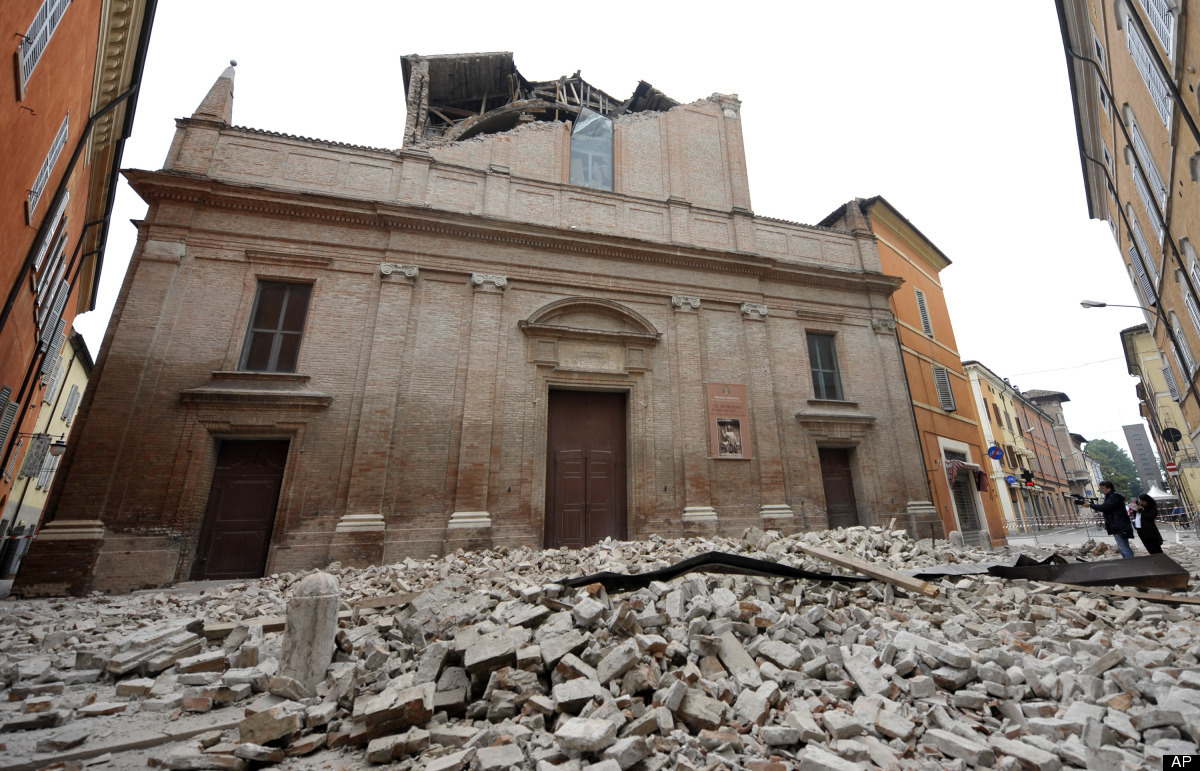
SANT'AGOSTINO DI FERRARA, Italy — A strong earthquake shook northeast Italy early Sunday, killing four people, tearing off chunks of church facades and sending panicked residents into the streets. Aftershocks wreaked more havoc in the region, including knocking down a clock tower and injuring a firefighter. The magnitude-6.0 quake struck at 4:04 a.m., with its epicenter about 35 kilometers (22 miles) north of Bologna at a relatively shallow depth of 5 kilometers (3.2 miles), the U.S. Geological Survey said. Civil defense agency official Adriano Gumina described it as the worst quake to hit the region since the 1300s. The four people killed were factory workers on the overnight shift when their buildings, in three separate locations, collapsed, agency chief Franco Gabrielli said, In addition, he said, two women died – apparently of heart attacks that may have been sparked by fear. Sky TG24 TV reported one of them was about 100 years old. Dozens of people were believed to be injured. Two of the dead were workers at a ceramics factory in the town of Sant'Agostino di Ferrara. Their cavernous building turned into a pile of rubble, leaving twisted metal supports jutting out at odd angles and the roof mangled. "This is immense damage, but the worst part is we lost two people," fellow worker Stefano Zeni said. News reports said one of the dead had worked the shift of an ill colleague. Elsewhere in the town, another worker was found dead under factory rubble. In the town of Ponte Rodoni di Bondeno, a worker also died as his factory collapsed, news reports said, citing emergency workers. Nearly 12 hours after the quake, a sharp aftershock alarmed the residents of Sant'Agostino di Ferrara and knocked off part of a wall of city hall. The building already had been pummeled by the pre-dawn quake, which left a gaping hole on one side of it. The same aftershock knocked down the clock tower in the town of Finale Emilia, injuring a firefighter. Images from Sky TG24 showed the firefighter lying in the street near the rubble. The national geophysics institute assigned an initial magnitude of 5.1 to the aftershock. The quake Sunday came as Italy was still reeling from Saturday's bombing that killed one person at a school in the country's south. Pope Benedict XVI, in his traditional Sunday appearance from his studio window overlooking St. Peter's Square, said he was `'spiritually close" to those affected by the quake, and asked people to join him in prayers for the dead and injured. Emilio Bianco, receptionist at Modena's Canalgrande hotel – housed in an ornate 18th century palazzo – said the quake "was a strong one, and it lasted quite a long time." The hotel suffered no damage and Modena itself was spared, but guests spilled into the streets as soon as the quake hit, he said. The fear was palpable in Sant'Agostino. Resident Alberto Fiorini said there was `'pandemonium" during the night. 'I took shelter under the bed and I prayed," he told Associated Press. His house was not damaged, he said. Many people were still awake at 4 a.m. and milling about town since stores and restaurants were open all night. The epicenter was between the towns of Finale Emilia, San Felice sul Panaro and Sermide, but the quake was felt as far away as Tuscany and northern Alto Adige. One woman in Finale Emilia told Sky a child had been trapped in her bedroom by falling rubble for two hours before she was rescued. The initial quake was followed around an hour later by a 5.1-magnitude temblor, USGS said. And it was preceded by a 4.1-temblor. In 2009, a temblor killed more than 300 people in the central city of L'Aquila, where the historic center is still largely uninhabited and in ruins. Sunday 20 May 2012 http://www.huffingtonpost.com/2012/05/20/italy-earthquake-finale-emilia-bologna_n_1530822.html

continue reading

Saturday, 19 May 2012

Search for Sukhoi Victims Ended After 10 Days

Search efforts for the victims of the crashed Sukhoi Superjet 100 were officially brought to a close on Friday, 10 days after the plane carrying 45 people collided with Mount Salak in West Java. The decision was marked with a small ceremony at the evacuation command post in Cijeruk, Bogor, led by a military coordinator of the team, Putranto. “In accordance with the National Search and Rescue Agency’s [Basarnas] decision, evacuation operations are officially ended. We will, however, continue to comb the [crash] site to search for some materials of the plane,” Putranto told journalists after the ceremony, which included joint prayer for the dead victims. The dispersed joint search team consisted of hundreds of personnel from Basarnas, the Indonesian Military (TNI) and police, as well as some volunteers and a team from Russia. The effort to find some of the materials from the crashed plane, which already turned up the cockpit voice recorder, one of two "black boxes" on the plane, will continue with 45 personnel, the same number of people that died in the accident. The team will include members of the Army’s special forces (Kopassus). “We will coordinate with the police and the Russian SAR [search and rescue] team,” Putranto said. While Basarnas led the larger team that was looking for the victims of the crash, the new, smaller team will be headed by the Bogor command of the TNI and will officially start its work on Saturday, Putranto said. As of Friday, the Basarnas-led team had sent 37 bodybags believed to contain the remains of all 45 of the passengers to the National Police Hospital in Kramat Jati, East Jakarta, to undergo identification processes. Police announced earlier on Friday that they had so far managed to identify 15 of the victims — 13 Indonesians and two foreigners. There were 10 men and five women. I Ketut Parwa, the Basarnas official who led the first team, said there were probably more remains buried beneath the wreckage. “But it’s already the 10th day,” he said. “It will be very difficult to find and evacuate those remains.” Saturday 19 May 2012 http://www.thejakartaglobe.com/home/search-for-sukhoi-victims-ended-after-10-days/518673

continue reading

Indonesia needs finger print database

JAKARTA - It is time for Indonesia to have finger print database as it has many functions. For example, the database could also ease the identification of disaster victims of Sukhoi Superjet 100 crash, the Executive Director of Disaster Victim Identification (DVI) of Sukhoi SJ 100, Dr Anton Castilani, said on Saturday. DVI team is still having a hard time on identifying the data of the victims through the finger prints despite the ante mortem data is completely gathered. The obstacle is that the ante mortem data given by the family is different with the body parts found by the evacuation team. "The family sent us the certificate containing three finger prints from left hand, but unfortunately we found the right one. It does not match," Anton gave an example. DVI team, he added, successfully identified 15 victims. Yet, none of the identification uses the finger prints. "It is conducted by using their DNA," he explained. Saturday 19 May 2012 http://en.republika.co.id/berita/en/national-politics/12/05/19/m49np1-indonesia-needs-finger-print-database

continue reading

Tunnel Blast Kills 19 at Chinese Construction Site

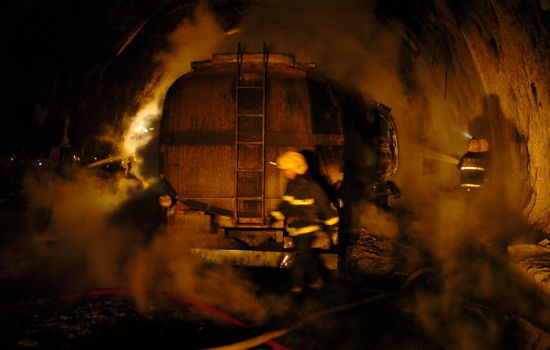
A blast in a tunnel killed 19 workers at a central Chinese highway construction site on Saturday, authorities said. The explosion in Hunan province also injured one person, said two officials from the provincial work safety bureau who would only give their surnames, Li and Yang, a practice that is common among Chinese government employees. The blast occurred when a vehicle was unloading explosives in the tunnel of the highway that is being built between Yanling and Rucheng in Hunan province, the official Xinhua news agency said. A total of 24 people were working at the tunnel when the blast occurred. Four were pulled out, including one in critical conditions, the Hunan provincial transport department said in a statement. Accidents and explosions are common in China due to weak safety standards and lax building practices. In November, a massive explosion near an expressway ramp in southwestern China killed at least seven people and injured about 200. That blast was caused by three explosives-laden vehicles that caught fire, also destroying a garage and a food warehouse. Saturday 19 May 2012 http://abcnews.go.com/International/wireStory/tunnel-blast-kills-19-chinese-construction-site-16384577#.T7ejDXj82W8

continue reading

Abertay University student's system uses digital networks to plot real-world disasters

The way emergency crews search for missing people following a natural disaster could be revolutionised by the work of a Dundee student. David Kane, a computing and networks student at Abertay University, has developed a programme whereby broadband routers are used to detect whether a building is still standing. By ''pinging'' internet addresses in areas affected by disasters such as tsunamis and hurricanes, David's software could provide information to assist rescue teams, detailing the extent of the disaster and the areas worst hit. David, whose work has been exhibited at the university's degree show, said: ''Responding to disasters is immensely difficult and any extra accurate information can make the difference in saving lives. ''I wanted to prove it was possible to use an ordinary piece of technology we all have, a home broadband router, to map natural disasters in real-time.'' Using Google Maps, the system shows live data from ''safe'' areas from which signals have been received from routers. It could be assumed that areas from which no signal is returned have been worse hit, allowing rescue crews to focus their efforts on saving lives there. ''The idea definitely works and I've built it so anyone can take this code and improve it,'' he added. Saturday 19 May 2012 http://www.thecourier.co.uk/Living/Digital/article/22808/abertay-university-student-s-system-uses-digital-networks-to-plot-real-world-disasters.html

continue reading

Friday, 18 May 2012

15 victims of Sukhoi crash identified

JAKARTA: Forensic experts from the Indonesian police Disaster Victim Identification (DVI) team, Friday, said that they had identified 15 victims of the Sukhoi Superjet 100 which crashed at Gunung Salak, Bogor, last May 9. The victims, 10 men and five women, comprised 13 Indonesians and two of other nationalities. Head of the Indonesian Police Hospital at Keramat Jati here, Brigadier General Agus Prayitno, at a media conference which was broadcast live by several television stations, said the victims were identified through their finger prints, dental records, DNA and personal possessions. However, he said the bodies had yet to be handed over to their next of kin as some of their body parts were still missing. Until today, the hospital had received 30 body bags of the victims’ remains and belongings which were recovered from the site of the crash. The ill-fated aircraft, with 45 passengers on board, was on a demonstration flight on May 9 when it suddenly lost communication with the air control tower. The plane’s wreckage was spotted on Gunung Salak the following day Friday 18 May 2012 Read more: http://www.theborneopost.com/2012/05/18/15-victims-of-sukhoi-crash-identified-new/#ixzz1vFfrYGaE

continue reading

At least 36 dies in bus accident in Vietnam

Hanoi, Vietnam - At least 36 passengers died when a bus carrying nearly 60 passengers broke the banisters of Serepok Bridge on National Highway 14, which connects Dak Lak and Dak Nong provinces in central Vietnam, and fell into the river on Thursday night, the Vietnam News Agency reported on Friday. According to the initial report, the bus, owned by a transport cooperate in Dak Lak province, some 960 km south of capital Hanoi, was on the way to Ho Chi Minh City. At around 10 p.m., while crossing the Serepok Bridge, the vehicle suddenly crashed into the banister and fell into the river, from the height of 18 meters. Rescue workers and local people were mobilized to save victims. By 3 a.m., rescue works finalized. A total of 34 people were dead on the spot and other two victims died in Dak Lak hospital, according to the report. Friday 18 May 2012 http://www.antaranews.com/en/news/82196/at-least-36-dies-in-bus-accident-in-viet-nahm

continue reading

Thursday, 17 May 2012

Another mass grave was found today on Balambo Mountain in Halabja

A mass grave was found Wednesday on Balambo Mountain including children and women remains. “The corpses of the mass grave might be victims of the chemical attack in the late 1980s,” Goran Adham Halabja town commissioner told Press. He said that they have indicated the location with the cooperation of Halabja Martyr association and have informed the KRG ministry of Martyr and Anfal affairs to dig up the corpses. “There might be also three other mass graves there,” he added. Halabja is a Kurdish town in Northern Iraq, located about 150 miles (240 km) north-east of Baghdad and 8–10 miles from the Iranian border. The former Baath regime bombarded Halabja with internationally banned chemical weapon in April 1988, killing 5 thousand innocent people and displacing thousands others. Those who were dead were buried nearby Halabja randomly. Wednesday 16 May 2012 http://www.komalnews.net/%28A%28tlc5BDBqzQEkAAAAMGQ3OWQ2Y2QtZmZiOC00Mjc2LTlmYWUtMmY4MDc3YmZiNWVj79RK3hAKpaskK5NhKbv1971f20Q1%29%29/En/Detail.aspx?id=15765&LinkID=88&AspxAutoDetectCookieSupport=1

continue reading

Police identification unit summons Sukhoi victims` family members

Jakarta (ANTARA News) - The Disaster Victim Identification (DVI) unit of the police has summoned a number of family members of the Sukhoi Superjet 100 victims to the Said Sukanto National Police Hospital in Kramat Jati, Jakarta, to help in the victim identification process. The unit will attempt to match the family members` DNA data with that of the bodies found at the crash site in Mount Salak, West Java. "The victims` families have been summoned to obtain some fingerprint, DNA and teeth samples, and this process is not yet complete," the chief of the hospital`s medical and health division Mussadeq Ishaq told reporters here on Thursday. According to Mussadeq, the families have been summoned to enrich the incomplete data stored in the DVI unit`s data base. "After this, the DVI team can do its job optimally, with almost 100 percent correct results," he remarked. As of Thursday morning, Mussadeq noted, the unit had received as many as 35 body bags containing the remains of the ill-fated plane crash victims. "We have received a total of 35 body bags - 30 of them contain the victims` body parts, while the other five contain the victims` property," he said. Mussadeq also asked for blessings from all parties so that the Sukhoi Superjet 100 victim identification process could be completed soon. The Sukhoi Superjet 100 jetliner slammed into the dormant volcano at nearly 800 kph (480 mph) during a light rain. Russian and French officials have now joined the investigation into the cause of the disaster. The ill-fated Superjet was carrying representatives from local airlines and journalists on what was supposed to be a 50-minute demonstration flight. Barely 21 minutes after the plane took off from a Jakarta airfield, its Russian pilot and co-pilot asked for permission to drop from 10,000 feet to 6,000 feet; the plane disappeared from the radar immediately afterwards. Thursday 17 May 2012 http://www.antaranews.com/en/news/82183/police-identification-unit-summons-sukhoi-victims-family-members

continue reading

Wednesday, 16 May 2012

Bodies of Sukhoi Victims Kept in Containers - “The capacity of the existing container is not enough, so we bring more.”

The evacuation of the victims of the crashed Russian Sukhoi Superjet-100 through land is still underway. This morning, one body bag arrived at the Sukamto Police Hospital, Kramat Jati, East Jakarta. The body bag arrived at the Police Hospital today was temporarily kept in the mortuary before being stored into a cooling container. A joint forensic team from the Disaster Victim Identification (DVI) and Police's Inafis brought one cooling container used to store the victims’ bodies. Earlier, Director of DVI Indonesia, Chief Commissioner Anton Castilani, said the container is used to prevent the victims’ body parts from decaying. “The capacity of the existing container is not enough, so we bring more,” said Anton. The white container came at 4.30 PM on Tuesday, May 15. The container was brought into the post mortem unit in the forensic building of the hospital with the help of two forklifts. The identification process of the victims’ body parts is still in progress. A total of 30 body bags have been evacuated to Jakarta including five bags which contain the victims’ belongings. The forensic team has recapitulated the post mortem data, namely the DNA, then the DNA samples will be sent to the Police Headquarters’ laboratory for identification and matched with the ante mortem data taken from the victims’ family members. As many as 45 passengers were in the SSJ-100 when it crashed into the cliffs of Mount Salak. Until the seventh day of the evacuation, there has not been any sign of life from the victims. Wednesday 16 May 2012 http://us.en.vivanews.com/news/read/314358-bodies-of-sukhoi-victims-kept-in-containers

continue reading

Tuesday, 15 May 2012

8 000 corpses still unidentified in Mexico

Even if someone had not chopped the heads, hands and feet off the victims first, the chances of investigators identifying the 49 bodies dumped on a road in northern Mexico this weekend would have been far from certain. More than 8 000 corpses left across Mexico since 2006 have not been identified, according to the National Human Rights Commission, a government-run body. At the same time, more than 5 000 people who have disappeared during the drug violence sweeping the country have never been tracked down, according to the commission. The failure to find and identify victims of massacres and murders has spurred criticism of the war on drug gangs waged by President Felipe Calderon since he took office in late 2006. The thousands of grieving families searching for lost loved-ones are also likely to haunt Calderon's successor, who will be chosen in presidential elections on July 1. “When you can't find your family member it completely destroys you,” said Irma Hidalgo, whose 18-year old son was dragged from her home in Monterrey in 2011. “We just want to know if he is alive - or if not, then lay him to rest.” Hidalgo immediately called the Monterrey morgue following the discovery of the pile of dead outside the city on Sunday, but police told her not to come in because they said the bodies were so badly mutilated they were only identifiable with DNA. She has already given her DNA samples to state and federal police and is assured they will be compared with the victims. The sheer scale of the carnage makes it difficult for authorities to handle the murder cases. The latest violence has pushed the total number of drug-related deaths to around 55 000 since Calderon assumed power in December 2006. Emergency teams have had to confront mass graves with more than 200 corpses, dozens of bodies thrown into mine shafts and massacres such as the 49 headless corpses left on a road about 29km east of this industrial city. State-employed forensic scientists complain it is an almost insurmountable task. “I used to just deal with traffic deaths and the odd crime of passion. I never thought I would see this kind of devastation in my country,” said a forensic scientist in Monterrey, who asked his name not be used. “I had a day recently when I had to look at five bodies that had been shot in one street, then three in another and then five corpses that had been cut up.” “At first you feel sick when you have to take evidence from bodies that have been decapitated and mutilated. But then you get used it and you don't feel anything,” he said. It has also been a challenge to store so many corpses. Following the killings on Sunday, forensics vehicles needed to make several trips to take all of the 49 cadavers back to a morgue located in a public hospital in Monterrey. Hospital officials said they just managed to fit the corpses in their fridges. In other cases, such as when mass graves were found by the nearby town of San Fernando in 2011, the government had to send refrigerated trucks to store all the victims. Calderon defends his offensive by saying his government has made record seizures of marijuana, cocaine and methamphetamine, and arrested or shot dead dozens of major traffickers. “There are people who criticise my government for fighting criminals, but what do they want? To invite (criminals) for a cup of coffee?” Calderon asked as he inaugurated a hospital in Mexico State recently. “If someone doesn't want to fight criminals, they shouldn't be in government.” But critics point out that even as soldiers and police round up drug smugglers, they fail to solve most murders. Fewer than 20 percent of homicides in the last two years have led to arrests and convictions, according to police and court statistics. With such a backlog, cases of disappearances are given even less priority, family members complain. Jorge Varestegui has been searching for almost two years for his brother and nephew, who were taken by armed men at a road block near his town of Parras in northeast Mexico. “Police don't take the cases of disappearances seriously. They say the person probably ran away or something, even when you bring evidence to show they were kidnapped,” he said. With so many crimes unsolved, police cannot identify if many of the victims were actually criminals killed over the fight to smuggle drugs or simply civilians caught up in the bloodshed. “The government gives a simplistic explanation that this is just criminals killing criminals. But how do they know, if they don't solve the crimes?” asked Indira Kempiris, a human rights activist in Monterrey. “Many of the victims are from the most vulnerable sections of society with no means to seek justice.” A day after the 49 bodies were dumped, police said they had not yet identified any victims nor had reports of a mass disappearance lately, signaling the victims may have been foreign migrants passing through Mexico to the United States. Graffiti at the crime scene bore the letter “Z”, a symbol for the Zetas drug cartel, known to dominate the area. As well as from drugs, the Zetas make money from human trafficking and extorting migrants, and have murdered many who fail to pay them. In 2009, the Zetas were blamed for a massacre of 72 foreign migrants, again in San Fernando. With many families of victims living in poor communities in Central and South America, it is even harder to identify them. Many of them are undocumented migrants, further complicating their identification. The continued failure to put names on so many victims leads to a vicious circle, in which gangs are encouraged to think that they can get away with murder, said Victor Clark-Alfaro, director of the Bi-national Centre for Human Rights in Tijuana. “Over the years, the state has accumulated a huge sack of dead people on its back without resolving the cases or punishing those responsible for them,” he said. - Reuters Tuesday, 15 May 2012 http://www.iol.co.za/news/world/8-000-corpses-still-unidentified-in-mexico-1.1296689

continue reading

Russia’s top DNA profiler to assist Sukhoi’s victims’ identification

Russia’s leading DNA expert, Pavel Ivanov, is slated to arrive in Jakarta on Tuesday to help the National Police’s Disaster Victim Identification (DVI) unit in identifying the victims of Russian-made Sukhoi Superjet 100 that crashed on Mt. Salak, West Java last week. An official from Raden Said Sukanto National Police Hospital in Kramat Jati, East Jakarta, said late on Sunday that Ivanov would help analyze the remains of the ill-fated aircraft’s victims. “Ivanov will help the DVI unit to identify the victims through DNA profiling,” said the hospital’s medical and health division chief, Mussadeq Ishaq, as quoted by tribunnews.com. Ivanov is a Russian geneticist from the Engelhardt Institute of Molecular Biology at the Russian Academy of Sciences in Moscow, and is one of the experts who investigated the remains of Russia’s slain royal family Romanov through DNA analysis. According to Mussadeq, Indonesia’s forensic teams hoped that the helping hands from the Russian teams would make the identification process easier. Separately, Russian forensic expert Andrey Kovalev said that the Russians would conduct their jobs in accordance with Interpol standards. Previously, officials prepared six teams comprising 60 experts in forensic medicine, fingerprint identification, and DNA analysis to identify victims’ remains. The team consists of experts from Gadjah Mada University (UGM) in Yogyakarta, Airlangga University in Surabaya, East Java, and the University of Indonesia in Jakarta. As of Sunday morning the hospital had received 18 body bags that were sent directly to forensics teams for identification. (asa) Mon, 05/14/2012 http://www.thejakartapost.com/news/2012/05/14/russia-s-top-dna-profiler-assist-sukhoi-s-victims-identification.html

continue reading

Police identify 22 fingerprints of the ill-fated Sukhoi’s victims

A total of 22 fingerprints of the ill-fated Russian-made airliner’s victims have already been identified by the National Police’s Disaster Victim Identification (DVI) unit, a spokesman says. The National Police spokesman Sr. Comr. Boy Rafli Amar was quoted by tempo.co on Tuesday as saying that the 22 fingerprints were identified from the 18 body bags that had been received by the victims’ identification team. As of Monday, a total of 25 body bags had been sent to the officials at R. Sukanto National Police Hospital in Kramat Jati, East Jakarta. Four out of 25 body bags contained victims’ personal items, such as wallets, ID cards, shoes and electronic gadgets. The forensics team helping to identify victims remains has examined 18 body bags of remains, while three additional body bags arrived to the hospital on Monday and currently undergoing testing. DVI chief Sr. Comr. Anton Castilani said that the 22 fingerprints would be cross-referenced with the DNA data that was submitted from the victims’ families. He added that the team had yet to sort out which partial remains belonged to Indonesians or to foreign citizens. The Russian-made aircraft Sukhoi Superjet 100, with 45 people onboard, disappeared from radar screens last Wednesday before an Air Force helicopter spotted its wreckage at an altitude of 5,800 feet in the foothills of Mt. Salak’s in Cidahu, Sukabumi, the day after. Search and rescue teams found that the bodies of the Sukhoi passengers were no longer intact. Eight Russian crew members, one American citizen and one French passenger were onboard along with 35 Indonesians. (asa) Tue, 05/15/2012 http://www.thejakartapost.com/news/2012/05/15/police-identify-22-fingerprints-ill-fated-sukhoi-s-victims.html

continue reading

Monday, 14 May 2012

22 body bags of Sukhoi plane crash victims checked

Jakarta (ANTARA News) - The Indonesian police hospital in Kramat Jati, East Jakarta, has examined 22 body bags of the victims of the Sukhoi Superjet 100 plane that crashed on Mount Salak in West Java last Wednesday. "Until last night, the disaster victim identification (DVI) team of the Indonesian police had examined 22 body bags, of which 18 contained body parts and four contained property," the head of the hospital, Brig Gen Agus Prayitno, said on Monday. "Three more body bags were sent to the hospital on Monday morning. The bags arrived at Halim Perdanakusuma airport in Jakarta at 8.05 a.m., after being flown from a command post near the plane crash site in Mount Salak," he added. "The three body bags are now undergoing a post-mortem check," Agus explained. He said since last night the DVI team had evaluated the post-mortems conducted after the body bags of Sukhoi Superjet 100 crash victims arrived at the hospital. "The results of the post-mortem checks will be compared with ante-mortem data to identify the victims," Agus added. "The medical center and health laboratory of the Indonesian police had started work ever since DNA samples were taken from the relatives of the victims. The DNA laboratory had begun comparing the DNA samples with the body parts of the victims,� he said. "We hope all of this will not take too long. We have done our best," Agus added. The Sukhoi Superjet 100 was carrying 45 passengers, including 34 Indonesians, eight Russians, two Italians, and one Frenchman. The plane crashed during a demonstration flight for potential Indonesian buyers. The National Committee of Transportation Safety (KNKT) earlier said it had located the black box of the ill-fated aircraft. "We have located it, but it has not yet been collected because it is buried under plane debris," KNKT chief Tatang Kurniadi said on Sunday. Monday 14 May 2012 http://www.antaranews.com/en/news/82091/22-body-bags-of-sukhoi-plane-crash-victims-checked

continue reading

37 dead in NW China storms

MINXIAN, Gansu - The death toll had risen to 37 and 19 others remained missing as of 6 pm Friday after hail and torrential rains battered a mountainous county in Northwest China, authorities said late Friday. As of 6 pm, the storms had affected 358,000 people in Minxian county, Gansu province, forcing the evacuation of nearly 30,000 local residents. Another 40 people had been hospitalized. Roads were blocked, houses collapsed, and farmland destroyed by the extreme weather, according to Minxian county civil affairs bureau. China's National Disaster Reduction Committee and the Civil Affairs Ministry raised the level of emergency response from level 4 to level 3 on Friday afternoon. A disaster relief team led by Sun Shaocheng, deputy minister of civil affairs and consisted of officials from nine ministries is heading to the disaster-hit area. About 2,000 officials, as well as 800 soldiers and militiamen, have trudged through mud and water into storm-battered areas to rescue trapped villagers. Gansu provincial Red Cross said it was sending 1,000 quilts and 1,000 coats to Minxian to help with disaster relief efforts. The provincial finance bureau, meanwhile, has earmarked 2 million yuan ($317,460) to repair damaged water control facilities. Food and water had been allocated to the evacuated residents by local authorities. Minxian's civil affairs bureau said the stormy weather lasted just from 5 to 6 pm, but wreaked havoc in all of the county's 18 townships. In the worst-hit areas, precipitation measured nearly 70 mm.
Hail and torrential rain cut power in six townships, damaged several homes, hospitals and schools, disrupted traffic on two interprovincial highways and destroyed over 7,000 hectares of crops, county authorities said. Minxian is a mountainous county in the city of Dingxi with a population of 450,000. It is located 150 km from Zhouqu county, where a rain-triggered mudslide killed more than 1,500 people in August 2010. Thursday's rains also triggered floods in two other counties in Dingxi, as well as parts of the city of Longnan and the Gannan Tibetan autonomous prefecture. No deaths have been reported in those areas. The national flood control and drought relief headquarters on Friday issued fresh warnings to northwestern provinces, urging them to step up weather monitoring and flood prevention efforts. The provincial observatory said more rains were likely from late Friday to Sunday in Minxian. Sunday, 13 May 2012 http://english.sina.com/china/p/2012/0511/466968.html

continue reading

11 Indians among 15 dead in Nepal plane crash

Eleven Indian pilgrims were among 15 people killed when a private plane crashed in northern Nepal today after hitting a hill top while trying to land at high-altitude Jomsom airport. The Dornier aircraft belonging to the Agni Air went down when it hit the top of a hill while landing at the Jomsom airport in northern Nepal, said an official at the Rescue Coordination Committee of Tribhuvan International Airport. “Eleven Indian nationals, two Danish nationals and two Nepalese crew members were killed in the crash,” the official said, adding rescuers have so far recovered nine bodies from the wreckage. Six people on board, including a crew member and five Indians, have been rescued alive from the crash site, he said. The injured people were taken to a hospital in Pokhara where condition of the three Indians was critical. There were altogether 18 passengers including 16 Indians and three Nepali crew members in the ill-fated aircraft. The aircraft was heading towards Jomsom in the morning from Pokhara when it hit the hill, the official said, adding that there are possibilities of a technical fault. The passengers had chartered the flight to take them from the central tourist hub of Pokhara to Muktinath, a famous Hindu pilgrimage in Jomsom near Tibetan border at the foot of the Thorong La Himalayan mountain pass, the official said. The high-altitude Jomsom airport, about 200 km northwest of the capital, is a gateway to a popular tourism and trekking destination situated more than 2,600 m above sea level. The plane turned into pieces but did not caught fire. The bodies of Pilot Prabhu Sharan Pathak and Co-pilot JD Maharjan have been recovered. When contacted, Indian Embassy officials said they were trying to collect the details as there was some confusion over the nationalities of the passengers on board the ill-fated plane. Agni Air marketing manager Pramod Pandey said two Danish nationals were among the passengers, although their condition was not known. “It’s not that much difficult to land at the Jomsom airport. We are using experienced pilots over there,”he added. Monday 14 May 2012 http://www.thehindu.com/news/international/article3417494.ece?textsize=small&test=2

continue reading

Sunday, 13 May 2012

Identification of Sukhoi crash victims may take months

While the evacuation of Sukhoi Superjet-100 crash victims is still underway, the victim`s identification may take months because many of their bodies are no longer intact, head of the police medical and health center (Pukdokkes) Senior Commission Anton Castilani told the press at the police hospital in East Jakarta Saturday. Anton said the identification process is like trying to solve a jigsaw puzzle and he compared it also with the boat accident in Trenggalek in which identification of the victims took as long as five months. The police team of the Disaster Victim Identification (DVI) has begun with identifying the contents of four body bags at the police hospital including identifying body parts, describing and making notes of special features of the victims. The return of the victims to their families cannot be done in a too short period because the team is still completing the identification process. Anton also cannot say how long it would take to complete the identification process, because DNA examination itself would take another two weeks, as it is also necessary to compare ante mortem data with post mortem data. "I cannot promise anything, because it is still too long," he said. The DVI team is making the comparisons such as by finger print data, teeth, DNA, physical/medical marks and the belongings of the victims. Anton said the Russian government has also promised to send a DNA expert to help the identification process, and universities and domestic agencies like University of Indonesia, Airlangga University, Bradijaya University, Eijkman Institute (Bandung) and a team of doctors from Banten will also help the identification process. Sunday 13 May 2012

continue reading

Cause of jet crash in Java unclear, investigators say NAMING THE DEAD::Experts flown in from Russia will cooperate with Indonesian police to identify the victims, a complicated process that could take up to half a year AFP, CIJERUK, INDONESIA Sun, May 13, 2012 - Page 4 Body bags containing the victims of a Russian jet crash began arriving in the Indonesian capital yesterday as Russian investigators flew in to join the probe into how the aircraft smashed into the side of a volcano. Rescuers said the bodies of those who perished when Sukhoi’s new Superjet 100 hit Mount Salak in western Java on Wednesday, killing all on board, were badly dismembered. Officials said the remains of the victims found so far had been placed in 16 body bags. By noon, five had arrived in Jakarta by helicopter and were taken to a police hospital for identification. “This morning we have 16 body bags. On Friday, there were 12, and four more were filled today [Saturday]. No body was found in its whole form,” West Java provincial military chief Sonny Widjaja said yesterday. Each bag could contain the remains of more than one victim, he said. Officials said on Friday that 12 bodies had been found. As the bodies arrived at Jakarta’s Halim Perdanakusuma military airport, two Russian jets landed carrying medics, helicopters and experts who will work with Indonesian authorities in the investigation. Sukhoi’s representative company in Indonesia, Trimarga Rekatama — which organized the promotional flight to tout the new jet — said scores of Russian experts would join the investigation. “There will be 73 Russian experts, some are here already. Thirty-seven of them are mechanics,” the company’s consultant Sunaryo said. The company has apologized for confusion surrounding its manifest, claiming at first that 50 passengers were on board but then revising the number to 45. Local rescue officials said the plane was carrying 46. The company said the final passenger list was with a staff member on the plane, causing confusion as to how many and who exactly was on board. “We are so sorry about that. It was a mistake. The list should have been with us on the ground,” Sunaryo said. Questions now abound over why the plane crashed with an experienced pilot as its captain. Key to the mystery is why the pilot requested permission from air traffic control to descend from 3,000m to 1,828m before the plane disappeared from radar screens and slammed into Mount Salak, which rises to 2,094m. The Indonesian transport ministry said a control tower in Jakarta gave the pilot permission to descend as the plane approached a military base in a clearing amid the mountains in western Java. “Based on a report from the control tower, we know the pilot made the request to descend to 1,828m and yes, the control tower gave him permission to do so,” the ministry’s director-general for aviation Herry Bakti said. “He was approaching the Atang Senjaya military base, which is a safe place to fly low, and we know that he did in fact descend to 1,828m. We think he wanted to show the passengers the military base,” he added. Bakti said it was unclear what happened after that. A Russian fact-finding committee said on Thursday there were indications that safety standards had been violated. Relatives at the hospital wailed as they watched the body bags arrive for identification. Anton Castilani, a forensics expert with Indonesian police, said at the Kramat Jati Police Hospital in Jakarta that his team would try and “reconstruct the body parts as much as possible,” saying it could take up to six months. Photos of the plane’s first demonstration flight posted online by Russian blogger Sergey Dolya show relaxed passengers smiling onboard, being treated to champagne, as well as Russian and Indonesian crew members posing outside the jet. Eight Russians, as well as a French and US national, were on the flight out of a total of at least 45 passengers and crew. Indonesian police hospital chief Agus Prayitno said that because there were foreigners aboard, Indonesia was working with Interpol’s disaster victim identification agency based in Lyon, France. Rescuers were still searching for the aircraft’s black boxes at the crash site, 80km south of Jakarta. Wednesday’s calamity came 50 minutes into the flight, part of an Asian sales tour to promote the aircraft, a joint venture between Sukhoi and Italy’s Alenia Aeronautica, which had its first flight last year. Sunday, 13 May 2012 http://www.taipeitimes.com/News/world/print/2012/05/13/2003532717

continue reading

Antemortem data of sukhoi crash victims now complete

Jakarta (ANTARA News) - Antemortem data of all the Sukhoi Superjet 100 crash victims are now complete and are in the hands of the Indonesian police, Head of the Police Medical and Health Center Police Brig Gen Dr. Mussadeq Isshaq said in Jakarta Sunday. "All the antemortem data are complete, and we are now awaiting the results of the evacuation of the victims from the crash site," he said. Antemortem data are very important in the identification process because the victims are no longer in tact, so that it is difficult for the police to identify them, he said. The wife of one of the victims of French nationality has come to Dr Sukanto Police Hospital in Kramatjati Monday morning to collect antemortem data. In the meantime, Police Senior Commissioner dr. Anton Castilani said the crash victims are no longer in tact. ANTARA observed that the total number of body bags already sent to the Police Hospital up to Sunday afternoon has reached 22. Three arrived at the Police Hospital at 12.15 local time and another at 1.50 pm.(*) Sunday, 13 May 2012 http://www.antaranews.com/en/news/82075/antemortem-data-of-sukhoi-crash-victims-now-complete

continue reading

Saturday, 12 May 2012

The Russian government promised to bring a team of DNA analysis to help identify the bodies of victims Sukhoi Super Jet 100 at the Police Hospital, East Jakarta. It was submitted by the Chief of Police Hospitals Bhayangkara Brigadier Agus Prayitno a news conference after receiving five body bags, on Saturday (05/12/2012). "The Russians have not got here, but they will help the DVI teams from Indonesia to DNA identification," said Agus. In addition to teams from Russia, Disaster Victim Identification team (DVI) Police also assisted by a number of experts from universities, including University of Indonesia, University of Padjadjaran, UB and a team of forensic doctors from Banten. All results will be reported periodically indetifikasi DVI DVI Indonesia at the International center in Lyon, France. "There is a forensic pathologist, odontologi forensics, forensic DNA, forensic anthropologist who helped identify it," he explained. In the meantime, it's been five body bags brought to the Police Hospital. The victim's family began to arrive to meet the post DVI. They were given a special place to wait. Access to the pouch where the bodies are still barred from two pieces of fabric and the police line. Only the police team is allowed to enter. All the families who came, asked to register the name, address and phone number in the guest book that has been prepared. Saturday 12 May 2012 http://www.allvoices.com/contributed-news/12142999-russian-team-helps-identify-victims-of-sukhoi

continue reading

As relatives wait, minister says stop circulating crash pictures.

A senior minister says people should stop circulating pictures of the victims of the Sukhoi Superjet 100 that crashed near Mt. Salak in West Java. “I have received information that pictures of the victims have already been circulating through mobile phones. This kind of action will be painful for the victims’ families. Please, stop it,” Coordinating People’s Welfare Minister Agung Laksono told reporters at Halim Perdanakusuma airport in East Jakarta on Saturday as quoted by kompas.com. Agung's statement follows the circulation on BlackBerry Messenger on Friday of a photo purportedly taken at the crash site depicting the remains of two victims. Meanwhile, dozens of relatives of the victims have assembled in front of the National Police Hospital in Kramat Jati, East Jakarta, where officials have taken five body bags containing the partial remains of victims and their personal effects for identification. Officials have prepared tents in the hospital's courtyard, along with televisions tuned to news stations, for relatives as they wait. Separately, Sr. Comr. Anton Castilani, chief of the National Police’s disaster victim identification unit, said autopsies of the victims might take weeks, months or even years given that the remains were not intact and decomposition had already begun. Saturday, 12 May 2012 http://www.thejakartapost.com/news/2012/05/12/minister-urges-citizens-stop-circulating-graphic-pictures-sukhoi-s-victims.html

continue reading

Relatives of Superjet Crash Victims Observe Recovered Bodies

The relatives of those killed when a Sukhoi Superjet plane crashed on a remote hilltop in Indonesia earlier this week gathered at a hospital in the capital Jakarta on Saturday to observe identification of the victims' bodies, the Jakarta Post newspaper reported. The partial remains of several victims' bodies from the May 9 crash were airlifted to Jakarta airport earlier on Saturday and then taken to the National Police Hospital for identification. A post-mortem of the bodies may take weeks or even years as some have already decomposed, said Anton Castilani, chief of the National Police's disaster victim identification unit. All 45 people on board the Russian-made Superjet 100 - most of them representatives of Indonesian airlines - were killed after the plane slammed into a steep mountainside outside Jakarta. The jet, Russia's first new commercial plane since the fall of the Soviet Union two decades ago, was on a demonstration flight for potential customers. The search for the aircraft’s two black boxes will start after all the bodies are evacuated from the scene, United Aircraft Corporation (UAC) head Mikhail Pogosyan said on Saturday. “Both the Russian and the Indonesian sides are interested in the earliest, as well as most objective investigation of the tragedy,” he said. “We expect the first part of the operation, including the evacuation of the bodies, to be completed within 24 hours,” he added. The plane crashed in a remote area on rugged terrain and if it proves impossible to find the black boxes quickly “we will use other sources of objective information,” he added. The aircraft had experienced no technical problems ahead of the flight, its second of the day, Pogosyan said on Friday, adding it was still premature to say if pilot error caused the crash Saturday 12 May 2012 http://en.ria.ru/world/20120512/173408688.html

continue reading

Friday, 11 May 2012

Ten foreigners killed in Indonesia plane crash

JAKARTA - A senior official at the Indonesian Disaster Victim Identification Agency (DVI) said Friday that ten foreigners were among the victims of crashed Sukhoi Superjet 100 plane in Indonesia's West Java province. "Those ten foreigners were eight from Russia, one from the United States and another one from France," DVI Executive Director Anton Castilani said here. He said that five people among the 50 listed in the initial passengers manifest had reported to DVI about their safety. They cancelled to board the plane in last minutes before the plane took off from Halim Perdanakusumah airport for a demonstration flight. "It means that there were 45 people onboard the plane. Identification of 35 Indonesian nationals had been reported by their families to DVI. Families of the French and the U.S. nationals onboard the plane have also reported identification of their relatives," Anton said. He added that the data recorded by the agency fit to the manifest data recorded from the ill-fated Sukhoi plane. Debris of the crashed plane were mostly found scattered in Cipelang hamlet, Cijeruk subdictrict in Bogor regency in West Java province. The plane hit the wall of Mount Salak located in Bogor regency on Wednesday afternoon after its pilot contacted the Air Traffic Control (ATC) officials in Halim Perdanakusumah airport, asking permission to descent to 6,000 feet from a height of 10,000 feet. The Indonesian rescuer team and the army engage helicopters to evacuate the remains of the killed passengers from the crash site in several sorties. Indonesian and Russian teams have prepared a joint team to identify the remains of those perished in the plane crash. The fatal crash was the first in the world to involve Russia's iconic Sukhoi Superjet 100 passenger plane. Indonesian president Susilo Bambang Yudhoyono has issued an instruction to undertake a thorough investigation into the crash. Friday 11 May 2012 http://usa.chinadaily.com.cn/world/2012-05/11/content_15270960.htm

continue reading

12 bodies found near Indonesia jet crash site

Search teams found at least 12 bodies Friday near where a Russian-made jetliner crashed into the side of an Indonesian volcano while on a demonstration flight for potential buyers from airlines, an official said. All 45 aboard the Sukhoi Superjet-100 are feared dead. "Today we have discovered 12 victims, all dead," Rear Marshal Daryatmo, head of the national search and rescue agency, told reporters today. The search team used ropes to climb up to the wreckage on the near-vertical slopes of Mount Salak, search and rescue agency spokesman Gagah Prakoso said. The 10 bodies they found are being prepared to be transported from the crash site by helicopter. Local television showed what appeared to be the plane's tail with the blue-and-white Sukhoi logo, part of a wing and bits of twisted metal scattered along the slope like confetti. The jetliner slammed into the dormant volcano Wednesday at nearly 800 kph (480 mph). Russian and French investigators have arrived to join the ongoing investigation into the cause. The Superjet-100 is Russia's first new model of passenger jet since the fall of the Soviet Union two decades ago and was intended to help resurrect its aerospace industry. The ill-fated Superjet was carrying representatives from local airlines and journalists on what was supposed to be a 50-minute demonstration flight. Just 21 minutes after takeoff from a Jakarta airfield, the Russian pilot and co-pilot asked for permission to drop from 10,000 feet to 6,000 feet (3,000 meters to 1,800 meters). They gave no explanation, disappearing from the radar immediately afterward. It was not clear why the crew asked to shift course, especially since they were so close to the 7,000-foot (2,200-meter) volcano, or whether they got an OK, officials have said. Communication tapes will be reviewed as part of the investigation, but it's unlikely they will be released to the public any time soon. Friday 11 May 2012 http://www.independent.co.uk/news/world/asia/12-bodies-found-near-indonesia-jet-crash-site-7736656.html

continue reading

Thursday, 10 May 2012

Bodies found at Russian jet wreckage in Indonesia

Rescuers discovered bodies Thursday near the shattered wreckage of a new Russian-made passenger plane that smashed into the steep side of an Indonesian volcano during a flight to impress potential buyers. All 45 people on board were feared dead. Due to the remoteness of the crash site, the bodies will need to be placed in nets and lifted by ropes to a hovering chopper, national search and rescue agency spokesman Gagah Prakoso said. The bodies from Wednesday's crash were to be flown to the capital, Jakarta, for identification by family members. "So far we haven't found any survivors, but we are still searching," he said. "I cannot say anything about the condition of the bodies," Prakoso said, but he added that: "A high speed jet plane hit the cliff, exploded and tore apart." Authorities had lost contact with the Sukhoi Superjet-100 shortly after it took off from a Jakarta airfield carrying mostly representatives from Indonesian airlines. Family members, many of whom spent a long, sleepless night at the airport, broke down in tears on hearing news of the wreckage. Others stared blankly ahead in disbelief. The plane, Russia's first new passenger jet since the fall of the Soviet Union two decades ago, hit a jagged ridge on top of Mount Salak, a long-dormant volcano, leaving a giant earthy gash along the steep slope as it stripped trees. The Superjet _ a 75- to 95-seater _ has been touted as a challenger to similar-sized aircrafts from Canada's Bombardier Inc. and Brazil's Embraer SA. Potential buyers will scrutinize the crash investigation for signs of flaws in the aircraft. "If it's a technical fault ... then obviously that will be very serious for them," said Tom Ballantyne, a Sydney-based aviation expert. "But if it's pilot error or the fault of air traffic control, it won't be quite so bad because they'll be able to say, 'Well, it's not the airplane'." The plane took off early Wednesday afternoon for what was supposed to be a quick demonstration flight _ the second of the day. Just 21 minutes later, the Russian pilot and co-pilot sought permission to descend from 10,000 feet to 6,000 feet (3,000 meters to 1,800 meters), said Daryatmo, chief of the national search and rescue agency. The plane then fell off the radar. It was not clear why the crew asked for the shift in course, he said, especially when they were so close to the 7,000-foot (2,200-meter) volcano, or if they got the OK. Communication between pilots and air traffic control are being reviewed, said Tatang Kurniadi, chief of the National Commission on Safety Transportation, but the tapes will not be made public any time soon. More than 1,000 people, including soldiers and police, took part in the search and rescue efforts. Eventually, helicopters carrying out aerial surveys near the crater and northern slope spotted the wreck. The Superjet _ developed by the civil aircraft division of Sukhoi with the co-operation with Western partners _ has been widely considered Russia's chance to regain a foothold in the international passenger plane market. The country's aerospace industry was badly undermined in the economic turmoil following the 1991 collapse of the Soviet Union. It was on a "Welcome Asia!" tour, which included stops in Pakistan, Myanmar and Kazakhstan, and was supposed to head next to Vietnam and Laos. All but 10 of the 45 people on board were potential buyers and journalists, said Sunaryo from PT. Trimarga Rekatama, the company that helped organize Wednesday's event. The others were Russians, all from Sukhoi companies, an American consultant with a local airline and a Frenchman with aircraft engine-maker Snecma. The Superjet made its inaugural commercial flight last year. "It is their big hope that they will somehow get into the jet aircraft passenger market in a bigger way than they have," Ballantyne said. "We all know that the Russians have had a dreadful record in the past with their aircraft, so this was vitally important to their industry." With a relatively low price tag of around $35 million, the plane has garnered around 170 orders. And Indonesia, a sprawling archipelagic nation of 240 million people with a fast-growing middle class, is already one of the biggest customers. Kartika Airlines and Sky Aviation _ among dozens of airlines to have popped up in Indonesia in the last decade to meet the growing demand for cheap air travel _ had ordered at least 42. 10 May 2012 http://qctimes.com/news/world/asia/russian-plane-with-aboard-missing-in-indonesia/article_4b61e769-7585-5b95-83a8-9ef31674a77e.html

continue reading

Wednesday, 9 May 2012

4 killed in Mt Gamalama cold lava flood

Four people died as a result of a flood of volcanic material from Mt Gamalama, North Maluku, leaving at least 10 people missing while 15 others sustaining minor injuries. The four fatalities were identified as Raihan Sangaji, 9, Mildawany Johar, 25, Sarnawia Hamid, 52 and one remaining individual that was unidentified. The North Maluku and Ternate chapters of the Disaster Management Agency (BPBD) said in a statement that the officers continued to locate flood victims and damaged houses. The agencies also reported that a total of 188 houses in 11 villages had been destroyed by the flood, leaving 58 families, or 284 residents, homeless. In addition to the houses, the flood also ripped through two bridges connecting Daulasi and Air Tege-Tege villages and also the districts of Dufa Dufa and Akehuda. “We keep updating our data from the ground. A joint rescue team from the agencies, the Indonesian Military (TNI) and the police continues to evacuate the victims,” the agency said. (dre) Wed, 05/09/2012 http://www.thejakartapost.com/news/2012/05/09/4-killed-mt-gamalama-cold-lava-flood.html

continue reading

Philippines clothing store fire kills 17 workers sleeping inside

Predominantly female staff became trapped on top floor of building in Butuan city, authorities say A fire at a three-storey clothing store in the southern Philippines has killed 17 employees, most of them women who had been asleep and found themselves trapped on the top floor, officials said. The fire in the Butuan city store broke out at 3.55am and raged for five hours. Firefighters and police scouring the gutted building found 17 bodies, the city police chief, Pedro Obaldo, said. A store employee, Mylene Tulo, who escaped with two co-workers, said she had awoken as the fire was spreading rapidly in the third-floor office where they slept. Amid the flames and cries for help, she managed to dash out with her colleagues. They sustained minor burns on their arms. "We wanted to rouse others from sleep but the fire was already too strong," Tulo said. At least 20 employees, mostly women, had been sleeping at the store when the fire broke out, Obaldo said. Many stores in the Philippines allow their employees to sleep over, especially workers with homes far away. Relatives and friends, most of them in shock and tears, gathered in search of loved ones in front of the building, where police stood before body bags containing the victims' remains. Obaldo said investigators were trying to determine what sparked the fire, and whether the owners had violated fire regulations. The building, in Agusan del Norte province in the southern Mindanao region, was a theatre before being turned into a commercial centre with several stores, including Novo Jeans and Shirts, where most of the victims died. A lack of firefighting equipment and personnel, coupled with safety violations, has resulted in major fire disasters in the Philippines, especially in shantytowns. A 1995 blaze that gutted the Ozone Disco Pub in Manila, the capital, killed 162 people. Butuan is a city of more than 300,000 about 500 miles south-east of Manila. 9 May 2012 http://www.guardian.co.uk/world/2012/may/09/philippines-clothing-store-fire-sleeping

continue reading

Monday, 7 May 2012

Hope fades for Nepal flood victims, toll may hit 60

KATHMANDU (AFP) - Rescuers scouring Nepal's central Annapurna region after severe flash flooding said Sunday that there was almost no hope of finding survivors and that the final death toll could be more than 60. The bodies of 17 people have been recovered but district police superintendent Sailesh Thapa told AFP that 47 missing people, including three Ukrainian tourists, were feared dead. "So far, 12 of the 17 bodies have been identified. An excavator has reached the worst affected areas and is clearing the mud," he said. "We have a list of another 47 people who have gone missing. Their chances of survival are almost zero. The three Ukrainians are still missing." Just eight people have been rescued since the Seti burst its banks near the city of Pokhara, a popular tourist hub, on Saturday, sweeping away an entire village, and swamping families enjoying picnics on the river banks. Most of the missing are thought to be local. One witness, named as Uddha Bahadur Gurung, described how the river had suddenly swollen with water and turned into a lethal surge. "There was nothing unusual. People were enjoying picnics, some were relaxing in the hot spring pools by the river and others working," he told the Kathmandu Post. "Out of nowhere came this swelling dark murky water with debris, sweeping away many people." Sniffer dogs have been sent 200 kilometres (125 miles) from the capital Kathmandu to search for bodies along the banks of the river, which has now subsided, while police and army personnel hunted for survivors. Prime Minister Baburam Bhattarai broke off from key political negotiations over forming a new government to visit Kharapani village, which was washed away by the flood, his spokesman told AFP. "He has instructed the authorities to bring 20 excavators so that the dead bodies of those who have been buried by the floods can be recovered," said Bishwadeep Pandey, personal secretary to the premier. "The prime minister has also committed the government to provide expenses for the last rites to family members of those who died." A landslide caused by days of heavy rain had blocked the Seti near its origin in the snow fields and glaciers of the Himalayas, said Nepalese Army spokesman Ramindra Chhetri. "Then there was a powerful outburst, which resulted in a flash flood in the Seti river that entered human settlements and created havoc," he told AFP, adding some houses were covered with mud up to 12 feet (3.5 metres) deep. "We have mobilised a company, an engineer platoon and soldiers from specialised troops for search and rescue operations," he said. The 8,091-metres (26,545-feet) Mount Annapurna attracts thousands of trekkers, both local and foreign, each year as well as day-trippers who enjoy picnics on the banks of the Seti river. The mountain is considered both technically difficult and avalanche-prone and has a much higher death rate among climbers than Everest, the world's highest peak. 07/05/2012 http://au.news.yahoo.com/world/a/-/world/13615283/hope-fades-for-nepal-flood-victims-toll-may-hit-60/

continue reading

Friday, 4 May 2012

Protecting WWII mass graves is a duty to victims

BUCHAREST (AFP)---Hundreds of Holocaust-era mass graves are scattered around Eastern Europe, scholars said Friday, urging authorities to protect them as they owed it to victims of World War II atrocities. "We cannot build Europe and democracy upon the mass graves of forgotten victims," Patrick Desbois, a French Catholic priest who set up the Yahad-In Unum association, told participants in a seminar on WWII mass graves. The Paris-based association has embarked upon the gruesome task of documenting extermination sites in Ukraine, Belarus, Russia and Poland. "We have received hundreds of letters from people asking: 'in which mass grave is my grand-mother or my uncle buried'," Desbois said. "We have a duty to victims because each and every one of them had a name." A historian with the association, Patrice Bensimon, said that 650 mass-grave sites had been identified on the outskirts of villages, in valleysor forests in the four countries since 2004. After interviewing more than 1,850 eyewitnesses, Desbois said he had come to a shocking conclusion: "I thought they were done secretly, but the shootings were public. People watched, thinking the executions were interesting." In one case, a witness aged seven at the time of the pogrom recounted how he had watched Jewish children aged 0 to 6, some 800 of them according to archives, being massacred in the Transdniestrian village of Bogdanivka (now part of Ukraine). "How can you be a seven-year-old and watch all day the assassinations? This is a big human question," Desbois wondered. "Most Holocaust victims lying in mass graves and still waiting to be remembered are in this part of Europe," Paul Shapiro, director of the centre for advanced studies at the Holocaust Museum in Washington, said. He stressed that more than one million people, and maybe up to one third of the six million Jews murdered during WWII, were slaughtered in Eastern Europe, in their own villages, in front of neighbours and family members. Roma, Soviet POWs, higher echelons of Polish society and homosexuals also lie in unmarked mass graves, he said. "The multitude of mass graves and the implication of forces acting under different authorities make the situation in Eastern Europe more complicated," Radu Ioanid, director of the Holocaust Museum, told AFP. After having for years denied any role in the Holocaust, Bucharest accepted the conclusions of an international commission of historians saying that up to 380,000 Romanian and Ukrainian Jews were murdered or died in Romania and the territory under its control between 1940 and 1944, during the regime of pro-Nazi marshal Ion Antonescu. In one of the worst single WWII massacres, the June 1941 pogrom in the northern Romanian city of Iasi, nearly 15,000 Jews were shot dead in the street or asphyxiated in "death trains". "The killings elicited no negative reaction from the population," Shapiro said. A mass grave containing the bodies of at least 35 Jewish men, women and children killed by the Romanian army in 1941 was discovered in a forest at Popricani, near Iasi, last November. The remains were exhumed before being properly reburied five months later. But Popricani was an exception. "We do not open mass graves, because Jewish law does not allow it," Desbois said. What his team does is transmit the GPS data to the American Jewish Committee so that the exact location may be entered into archives that will eventually be posted on the internet. The Committee is expected to launch soon, jointly with Germany, a project to protect some of the mass graves. Apart from the local authorities' indifference, scholars like Desbois must also fight the threat of construction or industrial projects destroying the graves. "But the biggest problem is that time is running out, as witnesses are dying," Bensimon said. 4 May 2012 http://ejpress.org/article/51814

continue reading

Remains of 23 people found in Turkey mass grave

(AFP) DIYARBAKIR, Turkey — Turkish authorities found the remains of 23 people in a mass grave in mainly Kurdish southeast Turkey on the former site of military police headquarters, Anatolia news agency reported Wednesday. The first remains were discovered earlier this month, during an archeological dig in Ickale, in central Diyarbakir, where ruins of an ancient palace dating back to the 13th century were being excavated. The area had been the site of a military police headquarters until the early 2000s. The eventual aim of the excavation is to carry out restoration work and turn the place into a museum and culture spot. Human rights activists claim the remains belong to civilian Kurds killed by security forces during 1990s. “Skulls and other bones belonging to humans were found here… According to what we saw they were piled up in a narrow place… They were apparently thrown there casually, without any religious ceremony,” Agriculture Minister Mehdi Eker told reporters earlier this week, after visiting the site. The Diyarbakir branch of the Human Rights Association (IHD) and 36 families whose relatives went missing during 1990s filed a criminal complaint on Wednesday against state officials of the time and asked for DNA tests for identification. Around 45,000 people have died since the mid-1980s when the outlawed Kurdistan Workers’ Party (PKK) took up arms for a self-ruled homeland in southeast Turkey. Remains of 190 bodies have been found in 29 different mass graves in more than 10 provinces in southeast Turkey, according to IHD’s Diyarbakir branch. The association estimates that more than 3,000 people are buried in 224 different mass graves in the region. 4 May 2012 http://ikjnews.com/?p=3219

continue reading

Thursday, 3 May 2012

Short circuit likely behind deadly bus fire in West Sumatra

Police say that a short circuit likely triggered the fire that killed 13 people on board a bus in Hulu Air in Harau district, Limapuluh Kota regency, West Sumatra, on Tuesday. “Witnesses said that the bus suddenly caught fire while passing along Jl. Negara West Sumatra-Riau at Kilometer 30 before entering Payakumbuh. Many of the passengers were trapped inside the bus,” West Sumatra Police spokesman, Adj. Sr. Comr. Mainar Sugiarto, said on Tuesday. Five of the victims, all residents of Agam regency, have been identified as Dariman, 75; Nurhayati, 45; Riski, 7; Rosida, 60; and Yasnimas, 41. Identification of the victims, comprising five women, three men, four children and a toddler, has been hindered due to the conditions of the bodies. Twelve passengers who suffered burns and bone fractures are currently being treated at Adnan Hospital in Payakumbuh, while a further 10 passengers were treated and then released. About 48 people were on the bus when it departed from Dumai, Riau, on Sunday night bound for Solok in West Sumatra. Most of the passengers were asleep when the bus caught fire after the driver stopped the vehicle to pour water on its smoking engine. Police officers and emergency workers evacuated injured passengers from the bus and rushed them to the Payakumbuh hospital, an official from the Limapuluh Kota regency Disaster Management Agency (BPBD), Edi, said as reported by Antara news agency. Authorities deployed personnel from the Payakumbuh fire department and the BPBD to recover the remains of those who perished in the fire. The driver, YND, 31, and his co-driver, HSD, 26, reportedly managed to flee the bus. They were arrested and are currently being questioned by police, Limapuluh Kota Police chief, Adj. Sr. Comr. Partomo Irianto, said. Meanwhile, a representative of state-owned insurance company PT Jasa Raharja confirmed that his company would pay compensation to all the victims on the ill-fated bus. “All of the bus’ passengers will receive compensation from Jasa Raharja, in line with a 1964 law,” spokesman of the company’s West Sumatra branch office, Kamil, said in Padang as quoted by kompas.com. Kamil explained that the families of each of the dead would be given Rp 25 million in compensation and those of the injured victims, a maximum of Rp 10 million each. If a person’s medical costs exceed Rp 10 million, the surplus will have to be borne by their family. “Victims who don’t have any relatives will be entitled to funeral costs of up to Rp 2 million,” Kamil said. He added that Jasa Raharja did not yet have detailed information about the number of dead and injured victims. Officials from the insurance company were currently compiling data about the wounded passengers and the families of the dead, all of whom would receive the compensation, he said. Kamil also said that Jasa Rahar-ja expressed its condolences over the incident. “Jasa Raharja will do its utmost to serve its clients,” he said, adding that in such a situation, Jasa Raharja would directly support the medical treatment at the hospital and the transfer of the bodies of those killed to their relatives for funeral. Wed, 05/02/2012 http://www.thejakartapost.com/news/2012/05/02/short-circuit-likely-behind-deadly-bus-fire-west-sumatra.html

continue reading

Ferry disaster: 13 bodies recovered, toll mounts to 122

Rescuers found bodies of 13 victims of Monday’s deadly ferry disaster here pushing the toll to 122 on Thursday while Bangladesh assured Indian authorities of assistance in recovery and repatriation of bodies that may have been washed downstream. Of the bodies, 12 were found during the day and one last night, Additional Superintendent of Police Prashanta Dutta said. The bodies were found at Mundiya and Jogomaya downstream in the Brahmaputra river from Medartary ghat where the double-decker ferry capsized. The ferry was carrying around 380 passengers, according to tickets sold. On the other hand, a flag meeting was held at Sonarhat on the Indo-Bangla border between the BSF and the Border Guards Bangladesh in which senior district and police officers from Dhubri and Kurigram district of Bangladesh participated. “We have asked for help and cooperation from Bangladesh in retrieving bodies that may have been washed downstream. They have assured us of all help,” Dhubri District Commissioner Kumud Chandra Kalita told PTI. Both sides jointly identified two villages in Kurigram, Dahikhawa and Yatrapur, where bodies could be washed ashore in view of the strong current of the Brahmaputra, Mr. Kalita said. “BGB and Kurigram district officials said that so far not a single body has been recovered from their side. People in Kurigram district have been told by the Bangladeshi authorities to contact them in case of any sighting,” he said. President of the state’s principal Opposition party AIUDF and Lok Sabha MP from Dhubri Badruddin Ajmal visited the spot. “I have contacted Prime Minister Manmohan Singh and he has assured of all help. Around 5 to 6 of our party MLAs will camp in the area to ensure that search operations are carried out properly,” Mr. Ajmal said. 3 May 2012 http://www.thehindu.com/news/states/other-states/article3379766.ece

continue reading

Visegrad Genocide Memories

This year marks the 20th anniversary of the Visegrad genocide. For a more easier and quick way of understanding what occurred in 1992, we decided to publish a booklet about the Visegrad genocide. This booklet is entitled: “The memory remains: 20 years since the Visegrad genocide”. The booklet (pdf) can be downloaded here

continue reading

81 men and 3 women were shot in one night in February 1937 What is believed to be the second largest mass grave of people shot by the Franco troops in the Civil War has been revealed in the Mรกlaga village of Teba. The largest such grave is in the San Rafael Cemetery in Mรกlaga. It’s estimated that the grave contains at least 125 bodies, and so far the remains of 35 people have been recovered. The 35 were shot between 1936 and 1949 in Teba. Identification of the bodies is complicated given that the remains have just been dumped on top of each other. It has been decided to construct a pantheon to lay the bodies finally at rest at a site where those who want to pay their respects can do so. This will only happen when the bodies are indentified with DNA, to give the families the chance to bury their loved ones where they wish. Between September 12 and 14 1936, the Franco troops took Teba. Many locals fled looking for the republican front which was then between Peรฑarrubia and Ardales in a night known as ‘the escape night’. Some preferred to stay in the village, and soon started to face the repression, but those who ran were intercepted on February 6 1937 at Campanillas. They told Franco’s troops that they had not carried out any blood crimes and they were allowed to return to the village. But on the return between Feb 7 and 10 nearly all the men were arrested at put into improvised jail made from two houses. On February 23, 81 men and 3 women were taken to the cemetery in groups of ten and shot. The archaeologist, Andrรฉs Fernรกndez, who is directing the excavation says that there was a night, on 23 February 1937, referred to locally as ‘the night of the 80’. On that night 81 men and 3 women were shot. The investigation is being coordinated by Juan Fuentes, who is a member of the Historical Memory Association in Antequera. He asked for the funds to start the job, and said that parallel research is being carried out in both local and provincial history archives. Ramรณn Espinosa, a Teba resident, told EFE news agency that the exhumation is being carried out as ‘an absolutely normal question, as something you have to do’. May 2, 2012 http://www.typicallyspanish.com/news/publish/article_34545.shtml

continue reading

CIUDAD JUAREZ - The identities of nearly 800 skeletal remains found between 2007 and December last year in the state of Chihuahua - 135 in this city - continue to be an unsolved mystery, state authorities said on Tuesday. During a tour of the state's forensic services department in Juรกrez, technicians said they have obtained genetic profiles of each one of the remains, but they still haven't been able to determine their identities because none of the 791 victims has matched the genetic material samples provided by relatives searching for missing people in the state. The lack of positive matches in these cases means the victims came from other states or countries, or that their relatives never provided a sample of genetic material. Daniel Ricardo Jaramillo, general director of the state's forensic services department, said he has shared the genetic database of the unidentified victims with Mexico's National Human Rights Commission, or CNDH, which is putting together a national database to identify individuals who disappeared outside of their home state. Under the CNDH's system, the states would deliver database updates every three months. Chihuahua became the first state to contribute to the project when Governor Cรฉsar Duarte Advertisement submitted the state's database to the president of the CNDH in February, Jaramillo said. The information in Chihuahua's database could put an end to years of uncertainty for many relatives of missing people in other Mexican states, Jaramillo said. "We know we're at a crossing point," he said. "Imagine the people who saw their relatives leave and their only reference was that they were heading north, toward the United States, and that's the last thing they ever knew from them." The problem of missing people and skeletal remains found in the open, particularly of young women, has haunted Juรกrez for more than two decades. The anthropology area of the forensic services department currently has in its custody the unidentified skeletal remains of 51 women - 41 that remained from a previous study conducted by a team of Argentine forensics experts, four found in 2010, two found in 2011 and four found this year. Forensics experts have obtained genetic profiles for all of the remains - except for two of the most recent ones - but they haven't matched any of the DNA samples provided by relatives of missing young women. On Tuesday, officials with the forensic services department gave a tour to members of the press of the state's laboratories on genetic forensics, criminal forensics, anthropology and ballistics to explain their operations and boast their state-of-the-art facilities. During the tour, Jaramillo highlighted recent efforts to identify skeletal remains buried by state authorities in common graves before 2004. Last year authorities exhumed 128 individuals - 123 men and 5 women - buried between 1996 and 1997 with the purpose of trying to determine their identities using methods that didn't exist more than a decade ago. So far forensic experts have been able to identify a 19-year-old woman, Myriam Glizeth Bernal Hernรกndez, who went missing in July 1996. In response to the many complaints that state authorities have received regarding the long periods of time it has taken them to determine whether a skeletal remains belongs to a missing person, forensic experts explained the processes they must employ to identify a victim. Eberth Castaรฑรณn Torres, coordinator of the genetic forensics laboratory, said they can obtain a genetic profile from an ideal sample - like blood taken from a living person or who had just recently died - within three or four days. But even though the state's laboratories are among the most modern in Mexico, the forensics team said that the wait can drag for three or four months if authorities are only able to retrieve incomplete skeletal remains or if they have been out in the open for too long. Exposure to heat, the concentration of salts in the region and scavenger animals can damage skeletal remains even more. "No matter how good our equipment is, if the sample is too eroded, it will prolong the process," Jaramillo said. Time can extend even longer like in the case of Hilda Gabriela Rivera Campos, a 16-year-old woman whose remains were found in 2009, but were not given to her family until last year. Forensic experts said other causes for delays were the workload of the eight persons working at the genetic laboratory and the current limitations of science and technology. Castaรฑรณn said they currently have around 2,000 samples of all types - hair, blood, semen, urine, among others - collected so far this year that are still waiting to be analyzed. That was the approximate amount of samples they would collect and analyze in an entire year before the current period of violence began in 2008, he said. Another factor is that current processing methods may be insufficient to obtain DNA samples from excessively eroded remains - such is the case with 17 male skeletal remains under the forensic services department's custody since 2005. However, as technology improves and new methods become available, new tests are implemented, which occasionally yield better results. "We have samples that have been in the labs for years and we haven't been able to obtain results," said Oscar Villanueva, coordinator for the state's forensic services department in Juรกrez. Castaรฑรณn said they conduct new tests on remains from which they were unable to obtain DNA samples one or two times each year. Another impediment, perhaps more serious, is the current language of the state's law on genetic database regulation, which prohibits forensic experts from producing and presenting a genetic study without an official request from a state investigator. "We can't do anything without a specific petition from the investigative authorities," Villanueva said. Jaramillo said the state's general legal department is currently going over changes to the law to allow forensic experts to have a more active role in producing evidence. Tuesday's tour also included a visit to the laboratory where forensic experts clean and measure skeletal remains and the room where they keep unidentified remains. Currently, authorities have in their custody 32 boxes with evidence and 69 with skeletal remains found between 1996 and 2012. Other facilities included the ballistics laboratory, where they try to match bullets with the weapons they were fired from. Since 2010, the forensic services department has processed 1,104 weapons and more than 37,000 bullet casings and projectiles. 2 May 2012 http://www.lcsun-news.com/new_mexico-news/ci_20530633/800-skeletal-remains-chihuahua-still-not-identified

continue reading

Wednesday, 2 May 2012

Search for IRA murder victim Columba McVeigh begins

THE FORENSIC scientist leading the search in Co Monaghan for the remains of one of the Disappeared, Columba McVeigh, has appealed for anyone with even the most “trivial” information to come forward. Geoff Knupfer, who in the 1980s was involved in the search for two of the victims of Moors murderers Ian Brady and Myra Hindley, yesterday began overseeing “painstaking work” to find the remains of Mr McVeigh, who was abducted, murdered and secretly buried by the IRA in 1975. Forestry workers last week cut down and cleared away trees at Bragan, Co Monaghan, where Mr McVeigh, who was 17 when he disappeared, may have been buried. Yesterday Mr Knupfer, chief investigator of the Independent Commission for the Location of Victims’ Remains, led specialist workers as they began clearing away the tree roots in their efforts to find the remains of Mr McVeigh. He said up to a dozen members of the IRA may have been involved in the abduction, interrogation, murder and burial of Mr McVeigh, who was from Donaghmore in Co Tyrone. He urged anyone with information to bring it to the commission. “I would appeal to anyone with information, however trivial they may think it is, to bring it forward. That information may mean nothing to them but it might be the piece of information we are looking for,” he said. The commission has searched the general Bragan bog site three times already, but now the trees have been cut down in a 100m by 100m area, this is the first time it has been able to search this specific location. When Mr McVeigh was murdered the area would have been covered in saplings. Mr Knupfer said the work would take a number of weeks. “This is a complex process. We have to be very careful in digging the ground and clearing away all the tree roots. It’s a case of fingers crossed that we will be successful this time,” he said. In the mid-1980s, Mr Knupfer carried out searches for two of the victims of Brady and Hindley, who in the early 1960s killed five children aged between 10 and 17 in the so-called Moors murders. He was successful in recovering the remains of victim Pauline Reade. The remains of Keith Bennett were not found. So far the remains of 10 of the 17 Disappeared victims of the Troubles, most of whom were murdered by the IRA, have been recovered. The Irish Times - Tuesday, April 24, 2012 http://www.irishtimes.com/newspaper/ireland/2012/0424/1224315104139.html

continue reading

Philadelphia Soldier Missing from Vietnam War Identified

The Department of Defense POW/Missing Personnel Office announced today that the remains of a serviceman, missing in action from the Vietnam War, have been identified and will be returned to his family for burial with full military honors. Army Capt. Charles R. Barnes of Philadelphia, Pa., will be buried May 2, in Arlington National Cemetery. On March 16, 1969, Barnes and four other service members departed Qui Nhon Airfields bound for Da Nang and Phu Bai, in a U-21A Ute aircraft. As they approached Da Nang, they encountered low clouds and poor visibility. Communications with the aircraft were lost, and they did not land as scheduled. Immediate search efforts were limited due to hazardous weather conditions, and all five men were list as missing in action. From 1986-1989, unidentified human remains were turned over to the United States from the Socialist Republic of Vietnam (S.R.V.) in several different instances. None of the remains were identified given the limits of the technology of the time. In 1993, a joint U.S.-S.R.V. team, led by the Joint POW/MIA Accounting Command (JPAC), conducted investigations in Quang Nam-Da Nang, and Thua Thien-Hue Provinces. They interviewed a local Vietnamese citizen who supplied remains and an identification tag bearing Barnes' name, which he claimed to have recovered from an aircraft crash site. In 1999, another joint U.S.-S.R.V. team interviewed additional Vietnamese citizens about the crash and they were led to the crash site. In 2000, a joint U.S.-S.R.V. team excavated the site and recovered human remains and material evidence. Scientists from the JPAC and the Armed Forces DNA Identification Laboratory used circumstantial evidence, and forensic identification tools such as mitochondrial DNA -- which matched that of Barnes' sister -- in the identification of the remains. For additional information on the Defense Department's mission to account for missing Americans, call 703-699-1420 or visit the DPMO website at http://www.dtic.mil/dpmo 1 May 2012 Read more: http://www.gloucestercitynews.net/clearysnotebook/2012/05/soldier-missing-from-vietnam-war-identified.html#ixzz1tj0ckliD

continue reading

Mangalore: Mass burial site of crash victims not indicated

TOI-pk The mass burial site of 12 victims of the IX-812 crash at Tannir Bhavi near here is now an obscure spot. Barring a few undulations where the bodies were buried and a red and white tape bordering the site, there is hardly any indication to show that the bodies of the air crash victims lie interned there. This has angered many, including Robert Pinto, who had airline crew - Yuganthar Rana and Mohammed Ali and who perished in the air crash - as his tenants. Pinto said the district administration should at least erect a fence so that the site is not disturbed and a board to indicate that unidentified bodies were buried there. One of the cabin crew, Sujatha Survase, from Maharashtra was also buried there. Not all of her family members could come for the mass burial as it was decided by the administration at the last minute. If her relatives want to see the site where she was buried, they will be shocked. Can I show that place and say your kin was buried there? asks Pinto. To give credit to the district administration, it tried hard to get a land for mass burial, but due to religious sentiments involved they could not get any land. New Mangalore Port Trust had stepped in to provide the land. Sources in NMP say that nothing can be done at that site as it is abutting the river and high tension power lines run above the site. Earlier, the authorities here had sent samples of 22 victims and their relatives for DNA sampling to Hyderabad-based Centre for DNA Fingerprinting and Diagnostics (CDFD) after they were faced with multiple claims for some of the bodies. The CDFD, on May 26, presented a report identifying 10 of the bodies. Of this, a Udupi-based family refused to collect the body stating that it did not match physical profile. Based on a subsequent report presented by CDFD authorities on May 28, the authorities handed over one more body to next of their kin. This left them dealing with families of remaining victims. The 12 bodies were laid to rest after the religious leaders from Hindu, Muslim, Christian and Sikh communities performed the last rites. 6/25/2010 http://www.sfxkutam.com/news_index_arch1.asp?offset=1210

continue reading

Assam asks Dhaka to help locate ferry victims

Guwahati, May 2 (IANS) Assam has sought help from Bangladesh to trace bodies of a ferry disaster which might have been washed away downstream, an official said Wednesday. As authorities resumed search operations for the Monday victims, an Assam government spokesman admitted that Bangladesh had been asked to help. The incident took place in lower Assam’s Dhubri district. Border Security Force (BSF) and National Disaster Rescue Force (NDRF) personnel are engaged in the search for the missing following the tragedy that is feared to have killed 270 people. The spokesman said strong river currents may have washed away the bodies downstream to Bangladesh. Although it is estimated that about 270 died in the worst ever ferry tragedy in Assam, the administration is yet to confirm the exact number of the dead. “We have reports that there were about 350 people on board and only 80 were rescued. However, our investigation is still on and we cannot confirm the exact number of deceased as we we do not have the bodies,” Dhubri district Deputy Commissioner Kumud Kalita told IANS. He said only 42 complaints of missing people had been received. He hinted the government might have to presume the missing were dead. “But it’s too early,” Kalita said. The government said the state machinery had been told to take measures to stop the recurrence of such incidents. Assam Chief Minister Tarun Gogoi is likely to visit the area Thursday. http://www.thaindian.com/newsportal/uncategorized/assam-asks-dhaka-to-help-locate-ferry-victims-lead_100615291.html

continue reading

Friday, 27 April 2012

Australian, South African Killed in Indonesia Plane Crash

A South African pilot and his Australian passenger were killed when their Susi Air plane crashed in eastern Indonesia, officials said Thursday, in the airline’s third fatal accident in a year. They were the only people on board the Pilatus PC-6 aircraft, which was carrying the Australian photographer on a chartered flight, the airline’s operations director Christian Strombeck said. “The pilot was South African and the photographer was Australian. Both were killed,” he said. “The plane crashed Wednesday at around 5:30 p.m. local time (0930 GMT), and the bodies were found at around 1:30 a.m. Thursday,” he said. “The Pilatus PC-6 aircraft was flying in East Kalimantan to do some aerial photography when it crashed,” Strombeck added. The plane went down near a village in the Kutai Kartanegara district, said Sutopo Purwo Nugroho, spokesman for the National Disaster Mitigation Agency. “The aircraft crashed at the edge of a ravine,” he said. Susi Air is a small domestic airline that operates mostly Cessna Grand Caravan planes usually configured to carry 12 passengers and two pilots. It also operates a few smaller Pilatus aircraft. In November, one of the company’s Cessna aircraft crashed while trying to land in Indonesia’s remote Papua region, killing a Spanish pilot. Another of its aircraft crashed in September in Papua province, killing an Australian and Slovakian pilot. The Indonesian archipelago of more than 17,000 island relies on air transport to reach remote areas and has a poor aviation safety record. Fri 27 April 2012 http://www.thejakartaglobe.com/home/update-indonesia-plane-crash-victims-identified/514196

continue reading

Nadra offers AFIS help to identify disaster victims

The National Database and Registration Authority (Nadra) has volunteered its services to Pakistan Army for identification of soldiers trapped in Gayari snow-slide once they are found as it is in close contact with the relevant authorities for the purpose. This has been revealed in a report submitted by the Nadra here Tuesday. According to the report it deployed its Disaster Victim Identification (DVI) Unit in the rescue and recovery operation after the Bhoja Air crash on the orders of Chairman Nadra Friday last. The DVI Unit, headed by Director General, National Data Warehouse, Syed Muzaffar Ali, provided critical assistance and technical support in the identification of the bodies of the deceased. The report claimed that in many instances, bodies are charred or decomposed beyond recognition rendering them unidentifiable through conventional means. The DVI uses its Automated Fingerprint Identification System (AFIS) for establishing identification of the victims. The fingerprint samples taken by Nadra teams are compared with the existing records in the database and then identity is verified before handing over the remains to the respective families. The Nadra identified 7 bodies of the Bhoja air crash without delay through AFIS. It has the capacity to use facial imaging and recognition tools for identification and can help local law enforcement authorities with DNA identification as well. The first body was identified within a few hours of recovery; the speedy identification was greatly appreciated by the media and the relatives of deceased. The Nadra has previously helped in rescue and relief operations in many parts of Pakistan, including the floods of 2010, 2011 and Air Blue crash and other disasters. The report suggested that one can easily determine that if this would had not been there, many days must be needed in identification of dead bodies. In that case their relatives will have to undergo the stress and agony for fairly long time. The report noted that the federal Minister for Interior Rehman Malik and the relevant authorities appreciated the Nadra staff efforts, dedication and devotion during the rescue operation. Thursday, April 26, 2012 http://www.thenews.com.pk/Todays-News-6-105035-Nadra-offers-AFIS-help-to-identify-disaster-victims

continue reading