Tuesday, 7 July 2015

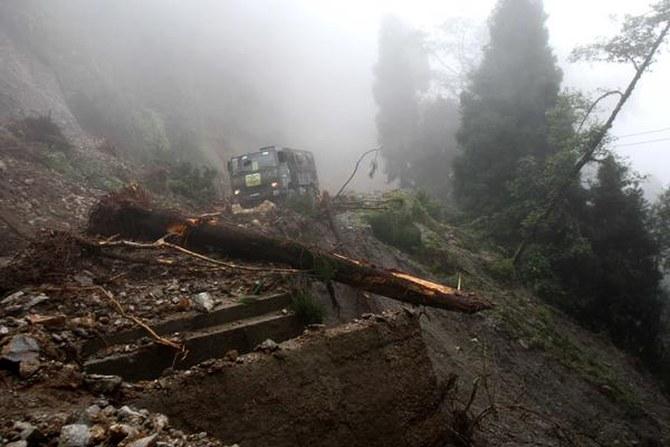
Darjeeling: Landslide toll mounts upto 42; 16 persons missing


One more body was found on Monday night in the landslide-battered Darjeeling district, taking the toll to 42.

The search operation was on to recover more missing persons by Army, NDRF, SSB and other rescue teams.

Meanwhile, preliminary repair work was going on along those parts of the three national highways where damage by landslides was comparatively light, according to Public Works Department sources.

Rescue operations were underway in Darjeeling, Kalimpong and Kurseong sub divisions, where multiple landslides had also washed away highways and damaged homes.

Darjeeling District Magistrate Anurag Srivastava said the landslide-affected people were put up in camps and three such camps were set up in Mirik where 200-250 families have been sheltered.

National Disaster Response Team, Civil Defence personnel and local volunteers were engaged in the rescue work.

Rescue teams from the Sashastra Seema Bal and the National Disaster Management Authority have also been pressed into service.

Though it was not raining on Friday, the sky was overcast.

Rescue was hampered at Mirik on Thursday evening due to a downpour.

The DM said the roads where minor landslips occurred have been cleared while the ones with major landslides, like Siliguri-Kalimpong route, will take some time.

The landslides had caused extensive damage to NH-10 and NH-55, cutting off vital road links to the region.

Toy train services between Darjeeling and New Jalpaiguri also remained suspended following damage to the tracks.

Boulders had rolled down on the tracks at Nimkidara, 2 km from Darjeeling, Darjeeling Station Manager Suman Pradhan said.

Even after the boulders could be removed, tracks were found to be damaged leading to the suspension of the toy train service, he said.

The chief minister on Thursday visited areas in Mirik which were worst affected by landslides, met families of the victims and distributed relief and cheques.

Banerjee reached the affected area taking a detour as the road was damaged by landslides.

Rijiju visited relief camps in Tingling area besides meeting the injured in hospitals.

Tuesday 7 July 2015

http://www.thehindu.com/news/national/other-states/darjeeling-landslide-toll-increases-to-40-16-persons-missing/article7382673.ece

continue reading

Cyprus: Working together for Missing Persons


The European Commission recently organised an event to mark the EU’s important contribution to the Committee on the Missing Persons (CMP) in Cyprus and to acknowledge the importance of the work carried out by the young Greek Cypriot and Turkish Cypriot scientists working there.

Since 2006, the EU has supported the CMP efforts with a financial contribution of €14.7m.

According to an announcement on the happening, opening remarks at the event were made by Normunds Popens, Deputy Director General in the European Commission, Cihan Sultanoglu, Director of the UNDP Regional Bureau for Europe and the CIS, and the three CMP members, Paul-Henri Arni, Nestoras Nestoros and Gülden Plümer Küçük.

During the event the video ‘The faces of the CMP’ was screened, in which the scientists reaffirmed their strong commitment to the project.

All the speakers highlighted the CMP’s very important work as one of the most successful confidence building measure helping to cope with a painful chapter of the history of Cyprus and fostering cooperation.

Since 2006, the work of CMP helped in the return of the remains of 595 missing persons to their families.

The CMP’s humanitarian mandate contributes to providing relief to the families of missing persons and to build trust and confidence amongst Cypriots, paving the way towards reconciliation in Cyprus. The European Commission stands ready to continue its support to this project.

The CMP was established in April 1981 by agreement between the Greek Cypriot and the Turkish Cypriot communities under the auspices of the UN. This bi-communal committee has the mandate to establish the fate of missing persons without attributing any responsibility for the cause of death.

In order to further improve the trust between the two communities, the project aims to increasingly involve the families of the missing persons in the implementation, adding events all over Cyprus and abroad to the information sessions already carried out in schools.

Tuesday 7 July 2015

http://in-cyprus.com/working-together-for-missing-persons/

continue reading

Hospital workers selling organs of dead bodies for high prices in Uttar Pradesh


In a shocking revelation, the employees of the post-mortem house at the medical college hospital in Uttar Pradesh's Meerut town, about 450 kilometres from here, were found to be "selling" organs of the dead bodies, which were sent there for conducting autopsies.

It was found that the organs were sold to the "tantriks" (exorcists) and practitioners of occultism for hefty prices. A sting operation, conducted by a resident of the town, unearthed the shameful and shocking trade.

Kapil Kumar, who conducted the sting operation, said that the employees at the post mortem house auctioned the organs of the dead bodies to the tantriks and occult practitioners. "The organs were sold to the highest bidders," Kumar said.

He said that the "hearts" of the dead bodies were in great demand and fetched the highest price.

Kumar also said that the employees told him that the "organ trade" was in the knowledge of the senior officials and the doctors. "The money goes to all," Kumar said quoting one of the employees, who, sold him an organ.

As the sting operation video went viral, the district authorities went into a tizzy. A magisterial inquiry was later ordered into the matter. "It is a very serious issue...a magisterial probe has been ordered...we will take stern action against any one found guilty," district magistrate Pankaj Yadav said.

Exorcism was quite common in parts of the state and could be witnessed at some of the ghats of the Ganges at Varanasi and at places Gorakhpur, Mirzapur and some other districts.

There have been reports of sacrifice of little children by the "tantriks" to attain "supernatural" power or trace some hidden treasure.

Tuesday 7 July 2015

http://www.deccanherald.com/content/487543/organs-dead-bodies-sold-high.html

continue reading

Tunisia recovers bodies of Italy-bound migrants


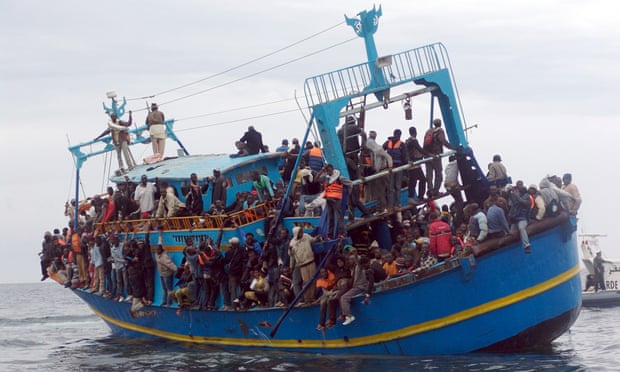
Tunisian coast guards recovered the decomposed bodies of five migrants who apparently drowned at sea as they sought to reach Italy from conflict-hit Libya, an official said on Monday.

The bodies of the African migrants were spotted Saturday afternoon off the coast of Ben Guerdane in southern Tunisia, said the civil defence official.

The report came after coast guards on Sunday rescued 17 Tunisians who had been trying to make their way to Europe on a rubber dinghy, according to the defence ministry.

The boat broke down off the northern coastal town of El Haouria, a spokesman said.

Tunisian and Italian authorities have been at the forefront of rescue efforts for a flood of mainly African migrants fleeing conflict in Libya and bound for Europe on unseaworthy boats that run into trouble.

In June, Tunisia's navy rescued 356 migrants, mainly Africans but also including Syrians and Pakistanis who had left Libya on a makeshift vessel on their way to Europe.

People smugglers have taken advantage of the chaos gripping Libya since the 2011 uprising toppled dictator Moamer Kadhafi to step up their lucrative smuggling business.

But the Mediterranean crossing is perilous and hundreds of migrants have died trying to reach Europe this year alone, while more than 20,000 have reached Italy since the beginning of the year.

Tuesday 7 July 2015

http://www.thelocal.it/20150707/tunisia-recovers-bodies-of-italy-bound-migrants

continue reading

First victims of deadliest migrant shipwreck given funeral in Italy


Italy held a funeral service on Tuesday for 13 migrants who died in the worst shipwreck in the Mediterranean in recent history, while the navy continued its search for other victims of the disaster.

More than 700 people, most of them locked below deck, were believed to have drowned in April. Their overloaded fishing boat capsized after colliding with a ship that had come to their aid some 70 nautical miles off the coast of Libya.

The Italian navy last week retrieved the first bodies from the wreck, which is lying at a depth of about 370 metres (1,200 feet), using remote-controlled vehicles and a submersible basket to haul up the remains.

With the recovery mission still in full swing, simple wooden coffins carrying the bodies of 13 unidentified migrants were carried into the Palazzo della Cultura in Catania, in eastern Sicily, for an inter-religious service.

"Today, we are gathering here to mark the loss of the lives of other human beings, taken away by the sea. Every time it happens we think it is the last time, but unfortunately that is not the case," said Ismail Bouchafa, the imam of Catania.

The bodies were later taken to Catania cemetery but were not immediately buried. The authorities are still deciding where all the victims should be interred.

Tens of thousands of migrants have crossed the Mediterranean so far this year in the hope of reaching Italy or Greece. An estimated 2,000 have drowned.

Tuesday 7 July 2015

http://uk.reuters.com/article/2015/07/07/uk-europe-migrants-italy-idUKKCN0PH10920150707

continue reading

Philippine National Police fails to identify one of 74 Kentex fatalities


One of the 74 victims who died in the Kentex fire last May 13 remained unidentified as the Philippine National Police Crime Laboratory failed to gather DNA samples to identify the body tagged as victim No. 35 that was extracted from the gutted factory in Valenzuela City.

“We have exhausted all means of identification. This is conclusive. One of the 74 victims is unidentified and that’s our findings. We cannot extract DNA from victim No. 35 therefore, we cannot identify him,” Senior Superintendent Emmanuel Aranas, PNP Crime Laboratory acting director, said in a press briefing on Tuesday.

But last June, Kentex Disaster Victim Identification team composed of Crime Laboratory personnel went back to the scene for a final search for the remains of two more victims.

The reinspection yielded the remains of Jony Descallar and Marvi Marcelino. They were added to the previous count of 72 victims in the deadly fire that struck the rubber slippers factory owned by Kentex Manufacturing Corp.

Marcelino and Descallar were added to the 68 victims who were identified through DNA test while three others were physically identified. “Overall, there were 28 male and 45 female victims, with one unknown gender,” Aranas said.

During the final search conducted on June 11, 19, 20 and 22, the DIV team gathered small pieces of bone remnants from different sites of the second floor of the building.

“A fragmented tibia bone was also recovered from the second floor far opposite where most of the burnt bodies were recovered, a strong indication that this could belong to another individual,” Aranas said.

The bodies of Descallar and Marcelino were then identified when the remnants were matched with the DNA samples from the buccal swab samples of their relatives.

“We insisted na kahit dangerous ‘yung area ay nag-search ulit kami right after maalis yung mga nakaharang na debris para ma-identify lahat ng victim,” Aranas explained.

Aranas said that the crime laboratory has coordinated with the Valenzuela City government about the two recently identified fatalities so that death certificates may be issued to their relatives.

While there remains one unidentified victim, Aranas said the DVI team were also not able to identify the relative of one of the 74 claimants. He explained that they cannot simply assume that the unidentified remains would belong to the remaining claimant.

Asked if it would be possible that Victim No. 35 is the relative of the claimant, Aranas said: “Yes, it’s possible. But based on our international system policy, we have to positively identify the victim first through scientific means. We can’t just assume that the claimant is a relative of the unidentified victim.”

This also means the claimant will not be able to avail the benefits as he has no death certificate of a relative to present.

No other means

With the failure to identify his/her remains, Victim No. 3 will remain interred at the Arkong Bato public cemetery in Valenzuela City. “‘Yung skull niya ay masyado nang nasunog. Wala na kaming makuha in any part niya na viable for DNA extraction,” Aranas said.

Asked if there are no other means to identify Victim No. 35, Aranas said: “Yes, but we exerted all our efforts.” He said the DVI had attempted to recover “even the smallest property like a piece of jewelry if she’s a female” of the said victim.

“It was very unfortunate na wala na talaga kaming makuha na pwedeng i-connect sa Victim no. 35,” he said.

But Aranas explained there is an existing law that says that a person may be legally declared dead after five to seven years despite the absence of his remains proving his death.

Tuesday 7 July 2015

http://newsinfo.inquirer.net/703541/pnp-fails-to-identify-one-of-74-kentex-fatalities

continue reading

Families urged to report relatives suspected killed in Hercules crash


The North Sumatra Police’s Disaster Victim Identification (DVI) team has called on people to report to the authorities any relatives feared to have died in a military plane disaster last week.

The team asked families to report to the ante mortem post at Bhayangkara Hospital on Jl. Wahid Hasyim in Medan to help identify 10 remaining bodies and 22 body parts collected from the crash site.

The team chairman Sr. Comr. Setyo Purwanto said that the team had collected DNA from the 10 bodies and the 22 body parts to be matched with DNA collected from family members.

“If the families of the victims do not report to the ante mortem post, the 10 bodies and 22 body parts cannot be released,” Setyo said at the hospital on Monday.

In that case, he said, the bodies and body parts would be kept in cooling crates at the hospital.

Family members were also needed, Setyo said, so that their DNA could be matched with the DNA of the human remains.

Setyo also called on the families to bring documents, such as certificates or unwashed clothes, belonging to missing relatives.

Certificates belonging to the victims, he said, would be needed to be matched with the post mortem data taken from the bodies of the victims, while unwashed clothes were needed to check victims’ DNA.

Since the remaining bodies and body parts were moved from Adam Malik Hospital to Bhayangkara Hospital on Saturday, there have been no reports of missing people.

Setyo revealed that 119 people killed in the crash had been identified. Of them, 114 were the bodies of passengers on board the Hercules C-130 aircraft, while the remaining five identified victims had been on the ground.

Of the 114 bodies belonging to the passengers of the plane, 83 have been flown to different parts of Indonesia; the remaining 31 victims were residents of North Sumatra. All have now been buried by their families.

Flights carrying bodies from a hangar at Soewondo Air Base in Medan ceased on Saturday, but the Air Force said it would re-open the hangar if necessary.

“If more bodies are identified and have to be send to their respective families soon, then the Air Force is ready to fly them at any time,” said the commander of Air Force Operation Command I, Air Vice Marshal Agus Dwi Putranto.

The aircraft crashed into a residential area on Jl. Jamin Ginting, near Polonia Airport in North Sumatra’s capital of Medan, shortly after taking off from the Soewondo Air Base last Monday.

All crew and passengers perished in the crash, and the plane also crushed a number of buildings.

Compensation claims, meanwhile, have begun to be filed by the owners of properties damaged in the accident.

The owner of the Beraspati hotel, Suwondo, said he had suffered financial losses of some Rp 100 million from damage caused by the aircraft.

Earlier, Air Force Chief Marshal Agus Supriatna said that his office would compensate all damage to buildings and other property, including cars, caused by the Hercules crash.

Tuesday 7 July 2015

http://www.thejakartapost.com/news/2015/07/07/families-urged-report-relatives-suspected-killed-hercules-crash.html

continue reading

Darjeeling landslides: Rescue operations nearing end


Rescue operations in landslide-hit Darjeeling hills in West Bengal may be over in another two-three days, an official said here on Tuesday.

"We are apprehensive that more bodies can be recovered in the ongoing rescue operations and it may be over after two-three days," officer-in-charge of the district disaster management cell Anindya Sarkar said.

He said a favourable weather in the hills is aiding the rescue operations.

Thirty-five bodies have been recovered till Tuesday noon. Eight people are still missing.

However, several sections of NH-10 connecting Gangtok and Siliguri have been damaged and some time would be needed for repairing them.

The damage is critical especially in Sheti Jora, around 7.5 km away from Siliguri on NH10, where another landslide has been predicted in the ongoing monsoons.

"It will take time to restore the road (NH-10) and until the monsoons are over the situation may not improve," an official in the district cell had said earlier.

However, the official said that the vehicles are plying under risky conditions in some pockets of the highway.

The General Reserve Engineering Force is carrying out the highway restoration and repair works.

The National Disaster Response Force (NDRF), the Sashastra Seema Bal (SSB), the state disaster management department and the Army are jointly carrying out the rescue works.

Tuesday 7 July 2015

http://zeenews.india.com/news/west-bengal/darjeeling-landslides-rescue-operations-nearing-end_1626068.html

continue reading

Monday, 6 July 2015

Malaysia buries another 24 human trafficking victims


Malaysia provided Muslim burials Monday to 24 human trafficking victims, bringing to 99 the total number of suspected Rohingya and Bangladeshi migrants laid to rest after bodies were found near the Thai border.

Noh Dahya, Islamic Religious Department director in northwest Kedah state, was cited by state news agency Bernama as saying that the seven remaining victims out of the 106 discovered last month would be buried after the Eid ul-Fitr holiday.

Eid ul-Fitr comes at the end of the holy month of Ramadan, and is expected to fall on July 17 this year.

On June 9, police said they had recovered the remains of 106 suspected human trafficking victims from gravesites found in the town of Padang Besar along the country’s northern border.

The rituals held in the early hours of Monday morning were the fourth round of burials, and saw the remains of 24 male victims interred in a single gravesite.

The first burial of trafficking victims was held June 21, when nineteen men and two women were laid to rest in two separate graves, with the rituals attended by residents of Kampung Tualang and other villages.

The remains of 30 other victims were buried June 29, followed by another 24 on July 4.

Police chief Khalid Abu Bakar had earlier said that security forces usually did not patrol the hilly border area where the bodies were found, but began to focus there after Thai police discovered dozens of bodies belonging to Rohingya and Bangladeshi migrants in May.

Following the discovery of human trafficking camps in southern Thailand in early May, authorities launched a crackdown that led to smugglers fleeing and boatloads of migrants then turning up on Thai, Indonesian and Malaysian shores, while thousands more remained at sea.

Since a tri-nation conference on the Southeast Asian boat people crisis May 20, Indonesia and Malaysia have said they will take the Rohingya in for one year, ascertain which are asylum seekers and which are economic migrants, and then the international community will find homes for them.

Monday 6 July 2015

http://news.videonews.us/malaysia-buries-another-24-human-trafficking-victims-0627388.html

continue reading

12 dead in China factory collapse 

Br> Twelve people died after a shoe factory collapsed in eastern China during a weekend shift. More than 30 persons were injured, officials said Sunday.

Three other people were missing in the collapse in the Zhejiang province city of Wenling, and nine people escaped.

Rescuers pulled 42 people from the rubble and sent them to a hospital, where nine of them died, the Wenling city government said on its microblog. They pulled two bodies from the wreckage on Sunday.

The cause of the accident is under investigation.

More than 50 workers were in the building in the city of Wenling in Zhejiang province when it came down on Saturday afternoon, state-run China Central Television (CCTV) and the official Xinhua news agency reported.

Thirty-three suffered injuries, four of them serious, the report said. Nine others escaped and three were unaccounted for.

Xinhua said earlier the cause of the collapse was being investigated.

Photos circulating on Chinese social media showed a man being carried on a stretcher by what appeared to be police officers, while rescuers and other personnel stood on top of the rubble.

Building collapses and other industrial accidents are not uncommon in China, where many structures and facilities are old, safety procedures can be lax and rebuilding has not kept up with the country’s remarkable economic growth.

China’s top safety watchdog in May blamed poor construction and weak safety standards for a fire at a nursing home that left 38 people dead. In April, almost 30,000 people were evacuated after a fire broke out in a Chinese chemical plant which blazed for nearly 50 hours before the flames were finally extinguished.

And in November, a fire at a coal mine in northeastern China killed 26 workers, in one of the country’s most highly accident-prone industries.

Monday 6 July 2015

http://www.arabnews.com/news/772156

continue reading

Colombia to exhume Medellin graves: official


Colombian authorities will this month begin the grisly task of carrying out what could be the largest exhumation of unmarked graves in the conflict-torn country's history, local media reported Sunday.

Caterina Heyck, who is overseeing the operation for national prosecutors, told El Tiempo newspaper that the exhumation would begin July 27 in the Commune 13 neighborhood of Medellin.

Investigators believe this area in Colombia's second city has a large number of corpses of people killed in the country's decades-long conflict.

Heyck said the process would be "complex" because investigators would need to match any eventual DNA samples to those given by relatives of missing people.

The South American nation is still in the grips of a half-century civil war that has drawn in left-wing guerrillas, right-wing paramilitaries and drug gangs at various times, killing more than 220,000 people and uprooting as many as six million.

There is no official number of missing people, though estimates put the figure at between 15,000 and 20,000.

According to Heyck, Colombia has previously exhumed 5,958 bodies throughout the country, of which 3,224 have been returned to families.

The government opened peace talks in November 2012 with the largest rebel group, the Revolutionary Armed Forces of Colombia (FARC).

It has also started talks with another leftist guerrilla group, The National Liberation Army (ELN).

Monday 6 July 2015

http://news.yahoo.com/colombia-exhume-medellin-graves-official-183434965.html

continue reading

Philippine ferry death toll rises to 61


The death toll from a ferry that capsized in Ormoc City has risen to 61, the coast guard said Sunday, indicating that the vessel was overloaded.

Whether the ferry was carrying too many people will be part of an investigation into last week’s disaster that saw the boat’s owner and crew charged with murder.

Coast guard figures released on Sunday showed 61 people had died when the wooden Kim Nirvana capsized, with at least 145 listed as survivors.

This would mean at least 206 people were on board, exceeding the 194 passengers and crew the boat was authorised to carry.

The heavy cargo the ferry was transporting may also have played a role, authorities have said.

'The number of bodies is more than we expected,' said Captain Pedro Tinampay, the regional coast guard chief, refusing to speculate how many might still be missing.

Only 173 passengers and 16 crew were listed on the boat's manifest.

The crew have been accused of reckless behaviour, with an initial police investigation and interviews with survivors indicating the vessel turned abruptly causing it to capsize.

The police investigation is separate from a coast guard enquiry, which will primarily determine the cause of the mishap. However, the coast guard may also recommend criminal and administrative charges.

On Sunday, a coast guard search and rescue vessel transported the bodies of 42 residents of Camotes - where the ferry had been heading - back to their island home for burial.

The bodies were ferried by the Coast Guard’s BRP Batangas.

Relatives watched gravely as rescue personnel carried dozens of white coffins onto the ship.

The Kim Nirvana, which has been lifted out of the water with a crane, lay on a ramp in the background.

As well as passengers the boat had also been transporting sacks of cement, rice and fertiliser which would have weighed as much as 7500 kilos.

Pilar Mayor Jesus Fernandez Jr. said the whole town is in mourning because 39 of those killed were residents of Pilar.

The Public Attorney’s Office also reached out to the families of the victims.

In a text message, PAO Chief Persida Rueda-Acosta said the District Office of PAO in Ormoc will provide legal assistance to the victims and their families.

Monday 6 July 2015

http://www.manilatimes.net/toll-from-ferry-disaster-hits-61/197828/

continue reading

Saturday, 4 July 2015

A combination of factors blamed for mass deaths during Pakistan heatwave


A deadly combination of factors, including poor urban planning, a crippled energy infrastructure, climate change, Ramadan, and freak weather conditions, has led to the unprecedented deaths of more than a thousand people in a Pakistani heat wave.

More than 65,000 people suffered heatstroke during the two-week heat wave, which started on June 19 and has just subsided — the majority of which were in Karachi, the country's largest city. The total number of dead is around 1,300, according to the provincial government of Sindh, where Karachi is located.

The number of bodies was so high and the heat so intense that morgues ran out of space and bodies had to be buried without being identified.

The temperature in Karachi hit the second highest ever recorded — 109 degrees Fahrenheit. Compounding that was the mysterious cessation of a breeze that usually flows in from the Arabian Sea coast, thanks to low pressure out at sea, which has been blamed on climate change.

Dr. Muhammad Hanif, the director of the national weather office Pakistan Meteorological Department (PMD), told VICE News that recent weather in Karachi had been "extraordinarily hot," like nothing ever seen before.

"Along the coastline the sea wind normally blows for 10 months, which keeps Karachi weather more moderate, but this year in June, a hot month, suddenly the sea wind stopped," he said. "This was really dangerous and alarming, and we have no idea why this happened."

It could be because of global warming, said Hanif, which has had a major impact in Pakistan over the last 10 years. "In the past 10 years the winter season was reduced from 115 days to 80 and the hot weather season was extended from 150 days to 180," he said. "It is a major change in the ecosystem which means in future the nation may face more heat waves like Karachi or the storm in Peshawar in April which left 44 dead."

The heat wave disproportionately affected Pakistan's poorest residents, many of whom work outside and are unable to take days off regardless of weather conditions or sickness. The homeless face even greater risks.

Anwar Kazmi, spokesman for the major Pakistani charity Edhi Foundation, said the organization had buried 150 unidentified bodies. Officials believe many of them were homeless.

"An unidentified body is generally kept at the morgue for at least 20 days, but because of the overwhelming inflow at the facility and the condition of the bodies, the deceased are being buried sooner," said Kazmi. "We [had] a space crunch in the Edhi morgue [and] a shortage of rescue workers who [could] prepare dead bodies for a funeral."

Karachi cemetery worker Gul Pasha outlined burial issues while speaking to VICE News.

"Due to the sudden and high number of dead in Karachi, people are facing problems [organizing] funeral prayers and also in finding space for the graves," he said.

The Edhi Foundation's Karachi director Mohammed Bilal told the BBC he had never seen so many people suffering heatstroke in 25 years working as a charity worker transporting casualties. "The bodies just kept coming from all over the city," he said. "Over... eight days, we received 900 bodies. We had to turn away so many families," he said.

Most of those who died or were treated for heatstroke were people who were fasting for Ramadan, said Jawaid Shaikh, a doctor at Karachi's Civil Hospital. The heat wave started two days after the start of Islam's holy month, during which Muslims do not consume food or water from dawn to dusk.

Various religious leaders appeared on media urging people to break the fast if they felt unwell. "We [religious scholars] have highlighted on various television channels that those who are at risk, especially in Karachi where there is a very serious situation, should abstain from fasting," prominent Islamic cleric Tahir Ashrafi told Australian news network ABC.

Environment expert and activist Major Abid Hussain said that the number of deaths was avoidable, even with the extreme weather occurring during Ramadan. He blamed the government and Pakistan's failing energy network.

"Karachi is a bad example of unplanned construction which lacks basic facilities," he said. "So then when people suffer from heat stroke it causes so many deaths. It is alarming and the Pakistani government and people need to learn from this disaster and take sufficient steps to meet the challenge of climate change."

Environment expect Moazam Khan from the World Wide Fund for Nature said the government and energy companies were to blame. "This disaster is due to the lack of ability to respond [adequately]," he claimed. His mother, aged 61, died from heat stroke "despite of all facilities available in my home. My air conditioning wasn't working due to the lack of electricity," he said.

Pakistan has suffered massive electricity shortages for years, with blackouts and load shedding — where the electricity supply is deliberately cut off in certain areas to avoid a total system shutdown during periods of high demand — have become common. But turning off electricity during a heat wave can be fatal, because it cuts off fans, AC, and medical facilities.

Even before power outages, many hospitals in Pakistan are desperately overstretched and lacking in basic facilities. Khan added that the huge influx in extra patients during the heat wave had left Karachi's hospitals unable to cope.

Abdual Salam's brother Adbudal Kram, 50, died of heat stroke. Salam said his brother was fasting "and suddenly he became unconscious. We took him to the nearby hospital, where I saw a terrible situation. The hospital didn't have enough facilities to treat the patients."

Another man, Imran Khan, told VICE News that everyone was suffering in his Karachi neighborhood. His whole family had become ill when the electricity was cut off, he said.

"The fan was not available for many hours in our home. My sister died and my brother Naseer Khan is being treated and still suffering," he said.

Sindh's provincial government was criticized for responding very slowly to the unfolding crisis, reported the BBC. But it in turn blamed the federal government and Karachi's private electricity company, K-Electric, for cutting off power during the crisis.

A K-Electric spokesman told VICE News that "due to the increase in consumption there was a failure of electricity in Karachi." Electricity had now been restored, he said.

The PMD has warned that a fresh heat wave is likely to hit Karachi next week. Temperatures are expected to again reach 107 to 109 degrees.

Touseef Alam, former chief meteorologist of the PMD in Karachi, told VICE News "the intensity of the fresh heat wave could be similar to the prevailing one. Relief efforts should continue with the same pace even if the city receives rain."

Saturday 4 July 2015

https://news.vice.com/article/ramadan-and-power-outages-blamed-for-mass-deaths-during-pakistan-heatwave

continue reading

Nepal: ICRC presents TUTH morgue refrigerator for additional body storage


The International Committee of Red Cross (ICRC) has handed over an external refrigerator unit to the Tribhuvan University’s Forensic Medicine Department.

Deputy Head of ICRC Delegation in Nepal Alfredo Mallet handed over the facility to Dean at the Institute of Medicine of Tribhuvan University Prof Dr Rakesh Kumar Shrivastav amid a function on Friday.

“It is a serious matter how the bodies are dealt, as it can have a profound impact and long-lasting effect on the mental health of survivors and communities. Proper identification of a dead body significantly reduces the anxiety of the deceased person’s relatives,” Mallet said.

The new facility provided by the ICRC, with support from the Japanese Red Cross Society, now doubles the storage capacity of bodies of the TU Teaching Hospital which has been overwhelmed by a high number of bodies being brought in for examination and identification daily.

Saturday 4 July 2015

http://www.ekantipur.com/2015/07/04/national/icrc-presents-tuth-morgue-refrigerator/407400.html

continue reading

India: Mira-Bhayander’s forests a dumping zone for bodies


The long isolated stretches with forested areas on the Mumbai-Ahmedabad national highway and Ghodbunder Road is turning into a 'dumping zone for bodies of people killed.

While the killers dump the bodies confident that the murder will remain unsolved, almost 95 per cent of the cases have been cracked by the cops. The body of Franshela Vaz (8), a resident of Airoli was dumped in the jungles of Gaimukh on the Ghodbunder Road in Thane on June 29. The killer Clarence Fonseca, the victim's uncle was arrested on Friday.

"We have been patrolling on the isolated stretches of the national highway but it is practically impossible to keep a watch on such a huge zone," said Mira-Bhayander Deputy Superintendent of Police (DYSP) Suhas Bawche. He said that the killer dumps the body in isolated areas to avoid being caught, but end up leaving behind some clues.

The forested stretch on the national highway begins from Dahisar and stretches to Gujarat and Indore. Instances of dumping bodies takes place along the highway.

Beheaded and decomposed bodies are discovered by locals and tribals who venture into the dense forests. The process of identifying a body takes a while, by which time the killer thinks he/she has gone scot free, said a police officer. The identification of the body becomes difficult due to its decomposing nature. However, once the body is identified, nabbing the criminal is just a matter of time, say the cops.

In most cases, the killer randomly chooses the spot where the body is to dumped. While few of the killers nabbed had prior knowledge about the topography of the location, in most cases, the murderer simply dumped the body in whichever isolated location the killer first discovered, said a police officer.

The bodies are dumped in the wee hours and in most cases, the murderer is confused about the spot where the body was dumped. In the Airoli case, police said that Fonseca was picked up from his Mira Road home on Thursday but it took him several hours to find the exact spot where he had dumped the body.

Saturday 4 July 2015

http://timesofindia.indiatimes.com/city/mumbai/Mira-Bhayanders-forests-a-dumping-zone-for-bodies/articleshow/47932390.cms

continue reading

Flashback: DC3 crashes in Kaimai Ranges in 1963


The sound of 23 deaths was like the distant closing of a door.

Flight 441, on a slow jaunt from Auckland to Wellington, had slammed into a rock wall in the Kaimai ranges at 140kmh, exploded, and tumbled down the rock face.

All on board on July 3, 1963 - 52 years ago - died.

It was and remains the deadliest plane crash on New Zealand soil.

Norman Morris was among the dead.

On the 50th anniversary of the accident, his daughter Joanne Fitzsimmons remembered the day she returned from school to find her mother waiting at the gate.

She was five years old and the weather was awful.

"I can remember going inside and seeing all these worried faces and concern.

"The plane was only missing at that point and all we could do was sit around the radio and listen and wait."

She was too young to attend the funeral.

National Airways Corporation (NAC) flight 441 had taken off from Whenuapai airport in north-west Auckland at 8.05am that morning.

The DC3 - a veteran of World War II - was scheduled to stop at Tauranga, Gisborne, Napier, and Palmerston North, before eventually arriving in Wellington in the early afternoon.

It was an era when people dressed up for air travel.

Their best clothes would soon be scattered among wreckage.

At 9.06am Tauranga air traffic control was in contact as the plane began its descent.

Workers at a quarry at Gordon, between Te Aroha and Matamata, heard it pass low overhead.

Then there was the sound, compared to a door banging shut far away.

Bad weather and rough terrain meant it was almost 48 hours before the plane was found.

The impact and fire was so bad that a pathologist was needed to identify the charred, blackened remains ot the 20 passengers and three crew.

An investigation into the crash found that while weather in Auckland and Tauranga that day was not too bad there was an easterly gusting to 150kmh between the two.

In zero-visibility, with dodgy radio compasses, the pilots were effectively flying blind.

Pilot Len Enchmarch and first officer Peter Kissel likely thought they tracking down the eastern slopes of the Kaimai ranges but they were in fact further west.

Investigators came to the conclusion the plane was descending and turning for its run into Tauranga but got caught in powerful down draughts and got slammed into the rock face.

Tauranga air traffic control called again at 9.14am - eight minutes after the first call - but there was no reply. There was effectively no plane.

Apart from the 23 dead, the crash would go down in New Zealand aviation history as the first time helicopters were used in a search and recover operation in this country.

Aviation historian Richard Waugh, who has written a book on the tragedy, said news of the crash dominated newspaper front pages for about five days.

New Zealand's post-war optimism was shattered by "this great tragedy" in a normally reliable DC3 being flown by our national carrier.

"It really was quite appalling. It just literally hit a rock face."

In recent years he has clambered to the crash site.

He drove most of the way but the last few kilometres were a steep and wintry walk almost 1km above sea level. The final descent was down ropes.

The fuselage was gutted in 1963 but the wings were flung free.

The bodies have long since been removed but the rugged terrain meant some wreckage remains, some buried in deep undergrowth, to this day.

For 15 years it was New Zealand's worst air disaster.

That record was shattered when Air New Zealand flight TE901 slammed into the side of Antarctica's Mt Erebus, leaving a smudge in the snow and 257 dead.

That day, November 28, 1979, flight 441 became our worst ever air disaster on domestic soil, Waugh said.

"Hopefully that will be the case for a long, long, long time."

New Zealand's Worst Air Disasters

Nov 28, 1979 - Air New Zealand DC10 crashes on Mt Erebus in Antarctica, killing all 257 passengers and crew.

July 3, 1963 - NAC DC3 crashes in the Kaimai Ranges, 23 dead.

Mar 18, 1949 - NAC Lodestar crashes on approach to Paraparaumu, 15 dead.

1942 - Liberator bomber crashes near Whenuapai, 14 dead.

Aug 21, 1944 - Two Lockheed Hudson bombers disappear, 14 dead.

Oct 23, 1948 - NAC Lockheed Electra crashes on Mt Ruapehu, killing 13.

Jan 7, 2012 - 11 die when a hot air balloon plunges to the ground in flames near Carterton. Two who died tried to leap to safety.

Aug 8, 1989 - Britten-Normander Islander crashes between Milford Sound and Wanaka, 10 dead.

May 12, 1988 - Piper crashes into hills near Whanganui, killing nine.

Oct 25, 1993 - Nomad 23 crashes near Franz Josef Glacier, nine dead.

Sep 4, 2010 - Fletcher FU24 crash kills nine people near the Fox Glacier airstrip.

Saturday 4 July 2015

http://www.stuff.co.nz/dominion-post/news/69898789/flashback-dc3-crashes-in-kaimai-ranges-in-1963

continue reading

ICMP joins forces with missing persons organization CADHAC in Mexico


From 8 to 11 June, ICMP Director-General Kathryne Bomberger and Deputy Director of Forensic Sciences Adi Rizvic were in Monterrey, the capital of the state of Nuevo Leon in northern Mexico, to take part in a series of activities with the NGO, Citizens in Support for Human Rights (CADHAC).

CADHAC was founded in 1993 to help people who have been wrongfully imprisoned, and to offer assistance to families of the disappeared. It has developed an innovative operating method that brings together families of victims, civil society and the authorities. Over the last 20 years, CADHAC has been able to change the way the issue of the missing is viewed in Nuevo Leon – by the police, prosecutors, judicial authorities and the general public – and as a result more systematic and effective ways of investigating disappearances and prosecuting those responsible have been introduced.

Since 2014, ICMP and CADHAC have been preparing a missing persons initiative together with family groups and other NGOs and the Attorney General’s office in Nuevo Leon. During the June visit CADHAC and ICMP reviewed ways to cooperate in promoting the development of institutional capacities and activities that will sustain cooperation among government agencies, civil society and families of the missing in Nuevo Leon.

Ms Bomberger and Mr Rizvic participated in workshops to discuss the design and application of a database that will bring together all relevant information on missing persons (including genetic data). This database approach has been crucial in ICMP’s successful efforts to help the authorities in other countries account for large numbers of missing persons. ICMP’s unique Identification Data Management System (iDMS) can be adapted for use in different countries and circumstances. Both CADHAC and ICMP have developed an approach that stresses the need to empower families of the missing so that they can make their case effectively to the political authorities. ICMP has consistently argued that missing persons cases – including those involving very large numbers of people – must be viewed in a rule-of-law rather than a strictly humanitarian context, which means focusing energy on investigating disappearances and ensuring access to justice for the families of the missing.

Speaking at a press conference in Nuevo Leon, Ms Bomberger said the Mexican authorities could derive a number of benefits from cooperation with ICMP. “We have the experience and capacity to assist countries in identifying thousands of missing persons cases, and we maintain the highest standards of data protection.” She stressed that tackling the missing persons issue is not simply a case of comparing genetic data: it is a complex challenge that requires a complex solution. “Enforced disappearance has political, economic and emotional aspects; it’s not just a matter of establishing a laboratory for genetic identification. You have to facilitate identification and at the same time you have to secure the rights to justice and truth, and that means engaging the state.”

Ms Bomberger and CADHAC’s Director, Sister Consuelo Morales, expressed the hope that a successful missing persons pilot initiative in Nuevo Leon can establish operating procedures that could be applied throughout Mexico.

The need for such a process has been repeatedly pointed up in gruesome fashion in recent months as Mexico has struggled with a horrific upsurge in enforced disappearances. The abduction of 43 students in the state of Guerrero in September 2014 attracted worldwide attention. The case revealed a culture of close cooperation between the local political establishment and criminal gangs, apparently with the connivance of police. It has been viewed as a microcosm: more than 26,000 persons are estimated to have disappeared in Mexico in the last decade.

The treaty signed in Brussels last December, which granted ICMP the legal and administrative status of an International Organization in its own right, means that it now has greater latitude to operate in different parts of the world. “I believe ICMP’s cooperation with CADHAC in Mexico can establish a pattern that can be applied in other countries,” Ms Bomberger said. She added that ICMP is developing an online database function that will make it possible to register and process missing persons information from multiple geographical sources.

Saturday 4 July 2015

http://www.ic-mp.org/news/icmp-joins-forces-with-missing-persons-organization-in-mexico/

continue reading

Funerals of 136 Bosnian victims to mark anniversary


This year’s 20th anniversary of the Srebrenica massacre will be marked by the burial of 136 victims identified over the past year, an official said on Friday.

The Institute for Missing Persons said 160 corpses from the 1995 massacre of 8,000 Bosnian Muslim men and boys by Bosnian Serb paramilitaries had been identified since last year’s July 11 anniversary.

The youngest is a 16-year-old boy of mixed Muslim-Serb parentage whose body was recovered from a secondary mass grave. The remains of 17 other under-18s have been identified.

“We have formally identified 136 victims, whose families have declared that they want the remains to be buried on July 11 this year... the identified persons are ready for the collective funeral on July 11," institute spokeswoman Lejla Cengic told Anadolu Agency.

They will be interred at Potocari memorial center.

The families of 24 victims are waiting to bury their loved ones as not all their remains have been found.

In the summer of 1995 Srebrenica was overrun by troops led by Ratko Mladic, currently on trial at The Hague for ordering the killings. Dutch UN peacekeepers watched on as Serb troops herded men and boys from the town to be murdered.

Since the end of the war, hundreds of Bosniak families have searched for missing relatives, most of who were buried in mass graves around the country.

A total of 6,166 Srebrenica victims have been buried at Potocari and a further 230 are buried outside the town.

Friday 3 July 2015

http://www.worldbulletin.net/world/161690/funerals-of-136-bosnian-victims-to-mark-anniversary

continue reading

New mass grave found for victims of NWA Flight 2501


Sixty-five years ago, the worst tragedy in aviation history at that time happened along the shores of Lake Michigan. Northwest Orient Flight 2501 crashed somewhere off the coast of South Haven, killing all 58 souls on board.

Despite efforts by dive crews and sonar experts from (NUMA) National Underwater and Marine Agencyand the (MSRA) Michigan Shipwreck Research Associates, no wreckage of the plane has ever been recovered, and no official cause for the crash has ever been determined.

But an interesting discovery by a cemetery sexton has guaranteed that many of the victims lost in this tragedy will never be forgotten.

The plane crash happened June 23, 1950. Northwest Airlines Flight 2501 was departing La Guardia Airport in New York, preparing for a stop in Minneapolis, Minnesota, before heading to its final destination of Seattle, Washington.

Severe storms were developing over Lake Michigan as Flight 2501 exited the shoreline somewhere between Glenn, Michigan, and South Haven, Michigan.

Sometime after midnight on June 24, 1950, all communication with Flight 2501 was lost, as was with the aircraft itself.

In the days after the crash, the United States Coast Guard began recovery efforts. What they found floating on the water's surface, and washing ashore, was gruesome. No full human bodies were found – only chunks of bodies, along with clothing, suit cases, and some Northwest Airlines seat cushions.

The Korean War began within days after the crash, so the country's attention shifted away from this tragedy.

Recovery efforts would end, and decades would pass, before anybody showed renewed interest in attempting to look for the sunken wreckage.

The 65th anniversary of the crash was last month. Even though no victims were from the state of Michigan, the remains recovered were buried in this state. Until recently, the only known mass burial grave site for victims was at Riverview Cemetery in St. Joseph. That site was found in 2008.

Another mass burial site for 2501 crash victims was discovered in 2015 at Lakeview Cemetery in South Haven. It had gone unrecognized for generations, until two ladies working on a genealogy project happened to stumble upon it.

Mary Ann Frazier and her mother, Beverly Smith, say they were spending some downtime looking up family history in one of the cemetery plot registers.

"We were going through the 'N-Book,' looking for something, when we came across it," said Frazier, who serves as the sexton for Lakeview Cemetery in South Haven. "I was like, 'Mom, you have to come look at this; it says – NWA Flight.'"

Smith responded by saying, "I wonder what this means?"

The curious mother-daughter duo wrote down the plot location and decided to visit the burial site to see if it was marked, but when they got there, they realized it wasn't. They immediately realized that victim's remains from this devastating plane crash had literally been forgotten for more than six decades.

"It's totally amazing to me that it is 65 years later and we're just finding this and connecting everything together," said Smith.

razier and Smith researched the plane crash, and quickly learned that Holland author Valerie van Heest had written a book about the ill-fated 2501 entitled Fatal Crossing.

"And I thought, 'Here's the person we can contact to find out more about this,'" added Smith.

"I always wondered what happened to the human remains that washed ashore on the beaches of South Haven," said van Heest, co-founder of (MSRA) Michigan Shipwreck Research Associates based out of Holland, Michigan. "I was disheartened to realize that the burial site has gone unmarked all these years."

Van Heest says after learning of the newly-found mass burial site, she reached out to family members of the 58 victims to let them know of the discovery and also let them know that plans were in the works to place a marker on the site.

During the process of discovering the site, Frazier and Smith also came across another revelation which happened to be much more personal to both of them.

"My great uncle, Joseph Bartnick, was one of the people who actually recovered body parts," said Smith. "When I opened Valerie's book and saw his picture on one of the pages, I wanted to cry for him because he had to be in a position like that."

Through more research, the women learned that Bartnick was on one of the first Coast Guard recovery boats to go out into the lake after the crash.

Van Heest and the two other women contacted St. Joe Monument Works, who graciously donated a stone to be placed above the burial site. The stone was delivered to the cemetery a few days before the 65th anniversary of the crash.

On Wednesday, June 24, 2015, a remembrance service was held at the grave site. South Haven Mayor Robert Burr, along with Craig Rich from the MSRA, read off all of the 58 victims' names. After each name was read, a bell was rung.

Pastor Robert Linstrom, from Trinity Lutheran Church in Grand Rapids, and van Heest each offered separate messages to the more than 50 people who came out to pay their respects.

Near the end of the service, Willis Dotson played taps.

"Fifth-eight people's remains may be buried there," said van Heest. "I feel things are working to put a final closure to this accident."

Van Heest says she's currently wrapping up her 12th consecutive year of scouring the bottom of Lake Michigan, searching for the wreckage of Flight 2501.

She added that her crew recently picked up an interesting target on sonar, and they will soon have divers explore it.

The ultimate hope is that one day the plane will be found, but until that day comes, more victims of the tragedy can rest in peace knowing that after 65 years, they have finally been found.

Currently, there's an exhibit on display at the Michigan Maritime Museumin South Haven dedicated to the crash of Flight 2501.

Friday 3 July 2015

http://www.wzzm13.com/story/news/local/lakeshore/2015/07/02/mass-grave-south-haven-northwest-airlines-flight-2501-valerie-vanheest/29616925/

continue reading

Friday, 3 July 2015

IOM hails efforts to raise migrant death ship off Libya's coast


Migrant arrivals in Italy have topped 20,000 for each of the last two months, reports IOM as 2015 reaches its midpoint.

Approximately 2,900 migrants were rescued at sea in the channel of Sicily in the last 48 hours. The operations have been carried out by the Italian maritime forces and by other EU ships patrolling the Mediterranean: two ships of the Irish and of the British Navy and the MOAS/MSF ship Phoenix.

These new arrivals, according to IOM estimates, brings to about 66,500 the total number of migrants that arrived in Italy in the first six months of the year – a slight increase from 63,884 rescued at this time last year. The rescue operations are ongoing.

Among the rescued migrants, brought to the ports of Lampedusa, Catania, Pozzallo (Sicily), and Reggio Calabria on the Italian mainland, most numerous were Eritreans, Nigerians, Gambians, Malians, Senegalese and other sub-Saharan nationals.


Separately, the Italian Navy announced yesterday it had begun efforts to recover the bodies of an estimated 750 or more migrants lost in the channel of Sicily this past April, considered the worst tragedy occurring in the Mediterranean since 2000. The sunken vessel was found in early May by Italian authorities. So far, those bodies recovered, 24 in total, were brought to Malta soon after the tragedy. The sinking resulted in 28 survivors, many of whom confirmed to IOM staffers that their vessel carried around 800 passengers.

The prosecutor’s office of Catania is still conducting its investigation.

“IOM is grateful to the Italian government for having decided to recover the bodies of the migrants who died at sea last 19 April. Thanks to this operation, and to the work of the Italian Navy, families will have the opportunity to identify the bodies of their loved ones and to grieve for them,” said Director of the IOM Coordinating Office for the Mediterranean, Federico Soda.

Meeting Monday (29 June) in London at the Headquarters of the International Maritime Organization (IMO) with IMO Secretary General Koji Sekimizu, IOM Director General William Lacy Swing addressed the ongoing situation of perilous migration by sea. Ambassador Swing recalled the agreement of cooperation the two organizations – IOM and IMO – concluded in 1974 and noted with satisfaction their close engagement over many years.

“We recognized that unsafe mixed migration across the oceans and seas has been a serious concern for decades and that it has increased dramatically in recent years posing a major challenge to the international community,” Ambassador Swing said.


The two organizations Monday also announced a seven-point programme to confront the humanitarian crisis. IOM and IMO pledged to:

1. Establish an inter-agency platform for information sharing on unsafe mixed migration by sea, in collaboration with other interested agencies, as soon as possible;

2. Disseminate information material on the dangers of unsafe and irregular migration by sea, in collaboration with other interested agencies;

3. Promote the relevant provisions of the International Convention for the Safety of Life at Sea (SOLAS), the International Convention on Maritime Search and Rescue (SAR), the Convention on Facilitation of International Maritime Traffic (FAL), and international migration law;

4. Support the relevant technical cooperation programmes of each organization;

5. Remain engaged by setting up technical or advisory bodies, as appropriate, on terms and conditions to be mutually agreed upon in each case;

6. Facilitate discussions to find solutions to unsafe migration by sea;

7. Urge the international community to take robust measures against people smugglers who operate without fear or remorse and who deliberately and knowingly endanger the lives of thousands of migrants at sea.


Friday 3 July 2015

http://www.newshour.com.bd/2015/07/03/iom-hails-efforts-to-raise-migrant-death-ship-off-libyas-coast/

continue reading