Saturday, 21 February 2015

Bus overturns in western Indonesia, killing 18


Police say a crowded bus overturned on a toll road on Indonesia’s main island of Java and 18 people were killed.

Java police Lt. Col. Pungki Bhuwana says about 50 other passengers were injured in the crash Friday on Jatingaleh turnpike near Semarang, the capital of Central Java province.

The bus ran out of control and rolled over on a sharp bend, hitting a road divider before ending up on a gorge wall.

It was carrying members of a Quran recitation group back from the Central Java town of Pekalongan to Bojonegoro in East Java.

The injured victims were taken to the Bhayangkara, Kariadi, St. Elisabeth and Sultan Agung hospitals. Semarang Traffic Police unit chief Adj. Sr. Comr.

Sixteen passengers of the Sang Engon bus died after it rolled over at high speed on the Jangli toll road in Semarang on Friday.

Two more passengers of a bus that rolled over in Semarang, Central Java, died on Saturday, bringing the accident death toll to 18.

Central Java Police medic and health division head Sr. Comr. Rini Muliawati said the two victims died at Kariadi Hospital.

"The remains have been taken to their hometown in Bojonegoro, East Java," Rini said in Semarang as quoted by Antara news agency.

The bus was transporting 58 passengers, most of them middle-aged, from Bojonegoro on Friday morning to a religious event in Pekalongan, Central Java.

The Disaster Victim Identification team (DVI) of new Central Java Police has identified five of a total of 18 bodies of victims killed.

Tim Disaster Victim Identification (DVI) Sector Health Medicine (Dokkes) Central Java Police opened a post Ante Mortem for reporting missing persons related to the accident at Toll Teak Ngaleh.

Ante Mortem post Bhayangkara Hospital Complex opened in Semarang. Dokkes Head of Central Java Police, Police Commissioner Muliawati Rini said, passengers are not all know each other.

For identification of victims it also involves INAFIS (Indonesian Automatic Fingerprint Identification System) Central Java Police. "Not all victims identified. Data ante mortem less complete (profile or supporting data on the victim), "he said in the Post DVI, Friday February 20th.

Saturday 21 February 2015

http://asiancorrespondent.com/130780/crowded-bus-overturns-in-western-indonesia-killing-16/

http://www.thejakartapost.com/news/2015/02/21/semarang-bus-crash-claims-two-more-lives.html

http://daerah.sindonews.com/read/967178/22/polda-jateng-buka-posko-ante-mortem-1424493913

continue reading

10 workers dead in Abu Dhabi building fire


In one of the worst fires in the UAE, 10 people were killed and eight injured in an early morning blaze in the capital’s Musaffah area at a local tyre shop located in a two-storey building on Friday.

The ground floor had seven stores and one car repair-shop and witnesses say five of the commercial units and the car repair shop were affected by the fire. The blaze spread to the upper level, which was being illegally used as a workers’ accommodation, police said.

“The 10 individuals who died were residing in the upper floor that was actually designed to be used as a warehouse, not a place of residence,” a statement by the Ministry of Interior (MoI) said.

Police said the fire victims were of different nationalities.

Firefighters doused the fire and evacuated the building after receiving a tip-off at 3.44 am that a fire had broken out in three car repair shops in the Mussafah area of Abu Dhabi.

Quick Intervention

Civil Defence vehicles from the Musaffah’s main centre M14 and M33, Al Wathba, Al Maqta and Khalifa City B, all headed towards the scene. Quick Intervention Units from Khalifa City A and Mohammad Bin Zayed City in addition to patrols, ambulances, rescue, medical prevention and investigation teams all rushed to help.

Thick, black smoke surrounded the scene just behind the National Bank of Abu Dhabi (NBAD), witnesses said. The bodies were transferred to the Shaikh Khalifa Medical City (SKMC), hospital employees reported.

The injured individuals were also taken to SKMC and Al Jazira Hospital for treatment. The Abu Dhabi Police arrested the building’s owner, and is in the process arresting the other suspects, including the building supervisor. The Abu Dhabi Civil Defense General Directorate had warned investors, workshop owners, and workers of the dangers associated with illegal housing, and indicated that they would show zero tolerance to those who disregard public safety conditions.

Investigation

A full investigation is underway and the area has been cordoned off to conduct a forensic sweep to determine the fire’s origin. Victims were brought to public hospital, the Shaikh Khalifa Medical City (SKMC), at about 8am, said Nizam, a Bangladeshi worker who lives in Musaffah Industrial area. “We wanted to see what was happening, but the area was cordoned off by police personnel and I don’t know if anyone was really allowed to enter the hospital,” he said.

“We heard that some workers were shifted to buildings adjoining SKMC (which earlier housed Al Jazira Hospital) but we did not have access to them either,” he added. Sources at the Abu Dhabi Health Services Company (Seha), which manages public healthcare facilities in the emirate, were unavailable for comment at the time of going to print.

A doctor, who wished to remain anonymous, said that medical staff who were off duty had been asked to come in. “Many of us were asked to come to the hospital to help deal with the emergency cases,” he said.

Saturday 21 February 2015

https://en-maktoob.news.yahoo.com/10-workers-dead-abu-dhabi-building-fire-062537240.html

continue reading

Efforts to retrieve 7 coal miners bodies in Duki still underway


A rescue operation is still underway to retrieve the dead bodies of the seven coal miners who are trapped in 2,200-feet deep coalmine at Duki Coalfield in Loralai district.

The coalmine collapsed on Thursday after a huge explosion, causing a landslide with the miners trapped inside. At least eight were killed and 15 others were injured as they made efforts to rescue their colleagues.

“There is huge quantity of Methane inside the mine which is causing trouble in the rescue operation,” Levies official Habibur Rehman told Express Tribune on Saturday. “The rescue operation is still underway to retrieve the bodies,” he added.

He said the rescue operation could take more than 12 hours for the bodies of seven coal miners to be taken out.

The member of National Assembly from Shangla, Dr Ibadullah Khan visited the mine which belongs to a private contractor who had got the contract from Agha Mohammed Sharif Tareen Company.

“The incident occurred purely due to negligence. It seems as if no safety measures were adopted,” an official at the site said, adding that “the mine was poorly ventilated.”

With no rescue facility available nearby, miners started a rescue mission and 14 of them have been wounded as a result of Methane gas. A formal rescue missing started 15 hours later on Friday afternoon, and rescue workers made attempts to pull dead bodies and the injured from the mine.

Saturday 21 February 2015

http://tribune.com.pk/story/841963/efforts-to-retrieve-7-coal-miners-bodies-in-duki-still-underway/

continue reading

No sign of Cemfjord bodies during survey, say investigators


An underwater survey of the Cemfjord, which sank in the Pentland Firth nearly two months ago, saw no sign of the missing crew’s bodies.

And investigators from the Marine Accident Investigation Branch (MAIB) say that any attempt to raise the wreck could be “extremely challenging”.

The Cemfjord is sitting on the sea bed – at a depth of around 270ft – after mysteriously sinking at the start of the year.

No distress call was issued and despite a major search, the eight men on board are missing, presumed dead.

One theory is that the vessel was overcome in bad weather while passing through the Pentland Firth.

The MAIB has said that its fieldwork is now complete. This included sending a remote operated vehicle (ROV) underwater to examine the wreck.

In a statement, the agency said: “A detailed examination of the wreck has been completed using multi-beam sonar, video and still camera techniques.

“Detailed analysis of the records obtained will take some weeks but it is evident that the vessel’s hull remains intact with no indications of structural failure. The bodies of the crew were not observed during the survey.

“The wreck is partially inverted and lying on its superstructure in deep water with very strong tidal conditions that would make any attempt to dive on the site extremely hazardous.

“However, the ROV surveys did provide good evidence that will allow the MAIB to complete its investigation into the vessel’s loss.

“There is no need to raise the wreck for the purposes of the MAIB’s investigation; any attempt to do so would be extremely challenging and may not be technically possible given the size and condition of the wreck, the nature of its cargo, deep water and strong tidal currents.”

Relatives of the seven Polish men will attended a memorial service will be held at the port of Gydnia today.

Saturday 21 February 2015

https://www.pressandjournal.co.uk/fp/news/highlands/497925/no-sign-of-cemfjord-bodies-during-survey-say-investigators/

continue reading

Friday, 20 February 2015

Genetic bank operated by families of missing Mexicans


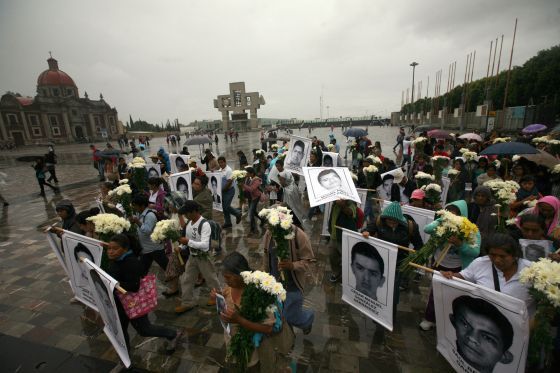
The lack of response by the Mexican government on the issue of missing people in the country has pushed many of the victims' families into becoming genuine experts on research and forensic science so much so that they are now operating a genetic bank without government intervention.

Involved in the project are researchers Ernesto Schwartz and Arely Cruz, as well as family members such as Julia Alonso, whose son went missing in New Leon state in 2008.

"Unfortunately, we have become experts, but not because we wanted but due to the misfortune of having a government like the one we have," Alonso told reporters at a press briefing Thursday.

It was held to announce the positive identification of Brenda Damaris Gonzalez, the first body to be identified through the project which has funding from Durham University in Britain.

Without a genetic test to prove it, Juana Solis, the mother of the young girl who went missing in 2011 also in New Leon, would not have believed that the bag of remains handed to her was her daughter.

Which is why she turned to the Civil Governance Forensic (GFC) team and her case became the seed for the citizens' project along with the knowledge acquired by the two researchers during their work in Colombia.

In fact, it was in that country that they came up with the idea of a model of civic participation in the field of forensic sciences.

Until now, the project has received funding of $386,000 from the British university to perform independent DNA tests for the families of the missing as well as to set up a genetic bank.

Rodolfo Franco, one of the GFC founders, told Spanish news agency Efe that one of the main objectives of the project was so that "the government sees that citizens can be organised to participate in forensic matters" and got motivated to extend their cooperation.

The project has three steps. The first is "to shape a citizen administration that will manage a database", that has already been fulfilled thanks to a group of victims, all public figures known for fighting for the cases of the missing.

Among them is Tita Radilla, the daughter of Rosendo Radilla who disappeared in 1974 after being arrested by the Mexican army, a case for which Mexico was found guilty by the Inter-American Court of Human Rights.

According to Radilla, it is clear that "there is no response, no clarification of facts" by the government and there are "bodies that are buried when there are hundreds of families searching for their families, and, even then, those human remains are put in mass graves without identifying them".

The second step of the project, which is still under way, is the collection of data of the families of the people who have disappeared. Until now, it has managed to gather data from more than 600 families, many of them from Iguala in the state of Guerrero.

On Sep 26 last year, 43 students went missing in that state. Since then, dozens of mass graves have been discovered with unidentified bodies, prompting the family members to question the disappearances and search for their loved ones through such initiatives.

The third step has yet to start, explained Franco, and will be the creation of a bio-bank with genetic samples from the families which could be matched with the information from bodies.

Currently, there is enough funding to conduct tests on more than 1,500 people, but the aim is to continue bumping up that number, given that the figure is still falls woefully short of the more than 27,000 people that remain missing in Mexico today, Franco said.

Friday 20 February 2015

http://www.newkerala.com/news/2015/fullnews-21876.html

continue reading

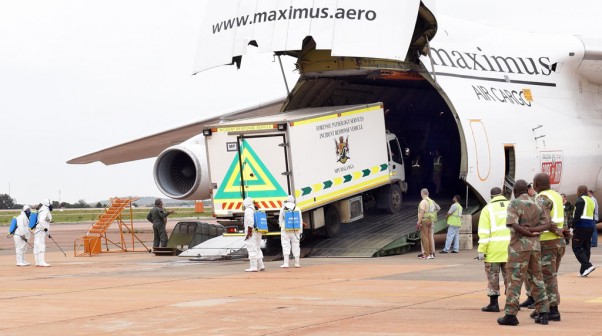
Nigerian church collapse: family questions identification of victim


The family of a Nigerian church collapse victim has given government officials an ultimatum – grant us permission to conduct our own DNA tests or face court.

In a letter to the director-general of health Malebona Matsoso, Lwandle Mkhulisi appeals to government officials to grant the family permission to have tests conducted to verify whether the body given to them two weeks ago was that of his sister Patricia Mkhulisi.

“We, the above named person’s family, we are really concerned about the correct identity of the remains that we have received, as we did not receive any proof of identity. We therefore request permission to conduct our private DNA test as we are not going to conduct any burial until we are satisfied with the deceased’s identity,” the family said.

Matsoso has until the end of Friday to give a “satisfactory” answer, failing which the family will approach the high court.

Mkhulisi’s sister’s body was among the last 11 bodies brought back into the country following delays that tested the patience of family members.

Although they were given strict instructions not to open the body bag for fear those around the body it could contract the Ebola virus, Mkhulisi’s family defied the orders, saying they needed evidence the body they were about to bury was that of his sister.

Mkhulisi said on Friday morning: “We are very angry that the government is preventing us from getting closure. We can’t find any distinguishing marks on the body and the gap in her teeth… there’s no gap there.

“They are insisting we shouldn’t open the bag. What is very odd… nothing is broken… it’s a full body. What’s horrifying is that there’s no skin… but the bones are intact,” Mkhulisi said.

When told the bodies were being brought back “we were relieved and hoped we’d get closure”. But two weeks on, the family still can’t lay their sister to rest.

“It took us a long time to accept that she’s one of those who died. She has two children and the youngest one is really broken. My mother is also not coping,” he said.

A Government spokeswoman could not be reached for comment on Friday morning.

Friday 20 February 2015

http://www.iol.co.za/news/africa/we-have-wrong-church-collapse-body-1.1821458

continue reading

Bodies of Nigerian church collapse victims examined by families


Most of the KwaZulu-Natal families whose relatives died in the Lagos church building disaster on Thursday said they were certain they had buried the correct bodies as they had examined them before the burials. “Even though government officials had told us not to open the bags in which the bodies were put in, we did not heed the advice – we opened the bag and examined the remains. We definitely buried the right person,” Lindo Wittle, whose cousin, Nokuphila Precious Maphumulo was among the 85 South Africans who died in the Nigerian church tragedy, said.

Five KZN residents: Maphumulo from Ezimbokodweni, Durban couple Dicky and Dennis Ngcobo, Sabelo Myeni from Jozini and Nomusa Nyawo from Ngwavuma, were among the 85 South Africans who died in the Lagos tragedy.

Their bodies were buried in the province following their repatriation from Nigeria in November last year.

At the time of the bodies’ arrival in the country, South African government officials had advised relatives not to inspect the bodies – which were in black bags, as there were in an advanced state of decomposition.

“We heard about the incidents. However, we are not concerned at all because we opened the bag and checked her – we are satisfied as a family that we buried the right body,” Thulani Zungu, the spokesperson for Nyawo’s family said.

Myeni’s brother, Joseph Khumalo, said while he did not inspect the remains himself, the family elders did.

“Ordinarily, I would have viewed the body but was told not to. However, other members of the family did check and they told us that it was her,” he said.

Friday 20 February 2015

http://citizen.co.za/330193/bodies-nigerian-victims-examined-families/

continue reading

Chinese New Year celebrations, AirAsia Victim Identification QZ8501 closed


Out of respect for the celebration of Chinese New Year , the Disaster Victim Identification (DVI) team will postpone the victim identification process of AirAsia plane QZ8501 in the hospitals in Surabaya.

"Tomorrow the process of identification of the holiday, because as we respect our colleagues who are celebrating Chinese New Year, " said Head of Public Relations of East Java Police Kombespol Awi Setiyono in Post Crisis Center of East Java Police Headquarters on Wednesday (18/02/2015).

Awi said the decision has been discussed with the family who today are in the waiting room of the AirAsia Post Crisis Center, and turns the approved family day off day.

"In addition, tomorrow is also red dates, and DVI teams are also no data that must be managed for the process of reconciliation," he added. According to Awi, DVI team is dependent upon DNA samples were sent to the Indonesian Police Headquarters, which until now still no results.

So there is no data to be processed by the DVI team. "Because tomorrow off, then hopefully on Friday that DNA data has been sent, so there are more bodies were identified," said AWI. To date a total of bodies and body parts that have AirAsia DVI team received as many as 104. Of that amount, a total of bodies that have been identified through day 53 numbered 96.

Includes 2 parts of the body and the first bodies were later declared as non-human but primates. While the rest, 8 bodies divided into five bodies intact and 3 parts of the body, it is stored in a cold room Hospitals Surabaya for further identification process is carried out. The aircraft AirAsia QZ8501 Surabaya-Singapore flight declared lost contact On December 28, 2014 last.

155 passenger aircraft and 7 crew fell in the Strait Karimata, Pangkalan Bun, Central Kalimantan. Until today, the process of search and evacuation of victims is still underway by the Basarnas team.

Friday 20 February 2015

http://news.liputan6.com/read/2178093/perayaan-imlek-identifikasi-korban-airasia-qz8501-diliburkan

continue reading

Thursday, 19 February 2015

Eleven killed, 30 injured in North Korean sinkhole collapse


Eleven people-most of them women-were killed and around 30 injured in North Korea when earth they were plowing collapsed beneath them, according to a source inside the country.

The workers had been mobilized to plow at the October 18 Jonghap Farm in Yanggang province, along the border with China, on Feb. 3 as part of an annual bid by the Kim Jong Un regime to improve acidic soil for farming, an area resident told RFA's Korean Service on condition of anonymity.

Due to low temperatures during the winter, much of the earth had been turned to ice, and the workers-from the Baek-du Youth Team, and the Baek-am Tile Works and Rural Construction Unit-had been ordered to dig until they found unfrozen soil, the source said.

However, a sinkhole had developed beneath the ice and when the workers pierced through the frozen layer of soil, the ground collapsed, burying them alive, according to the source. A second source from Yanggang told RFA that four tractors had been deployed for four days as part of the rescue effort.

"Lots of officials, including those from the party committee and rural development committee responded to the accident, staying at the scene throughout the rescue attempt," the source said.

"The accident resulted in 11 deaths and about 30 injuries, almost all of whom were women." It was unclear how the sinkhole had formed, though they are commonly found in nature when groundwater causes the dissolution of carbonate rock, such as limestone, or as a result of human activity, such as mining or when natural water-drainage patterns are altered.

The sources did not provide details about how workers sought to treat the acidic soil, which the U.S.-Korea Institute at the Johns Hopkins School of Advanced International Studies in Washington says is common in the North due to "decades of over-fertilization" that have also left farmland with little organic matter.

An official in Yanggang expressed remorse for the incident, telling RFA that a similar accident had occurred in December last year involving a sinkhole collapse, though it had resulted in no casualties. He said if additional safety measures had been implemented since the earlier accident, they might have saved the lives of the workers and avoided other damage.

The official criticized what he called "excessive demands" from the central authorities, saying that while plowing should be done after the harvest, local officials had been ordered to carry out the work during the winter each year, resulting in frequent accidents. "Local officials know well how difficult the soil-plowing work is in the winter, but can't help requiring people to do it because of a severe shortage of workers," the source said.

Thursday 19 February 2015

http://hisz.rsoe.hu/alertmap/site/index.php?pageid=event_desc&edis_id=LS-20150219-47049-PRK

continue reading

Geotagging could help find missing persons


As cyclones bear down on parts of northern Australia, people are being urged to switch on geotagging on their mobile phones to help emergency services track them down in the case of an emergency.

The warning comes as Cyclone Lam in the NT moves on the coast of the northern Top End and Cyclone Marcia barrels towards Queensland's Capricornia coast.

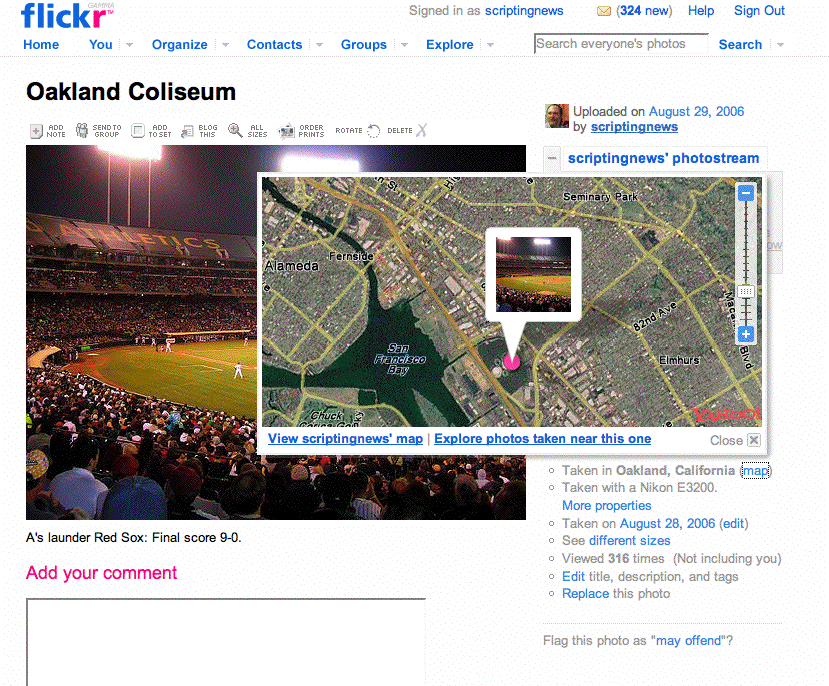
The function logs the geographical co-ordinates of users' photos when shared on social media platforms like Twitter and Facebook and provides a map to lead police to where the photo was uploaded.

Geotagging can also be used to help stay on top of other issues which can arise during severe weather events.

Photos of fires, floods and downed power lines shared online with their metadata will also give emergency services instantaneous information on the problem, and where it's located.

Thursday 19 February 2015

http://www.dailymail.co.uk/wires/aap/article-2959775/Geotagging-help-missing-persons.html

continue reading

Committee on Missing Persons in Cyprus: Greek-Cypriot Missing from the 1974 Turkish Invasion Identified


The Committee on Missing Persons in Cyprus (CMP), in a press conference held today at the Anthropological Laboratory in the UN-protected area of the now defunct Nicosia Airport, has announced it “identified the right person” in the case of missing Greek-Cypriot Georgios Foris. At the same time, the three members of the Committee announced that a Red Cross independent expert has already been requested to probe this specific case.

As the Committee explained, Foris originated from the village of Assia and has been missing since the 1974 Turkish military invasion. His remains were exhumed from a well in Assia, along with the remains of another 38 unidentified individuals. His family has recently contested the identification process, although as described, some of the remains returned to his relatives did not belong to him. Therefore, the family has sought a DNA re-examination of his remains, undertaken by the Cyprus Institute of Neurology and Genetics. “In this case, as in the 567 other cases of missing persons identified by the CMP, we can certify that the right person was identified,” said Paul-Henri Arni, the Committee’s third member.

The press conference was held by Arni, Greek-Cypriot member Nestoras Nestoros and Turkish-Cypriot member Gulden Plumer Kucuk. Referring to Foris case, Arni, after expressing his sympathy to Foris’ family, highlighted that “our archaeologists determined that most of the remains originally buried at the site had been removed, as has been the case in other locations. What was left was a large number of small, isolated commingled remains -that is mixed up remains- which our scientists have tried to associate to separate individuals in painstaking work over the past four years. In the case at hand, several larger bones, most notably a skull, were associated with a number of very small bones. Following well-established international practice in the identification of human remains, the CMP tested the larger skeletal elements, nine in total, for DNA. The smaller ones were associated based on anthropological analysis. Testing all bones for DNA would exceed the CMP’s financial means, and, more importantly, in the case of small bones, would require their destruction, leaving nothing or only small fragments that could be returned to families.”

Furthermore, as he explained, “the family of the missing person identified by us challenged our identification based on teeth characteristics and opted to seek a retesting of the remains using DNA. While we have not received any of the results, it appears that the analysis undertaken on behalf of the family confirmed that all nine larger bones that the CMP had identified on the basis of DNA had been correctly identified.”

The above, as Arni said, allows us to draw two very important conclusions: “Firstly, the CMP identified the right person. In this case, as in the 567 other cases of missing persons identified by the CMP, we can certify that the right person was identified. Secondly, the work of the DNA laboratory is not an issue in this case. If anything, the family’s retesting has confirmed that our laboratory, in this case the ICMP in Sarajevo, worked well. We therefore would like to stress that the discussion about bringing the CMP’s genetic work back to Cyprus has no place in the context of this case. Those who pretend otherwise are misleading the public.”

On his behalf, Nestoros said that in the cases of mass graves, where bones have been relocated at a later stage, leaving only a fraction of the original remains to scientists to determine to whom they belong, CMP is considering to start giving back to the families only the remains that have been analyzed for DNA. The practice today is to let anthropologists associate smaller skeletal elements in order “to give more bones back to the families” as the CMP members said, noting however the risk at stake.

Additionally, Kucuk noted that the CMP is aware of the families’ sensitivities with missing persons and added that the Committee is trying to provide them with all the answers, along with the remains of their beloved ones. As she further explained, there are a lot of cases of mass graves with “commingled bones” and noted the scientists’ difficulty to determine to whom they belong.

Asked about the relocation of remains in Cyprus, Arni said he has “no idea” who did it but added that this “happened everywhere. It happened also in the south,” referring to the free areas of the Republic of Cyprus.

Finally, according to Kucuk, overall, the CMP has exhumed almost 1,000 persons, with the remains of 400 awaiting identification. Another 1,000 are still to be found, she concluded.

Thursday 19 February 2015

http://greece.greekreporter.com/2015/02/18/committee-on-missing-persons-in-cyprus-greek-cypriot-missing-from-the-1974-turkish-invasion-identified/

continue reading

Wednesday, 18 February 2015

Missing Persons: Arizona has more than almost all other states


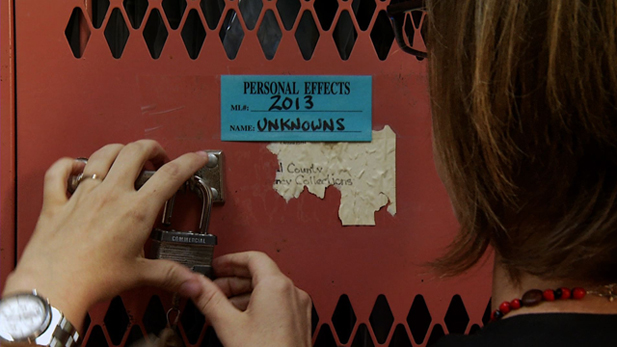
Stuart Somershoe's work as a Phoenix police detective is among the most painstaking and, often, gruesome, law enforcement work there is.

“I work cold cases for missing and unidentified persons in the Phoenix Police Department,” Somershoe says. Some of Somershoe’s cases date back to the 1940s, and in many of them, it’s unlikely the person is still alive.

In his and other police agencies in Arizona, it's a labor unlike others and unlike in other states. For Arizona has more sets of unidentified remains and, per capita, missing persons cases than almost any other state, according to the National Missing and Unidentified Persons System, known as NamUs.

The state has more than 1,300 unidentified sets of human remains. Somershoe said two factors are at work in that statistic: proximity to the border means a lot of under-prepared people try to walk across hundreds of miles through dangerous terrain to get to the U.S.; and related to it is the desert environment, which can quickly obliterate evidence.

“We are a desert and that’s very bad for bodies," Somershoe said. "Bodies disintegrate; bodies decompose a lot quicker than in other states, so it’s harder to identify them when they’re just bones or fragments. When you get outside of the metropolitan area of Phoenix you’re basically in open desert. It’s kind of like our version of the Pacific Ocean. It’s very easy to lose things.”

But the problem isn’t only in Arizona. Nationally, a minimum estimated 40,000 sets of human remains are unidentified, NamUs figures show. “They call it the nation’s silent mass disaster," Somershoe said. "And the reason those numbers (are uncertain) ... is because it’s based on self-reporting from medical examiners, coroners across the country, and we know there’s a lot more out there than what are being reported to us." The relatively recent formation of NamUs created a national database of missing persons and is used extensively by many police agencies trying to connect remains in their charge with reports of those missing along with other potential clues.

"NamUs has been around officially since 2007," said Todd Matthews, the database's case management director. "It went online with the unidentified persons database and in 2009 after a beta trial we added the missing persons database.”

While the database isn’t the first to match DNA of unidentified remains to missing persons, it is the first that allows the families of those missing to take part in the search for their loved ones," Matthews said.

“I think we’ve always needed a national database," he said. "You know, you have city, county, state. We needed something that would go beyond those boundaries, because often a person is missing from New York and possibly found in Connecticut and unless those two compare notes," which is what the database allows.

Federal statistics show about 2000 missing persons in Arizona, among an estimated 80,000 nationwide. Somershoe said the NamUs database could be the key to solving these cases.

“Law enforcement is sometimes very poor in communicating with other jurisdictions," he said. "We tend to hoard information. If my missing person ended up dead in a different county, I may not know about that. If they ended up in another state I may not know about that.

"NAMus is great because we’re all invited into the same room and say, 'Hey, I have pieces of the puzzle; you have pieces of the puzzle, let’s try and resolve these'."

Somershoe said he has solved nearly a dozen cases, some decades old, with the help of NamUs. He said the more information is added to the system, the likelier that thousands of families who are missing loved ones will finally have closure.

Wednesday 18 February 2015

https://www.azpm.org/p/home-featured/2015/2/18/56984-missing-persons-arizona-has-more-than-almost-all-other-states/

continue reading

AirAsia flight QZ8501: Two more body parts identified


Two more body parts from a passenger of the crashed AirAsia flight QZ8501 were identified on Tuesday, bringing the total number of identified remains to 96 so far, East Java Police said.

The Disaster Victim Identification team leader, Sr. Com. Budiyono, said the police received the two body parts, a left leg and hip, from South Sulawesi on Monday night and identified them as belonging to Yonatan Sebastian, 13, from Malang, East Java.

"The identification was based on the DNA test," Budiyono said in Surabaya as quoted by Antara news agency, adding that the body parts were still being kept at the Bhayangkara Hospital.

The hospital has received 104 remains and body parts from QZ8501, which crashed into the Java Sea in December last year with 162 people aboard.

Wednesday 18 February 2015

http://news.asiaone.com/news/asia/pieces-airasia-passenger-identified

continue reading

India bus crash kills 10 in Madhya Pradesh


At least 10 people have been killed after the bus they were travelling in plunged down a deep gorge in India's central state of Madhya Pradesh.

Reports say the driver lost control of the bus in the Machalia Ghat area of Dhar district, some 125km (77 miles) from the city of Indore late on Monday.

More than 30 people were injured in the incident.

The toll is feared to be rising as rescuers are looking for more bodies and injured in the jungle below the hills.

Primary police investigations suggested that the bus plunged into the gorge after losing balance on the hilly road in Rajgarh area of Dhar, around 125 km from Indore city.

Bus crashes are common in India and often caused by poorly maintained vehicles, overloading and bad driving.

In the latest incident, the bus, carrying more than 40 passengers, was travelling to Rajasthan from Indore when the incident occurred.

Every year, tens of thousands of people are killed on the country's roads and the numbers have been rising steadily - nearly 140,000 people were killed in 2013, according to the government's National Crime Records Bureau.

Last year, a bus plunged into a gorge in the western state of Maharashtra killing 27 people.

In October 2013, at least 42 people died after the luxury bus they were travelling in caught fire in the southern state of Andhra Pradesh. Police say a collision with a culvert ignited the fuel tank of the vehicle.

Wednesday 18 February 2015

http://www.dailytimes.com.pk/region/18-Feb-2015/10-killed-in-bus-accident-in-india

continue reading

11 Bayelsa politicians to receive mass burial


The 11 women leaders of the Peoples Democratic Party (PDP) that died in a motor accident along the East-West Road on Valentine’s Day will be given a mass burial.

Checks by Daily Sun revealed that the decision to conduct mass burial for them had been made known to their families.

It was gathered that the decision was reached following the inability to identify the corpses.

According to investigation, the victims were burnt beyond recognition and former deputy governor and coordinator of the Transformation Ambassadors of Nigeria (TAN), Bayelsa State chapter, Werinipire Seibarugu and other officials of TAN, who visited the scene immediately after the accident collected the ashes and unidentified skulls of the victims to the Federal Medical Centre (FMC), Yenagoa.

Some of the family members who had earlier rejected the suggestion of a mass burial later agreed when it was explained that the possibility of conducting a deoxyribonucleic acid (DNA) test would take up to six months.

Mr. Ambrose Ayebakuro, the 33 years old son of the late former House of Assembly member, Ruby Benjamin, confirmed that the family had been contacted on the decision to hold a mass burial for the deceased.

Also speaking, Mr. Mathew Utolor, the Chief Accountant of Bayelsa Broadcasting Corporation and husband of one of the deceased, Mrs Ayakpo Utolor, said it was sad that the families could not identify the bodies of the victims.

Special Adviser to the President on Niger Delta, Kingsley Kuku, has described as tragic the accident that claimed the lives of 11 female politicians from Bayelsa State last Saturday.

Kuku, who is also chairman of the Presidential Amnesty Programme, said in a statement signed by his Special Assistant and head of Media, Mr. Daniel Alabrah, that he received the news with shock and a deep feeling of loss.

Commiserating with the Bayelsa State Government, the people of the state and the families of the deceased, he said their demise was very painful and a huge loss to the Peoples Democratic Party (PDP) family in the state.

“This sad news came at a time everyone was working hard to ensure victory for the PDP in the general elections. The positive contribution of these women to the development of their state and the country will be sorely missed, ”he said.

Kuku prayed God to comfort their families and grant them the fortitude to bear the loss.

Wednesday 18 February 2015

http://sunnewsonline.com/new/?p=105417

continue reading

Tuesday, 17 February 2015

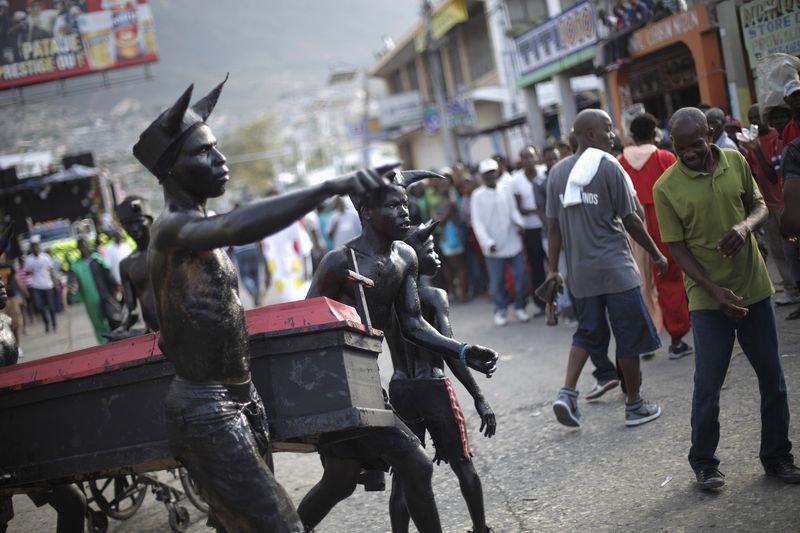
At least 20 dead after power line falls on Haiti carnival float


At least 20 people were killed during a Carnival parade in Haiti’s capital early Tuesday when a music group’s float hit a low-hanging power line, causing them to be electrocuted, officials said.

The accident occurred as thousands of people filled the streets of downtown Port-au-Prince for the raucous annual celebration. People at the scene said someone on the float touched an overhead power line with a pole or stick as the float passed underneath it.

There were conflicting reports on the number of casualties. Nadia Lochard, a coordinator for the Department of Civil Protection, said at least 20 people were killed and 46 were injured.

The float, one of 16 in the downtown Carnival parade, was sponsored by the Haitian hip-hop group Barikad Crew. Some of the victims were instantly electrocuted in a flash of sparks, according to witnesses. Others managed to jump off, causing panic in the crowd.

“I saw the wire falling and sparks and I started running for my life,” said Natacha Saint Fleur, a 22-year-old who was near the float at the time.

Hundreds of people thronged the General Hospital, where many of the victims were taken, some carrying victims and others searching for family members brought by ambulance.

Haitian officials were expected to announce later Tuesday whether they would cancel a second day of Carnival events. Communications Minister Rothchild Francis said the government was working to assist victims.

It is a common practice in Haiti and elsewhere to have someone at the top of a parade float who moves low-hanging power lines. In Brazil, officials said three people were killed when they were electrocuted while standing atop a Carnival float that hit a power line early Tuesday on the outskirts of Rio de Janeiro.

Tuesday 17 February 2015

http://www.theguardian.com/world/2015/feb/17/power-line-falls-haiti-carnival-float-port-au-prince

continue reading

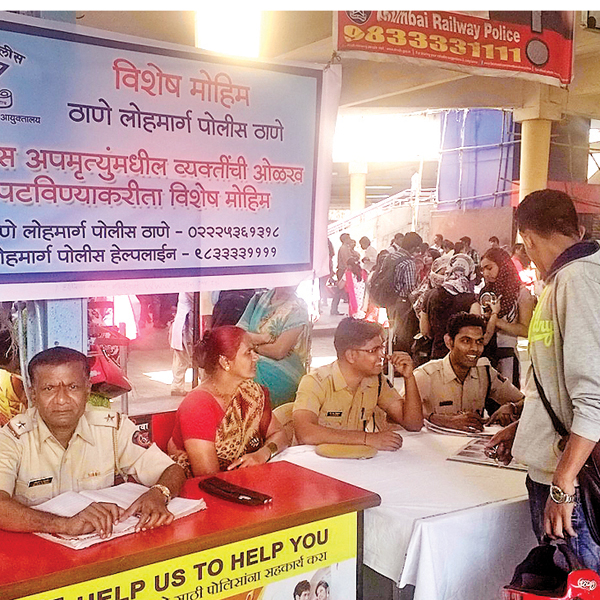
Thane GRP shows pics of 104 unclaimed bodies at railway stations to get them identified


In a bid to lessen the number of unclaimed bodies, the Thane government railway police (GRP) on Monday set up a camp at Thane station. From morning till 8 in the evening, its officers showed commuters photos of last year's 104 unclaimed deceased to see if any would get identified.

Officers said in the coming days they will set up camps at other railway stations too.

Thane railway jurisdiction covers Thane, Diva, Kalwa and Mumbra stations on the central line and Airoli on the harbour line.

The GRP personnel said they plan to set up camps on one station daily to create awareness among commuters and take their help in getting as many deceased identified as possible. The officers said besides the photos, they have also kept a register for providing commuters any other details they may require in recognising the bodies.

Inspector AS Rane said, "It's a good initiative, a number of commuters have approached us till now. Through this, we aim to help those who don't know for sure what happened to their loved ones and are still searching for them. Also, in case a person has died, getting the body identified and informing his/her family members means they can seek compensation from railways. Same goes for life insurance, in case the deceased had taken a policy which his/her kin can file a claim for."

"We had undertaken a similar initiative last year, which helped us get identification for many unclaimed bodies. This year, apart from these camps that we will be holding, people can also log on to our official website www.shodh.gov.in for past records," said GRP commissioner R Singal.

Tuesday 17 February 2015

http://www.dnaindia.com/mumbai/report-thane-grp-shows-pics-of-104-unclaimed-bodies-to-get-them-identified-2061626

continue reading

7 dead, 4 missing in floods in central Argentina


Seven people are dead and four others are missing in central Argentina after heavy rain led to street floods that swept up several people, including a 5-year-old girl.

Civil Defense director Diego Concha told the television station TN that more than 1 foot (32 centimeters) of rain fell during a 12-hour span in the province of Cordoba, about 700 kilometers (435 miles) northwest of Buenos Aires.

Concha said the bodies of the girl and a young man were recovered Monday, and the others, of various ages, were recovered late Sunday. He said authorities evacuated 400 people and several hundred others had fled on their own.

Images from several local stations showed powerful currents moving vehicles and flooding storefronts and houses.

Tuesday 17 February 2015

http://news.yahoo.com/7-dead-4-missing-floods-central-argentina-173714075.html

continue reading

Monday, 16 February 2015

No hope of more survivors in DR Congo boat sinking


Authorities in the Democratic Republic of Congo said on Sunday they had abandoned all hope of finding more survivors, after as many as 100 people went missing when their boat sank on the Congo River.

"We shouldn`t even think about finding any survivors," Jean-Christophe Malela, an official in the western Bandundu province, told AFP, pointing out that the accident occurred on Thursday in an area of rapids.

The accident took place when two boats collided near the city of Kwamouth, about 200 kilometres (120 miles) northeast of the capital Kinshasa, Malela said.

Rescuers have so far recovered nine bodies and 42 people had made it to safety, he said.

The World Health Organisation cited survivors as saying there may have been close to 150 people onboard the boat that sank.

Malela said the mishap probably occurred when the overcrowded boat lost speed after one of its engines got caught in a fishing net as it tried to avoid hitting a bigger boat.

Rescue operations to recover bodies for burial would continue.

Authorities said they could not be sure of the exact number of people on board in the absence of any departure records.

The second boat suffered no damages or casualties.

The WHO said on Friday that it was providing medical kits to support a search operation launched by national and provincial authorities, including 100 body bags.

Deadly shipping disasters are common in the Democratic Republic of Congo due to overcrowding on old and poorly-maintained vessels, a lack of life-jackets and the fact that many people do not know how to swim.

Last Monday, at least 20 people died in another sinking further upstream on the Congo River.

Monday 16 February 2015

http://zeenews.india.com/news/world/no-hope-of-more-survivors-in-dr-congo-boat-sinking_1547246.html

continue reading

13 bodies of victims of crashed AirAsia plane to be identified


As many as 13 bodies of victims of crashed AirAsia flight QZ8501 remain unidentified on the 50th day of identification process on Sunday as the bodies have gone beyond identification and DNA data are not complete.

Three of the 13 bodies only consisted of body parts, spokesman of the East Java provincial police Snr. Comsr. Awi Setiyono said.

"The 13 bodies which cannot yet be identified are still kept in the cold storage of the Bhayangkara Police Hospital in East Java," he said.

He said the Disaster Victim Identification (DVI) team of the Bhayangkara Police Hospital would try to identify the remaining 13 bodies by gathering DNA data from different parties including the Indonesian Police Headquarters.

"We will resume the identification of the remaining bodies at the Bhayangkara Hospital on Monday (February 16)," he said.

Earlier, on Friday (February 13), the DVI team managed to identify eight bodies and two body parts of victims.

Chief of the East Java provincial police Insp. Gen. Anas Yusuf said a total of 89 bodies had been identified during the identification process.

The AirAsia Airbus A320-200 carrying 162 people had gone missing on the morning of December 28 after losing contact with air traffic control on its way from Surabaya, East Java, to Singapore.

Flight QZ8501 lost contact after the pilot sought permission to climb to 38 thousand feet from 32 thousand feet to avoid stormy weather over the sea between Bangka Belitung and West Kalimantan.

Monday 16 February 2015

http://www.antaranews.com/en/news/97784/13-bodies-of-victims-of-crashed-airasia-plane-still-unidentified

continue reading