Sunday, 30 November 2014

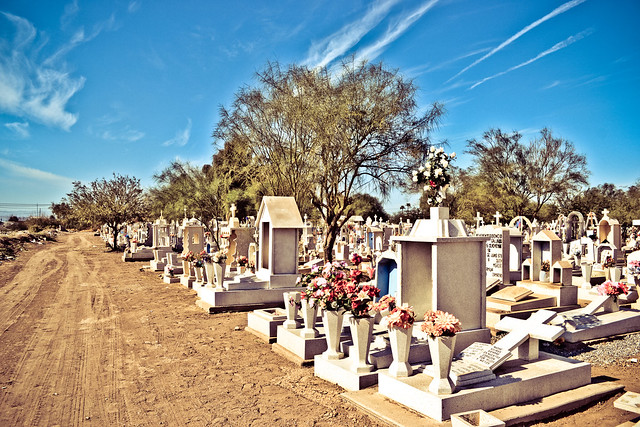
Minnesota history: Most deadly shipwreck is least known


It’s late November, so when talk turns to Minnesota shipwrecks, Lake Superior quickly comes to mind. The Edmund Fitzgerald vanishing in a 1975 gale with 29 aboard. The frozen bodies chipped from the icy deck of the Mataafa just off Duluth’s piers in 1905. And so on.

But Minnesota’s largest maritime disaster went down some 200 miles south of Duluth Harbor in Lake Pepin, that rodent-in-the-snake widening of the Mississippi River.

On July 13, 1890, 215 people in Red Wing piled on to the Sea Wing, a wooden paddle-wheeler less than three years old, and its barge cohort, the Jim Grant. The people, decked out in Victorian Sunday finery, were on an excursion to Lake City — where Gov. William Rush Merriam and other dignitaries gathered for a weekend exhibition at the Minnesota National Guard’s summertime encampment. Cannons would be fired, bands would play, soldiers would march in formation and a grand time would be had by all.

It was hot, humid and sticky. So many people wanted to take the pleasure cruise — perhaps hoping it would be cooler out on the water — that the barge was tied on to the Sea Wing to accommodate about 70 of the 215 passengers.

Scattered showers and some squalls foretold the trouble to come. At 5 p.m. in St. Paul, a tornado spun across Lake Gervais, killing six and injuring 11.

David Niles Wethern, the storekeeper skippering the Sea Wing, wouldn’t have known about the lethal twister in St. Paul, but he sensed conditions were growing ominous. He blasted the Sea Wing’s whistle at 7:30 p.m. and sailed north for Red Wing at 8 p.m.

Passengers were crammed shoulder to shoulder in the cabin on the skinny boat — 135 feet long but only 16 feet wide with a 22-foot-high pilot house. Straight-line winds began to whip Lake Pepin, with waves swelling from six to eight feet.

The barge rocked violently behind the Sea Wing, whose crew cut the line connecting the boats — figuring they’d fare better, lurching and rocking on their own.

At 8:30 p.m., a monster wave in the middle of the river channel lifted the Sea Wing — not yet as far north as Maiden Rock on the Wisconsin side. Passengers on the now-severed barge would later recount how the Sea Wing climbed to a 45-degree angle before completely flipping over and capsizing.

In the packed cabin, suddenly tossed upside down, water flooded in. Those who escaped and clung to wreckage in the river were pelted by “hen’s egg-sized” hail. It would take three days to recover all the bodies.

Men in town, hearing of the disaster, piled into rowboats despite the wicked conditions, trying to save whom they could. Lifeboats weren’t required on river boats. Life jackets were there, but few donned them, thinking they could wait out the downpour in the cabin.

Many of the 98 bodies pulled from the cabin and the water were pocked with hail stones. Fifty of 57 females on board were among the dead and 77 of the victims were from Red Wing — including sisters Anna and Julia Persig, both in their 20s.

Their great niece, Diane Johnson of Cottage Grove, doesn’t know for sure. But it’s possible her husband Fred Johnson’s great grandfather might have hauled their corpses up to the funeral home in Red Wing.

A Swedish immigrant who worked in the King’s stable in Stockholm, Carl Oscar Anderson worked as a wagon driver in Red Wing. He scurried with his team to the levee to transport the dead.

Nearly 125 years later, Goodhue County Historical Society director Dustin Heckman and author Fred Johnson are trying to rekindle interest in what might be the biggest Minnesota disaster no one has ever heard of.

Johnson, 69, is a retired elementary teacher who taught for 34 years on St. Paul’s East Side. In the mid-1980s, he wrote a book called “The Sea Wing Disaster: A Tragedy on Lake Pepin.” He recently updated the book, published by the Goodhue Historical Society, with more photos and family stories sparked by the first edition.

“I’ve learned over a lifetime that virtually no one in Minnesota knows the story of the Sea Wing,” Fred Johnson said. “Such a large number of people died suddenly and were forgotten.”

On the Tuesday after the storm, 44 funerals were held in Red Wing alone — then a town of 6,000. Authorities in Washington were aghast and ordered steamboat inspectors to conduct a hearing.

They found Captain Wethern negligent of overloading the boat and starting off in the face of dangerous weather. Their findings were forwarded to the federal district attorney’s office in St. Paul, who never prosecuted Wethern. Among the dead were his wife and one of their two sons. Maybe they felt he’d suffered enough for his flawed judgment.

Sunday 30 November 2014

http://www.startribune.com/local/284224171.html?page=all&prepage=1&c=y#continue

continue reading

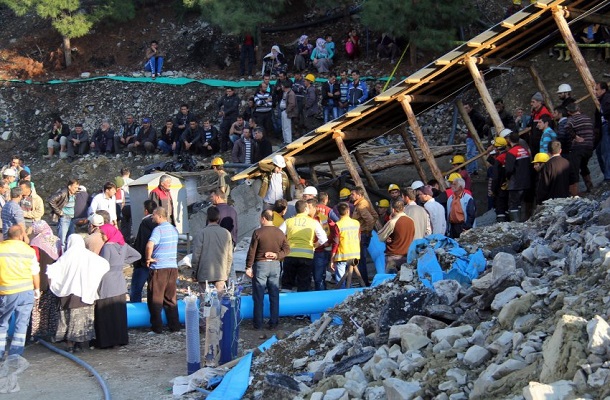
Bodies of two trapped miners recovered from Ermenek mine


Search and rescue teams on Nov. 29 reached the remains of two more workers who were killed in a mine disaster in the southern Anatolian town of Ermenek, while efforts are continuing to reach six others in the facility.

Eighteen miners were trapped underground after a flood at a coal mine in Ermenek in Karaman on Oct. 28. A total of 12 miners’ bodies have been recovered from the mine so far.

The bodies of two miners have been sent to Ermenek State Hospital for an autopsy.

Turkey’s disaster management agency (AFAD) released a statement on Nov. 29, saying a team of 603 people, including 315 search and rescue officers, were continuing the rescue efforts.

Some 88 percent of the mine was scanned and 3,652 wagons of debris have been removed from the mine so far, the statement said.

The teams advanced 14 meters in 24 hours but there are still 231 meters to search, it added.

The officials from the Ermenek Courthouse said the exact cause of death for the workers would be determined by an official report prepared by the Forensic Medicine Institute after examinations on samples taken from the bodies are completed, Anadolu Agency has reported.

Meanwhile, daily Bugün reported on Nov. 28 that autopsies conducted on the 10 miners who have been found so far revealed that they died of coal gas poisoning.

Eight of the miners, who were huddled around each other when they were found dead on day 22 of the rescue efforts, climbed a wall and waited there for 15 hours for help before succumbing to the poisoning, the report said.

Sunday 30 November 2014

http://www.hurriyetdailynews.com/bodies-of-two-trapped-miners-recovered-from-ermenek-mine.aspx?pageID=238&nID=74999&NewsCatID=341

continue reading

Bheri bus accident: Four more bodies recovered


Four more bodies of the missing passengers were recovered from the Bheri River on Saturday, increasing the death toll from last week’s fatal passenger bus accident in Jajarkot district to 52.

Bodies of Karna Bahadur Khadka of Lahn-2, his son Bipin, Kalika Malla of Dhime-1 and Laxman Chaudhary were recovered today.

A passenger bus (Na 3 Kha 1408) had swerved off the road and plunged into the river some 80 metres down at Bhur VDC-8 on the Chhinchu-Jajarkot stretch along Karnali Highway last Thursday. The ill-fated vehicle was en route to Surkhet from Jajarkot.

Deep Kumar Buda, of Ramidanda-6 and his daughter Sangeeta are still reported to be missing in the accident.

Sunday 30 November 2014

http://www.ekantipur.com/2014/11/29/top-story/bheri-bus-plunge-four-more-body-recovered/398317.html

continue reading

Kailali bus accident: Death toll reaches 12


In yet another accident blamed on reckless driving, a bus skidded off the road and fell over a cliff at Sahajpur-2 on the Bhimdutta Highway in Kailali district on Saturday morning, killing 12 and injuring 30 people.

The vehicle (Na 5 Kha 5420) fell 100 metres just after Friday midnight. Police said the bus was headed for Mahendranagar from Dipayal, the district headquarters of Doti, with 42 passengers on board. The incident site is about 50km north of Attariya, Kailali.

Survivors blame careless driving for the disaster. “The driver got off the vehicle complaining of a flat tyre. The vehicle veered off the road as he had left the driving seat,” said Harka Bahadur Khadka at Padma Hospital in Attariya. He charged that the driver had abandoned the vehicle in the middle of the road with the engine running.

Police officials who reached the site after the incident also suspected driver’s negligence. “The road is not narrow and steep. The driver could stop the vehicle on his side,” said traffic police head constable Tularam Shahi.

Driver Janakraj Giri and his assistant Navin Bhatta are in police custody. The driver told the police that he had failed to control the bus.

Eight passengers died on the spot while four others succumbed to injuries during treatment. Security personnel reached the site 45 minutes after the incident and rescued the victims.

Six critically injured patients have been taken to hospitals across the border in India. The deceased are from Doti district, seven of them from Daud VDC. Most of the victims were India-bound for employment.

Accident victims' kin refuse to collect bodies

Kin of victims of Friday’s Kailali bus accident have denied collecting bodies demanding compensation.

The bodies have been kept at the Seti Zonal Hospital, Dhangadhi after autopsy.

Family members of the victims have also accused the Mahakali Transport Entrepreneurs’ Association of neglecting the demand for compensation.

Representatives of the Association did not even visit the family members to express condolence, they said.

“So we will not receive the bodies till we get compensation,” Hem Nagari, member from a victim’s family said.

Nagari also accused the Association of neglecting them because they are from Dalit and poor families.

The families have demanded a compensation of Rs 325,000 per person.

Entrepreneurs’ Association Chairman Baburam Sharma said the Association is ready to provide Rs 25,000 per person for funeral and give Rs 75,000 per person later.

The kith and kin of the victims had met Chief District Officer (CDO) Mahadev Panthi this morning demanding compensation.

“But, I asked them to coordinate with the District Police Office (DPO),” Panthi said.

DPO chief SP Bikram Chand, however, said he is out of the district for a task. “But, I will work for compensation as per law,” he said.

Sunday 30 November 2014

http://www.ekantipur.com/2014/11/30/headlines/12-die-as-another-bus-nosedives-in-Kailali/398323/

www.thehimalayantimes.com/fullNews.php%3Fheadline%3DKailali%2Baccident%2Bvictims%27%2Bkin%2Brefuse%2Bto%2Bcollect%2Bbodies%26NewsID%3D435288+&cd=2&hl=en&ct=clnk&gl=uk

continue reading

Rescue hope fades: no trace of 26 missing in trawler capsize in Bay of Bengal


The 26 people, who had gone down with the FV Bandhan in the Bay of Bengal early Friday, remained missing even after 32 hours.

Divers of Bangladesh Navy, however, located the sunken fishing vessel yesterday morning, but could not enter it due to stormy currents. The missing crews are feared dead and the bodies are trapped inside the vessel.

Navy ship BNS Adamya reached the spot from Chittagong in the wee hours of yesterday and joined the search and rescue operation.

BNS Adamya's side-scan sonar detected an object like the vessel around 9:00am, said Commander Shamim Md Khan, in-charge of Navy Intelligence (Chittagong zone).

Around 11:00am, Navy divers reached the vessel and found it tilted on its right side around a kilometre from the accident spot.

The divers managed to hook a rope to the sunken vessel so that they could reach the spot easily next time. However, they could not enter it, said Commander Shamim.

The divers will now try to cut through the doors and windows of the vessel to see if any body is trapped inside, he added.

Three more navy ships -- BNS Bangabandhu, BNS Sagor and BNS Khadem -- joined BNS Somudro Joy, BNS Atandra and BNS Adamya in the search yesterday morning.

Apart from these, navy salvage ship BNS Saikat was dispatched from Chittagong around 2:00pm.

Soon after the location of the object was traced, the divers of Bangladesh Navy joined the rescue operation.

The navy ship, BNS Shaikat equipped with modern rescue gears, has already started for the spot to salvage the sunken vessel, said Navy officials.

FV Bandhan, a shipping vessel of the Bengal fisheries, capsized 28 km off the coast of Saint Martin's Island, being hit by FV Basundhara, another fishing boat.

Three people were rescued. One of them has already died. 26 people are still missing.

When the trawler capsized, FV Joutha Udyam, another vessel of Bengal fisheries, rushed to help, and rescued the three crews – Lavlu, Sajib, Nasir – of who Nasir died.

There were 26 crew members on the boat. All of them believed to have been asleep, when the Basundhara struck the shipping vessel.

Assistant Operation Manager of Bengal Fisheries, Kazi Kamrul Amin told the Dhaka Tribune that their boat was standing in the area, as during the time of fishing they have to spread the net, and the boat has to lay still for some time.

When the FV Basundhara was coming towards the direction of the FV Bandhan, the latter hoisted all possible alarms and signals, putting all lights on and blew sirens. However, when the FV Basundhara straight on hit the FV Bandhan, the boat capsized immediately. The other boats that were present around rushed to help at the time.

He said he had already filed two diaries with the Patenga police.

Filing a case against the ship that hit the boat was underway, he added.

Sunday 30 November 2014

http://www.thedailystar.net/frontpage/rescue-hope-fades-52699

http://www.dhakatribune.com/bangladesh/2014/nov/29/navy-traces-missing-trawler-28-nautical-miles-away-saint-martin-island-joins-

continue reading

Friday, 28 November 2014

Bhopal gas tragedy: One night, 876 autopsies


It was around four in the morning when the calling bell rang at D.K. Satpathy’s home in Idgah Hills on 3 December 1984.

“Try to reach the mortuary as soon as possible, there are casualties beyond our imagination,” was the message received by Satpathy, then a 35-year-old forensic doctor with the state government’s Hamidia Hospital.

On the way to the mortuary, Satpathy saw that the entire campus of the adjacent Gandhi Medical College was flooded with people who were visibly ill. Some were gasping, others were vomiting, and most were weeping.

Scores of others lay dead. Doctors were giving the patients symptomatic treatment. The casualty medical officer informed Satpathy that around midnight, people started coming in with burning eyes, breathlessness and nausea.

Unknown to Satpathy and his colleagues, four hours earlier, about 40 tonnes of methyl isocyanate (MIC) gas, along with other chemicals, had leaked into the atmosphere of Bhopal from the Union Carbide India Ltd factory, which was surrounded by several heavily inhabited settlements.

The leak of the poisonous MIC gas, the main ingredient in Sevin pesticides manufactured by Union Carbide, was caused by a backflow of water in tank E610 at the factory. It is now recognized as the worst industrial disaster in history.

By the end of the night, the lethal gas had spread across an area of around 8 sq. km. By the end of 3 December, Satpathy says he had performed autopsies on 876 bodies. By the end of December, this number rose to 1,300.

By 1996, Satpathy had performed autopsies on 11,000 bodies, all related to the gas leak. That night, Satpathy was informed, someone from the hospital had called up the medical officer of Union Carbide factory.

“It is just tear gas. Just wash their eyes and mouth with water. It will affect patients only mildly,” the medical officer had responded. By the time Satpathy reached the mortuary on the morning of 3 December, there were nearly 500 dead bodies there.

Satpathy cleared his head. His mission as a forensic expert was to identity the person, carry out the post-mortem, ascertain the cause of death and fix responsibility. There were four forensic experts at the hospital.

It seemed like an impossible task to complete autopsies on so many bodies, so they decided to choose a random sample because the symptoms were similar and they had died in similar circumstances.

The remaining bodies were merely examined externally. Each dead body was photographed. Most were unclaimed and unidentified. Without exception, every person had died of respiratory failure; there was froth in their mouths and noses, serious pulmonary damage, their eyes were red, and their skin had rashes.

Satpathy found one peculiarity: the blood in both the veins and the arteries of the bodies was red, whereas, usually that in the veins is darker. “One of the chemicals that can cause this is cyanide,” he says. The next day, Satpathy and the other doctors were informed that the leaked gas was MIC; the team stored all the collected tissue and the blood.

Meanwhile, a German scientist, Don Derreira, who had arrived in Bhopal to establish that the tissue and blood had elements of MIC, informed the doctors that the appropriate treatment for exposure to MIC was sodium thiosulfate—administered intravenously—which would cause all the toxic elements to pass out through urine.

All the tissues were analysed and upto 22 compounds were isolated, out of which all but two were identified. All 22 compounds were also found in tank E610. “This tank was responsible, the owner was the culprit. We had linked the responsibility of the deaths. We also suggested the treatment. Our job was done,” says Satpathy.

Medical research terminated “There was much misleading on the part of Union Carbide. Apart from initially claiming the leaked gas was tear gas, they also claimed that MIC could not cross the placental blood barrier of a pregnant woman to affect the foetus,” says Satpathy, now 66 and retired, sitting at the forensic museum at the Medico-Legal Institute in Bhopal that is currently exhibiting pictures of postmortems conducted by him.

Satpathy had performed an autopsy on the body of a woman who was two months pregnant, and he found that the traces of chemicals found in her were also present in the foetus. The government showed appalling negligence toward medical and scientific research which should have been carried out to find out more about the unknown effects of MIC on the human body.

In 1985, more than 20 clinical and non-clinical research projects were sanctioned on MIC’s effect on the foetus, endemic areas, and health. But all the projects were terminated by 1990, after the completion of only two or three studies. “These studies could have been crucial because even (the) third and fourth generation could face the consequences; even genetic mutations can take place. But we were a complete failure in that regard,” says Satpathy.

“God forbid something like this happens again with the same gas—we will still not know the ABC of how to manage the disaster.” Samples were collected from the bodies and sent for analysis to various labs across the country, including the All India Institute of Medical Sciences in Delhi. “It was very hard for us to preserve the tissue in a refrigerator for 30 years, for nothing.

One time, the fridge was out of power, and some tissue samples were completely decomposed,” Satpathy says Many of the foetuses from pregnant women killed in the disaster are still lying preserved at Gandhi Medical College in Bhopal, and the tissues are preserved in formalin. “They can be used for analysis, but no one is interested,” says Satpathy, pointing to an unresolved legacy from the world’s worst industrial tragedy.

Thursday 28 November 2014

http://www.livemint.com/Politics/x7s5RZF5HC8LIFvzUtSejO/Bhopal-gas-tragedy-One-night-876-autopsies.html

continue reading

Man locates father's body 10 years after tsunami


A Nepalese man has identified his father's remains in Thailand 10 years after he died during the Indian Ocean Tsunami, officials said Friday.

Police officials in Thailand's Phang Nga Province confirmed that the Nepalese man had traveled to the area and exhumed his father's body.

The man was only 9 years old when his father disappeared during the tragic event which claimed more than 5,000 lives in Thailand.

The now 19-year-old had reached out to local authorities and provided a DNA sample which was matched to his father's.

"There are still 382 unidentified bodies at this cemetery," said Tanapol Songput, head of the disaster team at the Mirror Foundation which deals with identifying and reuniting the body of disaster victims to their loved ones.

"In the last 10 years, 48 bodies have been exhumed and returned to their families."

On December 26, it will be exactly a decade since the tsunami that killed about 230,000 people in over a dozen countries around the Indian Ocean.

Thursday 28 November 2014

http://www.timeslive.co.za/world/2014/11/28/man-locates-father-s-body-10-years-after-tsunami

continue reading

Families of convicted Sewol ferry crew haunted by stigma and isolation


An article explaining that not only the families of those killed are profoundly affected by a disaster..

Im Young-ae and her husband, a crew member who survived the Sewol ferry disaster, had dreamed of a peaceful retirement by the sea until their lives were upended by the April tragedy.

Their new house is finished and Im has moved in, but she is living in virtual isolation with her adult daughter.

As Im’s husband serves a five-year jail term for negligence over the ferry’s sinking, she, like the loved ones of other surviving crew members, is being treated as a pariah amid outrage in South Korea over the deaths of 304 people, mostly teenagers, on the doomed boat.

Im’s daughter, as well as her son, have quit their jobs in Seoul, unable to bear the anger directed at them.

The surviving crew members have been vilified since video footage showed they were among the first to be rescued as teenagers on a school trip waited in their cabins as instructed, drowning when the overloaded vessel sank before help arrived.

In South Korea, a person’s shame or honor is profoundly affected by family association.

“People look at us so wickedly. . . . I don’t want anyone to recognize me. I avoid people as much as I can,” Im said from her brick cottage on Jindo island, with a deck overlooking the ocean on the southwestern tip of the Korean Peninsula.

Jindo is Im’s hometown. It is also not far from where the ferry capsized.

“Not just one or two but too many kids died. . . . It hurts me more because my husband is alive. Because he is alive, we feel sorry and thankful,” she said.

Im spoke on condition that her husband not be identified for fear that could ignite more public resentment and hurt an appeal against his conviction.

All 15 surviving crew members are appealing their convictions in the hope of lighter sentences. Prison terms handed down this month ranged from five years for some crew members to 36 years for the Sewol’s captain.

The ferry sank while making a turn on a routine voyage to the holiday island of Jeju. The vessel was later found to be defective, with additions made to increase passenger capacity making it top-heavy and unstable.

A defense lawyer who represented some of the convicted crew members said their families were tormented by remorse.

“One defendant’s wife . . . didn’t want to appeal because it might not be the right thing to do for the sake of the victims’ families. But for their own little kids, he wanted to be released a little earlier to be with them,” the lawyer said.

Another legal source involved in the case said there would be little change in defense strategy in the appeals, with the focus on trying to reduce sentences, not overturn convictions, by saying the crew members were largely helpless, and were remorseful.

Inside the prison in the city of Gwangju, the crew members are in solitary confinement over concern other inmates might try to harm them, the lawyer said.

The lawyer and the legal source asked not to be identified due to the legal proceedings and the controversial nature of the case. Other families declined to talk to Reuters.

Im’s daughter, 31, said she had contemplated suicide but changed her mind after realizing it would hurt her father, who joined the Sewol crew last year after attempts at running small businesses on the Korean mainland didn’t work out.

“Dad is sorry that we have to go through this because of him,” she said, asking that her name not be used.

“In his letters he calls himself ‘ugly dad,’ ‘stupid dad.’ “

Her brother, who remains in Seoul, no longer sees his friends and keeps to himself after reading hostile online comments about the crew, said Im, 56, adding she herself is suffering depression, insomnia and has lost weight.

But some sympathy exists.

“It shouldn’t be a case of guilt by association. The families of the crew can’t be blamed,” said Kwon Oh-bok, whose brother and nephew are still missing at sea.

Kwon has been on Jindo ever since the disaster, hoping to retrieve their bodies. He is still waiting.

Friday 28 November 2014

http://www.japantimes.co.jp/news/2014/11/28/asia-pacific/crime-legal-asia-pacific/families-convicted-sewol-ferry-crew-haunted-stigma-isolation/#.VHg7kkLF8Ro

continue reading

Thursday, 27 November 2014

Unidentified corpses pile up in Baja


Between 2013 and June of this year, Baja California medical examiners have been unable to identify more than 1100 cadavers presented to them for autopsy.

Most of the unclaimed bodies have been buried in unmarked common graves in the cities where they were found, Dr. Francisco Acuña Campa, chief of the state forensic medical service, told the regional daily El Mexicano.

Baja California ranks first in Mexico in the number of unidentified corpses, he told the newspaper.

Of the unidentified corpses, 784 were from Tijuana, 248 from Mexicali, and 100 from Ensenada, Acuña Campa said.

In an effort to resolve the problem, the state Forensic Medical Service has developed a program that aims to reduce the number of unidentified bodies, he said.

A website has been set up for unclaimed bodies — 1132 in 18 months.

Pathologists will keep detailed records of exactly where the bodies were found and four or five identifying characteristics of the corpses when possible. Relatives who believe they may have lost a family member in Baja California and have been unable to locate him or her can contact the state forensic service in Mexicali, the state capital, Acuña Campa said.

A website with a link to the program should be functioning soon, and through it, relatives from anywhere in the world can provide identifying information about missing family members. The agency will then try to match the information with data collected by pathologists. If a match is confirmed, family members will be permitted to claim the remains.

Acuña Campa speculated that many of the bodies are likely from Central America, noting that one body has already been identified by family members from Honduras.

Thursday 27 November 2014

http://www.sandiegoreader.com/news/2014/nov/21/stringers-unidentified-corpses-piling-baja/#

continue reading

Archaeologists to exhume the bodies of over 100 unidentified Argentine soldiers on Falkland Islands


Archaeologists in Argentina are set to exhume the unidentified bodies of over 100 Argentine soldiers who were killed during the Falklands War.

The Argentine Group of Anthropological Forensics (AGAF) has been preparing for a year for their chance to dig up the 123 unidentified bodies buried on the Falkland Islands, and it seems now that the group will finally been given the green light to begin their work.

As part of their preparations, the group has contacted 78 families who have agreed to give blood samples, as well as provide information on the appearance of their loved ones, so that these details be placed into a database.

It is hoped that this information can then be used to help identify the dead soldiers.

Member of the AGAF, Luis Fondebrider, said that their preparations had taken painstaking efforts over the last year to obtain the information and they are now fully ready to exhume the bodies, take the samples back to Argentina for examination and attempt to match them up with the information they have already.

He said: “From the technical point of view, we are ready to launch the operation in the Falkland Islands when it is requested.”

He added: “We believe in eight weeks’ time, we can exhume the bodies, analyse them, take the samples and rebury them in the Darwin cemetery.”

The group has said that they must carry out the work before March 2015, as the weather after that period will make digging nearly impossible.

The 123 bodies make up nearly 20 per cent of the 649 Argentines that died during the war between the South American nation and the UK that took place between April and June 1982 – 258 British soldiers were killed.

Thursday 27 November 2014

http://www.independent.co.uk/news/world/americas/archaeologists-to-exhume-the-bodies-of-over-100-unidentified-argentine-soldiers-on-falkland-islands-9880080.html

continue reading

Lagos church collapse: Nigeria DNA samples difficult to match


Genetic testing to identify the remains of 84 South Africans killed in the Nigerian building collapse was extremely difficult, the Saturday Star reported.

Dr Munro Marx, head of Stellenbosch University's Unistel Medical Laboratories genetic testing centre that conducted the testing, said it was "by far...most difficult matchings we have been expected to do".

"In the temperatures and humidity of Lagos, decomposition happens pretty fast," he told the newspaper.

Recovery of the bodies only began four or five days after a guest house belonging to the Synagogue Church Of All Nations in Lagos - headed by preacher TB Joshua - collapsed on 12 September, killing 116 people.

"So when they recovered the bodies they embalmed the bodies."

The chemicals used, however, penetrate tissues and bone meaning that "obtaining DNA is extremely difficult".

"The 116 samples that we got were really not at all of a good quality."

The samples were numbered, but to identify the remains, DNA samples needed to be taken from the victims' family members.

The state disaster management team, made up of health department and police officials, would be responsible for taking DNA from the families.

Marx described the task of the five geneticists working on the DNA tests as "extremely stressful".

"We were working almost around the clock every day".

Thursday 27 November 2014

http://www.news24.com/SouthAfrica/News/Report-Nigeria-DNA-samples-difficult-to-match-20141122

continue reading

Debate over fate of sunken corpse ship from 1902 with 499 bodies on board continues


The S.S. Ventnor sank 112 years ago off the northern New Zealand coast, bearing unusual cargo: the exhumed bodies of 499 Chinese miners, some in wooden coffins and others in sealed zinc caskets.

They had tried their luck in New Zealand’s gold rush, and had paid in advance to ensure their bodies would go back to China, no matter what. A wreck believed to be the ship was discovered in 2012, raising the possibility that someday, the remains might go home.

Now the question is: Should they?

The wreck was found by a team led by John Albert, an amateur New Zealand filmmaker. He says he was drawn to the Ventnor’s story after standing at a bluff overlooking the Hokianga Harbour – near its final resting place – and feeling a chill, like a spirit had entered him.

But his work, including a news conference publicly announcing the wreck’s discovery last week, has upset some members of New Zealand’s Chinese community, who say he removed artifacts from the wreck without consulting them and against their wishes.

“I went to the media conference and had no idea what was going on. I was shocked and disappointed that we hadn’t been consulted and hadn’t been informed beforehand,” said Virginia Chong, the previous president of the New Zealand Chinese Association. “The bodies and bones on that ship are our ancestors, our people.”

Albert said he did speak to a number of people in the Chinese community, but couldn’t consult with everyone. He plans to make a documentary about the Ventnor, but said he never intended to profit from his activities, as some have assumed.

“I’m hurt,” he said. “Everything I have done was done above-board and legally, and with the best intent.”

The story of the Ventnor has its roots in the 1860s, when thousands of Chinese miners came to New Zealand seeking their fortunes. Most left their families behind, hoping to return to China as wealthy men. Many ended up dying in poverty.

Many of the miners took a type of insurance policy to have their remains returned to China should they die in New Zealand. They paid money into a charity run by Choie Sew Hoy, a successful merchant who sold supplies to the miners and owned mining ventures.

Sew Hoy in 1883 organized the repatriation of 230 bodies to China and planned an even bigger shipment for 1902.

Miners who had been buried for up to 20 years were disinterred. The North Otago Times wrote in 1902 that the bones were washed by a Chinese man “who calmly smoked a cigarette the while, and scrubbed away all the adhering matter with a scrubbing brush.”

Such remains were dried, tied in calico bags and placed in small wooden coffins. Intact bodies, on the other hand, were placed in zinc caskets that were immediately sealed, the newspaper said.

Sew Hoy died before the Ventnor left, and joined the other corpses aboard.

After leaving New Zealand’s capital, Wellington, bound for Hong Kong, the Ventnor struck rocks off the Taranaki coast and limped to near the Hokianga Harbour before sinking in about 150 meters (500 feet) of water.

The captain and 12 crew members died, while other crew members made it ashore in lifeboats. Some body parts drifted ashore and were buried by indigenous Maori.

The manifest of the corpses went down with the ship. That meant for more than a century, Sew Hoy was the only person whose corpse was known to be aboard.

Chong said Chinese researchers in recent months have been able to get preliminary identification of most of the miners from exhumation records. She said the researchers are still working to identify their descendants.

Albert said that with his own money and, later, backing from a New Zealand Chinese businessman, he began chartering a boat and divers to search for the ship.

He said they found a wreck in 2012, but weren’t certain it was the Ventnor. He said he went to China and met with officials, including those from a museum in Guangzhou, who wanted to see physical proof.

He said that among the objects the divers took were a porthole, a lamp, a small bell and an engine order telegraph, used to deliver instructions on the ship’s speed from the bridge. None provide slam-dunk proof the wreck is the Ventnor, though Albert and authorities are convinced it is because of its size and location.

Peter Sew Hoy, the great-great grandson of Choie Sew Hoy, said that while his family gave Albert their blessing to send down a remotely operated underwater vehicle to film the wreck, he had never mentioned taking artifacts.

“It’s a gravesite. It’s a spiritual site,” Peter Sew Hoy said. “From a moral point of view, it would have been nice to have been contacted.”

The Sew Hoy family and others in the Chinese community successfully petitioned to have the site protected in May. The heritage protection order prevents the wreck from being further touched but allows divers to observe it.

Chong, the New Zealand Chinese Association official, said she and about 100 other Chinese representatives, including Sew Hoy family members, traveled last year to the area to formally bless the souls lost on the Ventnor, to ensure they were at rest.

But it turned out that wasn’t the final chapter. Albert’s news conference last week prompted excitement and distress and raised thorny questions about what should happen next.

Albert said the search has cost about 300,000 New Zealand dollars ($236,000) so far. He said that while it will be up to officials, local Maori and Chinese family members to decide the fate of any remains, he thinks the bodies should go to China because that is what the miners had wanted.

Chong, however, said it would likely be impractical to identify individual remains after so many years at sea, and they should probably be left alone.

How New Zealand’s government will respond remains unclear. One lawmaker’s suggestion that the site could have tourism potential earned a swift rebuke Monday from the nation’s race relations commissioner, who said Chinese families needed to be consulted.

Peter Sew Hoy said he’s not sure what should happen.

“The thing is, my family needs to be happy, and other Chinese groups also need to be happy,” he said. “We can’t agree to anything at this stage. We need to talk.”

He added that he’s certain of one thing: His great-great-grandfather should remain with the other bodies, whether in their watery grave or in the ground in China. He said his ancestor was a leader among the deceased men and would never have wanted to leave them.

Thursday 27 November 2014

http://wkbn.com/2014/11/25/in-new-zealand-feud-over-fate-of-1902-corpse-ship/

continue reading

HMS Bulwark explosion centenary marked in Portsmouth


The 100th anniversary of a massive explosion that killed most of the 750 sailors on a Royal Navy battleship has been marked in Portsmouth.

The huge blast ripped through HMS Bulwark in the Medway Estuary shortly after dawn on 26 November 1914.

Conducting a remembrance service earlier, naval chaplain the Reverend Bernard Clarke, described it a "terrible tragedy".

Cordite charges are believed to have caused the blast.

The explosion was so cataclysmic parts of Bulwark were hurled up to six miles and the pier at Southend shook.

Personal effects were reported raining down on the town of Sheerness.

Bodies were still being washed up on the Kent coast two months after the disaster.

Navy investigators at the time quickly discounted theories of a U-boat attack or a Zeppelin raid and focused on ammunition stored in cross-passages.

It is thought cordite charges left next to a boiler bulkhead ignited and caused the blast.

The wrecked segments of the port and starboard bow remain on the Medway seabed.

The remembrance ceremony was held at HMS Excellent where a plaque commemorates the loss of the 15-strong HMS Excellent Royal Marines Band in the tragedy.

Mr Clarke said: "The ceremony was all about marking this terrible tragedy and reflecting on the wider sacrifices made by not only the Royal Marines Band Service but the wider naval family and the whole of humanity during the First World War."

Thursday 27 November 2014

http://www.bbc.com/news/uk-england-30209368

continue reading

Argentine forensic specialists identify three of the 30 bodies found in the mass graves


The Argentine Forensic Anthropology Team, or EAAF, that is collaborating with the Mexican Government in the Ayotzinapa investigations, said Tuesday it identified three more bodies found in clandestine graves in the southern Mexican state of Guerrero, but they are not the remains of any of the 43 students who disappeared in the city of Iguala on Sept. 26.

The EAAF, which participates in the investigation for the request of the relatives, said in a statement that these remains, found in the area of Pueblo Viejo, belong to “three people missing in Iguala in recent months.”

The remains found in the Pueblo Viejo area are those of "three people who disappeared in Iguala in recent months," the EAAF, which is assisting with the investigation of the disappearance of the Ayotzinapa Normal School students at the request of the families of the missing, said in a statement.

"The families of the three people identified have already been informed by the EAAF and its legal representative, the Jose Maria Morelos Regional Human Rights Center," the specialists said.

The examination of the remains and evidence found in Pueblo Viejo, located in the La Parota area, and in the San Juan River and the dump in Cocula, a city near Iguala, is continuing, the EAAF said.

The EAAF said Nov. 11 that DNA tests performed on 24 of the 30 bodies found in Pueblo Viejo confirmed that the remains were not those of the missing education students.

The specialists are still trying to identify three of the bodies found in Pueblo Viejo and nine other bodies found in La Parota and the Cerro de Lomas de Zapatero in Iguala.

The remains found near the river and in the dump, where the students were presumably murdered and burned, were turned over to the School of Medicine of the University of Innsbruck in Austria between Nov. 13 and Nov. 17, the EAAF said.

An EAAF specialist, Foreign Relations Secretariat personnel and Attorney General's Office employees turned the remains over to the Austrian university.

"The laboratory was suggested by the EAAF to the AG's office since it is one of the best-equipped and most experienced in the world in handling extremely deteriorated remains," the EAAF said.

A confidentiality agreement was signed Nov. 17 covering findings in the case and giving the Argentine specialists access to results obtained by the AG's office, the EAAF said.

"The laboratory in Innsbruck is now studying the samples," but due to "the difficulty of the job, timeframes cannot be provided at this time on when results will be available," the EAAF said.

The 43 missing students from Ayotzinapa Normal School, a teacher's college, were detained by police on the night of Sept. 26 and handed over to the Guerreros Unidos drug cartel, which killed them and burned the bodies to eliminate all traces of the victims, Mexican officials say, citing statements by suspects in the case.

The parents of the missing young people, however, say they will not accept the official explanation without solid proof.

Thursday 27 November 2014

http://www.laprensasa.com/309_america-in-english/2812963_argentine-specialists-identify-3-more-bodies-found-in-southern-mexico.html

continue reading

Death toll rises in Nepal bus crash


The death toll from a bus crash in western Nepal has risen to 47, making it one of the country's deadliest road accidents in years, police said.

Emergency workers pulled the bodies of 44 victims from the wreckage of the overcrowded bus over the weekend after it plunged into the deep Bheri river in mountainous Jajarkot district on Thursday.

The bodies of three other victims had earlier been found, and police said rescuers were still searching for more victims in the deep, fast-flowing river, 400km west of the capital, Kathmandu.

According to local news website Nepal News, around 32 bodies have been identified, while the remaining 15 are yet to be identified.

Deadly crashes are relatively common in the Himalayan nation because of poor roads, badly maintained vehicles and reckless driving.

"The confirmed death toll so far is 47," said Jajarkot police chief Dinesh Raj Mainali.

"We have recovered all the bodies that were trapped inside the bus wreckage. Now we are searching for any bodies that may be outside the bus."

Police believe the accident happened when the bus driver saw a tractor approaching from the opposite direction and swerved to avoid it, sending the vehicle off the narrow road, Mainali said.

There were only 45 people on the official passenger list, but police believe the driver stopped along the route to pick up extra travellers without registering them.

"There are 42 seats inside the bus so it was somewhat overloaded," Mainali said.

Ten injured passengers were taken to a nearby hospital for treatment after the bus plunged into the river.

Distraught families packed the hospital Monday morning, anxious for news of their loved ones.

The country's road network has seen a four-fold expansion over the last three decades, but that has been accompanied by a rising death toll.

According to official figures, 1,816 people lost their lives in accidents in a one-year period between 2012-13, up from 682 deaths ten years ago.

Thursday 27 November 2014

http://www.aljazeera.com/news/asia/2014/11/death-toll-rises-nepal-bus-crash-2014112474518905272.html

continue reading

Wednesday, 19 November 2014

Nigeria church collapse: New DNA samples to identify remaining South African victims


Government says fresh DNA samples have been collected from the families whose loved ones have still not been identified after the Nigerian building collapse.

More than 100 people died when a guest house at the Synagogue Church of All Nations collapsed in Lagos.

Eighty-one of those who perished were South Africans.

The remains of 74 of them were brought back on Sunday morning followed by an emotional ceremony as the bodies were handed over to their families for burial.

Government said that it was working as hard as possible to identify the 11 remaining bodies and have them repatriated as soon as possible.

Spokesperson Phumla Williams says that the new DNA samples had to be taken.

“There was no positive verification with the samples they had. We have been advised that fresh samples have been taken and will be given to the Nigerians to actually do the comparisons with the new specimens.”

Wednesday 19 November 2014

http://ewn.co.za/2014/11/19/New-DNA-samples-to-identify-Nigeria-victims

continue reading

SS Ventnor wreck found: 112-year-old gold mining wreck with 499 bodies aboard


Artefacts and video footage of a sunken shipwreck missing for more than 110 years will be revealed today for the first time.

The SS Ventnor sank off the Hokianga Harbour in 1902 after being chartered to transport the remains of 499 Chinese who lost their lives gold mining, mostly in Otago.

While human remains and occasional debris washed up on Hokianga beaches, the location of the wreck had remained a mystery for more than a century.

After three years of searching, the Ventnor Group Project found the wreck 21km west of Hokianga Harbour, under 150 metres of water. Internationally respected expert and former president of the NZ Underwater Heritage Association, Keith Gordon, confirmed the find.

The first Chinese gold miners arrived in New Zealand in 1866. Three years later there were more than 2000, mostly migrants from an area near Guangzhou.

As the miners died, they were buried in New Zealand. However, their culture demands that their graves be tended by family members, so a decision was made to return the remains to China.

"Finding the SS Ventnor highlights the significant ties between China and New Zealand," says John Albert, chairman of the Ventnor group.

"It is important historically in terms of the early Chinese contribution to New Zealand and culturally in terms of the shared attitudes towards human remains," he says.

An invitation to pay respects to their pioneering countrymen has been extended to Chinese dignitaries, including President Xi Jinping.

The wreck has now been gazetted by Heritage NZ, meaning no more items may be removed from it without permission.

Wednesday 19 November 2014

http://tvnz.co.nz/national-news/revealed-sunken-112-year-old-gold-mining-wreck-499-bodies-aboard-6140106

continue reading

Turkey recovers bodies of more trapped miners


Turkish rescue workers have recovered 10 bodies of miners trapped by a flooding accident last month, with search efforts continuing for eight still missing, reports said on Wednesday.

A total of 18 miners were trapped in the disaster in the Ermenek coal mine in the Karaman region of southern Turkey which raised new fears about Turkey’s dire mine safety record. Rescuers found the first two bodies on November 6. Eight more corpses were recovered over the past two days and efforts are continuing to find the remaining 10, the official Anatolia news agency reported.

In the country’s deadliest mine disaster, 301 workers were killed by an explosion in the western town of Soma in May.

A power distribution center caused an explosion and fire at the mine situated in the town of Soma, 155 miles south of Istanbul.

Wednesday 19 November 2014

http://www.dailytimes.com.pk/foreign/19-Nov-2014/turkey-recovers-10-bodies-of-trapped-miners

continue reading

Tuesday, 18 November 2014

Six more bodies recovered from Ermenek coal mine


Search teams reached the bodies of six more trapped miners in the flooded mine in Ermenek, central Turkey on early Nov. 18 Hurriyet Daily News reported.

Eighteen miners were trapped underground after a flood at a coal mine in the Central Anatolian province of Karaman on Oct. 28.

The bodies of ten miners have been recovered from the coal mine so far. Eight miners still remain in the mine, as rescue efforts enter their 22st day.

The identities of the miners will be determined following DNA tests.

The cause of the accident is yet to be determined.

Tuesday 18 November 2014

http://en.trend.az/world/turkey/2334144.html

continue reading

Monday, 17 November 2014

Hippo attack leaves two dead, 11 missing in Niger

At least two people died and around 11 schoolchildren were missing Monday after a hippopotamus attacked a boat on the Niger River near the capital Niamey, local authorities said.

"We recovered the bodies of two villagers and counted five survivors, and at least 11 pupils are missing," a local official told AFP.

Two of the survivors were children, he added.

The hippo overturned the boat with at least 18 people aboard, mostly children, he said.

The boat was crossing the Niger River that flows through the capital Niamey. The children cross the river every day to go to school, local sources said.

Witnesses said rescue workers were searching for other victims.

Game wardens shot dead a hippo last year after it killed a teenager in Niamey.

Hippos with young in tow are the most aggressive, even attacking cattle that come to graze on the banks of the Niger River, experts say.

Monday 17 November 2014

http://www.dailymail.co.uk/wires/afp/article-2838066/Hippo-attack-leaves-two-dead-11-missing-Niger.html

continue reading