Thursday, 12 December 2013

Over 8000 people still missing in Bosnia


Over 8,400 people are still missing after the Bosnian war between 1992 and 1995, Marko Jurisic of the Institute for Missing People in Bosnia and Herzegovina told the media in Sarajevo on Thursday.

Speaking after December 10 International Day of Human Rights, he expressed dissatisfaction with the attitude of local governments toward the issue of missing persons.

“One of the key issues in the process of the search for missing people is the lack of relevant information about mass graves,” Jurisic said, adding that the institute exhumed 506 body remains and identified 480 people during 2013.

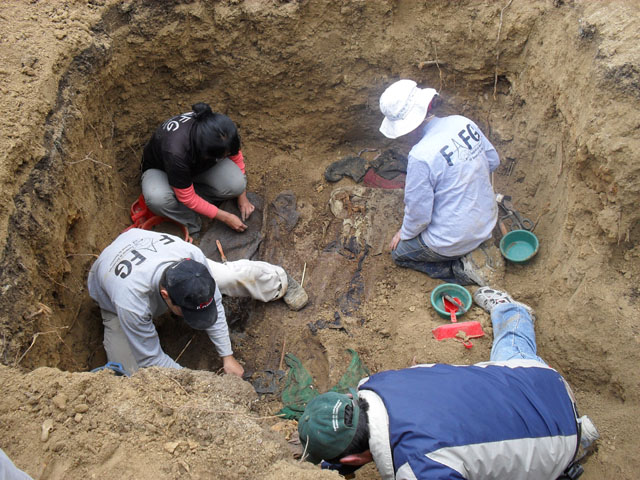
Currently, exhumation is ongoing at one of the biggest mass graves in the country, Tomasica in northern Bosnia where 430 body remains were found since September.

According to existing data, more than 100,000 people were killed during the war.

Thursday 12 December 2013

http://www.worldbulletin.net/?aType=haber&ArticleID=124854

continue reading

Clapham rail disaster: Ex-firefighter remembers train crash


Twenty-five years ago 35 people were killed and 500 people injured when three trains collided in Clapham, south London. BBC producer Clifford Thompson, who at that time worked as a firefighter and was on duty that day, says he will never forget what he saw.

The teleprinter furiously spat out messages printed on to a roll of paper.

It was Monday, 12 December 1988 - a bright but fiercely cold day - just after 08:00.

The London Fire Brigade's Green Watch firefighters were coming to the end of their 48-hour shift.

I stood in the watch room at Stratford fire station in east London - I'd been a firefighter for three years and was one of the Red Watch crews preparing to relieve our colleagues.

We crowded around the teleprinter as messages were relayed from Spencer Park in Clapham.

"This is a major incident - initiate major incident procedure," followed by: "two commuter trains in collision, five carriages involved, approximately 150 casualties, unknown number of people trapped, efforts being made to release".

A train travelling from Poole, Dorset, had passed a "clear" signal just outside Clapham Junction Station and hit the back of a train from Basingstoke, ripping open carriages. Some de-railed carriages were pushed into the path of a third train travelling away from London.

Fifteen fire engines from closer stations headed straight to the crash site, along with a number of specialist rescue firefighters and police, ambulance and hospital surgical teams.

At that point - being 12 miles away and a 45-minute drive from Clapham - I thought there was little chance of our crew getting called there.

Then at 10:25 the officer in charge of the incident sent the radio message: "request 18 pump relief... as soon as possible... rendezvous at junction of Windmill Road and Spencer Park."

A few minutes later the teleprinter bell sounded at Stratford and our engine was despatched to the crash.

I was struck by the scale of what met us - there were dozens of emergency service vehicles and also TV crews.

It was a surreal sight, like a massive film set.

We were told to go down to the crash site and assist with the remaining victims.

In the eerie quiet, it was clear that of those remaining, none was alive.

I walked down the steep embankment - at the bottom was a ledge with a vertical drop about 15ft (4.5m) into the cutting - and saw the jumbled mess of iron and steel.

Ladders and ropes were used to help us get down there.

A man's body was pulled from the wreckage, followed by a woman who had suffered multiple injuries.

We removed another body, leaving only one in place: a man thrown from one of the first two carriages on the Poole train.

At 15:52 another radio message was sent: "All bodies now removed from remaining coaches - British Rail heavy cutting and lifting units in operation. Brigade crews now standing by."

I played a very small part in the rescue operation: one of about 250 firefighters who attended the incident.

I could not imagine what the scene was like for the very first crews to arrive confronted by hundreds of injured people. But we worked with quiet determination to make sure that the final bodies were recovered with as much dignity as possible.

It took more than a year for the 250-page report by Anthony Hidden QC to be published.

It found that faulty wiring had caused an incorrect signal to be displayed to the driver of the Poole train, who was driving into a blind bend and had no chance of stopping.

This crash was by far the largest incident I had attended at that point in my firefighting career.

Of course, I had attended other incidents where people had died. But none of them were on this scale - even 25 years ago, it remains difficult to take in.

Thursday 12 December 2013

http://www.bbc.co.uk/news/uk-england-london-25331840

continue reading

Bubonic plague kills 20 in Madagascar village


Twenty people have died following a deadly outbreak of the bubonic plague, medical experts on the island of Madagascar have confirmed.

A village near the north-western town of Mandritsara is where at least 20 reportedly died last week. The Pasteur Institute in Madagascar confirmed tests had identified their cause of death as the plague, according to the BBC.

Public Health officials had warned of the risk of an outbreak in October. In 2012, 256 cases of the disease were recorded and 60 people died, making Madagascar the most severely affected country in the world. The disease is transmitted to humans usually via rat fleas and prisoners typically face the highest risk because of their living conditions.

The International Committee of the Red Cross (ICRC) and the Pasteur Institute had said Madagascar's dirty, overcrowded prisons could be an ideal breeding ground for the disease. They have been working with local health groups on schemes to improve prison hygiene and reduce rats in a bid to fight the plague at Antanimora Prison in Antananarivo, where 3,000 inmates are held.

"The chronic overcrowding and the unhygienic conditions in prisons can bring on new cases of the disease," Christoph Vogt, head of the ICRC delegation in Madagascar had said in October. "That's dangerous not only for the inmates but also for the population in general."

He added: "Rat control is essential for preventing the plague, because rodents spread the bacillus to fleas that can then infect humans. So the relatives of a detainee can pick up the disease on a visit to the prison. And a released detainee returning to his community without having been treated can also spread the disease."

According to the ICRC, an average of 500 cases have been recorded on the island every year since 2009. Africa is now believed to account for more than nine out of ten bubonic plague cases worldwide.

Thursday 12 December 2013

http://www.independent.co.uk/news/world/africa/bubonic-plague-kills-20-in-madagascar-village-8997280.html

continue reading

Market fire in China's Shenzhen kills 16


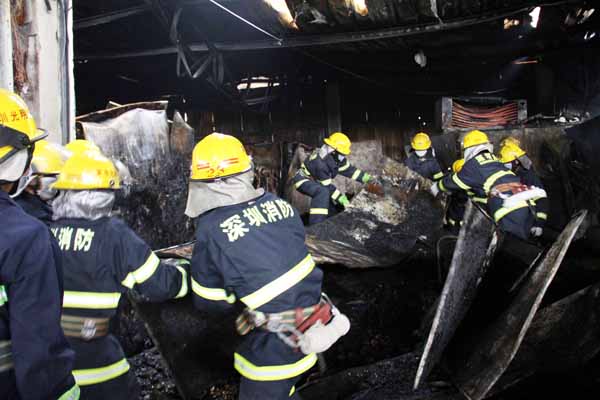
A blaze which engulfed a Chinese food market killed 16 people in the early hours of Wednesday, firefighters and state media said. The inferno raged through the Rongjian Agricultural Wholesale Market in Shenzhen bordering Hong Kong, the city's fire department said.

The state news agency Xinhua said 16 people including an infant girl were killed and five injured, and the market manager was in police custody.

It took 145 firefighters and 29 fire engines a hour and half to put out the blaze, the fire department said on its verified account on Sina Weibo, a Chinese equivalent of Twitter.

The cause of the fire was still under investigation and rescuers were still searching the site.

Zhang Xiaowei, spokesman for the city fire department, was quoted by Xinhua as saying all the victims were people associated with four stores in the market.

Security guard Wang Long, who discovered the fire, was quoted as saying many shopowners and their families live in the market and store their goods there to start business in the early morning.


Workplace safety standards can be poor in China. Fatal accidents happen regularly at mines and factories, with some blaming lax enforcement of rules.

In June 121 people died in an inferno at a poultry processing plant in northeast China's Jilin province, which started in a workshop that had only one unlocked door.

It was the country's worst fire for more than a decade.

In 2000 a blaze at a shopping centre in Luoyang, in the central province of Henan, killed 309 people.

Thursday 12 December 2013

http://www.google.com/hostednews/afp/article/ALeqM5hVM0DOPMVQwl4DqPNFi_r5vHXRFQ?docId=d19c1468-bcb7-4281-9fdc-e985154db415

continue reading

Typhoon death toll continues to rise as 23 more bodies recovered


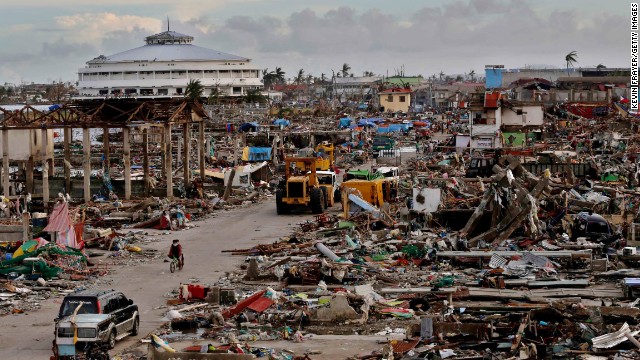
Twenty-three more bodies were recovered yesterday as the death toll from Typhoon Yolanda rose to 5,959.

The National Disaster Risk Reduction and Management Council (NDRRMC) said 27,022 people were injured while 1,779 remain missing.

NDRRMC executive director Eduardo del Rosario said while the number of fatalities was increasing daily, the number of affected families declined to 2,581,677 or 12,191,201 individuals as of yesterday.

The displaced families are now staying in 386 evacuation centers set up by the government and non-government organizations involved in humanitarian operations in the Visayas region.

The NDRRMC said the Department of Social Welfare and Development is ending its food distribution operations to evacuees this month.

Government help for evacuees next year would be in the form of food-for-work program, a scheme that would give jobs to displaced residents in devastated communities.

Thursday 12 December 2013

http://www.philstar.com/headlines/2013/12/12/1267100/typhoon-death-toll-continues-rise-23-more-bodies-recovered

continue reading

Russian experts test human remains after 39-year hunt for Hull trawlermen


British police are to work with Russian experts in an attempt finally to bring peace to grieving families of the victims of one of Britain's worst-ever tragedies at sea.

No distress call was made when the 1,100 tonne ship went down during a fierce storm in the Barents Sea in February 1974 - in a decade when British trawlers were routinely used by the Navy to spy on Soviet naval movements.

The mystery of what happened to the Gaul has endured ever since, amid rumours it was spotted spying on a military complex at Murmansk and sunk by a Russian submarine.

It took more than 20 years before the wreck was finally found in 1997, after a private expedition by a TV crew.

Subsequent searches of the vessel, 70 miles off the north Norwegian coast, found the remains of just three of the 36 crew - Stan Collier, 40; James Wales, 29; and Maurice Spurgeon, 38.

But now other grieving families could finally get confirmation of what happened to their loved ones.

For the human remains of up to ten people have been found on the Rybachy peninsula, Murmansk.

A team of Russian and British experts is working together to try and match the remains to missing crew members, with DNA samples being taken from British families in a bid to help identify the remains.

In a statement, a Foreign Office spokesperson told The Independent: "The Russian authorities have been in touch formally with the FCO suggesting possible direct cooperation between the Russian authorities and Humberside Police in the new year with the aim of conducting relevant tests to identify the remains found in Murmansk."

Tonight a spokesman for the Russian Embassy, London, said: "Currently Russian forensic experts in Murmansk are running tests to determine DNA samples, those should be finished in December." They added: "We are also working on provision of remains samples to the British experts for tests in the UK."

According to the spokesman, the remains were discovered by a Russian World War Two veteran from Murmansk who was involved in previous searches many years ago and who continued to search "on his own initiative until he found those remains last year."

Assistant Chief Constable Alan Leaver from Humberside Police confirmed: "We have met all the families of the crew members lost on the Gaul and will continue to provide them with information as it becomes available."

Humberside Police "will look to work closely with the Russian authorities," who Mr Leaver praised for being "very supportive and helpful."

Experts in Russia are conducting forensic and genetic testing on the remains, and he added: "The force plan to discuss these matters in the New Year - probably towards the end of January - with the Russian authorities."

But Beryl Betts, whose 26-year-old brother Billy Jones was one of those aboard the trawler, has "mixed feelings" about the news.

"My personal opinion is that they should have told us when they were 100 per cent sure. This has spoilt Christmas," said the 74-year-old from Hull.

Other relatives are also "in a state of shock" according to Mrs Betts, who is giving a DNA sample to help in the identification process.

Freezing conditions in the region they were found mean the bodies were never buried, simply covered with rocks.

It remains unclear why it has taken almost 40 years for the remains to be found.

The location where they were discovered is consistent with the area where the crew could have washed ashore, according to Humberside Police.

Responding to the news on Wednesday Lord Prescott, former Deputy Prime Minister and Hull East MP, said the fate of the crew has been "a continuing mystery" and added: "People want an ending to this terrible tragedy."

Theories that the Russians sank the ship have been discounted by previous official investigations, and a public inquiry in 2004 into the disaster concluded the Gaul went down in heavy storms and was not deliberately sunk or pulled down by a submarine.

Lord Prescott commented: "Our trawlers were used in the Cold War. That was a practice that was unacceptable and dangerous." In the case of the Gaul: "I don't think for a second that it was sunk by the Russians but some people believe that."

Hull MPs were briefed by officials on Tuesday and Alan Johnson, Labour MP for Kingston upon Hull West and Hessle, said: "They didn't want to just go to the families and get their hopes up before they'd gone through a bit of a process of elimination, dating the remains, making sure they weren't Russian sailors...they are from the right time frame and it is becoming a reasonable possibility that these could be crew members from the Gaul."

But he admitted not all relatives have welcomed the news. "The first family member I rang yesterday said 'I wish this hadn't happened' because she had the slight feeling that her brother might still be alive. For the family members while there was no news there was hope."

Thursday 12 December 2013

http://www.independent.co.uk/news/world/europe/closure-at-last-in-cold-war-mystery-russian-experts-test-human-remains-after-39year-hunt-for-hull-trawlermen-8997595.html

continue reading

Wednesday, 11 December 2013

Highland Towers: Lessons learnt from the disaster


Rescue agencies are today better prepared for any worst case scenarios as a result of lessons learnt from the Highland Towers collapse.

Fire and Rescue Department director-general Datuk Wan Mohd Nor Ibrahim said there were disaster management contingencies put in place to ensure coordination among all agencies.

Wan Mohd Nor, who was commandant in charge of training, was at the scene during the 1993 tragedy and witnessed this lack of coordination.

“The lesson I learnt is that management and coordination are vital to the success of any rescue work.”

All disasters relief measures are now managed by the National Security Council (NSC).

NSC would issue an order called “Directive 20” to coordinate all agencies, which would include the civil defence and welfare departments.

“Each agency knows its role,” he added.

Wan Mohd Nor said the tragedy two decades ago was a catalyst that transformed the fire department into a multi-skilled rescue organisation.

“We realised that we needed to move beyond our traditional role of fire-fighting to prepare ourselves for any disaster,” he said.

“There is now greater emphasis on urban search-and-rescue and there is a specially trained elite team.”

The Special Tactical Operation Rescue Malaysia (STORM) team comprises 140 personnel who are based in the department’s headquarters located in each state.

“They can be mobilised to respond to an emergency as a single unit anywhere in the country within 24 hours,” said Wan Mohd Nor.

He added that these units could also complement the 100-strong Special Malaysia Disaster Assistance and Rescue Team (SMART), which was set up in 1994. SMART is a separate entity under the NSC.

The STORM team, for instance, was there during the country’s worse accident, which claimed the lives of 37 passengers when a bus carrying 53 plunged into a 60m ravine near Genting Highlands in August.

“They managed to rescue all of the 16 survivors within an hour, which is remarkable,” said Wan Mohd Nor.

“All the bodies were recovered that same evening.”

Besides specialised training, STORM units are equipped with the latest technological rescue advances. These include ground-penetrating radars and other devices which can detect survivors beneath the rubble and specially trained rescue dogs.

Datuk Dr Soh Chai Hock, who served as a fireman for 36 years before he retired as the director-general in 1999, recalled rescue efforts were tedious as tonnes of concrete rubble stood in their way.

He said when he first heard about a building collapse two decades ago, he thought it was an unoccupied place.

“When we arrived at the scene I realised we were not prepared or equipped for the work ahead of us,” he recalled.

“Still, we had a job to do. We had an operations meeting with the police as well as other agencies and it was decided that the Fire and Rescue Department would head the rescue efforts,” he said in an interview recently.

One thought ran through his mind when he arrived at disaster site at around 1.35pm.

“This is not going to be easy but the trapped people needed to be saved. We hoisted ladders and climbed to the top of the toppled building and pulled out a Japanese woman,” he said.

Two other survivors were found on the same day, Dr Soh said, adding that this spurred the rescuers on.

Residents from the area also volunteered to help, he recounted.

“Search and rescue teams from Singapore, France, Japan, Britain and the United States arrived in Malaysia.”

Dr Soh said the stench of the dead remained in his mind to this day.

He recalled spending days at the site and only went home to catch short naps before dashing out for the rescue mission again.

“I did not want to waste any time as speed was the key to getting as many survivors out as possible.

“There were lessons learnt on those days and these resulted in the department being better equipped today,” Dr Soh Said.

Dr Soh also stressed on the need for the community’s involvement. “When a tragedy occurs, the first responders should be the witnesses at the scene,” he said. “If the public is trained to not panic in such situations, more lives can be saved.”

Wednesday 11 December 2013

http://www.thestar.com.my/News/Nation/2013/12/11/Lessons-learnt-from-the-disaster-Contingency-plans-now-in-place-to-ensure-coordination-among-all-age.aspx

continue reading

Reclaiming Peru's dead


Valentin Casa can’t shake the recurring nightmares. And this day certainly isn’t helping.

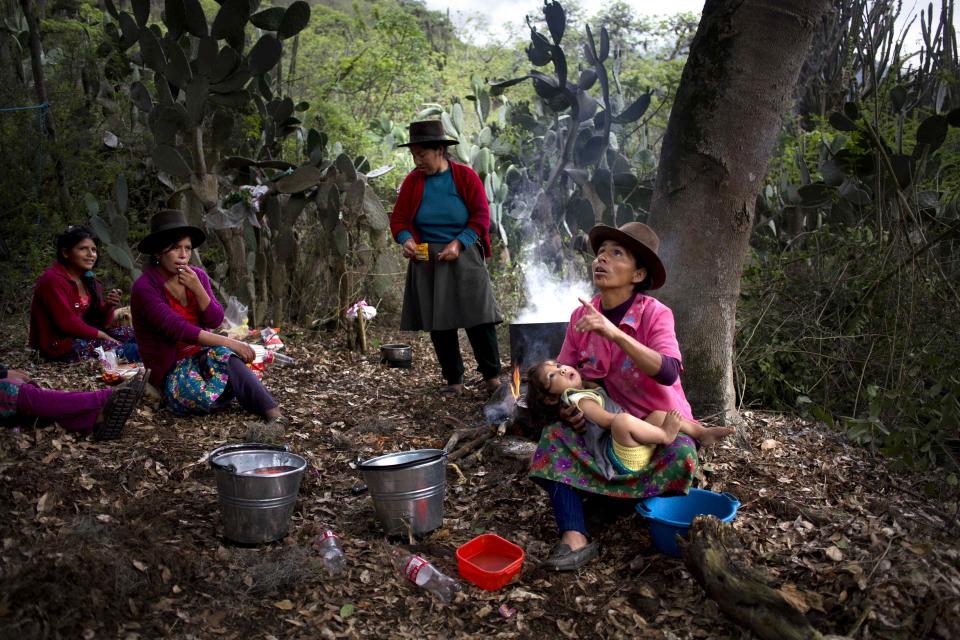
The 36-year-old farmer looks on as forensic investigators unearth a pair of finger bones and two copper rings from a mass grave in the village of Huallhua on the eastern steppes of Peru’s Andes.

The grave contains the long-buried remains of two women and 13 children, and Casa believes the bones and rings belonged to his mother.

As a boy 27 years ago, Casa watched from behind trees as soldiers and their paramilitary allies dismembered and killed his mother and other women and children left behind by fleeing Shining Path rebels.

Civilians suspected of backing the rebels were hunted down and killed. Two weeks later, troops and their civilian confederates caught and killed men from Casa’s village, including his father, whose throat they slit.

Three decades later, this isolated corner of Peru is witnessing the biggest exhumation to date of victims of the nation’s 1980-2000 internal conflict. The worst of its carnage occurred on these hills between the Andes ridge and Amazon jungle.

“Everybody here is traumatised,” Casa says as he watches the work underway. “Whoever says he isn’t is lying.”

Authorities in Lima have been painfully slow to dispatch teams to dig up the dead from a conflict that, according to a 2003 truth commission report, claimed an estimated 70,000 lives. Just over half were slain by Maoist-inspired rebels, over a third by security forces. Fifty criminal investigations were only launched into the killings in 2011, said the prosecutor in charge, Gloria Pareja.

In November, forensic anthropologists began their work in the Chungui district and expect to remove 202 bodies in all — mostly women and children.

At least 1,384 people were killed in Chungui, which is slightly larger than Hong Kong geographically but has only 6,000 inhabitants. People there are constantly uncovering bones but very few graves have been exhumed by professionals.

The killing fields are an 18-hour walk from the nearest road in a region known as Oreja de Perro, or Dog’s Ear. It is a place where health care, schools, police and other institutions barely exist. There are no roads, electricity or phones. The hills are still patrolled by Shining Path rebels, and drug traffickers flaunt the state’s absence.

Casa provides security for the forensic team while armed with a worn Mossberg 500 shotgun. The exhumers gather the diminutive bones of children, 26 found so far in the district, in boxes made to hold sweet bread. “I drank my own urine to survive,” Casa remembers, after his mother was killed and he fled into the forest.

Teresa Vilchez, 52, says she still suffers occasional vaginal bleeding from a gangrape by soldiers in 1984 at the nearby Mollebamba barracks. Rebels killed her husband, she says, and soldiers killed her mother, who she says was disfigured in the customary way after being raped: Her breasts were cut off.

No one has been arrested or prosecuted to date for the crimes in Chungui — not a single soldier, rebel or civilian. Villagers say no one has received any mental health counselling. Vilchez has never seen a gynaecologist.

It was exactly such conditions that prompted the poor farmers of Chungui to initially welcome the Shining Path. In 1965, other Cuban-inspired guerrillas had freed farmers there from grinding servitude, assassinating the two powerful ranchers responsible.

The Shining Path persuaded farmers to abandon their homes and live in forest camps to avoid encounters with soldiers. But the rebels were merciless, said Edilberto Jimenez, an anthropologist who interviewed survivors in the 1990s.

Wary of being discovered, the rebels prohibited people from lighting cooking fires, forced women to give birth in caves and killed children who did not keep quiet when soldiers neared, Jimenez said. Today’s Shining Path only numbers in the hundreds, taxes the cocaine trade and still has a reputation for cultivating local farmers.

Priska Palacios, a worker from the German government development agency GIZ, said little has changed for poor farmers in Chungui. “The basic conditions that generated the conflict — poverty, exclusion, discrimination — are exactly the same as they were in 1980,’’ Palacios said.

Wednesday 11 December 2013

http://www.financialexpress.com/news/reclaiming-the-dead/1205599/2

continue reading

Digs start at grave site in Rudnica near Raska


The Serbian War Crimes Prosecutor’s Office and the Commission for Missing Persons launched the digs at the site in Rudnica, municipality of Raska, which is believed to hold the remains of 250 people.

On instructions issued by the Serbian War Crimes Prosecutor’s Office, digs at the Rudnica site will be carried out according to the method of forensic archaeology so as to establish the credibility of information about a mass grave.

The preliminary examination was attended by members of the Serbian government Commission for Missing Persons, Working group for missing persons of the Kosovo interim government, members of the Serbian Ministry of Interior, EULEX and representatives of the International Committee of the Red Cross.

President of the Serbian government Commission for Missing Persons Veljko Odalovic said in an interview for the Novi Pazar-based Regionalna Radio-Televizija Novi Pazar that the Commission wishes the dig to remove all dilemmas about the site.

“We examined the site on several occasions. We acted on the information received from EULEX. This is a serious and difficult matter, which is why we allocated substantial funds for the investigation of the site,” he said.

The Serbian War Crimes Prosecutor’s Office discovered a potential mass grave at the Rudnica site in Raska, southern Serbia, which according to witnesses contains the bodies of 250 Kosovo Albanians. The Prosecutor’s Office believes that the remains were transported there during the withdrawal of Serbian forces from Kosovo in June 1999 and that the action was conducted by the members of the then Special police unit.

The issue of the mass grave at Rudnica was launched by the Pristina working group and UNMIK back in 2004 and unsuccessful examinations were performed in May and June 2007.

Wednesday 11 December 2013

http://inserbia.info/news/2013/12/digs-start-at-grave-site-in-rudnica-near-raska/

continue reading

Bodies of Hull trawler Gaul's missing crew 'found in Russia' 40 years after Cold War mystery sinking


Human remains thought to be missing members of the crew of Hull trawler Gaul - which went missing in February, 1974 - have been discovered on the Russian coast. DNA tests are currently being carried out by the Russian authorities to identify them.

The Mail understands the remains of up to ten bodies are being examined. The discovery comes nearly 40 years after the trawler disappeared during a fierce storm in the Barents Sea 80 miles off Norway with the loss of her entire 36-man crew.

The factory stern trawler issued no distress call and a subsequent search failed to locate the wreck. The Gaul was eventually found in 1997 during a privately-funded seabed survey.

Only three crew members have ever been positively identified after bone fragments were recovered from the vessel in another survey in 2002 – factory charge-hand Stan Collier, 40, James Wales, 29, the Gaul's third engineer, and acting first mate Maurice Spurgeon, 38.

Now, fresh hopes have been raised that more missing men could be identified after Humberside Police confirmed it was working with the Foreign Office to liaise with the Russian authorities over the discovery.

Assistant Chief Constable Alan Leaver from Humberside Police said: “We have met all the families of the crew members lost on the Gaul and will continue to provide them with information as it becomes available. At the moment, the information we have is very limited and we have to wait for the Russian authorities to advise us of the tests they are doing on the remains. We will continue to work with the Foreign and Commonwealth Office to seek to support families and to provide more details about the remains.”

In their statement, police said the remains had initially been found on the Rybachy peninsula in the Murmansk region of Russia in the mid-1970s by people living nearby. The Mail understands a Russian custom at the time the Gaul disappeared was to use rocks to cover the bodies of unknown dead seafarers because freezing ground conditions meant it was impossible to dig proper graves. It is not clear why the discovery was not reported at the time, although the loss of the Gaul happened at the height of the Cold War.

The police statement states: “At this stage, there is no confirmation as to the nationality of the remains. However, this area of Russia is consistent with the area where the lost crew of the Gaul could have washed ashore. The information passed to the UK authorities is that the remains were found in 1974 or 1975 by the local population.”

Families of the dead crew have been given information about the discovery of the remains and details of the forensic tests during the visit from the police.

The statement adds: “During these visits, the officers have been asking family members for descriptive and comparative information that may assist in identifying the missing from the Gaul at this time or if other bodies are discovered at a later date. The Russian authorities have confirmed they are conducting forensic and genetic testing on the remains and they are committed to assisting the UK in the identification of the remains found.”

All 36 crew members died when what was then regarded as one of Hull’s most advanced trawlers disappeared during a heavy storm 70 miles off the Norwegian coast in February 1974. A subsequent search for the Gaul in the Arctic waters of Barents Sea found no wreckage.

Two months later, a lifebelt from the vessel was washed ashore in Norway. The lifebelt was the only physical evidence from the factory freezer trawler to be displayed at a public inquiry into her loss held in Hull later that year. The inquiry concluded the Gaul must have been overwhelmed by heavy seas.

However, the findings did not satisfy many relatives of the crew. Some suspected the vessel’s disappearance was linked to Cold War hostilities. Rumours persisted about submarine collisions, Russian kidnapping and cover-ups aimed at hiding details of a secret intelligence gathering mission.

Eventually, in 1997, the wreck was discovered on the seabed some 70 miles north of the North Cape of Norway. The Gaul was found by an expedition led by journalist Norman Fenton and financed by two TV companies.

That led to the then Deputy Prime Minister and Hull East MP John Prescott to ask the Marine Accident Investigation Branch to commission its own survey of the wreck. A follow-up survey found human remains onboard.

A re-opened inquiry into her loss by the MAIB concluded the vessel had been flooded as a result of two open waste chutes on the main deck.

Wednesday 11 December 2013

http://www.hulldailymail.co.uk/Bodies-Hull-trawler-Gaul-s-missing-crew-Russia-40/story-20303460-detail/story.html

continue reading

Tuesday, 10 December 2013

Egypt mini-bus crash kills at least 13


A truck carrying petrol in northern Egypt has crashed into a mini-bus and exploded into a ball of fire, killing at least 13 people, authorities said.

Officials told the AFP news agency that Monday's crash, which also injured several mini-bus passengers, occurred on a bridge in the town of Kafr El-Zayat, south of the Mediterranean city of Alexandria.

It was caused when a tyre on the truck burst and the vehicle rolled over before hitting the mini-bus and exploding, according to the officials.

The accident was the worst since a train ploughed into a mini-bus and a truck at a railway crossing on November 18, killing 27 people.

Egyptians have long complained that the authorities have failed to deal with chronic transport problems, with roads and train lines poorly maintained.

In January, 17 people died when a train transporting conscripts derailed, and in November 2012, 47 school children were killed when a train crashed into their bus.

The transport minister and the railway authority head were forced to resign as a result of that accident, which was blamed on a train signal operator who fell asleep on the job.

The government formed a panel to investigate, but as with similar tragedies in the past, it did little to shed light on the details and less still to bring about accountability.

In Egypt's deadliest railway tragedy, the bodies of more than 360 passengers were recovered from a train after a fire in 2002.

Tuesday 10 December 2013

http://www.aljazeera.com/news/middleeast/2013/12/egypt-mini-bus-crash-kills-at-least-13-2013129194641226928.html

continue reading

NBI identifies only 11% of recovered typhoon victims


Only 11% of the fatalities from typhoon Yolanda (international name: Haiyan) in this city have been identified so far.

"We can only examine up to 40 bodies everyday, but there are many remains that have been retrieved. We’re not constrained by the method of identification but by the number of bodies," said Raul Alcantara, head of the second team of National Bureau of Investigation (NBI) experts deployed to this city to identify the dead.

Mr. Alcantara said most were in an advanced state of decomposition, further hindering the identification process. Instead of simply using fingerprints to identify the bodies, the team has to conduct dental examination and DNA (deoxyribonucleic acid) tests.

Those that have been buried will also be exhumed for examination.

"Even if these bodies will be examined, the identification process is a challenge if there are no dental records available. We also need at least three living immediate family members for comparison to complete the DNA testing," Mr. Alcantara explained.

Since it launched retrieval of bodies after the storm, the task force on cadaver collection has recovered 2,321 bodies in this city alone. Only 245 bodies have been identified as of this week.

"They were identified by their relatives through clothing and [pieces of] jewelry," the NBI official said.

From Dec. 4 to Dec. 8, the task force led by the Bureau of Fire Protection (BFP) has recovered 106 more cadavers in the city’s San Jose district, Magallanes Street, Anibong village, Nula-Tula village, and the shoreline near the San Juanico Bridge.

"We expect to retrieve more bodies as seawaters subsided in low-lying areas and storm debris have been cleared in coastal communities," said Sr. Supt. Pablito Cordeta, BFP regional director and task force head.

The team also asked the Department of Health to provide more body bags and step up its support in burying remains.

In a briefing, City Administrator Tecson John Lim said there were reports that some bodies were buried by residents outside mass grave sites without knowledge of authorities. "It’s hard to account for bodies that were buried outside the designated grave site," Mr. Lim said.

As of Sunday afternoon, the Department of the Interior and Local Government (DILG) reported 5,582 deaths in Eastern Visayas with 1,729 persons still missing after the typhoon slammed into central Philippines on Nov. 8.

Some 517,579 houses were destroyed, displacing about 479,000 families in Eastern Visayas.

Meanwhile, an official of the National Competitiveness Council (NCC) said Western Visayas can immediately recover from the effects of typhoon Yolanda despite wreaking havoc on the agriculture and fisheries sectors in the region.

Guillermo M. Luz, NCC co-chairman, said Western Visayas can boost its economic growth faster than other areas hit by Yolanda.

Mr. Luz, who led an NCC roadshow in Iloilo City on Friday, cited the fast-paced growth in Iloilo City, which is the economic and political capital of Western Visayas. "You are relatively lucky because Yolanda did not directly hit Iloilo City where everything is up and running. There is no downtime in growth here because of various investments and developments. Had the typhoon directly hit the city, the magnitude of destruction would impact heavily on the economic and social sectors," he added.

He also cited Iloilo’s recovery in the aftermath of typhoon Frank (international name: Fengshen) in 2008.

He said Iloilo City emerged second in the overall competitiveness ranking of top 10 cities in the Philippines five years after typhoon Frank struck.

"The city made adjustments after typhoon Frank and the resiliency of the local government unit in the face of disasters paid off," he added.

Tuesday 10 December 2013

http://www.bworldonline.com/content.php?section=Nation&title=NBI-identifies-only-11%-of-recovered-typhoon-victims&id=80524

continue reading

Agonising wait for the missing in Philippine wastelands


In the grieving, grey wastelands that were once bustling towns on tropical Philippine islands, thousands of typhoon survivors are enduring an agonising wait of hope and denial for news of loved ones.

Nearly 1,800 people are officially listed as missing after Super Typhoon Haiyan swept across the central Philippines just over a month ago, and not knowing what happened to them is for some relatives nearly as painful as confirmation that they died.

Francis Batula, 35, buried his aunt and four other relatives in shallow graves outside their badly damaged home in the coastal city of Tacloban, where giant storm surges wiped out thousands of homes as well as schools, churches and other places serving as evacuation centres.

His aunt was in her house facing the Pacific Ocean, along with her husband and daughter. The aunt?s body was found but not those of the other two, and Batula refuses to acknowledge that his uncle and cousin are likely dead.

We are still hoping that they are safe, but that they can't contact us. Maybe there's no (phone) signal where they are now, Batula told AFP after walking past the graves of his five other relatives.

Batula said he and other relatives had paid fruitless visits to neighbouring communities to ask if people had seen his uncle and cousin, and expressed anger at authorities for not doing enough to search for the missing.

?All they are doing is asking for the names of the missing people. They say they will report it. But when you ask them what they will do to help you find them, there is no concrete answer? they say it's not a priority right now, he said.

The government insists it is doing all it can to find the missing but, like virtually all other aspects of the disaster, the magnitude of the response needed is overwhelming.

The number of people confirmed killed is 5,936, and just the task of dealing with the dead has been too much to handle properly, with countless bodies having been dumped into mass graves without being properly identified.

The typhoon on November 8 generated tsunami-like storm surges that powered through dozens of coastal communities on the islands of Leyte and Samar, and piles of rubble from destroyed homes still lie in the streets.

As that debris is being cleared by cash-for-work clean-up crews of survivors and just a few bulldozers, bodies continue to be found.

Amid the chaos, there are haunting messages for the lost.

Churchgoers browse lists of missing people and look at posters appealing for help that are pinned up to the entrances of cathedrals.

At the Santo Nino church in Tacloban, a photocopied photo of a three-year-old boy hangs on a notice board.

Alongside, a handwritten message says the boy was wearing an orange life vest and diapers, but no shirt, when he went missing on November 8. The phone numbers of five people are listed for anyone with information to call.

The Red Cross is playing an important role in trying to find the missing.

It sends tracing teams into communities to look for people after they are reported by relatives or friends as having disappeared.

One of the charity organisation?s team leaders in Tacloban, Iris Recto, said her small team had found at least eight people a day over three weeks, with a record daily success of 29, by searching in evacuation centres and communities.

But Recto said the Red Cross cases mainly involved relatives overseas or elsewhere in the Philippines reporting missing people. The Red Cross typically finds people who had lost their phones or were living in an area without a phone signal, so had been unable to call relatives outside the disaster areas, according to Recto.

For the 1,779 people listed by the government as missing, they have been reported by relatives and local officials in the communities where they lived.

And the fate of many people swept out to sea or buried anonymously in mass graves will likely never be known.


National Disaster Risk Reduction and Management Council spokesman Reynaldo Balido told AFP that it would not declare any of the missing as dead until local officials officially made that pronouncement.

This sometimes happened one year after the disaster, even without an official identification of the body.

But Balido acknowledged that in the history of tracking the frequent typhoons, earthquakes and other disasters that plague the Philippines, the figures often permanently end up as "dead and missing"

He cited the case of Typhoon Bopha, the world?s deadliest storm last year, which tore across the southern Philippines on December 4, and officially killed 902 people.

But more than a year later, relatives of 934 people still listed as missing continue to live in a tortuous limbo.

Tuesday 10 December 2013

http://www.google.com/hostednews/afp/article/ALeqM5h_M6KzVzrM0TJeFXXbAKEuDXTmEg?docId=62154848-3ced-4bb5-b9c4-8b5df26e3c27

continue reading

Monday, 9 December 2013

50 years later, witnesses, families recall Flight 214 crash


While residents were returning from evening church services, finishing up a late supper or watching “The Ed Sullivan Show,” five airliners were circling above Elkton, waiting for the OK to fly the 44 miles home to Philadelphia.

On that night, Dec. 8, 1963, Flight 214, a Pan American Airways Boeing 707, was returning to the U.S. from from San Juan, Puerto Rico. Onboard: 73 passengers and eight crew members.

Most passengers were returning from vacation. There were three groups of golfers, the alumni from Northeastern University who took a winter vacation every year, two honeymoon couples and a young woman bringing her infant son to meet his grandparents for the first time.

There was a nurse, an employee of Campbell Soup, a furniture dealer, a real estate broker and several dentists.

Back home, there were husbands and wives, sons and daughters, sister and brothers and friends. There was the airplane stewardess who changed her flight plans at the last minute.

And in Elkton, an unusual winter thunderstorm rattled the small town with pouring rain, wind and flashes of lightning. Then, at 8:58 p.m., Flight 214 broadcasted to Philadelphia.

“MAYDAY. Clipper 214 is going down in flames.”

Local residents became witnesses, reporting they saw lightning strike the plane and send an orange fireball to the ground. Those waiting for loved ones to come home heard erroneous reports of a crash in Newark, Del., and began to worry.

It was the end of the flight, but the beginning of a hellacious series of days.

This Sunday marks 50 years since the fatal crash. Decades later, the memories are still fresh for Elkton residents, although many who witnessed that night are now gone, and family and friends are still trying to find closure.

The late fall of 1963 started off as an exciting time for Cecil County.

The first commercial radio, WSER, had started to broadcast. Towns were abuzz about the Northeastern Expressway that President John F. Kennedy came to dedicate in a ceremony on Nov. 14.

Then, with Kennedy’s assassination on Nov. 22, the year turned bleak. Just when the county thought it couldn’t get any worse, Dec. 8 arrived to deliver the largest aviation disaster in Maryland’s history, said Mike Dixon, of the Historical Society of Cecil County.

“In a community’s history, there are lots of things that add to the heritage of that place. And for the generation that was alive back at that time, albeit a catastrophic moment, this is one of them,” Dixon said.

The Historical Society keeps a brown file folder on Flight 214 filled with article clippings, death certificates and official documents relating the crash. There is even a portion of the plane on display. Besides the requests for information on genealogy or old homes, local historians receive the most inquirers about Flight 214.

Through work the society is doing now, future generations will have more information available regarding Flight 214. When relatives, friends and local witnesses gather in memory of the crash this weekend, members of the historical society will meet them privately to record their recollections.

“Our obligation is to document history, and this was a sad one, but a formative one,” Dixon said.

The weather that Sunday night was an odd storm — rain, sleet, thunder and lightning — more appropriate for a sticky summer night. Driving north on Route 213, Don Hash, then 25, was returning from a police call in Chesapeake City when he saw lightning in the shape of a wishbone, followed seconds later by the blast of a bright orange cloud and a falling airplane wing.

Hash, out of the police academy only 18 months, was one of three troopers on patrol that night, along with a handful of the sheriff’s deputies. He immediately headed in the direction of the flames and was the first person on the scene.

“It was just a bunch of debris strewn over the area there, I don’t recall any suitcases or anything like that. It was a muddy night because it had been raining awful hard. It was just one muddy mess,” Hash said.

The area where the plane crashed off Delancy Road is now the neighborhood of Turnquist, but was then only populated by a few farm houses. Residents recalled their yards lighting up and houses shaking.

“They said, ‘Daddy come quick, there’s a falling star’ and I said, ‘That’s no falling star, that’s a plane,’” the Rev. Howard Van Sice, who was with his children at their West Main Street home in Elkton at the time of the crash, said in a 1983 interview with the Whig.

Mae Grant, who was visiting her parents with her 3-month-old son at the Delancy Road family home at the time of the crash, recalled the dramatic moment in another previous interview with the Whig.

“Everything outside lit up and as soon as I looked up I could see the plane on fire. I remember my dad yelling, ‘Run,’ and I remember saying, ‘Run where?’”

Before 9 p.m., Rosemary Culley, the lone emergency service dispatcher on that night, issued a couple routine airchecks. Then she hollered loud and clear over the crackling radio waves: “Station 3 you have a plane crash.”

Elkton Chief Edgar Slaughter was in charge from the scene that night. Despite those who had rushed to the scene with him, he needed more help. Over the radio, Culley came in again: “All available ambulances respond to a plane crash at Delancy Road in Elkton.”

Hampton Scott, then 24, saw the plane go down from his home on Bow Street. At first, he thought the glow was from a distant barn fire. Then the wing of the plane rotated in the sky as it was falling. A member of the local fire company, Scott raced to the firehouse, about a block away.

Although the initial impact of the plane created a great blaze, by the time first responders arrived at the scene, the force of the plane falling to earth had buried pockets of fire into the ground. Once there, responders realized there weren’t going to be any survivors.

Scott left the scene to report to his job as a mail worker at 5 a.m. on Monday. He had three young daughters at home, ages 4, 3 and 1. He tried to keep in the Christmas spirit for his girls.

“It was certainly one of the worst things I ever saw. I certainly can’t imagine anything worse,” Scott said.

For people who grew up in America between WWII and the Korean War, aviation was a thrilling new frontier, explains Thomas Anthony, director of the University of Southern California’s Aviation Safety and Security Program.

“Aviation is inherently interesting because it involves almost a sublime and unexpected activity,” he said.

With its swift speeds and glamorous allure, the 1958 debut of the Boeing 707 is generally credited with ushering the Jet Age, which peaked in the 1960s. It was the way to travel in style, equipped the way a railroad club car would be with a lounge and other comforts.

In 50 years though, Anthony points out air travel safety has increased “phenomenally.” There are now about 0.2 fatal accidents per million departures on commercial air carriers.

In the 1960s, traveling by air, although popular, was not without danger.

Alongside the story of the Elkton crash, The Philadelphia Inquirer reported it was the seventh disaster involving a Boeing 707. The first, in November 1962, happened when a Los Angeles-bound Varig Airlines 707 struck a mountain. Another was due to a bomb, and another due to a failed landing attempt.

Cecil County witnessed the dangers of the Jet Age relatively early.

Memorial Day 1947, Eastern Airlines Flight 605 fell from the sky with 53 people on board, landing in a wooded area off Principio Road outside Port Deposit, according to records at the Historical Society. Even more than 60 years later, the cause of that crash remains a mystery.

Flight 605 was one of the worst fatal crashes in Maryland history, but nothing compared to Flight 214.

Still, if there was anyone to trust in the skies in 1963, it was George F. Knuth, then 45 and pilot of Flight 214.

Back in January 1949, passengers credited “the coolness” of Knuth for saving the lives of 33 persons on board, according to an UP article published at the time. On a clear day, Knuth was piloting a Pan Am Constellation “Monarch of the Skies” when a small private plane collided into its backend 3,500-feet above Long Island.

Knuth landed his plane with the other plane still attached. He credited his team for the smooth emergency landing. The passengers said Capt. Knuth, later called a “hero pilot,” was being too modest.

“He never lost control for an instant. After the collision we dropped slightly, as though we had hit an air pocket. Then we went on and made the landing as though nothing had happened,” said one passenger, D. E. Wilson, of Peekskill, N.Y., in the article.

Carol Knuth Sakoian is reminded of her father whenever she smells a cigar or hears classical music.

George F. Knuth was an Iowa farm boy who originally wanted to be a science teacher, but then joined the military to fly planes. He always had a big garden, even when living on Long Island. The family would have meals with six or eight vegetables at a time, even eggplant, which was then considered kind of unusual.

In his 22 years with Pan Am, Knuth had 17,049 hours total flying, with 2,890 hours flying a Boeing 707.

Knuth usually piloted international flights around the globe, meaning he was away for weeks at a time. When his son was born, the last addition to the three Knuth girls, he decided to take shorter trips. Flying to Puerto Rico meant several days at home before several days away. That November, the family had even been able to travel to Antigua for a short vacation.

On the night of Dec. 8, 1963, Carol, then 16, was studying in her room for a French test. It was a cold night and snowing. Around 11 p.m., she heard the front door open and her mother, Elizabeth, walk to the neighbor’s house.

The news of the crash — complete with pilot’s name — had been broadcast on the evening news. One of the neighbors, a physician, came back to the house with Elizabeth to administer a sedative. Members of the Airline Pilots Association then arrived in the middle of the night to guard the house against the press.

“The worst part of the night was the constant realization that is was true,” Carol said. “When I finally went to sleep, I dreamed it wasn’t true. I guess our minds do that.”

Weeks after the crash, Carol received two Christmas gifts that her father had purchased before the crash: a copy of “Robinson Crusoe” and 45-rpm records of folksinger Burl Ives, which he thought was popular music.

It wasn’t Elvis Presley, but she still has the records.

If Christmas 1963 had been like any other year, Jeff Gilbert’s father would have covered the living room with sheets to keep the kids from peeking.

But on Dec. 8, Gilbert had to call his grandparents to tell them his parents, Robert and Joyce, had died on Flight 215. His father, a dentist in Allentown, Pa., was giving a lecture at the University of Puerto Rico and brought his wife.

Gilbert remembers his mother as jovial, with a good sense of humor. His father a mixture of professional and thoughtful. Although a dedicated worker, his father always made time to spend summers at a cottage in Avalon, N.J., with the family.

Gilbert, then 15, was watching “Bonanza” with his younger sister when the news broke there had been a plane crash. He called Pan Am and the company confirmed his parents were on the flight.

When Gilbert finally went to bed that night he remembers looking out his bedroom window and seeing neighbors silently standing in the front yard watching the house.

Life was different without parents.

“I still like Christmas very much,” he said. “It’s different when you don’t share it with a mother and a father, but I love Christmas. I try to make Christmas for my wife and kids a special time.”

By morning, gruesome details were visible in Elkton. First responders and police from throughout Cecil County had responded to the call, along with men from the Bainbridge Naval Training Center.

“Vacation clothing, some hanging in trees and some lying neatly folded on hangers in a ditch. The four men’s suits on the right had no texture, they were charred to ash and disintegrated at the touch of a finger,” read a photo caption published in the Cecil Whig in the days following the crash.

Cecil County had experienced its own loss when Steward Godwin, of the North East Fire Company, collapsed at the scene about 1:30 a.m. on Monday. He died of a heart attack.

The crash site, centered in a field of the Berry Family Farm, covered a four-mile area. Debris, pieces of the plane and oil were scattered through the field, in trees and on cars and houses.

On the seventh day, a memorial service was held at the crash site.

It would be two more days until Dr. Russell S. Fisher, state medical examiner, identified all the bodies. Fingerprints, dental records and personal effects found nearby were the primary means of identification. For more difficult cases, Fisher and his team reconstructed faces as best possible using mannequins.

The recovery process took as many hearses and removal vehicles as possible, recalled Don Hicks, whose family owns Hicks Home for Funerals in Elkton. Able to drive his family’s gray station wagon, Hicks, then only 13, drove remains from the crash site to the temporary Red Cross station and morgue set up at the armory.

It was a natural response for the town to come together in a time of need.

“You weren’t obligated to do it, but you wanted to do it, you wanted to help your neighbor in need,” he said. His father coordinated many arrangements for families coming in to pick up the remains of loved ones. His mother, a volunteer with the Red Cross, was there to welcome families with coffee and sandwiches.

Henry Shaffer, then 16, cut school for a couple days to volunteer at the crash site as a firefighter. He responded Sunday night after hearing the call to come in over the radio while working on a school report about the assassination of President Kennedy. In the days following, he slept at a relative’s home on Delancy Road so he could stay close.

Thinking about the incident today, Shaffer questions whether it was easier for him to handle the situation than the older men in the fields, those who likely questioned what would happen to their families if they were killed in a horrific accident.

“As I look back on it now, I have to say that maybe I receive some solace or comfort now in having assisted with the recovery of the crash victims’ bodies, as difficult as it was for me then,” he said.

It was a 12-day recovery process. When the area was finished, 16 truckloads of wreckage were taken to Bolling Air Force Base in Washington, D.C., for investigators with the Civil Aeronautics Board to reassemble to determine the cause of the crash.

Scientists said it was “improbable” for lightning to have caused the crash, Delaware’s News Journal reported. If lightning was the cause of a fatal crash, it would be a first in the history of U.S. commercial aviation.

The then director of DuPont’s engineering physics research laboratories told the paper he had once been on a plane struck by lightning and those inside the cabin hardly noticed; the metal skin of the airplane carried the lightning’s current.

“I can’t believe the possibility that a combination of circumstances caused a lightning bolt to break the airplane up,” the scientist said.

Turbulence, unusually fast and heavy icing and the possibility of an insufficient lift in the jet’s wings were all theorized as causes.

It would later be released that the crash happened when lightning ignited a reserve fuel tank, resulting in the left outer wing exploding and loss of control.

The aircraft was destroyed by explosion, impact and fire. The accident is considered the worst lightning strike death toll. In response to the findings, officials called for all commercial jets flying in the U.S. to be installed with lightning discharge wicks.

Following the crash, Rueben Miller Jr. came down from Pennsylvania to speak with investigators and collect the remains of his sister, Joyce Gilbert, and her husband, Robert. Outside the armory, Miller, then 35, met a first responder who had been working in the field all night.

“He said, ‘I can assure you that the remains that you get back will be the remains of your loved ones,’” Miller recalled. First responders later found and returned Joyce and Robert’s wedding rings to the family.

This weekend, more than 20 of Joyce and Robert’s family members will visit Elkton. The Historical Society expects hundreds to visit this weekend to pay their respects and record their memories.

“It’s certainly painful to relive some of it, but maybe it’s freeing at the same time,” said Richard Sherman, who lost his father, Arnold, in the crash. Sherman and more than a dozen of his family members are coming this weekend.

The day of the crash, Arnold was returning with friends from a golf trip. He worked long hours and rarely took a vacation, especially without his wife. Sherman, then 15, was home with his mother and younger brother in Wynnewood, Pa., when he heard the news of the plane crash over the radio.

Some years, the anniversary of his father’s death falls during Hanukkah. In memory of his father, Sherman will light a yahrzeit candle. He likes to remember the simple moments he spent with his father, watching TV and eating pizza.

“I think he would want us to be brave and move forward, and be sensitive and thoughtful,” Sherman said. “I think we have honored his memory in how we live our lives in a good way.”

Chris Knuth, son to the pilot, has found solace in digging through the details of the crash. He was just 6 years old in 1963. “Finding out how many other people were affected by it, my sorrows weren’t really my own anymore,” Chris said.

Like other family members of victims, Chris said he was grateful to the people of Elkton for responding to the tragedy. Chris has visited Elkton several times to meet with witnesses and visit the crash site, now marked with a commemorative stone.

He has few memories of his father — the garden, sitting on his lap at Christmas dinner, watching him ride a bike — but he’s been able to feel connected to him by traveling to places his father went.

There was never a second thought about putting the Knuth children on planes after the crash. Pan Am provided the family with passes to travel. They saw the Taj Mahal and the Buddhist temples in Thailand. They sometimes got the thrill of traveling first class.

Still, there are times when bad turbulence makes Chris nervous. There was one trip when the plane suddenly dropped, knocking a flight attendant unconscious after she hit the ceiling.

His sister, Carol, keeps flying, too. Based in New York City, she frequently travels internationally for business. With the jet-setting lifestyle, farewells aren’t said lightly.

“We never let anyone go away mad when we say goodbye,” Carol said. “We don’t take leaving each other for granted.”

Monday 9 December 2013

http://www.newarkpostonline.com/regional/article_c539e445-0cd1-5368-af70-f2bff93a1d93.html

continue reading

Identifying victims of Argentina's 'Dirty War'


The lab in Buenos Aires houses row after row of boxes, each containing the unidentified remains of a long-missing son, daughter, father or mother. The neatly-stacked boxes of skeletal fragments are held in a lab belonging to the Argentine Forensic Anthropology Team.

For nearly 30 years, the group has examined the remains of countless dead from all over the world, including those of revolutionary icon "Che" Guevara, who was executed in Bolivia more than 40 years ago.

But its dozens of scientists are at work now on a task closer to home – identifying the remains of hundreds of victims from Argentina's "Dirty War" of the 1970s and 1980s.

The bones, retrieved from mass graves, are among the 30,000 Argentines who "disappeared" during the dictatorship, and presumably were murdered by the regime.

The work is a joint effort involving anthropologists, biologists, archaeologists and forensic specialists.

These scientists over the years have uncovered the identities of some 600 leftists who went missing during the military regime – work they said is at once painful and painstaking.

"One identification can take years," explained Luis Fondebrider, an anthropologist from the University of Buenos Aires.

This month marks 30 years since the end of the bloody dictatorship in this South American country, where military rulers reigned from 1976-1983.

Written on some of the boxes are the letters, "NN" for "no name." Each bone fragment is carefully numbered and labeled in red ink.

Identifying victims without a name

Two of the "no names," examined on a wooden table covered in black cloth have bullets in the skulls, and one of the skulls has multiple fractures, a sign of likely torture.

The Mothers of the Plaza de Mayo – a rights group of family members whose loved ones disappeared during the dictatorship – praised the work of these scientific experts.

"It gives us great pain – first comes the disappearance," said Nora Cortinas, president of the group.

Then, she said, there is the second blow, when the scientist confirm the identity of a deceased loved one.

"That is the harsh reality we have to live with," Cortinas said.

The walls of the Argentine lab are covered with pictures of skeletons in various positions – graphic images showing the position of the bodies when they were found in a mass grave in northern Argentina.

Their work has led to hundreds of trials and helped lead to the convictions of more than 400 members of the regime.

The massive effort of identifying the remains has been under way for four years, and has involved collecting blood samples from relatives of the missing, and comparing it with genetic samples belonging to the victims.

"We need more relatives to come forward to donate blood," Fondebrider said, adding that an effort is under way to collect DNA samples in some 60 hospitals throughout the country, as well as at Argentina's overseas embassies.

"We have received many [samples] in Spain, France, Denmark and Norway," he said.

The office next door to the lab houses files pertaining to hundreds of places which functioned as clandestine prisons, and where additional genetic material from the victims might be found. Dental records, which commonly are used to identify missing people in other countries, are less useful here.

"Teeth give clues, but in Argentina there is no law requiring dentists to keep the records belonging to their patients," Fondebrider said.

The anthropologist added that one of the hardest parts of his job is returning the remains to the families, after the rigorous job of identifying the bones is completed.

"Some take a long time to pick up [the bones] – it's not easy. It's an emotional process," he said.

"It's as if the person died all over again. ... It is probably the worst part of our work."

Monday 9 December 2013

http://www.ticotimes.net/More-news/News-Briefs/Identifying-victims-of-Argentina-s-Dirty-War-_Sunday-December-08-2013

continue reading

Seven dead, nine missing in Brazilian landslide


At least seven people died and nine others are missing in a landslide caused by a heavy rainstorm that buried about 20 homes on the weekend in Lajedinho, a city in the interior of the Brazilian state of Bahia, firefighters reported Sunday.

An intense downpour lasting about two hours saturated the ground enough to cause landslides on Saturday night, destroying a number of homes and leaving about 100 people homeless, according to the Civil Defense authorities in Bahia, in the northeastern part of Brazil.

Firefighters confirmed recovering seven bodies in Lajedinho, a town located some 355 kilometers (220 miles) from Salvador, the regional capital, and they are continuing to search in the mud and among the ruins of pulverized homes for nine people who are still missing.

The seven known fatalities included six women and a 3-year-old boy.

The city authorities, who have not yet calculated the material losses, are housing the homeless temporarily in a local school.

“A deluge of water fell between 11 p.m. and 1 a.m.,” said Bahia Vice Gov. Otto Alencar.

According to local residents, Lajedinho experiences constant problems from rain because of its location in a depression at the bottom of a valley.

Monday 9 December 2013

http://www.laht.com/article.asp?ArticleId=1288163&CategoryId=14090

continue reading

Sunday, 8 December 2013

Thirteen Army Personnel Missing as Boat Used in Training Exercise Sinks in Klebang Besar


Thirteen army personnel are missing after the boat they were travelling in sank near the waters of Klebang Besar.

Initial information from the state Fire and Rescue Department's operations action centre showed that several fire engines and all officers from its diver unit had been dispatched for a search and rescue operation from about 5pm on Sunday.

It was believed that the group were on a regular training exercise since 9pm Saturday.

An emergency response booth has been set up on a beach with an ambulance on standby.

Army personnel were seen securing the beach area and members of the media were asked to leave.

An unidentified uniformed personnel insisted that a reporter from a vernacular newspaper deleted a picture showing army personnel and their boat near the beach from her laptop.

No official information has been obtained from the army nor police so far.

The search and rescue operation is ongoing.

Sunday 8 December 2013

http://www.malaysiandigest.com/frontpage/282-main-tile/481038-thirteen-army-personnel-missing-after-boat-sinks-during-training-exercise.html

continue reading

Mozambique air crash: DNA collected to identify bodies


Work has begun on collecting DNA samples from relatives of those who died when the Mozambique Airlines (LAM) flight from Maputo to Luanda crashed on 29 November in northern Namibia, killing all 33 people on board.

According to a LAM press release, this work began on Friday, and is intended to assist in the identification of the bodies, which are currently in a morgue in the Namibian capital, Windhoek.

Reports from the crash site indicate that only one of the bodies was intact. The force of the impact dismembered the others, many of which were too severely burned for normal identification.

People directly related to the victims are being asked to come forward and provide samples. These, LAM says, will be examined “by a small group of well trained and experienced professionals, working on the basis of internationally recognised standards. They have been authorised by Mozambican forensic pathologists to undertake this important job”.

This work is being done in private, and LAM guarantees that “the data will remain confidential forever. Nothing will be revealed to anyone who is outside this work. The only people who will have knowledge of it are those collecting the data, the people supporting the families, the staff of the laboratories that will make the analyses, and the families themselves”.

The purpose of this exercise, the release says, is “to allow the delivery of the remains and possessions of all the people who were on board the flight so that the families can organise the funerals of their loved ones”.

Although the collection of DNA is not invasive, psychologists are on hand to assist any family members who find the process stressful and disturbing.

Meanwhile, a mural in memory of those who died has been unveiled in an area beside the LAM headquarters. At this ceremony family members laid wreaths of white roses and other flowers. “Ths mural is a temporary arrangement to provide an immediate opportunity to thepeople who wish to pay homage to their loved ones”, LAM explains. “In due time, a permanent and definitive memorial will be erected”.

Sunday 8 December 2013

http://allafrica.com/stories/201312080109.html

continue reading

Remains of 163 dead Guatemalans given to families


The remains of 163 people, who were massacred in Guatemala's civil war, have been delivered to their relatives, officials say.

On Saturday, the bodies of victims of the 1982 Dos Erres massacre were given to their families who shouldered wooden coffins and took them to a local cemetery.

The carnage took place in Dos Erres, a small village in northern Guatemala, during the decades-long civil war on December 6, 1982. It was under the military rule of former dictator Efrain Rios Montt who stands trial for genocide.

At the time of the killings, the army was searching for 40 guns stolen by a guerrilla unit the previous October.

Dos Erres was invaded since the villagers were thought to be supportive of the guerrillas.

After the exhumation of the bodies, five soldiers were found guilty for the incident and were put on trial. They were sentenced to 6,000 years in jail, although Guatemala's utmost prison term is 50 years.

A UN-backed fact-finding committee registered 669 massacres during the civil war, of which 626 were attributed to government forces.

The Guatemalan conflict began in 1960 and continued for 36 years. According to a 1999 UN-sponsored report, some 200,000 people lost their lives or went missing during the clashes.

Sunday 8 December 2013

http://www.presstv.ir/detail/2013/12/08/338783/163-guatemalan-bodies-given-to-families/

continue reading

Friday, 6 December 2013

South Korea enshrines 666 sets of remains of Korean War dead


South Korea enshrined the remains of 666 soldiers on Friday, more than 60 years after they were killed in the three-year Korean War that ended in a truce in 1953.

Prime Minister Chung Hong-won, Defense Minister Kim Kwan-jin and 400 other government and military officials attended an enshrinement ceremony at Seoul National Cemetery for the remains excavated this year.

A total of 731 sets of remains were recovered after searching 77 former battlefield sites from March to November, of which 666 have been confirmed to be those of South Korean soldiers, according to a government report.

The other remains have been determined to be those of enemy forces, meaning North Korean and Chinese troops.

Following the ceremony, the Defense Ministry's Agency for Killed in Action Recovery and Identification (MAKRI) will begin analyzing the remains to identify them, the report said.

The agency, which has collected 26,490 DNA samples of bereaved families, will use the data to verify the identity of the fallen soldiers so that their bodies can be returned to their loved ones, the ministry said.

Meanwhile, the remains of North Korean and Chinese soldiers will be temporarily buried at the so-called "enemy cemetery" in Paju, just south of the demilitarized zone that separates the two Koreas, it said.

In 2000, the South Korean army launched a three-year mission to search for the remains of its soldiers killed in the Korean War. With widespread public support, the government established MAKRI in 2007 with troops with expertise in history, forensic science and archeology.

MAKRI has been conducting operations nationwide to find the remains of the 130,000 soldiers still unaccounted for out of the 160,000 who are classified as missing or killed during the Korean War.

A total of 7,658 bodies have been recovered since 2000, but it has only been possible to return 83 of them to their families. The rest of the remains are awaiting DNA and other forensic tests.

Friday 6 December 2013

http://www.google.co.uk/search?q=bodies+missing&safe=strict&rlz=1C1SVED_enGB390GB390&espv=210&es_sm=122&source=lnms&tbm=nws&sa=X&ei=RaOhUuiyCYuBhQfsqoDoAw&ved=0CAwQ_AUoBA&safe=strict

continue reading