Saturday, 18 May 2013

Virtual autopsy: does it spell the end of the scalpel?


Anyone who has spent any time in a courtroom knows how easy it is for a skilled defence lawyer to plant doubt in the mind of a jury. Even in a relatively straightforward case, such as a hit and run, jurors are frequently presented with such a confusing array of photographic and forensic evidence that it is very difficult to know what has taken place and who may be at fault.

But what if there was a kind of technology that could reconstruct the crime scene in 3D and match it to other forensic imaging data? Furthermore, what if this technology could see through skin, bone and even soft tissue to detect bullet fragments overlooked by traditional pathologists equipped only with a scalpel and the human eye?

That is the promise of virtual autopsy – or "virtopsy" – a radical new approach to forensic imaging developed in Switzerland that is fast winning converts in Britain and elsewhere.

Just as forensic pathologists at the University of Leicester recently used computed tomography (CT) to identify the two fatal blows to the Plantagenet king Richard III, so a team of Zurich-based radiologists and pathologists is now using similar CT and magnetic resonance imaging (MRI) technology to help solve modern-day murders and crimes.

The difference is that the Swiss team, led by Professor Michael Thali of the Institute of Forensic Medicine in Zurich, has gone a stage further, not only using X-ray imaging to create scalpel-free 3D images of intact cadavers but also building a "Virtobot" capable of carrying out precise postmortem tissue sampling – and all without exposing pathologists to harmful radiation or bodily contaminants.

The result is a technology that is both "all seeing" and arguably more objective than conventional autopsies, which inevitably result in the destruction of tissue and can only be recorded, photographically, in two dimensions.

"Virtopsy removes the element of subjectivity," says Thali. "You are no longer relying on the judgment of one person – the lone pathologist. Instead, we are creating a permanent data set that can be viewed by anyone anywhere in the world and which can be reviewed at any point if new evidence comes to light."

The idea for virtopsy was born 10 years ago when Thali's predecessor, Richard Dirnhofer, the then director of the Institute of Forensic Medicine in Bern, began chewing over a high-profile case in Zurich that turned on whether a spanner had caused injuries to the skull of a murder victim. Since then, Dirnhofer and Thali have used 3D photogrammetry to match weapons and other objects, such as car bumpers, to fatal injuries sustained in several murder and accident cases and it is a measure of how far the technology has come that virtopsy-style imaging was recently featured on the US forensic medical drama CSI.

But is it really possible to reconstruct crime scenes in 3D so as to leave no doubt as to who or what caused the fatal blow? And no matter how astounding the images from virtopsies, can they ever be a substitute for hard physical evidence collected by more traditional methods?

The answer to the second question, in Switzerland at least, would appear to be yes. 3D photogrammetry and surface scanning are already admitted in Swiss courts and, in uncontested cases where invasive postmortems risk offending cultural sensibilities, CT and MRI imaging are now often deemed sufficient. In Manchester, coroners now routinely give families the option of an MRI scan to establish the cause of death and Guy Rutty, chief forensic pathologist to the East Midlands Forensic Pathology Unit (EMFPU) and a member of the Leicester team that exhumed Richard III, recently called for cross-sectional autopsy imaging to be made available on the NHS. "There are important religious, cultural and humanitarian benefits offered by non-invasive autopsies," he argues. "As people become more familiar with the technology, demand is expected to grow."

So what is virtopsy and how does it work? The Zurich team begins by taking a scan of a cadaver using 3D photogrammetry and a projector that casts a fringe pattern over the surface of the body. Next, they slide the cadaver into a CT scanner and take up to 3,500 x-ray slices from head to toe. With the aid of markers placed strategically on the skin, the surface and interior of the cadaver are then aligned to create a 3D image complete with bones and internal organs. By adding MRI to the same image, the Zurich radiological team can also see the state of soft tissue and whether there are injuries to the heart, brain or abdominal organs.

The Virtobot builds on these forensics procedures by adding a robotic arm that can be manoeuvred into position via a remote computer so that tissue samples can be taken with a biopsy needle at the precise locations where the scans indicate forensically relevant findings. Virtopsy also allows pathologists to see that precise location of foreign material, such as shrapnel or bullet fragments, making it easier for the material to be extracted by hand.

In addition, the virtopsy team can perform CT angiography, a procedure that entails injecting a contrast agent into blood vessels with a needle in order to reveal leaks and lesions that can be overlooked using conventional autopsy methods. Finally, the same 3D surfacing scanning can also be used on injury-causing instruments or even entire cars, enabling forensics experts to compare blows and bruising to a victim's body with, for instance, the shape of a car bumper or a hammer found at the crime scene.

The technology has already been used in several hit and runs, including an incident on a country road near Bern in 2007 where 3D crime scene imaging was used to prove a motorist's culpability in the death of a cyclist. (The 3D reconstruction showed the cyclist had been hit from behind, not from the side as the motorist had claimed, and that the bike had been lifted and thrown several metres forward, indicating that the driver had been speeding.)

Virtopsy is also ideally suited to cases where victims have suffered significant traumas or multiple injuries in which the original cause of death may have become obscured by extensive tissue and bone damage. Take the image below, showing the marks on a middle-aged male who was savagely kicked and beaten by a group of men in the Zurich area. Using 3D photogrammetry and surface scanning, Thali's team was able to match several of the perpetrators' shoes to imprints in the victim's face, arms and armpit, evidence that could enable investigators to identify which member of the group was responsible for the man's injuries.

In another recent case, in which a 50-year-old man shot his wife in the back of the head with a small handgun, investigators were baffled by the absence of an exit wound. Once again, Virtopsy came to the rescue, with CT imaging showing that the bullet had travelled through the brain at a right angle and dropped through the foramen magnum to lodge in the spinal canal, an unusual location difficult to access by conventional autopsy.

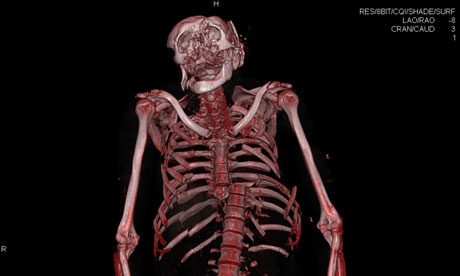
One of the most powerful illustrations of the potential of Virtopsy, however, is the graphic image of a young mechanic who was killed a few months ago when his head was crushed under a collapsing engine block and scaffold. At the accident scene, the mechanic was almost unrecognisable. However, by scanning his fractured skull, radiologist Thomas Ruder was able to rapidly assess the bone fragments without disturbing the pattern of the fracture lines. Scanning the bone fragments also makes it easy to visualise the skull on the desktop. "Imagine trying to piece together a shattered skull using conventional methods," says Ruder. "Not only would it be bloody but it would take days. Now I can do it with a few mouse clicks."

In this case, there is little doubt the mechanic's death was accidental and due to the injuries he sustained when the engine block collapsed on his head. But if, for instance, at a later date it was suspected the accident had been staged, investigators could re-examine the pattern of fracture lines for signs of an earlier blow with a blunt instrument, much as the team at Leicester were able to go back and match the marks on Richard III's skull with the blows he is supposed to have sustained from a sword and halberd in 1485.

"Unlike traditional autopsies, which are invasive and result in the destruction of tissue, Virtopsy leaves the cadaver intact and creates an objective 3D data set that can be shared with other experts," says Ruder. "And if 10 years from now new evidence comes to light, you can return to the original data set at any time. I've had a couple of cases where I've initially overlooked relevant findings only to detect them when reviewing the case with a colleague."

Dirnhofer goes further, arguing that in the near future 3D matching could become as routine in courts as DNA matching. "Virtopsy has the potential to replace the autopsy one day," he says. "I think we'll see it happen gradually, just as DNA analysis gradually replaced blood group analysis."

However, some police and legal experts are not so sure, pointing out that in complex cases a virtual autopsy can never be a substitute for the real thing, particularly where a successful criminal prosecution may depend on matching a bullet extracted from the victim to the rifling on the barrel of a particular gun. Unless and until juries become used to 3D imaging evidence, defence lawyers are also likely to exploit juries' unfamiliarity with virtopsy to raise doubts about prosecution cases.

Professor Thali's solution is to follow the Manchester coroners' model and use virtopsies as a filter, with a conventional autopsy only being performed if the virtopsy is unable to detect the cause of death, or in cases of homicides where every piece of evidence from both imaging and autopsy might be of value.

He points out that in Japan nearly all the large hospitals with emergency facilities already use CT postmortem imaging and clinical scanners to screen for unusual deaths and determine whether a scalpel postmortem is required. And in May experts from all over the world are due to attend the second International Society of Forensic Radiology and Imaging conference in Zurich to agree common training standards and professional guidelines.

Virtual imagining not only has the potential to revolutionise criminal forensics. Following the catastrophic bushfires in Australia in 2009, teams of radiologists and pathologists working in pairs used CT imaging to scan the contents of 255 body bags and identify 161 missing people. Such technology could prove similarly valuable in future mass disasters, whether caused by forest fires or tsunamis.

"In the beginning, there was a lot of scepticism about 3D imaging, particularly from within the medical community," says Thali. "But once people realise that virtual autopsy allows you to detect many pieces of evidence you can see in a traditional autopsy, and often more, they usually change their minds."

Saturday 18 May 2013

http://www.guardian.co.uk/science/2013/feb/23/virtual-autopsy-virtopsy-forensic-science?fb=native&goback=.gde_4126895_member_218673095

continue reading

Nigeria: Falling tree kills over 30 people, injures 16 in Imo Community


A 300-year old tree fell and killed over 30 people on Thursday evening at Umudagu, Ihitte Isi Mbieri in the Mbaitoli council area of Imo State.

Local people said the large-framed ancestral tree had wide and strong branches and a broad base, explaining that it had traditionally served as the community’s commercial nerve centre for 24-hour trading.

The tree, which they said belonged to a dreaded deity in the community was uprooted at about 7:30 PM, when trading was in progress, by a wind storm that preceded a heavy rainfall in Owerri and its environs.

A resident of the community, Mr. Nnaemeka Emenyonu, told that the tree fell on the affected persons about 7:30 PM.

He said the tree also destroyed the village hall.

“The big tree fell suddenly, killing 31 people on the spot and injuring 16 others. Those injured were taken to the hospital.

“The victims include two sisters, who were selling tomatoes. Honestly, this is the saddest event in the history of our community,” he said.

The traditional ruler of the community, Eze Godwin Duru, lamented that such a tragic incident had never occurred in the community.

When THISDAY visited the scene, officials of the State Emergency Management agency, led by the Executive Secretary, Mrs. Uche Ezeonyeasi were retrieving the trapped bodies, amid wailing and lamentations by relations of the victims.

A white ambulance Nissan bus with registration number “ Imo LG 25 NGN bearing the inscription ‘Health at your door step’ was was among the vehicles taking corpses to the Federal Medical Centre (FMC), Owerri, the state general hospital at Umuguma and Aladinma Hospital Mortuaries.

An eye witness, who gave his name as Amarachi Obumunaonye blamed the havoc on the refusal of the elders of the community to cut the tree as earlier directed by the community.

According to him, two individuals, who trimmed the tree's branches several years ago died shortly after, rousing suspicion that the gods of the land had been provoked.

A young woman called Lucy also hinted that a middle aged mad woman, whose mother hails from the area had on Tuesday warned traders to relocate or be prepared for unpalatable consequences but that the warning was ignored by the desperate traders.

The traditional ruler of the community, Eze G.C. Duru could not be reached for comment but the president general of the community, Mr. Maurice Anyanwu only described the incident as unfortunate and declined further comments.

Saturday 18 May 2013

http://www.thisdaylive.com/articles/falling-tree-kills-over-30-people-in-imo-community/147763/

http://www.punchng.com/news/falling-tree-kills-31-injures-16-in-imo/

continue reading

Minnesota Protocol uncovers global human atrocities


How does Minnesota factor into the recent judgement against political genocide actions in Guatemala? The findings that have brought justice in the case relied on "The Minnesota Protocol."

Work on the protocol started in Minnesota 30 years ago by a team of lawyers concerned with growing international strife. They created a format for neutral scientific third parties to investigate claims of assassination and genocide after it was becoming apparent that in many offending countries, those investigations were being done by groups sympathetic to the leaders being accused of the crimes. The concepts were adopted by the United Nations in 1989 as a global standard to use to investigate such situations.

The testimony from scores of witnesses and survivors at the recent trial of former Guatemalan military dictator Efrain Rios Montt was no doubt gripping and emotionally gut-wrenching. Infants tossed into flaming homes. Pregnant women gutted, their fetuses cut from their bodies. Elderly men and women gunned down. Women and girls gang-raped inside churches. A former government soldier maintained his orders were to kill the Indians.

But the accounts did not prove on their own that what Amnesty International called a "government program of political murder" had taken place in the Mayan Ixil region and claimed the lives of at least 1,700 indigenous people during the 17 months after Montt seized power in a military coup in 1982.

Either they were exaggerating or lying, or the victims were the collateral damage and random casualties of a 36-year-long civil war that ended with a 1996 peace accord, the defense team posited.

But what helped seal Montt's fate this month as the first head of state to be convicted in his own country of genocide and crimes against humanity was the irrefutable evidence unearthed by a meticulous forensic investigation modeled after an internationally approved protocol devised in Minnesota in the 1980s.

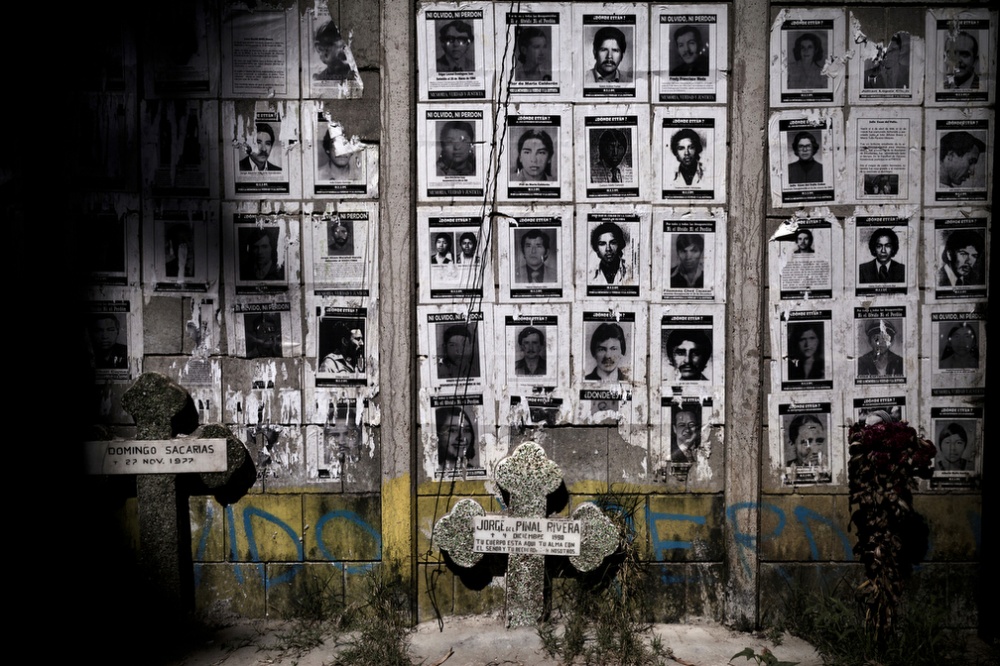
In what was described as detached but riveting testimony that at times caused the courtroom to fall silent, forensic archaeologists and anthropologists from the Fundación de Antropología Forense de Guatemala (Forensic Anthropology Foundation of Guatemala) presented evidence of clandestine and mass graves bearing the remains of victims of all ages shot in the head and thorax area, execution-style. Of the 50 bodies found beneath a soccer field, one-third of the victims were adults and the rest juveniles, one testified.

"Despite the shocking evidence, the Minnesota Protocol requires a neutral investigation in order to lend credibility to the ultimate prosecution," wrote courtroom spectator Ali Beydoun, director of the Human Rights Impact Litigation Clinic at the American University Washington College of Law.

"The Minnesota Protocol is part of our own protocol and the international standard for conducting these types of investigations," Fredy Peccerelli, the foundation's director, said Thursday, May 16, from Guatemala City. "Although we have improved and expanded on things over the years, we follow it as a minimum standard on a daily basis."

The protocol was the brainchild of the Minnesota Lawyers International Human Rights Committee, an advocacy group now known as the Minneapolis-based Advocates for Human Rights.

Formed in 1983 by Twin Cities lawyers Sam Heins, Tom Johnson, Donald Fraser and others, the group sought to undertake a major project with international implications. Heins sent a letter to David Weissbrodt, a University of Minnesota law professor then on sabbatical in London, and asked for his input. Weissbrodt wrote back about a lack of a uniform legal or medical standard in the way politically motivated assassinations were investigated throughout the globe. Often, he noted, entities in charge of launching the probes also were suspected of carrying out the slayings. What was needed: A uniform investigatory standard that was credible, neutral and beyond reproach.

The group endorsed the idea, researched the issue and consulted with local and international human rights, legal and forensic experts.

"We were seeking a protocol that closely modeled what a homicide police investigation entails -- the law, autopsies and forensics evidence," recalled Barbara Frey, an initial group member and now director of the Human Rights Program in the U's College of Liberal Arts.

Former Hennepin County medical examiner Garry Peterson and then-group volunteer Lindsey Thomas co-authored the autopsy part of the proposed guideline.

"Over the years, I have run into forensic pathologists in other countries who have used the protocol for death investigations, and the amazing thing to me is how well it has withstood the test of time," Thomas, now the county's assistant medical examiner, said this week.

Most of the protocol was hammered out at a conference in Spring Hill, Minn., in 1987. Attendees included forensic anthropologist Clyde Snow, a pioneer in mass-grave probes who helped train the Guatemalan foundation staff as well as others in Argentina and the former Yugoslavia.

The result was the "Manual on the Effective Prevention and Investigation of Extra-Legal, Arbitrary and Summary Executions."

Better known as the Minnesota Protocol, the guideline was adopted by the United Nations two years later. It has been used to conduct investigations and document genocide and human-rights abuses in places such as Rwanda and Bosnia.

Montt's historic conviction sheds more light on a country where an estimated 250,000 people were killed or disappeared during the civil war, said Kathryn Sikkink, a political science professor at the U.

"Although many people know more about the repression in Chile or Argentina, in terms of the absolute number of people killed or disappeared, as well as the relative number of victims in relation to the population, the scale in Guatemala was much greater than any place else in Latin America," said Sikkink, who wrote "The Justice Cascade," an award-winning book that documents the global impact of such probes in recent decades.

"It's good to know that the protocol still carries the Minnesota name," said Weissbrodt, now a Regents professor at the law school.

Although Peccerelli understands that Montt's conviction has set in motion appeals that could last years, he believes the legal maneuvering will not erase that justice was achieved.

"Our job was to present evidence of the crimes found on the remains and to translate what the victims told us through their bones," he said. "The physical evidence was not only powerful, but it helped corroborate the testimony."

Similar investigations using the Minnesota Protocol have led to genocide convictions in other corners of the globe such as Rwanda and Bosnia.

Saturday 18 May 2013

http://www.twincities.com/news/ci_23262230l

http://www.sciencebuzz.org/blog/minnesota-protocal-uncovers-global-human-atrocities

continue reading

Rescuers spot bodies at collapsed Indonesian mine


Rescuers searching for 23 trapped workers at a giant U.S.-owned gold and copper mine in Indonesia spotted six bodies Saturday but weren't able to immediately retrieve them because of falling debris, a company official said.

The collapse at the Big Gossan underground training facility at the PT Freeport Indonesia mine happened last Tuesday when 38 workers were undergoing safety training.

Ten miners were rescued and five bodies have been recovered since then.

"Rescuers have spotted six bodies, but sudden falling debris prevented them from taking them," said Rozik B. Soetjipto, president director of Freeport Indonesia. "Hopefully they could be picked up tonight."

Sabirin said vibrations have been detected that could be a human heartbeat, but they also could have resulted from a number of other causes.

"We have not detected any other potential signs of life in the past 72 hours," Sabirin said in a statement. He said rocks falling down from above were slowing the progress of rescuers.

"We continue to carry out these efforts nonstop, 24 hours a day as quickly as can be done safely to do everything possible to save lives, but as more time passes the possibility of there being any survivors becomes less likely," Sabirin said.

Saturday 18 May 2013

http://www.foxnews.com/world/2013/05/18/rescuers-spot-bodies-at-collapsed-indonesian-mine/

continue reading

Rescuers continue to search for 23 trapped Indonesian miners


Rescuers were digging for a fourth day Friday trying to reach 23 workers trapped in a caved-in tunnel at a giant U.S.-owned gold and copper mine in Indonesia.

PT Freeport Indonesia, the operator of the Grasberg mine in Papua province, said rescuers had successfully cleared two passages to provide access for heavy equipment that will help expedite the rescue efforts.

The collapse happened Tuesday when 38 workers were undergoing safety training inside a classroom in the tunnel, which is part of a training facility located away from where normal mining takes place. Ten workers have been rescued and five bodies recovered since then.

More than 20,000 workers are employed at the mine owned by Phoenix, Arizona-based Freeport-McMoRan Copper & Gold Inc. in the restive province, which holds some of the world's largest gold and copper reserves.

Until Friday, rescuers were manually removing debris since heavy equipment could not fit in the tight space.

Papua Governor Lukas Enembe visited the scene Friday and estimated that rescuers might need two to three days to get through the classroom.

"Since it is the most fatal accident in Freeport history here, we surely take it into account as a pressure to guarantee safety of the workers," Enembe said.

PT Freeport Indonesia revised the number of workers believed to be trapped to 23 from 24 after one of them was discovered to have escaped unharmed.

Hundreds of workers are still blocking a main road about 3 kilometres from the accident site in solidarity with the victims. They are seeking a guarantee from management that they will be safe working underground.

President Susilo Bambang Yudhoyono has ordered both Freeport and concerned government agencies to intensify rescue efforts and to thoroughly investigate the accident.

Saturday 18 May 2013

http://www.cbc.ca/news/world/story/2013/05/17/wrd-indonesia-mine-workers-trapped.html

continue reading

At least 20 killed when mine collapses in Eastern Congo


At least 20 people were killed when a mine collapsed in mineral-rich but conflict-plagued Eastern Democratic Republic of Congo following heavy rains, the government said.

The accident occurred on Thursday at the mine near the village of Rubaye in the country's North Kivu province. Local officials were attempting to recover bodies still believed buried on Friday, Reuters reported.

On Friday, rescue workers were still searching for survivors and trying to recover bodies believed buried.

"We're still digging at the site, so the death toll could rise. The provincial government is handling the rescue," Mende said.

North Kivu and South Kivu provinces have large reserves of tin ore cassiterite and coltan (columbite-tantalite), which is used in the West to manufacture cell phones, computers, and game consoles. They also have some reserves of gold.

Several armed groups, including the March 23 movement (M23) rebels, are active in the eastern Democratic Republic of Congo and fighting for control of the country’s vast mineral resources.

The M23 rebels seized Goma, which is the capital of North Kivu province, on November 20, 2012 after UN peacekeepers gave up the battle for the frontier city of one million people. M23 fighters withdrew from the city on December 1, 2012 under a ceasefire accord.

The M23 rebels defected from the Congolese army in April 2012 in protest over alleged mistreatment in the Armed Forces of the Democratic Republic of Congo (FARDC). They had previously been integrated into the Congolese army under a peace deal signed in 2009.

Since early May 2012, nearly 3 million people have fled their homes in the eastern Congo. About 2.5 million have resettled in Congo, but more than 460,000 have crossed into neighboring Rwanda and Uganda.

Congo has faced numerous problems over the past few decades, such as grinding poverty, crumbling infrastructure, and a war in the east of the country that has dragged on since 1998 and left over 5.5 million people dead.

Rampant poverty has pushed hundreds of thousands of Congolese to work in unregulated smaller mines, often controlled by armed groups, where fatal accidents are commonplace.

Saturday 18 May 2013

http://english.farsnews.com/newstext.php?nn=9202241746

http://www.presstv.ir/detail/2013/05/18/304075/20-killed-in-dr-congo-mine-collapse/

continue reading

Baylor Scientists schedule to exhume the remains of undocumented and unidentified immigrants


Scientists from Baylor University are scheduled to exhume the remains of undocumented and unidentified immigrants buried in the Falfurrias city cemetery Sunday. Falfurrias is the county seat of Brooks County, located deep in south Texas. It is also located a few miles north from a Border Patrol checkpoint located on Highway 281.

In 2012, authorities in Brooks County found 129 sets of human remains on private ranches and thick brush within the county line. Forty seven sets were never identified. The county paid to bury them in paupers graves in the city cemetery.

"These are human lives," said Tom Power, with the Texas Civil Rights Project. "These are people who have died trying to provide for their families. These are human lives that we're talking about."

Tom Power is a civil rights activist. His group is leaving Houston Saturday and will head to Falfurrias to talk to residents and watch the exhumation of the immigrant graves.

"It is against the law to not provide DNA testing when remains are otherwise unidentifiable," Power said. "What Baylor is going to be doing starting on Sunday is exhuming some of the bodies that have not been identified to start taking forensic tests on them."

Power's group, along with the team from Baylor, will be in Falfurrias for one week, hoping match a name with the numbers etched on metal burial markers.

The Baylor group will work through a University of North Texas DNA lab, using federal funds.

"We've gotten quotes from the county judge and different (county leaders) that would quote each missing person at (costing the county) $1500 to $2500," Power said. "Our group has put together formal proposals which we've submitted asking for emergency (money) from the Texas state legislature to go to different counties, one of them being Brooks, who unfortunately- they're violating the law."

Saturday 18 May 2013

http://www.myfoxhouston.com/story/22286774/2013/05/17/-baylor-scientists-schedule-to-exhume-the-remains-of-undocumented-and-unidentified-immigrants

continue reading

After more than 30 hours, firemen try to enter burning mall in Divisoria; search for bodies


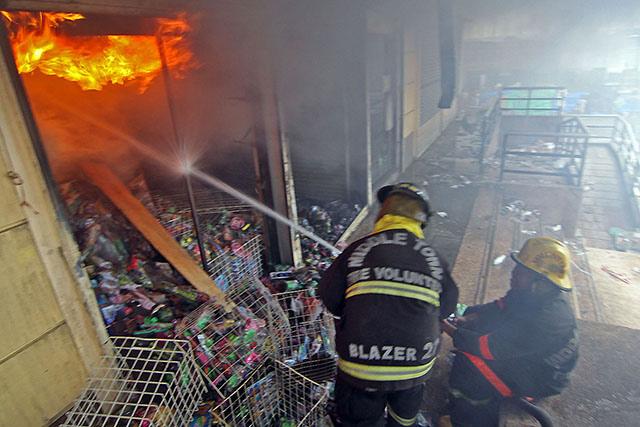
The fire that hit Divisoria Mall in Manila was declared under control after 39 hours on Friday, with authorities estimating that 95 percent of the structure had been destroyed.

Firefighters finally managed to enter the ground floor of the building, which was earlier rendered dangerous by thick smoke, and began searching for bodies of possible victims who got trapped in the six-story mall, according to Chief Inspector Bonifacio Carta of the Manila Fire Bureau.

Two persons were rescued from the fire which began at the basement shortly after midnight Thursday.

The fire was declared under control at 3:37 p.m., Carta told the Philippine Daily Inquirer.

He said explosions were heard from inside, believed to be that of LPG (liquefied petroleum gas) tanks at the food chains on the third floor of the building at the corner of Tabora and M. Santos Streets.

“The explosions, however, did not add to the severity of fire because the ignitions immediately died down,” the fire marshal added. The cause of the fire remained unknown.

From a high of over a hundred firetrucks that rushed to Manila’s Binondo district, only around 50 remained in the area Friday afternoon.

Saturday 18 May 2013

http://newsinfo.inquirer.net/411093/firemen-penetrate-divisoria-mall-search-for-bodies-on

continue reading

DNA tests needed to identify bodies found in mass graves in Iraq


Deputy Governor in the Western Iraqi province of Al Anbar, Sadun Obaid al-Shalan, today called for using DNA tests to identify about a thousand bodies found in three mass graves on Thursday.

Security forces and human rights organizations found the mass graves with containing around a thousand bodies in the northern city of Fallujah, and it appears that they were killed en masse in summary executions by U.S. occupation forces, said Sadun Obaid al-Shalan.

Fallujah put up strong resistance in 2004 when U.S. troops were sent to occupy the city, which was almost completely destroyed after the fighting.

After entering the town, the U.S. troops unleashed a fierce reprisal against male residents considered suspects for having participated in the resistance.

The mass burial was found in three graves between Saqlawiyah and Ameriyah localities, said the deputy governor, and it is presumed that those people were killed in 2004 and 2005, with their deaths never reported during the combat to retake control of the city.

Saturday 18 May 2013

http://beforeitsnews.com/alternative/2013/05/dna-tests-needed-to-identify-bodies-found-in-mass-graves-in-iraq-2651804.html

continue reading

Death toll in S China storms rises to 55, 14 missing


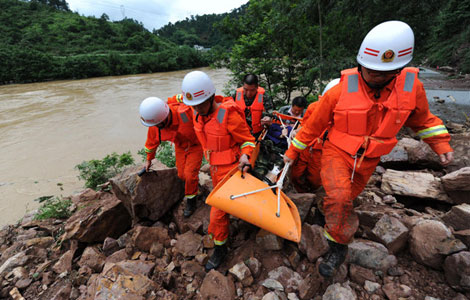
Fifty-five people have died and 14 others were reported missing in the latest round of rain- and hailstorms that have swept south China, according to official statistics collected as of 8 p.m. Friday.

Hardest-hit Guangdong Province reported 36 deaths and 10 missing persons, according to the National Committee for Disaster Reduction.

At 8 p.m. Friday, the National Committee for Disaster Reduction and the Ministry of Civil Affairs initiated emergency response for storms and flooding in Hunan Province that have already affected 1.59 million people and claimed three lives. The committee also dispatched 3,000 tents to affected areas.

Civil affairs and disaster reduction authorities in Hunan have also sent relief materials including tents, blankets and bottled water to the affected areas.

Ten provincial localities in south China have been affected by the fresh round of storms and flooding that began on Tuesday, including Anhui, Chongqing, Fujian, Guangdong, Guangxi, Guizhou, Hubei, Hunan, Jiangxi and Sichuan.

Saturday 18 May 2013

http://english.cntv.cn/20130517/106716.shtml

continue reading

10 Killed, 9 Injured in Oil Depot Explosion in Southern Turkey


An explosion went off in a depot containing smuggled oil in Turkey's southern province of Hatay, killing at least 10 people, Turkish Today's Zaman reported Friday.

Nine others were injured in the blast which took place in a building being used as illegal fuel oil warehouse in Hatay's Altinozu district, Hatay Governor Mehmet Celalettin Lekesiz was quoted as saying.

According to initial reports, the blast occured after gendarmes raided a house acting on a smuggling tip-off and the suspects set the depot on fire.

When gendarmes first entered to the village of Tanışma, in the Altınözü district, the locals tried to block the entry of security forces. The smugglers tried to eliminate the oil jerrycans but when they set the depot ablaze, a powerful explosion happened.

At least 10 locals were killed in the blast. Firefighters were dispatched to the site to bring the fire under control. They eventually brought the fire under control.

Firefighters rushed to the scene to put out fire following the blast.

Many people were injured and taken to district hospital in Altınözü.

Earlier this month, two car bombs went off in Turkey's southern Reyhanli town, killing 51 people and injuring over 140.

Saturday 18 May 2013

http://www.china.org.cn/world/Off_the_Wire/2013-05/17/content_28858669.htm

http://en.cihan.com.tr/caption/Governor-Explosion-in-smuggled-oil-depod-kills-10-southern-Turkey-CHMTAzMzAxOC80;jsessionid=fLEexfYEfz15kZyCsShRKsqX.undefined

continue reading

When will the bodies at the border enter the conversation on immigration?


The only remains left of Alfonso Martinez Sanchez, when his 19-year-old daughter Gladys finally tracked him down, were a jacket, a watch, a key chain and a body so degraded that it could only be identified by his dental records. The 39-year-old butcher, construction worker and father of five had been living in the United States for more than twenty years. One day in March, his wife sent him to the corner store where the family was living in Vista, California, for milk and tortillas. He never came back.

A sheriff's deputy asked Sanchez for his ID, and then arrested him and turned him over to federal agents, who deported him to Tijuana. He connected there with a coyote, who arranged to help him cross the increasingly militarized US border. He was caught and returned three times. The fourth time, he was guided into the remote Arizona desert.

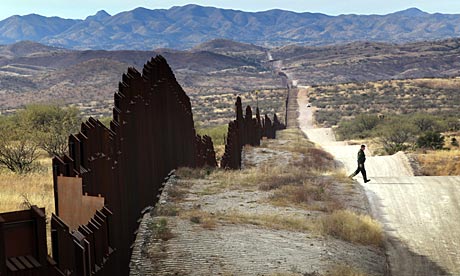
Since the mid-1990s, increased border security has been the cornerstone of US immigration policy. Intimidating border fences were built in urban areas along the Mexican border, diverting migrants into vast, open regions of inhospitable terrain. The plan was referred to as "prevention through deterrence"; policymakers thought that they could make the crossing so inhospitable that hopeful migrants would think twice before attempting the journey.

Channeling migrants away from crowded, urban areas would also make it easier for border agents to intercept the travelers. According to one Border Patrol video from 2009: "They'll move out to the more rural and remote areas … we now have the tactical advantage and we only need to exploit that advantage." The US government now patrols 651 miles of fence with 18,500 agents, night sensors, heat sensors, motion detectors, black hawk helicopters and unmanned drones at a cost of $11bn a year.

Policymakers succeeded at making the crossing inhospitable. The typical migrant path is now a tangled web of trails leading north from Mexico to Arizona and into the Sonoran Desert – where temperatures can reach 120 degrees, and the desert is filled with snakes, scorpions and smugglers. It has literally become a valley of death. According to research by the CUNY Graduate School of Journalism, the number of border crossings has dropped nearly 80% from peak levels a decade ago – but death rates have actually increased. Those who try to cross into the country now are far more likely to die than previously.

What the strategy did not account for was human desperation.

According to a study from the University of Arizona, based on interviews with 1,100 deported migrants over four years, one in four had at least one child back in the United States who was a legal American citizen; one in three considered the United States, not Mexico, to be their home. A significant number of these deportees, like Sanchez, would try again and again, and risk their lives, to be reunited with their American families.

For the past decade I have witnessed this human tragedy first hand. I have interviewed would-be border crossers, and seen corpses in the desert and in the morgues of border counties. I even illegally crossed the US-Mexico border myself, with a smuggler and a group of migrants, walking the Arizona desert for days in 110-degree heat.

Almost 20 years after US policy began forcing migrants through treacherous terrain, thousands of migrants have died on US soil, and the death rate only continues to escalate. For a forthcoming segment for PBS's Need to Know, we spoke with a coroner in Pima County, Arizona, named Dr Greg Hess. When Hess worked as a coroner in Milwaukee, Wisconsin, he typically had just one unidentified body per year. Now he has one thousand.

Congress is in the midst of considering an immigration reform bill that demands more of this deadly deterrent strategy – $4.5bn more – as a condition for any path to legalization for the estimated 11 million immigrants currently living in the country without working papers. The legislation would make "securing the border" a trigger before any of these established immigrants can apply for legal status. That trigger could easily become a death sentence for hundreds more mothers and fathers of American children.

Sanchez had crossed the border with another migrant, an agricultural worker who survived the ordeal. His last words to his traveling companion were: "I don't want to die. I don't want to die. I want to get back to my kids. I have to make it with my kids." His daughter, Gladys, says she thinks about those words every day, thinks about him dying, by himself, in that lonely, hostile desert.

Lawmakers have debated the issues of border security and illegal immigration for decades. In the meantime, over 5,000 migrant bodies have been recovered on US soil. It is time for the human toll of sealing the border to enter that debate.

Saturday 18 May 2013

http://www.guardian.co.uk/commentisfree/2013/may/17/bodies-at-border-immigration-reform

continue reading

Friday, 17 May 2013

Nine more bodies recovered from Teknaf shore, death toll from boat capsize rises to 31.


Police recovered the bodies of nine children from Teknaf shore on Friday, raising the death toll from the boat capsize in Bay to 31.

The bodies were retrieved in Dargah Chhara and Habir Chhara areas between 6:00am and 3:00pm, said Didar Ferdous, inspector of Teknaf Police Station.

He said the children were between 10 and 12 years.

The bodies were taken to Teknaf Police Station, reports our correspondent in Cox’s Bazar.

The inspector added that the death toll could rise as reports of floating of more bodies were poring in.

Earlier on Thursday, 22 bodies were recovered from Teknaf shore. The dead include 15 children and three women.

Babul Akhter, additional Police commissioner of Cox’s Bazar, said a trawler had capsized with 200 Rohingyas in Myanmar two days ago and that the 22 dead might be among the victims of the accident.

Ferdous however said a trawler carrying some passengers sank in the Bay of Bengal on Wednesday night, after cyclone Mahasen hit the coastal belts and the dead were among the passengers.

The 22 victims, most of them apparently Myanmar nationals, had set off for Malaysia from Teknaf on Wednesday, Didar added.

Friday 17 May 2013

http://www.thedailystar.net/beta2/news/5-more-children-bodies-recovered/

continue reading

Remains thought to be lost Diggers


A 68-YEAR wartime mystery may have been solved with the discovery of human remains on a remote island off the coast of Papua New Guinea.

Seven elite Australian soldiers from the top-secret `Z' Special Unit died during a botched mission behind enemy lines called Operation Copper on Muschu Island off the coast of Wewak in northern Papua New Guinea in April 1945.

Sapper Mick Dennis was the sole survivor and five bodies have been accounted for, but the remains of former St George rugby league club first-grade forward Lance Corporal Spencer Walklate, 27, and Private Ron Eagleton, 20, have never been found.

The two men washed up on neighbouring Kairiru Island after putting to sea on logs to try and contact a rescue aircraft. They were captured by Japanese forces and beheaded.

Two officers, Lieutenants Alan Gubbay and Tom Barnes, were drowned and their bodies are in the Lae War Cemetery.

Three other soldiers, Sergeant Malcolm Franou, 26, and Signallers Michael Hagger, 23 and John Chandler, 23 were killed during a Japanese ambush.

An investigation team from the army's Unrecovered War Casualties unit found a burial site on Kairiru two weeks ago after an exhaustive search of Japanese war records and interviews with natives.

Anecdotal evidence led searchers to an old medical waste dump near the site of a Japanese hospital.

After identifying a depression in the ground and some disturbed earth they found bones belonging to two humans.

One was bigger - Walklate was a large man - and the other smaller. Eagleton was slightly built. The bones were taken to an Australian army facility at Bomana War Cemetery near Port Moresby.

A DNA sample has been taken from Spencer Walklate's grandson Todd Walklate from Aberdeen in NSW and DNA from the remains is being tested to establish if there is a match.

Mr Walklate said his three children and two brothers were fascinated by the story of Spencer.

"We didn't know much until a few years ago when I met Mick Dennis," he said.

"The kids think it is amazing and if it is his remains it will be closure for our family. It will be sad and happy because he will finally have a proper burial."

Officials from the Unrecovered War Casualties office were at Bomana cemetery yesterday to examine the remains.

Friday 17 May 2013

http://www.news.com.au/national-news/exclusive-remains-thought-to-be-lost-diggers/story-fncynjr2-1226645600966

continue reading

Japan: Gov't to standardize electronic dental record formats for use in disasters


The Ministry of Health, Labor and Welfare is poised to standardize the formats of electronic dental records for use in body identification in case of major disasters, it has been learned.

The move comes on the heels of the Great East Japan Earthquake, when experts had a hard time identifying the bodies as many of their dental records had been swept away by the tsunami and the remaining records were found in different formats.

In fiscal 2013, the ministry is embarking on a verification project for standardizing the currently unintegrated dental data formats. It is expected that once those formats are standardized and records are compiled into databases in the future, they will be utilized in cases other than disasters as well.

In the March 2011 quake disaster, dental records played a critical part in identifying the bodies of 1,240 people who died in the natural calamity -- well surpassing the 163 who were identified through DNA testing, according to a National Police Agency survey as of April 10 this year.

While human teeth are more likely to remain intact even after bodies are damaged, it was difficult in the wake of the 2011 disaster to identify bodies by the dental treatment records of the missing. The Miyagi Prefectural Police force introduced software that is capable of collating such dental information with the cooperation of Tohoku University some two months after the quake and tsunami and strived to collect electronic and paper dental records on those missing kept in computer storage devices at dentists. However, because the formats and contents of those records varied, experts had to re-enter the data in integrated formats.

For a feared massive earthquake centering in the Nankai Trough off central to western Japan, the government puts the casualties at some 320,000 in a worst-case scenario. If no measures are taken, procedures to identify bodies are expected to be enormous tasks.

The ministry is therefore setting up a review panel as early as June to discuss how to standardize information formats for body identification. The ministry has allocated 21 million yen in the fiscal 2013 budget for launching the verification project, in which standardized e-records will be introduced at some dentists on an experimental basis by the end of this fiscal year.

Tadahiro Yanagawa, a director at the Japan Dental Association, who has insisted on the necessity to standardize such records since before the 2011 disaster, lauded the ministry's move. "In the case of a Nankai Trough quake, body identification would be difficult unless we have a system to swiftly collect dental information. The verification project will provide a good opportunity for establishing a system including database creation in the future."

Meanwhile, Masao Horibe, professor emeritus at Hitotsubashi University who is specializing in personal information protection, pointed out that "it is necessary to clarify the objective of identity confirmation and obtain the person's consent to provide their personal information."

The health ministry is currently not planning to consider whether to create databases using those electronic dental records.

Friday 17 May 2013

http://mainichi.jp/english/english/newsselect/news/20130517p2a00m0na007000c.html

continue reading

Three mass graves with 1,000 corpses found in Iraq


Iraqi officials have found three mass graves containing the bodies of about 1,000 people thought to have been executed by US soldiers during their occupation of the country.

The graves were uncovered in Iraq's western province of al-Anbar. The remains are believed to be from victims killed by US forces during 2004 and 2005 in the city of Fallujah, located roughly 69 kilometers (43 miles) west of Baghdad.

“Security forces and rights groups found the three mass graves in Saqlawiyah and Ameriyah of Fallujah near a cemetery north of the city. They contain the remains of about a thousand people,” Deputy Chairman of Anbar's provincial council, Sadoun Obaid al-Shaalan, said on Wednesday.

He also called on the Iraqi government to order DNA tests on the remains to ascertain the identity of the victims, especially since there are hundreds of families in Anbar - particularly Fallujah - who are trying to discover the fate of their lost children.

The first battle of Fallujah was an unsuccessful attempt by the US military to capture the city in April 2004.

Fighting broke out after four US mercenaries from Blackwater Company were killed, dismembered and hanged from a bridge over the Euphrates River.

On May 1, 2004, the US troops withdrew from Fallujah as Lieutenant General James Conway announced that he had unilaterally decided to turn over operations to the Fallujah Brigade -- which composed of local militiamen under the command of former Ba'ath Party General Muhammed Latif.

Iraq accounts of the first battle of Fallujah put the number of injured or dead at more than 400.

The second battle of Fallujah was a joint American and British offensive in November and December 2004. The Iraqi narrative of the second battle puts the total number of dead and wounded at more than 5,000.

Friday 17 May 2013

http://www.presstv.ir/detail/2013/05/16/303886/three-new-mass-graves-uncovered-in-iraq/

continue reading

At least 14 killed as cyclone hits Bangladesh


Cyclone Mahasen has hit the coast of Bangladesh, forcing the evacuation of one million people and killing 14.

But authorities breathed a sigh of relief after Mahasen, with winds of 100 kilometres per hour, lost much of its punch after making landfall.

At least 14 people were killed by drowning and falling trees as tens of thousands of mud, tin and straw-built homes were flattened by pounding rain and flooding.

One million people spent the night in 3,000 cyclone shelters, schools and colleges along Bangladesh's long, winding coastline which is home to 30 million people.

An official in the south of the country says many villagers had refused to move to shelters for fear their cattle would be stolen.

Shamsuddun Ahmed, the deputy head of the Bangladesh Meteorological Department says the cyclone was not as severe as feared.

He says it was downgraded to a tropical depression as it headed for north-eastern India.

"We're lucky," he said.

The storm also claimed the lives of 22 Muslim Rohingya people from neighbouring Myanmar, who had been missing since their boat capsized on Monday as they fled the oncoming storm.

Their bodies, including those of 14 children and six women, were found on a beach near the Myanmar border.

Bangladesh authorities are expected the remaining 31 missing people to wash ashore.

Friday 17 May 2013

http://www.abc.net.au/news/2013-05-17/14-killed-as-cyclone-hits-bangladesh/4695404

continue reading

Storms hit southern China, 33 killed and 12 missing


Thirty-three people have been killed and 12 others are reported missing in the latest round of rain and hailstorms that have swept southern China.

Heavy rain has hit 10 provinces in southern China, including Guangdong, Fujian and Jiangxi, affecting millions of people. In the worst-hit Guangdong province, rainstorms battered five cities, including the provincial capital Guangzhou, causing 19 deaths and leaving 11 missing.

A total of 650 thousand people in the province have been affected. Rainstorms have triggered flooding and landslides in some places.

The Ministry of Civil Affairs and the National Committee for Disaster Reduction have initiated a level-four disaster relief response.

Friday 17 May 2013

http://news.xinhuanet.com/english/video/2013-05/17/c_132389714.htm

continue reading

7 crew missing after ship collisions on Yangtze River


Collisions involving three vessels in the section of the Yangtze River in east China's Wuhu City, Anhui Province, early Friday morning, left seven people missing.

Twenty crew members on board the three vessels fell into the water after the collisions on Baimao Waterway. Thirteen of them have been rescued, according to the Yangtze River Maritime Department.

The vessels included a tug boat carrying iron ore from central China's Henan Province, and cargo ships carrying steel products and limestone, respectively from Zhejiang Province and Jiangsu Province.

The Ministry of Transport and the ministry's affiliated maritime affairs authorities have sent rescuers and experts for salvage and investigation.

Friday 17 May 2013

http://english.peopledaily.com.cn/90882/8248310.html

continue reading

Kosovo: identification of mass grave bodies is complicated


Alan Robinson and Arsim Gërxhaliu explained that the bodies that have not been identified at the Department of Forensic Medicine are the result of incorrectly burial by the family. 2 thousand burials were made without any analysis or dissection. Identification of bones of victims of war is complicated because many dead bodies are buried without DNA analysis.

Considering the very sensitive issue, competent people who deal with this work have accepted to give interview for newspaper but only jointly. They are Alan Robinson, co-director of EULEX in the Department of Forensic Medicine and director of the Department of Forensic Medicine, Arsim Gërxhaliu.

Both have explained that in the Department of Forensic Medicine are still 250 unidentified bodies and 101 parts of skeletons which were exhumed from mass graves in Kosovo and Serbia. Robinson and Gërxhaliu stated that their identification is a very difficult process. For these they think that after the war many burials were made incorrectly. They have also shown that this year will be looking to work in mass graves in Kosovo and Serbia. So far there haven registered 1754 missing persons

Friday 17 May 2013

http://www.gazetatribuna.com/en/?FaqeID=2&LajmID=244

continue reading