Friday, 13 April 2012

Women and children last? In real sea disasters, chivalry takes a back seat - TWICE as many men survive sinking ships

When the Titanic sank beneath the waves, men famously stood back from the boats, and women and children fled to safety first.

But a new study suggests that the chivalrous rule of 'women and children first' rarely happens - and may only have happened on the Titanic because the captain threatened to shoot men who got into the lifeboats.

A new analysis of 18 maritime disasters where 15,000 people died only 17.8 percent of the women survived versus 34.5 percent of the men.

Of the Titanic's passengers, 70% of the women were saved, but just 20% of the men.

The idea of saving 'women and children first' has been described as 'the unwritten law of the sea'.

But a new analysis of maritime disasters suggests that women and children are often left to last - and that even on the Titanic, the 'chivalry' was helped by the fact that the captain threatened to shoot men who got into the lifeboats before women.

Economists Mikael Elinder and Oscar Erixon of Uppsala University analyzed 18 of the world's most famous maritime disasters from 1852 to 2011.

'The Titanic disaster has generated immense public and scholarly interest, and as one of the most extensively covered events in history obtained an almost mythological status,' say the researchers.

'The evacuation of the Titanic serves as the prime example of chivalry at sea. Men stood back, while women and children were given priority to board the lifeboats.

They found that men actually have a distinct survival advantage.

Elinder said Thursday when it comes to sinking ships ‘it appears as if it is every man for himself.’

The actual iceberg which sank the liner Titanic in April 1912 photograaphed from the German ship Prinz Adalbert

Meanwhile, new research into the behaviour of passengers onboard the Titanic, continues to puzzle scientists.

Whilst women and children were given priority, men stood on the deck smoking cigars and the ship's band infamously 'played on'.

David Savage, an economist at Queensland University in Australia said: 'There was no pushing and shoving. (It was) very, very orderly behavior.'

Savage was contrasting the behaviour of the passengers on the ancient ship with those on the Lusitania, another ship, which also sank around the same time.

He eventually concluded that the the panic on the Lusitania was a direct result of the sheer speed in which the boat sank.

Savage affirmed that given the Lusitania was under water in just 17 minutes, a stark contrast with the two-and-a-half hours it took to floor the Titanic, that passengers instinct won out as they raced for the lifeboats.

Those that managed to swim to them were rescued, increasing the chances of men surviving as many women were responsible for their children.

Friday, 13 April 2012

http://www.dailymail.co.uk/sciencetech/article-2128812/Women-children-Sadly-quite-chivalrous-real-life--twice-men-survive-sinking-ships.html

continue reading

Thursday, 12 April 2012

Click here to find out more! More Sharing ServicesShare | Share on facebook Share on twitter | Share on email Print Text Size With morgues full, Philippine flood victims buried

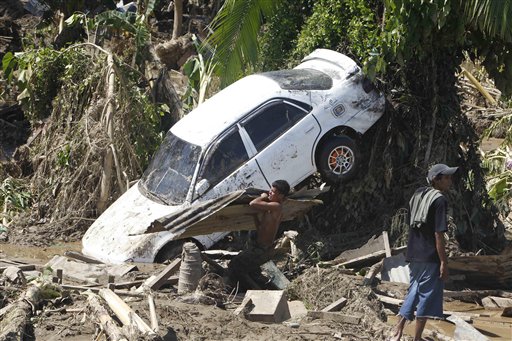
ILIGAN, Philippines - With funeral parlors overwhelmed, authorities in a flood-stricken southern Philippine city on Monday organized the first mass burial of some of nearly 700 people who were swept to their deaths in one of worst calamities to strike the region in decades.

For the first time in a day, the staggering death toll from Friday night's disaster, spawned by a tropical storm, remained little changed but the number of missing varied widely. Official figures put the missing at 82, while the Philippine Red Cross estimated 800.

The disparity underscores the difficulty in accounting for people who could be buried in the mud and debris littering much of the area or could be alive but lost in crowded evacuation centers or elsewhere.

"We lost count of how many are missing," said Benito Ramos, head of the government's Office of Civil Defense.

In Iligan, a coastal industrial hub of 330,000 people, Mayor Lawrence Cruz said the city's half a dozen parlors were full to capacity and no longer accepting bodies. The first burial of 50 or so unclaimed bodies was to take place later Monday in individual tombs at the city cemetery, he said.

"For public health purposes, we're doing this. The bodies are decomposing and there is no place where we can place them, not in an enclosed building, not in a gymnasium," Cruz told The Associated Press.

He said many of the Iligan dead — 279 by official count — "are just piled and laid outside the morgues," which ran out of formaldehyde for embalming and coffins.

"We're using plastic bags, whatever is available," Cruz said.

In nearby Cagayan de Oro city, the situation was more chaotic and people were resisting mass burials, instead demanding that bodies be interned until relatives can claim them.

About 340 died in Cagayan de Oro, most of them women and children and many of whom lived along river banks. Flood waters came gushing after 12 hours of pounding rain, catching most of them in their sleep.

Residents told local officials that plans for a mass burial was "un-Christian," said Cagayan de Oro city administrator Griscelda Joson.

Mayor Vicente Emano called a meeting later Monday to discuss the problem. Funeral parlors have asked authorities to do something about the unclaimed bodies because of the stench and complaints from neighbors, she said.

More bodies continue to be found. While city officials were meeting Sunday, more than 40 bodies were seen floating off an island but the coast guard could not recover them, Joson said.

In a grim sign of desperation, a funeral parlor dumped about 30 badly decomposed bodies in a city garbage dump over the weekend, sparking protests from distraught villagers who were looking for the missing loved ones.

Ramos, the head of the agency that is spearheading the recovery and relief operations, attributed the high casualties "partly to the complacency of people because they are not in the usual path of storms" despite warnings by officials that one was approaching.

"We've had flooding before but nothing like this," Cruz, the Iligan mayor said, recalling floods in the early 1950s. "We have a good drainage system but it as simply overwhelmed. The rainfall fell heavily on the mountains and this flowed down to two of our river systems and they overflowed and swept away houses and covered the highway and residential areas."

About 143,000 people were affected in 13 southern and central provinces, including 45,000 who fled to evacuation centers. About 7,000 houses were swept away, destroyed or damaged, the Office of Civil Defense said.

An estimated 35 percent of evacuees are children, said Trevor Clark, head of UNICEF in the southern Mindanao region. Running water and hygiene were major concerns, followed by a lack of clothing, blankets and even shoes for young children, he said.

Although he said government agencies were responding in a quick and efficient manner, they were overwhelmed and the United Nations was preparing an appeal for urgent assistance from donors and foreign governments.

11 December 2011

http://www.cbs8.com/story/16353370/with-morgues-full-philippine-flood-victims-buried

continue reading

Benue church victims to be buried April 20

The 22 victims of the collapsed St. Robert's Church in Vandeikya Local Government Area of Benue will be buried on April 20, a statement from the Catholic Diocese of Makurdi has said.

The statement, signed by the Rt. Rev. William Avenya, the Auxiliary Bishop of Catholic Diocese of Makurdi, said the burial would take place at St. Robert's, Adamgbe, near Vandeikya.

It expressed the hope that the families involved would allow the burial take place at the venue.
``We are hoping that the families involved will allow us to bury the 22 corpses in one location and the vestments shall be white," the News Agency of Nigeria quoted the church as saying in the statement.

The statement also said that those who sustained injuries and in different medical centres around the area were responding to treatment.

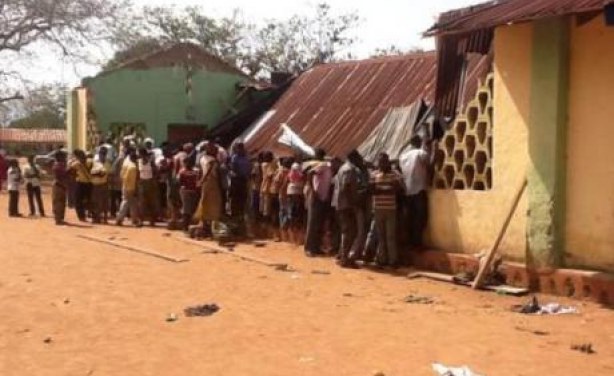
The 22 persons were killed, while many others injured when a storm pulled down St. Robert’s Church building in Vandeikya, Benue, on Holy Saturday.

continue reading

Wall Of Water: The Tsunami Explained

During a tsunami the ocean suddenly floods the coast, smashing everything in its path, and then just as quickly recedes.

Large quakes are the main cause of tsunamis, but they can also be sparked by other cataclysmic events, such as volcanic eruptions and even landslides.

During a strong quake, oceanic plates can lurch many metres and rupture the ocean floor.
This movement can suddenly move a massive amount of water.

Major quakes that rupture the ocean floor are usually shallow quakes occurring at a depth of less than 44 miles (70km).

The 9.1 magnitude quake that caused the devastating 2004 Boxing Day tsunami was 18 miles (30km) below the seafloor.

The movement of the quake can also affect the likelihood of a tsunami occuring.
The vertical movement of some earthquakes can cause the seabed to heave and displace water vertically, sending towering waves racing toward shores.

The 2004 tsunami, which killed nearly a quarter of a million people, and the 2011 disaster in Japan were both caused by these "mega thrust" quakes.

Strike-slip quakes cause a horizontal - instead of vertical - movement, with the tectonic plates sliding against each other, creating more of a vibration in the water.

On the ocean surface, tsunamis start as an insignificant ripple capable of passing under a ship unnoticed, but they become giants as they approach land and the ocean becomes shallow.
A tsunami is not a single wave, but a series of waves.

They can travel across the ocean at speeds of up to 620mph (1,000km), the speed of a jet aircraft.

A tsunami can travel across the Pacific Ocean in less than a day. As the trough of the wave drags along the sea floor, slowing it down, the crest rises up dramatically and sends a giant wall of whitewater onto land. And the first wave may not be the biggest.

The destructive force of a tsunami comes not from the height of the wave, but from the volume of water moving inside it.

The word tsunami is derived from the Japanese words for "harbour" and "wave".

Wedn 11 April 2012

http://news.sky.com/home/world-news/article/16206542

continue reading

The Victims Affairs Discusses Cooperation with the Ministry of Foreign Affairs

The Victims Affairs Office of the Central Operation Headquarters in the Abu Dhabi Police discussed mutual cooperation with the Ministry of Foreign Affairs in the case of crisis and disasters. The cooperation will be in the field of providing data and information regarding expatriates who are residents in the country and communicating with them during crisis or disaster situations.

A delegation headed by Major Raed Ali Al Muhairi, Director of the Victims Affairs Office visited the Ministry of Foreign Affairs, and met with Mohammed Jasem Al Nwais, Deputy Director of Citizens Affairs Department in the Ministry of Foreign Affairs.

Al Muhairi gave a summary about the work of the Victims Affairs Office, which provides complete information during and after crisis in order to identify those victims in major accidents and natural disasters within a short period of time, and contact their families.

He pointed out that the office focuses on receiving notifications in case of accidents and possible crisis, calling the families of victims and answering their questions and inquiries. The office also contributes to fulfilling specific social goals in the local community such as providing social and psychological support to the families of victims, missing, and injured, as well as offering support to survivors.

The meeting was attended by a number of officers from the Victims Affairs Office in Abu Dhabi and Departments Directors in the Ministry of Foreign Affairs.

Wednesday, 11 April, 2012

http://www.adpolice.gov.ae/en/News/victm.aff.meeting.aspx

continue reading

Tuesday, 10 April 2012

DNA lead in search for Anton Hammerl's body

DNA taken from a coffin found in a mass grave in Libya may match that of South African photographer Anton Hammerl, according to a report on Tuesday.

As Libya does not have the capacity to do DNA testing, it was understood officials were in the process of sending the genetic material -- from coffin number 57 -- to the headquarters of the International Commission on Missing Persons (ICMP) in Bosnia, the Star newspaper reported.

Hammerl was covering the conflict in Libya when he was shot by militia loyal to then Libyan leader Muammar Gaddafi near the town of Brega on April 5 last year.

Brigadier Leonie Ras from the SAPS victim identification centre told the daily newspaper that the ICMP was aware of the sample but had not yet received it.

Ras was planning to send DNA samples from Hammerl's parents to the ICMP on Tuesday in a bid to compare them with those found in coffin number 57.

Dodgy bonuses
In other news, Libya's interim authorities have stopped paying bonuses to former rebels due to widespread fraud costing millions of Libyan dinars, the official LANA news agency reported on Monday.

"Payment of rewards to rebels have been stopped due to violations and abuses," Mohammed Harizi, spokesperson for the ruling National Transitional Council, was quoted as saying.

"Millions of [Libyan] dinars allocated to revolutionaries were lost in [illegitimate] payments to non-beneficiaries," he said.

The interim authorities referred the violations to the offices of the attorney general and audit bureau for investigation, the spokesperson added.

Apr 10 2012

http://mg.co.za/article/2012-04-10-dna-recovered-in-libya-could-belong-to-sa-photographer/

continue reading

Identifying the Titanic’s Victims

For the 328 people whose bodies were recovered at the site of the Titanic disaster, unique fatality reports were created. They speak volumes about those whose bodies were retrieved. From third-class passengers to millionaires, these reports document their lives through what they had on their person that fateful night.

Dr. John Henry Barnstead, a Halifax physician, developed the system for identifying Titanic’s dead. He used a numbering system based on the order in which they were retrieved from the ocean. Mortuary bags were used to hold clothing and personal effects found on the body. This system was used again after the 1917 Halifax Explosion and countless times in other disasters with great loss of human life.

Using Barnstead’s system as its base, these reports document physical characteristics of bodies (typically sex, age, colouring, any identifying marks) and track potentially identifying papers and items found on their person. The reports were used to ensure that family members could claim their loved one’s body and personal effects. Each Fatality Report includes the Medical Examiner’s record listing physical characteristics and belongings, followed in the file by any other documents generated during disposition of the body and its effects. Some include extensive correspondence between White Star and the province of Nova Scotia.


Body No. 124 John Jacob Astor

The record of John Jacob Astor, who was in first class, begins with a description of his person and his belongings:

NO. 124 – MALE – ESTIMATED AGE 50 – LIGHT HAIR & MOUSTACHE

CLOTHING – Blue serge suit; blue handkerchief with “A.V.”; belt with gold buckle; brown boots with red rubber soles; brown flannel shirt; ”J.J.A.” on back of collar.

EFFECTS – Gold watch; cuff links, gold with diamond; diamond ring with three stones; £225 in English notes; $2440 in notes; £5 in gold; 7s. in silver; 5 ten franc pieces; gold pencil; pocketbook.

FIRST CLASS NAME-J.J.ASTOR

Managing the bodies and communicating with families, was the responsibility of the Provincial Secretary’s Office in Halifax. The correspondence in each file was either addressed to or signed by Frederick F. Mathers, the Deputy Provincial Secretary, or sometimes by George Murray, who was both the Provincial Secretary and Premier of Nova Scotia at the time.

Only 209 bodies were brought in to Halifax. The other 119 files in the Fatality Reports are for individuals buried at sea, and are identified as such.

10 April 2012

http://blog.thecanadianencyclopedia.com/blog/posts/identifying-the-titanics-victims/

continue reading

BENUE: Government plans mass burial for those killed by collapsed church building


The Benue state government on Monday assured the families of those who died in the collapse building of St Roberts Catholic Mission Church, Adambge in Vandekikya local government area of Benue state, that it will carter for their needs while the victims will be given mass burial at the church premises.

Eyewitnesses said the number of casualty was high because help could not reach those trapped on time.

Lack of proper medical facilities led to higher number of casualties

The state government, in the wake of the incident, ordered the immediate construction of a comprehensive health care facility in Adamgbe and also ordered that the road leading into the village be graded for easy access.

Eyewitnesses opined that the number of casualties would have been less if there had been a proper medical centre in the village or if the victims could have been taken out of the village on time to a proper medical facility.

Adamgbe is located on the high brow landscape of Vandeikya Local government, about 11 Kilometers away from the main Vandeikya town, few miles to the border between Benue and Cross River states.

It was gathered that the pillars of the church suddenly uprooted from the ground, leading to the collapse of the building on the multitude of worshippers. The development was said to have led to abrupt end of the Easter mass vigil.

When our correspondent visited the area yesterday, the priest in charge of the St. Robert's Catholic Mission, Rev. Fr. Cosmos Jooli, said the mass was arranged to be held under the mango trees (outside the church building).

He added that the development was due to the fact that the worshippers were over populated and that the church could not accommodate the capacity of the congregation.

The cleric further disclosed that the incident occurred between 8.30pm and 9pm when he had gone to his apartment to prepare for the mass, saying that heavy rainstorm forced the worshippers to rush to the church building to take refuge.

He also claimed that the cause of the collapse was as a result of the storm and not the dilapidated or old nature of the building as was being speculated, adding that the ugly situation led to the cancellation of the inauguration of a new Hilux pick up Van purchased by the church to ease the problem of transportation.


The Benue state commissioner for information, Conrade Wergba who said this, disclosed that twenty two persons died in the incident while the medical bill of those injured and receiving treatment at the hospital will also be settled by the state government.

Mr Wergba and the state’s commissioner of Education, Elizabeth Ukoh had accompanied the Deputy Governor, Steven Lawani to the church to commiserate with the church and affected families on the sad incident.

Following the assessment of the incident, the state government ordered the establishment of a comprehensive health care facility in Adamgbe and grading of the road for easy accessibility to the village.

At least 22 persons were on Sunday confirmed dead as the church building collapsed on Saturday night while parishioners were worshiping during the Easter vigil service.

Eyewitnesses said the number of casualty was high because help could not reach those trapped on time.

Monday 9 April 2012

http://www.channelstv.com/home/2012/04/09/benue-government-plans-mass-burial-for-those-killed-by-collapsed-church-building/

continue reading

Monday, 9 April 2012

Grief to joy: Misidentified crash victim alive


A plane crash victim who was assumed dead has been found alive in a hospital under a different name. The tragic incident killed 31 people a week ago. Information emerged on the man’s social network page, where friends have been mourning his death.

Dmitry Ivanyuta, 25, was listed among the dead after ATR 72-200 plane crashed near the western Siberian city of Tyumen last Monday. However, on April 7, a post appeared on his social network page claiming that Dmitry is very much alive and in a hospital, though registered under a different name.

This information has not been officially confirmed.

“Dima is alive. He was in intensive care. While there are no positive or negative trends, but there is a chance that he will get better,” one of Ivanyuta’s friends wrote on his “wall”.

This message reversed the flood of mourning posts on Dmitry’s page. People went from mourning to rejoicing in a matter of minutes.

Details emerged 12 hours later with a new post saying: “He was mixed up and identified as a different man. In fact he was in intensive care, and remembers everything and can move, so everything should be fine. The doctors said he would get better!!! Light a candle and pray with us for his health!!!! He is alive!!”

Ivanyuta’s former college professor, Denis Trushnikov, said Dmitry spent a week in the intensive care unit registered as Konstantin Pail, while his own name was on the list of those who died in the crash.

Rumors about the confusion in the lists of victims and survivors emerged after the preliminary results of the DNA examination that was unable to identify four bodies. This allegedly prompted Dmitry’s relatives to search for him among the 11 hospitalized survivors.

Ivanyuta has already been identified by his relatives, reports Komsomolskaya Pravda newspaper.

“Even though the results of the DNA test are not ready, we are positive that Dima is alive,” said his sister, Anastasiya Ivanyuta. “I don’t want to talk about it right now. It must be so hard for the relatives of Konstantin Pail.”


Following Anastasia’s statement, the parents of Konstantin Pail immediately took a blood test that confirmed their son had indeed been killed in the crash. His funeral will take place in his hometown on Monday.

No comments from Tyumen’s region health department have been available so far. The final results of the DNA test will be revealed on Monday.

A total of 11 survivors remain in Tyumen hospitals. Two of them have been transferred to a general ward and another nine remain in a critical but stable condition.

The French-Italian-built ATR-72 heading to Surgut crashed 30 kilometers from its departure point of Tyumen shortly after takeoff. The aircraft burst into flames and broke into three pieces upon impact. Forty-three people, among them 39 passengers and four crew members, were on board. Thirty-one were killed and 12 seriously injured.

Investigators name failure to de-ice the ATR 72-200 as the most likely cause of the disaster.

09 April 2012

http://rt.com/news/tyumen-misidentified-victim-alive-550/

continue reading

Sunday, 8 April 2012

Nigerian church targeted in Easter bomb attack

A car bombing near a church in northern Nigeria on Easter Sunday killed at least 20 people and put the country on alert over fears of further attacks, rescue officials and residents said.

The explosion, a stark reminder of Christmas Day attacks that left dozens of people dead in Africa's most populous nation and largest oil producer, hit the city of Kaduna, a major cultural and economic centre in the north.

Motorcycle taxi drivers and passers by appeared to have borne the brunt of the blast, and body parts littered the area.

As news of the attack spread, security forces boosted patrols in key areas, including in the capital Abuja, where soldiers were sent to reinforce police posted near churches.

There was no immediate claim of responsibility.

Details were still emerging of the attack, but at least one car said to be driven by a suicide bomber was believed involved. A rescue official speaking on condition of anonymity said two vehicles packed with explosives detonated.

"Now we have 20 dead from the twin explosions," said the rescue official, who was not authorised to speak publicly. Officials were still counting the number of wounded, he added.

"Bombs concealed in two cars went off just opposite this church," he said.

A police officer at the scene said a man believed to be a suicide bomber driving a car was stopped at a checkpoint near another church, the Evangelical Church of West Africa, and turned back.

KADUNA, NIGERIA - Apr 08 2012

http://mg.co.za/article/2012-04-08-church-targeted-in-easter-bomb-attack-nigerias-north

continue reading

Bus crash in Argentina kills at least 10, hurts 40


BUENOS AIRES, Argentina — A bus ran off a road in northern Argentina and plunged into a ravine, killing 10 people and injuring about 40 others, officials said Saturday. Two Germans were reported among the dead.

The bus operated by the company Potosi left Villazon, Bolivia, on Friday night and was traveling on a route to Buenos Aires when the crash occurred in the province of Jujuy, prosecutor Alejandro Maldonado said.

Maldonado said six of the 10 victims had been identified by Saturday evening, including two Germans identified as Sophie Colombine Aring and Herman Schneider. He said the other four victims identified so far were Bolivians.

Police said a 6-year-old girl and a 6-month-old girl were among those killed.

The bus was carrying 69 passengers as well as two drivers and another employee, Maldonado said by phone from Jujuy province.

"The vehicle fell into a ravine of about 200 meters (650 feet)," he said.

The rugged location as well as the badly wrecked bus and scattering of passengers' bags and documents complicated the task of identifying victims, Maldonado said.

"We're trying, with the help of the Bolivian consul and some of the relatives, to establish the identity of all the deceased people," the prosecutor said.

The cause of the crash was still under investigation.

The Argentine news agency Infobae said the 69 passengers were mostly Bolivians but included three Peruvians, three French people, two Germans, a Panamanian, a Spaniard and a British citizen.

April 7, 2012

http://www.cbsnews.com/8301-501715_162-57410867/bus-crash-in-argentina-kills-at-least-10-hurts-40/

continue reading

Saturday, 7 April 2012

Five electricity workers die after boat capsizes in eastern Turkey

ASKALE, TURKEY (BNO NEWS) — Rescue workers in eastern Turkey have found the bodies of five electricity workers who went missing earlier this week when their boat capsized on a lake during a repair job, officials said on Thursday.

The incident occurred late Tuesday night at the Karasu 2 dam reservoir in the AลŸkale district of Turkey’s eastern province of Erzurum when the five Turkish Electricity Distribution Company (TEDAลž) workers were aboard a pedal boat to repair a power line on the reservoir.

The workers were crossing the ice-covered lake when the boat reportedly hit a large piece of ice, ultimately causing the boat to capsize. The five workers grasped on to pieces of ice desperately as they awaited for rescue teams, but they eventually disappeared before emergency teams reached the scene.

AลŸkale District Governor Asalet Karabulut told the Hurriyet Daily News that emergency teams consisting of a helicopters and seven divers were deployed to the scene, but after failing to find any trace of the workers, the team’s operations were stopped at around 1 a.m. local time on Wednesday.

The first body was found on Wednesday, and all five victims had been recovered by Thursday. They were identified as TEDAลž workers Feridun ร–ztรผrk, Mustafa ArifoฤŸullarฤฑ, Sait Turan, Rฤฑdvan Takฤฑm, and ลžahin Baykal, the newspaper reported on its website.

Witnesses told the media outlet that emergency teams were slow to respond, adding that the workers held on to pieces of ice for some two hours before they disappeared. The incident happened on the same day that Turkey’s Parliament discussed the drafting of a new labor safety law to regulate working conditions in order to provide workers’ needs.

Fri, Apr 6th, 2012

http://earththreats.com/2012/04/five-electricity-workers-die-after-boat-capsizes-in-eastern-turkey/

continue reading

Unidentified disaster victims have devoted guardian


ISHINOMAKI, Miyagi--A mortuary employee has pledged to take care of the remains of 117 unidentified people killed by the Great East Japan Earthquake and subsequent tsunami until all of them are returned to their families.

Ken Nakai, a 37-year-old employee at a mortuary in Miyagi Prefecture, has been in charge of returning the remains of disaster victims to bereaved families for more than 10 months. His job is filled with human drama, with families looking for their missing kin and the remains of loved ones waiting to be identified.

As of March 28, the city had declared 3,417 people dead or missing from the March 11, 2011, disaster. It is the largest figure among the municipalities most severely hit by the disaster.
Nakai clasped his hands in prayer with his colleagues, who run the mortuary, during a ceremony last month to mark the first anniversary of the deaths of the unidentified victims.

The tsunami flooded Nakai's house, but his wife, four children and other relatives were safe. A few days later he lost his job at the seafood processing company where he worked because the firm was going out of business.

It was difficult for him to find a new job during the aftermath of the quake and tsunami. He finally found a temporary job with the city hall in May and was assigned to the mortuary, where his main job is to hand over victims' remains to their bereaved families.

When he started work it had already been two months since the disaster. Still, more remains were brought in to the mortuary every day and many people continued to visit, searching for their missing family members.

Nakai said he was unsure if he could continue working there because of the extremely somber, depressing atmosphere.

In July, after he had become used to the job, he met a woman of nearly the same age. She visited the mortuary from Sendai, about 40 kilometers away, to look for her missing mother once every three days.

He remembered that she always brought a paper crane and a small bouquet to place at an altar and then left after seeing photos of the bodies and their belongings. Nakai exchanged greetings with her but hesitated to get too close and try to comfort her.

In January the remains of her mother were identified as a result of DNA testing.

The woman visited the mortuary a few days later and expressed her gratitude to Nakai, bowing repeatedly. She was in tears, but seemed to be relieved. Seeing her, Nakai felt bereaved families were relieved to have found the remains of their loved ones.

Since then, every morning when Nakai opens the container where the urns of the unidentified remains are stored, he offers a silent prayer with his hands clasped together: "Don't give up; keep waiting for your families. I will wait for them with you until the last returns home."

http://www6.lexisnexis.com/publisher/EndUser?Action=UserDisplayFullDocument&orgId=574&topicId=100020826&docId=l:1638827118&isRss=true&Em=4

April 6, 2012

continue reading

Pakistani troops buried in Kashmir avalanche

Rescue mission under way near Siachen glacier where at least 117 soldiers and personnel are reported to be trapped.

Rescue operations are under way after an avalanche hit a Pakistani army base in the disputed Kashmir region, burying more than 100 soldiers under the Himalayan snow.

The soldiers were operating near the Siachen glacier in the northern tip of Kashmir when the avalanche hit in the early morning hours of Saturday.

"At six o'clock this morning this avalanche hit a [military] headquarters," Major-General Athar Abbas, the Pakistan military spokesman, said.

"Over 100 soldiers and personnel are trapped."

Speaking to Al Jazeera, Abbas said a rescue operation using helicopters, search dogs and soldiers is under way but warned "it will take days to complete the rescue operations" due to the climate and the difficulty of terrain.

Despite describing the slide as "a massive scale avalanche", Abbas said Pakistani forces remain hopeful.

A team of doctors and paramedics has also been rushed to the high-altitude region, which suffers extreme weather conditions, with temperatures on the Siachen glacier plummeting to as low as minus 70 degrees Celsius (minus 94F) during the winter.

More than 12 hours after the disaster, no survivors have been found so far.

The Associated Press news agency quoted a security official as identifying the trapped battalion as being headquartered in Gayari sector.

Military sources have told Al Jazeera that helicopters had been flown to what has been described as the "very remote location" on the glacier.

Al Jazeera's Kamal Hyder, reporting from Islamabad, said,
"This is an extremely remote region, and it would be difficult to continue the rescue effort at night."

"And so far, there is no good news coming out, despite the fact that military is still saying that this is a rescue operation," he said.

Hyder said that with more than 150 military outposts surrounding the glacier, the Pakistan and Indian sides face not only each other but "also face nature ... [on] the highest battleground in the world".

Difficult terrain

Shaukat Qadir, former Brigadier in the Pakistani army, who has been to Siachen on numerous occasions, told Al Jazeera: "This is the biggest casualty that has ever happened."

"We have fantastic accommodation for the soldiers. When you walk on this terrain you never know when it would come down, and certainly you cannot predict an avalanche," he said.

The Siachen glacier, on the tip of the Kashmir region that both Pakistan and India claim, is home to an estimated 15,000 soldiers from both nations.

Siachen, rising to 6,000 metres above sea level, has seen more soldiers die near the Karakoram base from weather-related incidents than gunfire since 1984.

Qadir said: "Well, the fact of matter is that 70 per cent of the people have died because of natural causes, and I think this is the time we ended this damn conflict, which has absolutely no explanation."

"I can just hope [President Asif Ali] Zardari talks about this with [Indian Prime Minister] Manmohan Singh [on his India visit] and settles this issue for both, us and Indians."

Pakistan army spokesman Major General Athar Abbas told the BBC some bodies had been recovered but could not say how many had survived.

The avalanche hit a military camp near the Siachen glacier in the Karakoram branch of the Himalaya mountains. A rescue operation is underway.

India and Pakistan both claim the area and have deployed thousands of troops.

Long rescue mission
The avalanche struck the base in the Gayari district at about 06:00 local time (01:00 GMT).

The soldiers are from the Northern Light Infantry regiment, trained in mountain operations, including avalanche rescue.

The military says its "priority is to save lives", and helicopters, sniffer dogs and troops have been sent to the area to help with the rescue.

The BBC's Orla Guerin, in Islamabad, says the remote region is a particularly difficult place to launch a rescue mission, but improving weather conditions are expected to help the operation.

Maj Gen Abbas said the avalanche that hit the military camp had been "very massive" and it could take several days to complete the rescue operation, which was unprecedented in scale for such a location.


The Siachen glacier is in a remote mountain area claimed by both Pakistan and India
He said there had been no communication with any of the missing soldiers.

"It's too early to say how many survived and how many bodies have been recovered," he said.

Although the region is prone to avalanches, the general said, they tend to occur in "forward bases" at higher altitude, where only 10 or 20 troops are located.

The numbers involved in this incident were so high, he said, because avalanches were not expected in the immediate area of the camp that was struck.

An avalanche killed 24 Pakistani troops in 2010 - this is believed to be the heaviest loss of life in a previous such incident until now.

Kashmir has been partitioned between India and Pakistan since 1947.

Failure to agree on the status of the territory by diplomatic means has twice brought India and Pakistan to war.

The Siachen glacier is known as the world's highest battlefield, and soldiers have been deployed at elevations of up to 6,700m (22,000 feet).

However, more soldiers have died from the harsh weather conditions there than in combat.

Saturday, 07 Apr 2012

http://www.aljazeera.com/news/asia/2012/04/20124755454785414.html
http://www.bbc.co.uk/news/world-asia-17643625

continue reading

Friday, 6 April 2012

Bosnia-Hercegovina marks 20th anniversary of war

Ceremonies in Sarajevo are marking 20 years since the start of the war in Bosnia-Hercegovina, a conflict that saw the worst atrocities in Europe since World War II.

The conflict began in April 1992 as part of the break-up of Yugoslavia.

About 100,000 people were killed and nearly half the population forced from their homes in four years of fighting.

Red chairs fill the street in Sarajevo where the conflict began - 11,541, one for each victim in the city.

People have been placing white flowers on some of the chairs as they walk alongside them.

A teddy bear, toys and schoolbooks have been placed on some of the small chairs which symbolise children killed during the four-year long siege by Serb forces.

Sarajevans were asked to stop what they were doing at 12:00 GMT for an hour to mark the start of the conflict.

'They loved Sarajevo'

Many have been walking past the chairs, which stretch for 800m (half a mile) along the central street in Sarajevo named after the founder of Yugoslavia, Marshal Tito.

On a stage in front of the chairs, a choir with a small classical orchestra has been performing songs, many of them composed during the siege.

"Those people gave their lives for the freedom of this town. They loved this town. They were killed just because they were citizens of this town, because they were at their homes, at their schools, at their playgrounds," concert organiser Haris Pasovic is quoted as saying.

The Reuters news agency says the autonomous Serb area of the country is ignoring the anniversary of the start of the fighting.

For three years and eight months in the early 1990s, Sarajevo was a city under siege. The mainly Muslim population took cover, as Serb gunners barraged the city from the hills surrounding it.

The worst single atrocity during the war was at Srebrenica, in eastern Bosnia, in July 1995. Bosnian Serb forces, led by General Ratko Mladic, overran what should have been a UN safe haven. About 8,000 Muslim men and boys were taken away and killed.

As a result the UN changed the mandate for its mission and allowed force to be used.

But the war in Bosnia was a three-way mix, involving Serbs, Croats and Muslims.

The European Union's special representative to Bosnia, Peter Sorenson, says that during the war, trust and relations between people were simply destroyed. All of this, ­he says, can never be forgotten or "wiped away".

The BBC's Genc Lamani says that the aspirations for a multi-ethnic and multi-cultural Bosnia have not yet become a reality. Many people in Bosnia believe the war was too high a price to pay for such hopes, our correspondent says.

6 April 2012

http://www.bbc.co.uk/news/world-europe-17636640

continue reading

Nato fuel tanker blaze kills seven in Afghanistan


KANDAHAR: Seven people were burnt to death in southern Afghanistan on Friday when a fuel tanker supplying a Nato base crashed and set their vehicle on fire, officials said.

The security chief of Panjwayi district and the Kandahar police chief said there was no insurgent activity at the time, and residents later pulled back from claims that the Taliban had attacked with rocket-propelled grenades.

A US soldier serving in Nato’s US-led International Security Assistance Force (Isaf) was charged this month with 17 counts of murder following a killing spree in the same district of Kandahar province on March 11.

Sardar Mohammad, Panjwayi’s security chief, told AFP: “A fuel tanker supplying fuel for Isaf overturned and caught fire, and simultaneously a civilian minivan was passing nearby also set ablaze.”

Seven people were killed and three others who were injured were taken to hospital, he said.

Abdul Hakim, who lives opposite the crash site, told AFP he heard a loud bang when the tanker overturned, and a passing vehicle was set on fire by the blaze.

Kandahar police chief Abdul Raziq confirmed the death toll, telling AFP: “This fuel tanker was coming from the city of Kandahar to Panjwayi district at high speed.

“On its way this tanker overturned and caught fire,” he said. “A civilian minivan was passing on the way and the vehicle was also set ablaze.”

Friday, 06 April 2012

http://www.somoso.com/news/nato-fuel-tanker-blaze-kills-seven-in-afghanistan/

continue reading

Fiji's flood death toll rises to 7

SUVA, April 6 (Xinhua) -- Fiji's flood death toll rose to seven on Friday after the discovery of two more bodies.

Police spokeswoman Ana Naisoro said the police found a middle aged man's body floating in the Waimanu River near Nausori.

At Tunalia Bridge in the western tourist town of Nadi, the body of 61-years-old villager Jolame Vou Sayabo was also found, who was believed to be drowned after he got stuck in a culvert whilst swimming with family members.

Naisoro said the two bodies are now at local hospitals for a post mortem examination.

Earlier this week, a three-year-old boy of Komave village in Sigatoka died while playing near a creek, and the body of a 31- year-old man was also found at Johnson Road in Lautoka.

On Sunday the body of a man was retrieved from the Nadi River, while a 20-year-old male's body and an unidentified man's body were retrieved on Friday in different areas in the country's west.

Meanwhile, three boys are still believed to be missing, who were on a fishing boat last Tuesday but failed to return as expected on Friday.

According to Nadi's Special Administrator Aisea Tuidraki, damages to businesses in the tourist town are estimated to cost around 200 million Fiji dollars (about 115 million U.S. dollars) .

Meanwhile, it is a bleak Easter weekend for about 13,300 flood- affected people still at the 200 evacuation centres in Fiji's Western and Central divisions.

Friday, 06 April 2012

http://big5.xinhuanet.com/gate/big5/news.xinhuanet.com/english/world/2012-04/06/c_131511456.htm

continue reading

Suicide bombers in Pakistan receive no death rituals

Suicide bombers who believe they will go to paradise are mistaken, Pakistani religious scholars say.

"Suicide bombers are the most unfortunate people on the surface of the earth, as they are neither bathed nor buried," as ordinary Muslims are when they die, said Maulana Aminullah Shah in Par Hoti Mardan.

Shah, a prayer leader in Mohallah New Islamabad, Par Hoti, Mardan, said he felt sorry for Rehmanullah, a 17-year-old suicide bomber who attacked Afghan and coalition forces last September and was buried without a funeral prayer.

Rehmanullah's father, Ghufran Khan, a day labourer, continues to grieve over his son's death, saying the Taliban kidnapped and brainwashed him. He never got to see his son's body or to bury it, and remains uncertain of his son's fate.

Some escape militant clutches

Saifullah, another boy from the same area, had to flee for his life when the Taliban accused him of informing intelligence agencies after senior al-Qaeda operative Abu Faraj Al-Libbi was captured in Mardan in May 2005.

"The Taliban failed to abduct Saifullah, and finally he landed in Germany," said his father. "I know the Taliban would have used my son as suicide bomber ... he would have missed a bath, funeral and burial, which are important rituals for Muslims."

Ajmal Shah, a prayer leader in Daudzai, Peshawar, is blunt about the importance of those rituals.

"The act of suicide bombing is condemnable. All those blowing themselves up and killing innocent Muslims will not find a place in paradise as they had been promised by their trainers," he said of the promises the Taliban use to lure teenage boys into becoming suicide bombers.

Taliban brainwashing tools

Taliban recruiters kidnap or lure under-educated, jobless youth, using literature and videos to brainwash them into committing terrorism. They never tell the youths that they lose their birthright to a Muslim burial and funeral rituals.

They also misinterpret the Qur'anic description of paradise.

"It is a great (tragedy), those teenagers who think they invite the pleasure of Almighty Allah after committing suicide attacks," Shah told Central Asia Online. "In reality, they will face the wrath of Allah."


Ajmal Shah, (above) a prayer leader, said suicide bombers do not enter paradise, despite their handlers' promises, said. [Ashfaq Yusufzai]


"There is no disputing that suicide attacks are not allowed in Islam," he said. "Those disobeying divine commandments and opting to become suicide bombers ... land in hell."

Playing on the youths' religious sentiments, the recruiters call those targeted 'infidels' and issue decrees sentencing them to death. Families who grieve for their missing boys are told by trainers they have become "martyrs".

An ignoble end for bombers

Authorities treat the remains of bombing victims with care, said Dr. Shiraq Qayum, head of the Lady Reading Hospital Accidents and Emergency Department, observing that workers will exhume and re-bury initially unidentified victims when DNA techniques yield their names.

The remains of suicide bombers, however, are treated differently.

"… We never bury the remains of suicide bombers ... [we] just use them for forensic purposes," he said of Pakistan as a whole.

Suicide bombers do not merit a funeral because the public despises their acts, Qayum said. The contempt for bombers' remains is even more striking when compared to how Pakistanis' hold funerals in absentia for relatives who died abroad and whose bodies cannot be repatriated, he added.

"Assaying the role of suicide bomber means abandoning Islam, which clearly states that killing one person amounts to killing the entire humanity," said Rahimullah, a resident of Shabqadar and father of Qari Naqibullah, a 19-year-old Pakistani suicide bomber who killed 10 coalition soldiers in Kandahar, Afghanistan, in March, 2011.

A resident of Surkh Dheri Charsadda, Wahidullah, disappeared in January 2008. Two months later, a group of Taliban militants informed his elderly father, Juma Gul, that his son the "martyr" had gone to paradise.

"First, I did not believe it when the Taliban walked into the mosque early one morning," the father told centralasiaonline.com. "To my displeasure, they kept congratulating me, but I am still cursing them for my son's act."

Wahidullah's father had to mourn his son alone. "Offering condolences ... is an important act of kindness, displayed by the Prophet Muhammad (Peace Be Upon Him) and his followers, but I am very unlucky that I did not receive a single mourner over the death of my lone son," he said. "The people disapprove of suicide attacks; therefore, nobody offered me condolences."

Such deaths cause agony for parents, who have no hope Allah will extend mercy to their sons who blew themselves up and violated Islamic injunctions, he said.

Nobody ever says anything merciful like "May God bless him" or "God rest his soul" for suicide attackers, adding to their families' pain, Juma Gul added.

While suicide is forbidden by Islam, those who kill only themselves often receive the ritual washing, prayer and burial from their relatives. But the bodies of suicide bombers who kill others, go unclaimed and are denied the rituals in accordance with Islamic teachings, Shah and others said.

Another slight that suicide bombers suffer haunts their families forever. Since nobody will bury them, relatives and friends have no grave to visit for the purpose of seeking advice and contemplating the hereafter.

Thurs, 05 April 2012

http://mawtani.com/cocoon/iii/xhtml/en_GB/features/iii/features/iraqtoday/2012/04/05/feature-02

continue reading

Thursday, 5 April 2012

8 dead, scores injured in Nairobi landslide


NAIROBI, Kenya, Apr 4 – At least eight people were killed and nine others seriously wounded on Wednesday when massive boulders crushed houses in Mathare after a night of heavy rains.

Most families were asleep when the boulders fell from an overhanging cliff, trapping many of them before others were rescued and rushed to the Kenyatta National Hospital. Nine victims were admitted to the country’s largest referral hospital.

“Eight people have died out of this disaster. Six of the bodies were retrieved from under the rubble. Another died on the way to hospital while the eighth died in hospital,” a police officer involved in the rescue operation told Capital FM News late on Wednesday.

Police Commissioner Mathew Iteere had told journalists at the scene that they believed more bodies were trapped in the debris.

“From the information we are receiving, there are people trapped under this rubble that is why we want to clear the site and confirm,” Iteere told journalists before rescuers retrieved three bodies.

Hopes of retrieving any more people alive diminished late in the afternoon after the site was cleared.

Bulldozers from the Transport Ministry, National Youth Service (NYS) and another one called from a company constructing the Thika Highway helped clear the site.

“There are six bodies which have been retrieved from the rubble. We do not believe that there are any more bodies here,” the head of the disaster management team Vincent Anami said.

Rescuers comprising the military, police and National Youth Service assisted by Kenya Red Cross volunteers used bare hands to sift through the massive rubble in search of survivors, after residents insisted that there were at least 10 missing persons.

The Red Cross said more than 40 houses were destroyed in the sprawling slum when huge boulders came crashing as residents slept while others were preparing to leave for their work places.

A witness who survived the early morning disaster recounted to Capital FM News how massive rocks crumbled and flattened shanty houses right next to his door step.


“I was asleep when I heard a loud blast and thought it was a thunderstorm. I immediately heard screams and people shouting… there was confusion all over when I went outside and it was now upon each person to save their life,” Kennedy Thuku who has lived in the slum for 17 years selling boiled eggs said. “I thank God for being alive today because most of those dead are people I know.”

Residents wailed and shouted as bulldozers roared to the scene lifting heavy rocks to enable rescuers check for bodies underground.
“I don’t like when I see this! What if that bulldozer is moving on top of trapped people?” one resident said in the early hours of Wednesday when the rescue operation had just began.
There was poor coordination at the site earlier in the morning as police and NYS personnel grappled with little equipment to try to retrieve bodies, assisted by hundreds of slum youth who easily volunteered to help with their bare hands despite the heavy downpour.

Prime Minister Raila Odinga later visited the scene and announced that the military was on their way with better equipment and machinery.

“The military is coming to assist in the operation. It is very unfortunate that we have lost innocent people in the disaster,” the premier said, amid cheers of Baba! Baba! (father) from the crowd.

He announced that a team had been set up at the Special Programs Ministry to help resettle families displaced by the disaster.

Apart from families whose houses were flattened by rocks in the early morning disaster, there are those whose houses were destroyed by the rescue team to pave way for the heavy machinery to access the scene.


Nairobi Provincial Commissioner Njoroge Ndirangu said people living on disaster prone areas across the city will be moved forcefully to avoid a repeat of the Wednesday incident.
“This is an order, and it is going to happen, all these people are going to be moved. We know they will resist but we are well prepared for the exercise,” Ndirangu said.

Heavy rains have begun pounding several Kenyan regions at the start of the main rainy season, which often causes floods and massive displacement.

Wedn, 4 April 2012

http://www.capitalfm.co.ke/news/2012/04/3-dead-scores-trapped-in-mathare-landslide/

continue reading

Wednesday, 4 April 2012

At least six dead in rain-ravaged Haiti


AFP - At least six people, including a child, were killed in Haiti when their homes collapsed during heavy rains that have ravaged Haiti for several days, the Civil Protection Office said Friday.

The victims were members of two families living in a neighborhood erected on a hill in the Petionville suburb of the capital.

Nadia Lochard of Haiti's Civil Protection Office said that three women, two men and a girl died "when their homes collapsed as they were carried away in a mudslide."

"It was difficult to find their bodies buried under much mud," she told AFP.

Three more bodies were also found in another neighborhood of Port-au-Prince, but the authorities could not confirm whether they had been killed by the rains.

Several neighborhoods of the capital were flooded and streets were heavily damaged following the rains still hitting Haiti.

The humanitarian community launched a plea for urgent help to obtain funds for the needy still living in often squalid camps over two years after a devastating 2010 quake.

Over half a million Haitians still live in camps for the displaced, where they are threatened by flooding at the start of a rainy season that has already ravaged streets and roads.

31 March 2012

http://www.france24.com/en/20120331-least-six-dead-rain-ravaged-haiti

continue reading