Monday, 26 August 2013

HPCL-Visakh Refinery fire: Workers say 10 are still missing


More than 48 hours after the mishap at HPCL-Visakh Refinery on Friday, uncertainty continues over the number of deceased, even as one of the severely injured was airlifted to Mumbai for advanced treatment. While the family members of some workers and union leaders say at least 10 persons are missing, the management of Hindustan Petroleum Corporation Limited (HPCL) maintains that eight persons died in the mishap and ruled out finding any bodies under the debris. Meanwhile, no more casualties were recorded on Saturday.

During his visit on Saturday, Union minister for petroleum and natural gas Veerappa Moily said 102 workers were on duty when the explosion occurred, but most of them were far away from the accident spot.

Officials later said there were 46 persons working at the cooling tower, and following the blast, 39 were admitted to hospital. They recovered the body of HPCL supervisor Ch Murali and six other workers from the debris till Saturday evening. Another person, Manojeet Pradhan, succumbed to injuries at a private hospital on Saturday.

HPCL officials clarified that they could not find any more bodies and ruled out the possibility of finding any more bodies from the site. On condition of anonymity, an official said all contract workers enter through the same entry point and it would take time before identifying the positioning of all of them in the entire plant.

Meanwhile, workers claim there were 56 persons near the cooling tower and 10 of them are still missing. Though they could not give more details about the missing persons, they alleged that the management is trying to misguide the public by suppressing facts and keeping the families of victims in the dark. A contract worker at the refinery told Express that some of the victims were from Odisha, Bihar, Uttar Pradesh and West Bengal, and it would take some time before their family members learn about it and come to the refinery to search for them.

CPM district secretary Ch Narasinga Rao agrees with the workers. “Going by the attendance sheet of the corporation, 56 persons were at the spot. But only 46 were accounted for. We fear that the bodies of the remaining persons could be found in the debris. We demand that the management provide the details of missing persons after clearing the debris,” said Narasinga Rao.

Meanwhile, HPCL chairman and managing director S Roy Choudhury airdashed to Visakhapatnam and conducted a review meeting with officials on the incident. He visited the accident spot and also the injured at the hospital. He is learnt to have directed the officials to provide required medical attention to the injured.

One Venkata Rao was airlifted to Mumbai for advanced treatment and six other injured are also likely to be airlifted to Mumbai over the next 24 hours. The officials have handed over the bodies of HPCL supervisor Murali and three others to the bereaved families and efforts are on to identify the charred bodies of the other deceased.

Monday 26 August 2013

http://newindianexpress.com/states/andhra_pradesh/HPCL-fire-Workers-say-10-are-still-missing/2013/08/26/article1752277.ece

continue reading

Nepal embassy officials in Uttarakhand to discuss missing persons after flood


A team of the Nepalese Embassy formed to find the facts about Nepali people who went missing in the flood in Uttarakhand, India, that took place in mid-June this year interacted with Nepali people living in Guptakashi area, on Saturday.

During the interaction with around 50 Nepalis at a school there, they told the team that as many as eight persons were swept away in the flood in Guptakashi, according to the Nepalese Embassy in India.

The Nepalis in Guptakashi said the flood had also swept away Nepali people´s shops and horses in the flood.

Majority of the participants in the interaction were from Bajura, Dang and Rolpa districts.

The team had also informed the Uttarakhand government about the losses caused in the ´Himalayan Tsunami´.

The embassy source has stated that the identity of the missing was not discovered as there were no photographs of the missing people and any materials that give their identity.

It has been learnt that the team would reach up to Gaurikund to collect further information for whereabouts of the Nepali people missing in the flood.

Monday 26 August 2013

http://www.myrepublica.com/portal/index.php?action=news_details&news_id=60132

continue reading

25 drown as mini-truck falls into Ghaghra in Bahraich area


As many as 25 people are feared to have drowned in Ghaghra when a mini-truck in which they were travelling fell into the river in the early hours on Saturday.

Reports stated that the vehicle (UP 78 AT 4591) laden with urad pulse was going to Kanpur from Nanpara on Saturday night. Besides the driver and cleaner, 28 labourers were travelling in it. The vehicle fell into the river, breaking the railing of Sanjay Bridge on Barabanki-Bahraich Road. The driver and four labourers swam out of the river safely. The remaining 24 labourers and the cleaner are feared to have drowned as they are still missing.

Superintendent of police Mohit Gupta and district magistrates of Bahraich and Barabanki districts have reached the spot. The PAC divers have been engaged to trace the missing persons.

Driver Raju, a resident of Sultanpur and labourers Agyaram, Maujilal, Nandlal and Sarju said that most of the labourers were from Sirsia area in Shravasti district. Eight were from the same family.

Monday 26 August 2013

http://timesofindia.indiatimes.com/city/allahabad/25-drown-as-mini-truck-falls-into-Ghaghra-in-Bahraich-area/articleshow/22049582.cms

continue reading

4,432,880 missing persons vanished globally in past 20 years


In the summer of 2005, an elderly woman with dementia left her residence in Medicine Hat, Alberta. No one knows why she left, or where she thought she was going. Exhaustive attempts to locate her were fruitless. She was declared dead, three years later. Her body was never recovered.

"Enid" was a missing person. She is said to have had an active social life. Numerous friends lived near her, visited her reasonably often, and a stepdaughter was in touch fortnightly. Yet somehow, she managed to disappear without anyone noticing an elderly woman walking alone through a relatively small city, surrounded by open plain and smaller towns, to a destination unknown.

She left family behind; some 25 people were directly affected by this one woman's disappearance.

"Samson's" family gave up looking for him after five years. He went out one night and never came back. His last known whereabouts was an ATM from which he withdrew a few hundred dollars. His banking and credit cards have not been used since. His whereabouts has never been discovered. No one knows if he is dead or alive. He and his wife were still raising their three children at the time of his disappearance.

Among law enforcement officials, the common wisdom is that 95%-98% of those who go missing reappear within 48 hours. While these statistics may provide some temporary comfort to those whose loved one has gone missing, it diminishes both the real numbers of those who go missing, and the emotional havoc such a disappearance wreaks upon family, friends and associates of the missing person. These statistics also conceal another: globally, 607 people go missing every single day, without a trace. Over a year, this totals 221,644 missing individuals; over twenty years, this totals 4,432,880 - more than the population of New Zealand, or almost the entire population of Ireland (2011 statistics).

In the broadest terms, there are two types of missing persons: those missing voluntarily and those missing involuntarily. The former include individuals who wish to 'drop out' of society for a while, often for reasons of mental health, damaged (or threatened) relationships with family or friends, financial trouble or simply desiring time to evaluate one's life course. The majority of these missing people remain local to their last known address; the one comfort they retain in self-imposed exile is a familiar environment.

These missing persons leave loved ones confused about their relationships to her/him, and therefore ambivalent upon her/his return. Loved ones may feel simultaneous joy and relief, but also mistrust and apprehension. The voluntarily missing person is often aware of the potential (or deeper) rift her/his absence may cause in former relationships; in many cases, the fear of a negative response from family or friends is a factor in such a person's decision not to return to her/ his former life.

When a voluntarily missing person is not located, loved ones often experience grief indefinitely; the individual may be eventually declared dead and his or her affairs may be settled, but there is no real closure for those s/he leaves behind. This lack of closure is, in many cases, worse than it is for those whose friend or family member has gone involuntarily missing - though the latter case usually carries with it much darker implications and outcomes.

The media has brought numerous cases of kidnapping and human trafficking to the public's attention, yet the purposes these enslaved serve are varied; forced labour, arranged marriages, prostitution rings and organized crime have all made headlines in global media. Those who are trafficked are likely to suffer reprisals if they escape and their stories are publicized. Such is the courage of those who have come forward against the wishes of their captors and, in some cases, complicit families and neighbours. Many people find it easier to deal with their missing by regarding them dead than to hold out hope for, or be given evidence of, their survival.

These stand in sharp contrast to families and friends of political detainees/ disappeared, many who are vocal in their denouncements of the repressive regimes that imprison torture and kill neighbours, family members and friends. For these, the disappeared are not a point of dishonour but a point of fighting for justice. Their missing are brave; their dead are testaments to a thirst for justice.

Still others go missing in order to preserve their own lives. Their situations arise from previous errors in judgement, sometimes crossing those involved in crime. The choice of death or disappearance (presented as a 'chance at a new life') is given. The desire to live usually coincides with the realization that the safety of one's family will be more assured without one's return to it. "Samson" made such a decision readily.

Where do 4,432,880 people go to become invisible? Many, of course, could probably be accounted for in the hundreds of thousands of unclaimed bodies which occupy the morgues of cities all over the world. Others occupy prisons,’re-education centres' and other political machines. They are in-house workers of all stripes, factory hands, and corporate slaves. They are in places not yet searched, and those in plain view. Some bodies may yet be claimed; some people may still be found alive, and returned to their families and friends. Some may retain their 'new life' and not seek reunion with those who once cared for them. Others are disposed of in various ways, still to surface, perhaps to be discovered in a shallow grave, cremated without ceremony, or cast in concrete boots.

The problem is that people still go missing. Another problem is that there is no acceptable way to track every human on the face of the earth. Reducing the number of missing persons has become a matter not for technology, governments or for corporations, but for individuals, neighbourhoods and communities who are no longer content to watch nearly 4.5 million people vanish every generation.

To start with, people can look out for each other. Neighbourhood get-togethers can facilitate those residing near each other getting acquainted and becoming aware of each other. Organizations can allow communiqués to be sent from a missing person to her/ his family, assuring them of her/ his well-being and allaying any fears of her/him being harmed, even while still gone to ground. Such modes of community outreach need be neither expensive nor time-consuming, but present. All it takes is a will to ensure that fewer people's absence goes unnoticed, and an appreciation of those around us.

Monday 26 August 2013

http://www.scoop.co.nz/stories/WO1308/S00441/4432880-missing-persons-vanished-in-past-20-years.htm

continue reading

Mexico officials tell families that 10 bodies identified so far as among 12 abducted from bar


Families in Mexico City say authorities have told them that 10 of the bodies found in a mass grave outside the capital have been identified so far as being among a dozen young people kidnapped three months ago from a bar in the city.

One mother, Julieta Gonzalez, says federal officials told her Sunday at a meeting that her daughter and nine others had been identified using DNA tests on the 13 bodies recovered from a grave on a ranch east of Mexico City. Tattoos and physical characteristics also were matched to make some IDs.

Authorities have not said who the 13th victim may be. The bodies were unearthed Thursday.

The young bar-goers vanished from the Heaven club May 26 a block from tourist-friendly Paseo de la Reforma.

Monday 26 August 2013

http://www.washingtonpost.com/world/the_americas/mexico-officials-tell-families-that-10-bodies-identified-so-far-as-among-12-abducted-from-bar/2013/08/25/0da86c52-0dd0-11e3-a2b3-5e107edf9897_story.html

continue reading

Body parts came from a medical college: Police


Police now suspects that the 16 severed human body parts and 13 bones which were recovered from Dhaka South City Corporation landfill in Matuail on Friday, came from an anatomy department of some medical college in the capital.

Demra zone’s Assistant Commissioner of police Minhazul Islam said the bones and body parts were chemically decomposed with material used to preserve bodies. “It seems absurd that criminals would preserve the bodies after killing,” he observed.

Minhazul Islam said some veins of the bodies were cut off similar to the way anatomy students at medical colleges cut while learning dissection. The bones were also attached by screw, which matches with works by medical students at dissection class, he added.

A police official of Jatrabari Police Station seeking anonymity said, a primary probe has found that the bodies were dumped by a private medical college at Dhanmondi. It is illegal to dump bodies for medical use, he added.

However, Inspector (Investigation) of Jatrabari Police Station Abani Shankar Kar said, they will not comment over the issue before the DNA test is done.

Meanwhile, a medical board is supposed to be set up at Sir Salimullah Medical College to conduct the DNA test.

Monday 26 August 2013

http://www.dhakatribune.com/crime/2013/aug/26/body-parts-came-medical-college-police

continue reading

Sunday, 25 August 2013

Pearl Harbor victims: Bring them home – or let them rest in peace?


A plan to use DNA to identify the remains of sailors and Marines killed in the Pearl Harbor attack has caused a split within the military community over what to do with the remains of thousands of unknown service members from the wars of the mid-20th century.

Should these bodies be dug up and returned home, at considerable cost, to places like Cozad, Bloomfield and Central City, Neb., in keeping with the sentiment “no one left behind”? Or should they be left in their decades-old resting places far from home?

Thanks to DNA technology and an injection of cash from Congress, there's a plan to identify the remains of nearly 400 “unknown” sailors and Marines from the battleship USS Oklahoma, torpedoed and sunk in the first minutes of the Dec. 7, 1941, attack on Pearl Harbor in Hawaii. Seventeen of the sailors are from Nebraska and western Iowa.

The task likely would take place at a giant new military forensics lab at Offutt Air Force Base.

The logistics would be daunting. Most of the Pearl Harbor dead were entombed anonymously, their remains mingled with those of their shipmates. They are scattered in dozens of modest group tombs throughout Honolulu's famous Punchbowl cemetery, remote from their families.

A single USS Oklahoma grave opened in 2003 yielded five identifiable sets of remains, each returned to grateful families and buried with full military honors.

“These towns are eager to get these kids back, and honor them,” said Paul Goodyear, 95, president of the USS Oklahoma Association and a Pearl Harbor survivor. “They go all out. You'd have thought it was Independence Day.”

The Navy has proposed forming a working group, representing several military commands involved in finding and identifying unknown remains, to make decisions about the Oklahoma dead. What that group does could set a precedent for other group remains.

The job of identifying the Pearl Harbor dead has fallen to the Joint POW/MIA Accounting Command. A precursor of the command was formed 20 years ago and assigned the permanent job of finding and identifying missing service members from the Vietnam War. Later, Congress asked it to search for those lost during the Korean and Cold Wars, and for World War II air crews lost in the Pacific.

Some veterans say JPAC long resisted veterans' pleas to identify some of the hundreds of unknowns buried just a few miles from its Honolulu headquarters in the Punchbowl, an extinct volcano converted to the National Memorial Cemetery of the Pacific after World War II.

“They've got these kids right under their noses, and they won't dig them up,” Goodyear complained.

The Joint POW/MIA Accounting Command public affairs office didn't respond to four requests over the past two weeks for an interview with senior JPAC leaders.

A Government Accountability Office audit released in June said the Defense Department didn't assign the job of identifying World War II veterans other than Pacific air crews until 2009.

In that year, Congress substantially boosted the Joint POW/MIA Accounting Command budget, which had jumped from $51 million in 2008 to nearly $100 million four years later, and ordered it to boost its identifications from about 70 per year to 200 by 2015.

Traditionally JPAC had focused on complex and costly archaeological excavations in Korea, Southeast Asia and the South Pacific. The new quota and expanded mission made the command more receptive to opening the graves of the unknowns from the Oklahoma. John Byrd, director of JPAC's Central Identification Laboratory, recently told the Oklahoman newspaper of Oklahoma City he thought at least three-quarters of the ship's dead could be identified using DNA technology.

Accordingly, the Joint POW/MIA Accounting Command has requested permission to open all of the graves from the Oklahoma, as well as graves at the Punchbowl containing smaller numbers of bones linked to the Pearl Harbor battleships California (100 dead) and West Virginia (66 dead). The decision is up to the Army, which holds authority over the graves of all unknowns.

JPAC's plan has run into opposition from the Navy. Officials there have said they don't like the idea of exposing long-buried remains “outside of the sanctity of the grave” for an accounting that could take years and still leave many remains unidentified. The Navy has no authority in the matter, but voices concern because the single grave that was opened in 2003 yielded not only the five identified sailors but also the bones of about 100 more that aren't yet identified and remain in JPAC's lab.

Lt. Cmdr. Sarah Flaherty said the Navy hopes to re-inter those remains in a ceremony on Dec. 7, 2014. They're seeking the Army's support.

“(The Navy) maintains any ID effort will take many years, if not decades,” Flaherty said. “A memorial ceremony in the near future offers temporary closure and a cogent place for survivors to treat as a final resting place in the interim.”

The conflict sheds light on the troubled history of the Oklahoma's remains.

For months after the attack, the Oklahoma remained overturned in the shallow channel next to Ford Island, right where the battleship USS Missouri is now moored.

Between July 1942 and November 1943, the Navy worked to right the ship. According to author Jeff Phister's 2008 book, “Battleship Oklahoma BB-37,” as divers recovered bodies from the ship, they were bagged, with the skull separate from other remains for future identification using dental records. They were placed in flag-draped coffins and moved to shore on barges as Marine honor guards stood at attention.

The remains were buried in two Honolulu cemeteries until after the war. Then the American Graves Registration Service dug up the bodies in hopes of identifying them.

What they found instead was a tangled mess of oil-soaked bones, hopelessly mixed up and nearly impossible to identify, according to a history compiled in 2010 by military historian Heather Harris.

Twenty-seven skulls were identified from dental remains and placed with torsos, arms and legs drawn from the rest of the remains. Plans were discussed to return those reconstructed skeletons to their families.

But Dr. Mildred Trotter, a pioneer in the field of forensic anthropology who was hired to oversee the process, recoiled at the idea, according to a May 1949 memo Harris discovered in Trotter's papers after her death.

Officials in Hawaii and Washington argued over how to rebury the remains. The American Graves Registration Service considered returning just the skulls to the families, but decided it was wrong to return partial remains.

Finally, the bones were segregated by body part, with skulls buried together, arms together, legs together, and so forth, and placed in plots scattered throughout the Punchbowl.

There they might have rested permanently if Ray Emory, a Pearl Harbor survivor, had not retired to Hawaii in the mid-1980s.

Soon after his arrival, he trekked up to the Punchbowl.

“I wanted to know where the Pearl Harbor grave sites were,” Emory, now 92, recalled in a phone conversation last week. “They couldn't tell me.”

He walked the cemetery repeatedly and found dozens of graves marked “Unknown, Dec. 7, 1941.” Through documents acquired using the Freedom of Information Act, he began a years-long process of assembling clues to find who the missing dead might be, and in which graves they might lie. “It was like a jigsaw puzzle,” Emory said. He found out about the 27 skulls that had been identified in 1949, and he traced some of them to individual graves. His work led to the addition in 2002 of ship names to many of the unknowns' grave markers. And his prodding led the Joint POW/MIA Accounting Co

mmand to open the single grave in 2003. The divisions within the military are reflected in the families, too.

Sheri Spomer, 41, wants to see her uncle Gerald Clayton buried next to his parents in his hometown of Central City. Clayton was a 21-year-old storekeeper second-class the day he died aboard the Oklahoma.

“There was nothing dignified in the way the Navy handled the burial of my uncle and all those other men. They deserve more than being buried together as 'unknown,' ” Spomer said. “They were not unknown to their families, and they certainly have not been forgotten.”

Eva Maule, 92, of Bloomfield, said the family of her late husband, Donald, put a marker in the local cemetery to honor his brother, Joseph Maule, who died aboard the Oklahoma, even though his body was never recovered. She doesn't see any need for a big fuss now.

“To my notion, I think they should leave all the bones buried there,” she said.

Jean Cook Sheehan, 90, was close to her brother, Grant Cook Jr., who was two years older. Their mother died when both were babies. An aunt and uncle raised them in their hometown of Cozad.

She said Grant quit his job at a garage in 1940 to join the Navy and find adventure. That's how he landed in Pearl Harbor.

Sheehan learned of the attack after coming home from a Sunday movie matinee. She shared the nation's numb horror, and feared for her brother.

“When I heard my brother was missing — just complete shock, so much sadness,” said Sheehan, who now lives in Lecanto, Fla. “It was hard for us to believe that he really was gone.”

She said her father never forgave himself for signing the papers that allowed his son and namesake to enlist before he was 21.

She has mixed feelings about unsealing the Oklahoma graves. At her age, she doesn't imagine returning to Cozad to visit even if he were to come back. The VFW post that carries his name seems like a fitting memorial.

“From what I understand, the remains are in an absolutely beautiful place. One thought is, why disturb them?” she said. “On the other hand, it would be nice to know that, if they are identified, he is back home.”

In recent years, no one has spent more time talking with Oklahoma families than Dee Dee King, a Texas-based forensic genealogist hired by JPAC in 2009 to find the next of kin and ask for DNA samples that might help identify the unknowns. She has found the families of all but eight.

She said the losses are surprisingly fresh, more than 70 years after Pearl Harbor.

“Some of these people have the most heartbreaking stories to tell,” she said.

The Facebook page for her company, Forensic Genealogists, features the eternally youthful photos of the Oklahoma sailors. She feels a connection to them.

“These guys want to be found,” King said. “I just know it.”

Sunday 25 August 2013

http://www.omaha.com/article/20130825/NEWS/130829306/1685

continue reading

Mexico City mass kidnapping highlight's Country's battle with drug gang violence


The bodies were headless and covered in lime and asbestos, hidden under a thick concrete slab – young men and women not seen since they went out partying in an upscale area of Mexico's capital nearly three months ago.

As the families of 12 missing youths settled in Saturday for an anguished wait for DNA identification, they and others said this week's gruesome discovery at a muddy mass grave in the countryside east of Mexico City was bitter vindication for those who have said all along that the city's top law-enforcement officials downplayed the disappearances and were at best incompetent in trying to find their loved ones.

The bodies were only found once federal investigators stepped in – after waiting impatiently for local police to make progress.

The kidnapping and murder has revealed a gangland battle for control of the lucrative drug trade in the poshest bars and nightclubs of a megalopolis that had been an oasis of calm during Mexico's nearly seven-year drug war. The head of Mexico City police on Saturday deployed more officers and a helicopter to some of the city's upscale districts along with the rough neighborhood of Tepito where most of the victims lived, fearing retaliatory attacks.

A federal official who helped discover the bodies said that they were found separately from their heads in what could be a frightening echo of the brutal mutilations of drug cartel victims in other parts of Mexico. The official spoke condition of anonymity because he was not authorized to discuss the ongoing investigation.

"Mexico City is not a bubble. If we don't put a stop to it, we're going to fall into a serious security problem," said Miguel Amelio Gomez, a security consultant and former investigative police chief for Mexico City's attorney-general.

The kidnapping occurred three months ago midday on a sunny Sunday in an upscale district in the heart of Mexico City, five cars pulled up outside the after-hours club known as Heaven, a block from federal police administrative offices and the U.S. Embassy. Eight men and four women who had been partying all night left and climbed inside, grainy surveillance video shows.

Then they vanished.

Mexico City police said they were working on the case. But after more than two months of little progress, federal investigators were brought in. They discovered 13 bodies, apparently the 12 young victims and an unidentified person, on Aug. 16 on a ranch 35 miles from where they disappeared. Tattoos and dental work identified at least five of the victims from the Heaven club. Work to identify the rest continued Saturday, and families pleaded for the remains to also be examined by forensic experts abroad arguing they can't trust their country's investigators.

Relatives of the 12 expressed grief, frustration and mistrust at the discovery. And they accused Mexico City's law-enforcement authorities of moving slowly on the sensitive investigation, perhaps because they were afraid of what it might reveal.

"It's all really confusing to us," Beatriz Loza, the aunt of victim Monserrat Loza, said Saturday. "The investigation failed. I can't believe that three months have passed."

Four current and former law-enforcement officials told The Associated Press the massacre appears to have been orchestrated by a wealthy and powerful drug gang as revenge and a warning to a group of poorer interlopers trying to seize territory in some of the city's trendiest neighborhoods.

The officials spoke on condition of anonymity because they were not authorized to reveal details of the ongoing investigation.

With some 100,000 police officers in the capital, Mexico's largest cartels have little public presence here. The retail drug business is booming, however, and local drug gangs collectively make $100-200 million a day selling marijuana, cocaine and hallucinogens, said Gomez, the former district-attorney's investigative chief.

Investigators told the AP they believe dealers from the poor eastern neighborhood of Tepito have been trying to move in on the Union of Insurgentes, a gang that's named after the city's prosperous main north-south thoroughfare and controls sales in virtually all of the nightspots in the wealthiest parts of the city. The gang in control hires women as spies to flirt with potential rivals looking to sell drugs on their territory, and valets are used as lookouts, Gomez said. Corrupt police with annual salaries of less than $10,000 are paid to turn a blind eye.

Two owners of the Heaven bar, Mario Ledezma and Ernesto Espinosa Lobo, have been arrested. Some of the witnesses have testified that both were working with the Union of Insurgentes, according to an investigative document written by Mexico City prosecutors and shown to the AP by a person with access to the case files.

Ledezma claimed in a statement to authorities that he was threatened by armed men from the gang who informed him that they were going to sell drugs in his bars – and kill him if he objected.

Ledezma said they told him if they ever saw other people dealing in the bars they had claimed as territory, those rivals would disappear.

Of the 12 victims, at least some had family ties to a Tepito gang.

One, Jerzy Ortiz, has a father, Jorge, who is currently imprisoned for extortion, organized crime, homicide and robbery. Another victim was Said Sanchez, whose father is serving a 23-year prison sentence for similar crimes.

Mexico City Attorney-General Rodolfo Rios has said the Heaven case was also connected to a murder two days earlier in a nightclub in the trendy Condesa neighborhood, where an alleged drug dealer was taken out onto the street and shot in the head.

An official with the Mexico City prosecutor's office told the AP that investigators there are looking into whether the gang feud was behind other deadly incidents in the capital around the same time.

In one case from April, relatives of five other young men reported that loved ones had been taken from a bar called Virtual in the same area as Heaven. Relatives said that when they filed missing persons' reports authorities asked them to stay quiet for their own safety.

Surveillance camera footage that could have helped solve the mystery disappeared eight days after the kidnapping, according to the prosecutor's official, who wasn't authorized to speak about the case.

In the Heaven case, families started to report the missing the next day but nothing happened until four days later when the relatives blocked streets in a public protest. Even then the case seemed to be going slowly, with leads turning up and immediately going cold, and Mexico City officials repeatedly emphasizing that the case was no sign of a broader problem of insecurity in the capital.

"They have many elements, many people, but where are the victims?" Leticia Ponce, mother of 16-year-old Jerzy Ortiz, one of the missing, asked in July. "Are they really trying to find them?"

The break came on Aug. 16, when federal investigators were searching a suburban area east of Mexico City. Attorney-General Jesus Murillo Karam said last week that the investigators were out on a completely different case when they stumbled across the ranch. But the official with the federal prosecutor's officer told the AP that federal investigators had been assigned specifically to look for the Heaven victims in neighboring Mexico state, a sign of impatience with efforts by police in the capital.

The investigators, following informants, had heard that the kidnappers might be in rural Tlalmanalco, already known as a spot that was popular among criminal gangs. In their search, they came upon an armed man near a cemetery who took off in his truck at the sight of investigators, the federal official said.

The officers followed him onto a ranch known as La Negra, thinking perhaps they would find a "safe house," where criminals hide guns, victims or themselves. They returned several times to move on the wooded property, where they found cows, turkeys and horses, plus an unfinished shed.

They got a search warrant on Wednesday to look for weapons. When they arrived on the ranch, they found bags of clothing and a box full of cellphones.

When they started questioning two men living on the property, the men got nervous and investigators got suspicious. Under separate questioning, the two gave different stories. Finally one confessed that someone had buried bodies on the ranch and led them to the site. By Wednesday night, federal and Mexico state authorities were mounting a full-scale excavation.

Sunday 25 August 2013

http://www.huffingtonpost.com/2013/08/25/mexico-city-kidnapping_n_3814132.html?utm_hp_ref=world _______

continue reading

Mexico migrant cargo train 'La Bestia' derails, at least five dead


At least five people were killed when a cargo train nicknamed "La Bestia," or "The Beast," on which would-be migrants hitch rides toward the U.S. border, derailed in a remote area of southern Mexico on Sunday, emergency services said.

Luis Felipe Puente, national emergency service coordinator, said on Twitter that 35 people were injured, 16 seriously, in the accident in Huimanguillo in the southern state of Tabasco and the death toll could rise.

Ambulances were unable to reach the scene because of the difficult terrain. The site could only be reached helicopter or boat. A photograph from the scene obtained by Reuters showed freight cars on their sides next to the tracks. Officials said eight of the 12 cars overturned, and that a Honduran man was among the dead.

"This train carries a lot of (illegal) migrants from Central America," Cesar Burelo, emergency services director in Tabasco, told local television. "(Those five) were the visible dead," he added. "It could be that as the structure of the train is removed ... more bodies could appear."

Sixteen of the injured had been transported to local hospitals, Burelo said.

He added it would be difficult to determine the total number of people who were aboard at the time of the pre-dawn accident.

"It's very likely that (surviving travellers) have left the scene."

The infamous Zeta drug gang operates along the route where the train passes, and have in the past kidnapped migrants to traffic drugs.

Migrants often jump aboard La Bestia to hitch rides under cover of darkness. At times, several hundred migrants have been found on the train, either in freight cars or sitting on top.

Mexico's foreign ministry said it was assisting Central American embassies whose citizens were affected by the crash.

Sunday 25 August 2013

http://uk.reuters.com/article/2013/08/25/uk-mexico-derailment-idUKBRE97O09L20130825

continue reading

3 more bodies recovered from INS Sindhurakshak


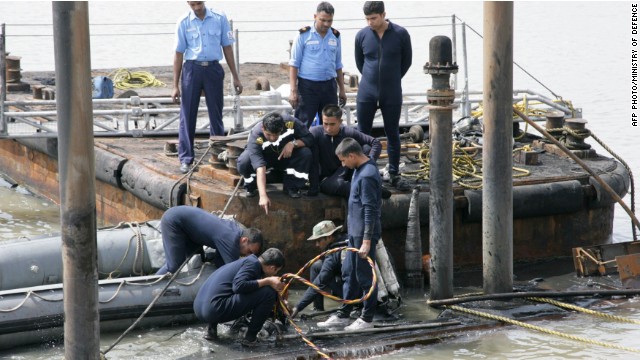
Three more bodies have been extricated from INS Sindhurakshak submarine that sank at the Naval Dockyard in Mumbai after two blasts ripped through its hull on August 13.

“Since the past three days, we have been receiving one body for post mortem each day. The cause of death has been reserved until the histopathology and other forensic reports arrive. The bodies are intact with spinal cords,” said Dr TP Lahane, dean of JJ Hospital in Byculla. Sources at the hospital said that the prima facie cause of death is burns.

On August 19, the hospital had received the seventh body for the post mortem.

The process to identify the body has been initiated. Doctors at JJ Hospital’s forensic department have collected the tooth and bone samples for DNA identification have been sent samples to the Kalina Forensic Science Laboratory (FSL).

Dr Lahane said that the post mortem on the ten bodies has been completed and they are lying at the hospital’s morgue.

“We have not handed over the body (to the navy),” said Dr Lahane. According to the sources, the hospital also took X-ray scans of the bones to see if any shrapnel was lodged.

INS Sindhurakshak was returned in January by a Russian shipyard after a Rs480-crore overhaul meant to increase the warship’s life by 10 years.

Built in 1997 at St Petersburg, Russia, in 1997, the submarine was designed to patrol and to protect naval communications, assault warships, submarines and land targets, and perform naval reconnaissance.

Sunday 25 August 2013

http://www.hindustantimes.com/India-news/Mumbai/3-more-bodies-recovered-from-INS-Sindhurakshak/Article1-1112848.aspx

continue reading

Shetland helicopter crash: Fourth body recovered


The body of the fourth victim of a North Sea helicopter crash has been recovered from the aircraft wreckage.

Four people were killed when the Super Puma, operated by CHC for oil firm Total and carrying oil workers from the Borgsten Dolphin platform., plunged into the sea off Shetland on Friday evening after suffering a ‘catastrophic’ loss of power.

Rescuers recovered three bodies in the aftermath of the crash and the fourth was removed from the wreckage this afternoon.

This brings the total number of bodies recovered to four, with two people remaining in hospital in Lerwick with non-life threatening injuries. A further twelve people were released from hospital and returned to Aberdeen on Saturday 24 August.

Chief Inspector Angus MacInnes, from Police Scotland, said: “The fourth person was recovered from the wreckage a short time ago and we have deployed family liaison officers to support those who have lost loved ones. We are also working with the industry to help support all of those affected.

Those who died have been named as Duncan Munro, 46, from Bishop Auckland, County Durham; George Allison, 57, from Winchester, Hampshire; Sarah Darnley, 45, from Elgin; and 59-year-old Gary McCrossan, from Inverness.

Helicopter operator CHC said the aircraft lost communication as it approached the airport on the southern tip of Shetland’s main island.

One Total employee was on board and the remainder worked for contract companies, including those killed.

A team from the Air Accidents Investigation Branch has travelled to Aberdeen to carry out initial inquiries into the incident.

Jim Nicholson, RNLI rescue co-ordinator, said: ‘’There appears to have been a catastrophic loss of power which meant the helicopter suddenly dropped into the sea without any opportunity to make a controlled landing.’’

Industry body Oil & Gas UK has arranged a meeting of operators and major contractors tomorrow to discuss ways of minimising the impact of the suspension on the offshore workforce.

Scotland’s Finance Secretary John Swinney said he has been closely liaising with trade unions representatives about the safety of the helicopters.

Mr Swinney said of the grounding of Super Pumas: “We do not anticipate that this temporary suspension will have any immediate impact on the production of oil and gas in the North Sea, but we will continue to monitor this situation closely.

“My thoughts are with the families, friends and colleagues of those who lost their lives and I hope those who were injured make a good recovery.”

A statement from Super Puma manufacturers Eurocopter said: “Eurocopter is supporting CHC and relevant authorities with their investigations.”

There have been five North Sea incidents involving Super Pumas since 2009. In April that year an AS332 L2, this time operated by Bond Offshore Helicopter, went down north east of Peterhead on its return from a BP Platform, killing all 14 passengers and two crew on board.

Pat Rafferty, Scottish secretary of the Unite union, said: ‘’This is the fifth major incident in the last four years involving Super Puma helicopters in the UK offshore industry and the second resulting in fatalities. It’s unacceptable and it can’t go on.”

Bob Crow, general secretary of offshore union RMT, said: “RMT and Unite have worked with all sectors of the industry to address the concerns of our members and rebuild that confidence. Last night’s events have undone all of that work and we anticipate an outpouring of anger.”

First Minister Alex Salmond paid tribute to the “brave and hard-working” people involved in the rescue effort.

He said: “Our thoughts at this difficult time are with the families, friends and colleagues of those who lost their lives in this tragic incident.”

Tavish Scott, the Liberal Democrat MSP for Shetland, said: “The families of those lost must know why this helicopter ditched very suddenly. There have been repeated serious and tragically fatal crashes involving Super Puma helicopters.

“The operators are right to ground the entire fleet. But there are now serious questions about why the Super Puma had been cleared to fly, given its tragic record in recent years.”

The flag above the Town House in Aberdeen – Europe’s oil capital – was being flown at half-mast yesterday as a mark of respect for those who died in the disaster.

Sunday 25 August 2013

http://www.scotsman.com/news/transport/shetland-helicopter-crash-fourth-body-recovered-1-3060067

continue reading

Saturday, 24 August 2013

Belitung ferry fire: 6 dead, 7 missing


Six people died and 7 others were still missing on Friday afternoon after a ferry carrying hundreds of people caught fire in the Java Sea in Bangka Belitung province on Thursday, police said.

“There were 197 people on the boat when the incident happened, but only 189 people were registered on the list, including 13 crew,” National Police spokesman, Sr. Comr. Rusli Hadiaman said on Friday.

“The ferry caught fire after one of the passengers disposed of a cigarette into a box full of chicks,” Sutopo Purwo Nugroho, a spokesman for the National Disaster Mitigation Agency (BNPB), said in a text message to the Jakarta Globe. No further details were provided.

“The investigation is still ongoing,” he added.

Police said that the the MV Express Bahari 8C boat caught fire at 5:30 p.m. around eight kilometers from Tanjung Pandan. It was en route to the Belitung port from Pangkalbalam port on neighboring Bangka.

Police have identified four victims, including a two-year-old girl.

“We managed to save [184] people,” Rusli said.

“The team, consisting of Bangka Belitung Water Police, the Navy and local fishermen, is still combing the area to locate and rescue the missing victims,” National Police analysis and evaluation division chief Sr. Comr. Rusli Hendyaman said at National Police headquarters in South Jakarta.

Saturday 24 August 2013

http://www.thejakartaglobe.com/news/belitung-ferry-fire-6-dead-7-missing/

continue reading

At least 29 dead in Bolivia prison fire


At least 29 people were killed and about 50 others wounded on Friday at a prison in eastern Bolivia as clashes between rival gangs ended in a huge fire, officials said.

One of the dead was a child living with incarcerated parents in the maximum-security Palmasola prison in the eastern city of Santa Cruz — a facility that houses about 5,000 inmates.

Bolivia allows children to legally live with incarcerated parents.

"The latest information we have is that the number of dead is already at 29. Of those hospitalized, 35 of them have very serious injuries," prisons director Ramiro Llanos told AFP.

Police had earlier put the death toll at 15. Local police commander Jorge Aracena said authorities had brought the situation under control.

Aracena said the incident began early Friday when a group of inmates broke into another sector of the prisonOne group attacked the other with sharp weapons and firearms, and set two liquid gas cylinders on fire, sparking an explosion fueled by exploding propane gas tanks.


Bodies were taken to the morgue for autopsies and identification, he said. Television networks broadcast images of charred bodies and ambulances taking the dead and injured to hospitals, which were overwhelmed by the number of victims.

Authorities called on local residents to donate blood to help the wounded.

Prisons in Bolivia suffer from serious overcrowding. Hundreds of children are forced to live with their parents in jails because they have no other relatives, or because both parents are incarcerated.

Saturday 24 August 2013

http://www.timesofoman.com/News/Article-21400.aspx

continue reading

Missing persons event set for next month in Arkansas, DNA collected


Authorities in Arkansas are encouraging relatives of missing people to have their DNA collected at an event next month in an effort to try to find those who have disappeared.

The event, called "Never Forgotten: Arkansas Takes Action," is slated to take place on Sept. 14 in Little Rock.

It follows a similar missing persons' event held last year, where the state worked to collect genetic material in an effort to link DNA to some of the thousands of sets of unidentified remains across the country.

Last year's event worked: Authorities identified the remains of an east Arkansas man who had been missing for more than a decade.

Relatives of Tommy Lee Newingham of Earle gave DNA samples, which were logged into a national database. Officials then matched those samples with a previously unidentified set of remains found in Memphis, Tenn., in 2011.

Now, authorities hope Newingham's story will drive more people to the upcoming event.

"I think that when people see an example of another family getting some peace and closure and resolution, it gives other families first of all more information ... but then also, it gives people more reason for hope," said Attorney General Dustin McDaniel, who is working with law enforcement agencies and the State Crime Lab to organize Arkansas' second missing persons initiative.

There are hundreds of active missing persons cases in Arkansas alone, according to the attorney general's office.

Authorities want relatives of missing people to bring police reports, photographs, dental records and other information to the event next month. Forensic analysts will be on hand to take DNA samples.

The DNA collection and other services at the event are free.

But Kermit Channell, executive director of the State Crime Lab, said he hopes to see people who have already given samples — whether they show up to update their information or just check in.

"I hope that having these things makes them more aware that we haven't forgotten," Channell said.

Read more: The Courier - Your Messenger for the River Valley - Missing persons event set for next month.

Saturday 24 August 2013

http://www.couriernews.com/view/full_story/23439175/article-Missing-persons-event-set-for-next-month-

continue reading

Human body parts found in landfill


Police yesterday recovered around 16 severed human body parts and 13 bones at Dhaka South City Corporation landfill in Matuail.

They, however, could not say whether criminals dumped those, in four sacks, after killing people or those were from hospitals or anatomy departments of medical schools.

Ragpickers made the grisly discovery around 5:30am, and waste management staff informed the police of the matter.

There were seven legs, three hands and six parts of heads and chests, said Minhajul Islam, senior assistant commissioner (AC) of Demra zone of Dhaka Metropolitan Police.

Some of the bones were screwed and wired together.

He said police were suspecting there could be bodies of a man and a woman somewhere in the landfill.

The recovered body parts, which seemed to have been cut with hacksaw blades and had preservatives on them, were first taken to Jatrabari Police Station and later sent to Sir Salimullah Medical College morgue.

According to police, one of the hands had painted nails, suggesting that it might be of a female. They could not say how many people the body parts belonged to.

Samples would be sent to DNA laboratory for identification of the deceased, AC Minhajul added.

Asked from which area the body parts were taken to the landfill, the Jatrabari Police Station’s officer-in-charge (investigation) refused to say anything without completing investigation.

Every night 250-280 garbage trucks dump garbage in that zone, said Abdulla Harun, an assistant engineer at Waste Management Department of Dhaka South City Corporation.

He said the sacks were probably dumped early yesterday or very late into Thursday night as garbage trucks dumped trash in that particular spot after 11:00pm.

A source in charity organisation Anjuman Mofidul Islam said they were the one who usually receive unidentified or unclaimed bodies or parts of bodies from Dhaka Medical College and Sir Salimullah Medical College morgues and that they bury the bodies or parts of bodies in Azimpur or Jurain graveyard.

Saturday 24 August 2013

http://www.thedailystar.net/beta2/news/16-human-body-parts-found-in-landfill/

continue reading

Belongings of victims accurately recorded


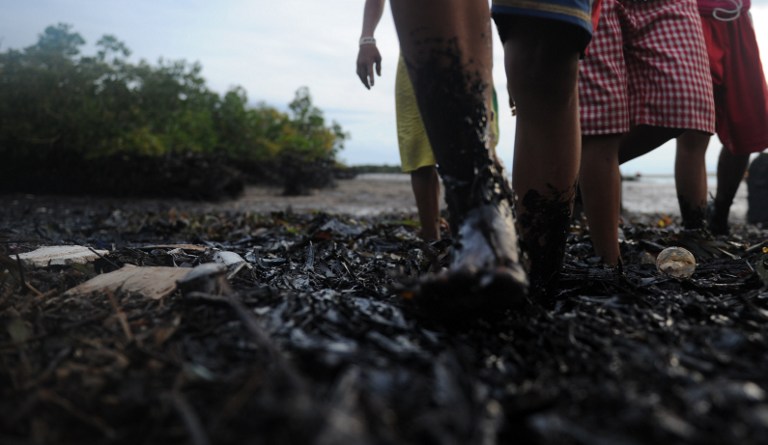
Cash bills wrapped in plastic turned up in the oil-soaked clothes of a woman, one of the fatalities of the sunken MV St. Thomas Aquinas.

The clothes were being washed by Charles Tubio, a criminology intern, one of 76 assigned since Tuesday to help in the ongoing victim identification process at the Cosmopolitan Funeral Homes.

Tubio turned over the bills, which ran to several thousand pesos, to the head of the Scene of the Crime Operatives (SOCO).

“I pity the victim who died,” the intern told Cebu Daily News, when asked about the discovery.

He said the woman, who remains unidentified, reminded him of a student who travels at sea bringing her tuition fee money in her pocket.

The clothes or any jewelry, personal effects or even body tattoos or scars are sometimes the only clues to the identity of unclaimed bodies recovered at sea after the Aug. 16 sea tragedy.

Senior Supt. Nestor Sator, regional chief of the PNP Crime Laboratory, said each item is documented and safeguarded.

When a cadaver is brought to the funeral home, crime lab personnel tag the body, place the human remains in a body bag which is also tagged, and take photographs. Another tag is placed on on the plastic bag holding the belongings of the victim – apparel, gadgets, jewelry, etc.

All items are documented in the presence of the Scene of the Crime Operatives (SOCO) and Cosmopolitan staff before they are turned over to the evidence custodian.

Sator said fingerprint and dental examination are made as the main source of information in the Disaster Victim Identification (DVI) process.

DNA testing is used as a last resort if families are unable to produce dental records of their loved ones or fingerprint records from the National Bureau of Investigation (NBI) or police clearances .

The student interns who help out belong to the graduating class. Part of their duties is to tape numbers on the hands of cadavers so the victims can be easily located once they are identified by the families.

The bodies are bloated and face features are unrecognizable after days in the water.

“We pray before we head to work for the eternal rest of their souls,” said one of the interns.

Intern Concepcion Avenido said that last Tuesday, after she helped SOCO, she skipped lunch and dinner and she could hardly sleep at night.

“After the hands-on experience, we had a hard time eating our meals because the smell of the dead clings to our nostrils and body,” she said.

Nevertheless, the interns said the experience makes them count their blessing that their own families are safe.

Last Tuesday, SOCO allowed the public viewing of a slideshow of photos of the recovered victims and their belongings in the lobby of the funeral home to speed up identification of the victims by their families.

However, this was stopped on Thursday after the Department of Health advised that it was traumatic for the families to see deformed faces and bodies of their kin.


With this, Chief Inspector Benjamin Lara of the PNP Crime Laboratory -7, changed the procedure and showed only personal belongings of the victims like clothing one by one to the families.

“We stopped the viewing because it adds to the families’ trauma. Viewing only prolongs their agony,” Lara said.

This time, staff conduct interviews and ask families to describe in detail their missing loved one as well as their belongings to avoid spurious claimants.

DNA tests are done in Camp Crame in Metro Manila and would take months.

“The relatives should understand the sheer volume of the specimens taken from the victims and the sheer volume of specimens taken from the relatives. Take note, there are more than 80 relatives who are looking for their missing loved ones,” Lara said.

Saturday 24 August 2013

http://newsinfo.inquirer.net/473463/belongings-of-victims-accurately-recorded

continue reading

Three bodies found, fourth missing, as helicopter crashes off Shetland


The Super Puma L2 aircraft went down at 6.20pm last night, around two miles west of Sumburgh airport on Shetland as it was returning to the island from the Borgsten Dolphin platform in the North Sea.

Fourteen of the 18 people on board the helicopter were taken to safety during the immediate rescue response.

A major search operation, involving the coastguard, police, RAF and RNLI, was extended overnight to hunt in the darkness for those who remained missing.

This morning, Police Scotland confirmed the bodies of three people have been recovered.

A fourth person remains unaccounted for, a spokeswoman added.

The families of those affected have been informed.

Jim Nicholson, RNLI rescue co-ordinator, said he understands two of the bodies were recovered in the area where the helicopter crashed.

"The bodies came to the surface close to the helicopter wreckage," he said.

"The helicopter was in a pretty inaccessible place but the lifeboat crew were able to get to them using an inflatable craft.

"It's fortunate there were not more casualties in a helicopter crash of this kind.

"There appears to have been a catastrophic loss of power which meant the helicopter suddenly dropped into the sea without any opportunity to make a controlled landing."

The rescue team then spent hours securing the helicopter and moving it to a more accessible location where it is waiting to be loaded on to a vessel.

Mr Nicholson added: ''The helicopter is being held in position but no one has been able to board it yet.

''Once the helicopter has been loaded on to the vessel it can be searched.

''It may be that a body is recovered on the helicopter.''

He praised the efforts of the rescue agencies involved.

''I think it's been a very long night and I think the crew have been tremendous.''

Saturday 24 August 2013

http://www.heraldscotland.com/news/home-news/three-bodies-found-fourth-missing-as-helicopter-crashes-off-shetland.1377324649

continue reading

Cebu collision death toll rises to 80


The Philippine Coast Guard (PCG) yesterday said the death toll from the ill-fated M/V St. Thomas Aquinas has gone up to 80 as five more bodies were seen floating near Cordova town in Cebu.

PCG spokesman Commander Armand Balilo said as of 4:45 p.m., the recovered bodies from the St. Thomas Aquinas, which collided with M/V Sulpicio Express 7 off Cordova town last Aug. 16, consist of 76 passengers and four crewmembers.

The current death toll brings down the number of missing persons to 40.

There were 750 survivors of the accident, the PCG said.

The Cebu Provincial Disaster Risk Reduction and Management Council is the overall agency handling and supervising the search, rescue and retrieval operations on the country’s latest maritime disaster.

Day of mourning

The city government of Butuan declared yesterday as a “Day of Mourning” in sympathy to the victims of St. Thomas Aquinas, some of whom came from Butuan.

Butuan City Mayor Ferdinand Amante Jr. also directed all the city’s public institutions to lower the Philippine flag at half mast for three days beginning yesterday.

Amante said they will also provide legal, moral and financial support to the victims and their families.

Saturday 24 August 2013

http://www.philstar.com/headlines/2013/08/24/1128641/cebu-collision-death-toll-rises-80

continue reading

Mexico officials identify 5 mass grave bodies as those of missing 12 kidnapped teenagers


Mexican authorities said Friday they have identified five bodies pulled from a mass grave as some of the 12 people kidnapped three months ago from a Mexico City bar.

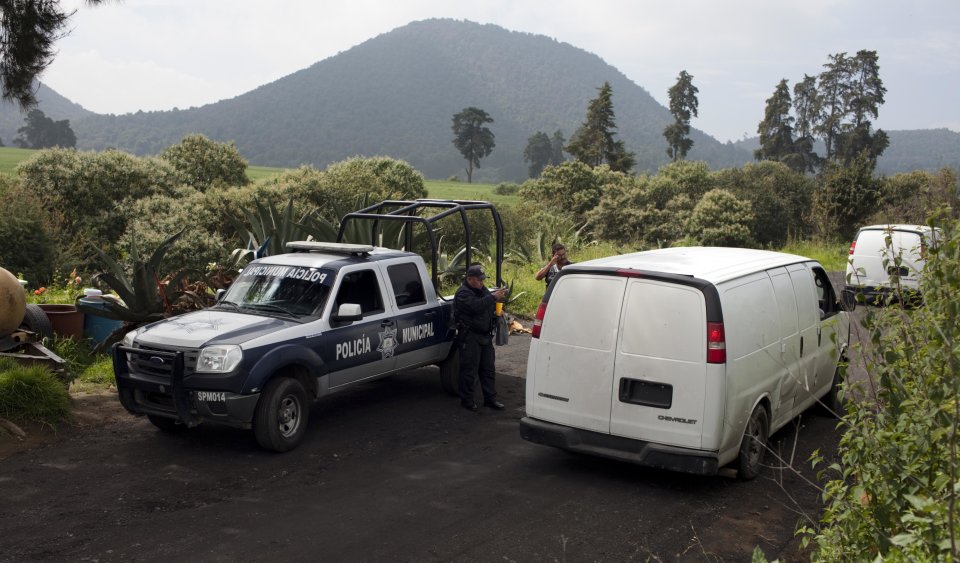
Assistant attorney general Renato Sales told reporters that 13 badly decomposed bodies have been pulled from a mass grave covered with cement, lime and asbestos discovered Thursday on a rural ranch east of Mexico City.

Officials said the remains are at federal labs, where experts are using DNA tests, and they expect to have all of them identified soon.

The young bar-goers vanished from the Heaven club at midday May 26, just a block from the leafy Paseo de Reforma, the capital's equivalent of the Champs-Elysees.

The bizarre disappearance resonated across the city of 9 million people because many had come to believe it was an oasis from the rampant drug violence that had led to discovery of mass graves elsewhere in the country.

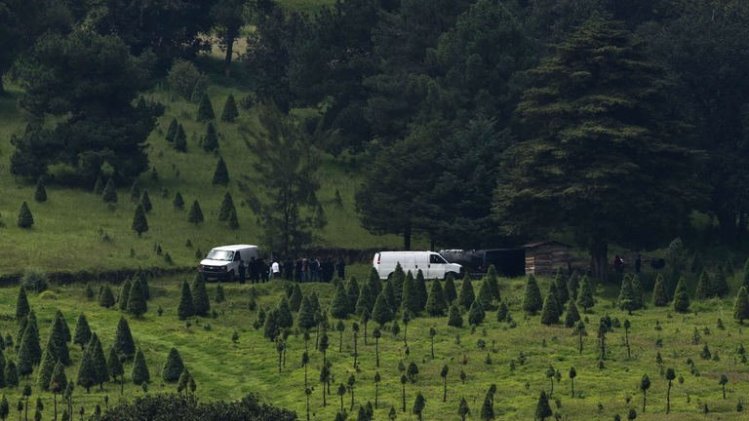
Authorities set up a perimeter more than a mile (1.5 kilometers) from the excavation site on a hilly ranch known as La Negra, where federal police and attorney general's trucks and large white vans were seen working the operation. The private property next to Rancho La Mesa Ecological Park is walled and surrounded by oak and pine trees.

The federal Attorney General's Office said agents had received information about possible illegal weapons on the property and obtained a search warrant. When they started looking around, they discovered the grave.

"They found a home that looked like a safe house," Murillo Karam told reporters Thursday. "We were operating under the belief it was a weapons case."

Prosecutors have said the abductions from the Heaven bar were linked to a dispute between street gangs that control local drug sales in the capital's nightclubs and bars. They say the gangs are based in Mexico City's dangerous Tepito neighborhood, where most of the missing lived. The families insist the missing young people were not involved in drug trafficking.


Surveillance cameras showed several cars pulling up to the bar at midday and taking the victims away. A witness who escaped told authorities that a bar manager had ordered the music turned off, told patrons that authorities were about to raid the establishment and ordered those inside to leave.

Saturday 24 August 2013

http://news.yahoo.com/mexico-officials-id-body-5-missing-12-221806955.html

continue reading

Three missing after helicopter crashes off Shetland


Three people are missing after a Super Puma helicopter, carrying 18, crashed into the sea near Shetland.

The Coastguard confirmed that 15 people had been rescued from the sea and were taken to a hospital in Lerwick. An air and sea search is continuing.

The incident happened west of Sumburgh Airport at about 18:20 BST.

The L2 helicopter, carrying 16 people and two crew, was operated by CHC for Total, taking people to and from oil and gas platforms in the North Sea.

Jim Nicholson, RNLI rescue co-ordinator, told the BBC the helicopter was in an "inaccessible" position and that the weather in the area was not "particularly good"

He said: "There was a fresh wind, not overly strong, visibility is not particularly good and it was misty in the area but I doubt if that would have had any impact on causing whatever happened to the helicopter.

"I believe that the helicopter is in a fairly inaccessible position at the moment near the cliffs. There's quite a lot of tide in that area so any person in the water could be carried some distance away.

"It will be becoming much more difficult with darkness but I have no doubt that those involved are putting in every effort to try to obtain the best possible outcome."

One rescue helicopter flew nine people into Lerwick. One was taken off the flight by stretcher. The rest walked off the flight.

A coastguard spokeswoman said passengers had suffered a range of injuries.

She said: "The people that were involved are in varying stages of injury, no-one has walked away from this without a scratch."

Major incident

A CHC spokesman said: "We can confirm that an L2 aircraft has landed in the water, approximately two miles west of Sumburgh.

"The aircraft was on approach to Sumburgh Airport at approximately 6.20pm when contact was lost with air traffic control.

Jim Nicholson, rescue co-ordinator for the RNLI, speaks to the BBC as footage shows the rescue operation taking place "We can confirm there were 16 passengers on board, and two crew."

He said the company's Incident Management Team had been mobilised. CHC has set up a helpline for concerned relatives on 01224 296 866.

Michael Bull, whose son Samuel was rescued, said: "We understand he was on his way back from a rig and the helicopter lost power suddenly and immediately ditched into the water.

"He managed to escape straight away because he was right by an exit and I understand soon afterwards that the helicopter turned over."

Police Scotland said a major incident had been declared.

A spokesman said 15 people had been taken to Gilbert Bain Hospital in Lerwick.

Sumburgh Airport has been closed to allow emergency services to deal with the incident.

Airport spokesman Donald Morrison said the helicopter had been making an approach at 18:15 BST and lost radar contact with air traffic control.

Three helicopters and two lifeboats are involved in the search.

Rescue helicopters

The coastguard said the helicopter's life rafts were found empty and wreckage from the helicopter was starting to wash up at Garth Sneff near Sumburgh Head.

A spokeswoman said: "There is still an ongoing search and rescue mission for the three missing people."

Sq Ldr Dave Webster said RAF Kinloss had received a call at 18:27 BST, saying a Super Puma had ditched to the west of Sumburgh - about three or four miles offshore.

A ferry travelling between Shetland and Aberdeen was diverted to the scene and the RNLI launched Aith and Lerwick lifeboats.

Northlink Ferries confirmed that one of its ferries, which had left Shetland and was heading to Aberdeen, had been diverted back to the incident.

A spokeswoman said: "I can confirm that the Hjatland passenger ferry and Helliar freight vessel are providing support.

"We believe there are 201 passengers on board the Hjatland, which was on its way to Orkney to pick up more passengers."

The helicopter was flying from the Borgsten Dolphin oil platform in the North Sea to Sumburgh Airport.

A specialist medical team has been flown from Aberdeen Royal Infirmary to Lerwick by the RAF helicopter from Lossiemouth.

Investigators from the Air Accidents Investigation Branch (AAIB) are travelling to the scene.

A spokesman for the Department for Transport said: "The AAIB is aware of the incident and has deployed a team".

Previous incidents

The Unite union's Scottish secretary Pat Rafferty said: "Our immediate thoughts are with those people and their families and we can only hope for good news although as time goes on the situation becomes more worrying."

He added: "Fifteen people have thankfully been rescued and accounted for, unfortunately some with injuries, and their rescue is testimony to the bravery and skills of the rescue services.

"This brings into sharp focus once again the very precarious nature of the transportation of workers to and from offshore platforms. The health and safety of working people is our priority and we will be watching events closely as they happen."

Tavish Scott, the MSP for Shetland, said: "The first thought has to be with those who are unaccounted for. One can only think of families and loved ones who must be desperately worried at this time."

The Moderator of the General Assembly of the Church of Scotland, the Right Reverend Lorna Hood, said: "Our thoughts and prayers are with all those involved in the Super Puma helicopter crash off Shetland and especially those waiting news of their loved ones."

Last year, two helicopters ditched in the North Sea only six months apart. All passengers and crew were rescued in both incidents which were found to be caused by gearbox problems.

In October, 17 passengers and two crew were rescued from life rafts by a passing vessel after the helicopter, which was carrying an oil crew from Aberdeen to a rig 86 miles north-west of Shetland, was forced to ditch.

Previously, in May 2012 all 14 passengers and crew members on a Super Puma helicopter were rescued after it ditched about 30 miles off the coast of Aberdeen.

The helicopter was on a scheduled flight from Aberdeen airport to a platform in the North Sea at the time.

Super Puma EC 225s were grounded in the wake of the two incidents but were given approval to fly again and services resumed earlier this month.

In April 2009, 16 people died when a Super Puma plunged into the sea. Its gearbox failed while carrying the men to Aberdeen.

The Bond-operated aircraft was returning from the BP Miller platform when it went down off the Aberdeenshire coast.

Saturday 24 August 2013

http://www.bbc.co.uk/news/uk-scotland-north-east-orkney-shetland-23821083

continue reading