Saturday, 17 August 2013

Autopsies performed on five submarine sailors' bodies


Doctors at Sir J.J. Hospital have finished performing autopsies on the bodies of five sailors recovered from the sunken submarine INS Sindhurakshak, hospital sources said.

The bodies were brought to the hospital as the naval hospital INHS Ashvini does not have facilities to conduct autopsies.

Besides the autopsy to determine the causes of death, DNA samples have been taken and dental identification carried out to identify the victims.

Hospital officials said the bodies were brought in a completely charred state though some tissues were intact.

Orthopaedic x-rays carried out to ascertain shrapnel or other foreign bodies embedded on the victims have proved negative.

Prima facie, doctors have concluded death due to burning, asphyxiation and drowning thought the exact cause and timing of death of each will be determined only at a later stage.

The identities of the victims shall be clear after forensic experts give the DNA and dental record reports in the next few days.

Meanwhile, the Indian Navy is under pressure to expedite the work of recovering the remaining 13 missing sailors.

After five bodies were recovered till Friday evening, the naval team of divers is engaged in a round-the-clock operation to find the others.

The chances of finding any survivor have been ruled out from the deep sea fighter vessel which exploded, caught fire and then sank within six hours early Wednesday in the Mumbai naval harbour.

"The state of (the three recovered bodies) and conditions within the submarine leads to the firm conclusion that finding any surviving personnel within the submarine is unlikely," the Indian Navy said in a statement Friday afternoon.

"The damage and destruction within the submarine around the control room area indicates that the feasibility of locating bodies in the forward part of the submarine is also very remote as the explosion and very high temperatures, which melted steel within, would have incinerated the bodies too," the statement added.

However, the Indian Navy is hopeful that some of the armaments inside the deep sea fighter vessel, stored on the rear side, may be recovered undamaged as the flames did not completely gut that portion of the submarine.

The distraught families of all the 18 missing personnel have been contacted "and are being provided regular updates through constant interaction" by the Family Cell headed by a rear admiral and members of the Navy Wives Welfare Association.

Saturday 17 August 2013

http://www.business-standard.com/article/news-ians/autopsies-performed-on-five-submarine-sailors-bodies-113081700902_1.html

continue reading

Over one hundred missing and thirty-one dead in Philippines Thomas Aquinas ferry disaster

At least 31 people have died 171 are missing after an overnight collision between a ferry and a cargo vessel near the central Philippine port of Cebu.

The collision sent ferry passengers jumping into the ocean and left many others trapped. At least 28 were confirmed dead.

The captain of the MV Thomas Aquinas ferry, which was approaching the port late on Friday, ordered the ship abandoned when it began listing and then sank just minutes after colliding with the MV Sulpicio Express, according to local coast guards.

The 138-metre long ferry carried 752 passengers, including children, and 118 crew members, of which 629 have been recued.

Coast guard chief Commander Weniel Azcuna said that 171 people are still missing, some of them possibly trapped inside the ship that sank in waters about 33 metres deep off Talisay city in Cebu province, approximately 350 miles south of the capital Manila.

Navy divers recovered at least four more bodies from the underwater wreck early Saturday. Bodies were seend reportedly coated with fuel and oil that spilled from the ferry.

"There could be more bodies there, but there were ropes inside that our divers could get entangled in," Tuason said.

An investigation will begin after the rescue operation, the coast guard said.

Accidents at sea are fairly common in the Philippine archipelago due to frequent storms, badly maintained boats and weak enforcement of safety regulations.

In 1987, the ferry Dona Paz sank after colliding with a fuel tanker in the Philippines, killing more than 4,341 people in the world's worst peacetime maritime disaster.

In 2008, the ferry MV Princess of the Stars capsized during a typhoon in the central Philippines, killing nearly 800 people.

Saturday 17 August 2013

http://www.independent.co.uk/news/world/asia/over-one-hundred-missing-and-thirtyone-dead-in-philippines-thomas-aquinas-ferry-disaster-8772315.html

continue reading

Friday, 16 August 2013

4 bodies recovered from sunken Indian navy submarine INS Sindhurakshak, bodies will be DNA tested


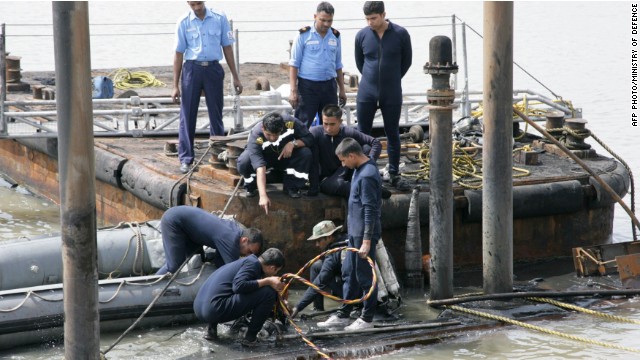
Four severely burned bodies have been recovered from an Indian navy submarine that sank in Mumbai this week after an explosion and fire on board, authorities said Friday.

The Indian government warned that there was almost no hope of finding any survivors among the 14 other sailors who were in the submarine when it was hit by the unexplained blast at a naval dockyard early Wednesday.

Navy divers have been searching for the trapped submarine personnel for the past two days.

Their task has been complicated by poor visibility inside the stricken submarine's passageways, which are full of oily, muddy water and wreckage. Adding to their difficulties, the heat of the explosion warped some of the hatches inside the vessel, blocking the divers' access to certain areas.

The four bodies they found Friday are unidentifiable because they were so severely burned, authorities said. They have been taken to a naval hospital for DNA identification.

Searching 'every inch'

The state of the bodies and conditions inside the INS Sindhurakshak, a Russian-built submarine, mean that "finding any surviving personnel within the submarine is unlikely," the ministry said.

"The feasibility of locating bodies of personnel in the forward part of the submarine is also very remote, as the explosion and very high temperatures, which melted steel within, would have incinerated the bodies, too," it warned.

But divers will continue to scour "every inch" of the submarine until all the bodies are recovered "or it can be stated with finality that no bodies remain to be found," the statement said.

Authorities say they have contacted the families of all the 18 missing personnel and are keeping them updated. The defense ministry has published the names of the three officers and 15 sailors concerned.

Friday 16 August 2013

http://edition.cnn.com/2013/08/16/world/asia/india-submarine-disaster/

continue reading

New questions raised over Canberra Air Disaster


New questions have been raised about Australia's most significant air disaster, including a claim that bodies of high profile victims may have been incorrectly identified.

The Canberra Air Disaster in 1940 killed 10 people, including three key members of then prime minister Robert Menzies' cabinet and the chief of the general staff.

It shocked the nation and contributed to the fall of the war-time government, it is said that Mr Menzies never really recovered.

The disaster has always generated debate about how it happened on a clear and still Canberra morning, and who was actually at the controls when the Hudson Bomber plane crashed 73 years ago this week.

Was it the listed pilot Robert 'Bob' Hitchcock or the air minister James Fairbairn?

'More uncertainty'

Andrew Tink sought to answer some of those questions in his book 'Air Disaster Canberra: the plane crash that destroyed a government', which was released in April this year.

"I didn't set out with an opinion, but during the course of writing the book it became clear to me that the air minister James Fairbairn was at the controls when the plane crashed," he said.

"I hesitate to use the word definitive.

"I say the evidence is strong and I'm confident in reaching the conclusion I have an expressing it publicly."

It was feedback from his book that led to Mr Tink's concerns about the identification of bodies.

"After I wrote my book someone approached me to say I got one of the ages of the victims wrong, I went and checked and sure enough that was the case," he said.

"I asked myself how could I have made this mistake, but the mistake was in fact made by the person identifying bodies at the morgue."

The bodies from the front of the plane were not identified or tagged at the scene.

They were examined at the Canberra morgue where one was found to be that of an older man, perhaps mistakenly thought to be Bob Hitchcock.

Mr Tink believes that was actually the body of James Fairbairn.

"The mistake was made by the group captain identifying the bodies, who assumed that Hitchcock was 10 years older than he in fact was," he said.

"The reality was that Hitchcock and Richard Wisener the co-pilot were almost exactly the same age.

"The person who was a little bit more than 10 years older, was Fairbairn."

Which body, which grave?

Mr Tink made his claims public this week at a forum at Questacon in Canberra hosted by the ACT Australian Science Communicators and the Australian and New Zealand Forensic Society.

He says the evidence is definitive that mistakes were made in the identification process, but he would not be drawn on what happened after that and whether bodies were eventually buried in the wrong graves.

"I can't say that, I'd prefer not to go there," he said.

"It's more uncertainty as to who was where [in the plane]."

Shadow of calamity

In 2007, then ABC Stateline producer and director Geoff Crane produced a detailed documentary about the disaster called 'Shadow of Calamity'.

The title is drawn from a speech former prime minister Robert Menzies made in parliament after the crash.

"It is a great calamity, the full significance of which even yet is not fully realised," Mr Menzies said.

"Every man concerned was doing an important war service. Each of my three cabinet colleagues was a man of character and intense loyalty.

"Their loss just does not bear thinking about."

During his research for the documentary, Mr Crane came across evidence of confusion in the process of identifying bodies.

"I've gone as deep as I was able to access and there was no evidence to confirm without reservation who was where in the plane when it crashed," he said.

"There are certainly some questions about the identification process, but the focus of my concern was how the bodies of Hitchcock and co-pilot Richard Wisener were identified.

"I believe there is more chance that the pilots identities were mixed up than there is of them getting Fairbairn wrong.

"The really hard part of human nature is to actually accept that there are some things that we may just never know."

Families reflect

Family members representing all 10 victims gathered at the site of the disaster near Canberra this week to mark the 73rd anniversary of the crash.

It is the first time all the families have been represented since Mr Menzies opened the original memorial at the site in 1960.

The memorial is tucked into scrubland at the end of a rough dirt road, several kilometres off the Queanbeyan road near the Canberra Airport.

It has been vandalised and damaged and the gates are usually locked.

James Fairbairn's granddaughter Mary Browne would like to see the site made more accessible and the disaster itself made more prominent in national history.

"My brother and his wife and children visited Canberra a few years ago and were shocked that the access was closed," she said.

"I think it is really vitally important that everybody can come up and see the place where so many men lost their lives on that day."

The ACT Government is looking at ways to allow better access to the site and in turn provide greater understanding of Australia's most contentious air disaster.

Friday 16 august 2013

http://www.abc.net.au/news/2013-08-16/new-questions-raised-over-canberra-air-disaster/4893354

continue reading

Indonesia boat accident death toll rises to 13


Indonesian rescuers found five more bodies on Friday after a boat taking people home following holidays at the end of Ramadan sank, an official said, taking the death toll from the accident to 13.

The small wooden vessel, which was holding more than double its capacity of about 20 people, went down yesterday as it travelled back from Panjang island to a beach in Central Java province.

Thirty-four people were plucked to safety from waters off the main island of Java and sustained only minor injuries, according to local search and rescue official Agung Hari Prabowo.

But search teams found eight bodies immediately after the accident and five more today, he said. There were three children among the dead.

Prabowo warned the death toll could rise. "The problem is that we don't know exactly how many people were on the boat when it sank," he said.

The travellers had been performing a ceremony to mark the end of the Muslim Eid al-Fitr holiday, which comes after the fasting month of Ramadan.

It involved putting an offering of a buffalo head into the sea to ask for good fortune and express thanks to God.

The Eid holiday fell last week in Indonesia, which has the world's biggest Muslim population, but many people are still off work and celebrating.

Indonesia's 240 million people are spread across more than 17,000 islands and are heavily dependent on boats for transport, but the country has a poor maritime safety record.

Friday 16 August 2013

http://zeenews.india.com/news/world/indonesia-boat-accident-death-toll-rises-to-13_869425.html

continue reading

Boat overturned, nine dead on Jepara waters


A motorized boat carrying 47 passengers overturned on Thursday afternoon on the Jepara waters, Central Java, near Panjang Island, killing nine including children and injuring others.

The boat overturned as it was participating in the local traditional lomban ketupat celebration to mark the seventh day after Idul Fitri. Twenty eight of the passengers were treated at the nearby RSUD RA Kartini hospital while six others were outpatients.

“The boat was overcapacity. It should only take 15 to 20 passengers at one time,” Jepara Police Chief Adj. Sr. Comr. M. Taslim Chairudin said, Thursday.

Like previously, the annual tradition was held at the Kartini tourist resort, Jepara, during which locals use fishing boats to travel to the Panjang Island which is located some four kilometers from Kartini Beach to enjoy the beauty of the small island.

The ill-fated boat overturned some 500 meters off Panjang Island as it was heading home to Jepara. The boat already looked sideways as it left Panjang Island due to overcapacity. It never became stable and finally overturned.

As of Thursday afternoon the Jepara Water Police and the Search and Rescue (SAR) was still searching for the missing passengers. The bodies found were sent to the Kartini hospital. Jepara Regent Marzuki visited the victims at the hospital and met with their respective family members.

“On behalf of the local administration we express our condolence,” Marzuki said.

The search was halted temporarily due to darkness. The search effort is to be continued the following morning.

Friday 16 August 2013

http://www.thejakartapost.com/news/2013/08/15/boat-overturned-nine-dead-jepara-waters.html

continue reading

Divers find 3 bodies inside INS Sindhurakshak, 15 still missing


India's navy said on Friday divers had found the bodies of three sailors who were on board a submarine badly damaged by a fire and explosions and that it was unlikely any of 15 other missing crew members would be found alive.

"The state of these bodies and conditions within the submarine leads to firm conclusion that finding any surviving personnel within the submarine is unlikely," the navy said in a statement.

"The damage and destruction within the submarine around the control room area indicates that the feasibility of locating bodies of personnel in the forward part of the submarine is also very remote as the explosion and very high temperatures, which melted steel within, would have incinerated the bodies too."

The sinking of the diesel-powered submarine is the biggest blow for the navy, both in terms of lives and the loss of a vessel, since a frigate was sunk in the 1971 war with Pakistan.

It has turned the spotlight on the navy's ageing submarine fleet even as it spends billions of rupees on aircraft carriers to counter the rising influence of the Chinese navy in the Indian Ocean.

The Sindhurakshak is a Kilo class vessel, which were built in former Soviet and later Russian shipyards for the Indian navy from 1985 to 2000. The navy has 10 of the submarines and four German HDW boats.

A defence source said the navy did not have a deep submergence rescue vehicle that other navies use to save trapped sailors, although in this case the incident occurred while it was docked and not in the deep seas.

The navy said divers couldn't enter the Sindhurakshak for more than 12 hours because of boiling water inside parts of the vessel. Access was "almost impossible due to jammed doors and hatches, distorted ladders, oily and muddy waters".

Only one diver could work at a time initially to clear a path inside the submarine. Divers are trying to reach further inside to find the remaining bodies, the navy said.

Despite putting in their best efforts, rescuers have been finding it difficult to break into the submarine as the heat of the explosion has melted parts of the internal hull deforming the submarine hatches and has prevented access to the compartments. The main hatch was opened last afternoon.

The Navy has also been trying to pump out water from the ship but the operation has met with limited success till now as there has been large scale ingress of sea water into the submarine due to the explosion.

The diesel-electric submarine was commissioned into the Indian Navy in 1997 at a cost of around Rs 400 crore and had gone through a Rs 450-crore extensive upgrade in Russia.

The 2300-tonne Kilo class submarine, powered by a combination of diesel generators and electric batteries, had potent weapons package including the anti-ship 'Club' missiles.

A naval board of inquiry has been ordered into how weapons went off while the vessel was berthed in the high-security Mumbai base.

Friday 16 August 2013

http://zeenews.india.com/news/nation/divers-find-3-bodies-inside-ins-sindhurakshak-15-still-missing_869387.html

http://uk.reuters.com/article/2013/08/16/uk-india-submarine-bodies-idUKBRE97F04G20130816

continue reading

Thursday, 15 August 2013

Sri Lanka launches new probe into thousands missing in war


Sri Lanka's president Wednesday ordered a new investigation into the disappearance of thousands of people in the island's northeast during an ethnic war which ended four years ago.

The announcement comes just days before UN human rights chief Navi Pillay is due to visit the island, amid international criticism of Colombo's human rights record during the war against Tamil separatists.

President Mahinda Rajapakse appointed a retired judge to head a three-member panel to investigate "cases of persons from the northern and eastern provinces who went missing during the war", a statement from his office said.

"The president indicated that the inquiries are being conducted in the interest of public security and well-being and in order to determine what measures should be taken to prevent such incidents," the statement said without giving further details.

Sri Lanka has resisted international pressure for an independent investigation into war crimes despite what UN calls "credible allegations" of up to 40,000 civilians killed in the final battles in 2009.

Instead it has conducted a number of its own probes into disappearances and extrajudicial killings during the conflict, which have resulted in few prosecutions or convictions.

Sri Lankan troops declared an end to 37 years of ethnic war after wiping out the leadership of the Tamil Tiger rebels in May 2009.

Sri Lanka has maintained its forces did not kill civilians while battling Tigers who were known for suicide bombings.

A government survey conducted last year in the war-ravaged north said that nearly 8,000 people were killed during the conflict and another 6,350 were missing. International rights groups say the figures are much higher.

The survey also said that those killed included 550 children below the age of 10, but did not say who was responsible.

The UN's Pillay is scheduled in Colombo on August 25 for a five-day visit, during which she is expected to meet political leaders.

Thursday 15 August 2013

http://www.lankabusinessonline.com/news/sri-lanka-launches-new-probe-into-thousands-missing-in-war/143669287

continue reading

Cambodia landmine blast leaves six dead


Six people in Cambodia have died after their vehicle hit an old anti-tank mine, officials say.

The blast in northern Preah Vihear province also seriously injured another person on Wednesday.

The men, said to be farmers who were inspecting their paddy fields, were driving through a flooded area.

Unexploded landmines, a legacy from Cambodia's civil war, continue to kill and injure civilians despite an ongoing de-mining drive.

"The anti-tank mine was left over from the civil war and it was planted by the Khmer Rouge soldiers to defend their area from the government forces," provincial police chief, Sy Kiri, told Agence France-Presse news agency. He added that the area was a battlefield in the 1980s and had not yet been demined.

The Khmer Rouge, the ruling party in Cambodia from 1975 to 1979, was responsible for one of the worst mass killings of the 20th Century.

The brutal regime claimed the lives of more than a million people - and some estimates say up to 2.5 million perished.

Thursday 15 August 2013

http://www.bbc.co.uk/news/world-asia-23698796

continue reading

93 killed as torrential rains hit Pakistan


At least 93 people were killed and 94 others injured in rain-triggered accidents in Pakistan over the last two weeks, official statistics said Wednesday.

According to data compiled by the country's National Disaster Management Authority, the current monsoon rains affected 84,272 people, destroyed 2,309 houses and affected over 58 hectares of standing crops.

The southern province of Sindh was the worst hit area where 22 people were killed and 10 others injured in various rain-related accidents. The rain-triggered flash floods affected 15 villages in the upper part of the provinces and swept away 193 houses.

Rain water entered houses in low-lying areas of the province and disrupted railway, road and air traffic.

The state of emergency was declared in the rain-hit areas of the province and an emergency cell was formed to carry out rescue and relief operations for bringing the situation under control.

At least 21 people were killed, 13 others injured and 149 houses were destroyed in the country's northwest province of Khyber Pakhtunkhwa. The floodwater affected 337 people and destroyed several bridges and highways.

In eastern Punjab province, heavy downpour killed at least 18 people and injured 65 others. The rain water affected 68,936 people and destroyed 140,799 acres of standing crops.

In southwestern Balochistan province, 16 people were killed and 12 others injured in the rain-triggered accidents.

The northeast area of Pakistan administered Kashmir received heavy rainfall, during which at least four people were killed and four others injured.

The country's northwest tribal area also received heavy rainfall in which 12 people were killed and over 30 others injured.

Monsoon rains hit Pakistan every year in June and the season normally ends in the first week of September. During this period, the country receives heavy rains which cause flooding in various areas.

The most destructive flood hit the country in 2010, sweeping away 20 percent of the land and leaving 1,540 people dead and 2, 088 others injured in part of Khyber Pakhtunkhwa, Punjab and Sindh.

According to a United Nations report, 557,226 houses were destroyed and over 6 million people were displaced in the 2010 flood.

In 2011, flood water killed an estimated 270 civilians in southern Sindh province. At least 5.3 million people were displaced and 1.2 million houses were destroyed.

Thursday 15 August 2013

http://news.xinhuanet.com/english/world/2013-08/14/c_125172583.htm

continue reading

Palestinian Authority to demand DNA tests before Israel returns bodies


The Palestinian Authority has refused to receive the remains of Palestinian fighters held by Israel because its request for DNA testing was denied, a PA minister said Wednesday.

Since the 1960s, Israel has withheld the bodies of hundreds of Palestinians, interred in numbered, rather than named, graves in a cemetery in the occupied West Bank's Jordan Valley.

The Israeli news site Ynet reported Wednesday that Israel had agreed to return the bodies as part of a deal to secure the resumption of negotiations.

Hussein al-Sheikh, the PA minister for civil affairs, said the PA would not accept the bodies unless Israel carried out DNA testing to confirm their identities.

"Israel has leaked this news to the Israeli media because the PA refused to receive the bodies without testing and identifying them," al-Sheikh told Ma'an.

"The PA is willing to receive all the bodies of martyrs but we want to identify them."

The minister said the PA had rejected previous Israeli offers to return the bodies because Israel refused to perform DNA testing.

In 2012, Israel transferred the bodies of 91 Palestinians who were interred in numbered graves in Israel as a "gesture" to President Mahmoud Abbas.

The family of Nasser al-Buz received what was alleged to be his body, but they demanded a DNA test to verify the identity. A sample of the remains was sent to a DNA laboratory in Jordan, which found it was not al-Buz's body.

"I swear when we were carrying the coffin in Ramallah, all my brothers and I felt that it was not our brother Nasser," Nasser's 39-year-old brother Subhi told Ma'an.

"Three blood samples and a saliva sample were taken from me at Rafedia Hospital in Nablus and were sent to Jordan for DNA tests. The results were negative, though the test was done twice," Subhi al-Buz said.

Israel never announced that Nasser had been either killed or detained, the family says.

In 1989 he left home headed to Tunisia, intent on sneaking out of the West Bank via Jordan. He was set to meet late President Yasser Arafat, who was based in the north African country at the time.

The family never heard whether he arrived in Tunisia.

Thursday 15 August 2013

http://www.maannews.net/eng/ViewDetails.aspx?ID=620978

continue reading

India works to salvage stricken submarine, recover bodies


Indian divers and engineers struggled to refloat a stricken submarine in a Mumbai military shipyard Thursday after it exploded and sank with 18 crewpersons on board.

The fully-armed INS Sindhurakshak, returned by its original manufacturer Russia earlier this year after a major refit, went up in flames in a dock on Wednesday and sank to the bottom of the harbour.

Divers had opened the main hatch on Wednesday afternoon and were then expected to secure two water-tight compartments and begin pumping out the water to bring the vessel to the surface.

The disaster is considered the Indian navy’s worst since the sinking of a frigate by a Pakistani submarine in 1971 and premier Manmohan Singh is expected to speak about it in his annual Independence Day speech Thursday.

Defence Minister AK Antony described the explosion as the “greatest tragedy in recent time”.

Defence ministry spokesperson Sitanshu Kar told AFP late Wednesday: “We have not got the bodies so we can’t say they are dead. But we are fearing the worst.”

Navy chief DK Joshi said Wednesday no sign of life had been detected on board.

“While we hope for the best, we have to prepare for the worst,” he told reporters in Mumbai, adding that there was a possibility some crew might have found air pockets but “the indicators are negative”.

The blast came days after New Delhi trumpeted the launch of its first domestically-produced aircraft carrier and the start of sea trials for its first Indian-made nuclear submarine, described by Singh as a “giant stride” for the country.

The world’s biggest democracy has been expanding its armed forces rapidly to upgrade its mostly Soviet-era weaponry and respond to what many in India perceive as a growing threat from regional rival China.

Amateur video footage showed a fireball in the forward section of the Sindhurakshak, where torpedoes and missiles are stored as well as the battery units.

A board of enquiry has been established to probe all possible explanations for the explosions including sabotage, but “the indicators at this point of time do not support that theory”, Joshi said.

Other sailors on vessels berthed near the INS Sindhurakshak were admitted to a navy hospital in Mumbai with burns.

In February 2010 the vessel suffered a fire while docked in Visakhapatnam city in southern India, killing a 24-year-old sailor and leaving two others with burns.

The Indian navy has 15 submarines, but only between seven and nine are operational at any one time because of regular repair and refitting operations.

Joshi admitted that the loss of the Sindhurakshak had left a “dent” in the navy’s capabilities.

The disaster had echoes of a tragedy in Russia in 2000 when the Kursk nuclear submarine sank in the Barents Sea with the loss of all 118 crew on board.

Russia is still the biggest military supplier to India, but relations have been strained recently by major delays and cost overruns with a refurbished aircraft carrier, the INS Vikramaditya.

Thursday 15 August 2013

http://tribune.com.pk/story/590520/india-works-to-salvage-stricken-submarine-recover-bodies/

continue reading

Wednesday, 14 August 2013

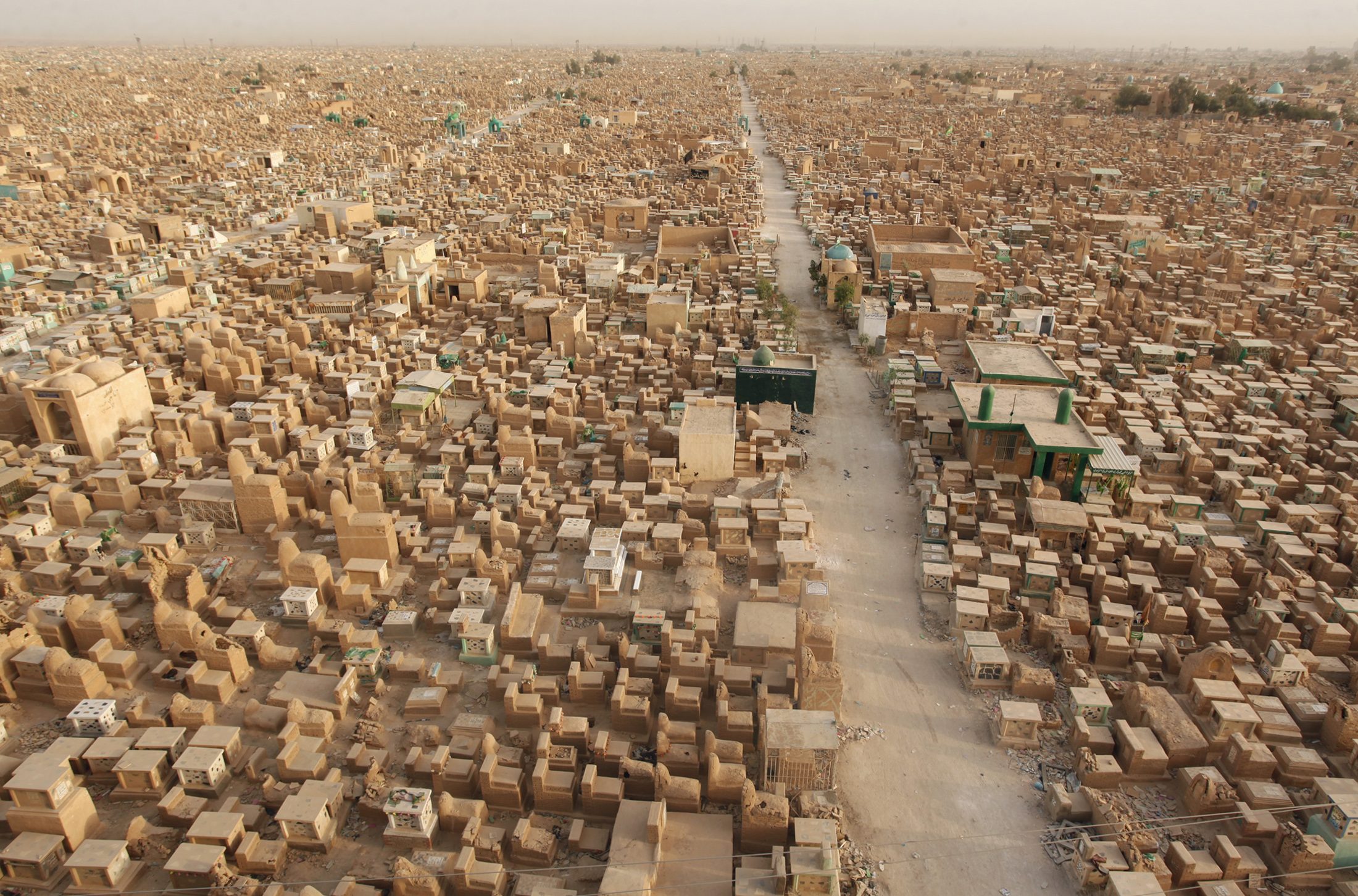
A mass grave discovered in south of Najaf - Iraq


Najaf provincial council announced on Tuesday the discovery of a mass grave containing the remains of people and civilian clothes south of the province, while likely it back to the period of the popular uprising in 1991.

A member of the provincial council in Najaf Jawad al-Ghazali in an interview (range Press) that "one of the citizens of the inhabitants of hand Razavi, south of the city, informed the provincial council discovery of a mass grave through the emergence of Jmjajh and bones and clothes during drilling operations and clean up in the region," noting that "the cemetery includes three skulls and a number of bones and civilian clothes during the initial screening process. "

Ghazali said he had been told the "circle of human rights in the province and we inspect the place on the ground," adding that he "proved after examination and initial inspection and it is a mass grave dating back to the nineties of the last century in the previous regime."

He guessed Ghazali that "the cemetery dating back to the popular uprising that took place during the year 1991, and includes a large number of remains of victims of the intifada," adding that "it was to select the region and fortify the security by the police."

Ghazali noted that "the Council awaiting the arrival of a committee of the Ministry of Human Rights from Baghdad to begin the actual examination process measures by the competent committees of mass graves and find out how many remains and historical era cemetery dating her."

It was the Iraqi Human Rights Ministry announced that, in the (March 6, 2013), from the extraction of the remains of 3180 victims of the former regime of 134 mass grave opened so far, while showed the Martyrs Foundation politicians inclusion of "privileges and rights" that the text of the law, confirmed to the Committee of Martyrs and prisoners Parliamentary politicians refusing to abolish the law of accountability and justice, fearing the return of "ousted" the previous regime for the interface and called to let them "homeless hiding in burrows earth."

The Iraqi government and directed, (17 June 2013), and the Ministry of Human Rights and the Martyrs Foundation, the establishment of a memorial monument to commemorate the martyrs of the mass graves in the provinces which they found on the tombs of, Mukdh that the project will include evidence of a systematic and Museum commemorates the martyrs.

The Human Rights Minister Mohammed Xiaa Sudan, said in a (16 May 2013), the need to bear the judiciary responsible conduct investigations "in-depth" to detect the perpetrators of crimes of mass graves, while announced the discovery of 18 cemetery during the current year 2013, calling on the House of Representatives to speed up the enactment of a law "criminalization" Baath Party as the "guarantor of the non-return of the bloody thought of the political map".

And called for the parliamentary human rights committee, on May 20, 2013, the concerned authorities to work to open all the mass graves to find out the names of the victims, while The Ministry of Human Rights to create a partition to document the abuses of the former regime to be a sign of those "crimes."

The Ministry of Human Rights declared, at the (17 May 2012), the Council of Ministers allocated five billion dinars for the purchase of equipment and supplies for the identification of victims of mass graves.

It is noteworthy that the former Iraqi regime carried out mass arrests and the liquidation of a mass of hundreds of thousands of his countrymen during the uprising in particular the residents of the north and south, because of the activity opposition to him in the two regions, and after the year 2003 discovered the records and documents for the liquidation carried out by the security services and the military to the former regime, also continues to government agencies Current organizations and some parents found mass graves containing the remains of the victims, most of them civilians, women and children.

The uprising occurred in 1991 after the withdrawal of the Iraqi army from Kuwait directly, named Balhabanah because they occur in the month of August of the Hijri year, and participated in 14 of Iraq's 18 provinces, to call for the overthrow of the former regime

Wednesday 14 august 2013

http://abna.ir/data.asp?lang=3&id=451386

continue reading

Mirzapur Police dumping unclaimed bodies in Ganga River, instead of proper cremation


The inhuman face of the state police was bared when an unclaimed dead body was tied to a heavy stone and then thrown in Ganga River. The incident took place within the jurisdiction of Kotwali Katra police station in Mirzapur district.

Instead of properly cremating the body, which costs only Rs. 50, the police personnel wrapped it in a white cloth and threw into the river.

However, this is not the sole instance. The police have thrown several bodies in the river, in the past as well. Suraj, who helps the police in throwing the body into the river, says he has so far drowned 10 unclaimed bodies in the same way. "The police station gets Rs. 2,700 every month for cremation of unclaimed bodies, but the amount is not spent on it. They (cops) ask me to throw the bodies, saying they will tackle if anyone raise objection," he revealed.

On camera, a policeman and a rickshaw-puller are seen carrying a dead body wrapped in a white sheet to the ghats of river Ganga. They then tie its legs with a rope and abandon it in the water. The footage, filmed by local media in Mirzapur in Uttar Pradesh, led to a constable being suspended.

Constable Gulab Singh, said in his defense, "we are just following the instructions of the senior inspector who asked us to get rid of this body."

The Ganga flows through the heart of this city, 100 kms from Allahabad.

For the last few weeks, bodies have been washing up on the river banks, prompting local reporters to investigate.

The picture that is emerging is that of corrupt policemen exploiting a government scheme that provides Rs. 2700 for the cremation of any homeless person in the state.

Instead of last rites being performed, the bodies are being abandoned in the river.

Sanjay, a rickshaw-puller, makes his living by ferrying dead bodies from the mortuary of the local state-run hospital to the ghats along the river banks. He usually gets paid Rs. 500 per. For homeless or unclaimed bodies, he says, he is offered Rs. 50. "I'll give another Rs. 200 to the boatman," he says. "We are doing this on the instructions of the inspector, who asks us to get rid of the bodies."

Senior police officials refused to comment on the signs of venality in a ritual meant to endow some dignity and humanity on those who have died without anyone to care for them.

They did not vouchsafe for an inquiry.

Wednesday 14 august 2013

http://daily.bhaskar.com/article/UP-up-police-dumping-dead-bodies-in-ganga-river-instead-of-proper-cremation-4347199-PHO.html

http://www.ndtv.com/article/india/in-up-cops-caught-on-camera-abandoning-dead-bodies-in-river-406182

continue reading

Submarine Sindhurakshak sinks after blast, casualties feared


In a huge setback to the Indian Navy, a conventional submarine exploded after a fire on board and sank in the dockyard here early on Wednesday in which 18 personnel, including three officers, may have been killed.

The explosion resulted in a major fire breaking out on board Sindhurakshak, a Russian-made submarine, shortly after midnight, defence sources said.

A TV footage of the incident showed a huge ball of fire after the explosion lighting up the night sky in Colaba area, where the naval dockyard is located.

There were 18 persons on board the 2,300 tonne submarine, powered by a combination of diesel generators and electric batteries, a defence spokesperson said.

Union Defence Minister A.K. Antony confirmed the death on board the Kilo class warship INS Sindhurakshak but gave no details on the casualties.

“I am saddened by those naval personnel who lost their lives in the service of the country. It is a great tragedy for the Navy,” Mr. Antony told reporters in Parliament House before leaving for Mumbai.

Earlier he briefed Prime Minister Manmohan Singh about the mishap. Navy Chief Admiral D K Joshi has also reached Mumbai.

Naval sources said the blast took place in the front portion of the 16-year-old submarine which housed the torpedoes.

The navy has ordered a board of inquiry to probe the explosion and subsequent fire in the submarine, he said.

Fire tenders from the naval dockyard as well as the Mumbai Fire Brigade were immediately pressed into action, he said.

However, due to the explosion, the submarine has submerged at the dock with only a portion visible above the surface, a defence statement said.

The statement said efforts are on to ascertain the safety of the personnel and salvage the submarine.

The submarine had returned after a major upgrade programme in Russia 3-4 months ago and was capable of carrying a potent weapons package including the anti-ship ‘Club’ missiles.

INS Sindhurakshak was not on active duty at the time of the accident, Navy sources said.

The incident has come at a time when the Navy is faced with a depleting submarine fleet.

Commodore (retd) Uday Bhaskar, a former IDSA director, said since the rate of induction of new platforms has not kept up with the kind of wear and tear that a submarine would undertake, the net result is that the Navy’s submarine fleet is depleting and the operation load is increasing.

“The fact that the Sindhurakshak (incident) has happened, it is going to have its own adverse impact,” he said.

Vice Admiral (retd) A.K. Singh said an internal explosion in a submarine could be caused by either material failure or by not following standard operating procedure.

He said he suspected that hydrogen gas generated during charging of the batteries of the submarine could have led to the fire which could have spread to the missile compartment area of the warship, causing the massive explosion.

In 2010, a fire broke out on board Sindhurakshak leaving a sailor dead and two others injured. That mishap was caused by an explosion in its battery compartment.

India had bought the submarine from Russia as part of a deal in the early 1980s and the warship was commissioned in 1997. It was the ninth of the 10 ‘Sindhugosh’ class diesel-electric vessels that the Navy has in its 16-strong submarine fleet.

Former navy chief Admiral (retd) Sushil Kumar said Sindhurakshak was a frontline submarine and had been recently modified.

“It was operational and the mishap is indeed a setback,” he said.

Mr. Kumar said this is not the first time that such an incident has taken place. “There is a professional determination to set things right and everything will be back in order,” he said.

In the last few years, there have been several mishaps involving naval vessels. In 2008, another vessel of the Kilo class, INS Sindhugosh, collided with a merchant vessel off Mumbai while participating in a naval exercise.

In 2011, a surface warship INS Vindhyagiri caught fire when it collided with a merchant vessel near the Mumbai harbour while returning from a picnic with families of group of officers deployed on board.

On its way back, it hit another ship leaving the harbour.

Nobody was injured but the warship was virtually ruined.

Wednesday 14 august 2013

http://www.thehindu.com/news/national/submarine-sinks-after-major-blast-casualties-feared/article5020065.ece

continue reading

Tuesday, 13 August 2013

Nigeria: Why Nigeria needs a national DNA databank


The need and importance of a national Deoxyribonucleic acid (DNA) databank for a rapidly growing nation like Nigeria cannot be overemphasized.

DNA databank has shown to be very useful in almost all spheres of life but particularly useful in the healthcare and security sectors.

A good example of the importance of a DNA databank is the 3rd June 2012 air disaster when Dana Airline plane crashed and killed 153 passengers. This incident, though it occurred over a year ago, the Medical practitioners in charge of identifying the badly burnt passengers for onward claim and burial rites by the families are still having a hard time carrying out this task because of the unavailability of a dedicated DNA databank of the citizens.

There were even embarrassing instances where 2 families of victims of the crash engaged in fist cuffs over a corpse which both parties claimed were theirs. This kind of situations would not even have come up if we had a sort of databank to provide such information in case of emergency.

Relating DNA to the unfortunate incident involving the Dana Airline, the Director General, National Biotechnology Development Agency (NABDA), Prof. Bamidele Solomon, said that the victims of the crash could have been easily identified if there was a DNA database of the victims.

He said this during a training workshop on the theoretical and practical courses on Basic Techniques in DNA Isolation, Manipulation and Application organised by NABDA in collaboration with the International Centre for Genetic Engineering and Biotechnology (ICGEB), for Biotechnology and Forensic Scientists in Africa and beyond.

He noted that a DNA databank would have been a veritable tool for efficient and effective release of bodies of the victims of the plane crash.

He said: "DNA is a history book that can tell the origin of any species and it's unique to any individual so we can isolate every species even one on one, that is where the relevance of it comes into play in the case of our recent unfortunate incidence of plane crash; the DNA fingerprinting would have been a veritable tool in that particular occasion.

"It is important that we have a national databank of all the population in a place so in case of this issue, it's just once we get any piece we can just match it right away going back to the database.

"That is the reason why the agency is working with the National Defense Academy to ensure we develop forensic DNA finger printing technology in the country."

Highlighting the importance of a DNA databank with regards to maintain security and stability in the nation, the DG said forensic experts can use DNA to investigate crimes.

Bamidele said: "In developed countries, they do not have problems with fishing out questionable elements in the society because they have a relatively efficient and effective DNA databank which they match with suspects to decipher if they were guilty of a crime.

"It makes life easy for those on the job because it is even admissible in court and it can also be used to settle some health related issues like settling of paternal disputes."

The NABDA helmsman posited that DNA databank was so versatile and not only related to health or security but was also relevant in the agricultural sector.

He said that it was already common knowledge even among rural farmers that some species of cassava contained Cyanide which could become dangerous depending on the level of consumption.

"Even at the local level, we knew these species, so the issue now is for us to be able to have markers because there are markers that can help us know which one can produce cyanide.

"There are techniques now by which the Nitrogen that are being used to form cyanide may be channeled to produce even protein so you can have cassava that is now rich in protein instead of being rich in cyanide."

In her remarks, a doctor from the Trent University, Canada, Dr Cornelya Kleutsch, explained that DNA is the blueprint of all cells, the component in the human body that contains all the information.

She said that the essence of the training was to teach the trainees how to get and analyse DNAs from any kind of material such as hair, blood, stem cells.

She said the trainees would also learn how to isolate and analyse DNAs to establish basic understanding of species.

"It would help to establish a basic understanding of how to isolate DNA, how to analyse it and this will help in essence to establish a group of scientists that are able to help with forensic applications.

'If there has been a crime committed, they can use DNA analysis to find the person who did the crime.

"If you are interested in biotechnology and in agriculture, it will help to understand how we can yield better crops that yield more so that we then can battle things like hunger in the World.

The two weeks training had participants drawn from African and Asian countries like Nigeria, Ghana, Mali, Sudan, Tunisia, Tanzania, Pakistan and Bangladesh.

Tuesday 13 August 2013

http://allafrica.com/stories/201308131210.html

continue reading

Georgian/Abkhazian war of 1992-1993: Burying son a ‘dream come true’ for mother


Engineering student Giorgi Popkhadze was 23 when war broke out in his home town of Sukhumi in 1992.

Like his fellow-students, neighbours and friends, Giorgi stayed in Sukhumi throughout the 1992-1993 conflict, as all the young men felt obliged to protect their families and their city.

In August 1993, when it became dangerous to stay in Sukhumi, Giorgi asked his mother and underage sister to leave.

Very reluctantly, Giorgi’s mother Mzevinar and her daughter allowed themselves to be evacuated to Poti, some 150 km south of Sukhumi along the Black Sea coast.

“Every day, my daughter and I used to go to the port, to meet the ships bringing people who had fled from Sukhumi.

“I hoped to see Giorgi among them. But days passed and I had no news about my boy.

“One day, I suddenly saw one of my neighbours who had just arrived in the port. She hugged me tightly with tears in her eyes and said ‘My condolences, Mzevinar!’

“That was how I learned that my Giorgi was no longer alive. He had been killed on the last day of the war, not far from our house.”

Mzevinar Popkhadze at the grave of her son Giorgi.Mzevinar Popkhadze at the grave of her son Giorgi.For almost 20 years, Mzevinar tried to visit her son’s grave.

She heard that neighbours had buried the bodies of brutally killed young men in the garden of their house.

Days of hope and expectation, endless efforts to “get him back” as Mzevinar put it, turned into two decades of ambiguity and disappointment.

“All that time, the thing I wanted most was to have my son’s grave here, so I could grieve for him properly,” explained Mzevinar.

“Can you imagine what it’s like when your dearest dream is to have your son’s grave near you?”

Coordination mechanism brings hope

The “Bipartite Coordination Mechanism for Clarifying the Fate of Persons Missing in Relation to the Armed Conflict of 1992-1993 and After” brings together Abkhazians and Georgians and was set up in 2010, under the aegis of the ICRC.

The first exhumations and identifications of human remains took place in Sukhumi 20 years after the conflict.

One set of remains was identified as being Giorgi.

The ICRC facilitated his transfer through checkpoints and administrative boundaries to his family, who could finally bury him in accordance with their religious traditions and customs.

Many people attended the funeral, including Mzevinar’s new neighbours, who had never met Giorgi. The local priest held a special service and Giorgi was buried in the family plot.

“For a mother who knew nothing about her son for over 20 years there can be no greater happiness,” said Mzevinar.

“I will continue to pray for the ICRC, because they made my dream come true.

“I have a grave for my Giorgi and I can go there every day.”

Tuesday 13 August 2013

http://www.themalaymailonline.com/features/article/georgia-burying-son-a-dream-come-true-for-mother

continue reading

Father erects statue for daughter missing since 2011 tsunami


Since Norio Kimura cannot be with his youngest daughter, who was swept away by the tsunami of March 11, 2011, he has erected a small stone deity on a hillside to watch over her and keep her company forever.

Yuna was a first-grader at elementary school and was 7 years old. She was washed away by the wall of waves near her home after she returned from school.

Yuna is one of the 208 people who remain unaccounted for in Fukushima Prefecture, two years and five months after the Great East Japan Earthquake and tsunami.

The image of the Jizo guardian deity of children was erected on July 31, ahead of the third Bon holiday season since the disaster.

It stands on a wooded hillside in a coastal area of Okuma, Fukushima Prefecture, 3.5 kilometers south of the Fukushima No. 1 nuclear power plant.

Kimura, 48, could not look for Yuna because he had to evacuate the following day due to the accident at the nuclear plant.

His wife, Miyuki, 37, and father, Wataro, 77, also went missing, but their bodies were later found.

Kimura is evacuating to Hakuba, Nagano Prefecture, with Mayu, Yuna’s elder sister, who is 12 years old.

He looked for Yuna along the coast and amid rubble when he was allowed to return to Okuma once every three months. The only belonging he found was one of Yuna’s shoes.

Kimura came up with the idea of erecting the Jizo statue about a year after the disaster.

He wanted Jizo to be with Yuna as a friend because she would feel lonely without anyone beside her. He hopes Jizo will keep a close eye on Yuna forever because he cannot stay with her.

One of his acquaintances had drawn a smiling Jizo on a message card to encourage him. Kimura asked a stonemason to create the image based on the drawing.

Kimura began preparations on the hill behind his former home in May when he was allowed to return to Okuma on his monthly visit.

He erected the image and memorial ahead of "Bon," in which people traditionally recognize ancestral souls, with help from his former neighbors in Okuma and acquaintances in Nagano Prefecture.

The memorial carries the names of Yuna, Miyuki and Wataro, as well as Kimura’s message for the three.

“I was grateful because everyone got together for Yuna and the others,” Kimura said.

The death toll from the Great East Japan Earthquake and tsunami totaled 15,883, and 2,656 people remain unaccounted for in six prefectures.

Police, the Japan Coast Guard and other relief workers have searched for bodies mainly on and around the 11th of every month. But only 102 bodies have been recovered since Sept. 11, 2011, with only four this year.

“We have looked almost everywhere we can on land, such as ditches and ponds,” a senior official of the Miyagi prefectural police said. “All we can do is to find a body washed ashore.”

Yuna is the only person who remains unaccounted for in Okuma. Kimura still looks for Yuna by himself on his monthly visit. He is grateful for the police efforts but has mixed feelings about the ongoing search.

“I wonder whether the search activities should continue amid high levels of radiation because it is becoming difficult to find her,” he said.

In the hardest-hit prefectures of Miyagi, Iwate and Fukushima, 2,652 people remain unaccounted for.

For most of them, bereaved families have filed death registrations. In Fukushima Prefecture, registrations have not been submitted for only five persons.

Yuna is among them. Kimura said he knows she will not return home anymore, but he still wants her to remain among the ranks of the living.

Tuesday 13 August 2013

http://ajw.asahi.com/article/0311disaster/life_and_death/AJ201308110036

continue reading

Death toll in Argentina gas explosion at 21; no more people missing and search called off


Rescue workers searching the rubble of an apartment building destroyed by a gas explosion last week in Rosario, Argentina’s third-largest city, on Monday found three more bodies, bringing the confirmed death toll to 21.

The first body found on Monday is that of an 86-year-old woman, municipal Health Secretary Leonardo Caruana said.

At the time, he said authorities would continue searching for two people still listed as missing in the wake of the powerful explosion last Tuesday that toppled the 10-story building and damaged two other structures in downtown Rosario.

Later in the afternoon, officials quoted by the state-run Telam news agency confirmed that two more as yet unidentified bodies had been found.

Local media outlets reported that the pair of bodies were found in the area near the ruined building’s elevators.

Their remains were taken to the Forensic Medical Institute, where authorities await further details in order to report the families and confirm both identities.

The explosion injured about 60 people and damaged the homes of 240 families who have not been able to return.

Investigators are focusing on the gas company employee who was working at the building before the blast and remains under arrest.

Litoral Gas, the Belgian-Argentine utility that serves the area, is also under investigation for having “very limited and primitive” controls in place, prosecutors said.

Tuesday 13 August 2013

http://www.laht.com/article.asp?ArticleId=939197&CategoryId=14093

continue reading

Four still missing at Kulda open cast mines


The rescue team on Monday did not recover more bodies from the coal heap of Kulda open cast mines in Sundargarh district. "We had made a list of missing persons from nearby villages and four among them are still untraceable," said ADM (Sundargarh) RabindraMishra. They have been identified as SurekhaNaik, MamataMajhi, Tilu Sane and SebatiDhandi, all residents of Balinga village, he added.

Locals claimed some drivers of dumpers and tippers, who were taking bath at the spot, could be buried in the coal heap. "We will continue the search operation till all the missing persons are found," said general manager of Mahanadi Coalfields Limited (Basundhara coal mines) A K Singh. Ten bodies have been pulled out of the coal heaps in the last two days.

Seven bodies, however, had to be brought back to the district headquarters hospital morgue after villagers refused to cremate them, demanding Rs 25 lakh compensation and action against officials of MCL.

Sources said among the 10 bodies, eight were identified and handed over to their families on Saturday. While the victim of Kurla village was cremated, families of the other seven, belonging to Balinga village, staged a protest at Balinga police outpost. They also lodged an FIR against MCL officials, holding them responsible for the incident and demanded Rs 25 lakh compensation and jobs for the displaced.

Some villagers lead by Sundargarh Sadar MLA Jogesh Singh barged into the MCL office and forced the employees to stop all work. The production and coal dispatches at Basundhara coal mines had come to a halt after the incident on Saturday. Former BJP state president Jual Oram along with some villagers also staged a demonstration and blocked the road in front of Balinga police outpost, pressing for the demands of the locals.

"Since the administration was not in a position to fulfil their demands immediately, they left the bodies at the police outpost. We had no option but to bring them back to the morgue," the ADM said.

Tuesday 13 August 2013

http://timesofindia.indiatimes.com/city/bhubaneswar/Four-still-missing-at-Kulda-open-cast-mines/articleshow/21791910.cms

continue reading