Thursday, 4 July 2013

Bodies of hundreds of China’s Korean War dead could be returned home


The remains of hundreds of Chinese soldiers killed in the Korean War may finally return home, 60 years after an armistice ended the fighting.

On a recent visit to China, South Korean President Park Geun-hye offered to send back the remains of about 360 Chinese soldiers buried in a cemetery outside the city of Paju, a friendly gesture highlighting warming ties between the former combatants.

“Families in China must be waiting for their return,” Park said to Chinese Vice Premier Liu Yandong, according to a statement from Park’s office.

Liu promised to pass the message to China’s top leaders, though it’s unknown whether Beijing will accept the offer. Foreign Ministry representative Hua Chunying said Wednesday she didn’t know where China stood on the offer, but that the issue should be “resolved on the basis of humanitarianism.”

The bodies are buried on a hillside just south of the heavily guarded border with North Korea. Most of the Chinese dead have never been identified.

Several hundred North Korean soldiers are also buried at the site because Pyongyang refuses to take back the bodies.

While China remains North Korea’s only real ally, it has also established close ties with the South since the nations normalized diplomatic relations in 1992. China has overtaken the U.S. as South Korea’s biggest trading partner, with two-way commerce hitting $215 billion in 2012.

Beijing has never given a precise number for its Korean War dead because it claims Chinese troops all volunteered to defend a communist ally from what was portrayed as U.S. aggression. However, estimates of Chinese war dead run as high as 900,000, the bulk of them killed in the final year of the war, when the U.S. and its allies unleashed overwhelming firepower to force an end to the conflict.

With its hundreds of fading white wooden grave markers surrounded by forest and rice paddies, the cemetery has become a popular stop for Chinese tourists visiting Paju, according to Kim Dong-hun, the head of a group responsible for maintaining the cemetery.

Despite the potential loss of Chinese visitors, Kim said he was “very positive” about Park’s offer. Sorting and repatriating the bodies would likely take some time, and new Chinese and North Korean remains continue to surface, he said.

Thursday 4 July 2013

http://www.vancouversun.com/news/Bodies+hundreds+China+Korean+dead+could+returned+home/8613394/story.html

continue reading

Missing RAF airman to be finally laid to rest


When Lancaster ED470 was shot down over Holland on its way home from a bombing raid in 1944, among the six men on board to be killed was Flying Officer Derek Heather.

The 22-year-old bomb aimer left behind a heavily pregnant wife, Betty, who gave birth to his daughter Gillian, five months after his death.

Now 68, Gillian Rumsey, who lives in the US, still travels every other year to the RAF memorial at Runnymede, near Windsor, to lay flowers there for the father she never met.

The monument remains the only site at which he is commemorated, because the bodies of Heather and his crewmates were never recovered from the wreckage of their aircraft, which was buried in a Dutch field.

Now, though, officials in the Netherlands announced that they were to excavate the aircraft and recover any remains left inside, to allow them to receive a proper burial.

The dig follows a long campaign by Peter Monasso, a Dutch historian who has traced dozens of missing aircraft from the Second World War.

After nine years of lobbying, the authorities have agreed to the search, which is expected to start in October and will be conducted by a specialist unit from the Royal Netherlands Air Force.

Mrs Rumsey said: “It is wonderful news. I am so pleased that they are going to do this.”

Her parents met before her father joined up, when he and her mother were working for an insurance firm in London. Mrs Rumsey was their only child.

“They lost so many aircraft that my mother said that half of her always thought that something would happen to my father,” she said.

“That’s why she got pregnant. She wanted to keep a part of him - that is what she used to tell me.”

Betty, who died in 1999 remarried in 1951, to a merchant sailor, Albert Myers, and the following year the family moved to Nassau and then, in 1954, to California.

Mrs Rumsey first made the journey to Runnymede at the age of 16 and has returned regularly ever since.

ED470, from 61 Squadron, had set off for its last mission at 7.20pm on September 23, 1944 from its base at RAF Skellingthorpe, near Lincoln.

It was one of 136 bombers, accompanied by five Mosquitos, sent to attack the Dortmund-Ems canal, near Gravenhorst.

The waterway was an important transport link for German industry and at that location, the level of the canal water was well above that of the surrounding area.

Despite thick clouds, the attacking force, which also included aircraft from 617 Squadron - the Dambusters - managed to breach the banks and a six mile stretch of the canal was drained.

ED470 reached the target but it is thought a mechanical fault prevented it from dropping all of its bombs.

Travelling home, it was intercepted by a Junkers 88, a German nightfighter, which attacked it from above and astern. It was repelled by gunfire from the Lancaster, but either the same or a different aircraft attacked again, setting the bomber on fire.

It crashed near a farm just outside the village of Zelhem, near the German-Dutch border.

One of the crew survived the attack - Sergeant John Miller, the rear gunner, had been able to parachute to safety.

In an echo of the war time film One of Our Aircraft Is Missing, Miller, from Warrington, was able to link up with the Dutch resistance, who protected him.

He stayed with a family on a farm until the Allies liberated the country the following year. When he left, he took the farmer’s niece, Tilly Reterink, back to London with him, where they married - although they divorced in 1949. Miller, who later remarried, died in 1992.

Mrs Rumsey said: “After the loss of my father, it was very, very difficult for my mother. For years and years, she thought he would come back, because there was no grave.

“When people go missing, there is always hope. It gave her hope that one of the crew had come back. She thought maybe my father had stayed over there and had another life.”

Mr Monasso said: “After all these years, it is still important for relatives to know where their loved ones came down. They have their whole lives wondering where their father or brother was killed.

“We think its is important to have a proper place of rest for them. It is more satisfying than the memorial to the missing at Runnymede. We always say ‘missing is worse than dead’.”

The other men lost when the aircraft went down were: Flying Officer Albert Hornibrook, 20, the pilot from Queensland, Australia; Sergeant Tegwyn Roberts, the flight engineer, from Denbigh, Wales; Flying Officer John Condon, 24, the navigator, from New South Wales, Australia; Sergeant Robert Stanley Meachen, 23, the wireless operator, from Billingham, County Durham; Sergeant Thomas Brown, 25, the mid-upper gunner from Southport.

The dig will cost 400,000 euros (£340,000), 70 per cent of which will come from the Dutch government, with the remainder provided by the local authority.

British reports initially suggested that ED470 had crashed into the River Waal but Mr Monasso located it by examining local records in Zelhem, which recorded a crash on the evening the aircraft was lost and gave the location.

According to locals, the aircraft exploded a few minutes after crashing as explosives on board went off. Local records say that a small amount of human remains were buried in a local cemetery.

An aerial shot of the area taken later in 1944 showed a large crater near the farm, but there is now no sign of the crash. It is thought that the farmer filled the crater with sand.

Mr Monasso, 63, a former civil servant, then traced the whereabouts and identity of all the other 17 bombers lost that night to determine which one had crashed at the spot.

He has been campaigning to get the local authorities to dig since 2004.

His interest in locating missing aircraft began in 1972, when he stumbled upon part of a Lancaster bomber while out walking in marshland. He has since set up a museum and a foundation involved in investigating cases of missing aircraft.

His team, which covers an area of eastern Holland of around the same size as London, has searched for 400 British, German and American aircraft lost during the war.

Some of the crash sites were fully cleared at the time, by many others were buried.

The team have been involved with about 200 excavations and have helped find the resting places of 22 missing personnel.

Decisions on what will happen to any remains will be made once the dig has taken place. Wreckage from the plane will be put in the foundation’s museum in nearby Lievelde.

Thursday 4 July 2013

http://www.telegraph.co.uk/history/britain-at-war/10156906/Missing-RAF-airman-to-be-finally-laid-to-rest.html

continue reading

Kedarnath valley to be fumigated due to foul smell of bodies


As the rotten smell of decomposed bodies, animal carcasses and floating wood makes it difficult for rescuers to remove the dead buried under mounds of rubble in Kedarnath Valley, the Uttarakhand government is planning to fumigate the area with herbal spray.

That should make it easier for airdropped men to dig out the bodies and cremate them, the state's health minister said.

According to Uttarakhand Health Minister Surinder Singh Negi, the main problem the rescue teams are facing at the moment is to enter the Kedarnath Valley, the worst affected in the June 14-17 incessant rains that triggered landslides.

Hundreds have died and an equal number of people are missing in the state. "At the moment, our prime focus is on the Kedarnath Valley. Our prime need is to take out the bodies buried under at least 10-20 feet of rubble," Negi told IANS in an interview.

"The main question we faced was how to enable rescue teams to enter the area, where it is said many bodies are buried. The teams found it extremely difficult to airdrop in these areas because of the rising stench, which is increasing every day due to the incessant rains," Negi added.

"We are now planning to use herbal sprays which will make the air around that area a little breathable. This will then enable the teams to get down, use the earth moving machines and dig out the dead. The dead can then be given a decent funeral," Negi added.

The minister also said they will use the spray in the entire 14 km stretch that leads to the Kedarnath shrine. While over 100,000 people have been evacuated from the Uttarakhand region, many hundreds are still missing.

According to officials and eyewitnesses, many hundreds have been buried under debris in the Kedarnath Valley.

Negi said they have already sprayed bleaching powder over the Kedarnath Valley to prevent the bodies from decaying. "There are human bodies as well as animal carcasses in the Kedarnath Valley area. The rising stench has made rescue work difficult," Negi said.

He also said there was a fear that the floating bodies in the river and streams could cause an epidemic. "So far, there is no reason for an outbreak. We are monitoring the situation. We are getting the help of central health teams, who are stationed here," Negi said.

Thursday 4 July 2013

http://news.oneindia.in/2013/07/03/kedarnath-valley-to-be-fumigated-due-to-foul-smell-1251420.html

continue reading

Wednesday, 3 July 2013

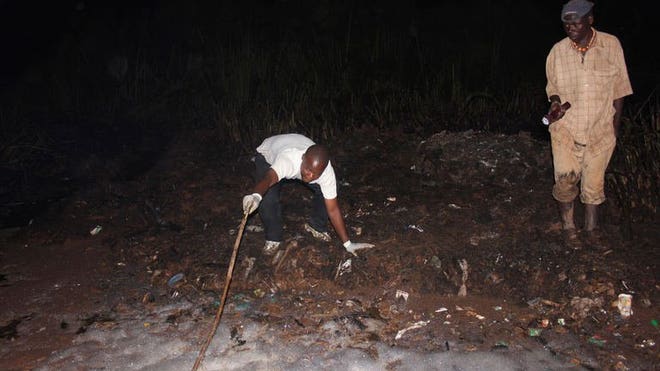
Uganda fuel tanker fire: Families clash over bodies


There was commotion at Mulago Hospital mortuary when four families claimed two bodies, arguing that they were of their relatives who perished in Saturday's inferno.

The bodies are among the eight that were burnt beyond recognition.

The hospital administration and Police withheld the contested bodies until DNA tests are carried out to establish their identities.

Kampala metropolitan spokesperson Ibin Ssenkumbi said some members of the bereaved families claimed they would be able to recognise the bodies of their relatives who were severely burnt. But four different families ended up claiming two bodies.

He said the relatives of the unidentified victims were told to go back to the hospital on Monday, when the DNA results will be released.

Wednesday 3 July 2013

http://allafrica.com/stories/201307031318.html

continue reading

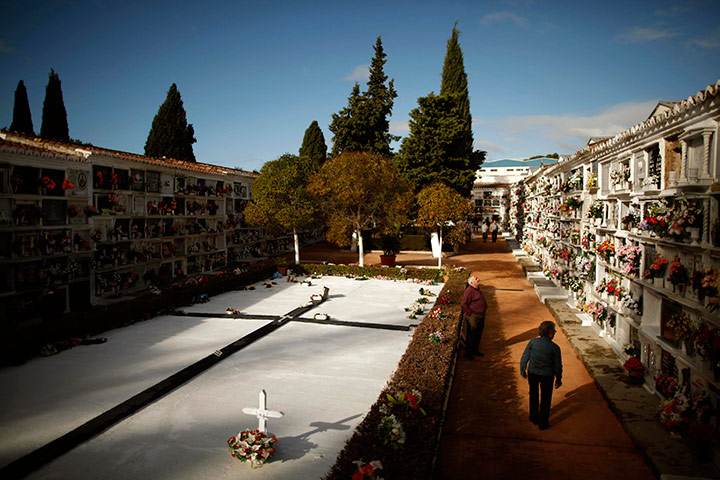
40 bodies allegedly stolen from cemetery in Puerto Rico


The remains of at least 40 people are missing from a cemetery in the sleepy mountain town of Gurabo, where officials are trying to solve a mystery that has frightened neighbors and left families distraught.

The apparent thefts occurred at the town's oldest cemetery, which was built in 1912 and features rows of white mausoleums located on the outskirts of Gurabo.

"I have spent nine years with the municipality," Public Works Director Jose Roman told The Associated Press on Tuesday. "I have never, never, ever had something like this happen to me."

No one has been able to explain the disappearances, although many residents believe the bones are being stolen for Santeria rituals, practiced by those who follow the Caribbean-based religion that blends Roman Catholicism and the African Yoruba faith.

Roman acknowledged that possibility, as well as a hypothesis that thieves are snatching boxes made of steel that hold the bones to sell them on the black market. However, he said no bones have been left behind.

Government officials made the discovery last month when they tried to exhume several remains to move them to another cemetery, only to find they were gone.

Since then, Roman has asked the owners of the cemetery's more than 300 mausoleums to verify if their loved ones are still buried there.

Amparo Diaz Santana, a 70-year-old homemaker, said the bodies of two of her nephews are missing.

"When we opened the tomb, they weren't there," she said. "We kept looking, and noticed there were a bunch of other open tombs."

Her family filed a report with police, but no one has been arrested and it seems authorities have no leads.

Roman said there are three full-time employees at the cemetery during the day, but that no one oversees it at night. Finding security guards has been a problem, he said.

Roman said police agreed to drive by the cemetery at night as a preventive measure. Police investigating the case could not be immediately reached for comment.

Arlene Gonzalez, a santera, or Santeria priest, with the Templo Yoruba of Puerto Rico, denied people associated with the faith were to blame. She said the faith employs animals, but not human bodies, in its rituals.

She said the disappearance of the remains could be related to Paleria, another syncretic faith that uses human bones in its rites.

Relatives have been devastated by the loss of their loved ones' remains.

Rosa Feliciano, a 78-year-old homemaker, said she learned in late June that the remains of her son were missing. He died 17 years ago.

"This has caused me the greatest pain ever, even greater than the day I lost him," she said.

Wednesday 3 July 2013

http://www.huffingtonpost.com/2013/07/03/bodies-stolen-from-cemetery_n_3540152.html?utm_hp_ref=latino-voices

continue reading

Guatemala case casts spotlight on indigenous group


Life for the indigenous Ixil Mayans in the mountains west of Guatemala City is worn and static like an old photograph.

Seventeen years after the end of a civil war that saw hundreds of their villages razed and thousands of their loved ones killed, the Ixil people still live in mud-and-wood houses in the most rugged and isolated parts of northwestern Guatemala. Most of them have no drinking water, paved roads or basic services such as health and education.

Largely ignored by authorities for centuries, the Ixil came under the spotlight after a Guatemalan court found former dictator Efrain Rios Montt guilty of genocide on May 10 for the scorched-earth policies used against the Ixil during his 17 months in power in the 1980s.

The conviction was annulled 10 days later following a trial that did nothing to change their lives of the Ixil people.

Byron Garcia, a social anthropologist who has worked in the area for a decade, said Ixil Mayans live in the same poverty as always.

"People have been relegated to less productive places, places where you can't grow food, to the mountains made of stone," Garcia said. "The young people who can, sow plots of land. And when they can't, they migrate."

Feliciana Cobo was 8 when soldiers attacked her village. She and her family separated and ran into the mountains, where they hid for several days with nothing to eat.

Cobo said her mother was killed when the army bombed the village and surrounding area, and her grandmother died later after growing sick from the cold and bad living conditions. Her family eventually lost their land and their poverty deepened.

Now a single mother of three children, the 40-year-old Cobo borrows electricity from a neighbor and supports her kids by washing the clothes of neighbors and weaving garments to sell.

"I grew up during the civil war and I don't know how to read or write. I didn't go to school," Cobo said. "All I know is to weave."

Forensic experts are now exhuming bodies from the cemeteries that the Ixil people created to bury loved ones who died of starvation, hypothermia and disease - as well as munitions - while they hid from the soldiers in the mountains.

"I helped exhume my mother," Cobo said. "I don't know if it was the smoke or the impact of the bombs planes were dropping on us but we all left running and when we got back together, my mother had already died."

Garcia, who now lives in the Guatemalan capital, said that victims feel a need to tell their stories, to be heard, to be indemnified, to find the bodies of their loved ones and be able to bury them.

Cobo said she doubts justice will be done, but is glad some fellow Ixil Mayans could travel to Guatemala City to tell their stories at the trial.

"We're not inventing the dead," she said.

Wednesday 3 July 2013

http://www.newsobserver.com/2013/07/03/3007192/guatemala-case-casts-spotlight.html

continue reading

Appeal over 1,000 unidentified bodies on UK missing persons website


There are currently 1,000 unidentified bodies on police files in the UK, some dating back 50 years. Last year, a website featuring facial reconstructions and, in rare cases photos of the dead person's face, was launched in the hope of solving them. So far, none have been solved.

A young man found hanged in secluded woods and a mystery body washed up on a beach are just two unsolved cases which have baffled Teesside detectives for years.

What little is known about them is detailed on the UK Missing Persons Bureau website along with seven other mystery bodies found in the North East and Cumbria.

Det Insp Paul Tait, head of Cleveland Police's force intelligence bureau, is aware the website is a long shot.

"It's clutching at straws a bit, but someone might be looking on the website and some little detail might jog a memory.

"But I don't like having unsolved cases because there is always that possibility that foul play has been involved, and I want to rule that out," he added.

Sometimes all scientist have to work with is a body part or bones.

In 1999, a trawler found a skull, 15 miles off the coast of Blyth, Northumberland.

Scientists determined it was a man, narrowed the age to between 30 and 40 years, and that he had been dead for more than six months, but less than 10 years.

Yet, despite being on the missing person's website for seven months, there have been no new leads.

DNA samples are taken and stored and, if someone believes they may be related to a missing person, their DNA could be tested and compared.

"Within reason if it was a credible line of enquiry - all unidentified bodies found will have a forensic examination conducted," Mr Tait explained.

Foul play

Cleveland Police is informed of 3,000 deaths every year - only a fraction are foul play.

The oldest one is the body washed up in 1970 at Redcar.

It was so decomposed that the sex could not even be determined and the age recorded as anything between 21 and 100.

The only real clue was a black boot, very well preserved but unfortunately not very distinctive.

He said: "The problem with remains from the water is that they can have been there a long time, and have travelled some distance.

"The chances are that a person washed up here could be from abroad," he explains. boot The boot was well preserved, but unfortunately not very distinctive

Another case is that of a young man found hanged near the A178 Graythorpe to Seal Sands Road in Hartlepool in 1981.

Even thought he had only been there a day, was fully clothed and had 'Sayer' written on the inside of his trainers, the case is still open 30 years on.

Police estimate he was aged between 20 and 30 but, although no foul play is suspected, it cannot be ruled out while the case is unsolved.

Badly decomposed

Another inquiry to remain open is that of a body washed up on the banks of the River Wear in 1992.

It was the badly decomposed lower half of a man aged 55 to 65, but with some small, unique features such as a gold, horseshoe earring.

He was also carrying a box of Altoids seriously strong peppermints made in York.

Once the police have finished, it is up to the local authority to bury and cremate any remains.

Certain cases will not feature on the site including babies and partial remains such as single bones, as publicity would be pointless.

A spokesman for the Missing Person's Bureau said: "The aim of site is to bring closure to the families and friends of the people featured.

"With new unidentified person cases we rely on modern forensic techniques but on older cases we believe that publicity is the best chance of getting images recognised."

Wednesday 3 July 2013

http://www.bbc.co.uk/news/uk-england-tyne-22970716

continue reading

Earthquake claims 22 lives at Aceh province in Indonesia


Rescuers battled through landslides and blocked roads on Wednesday to reach survivors from an earthquake in Indonesia's Aceh province that has killed at least 22 people, including several children who died when a mosque collapsed.

More than 200 people were also injured in Aceh's remote, mountainous interior when the strong 6.1-magnitude quake struck on Tuesday, flattening buildings and triggering landslides.

The quake, which struck at a shallow depth of just 10km, has sparked panic in the natural disaster-prone region where more than 170 000 people were killed by the quake-triggered tsunami of 2004.

In Blang Mancung village, Central Aceh district, at least six children were killed when a mosque collapsed during a Koran reading session.

‘Biggest earthquake’

Subhan Sahara, head of the district's disaster agency, previously said a further 14 children were trapped in the collapse. But on Wednesday he said rescuers had not yet found any more bodies in the rubble and were now unsure how many had been inside.

"This is the biggest earthquake we've ever had here," he told AFP.

"People are still frightened, especially after the aftershocks last night. Nobody dared to stay at home. Everyone slept on the roads or in car parks.

"The earthquake triggered many landslides. People could not get out of the area because of fallen trees and mounds of earth blocking roads."

The main hospital in the district was overwhelmed and tents had been set up in the building's car park to treat the flood of patients, he said.

He added supplies of food and water were in short supply but rescuers had succeeded in reaching the remote area.

Buildings, homes damaged

Military, police and local government officials were trying to head to other affected areas on Wednesday by ground and in aircraft but some roads were blocked by landslips, the national disaster agency said.

The agency dispatched a helicopter from neighbouring Riau province to assist in rescue efforts, while an air force plane was also deployed to assess the damage.

"So far 22 people died, 210 people were injured, and thousands of buildings and homes were damaged in the quake," disaster agency spokesperson Sutopo Purwo Nugroho said.

The casualties were spread over the two worst-hit districts of Central Aceh and Bener Meriah, he said. Scores of people were being treated at hospitals across the region.

In Bener Meriah, about 300 people camped out overnight in open spaces, such as football fields, as the area was hit by strong aftershocks, Fauzi, an official from the local disaster agency told AFP.

He said many were in desperate need of food.

"There were strong aftershocks last night and people didn't want to go back home, so they stayed in the open overnight, but we don't have enough tents," said the official, who like many Indonesians goes by one name.

"We have a power outage now and communications are unreliable," he added.

Pacific ‘Ring of Fire’

People ran outside in the provincial capital Banda Aceh as the quake - some 320km away - shook houses, and in Medan city to the south of the province on Sumatra Island.

Aceh, on the northern tip of Sumatra, is regularly hit by quakes. The huge quake-triggered tsunami of 2004 not only killed tens of thousands in the province, but also many in countries around the Indian Ocean.

In April last year an 8.6-magnitude quake struck 431km off Banda Aceh, prompting an Indian Ocean-wide tsunami alert.

Five people died and seven were injured in Aceh in the quake and following aftershocks.

In September 2009 a major earthquake near Padang city on Sumatra killed more than 1 000 people.

Indonesia sits on the Pacific "Ring of Fire" where tectonic plates collide, causing frequent seismic and volcanic activity.

Wednesday 3 July 2013

http://www.news24.com/World/News/Pressure-as-Indonesia-quake-toll-hits-22-20130703

continue reading

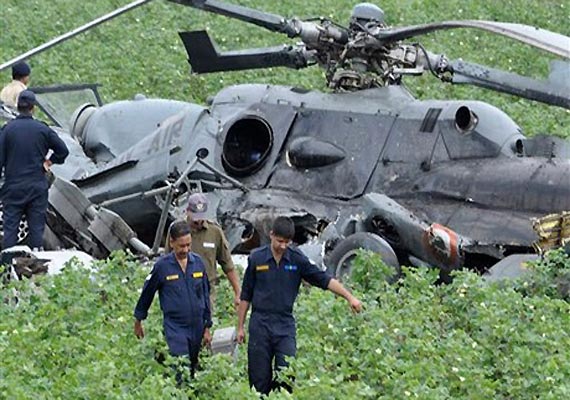
Missing ITBP jawans feared to have been burnt to ashes


The two missing ITBP jawans from the MI-17 chopper that crashed on June 25 in Kedarnath valley are feared to have been burnt to ashes. An ITBP team of expert mountaineers including those who have scaled Mount Everest has been looking for them since the crash without much success.

It is now being suspected that the missing jawans must have been close to the fuel tank and the resulting explosion from the crash must have melted their bodies.

"There is no question of them being alive. And even if they had been blasted to smithereens, we would have found some body parts at least. But nothing, not a trace has been found. So we suspect they took the brunt of the fuel tank explosion and were burnt to ashes," said a senior ITBP official adding that the search teams would now soon be called back.

An MI-17 helicopter carries over 1,000 litres of aviation turbine fuel which on explosion can melt anything in its vicinity.

Earlier the search teams had found some body parts that were suspected to be of the missing jawans. However, it was later identified to be that of an IAF personnel who died in the crash. "The IAF identified the body from the boots," said an ITBP official.

A total of 20 security personnel, including five IAF men, nine NDRF personnel and six ITBP jawans, perished in the crash. Bodies of 18 other victims have already been recovered and identified. The 20 men were going back to their camps after being relieved of their duty as they had been in the valley since the beginning of the deluge.

Meanwhile, ITBP claimed to have completed its rescue operations in Uttarakhand and was now in the process of pulling out its troops. On Tuesday, it rescued 63 people and is now reaching out to locals to help them in any manner possible.

Wednesday 3 July 2013

http://timesofindia.indiatimes.com/india/Missing-ITBP-jawans-feared-to-have-been-burnt-to-ashes/articleshow/20887136.cms

continue reading

India floods: The search for missing victims


As India begins to wind down the rescue operations in flood-hit Uttarakhand state, the focus now shifts to families searching for the missing, reports the BBC Hindi's Vineet Khare from Rishikesh.

We are standing outside a crowded bus station in the holy city of Rishikesh in the northern Indian state of Uttarakhand, which has been ravaged by floods and landslides in the last fortnight.

Deepak Sindhwani, who had gone for a pilgrimage to the temple town of Kedarnath, is among some 3,000 people who, officials say, are still missing after the disaster.

More than 800 people are reported to have been killed so far, but the exact number of deaths, say officials, may never be known.

Mr Sindhwani spoke to his sister last on 16 June and said he was trapped in Kedarnath after a bridge collapsed. After that, his phone went dead.

Since then, Ms Sindhwani has been unsuccessfully running from pillar to post to get information about her brother's whereabouts.

'No answers'

Nilesh Ninav, 39, has been camping in Rishikesh for the past fortnight to look for his parents, Dattatreya Ganapat and Lata.

They spoke for the last time on 15 June when his parents rang up to say that they were caught in a traffic jam.

"I have been running around trying to speak to officials, but I am not getting any answers," he said.

Officials admit they have no easy answers to help the distraught relatives of the missing, whose faces are plastered on the walls of railway and bus stations and on billboards and vehicles in Rishikesh.

Swollen rivers have swept away entire villages, where there were many travellers in what is the peak tourist and pilgrimage season.

Several bodies, which were found in a highly decomposed state, have been cremated in the affected areas. Many bodies may have been washed away or remain buried under debris.

"The families want to know the real picture. But considering the scale of the disaster and with so little information available, we cannot give them a definite answer," says Piyoosh Rautela, a senior disaster management official.

A helpline set up for the relatives of the missing has received more than 25,000 calls so far. Officials say the number of calls has reduced, possibly as many people have given up on finding their relatives.

But people like Mitesh Goradia from Gujarat are not giving up yet.

Mr Goradia and his brothers flew to the state capital, Dehradun, looking for their mother Pushaben, cousin Jayprakash and his wife Varsha, who had gone on a pilgrimage and not returned.

They have sought help from the police, the army, politicians and officials. They have recorded video interviews on their mobile phones with returning pilgrims who they think may have met their mother and cousin.

"We have proof they were alive till 23 June. We do not know what happened after that - whether they were killed during the rescue or are still in the villages looking for help," he said.

"We will wait until the last person is rescued. After the rescue mission is called off we will go up the hills ourselves and try to find whether my mother is with the locals."

'Earnings gone'

Deoli-Brahmagram is a village hamlet, 7 kilometers away from Guptkashi.

A small village with a few households, living on the earnings from pilgrims on the 'chaar-dhaam' yatra.

The men of the village, most of them mule operators ferrying pilgrims from one place to another, visited Kedarnath everyday for work.

But things would change from now on. With the pilgrimage facilities halted for a year, this means of earning is gone.

While this is just one side of the coin, village men are worried more about what lies on the flip side.

Most of the men in the village are dead. The gram-panchayat here have reported 57 men missing, presumably dead, branding it as the village of the 'widows'.

As heart-wrenching stories pour in from all quarters of the state, what stuns one is the extent to which the villages in Uttarakhand are bearing the after-math of the calamity.

With most of them inaccessible due to broken roads, even meeting the everyday requirements is a challenge for these people.

20 year old Sangeeta does not know what to do now. She is pregnant with her third child and there is no trace of her husband since the flash floods.

Almost similar to her story is that of Vanitha, who was married just a year ago and is now grieving her husband's death. She has stopped eating and there is no one to console her because the situation is the same in every second household here.

Children too are missing in some cases. Around 13 children between the age of 14 and 18 years have been reported missing here. Students of Rudraprayag Govt School, these children used to Learn the business of mule operators in the Kedar Valley during the peak season.

Afterall, that was to be their bread and butter when they grew. Located on a steep slope, how the village survived the landslide is a mystery. Grief, trauma and loneliness, post- Uttarakhand floods, is a story that is not resctricted to the villages.

Families of the missing and the dead in the cities and the urban areas too are coping with reality.

While some have committed suicide, not being able to face the reality, life for the rest is a routine. Words and phrase like "cannot forget", "dead bodies", "death", "help", "nightmares" are not uncommon for the survivors or the families of the dead.

In fact, some have decided not to re-visit Kedarnath again because that would bring back nightmares.

Lessons learnt or not, this chapter in the history of India has left an indelible mark in the minds of the people, especially those who are trying to live with the memories of the loved ones they have lost forever.

Wednesday 3 July 2013

http://www.bbc.co.uk/news/world-asia-india-23123799

http://news.oneindia.in/feature/2013/surviving-uttarakhand-disaster-report-on-living-dead-1250996.html

continue reading

Preparing the dead in Afghanistan

The man who spends his days surrounded by dead Afghan soldiers waits in a faded shipping container across from the morgue. But Noori rarely waits long before he is called to work.

Inside the container is a bed, a fan and a hose for washing the bodies. He has prepared at least a thousand of them for burial over the past decade: victims of roadside bombs, gunshots, mortar rounds and disease, delivered to him in all the shapes death takes.

Noori, 33, removes the soldiers from identical wooden coffins that are draped in Afghanistan’s flag, and he performs his duty, preparing each for burial in the Islamic tradition. He washes off blood and dirt, sprinkles perfume and covers each in a white sheet, or kafan. That’s how their families will see them when they make it home.

What Noori sees first is much more bracing — a relentless procession of bodies just off the battlefield. He takes anti-anxiety medication to help him sleep. He doesn’t tell his family anything about his job at one of the Afghan military’s busiest medical centers, Kandahar Regional Military Hospital.

In Washington, questions about the future of Afghanistan are often phrased in terms of the Taliban’s strength and the Afghan army’s fighting ability. Noori’s perch on the war doesn’t provide clear answers to those impossibly large questions. But it has made him a front-line witness to the massive human cost associated with what’s formally articulated as a “military transition."

As his country’s army inherits the war from the United States and NATO, there are far more of those bodies than ever before. More than 250 Afghan soldiers and police are now killed in Afghanistan every month, many of them in the violent south where Noori works.

On that subject, Noori takes a long view. “The army will keep fighting, and men will keep dying, until there is peace," he said.

Noori was once employed by the group responsible for the death and destruction he sees on a daily basis. For several years, beginning when he was 19, he worked for the Taliban.

In Kandahar, the province where the Taliban was born, the only job he could find was sweeping the floors of the former regime’s main hospital. It was nearly two years before Sept. 11, 2001.

When war came to Afghanistan and the regime was toppled, Noori swept the same floors for the new Afghan government. Because he was a low-level worker, his previous allegiance was forgiven. Soon, he was watching government fatalities trickle in.

The man then in charge of washing bodies needed assistance. It wasn’t an alluring job, but it was an important one, Noori thought.

“It’s religious work," he recalls thinking to himself.

He volunteered. Since then, Noori, typically clad in medical scrubs and an Afghan army windbreaker, has handled corpses nearly every day for the past decade.

“I’ve seen more death than anyone," he said. “The bodies keep coming."

He gets middle-of-the-night phone calls beckoning him to the hospital so that bodies can be washed and buried as soon as possible, according to Muslim custom. He knows exactly what a bomb or a machine gun or a rocket-propelled grenade can do to a human body. Some soldiers look serene, almost untouched, and others don’t look human at all.

He knows to expect anything when he removes the lid of the coffin. Once he saw his neighbor and close friend, Hashmat. Noori mourned quietly while doing his job.

“Anyone would get angry to see a friend like that," he said.

As more Afghan soldiers die, Noori finds himself close to some of the worst violence. His morgue is the destination for those killed in contested swaths of the south and southwest, including several of Afghanistan’s bloodiest districts.

His colleagues ask how he’s holding up, and he often shrugs them off.

“No matter what the body looks like, he does his job," said Sgt. Mohammad Hussein, the head of the morgue. “It’s difficult."

The truth is that Noori can’t sleep without medication. He dispassionately describes himself as “physically and mentally exhausted." He keeps the bed in the storage container, he says, because after washing three or four bodies, he needs to lie down.

This year, just after the Taliban announced the beginning of its “spring offensive," bodies came in one after the next. One afternoon, an ambulance arrived from Helmand Province carrying three dead, all killed by separate makeshift bombs.

Noori was suddenly frenzied. He called to a group of soldiers for help lifting the bodies for washing. But the men walked away brusquely.

“They don’t have the courage to help," he said to himself as he worked alone.

There is a tenderness to the way Noori does his job, washing the men’s hair as if he were caring for a small child. But the circumstances can be brutal. Sometimes, he has to wash severed limbs separately. Sometimes, the clean white sheets turn red as soon as they’re placed on bodies. Sometimes, he sees fresh scars where doctors tried to operate, but failed or ran out of time.

On warm days, all the death and heat make the job nearly unbearable.

Spring and summer are when the fighting is most intense, particularly this year, when U.S. troops are doing minimal combat and Afghan soldiers are dying at a higher rate than Western forces ever did.

“In the summer, it’s too much," Noori said.

Questions about the Taliban’s strength do occupy Noori’s mind. Because he is an employee of the Afghan military but not a soldier, he lives off base, on the outskirts of Kandahar City. Every day, he drives one hour to Camp Hero, the sprawling military installation where the hospital is located.

He knows his unguarded living conditions make him vulnerable to insurgents, especially former Talibs, who target those working for the Afghan government. His colleagues, who live at Camp Hero, worry about him.

“If they find him, they will kill him immediately," Hussein said.

But Noori has taken an approach to his own life that seems to blend defiance and fatalism. He says he isn’t scared of the Taliban, but that he’s ready for death when death comes.

When the hospital calls him in during early morning or late nights, he slips out of bed quietly so that his wife does not wake. He has never described his job to her in any detail, because he worries she would begin to associate his early morning departures with the death of soldiers.

“She wouldn’t be able to take it psychologically," said Noori, who has an infant daughter.

Noori says he can take it, though he thinks often of the families who will be on the receiving end of his work, in whatever Afghan province the soldier called home.

“They deserve to see the bodies clean and neat," he said. “They are the ones who have suffered."

Wednesday 3 July 2013

http://www.bendbulletin.com/article/20130702/NEWS0107/307020369/

continue reading

Tuesday, 2 July 2013

China's rain-related disaster toll rises


China's heavy weekend rains and related disasters have left at least 39 dead and another 13 missing, officials said.

The regions worst hit by the torrential rains and resulting floods and landslides are Inner Mongolia, eastern Anhui and central Hubei provinces, Xinhua News Agency reported, quoting the Ministry of Civil Affairs.

Several other regions also have been affected including southwest Sichuan province and neighboring Chongqing municipality.

In Sichuan province alone, the rains and flooding have affected 2.44 million people and forced the evacuation of 119,500 people, the ministry said. More than 5,600 homes have been destroyed and another 10,000 damaged.

Soldiers used inflatable motorboats to rescue trapped villagers, the report said.

Weather forecasters said heavy rains were expected to hit north and southwest China over the next three days.

Meanwhile, Rumbia, the sixth tropical storm to hit China this year, was expected to head toward Guangdong and Hainan provinces after entering the South China Sea.

Tuesday 2 July 2013

http://www.upi.com/Top_News/World-News/2013/07/02/Chinas-rain-related-disaster-toll-rises/UPI-88331372744140/

continue reading

US offers help in DNA testing for Rana Plaza victims


The US Federal Bureau of Intelligence will provide Bangladesh with the Combined DNA Index System (Codis) free of cost to identify bodies of Savar’s Rana Plaza fatalities.

The software programme will help establish the identities of 321 bodies of unidentified garment workers who died in the building collapse.

A source at the Ministry of Women and Children Affairs said the FBI would also provide technical and vocational support to experts at the DNA Laboratory in the Dhaka Medical College Hospital (DMCH) where the software will be placed.

The US agency recently expressed its interest in voluntarily supporting the women and children affairs ministry’s “Violence against women” project.

National DNA Profiling Laboratory chief, Dr Sharif Akteruzzaman, also professor of Biochemistry at Dhaka University, said the US had been very positive about giving the highly developed DNA software to Bangladesh.

Dr Sharif said a memorandum of understanding would be signed between the two countries very soon.

About 68 laboratories in 34 countries are use the Codis software, Dr Sharif said. The FBI had also provided Codis to Singapore, Hong Kong and South Korea, and now Bangladesh, the fourth country to get this free of cost.

Asked about the status of DNA tests for the casualties at Rana Plaza, the laboratory chief said DNA tests were being done in four phases and specialised software was necessary for this. He however did not say how long it would take to complete the tests.

About 550 people await the DNA test results.

DMCH DNA Laboratory officials are not sure how long it will take to get all the tests done.

The officials attributed the reasons for the delay to the lack of skilled personnel and most importantly, the essential Mass Fatality Identification System (MFIS) software.

They said normally it takes seven to eight days to prepare a DNA profile from blood, and a longer period from bones.

To match the DNA of a large number of unknown bodies will take years, said the officials.

On condition of anonymity, one of the laboratory officials said the DMCH DNA Laboratory had sent a proposal to the finance ministry for the allocation of funds to buy MFIS software, but the finance ministry rejected the proposal.

Tuesday 2 July 2013

http://www.dhakatribune.com/bangladesh/2013/jul/02/us-offers-help-dna-testing-rana-plaza-victims

continue reading

Bereaved mother who defied Argentina’s ‘dirty war’ dictators


It was 1977 and Argentina was in the grip of a military dictatorship. Outside the presidential palace in Buenos Aires, women in white headscarves began demonstrating to demand news of their children who had mysteriously disappeared. Laura Bonaparte had lost three offspring, their father, two sons-in-law and her son’s girlfriend; she became one of these original “Mothers of the Plaza de Mayo”.

Bonaparte, who has died aged 88, went on to work for Amnesty International, reporting on alleged human rights violations by Israeli forces in Lebanon and by the armed forces of war-torn El Salvador and Guatemala. She would later campaign in Bosnia on behalf of Muslim women who had been victims of ethnic cleansing and, back home, for abortion rights as well as for equal treatment of those whose sexuality defied the country’s traditionally macho culture.

All the while, she continued to press the judiciary and successive Argentine governments for information on the fate of an estimated 30,000 desaparecidos (“the disappeared”) during the “dirty war” conducted by the military against domestic opponents until 1983.

Bonaparte lost her 24-year-old daughter Noni even before the 1976 coup against president Isabel Perรณn. Facing an armed struggle by various leftwing groups, Perรณn had empowered army and police to “annihilate subversion”. A feared far-right paramilitary death squad called Triple A (Argentine Anticommunist Alliance), joined in. On Christmas Eve that year, Bonaparte learnt that Noni, who had ties to the armed leftwing Revolutionary Army of the People, had been killed.

Her body was never returned. “They offered to give us her hands, conserved in a jar, but I refused and told them: ‘I want my daughter in one piece’,” the mother said. She later assumed that Noni, minus her hands, had been dumped in a mass grave.

Soon after the March coup, Noni’s husband Adriรกn was assassinated by soldiers but his body never found. In June, soldiers kicked down the door of Laura’s ex-husband, the Jewish biochemist Santiago Bruchstein, shouting: “How can a Jewish bastard judge the armed forces?” She later heard he had been set fire to and burnt to death. The following year, Bonaparte’s son Vรญctor and daughter Irene disappeared, as did Vรญctor’s girlfriend Jacinta and Irene’s husband Mario.

Mothers such as she started arriving at the Plaza de Mayo, the square in front of La Casa Rosada (the Pink House of Evita fame), to demand news of their loved ones. One afternoon in 1977, more than a dozen appeared, separately. The authorities had forbidden gatherings of more than three people and told them to leave. Instead, they split into pairs and paraded around the square.

The white headscarves were adopted as a symbol and the Mothers’ ranks swelled to a few thousand as more and more family members vanished. Late that year three of the original Mothers themselves “were disappeared”. Their bodies, as well as those of several sympathisers including two French nuns, were found washed up on the banks of the Rio Plata. Retired naval captain Adolfo Scilingo later said opponents of the military were routinely taken on board vuelos de muerte (death flights), drugged, stripped naked and dumped into the Atlantic so that salt water and fish would destroy the evidence.

Then came June 1978, when journalists from around the world descended on Buenos Aires for the World Cup football tournament and stumbled on the story of las Madres de la Plaza de Mayo. The Mothers went what would nowadays be called viral. In 1986, however, with differing political ideologies, they split into two factions: Bonaparte set up the more moderate Madres de Plaza de Mayo – Linea Fundadora (“founding line”), while Hebe de Bonafini headed the original Asociaciรณn Madres de Plaza de Mayo.

In 1988, Bonaparte successfully fought president Carlos Menem’s plan to privatise the Esma naval academy in Buenos Aires, which had “processed” many of the disappeared. Instead it was preserved as a memorial, museum and human rights centre.

Bonaparte was born in the province of Entre Rรญos, close to the Uruguayan border, in 1925, daughter of a socialist judge. By the age of 13, encouraged by her father, she was teaching women prisoners to read and write. After qualifying as a psychologist, she helped female hospital patients, many traumatised by abortion issues, in the city of Lanรบs.

Her work strengthened her belief in women’s rights and she divorced her husband at a time when that was widely considered a shameful sin. They had had five children, one of whom died as a baby, the other four raised in an ambience of art and music, variously playing piano, harp or cello.

Her son Luรญs Bruchstein, now a journalist, is the only one remaining. Grandchildren Hugo and Victoria Ginzberg, who were babies when Irene and Mario disappeared, also survive her and are involved in human rights. The family story was told in the book Una Madre de Plaza de Mayo – Contra el Olvido (“lest we forget”) by French writer Claude Mary.

This week, Laura Bonaparte’s white headscarf was buried with her.

Tuesday 2 July 2013

http://www.ft.com/cms/s/0/12c7f8e2-de78-11e2-b990-00144feab7de.html

continue reading

Spanish Civil War mass grave excavated in Ronda


Work has started at the San Lorenzo cemetery in Ronda to identify two possible mass graves where it is thought that between 1,700 and 3,000 Civil War victims could be buried.

The objective of this initial research is to locate and define existing graves in the cemetery as a prelude to exhumation. Up to 3,000 people, mostly Republicans, are thought to have been dumped in pits during the Spanish Civil War.

The project, the first stage of which is being funded by the Directorate General of Democratic Memory of the Junta de Andalucia, is expected to take one year, with the final objective being to honour those who died and giving them a decent and proper burial.

Tuesday 2 July 2013

http://www.nerjatoday.com/nerjanews/2013/06/20/research-into-mass-graves-in-ronda/

continue reading

Probe pending into WWII leader General Sikorski's death


An investigation into the death of WWII prime minister General Wladyslaw Sikorski is nearing completion as Poland marks the 70th anniversary of his plane crash this week.

According to the Institute for National Remembrance (IPN), the state-backed body charged with investigating alleged crimes against Polish citizens, the probe will be the most comprehensive to date.

The Polish leader's death remains a riddle to many, in spite of an official wartime investigation that claimed the crash was an accident.

Sikorski, who headed the Polish government-in-exile in London, died on 4 July 1943 when his Liberator plane crashed into the sea shortly after take-off while returning to England from a reconnaissance trip to Gibraltar.

Although the pilot of the July 1943 flight survived with broken legs, all fourteen other people on board, including British MP and liaison officer to Sikorski Victor Cazalet, died in the accident.

All aboard apparently died immediately, although some bodies were never recovered, further fuelling conspiracy theorists.

Conspiracy theories flourished over the years, with the finger pointed at Russia, Britain and even a clique loyal to Polish military leader General Wladyslaw Anders, who had been at odds with Sikorski.

An official British military investigation blamed the crash on jammed controls in the cockpit.

As revealed in March this year by Piotr Dabrowski from IPN, besides archival work, two witnesses have been interviewed for the current probe in England and Spain.

The first was a radio operator who participated in the British navy's salvage operation, immediately after the plane went down. The second was a diver who helped extract bodies from the wreck.

Claims that Sikorski had been murdered prior to take off were largely dispelled following the exhumation of his remains in 2008 at Wawel Cathedral, Krakow.

Forensic tests ruled out that the general had been shot, stabbed or suffocated. The injuries were considered compatible with those suffered by victims of crashes.

However, noted historian Norman Davies has reflected that “no reputable historian” has ever insisted that sabotage took place.

Likewise, historian Adam Zamoyski, whose father served for a time as aide-de-camp to Sikorski, told the Krakow Post that the Polish leader was “simply not important enough to warrant being liquidated.”

Tuesday 2 July 2013

http://www.thenews.pl/1/9/Artykul/140012,Probe-pending-into-WWII-leader-General-Sikorskis-death-

http://www.thenews.pl/1/9/Artykul/139746,Vintage-beetles-commemorate-WWII-leader-Sikorski

continue reading

The Kaimai crash: 50 years on


On July 3, at 8.05am, it will be 50 years since a DC3 took off from Whenuapai airport in northwest Auckland. It was a veteran of World War II, one of thousands of the big twin-engined cargo workhorse built to haul troops and weapons around.

It had been spruced up and now flew for the National Airways Corporation, (NAC), trolling up and down the country, taking people to work or holidays or home. Flight 441 was to stop in Tauranga, Gisborne, Napier and Palmerston North, before reaching Wellington in the early afternoon.

NAC publicity from the day used shots from inside the upgraded ZK AYZ. Flying was still an event and a bit of an extravagance, with men dressed in suits and mum and the kids in their Sunday best.


Almost all the pictures of the 20 passengers which were to fill the newspapers in the coming days showed the men wearing ties, their hair slicked and parted in the middle, and the women in Jackie O hats. All the window seats were full.

Tauranga air-traffic control heard from the plane at 9.06am when it began its descent into the coastal town. The tower called again at 9.14am, but there was no reply, because by then everyone on board was dead.

Flight 441 had failed to clear the highest ridge in the area by a small margin. It had hit a rock wall in the Kaimai Range. Investigators later estimated the impact speed at about 140kmh, the aircraft going from that to zero in roughly 3.5 metres. It exploded and burned and tumbled down the face of the rock.

It had flown over the quarry at the small settlement of Gordon, about halfway between Te Aroha and Matamata. Workers heard it pass over, low. Then a noise like a door banging far away. Despite the witnesses and a search starting immediately, the terrain and the weather were so bad that the wreck wasn't found until the next day. It was another day until ground crews reached it.

Peter Ryan has flown out of the nearby Matamata airport for more than 50 years. In 1963, he was 21, when his friend Geoff Pullum turned up to tell him that his dad was on a plane missing in the range.

Frederick Pullum, a stalwart in the Auckland community of Birkenhead, was a consulting engineer on his way to a job.

Peter and his friend went to the quarry, where searchers had started to assemble. They went to Te Aroha, where the bodies were being stored. They thought they might help identify them, but it was a waste of time. The impact and fire had left nothing but charred, blackened trunks that could only be sorted out by a pathologist.

As well as the passengers, the plane had two pilots and an air hostess. The 23 dead means it is still the worst air crash to happen on New Zealand soil.

An investigation began into what went wrong. The weather was not supposed to be as bad as it was. It was all right at Auckland and Tauranga, but in between an easterly gusted to 150kmh and visibility was nil. The pilots flew blind. They had radio compasses, but they failed often and were known to be unreliable in the weather conditions on the day.

The DC3 had distance-measuring equipment that would have given pilot Len Enchmarch and first officer Peter Kissel a clue as to where they were, but Tauranga airport didn't yet have a transmitter to talk to the plane. They navigated by the crude device of determining how fast they had been flying for how long.

The wind and lack of technology meant the aircraft flew to the west of the Kaimai Range. The pilots probably thought they had crossed and were tracking down the eastern slopes. Radar coverage in 1963 was sparse and no-one could see their error.

The hills were known to cause a wave effect in the atmosphere as wind struck them - huge downdrafts followed by huge updrafts, like water streaming over a rock in a river.

Investigators talked to another crew that had flown over the Kaimais earlier in the day who told of an extreme downdraft and, to escape from it, the airliner needed to use maximum power. The inquiry reasoned that Flight 441, descending and turning for what the crew believed was an unimpeded run into Tauranga, had been caught in something similar.

If there is an expert on what the pilots on Flight 441 were facing, Peter Ryan is it. He runs Sky Venture Flight Training at the Matamata field. He was also the chief flying instructor at the gliding club for years, specifically teaching the newcomers how to ride the massive waves of air coming over the range, the same ones that affected Flight 441.

He has been in aircraft that climb when idling in the updraft and has dropped parachutists into the air mass and seen them go up instead of down.

He has flown on DC3s and knows exactly how much power they have in reserve. Not too far from here is one that was rated to carry 26 passengers in its flying days, but regularly trucked about six-tonne payloads no bother.

Still, the crew of the ZK AYZ wouldn't have had a chance. By the time they were that low and in the kind of waves that were happening on the day, there was no way out of the accident.

The crash happened before the Accident Compensation Act existed and the families of survivors still had the right to sue. NAC settled the cases out of court.

From his flying school at Matamata, Ryan can see the crash site. Not long after it happened, the SAS blew up the wreck, because people were getting upset at catching glimpses of the smashed metal. Today it is overgrown and hidden by the type of easterly that was blowing on the day of the crash.

The official memorial is near Gordon, nowadays a T-intersection and about six houses. The crash site is over the fields and into the bush about 9 kilometres away.

Next week a crowd will gather to remember the crash. Noted aviation historian Reverend Dr Richard Waugh, who also wrote an excellent book on the accident called Kaimai Crash, will lead a service. An old DC3 will do a flypast and later offer trips out of Ryan's airfield at Matamata.

Visited alone, it is the same as a million other vantage points in New Zealand. Some of the buildings look as if they were here in 1963. It's silent and still and unchanging and unremarkable.

Part of the fascination and sadness that surrounds air disasters is that strangers' lives all end together at some random, lonely place.

There's added poignancy here because, only 16 years later, the circumstances would be echoed when another New Zealand flight crew would become lost in zero visibility, without knowing it, near another mountain in Antarctica.

The memorial service will be held July 3, at 9am at the memorial plaque on Old Te Aroha Rd, 600 metres southeast from the intersection of Old Te Aroha, Gordon Rd and Armadale Rd.

Tuesday 2 July 2013

http://www.stuff.co.nz/waikato-times/life-style/8863466/The-Kaimai-crash-50-years-on

continue reading

Russia: 19 die in helicopter crash in Siberia


Russian authorities say 19 people have died after a helicopter carrying 28 people, including 11 children, crashed in a remote Siberian region of Yakutia.

The Interstate Aviation Committee, Russia's top aviation body, said that a Mi-8 helicopter crash-landed in a remote mountainous area on Tuesday, dozens of miles away from the nearest village, and caught fire.

"There were three crew members and 25 passengers on board," the Interstate Aviation Committee said in a statement. "Nineteen people died, the aircraft burnt down," said the statement, citing the surviving crew members.

Of the 25 passengers 11 were children, the emergencies ministry said in a separate statement without providing further details.

Officials did not immediately comment on the cause of the crash.

The people died when the helicopter performed a hard landing, apparently in bad weather conditions, 45 kilometres (28 miles) northwest of the small town of Deputatsky in the Yakutia region in Russia's north.

A plane with rescuers and medics on board has arrived at the crash site, said the emergencies ministry, adding that helicopters with more medics and rescue workers have also been dispatched to the scene.

Russia's aviation industry remains blighted by repeated accidents involving its ageing fleet of planes and helicopters.

Tuesday 2 July 2013

http://news.yahoo.com/russia-19-die-helicopter-crash-siberia-075000344.html

continue reading

Uttarakhand Chopper accident: DNA analysis of remains of 7 victims completed


The Centre for DNA Fingerprinting and Diagnostics (CDFD) here has identified the bodies of seven ITBP/NDRF personnel who died when their helicopter crashed during a rescue mission in Uttarakhand.

This would enable handing over of the mortal remains to the respective families.

"Samples from the bodies of seven personnel who died in the June 25 crash of an IAF helicopter in a rescue operation in Uttarakhand were received late on the night of June 29 at the CDFD for identification by DNA analysis.

"The individual identifications have been completed by the morning of July 1, by matching of the individual DNA profiles with those of the relatives," a CDFD release said.

Four personnel of ITBP and three of NDRF were identified and the respective agencies have been informed so that the mortal remains can be handed over to their families, it said.

CDFD has also done DNA profiling of relatives of several other deceased personnel in the crash, so that if additional mortal remains are recovered their identification by DNA analysis can be completed, the release added.

Tuesday 2 July 2013

http://zeenews.india.com/news/uttarakhand/chopper-crash-dna-analysis-of-remains-of-7-victims-over_859154.html

continue reading

DNA testing to identify Uganda fuel tanker fire victims; toll rises to 33


At least 33 Ugandans died and 20 sustained severe injuries after a fuel truck caught fire on the outskirts of Kampala on Saturday night.


Ugandan police say 29 people died on the spot and four others died later at Mulago National Referral Hospital.

The accident occurred around 9pm on the northern bypass road about 5km from Kampala city centre.

According to eye witness reports, a station wagon vehicle rammed into the rear of the fuel tanker and the impact damaged the tanker, resulting in a fuel leak.

Fire broke out as locals rushed to the scene of the accident to scoop fuel from the tanker.

It is still unclear what caused the fire, although it is believed to have been ignited by fumes from a motorcycle's exhaust pipe.


"I heard a loud explosion. Fire engulfed the tanker and several other vehicles near it," Mubarak Asimwe, who manages a stall near the scene of the accident.

"After the fire, many charred bodies were near the burnt tanker and vehicles."

Police spokesperson, Judith Nabakooba said "So far the death toll is 33. Twenty nine people died on the spot and four died in hospital.

"More than 20 others are still admitted in hospital in critical conditions. So far 18 bodies have been claimed by relatives".

She said that other bodies were burnt beyond recognition and DNA will be used to identify them.

Nabakooba called on relatives of missing people to report to police with photographs of the deceased and a DNA sample from a close relative.


This is not the first time people had died under such circumstances.


In October 2009, 20 people died in Nwoya District in northern Uganda, as they attempted to siphon fuel from a tanker that had been involved in an accident.


Other such deaths in recent years have occurred in Mukono and Bugiri districts, with the worst incident occurring in the 1990's when more than 100 people died as they collected fuel from an overturned tanker.

Tuesday 2 July 2013

http://www.theafricareport.com/East-Horn-Africa/dna-testing-to-identify-uganda-fuel-tanker-fire-victims.html

continue reading