Friday, 28 August 2015

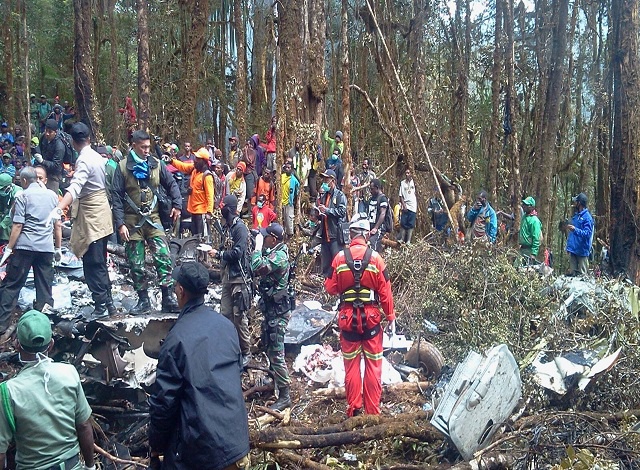
Half of Trigana crash victims identified


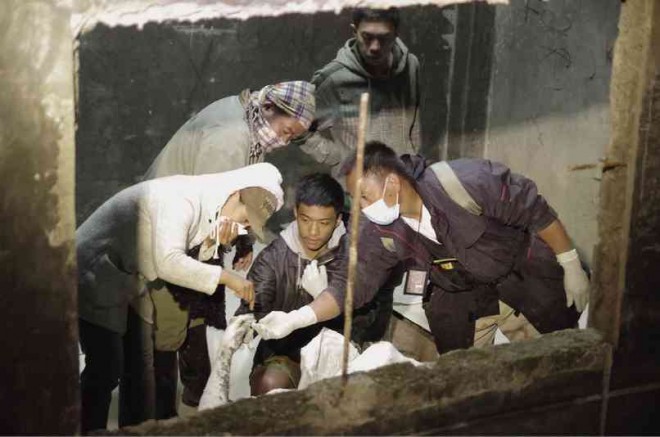
The National Police said its Disaster Victim Identification (DVI) team had managed to identify only 27 bodies of the 54 people on board the Trigana Air plane that crashed in Oksibil, Papua, on Sunday.

The team identified bodies of 27 victims based on their dental and medical records as well as objects attached to their bodies, the police added.“The DVI team has confirmed the identities of 27 victims from the 54 body bags handed over to Bhayangkara Police Hospital using primary and secondary data.

To identify the remaining 27 victims, we will wait for DNA test results from the forensic laboratory at the National Police headquarters,” said the head of the Papua Police medical and health center, Sr. Comr. Ramon Aminam in Jayapura on Thursday.

The three latest bodies identified by the DVI team are Elipad Uropmabin, 22, a university student from Pegunungan Bintang regency; Hosea Uropdana, 50, the Pegunungan Bintang education agency head; and Jackson Wayam, 24, a resident of Kampung Kabiding, Oksibil.

Ramon said some victims may still be unable to be identified when the DNA test results were ready as it was probable that some bodies were still left at the Trigana crash site.

“There are still 27 bodies that need to be identified. If we find less than that number in the DNA test results, there may be some victims’ bodies not yet recovered from the scene of the plane crash.

We don’t know what condition they would be in,” said Ramon.The DVI team has been working to identify bodies from the Trigana Air crash since Aug. 20. The team has identified three out of five Trigana crew members.

They are pilot Hasanuddin, co-pilot Ariadin Falani and flight attendant Dita Amelia Kurniawan.“Thank God, three crew members have been found. Two more crew members, a technician and a flight attendant, are yet to be identified,” said the head of PT Trigana Air Papua, Budiawan.

The Papua Police said they were investigating a suspected violation involving Trigana Air ticket sales as the names of 10 crash victims did not match with the flight’s passenger list. “The Papua Police have continued to investigate alleged ticket resale practices [related to the] Trigana aircraft.

Ten people were not on the passenger list but were on board the aircraft. We are investigating 16 witnesses,” said Papua Police spokesperson Sr. Comr. Rudolf Patrick.

The Trigana Air flight IL 267, a PK-YRN aircraft, crashed while travelling from Jayapura to Oksibil, Pegunungan Bintang, Papua, on Aug.16.

Friday 28 August 2015

http://www.thejakartapost.com/news/2015/08/27/only-half-trigana-crash-victims-identified-police.html

continue reading

August 30, 1965: Worst avalanche disaster in Switzerland’s history.


Workers on the hydro electric scheme in the Saas Valley, high up in the Swiss Alps, had just finished up for the day and were settling down in their barracks when they were struck by an icy blast of wind. It bowled people over, flattened power poles and knocked down wooden buildings like they were matchsticks.

In the wake of the wind came a huge wall of ice, rocks and snow that tore through the small workers’ village burying almost 100 people.

The disaster, which happened 50 years ago this weekend, would claim the lives of about 90 people, one of the worst avalanche death tolls in Switzerland’s history.

SWISS PRIDE

Work on the dam had started in 1961, with a team of 400 Swiss, French and Italian workers. One of the major reasons for its construction had been to mitigate floods caused by meltwater from the Allalin glacier. Since the 17th century the spill of floodwaters from Mattmarksee (Lake Mattmark) had threatened villages in the valley below at least two dozen times. A dam would allow waters spilling over from Mattmark to be captured, preventing flash floods, but another benefit was that it would also provide electricity from a hydro electric plant. Cheap, clean energy especially through winter when it was needed most.

There were some concerns about the moving glacier dangling high above the dam, but it had not caused avalanches in the past.

In 1963, a team of experts examined the glacier during a period when it had been rapidly advancing, but deemed it no threat to the dam works below and work on the project continued.

Although some might have considered the construction an eyesore in what is otherwise a breathtakingly beautiful part of the world, the dam was a point of pride for the Swiss, an engineering marvel, part of a government initiative for hydro power.

It attracted bus loads of tourists, many of them from the holiday resorts Saas Fee and Saas Almagel several kilometres further down the valley. Some of them were visiting the site on August 30, 1965.

LETHAL ICE

What neither they nor the workers knew was that a great chunk of ice from the Allalin glacier was poised ready to snap off. It would later be understood that the glacier goes through cycles of retreat, followed every two to three years by rapid advances. In 1965 it began one of those advances which pushed the ice over a rock ledge.

It was thought this overhanging chunk of ice was disturbed by vibrations from the incessant rumbling of equipment in the valley below, as construction went on around the clock to get as much done as possible before the blizzard season. Day-shift workers had knocked off and were having dinner, with night-shift workers on their way to work. Others were resting in the barracks, socialising and playing cards.

Alois Hauser, a mountaineer from Zurich who was heading for a refuge hut high above the glacier, witnessed the moment the ice snapped. He said later it sounded like explosions, followed by a roar that shook the earth.

HELPLESS WITNESSES

Tourists on the dam wall also watched in horror as the ice rushed toward the workers’ camp, knocking over trucks and cars on the road down from the dam and flattening the camp. Miraculously, the dam and the tourists on it were spared.

Although the power was knocked out, a phone line stayed intact, enabling help to be summoned. Only five people were dug out alive. Some sources set the death toll at 88 although others report as many as 97 people died. More than 50 of the dead were Italian migrants.

Avalanches have been a constant danger in that part of the world. In the 1930s, a Commission for Snow and Avalanche Research was set up, primarily to protect soldiers stationed in the Alps after thousands had died during World War I. While research in the wake of disasters like the Mattmark Dam has helped to avert major disasters, avalanches still take lives in Switzerland. In 1999 Switzerland suffered a particularly bad season during which 1300 avalanches occurred, killing 17 people, including two in the ski resort of Evolene.

SWITZERLAND’S DEADLY RECORD

- 1618 the entire town of Plurs was buried by an avalanche, killed as many as 2500 people

- 1718 Two avalanches in one day flatten the town of Leukerbad,

killing 52. - 1888 200 people are killed by avalanches in the Wassen Valley

- 1951 A particularly destructive avalanche season saw more than 90 people killed.

Friday 28 August 2015

http://www.dailytelegraph.com.au/news/white-death-came-down-on-alps-village-with-a-roar-that-shook-the-earth/story-fnpoi7cy-1227501615379

continue reading

2 migrant boats capsize off Libyan coast, hundreds feared dead


Two boats carrying migrants capsized off the Libyan coast, with hundreds feared dead, a news report said on Friday.

More than 100 bodies had been taken to hospital in the nearest town of Zuwara on the western Libyan coast, the BBC reported, citing a local resident, with hundreds more missing.

The coast guard managed to rescue 201 people, but many more were apparently trapped in the hold of the larger vessel, the report said.

The first boat, with around 50 people, signalled for help on Thursday. The second one was carrying around 400 passengers when it sank later, it said.

The bodies taken to hospital were of migrants from Syria, Bangladesh and southern African countries, the resident reportedly told the BBC.

“We have recovered 30 bodies so far and rescued dozens of people, with dozens more still missing after a boat carrying around 200 migrants sank off [the western port of] Zuwara,” a coast guard official told AFP.

"We are working with very limited resources. Most of the boats we use are fishing boats that we borrow from their owners," he said.

The migrants so far accounted for were all of African origin, the official said, adding that rescue efforts were ongoing but would be “intensified” on Friday morning.

On Wednesday, around 17 migrants drowned after their boat capsized off the same coast. The coast guard said 20 people were saved, mostly from Nigeria and Ghana.

The same day, around 30 bodies were recovered from the hull of a boat carrying some 400 migrants, intercepted 50km north of Libya, according to the Italian coast guard.

The victims were apparently asphyxiated by the engine. The BBC put the number of bodies found at 51.

The sinking comes a day after at least 55 bodies were discovered on three overcrowded migrant boats, 52 of whom were found in the hold of one wooden vessel off Libya’s coast.

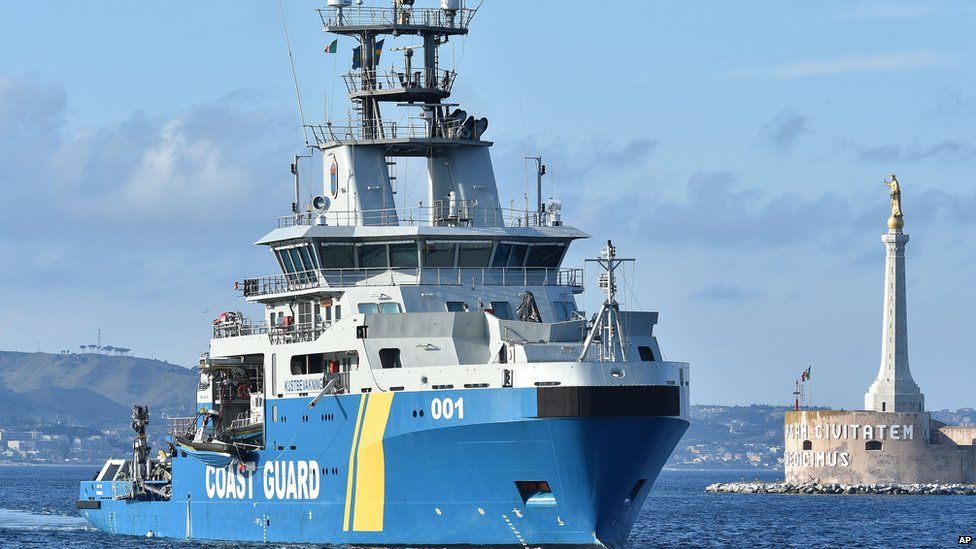
Wednesday’s gruesome discovery was made by a Swedish coast guard vessel whose crew plucked hundreds of other migrants from the waters off the North African nation.

People smugglers have taken advantage of the chaos gripping Libya since the 2011 uprising toppled dictator Muammar Gaddafi to step up their lucrative business.

But the Mediterranean crossing is treacherous, and more than 2,300 migrants and refugees have died trying to reach the European Union this year alone.

Unprecedented numbers of refugees are braving the crossing as they flee war, persecution and poverty in the Middle East as well as Africa and Asia.

Friday 28 August 2015

http://www.timesofisrael.com/at-least-30-die-as-boat-with-200-migrants-sinks-off-libya/

http://www.news24.com/Africa/News/2-migrant-boats-capsize-with-hundreds-on-board-report-20150828

continue reading

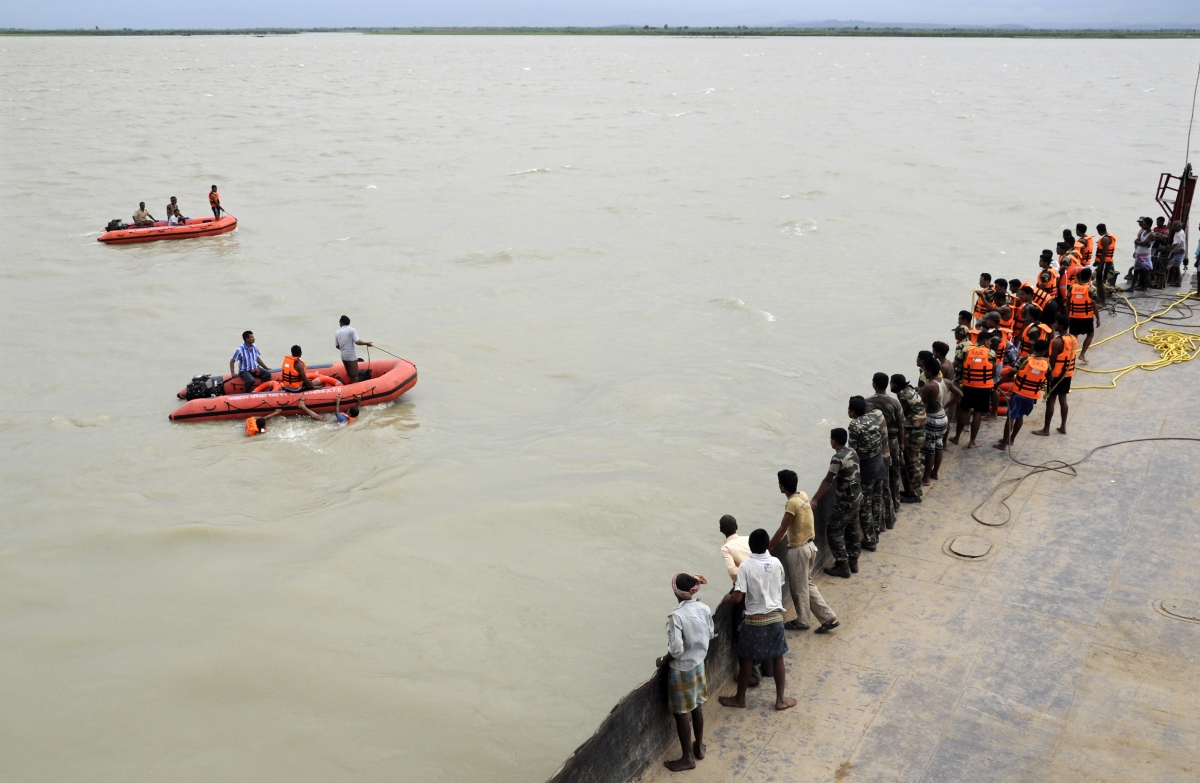
Fort Kochi boat tragedy death toll rises to 10


With the recovery of two more bodies on Friday, the death toll in Fort Kochi's boat tragedy rose to 10, police said.

The Marine Enforcement found the body of a man who has not been identified yet. Another body was found on Friday morning and was identified to be of Fousia, a Kumbalangi native.

Navy, Coast Guard and Marine police personnel, had on Thursday found body of a man floating in the backwaters in the Island area of the city.

He has been identified.

Confusion over number of passengers

The exact number of passengers on board the boat at the time of the mishap was yet to be ascertained.

Police, however, said preliminary investigation indicates that there were about 35 people in the boat, said to be over three-decades old, which capsized and sank after being allegedly hit by a speeding fishing craft in the harbour mouth off Fort Kochi on Wednesday.

About 25 passengers were rescued from the sinking boat on Wednesday. Nineteen passengers have been admitted to various hospitals in the city.

Four passengers who are seriously injured in the accident have been admitted in a private hospital here, police said.

Financial aid

Meanwhile, Kerala government has sanctioned an ex-gratia of five lakh rupees to the families of those killed in the boat tragedy.

Home Minister Ramesh Chennithala said the severely injured would be given a compensation of Rs 1 lakh. The government will take care of the medical expenses of the injured passengers.

The passenger vessel was on its way from Vypin to Fort Kochi when it was hit by the fishing craft at the harbour mouth at about 1.40 pm on Wednesday.

It was the quick rescue operations initiated by the local people and tourists, who were witness to the tragedy, that saved lives of several passengers, eye witnesses said.

Reports said that the driver of the fishing boat did not have a valid licence.

Ill-fated boat

The ill-fated boat, that was built 35 years ago, was given port directorate's fitness certificate till 2017, reports accessed by Manorama News proves.

However, the manufacturing date of the boat is not mentioned in the certificate. The fitness certificate valid till 2013 was renewed only last year.

According to the fitness certificate, the boat should have 42 lifebuoys. However, the boat had only 3 lifebuoys, passengers said.

Chief Minister Oommen Chandy, who visited the injured in the hospital on Wednesday evening, had said the government will bear the treatment expense of the people admitted in various hospitals.

The passenger vessel was on its way from Vypin to Fort Kochi when it was hit by the fishing craft at the harbour mouth at about 1.40 pm on Wednesday.

Swift response saved lives The swift response of the local people helped minimise the casualties in the boat mishap at Fort Kochi on Wednesday. The people near the Kamalakadavu jetty and fisherfolk resting in fishing vessels swung into action soon after the disaster.

The first to jump into the water were two foreign tourists, according to an eyewitness. The duo, a man and a woman, plunged into the water and saved three persons, he said. The details of the foreigners couldn’t be confirmed as they left the place soon after the incident. As the mishap took place near the jetty, the casualties did not go up, according to those who took part in the rescue operations.

“If it had happened in the middle of the shipping channel, the rescue efforts would have been difficult as the area has a depth of over 11 metres and very strong currents,” said Anas, a native of Fort Kochi. The local people started rescue efforts even before the arrival of the Coast Guard, Navy and Fire and Rescue services, he said.

Although the Navy and Coast Guard officials carried out extensive rescue operations, the search for drowned passengers could not be completed as it took a long time to lift the passenger vessel from the waters. A divers’ team from the Navy and Chetak helicopter was also pressed into service.

Thousands of people crowding the area made the relief work difficult with some people turning aggressive against the police and mediapersons. A section of the crowd showered abuses on the crew of TV channels accusing them of ‘feasting’ on a tragedy. The crowd also warned against shooting the visuals on mobile phones with the threat that such mobiles would be thrown into the water.

Friday 28 August 2015

http://www.deccanchronicle.com/150827/nation-current-affairs/article/kochi-boat-tragedy-foreign-tourists-help-save-3-people

http://english.manoramaonline.com/news/just-in/dead-missing-fort-kochi-boat-accident-probe-kochi-kerala.html

continue reading

Truck with 50 dead refugees found in Austria


Austrian police found the decomposing bodies of up to 50 migrants in an abandoned truck, sparking a cross-border hunt for the people-smugglers responsible for the latest tragedy in Europe's migrant crisis.

The grisly discovery near the Slovakia and Hungary borders came as at least 30 more migrants drowned in the Mediterranean and European leaders again met to try to find ways to handle the tide of people seeking refuge in the European Union.

Highway tolling booth cameras registered the truck on the Hungarian side of the border at 9 p.m. on Wednesday, and then again at 5 a.m. on Thursday, suggesting, that the truck had crossed into Austria sometime overnight. The dead are believed to be migrants who suffocated.

The vehicle – a refrigerated lorry with Hungarian licence plates – was found parked off the A4 motorway between Parndorf and Neusiedl am See.

Austrian police said the vehicle found Thursday abandoned in the emergency lane of a motorway had "decomposing body fluids" dropping from it.

When they opened it, there was a powerful stench of human decay and the bodies lay piled on top of each other, crammed into a small rectangular space in a sea of tangled limbs.

Officers at the scene were unable to determine the exact number of dead, assess people's gender or determine whether there were any children among them.

There were "at least 20, but there could be as many as 40 or 50", said police spokesman Hans Peter Doskozil.

The van had the markings of a Slovakian poultry company and Hungarian number plates. More details, including the confirmed number of dead, were expected Friday.

German Chancellor Angela Merkel, in Austria for a summit with Balkan leaders on the crisis, said she was "shaken" by the "horrible" news.

"This is a warning to us to tackle this migrants issue quickly and in a European spirit, which means in a spirit of solidarity, and to find solutions," Merkel said.

"Today is a dark day... This tragedy affects us all deeply," Austrian Interior Minister Johanna Mikl-Leitner told a press conference.

Mikl-Leitner vowed to crack down on the people who pocket exorbitant sums to arrange migrants' passage to Europe, and then often leave them stranded en route.

"Human traffickers are criminals," she said.

Hungary said it would join the investigation into the tragedy.

Friday 28 August 2015

http://news.yahoo.com/dozens-migrants-found-dead-truck-austria-highway-112903942.html

continue reading

Thursday, 27 August 2015

Miner’s body found; ‘Ineng’ death toll now 22


The body of another miner was retrieved on Tuesday, the fifth day of search for survivors of a massive landslide that swept a small-scale mining camp in Mankayan town, this province.

The wife and relatives of Nardo Mocnangan identified his body at Abatan Emergency Hospital in Buguias town. It was seen in a river in nearby Cervantes town in Ilocos Sur on Tuesday and was taken to Mankayan early Wednesday.

Interior Secretary Mar Roxas and presidential spokesperson Edwin Lacierda, who flew to this capital town on Wednesday, were originally told that two bodies had been recovered during a damage evaluation meeting initiated by the Provincial Disaster Risk Reduction and Management Council (PDRRMC). The error was traced to simple miscommunication.

So far, six miners have died from the landslide in Barangay Taneg in Mankayan. Four others were buried alive by landslides in other parts of the town after Typhoon “Ineng” (international name: Goni) dumped heavy rain and whipped strong wind in the Cordilleras last week.

Benguet Gov. Nestor Fongwan also reported the death of four miners in Itogon town due to gas poisoning on Aug. 23. He said the miners did not heed a provincial order stopping all extractive activities during the typhoon and entered their tunnels.

Counting Mocnangan and the Itogon miners, Ineng left 22 fatalities in the Cordillera as of Wednesday.

On Wednesday morning in Barangay Taneg, the families of the missing miners joined the community in staging an “atang” (offering).

“We beseech the spirits to bring out the victims, so they would be brought home to their families for proper burials,” said Pacita Betuagan Awisan, 87, a community elder.

As part of the ritual, the community butchered two black native pigs at the accident site, which they offered to the spirits. Over 400 volunteers, policemen, miners and soldiers continued to dig through mud, rocks and toppled trees, looking for 10 other miners and their family members who took shelter in makeshift structures when a portion of an adjacent mountain toppled over their temporary camp.

Some rescuers tried to locate the mine tunnels on the belief that some of them might have escaped, but they failed.

Loose soil and strong rain continued to make rescue operations difficult.

“We came here to commiserate with you,” Roxas said during the PDRRMC meeting at the capitol. He said he was also delivering the sympathies of President Aquino.

Before proceeding to Santa, Ilocos Sur province, to inspect the typhoon damage there, Roxas instructed Chief Supt. Isagani Nerez, Cordillera police director, to send more policemen to the search areas and help speed up the rescue and retrieval operations in Mankayan.

He said the police would also send a K-9 unit to help search for bodies.

Thursday 27 August 2015

http://newsinfo.inquirer.net/716627/miners-body-found-ineng-death-toll-now-22

continue reading

Bodies of 50 migrants found in hull of boat rescued off Libyan coast


About 50 bodies were found in the hull of a migrant boat that was rescued off Libya’s northern coast on Wednesday, adding to the more than 2,400 people who have perished at sea this year making the Mediterranean crossing to Europe.

Italy’s coastguard says the Swedish ship Poseidon, which is taking part in the EU’s Triton Mediterranean operation, rescued 439 people from the ship.

Italian media reports say the deaths were probably caused by asphyxiation.

The rescue was one of 10 requests for assistance that arrived at the coastguard’s operations centre as Libya-based smugglers take advantage of calm seas to send boats overloaded with migrants to Europe.

Mediterranean tragedy

Earlier in August, the Italian navy discovered the bodies of 49 people in the hold of a vessel.

Those migrants were thought to have died of asphyxiation. Survivors later testified that smugglers had forced them to remain in the hold.

Smugglers based in Libya are believed to be taking advantage of calmer seas to send more boatloads of migrants towards European shores.

European officials have described the plight of migrants, almost 250,000 of whom have crossed by boat to the continent this year, as "beyond urgent".

So far this year, more than 2,000 migrants have died trying to cross the sea to Europe, the UN says.

Migrants by the tens of thousands are braving the perilous journey across the Mediterranean this year, hoping to reach Europe and be granted asylum. They are fleeing war, persecution and poverty in the Middle East, Africa and Asia.

The UN refugee agency says more than 2,400 people have died at sea so this year.

Thursday 27 August 2015

http://www.theguardian.com/world/2015/aug/26/bodies-50-migrants-found-hull-boat-rescued-libyan-coast

continue reading

Wednesday, 26 August 2015

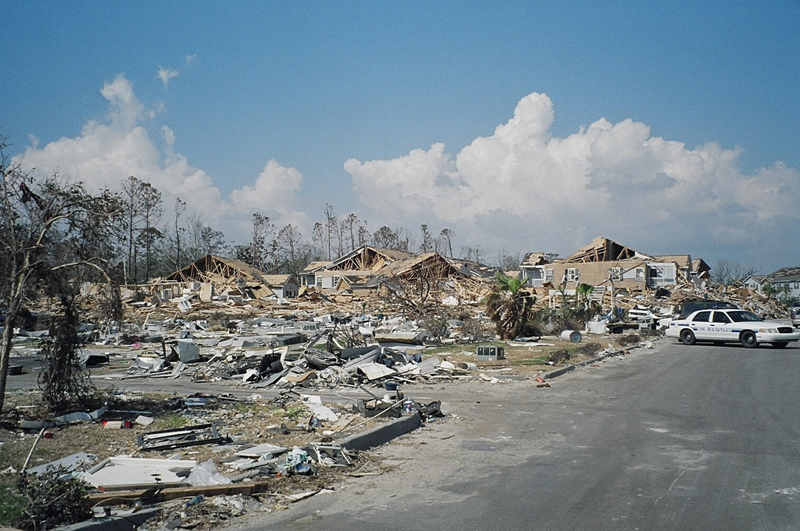
Dozens of bodies remain unidentified decade after Katrina


When Reginald Washington returned to the Lower Ninth Ward months after the storm, he could barely find his daughter's home. All he could see was a 200-foot long barge with a steel hull.

"This is the very first time," he said. "Haven't been back here since."

Even though he lives just a few streets away, he still avoids this block.

"All they had was a barge there and they were cutting it up," he said. "It made me think about my child, what she went through. The way she drowned made me feel that I wasn't there for her."

The infamous barge and a relentless flood flowed through a massive breach in the Industrial Canal Levee, inundating the Lower Ninth Ward not far from where Pam Washington and her fiance, Darryl Milton, rented a brick single-story house on Jourdan Avenue.

"I can't really say why she didn't want to leave," Washington said. "But I told her I was staying. I really thought I'd come get her and bring her by my house. At least we had an upstairs."

Like thousands of others, Washington and his daughter chose to ride out Hurricane Katrina.

The 61-year-old said he'd spend three days with no food or water trapped at home until a boat came. He'd end up at the Mercedes-Benz Superdome with only $275 in his pocket and a cell phone. He'd go to Texas to stay with family.

Only to return, nine months later, when the heartbreaking call lit up his cell phone.

"I'm calling to inform you that they found your child through DNA," he said. "At first I thought it was a hoax, then she said she was mailing me something. Papers and information."

Pam's dad says her body was found five blocks away from her home on Lizardi Street. Family members confirm it took about eight months for DNA tests to come back confirming her identity.

But not all of the victims who've recovered have been identified 10 years after the storm.

"I just thought we should honor our dead in a better way than putting them in Potter's Field," said former Orleans Parish Coroner Frank Minyard.

On the fifth anniversary of the storm, Minyard sat down with Eyewitness News to talk about the Katrina memorial, where 80 bodies were laid to rest. It's an eerily quiet place on Canal Street designed, as the engraving says, to "evoke" the shape of a hurricane. These victims were either unclaimed by relatives or never identified.

Minyard said more extensive DNA testing is needed, but money allocated by FEMA to the Louisiana Department of Health and Hospitals dried up.

So back in 2005, Minyard confirmed 40 people still remained.

"It's been five years, maybe it'll go 10 years, 15, 20. I mean it's ludicrous in this day and age to have people unidentified," he said.

Now a decade after the storm, an Eyewitness News public records request to current coroner Dr. Jeffrey Rouse reveals a total of 30 victims who still remain unidentified.

Autopsy reports show locations across the city where some of these men and women were found, many with little to no personal belongings or distinguishing marks.

One man identified as an unknown black male had his body recovered at Interstate 10 and Elysian Fields Avenue. He was wearing black Nike tennis shoes, black warm-up pants, a dark polo shirt, along with a black necklace adorned with a wooden African pendant and black swatch quartz.

At S. Prieur Street in Central City, an autopsy report says the body of an unknown female was discovered dressed in a multi-colored skirt, blue knit t-shirt and wearing a yellow metal earring with the letters "RMJ" on it, a single curler still in her hair.

Back in the Lower 9th Ward at 5113 St. Claude Ave., an unknown black man with a beard and moustache dressed in black low-top shoes, black jeans, and in a blue, vertical-striped t-shirt was found with keys in his front pocket and one nickel to his name.

"Heat lamps as you see in the studio, and horrific, no running water except hoses we could run in there. Extremely decomposed bodies with very harsh conditions," said Dr. Louis Cataldie.

Identifying more than 1,000 bodies was a complicated task. Cataldie ran the Disaster Mortuary Operational Response Team, which worked out of this temporary morgue in St. Gabriel. The team of medical professionals had no choice, since the Orleans Parish morgue was under water.

Inside the old warehouse, autopsies were performed, DNA was collected and x-rays taken to try to identify the dead.

But Cataldie confirms medical records lost to floodwater, badly decomposed bodies and collecting DNA samples from relatives who evacuated made that task cumbersome.

"We would take DNA from family members and relatives and try and match the family tree," he said. "That's real hard to do when you've got people displaced to Texas and you're trying to get their DNA. That's one of the reasons it took so long to identify these folks. Fingerprints were pretty much useless."

Cataldie also confirms the funding for more DNA testing ran out.

So, what about these unidentified bodies honored at this Mid-City Memorial, and their families who never came back, or don't know they're here?

Cataldie said there is a way.

"I think at this point in time, if someone was really concerned, they could probably do it privately, but it would probably be cost prohibitive to do it that way," he said.

Washington said, "There's a bunch of them down here that they didn't find. I couldn't tell you what happened to them."

Washington said they deserve to be identified.

A few months short of Katrina's one-year anniversary, Pam Washington was buried in her family's plot at Providence Memorial Park & Mausoleum on Airline Highway. Her fiancรฉ Darryl was never found.

It's a painful memory for any parent, especially Washington, who said Pam's daughter Whitney is a spitting image of her mom. She evacuated with family before the storm hit.

In his mind, the teen is part of the next generation that can now set their sights on the future.

"We weathered the storm, we went through it and we made it," Reginald Washington said. "Now we're trying to go past that and move on."

Rouse said he did not want to be interviewed for this story.

State health officials say in an effort to reunite families with the remains of their deceased relatives, the department spent more than $3 million, but only $2.2 million of the funds were reimbursed by the federal government.

Wednesday 26 August 2015

http://www.wwltv.com/story/news/local/katrina/2015/08/25/dozens-of-bodies-remain-unidentified-decade-after-katrina/32375545/

continue reading

Tianjin blasts: Death toll mounts to 135


The death toll from a warehouse blast in north China's major port city of Tianjin has risen to 135 while 38 people were still listed missing in the country's worst industrial tragedy, officials said today.

Those who were killed in the twin blasts included 81 firefighters, seven policemen and 47 others. The missing people include 23 firefighters, four policemen and 11 others, state-run Xinhua news agency reported today.

All bodies have been identified.

Meanwhile, 582 people remain hospitalised, 36 of them in serious condition. A total of 216 injured people have been discharged from hospital.

Two blasts ripped through a warehouse on August 12 in Tianjin port where hundreds of tonnes of toxic chemicals were stored, including around 700 tonnes of sodium cyanide.

The explosions also seriously damaged two residential compounds nearby and gutted more than 3,000 new cars in a parking area close to the site.

Personnel are cleaning up the debris and chemicals at the blast site. Workers have partially restored power supply for some damaged buildings.

A total of 223 companies have resumed operation after a suspension due to the blast and 140 more firms are expected to restart production soon, according to local authorities.

The Tianjin port, located about 117 km from Beijing is operating normally.

Thousands of the blast-affected people have turned to their relatives for shelter or returned to their hometowns. Only 95 people remain in a school used as a temporary sheltering point.

Police have detained executives of the warehouse's owner, Tianjin Rui Hai International Logistics Co Ltd, including company head Yu Xuewei, a former executive at a state-run chemical company, and deputy head Dong Shexuan, son of a former police chief for Tianjin Port.

China's cabinet has promised a thorough investigation into the deadly blasts.

Wednesday 26 August 2015

http://economictimes.indiatimes.com/news/international/world-news/tianjin-blasts-death-toll-mounts-to-135/articleshow/48669194.cms

continue reading

Greek Coast Guard search for 4 still missing after capsize


Two Greek coast guard vessels are searching the waters off the eastern coast of the island of Lesbos for four people still missing after a dinghy carrying migrants or refugees capsized while making its way across from the nearby Turkish coast.

The search continued Tuesday, a day after the coast guard recovered two bodies and rescued six people after being alerted to the incident when a fishing boat picked up a man found in the sea.

The body of a third man was also recovered Monday night, but from a different part of the island, leading authorities to suspect he might have died in a separate incident.

Greece has been overwhelmed by more than 160,000 refugees and migrants so far this year. The vast majority arrive in Lesbos.

Wednesday 26 August 2015

http://abcnews.go.com/International/wireStory/greek-coast-guard-search-missing-capsize-33298848

continue reading

Tuesday, 25 August 2015

Katrina's unclaimed dead conjure memories of her ravages


A decade after one of the most deadly storms in U.S history, Hurricane Katrina's forgotten victims lie in 83 caskets entombed in black granite mausoleums behind the gothic gates of a New Orleans cemetery. Their visitors are mostly tourists.

Each metal coffin is marked with serial numbers inside and out, should anyone ever seek to bring one of them home. The names of 30 remain a mystery, but authorities have recorded details about their DNA and where each was found.

The unclaimed bodies were laid to rest in 2008, three years after the storm killed 1,833 along the U.S. Gulf Coast.

On Saturday, 10 years to the day after Katrina's devastating landfall in Louisiana, city dignitaries will gather at the burial site, known as the Hurricane Katrina Memorial. Viewed from above, it resembles the shape of a hurricane.

"Nobody has ever come searching for their loved one in the memorial, as far as I know," said Dr. Frank Minyard, the longtime coroner of Orleans Parish, who helped to build the monument before retiring last year.

The stories of those buried inside remain unknown despite the exhaustive efforts of coroners who conducted autopsies on some 900 bodies recovered from around greater New Orleans.

The local coroner's office was washed away in the flooding that submerged 80 percent of the city after Katrina's storm surge overwhelmed the local flood protections.

Bodies were taken by the hundreds to a warehouse without air-conditioning in St. Gabriel, Louisiana, outside Baton Rouge. As they worked under heat lamps, dehydrating medical examiners searched for ways to identify them.

By then, many were badly decomposed, and animals had removed fingers that might have provided crucial prints, recalled Dr. Louis Cataldie, the former coroner of East Baton Rouge Parish, who was appointed to oversee the statewide remains recovery effort.

Still, a rewards card from Winn-Dixie supermarkets on one man's keychain led them to his relatives, who recognised the rings he was wearing.

An elderly woman, found wearing slippers with holes cut around her little toes, was brought back to family members who remembered how she snipped her shoes to accommodate arthritis.

Yet some people could never be identified by examiners who pored over unusual tattoos, bone fractures and teeth that were compared to dental X-rays recovered from mouldy basement storage.

"The mission wasn't completed," Cataldie said. "If there was one person that wasn't identified, it would still bother me."

After several months, Cataldie's team returned to the city the unclaimed bodies from New Orleans, where they were stored in another warehouse. Minyard, the coroner, wanted the bodies buried in a place where they could be easily retrieved, if anyone ever wanted one of them.

He worked with community leaders and local funeral home owners, who were troubled by talk of a mass burial or cremation, to raise more than $1 million in public and private funding for the memorial graves.

"It was just a little heartless at that point," said Sandra Rhodes-Duncan, one of the leaders of the nonprofit that built the memorial and member of a family that has run a local funeral home for more than a century.

"You always have something to represent somebody's life," she added.

In August 2008, funeral homes donated more than 30 hearses to carry the unclaimed victims to their final resting place, in what was formerly the Charity Hospital Cemetery.

At the cemetery, a red rose was placed on each casket, carried by volunteer pall bearers. Each victim was interred in individual graves within the mausoleums.

Each year since, a graveside ceremony has been held to mark the anniversary of Katrina.

At last year's ceremony, Dr. Jeffrey Rouse, current coroner of Orleans Parish, spoke of the victims at a service marked by a clarinet's sombre notes.

"They sit in silent watch," he said. "They sit in silent judgment."

Tuesday 25 August 2015

http://uk.reuters.com/article/2015/08/25/uk-usa-katrina-bodies-idUKKCN0QU19E20150825

continue reading

Cyprus begins recovery of wreckage of military plane and human remains 41 years after its crash


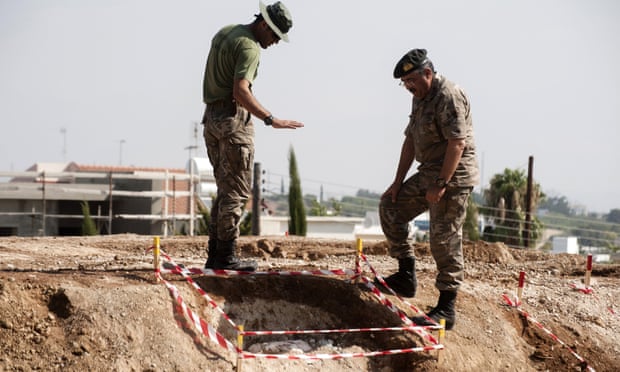
Cypriot authorities have started recovering the debris of a Greek military transport plane 41 years after it crashed, an official said on Monday.

Crews started an excavation of a man-made earth hill last week in search for the debris of the French-built Noratlas transport plane, which was shot down by friendly fire as it approached for landing at the now defunct Nicosia airport during the 1974 war between Cyprus and Turkey.

"Digging crews have recovered a wing of the plane and also smaller pieces, including a fuel gauge. We believe they are not far away from the main target of the digging which is the main part of the fuselage," Commissioner for Humanitarian Affairs Photis Photiou told the state radio.

Authorities believe that inside the fuselage are the remains of up to 19 Greek commandos who were killed in the crash.

They were part of a battalion which was being transported to Cyprus to reinforce the Cypriot National Guard as it was facing much superior Turkish troops who landed on the eastern Mediterranean island on July 20, 1974, in reaction to a coup by Greek army officers a week earlier.

A total of 15 Noratlas transport planes, built circa 1950, were involved in the clandestine operation.

Thirteen of the planes which took off from Crete made it to Cyprus, one landed in Rhodes and one returned to Crete.

Due to bad communications and battle confusion, the last one of the planes was fired at by Greek Cypriot soldiers at dawn on July 22, 1974. It crashed about 1 kilometer from the runaway, killing all but one of the 32 commandos and crew.

Twelve bodies were recovered at the time, but the rest were buried under a mound of earth along with the debris of the plane and the crash-site was turned into a Tomb for the Fallen and a military cemetery.

Relatives of two of the other 19 commandos applied to the European Court of Human Rights demanding the return of their remains and the Cypriot government accepted an out of court settlement to try to recover the remains.

Cypriot authorities have enlisted the assistance of an expert from Australia specializing in digging in war related sites, in search of the debris and the remains of the soldiers.

"They have to proceed carefully and at slow pace as there is information that explosives were carried in the plane and they may have not exploded," said Photiou.

The only survivor of the crash, Thanasis Zefiriou, was at hand when the excavation started.

He said he managed to pry the plane door open before it was completely engulfed in flames and jumped out. He was later found unconscious by National Guard soldiers and taken to hospital.

The recovery operation is expected to be completed by November.

Relatives of the missing commandos have provided DNA to identify any remains found on the crash site.

A total of about 1,000 people, most of them Greek Cypriots, are still missing since the 1974 fighting, which ended in Turkish troops occupying about 37 per cent of Cyprus territory.

United Nations brokered negotiations for the reunification of the island are currently under way.

Tuesday 25 August 2015

http://www.shanghaidaily.com/article/article_xinhua.aspx?id=299484

continue reading

Death toll in China's Tianjin blast rises to 129


The death toll from a series of explosions nearly two weeks ago that rocked the northern port city of Tianjin has risen to 129.

There are still 44 people missing and 610 are in hospital, 39 of them critically injured, the official Xinhua news agency reported, citing local officials.

The explosions at a hazardous goods storage facility on August 12 triggered a giant fireball and new fires broke out as recently as Friday.

China's powerful State Council, or cabinet, has vowed to conduct a "rigorous" investigation into the cause of the explosions, Xinhua said Saturday.

The owners of the hazardous goods storage company at the centre of the incident, Rui Hai International Logistics, reportedly included the son of a former police chief who used his connections to help the company obtain the necessary permits and pass inspections.

The blasts have also sparked fears of toxic pollutants contaminating the air and water of the city, which has a population of about 15 million people.

Two blasts ripped through a warehouse storing dangerous chemicals in China's Tianjin Port around 11.30 pm on 12 August.

Personnel are cleaning up the site while investigators look into the cause of the incident.

Tuesday 25 August 2015

http://www.9news.com.au/world/2015/08/25/00/25/china-blast-death-toll-rises-to-129

continue reading

Search resumes for 12 missing Philippine miners


Rescue teams on Monday resumed their search for the 12 miners reported missing after landslides cascaded down their shanties in Benguet province in the Cordillera Administrative Region in the Northern Luzon highlands at the height of typhoon Goni, according to officials State weathermen also reported that Goni (local codename Ineng) already left the country after ravaging extreme Northern Luzon that forced thousands of people to flee their homes due to floods, making major roads impassable as well as felling down trees and power lines.

Benguet Governor Nestor Fongwan said relatively good weather prevailed over the area on Monday after several days of heavy rain and strong winds that prevented the rescue teams from proceeding to a remote mountain village in the town of Mankayan where the 12 missing miners were believed trapped by landslides and mudslides.

The 12 were among the 16 miners reported missing but four were confirmed dead when the teams retrieved their bodies from the site on Saturday, Fongwan said amid fears the rest were also killed when their shanties were buried by the landslides.

Meanwhile, police on Monday reported that four other small-scale miners succumbed to gas poisoning in the town of Itogon also in Benguet.

Police said the bodies of the victims were already recovered from a tunnel but clarified their death was not related to the devastation wrought by Goni (Korean word for swan) on Benguet and other provinces in Northern Luzon.

Tuesday 25 August 2015

http://gulftoday.ae/portal/e461ad7e-061b-45bb-98b6-246857e3e115.aspx

continue reading

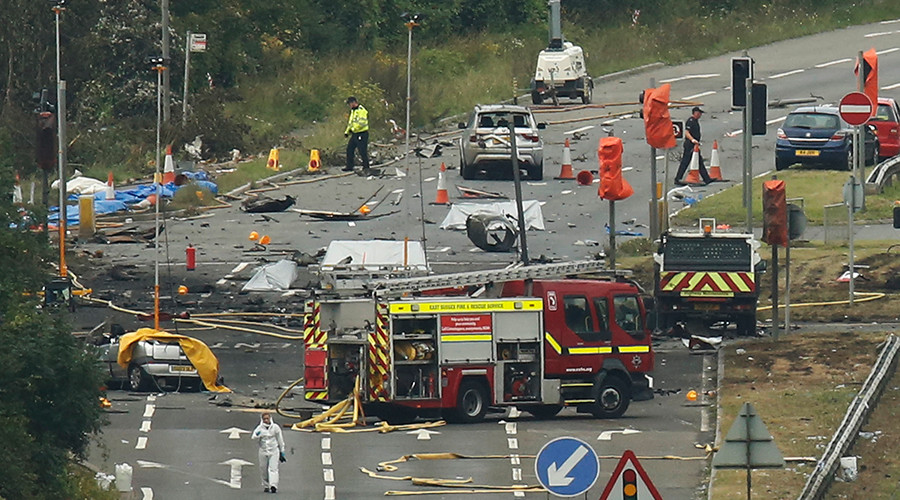
No new victims found when plane that crashed at UK airshow lifted


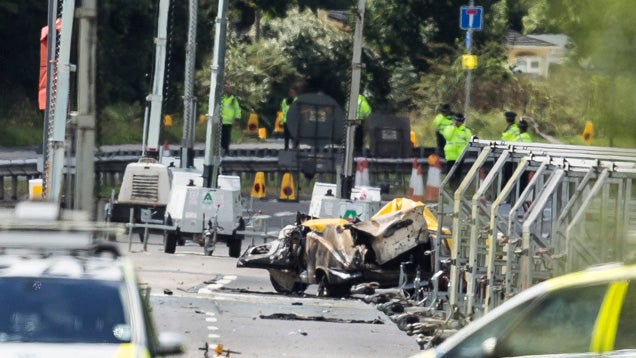
No new victims were located Monday after the wreckage of a vintage jet plane that crashed on a highway was lifted, police in England said.

Up to 200 people have raised concerns over missing friends or relatives since the Shoreham tragedy, police have said.

Officers revealed they have been deluged with calls after Saturday's plane crash.

"Our estimate of 11 highly likely victims remains in place," Assistant Chief Constable Steve Barry said. "However, until we have fully completed the search of what is an extensive scene, I must caution that there is still the possibility that we may discover evidence of further victims."

The plane crashed Saturday while performing at an airshow at Shoreham Airport in southeastern England. It struck the busy A27 highway, killing at least 11 motorists on the road and injuring at least 14 people.

Authorities said the pilot -- who was, against all odds, pulled from the wreckage alive -- is in a coma.

"Andrew Hill remains in critical condition," police said in a statement released on behalf of Hill's family. "He has multiple injuries and is in a medically induced coma."

The jet wreckage will be transported to Farnborough for examination and vehicles and debris will be removed from the highway," Barry said.

"After that there will a second phase of checking that we have accounted for all the victims and this will be followed by a thorough finger tip search of the area to ensure that we have recovered all of the forensic evidence," he said.

Sussex police announced at a news conference Sunday that it was "highly likely" 11 people had been killed.

The identification process is requiring the help of the victims' next of kin. Authorities resumed the search for more possible victims two days after the military jet plunged from the sky and crashed onto the busy highway.

Meanwhile, people raised questions about whether an aerobatics show should have been held over a highway. The A27, running along parts of England's south coast, parallel to the English Channel, is among Britain's busiest.

Sue Grimstone, from Brighton, told the Daily Telegraph newspaper that the death of her son, Matthew, who was 23, had been "a waste."

"Air shows should be over the sea," she said. "It should never have been over that road." All of those known to have died were on the A27.

Some people took to social media in an attempt to find missing loved ones

Tuesday 25 August 2015

http://edition.cnn.com/2015/08/24/europe/england-air-show-plane-crash/

continue reading

Monday, 24 August 2015

11 now feared dead in English Airshow crash


Officials have now identified 11 people who are “highly likely to have died” after a military jet crashed into a busy roadway during an airshow in southern England on Saturday.

The military jet crashed into a busy main road, killing seven people and injuring more than a dozen others, police said.

The Hawker Hunter fighter jet, which was participating in the Shoreham Airshow near Brighton in southern England, hit several vehicles on a nearby road as it crashed Saturday afternoon.

“The numbers are increasing,” said Sussex Police Assistant Chief Constable Steve Barry in a statement on Sunday. “We are at 11 that are believed to have been killed as a result of the crash, but we do know that number is likely to rise.”

According to the BBC, an additional 14 people were injured in the crash, including the plane’s pilot, who remains in critical condition.

Witnesses told local TV that the jet appeared to have crashed when it failed to pull out of a loop manoeuvre.

West Sussex Police said seven died at the scene and one patient with life-threatening injuries was taken to the hospital.

The doomed plane would not be removed from the road until Monday, at which point more bodies could be discovered in the crash site, which is more than 350 yards long, Barry said. All of the victims were on the roadway, and no one attending the airshow was injured, according to Sussex police.

Captain Mike Vivian, the former chief flight operations inspector for the United Kingdom’s Civil Aviation Authority, stressed that airshows are highly regulated in Britain, but said “lessons can be learned and will be learned” from the disaster.

“In any accident like this where there is tragedy, it’s right to review it in detail,” Vivian told the BBC.

Monday 24 August 2015

http://gawker.com/11-now-believed-dead-after-english-airshow-crash-1726052706

continue reading

The Morewood Lake Disaster


It was set to be an exceptional year in the ice business.

Early the year before, George Shand and Everett Lesure had purchased the Morewood Lake Ice Co., and were anxious to increase profitability in their second season. The company, which in the peak of winter employed up to 150 men, had been seeing steady yields of 20,000 tons of ice harvested annually from the Morewood Lake site, but Shand and Lasure announced this year they expected to raise the output to 25,000 tons.

Advertisements for laborers had been put out, and everything was in place to begin when workers arrived on the morning of Thursday, Dec. 29, 1910, for the first day of the season. Minor equipment issues had been worked out in advance so that work could begin promptly. In particular, a valve on the boiler used to run the conveyor carrying the ice up to the ice houses had been acting up the day prior, but had been replaced, and appeared to be in good working order at 9 that morning.

At 9:20, about 40 of the men headed down from the boiler house toward the lake while many of the rest remained clustered around it.

At 9:30, the boiler house erupted into the sky in a short, horrifying whirlwind, hurling debris and bodies hundreds of yards in every direction.

The explosion could be heard throughout the city; the blast shook windows downtown on South Street, a mile away. Men working around Morewood, even up to 400 yards from the house found themselves dodging a rain of pipes and steel pieces. One 200 pound piece of boiler was flung north of the ice house, over 500 feet away; another 300-pound hunk flew almost twice that distance, cutting off the tops of five trees on the south of the house at a height of 30 feet.

Twelve men were killed instantly, and many more grievously injured. Accounts from those workers who survived the blast describe a bloody, chaotic scene, confronted in every direction by dismembered and mangled remnants of men strewn in every direction, dozens of others writhing in pain and shock wherever they'd been thrown by the blast force or struck by large pieces of searing debris.

Still badly stunned, those on the scene who escaped major injury rushed to help those more badly wounded.

James Hovey and his 19-year-old son James Jr. had just left the boiler house minutes before the blast, and sped back to help pull several men from the debris closer to the house.

"The cries and groans of the injured were terrible," recalled George Stevens, another surviving worker. "The one who seemed to be crying the loudest and who seemed to be in most pain lay under some wreckage almost directly under the place where the boiler had stood. I yelled for someone to assist me, as I believed that if a man could holler as loud as this man was doing that there was hopes for him."

Together with some other men, Stevens cleared the man from the wreckage and got him on one of the first runs to the hospital. First on the scene to carry injured was the sleigh from Pittsfield Fire Department's central station, followed by the police ambulance and two hospital ambulances carrying them in several trips to the House of Mercy. One man died en route, and two more passed from their wounds shortly after reaching the hospital.

After the injured were all removed, the ambulances and sleigh began making trips to the funeral parlors with the remains, many of them unidentified. Some were virtually unidentifiable, mere torsos of men where heads and extremities had been disintegrated in the pure ferocity of the blast.

The final death toll was 17 men, with another 20 injured, in what was immediately dubbed "the worst tragedy in the history of Pittsfield."

"Upon many of these dead faces was an expression of horror," wrote an unnamed reporter for the Berkshire Evening Eagle. "So gruesome was the scene that the spectators turned their heads away from the awful sight."

Among the "spectators" rapidly amassing as word spread were many families of the 150 men who'd been working at the Morewood site that day, desperate to ascertain if their sons and husbands were among the dead and injured.

Police Chief White was early on the scene as well, and downtown Mayor William MacGinnis heard reports of the severity of the accident. MacInnis, who was in the last week of his term, called in Mayor-elect Kelton Miller and met with U.S. Sen. Winthrop Crane, who'd driven over from Dalton on hearing the news. The mayor promptly called for an emergency meeting of the City Council for 3 that afternoon to discuss ways the city could assist families in this crisis.

"The awful accident of this morning saddens and shocks every Pittsfield heart in this, the greatest calamity that our city has ever experienced," said MacInnis in a statement to the press. "All our citizens will unite to assist in every possible way to lighten the blow."

Working with the council and other local leaders, a relief fund was established, and within the next two days would swell to more than $7,000 with donations.

In addition to a desire for city appropriation to pay for funeral costs, councilmen and aldermen at the emergency meeting called for action to be taken regarding boiler inspection, expressing sharp criticism of the state regulatory authorities.

An official inquest was set for Tuesday, but the process of assigning blame for the incident was already underway. The pressure valve for the boiler was found among the wreckage of the tragedy, and it was determined that the equipment wasn't registering the correct pressure and so failed to blow off when it should have.

By Friday, it emerged that engineer William Dunn and machinist George Ward had voiced concerns about the boiler the evening prior to the blow out. A previous malfunctioning valve had just been replaced, but Dunn had faced difficulties getting the new valve to work correctly on the aging boiler apparatus.

He was still nervous about it the morning of the accident, his son John recalled later, after tearfully helping police identify pieces of his father at the scene.

More accounts came at the inquest, where witnesses said Dunn had continued to have trouble with sudden jumps in the steam guage indicator, up until just a few minutes before the explosion. Everett Lesure, co-owner, testified denying the claim that he had told Dunn to screw down the compression screw on the valve.

The final finding of the inquest released by Judge Charles Burke found that this compression screw and the failure of the gauge to register properly, which was attributed to rust from the boiler pipes clogging the gauge, were the ultimate cause of the explosion.

"I do not find that the unlawful act of any person now alive contributed to the death of said decedents," Burke wrote, laying responsibility for any negligence vaguely with the deceased engineer and machinist.

One of the results of Burke's written ruling from the inquest, and of the accident itself, is the adoption of stricter regulations by the state Board of Boiler Rules later that year.

Though exonerated of any corporate wrongdoing and fully insured for the damage to the plant, the Morewood Lake Ice Co. itself never really recovered from the affair, and by the following winter Shand and Lesure sold the operation to the investors incorporated as the Melville Ice Co.

The new company soon moved its ice operations away from Morewood Lake to Goodrich Pond. Business took a turn when one of their largest buyers, the local brewery, closed with the onset of alcohol prohibition. Finally, the growing distribution over the next few years of the electric refrigerator first developed in 1913 rendered traditional ice harvesting obsolete. By the 1930s, the industry was all but nonexistent in New England.

The Springfield Republican called the Morewood Lake explosion one of "the most serious that has ever occurred in Western Massachusetts." In lives lost, it surpasses the devastation of other major regional catastrophes of the period, for instance the 13 workers who perished in the Central Shaft accident on the Hoosac Tunnel in 1867, the 7 killed in East Lee floods from the Mud Pond Dam break in 1886, and even the Boston & Albany RR wreck that claimed 15 lives at Chester in 1893.

Amidst the changing landscape of local manufacturing in the century that followed, sporadic industrial accidents were still seen — two General Electric employees killed in an explosion at their Pittsfield plastics plant in 1957, for example — but never since has the region seen an incident of such gruesome destruction.

Monday 24 August 2015

http://www.iberkshires.com/ckfinder/userfiles/images/1_Desktop14.jpg

continue reading

Typhoon Ineng leaves 35 dead, missing


The death toll from the heavy rains brought by Typhoon Ineng (Goni) went up to 15 yesterday as rescuers retrieved four bodies among the miners trapped in a landslide in Mankayan, Benguet.

The Benguet provincial police said a total of 18 people went missing in the landslide, which happened early Saturday.

Two more remain missing in Bontoc, Mountain Province since Friday.

Seven shanties used by miners at Sitio Elizabeth in Barangay Taneg were reportedly washed out by a flood and buried by a landslide at around 3 a.m.

Cordillera regional police spokesperson Superintendent Cherry Fajardo said one body was retrieved Saturday night.

Office of the Civil Defense (OCD) – Cordillera regional director Andrew Alex Uy said the body was fished out from the Basig River while the remains of three others were retrieved yesterday morning.

The OCD–Cordillera said combined search and rescue teams from the police, local government units, civilian volunteers and personnel from the Gold Rich Expo International Mining Co. and Lepanto Mines were still conducting search and rescue operations as of yesterday afternoon. Officials said poor visibility and heavy rains posed challenges to the rescue teams.

The OCD Cordillera report and the landslide incident in Mankayan were not yet reflected on the official report released by the National Disaster Risk Reduction and Management Council (NDRRMC) yesterday morning.

The NDRRMC said the heavy rains and winds brought by Ineng also left ten people injured.

A total of 32,648 persons or 7,470 families were evacuated in the Ilocos region, Cagayan, Calabarzon (Cavite-Laguna-Batangas-Rizal-Quezon), and Cordillera.

Of the evacuees, 3,327 families or 13,159 persons were inside evacuation centers while 4,143 families or 19,489 individuals were with their families or friends.

The amount of agriculture and infrastructure damage caused by Ineng hit P125.82 million. Infrastructure sustained P121.48 million in damage while agriculture damage reached P3.34 million.

The typhoon also damaged 197 houses in Ilocos, Cordillera and Cagayan.

A total of 36 roads, six bridges, and one spillway have been affected in Ilocos Norte, Cagayan, Central Luzon, Mimaropa (Mindoro-Marinduque-Romblon-Palawan) and Cordillera.

Ilocos Norte was placed under a state of calamity as several areas in the province remained impassable due to flooding.

Despite the heavy rainfall, the regional disaster council in Central Luzon gave assurance that the dams in Nueva Ecija and Bulacan are not at spilling level.

This developed as the state weather bureau lifted all storm warning signals in Northern Luzon areas yesterday as Ineng moved further away from the country.

As of 4 p.m. yesterday, the eye of Ineng was spotted at 430 kilometers northeast of Basco, Batanes, packing winds of 140 kilometers per hour near the center and gustiness of up to 170 kph.

The typhoon slightly accelerated from 13 kph on Saturday to 15 kph yesterday as it moved north northeast toward Japan, according to the Philippine Atmospheric, Geophysical and Astronomical Services Administration (PAGASA).

If it maintains its present speed and track, Ineng was forecast to exit the Philippine area of responsibility (PAR) last night or early this morning.

However, monsoon rains would still prevail over the western section of Luzon, including Metro Manila, Calabarzon, Mimaropa, Ilocos region, the Cordillera and the provinces of Zambales, Bataan and the islands of Calayan and Babuyan in the next few days, PAGASA said.

The weather bureau warned residents of these areas against possible flashfloods and landslides.

It also continued to warn fisher folk against venturing out to the seaboards of Northern and Central Luzon and the western and southern seaboards of Southern Luzon due to big waves generated by Ineng and the southwest monsoon.

Monday 24 August 2015

http://www.philstar.com/headlines/2015/08/24/1491454/inengs-onslaught-leaves-35-dead-missing

continue reading

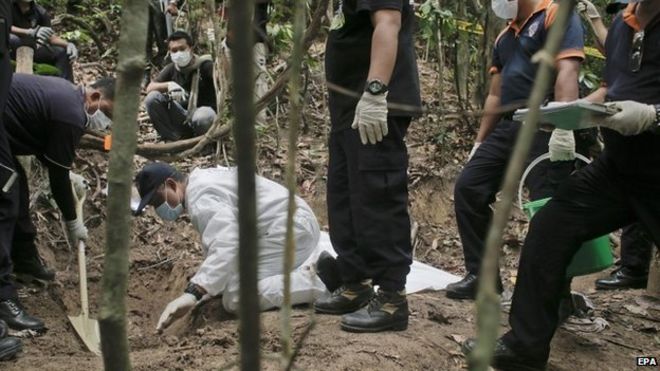
Malaysia finds 24 more bodies of human trafficking victims


Malaysian police say they have found another 24 bodies of suspected human trafficking victims in jungles bordering Thailand.

Authorities in May said they discovered 139 suspected graves in abandoned jungle camps in northern Perlis state, a remote area bordering Thailand that trafficking syndicates used as a transit point.

Most were believed to be from Burma's persecuted Rohingya minority and impoverished migrants from Bangladesh.

Another 24 bodies have been discovered this week, in addition to 106 bodies found earlier, police said. The bodies have been sent for post-mortem examinations, they added.

The discoveries in northern Malaysia followed similar revelations earlier in May in Thailand, where police unearthed 36 bodies from shallow graves in seven abandoned camps on the Thai side of the border.

The discoveries have exposed hidden networks of jungle camps run by human smugglers, who have for years held countless desperate people captive while extorting ransoms from their families.

Most of the victims were part of a wave of people who fled their homelands to reach countries such as Malaysia, where they hoped to find work or live freely.

Human rights groups and activists say the area along the Thai-Malaysia border has been used for years to smuggle migrants and refugees, including Rohingya Muslims.

In many cases, they pay human smugglers thousands of pounds for passage but are instead held for weeks or months while traffickers extort more money from their families.

Rights groups say some have been beaten to death, and the Associated Press has documented other cases in which people have been enslaved on fishing boats.

Monday 24 August 2015

http://www.independent.ie/world-news/malaysia-finds-24-more-bodies-of-human-trafficking-victims-31471220.html

continue reading

Technology a vital tool in identifying remains


It’s almost a clichรฉ: The body was identified through dental records. That has been easier said than done in B.C. until very recently and is still problematic in much of Canada.

Canadian authorities have been far less precise about describing teeth than TV detective shows lead people to believe.

At one point, U.S. authorities suggested they were wary about counting Canadians as possibilities for unidentified human remains south of the border because there was such a big gap in relevant information available about their teeth, said RCMP Cpl. Kelly Risling of the B.C. Police Missing Persons Centre.

“Dental data is a cornerstone of forensic identification,” yet dental codes in Canada recorded just three kinds of teeth: missing, virgin and treated. The treatment was not specified as to the seven surfaces of each tooth, he said.

“I wanted to see our dental coding system brought more into the future, and now dental fillings are identified,” Risling said.

“Instead of just three codes, you’re going to have up to seven codes associated with a tooth,” he said.

Moreover, there is now a B.C. policy that dental information on missing persons must be sent to the provincial dental database and that dental profiles of unidentified remains be searchable.

“So we’re able to match forensically the dental information of missing persons against unidentified bodies. We’re the only province in Canada right now that’s doing that,” Risling said. “The system that was settled on was a system called Plass Data DVI. Plass is a disaster-victim identification software that is utilized by INTERPOL. It was utilized in Thailand following the tsunami in 2005. It proved to be an effective method of cataloguing dental information in order to perform dental comparisons with the goal of ultimately obtaining the identification of various unidentified victims.”

Dr. Tom Routledge, team leader for the British Columbia Forensic Odontology Response Team, or BC-FORT, is manager of the database, created about four years ago.

Outside B.C., there is no national repository of dental information, meaning that if the name of the dentist of a missing person or unidentified remains is not known, there isn’t much that can be done by way of identification.

Dr. David Sweet, a dentistry professor at the University of British Columbia affiliated with INTERPOL and head of the Bureau of Legal Dentistry, has also been enlisted to help identify missing persons.

According to UBC’s website, the bureau is “the first and only laboratory in North America that is dedicated to full-time forensic dentistry research, casework and graduate teaching.”

B.C. dentists are no longer left to guess what police need in terms of dental records.

Police now attend dental offices armed with a letter signed from Sweet asking them to turn over all original dental information to the officer in front of them. That data is couriered to BC-FORT and entered into the Provincial Dental Data Base for comparison against available dental profiles of unidentified bodies throughout B.C., Risling said. No dental information is entered on the Canadian Police Information Centre or the U.S. National Crime Information Centtre without the data having been reviewed and transcribed by BC-FORT, he said.

Dental records are just one improvement B.C. has made in recent years to speed identification of human remains.

The coroners service requires very particular types of information to make a targeted comparison. Risling developed an intake process that is now RCMP policy and is followed — but not mandated — by the majority of municipal police forces.

The intake policy states that every person missing for more than 90 days must have intake information submitted to the B.C. Police Missing Persons Centre. That includes a Missing Persons Query form — an MPQ — that contains date of birth, next of kin and considerable physical information, including surgeries, scars, tattoos, dental work and surgical implants that could be identified via manufacturers’ serial numbers.

Prior to the policy’s implementation, it was suggested that within 90 days, police get family DNA, ideally taken from a parent, and dental information. Now these efforts are a must-do, and Risling stressed that DNA collected for identification purposes will not be used in criminal cases. Families of missing persons sometimes don’t realize the significance of providing this information, he said.

“They’re often reluctant and sometimes they downright refuse when it comes to providing such things as DNA.” Without such information, authorities must keep open files that could have been eliminated via DNA matches.

“And that is a huge draw on our resources,” Risling said.

Also mandatory are the GPS co-ordinates of where the missing person was last seen.

The MPQ for Kenneth Boseley was submitted this year.

Using the physical profile of the body and the geographical co-ordinates of View Street, the Identification and Disaster Response Unit of the B.C. Coroners Service was able to draw a correlation between a missing person’s last-known location and the location of this deceased individual, who was then identified, Risling said.

Fingerprints ultimately led to the identification, with considerable credit going to Det. Const. Chantal Ziegler, the Victoria police investigator working with the team.

After the correlation was drawn between the remains and the missing person, it was a matter of hunting down Boseley’s fingerprints that had been on file with local authorities.

One change Risling is still working on: Seeing whether a specialist can modify photos of an unidentified dead person sufficiently to warrant release to the public in the interest of identification.

Monday 24 August 2015

http://www.timescolonist.com/technology-a-vital-tool-in-identifying-remains-1.2038488

continue reading

12 bodies identified after Papua plane crash


Indonesian police have identified 12 of the victims of a Trigana Air crash in its Papua region a week ago.

The identification of victims from a Trigana Air plane that crashed last week in Pegunungan Bintang regency, Papua, has encountered slow progress as the National Police’s Disaster Victims Identification (DVI) team, as of the weekend, had only managed to identify 12 out of the 54 bodies recovered from the crash site. “Three days after starting the [victim] identification process, our team has managed to identify 12 victims. Four bodies were identified on the first day, three on the second day and five on the third day,” the police’s Medical Center head Brig. Gen. Arthur Tampi said on Saturday. The Trigana Air ATR 42 plane was on its way from Sentani Airport in Jayapura at 2:22 p.m. on Sunday and was supposed to have arrived at Oksibil Airport at 3:15 p.m. The bodies of all 54 people aboard were finally found on Tuesday in a forested area near Oksibil city of Papua. Arthur said the DVI team, as of the weekend, had tried to identify 27 bodies but had only managed to name 12 of them. He said the DNA samples taken from the first 15 unidentified bodies had also been sent to the National Police’s Forensic Laboratory in Jakarta for DNA testing. “Many of the bodies were severely burned, making it difficult for us to identify them using primary or secondary data,” he said. 54 people were killed when the plane crashed in bad weather near Oksibil on a flight from Jayapura.

The Jakarta Post reports the police Disaster Victim Identification team has handed over the bodies of the 12 victims to their families.

The police say the poor condition of the bodies which were burned is hampering identification.

Monday 24 August 2015

http://www.radionz.co.nz/international/pacific-news/282260/12-bodies-identified-after-papua-plane-crash

http://www.thejakartapost.com/news/2015/08/24/island-focus-12-plane-crash-victims-identified-42-more-go.html

continue reading

Friday, 21 August 2015

Netherlands: Urk fisherman identified after more than 47 years


[Translated from Dutch]
More than 47 years after the Urk fishing vessel UK 91 with five crew on board perished, one of the passengers has been identified as 28-year-old Albert Zwaan. He remained unidentified and buried in a special cemetery in Schiermonnikoog, the municipality of Urk confirmed Friday.

The identification was done by DNA testing in collaboration with the Dutch Forensic Institute (NFI). The Fisherman's family had provided a DNA sample in June this year and then compared with genetic material in the database for missing persons. "There was a quick match," said Izanne Linden of the cold case team central Netherlands.

UK 91 sank during a storm on January 24, 1968 about 20 kilometers north of Ameland. A corpse washed ashore on Schiermonnikoog months later, but could not be identified with the technology at that time and it could not be established who he was. The identity has now been confirmed as Albert Zwaan.

The cold case team and the NFI went to Urk this summer to collect DNA samples. "Family members of 32 missing fishermen were given the opportunity to donate DNA," says De Wit-Linden. "Many people took that opportunity."

The cemetery on Schiermonnikoog exhumed five graves last year to collect DNA material from the unidentified remains. For reasons of privacy, the cold case team can not say if families of the other crew members of the UK 91, which have not been found either, have provided their DNA.

The identification is part of a major project to identify seven hundred unknown bodies buried in the Netherlands.

Friday 21 August 2015

http://www.telegraaf.nl/binnenland/24400047/__Visser_na_47_jaar_geidentificeerd__.html

continue reading

Indonesia concludes crashed plane recovery efforts


Indonesia’s search and rescue agency has concluded operations involving a plane that crashed in the mountains of eastern Papua, following the recovery of the 54 victims on board and the black box.

The bodies of all 54 people killed in a plane crash in eastern Indonesia have been recovered from a remote jungle site and flown to hospital, an official said yesterday. Authorities had initially hoped to use helicopters to transport the remains of last Sunday’s crash from the site in Papua province, but bad weather meant the bodies had to be carried on foot out of the jungle.

Henry Bambang Soelistyo, the agency’s chief, confirmed to Anadolu Agency on Friday that efforts had ended after the discovery Thursday of the flight data recorder that had been missing since the plane crashed last weekend.

Hundreds of locals and rescuers were involved in the arduous task of taking the bodies about 15km to the settlement of Oksibil, the intended destination of the Trigana Air plane.

Captain Beni Sumaryanto, Trigana Air’s service director of operations, said all the bodies had been recovered, and had now been flown on to the Papuan capital Jayapura.

“They are now in the police hospital at Jayapura for identification,” he said. “After that they will be given to the families.”

The ATR 42-300 plane had set off from Jayapura on what was supposed to be a 45-minute flight to Oksibil, but lost contact 10 minutes before landing as it sought to descend in heavy cloud and rain.

When rescuers reached the crash site two days later, they found the twin-turboprop aircraft in pieces scattered across a fire-blackened clearing, and the bodies of the 49 passengers and five crew who had been aboard.

"During the five days of operation, everyone worked professionally. Thanks to all team members," Soelistyo said.

He added that Disaster Victim Identification teams had begun to identify the recovered bodies.

As of early Friday, seven victims -- including a flight attendant and a postal worker who had been transporting around 6.5 billion rupiah ($470,000) to be distributed to the poor in the region -- had been identified, Detik.com reported.

Tatang Kurniadi, National Committee on the Safety of Transport chief, told Anadolu Agency that they would prepare a preliminary report on the contents of the black box before submitting the recorders to the International Civil Aviation Organization.

The report, however, will take between six months and one year to complete.

Benny Sumaryanto, Trigana Air Service director of operations, told Anadolu Agency that the legal heirs of each passenger would receive compensation worth 1.25 billion rupiah (almost $89,700).

"The compensation will be given for all passengers on board, including the crew," he said.

The flight crashed Sunday around 7 miles from an airport in Oksibil -- a remote settlement near the border with Papua New Guinea.

Ground rescuers had traipsed through thick vegetation in the Bintang Mountains Regency for recovery operations at the spot, which is at an altitude of around 2,529 meters (8,300 feet).

Meanwhile, a spokesman for the Indonesian postal service said Friday that of the 6.5 rupiah billion being transported on the flight, only 5.8 billion rupiah had been recovered by search teams.

Abu Sofyan -- who like many Indonesians uses only one name -- was quoted by Detik.com as saying that the missing cash was likely burnt, and adding that "surely no funds have been lost as it was all insured."

Friday 21 August 2015¨

http://www.aa.com.tr/en/world/578813--indonesia-concludes-crashed-plane-recovery-efforts

continue reading

Bihar: 13 feared drowned as boat capsizes in Rohtas


Thirteen persons including four women were feared drowned after a boat capsized in river Sone near Dehri-on-Sone, about 145 kms south-west of Patna. Of the 17 persons travelling on the boat, mostly vegetable growers, four were rescued.

The occupants on the boat were travelling to an island in the middle of the river for agricultural purposes when the boat met with the mishap, Dehri-on-Sone sub-divisional officer Pankaj Patel said.

"The boat capsized in the swirling waters. Till now bodies of four women have been found" Patel said.


The occupants were residents of Tar Bungalow and Shiv Ganj localities at Dehri. Search operations are underway to find the missing women and help of local divers and NDRF team is being taken to locate other missing persons, SP Manavjit Singh Dhillon said. DM Sandeep Kumar R Pudakalkatti is also camping on the spot.

Friday 21 August 2015

http://www.hindustantimes.com/india-news/bihar-4-women-drown-5-missing-as-boat-capsizes-in-rohtas/article1-1382154.aspx

continue reading

MH17: Bones buried two-feet deep in crash site


The impact of fire and fall during the Malaysia Airlines flight MH17 tragedy had caused some of the bones of the victims to be buried as deep as two feet underground, said D13 (Bank Data/DNA) chief assistant director, ACP Hussein Omar Khan.

The Royal Malaysian Police Disaster Victim Identification (DVI) commander for the MH17 tragedy said the victims' bones were found buried in the ground when the recovery team made its final mission in April this year.

"Until April this year, only 296 victims had positive identification while the other two victims were unidentified.

“Therefore, the recovery team made a final mission in April this year," he said, adding that only the Netherlands and Malaysia went on this final mission as Australia felt it was highly risky.

"We used armoured and bullet-proof cars to get into the crash site," he recalled in his talk titled 'Mass Fatality Investigation: The MH17 Experience' at the International Conference on Environmental Forensics organised by Universiti Putra Malaysia on Thursday.

The Malaysia Airlines Boeing 777 plane was en route to Kuala Lumpur from Amsterdam when it was brought down over eastern Ukraine on July 17, 2014, killing all 298 people on board.

Hussein said during the final mission, the recovery team had to dig the crash site area as some of the bones were found to be buried in the soil.

"Archaeology forensics was used in the search this time. It was surprising to find bones 40cm and two-feet deep in the ground," he said.

Hussein said after the final mission, the recovery team believed the last two victims were identified and 99 per cent of the recovery operation was completed.

"Now grass has grown on the crash site and it is unlikely the recovery team will go there again unless there is any necessity," he added

Friday 21 August 2015

http://www.thestar.com.my/News/Nation/2015/08/20/MH17-Bodies-buried-two-feet-deep/

continue reading

Police DVI team identifies four bodies


The National Police Disaster Victims Identification (DVI) team has identified four victims from the Trigana Air plane that crashed in Pegunungan Bintang regency, Papua, on Sunday.

During a press conference at the Bhayangkara Police Hospital In Ja-yapura on Thursday, the head of the National Police Medical Center, Brig. Gen. Arthur Tampi, said the four victims were identified from their medical records and belongings.

Earlier, the DVI team had taken DNA samples from relatives of 53 of the 54 victims, but had yet to take samples from the relatives of Mario, a Trigana Air mechanic, who were still to arrive from Jayapura.“We target to identify 10 bodies daily,” said Tampi.

According to Trigana Air operational director Benny Sumaryanto, Trigana Air will cover the costs of transporting the bodies to their home towns.The heirs of each victim will get Rp 1.35 billion (US$100,000) from Trigana Air and Rp 100 million from state insurance firm PT Jasa Raharja in compensation.

Benny said that the compensation would be handed over after all the required data was provided. “It may take three to four weeks to deliver the compensation because we still need identification, such as birth certificates, identity cards and household cards, so as to prevent mistakes when handing over the compensation,” said Benny.

Benny said that currently the families of all the passengers and crew members were already in Jayapura. All the victims are currently being identified at the Bhayangkara Police Hospital.

As many as 50 body bags were transported from Oksibil to Jayapura on Thursday by Trigana Air planes and an Indonesian Military (TNI) MI helicopter.

“All the bodies have already arrived at the hospital for identification,” said Papua Police chief Brig. Gen. Paulus Waterpauw.Families of victims who have yet been identified have been assembled at the Tongkonan building, owned by the Toraja community association, located 200 meters from the hospital.“They are given psychological counselling in addressing the disaster they’re facing,” said Papua Police chief spokesman Sr. Comr. Rudolf Patrick.

Separately, Papua Police deputy chief Brig. Gen. Rudolf Rodja said the search and rescue team had found the flight data recorder, part of the black box, which is to be sent to Jakarta on Friday. National Search and Rescue Agency (Basarnas) head Air Marshal FHB Sulistyo had earlier handed over the plane’s flight cockpit recorder to the National Transportation Safety Committee.

Friday 21 August 2015

http://www.thejakartapost.com/news/2015/08/21/police-dvi-team-identifies-four-bodies.html

continue reading

Thursday, 20 August 2015

All Indonesia plane crash bodies recovered


The bodies of all 54 people killed in a plane crash in eastern Indonesia have been recovered from a remote jungle site and flown to hospital, an official says.

Authorities had initially hoped to use helicopters to transport the remains of Sunday's crash (local time) from the site in Papua province, but bad weather meant the bodies had to be carried on foot out of the jungle.

Hundreds of locals and rescuers were involved in the arduous task of taking the bodies about 15 kilometres to the settlement of Oksibil, the intended destination of the Trigana Air plane.

Captain Beni Sumaryanto, Trigana Air's service director of operations, said all the bodies had been recovered, and had now been flown on to the Papuan capital Jayapura.

"They are now in the police hospital at Jayapura for identification," he told AFP. "After that they will be given to the families."

The ATR 42-300 plane had set off from Jayapura on what was supposed to be a 45-minute flight to Oksibil, but lost contact 10 minutes before landing as it sought to descend in heavy cloud and rain.

When rescuers reached the crash site two days later, they found the twin-turboprop aircraft in pieces scattered across a fire-blackened clearing, and the bodies of the 49 passengers and five crew who had been aboard.

Investigators are still combing the crash site for one of the plane's flight data recorders, after having recovered the aircraft's other "black box", the cockpit voice recorder, earlier this week.

The devices should provide vital clues about what caused the crash.

Thursday 20 August 2015

http://www.3news.co.nz/world/all-indon-plane-crash-bodies-recovered-2015082020

continue reading

At least 13 killed in landslide in southwest China


Thirteen people have been killed in a village in southwestern China after heavy rain created a huge landslide.

Eleven people are also missing in the village near Luzhou in Sichuan province.

Police and firefighters are searching through the mud and rubble for survivors, the report said.

Photographs showed debris and earth piled up to two-metres high and a bus partly buried in mud.

Warning signs have been set up along several roads in the area with slopes in danger of collapsing.

Villagers whose homes were damaged or destroyed in the landslide on Monday have been housed in temporary shelters or are staying with friends or relatives, the report said.

Twelve of the bodies have been identified.

The village struck by the landslide houses member of the Miao ethnic minority group.

At least 28 people were killed in flooding and landslides in Sichuan province last month.

Thursday 20 August 2015

http://www.scmp.com/news/china/society/article/1851048/least-13-killed-landslide-southwest-china

continue reading

First bodies recovered from Indonesia plane crash site


The first bodies of 54 people killed when a plane went down in eastern Indonesia were Wednesday carried from the remote crash site after bad weather hampered efforts to airlift them.

Authorities also revealed rescuers were still looking for one of the Trigana Air plane's two "black boxes", the flight data recorder, after initially saying that both had been found.

The remains of 17 people who died when the plane crashed during a short flight in bad weather Sunday were taken by hundreds of locals and rescuers through jungle and over mountains in Papua province.

The bodies arrived at the settlement of Oksibil, the intended destination of the ATR 42-300 plane, after a gruelling, hours-long journey.

Four bodies had already been flown on to Papua's capital Jayapura while the other 13 were still in the local hospital, transport ministry spokesman J. A. Barata told AFP. The recovery effort was halted at nightfall and will resume Thursday.

Authorities had initially hoped to use helicopters to airlift the bodies from the site, but bad weather made it too dangerous to fly in the area Wednesday.

"The current conditions make it impossible for us to use helicopters, so we have to do it via land," said local military spokesman Pudji Teguh Rahardjo.

Officials initially believed that both black boxes -- the flight data recorder and the cockpit voice recorder -- had been found in the wreckage.

But transport ministry spokesman J. A. Barata said Wednesday the flight data recorder, which takes readings from many different parts of the aircraft, had not yet been recovered.

The tragedy was just the latest air accident in Indonesia, which has a poor aviation safety record and has suffered major disasters in recent months, including the crash of an AirAsia plane in December with the loss of 162 lives.

It took rescuers two days to reach the site, about 15 kilometres (nine miles) from Oksibil, after initial efforts were hindered by the rough terrain and bad weather.

They found the twin-turboprop aircraft in pieces scattered across a fire-blackened clearing, and the bodies of the 49 passengers and five crew who had been aboard.

They also recovered some of the 6.5 billion rupiah ($470,000) in government social assistance funds that was being transported for distribution to poor families. Some of the money was badly burnt.

A team of three investigators from France's BEA agency, which probes air accidents, and four technical advisors from ATR, a European plane maker based in France, is heading to Indonesia to look into the accident.

The plane had set off from Jayapura on what was supposed to be a 45-minute flight to Oksibil, but lost contact 10 minutes before landing as it sought to descend in heavy cloud and rain.

The airline has said the accident was likely caused by bad weather.

Trigana Air, a small domestic Indonesian airline, has experienced a string of serious incidents and is banned from flying in European Union airspace.

Thursday 10 August 2015

http://news.yahoo.com/bad-weather-hampers-recovery-efforts-indonesia-plane-crash-071737811.html

continue reading

Forensic Team Finds Mass Grave in Chungui, Ayacucho


A team of forensic specialists have found the remains of 50 men, women and children in Ayacucho, in five mass graves outside the town of Oronccoy.

The investigation has shown that the bodies were buried in 1985, at the height of the internal conflict between Shining Path rebels and the military and police. In this particular case, the victims were executed by members of the special police force known as the Sinchis.

The forensic work at the site, in a remote area far from roads and communication, will conclude on August 28.

According to the district attorney, witnesses have stated that the murders were committed before dawn one morning n January 1985 at Estaca Parada, some three hours from Oronccoy. Because of the fear of attacks either by Shining Path or the military, several families had chosen to live together.

Oronccoy is in the district of Chungui, which in 2013 gave a proper burial to the identified bodies of 79 people killed between 1984 and 1985 by both the Shining Path and the military.

The district was the hardest hit in the conflict and lost 17 percent of its population — more than 1,300 people— in what Peru’s Truth and Reconciliation Commission called “the most cruel and devastating bloodbath” perpetrated by the “insanity of Shining Path and the brutal repression of the military and police forces.”

Oronccoy was abandoned by most of its townspeople in the 1980s, but many of them slowly returned a decade later in a government-supported program to reclaim their homes and farms.

Thursday 20 August 2015

http://www.peruviantimes.com/20/forensic-team-finds-mass-grave-in-chungui-ayacucho/24773/

continue reading

China landslide rescue suspended for safety concern


Rescue work has been suspended amid fears of more slides at a mining site in Shaanxi where 56 people remain missing.

Zhao Fasuo with the Chinese Commission for Disaster Reduction says the danger for search crews at the site is just too high at the moment.

"Too much digging among the rubble of the original slide has the potential to cause movement of on the hills behind. So we need to be aware of this. Of course we are trying to do everything we can to find the bodies of those still missing. However, we have to do this both responsibly and scientifically for the safety of those on the ground."

At the same time, forecasters are warning of heavy rains in the region for the next 2 to 3-days, leading to fears of even more slides taking place.

Official 12 people are confirmed dead following last week's deadly slide, which hit overnight on Monday while crews were sleeping in their dorms.

10 managed to escape, while 4 others were initially pulled from the rubble.

However, given the time which has passed since the slide hit, its highly unlikely any of the 56 others still listed as missing will be found alive.

Thursday 20 August 2015

http://english.cri.cn/12394/2015/08/20/4021s892397.htm

continue reading