Monday, 20 April 2015

India: Tracking missing persons made easier


Tracking missing persons and identifying unidentified bodies have become easier for the police with the availability of information online. The police are now taking steps to empower the public in getting access to the same content so that the common man can track missing persons online.

Earlier the respective police station would send the pictures of missing persons or unidentified bodies for publishing in newspapers to identify or trace the persons. It was also manually sent to the nearby districts and the pictures were verified with that of the list of missing persons or unidentified bodies in those districts. But this was a highly cumbersome and time consuming process. Now, the pictures and the details of missing persons and unidentified bodies are uploaded online by the respective police stations soon after they received a complaint.

A senior police officer in the city said that the latest process has been of great help to the department over the last five years. The local police try to match the identity of the unidentified bodies here with the identity of persons who went missing in other places with the data available on the Internet. This has also helped in detecting such cases.

The police said that the recent effort to publicise the websites among the public was done to help them get direct access to information available to the police themselves. While the police have publicised a handful of websites where public could search for missing persons or unidentified bodies, the Crime and Criminal Tracking Network & Systems (CCTNS) system website of the police http://eservices.tnpolice.gov.in has more options using which the search could be made. Some of the search features that the website has are gender, age group, height range, date from which the person was missing, complexion, other visible identification marks and colour of dress of the missing person last seen wearing.

Monday 20 April 2015

http://www.thehindu.com/news/national/tamil-nadu/tracking-missing-persons-made-easier/article7120625.ece

continue reading

Bodies from migrant boat disaster brought to Malta, distress call from another boat reported


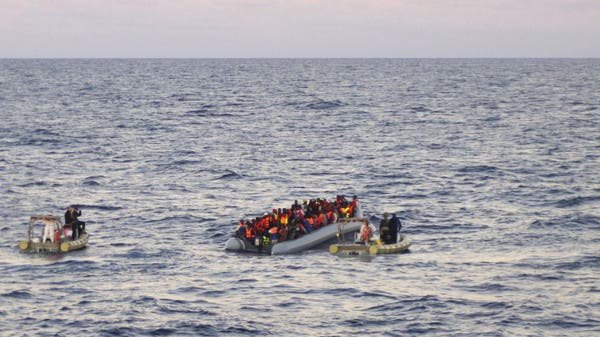
An Italian patrol ship arrived in Malta on Monday with 24 corpses recovered out of hundreds feared drowned after a migrant boat capsized in the Mediterranean, in one of the worst disasters yet in a growing humanitarian crisis.

The death toll from Sunday's shipwreck off the coast of Libya was uncertain after officials said there had been at least 700 people on board, some reportedly locked in the hold.

Italian media said a Bangladeshi survivor brought by helicopter to hospital in Sicily told police there had been 950 passengers on the boat, which sank when people on board rushed to one side to attract attention from a passing merchant ship.

A toll of that magnitude would push to over 1,500 the number of people who have died so far this year packed into rickety boats by human traffickers to cross the Mediterranean in a bid to reach a better life in Europe.

Malta's Prime Minister Joseph Muscat said on Monday the United Nations should mandate a force to intervene directly in Libya to disrupt or attack the traffickers and stop the boats from setting off.

The Italian coast guard said on Monday 28 people had been saved from where the ship sank, 70 miles (110 km) off the coast of Libya. The survivors are on the same boat as the victims and will be brought to Italy later in the day.

Lawlessness in Libya, where two rival governments are fighting for control, has made it almost impossible to police the criminal gangs who can charge thousands of dollars to bring mainly sub-Saharan Africans to Europe.

"I believe that the (European) focus should be what should be done in Libya to stop the boats," Maltese premier Muscat said. "Unless something is done about Libya, these scenes will be repeating themselves."

Before Sunday's disaster, the International Organisation for Migration estimated around 20,000 migrants had reached the Italian coast this year, and 900 had died.

Italy closed dedicated maritime search and rescue mission "Mare Nostrum" late last year, making way for a Europe-wide border control operation called "Triton" which has been criticised for having a much smaller budget and narrower remit.

EU foreign ministers will discuss the immigration crisis at a meeting in Luxembourg on Monday. Muscat will be in Rome on Monday to meet with Italian Prime Minister Matteo Renzi, followed by a news conference.

Distress calls from another migrant boat reported

A sinking boat, thought to be carrying more than 300 people across the Mediterranean Sea, is sending out distress signals, the International Organisation for Migration (IOM) is reporting.

News of the latest incident at sea comes after more than 700 people were feared to have drowned on Saturday when an overcrowded boat capsized off Libya. Survivors have since said that some 900 people could have been on the vessel. This included between 40 to 50 children and 200 women, survivors told Italian media.

On Monday, the IOM chief William Lacy Swing called for the immediate restoration of Mare Nostrum, an Italian navy search-and-rescue operation which was stopped last year due to operating costs and political pressure to curb the flow of migration via the perilous Mediterranean crossing from war-torn Libya.

Swing also urged other European countries to support the operation.

EU ministers headed on Monday into crisis talks to discuss what a UN refugee agency UNHCR spokeswoman called "the worst massacre ever seen in the Mediterranean".

Carlotta Sami, the UNHCR spokeswoman, said survivors' testimonies suggested there had been around 700 people on board the 20-metre (70-foot) fishing boat when it keeled over in darkness overnight.

But a Bangladeshi survivor, who was taken to hospital by helicopter in Sicily,put the numbers on board at 950, and said 200 women and nearly 50 children had been among them, according to prosecutors in the Italian city of Catania.

Only 28 people are thought to have survived the wreck, Italian coastguard officials said.

The latest disaster comes after a week in which two other migrant shipwrecks left an estimated 450 people dead, with increasing boatloads coming from Libya as the North African country falls deeper into chaos.

"Get Mare Nostrum back out there, give it the support it needs to save these lives," IOM's Swing told AFP in an interview on the sidelines of a conference in the Indonesian capital Jakarta. "Mare Nostrum saved 200,000 lives between October 2013 and December 2014." He said that Triton, a much smaller EU-run operation that replaced the Italian one, was "not adequate".

"They don't have a mandate, they're a border protection agency, not a life-saving agency," he said, adding that Triton was not patrolling in the deep waters of the Mediterranean and did not have sufficient equipment.

Italy scaled back Mare Nostrum after failing to persuade its European partners to help meet its operating costs of $9.7 million a month amid divisions over whether the mission was unintentionally encouraging migrants to attempt the crossing.

However, Swing dismissed the claims and urged European countries to support the programme.

"There are 27 other members of the European Union, surely we can share responsibility for this and it would not cost anybody too much," he said. Monday 20 April 2015


http://uk.reuters.com/article/2015/04/20/uk-europe-migrants-italy-idUKKBN0NB0OQ20150420

http://www.middleeasteye.net/news/migration-agency-urges-restoration-rescue-operation-after-shipwreck-2041488188

continue reading

Mediterranean search under way for 700 migrants feared lost at sea


Italy launched a massive search and rescue operation in the Mediterranean Sunday, after an overcrowded boat carrying hundreds of migrants capsized overnight off the coast of Libya. As many as 700 people are feared dead.

By nightfall Sunday, authorities said 28 people had been rescued about 200 kilometers south of the Italian island of Lampedusa, and another 24 bodies were recovered. Rescue workers said the majority of the missing appeared trapped in the 20-meter vessel at the bottom of the sea.

The boat capsized 193 kilometers south of the southern Italian island of Lampedusa, when it is believed migrants moved to one side of the vessel as a merchant ship approached.

If confirmed, the latest drownings would push the 2015 Mediterranean death toll past 1,500, compared to about 90 such refugee deaths in the same period a year ago.

Analysts say they expect human trafficking in the Mediterranean to worsen in the coming months, as warming weather and the promise of European stability and prosperity lure desperate refugees from Africa and beyond.

As details of Sunday's disaster spread, government leaders across Western Europe called for emergency talks to address the crisis.

"We have said too many times, never again," European Union foreign policy chief Federica Mogherini said in a statement. "Now is the time for the European Union as such to tackle these tragedies without delay."

In a televised address, Greek Prime Minister Alexis Tsipras urged the European Union to face the crisis head on. "The Mediterranean must stop being a graveyard sea, and southern European countries a storage [for] human souls," he said.

French President Francois Hollande directed his wrath at sea smugglers, who offer transit to desperate refugees seeking to flee Africa, South Asia and parts of the Middle East for the relative safety and prosperity of Europe.

But the huge rise in deaths in 2015, and the largely similar levels of arrivals in Italy, suggest the tactic has not worked. In Tripoli on Saturday, a smuggler told the Guardian he was not aware of Mare Nostrum in the first place, nor knew that it had finished.

“I’ve not heard of that. What is that – from 2009?” said the smuggler, who says his network organises 20 trips a week during the busy summer months. “Many people would go on the boats, even if they didn’t have any rescue operations.”

Migrants interviewed this week in Libya, the main launching pad for those seeking to reach Europe, say the demand will continue despite the deaths. Mohamed Abdallah, a 21-year-old from Darfur who fled war at home to find another war in Libya, said he could not stay in Libya, nor return to Sudan.

“There is a war in my country, there’s no security, no equality, no freedom,” Abdallah said. “But if I stay here, it’s just like my country … I need to go to Europe.”

Save the Children, one of the primary aid agencies working with migrants arriving in Italy, called on EU leaders to hold crisis talks in the next 48 hours and to resume search-and-rescue operations.

“It is time to put humanity before politics and immediately restart the rescue,” the organisation said in a statement. “Europe cannot look the other way while thousands die on our shores.”

Italy’s prime minister, Matteo Renzi, called for an urgent meeting of EU leaders this week.

“How can it be that we daily are witnessing a tragedy?” Renzi asked, before convening his own cabinet for an emergency meeting.

The EU commission for migration, Dimitris Avramopoulos, is due in Italy on Thursday. The EU indicated it would convene ministers to reevaluate its approach towards the crisis on its doorstep.

In Misrata, a major Libyan port, coastguards told the Guardian that the smuggling trips would continue to rise because Libyan officials were woefully under-resourced.

In all of western Libya, the area where the people-smugglers operate, coastguards have just three operational boats. Another is broken, and four more are in Italy for repairs. Libyans say they have been told they will not be returned until after the conclusion of peace talks between the country’s two rival governments.

“There is a substantial increase this year,” said Captain Tawfik al-Skail, deputy head of the Misratan coastguard. “And come summer, with the better weather, if there isn’t immediate assistance and help from the EU, then there will be an overwhelming increase.”

Save the Children has been on the front lines in the migrant crisis, and said it was growing increasingly worried about an expected increase in children making the dangerous journey across the Mediterranean.

On Friday, it reported that nearly two dozen badly burned Eritreans had landed in Lampedusa that morning, the victims of a chemical fire in the Libyan factory where they were held before their departure.

According to witness accounts, five people, including a baby, died in the blast – which occurred after a gas canister exploded – and the rest of the victims were not taken to hospital by the smugglers holding them. Instead, the injured were put on a ship bound for Italy a few days later. The victims were airlifted to hospitals across Sicily on their arrival.

The story was confirmed by UNHCR, which also interviewed survivors

Monday 20 April 2015

http://www.theguardian.com/world/2015/apr/19/700-migrants-feared-dead-mediterranean-shipwreck-worst-yet

continue reading

Ukrainian Volunteers Search for Bodies of Missing Soldiers


As the cease-fire becomes more fragile in eastern Ukraine, a team of volunteer body collectors travels to the small village of Savur Mohyla in the what pro-Russian separatists call the Donetsk Peoples Republic - to retrieve bodies of fallen Ukrainian servicemen from rebel-held territories.

With a recent escalation in violence in eastern Ukraine's separatist conflict, the number of dead grows. Many fallen soldiers are buried without record, often in a grave without a name or tombstone. On the road to the village of Savur Mohyla near the Russian border, a Ukrainian volunteer team called Black Tulip is on a mission to collect bodies of fallen Ukraine government soldiers from rebel-held territory.

Little remains of the military positions that were here. But there is still danger from land mines and booby traps. Still, the team does this grim work without pay.

"There is one body here, we received information from local citizens, it was a fight over here in the end of August. Ukrainian soldiers were pushed back and one of the soldiers was left here," said Black Tulip volunteer Aleksey.

Despite coming from Ukrainian government-held territory, the team is able to work in separatist-controlled land through cooperation with the militaries on both sides.

"We transmit bodies from the Ukrainian side to the DNR [separatist] side and vice versa. There is an agreement between the government of DNR and the Ukrainian Ministry of Defense, and when this agreement is confirmed, on that day we are able to cross the border," said Aleksey.

The separatists' commissioner for missing people, Lilia Radionova, helps coordinate the team. She says she gets thousands of request every day to help find missing persons - her desk piled with letters and photos from family members.

"I received a lot of phone calls from Ukrainian soldiers' relatives, mothers, fathers, wives. This is a Ukrainian soldiers' list of lost in action," said Radionova.

Although February's cease-fire agreement called for returning casualties and prisoners of war, getting permission for the team to work can be difficult. But Radionova says cooperation between the two sides is improving.

"When we submitted 22 bodies to them from Donetsk airport something changed, after this ultimatum we demanded something changed. Since January, we could not take our fallen from Volnovakha and now finally we received the bodies, thanks to them but at the moment there are many more bodies...Due to joint efforts we will have an agreement in future," she said.

The volunteers return with a body they think may be a rebel soldier. They say they will hand it to authorities for identification.

"We apply visual inspection of the body, sometimes there are some documents in pockets and we can use it to identify a person. If there are no documents, the only help is DNA analysis," said Aleksey.

More than 6,000 fighters and civilians have died in the conflict in eastern Ukraine over the past year, and with frequent cease-fire violations, the team's work is far from over.

Monday 20 April 2015

http://www.voanews.com/content/ukrainian-volunteers-search-for-bodies-of-missing-soldiers/2722787.html

continue reading

More MH17 remains and personal effects recovered


Experts from the Dutch repatriation mission have recovered more remains at the crash site in eastern Ukraine on Sunday, where the site where flight MH17 crashed on July 17 last year according to a spokeswoman for the Ministry of Foreign Affairs.

On the fourth day of the mission, the salvage workers worked without incident. "Consistent with our analysis we found at the burn site much remains," said mission leader Pieter-Jaap Aalbersberg. "We are working hard. The conditions are not easy. It rains a lot and the temperatures are low, about 5 degrees. "

The salvage mission was resumed Thursday. The operation is an attempt to recover the last human remains and personal belongings to be transported to the Netherlands. The mission could take weeks. Because of the ongoing fighting and the cold winter months it was not possible to carry out salvage work in the disaster area until this week.

(Translated from Dutch)

Monday 20 April 2015

http://www.telegraaf.nl/binnenland/23944021/__Menselijke_resten_MH17__.html

continue reading

Friday, 17 April 2015

USS Oklahoma remains to be exhumed, commingled DNA examined


The remains of nearly 400 unidentified American servicemen killed at Pearl Harbor will be exhumed, identified, and given individual burials, the US government has announced.

The bodies are those of US marines and navy personnel who were aboard the ship USS Oklahoma when it was sunk during the surprise Japanese strike on the naval base in 1941.

The destruction of the USS Oklahoma came quickly. On Dec. 7, 1941, it was hit with numerous torpedoes and bombs during Japan’s fierce and shocking bombardment of Pearl Harbor, capsizing within minutes with hundreds of Marines and sailors inside. Some 429 service members were killed, and others survived to fight back from the nearby USS Maryland, which also was under attack.

More than 70 years later, the USS Oklahoma remained at the center of a battle. On one side was the Navy, which last year told the families of some of those killed that it was flatly against DNA testing on the commingled remains of 330 unidentified service members. On the other side were families that wanted to know when the military would return the remains of their loved ones.

The Pentagon has now decided to exhume unidentified remains held at the National Memorial Cemetery of the Pacific in Honolulu, Hawaii, do DNA testing, and return any identified remains to families that want them. Some families could decide to keep their loved ones at the national cemetery in Hawaii, but in individual plots with their own marker.

Officials will use forensic analysis and DNA testing to try and identify the bodies, which were buried in coffins marked ‘unknown’.

Advances in technology are said to have made the process of identification significantly easier despite the passage of time.

“While not all families will receive an individual identification, we will strive to provide resolution to as many families as possible,” Deputy Secretary of Defence Robert Work said in a statement.

Friday 17 April 2015

http://www.forensicmag.com/news/2015/04/uss-oklahoma-remains-be-exhumed-commingled-dna-examined

http://news.usni.org/2015/04/16/under-new-policy-for-identifying-servicemen-pentagon-will-exhume-uss-oklahoma-sailors-marines

http://www.independent.co.uk/news/world/americas/four-hundred-unidentified-pearl-harbor-dead-to-be-exhumed-and-identified-us-officials-announce-10177433.html

continue reading

Dozens of migrants 'missing in new Mediterranean boat tragedy'


As many as 41 migrants have drowned after another boat carrying refugees sank in the Mediterranean, Italian media reported Thursday, one day after another boat, carrying over 500 migrants, capsized in the same region.

Four survivors told Italian police and humanitarian organisations that their inflatable vessel carrying 45 people sank on the crossing from Libya.

In a separate incident, Italian police said Thursday they had arrested 15 African Muslim migrants after witnesses said they had thrown 12 Christian passengers overboard following a brawl on a boat heading to Italy.

The victims were "of Christian faith, compared to their attackers who were of Muslim faith," police said in a statement, saying the 15 people arrested were accused of "multiple aggravated murder motivated by religious hate".

Up to 400 illegal migrants died in the Wednesday disaster, said survivors.

The Italian coastguard on Monday said they had managed to rescue 144 of the people on the sunken vessel, while nine bodies were also recovered.

The International Organization for Migration and the charity Save the Children said between 144 and 150 survivors arrived at Reggio Calabria, on Italy's southern tip, on Tuesday morning.

"There were 400 victims in this shipwreck, which occurred 24 hours after (their vessel) left the Libyan coast," Save the Children said in a statement, citing survivors.

"There were several young males, probably minors, among the victims" and also children among those rescued, the international NGO said.

Friday 17 April 2015

http://www.i24news.tv/en/news/international/middle-east/67933-150416-dozens-of-migrants-missing-in-new-mediterranean-boat-tragedy

continue reading

Relief for family members as search for MH370 continues


It was news the next-of-kin of passengers on board the missing Malaysia Airlines flight MH370 had been hoping for. During a meeting in Kuala Lumpur on Thursday (Apr 16), the Malaysian, Chinese and Australian governments decided the search for the missing flight MH370 would continue - even if nothing was found in the current search zone.

In fact, the governments said the search area would be doubled by an additional 60,000 sq km of the Southern Indian Ocean - the waters where the plane is believed to have gone down in March 2014, after being diverted off its route to Beijing.

The announcement has given family members such as Calvin Shim and Grace Nathan some comfort as many had feared the search would be called off. "I am delighted to know that the governments are extending the search," said Mr Shim, whose wife, flight attendant Christine Tan, was on the plane.

"I am also happy to know that there are plans for recovery should MH370 be found. Recovery however could mean only the black box, fuselage and I am not sure this includes bodies," Mr Shim added.

Ms Nathan, the daughter of MH370 passenger Anne Daisy, expressed relief as well. "There was a lot of apprehension and a lot of talk about the search being called off sometime before the anniversary. So this was really a big relief. I know a lot of us couldn't sleep last night, we were all really, really concerned."

The hunt for the missing Malaysia Airlines plane is now the most expensive aviation search in history. Search teams have already scoured more than 60 per cent of the current priority search zone.

But not one trace of the plane or of the 239 people onboard has been found. This has made closure difficult for their loved ones but the families say the search is important, not just for their sake.

"A much larger impact of them finding the plane is in the interest of aviation safety, so that they can produce remedial measures and prevent something like this from happening again. Because all of us are at risk till they find out exactly what happened," said Ms Nathan.

A statement by the MH370 family support group, Voice370, on Wednesday echoed the sentiment, with next-of-kin saying aviation safety was at risk as long as there are no answers as to what happened to the plane.

Friday 17 April 2015

http://www.channelnewsasia.com/news/asiapacific/relief-for-family-members/1788216.html

continue reading

Identifying the dead: Why the ICRC is increasing its forensic expertise in Africa


"We don't have a lack of disasters in Africa." That was one observation made at the 4th Annual meeting of the Africa Society of Forensic Medicine, held in Nairobi, Kenya in March. That in part explains why the ICRC recently increased its forensic capacity on the continent by hiring Stephen Fonseca to be its regional forensic coordinator for Africa, based in Pretoria, South Africa, a hub of forensic expertise and training.

Stephen flew to Nairobi again in April to assist with the management of the 148 dead bodies of people killed in a terror attack at a university in the town of Garissa. Stephen and Morris Tidball-Binz, the ICRC's lead forensic expert, talk about the growing field:

Is the ICRC's decision to increase its forensic expertise in Africa an indication of a trend, that there will be a need for more forensic expertise in coming years?

Morris: First, there is growing awareness worldwide of the need to address or deal with the dead in armed conflict. The dead feature one way or another in armed conflict, which was less the case a decade or two ago. That's linked to the fact that family and other pressure groups are stakeholders in this greater awareness. So essentially there is greater expectations and demands not only from the general public but the victims' families themselves, and growing awareness of what forensics may actually provide for redress or truth.

Can you give a concrete example?

Morris: In one sector — the aviation industry — every disaster is followed by a very thorough effort to identify and recover everyone, from reasons ranging from insurance to politics. Disaster response isn't what it used to be 20 years ago when someone might have said we only identified 50 percent of the victims. That answer is absolutely unacceptable today.

Stephen, you came to Nairobi's main city morgue after the university attack in Garissa. What did you do?

My role was to offer advice on best practices in disaster management approaches and, more specifically, management of dead bodies in an emergency. These kinds of operations tend to be rather chaotic and stressful for the managers tasked with many important responsibilities and facing enormous political and public pressure to identify all the victims as quickly as possible. I worked with three other Nairobi-based ICRC colleagues to provide the mortuary management with onsite observations related to improving operations to ensure a dignified approach to the handling of the bodies and respect for bereaved families.

In what circumstances does the ICRC deal with dead bodies?

Morris: In Africa the ICRC has directly assisted in the recovery and proper and dignified management of the dead from armed conflicts, including in South Sudan, Libya and CAR. International Humanitarian Law requires that warring parties protect the dignity of the dead, prevent their despoliation and desecration and do everything possible to search, collect and document the dead and, where possible, identify them.

We also help outside of conflict zones. In the 2010 Haiti earthquake the authorities called the ICRC because they were overwhelmed, and later that year there was a big earthquake in Chile, which has a more enhanced system, they still called us to help manage the 200-some victims from that event.

Why is the field of forensics important?

Morris: For humanitarian purposes it plays a key role in all matters related to search, recovery, dignified management and where possible identification of the dead from armed conflicts and catastrophes. The importance of the dead for the families, for the communities, is beyond discussion but also enshrined under all four Geneva Conventions.

Stephen, on your side, what motivates you in the field of forensics?

When you get to work with a family who has lost someone and has been trying to find answers for years and you find that resolution for them through your participation, whatever the activity that brings the positive identification of remains you'll want to keep doing it after. There is such an incredible feeling, there is such gratitude from the family and a real sense of fulfillment. It makes you want to get on to the next case.

Friday 17 April 2015

https://www.icrc.org/en/document/identifying-dead-why-icrc-increasing-its-forensic-expertise-africa

continue reading

Bodies of Rampura house collapse victims handed over to family


Police today handed over bodies of the 12 killed in collapse of a two storey tin structure in a marshland in Rampura area of Dhaka.

“The bodies have been handed over to families this morning,” Ataur Rahman, duty officer of Fire Service and Civil Defence, told The Daily Star Online.

Rescue operations were still underway, he said, but no more bodies were found when last contacted around 11:23am.

“We will carry out the rescue under the deputy commissioner of Dhaka until he is sure that no one is trapped under the debris,” said Maj Shakil Newaz, acting director general of Fire Service and Civil Defence.

At least 12 people, including five women, were killed as the tin structure, housing around 20 families, collapsed in a marshland around 3:00pm yesterday.

Friday 17 April 2015

http://www.thedailystar.net/city/bodies-rampura-victims-handed-over-77550

continue reading

Thursday, 16 April 2015

Two-storey tin hut collapses into lake at Dhaka’s Rampura, death toll 11


Police said 28 people lived in the hut that stood on bamboo poles at the side of an hyancith-filled lake at Hajiparha’s Jheelpar.

The incident happened around 3:30pm on Wednesday.

“The lower storey has been sucked in by the mud at the bottom of the lake,” said Rampura Police Inspector Md Alamgir Hossain.

Eleven bodies were recovered until 9pm, he told bdnews24.com.

Four Fire Service units were taking part in the rescue operations, said control room official Md Enayet Hossain.

bdnews24.com’s Staff Correspondent Kazi Mobarak Hossain reported from the scene that three divers of the Fire Service also joined the rescue efforts.

Rescuers tried to remove the tin ceilings from the mud by cutting off the bamboo poles but failed. They later used cranes to remove the frame of the hut, which was floating.

bdnews24.com photojournalist Asif Mahmud Ovee said that tow trucks were brought in around 8pm to remove collapsed hut’s frame so that the trapped could be rescued.

Rampura Police SI Abdur Rashid said bodies of two men, aged between 25 and 30, and a woman were recovered around 4:45pm.

Doctors at the Dhaka Medical College and Hospital declared dead Nizam Khan, 45, and ‘Mizan’, 35, when they were taken there, Inspector Mozammel Haque said.

Deceased Nizam’s son ‘Sabuj’ said they lived on the ground floor of the shack.

A neighbour took his father to the hospital, he said.

Fire Service officials rescued a number of survivors and sent them to hospital.

Authorities believe the death toll may rise, as many others are still feared trapped under the rubble.

Prime Minister Sheikh Hasina offered her sympathies over the casualties, according to her office’s media wing.

Nasrin Akter, sister of deceased ‘Runa’ and ‘Jakir’, said they had moved to a room of the lower storey last month and they were about to shift next month.

“The hut was so flimsy that it would shake when someone walked. We were very scared during the storm a few days ago.

“I was on the first floor when the incident happened. My husband Khokon, Runa and Jakir were on the lower storey,” she said.

Khokon was rescued alive, but her sibling were found dead.

Akter told bdnews24.com that at least 40 people were in the hut when it collapsed and half of them are still missing.

Readymade cloth worker Syed Ibrahim Ali lived in that hut with his wife, in-laws and three-brothers-in-law. He said that most of the inhabitants of the hut were garment workers.

“The incident happened in the afternoon, when a lot of the dwellers left for work after lunch. Otherwise, a lot of people would have died today,” he said, speaking to bdnews24.com.

A local, Jahangir Alam, said one Monir Mia had built the hut two years ago and rented it. He used to collect Tk 4,000 to 5,000 for each room. Mia is involved with the local Awami League and one of his brothers Tunu Mia was affiliated with the local BNP, according to locals.

None of the brothers could be contacted after the hut collapsed.

Thursday 16 April 2015

http://bdnews24.com/bangladesh/2015/04/15/two-storey-tin-hut-collapses-into-lake-at-dhakas-rampura-death-toll-11

continue reading

Hopes for retrieval of final MH17 victims as Ukraine frontline moves in renewed fighting


Dutch-led investigators hope to retrieve the remains of the final two victims of the Malaysian Airlines Flight 17 disaster, after the frontline finally moved away from a battlefield where part of the airliner crashed nine months ago.

Thirty Dutch, Australian and Malaysian experts investigating the downing of MH17 are expected to head to a new search area near the village of Petropavlivka after recent changes to the front line.

The area, where investigators believe they will find the bodies of the only two victims still unaccounted for, was previously too dangerous to access, Theo ten Haaf, an air force commander in charge of security, told Reuters. It is understood to still be heavily mined.

Malaysian airlines flight 17 was flying from Amsterdam to Kuala Lumpa when it was destroyed over eastern Ukraine on July 17, killing all 298 people on board, including 10 Britons.

It was the worst single loss of civilian life in the conflict to date, and Dutch investigators say they are looking at it as a potential war crime.

Western governments believe the airliner was shot down by separatists who thought they were targeting a Ukrainian military aircraft. Separatist leaders and Russian officials have vigorously denied that suggestion, saying it was shot down by a Ukrainian jet.

The conflict in east Ukraine erupted on year ago this week, when a group of gunmen led by Igor Strelkov, a former Russian intelligence colonel, seized the police station, secret service building, and town hall in Slavyansk on April 12.

Supported by irregular civilian volunteers, Mr Strelkov's men deposed the mayor, barricaded the roads into town, and declared allegiance to the Donetsk People's Republic, at that time a haphazard and chaotic pro-Russian movement occupying the regional administration headquarters in Donetsk, the regional capital 60 miles away.

Building seizures in several more towns in the following days led to open warfare between pro-Russian and Ukrainian forces that has killed at least 6,108 people displaced 1.2 million more, according to United Nations estimates.

The conflict has caused the deepest crisis in relations between Russia and the West since the end of the Cold War. Western governments accuse Moscow of sustaining the separatists with supplies of weapons, ammunition, and troops.

Thursday 16 April 2015

http://www.telegraph.co.uk/news/worldnews/europe/ukraine/11540572/Hopes-for-retrieval-of-final-MH17-victims-as-Ukraine-frontline-moves-in-renewed-fighting.html

continue reading

South Korea marks ferry disaster anniversary


Grief, anger and political tension coloured the first anniversary of South Korea's Sewol ferry disaster on Thursday, with complaints of continued official indifference towards the tragedy that claimed 304 lives.

Victims' families have rebuffed efforts by government leaders, including Prime Minister Lee Wan-Koo, to pay their respects, accusing them of hypocrisy and ignoring their demands for a fully independent inquiry.

The main memorial event was scheduled for the afternoon, in a remembrance hall not far from the local high school in Ansan which lost 250 of its students when the overladen Sewol sank on April 16 off the southern island of Jindo.

The hall created for the dead teenagers has been a focus of mourning ever since, but families of the victims were threatening to boycott Thursday's ceremony to push their inquiry call and demand that the 6,825-ton Sewol to be brought to the surface.

The disaster, with the loss of so many young lives, stunned the entire country, and one year later there is still a deep sense of public grievance over the perceived inadequacy of the official response.

While largely blamed on the ship's illegal redesign and overloading, the accident laid bare deeper-rooted problems of corruption, lax safety standards and regulatory failings attributed to the country's relentless push for economic growth.

"Nothing has changed," the JoongAng Daily newspaper said in an editorial Thursday, adding that promised reforms of the government had fallen "way short of changing its often wicked ways."

An editorial in the largest circulation Chosun Ilbo also concluded that "the country remains unsafe."

President Park Geun-Hye's approval ratings have only recently started to recover from the hit they took after the disaster, but she faced fresh criticism for choosing Thursday to depart on an official South America tour.

News that Park might first travel to Jindo in the morning prompted a small group of victims' relatives there to close down a small shrine in the harbor.

"They refuse to see her," a spokesman for the families, Ju Jae-Joon told AFP.

And when Prime Minister Lee went to Ansan on Thursday morning, he was turned away at the entrance to the remembrance hall by victims' relatives.

After the scheduled event in Ansan, large crowds were expected to turn out for an evening candlelight vigil in central Seoul.

Public opinion has been largely supportive of the families, although some conservative groups say left-wing organisations have hijacked the cause in an effort to embarrass the government.

The overloaded Sewol was carrying 476 people, including 325 students from the high school in Ansan, when it sank. Only 75 students survived.

A total of 295 bodies were recovered from the ferry, but nine remained unaccounted for when divers finally called off the dangerous search in November.

The families of those still missing have spearheaded the calls for the ferry to be brought to the surface -- an operation that would cost an estimated $110 million.

More than 100 relatives took a boat to the site of the disaster on Wednesday and threw white flowers into the waters, along with yellow paper boats and sweets and snacks that their children liked.

South Korean President Park Geun-hye on Thursday called for the raising and salvage of the sunken ferry Sewol "as soon as possible."

"Recently, there was an announcement that it is technically possible to salvage Sewol ferry. I believe that it is now time to earnestly prepare to salvage," Park said during a speech marking the one year anniversary of the disaster, which killed 304 people.

The President said South Korean authorities would carry out "necessary procedures swiftly so that the ferry can be salvaged as soon as possible."

Thursday 16 April 2015

http://www.gmanetwork.com/news/story/470802/news/world/grief-and-anger-as-south-korea-marks-ferry-disaster-anniversary

http://edition.cnn.com/2015/04/16/europe/south-korea-president-sewol-salvage/

continue reading

Wednesday, 15 April 2015

Letter reveals for the first time how Titanic owners demanded huge sums from grieving families to be reunited with bodies of ship's crew


An astonishing letter from the Titanic's owners to the family of a dead officer asking for a huge sum of money to return his dead body to England has been uncovered 103 years on from the tragedy.

The letter, dated May 7, 1912, was sent from White Star Lines to Christopher Moody, the brother of 24-year-old officer James Moody, who died after the Titanic hit an iceberg on its maiden voyage.

In it, company bosses demand £20 - the equivalent of £2,000 in today's money - to return his body to England, and state that Christopher Moody will have to pick up the tab from there.

The letter, from bosses at Ismay Imrie & Co, the parent company of White Star Line, read: 'We have your further letter of the 6th instant, and while we will be prepared to transport the remains of your brother across the Atlantic to either Liverpool or Southampton we regret that it is not possible for us to do any more.

'Should you after further consideration desire the remains of your Brother to be returned will you kindly telegraph us in the morning at the same time sending us a deposit of £20 for any expenses and land charges on the other Side and we will at once cable New York asking then to arrange this if practicable.


'We also think it right to point out that the arrangements and expenses for taking charge of the remains after arrival of the steamer at Liverpool or Southampton would be on your account.'

Instead, the company suggests that Mr Moody's remains be buried in Halifax with the other survivors, but they offer to send his family 'a photograph of the tombstone', if they want one.

Even more shocking is the fact that Mr Moody's body had not been recovered by the time the letter was sent, and bosses would have known that, as all remains were cataloged.

The remains of Mr Moody, who was on watch when the ship struck the iceberg and later helped passengers into the lifeboats while declining a space for himself, have never been found.

Mr Moody was among the 1,500 passengers and crew to die aboard the Titanic when it sank in the north Atlantic on April 14 1912, two days into her maiden voyage.

He had been serving as the Titanic's sixth officer, and was the only junior officer to perish after staying behind to help evacuate the passengers after the other officers left.

Born in Scarborough in 1887 to John Henry Moody, a town councillor, and Evelyn Louise Lammin, James was privately educated before being sent to King Edward VII Nautical School in London.

He passed his masters exams there in 1911 before becoming an officer. He was originally stationed on the Oceanic, the Titanic's sister ship, but transferred just months before the disaster in 1912.

The letter has come to light after being listed for auction by a collector who acquired it directly from Moody's family. Andrew Aldridge, from the auctioneers, said: 'White Star Line is asking for £20, which was a colossal amount of money in 1912, for the return of the body of one of their own officers.

'The mere concept of requiring payment for the return of the body of anyone who died on Titanic - let alone one of the ship's officers - is just beyond comprehension.

'It is an horrific act on the part of White Star. You can't imagine how Christopher Moody must have felt to have been greeted with a letter like this when he was grieving for the loss of his brother.

'What's more, the £20 White Star were asking for did not cover getting the body home or to the undertakers once it arrived in England. 'But where this letter is most shocking is the fact that Moody's body had not been - and never was - recovered in the aftermath.

'When this letter was sent the recovery ships had already arrived in New York and the bodies they had found had been identified and catalogued. 'You would like to think the sending of this letter was an administrative error but it's open to a lot of interpretation. 'The implications are huge - how many families of the deceased did White Star ask for payment from?

'James Moody was an incredibly brave man, helping to get passengers into liferafts and choosing to stay with the ship until the bitter end. 'It appears that White Star treated his body as a commodity, which callous in the extreme.'

Wednesday 15 April 2015

http://www.dailymail.co.uk/news/article-3038296/Amazing-letter-reveals-time-Titanic-owners-demanded-huge-sums-grieving-families-reunited-bodies-ship-s-crew.html

continue reading

400 believed to have drowned off Libya after migrant boat capsizes


Survivors of a capsized migrant boat off Libya have told the aid group Save the Children that around 400 people are believed to have drowned. Even before the survivors were interviewed, Italy’s coast guard said it assumed that there were many dead given the size of the ship and that nine bodies had been found.

The coast guard had helped rescue some 144 people on Monday and immediately launched an air and sea search operation in hopes of finding others. No other survivors or bodies have been recovered.

On Tuesday, Save the Children said its interviews with survivors who arrived in Reggio Calabria indicated there may have been 400 others who drowned.

The UN refugee agency said the toll was likely given the size of the ship.

The deaths, if confirmed, would add to the skyrocketing numbers of migrants lost at sea. The International Organization of Migration estimates that up to 3,072 migrants are believed to have died in the Mediterranean in 2014, compared to an estimate of 700 in 2013. But the IOM says even those estimates could be low. Overall, since the year 2000, IOM estimates that over 22,000 migrants have lost their lives trying to reach Europe.

Earlier Tuesday, the European Union’s top migration official said the EU must quickly adapt to the growing numbers of migrants trying to reach its shores, as new figures showed that more than 7,000 migrants have been plucked from the Mediterranean in the last four days.

“The unprecedented influx of migrants at our borders, and in particular refugees, is unfortunately the new norm, and we will need to adjust our responses accordingly,” the EU’s commissioner for migration, Dimitris Avramopoulos, told lawmakers in Brussels.

More than 280,000 people entered the European Union illegally last year. Many came from Syria, Eritrea and Somalia and made the perilous sea journey from conflict-torn Libya.

European coast guards have been overwhelmed by the numbers. As the weather has begun to warm, even more people have been fleeing conflict and poverty for better lives in Europe.

Of the 7,000 migrants saved in the Mediterranean since Friday, “over 3,500 are still on board rescue vessels and being taken to Italy and so far, 11 bodies were recovered”, EU migration spokeswoman Natasha Bertaud said.

Meanwhile, the EU’s Frontex border agency said that people smugglers trying to recover a wooden boat that had been carrying migrants had fired shots into the air to warn away a coast guard vessel.

The incident on Monday happened some 60 nautical miles off the coast of Libya after an Italian tugboat and the coast guard ship came to the rescue of 250 migrants.

The coast guard vessel was already carrying 342 migrants from a previous rescue.

It’s at least the second incident of this kind, raising concern for the safety of rescue workers and migrants alike.

Late next month, Avramopoulos is expected to unveil a new EU strategy aimed at tackling the migrant wave.

Wednesday 15 April 2015

http://www.theguardian.com/world/2015/apr/14/400-drowned-libya-italy-migrant-boat-capsizes

continue reading

Tuesday, 14 April 2015

Search efforts called off for missing sailors in Sea of Okhotsk


The search and rescue operation for a dozen sailors whose trawler sank in the Sea of Okhotsk earlier this month has been terminated, a news report said Monday.

The active search for 12 sailors from the Dalny Vostok vessel, which sank 330 kilometers off Russia's far eastern coast on April 2, was called off after hope of finding them was lost, Interfax cited the head of the marine rescue center of the Petropavlovsk-Kamchatsky port as saying.

At least 54 bodies have been recovered since the trawler sank. Rescuers managed to save 63 sailors from the ill-fated vessel, whose sinking is thought to have been caused by overloading it with cargo.

There were 54 foreign nationals among the ship's 132 crew members, including 42 citizens of Myanmar, according to the Emergency Situations Ministry.

The 26 foreigners who were rescued from the Sea of Okhotsk’s icy waters have been fined 2,000 rubles ($38) each for illegally working on Russian territory, Interfax reported Monday, citing the regional branch of the Federal Migration Service.

Yevgeny Vitrikus, a Russian sailor rescued from the sinking vessel, earlier claimed that the foreign crew members — citizens of Ukraine, Latvia, Vanuatu and Myanmar — had bribed their way onto the ship, the TASS news agency reported.

Tuesday 14 April 2015

http://www.themoscowtimes.com/business/news/article/search-efforts-abandoned-for-missing-sailors-in-russian-far-east/519007.html

continue reading

Monday, 13 April 2015

Iraq exhumes 164 bodies from Tikrit graves


Iraq has so far exhumed the remains of 164 victims believed to have been killed by extremists in mass graves in Tikrit, AFP reported Monday.

The human rights ministry said search teams have discovered the bodies in four mass graves over the past week in the city formerly controlled by Daesh (ISIS).

Ministry spokesman Kamel Amin told AFP evidence shows the victims were from the Speicher massacre, during which up to 1,700 people were abducted by Daesh last year. Amin said authorities still need to confirm identifies by DNA testing.

The remains were found in former president Saddam Hussein's palace complex, where officials said there are ten mass graves, with three more discovered right outside.

Iraqi forces and Shiite paramilitary recently reclaimed the Tikrit area from Daesh after a month-long mass operation against the extremists.

Monday 13 April 2015

http://www.albawaba.com/news/iraq-exhumes-164-bodies-tikrit-graves-681640

continue reading

Living memorial to victims of bridge disaster 170 years on


Children in Victorian dress will create a poignant living memorial to those that perished in Great Yarmouth’s suspension bridge disaster.

The powerful tribute will mark 170 years since nearly 80 people lost their lives after a crowd of excited children crammed onto the perilous structure to see a clown bob along the River Bure, pulled by geese.

Organiser Julie Staff said that having a throng of people dressed in the clothes of the time would help to convey the scale of the disaster, bringing to life the numbers involved and the age of the victims who were mostly aged between five and 13.

Jostling to see the advertising stunt the bridge gave way and 79 people lost their lives, nearly 60 of them young children.

The tragedy however went scandalously unremembered in the town despite being the largest recorded loss of life in a single tragedy, casting a shadow over its character.

The 57-year-old grandmother believes she has gone a long way to right that wrong – unveiling a memorial to the victims two years ago.

Now preparations are gathering pace for a fitting anniversary which will mingle joy and sadness, as it did on that fateful day.

Rather than being morbid she hoped there would be a festival atmosphere mixed with reflection.

She is planning a Victorian day with stalls, music and crafts at the memorial starting with a parade to the Market Place where people will pause in memory of those that died.

In the evening candle bags decorated by youngsters at St Nicholas Priory Junior School, with each one bearing a victim’s name, will be lit and line the river bank.

Flower petals will then be scattered into the river accompanied by a violinist.

Mrs Staff said that what shocked her most when she first heard about the story was the lack of respect.

With most of the children coming from poor families it was up to their relatives to scoop up their lifeless bodies and take them home.

Few could afford a proper burial and in the end the bridge owners paid for many of the victims to be buried in two mass graves of 30.

“I never really knew about what happened properly and my husband who has lived here all his life never knew a thing. When I looked into the story it was the lack of respect that struck me,” she said.

“They were buried in mass graves and their families told they were being punished because people could not read or write. When I unveiled the memorial I felt it was all put right. It is nice to involve the school, they will remember and carry it on.”

“It would be nice to have a bit of fun just as it was on that day,” Mrs Staff added. “But I do want to make it as Victorian as possible and a happy occasion, not morbid. The visual side will make it more powerful and I hope people will join in on the day.

“I am trying to include as many people as possible and I hope it is going to be a nice day.”

Monday 13 April 2015

http://www.edp24.co.uk/news/living_memorial_to_victims_of_bridge_disaster_170_years_on_1_4031938

continue reading

Italy rescues migrants, finds 9 bodies near capsized boat


Italy's Coast Guard helped save 144 migrants Monday from a capsized boat in the waters off Libya and spotted nine bodies. It was the most dramatic of numerous rescue operations that brought thousands to safety in recent days, as good weather encourages the desperate to set out on smugglers' vessels.

The overturned boat was spotted 80 miles north of Libya, Coast Guard Cmdr. Filippo Marini told The Associated Press in a telephone interview. Rescuers were not yet able to determine from survivors whether some other migrants might be missing, he said. Nationalities of the migrants were not immediately made known.

An air-and-sea search was in progress near the capsizing boat.

Marini said that many of the rescue operations were outside the area of Operation Triton, the European Union patrol mission for surveillance and eventual assistance for the migrants. Even outside that zone, other vessels, including merchant ships, often come to the rescue.

Good weather is playing a role in the current surge in sea voyages. Mild temperatures and skies encourage migrant crossings, because they provide a greater chance of survival on the rickety fishing boats or rubberized dinghies that set sail from Libyan shores.

Smugglers often jump aboard speed boats as the vessels near the Italian coast. Left to fend for themselves, the migrants send out a distress signal, mobilizing the rescue operation.

"All of the calls for help came to the coast guard in Rome via satellite calls," from the boats in distress, said Marini. The Coast Guard's Rome headquarters has been coordinating the rescue operations.

"Even as we speak there are 14 rescue operations ongoing," the Coast Guard official said.

Survivors and the remains of the deceased were transferred aboard an Italian navy ship headed for Sicily, where it is expected to dock later in the day.

Coast Guard spokesman Filippo Marini told Efe that "last weekend, 5,629 immigrants were rescued," while he added that on Sunday alone, the National Relief Center of the Coast Guard coordinated rescues for 22 vessels.

Large numbers of illegal asylum-seeking immigrants set off from North African ports to nearby Italian coasts.

According to data released by the Italian Interior Ministry, 12,616 illegal immigrants arrived in Italy between January and April 7 in 2015, compared to 11,695 during the same period in 2014.

Italy's navy and frontier police boats joined the coast guard vessels in the rescue missions. Merchant vessels also pitched in, including the Italian cargo ship Bottiglieri, he said. An Operation Triton vessel was also involved in rescue operations, he said.

The Italian government has pressed the European Union to do more to patrol and rescue in the southern Mediterranean, especially since most of the migrants and asylum-seekers want to go to other EU countries where relatives or jobs await them.

Last year, 170,000 migrants arrived on Italian shores, thanks to rescue operations.

Monday 13 April 2015

http://www.sfchronicle.com/news/world/article/Italy-rescues-migrants-finds-9-bodies-near-6195826.php

http://www.laprensasa.com/309_america-in-english/3048638_italian-coastguards-recover-9-bodies-rescue-144-migrants-from-capsized-boat.html

continue reading

At least 23 dead as massive grass fire rips through Siberian towns and villages


Hundreds of people in southern Siberia took refuge in temporary shelters Monday after their homes were destroyed by forest fires that have left more than 20 people dead, officials said.

At least 23 people have so far been killed by fires in the republic of Khakasia, the Interfax news agency cited Investigative Committee spokesman Vladimir Markin as saying Monday. More than 900 people have suffered injuries, according to regional authorities.

Almost 1,300 houses in 34 villages and towns across the republic have sustained varying degrees of damage from the fires, the regional authorities said Monday in an online statement. Some 5,000 people have been rendered homeless, news agency RIA Novosti reported.

Shelters have been opened to help those affected, the regional administration said in a separate statement, and by Monday morning the shelters were housing 567 people, including 177 children.

More than 70 people had to be treated for burns and smoke inhalation, while homes were destroyed as flames fuelled by strong winds ravaged settlements throughout the republic situated in the country’s remote southern Siberian region.

Some 5,000 firefighters and thousands more volunteers were said to have worked day and night to save a reported 60,000 properties from destruction and take control of the fire.

Planes and helicopters were also used in a bid to stop the fire from spreading.

On Monday morning, safety officials reported that the fire had been largely put out but firefighters were still on high alert to ensure that no new fires started.

The fire is reported to have been the product of mass grass burning by residents in the area.

Grass burning has become a tradition in Russia, and every spring fires are started in agricultural areas in a bid to “enrich the soil with ashes.”

This is often carried out without care and can lead to massive fires that destroy property, crops and wildlife across the region.

Alexei Yaroshenko, a forest expert at environment conservation activist group Greenpeace, told the Govorit Moskva radio station that Emergency Situations Minister Vladimir Puchkov and regional Governor Viktor Zimin should be held responsible for the deadly fires.

“We need to punish those who did not adopt systematic measures to fight the burning of dry grass: our Emergency Situations Minister Puchkov first and foremost," Yaroshenko said.

"The establishment of fire safety measures for the burning of dry grass was commissioned by the president two years ago. The blame lies above all with the Emergency Situations Ministry and, of course, with the head of the region,” he said.

The Federal Forestry Agency has also accused regional authorities of mismanaging the crisis, saying in a statement Sunday that they had failed to adopt the agency's recommended measures on preventing wildfires.

Officials said that this year’s particularly severe fires were caused by “uncontrolled burning, dry weather and uncharacteristically “strong and rough winds”.

“As soon as snow melts while rivers are still covered by ice, dry grass burns like gunpowder,' said emergency Situations Minister Vladimir Puchkov, “People begin to burn grass on their plots and fire spreads to agricultural land and pastures are burnt.”

Temporary camps were set up in the republic's Beisky and Shirinsky districts to accommodate people displaced by the fire.

An investigation is now currently underway to find out exactly where the fire was started.

Monday 13 April 2015

http://www.independent.co.uk/news/world/europe/at-least-15-dead-as-massive-grass-fire-rips-through-siberian-towns-and-villages--video-10173089.html

http://www.themoscowtimes.com/news/article/death-toll-from-siberian-fires-rises-to-15-hundreds-of-homes-destroyed/518989.html

continue reading

Sunday, 12 April 2015

MH17: Royal Malaysian Police (PDRM) forensic team leaves for Kiev to resume search


A team of seven forensic officers of the Royal Malaysian Police (PDRM) left for Kiev, Ukraine early today to resume the search for wreckage and new evidence of the Malaysia Airlines flight MH17 which is believed to have been shot down over the troubled country in July last year.

ACP Hussein Omar Khan who led the team said that they departed from the KL International Airport (KLIA) at 12.30am.

Hussein said the team, comprising experts in disaster victim identification (DVI) and crime scene investigation (CSI), was expected to re-enter the tragedy site along with the international investigation team on Tuesday.

"We will resume the search for body parts, if any, and also new physical evidence for investigation.

"The team is expected to be in Donetsk for two to three weeks," he told Bernama via SMS today.

Hussein said the team was the same team that was deployed to the tragedy site before.

Last Thursday, Inspector General of Police Tan Sri Khalid Abu Bakar was reported as saying that the team would be entering the tragedy site together with security forces from the Netherlands and Ukraine to locate the remaining fragments of the aircraft, search for new evidence to help in the investigation, and trace a victim who had not been found.

Flight MH17 crashed in eastern Ukraine on July 17 last year as it was flying from Amsterdam to Kuala Lumpur with 283 passengers and 15 crew on board.

The Boeing 777-200 aircraft is believed to have been shot down.

Besides Malaysians, nationals from the Netherlands, Australia, Indonesia, the United Kingdom, Germany, Belgium, the Philippines, Canada and New Zealand were among the passengers and crew on board.

Sunday 12 April 2015

http://www.thesundaily.my/news/1381368

continue reading

Saturday, 11 April 2015

Here's what NASA plans to do if an astronaut dies in space


President Nixon was prepared for Neil Armstrong and the other Apollo 11 astronauts to die on the moon in 1969.

There’s an old memo titled “In Event of Moon Disaster,” and on it is Nixon’s back up speech for the press in case something went horribly wrong during the moon landing.

It begins with this poignant statement:

“Fate has ordained that the men who went to the moon to explore in peace will stay on the moon to rest in peace.”

Thankfully Nixon didn’t need it.

But now for the first time since the Apollo missions, there’s serious talk of more manned spaceflight missions, and it’s raising an important question: When someone dies in space, what do you do with the body?

A mission to Mars would take several months of travel just to get there. And if manned missions start happening, eventually, someone is going to die in space. No one has a great plan for what to do when that happens.

Right now, astronauts usually only spend six months at a time in space on board the International Space Station (ISS), and all of them undergo an intense medical examination before they’re ever approved for spaceflight. No one has ever died on the ISS. It’s clear from NASA reports that the organisation is focused more on prevention rather than on what to do if an astronaut actually dies in space.

In a recent StarTalk Radio episode, co host Chuck Nice asked astronaut Mike Massimino if NASA has some kind of protocol for bringing back an astronaut who dies in space.

“It could happen, but you know out of all the training I had we never went over that one,” Massimino said.

Even though there’s no official protocol, astronauts do sort of practice for this worst case scenario.

In his book “An Astronaut’s Guide to Life on Earth,” astronaut Chris Hadfield explains a chilling training exercise called a “death sim.” It’s designed to help prepare astronauts for what they should do in the event of the death of one of their colleagues.

Death sims usually operate as a round table discussion where one astronaut is announced as having died and whoever is leading the exercise will throw curve balls into the hypothetical scenario that plays out. In his book Hadfield explains what it was like listening to his own death sim played out:

“We’ve just received word from the Station: Chris is dead.” Immediately, people start working the problem. OK, what are we going to do with his corpse? There are no body bags on Station, so should we shove it in a spacesuit and stick it in a locker? But what about the smell? Should we send it back to Earth on a resupply ship and let it burn up with the rest of the garbage on re-entry? Jettison it during a spacewalk and let it float away into space?

The death sims force the astronauts to really think through how they should respond, Hadfield writes:

Who should tell my parents their son is dead? By phone or in person? Where will they even be — at the farm or at the cottage? Do we need two plans, then, depending on where my mum and dad are?

This is a start, but it gets trickier to deal with death on a long-term mission.

NASA already has plans for manned missions to Mars, and private companies like Mars One and SpaceX are working out the logistics of setting up human colonies on Mars. Manned trips to Mars may still be a few decades off, but they seem inevitable. So eventually, someone is going to die in space, whether while en route to or on Mars itself.

The most simple solution is to just pop the ship’s airlock and send the body floating out into the vacuum of space like Spock’s funeral in Star Trek.

It turns out that one of the weird international rules that govern the cosmos prohibits this. It’s a UN agreement that says you can’t litter in space, and that includes dumping bodies.

That’s because bodies floating through space could collide with other spacecraft or even float over to alien planets and effectively colonize them with human remains and whatever bacteria and other organisms may be living on and in the body.

So we need a plan B, but it’s not practical to keep a human body on a spaceship during a long journey either. It could jeopardize the crew’s health, both physically and mentally. (Just think about spending a couple months on a small spaceship with someone’s coffin on board). Also, spacecraft are incredibly expensive. Adding a mini mausoleum to any ship would be a multi-million dollar addition.

One of the most interesting proposals for dealing with death in space is a collaboration between the green burial company Promessa and NASA that spawned the idea of the “Body Back.” Body Back involves an airtight sleeping bag that a human corpse is zipped into and then exposed to the freezing temperatures of outer space.

The frozen body is hauled back on board and intensely vibrated around until it shatters. You end up with about 50 pounds of finely ground human body dust that you can hang outside your spacecraft until you arrive at your destination.

There’s no good answer for what to do when someone dies after landing on Mars though. NASA’s and Mars One’s plans to visit the red planet both involve the settlers growing their own crops on the planet. One radical idea is to use human bodies for composting and fertiliser. It doesn’t seem likely that that idea will ever catch on though:

“I’m not sure human bodies make particularly good fertiliser,” Paul Wolpe, a senior bioethicist at NASA, told Slate.com. “I mean, no society has done that on Earth that I know of. There are societies that desperately need fertiliser, and even they don’t use their dead bodies for the purpose. There’s always been an extremely strong taboo for using dead bodies for instrumental purposes.”

Death is a deeply human issue, but for long-term spaceflight it has to also be treated as a cost issue and a practicality issue. The Guardian’s video interview with some of the volunteers who signed up to be Mars One’s first colonizers is poetically titled “If I Die on Mars.” It’s a question that needs a lot more thought before any missions launch.

Saturday 11 April 2015

http://www.businessinsider.com.au/what-if-someone-dies-in-space-2015-4

continue reading

Remembering The Ellis Park Stadium Victims


Today, Saturday, 11 April 2015, marks 14 years since the Ellis Park Stadium disaster, which is remembered for claiming the lives of 43 people in a Soweto Derby between Kaizer Chiefs and Orlando Pirates.

The South African football fraternity will forever remember the 43 fans who never returned home, after having gone to watch the biggest game in the Premier Soccer League’s calendar on 11 April 2001.

Benedict Vilakazi had just equalised for Pirates, after Tony Ilodigwe had scored for Chiefs earlier on that evening when the game was halted.

At that moment it had become evident to the powers-that-be and almost everyone at the stadium that tragedy had stricken.

The stadium had been overcrowded, which made it difficult for the security personnel to control the fans on that fateful evening.

The score was 1-1 when the game was abandoned before the end of the first half.

The scenes of the bodies of the deceased that were laid on the pitch that evening will forever be in the memories of the masses associated with arguably the most-loved sport in Mzansi.

As this day marks the memorial service of the late Steve ‘Kalamazoo’ Mokone, as well as the funeral service of the late Richard Henyakane, Soccer Laduma would like to extend our heartfelt condolences to the families, friends and colleagues of all.

Mokone’s memorial service is being held at FNB Stadium. Henyekane’s funeral service is held in Galeshewe in Kimberley.

Saturday 11 April 2015

http://www.soccerladuma.co.za/news/articles/categories/south-africa/14-years-since-the-ellis-park-stadium-disaster/206438

continue reading

Friday, 10 April 2015

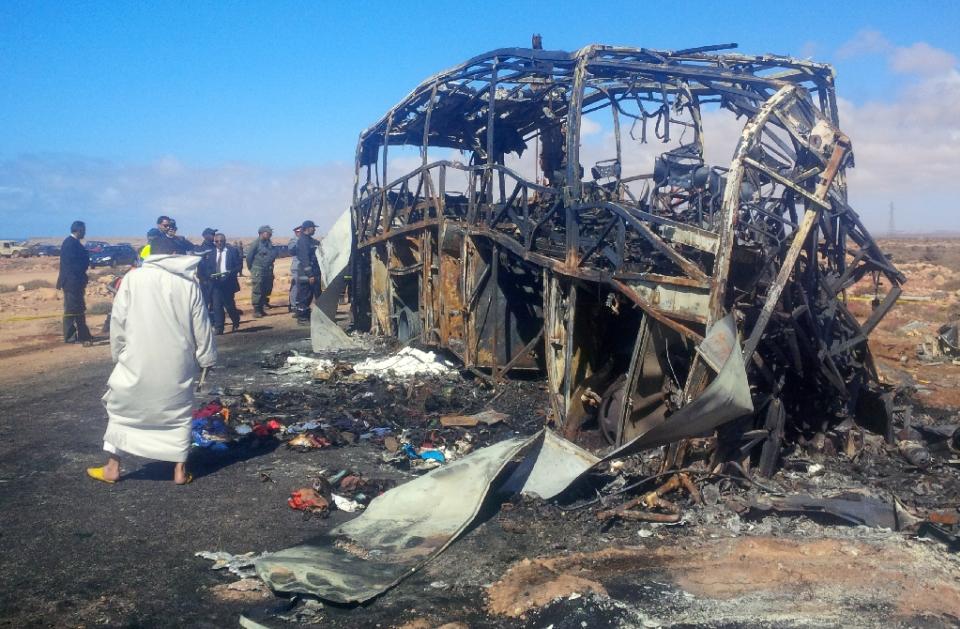
Thirty-three people killed, mostly children, in bus crash in Morocco


At least 33 people were killed, most of them children, when a bus burst into flames after colliding with a gas tanker in Morocco on Friday, a local official and a rights group said.

"We have many completely carbonised bodies. Authorities have been in contact with the bus company to identify the victims," said Benmane Fadli, regional director of the transportation ministry.

The bus had been heading from the coastal city of Benslimane to Laayoune in Western Sahara when the crash happened near the southern city of Tan-Tan.

Most of the victims were children returning from a school athletic competition in Benslimane, the Tan-Tan bureau of the Moroccan Association of Human Rights (AMDH) said in a statement.

The early morning accident at Chbika in southern Morocco was the deadliest in the North African kingdom since 2012 when a bus plunged into a ravine, killing 42 people.

The collision in the province of Tan-Tan killed at least 33 people, MAP news agency reported, quoting local authorities and revising an earlier toll of 31 dead.

They said nine injured people were taken to hospital, but two who were in a serious condition later died.

"A majority of the victims are children aged eight to 14," a regional official from the sports and youth ministry told AFP.

Abdeslam Ahizoune, head of the country's athletics federation, said: "It is a drama that touches us all."

Private media said the bus was transporting the young athletes and their coaches from a competition in Bouznika, a beach resort in the north between the capital Rabat and Casablanca.

Pictures posted on YouTube and on several news websites showed the mangled wreckage of a bus on fire, and witnesses said many of the victims had been asleep when the collision occurred.

"It is a horrible accident. The toll is huge. The fire broke out when the bus and the truck collided and then it spread," social worker El Hassan Mouline told 2M state broadcaster, speaking from the scene.

He said the victims included children who were taking part in a sporting competition, a local athletics champion and an official from the sports and youth ministry.

"The whole team is lost," Mouline said.

News of the accident triggered panic and parents of children who were on the bus rushed to the hospital in the town of Guelmim, demanding the names of the victims, Medi1TV reported.

The broadcaster also reported that at least four children had survived the tragedy but were being treated at hospital for "third degree burns".

King Mohamed VI sent a message of condolences to the families and said he would pay for the burials as well as cover the hospital fees for the injured.

Interior Minister Mohamed Hassad visited the scene of the tragedy, while France expressed "solidarity at this tragic time".

Road accidents are common in Morocco, where officials say about 4,000 people are killed each year -- the equivalent to about 11 every day -- in a country of 34 million inhabitants.

In 2010, Morocco imposed tougher driving laws, and last year announced tighter traffic controls and a budget of $265 million (250 million euros) on improving infrastructure for the period 2014-2017.

The authorities say that human error, including speeding, is the main cause of most road accidents in the country.

The World Health Organization says traffic accidents cost Morocco one billion euros ($1.05 billion) each year, or about two percent of its gross domestic product.

Friday 10 April 2015

http://news.yahoo.com/bus-carrying-athletes-crashes-morocco-killing-31-093448975.html

http://www.thestar.com.my/News/World/2015/04/10/Thirtyone-people-killed-in-bus-crash-in-Morocco/

continue reading

India: Revisiting the Victoria Park inferno of 2006 in Meerut


It is exactly nine years since the fire broke out at the consumer electronics fair at Victoria Park in Meerut, claiming 64 lives. "I still remember that day. My parents and aunt had gone to the fair at Victoria Park. My brother and I were at home. It was a trip that just happened without a lot of planning - they wanted to go to the jewellery market but then thought of visiting the fair. I wish I had hugged them before they left, the last time. My aunt escaped with some burn injuries, but my parents never returned," says 15-year-old Vaishnavi Gupta, who was just six when the fire broke out on April 10, 2006.

Sadly, Vaishnavi's younger brother Devyansh, who was four at the time of the tragedy, died in a road accident a year later. She is now the sole survivor in the family, taken care of by grandparents.

Nine years after the incident, a one-man commission of Justice SB Sinha probes the matter, on instructions from the Supreme Court.

Naresh Tayal, whose parents died in the fire, says, "It was the last day of the fair. My parents were keen on purchasing some electronic products available there at a discount. My wife and I and our two kids and my parents arrived at the fair at around 5pm. The fire only started at around 5:30 pm, but soon as we arrived, I started feeling suffocated."

He said he took his wife's hand and led her out, along with their kids. "There was only one small exit gate, and only one person could emerge at a time. The place was so crowded, I could not find my parents. I had told them to follow us and get out of the place, but I guess they did not hear me. The moment we came out of the pandal, the fire started. All I remember now is that the next thing I saw was my father's dead body," he says. He never got his mother's body - he suspects it was exchanged with some other body.

The bodies recovered from the site were all charred beyond recognition. There was so much chaos, and some people carried bodies, in order to claim compensation.

Interestingly, only after the struggle of Sanjay Gupta, who lost five members of his family in the incident, did the Supreme Court order a total compensation of Rs 5.42 crore to all victims. That amount was distributed in December 2014.

Nineteen-year-old Jagat Singh says, "I was 10 when my father died in that incident. I was so shocked, I was in no position to continue studies; besides, money became hard for the family. I have started my own business now. I hope the culprits get the punishment they deserve."

Friday 10 April 2015

http://timesofindia.indiatimes.com/city/meerut/Revisiting-the-Victoria-Park-inferno-of-2006/articleshow/46867871.cms

continue reading

Government procures coffins for Mazabuka accident victims


Government has provided coffins and blankets to all the 17 Mazabuka accident victims that died in the early hours of Monday.

Acting Mazabuka District Commissioner, Wilson Siadunka, disclosed to ZANIS in Mazabuka this morning that government, through the Disaster Management and Mitigation Unit (DMMU), provided the necessary logistics needed for burial.

Mr Siadunka said apart from buying coffins and blankets for the dead, government also provided food and transport for all relatives of the deceased, some of whom came as far as Chipata in the Eastern Province.

He disclosed that from the 17 deceased persons, 11 bodies were on Tuesday transported to Lusaka, two to Monze District and one body was transported to Chipata for burial.

Mr Siadunka further explained that three other bodies were buried in Mazabuka yesterday following the advice given by their family members who allowed burial to take place within the district.

The Acting District Commissioner has thanked relatives of the deceased for what he termed as high levels of cooperation and maturity during the process of identifying the bodies, saying without their support the task would not have been an easy one.

A total of 17 people died on the spot after the Fuso fighter truck they were traveling in from Lusaka to Monze District lost control and rammed into Mazabuka Shoprite Checkers building around 01:00 hours in the early hours of Monday.

Friday 10 April 2015

http://www.lusakatimes.com/2015/04/09/government-procures-coffins-for-mazabuka-accident-victims/

continue reading

Number of Okhotsk Sea trawler accident victims revised to 57


New, revised data shows that 57 people have died as a result of the Dalniy Vostok fishing trawler sinking in the Sea of Okhotsk, while 12 remain missing, the Chief of Maritime Rescue from the port of Petropavlovsk-Kamchatsky, Artur Rets, told RIA Novosti on Friday.

The Dalniy Vostok fishing freezer trawler sank in the Sea of Okhotsk shortly before midnight on April 1. There were 132 people on board the vessel. Rescue teams have lifted a total of 119 people from the water.

Previous reports said that 56 people from the trawler had died as a result of the accident, while 13 remained missing. "Initially, the bodies were not counted correctly; two bodies were placed in the same container. So, as of today, 12 people are considered missing," Rets said.

The Far East division of the Russian Emergencies Ministry confirmed with RIA Novosti that a mistake had indeed been made in counting the dead bodies.

"The mistake in calculations happened because there were a lot of people taking part in the [search and rescue] operation, new information kept coming in," an Emergencies Ministry representative said.

Five residents of Russia's Sakhalin Region missing after the sinking of the Dalniy Vostok fishing trawler in the Sea of Okhotsk have been declared dead, local authorities announced in a statement.

Their families will receive one million rubles (about $19,130) each in compensation, according to the statement, which added that the 17 Sakhalin residents that survived the accident have been paid 200,000 rubles ($3,825) each.

Two ships carrying survivors of the accident and the bodies of the dead arrived in the port of Korsakov, a town located in Russia's Sakhalin Region, in the early hours of Tuesday. Some of the survivors are still being treated at regional hospitals, but are expected to be released next week.

On Saturday, acting Sakhalin governor Oleg Kozhemyako said that the sinking of the Dalniy Vostok trawler was likely caused by the crew's failure to comply with safety regulations. A criminal case has been opened and an investigation into the accident is underway.

Friday 10 April 2015

http://sputniknews.com/russia/20150410/1020696933.html

continue reading

Haiti: suspected boat accident leaves 21 dead, 17 missing en route to islands


At least 21 people have died and 17 others are missing in a suspected boat capsizing off Haiti’s northern coast, authorities said Thursday.

The group was among 50 believed to be aboard a boat that was headed north to the nearby Turks and Caicos islands, said Jean Henri Petit, an official with Haiti’s civil protection department. He said survivors told police the boat encountered bad weather and tried to return to Haiti when it hit something.

The bodies began to wash ashore Thursday morning in the coastal town of Le Borgne, about 100 miles (160km) north of Port-au-Prince, police inspector Jean Mesamours told the Associated Press.

The families of 10 of the victims had picked up the bodies, while the other 11 dead were buried in a mass grave because no one claimed them, Petit said.

The Turks and Caicos islands are a popular destination for Haitian migrants despite authorities warning them that the voyage is perilous.

Friday 10 April 2015

http://www.theguardian.com/world/2015/apr/09/haiti-boat-accident-21-dead-17-missing

continue reading

Thursday, 9 April 2015

Four bodies found from last week's Taiwan sinking, 9 still missing


Four bodies have been retrieved a week after a cargo ship capsized in the Taiwan Strait on 30 March, while nine other crew members are still missing, China's Fujian Maritime Safety Administration announced on 7 April.

The 6,426 gt cargo carrier Zhen He 168 from the mainland sank west off Xiquan Island at around 04:40 h local time on 30 March, leaving all 13 crew members missing.

The ship's AIS was turned off in the evening of 29 March when it was passing the strait from north to south, and its radio echo suddenly reduced in the early morning of 30 March, which was believed to be the time of the accident, according to the shipowner and maritime safety administration.

However, the shipowner did not report the accident until late in the afternoon of 30 March. The capsized ship was found on the same evening, but no floating items were found.

During the seven days of search and rescue, three bodies were found at the ship's cabin between 4 April and 6 April, while another was retrieved by authorities from Taiwan on 5 April.

The shipowner modified the cabin along with other parts of the ship, and did not register or undergo inspection, and most of the crew on board did not hold competency certificates, according to the maritime safety administration.

The cause of the accident is still under investigation.

Thursday 9 April 2015

http://www.ihsmaritime360.com/article/17396/four-bodies-found-from-last-week-s-taiwan-sinking

continue reading

25 killed in Faridpur road crash

At least 25 people were killed and 23 injured when a bus veered off the road as the driver lost control over the steering in Bhanga upazila of Faridpur early today.

Rescue teams rushed the spot and shifted the injured and the bodies to nearby hospitals.

A Barisal-bound bus of Sonartari Paribahan from Dhaka skidded of the road and plunged into a ditch after hitting a tree in Kaidubi area around 1:30am as the driver lost control over the steering, our Faridpur correspondent reports quoting Jamil Hasan, superintendent of police in Faridpur.

The bodies of 20 persons who died on the spot have been kept at Bhanga Highway Police Station premise while those who died at Faridpur Medical College Hospital were kept at the hospital morgue.

Families and relatives started rushing to the scene and morgue to identify the bodies.

So far, 11 bodies were identified till 11:10am when the report was filed.

The cause of the accident wasn’t clear yet but passengers said the driver apparently lost control. It was not known yet if the driver was among the dead.

Meanwhile, the district administration has been distributing Tk 10,000 to each of dead victim’s family, the local upazila nirbahi officer said.

Thursday 9 April 2015

http://www.thedailystar.net/country/22-killed-faridpur-road-crash-76467

continue reading

44 dead, 25 injured in recent floods: Jammu and Kashmir Govt


Over 40 people were killed and 25 others injured in the recent landslides and flash floods in the state, Jammu and Kashmir government today said.

Minister for Revenue Javaid Mustafa Mir said this while replying to a Calling Attention Notice by Ali Mohammad Sagar in Legislative Assembly.

"As many as 44 persons lost their lives and 25 got injured. 12,565 structures have been damaged fully, severely and partially, and 680 cowshed also got damaged. Besides, 862 cattle also perished," Mir said.

He said that due to unprecedented rainfall and snowfall followed by flash floods, landslides and avalanches last year, severe loss to life and property took place in the state.

The Minister said many areas in villages have become unsafe for living due to landslides and land sinking.

He said 211 camps have been established in the state and 2,907 families evacuated, 1,474 tents built, 3287 blankets have been provided to the affected families who have become homeless.

The minister said in District Srinagar, 893 structures have been damaged, out of which 18 houses have been fully damaged, 245 severely and 630 partially damaged.

He said in Khanyar constituency, 103 houses have been damaged, out of which 03 houses are fully, 20 severally and 80 houses have been partially damaged.

Mir said that an amount of Rs 35 cr has been released to Divisional Commissioners of Jammu and Divisional Commissioner Kashmir for providing ex gratia and for temporary restoration of critical public utilities on a war-footing.

He said the ex gratia has been provided to the affected families as per the State Disaster Response Fund (SDRF) norms. He said the assessment of loss and damages is in progress throughout the state by inter-departmental teams and relief is being and will be provided to the affected families throughout the state including Khanyar constituency as per the norms.

Meanwhile, the government today also said that a Rs 401-cr detailed project report (DPR) for urgent work was submitted to the Centre in the month of February and an approval is awaited.

"In order to avoid the re-occurrence of such floods in future, a detailed project report with an estimated cost of Rs 401 crore for urgent works carved out of the main project stands submitted to the government of India in the month of February," Minister for Public Health Engineering and Irrigation and Flood Control Sukhnandan Kumar told the Legislative Assembly.

"This has been put for approval of the Ministry of Water resources through their technical approval committee," Minister Sukhnandan Kumar told the Legislative Assembly.

The reply came in response to the question of M Y Tarigami, who wanted to know whether a study was conducted to understand the cause of September 2014 floods that ravaged the state.

The minister said that the final comprehensive project will take about eight to ten months for its submission to the Government of India where in the observations raised by the Central Water Commission (CWC) as far as Indus Water Treaty are to be clarified in detail including the effect of flood discharge on Wullar Lake and downstream.

He said that the temporary restoration of all the breaches and cuts was almost completed under the State Disaster Relief Fund (SDRF) and the measures taken for their permanent restoration have been taken up in a planned and prioritised manner under the Prime Minister's package.

"Besides a committee was constituted by the Government of India to understand the cause of the floods in the state but the findings and recommendations made by the said committee are awaited," he said.

He however said that as per the study undertaken by the department, it was found that the "unprecedented heavy rainfall" resulted in the flood discharge of 1,20,000 cusecs of water at Sangam and 1,30,000 cusecs in Srinagar, which was three times the safe carrying capacity of the existing channels.

The minister said that his department has already completed the temporary restoration of all the breaches and cuts on River Jehlum and the permanent restoration work for strengthening the banks of river was in progress to prevent any further damage to the adjacent areas due to any flood situations in the future.

On a question regarding the removal of encroachments from the water bodies, Kumar said, "22,415 illegally-planted trees have been cut along river Jehlum, 49,738 from other water bodies and streams and 80,208 from irrigation lands and canals."

He said that more than 90 illegally-constructed houses and 218 tin sheds and 246 boundary walls have been demolished from the water ways.

Thursday 9 April 2015

http://www.outlookindia.com/news/article/44-Dead-25-Injured-in-Recent-Floods-JK-Govt/890434

continue reading

Wednesday, 8 April 2015

Uttarakhand High Court says won't dispose PIL on proper last rites in hurry


The Uttarakhand high court on Tuesday said that it won't dispose the public interest litigation regarding the last rites of those killed in the 2013 flash floods too soon and that the progress in the petition will happen step by step.

"I submitted the statement of higher officials of the state government which shows their ignorance about the disaster. The honourable high court told me to submit some suggestions regarding the problems in Kedar valley," said Ajay Gautam (42), the petitioner. The petition was attended by division bench of justices V K Bisht and Sarvesh Gupta.

The PIL was filed in June 2014 and it stated that bodies of the deceased lie decomposed and proper last rites have not been performed for thousands of people killed in the tragedy. The next hearing of the case is scheduled for June 22.

Earlier, the petitioner submitted a supplementary affidavit on March 24 stating that the responsible officials should be held accountable for deaths in June 2013 deluge. In 2014, the HC said DNA profiling of the bodies should be carried out so that it can be used to identify the deceased.

Wednesday 8 April 2015

http://timesofindia.indiatimes.com/city/dehradun/HC-says-wont-dispose-PIL-on-proper-last-rites-in-hurry/articleshow/46841952.cms

continue reading

8 migrants drown after wooden boat sinks off Turkish Aegean coast; 3 still missing


The Turkish Coast Guard says it has recovered the bodies of eight migrants who drowned after a wooden migrant boat sunk in the Aegean off the Turkish coast of Datca late Monday.

The Coast Guard boats rescued nine other people. A boat and a helicopter were still searching for three missing people.

The Coast Guard did not provide information on the migrants' nationalities or say where they were heading. Datca is close to the Greek islands of Rhodes and Cos. The state-run Anadolu Agency said that the dead included migrants from Syria and Iraq.

The Coast Guard said it had rescued a total of 152 migrants from the sea between April 3-6, in six separate rescue operations off the coasts of Didim, Bodrum, Datca and Izmir.

Wednesday 8 April 2015

http://www.startribune.com/world/298866691.html

continue reading