Sunday, 12 May 2013

Lunch boxes of the dead key to survival in factory hell


Bangladeshi officials have given the first account of how a "miracle" survivor pulled from a collapsed building managed to emerge alive 17 days after the disaster, and hailed her indomitable spirit.

Reshma Begum, 18, a seamstress who was dug out from rubble of the garment factory on Friday, drank rainwater and had found lunch boxes of co-workers "from which she got some food", Major General Chowdhury Hassan Suhrawardy said.

"She has made history. She is an example not only for Bangladesh but also for the world," General Suhrawardy said as the death toll from the impoverished nation's worst industrial accident hit 1110 yesterday.

The painfully thin woman, who TV footage showed smiling shyly from her hospital intensive-care bed, had been "trapped in a place spacious enough for her to crawl comfortably", said General Suhrawardy, who has headed the giant relief effort.

Ms Begum was wearing a fresh dress when she was rescued, taken from a box of clothes she found, and had cut her hair with a pair of scissors "because it is so hot under the rubble", he said. But "she still can't sleep well. She gets frightened every now and then and the nurse has to hold her hand to comfort her".

Colonel Azizur Rahman, who leads the medical team looking after Ms Begum, said she had suffered "some metabolical changes" due to malnutrition and her kidney function level dropped to 40 per cent.

"She is improving," and was now eating rice and semi-solid food, he added.

Rescuers found her after long abandoning hope of locating more survivors. They were stunned to hear a woman's voice calling for help.

She was freed in a 45-minute operation aired live on television and watched by crowds at the scene.

"We first saw a pipe moving. We removed some gravel and concrete. We found her standing," said Major Moazzem, who goes by one name.

"She told us: 'My name is Reshma, please save me, please save me, brother'," Jamil Ahmed, another rescuer, recounted.

She later told Somoy TV in an interview: "I called but nobody heard me. I heard noises, but nobody listened to me."

Her family, from a remote northern village, called her survival a miracle. "We had lost all hope of finding her alive. We visited every hospital . . . the mortuaries and checked every body," said her brother, Zahidul Islam.

General Suhrawardy said the search for bodies would continue until the last missing person was accounted for.

Sunday 12 May 2013

http://www.theaustralian.com.au/news/world/lunch-boxes-of-the-dead-key-to-survival-in-factory-hell/story-e6frg6so-1226640661587

continue reading

Rana Plaza death toll now at 1,126


Officials say 1,126 dead bodies have so far been pulled out of the wreckage of the ill-fated Rana Plaza which collapsed on Apr 24.

The death toll is being updated by a temporary control room run by the district administration at the local Adhar Chandra High School in Savar, close to the collapsed highrise.

Until now, 826 dead bodies have been handed over to their relatives, control room officials said.

Bodies recovered from the wreckage are taken to the school grounds for identification.

At the moment, fourteen bodies are still there waiting to be identified.

Another 52 unidentified bodies are still at the Dhaka Medical College Hospital morgue.

So far, 234 unclaimed bodies have been buried at the Jurain graveyard in the capital.

Their DNA samples have been collected for future identification.

The nine-story Rana Plaza caved in on Apr 24 morning with thousands trapped inside. Most of them were women workers employed in the five readymade garment factories operating from the Rana Plaza.

One such women worker Reshma Akter was pulled out alive from the rubble seventeen days after the collapse in what appeared to be a near-miracle.

Rescuers have nearly finished clearing the rubble on the front side of the building.

From May 7 night they started to clear the wreckage at the back of the building.

Most of the bodies recovered now are decomposed beyond recognition. Rescuers are trying to identify them from the mobile phones or identity cards if found on them.

Leading the rescue operation is General Officer Commanding (GOC) of Bangladesh Army's 9th Infantry Division Major General Chowdhury Hasan Suhrawardy.

At a press conference on May 1, he had claimed that only 149 were missing. But over the past 10 days 688 bodies had been pulled out from the wreckage.

The rescuers are still pulling out bodies from the wreckage.

Those survived the collapse, claimed that more than 5,500 people worked in the shops and factories in the ill-fated Rana Plaza.

Sunday 12 May 2013

http://bdnews24.com/bangladesh/2013/05/12/rana-plaza-death-toll-now-at-1126

continue reading

Saturday, 11 May 2013

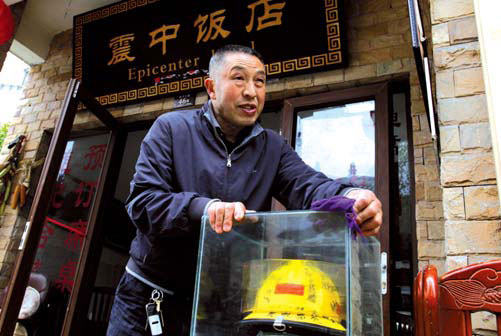
2008 Wenchuan earthquake: Tourism cleanup to ensure respect


Many survivors of the 2008 Wenchuan earthquake have made a living commemorating the dead.

Thousands of residents in Sichuan province - especially farmers whose fields were destroyed - turned to selling souvenirs and giving tours of the rubble.

Five years later, the tourism sector's chaos has been brought to order, as have other facets of life, in places such as Yingxiu town.

Two years ago, the entrance of the Cave of 10,000 Dead - a mass grave created when authorities needed to dispose of more than 6,000 bodies before an epidemic broke out - swarmed with vendors selling flowers, funerary money and incense, as well as photos and DVDs for tourists to take home.

They are now gone - or at least largely replaced by licensed vendors in designated bamboo stalls out of sight of the Cave of 10,000 Dead.

"We can sell quake photos but not DVDs," 26-year-old vendor Yang Hong explains. "The government says the footage is too graphic and disrespectful to the dead."

However, he says many vendors still stock such videos. Customers must first ask for them, then sellers retrieve them from hiding.

Tours are now regulated, too. Feng Xueying says she started earning money last year by leading sightseers around the ruins of Xuankou Middle School, a large boulder cleaved from a mountain during the quake and the Cave of 10,000 Dead.

"I was a housewife before the disaster and opened a store afterward, but business wasn't so good," the 31-year-old says. "There were a lot of people giving tours, so I tried it. I made about 1,000 yuan ($160) a month running the shop but two to three times that as a guide.

"A lot of outsiders were curious. I was happy to show the changes we've undergone since 2008."

Soon after, the government required guides to pass exams, become licensed and work for authorized agencies.

Feng obtained a tour-guide permit that allows her to take people only to the school, boulder and graveyard. But she returned to her store after getting the license.

"I have more freedom running the shop," she says. "I'm my own boss. If I work for a company, I have to do what they say and go where they say, and when they say to.

"I also have to take care of my son," she says, adding that the boy studies in neighboring Dujiangyan city. "He's not a very good student. I must help him. I need to focus on him."

While the new regulations have cut into Feng's earnings, she supports them.

"There weren't any standards," she explains. "Different guides charged different prices, and there was no quality control. Now, there's a plan and order. Our tourism industry is improving, and that's good for the town."

Saturday 11 May 2013

http://www.chinadaily.com.cn/cndy/2013-05/11/content_16491962.htm

continue reading

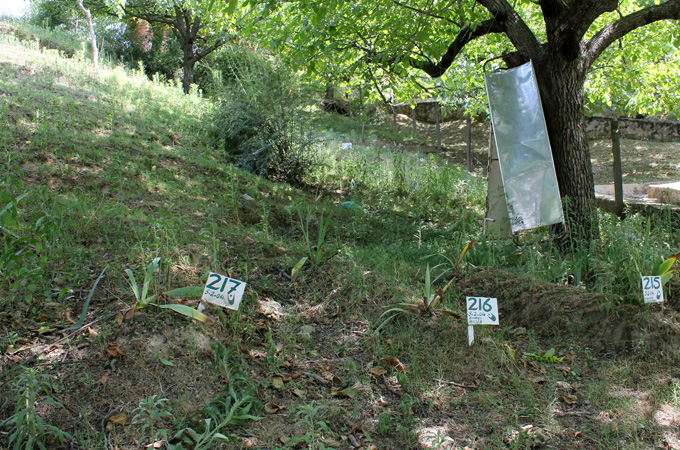
Documenting Afghan mass graves


University of Lincoln lecturer Gillian Fowler is just back from Afghanistan, where she has been teaching Afghans how to properly document mass graves and identify bodies from 35 years of conflict. Here, the forensic anthropologist tells reporter Paul Whitelam about her work.

In a nation torn apart by war and riddled with corruption, cold hard science is the surest keeper of truth.

And in future, the work of Gillian Fowler, consulting forensic anthropologist for Physicians for Human Rights (PHR), could finally give families the answers they have longed for.

Ms Fowler has been training local Afghans in human osteology – the study of bones – and exhumation techniques.

She has been working on a three-year project called Securing Afghanistan's Past with the Afghan Forensic Science Organisation, set up through PHR.

Documenting burial sites and educating people to preserve them means atrocities committed by tribes, the Taliban, the Soviets and the mujahideen can be fully investigated.

And perhaps, at some point, ordinary Afghans will see justice, or at least reconciliation.

"There's a great deal of construction work going on in Afghanistan, such as road building, where human remains are dug up and often just thrown into skips," said Ms Fowler.

"Another issue is families have exhumed some graves but bodies have not been identified. People just say: 'That's my father', for example.

"The people we train need to know the difference between human and animal bones, which is where I came in.

"We looked at a grave with the Ministry of Interior where there were two human skeletons and lots of bones from animals butchered around the Soviet invasion era.

"You need to know how many people are in a grave and once you can identify those individuals you can then do a biological profile to establish the age, sex, stature and ancestry at the time of death."

As a result of the project a report has just been published to challenge the Afghan government to properly protect graves.

It also calls for the legal recognition of people's rights to know what really happened to their missing relatives.

Ms Fowler became involved in the project having previously spent several years working for the Forensic Anthropology Foundation of Guatemala, where she was involved in exhuming graves of innocent victims of genocide from the 1980s.

"In Afghanistan we use the example of Guatemala," she said.

"At the moment the General is being tried in court 21 years after the genocide there.

"Local people and witnesses know where the graves are.

"We are probably talking 20 to 30 years before Afghanistan has some sort of justice or reconciliation."

Ms Fowler said working in Afghanistan, where crime scenes are often unprotected, is full of challenges.

"Kabul is dusty and dirty and traffic is so chaotic – there are no rules of the road," she said.

"There are bombed out buildings and you can still see bullet holes in lamp posts.

"The main risk in Kabul is not that of being killed by suicide bombs – it's being involved in a car accident, the mob dragging you out of the car and killing you.

"No one knows what's going to happen after the foreign troops leave at the end of 2014.

"Our work has the full support of the Ministry of Interior. But we do not work for any one side. We are completely impartial. We'll deal with a mass grave whether it's Taliban prisoners or anyone else."

Colleague Stefan Schmitt, who directs PHR's International Forensic Programme and was the report's lead author, previously worked with Gillian in Guatemala.

The paper was presented at the Truth Seeking and the Role of Forensic Science conference in Kabul last month.

Mr Schmitt said: "Since 1978, Afghans have continuously lived through protracted cycles of violence that included massive human rights violations and war crimes with virtual impunity for many of the perpetrators.

"Healing such deep wounds is a complex and lengthy process.

"What is needed from both the government of Afghanistan and the international community is a serious commitment to a vision for a better future – and that includes addressing the wrongs of the past."

Saturday 11 May 2013

http://www.thisislincolnshire.co.uk/Lincoln-lecturer-helps-Afghans-document-mass/story-18933578-detail/story.html#axzz2SzuY62Xq

continue reading

Migori flash flood kill more than 10, sweep away bridges


Floods have swept away several bridges in Migori county. County residents fear for their lives as flash floods continue to wreak havoc. More than 10 people have been killed in the county.

Several estates in Migori town have been cut off after the bridges on rivers Nyasare and Onyinjo were damaged. “With the constant rains every evening we are forced to rush home or risk being cut off as water overflows the culverts,” Brian Okoth, a resident, said. Three bridges have been affected with some of their sections being swept away by floods.

Residents of Oruba, Milimani and Sangla estates in Suna West constituency and their Nyasare, Magina and Nyikendo estates in Suna East constituency are calling on their CDF committees to speed up building the bridges.

“We need to build stronger and more bridges as constant rains and floods make the culverts weaker,” said Valentine Ogongo, a local leader. In Nyatike district the Angubo bridge connecting Muhuru Bay, Sori and Lwanda towns have been weakened by constant flooding.

“When it rains, the bridge overflows, blocking school children and bringing transport to a stand-still with most risking death as the bridge is weakened,” Richard Bitonga, the police boss said.

Bitonga said the condition of the bridge has affected distribution of relief food at camps as cars transporting food are sometimes forced to unpack longer distance from camps. “The government should take the plea by residents and the Red Cross officials to build the bridge on time,” he said.

Saturday 11 May 2013

http://www.the-star.co.ke/news/article-119911/migori-flash-flood-kill-10-sweep-away-bridges

continue reading

Coal mine explosion in southwestern China kills 12, injures 2


Twelve people were killed and two others injured in a colliery gas explosion on Friday evening in southwest China's Guizhou Province, local authorities said on Saturday.

The accident occurred at around 8:30 p.m. Friday in the Dashan coal mine in Pingba county, said the Guizhou Provincial Administration of Work Safety.

The injured people were in hospital and an investigation into the explosion is underway.

Saturday 11 May 2013

http://news.xinhuanet.com/english/china/2013-05/11/c_132374385.htm

continue reading

Eight dead, 11 missing in Mizoram thunder squall


Thunderstorm and landslides have claimed eight lives, rendered 11 missing and left 25 others injured in the state capital, police said on Saturday.

Nine houses in Laipuitland locality here were swept away in a massive landslide early this morning, killing eight persons, Superintendent of Police (Traffic) Lallianmawia, who was supervising the rescue work, said.

Eleven persons were missing and 9 others injured in the landslide, he said.

Rescue work was underway with volunteers and policemen searching the debris for bodies and survivors, he said.

Eleven persons were missing and nine others injured in the landslide, he said.

Lallianmawia said that six bodies have been recovered and two bodies were being dug out adding that the number of missing persons might rise.

Thunderstorm accompanied by strong squall hit the Mizoram capital last night. At least 16 people across the city suffered minor injuries in the storm and were given first aid at the Civil Hospital here, the police official said.

Saturday 11 May 2013

http://www.thehindu.com/news/national/other-states/eight-dead-11-missing-in-mizoram-thunder-squall/article4705492.ece

continue reading

Sri Lankan court orders probe on mass grave, DNA tests ordered


A Sri Lankan court Friday ordered a full investigation into a mass grave found last year in the island nation's Central Province, a lawyer said.

The magistrate in Matale instructed the Criminal Investigations Department (CID) to submit a comprehensive report to the court by the end of this month, Xinhua reported.

The CID was also ordered to record statements of 13 petitioners who claimed that their relatives were believed to have been buried at the site.

Sunil Watagala, the lawyer appearing on behalf of the petitioners, said the magistrate also ordered a DNA test on the skeletal remains found in Matale.

Sri Lankan President Mahinda Rajapaksa last month decided to appoint a special commission to investigate the mass grave. The investigation by the commission will be in addition to the probe carried out by police.

Over 150 skeletal remains have been unearthed from the mass grave.

Forensics have determined that the remains were of people killed sometime in the late 1980s and the area has now been marked as a crime scene.

At least 10 skeletal remains were first found from the site in November last year by construction workers when land near a hospital was dug up to construct a new building.

Following police investigation, excavation began to look for skeletal remains at the site, and more human bones were found.

A Marxist political party, the JVP, has demanded that the government carry out an investigation on the mass grave following fears that the remains may be that of JVP members or supporters killed during insurgency in 1987-89.

Saturday 11 May 2013

http://www.newstrackindia.com/newsdetails/2013/05/10/241--Sri-Lankan-court-orders-probe-on-mass-grave-.html

continue reading

Accra stadium May 9 disaster victims remembered


A wreath-laying ceremony was held at the Accra Sports Stadium to mark the 12th anniversary of the disaster which claimed 127 soccer fans in 2001.

Thursday's ceremony was attended by government officials, soccer fans, administrators and family members of those killed, reports Xinhua.

More than 127 soccer fans died May 9, 2001, in a tragic incident at the stadium during a local premier league match between Ghana's two most successful football clubs, Accra Hearts of Oak and arch rivals Kumasi Asante Kotoko.

The police fired tear gas into the stands in their efforts to control rioting fans after Hearts overturned a one-goal deficit to lead 2-1, resulting in a stampede during which 127 fans lost their lives while attempting to escape.

Hundreds more were seriously injured during the incident described by aficionados of the game as Africa's worst ever stadium disaster and the world's third.

The May 9 stadium incident affected the overall spectatorship to premier league centers across the West African country, with club officials grieving over low proceeds until the Ghana Football Association (GFA) employed a stadium insurance policy two years ago to provide cover to mitigate losses that might arise from such incidents and create a center of attention to fans.

A Muslim prayer session for the departed souls led by representatives of the National Chief Imam, Sheikh Osman Nuhu Sharubutu, and officials of the two clubs was held at Nima, a community within the capital, which recorded most casualties.

Saturday 11 May 2013

http://www.chinadaily.com.cn/world/2013-05/10/content_16489697.htm

continue reading

Lahore inferno: Rescuers pull out 17 more bodies from LDA plaza


Rescue workers recovered 17 more bodies on Friday before firemen managed to extinguish the blaze that had engulfed the nine-storey Lahore Development Authority (LDA) building.

With the discovery of more bodies, police say the death toll from a building fire has climbed to 25, surging from Thursday’s figure of eight fatalities. Fifteen people were reportedly missing.

According to DG Rescue Services, Dr Rizwan, the fire was brought under control at around 4 am.

“Upon entering the ninth floor, four hours later, we saw several bodies lying near the main entrance, completely charred and beyond recognition,” he said.

Firefighters could not speculate the final death toll, as they are still finding burnt bodies.

A 10-member “body identification team” has been constituted by DG rescue services, which will be headed by Dr Imam Syed and Dr Ahsan Mian.

Firemen also faced difficulties during the rescue mission. As many as four firefighters fell unconscious due to the smoke and heat inside the building.

One firefighter – identified as Azmatullah – received serious burns and was transferred to CMH.

“The fire safety commission will issue notices to owners who haven’t provided adequate fire exits and alarm systems in their building,” Dr Rizwan said.

When asked about the cause of the incident, the LDA Employees Union said there was “foul play” involved in the incident.

He said “records of a hundred employees, who were hired on back dates, were stored in the building,” which could have possibly irked people to set fire to certain floors in the building.

“Approximately 200 files of disputed plots in Iqbal Town, Mustafa Town and Johar Town as well as ledger books, litigation records, inquiry reports and other important data was also kept here,” Rasheed said.

The sixth floor of the plaza remained completely safe, because the duct system was disconnected there. The inferno, however, gutted at least four floors of the building. Rescuers said there were deep cracks on the roof top as well.

The structural engineer of the plaza said that construction of the building is done in a manner that it won’t fall, even after such a massive fire.

Saturday 11 May 2013

http://tribune.com.pk/story/547291/lahore-inferno-rescuers-pull-out-17-more-bodies-from-lda-plaza/

continue reading

Friday, 10 May 2013

Dhaka building collapse: Woman pulled alive from rubble


Rescue workers in Bangladesh said Friday they found a female survivor buried amid the wreckage of a garment factory building that collapsed 17 days ago and killed more than 1,000.

Army officials ordered workers to stop clearing the site with bulldozers and cranes as they tried to free a woman they said might still be alive. A soldier at the scene said rescuers found a woman in the debris and she waved her hand in response to them.

Rescuers used a handsaw as well as welding and drilling equipment to try to cut through the iron rod and debris trapping her. They asked for a small oxygen cylinder to be brought to the site.

Hundreds of people, who had been engaged in the grim job of removing decomposing bodies from the site, raised their hands together to pray to Allah for the woman to be freed alive. A man on a loudspeaker led the supplicants: "Allah, you are the greatest, you can do anything. Please allow us all to rescue the survivor just found."

"We seek apology for our sins. Please pardon us, pardon the person found alive," he said.

The head of the fire service earlier said the woman, named Reshma, had been found in the remains of the second floor of the eight-storey Rana Plaza.

She had no serious injuries and had been talking with rescuers, he added.

The dramatic news came after the army said more than 1,000 people were now known to have died in the disaster.

The death toll is expected to keep climbing, as work crews using heavy machinery have begun removing rubble from the worst-damaged areas.

On Friday afternoon, as soldiers cleared a floor, they heard sounds below, correspondents say.

Officers immediately ordered workers to stop clearing the site.

Detection equipment was sent in and they saw a woman waving her hand. She shouted "I'm still here" and said her name was Reshma.

Within minutes, hundreds of soldiers and firefighters rushed to the scene to help clear the rubble, says the BBC Bengali service's Akbar Hossain.

Cutting and drilling equipment was brought in to get through iron rods and debris. Not long afterwards, she was pulled from the rubble and the crowd erupted in cheers, our correspondent says.

The woman was taken to an ambulance and then rushed to a nearby military hospital.

Rescuers said it was possible that the woman survived because of the large quantities of oxygen and water that were pumped into the ruins in the early stages of the rescue effort.

Workers at the site had been clearing the rubble since the collapse April 24. More than 2,500 people were rescued in the immediate aftermath of the disaster. However, no survivors have been found in the wreckage since April 28.

Death toll still rising

The death toll from a garment factory building that collapsed more than two weeks ago outside the Bangladeshi capital soared past 1,000 on Friday, while the list of the dead from a fresh fire at a sweater manufacturer showed the entanglement of the industry and top Bangladeshi officials.

Officials said 1,034 bodies have been recovered from the rubble of the fallen factory building as of Friday morning. There was no sign of where the toll might finally settle as more bodies were being found, but it is already the world's deadliest garment industry disaster and one of the worst industrial accidents.

The country's powerful garment industry has been plagued by a series of disasters in recent months, including a November fire at the Tazreen factory that killed 112 and the building collapse. DNA testing needed to ID remains

More than two weeks after the building in the suburb of Savar collapsed, workers with cranes and other heavy equipment were still pulling apart the rubble and finding more bodies. On Friday, authorities said the death toll had risen to 1,021 and it was unclear how many more people remained missing. More than 2,500 people were rescued alive after the April 24 accident.

Maj. Ohiduzzaman, an army official who uses only one name, said 100 decomposing bodies have been kept at a makeshift morgue at a school and were to be sent to hospitals in Dhaka for DNA testing to identify them.

Friday 10 May 2013

http://www.bbc.co.uk/news/world-asia-22477414

http://www.cbc.ca/news/world/story/2013/05/10/bangladesh-death-toll-over-1000-friday.html

continue reading

New mass grave haunts Kashmiris


The members of the Association of Parents of Disappeared Persons (APDP), demand the whereabouts of their missing relatives, who have been subjected to enforced custodial disappearance allegedly by Indian forces during the past two decades of conflict.

The traumatized relatives of these missing persons lay the blame on the state and central government for their plight.

Human rights groups claim that around 8000 people have been subjected to enforced disappearance by Indian forces in this Muslim-majority region. They believe that many of the disappeared persons may have been buried in these 'unmarked' graves.

On May 6, during a debate in the European Parliament on the human rights policy, a member of the European Parliament, Sajjad Haider Karim accused the European Union of double standards over the issue of mass graves in Kashmir.

Stating that the discovery of mass graves has put India under great pressure, Karim called for an investigation on this issue in Kashmir.

According to the International People's Tribunal on Human Rights and Justice in Kashmir, there are more than 7000 unmarked graves dotting the lush-green landscape of this beautiful valley.

A human rights organization - Joint Voices of Victims - has discovered more than 60 unidentified mass graves in central Kashmir’s Budgam and Srinagar districts alone.

Even as authorities claim that the graves carry bodies of foreign militants killed in counter insurgency operations, the relatives of missing persons have reiterated their demand for immediate DNA profiling to identify bodies discovered in these mass graves.

International rights watchdog bodies, namely United Nations Human Rights Council (UNHRC) and Amnesty International have repeatedly criticized India for its poor human rights record in this region.

Political observers believe the excessive powers given to soldiers under draconian laws like Armed Forces Special Powers Act (AFSPA) are the cause of the human rights abuses happening there with a sense of impunity.

Kashmir is a subject of dispute between India and Pakistan and the two countries have fought three wars over this disputed region. India blames Pakistan for supporting separatist rebellion in the Muslim majority territory. According to human right groups more than 70,000 people have lost their lives in conflict in Kashmir since late 1980s.

The distraught relatives of missing persons in Kashmir have appealed to the UN to set up a monitoring group in the region. The move, observers believe, can go a long way in addressing the issue of grave human rights abuses in the region but could be a positive step in keeping unruly soldiers under control.

Friday 10 May 2013

http://www.presstv.ir/detail/2013/05/09/302681/new-mass-grave-haunts-kashmiris/

continue reading

Thursday marks the 33rd anniversary of the Skyway disaster


On May 9th, 1980, dozens of people died after plunging off the Skyway and into Tampa Bay just seconds after it was hit by an out of control freighter.

In the middle of a fierce storm the 600-foot Summit Venture tried to make it under the Skyway Bridge at 7:30am. Winds up to 50 miles an hour blew it off course and into the old bridge's concrete supports, sending the southbound span crashing into the bay.

Drivers heading south into Manatee County, blinded by heavy rain, could not see the deadly void in front of them. Eight vehicles, including a Greyhound bus carrying 22 passengers, plunged 150 feet into the water. 35 people died that day.

One man, Wesley MacIntire, survived the fall when his car landed on the deck of the Summit Venture before falling into the bay.

The pilot of the ship, John Lerro, was cleared of wrongdoing by both a state grand jury and a Coast Guard investigation.

For years later, drivers using what was left of the Skyway had to relive the disaster and the horror experienced by those who died by viewing the missing middle span of the southbound lanes.

The fishing piers on each side of the bay are all that remain of the old bridge. The new Sunshine Skyway Bridge that we use today opened in April, 1987.

Friday 10 May 2013

http://www.mysuncoast.com/news/local/thursday-marks-the-rd-anniversary-of-the-skyway-disaster/article_d9464c30-b8f3-11e2-a817-0019bb30f31a.html

continue reading

Savar death toll rises to 967, burial for 76 unclaimed bodies


The number of people who died at Savar’s Rana Plaza collapse climbed to 967 on Thursday.

A total of 149 dead bodies were retrieved from the ruins on the 16th day of the rescue operation, from the first hours of the day until 6:30pm in the evening.

The makeshift camp in front of the fallen structure released the latest death count on Thursday.

As many as 698 bodies have been handed over to relatives ever since the collapse on Apr 24.

Meanwhile, 76 dead bodies have been laid to rest at Jurain Graveyard with the help of Anjuman Mofidul Islam in two phases from noon to nightfall on Thursday.

DNA samples were collected from these unclaimed bodies before they were given to Anjuman from the morgues at Dhaka Medical College and Hospital and Sir Salimullah Medical College and Hospital, District Administrator Mohammad Yusuf Harun has said.

He said Anjuman so far have buried 80 bodies and 16 alone on Tuesday.

The Dhaka district administration’s control room at Adhar Chandra High School said still 75 dead bodies were kept on the school’s playground. There are 38 bodies at the Dhaka Medical College Morgue.

A total of 156 victims have been buried at Jurain Graveyard so far.

Rana Plaza collapsed on Apr 24 with around 5000 employees who used to work for the five readymade garment factories in the hazardous building.

Rescuers were able to remove the debris from the front of the fallen nine-storey structure. Rescue operations at the back of the building began on last Wednesday night. The debris from even one of the storeys could not be removed from there.

The rescue operation might take a few more days, according to Fire Brigade officials.

Most of the bodies being recovered are mangled. The dead are now being identified through ID cards or cell phones if they are found with the body.

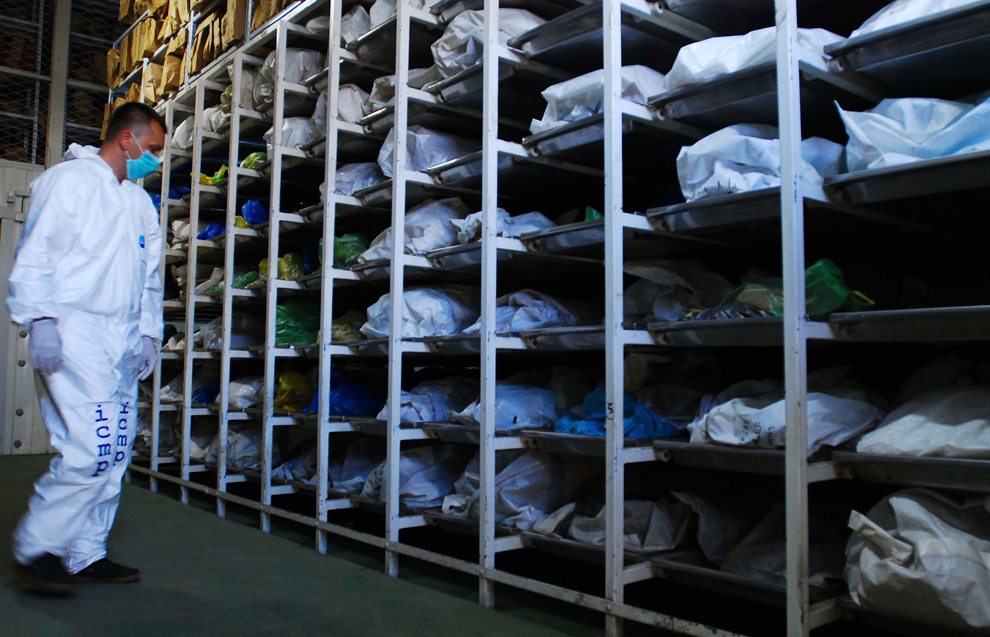
With the death toll in the Rana Plaza tragedy climbing over the past days, the number of unidentified bodies has mounted as those trapped in the rubble have decomposed beyond identification.

Sixteen days into the incident, district administration officials said that the job of handing over the bodies is becoming increasingly difficult, as it needed to be confirmed that the bodies were going to the right families. Now, ID cards and mobile phones have become tools for identification.

Some bodies are too decomposed to even determine sex and these can only be identified byDNA tests. As a result many families, who were waiting at Adhar Chandra High School’s field,had to leave without their relatives’ body.

According to district administration officials, 98 bodies were kept at the field for identification while around 100 bodies were heldat Dhaka Medical College and Mitford Hospital’s morgue.

“The bodies coming to the field are difficult to recognise. Even relatives are getting confused identifying their loved ones,” said Akhtaruzzaman Bhuiyan Shahin, a Rover Scout leader whose team was assisting the administration in the identification procedure.

Kamrul Hassan, UNO of Savar upazila said: “On some occasions, relatives claim bodies from the victim’s clothes, physical shape or ornaments. But the administration cannot handover bodies depending on these, as they might be common.”

Talking to the Dhaka tribune a number of relatives also expressed the same view.

“I am confused. Everything (salwar and kameez) except the scarf on one of the bodies’ matched my wife’s. Maybe the rescuers wrapped her with another person’s scarf while pulling her out of the rubble,” said Md Fazlur Miah, husband of Parvin Begum, who worked on the third floor of the collapsed Rana Plaza.

A civil rescuer, Zia Uddin, said that they are now finding a huge number of bones and flesh.

“We gather the scattered body parts and try to give them shape. In some cases we just collect them from different places and put them in body-bags and send it to Adhar Chandra field,” he said.

Like previous days, yesterday many people with photographs and ID cards of missing workers were still waiting at the Adhar Chandra High School playground for the remains.

Friday 10 May 2013

http://bdnews24.com/bangladesh/2013/05/09/savar-death-toll-rises-to-967

http://dhakatribune.com/bangladesh/2013/may/10/authorities-families-face-difficulty-identifying-victims

continue reading

Thursday, 9 May 2013

Sichuan 2008: A disaster on an immense scale


Sunday 12 May 2013 marks the fifth anniversary of the 2008 Sichuan earthquake.

In terms of the energy released, the Magnitude 7.9 earthquake that struck Sichuan province in China in May 2008 was not a record-setter. But the destruction it wrought, and the number of people it affected, certainly make it a stand-out event, writes James Daniell from the Earthquake Report website.

The impact of the Sichuan quake was not only felt through the death toll and significant economic loss but also in terms of the sheer number of people affected.

It was mid-afternoon, when school and university classes were being taught, office workers had returned to their desks from lunch, and the Sichuan working day was in full swing.

Eighty kilometres away (50 miles) from the 7.6-million-person megacity of Chengdu, 19km under the Earth, the fault began to rupture. The fault broke over a length of 240km.

Nothing could have prepared the people of Sichuan and the neighbouring provinces for the onset of over two minutes of shaking.

Poor infrastructure

The mud-brick houses, and even reinforced concrete buildings near the fault-break, stood no chance and were damaged immediately, many also collapsing.

Schools were unfortunately also not built to withstand such an earthquake, with many collapsed classrooms contributing to the deaths of thousands of children.

The scenes of death and destruction as well as the massive recovery effort needed prompted, for the first time in recent history, a request by China for international assistance.

But in the last few years, we have seen many damaging earthquakes - L'Aquila 2009, Haiti and Chile in 2010, Japan and New Zealand in 2011. Why must we remember Sichuan and why was it so significant?

The earthquake in terms of economic losses was the second highest in absolute numbers in history, very close to that of Japan's Tohoku earthquake. It eclipsed significantly the Kobe and American Northridge earthquakes when taking into account the prices of goods in China and that of other nations.

This earthquake had the highest homeless count in history with at least 4,800,000 people requiring shelter due to their houses being destroyed, with some estimates being as high as 10 million people needing shelter after the quake.

More than five million rooms (around 1.5 million houses) were destroyed, and over 21 million rooms were damaged (around 6 million houses). This is more than the number of houses that are in the entire country of Australia.

This homeless total dwarfed also the numbers seen in Haiti and in other historical quakes.

The destruction of houses via shaking, and the landslides contributed to one of the highest death tolls (7th) in the last 100 years worldwide. The 87,000 fatalities and over 370,000 injuries left a lasting impact on families throughout the province.

Important lessons

Memorials will be held over the coming days in memory of this cruel event.

It should serve not only as a memorial to those who were lost in the Sichuan event, but also as a reminder that building better for earthquakes can save lives and money.

In the recent Sichuan earthquake in Ya'an on 20 April, it was reported that none of the buildings built since the Sichuan earthquakes collapsed.

Many that experienced a similar level of shaking as the 2008 event suffered much less damage. This seems to indicate the Chinese government and people are working hard to reduce the number of fatalities in possible future earthquakes through better building codes and implementation.

According to the UN, Asia is the world's most disaster-prone region.

In the last decade, most disaster deaths in the region were caused by earthquakes (68%), while economic losses were also mainly due to this disaster type (United Nations Office for Disaster Risk Reduction, 2012).

The recent factory collapse in Bangladesh without earthquake shaking reminds us of the vulnerability of some of the Asian building stock.

As we remember those lost from this event as well as the Sichuan 2008 event upon this fifth anniversary, let these reminders be the catalyst for improving building standards and striving for a world with safer buildings through earthquake-resistant building practices and reductions in corruption.

Thursday 9 May 2013

http://www.bbc.co.uk/news/science-environment-22398684

continue reading

Himachal bus accident toll rises to 40, govt orders probe


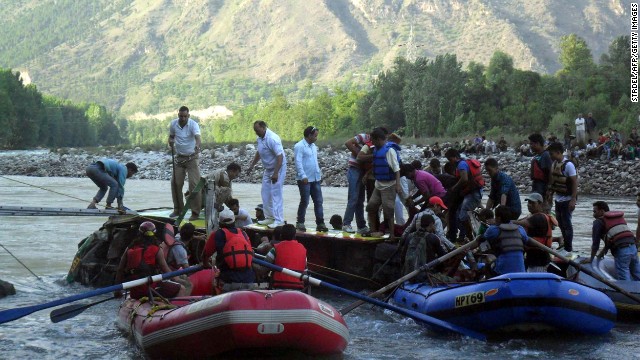
The death toll in Wednesday’s bus accident on the Kullu-Mandi national highway climbed to 40 on Thursday with the recovery of four more bodies while another four persons succumbed to their injuries.

The ill-fated private bus, which plunged into Beas river after skidding off the road, was carrying about 70 passengers.

Eyewitnesses said that the mishap occurred as the driver lost control of the vehicle while talking on his mobile phone.

The driver, who jumped off the bus before it hit the water and fled the scene, was arrested by Kullu police this morning, a release here said.

Thirteen injured persons are currently undergoing treatment at a hospital in Kullu, where the condition of five of them was stated to be critical.

Police said that 35 victims have been identified with 20 of them being women.

Meanwhile, the state government has ordered a magisterial probe into the accident.

DGP Kamal Kumar too has sent a team headed by AIG Rajesh Dharmani along with traffic and railway police to take over the investigation into the mishap, which occurred some 250-km away from the state capital.

The passengers of the over-crowded bus were on their way to attend a three-day local festival at Ani.

Efforts by rescuers to reach the wreckage of the bus in order to pull out bodies and look for survivors was hampered by the turbulent waters of the river in this area.

Seventeen of the passengers were rescued by rafters as the site of the accident at Jhiri is a popular river rafting spot.

Kullu Deputy Commissioner Sharab Negi, who did not rule out the possibility that some passengers might have been washed away in the waters of the Beas, said search operations were on along the banks of the river.

The DGP has directed the inspector general of police (traffic) and railways to issue guidelines for field officers that they may adopt measures which would prevent recurrence of such accidents.

Thursday 9 May 2013

http://zeenews.india.com/news/himachal-pradesh/himachal-bus-accident-toll-rises-to-40-govt-orders-probe_847420.html

continue reading

5 bodies found on Mayon; Thai climber rescued


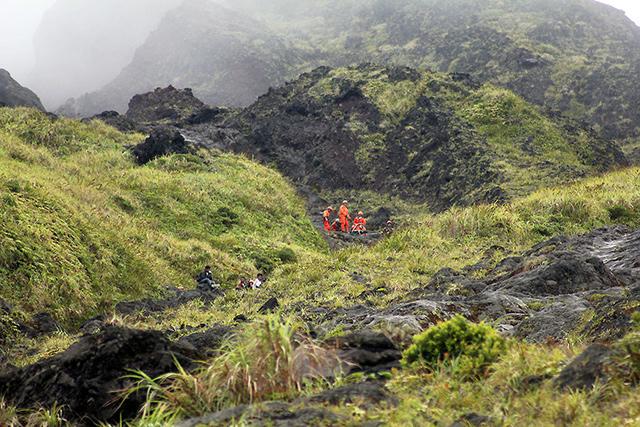
Search and recovery teams retrieved yesterday the remains of four European tourists and their Filipino guide killed in the Mayon volcano explosion last Wednesday, but treacherous terrain and erratic weather hampered efforts to bring the bodies to a safe clearing.

“As of this time, our teams are still about two hours’ walk away from Camp 1. They could not go faster than careful walk due to the very rugged and slippery terrain,” Raffy Alejandro, Bicol director of the Office of Civil Defense (OCD) told The STAR.

Thirty-five-year-old Thai national Boonchai Jattupornong, earlier reported missing, was found alive but weakened by injuries.

Camp 1 is situated at 1,500 meters of the volcano. Mayon is 2,464 meters high.

The recovery team, comprising 60 Army soldiers, found the remains of the trekkers at the 1,800 meter level.

The explosion, called phreatic by scientists, triggered an avalanche of hot boulders that buried German tourists Joanne Edosa, Roland Pietieze and Furian Stelter, and Spaniard Farah Frances who resided in Germany. Also killed was Filipino guide Jerome Berin.

A phreatic explosion occurs when a volcano’s molten rock comes in contact with water. There was heavy rain near the volcano summit on the night before the explosion.

Alejandro said it was unsafe for helicopters to land at Camp 2, which has uneven and unstable terrain.

“So we need to bring the bodies down to Camp 1 for the helicopter pick them up,” he said.

Capt. Vibar Crisostomo, spokesman for the Army’s 901st Brigade, said that rescuers found two female and two male bodies at around 6:22 a.m. yesterday at a place called the Rabbit’s Ear, located at about 1,800 meters elevation.

He said two of the fatalities – a male and a female – were in an embrace when found.

“Our rescuers failed to hold back their tears upon seeing the nearly mangled bodies of the victims,” Crisostomo said.

He said it took recovery teams about seven hours to reach the location of the victims.

Crisostomo said it took five men to carry a body down the steep and slippery slopes.

‘Unreasonably raised’ issues

Albay Gov. Joey Salceda said he would first ensure that survivors of the tragedy are attended to and the remains of the victims recovered before addressing Malacaรฑang’s demand for explanation.

“We will confront these questions without having to demoralize our 72-man rescue team and so many other people who are risking their lives on the slopes of Mayon,” he said. “Our entire attention and efforts have been focused on rescuing the injured rather than answer issues being unreasonably raised, posed by Malacaรฑang. If it is President Aquino, he would have texted me first,” he said.

Earlier, deputy presidential spokesperson Abigail Valte said the President was seeking an explanation on the tragedy.

“That’s what the President ordered to ask – the parameters of the danger zone. And as far as our information has yielded, even if the local government restricts tourist activities there, they have to seek permission because there are guides that just go up without asking permission,” Valte said on Tuesday.

He said the Philippine Institute of Volcanology and Seismology (Phivolcs) had already answered the question when it said that there was “zero alert” before the explosion.

Salceda said the six-kilometer permanent danger zone (PDZ) essentially covers areas around the volcano where human habitation is prohibited. He also said he has never issued any permit to climb Mayon.

“Moreover, none of these tour guide operators or those 27 now affected have ever, ever sought our permission or given notice of their climb,” he said.

“Since becoming governor, I have not permitted or signed any permit for even a single climb to the crater of Mayon,” he said.

He said tour operators would rather deal with the Department of Tourism (DOT) than with Albay Provincial Security and Emergency Management Office for activities in Mayon.

“In our country, some wanted a policy debate on DRR (disaster relief and response) while 12 people were on the brink of death without immediate medical attention and five families abroad were grieving, waiting to get a last look at their lost sons and daughters,” he said.

He said four Thai mountaineers had expressed satisfaction with the progress of the search and recovery efforts. Their conversation with Salceda took place before the rescue of their companion.

“They are very satisfied with the rescue and the medical treatment. But they are worried about their missing friend,” Salceda said. Still alert 0 Meanwhile, Phivolcs kept its zero alert level for Mayon yesterday even after recording two rockfalls in the past 24 hours. “Seismic parameters remain within background levels and indicate no increase in overall volcanic activity,” Phivolcs said, explaining the zero alert level.

An Alert Level 0 means “no magmatic eruption is imminent.”

But Phivolcs said climbers and Mayon visitors should remain alert for steam-driven explosions.

The DOT in Bicol also warned tourists and climbers against entering the PDZ.

“The public is strongly reminded of refraining from entry into the six-kilometer radius permanent danger zone due to the perennial threat of sudden steam-driven eruptions and rockfalls from the upper and middle slopes of the volcano,” Phivolcs said in an advisory.

Thursday 9 May 2013

http://www.philstar.com/headlines/2013/05/09/939988/5-bodies-found-mayon-thai-climber-rescued

continue reading

Eight dead in Bangladeshi garment factory fire


A fire at a garment factory killed at least eight people Thursday in the latest disaster to hit Bangladesh's textile industry, still reeling from the deaths of more than 900 people in a building collapse.

The cause of the fire was not known but authorities said it broke out during the night on the third floor of an 11-storey building housing two garment factories in the capital's Darussalam district.

The owner of the Tung Hai sweater factory was among the victims, but there were no workers among the casualties as there was no overnight production, police and fire service officials said.

"It was a big fire but we managed to confine it on one floor," Mahbubur Rahman, operations director of the nation's fire service department, told AFP.

He said the victims died of suffocation after rushing into a stairwell and becoming overwhelmed by "toxic smoke from burnt acrylic clothing".

Local police chief Khalilur Rahman told AFP the fire killed "eight people including the owner, his four staff, a senior police officer, and a low-level police official".

"We have identities of seven people. But we have not identified the eighth," he added.

The fire comes as recovery teams are still finding bodies in the ruins of the nine-storey Rana Plaza garment factory complex that caved in on April 24 while some 3,000 garment workers were on shift.

More than 100 more bodies were recovered overnight, bringing the overall death toll to 912, according to the army.

Brigadier General Siddiqul Alam Sikder, who is overseeing the recovery operation at the site, told AFP that he hoped to wrap up work on Friday and then leave commercial cranes and bulldozers to shift the remaining rubble.

"We've only still got to search the basement," said Sikder.

"Most of the bodies are now like skeletons as they are so badly decomposed," he added.

Bangladesh is the world's second-largest apparel maker and the $20 billion industry is a key driver of the impoverished country's economy, accounting for up to 80 percent of Bangladesh's annual exports last year.

But it has a shocking safety record and Western retailers have been making threats to pull out of the country unless the authorities can come up with a credible programme to raise standards. Disney has already done so.

The government announced on Wednesday that it had ordered the closure of 18 garment plants, days after it promised to give "the highest consideration" to safety after talks with the International Labour Organization.

Fire is a common problem in the 4,500 garment factories in Bangladesh, with many operations based in badly constructed buildings with substandard wiring.

In November at least 111 people died after a fire engulfed the Tazreen Fashion factory outside Dhaka, in the worst blaze in the history of the country's garment industry.

And in January eight people died in another factory blaze, including two underage workers as they were making clothing for Spanish retailer Inditex, the parent group of the popular Zara brand.

Around 700 people have been killed in garment factory fires in the country since 2006, according to the Amsterdam-based Clean Clothes Campaign activist group.

Western retailers have criticised the factories for not ensuring worker safety, but major brands continue to place orders and critics say they turn a blind eye to the endemic problems.

Two senior US officials spoke Wednesday with American companies that buy garments from Bangladesh and encouraged them to relay concerns about factory conditions to the Dhaka government.

"Both the United States and Bangladesh have a shared interest in ensuring that the growth of Bangladesh's export sector does not come at the expense of safe and healthy working conditions or fundamental labor rights," said a statement from the State Department.

Thursday 9 May 2013

http://www.google.com/hostednews/afp/article/ALeqM5ixjoGLjYj8u22rtcH3TN9nlHA0hw?docId=CNG.8bf8a333733aa0c4e7702cc77d8118ef.331

continue reading

Bodies of Serbs exhumed from Croatian cemetery


The work of finding Serbian victims of the Croatian War of Independence continues, with 56 bodies exhumed in a Zadar cemetery.

The effort began more than a decade ago, the Serbian news agency Tanjug reported. The six-day exhumation in the Zadar city cemetery ended Friday.

Zadar is a city of about 75,000 on the Dalmatian coast northwest of Split.

The bodies will be returned to their families for reburial, officials said.

All the dead were killed in Operation Storm, a Croatian offensive in August 1995 that effectively ended the war. About 2,000 Serbs were killed and thousands more expelled from Croatia in a move Serbia describes as ethnic cleansing.

Thursday 9 May 2013

http://www.upi.com/Top_News/World-News/2013/05/08/Bodies-of-Serbs-exhumed-from-Croatian-cemetery/UPI-46911368036457/?spt=hs&or=tn

continue reading

Wednesday, 8 May 2013

30 found dead in Himachal bus accident


In Himachal Pradesh bus accident, rescue teams have so far retrieved 30 bodies from the bus submerged in Beas River in Jhiri village of Mandi district along Chandigarh-Manali highway. The ill-fated private carrying passengers had plunged into river at around 4 pm on Wednesday.

Rescue operation has been launched with the help of river rafts as bus is buried deep in river water. All the bodies are being taken to Regional Hospital Kullu for postmortem. Around 14-15 injured are already hospitalized.

According to sources, ill-fated private bus left for Ani from Kullu and when it reached at Jhiri it fell into Beas river. Many are feared to be drowned in the gushing river which is overflowing these days due to melting of snow in the mountains.

It is feared that many of the bodies have been washed away in the river. After coming to know about the accident police and district administration has launched massive relief and rescue operation at the accident spot.

Wednesday 8 May 2013

http://timesofindia.indiatimes.com/city/chandigarh/30-found-dead-in-Himachal-bus-accident/articleshow/19954493.cms

continue reading

Death toll in Italian cargo ship crash rises to 7


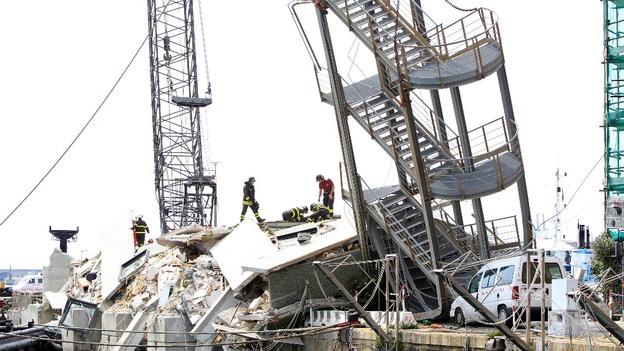
Rescue workers in diving gear found seven bodies Wednesday in the wreckage after a cargo ship slammed into the dock at Genoa, toppling the busy Italian port's control tower into the harbor.

Four people were hospitalized and two others remained unaccounted for, Luca Cari, spokesman for the fire rescue teams at the scene, told The Associated Press.

The crash occurred around 11 p.m. Tuesday during a shift change in the control tower, as the Jolly Nero cargo ship was leaving port accompanied by tugboats.

By Wednesday morning, all that was left of the tower was its mangled exterior staircase, tilted on its side. The tower itself - which was located on the edge of a dock jutting out into the harbor - was either in the water or in a heap of rubble and steel on the dock.

Cari confirmed the seven dead, saying rescue crews recovered several of the bodies from an area near the tower's submerged elevator. There were fears that those still missing might be trapped inside the elevator, Cari said.

There were no reports of missing ship crew.

"This event is unbelievable because we had the best weather navigation conditions," said Luigi Merlo, president of the Genoa port authority. He declined to speculate on a cause, saying the ship had plenty of room to maneuver in the harbor and shouldn't have ended up so close to the dock.

One theory prosecutors were considering was that a possible mechanical failure aboard the ship left the captain unable to steer it properly, Italian news reports said, citing prosecutor Michele de Lecce.

Mauro described the ship, the Jolly Nero of the Ignazio Messina & C. SpA Italian shipping line, as somewhat unique in its height, so that the full weight of the ship slammed "violently" into the tower itself, not just the dock.

"The ship directly impacted the control tower," he told Sky TG24.

The Genoa-based Messina Line has a fleet of 14 cargo ships, with the Italian-flagged Jolly Nero listed at 239 meters (784 feet) long and 30 meters (98 feet) wide, according to its website.

The five bodies recovered included three coast guard officials in the tower at the time of the crash, a port captain and a tugboat operator, said Cmdr. Filippo Marini, a coast guard spokesman. The bodies of the other two dead were being recovered, he said.

In a statement, Messina said it was fully cooperating with authorities to determine the cause of the "tragic" accident, which it said occurred during a normal maneuver to leave the port. It said Messina Line ships do the maneuver with regularity and are always accompanied by tugboats.

"There aren't words to express the dismay and profound condolences for the victims of this tragedy and their families," Messina said in a statement.

Andrea Furgani, an ambulance doctor and one of the first rescuers, said crews brought four injured to hospitals in Genoa.

"The conditions were critical. They mainly suffered wounds caused by compression, broken bones and wounds on the chest," he told the AP.

The disaster shook a nation that just a year ago witnessed another shipping tragedy when the Costa Concordia cruise ship slammed into a reef off Tuscany on Jan. 13, 2012, killing 32 people.

Parliament held a minute of silence Wednesday for the victims in Genoa, the mayor of Genoa proclaimed a period of mourning and Italian President Giorgio Napolitano sent his condolences to the victims' families on behalf of the nation.

Genoa's port, located on Italy's western Ligurian coast, is Italy's busiest in terms of cargo handling, according to the port authority website. It is also a major port of call for cruise ships sailing the Mediterranean.

Wednesday 8 May 2013

http://www.cbsnews.com/8301-202_162-57583426/death-toll-in-italian-cargo-ship-crash-rises-to-7/

continue reading

Bangladesh: Rana Plaza death toll reaches 772


The death toll from the country’s worst-ever industrial accident reached 772 as 12 more bodies were pulled from the rubble Wednesday.

Fifteen days into the terrible collapse of the eight-story Rana Plaza in Savar, rescuers are finding more bodies, most of them badly decomposed.

“Almost all of the bodies being pulled from the rubble are disfigured,” said Kamrul Hasan, Upazila Nirbahi Officer of Savar. “The stench of rotten bodies is growing,” he said.

Rescuers discovered 44 more bodies yesterday, according to information from the Inter Service Public Relations (ISPR) control room at 9pm.

Since the exact number of people inside Rana Plaza at the time of the collapse was unknown, no one has been able to say how many more bodies should be found.

With Tuesday’s recovery, the number of people rescued dead and alive so far stands at 3,152, including the 2,437 people rescued alive.

Rescuers expect more bodies from the rubble as many are still reported missing. A large number of people continue to wait near the site of the collapse for the news of missing relatives. Their gathering point is a school playing field where bodies retrieved from the ruins are taken for initial identification attempts.

The task of identification is made more difficult by the decomposed state of many of the bodies. The recovery effort is expected to continue for several more days, according to rescuers.

Authorities have so far handed over 560 bodies to relatives of the victims while 63 bodies remain at Adhar Chandra High School playground awaiting identification and 47 bodies have been taken to different hospital morgues.

A total of 34 unclaimed bodies that had not been identified because of bad decomposition were buried at the Jurain graveyard in the capital.

Meanwhile hundreds of garment workers who survived the April 24 collapse of Rana Plaza blocked a major highway near the accident site to demand wages and other benefits. No violence was reported, although traffic was disrupted for hours.

The agitated workers withdrew the blockade at noon after officials of the district administration assured them of taking steps in this regard.

Rana Plaza, which housed several garment factories, collapsed on April 24 after owners forced several thousand workers to work there even after cracks had developed on some pillars and floors of the building the day before.

Wednesday 8 May 2013

http://dhakatribune.com/bangladesh/2013/may/08/rana-plaza-death-toll-reaches-734

continue reading

Italy deaths as Genoa ship hits control tower


At least six people have died and four are missing after a container ship crashed into a control tower in the Italian port of Genoa, officials say.

The Jolly Nero smashed into the 50m (164ft) concrete and glass tower late at night, reducing it to rubble.

Three of those who died are believed to have been trapped inside a lift as the tower collapsed.

Rescue workers have been searching in the rubble for survivors while divers scoured the water around the dock.

The accident occurred at about 23:00 on Tuesday night (21:00 GMT), when a shift change was taking place in the control tower and about 13 people were thought to be inside.

The ship was manoeuvring out of the port with the help of tugboats in calm conditions, on its way to Naples, reports said.

The cause of the crash was not immediately clear, but Genoa's Il Secolo XIX newspaper quoted the Jolly Nero's captain as saying that two engines appeared to have failed and "we lost control of the ship".

The head of the Genoa Port Authority, Luigi Merlo, told the newspaper: "It's very difficult to explain how this could have happened because the ship should not have been where it was."

He described conditions in the port at the time of the crash as "perfect".

"It's a terrible tragedy. We're in turmoil, speechless," Mr Merlo told local TV.

The ship's owner, Stefano Messina, who arrived at the port soon after the crash, had tears in his eyes as he told journalists: "We are all utterly shocked. Nothing like this has ever happened before, we are desperate."

Genoa is Italy's busiest port. Mayor Marco Doria said there were an average of 14 accidents a year, but that the incident late on Tuesday was unprecedented.

All that was left of the control tower after the crash was a buckled metal exterior staircase.

"It was an incredible sight: the control tower was leaning perilously," the port's nightwatchman told La Repubblica newspaper.

Three of the victims were coast guard or port workers in their early 30s, while the other bodies had yet to be identified.

Four people were being treated for injuries, two of whom were in critical condition, Italian news agency Ansa reported.

Genoa's prosecutor is investigating the incident, Corriere Della Sera newspaper says. The ship has been impounded and the captain is being questioned.

The Jolly Nero is almost 240 metres (787 feet) long and has a gross tonnage of nearly 40,600 tonnes. It is owned by the Italian firm Ignazio Messina & Co.

The crash revived memories of the crash involving the Costa Concordia cruise ship off the Italian island of Giglio in January 2012, which left 32 people dead.

Wednesday 8 May 2013

http://www.bbc.co.uk/news/world-europe-22444421

continue reading

Tuesday, 7 May 2013

Eighteen dead in gas tanker blast in Mexico City suburb


At least 18 people died and 36 were wounded when a gas tanker exploded outside Mexico City on Tuesday, an official said, raising the toll of the blast.

"The number is updated to 18 people dead and 36 wounded in the emergency in Ecatepec," Salvador Neme, the public safety secretary for Mexico state, wrote on Twitter.

The blast rocked a neighborhood of Ecatepec, north of the Mexican capital, in the early hours of the day, affecting 15 cars and 20 homes, Neme said earlier.

The truck was traveling on a highway linking Mexico City to the central city of Pachuca.

Television images showed charred vehicles on a highway, road cement barriers thrown to the side and buildings in smoke as firefighters and rescue workers sifted through the damage.

Local media reported that the explosion, which closed the highway between Mexico City and Pachuca, could have been caused by a collision.

A giant plume of smoke reportedly rose over the area, about 10km (6.2 miles) north-east of the Mexican capital, after the blast, which happened at about 05:00 local time (10:00 GMT).

Tuesday 7 May 2013

http://www.bbc.co.uk/news/world-latin-america-22438925

continue reading

Border project seeks to identify migrants who die in Arizona


The harsh Sonoran Desert claims the lives of hundreds of people crossing the U.S.-Mexico border each year. Many of the dead — about 1 in 3 — go unidentified. Now there may be an easier way to put a name to some of the suspected border crossers who died north of the international boundary.

On Monday, the Pima County Office of the Medical Examiner and the human rights organization Humane Borders Inc. started an online system that will allow the public to identify the deceased found in southern Arizona — more than 2,000 deaths over 13 years.

"I'm glad to be able to help a small amount. I wish I could do more," said John Chamblee, research chair for Humane Borders.

Although Humane Borders and the medical examiner's office have distinct missions, both agencies want to raise awareness about migrant deaths and lessen the suffering of families. They can do that by helping to identify the dead and return the remains, said Dr. Gregory Hess, chief medical examiner for Pima County, speaking at a Tucson news conference.

The Arizona OpenGIS Initiative for Deceased Migrants will feature a map documenting deaths as far back to 2001. Any user can make inquiries online; the lists of the dead will be updated four times a year.

An anonymous donor gave $175,000 to develop the project, Hess said.

Since 2001, officials have found about 2,100 remains that are believed to belong to migrants. About 700 of those remain unidentified but were determined to be border crossers, based on personal items found on the bodies and other factors.

In cases where only bones are found, medical examiner officials tend to assume the person is a migrant, and they are rarely wrong, said Dr. Bruce Anderson, forensic anthropologist for the Pima County Office of the Medical Examiner.

It is unclear whether deaths before 2001 will make their way into the system because information about them is incomplete, Hess said.

The hope is that the online portal will become a repository for migrant deaths throughout the Southwest, but that will depend on cooperation from other states and on future funding, he said.

The vast majority of those who die in the desert are Mexicans, followed by Guatemalans and Salvadorans, according to a report provided by the Pima County Office of the Medical Examiner. The causes of death for 68% of the migrants are undetermined. Many, however, die of exposure, Hess said.

The website is expected to serve as a tool for humanitarian border groups who leave water along routes in the Sonoran Desert, said Jill Nunes, spokeswoman for human rights organization Border Action Network in Tucson.

"We'll be studying how migration patterns have shifted," Nunes said, adding that the maps will help the group know where to allocate its water.

So far this year, the Pima County Forensic Science Center has discovered 48 sets of remains it believes belong to border crossers. They expect the number to climb during the summer.

Tuesday 7 May 2013

http://www.latimes.com/news/nationworld/nation/la-na-ff-migrant-deaths-20130506,0,1831570.story

continue reading

Sudan: North Darfur refutes death figures at gold mine


The government of North Darfur dismissed death figures circulated in the media this week of miners who got trapped inside a collapsed gold mine.

In a statement signed by North Darfur acting governor al-Fatih Abdel-Aziz Abdel-Nabi the government said that a committee headed by al-Siraif mayor visited the mine area on Saturday.

The committee concluded that only one mine was impacted and that five people were killed. Three of the bodies were retrieved while efforts to get the remaining two failed.

A delegation from the African Union-United Nations mission in Darfur (UNAMID) accompanied the committee and certified the findings, the government said.

The statement said that they had no reports of missing persons in the period of April 29-May 4 in the gold mine area.

Earlier this week it was reported that 100 miners have died at the gold mine in the Jebel Amir district, more than 200 km northwest of North Darfur capital of El-Fasher. Nine other rescuers were killed as well.

On Thursday, the Jebel Amir district chief, Haroun al-Hassan, said "the number of people who died is more than 60," but added it was unclear whether anyone might still be alive according to Agence France Presse (AFP).

The East African country is looking for gold to make up for the budget deficit it incurred as a result of losing three quarters of its oil production due to the secession of South Sudan in July 2011.

But a significant portion of Sudan's gold production comes from thousands of artisanal miners who have joined the gold rush across the country.

Tuesday 7 May 2013

http://allafrica.com/stories/201305060927.html

continue reading

Kin of Seti flood victims remember loved ones


A function was organized at Kharpani riverside to pay tribute to those killed in the Seti river flash flood that took place exactly a year ago today (Baisakh 23).

Jog Maya Gurung could not help bursting into tears while remembering her octogenarian father Bal Bahadur and mother Buddhisri, who were swept way by the flash flood on May 5 last year. “This day reminds me of my parents. The riverside always haunts my memory,” she said.

Bal Bahadur´s nephew Bam Bahadur said the flash food caused his family indelible pain. “This day is very painful for us,” he said.

As per government information, 27 people were killed and 32 went missing in the flood. However, the families of the flood victims said that their pain has been exacerbated as the government has not declared the missing people dead even after one year. The victims´ families want the government to declare people who are still missing in the flood dead.

“If the government cannot provide relief to the families of the missing, it can at least declare them dead,” said Komal Prasad Joshi, whose son is among the missing.

“Neither could we rescue our family members nor recover their dead bodies. We are unhappy that the government has still not declared them dead,” said Joshi.

“It´s already one year since the incident. My wife´s eyes fill up with tears whenever she remembers our son. The pain becomes really unbearable when I see him in my dream,” Joshi added.

Dilip Shrestha, who lost a daughter in the flood, could not help bursting into tears while announcing a permanent fund of Rs 150,000 in her memory.

On the occasion of the first anniversary of the flood, various institutions organized the program to pay tribute to the dead and missing.

Tuesday 7 May 2013

http://www.myrepublica.com/portal/index.php?action=news_details&news_id=54278

continue reading

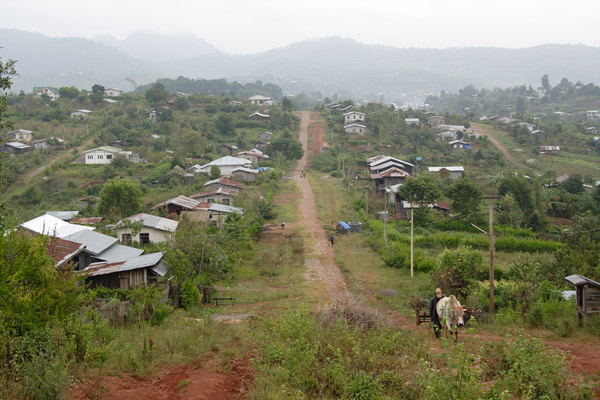
Floods, mine collapse cause deaths in Shan State


Several people have been killed by heavy flooding in Shan State, with at least nine corpses recovered from a gold mine in Kalaw Township which collapsed on Thursday.

According to a local police station, a heavy rainstorm hit the area on the morning of May 2 and quickly caused floods.

Speaking to Mizzima on Friday afternoon, second police chief Kyaw Min Tun said, “We heard that a mining operation has collapsed and rescue teams have been deployed.”

A hospital official confirmed on Friday that the local hospital in Kalaw had received dead bodies and wounded miners.

“The hospital received nine corpses between 4pm and 5pm on May 2,” he said. “There are also three inpatients. Another four patients were taken to Taunggyi Hospital.

“We heard that the gold mines located between Shweminphone Village and Lepyin Village had collapsed because of the heavy floods,” he said.

Tuesday 7 May 2013

http://www.mizzima.com/news/inside-burma/9345-floods-mine-collapse-cause-deaths-in-shan-state.html

continue reading

Monday, 6 May 2013

Ten killed in road accident in Prakasam


Ten people were killed and four others injured when a Puducherry-bound lorry overturned on the Chennai-Kolkata National Highway at Singarayakonda in Prakasam district in the wee hours of Monday.

Singarayakonda Circle Inspector T.Ashok Vardhan said that the 14 people had boarded the lorry carrying cement from Kodada in Nalgonda district, at Addanki in Prakasam district to attend a prayer meeting in Chennai.

The mishap occurred when the driver of the lorry applied sudden brake and as a result the vehicle overturned and fell on the road margin, the CI said.

The injured were rushed to the Rajiv Gandhi Institute of Medical Sciences here.

Poclaine’s were put into service to extricate the bodies from among the cement bags.

Further details are awaited.

Monday 6 May 2013

http://www.thehindu.com/news/national/andhra-pradesh/ten-killed-in-road-accident-in-prakasam/article4688657.ece

continue reading

Bangladesh: Disaster ministry facing shortage of rescue equipment


The Ministry of Disaster Management and Relief and the Department of Disaster Management are facing an acute shortage of sufficient equipment to operate a speedy rescue drive at the Savar building collapse site.

Due to lack of more modern rescue machines, the relevant authorities have undertaken rapid actions to purchase those.

According to the department of disaster management, it has already submitted a plan to purchase heavy rescue equipment at a cost of Tk1.6bn for smooth rescue operation during any disaster.

The project is now in the planning ministry. It will be tabled to the Executive Committee of National Economic Council (ECNEC) within a short time for its approval.

Mohammad Abdul Wazed, Director General (DG) of Department of Disaster Management told the Dhaka Tribune last week: “We have a major shortage of necessary modern equipment to conduct rescue operation during any disaster.”

If the government approves the proposal and takes necessary steps for purchase, that will be a great help to face the post-disaster period, added the DG.

The procurement process of heavy machines will begin after getting approval from ECNEC, he continued.

According to the department of disaster management, it has proposed to buy some heavy equipment, including a sensitive device named “coloured varifocal camera,” which is normally used to identify people trapped in rubble.

Other equipment that proposed for procurement in the next phase are: two cranes (30 tonnes), 25 heavy hydraulic vibrators, 50 light hydraulic vibrators, two excavators with attachment, two fork lifts, two dump trucks, 10 search vision cameras, 25 air compressor machines, 100 hydraulic jacks, 100 hydraulic spreaders, 100 hydraulic cutters, 100 hydraulic ram jack, 100 chipping hammers, 100 rotary hammer drills, 100 rotary rescue saws/slab cutters, 100 reciprocating saws, 100 power chain saws, 100 electric drills, 100 generators, 200 bolt cutters, 200 chisels, 200 pry bars, 200 craw bars, 200 tin snips, 200 hand saws, 200 shovels, 100 pipe squeezers, 200 inflatable stretchers, 100 extension ladders and 50 smoke ejectors.

Mohammed Abdul Wazed said: “We still need some modern equipment including the CDC camera, a human-sensitive device to identify trapped people in the collapsed building. We could not import the device along with other tools in our concluded project as the budget was reduced from the main proposal.”

Earlier in 2010, the Ministry of Disaster Management and Relief purchased a total of 18,150 light rescue equipment at a cost of Tk600m and handed over those to the Armed Forces Division, Fire Service and Civil Defence, city corporations and coastguards.

The light equipment purchased included: rotary rescue saw/slab cutter, reciprocating saw (run by electricity), rotary hammer drill (run by electricity), wood circular saw (run by electricity), chain saw, generator (portable) 1000 watt, generator (portable) 5000watt chipping hammer, hydraulic ram jack, spreader and cutter.

Monday 6 May 2013

http://dhakatribune.com/bangladesh/2013/may/06/disaster-ministry-facing-shortage-rescue-equipment

continue reading

New Zealand skydiving plane crash: Bereaved families urge changes


Pilot error or mechanical failure were the most likely causes of a 2010 tourist plane crash in New Zealand in which nine people died, a coroner found Monday.

The Fletcher FU24 plunged to the ground and burst into flames shortly after takeoff on September 4, 2010, near Fox Glacier on the rugged west coast of New Zealand's South Island, in New Zealand's worst air accident since 1993.

The plane -- operated by Skydive New Zealand -- was carrying a pilot, four skydive instructors and four foreign tourists from Britain, Ireland, Germany and Australia. There were no survivors.

Coroner Richard McElrea found the plane, a converted crop duster, was also overloaded and off balance when it took off on a "near vertical" climb then apparently stalled before crashing.

"It is unlikely that the cause of the crash will ever be fully understood -- something unusual, such as inadvertent pilot error or engine malfunction/mechanical failure, has occurred at take-off," he said.

"This, coupled with the aircraft being overweight and loaded rearwards of its centre of gravity, is consistent with the evidence and has been the immediate cause of the tragedy."

The crash victims included five New Zealanders and the four foreign tourists.

McElrea said eight bodies were found in the plane's tail section, raising the possibility that they slid backwards during the plane's ascent, throwing off its centre of gravity.

He recommended fitting restraints on skydiving flights using the FU24 to prevent such movement and limiting the number of passengers to six.

The families of the four tourists who perished released a letter to Prime Minister John Key calling for tighter enforcement of aviation regulations operating in New Zealand's adventure tourism industry.

The families criticised what they said was a lack of accountability in the industry, pointing out that nobody had been prosecuted over the accident.

"It has been said in New Zealand that tourists who come to take part in adventure sports 'know the risks" -- this seems to us an astonishing attitude," the letter said.

"It is incumbent upon the authorities to do everything in their power to make sure that all activities are as safe as they possibly can be."

Monday 6 May 2013

http://www.enca.com/world/tourist-plane-crash-probed-0

continue reading

US citizens among those missing in Mexico


The drug war in Mexico has claimed at least 70,000 lives, but the full death toll may never be known because thousands are searching for relatives who have disappeared.

Along the border, some of those missing in Mexico are U.S. citizens.

“It’s individuals that communicated with their loved ones on a daily basis, and — all of a sudden — they disappear,” said Oscar Hagelseib, assistant special agent in charge of Homeland Security’s investigations in El Paso.

The agency helped Mexico pinpoint the location of a mass grave in the Valley of Juรกrez last November.

“The intelligence was there was a strong possibility there were United States citizens there,” Hagelseib said.

Just across the border from El Paso on the outskirts of Juรกrez, forensic workers dug up the remains of 20 men.

All had been murdered; some showed signs of torture.

A spokesman with the Chihuahua state attorney general’s office said investigators stopped digging in the area four days after they started because they had had “recovered all the remains that were at the site.”

Some of the bodies still have not been identified. Mexico continues to find mass grave sites in areas ravaged by drug violence. The U.S. State Department documents the deaths of Americans in Mexico, but does not keep a comprehensive report of U.S. citizens who disappeared.

Jason Macias disappeared on August 30, 2011. The 23-year-old worked as a school security guard in his hometown of El Paso. In his final Facebook message posted he said, “Ate a large pizza, watching a movie.”

When he failed to show up to work the next day, his family reported him missing.

Police found Macias’ passport and cell phone in his apartment. His truck was parked outside. Detectives investigating the case suspect foul play.

A bulletin was issued after his disappearance, and noted Macias had traveled to Chihuahua, Mexico on several occasions a couple of months before he vanished.

His mother said that was unusual.

Macias’ family lives on the U.S. side of the border, but his mother was afraid to talk about the details of the disappearance. Others are banding together to speak out.

On a recent evening a few blocks from the border, a vigil was held.

“Tonight, Annunciation House bears witness to the disappeared by projecting over 9,000 of the names from all over Mexico of the desaparecidos [missing],” said Ruben Garcia, director of Annunciation House.

The non-profit organization helps migrants and refugees. In recent years, it has seen a spike in the number of Mexicans fleeing violence.

At the vigil, the names of people missing in Mexico were projected on the side of a building as volunteers, family members and others lit candles to remember the disappeared.

“I really didn’t know much about the disappeared until I moved to the border,” said Kristen Bowdre of Dallas, who is spending a year volunteering at Annunciation House.

The parents of two young women who disappeared spoke to the crowd.

Diana Ramirez Hernandez and Monica Alanis Esparza were both 18-year-old college students when they vanished.

“They’re not dead, but we’re not living either,” said Ricardo Alanis Esparza. His daughter, Monica, has been missing since 2009. Agent Hagelseib understands their pain.

“Personally, it happened to me where a cousin was killed by a drug cartel and he had nothing to do and was never involved in this.” Hagelseib said. “He was just in the wrong place at the wrong time. They wanted his truck, so they killed him.” Many other families continue to search for answers.

Mexico’s Interior Ministry estimates 26,000 people were reported missing during the six years when Felipe Calderรณn was president and drug violence spiked. The current administration released that number, but did not say which cases may be tied to organized crime.

Human Rights Watch released a report in February that said it documented at least 250 cases of people who disappeared. Human rights organizations say military and police are behind some disappearances.

Whatever the circumstances, in many cases, families are left to search for their missing loved ones on their own.

Victim’s advocates are now calling on the Mexican government to create a national DNA database to help match the missing with bodies waiting to be indentified in morgues. Relatives in many states have provided authorities with DNA samples.

Monday 6 May 2013

http://www.wfaa.com/news/texas-news/206206041.html

continue reading

Remains of helicopter crash casualties in Irkutsk region found


A Mi-8 helicopter that went missing in Russia's Irkutsk region was found crashed and destroyed, with ten people and about two tons of explosives aboard, the Emergency Situations Ministry said Monday.

Russian Emergency Ministry officials say the MI-8 helicopter went missing while taking part in a flood rescue operation in the region's north.

Hours later, the helicopter’s wreckage was found.

Crew members, rescue officials, and the region's acting emergency situations chief, Stanislav Omelyanchik, were aboard the aircraft.

Rescue teams spotted bodies from the air, but it is not clear if all the people onboard were killed.

"The Mi-8 helicopter was discovered seven kilometres from the Preobrazhenka settlement with signs of destruction," the spokeswoman for the emergencies ministry, Irina Rossius, told the RIA Novosti news agency.

The agency added that it was carrying several tonnes of explosives being used to break up ice on rivers.

Monday 6 May 2013

http://www.rferl.org/content/russia-helicopter-crash-siberia/24978070.html

continue reading

Missing plane wreck found in Russia's Urals Mountains


Hunters in the Ural Mountains of Russia have discovered the wreckage of a light aircraft that went missing with 13 people nearly a year ago.

The two hunters spotted the debris in marshland near an airfield in the town of Serov, from where the plane had taken off without permission last June.

Investigators said Monday that they are now considering at least three possible scenarios for the plane crash that saw an Antonov An-2 with 13 people on board come down over Russia’s Urals mountains last June, after airplane wreckage was finally discovered.

Technical malfunction, pilot error and poor weather conditions are the three most likely reasons that could have caused the biplane to crash into the marshy forest just eight kilometers from the airport, transport investigators said Monday in a statement.

A criminal probe into the mysterious crash was re-opened Sunday, months after a massive search operation for the plane had been halted.

The light An-2 aircraft, which was tasked with monitoring wildfires, went missing last June after being hijacked from the Urals airfield near the town of Serov by revelers who did not inform air traffic control.

Investigators previously suggested that the plane might have been stolen by the pilot and his drinking buddies for a fishing trip or a visit to the bathhouse.

Officials said on Monday that remains of all 13 missing people have been recovered from the crash scene.

One pilot and 12 passengers are thought to have been among those killed, including Serov’s chief of traffic police and his subordinate inspector.

Photos from the scene obtained by RIA Novosti featured a broken and burned frame of the plane lying on the ground between the woods and a heap of bones.

Anastasia Rogulina, whose sister Yulia Safonova died in the crash, has cast doubt on official reports about the find, saying that many questions remain unanswered.

"Judging by the video [from the scene], I can suggest that it had been dragged to that place and burned. There aren't even burned trees around it…” Rogulina said in an interview with the local Globus news portal on Sunday.

Sverdlovsk Region head Yevgeny Kuivashev has ordered compensation of 1 million rubles ($32,150) to be paid for each victim, the governor’s office said on Monday.

The search for the missing plane was halted in November 2012, due to bad weather conditions, and was expected to resume this spring.

The criminal case was opened on charges of the breach of flight safety rules and aircraft operation entailing the death of more than two people through carelessness.

Dubbed “ghost plane” by the press, the fate of the An-2 that went missing over the Urals taiga became one of the biggest modern mysteries in Russia.

During the search operation that covered thousands of kilometers, rescue teams even managed to find debris of a different An-2 and Mi-8 helicopter that went missing in the 1980s.

But rescuers were forced to call off the search last November as winter closed in.

The grouse hunters found the charred An-2 biplane about 8km (5 miles) from the airfield on Saturday evening.

It was suspected that the pilot had taken the biplane for an unauthorised flight with a group of friends, who he had been drinking with - including the chief of the local traffic police.

Investigators suspected they were heading for a fishing expedition or sauna visit when the aircraft came down shortly after take-off.

There is no word on the cause of the crash.

Monday 6 May 2013

http://www.bbc.co.uk/news/world-europe-22423413

continue reading

Military identifies KC-135 crash victims


The Department of Defense identified the victims of a deadly KC-135 crash on Sunday. Three airmen based out of Fairchild Air Force Base died on Friday while supporting Operation Enduring Freedom near Chon-Aryk, Kyrgyzstan.

The airmen were assigned to the 93rd Air Refueling Squadron, Fairchild Air Force Base, Wash. The cause of the crash is under investigation according to the Department of Defense.

Col. Brian Newberry, 92d Air Refueling Wing Commander, announced Sunday that he will hold a press conference at 3 p.m. to discuss the three Fairchild Airmen who died.

“We will forever honor Tyler, Tori and Tre as patriots and heroes. Team Fairchild will do everything we can to support their families and friends during this profoundly difficult time. These Airmen leave behind an incredible legacy of service and honor in protecting our nation and the world. They show what we all know, freedom is not free,” said Newberry.

The KC-135 plane crashed Friday afternoon about 100 miles (160 kilometers) west of the air base. Emergencies Minister Kubatbek Boronov told The Associated Press that Kyrgyz search teams found the two fragmented bodies Saturday morning. Dozens of U.S. military personnel scoured the area on Saturday and set up a security cordon around the crash site.

Parts of the plane were scattered across a wide area near the village of Chaldovar. Some pieces, including the tail, came down in a grassy valley bordered by steep mountains, but others landed in spots much more difficult for search teams to reach.

Residents of the rural, sheep-herding region described hearing the plane explode in the air and seeing it break apart as it fell.

"I heard a very loud explosion," Emil Bokochev, a member of the village council, told an AP reporter at the site. "Literally six or seven seconds afterward there was another explosion and the plane broke apart into four or five pieces and at that moment we thought it was going to fall on the village Chaldovar."

The plane was on a refueling mission for Afghanistan war operations at the time of the crash, a U.S. defense official in Washington said, speaking anonymously because he was not authorized to discuss the details of an ongoing investigation.

Monday 6 May 2013

http://www.king5.com/news/local/Military-identifies-KC-135-crash-victims-206195991.html

continue reading

Bangladesh building collapse death toll passes 650: army


The death toll from Bangladesh's worst industrial disaster surpassed 650 Monday after dozens of bodies were pulled from the wreckage of a nine-storey building housing garment factories, the army said.

Major Manzur Elahi of the army control room, which was set up to coordinate the rescue operation following the disaster last month, told AFP that recovery efforts had gathered pace and the "death toll now stands at 654".

"The toll is expected to rise further," he said.

The building, which housed five garment factories, collapsed near the capital Dhaka on April 24, trapping more than 3,000 people. Some 2,437 people have been rescued, Elahi said.

Hundreds of distraught relatives gathered at the site on the 12th day, as cranes and bulldozers cut through a mountain of concrete and mangled steel.

Officials said the bodies pulled out have missing limbs in some cases or have decomposed, delaying identification. They identified only a handful of them by their mobile phones that were found in their pockets or factory identity cards.

Military rescuer Major Delwar Hossain late Sunday told AFP the stench at the site suggested more corpses were trapped under the rubble, forcing search teams from the army and fire services to wear masks.

"The foul odour is so strong you cannot work there without wearing masks and using air fresheners," Hossain said.

Preliminary findings of a government probe have blamed vibrations by four giant generators on the compound's upper floors for triggering the collapse.

Police have arrested 12 people including the building's owner Sohel Rana and four garment factory owners for forcing people to work on April 24, even though cracks appeared in the structure the previous day.

The wife of a male garment worker killed in the disaster has also filed a murder complaint against Rana, one of the garment factory owners and a municipal engineer. The three face death by hanging if convicted of murder.

Rana, a local leader of the ruling Awami League political party, was arrested after a four-day hunt as he tried to flee to India.

Factory workers have held protests, calling for tough punishment for those responsible for the disaster, and demanding improved safety regulations.

The tragedy came just five months after a fire killed 111 people in a nearby garment factory.

UK retailer Primark, Italy's Benetton and Spanish firm Mango have admitted they had placed orders with the factories based in the compound, triggering an angry response in many Western countries.

Bangladesh is the world's second-largest garment exporter after China. The industry accounts for 80 percent of the country's exports and more than 40 percent of its industrial workforce.

Monday 6 May 2013

http://www.channelnewsasia.com/news/asiapacific/bangladesh-building-collapse-death-toll-/664922.html

continue reading