Showing posts with label Kashmir. Show all posts

Friday, 10 May 2013

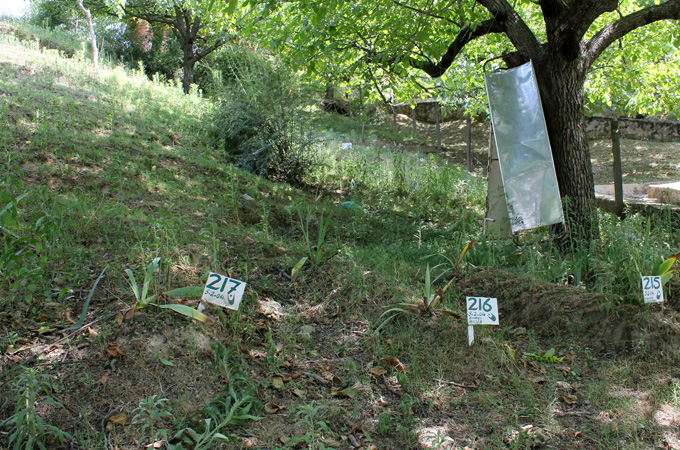
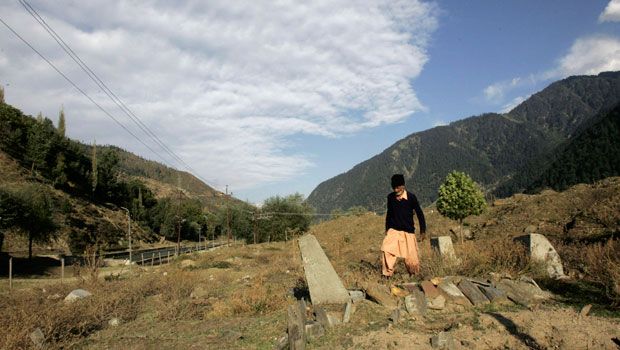
New mass grave haunts Kashmiris


The members of the Association of Parents of Disappeared Persons (APDP), demand the whereabouts of their missing relatives, who have been subjected to enforced custodial disappearance allegedly by Indian forces during the past two decades of conflict.

The traumatized relatives of these missing persons lay the blame on the state and central government for their plight.

Human rights groups claim that around 8000 people have been subjected to enforced disappearance by Indian forces in this Muslim-majority region. They believe that many of the disappeared persons may have been buried in these 'unmarked' graves.

On May 6, during a debate in the European Parliament on the human rights policy, a member of the European Parliament, Sajjad Haider Karim accused the European Union of double standards over the issue of mass graves in Kashmir.

Stating that the discovery of mass graves has put India under great pressure, Karim called for an investigation on this issue in Kashmir.

According to the International People's Tribunal on Human Rights and Justice in Kashmir, there are more than 7000 unmarked graves dotting the lush-green landscape of this beautiful valley.

A human rights organization - Joint Voices of Victims - has discovered more than 60 unidentified mass graves in central Kashmir’s Budgam and Srinagar districts alone.

Even as authorities claim that the graves carry bodies of foreign militants killed in counter insurgency operations, the relatives of missing persons have reiterated their demand for immediate DNA profiling to identify bodies discovered in these mass graves.

International rights watchdog bodies, namely United Nations Human Rights Council (UNHRC) and Amnesty International have repeatedly criticized India for its poor human rights record in this region.

Political observers believe the excessive powers given to soldiers under draconian laws like Armed Forces Special Powers Act (AFSPA) are the cause of the human rights abuses happening there with a sense of impunity.

Kashmir is a subject of dispute between India and Pakistan and the two countries have fought three wars over this disputed region. India blames Pakistan for supporting separatist rebellion in the Muslim majority territory. According to human right groups more than 70,000 people have lost their lives in conflict in Kashmir since late 1980s.

The distraught relatives of missing persons in Kashmir have appealed to the UN to set up a monitoring group in the region. The move, observers believe, can go a long way in addressing the issue of grave human rights abuses in the region but could be a positive step in keeping unruly soldiers under control.

Friday 10 May 2013

http://www.presstv.ir/detail/2013/05/09/302681/new-mass-grave-haunts-kashmiris/

continue reading

Saturday, 27 October 2012

‘Disappeared’ in Kashmir

It is not surprising at all that the chief minister of Indian Kashmir, Omar Abdullah’s written statement on the disappeared persons, in the assembly on Oct 8 should have been received with complete disbelief.

He said, “Till ending July 2012, 2,305 persons have been declared missing.” FIRs were lodged only in 182 cases. In the rest of the cases, “missing reports and complaints have been lodged”.

Sana Altaf of the Srinagar daily Greater Kashmir noted “even after 23 years of armed conflict, no authentic official data exists on the number of disappeared persons in Kashmir valley while successive governments continue to come up with contradictory figures”.

According to the National Conference government headed by Farooq Abdullah the official figure of disappeared persons stood at 3,184. The then People’s Democratic Party government headed by Mufti Sayeed informed the assembly in February 2003 that 3,744 persons went missing between 2000 and 2002.

According to the Srinagar-based Association of Parents of Disappeared Persons (APDP) which has rendered yeoman service all these years, at least 8,000 persons have disappeared since the militancy began in 1989. Punjab witnessed a similar pattern of abuse and cover-up during the counter-insurgency operations from 1984 to 1995.

An inquiry by the police investigation team of the Jammu and Kashmir State Human Rights Commission (SHRC) has found 2,730 bodies dumped into unmarked graves in four districts.

The Inquiry Report of Unmarked Graves in north Kashmir, submitted by the investigating police team to the SHRC on July 2, 2011, said that the unidentified bodies had been buried in 38 sites in the Baramulla, Bandipora, Handwara and Kupwara districts. At least 574 were identified as the bodies of local Kashmiris. The government had previously said that the graves held unidentified militants.

Meenakshi Ganguly, South Asia director of Human Rights Watch, said: “For years, Kashmiris have been lamenting their lost loved ones, their pleas ignored or dismissed as the government and army claimed that they had gone to Pakistan to become militants. But these graves suggest the possibility of mass murder. The authorities should immediately investigate each and every death.”

The Inquiry Report recommended that the SHRC call for immediate DNA sampling and other forensic tests to try to identify the bodies by matching them with the next of kin of the people who have disappeared. Seventeen of the bodies found in the four districts have already been reburied by relatives in family graveyards. The investigation found that 18 of the graves contained more than one body. But the Kashmir government has refused to conduct DNA tests to identify the bodies.

New terms have come into vogue. The wife of a ‘disappeared’ man is called ‘half-widow’. International law, especially international humanitarian law, has begun to grapple with the problem. For long the chairperson of the Working Group on Enforced or Involuntary Disappearances studied the record in some countries and reported to the then UN Human Rights Commission at Geneva now replaced by the Human Rights Council.

The International Convention on the Protection of All Persons from Enforced Disappearances defines enforced disappearances as “the arrest, detention, abduction or any other form of deprivation of liberty by agents of the state or by persons or groups of persons acting with the authorisation, support or acquiescence of the state, followed by a refusal to acknowledge the deprivation of liberty or by concealment of the fate or whereabouts of the disappeared person, which place such a person outside the protection of the law”.

The convention grants all persons directly harmed by an enforced disappearance, such as family members of the disappeared, a “right to know the truth regarding the circumstances of the enforced disappearance, the progress and results of the investigation and the fate of the disappeared person”. India signed the convention in 2007 but has not ratified it.

The convention prohibits states from claiming a lack of resources to justify refusing to investigate a possible enforced disappearance by placing a duty on states to guarantee those resources. ‘Security’ cannot justify refusal to release information related to enforced disappearances. No “exceptional circumstances whatsoever, whether a state of war or a threat of war, internal political instability or any other public emergency, may be invoked as a justification for enforced disappearance”.

Mr Ravi Nair, executive director of the South Asia Human Rights Documentation Centre in New Delhi, to whom this writer is much indebted for his assistance, rightly holds that the law is violated if governments impose on the families of the victims the burden to provide information before attempting to identify whether any of the bodies belong to disappeared persons.

The UN Human Rights Committee places the burden of implementing the right to the truth on the state, not the victim’s family: “In cases where allegations are corroborated by credible evidence … and where further clarification depends on information exclusively in the hands of the state party, the committee may consider … allegations substantiated in the absence of satisfactory evidence or explanations to the contrary presented by the state.”

Disappearances blight the lives of whole families. In Kashmir they spread what The Economist aptly called “a war-borne epidemic of mental illness”.

Saturday 27 October 2012

http://dawn.com/2012/10/27/disappeared-in-kashmir/

continue reading

Saturday, 20 October 2012

The truth lies six feet under

NOT TOO long ago, Kashmiris saw a ray of hope when Chief Minister Omar Abdullah announced that he would revoke the draconian Armed Forces Special Powers Act. However, he failed to walk the talk. The interlocutors’ report met the same fate. Now, the issue of thousands of unmarked graves dotting the meadows and mountains of the state has reached a similar conclusion.

When the mass graves were discovered in 2005, Omar had agreed to use DNA tests to identify the corpses. But in a report published on 13 August, the Home Department (of which Omar is in charge) has not only declined DNA testing, but also labelled those buried as “combatants” amid pleas from hundreds of families that their relatives may have been buried in unmarked graves after fake encounters.

The government’s action-taken report (ATR) was filed in reply to the State Human Rights Commission (SHRC), following the latter’s April 2012 finding of 2,156 unidentified bodies at 38 burial sites in north Kashmir, of which 574 were identified as those of local residents. The SHRC had demanded DNA testing of the corpses. However, the government said DNA testing would be done only when the complainant could locate the graveyard and the grave in which their relatives might be buried with a “fair amount of certainty” — a rider ridiculed by human rights activists and the families of the missing.

It’s pertinent to note that the government’s ATR is entirely based on police FIRs, thus making it a contentious report.

“The government’s report is aimed at burying the past,” says Razia Sultana, 36, whose 22-year-old quest to find her missing father ultimately led human rights groups to the unmarked graves. She started searching for Raja Ali Mardan Khan (then 55) of Bela Boniyar village, located 90 km from Srinagar, after he didn’t return home on 13 May 1990. The last time he was seen was at a provision store with a bag of sugar and a pack of cigarettes in his hand.

“I lodged a missing persons report but the police’s reaction was that he might have crossed the LOC (Line of Control). I was shocked. He didn’t need to because he had a government job. Anyway, he was too old to go for gun training,” she says.

Sultana’s mother and sister made a trip to Pakistan-occupied Kashmir (POK), but they failed to locate Khan. Since then, she has visited many graveyards, police stations, torture cells and militant hideouts.

It was during the October 2005 earthquake when a team of human rights activists led by the J&K Coalition of Civil Society (JKCCS) and the Association of Parents of Disappeared Persons (APDP) reached Bela Boniyar with relief that Sultana disclosed the presence of mass graves.

Four years later, in November 2009, the JKCCS and the International People’s Tribunal on Human Rights and Justice in Kashmir came out with their preliminary report called ‘Buried Evidence’, which revealed the presence of 2,700 unmarked graves spread across 55 villages of Kupwara, Baramulla and Bandipora districts.

TEHELKA TREKKED to Bimyar, perched on a mountain overlooking paddy fields and the gushing Jhelum beneath the foothills, located 20 km away from Baramulla town.

In 2003, Atta Mohammad, 65, a farmer, was forced by the police and the Indian Army to become a gravedigger on what was until then a wasteland. “I wasn’t a professional. It took me four hours to dig a grave,” he recalls. “But as the body count rose, I was digging graves at a faster rate.”

He remembers burying the first body. “That night, I vomited. I couldn’t sleep at all. The mutilated face kept haunting me,” he says. The experience made Mohammad decide not to dig any more, but the bullet-ridden bodies started to come in threes and fours; one day the toll was nine. Just like cops and soldiers, families too started pouring in, but very few were successful in identifying the graves of their relatives.

Out of 200 graves, only six bodies have been identified. Relatives would confirm from Mohammad about the clothes and appearance of the body he had buried. The next day, they would come with marble tombstones with the names of the victims etched on them. “At least for some, the struggle would end there. But there are many who came and left dejected. They think their kith and kin are buried here. But there’s no way to prove it,” he says.

Mohammad narrates a chilling incident when a body came for burial and he wanted help in shifting the body. He asked Ghulam Mohiuddin Dar, an electricity board employee working in Bimyar, to assist him. Dar refused. “The next day, Dar came with tears in his eyes. He told me the boy that I had buried was his son,” he recalls.

In fact, when Mohammad went to POK to visit his relatives in 2006, nine bodies were brought to Bimyar for burial. One of the buried, he would later learn, was his nephew Mohammad Saleem, who had gone missing. The old man never tried to open any of the graves to locate his body.

There are bones beneath the Kichama earth too, located 8 km from Baramulla town. Of the skeletal remains of 105 people, not a single body has been identified.

“Each body bears bullet marks. Some are surely not from Kashmir, but the others seem to be local youth,” says Ghulam Mohammad Mir, 42, who oversees the graveyard. “The security forces say they were killed in gunbattles. They would dump the bodies and we would oblige them.”

Mir shows a grave that contains three bodies. According to him, the police and the army had brought the partially burnt bodies, who they claimed were militants. The villagers buried them in a single grave after removing their tattered clothes. Even today, the clothes remain tied to the tree trunks waiting for anyone to identify them.

AMONG THOSE who called the government report “an insult to the families of the disappeared” is lawyer Parvez Imroz of the JKCCS. While demanding DNA testing of the unmarked graves, he compares the situation with Pakistan’s violence-hit Balochistan. “We slam Pakistan for its poor human rights record, but even they have allowed a UN team to visit the conflict-ridden state. Pakistan has also appointed a three-member parliamentary committee to look into missing person cases that run into hundreds. But when it comes to Kashmir, where the figures are in the thousands, the government not only refuses to identify the dead, but also asks families of the disappeared to identify the grave.”

Even the SHRC’s Division Bench member Rafiq Fida criticises the official stand: “There are cases when a person from south Kashmir was found to be buried in the north. The government’s decision to do DNA profiling only when someone can tell with a fair amount of clarity where his relative is buried is ridiculous. If people knew where their missing are buried, why would they knock on the government’s doors?”

Then there are several cases that puncture the government’s claims that all those buried were combatants. Kashmir already has fake encounter cases such as Pathribal, Ganderbal and Machil in which the dead were dubbed Pakistani militants and buried in unmarked graves before their exhumation and DNA profiling indicated that they were local youth killed for promotions and rewards.

Reyaz Ahmad Bhat’s death is one such example. On 29 April 2007, the army’s 47 Rashtriya Rifles (RR) and the police’s Special Operations Group claimed to have killed four Pakistan-based Lashkar-e-Toiba militants, who were then buried at Sedarpora in Kupwara. Later, three of the bodies were identified as those of locals killed in fake encounters: Bhat, Manzoor Wagay and Sartaj Ganai. The identity of the fourth body was never ascertained. The bodies of Wagay and Ganai were exhumed and buried in Shopian and Pulwama, respectively.

At Kailashpora in Srinagar, where Bhat lived before disappearing on 4 April 2007, Safina and Javaid Ahmad Bhat are seeking DNA testing of the other two graves to ascertain which of the two graves contains their brother’s body. “We learnt about the death eight months after his disappearance when an anonymous caller said that our brother has been killed. The police showed us a picture of our dead brother, a copy of the FIR declaring him a Pakistani terrorist and the graveyard he was buried in. But we are still not sure in which grave,” says Safina.

In fact, there are cases in which the lack of DNA testing has seen several families claiming one body. For example, when the army’s 18 RR claimed to have gunned down two militants during an encounter in Kupwara on 24 April 2004, Noor Mohammad Shah and Syed Mustafa of Waliwar village in Ganderbal district claimed the bodies and approached the Kupwara District Magistrate for exhuming the bodies. Permission was granted and the bodies were buried again in Ganderbal.

The case took a U-turn on 2 October 2005 when Madan Lal of Nangocheck lodged a written report in Lalpora Police Station saying that Major Vijay Char of 18 RR had taken his son Bhushan Lal on 13 April 2004 along with three other Jammu-based labourers to Kupwara. Madan Lal alleged that the youth were killed in a fake encounter and demanded DNA tests.

‘If people knew where the missing are buried, why would they knock on the government’s doors?’ asks Rafiq Fida

A three-member forensic team from New Delhi was invited to take the samples. However, villagers of Waliwar refused to allow the process, saying reopening the graves would amount to “insulting their religion and the dead people”.

There was another twist in 2005 when an anonymous letter informed Madan Lal that his son was killed in a fake encounter. The letter named a Colonel and a Major as being responsible. When Madan Lal tried to find out more, he reportedly came across Captain Sumit Kohli, who told him that “the person who wrote the letter to you will make sure you get justice”.

A few months later, Captain Kohli was found dead. The army said that Kohli had committed suicide, but his family said the Shaurya Chakra winner was murdered “because he was going to blow the lid off some fake encounters”. The case is being heard in the Punjab and Haryana High Court while human rights activists continue to demand DNA tests to establish who is buried in the graves, which could help solve Captain Kohli’s mysterious death.

BUT THE state prefers to stay silent on the issue. Although Principal Secretary (Home) Braj Raj Sharma agreed at first to be interviewed, he backed off, citing a busy schedule. The chief minister didn’t respond to TEHELKA’s request for comments, despite his personal secretary Asghar Ali agreeing to fix a brief interview. No other senior civilian official would agree to discuss the government’s policy on the issue.

But reliable sources within the police’s human rights cell confirm the presence of unmarked graves in all the districts of Kashmir. TEHELKA has also learnt that officials have found 6,000 persons to have gone missing in the past two decades, a figure all the governments have denied in the past, while human rights groups have maintained that more than 8,000 people have disappeared while in custody.

Although the ATR says no person has come forward despite Omar’s announcement last year that families can lodge complaints for DNA profiling with the police’s CID department, police sources confirm that no such circular was published in any of the leading Kashmiri newspapers. Families who spoke to TEHELKA also pleaded ignorance about the existence of such a cell. The government’s position is that DNA profiling of all the graves will take many years and requires plenty of resources. But world-renowned forensic anthropologist Dr Mark F Skinner of Simon Fraser University, Canada, told TEHELKA in an email interview that DNA testing a body per se is not expensive (“a few hundred dollars, I think”). “The expense arises from the need for excavation, data tracking and contacting relatives for comparative DNA.”

“This is why I suggest taking the help of the International Commission on Missing Persons to deal with such situations,” says Dr Skinner, who was part of the UN team that probed Afghanistan’s mass graves when it was under Taliban rule.

Even as human rights activists have sought the intervention of international agencies in the probe of unmarked graves, those TEHELKA met are left with a strange dilemma. Sultana wants to end her struggle by finding a grave that contains her father, which she says is only possible if all the graves are DNA tested. Safina too says a DNA test is a must to establish which grave contains her brother’s remains. But the emotional Mohammad doesn’t want any grave to be reopened. “How can you hand over to anyone a father a son or a brother represented by a skull, headless torso or a limbless carcass? After burying 200 such bodies, I can guarantee that they won’t withstand the suffering,” he says.

Saturday 20 October 2012

http://www.tehelka.com/story_main54.asp?filename=Ne271012TRUTH.asp

continue reading

Tuesday, 3 April 2012

Police submits a fresh list of unmarked graves found across the Kashmir valley to State Human Rights Commission (SHRC)

Srinagar, Apr 1: Police has submitted a fresh list of unmarked graves found across the Kashmir valley to State Human Rights Commission (SHRC) and exercise of counting of such graves had been carried out under an “Internal Administrative Order (IAO).”

Under the preview of the order, all the district Senior Superintendent of Police (SSPs) were directed by their higher ups to find out the details ad number of the unmarked graves in their respective districts.

The order was passed soon after expose by the investigating wing of SHRC that there are 2156 unidentified bodies buried at 38 sites in Jammu and Kashmir. The expose created uproar in political, human rights and civil society circles.

Director General of Police (DGP) Kuldeep Khoda told Greater Kashmir that a fresh list of unmarked graves has been submitted to SHRC. “Counting of such graves was carried out throughout the Valley. We have submitted the fresh list to SHRC,” DGP said. However he did not divulge the exact number graves found across the Kashmir valley.

In Baramulla district of north Kashmir, 421 such graves have been found. A senior police official from Baramulla told Greater Kashmir on the basis of anonymity that they carried out the documentation of mass graves in border town of Uri, Bijhama, Sheeri, Pattan, Gulmarg and Boniyar areas of the district.

“Our investigating teams found a total number of 421 unidentified persons buried in these unmarked graves,” the police officer said adding that the teams also found the graves 523 identified militants in these areas.

If reports are to be believed, the cops have been seen visiting graveyards in the rural areas before the last snowfall and they were trying to ascertain the facts about marked and unmarked graves.

The exercise according police sources was carried out jointly by the cops of respective police stations in their areas and CID people. The exercise has also been carried out in frontier district of Kupwara and Bandipora.

In Kupwara district, there are reportedly many such graveyards where identified and unidentified militants are buried. One in Lolab area of Kalaroos and other in Kralopra are said to be biggest ones. On number third is a graveyard in Handwara town.

According to sources, in Kalaroos most militants killed in encounters at LoC in Machil sector were being buried. While as at Kralpora graveyard those killed in Keran and Chowkibal sectors of LoC were buried. All these areas are claimed to be strategic from infiltration point of view.

Sunday, 1 April 2012

http://www.greaterkashmir.com/news/2012/Apr/2/police-submit-fresh-list-to-shrc-22.asp

continue reading

Friday, 20 January 2012

Grave concerns over security laws in Kashmir

Two days into 2012, a student was killed and two more were injured in a village in North Kashmir when the Central Industrial Security Force (CISF) guarding a hydroelectric plant opened fire on protesters, shattering a tenuous peace. In the recent past, (and most noticeably in 2010), students who have come out on to the streets chanting pro-freedom slogans – as part of a struggle for self determination whose roots go back further than Indian independence – have been fired upon and killed. This time, the protesters were merely demanding more electricity on an icy winter day during an acute power shortage. Chief Minister Omar Abdullah was quick to declare that the CISF did not come under the ambit of the Armed Forces Special Powers Act (AFSPA) – an extraordinary and draconian piece of security legislation – and sought to raise the pitch for partial revocation of the law.

AFSPA was enacted in 1990, ostensibly to fight the insurgency and armed militancy that surfaced in the state of Jammu and Kashmir and in some parts of northeast India. Although the government admits that militancy has significantly reduced in Kashmir, the law has not been revoked. In October last year Abdullah began issuing statements to the effect that AFSPA must be partially revoked.
Trampling human rights

Activists say there are two disturbing aspects of the law that can grossly trample upon fundamental human rights. One is the de jure abrogation of constitutional guarantees – such as the right to life – because of the extraordinary and unbridled powers it bestows on security troops to arrest, detain, destroy property and even kill on the basis of ‘reasonable suspicion’.

The other is the shield of immunity whereby it is not possible to prosecute armed forces, even for the most heinous crimes, without the sanction of the Central Defence Ministry and the Home Ministry. The state of Jammu and Kashmir and the Indian government claim there are provisions within the law for punitive action. In practice, impunity is deeply rooted.

Under the guise of defending the nation’s sovereignty at any cost, the police and armed forces have perpetrated huge crimes

Khurram Parvez, a rights activist working with Jammu Kashmir Civil Society (JKCS), says that the complete lack of culpability has been so pervasive that it has permeated down even to the police, who do not come under AFSPA. He says that under the guise of defending the nation’s sovereignty at any cost, the police and armed forces have perpetrated huge crimes such as custodial killings, mass rapes and enforced disappearances. ‘But who in the past 22 years has been punished, even when indicted?’ he asks.
Kashmir Global under a CC Licence
Which way now for Kashmir? Kashmir Global under a CC Licence

On the contrary, he charges, the state’s policy of handing out incentives in the form of payments for encounter killings has exacerbated the scale of rights violations. A recent example is the Macchil case, when three youths from poor families were recruited by an army unit to work as high-altitude porters. They were cold-bloodedly killed on 30 April 2010 after being falsely labelled as militants. A member of the state’s human rights commission charged the offending army personnel of murdering them to gain ‘undue promotions, awards and rewards’.

Parvez says any talk of revocation of the law from parts of Kashmir is meaningless if the political will to end this culture of immunity is lacking. ‘The crux of the issue is not whether such security laws are good or bad, but that they have engendered complete lawlessness. Armed personnel have violated every standard operating procedure, even within this draconian law. For example, any person who has been picked up for interrogation must be presented before the magistrate within a day or two. This is never done. That is why you have at least 8,000 cases of enforced disappearances, a figure that has been arrived at by Association of Parents of Disappeared Persons (APDP),’ he adds.

The state has long denied these figures. It maintains that the missing youths crossed the border to Pakistan to train as militants. The state has also declared that many of the anonymous and unidentified graves that lie scattered all over Kashmir contain bodies of militants, mainly foreign fighters from Pakistan or Afghanistan who had infiltrated the state.
Cover up exposed

Significantly, in September 2011 this cover up was blown away. What had been an open secret well documented by rights groups was eventually acknowledged by the state’s human rights commission (SHRC). A team comprising 11 members and led by senior police officer Bashir Itoo admitted, to the state’s acute discomfiture, that graves in North Kashmir contained the remains of locals. There was every possibility they contained bodies of those who had suffered ‘enforced disappearances’.

The state team began in 2008 its investigation of anonymous graves in 38 sites in North Kashmir. Their report states that out of 2,730 unidentified bodies that were buried, 574 were later identified as locals. The report also notes that some of the bodies, besides bearing bullet injuries, were also defaced. At least 20 were charred and five comprised only of skulls. At least 18 graves contained more than one unidentified body.

A local Kashmiri daily recently reported that one of the mass graves in Bimiyar, Baramulla district, contained the bullet-riddled body of a six-month-old infant. Atta Mohammed Wali Khan, a local gravedigger who testified before the state’s inquiry team, confirms burying the baby. All the bodies had been brought in by the police.

It is not possible to prosecute armed forces, even for the most heinous crimes, without the sanction of the Central Defence Ministry and the Home Ministry

It is the norm for security troops to hand over to the police for burial the bodies of those killed in encounters with militants, or civilians caught in crossfire. It is mandatory for the police, in turn, to maintain proper identification profiles, taking photos of those killed and placing them in the public domain. Suspicious deaths, such as those with slit throats, strangulation marks or signs of visible torture, must be investigated. But, as the state report indicates, none of this had been adhered to.

Itoo, who led the investigations despite the challenges of ‘insufficient logistical support’, confirms that the local police did not keep any such identification profiles, and in ‘some cases police claims were falsified’.

Demands have now grown for the investigation into anonymous graves to be extended to the whole of Kashmir. There is scarcely a district that does not contain such graves. Many of them spring up in open spaces adjoining police stations or security forces’ camps. Human rights groups such as the JKCS and the state human rights commission have sought accountability by demanding that all the graves be examined and a comprehensive DNA data base established for crosschecking with DNA samples of the next of kin of people who have disappeared.
What reconciliation?

At least 14,123 families have agreed to such DNA testing in a bid to bring about closure and end the agonizing search for loved ones. ‘But how serious [about it] is the state?’ wonders Parvez. The APDP has expressed concern that although three months have passed since the SHRC’s findings and recommendations, the government has done nothing. The Chief Minister’s only response has been to call for a truth and reconciliation committee.

‘There is no talk about finding the perpetrators of the crimes: the army, paramilitary troops, officers and civil administrators who aided and abetted them. There is no talk of trying them and giving them appropriate, even exemplary punishment’

This leads Kashmiri writer, researcher and legal activist Arif Ayaz Parray to declare that what the state is doing in a ‘legalistic’ sense is replacing ‘justice’ with ‘acknowledgment’. He explains: ‘There is no talk about finding the perpetrators of the crimes: the army, paramilitary troops, officers and civil administrators who aided and abetted them. There is no talk of trying them and giving them appropriate, even exemplary punishment, not only for “disappearing” people, killing them in fake gun battles and dumping them in mass graves, but also for failing to maintain DNA profiles and pictures of those killed and sharing the records with the administration of Jammu and Kashmir, New Delhi and Islamabad.

‘The state is absolving itself by pleading the impossibility of such justice – conveniently choosing to gloss over the fact that it is the state itself which has made it impossible in the first place, as a matter of policy – and therefore offering “reconciliation” in its place. What reconciliation?’

He likens this latest example of acknowledgment to a case of ‘double disappearance’. ‘Figuratively, the state took children from their mothers’ laps, killed them and buried them anonymously, creating a void which has hardened over many years. Now it wants to return the skeletons back to the mothers’ laps, force the void shut and claim that restorative justice has been delivered.’

Freny Manecksha is a freelance journalist.

Published on January 16, 2012

http://www.newint.org/features/web-exclusive/2012/01/16/security-laws-inquiry-kashmir/

continue reading