Wednesday, 3 April 2013

China plots more sea burials; faces grave space limitation


On April 4 Chinese everywhere will honor their deceased loved ones by packing up bags of gifts, flowers and fare to take to their graves as part of Qingming festival, or Tomb Sweeping Day, a national holiday of adulation for Chinese ancestors. But the more than 2,500-year-old ancient tradition underscores a crippling theme in much of the now-urbanized China: there's no room.

As Quartz reports, city officials are ramping up efforts to change the perceived importance of grave burials by also offering mass burials at sea for the recently departed on Tomb Sweeping Day. Cities like Shanghai, Guangzhou and Jiaxing in Zhejiang province are covering costs for transportation, the sea burial and even offering subsidies ranging from $60 to an upwards of $800. This year Shanghai increased its sea burial subsidy five times more, subsequently leading government officials to add another ship to its sea burial fleet to meet a growing demand.

The relief is likely welcome for an otherwise pricey undertaking. With more than 9 million residents who are increasingly moving to cities, the densely-populated China has trouble keeping up with a demand for burial plots. As TIME reported in 2009, a permanent plot in Hong Kong can cost more than $30,000 while a temporary plot is priced around $3,000, leading some families to send bodies abroad to be buried.

But limited space is not the only problem that the families of China's departed face. Perhaps spreading remains at sea is the best way to avoid grave robberies, which are also problematic in China. Last month four men were arrested in Shanxi for digging up female bodies to sell for ghost marriages, a ritual of burying recently deceased women alongside dead bachelors so they can be together in the afterlife, TIME reports. Ghost marriages are outlawed in China, but the practice continues in some rural areas where a female body can earn up to $21,000 on the black market, according to state-run Global Times.

Chinese people burn over 1,000 tonnes of paper products on Tomb-Sweeping Day. The so-called "white consumption" of sacrificial offerings amounted to about 10 billion yuan within the 24 hours in 2012, according to the China Consumers' Association.

This year, a surging trend of luxury sacrificial offerings is sweeping the nation, with sky-high prices for everything from paper castles to yachts and Apple products. Their price tags range from several hundreds to dozens of thousands of yuan per piece.

"Fake money for burning, paper gold ingots and cigarettes are out of fashion. On the other hand, there are many modern high-end products which sell well both in my shop and online store," says a Nanning funeral products retailer surnamed Huang.

Huang's store stocks over 50 kinds of offerings, including fake property ownership certificates, famous-brand watches and even large castles -- a 20,000-yuan item which many customers have reserved in advance.

Huang's online consumers are scattered across several provinces and regions.

Wei Jiankang, a 52-year-old high school teacher, paid a similar business about 1,000 yuan for a paper iPhone, car and computer to mourn his deceased parents in the Qinglonggang Cemetery in the suburbs of Nanning.

"They bore hardships to bring us up but passed away quite early. My dad never dreamed of driving a car or using a mobile phone," he says, adding that he now wants to gift them such privileges posthumously.

Being a grandfather himself, Wei took his family on the drive from Guilin City to his hometown village near Nanning, where he will burn the sacrifices.

"I felt so much regret that I could not offer them a better life. Though living frugally myself, I bought these things without hesitation upon the store owner's recommendation," says Wei.

In fact, the cost price of a paper mobile phone is only 0.5 yuan and a paper sports car about 1.5 yuan, according to a funeral products workshop owner surnamed Wei in Xitang District of Nanning.

Wei says, "The retailers get windfall profits by prompting this blind vying based on people's special emotions and experiences in mourning their loved ones."

Insiders say this trend is tantamount to profiteering from dead people. The craze has prompted producers and retailers of sacrificial merchandise to come up with new products, a drive which causes immeasurable waste and environmental pollution.

China is a nation that pays great respect to filial piety. And the Qingming Festival, in particular, encourage people to remember departed family members, notes Zhou Xiaozheng, a sociology professor with Renmin University.

"Qingming" means purity, peace and civilization in Chinese, adds Zhou, while urging people to profoundly rethink the purpose of this holiday by honoring the dead in more tasteful ways.

Wednesday 3 April 2013

http://www.sott.net/article/260460-China-plots-more-sea-burials-Faces-grave-space-limitation

http://news.xinhuanet.com/english/culture/2013-04/03/c_132283141.htm

continue reading

Cleanup efforts under way at scene of Lhasa landslide; Rescue workers still looking for 47 victims

Rescuers have started disinfecting the site of Friday's huge landslide that buried 83 workers in a mining area near Lhasa, in the Tibet autonomous region, to prevent the outbreak of disease.

Though 36 bodies have been retrieved, the team had not found the others missing, who are thought to be buried under the debris, by Tuesday.

Experts said the landslide has changed the local environment and may have contaminated water resources.

"It is not unlikely that disease can break out in such cases with a prolonged rescue operation," said Li Suzhi, president of the General Hospital of the Tibetan Military Area Command, who led a 60-stong medical team.

The rescue headquarters has organized professionals to conduct disinfection and sterilization at the site of the incident and for nearby residences.

"We have seen some rotting bodies. But we did not observe any intestinal, respiratory, or other kind of contagious diseases here thanks to the preventive measures," said Li.

"We monitored and purified local water resources, especially drinking water."

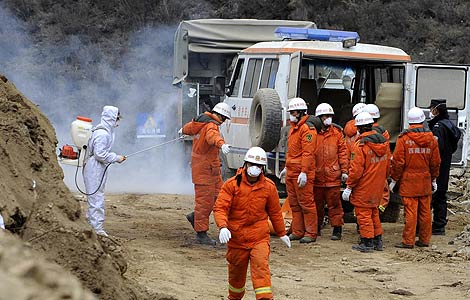
Two trucks and some 20 epidemic prevention workers dressed in sanitary suits could be seen spraying disinfectant at the site.

The team sprayed 1,000 kg of disinfectant on more than 20,000 square meters of land on Tuesday.

Geng Aimei, head of the epidemic control and prevention team under the Tibetan Military Area Command, said rescuers had been educated about disease prevention.

She said the team regularly changes its masks and gloves, particularly those rescuers who have touched the bodies.

Rescuers also had their bodies cleansed before going into the tents, to avoid bringing pathogens from the accident scene.

Xu Deming, vice-minister of land and resources, said preliminary investigations found the landslide was a natural geological disaster and experts will verify the cause.

Dorje, an academic with the Chinese Academy of Engineering, said loose rocks triggered the landslide.

Returning from a field inspection, he said large glaciers previously covered the area where the landslide originated.

Dorje said rocks hidden under the glaciers broke into smaller, loose rocks over a long period due to stress from thermal expansion and contraction, as well as rainy and snowy weather.

"Smaller rocks near the source of the landslide then collected together and snowballed into a massive landslide that was incredibly destructive," he said.

Wednesday 3 April 2013

http://www.chinadaily.com.cn/cndy/2013-04/03/content_16371649.htm

continue reading

More human remains found at World Trade Center 9/11 debris


In a newly-resumed excavation for finding human remains at the site where two airplanes crashed into the World Trade Centers on September 11, 2001, more pieces of bone fragment have been found, which may lead to more victims being identified, according to AP on Tuesday.

The two pieces were found Monday on just the first day of a 10-week sifting operation. The city has collected about 60 dump truck loads of debris from construction areas around the trade center site over the past two and a half years that is now being examined for remains.

In 2010, the search for human remains ended in a controversial decision, as the excavation was costing hundreds of millions of dollars and most debris was being taken to a local landfill.

Families of the victims were angered that the search ended, as over 1,000 bodies still remain unaccounted for, although some believe their loved ones were vaporized during the attack.

Throughout all searches that have been conducted, more than 1,800 pieces of potential human remains have been found. In 2006, several bones were found in a manhole near ground zero.

The material will be taken to a mobile sifting unit set up on Staten Island, city officials said.

Human remains that can not be identified will be released to Sept. 11 memorial.

Wednesday 3 April 2013

http://www.examiner.com/article/more-human-remains-found-at-world-trade-center-9-11-debris

continue reading

Rwanda: Genocide Victims' Remains Still Missing 19 Years Later

Remains of hundreds of victims of the1994 Genocide against the Tutsi are still missing in several sectors of Ngoma communities, 19 years after the Genocide.

This was disclosed by residents of Kibungo sector in Ngoma district, while preparing for the upcoming 19th commemoration of the Genocide yesterday. The commemoration week is scheduled to begin on Sunday, April 7.

According to Clarisse Kabaliza, a Genocide survivor, those who participated in the Genocide are still adamant to reveal where they buried their victims' bodies.

"It is a shame that people who killed our relatives and neighbours cannot show us where they dumped them. Most of them live with us today, after serving time in jail," she complained.

Another survivor, Claude Mbonimana, said this means they have been denied the chance to accord their loved ones a decent burial.

"If only they could show us where they dumped the bodies then we can try to give them a befitting burial," she said.

But Samson Gihana, the Ibuka chairman in Ngoma district, said they remain optimistic that at some point the whereabouts of the remains would be revealed.

"We begun preparations in advance so that some remains can be identified and given decent burial and we are optimistic some perpetrators will speak out in due course," he said.

Wednesday 3 April 2013

http://allafrica.com/stories/201304030125.html

continue reading

18 more bodies recovered; 2 survivors narrate horror of pirate attack on fishing trawlers in Bay


Eighteen more corpses of the fishermen missing since March 25 were recovered from the Bay of Bengal yesterday, pushing the body count to 21.

Earlier on Monday, three bodies were recovered by locals.

In a joint operation, Navy and Coast Guard personnel found three bodies floating near the Kutubdia channel around 1:00pm yesterday and 15 about five nautical miles from the Kutubdia Lighthouse around 3:00pm, Lt Com SM Masudul Islam, commanding officer of Coast Guard Ship Towhid, told The Daily Star.

“The bodies, decomposed for a week, could not be identified immediately,” he added.

The rescue operation would continue for a day or two for the fishermen still missing, said the official.

The bodies recovered yesterday were first taken to Kutubdia and handed over to Kutubdia Police Station’s Officer-in-Charge Amirul Islam and Upazila Nirbahi Officer Firoze Ahmed. They were later turned over to Cox’s Bazar Additional Superintendent of Police (ASP) Babul Akhtar at Manama Ghat in Pekuwa upazila.

The ASP said, “The bodies were found with hands and legs tied. We have asked the Cox’s Bazar Sadar Hospital to conduct autopsy of the bodies.”

According to police and locals in Banshkhali, 34 fishermen on three trawlers — Allahr Dan, Allahr Dan-1 and Al Makka — left Shekherkhil area of the upazila for deep-sea fishing on March 24 and 25.

Abul Hashem and Jafar Majhi, owners of Allahr Dan and Allahr Dan-1, filed two general diaries on March 26 with Banshkhali Police Station about their missing crew and pirates attacking their boats.

Three of the crew aboard Allahr Dan came back ashore in the early hours of March 27 and told the trawler owners that all the three boats had been attacked by pirates some 25 kilometres from the Kutubdia channel.

As the news of floating bodies reached the shores, some relatives of the missing persons from Banshkhali went to the sea on a trawler on Monday and recovered three bodies. The deceased were identified as Nizam Uddin, Md Yunus and Md Matin.

Nurul Kabir, son of Abul Hashem, said, “We left for the sea on our own, as the police were not helping us find the missing people.”

He said they found the bodies near Jahajkhari area, about 20km from Kutubdia channel. There were more bodies, but they could not recover those due to poor visibility and rough sea.

Nur Hossain, one of the survivors, said a gang of 20 to 25 pirates started chasing them around 10:00pm on March 26. “I was driving the trawler when they started to fire rubber bullets at us. I was hit a couple of times. I tried my best to flee away, but gave up after around two hours.”

“Some of the pirates got on our boat and started beating the crew. I somehow managed to jump off,” he said.

The two other survivors, Kamal and Kashem, had followed Nur. They were rescued by another fishing trawler and dropped at Moheshkhali.

Nurul Kabir said the pirates looted valuables worth around Tk 12 lakh from his father’s fishing trawler.

Wednesday 3 April 2013

http://www.thedailystar.net/beta2/news/18-more-bodies-recovered/

continue reading

Fate of stranded migrants in Yemen 'very grim'; reports of organ trafficking and many unclaimed bodies


The plight of thousands of migrants stranded in Yemen after trying to reach Saudi Arabia and the Gulf has reached desperate proportions, the International Organisation for Migration warned on Tuesday.

"The situation of migrants in Yemen is very grim," IOM spokesman Jumbe Omari Jumbe told reporters.

Yemen has seen a spike in the number of migrants and refugees from the Horn of Africa who risk their lives to cross the Red Sea in smugglers' boats only to find themselves blocked at the tightly-controlled Saudi border.

Numbers have doubled from around 53,000 in 2010 to over 107,000 last year. Ethiopians make up the overwhelming majority, but others hail from countries such as lawless Somalia and Eritrea.

"In Haradh town, which the migrants see as a gateway to Saudi Arabia and beyond, thousands of migrants roam the streets and sleep rough in the open with no money for food or medicine," Jumbe said.

"Many migrants visiting IOM's offices have been rescued from unscrupulous gangs of kidnappers, traffickers and smugglers and are injured, some with broken limbs. Criminal gangs are also reportedly trading in human organs," he added.

In addition, the hospital mortuary in the northern Yemen town of Haradh is now filled with the unclaimed bodies of migrants, he said.

Funding shortages have forced the IOM to curtail a programme providing free meals to stranded migrants in Haradh from 3,000 a day to just 300 -- with only women, the elderly and unaccompanied youngsters now receiving food.

The lack of cash has also forced the organisation to suspend a voluntary repatriation programme which provides migrants with flights home.

The IOM is also working in Ethiopia to try to discourage would-be migrants from making the Red Sea crossing.

"But people are desperate. And because of that desperation, people are sometimes willing to risk everything," Jumbe said.

Wednesday 3 April 2013

http://www.dailystar.com.lb/News/Middle-East/2013/Apr-02/212303-fate-of-stranded-migrants-in-yemen-very-grim-iom.ashx#axzz2PLjX0bAs

continue reading

Tuesday, 2 April 2013

7 reported dead after bus falls from Rio de Janeiro viaduct


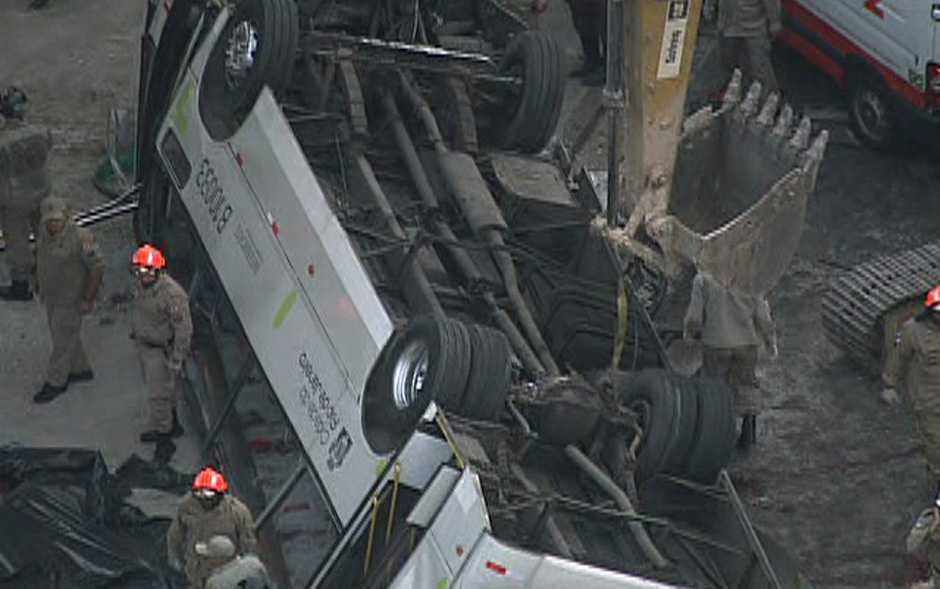
A passenger bus plunged from a 10-meter-high (30-foot) viaduct in central Rio de Janeiro on Tuesday, killing at least seven people and closing a major thoroughfare.

At least six people were injured in the accident, said Sergio Simoes, who heads Rio state's Civil Defence department, adding that number of injured was likely to rise. Simoes said the dead were five men and two women.

He said it was unclear how many were aboard and whether any of the passengers were children.

Helicopter footage aired by Globo television network showed emergency response teams evacuating the injured from the overturned bus as rush-hour traffic stood at a standstill on Avenida Brasil, the highway that serves as the main entrance to Rio. Some of the injured were evacuated by helicopter.

The cause of the accident was not immediately known, but Globo cited eyewitness as saying that a dispute between a passenger and the driver might have helped spark the crash.

Buses are the main form of public transit in this city of 6 million, despite their sometimes questionable safety records and often uncomfortable overcrowding levels. Rio's buses, operated by private companies, don't have seat belts, and it's not unusual for up to several dozen people at a time to travel standing up. Rio's buses are also known for driving at high speeds, even through residential neighbourhoods.

With two key metro stations closed pending the extension of the subway, buses have taken on an even more crucial role in recent months and are the sole public transit option in poor neighbourhoods ringing the city.

Tuesday 2 April 2013

http://www.leaderpost.com/news/reported+dead+after+falls+from+viaduct+Janeiro/8184978/story.html

continue reading

Tsunami survivor keeps searching for missing family


Kneeling among brown weeds and scattered debris, Miho Suzuki, 24, placed a bouquet of flowers on the remains of the home she shared with her parents and brother in the Ukedo district of Namie.

Then she began searching.

Suzuki's father, Fumio, and mother, Toshiyo, then aged 63 and 60 respectively, have been missing since the 2011 earthquake and tsunami devastated the port town.

"I want to find their remains and raise a tomb in Namie for them," Suzuki said.

April 1 was her first chance to do so. That day, the government lifted the entry restrictions it had imposed due to high radiation levels from the accident at the Fukushima No. 1 nuclear power plant, just a few kilometers away.

"I have no clues, but I cannot help but search for them," Suzuki said, looking under a collapsed levee, between pieces of debris and anywhere else she could reach.

At the time of the disaster, Suzuki was working in a clothing store in Minami-Soma, a neighboring city to the north of Namie, in the same prefecture.

She tried to drive home but was stopped at an intersection near her house by local fire brigade members. "Ukedo has vanished," they said. Her house was located only 100 meters from the port.

The next morning, with an explosion occurring at the nuclear plant that she used to see every day, Suzuki was evacuated to a mountainous district in Namie. She was given no time to look for her family.

She started her lone life as an evacuee there without seeing her house even once following the earthquake and tsunami.

In mid-April 2011, her brother Kiyotaka, then aged 24, was found dead on a road about 300 meters from their home. His car was parked in the yard.

Suzuki thinks her parents were both at home with Kiyotaka because her mother and father did not have driver's licenses.

"It is a blessed relief that my family stayed together in their last moments," she said.

For now, time seems to have stood still in Ukedo, with washed-up fishing boats and the bare steel frames of buildings still dotting the landscape. Exhaust stacks of the crippled power plant loom in the distance.

"Everything remains the same as the day the tsunami hit," Suzuki said. "Nothing has changed."

But as evacuation zones are reviewed and a path to residents returning to Fukushima becoming clear, debris removal work is beginning in earnest.

Suzuki has mixed feelings, swaying between delight that her hometown is recovering from the disaster and her own hope of finding her parents' remains, even if they are only small pieces.

"I feel as if (the clearance work) will remove even the traces and bones of my parents," she said.

Suzuki said she will continue her search. But she added that even if radiation levels in Namie fall enough to live there safely, she will not return, because her family is not there.

Tuesday 2 April 2013

http://ajw.asahi.com/article/0311disaster/quake_tsunami/AJ201304020238

continue reading

Total of 54 Tibet landslide bodies recovered


Chinese rescue crews have recovered a total of 54 bodies in the aftermath of a huge landslide in Tibet that buried more than 80 mine workers, state television reported on Tuesday.

China Central Television reported that operations resumed on Tuesday morning after being suspended on Monday due to fears of more landslides in the area.

A total of 36 bodies had been recovered by Monday before operations were suspended, state media reported previously. The latest total would mean that 29 miners were still missing.

The disaster struck on Friday when the landslide crashed down a mountain east of the Tibetan regional capital of Lhasa onto a mine workers’ camp and buried 83 people.

Chances of finding any survivors are regarded as slim, state media has reported. Experts from the ministry of land and resources were investigating the cause of the landslide.

Mountainous regions of Tibet are prone to disasters, which can be exacerbated by heavy mining activity.

In recent years China has discovered huge mineral resources in Tibet, including tens of millions of tonnes of copper, lead and zinc, and billions of tonnes of iron ore.

Tuesday 2 April 2013

http://www.scmp.com/news/china/article/1205660/total-54-tibet-landslide-bodies-recovered

continue reading

At least 13 youths killed in Myanmar mosque fire


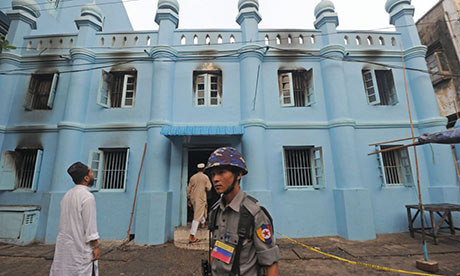
A fire engulfed a mosque housing Muslim schoolchildren in Myanmar's largest city Tuesday, killing at least 13. Authorities, anxious over sectarian violence that has shaken the nation, quickly blamed the blaze on an accidental electrical short.

Security forces and three trucks of riot police blocked off roads around the scarred, two-story building compound in eastern Yangon which encompasses a mosque, a Muslim school and a dormitory. There were no reports of violence, but around 200 Muslim residents gathered uneasily nearby, many expressing suspicions the fire had been set intentionally.

Myanmar has been on edge after sectarian violence between Buddhists and Muslims erupted in the central city of Meikhtila in March, killing dozens of people and displacing more than 10,000. The violence that has largely targeted Muslims has since spread to several other towns where extremist Buddhist mobs have torched or ransacked mosques and Muslim-owned property.

Security bars blocked most of the white building's windows, which were marked by black smoke in the late morning. The building burned from the inside, and firefighters had extinguished the flames before dawn.

Mosque member Soe Myint said most of the children were sleeping on the ground floor when the blaze began and they were able to flee to safety.

But 16 of them were sleeping in a small loft on the first floor and were trapped when the ladder that led to the loft caught fire. Three boys jumped to safety, he said, and the rest died.

Security bars blocked most of the white building's windows, which were marked by black smoke in the late morning. The building burned from the inside and firefighters had extinguished the flames before dawn.

Police officer Thet Lwin, who was at the scene before dawn, said the fire was triggered by an electrical short "and not due to any criminal activity."

Every time he mentioned the word "electrical short," though, angry Muslims shouted and began banging on vehicles with their fists.

Zaw Min Htun, a member of a local Muslim youth organization, said he raced to the mosque early Tuesday after hearing it was on fire.

"Muslims are very angry," he said, calling on authorities to investigate what happened. "The children are innocent .... Someone burned the mosque."

Zaw Min Htun said he saw no burned wires inside the mosque and said the building's fuse box was in good condition.

Tuesday 2 April 2013

http://www.turnto10.com/story/21849676/myanmar-police-say-13-children-die-in-fire

continue reading

Mine rescue efforts hampered by weather


36 bodies now recovered, but teams moved to safety after further slide.

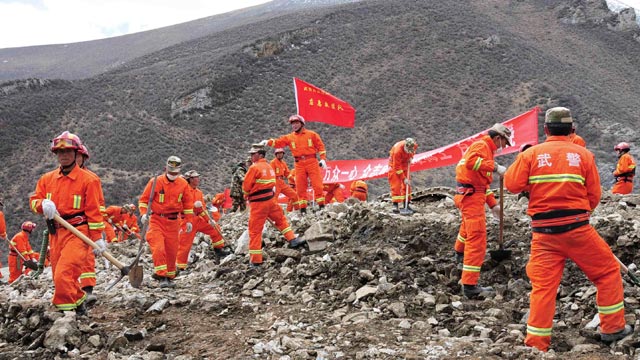
Rescue workers searching for missing miners, buried by Friday's massive landslide near Lhasa, in the Tibet autonomous region, were forced to clear the site twice on Monday, as the risk of further landslides grew.

By 4 pm, 36 bodies had been recovered at the scene of the tragedy, out of 83 believed to be buried at the Jiama mining area of Maizhokunggar county, according to the rescue headquarters.

But thousands of rescuers had to stop searching from 4 pm onwards, as the risk of further landslides increased.

Rescue efforts have continued day and night and 1 million cubic meters of earth and stones had been removed from the landslide site - which is at an altitude of 4,600 meters - by Monday morning, according to officials.

At about 10:50 am, the mountainside where Friday's landslide took place experienced a minor landslide, which brought with it thousands of cubic meters of sand and stones, forcing rescuers to retreat from the area.

Then, around 4 pm, academicians from the Chinese Academy of Engineering said they had identified four crevices about 600 meter long appearing on the top of the mountain, and workers were again told to leave the site for safer areas.

Other experts involved in geology, surveying and seismic work were still evaluating the situation at 6 pm.

More than 4,500 rescuers and 200 machines were working at the site to find the buried miners, said a spokesman with the rescue headquarters.

Weather conditions at the site had deteriorated during the day, said officials, with occasional rain and snowfalls hampering rescue efforts.

Chen Jun, an army traffic division official, said the conditions meant soldiers working at the site had only cold water and dry food available.

Li Suzhi, a doctor, added that medical staff had treated many rescuers over the past couple of days, suffering from the cold, fever or altitude sickness.

Tuesday 2 April 2013

http://usa.chinadaily.com.cn/epaper/2013-04/02/content_16369106.htm

continue reading

Bosnia to bury hundreds more Srebrenica victims


The bodies will be buried on July 11, the anniversary of the mass killings in 1995, at the Potocari Memorial in eastern Bosnia which commemorates those who died.

Four hundred and sixty-one victims' bodies are currently being kept at the Podrinje Identification Centre in Tuzla, and the head of the centre, Rifat Kesetovic, said that so far, 188 families have agreed to bury their family members on the anniversary.

“It is still early to give estimates concerning the number of burials that will take place on July 11, but we assume that between 300 and 500 killed Srebrenica residents will be buried,” said Kesetovic.

“Identifications are conducted continuously, without a break. We can assume that more victims will have been identified by July,” he said.

A total of 6,194 people who were killed at Srebrenica have been identified in Tuzla so far, and 5,657 of them have been buried in Potocari.

“The number of people who have been identified at the Podrinje Identification Centre is close to 7,000,” Kesetovic said.

Alongside the identification process, the re-exhumation of incomplete bodies is being carried out, Kesetovic explained, because other parts of those bodies have been discovered since their burials.

About 200 re-exhumations have already been conducted, while several hundred are still pending, he added.

More than 7,000 Bosniaks from Srebrenica were killed in the days following the capture of the enclave by the Bosnian Serb army on July 11, 1995.

Several verdicts from the Hague Tribunal, the Bosnian State court and the International Court of Justice have ruled that the killings constituted genocide.

Tuesday 2 April 2013

http://www.balkaninsight.com/en/article/up-to-500-victims-to-be-buried-in-potocari

continue reading

Migrants fear loved ones lost in refugee camp fire


Mount Gambier’s Karenni community is waiting anxiously for the results of DNA tests on the charred bodies of family members and friends who perished in a fire in a Thailand refugee camp.

At least 38 people were killed, 100 injured and 2000 were left without shelter when a fire broke out two weeks ago in Camp 2, where many of Mount Gambier’s Karenni refugees lived before migrating to freedom in Australia.

Khun Dee, who arrived in the Blue Lake city with his wife in 2006, is relieved to know his mother had survived, but fears he has lost friends in the blaze.

“I have spoken to my mother on the phone, so I know she is alive, but she has lost all her possessions in the fire,” he said.

“We have already applied for a visa to bring her to us in Mount Gambier, but we don’t know if the process is going to be delayed by the fire.

“I hope she can come to live here with us.”

Khun Dee lived in the camp with his family since the age of four and although most of his direct family members are now scattered around the world, he had left behind many friends he made in the 20 years he spent in the camp hiding from the cruelty of Burmese soldiers.

“There are about 3000 people in the camp and you know every one because you are not allowed to leave the camp, so we will know people that had died,” he said.

“They sent us photos, but we can’t identify the victims because they had been burnt beyond recognition.

“We will just have to wait for the results of DNA tests.”

Authorities believe the fire could have been sparked by an unattended cooking flame, but the cause has not yet been determined as investigations by the Thai police continue.

Khun Dee has made a heartfelt plea to the South East community to make a financial donation to the survivors in Camp 2.

“People in the camp are not treated like human beings and have very little possessions and now they have lost the few things they have, like food, cooking equipment and clothes,” he said.

“They also have no shelter now, which is just a roof without any walls, and it gets very cold there at night and very hot during the day.”

Khun Dee’s plea is part of an Australia-wide appeal through the Karenni Federation of Australia to raise money, which will be paid directly to the camp leader, a Karenni person who heads the camp committee and has the power to purchase the necessary items.

Tuesday 2 April 2013

http://www.borderwatch.com.au/story/1402063/migrants-fear-loved-ones-lost-in-refugee-camp-fire/?cs=1266

continue reading

Pirates 'kill fishermen' off Bangladesh


Pirates are thought to have drowned 16 fishermen in southern Bangladesh in order to steal their boat.

Their hands and feet were bound before the victims were thrown into the Bay of Bengal to drown, police said.

The bodies had no injury marks, local deputy police chief Imran Bhuiyan told AFP, prompting speculation the men had been thrown into the water alive.

A fishing boat recovered three bodies while 13 were seen floating in the water off Kutubdia Island, he added.

Police and navy officials were using the help of fishermen to recover the remaining bodies.

"Three dead bodies have already been brought to the shore. Two navy ships are now searching the bay for other missing fishermen," a Bangladeshi naval official told the BBC's Anbarasan Ethirajan in Dhaka.

"Sea robbery is more or less common in that part of the sea. But killing in huge numbers like this, is not a common phenomenon."

Concerned relatives have joined the search for some 30 fishermen from the Bashkhali area - near Chittagong and some 300km (190 miles) south-east of the capital Dhaka - who set sail last week.

Tuesday 2 April 2013

http://www.bbc.co.uk/news/world-asia-21995397

continue reading

Dead militants haunting village


Security forces hunting down remnants of Sulu militants in Lahad Datu claim to have seen apparitions of dead gunmen around Kampung Tanduo, the scene of bloody clashes with the terrorists last month, Kosmo! Ahad reported.

A source told the paper that at least three ghostly figures had been sighted, appearing at around the twilight hours.

"They kept seeing the three figures, with one of them wearing a white serban (turban)," he said, adding that the phantom gunmen were seen for just a few seconds each time.

The source said there were three pits in the village where dead militants were buried and many of the bodies were found in the mass graves with amulets around their waist, purportedly to make them invincible.

Tuesday 2 April 2013

http://news.asiaone.com/News/AsiaOne%2BNews/Malaysia/Story/A1Story20130401-412568.html

continue reading

SAR Team Halts Search for Cililin Landslide Victims

A joint search and rescue team has decided to halt the search for three remaining missing victims of a landslide in Cililin, West Java.

Spokesman of the National Disaster and Mitigation Agency (BNPB) Sutopo Purwo Nugroho said on Sunday that after discussions between the agency, the victims' families and local public figures on Saturday evening, it was agreed not to extend the one-week search efforts.

“The effort to search for the landslide victims was halted because of medical considerations and the subsequent impact if the remains are found,” Sutopo told Investor Daily.

Fifteen death victims have been found, while three others — Imas (50) and four-month old baby Jesika — have not been found.

The last body, found on Sunday morning, was identified as 18-year-old Iis.

Sutopo said that with the victims having been buried for too long, their remains must have had already decomposed seriously. He said that the findings of the decomposed bodies could be hazardous to the search team members.

He added that the weather at the site also posed the danger of causing another landslide.

“The family of the victims have agreed to let them go,” Sutopo said.

The Cililin landslide took place last week after hours of torrential rains. Dozens of residents were forced to flee their homes after seven houses were buried by the slide.

It is the second deadly landslide to strike Indonesia this month. Three people were killed and one injured after heavy downpours triggered a landslide in Papua’s provincial capital earlier this month.

Sutopo said the West Java government will relocate to a safer place, those who had lost their houses in the landslide.

“The site for the relocation is up to the victims and the government will appropriate the land, in a safe area, of course,” Sutopo said. “The provincial government will help the construction of the houses.”

Sutopo also said that the agency is active in training people in landslide-prone area to anticipate such disaster.

The Cililin landslide is the latest after a landslide killed three people and injured another earlier in March after days of heavy rain drenched Jayapura, Papua. The landslide destroyed a home in the Gereja Emanuel housing complex in North Jayapura. Three occupants, ages 17 to 26, were killed in the landslide.

Tuesday 2 April 2013

http://www.thejakartaglobe.com/news/sar-team-halts-search-for-cililin-landslide-victims/582967

continue reading

Monday, 1 April 2013

Three dead, 11 missing in Tanzania’s mine accident


Three people died and 11 others were missing when a gravel mine collapsed on Monday in Moshono area of Arusha Region, northern part of Tanzania.

Police in Arusha confirmed the accident, as rescue team was busy working on the ground to rescue the trapped people in the collapsed mine.

Unconfirmed report from the scene said there were 14 miners in the gravel mining site.

Eye-witnesses said the tragic accident occurred at around noon, when gravel miners were busy mining the important building materials in the area.

“We heard a big bang from inside the mine, the situation indicated the sudden fall of the debris,” a witness said.

Some of the trapped miners include those who were busy loading the gravel in two lorries which were also buried by the falling debris.

Police and other civilians teamed up to rescue the debris- covered people in the collapsed mine. At around 3 p.m. three people were retrieved from the debris and their bodies were preserved at the Mount Meru Regional Hospital.

This is the first mining accident happened this year, though similar accident occurred seven years ago in north Tanzania.

Officials, including the Arusha city mayor Gaudence Lyimo, camped in the area to facilitate the process.

Monday 1 April 2013

http://www.nzweek.com/world/three-dead-11-missing-in-tanzanias-mine-accident-57341/

continue reading

6 killed in Chinese mine where earlier blast killed 28 in country's latest industrial disaster


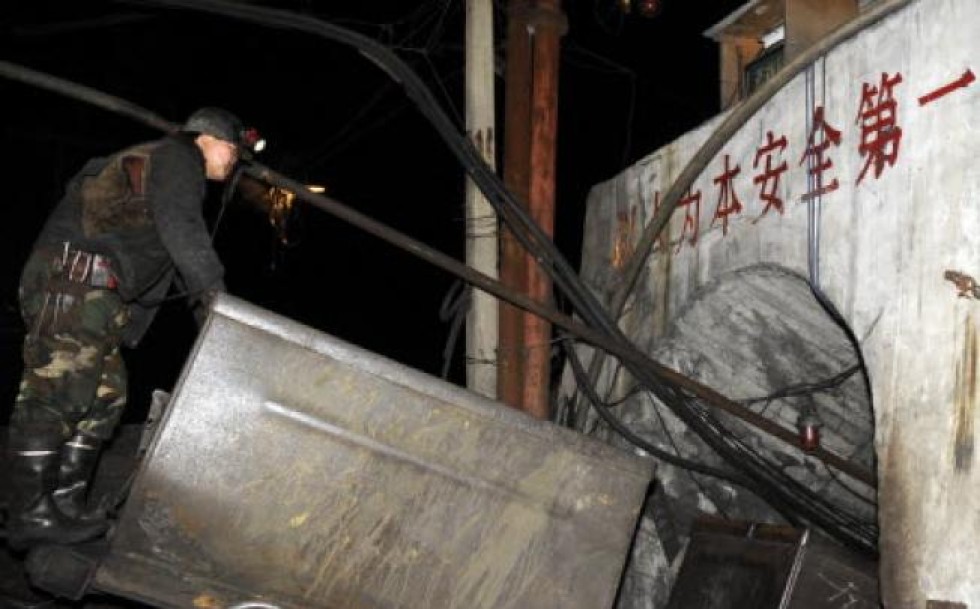
An explosion killed six workers Monday at a coal mine in northeast China where 28 miners were killed in a similar accident just three days earlier, state media reported, one of a string of industrial accidents across the country that is again focusing attention on lax enforcement of safety regulations.

The explosion at the mine outside the city of Baishan in Jilin province left 11 other miners missing, the official Xinhua News Agency reported. The cause of the most recent accident was under investigation and it wasn't clear why work had restarted at the mine so soon after last week's deadly blast.

Further south, an explosion at the Xinyu Group Iron Works smashed its 100-ton No. 2 furnace, killing four people and leaving 32 injured Monday, Xinhua said. It said the injured were transported to a hospital but gave no word on the cause of the accident.

Staff members reached by phone at the company confirmed the explosion, but said they had no other information to provide. Local government officials declined to comment, and all refused to give their names.

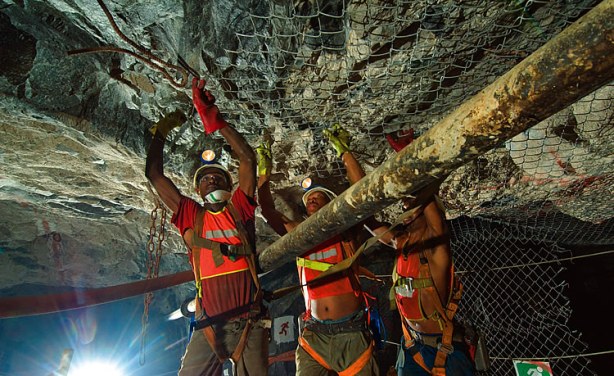
Meanwhile, workers on Monday had recovered 36 bodies from the site of a massive landslide outside Tibet's capital, Lhasa, that buried 83 copper miners on Friday, Xinhua said.

Just one worker survived the disaster at the Jiama Copper Polymetallic Mine, having left the site earlier to purchase tents in the city, it said. The miners were mostly impoverished farmers from the southern province of Guizhou recruited to work in the frigid conditions at 4,600 metres (15,100 feet) above sea level.

More than 4,000 rescuers were still looking for those buried, but little hope was being held out for their survival, Xinhua said. The sudden collapse of the surrounding hillside left a layer of rocks and soil over the miners 30 metres (98 feet) deep in places, the reports said.

China has struggled to boost workplace safety in recent years amid the pressures of rapid economic growth. Tougher enforcement of safety rules has brought major improvements in areas such as coal mining, while companies have also been forced to improve conditions to attract workers amid a tightening labour market.

Monday 1 April 2013

http://www.thestarphoenix.com/news/killed+injured+iron+works+explosion+eastern+China/8177402/story.html

continue reading

More Tibet landslide bodies recovered


Recovery crews have found 36 bodies after a huge landslide in Tibet buried more than 80 mine workers three days ago, Chinese state-run media said Monday, but dangerous conditions forced a halt to operations.

Another 47 miners remained missing under two million cubic metres of earth east of the Tibetan capital Lhasa, and more than 4,000 emergency workers had been battling snow and altitude sickness to search for them, said the official news agency Xinhua.

But it added: "Their odds of survival are slim."

Work at the site was suspended on Monday afternoon because of the risk of another landslide, it said.

Some workers dug with their bare hands following Friday's landslide to avoid damaging bodies or because the disaster had blocked roads needed to deliver large-scale rescue equipment, reports said.

One worker at the camp, Zhao Linjiang, survived the landslide but his brother was among those buried, Xinhua said.

"I was numbed by the scene and trudged back and forth, crying all along," it quoted him as saying in Lhasa, wiping tears from his face. "It's so cosy here, but my brother is so cold up there on the mountain."

Experts from the ministry of land and resources have arrived in the area to investigate the cause of the landslide.

Mountainous regions of Tibet are prone to such occurrences, which can be exacerbated by heavy mining activity, and the risk of additional landslides has heightened concerns about safety.

In recent years China has discovered huge mineral resources in Tibet, including tens of millions of tonnes of copper, lead and zinc, and billions of tonnes of iron ore.

Monday 1 April 2013

http://www.google.com/hostednews/afp/article/ALeqM5hkKTuYIlmgJLSwhZ20rShA8hKWfQ?docId=CNG.022d798f03b042601eef734cf413a383.4d1

continue reading

Sunday, 31 March 2013

Mauritius: 10 killed after floods in Port Louis


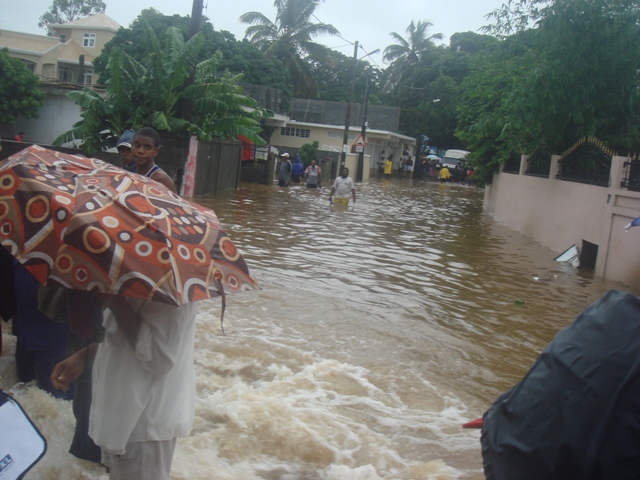
At least 10 people were killed after the sudden floods in Mauritius capital Port Louis on Saturday. Eight dead bodies have been recovered so far, the BBC reported.

The meteorologist said that 152 mm of rain fell in less than an hour.

Prime Minister Navin Rangoolam said that Mauritian was suffering from acclimated weather and people have been advised to stay inside the houses. He has declared 1 April as a day of mourning in the entire country.

According to one of the Mauritius newspaper, the disaster has paralyzed the traffic on roads and caused chaos in the city.

More rain is expected in next few days.

Sunday 31 March 2013

http://daily.bhaskar.com/article/WOR-TOP-mauritius-10-killed-after-sudden-flood-drowns-port-louis-4222285-NOR.html

continue reading

Update: Leading archaeologist calls for accountability on Matale mass grave


Following reports submitted by professor in archaeology Raj Somadeva and forensic medical specialist Ajith Jayasena, who investigated the unearthed human remains, Matale magistrate court has confirmed that the deaths can be dated to a period when a Sinhala youth uprising was defeated by Sri Lanka’s military.

The time of the killings were determined by ‘material objects’ identified by the investigators. On the basis of archaeological and forensic evidence provided by experts Matale Magistrate and Additional District Judge Chaturika De Silva has said that the bodies were found to be of those killed between 1986 and 1990.

The Sinhala youth uprising led by the Janatha Vimukthi Peramuna (JVP) during the period was crushed by state armed forces in 1989. The number of unaccounted youth at the time under the rule of United national Party (UNP) was estimated to be over 30,000.

Professor Raj Somadeva says that no evidence could be found to demonstrate the Matale mass grave deaths were due to natural causes or an epidemic.

Therefore, ‘I have said in my report that there should be someone who is responsible for this mass grave,’ the Uppsala University archaeology scholar told JDS by telephone.

Judicial Medical Officer Dr. Ajith Jayasena has earlier told BBC that the mass grave should be regarded as a crime site as it was not a regular place of burial.

“Evidence of decapitation, dismemberment and concealment” indicates that “crimes were committed,” Dr. Jayasena told Al Jazeera.

Raj Somadeva of the Kelaniya University’s Postgraduate Institute of Archaeology said that the bodies were buried ‘not in a manner that is characteristic of any Sri Lankan community’.

“Some were found by themselves. There were other bodies stacked in groups of six and four. Only skulls of some of the deceased could be found. Only partial skeletons in some other cases,” he added.

‘Gota’s War’ on Matale

Sri Lanka’s powerful defence secretary was the military commander in Matale a few years into the JVP uprising, reveals a biography released last year. In ‘Gota’s War,’ Journalist C. A. Chandraprema says that Gotabhaya Rajapaksa was promoted as ‘the commanding officer of the 1st Battalion of the Gajaba Regiment’.

“With this promotion, he was posted to Matale as the district coordinating officer tasked with bringing the JVP under control. The first Gajaba Battalion, which had been in Trincomalee for nearly one and a half years, was brought down to Matale,” Chandraprema writes in chapter twenty eight ‘The Second JVP Insurrection’.

He also records that senior Sri Lankan commanders accused of war crimes during the offensive that defeated Tamil Tigers militarily in 2009, assisted Gotabhaya Rajapaksa in the crushing of the JVP in Matale district. “Lieutenants Shavendra Silva, Jagath Dias and Sumedha Perera were among his company commanders in Matale,” says ‘Gota’s War’. Until the military defeat of the JVP in 1989 the present defence secretary has ‘remained the security coordinating officer of Matale,’ and in January 1990, ‘he applied for three months leave and went to the USA to see his family’.

The JVP and its breakaway group Frontline Socialist Party (FSP) who suspect that the destiny of their former comrades and their loved ones could be established from the Matale mass grave remains, have called for a ‘thorough inquiry’. Meanwhile, a senior official of the presidential committee appointed to investigate disappearance during the period says that the UNP government prevented the publishing of evidence provided by members of the public. Former Secretary of the Special Commission of Inquiries on Disappearances, ICM Iqbal told JDS that the government ‘intentionally removed evidence given by victims on mass graves and torture chambers’ “The commission was barred from publishing those details for a further thirty years,” he added.

continue reading

Death toll in Tanzania building collapse rises to 22, bodies visually identified


As the death toll from the 16-storey building that collapsed in Dar es Salaam rose to 22 yesterday afternoon, there was fresh scare just opposite the ill-fated structure which scared off President Jakaya Kikwete and his security men from the rescue site.

The president, who was scheduled to visit the tragic site for the second time yesterday, failed to arrive at the area after rumours spread that another building owned by the same person and constructed by the same contactor could also collapse.

President Kikwete was scheduled to arrive at the site around mid-day but his security officers detailed him some 60 metres away from the rescue area.

However, Prime Minister Mizengo Pinda had earlier visited the area, where he hailed rescuers for their efforts.

As the operations is going on, the government has ordered people who are living close to the remaining 16th building owned by the same owner of the ill-fated structure to vacate their premises for their safety following reports that, the twin building is likely to cause a danger in future.

However, the Dar es Salaam Regional Commissioner Said Meck Sadiq issued the order yesterday which up to now almost many people who had hired the residential apartments close to the feared building have vacated.

One of the residents in the area, Amir Khan of the Asian origin told The Guardian yesterday at the are that, he is appealing to the government to do quick investigations on the building and if possible it should be destroyed for the safety of the people around.

Meanwhile the SACP Suleiman Kova held a press conference at the site later in the evening at around 14:30 hours and said that, so far six people are being held by the police for interrogation in connection with the matter.

According to him, the construction of the collapsed building which stood on plot number 1662/75 had been given a permit for construction when it was agreed that, it was supposed to have 10 storey on its completion. But to the great dismay, other 6 storey had been added by whose authority, he queried.

Commander Kova is on the view of the fact that, the two National Boards would help to carry a soil test for the debris which he said has already been taken for hammer test to a disclosed scientist who he couldn’t mention as it is too earlier and moreover for security purposes.

He also said that, about 22 bodies have been retrieved from the scene since the rescue operation started that morning on Friday, and out of these 8 bodies have been identified. He added that, the government would finance the purchase of shrouds and coffins for the dead ones.

However, he further noted that, 17 people who sustained injuries are still in hospital receiving medical treatment.

Meanwhile, the Dar es Salaam Regional Commissioner Said Meck Sadiq has cautioned Dar es Salaam residents and Tanzanians as a whole to be patient as the government is closely working to find out the right cause of the accident and will be getting updating information in connection with the issue.

“This is a national disaster and I am appealing to all people not to take any loophole and disengage in any matters that would disrupt investigations which the government has started to collect in order to get the truth of the matter” he said and insisted people to be calm as this is being worked out.

The Friday’s accident could be the worst tragedy involving four series of the collapse of high-rise buildings in the country since independence time. On August, 1987 a four-storey building under construction collapsed along Msimbazi Street, killing seven people.

In 2006, a three-storey building in Chang’ombe area collapsed, injuring several people. Former Prime Minister Edward Lowassa formed a team to investigate the incident but its findings and recommendations are yet to be made public to date.

In 2008, a ten-storey building along Mtendeni Street in Kisutu area also collapsed, injuring some individuals.

In another development, relatives of the people who died from the collapsed building have so far identify only eight bodies of their loved ones – but difficulties of identity could force the government bury them without traditional rites.

“I’ve been here since yesterday looking for the body of my father who died in this building. I have yet to identify his body, ” said Noel Eliakim

Noel is not alone. Abdalh Salehe who is also at the MNH to identify his father, says he failed to recognize his body because he felt confused after seeing so many mutilated bodies.

“ … it is very hard to recognize your beloved one because some of them have no heads … so you have to look at other parts like legs to identify him or her … but some of them have neither legs nor heads … they are completely destroyed,” Salehe complained

Meanwhile, the Deputy Minister for Health and Social Welfare, Dr. Seif Rashid, who visited the MNH yesterday said four of the eight victims admitted at the hospital were discharged yesterday.

Dr. Rashid, however, explained there could be more casualties.

Sunday 31 March 2013

http://www.ippmedia.com/frontend/index.php?l=52954

continue reading

Floating bodies in Indira canal giving sleepless nights to the police


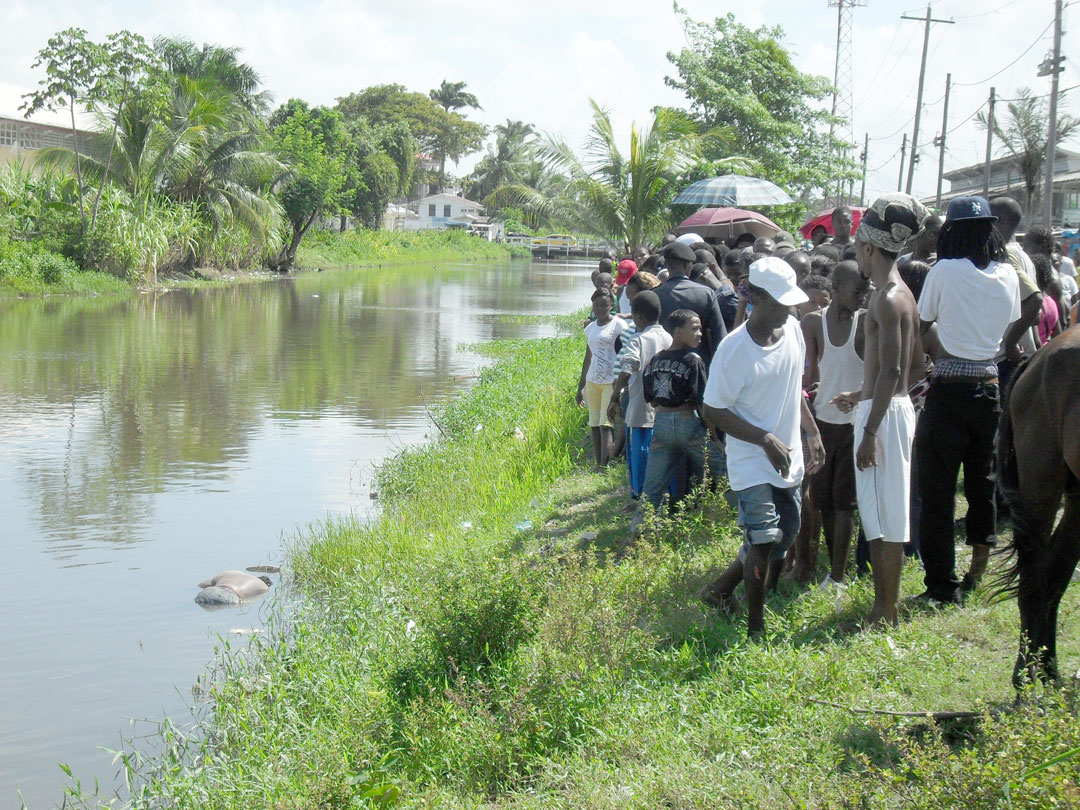
The Indira Gandhi Canal, which runs over 650 kilometres through Rajasthan, is considered a lifeline for thousands of farmers. The free flow of water is however giving sleepless nights to the police with the canal churning out bodies of murdered people in Jaisalmer almost every week.

It is a routine for residents of Mohangarh and Ramgarh areas in the district to spot floating bodies. In 2012, they found 32 bodies floating in the canal. As many as 14 bodies have been found so far this year.

Eight bodies have been found over the past one week from the canal in Jaisalmer where it ends after having an 800 kilometre-long flow from Punjab. So far, the cops were able to identify only one of the bodies found this year. Most of them are of people who were murdered, they said. The criminals dump the bodies in the canal either in Haryana and Punjab or in Rajasthan's Sriganganagar to avoid detection by the cops.

"We had found three bodies at two different places on Sunday. Only one was identified due to a tattoo on his hand. The deceased man turned out to be Jasveer Singh, an elected sarpanch at Haryana's Chattargarh Patti. He was murdered by his wife with help of her paramour," said SP, Jaisalmer, Pankaj Kumar Choudhary. Haryana police came to Jaisalmer and took away the body, the SP added.

After Jasveer went missing, a case was lodged with Haryana's Sirsa police station where the family members also gave Jasveer's photo and told the police that his wife's name was tattooed on his right hand. Based on these details, the body was identified.

Haryana police informed their counterparts in Jaisalmer that Jasveer was murdered on February 10 and his body was immediately dumped in the canal. It took 35 days for the body to flow to Jaisalmer before being spotted in the canal. The Haryana police are said to have arrested the wife and her paramour.

Similarly, the body of one Gurlal Das was recovered on November 10 last year. It came up that the victim was a resident of Sriganganagar. He too was killed allegedly by his wife Sonu with the help of her paramour. Officials said that of the 32 bodies found in 2012, the police have been able to identify only 14.

Sunday 31 March 2013

http://timesofindia.indiatimes.com/city/jaipur/Floating-bodies-in-Indira-canal-put-cops-in-a-fix/articleshow/19299613.cms

continue reading

Searchers pull bodies out of Tibet mudslide that buried 83


Authorities in Tibet said Sunday that chances were slim that any survivors would be found after a massive mudslide at a gold mine buried 83 workers in piles of earth up to 30 meters deep. Searchers have found 11 bodies and were searching for the remaining missing.

The landslide Friday has spotlighted the extensive mining activities in the mountainous Chinese region of Tibet and sparked questions about whether mining activities have been excessive and destroyed the region’s fragile ecosystem.

The workers were buried when mud, rock and debris swept through the mine in Gyama village in Maizhokunggar county and covered an area measuring around 4 square kilometers (1.5 square miles), about 70 kilometers (45 miles) east of the regional capital, Lhasa.

By Sunday afternoon, searchers had found 11 bodies and were searching for the remaining 72 missing workers, the state-run Xinhua News Agency said. Xinhua quoted the Communist Party deputy secretary for Tibet, W. Yingjie, as saying chances were slim of finding anyone alive.

The miners worked for Huatailong Mining Development, a subsidiary of the China National Gold Group Corp., a state-owned enterprise and the country’s largest gold producer. Beijing says the cause of the disaster has yet to be fully investigated, although state media say the mudslide was caused by a “natural disaster,” without giving specifics.

Criticisms over possibly excessive mining in Tibet flashed through China’s social media Saturday before they were scrubbed off or blocked from public view by censors.

Btan Tundop, a Tibetan resident, noted the Huatailong mine’s dominance in the area in a short-lived microblog: “The entire Maizhokunggar has been taken over by China National Gold Group. Local Tibetans say the county and the village might as well be called Huatailong.”

The Chinese government has been encouraging development of mining and other industries in long-isolated Tibet as a way to promote its economic growth and raise living standards. The region has abundant deposits of copper, chromium, bauxite and other precious minerals and metals, and is one of fast-growing China’s last frontiers.

Tibet remains among China’s poorest regions despite producing a large share of its minerals. A key source of anti-Chinese anger is complaints by local residents that they get little of the wealth extracted by government companies, most of which flows to distant Beijing.

Wangchuktseten, a Tibetan scholar at Northwest University of Nationalities in Lanzhou, the capital of Gansu province, said he was most worried about the environment. “The Tibetan plateau is considered the lungs of Asia,” he said. “Those short-sighted mining activities chase after quick benefits but ignore the environment for future generations.”

State media said that two of the buried workers are Tibetans, and that two are women.

Chinese President Xi Jinping and Premier Li Keqiang ordered authorities to “spare no efforts” in their rescue work, state media have reported.

Sunday 31 March 2013

http://www.washingtonpost.com/business/chinese-crews-search-through-30-meter-pileups-after-tibet-mudslide-buries-83-miners/2013/03/30/ff392e7e-99b5-11e2-b5b4-b63027b499de_story.html

continue reading

Saturday, 30 March 2013

The bones tell the story: The search for Peru's missing


In Peru last week, forensic anthropologists revealed that for the first time, they had confirmed the identities of three individuals who had been disappeared by government forces during that country's internal armed conflict. During the 1980s, hundreds of people were detained, brought to the Los Cabitos military base, brutally tortured, and were never seen or heard from again.

In 2009, forensic anthropologists searching for the disappeared in Los Cabitos had unearthed the remains of more than 100 people. Virtually all the remains show signs of torture and execution-style deaths. Until now, none of those bodies had been identified.

Using DNA matching between the recovered remains and samples from living relatives of the victims, the Peruvian Forensic Anthropology Team (EPAF) was able to determine that two of the bodies belonged to individuals who were reported by relatives to have gone missing in the Los Cabitos military base in 1984, and the third in 1985.

The Los Cabitos military base was the centre of counterinsurgency operations in Ayacucho, the birthplace of the Maoist Shining Path insurgency and the epicentre of the war between insurgents and government forces that took the lives of nearly 70,000 Peruvians. Of these, 15,000 were forcibly disappeared, mostly by government forces, with no trace of their bodies to date.

The identifications offer incontrovertible proof that the military systematically detained, tortured and executed hundreds of presumed "subversives" during Peru's "time of fear". To date, no one has been convicted of these crimes, despite the fact that they occurred 30 years ago.

Peru's Auschwitz

It was long rumoured that the Los Cabitos military base was used by government forces as a clandestine detention centre and that heinous acts of torture were visited upon the bodies of presumed subversives. In the early 1980s, at the start of the conflict, government forces had little understanding of the insurgency. Indigenous communities became seen as safe havens of terrorists, and indiscriminate massacres ensued in the military's effort to "kill the fish" by "draining the sea".

Forced disappearances also became a common government tactic. In the latter half of the 1980s, the United Nations said that government forces had disappeared more people in Peru than anywhere else on the planet. Women congregated outside the Los Cabitos military base day after day, seeking information about their missing husbands, fathers, children. Some say they saw their husbands inside the base, while others received missives from their detained sons, ferreted out by compassionate soldiers, under the noses of their superiors. In most cases, they never saw their loved ones again.

A book published in 2004 by Peruvian journalist Ricardo Uceda confirmed the rumours. A former intelligence officer, Jesรบs Sosa Saavedra, who went by the nickname "Kerosene", confessed to having been ordered by the then head of Los Cabitos, General Wilfredo Mori Orzo, to dig up the cadavers of detainees who had been murdered, and incinerate them. Four ovens were built, and Kerosene admits to having personally disposed of at least 300 bodies this way. He also admitted to having executed prisoners in 1983 in Los Cabitos.

Forensic anthropologists discovered four ovens with the charred remains of bodies inside, as well as pipes that were used to power the ovens. Based on the exhumations to date, they estimate that more than 1,000 bodies could be interred at Los Cabitos. The Truth and Reconciliation Commission (CVR), set up in 2001 to investigate the abuses of the past, documented the kidnapping, torture and/or execution [SP] of 138 people at Los Cabitos between 1983 and 1984. According to the CVR's Final Report, "It is evident that the high command of the [Los Cabitos] military installation had dominion over and control of the actions that occurred there that constitute human rights violations."

The military on trial

A legal case is currently underway in Peru focusing on crimes at Los Cabitos during 1983. Seven high ranking military officers, including the head of the armed forces that year, are charged with the murder, forced disappearance, and torture of 53 victims. An investigation is still underway involving the crimes that took place at Los Cabitos during 1984 and 1985. Gloria Cano, a seasoned human rights lawyer and director of the Pro Human Rights Association (Aprodeh), represents the victims in both cases.

I was in Peru last August and observed several court sessions. For a week, the court relocated to Ayacucho so as to facilitate the testimony of survivors and relatives of victims who could not make the long trip to Lima to testify. Several survivors told harrowing stories of being detained and submitted to various forms of torture.

One man stood up to show the court how his captors tied his arms behind his back, hung him from his wrists, and proceeded to kick and beat him. Another told the court that when he was in the torture chamber, he witnessed soldiers rape a young girl. After giving her testimony in Quechua, an elderly woman walked up to the judges, raised her hands to the sky, and implored them to help her find her missing son and to provide the economic reparations the government has promised victims but has only begun to deliver in recent years, in piecemeal fashion, decades after the conflict. Several witnesses described in heartbreaking detail their fruitless search for their relatives among the ravines and cliffs where dead bodies were being dumped, and were often consumed by wild pigs and other animals.

The trial for Los Cabitos 1983 started in May 2011 and is expected to end later this year. The slow pace is in part due to the fact that the mandate Special Criminal Court, which originally included cases of terrorism, crimes against humanity, and human rights violations, has expanded to include drug trafficking, money laundering, kidnapping, and most recently, social conflict. Judges have difficulty managing their case load and few courtrooms are available to hold trial, so hearings in cases like Los Cabitos take place only once every week or so, for only a few hours at a time. The glacial pace of the court system imposes new hardships on the victims, who have waited decades to know the truth about their loved ones and see justice done.

In addition, key information is missing about what happened at Los Cabitos military base. The prosecutor's office and human rights lawyers have sought access to military documents, but they are met with refusals to collaborate and claims that all documents pertaining to the period in question were destroyed in accordance with military regulations. Yet, in 2010, the Army published a book - its own version of the past, since it refuses to accept the truth commission's final report - that makes references to documents that might shed light on what happened at Los Cabitos and other military bases in Peru's war zones. To date, these documents have not been made accessible to investigators, so it has been impossible to reconstruct the chain of command or identify military personnel who worked inside the military base during those years.

The eternal anguish of the relatives of the disappeared

Less than one percent of Peru's 15,000 disappeared have been identified, according to Josรฉ Pablo Baraybar, a forensic anthropologist who worked in the Balkans and is currently the director of EPAF. The CVR identified over 6,000 clandestine graves across the country, but overall few exhumations have been conducted. Baraybar says the problem is that the Peruvian state has failed to take seriously the CVR's recommendations to develop a national plan to search for the missing. This has a lot to do with the fact, he says, that the disappeared hail from Peru's rural, indigenous population, who have been historically excluded from political and economic life.

The identifications announced last week will surely inspire hope among the relatives of Peru's 15,000 disappeared that more of the missing can be identified, their bodies returned to their loved ones, and buried. This is a crucial step for relatives of the disappeared, who continue to live in a state of anguished uncertainty about the fate of their missing loved ones. When I visited Ayacucho again last November, I spoke with one woman who told me that she continues to search for her husband, who was kidnapped by government forces in the middle of the night in 1984. She thinks he is probably dead. But there are days when she is walking down the street and thinks she sees him. This is the anguish that forced disappearance imposes upon those who survive: an endless unknowing that perpetuates the suffering of the dead and the living alike.

Saturday 30 March 2013

http://www.aljazeera.com/indepth/opinion/2013/03/2013330141926998582.html

continue reading

28 Dead in China Mine Gas Blast


Twenty-eight miners have been killed in a gas explosion at a coal mine in northeast China, state media have confirmed.

The accident at the Babao Coal Mine in the city of Baishan in Jilin province came on the same day as 83 miners were feared dead after a landslide near a mine in Tibet.

A further 13 workers were rescued after the incident at the colliery, which is owned by the state's Tonghua Mining (Group) Company, the official Xinhua news agency reported.

There is rising concern in China about the number of fatalities in mining accidents, as corrupt officials cut corners with safety measures in order to meet the insatiable demand for coal, making Chinese mines amongst the most dangerous in the world.

China is the world's largest consumer of coal, with the fossil fuel meeting up to 70 percent of the country's energy needs.

But its mines are among the deadliest in the world because of lax regulation, corruption and inefficiency. Accidents are common because safety is often neglected by bosses seeking quick profits.

Earlier this month 28 people were killed and 58 managed to escape to the surface after an explosion at the Machang coal mine in Guizhou Province, Xinhua reported.

An accident at a coal mine in southwest China killed 21 miners earlier this month, state media said. Xinhua said 58 had managed to get to the surface safely after the coal and gas outburst at the Machang coal mine in Guizhou Province.

An explosion at the Shangchang Coal Mine in the southwest Yunnan province left 17 people dead last December, while a month earlier, 23 people were killed in a gas explosion in a coal mine in Guizhou province, which borders Yunnan.

Last August, seven people died in a coal mine accident in the city of Jilin, which is located in China's northern industrial rustbelt.

The state administration of work safety said last year it would close more than 600 small coal mines, which are considered more dangerous than the larger mines.

Efforts to improve safety in China's coal mines have seen the numbers of accidents decrease in recent years.

The Chinese government last year closed down 600 of country's smaller and least safe mines. Official figures show a fall in the number of mining fatalities, with the 1,384 killed in 2012 down from 1,973 the year before.

However, many believe that the real death toll may be much higher, with managers often concealing fatalities and accidents in order to escape punishment and avoid being exposed as corrupt. The gains of a successful cover-up often outweigh the risks of a successful disaster response in China's authoritarian system, in which managers are rewarded for strictly adhering to centrally imposed targets.

But labour rights groups say the actual death toll is likely to be much higher, partly due to under-reporting of accidents as mine bosses seek to limit their economic losses and avoid punishment.

Zhang Dejiang, a leading Chinese politician who currently sits on the elite seven-member Politburo Standing Committee, previously said coal mine accidents "ring the alarm, warning us that accident prevention is a complex, difficult, and urgent task".

Saturday 30 March 2013

http://www.ibtimes.co.uk/articles/451887/20130330/china-mine-explosion-28-killed-blast.htm

http://www.globalpost.com/dispatch/news/afp/130329/china-mine-blast-kills-28-state-media-0

continue reading

First body reportedly found after China landslide buries 83


Rescue teams found the first body Saturday almost 36 hours after a giant landslide in Tibet buried 83 mine workers under two million cubic metres of earth, China's state media reported.

Xinhua news agency said rescuers "found the first body at 5.35 pm", after a huge section of land buried a copper mine workers' camp in Maizhokunggar county, east of the Tibetan capital Lhasa, at 6:00 am on Friday (2200 GMT Thursday).

The report came after officials said at a press conference at 10.O0 am Saturday that a massive search and rescue operation had failed to locate any survivors or bodies up to that point.

A rescue worker had also described the chance of survivors being found as "slim", Xinhua said, as teams using sniffer dogs and radar combed the mountainside in a hunt for survivors that was hampered by bad weather, altitude sickness and further landslides.

Potentially invaluable in the rescue, an excavator was broken in the landslide and has been pulled out of the debris, and rescuers were seen digging with their bare hands, as the narrow and damaged local roads had prevented much large-scale machinery from entering, said Xinhua reporters at the site.

Meanwhile, an emergency response team attempted to prevent a secondary disaster.

The Tibetan landslide came on the same day as a gas blast in a northeast China coal mine killed 28 people. State media said 13 others were rescued after the accident at Babao Coal Mine in the city of Baishan in Jilin province.

State-run China National Television (CNTV) said on its news website that "rescue workers have established three defensive lines" around the landslide disaster zone to prevent "secondary disasters", without giving details.

It also said that some of the 2,000-strong rescue team had set up temporary accommodation half-way up the mountain as a safety measure against further landslides. The disaster zone is located 4,600 metres (15,000 feet) above sea level.

The Xinhua report quoted a rescue worker saying there were cracks along nearby mountains, which indicated further landslides were possible.

It also said that rescuers had been suffering from slight altitude sickness and that "further minor landslides" had hampered their efforts.

"Temperatures as low as minus three degrees Celsius have also affected the sniffer dogs' senses of smell," the report added.

State broadcaster China Central Television (CCTV) Saturday showed dozens of bulldozers shifting earth as others headed to the disaster area in Tibet.

The Tencent news website said 15 dog teams and 15 teams using radar monitoring equipment were accompanying 200 bulldozers and heavy lifting vehicles.

The victims of the disaster worked for a subsidiary of the China National Gold Group Corporation (CNGG), a state-owned company and the nation's biggest gold miner by output.

Almost all of them were Han Chinese, the national ethnic majority, with only two ethnic Tibetans, Xinhua said. Most were migrant workers from the provinces of Yunnan, Guizhou and Sichuan.

China's new president Xi Jinping, who is currently visiting the Republic of Congo in Africa, and new premier Li Keqiang had ordered "top efforts" to rescue the victims, Xinhua added.

Mountainous regions of Tibet are prone to landslides, which can be exacerbated by heavy mining activity.

In recent years China has discovered huge mineral resources in Tibet, including tens of millions of tonnes of copper, lead and zinc, and billions of tonnes of iron ore, according to state media reports.

CNGG could not be reached by AFP on Saturday. An official from Maizhokunggar county said all of her colleagues were at the scene, but could not be reached for updates.

More than 300,000 cubic metres of debris had been removed by noon Saturday, officials told Xinhua.

The affected area is 3 km wide and 30 meters deep in average, covered with about 2 million cubic meters of mud, rock and debris, a Xinhua reporter said from the disaster site.

Jiang said there were cracks along nearby mountains, which indicated a possibility of subsequent disasters. A team consisting of geological experts has been organized to monitor the geological situation.

Saturday 30 March 2013

http://www.channelnewsasia.com/stories/afp_asiapacific/view/1263175/1/.html

continue reading

Rescuers dig through rubble seeking missing in Tanzania building collapse


Rescuers planned to search for survivors under a mountain of concrete and twisted metal Friday night after a high-rise building collapsed in Tanzania.

At least four people were dead and 60 were missing after the 16-story building under construction collapsed in Tanzania’s largest city, government and emergency officials said.

Five children are believed to be among the missing, rescue official Walji Ali said.

The building collapsed Friday with a “huge whoosh and then thump,” said eyewitness Ali Jawad Bhimani, a hotel owner who lives near the building in Dar es Salaam’s normally bustling Kariakoo central business district.

“The fallen building is next to our mosque. There is a small field there where the young boys play football. The building fell right on top,” he said. “But 10 to 15 of the boys playing got away safely and are unharmed.”

A statement from the nearby mosque said that four of the boys believed to have been playing there were still missing.

Police and search dogs quickly flooded the scene, Bhimani said. By Friday evening, the dogs were gone, replaced by heavy equipment being used to remove debris, he said.

The Tanzanian Red Cross said rescue efforts would continue through the night. But the group also expressed relief that the casualty figures could have been far higher but the streets were relatively empty of vendors and shoppers due to a holiday.

“So far we have managed to rescue live at least 13 people and four dead bodies, two were seriously injured,” Stella Marealle from the Red Cross said.

In addition to the deaths, at least 17 people were injured, said Suleiman Kova, a regional police commander.

Construction workers were among those injured, Ali said.

Saturday 20 March 2013

http://wqad.com/2013/03/29/rescuers-dig-through-rubble-seeking-missing-in-tanzania-building-collapse/

continue reading

Military torture chamber near Matale mass grave


The survivors of a military-run detention centre that existed during the southern counter-insurgency campaign have alleged the army had operated a torture chamber in a government school in the vicinity of the mass grave of Matale in 1989-90, and that the skeletons of the mass grave belong to the victims of that torture chamber.

The shocking disclosures come in the wake of Carbon C 14 Dating findings that have revealed the skeletal remains of over 150 bodies, unearthed from the mass grave, were buried in the period of 1986-90. Pubudu Jayakody, Political Secretary of the Frontline Socialist Party (FSP), who insisted the remains that were unearthed from the mass grave were of his former comrades of the JVP, said the inmates of the torture chamber, which was operated from Vijaya Vidyalaya in the 1989-90, would soon come out to narrate their ordeal in the torture chamber.

Concern for their security is keeping them away for the moment, he said.

"A torture chamber was operated by a unit of the Gajaba Regiment of the Army in the Vijaya Vidyalaya, which was located in the vicinity of the Matale Hospital," he said.

"There are survivors of that torture chamber. And some of them are active members of our party to date and they will soon come out to reveal their experiences in the camp," he said.

On Thursday, Jayakody lodged a complaint with the Human Rights Commission of Sri Lanka demanding an inquiry into the mass grave.

Two specialist reports, which were submitted to the Matale Magistrate, have revealed the skeletal remains belong to the period of the Southern uprising, during which the security forces and the State-backed death squads were accused of carrying out large-scale extra-judicial killings and mass disappearances.

A report of the Judicial Medical Officer of Matale, which was submitted to the Matale Magistrate early this week, has explained in gory detail the torture the victims had been subjected to.

The report detailed that heads had been severed from the bodies of the victims using an electric saw and some skulls bore evidence that nails had been inserted into the heads of the victims. The report has also revealed the skeletons bore marks of being attacked using blunt weapons and subjected to extreme torture.

Prof. Raj Somadeva, professor of forensic archaeology at the University of Kelaniya in an earlier report confirmed the grave cannot be older than 1986 and newer than 1990.

Prof. Somadeva was commissioned by the Magistrate to prepare a report on the mass grave.

Saturday 30 March 2013

http://www.ceylontoday.lk/27-28519-news-detail-military-torture-chamber-near-matale-mass-grave.html

continue reading

Friday, 29 March 2013

World Trade Center 9/11 construction debris to be sifted for human remains starting Monday


The city has collected about 60 dump truck loads of debris from construction areas around the World Trade Center site over the past two and a half years that will be sifted for fragments of 9/11 victims' remains, officials announced Friday.

The debris has been collected from the World Financial Center, West Street and a lot near Liberty Street since the last sifting operation in mid-2010.

The material amounts to 590 cubic yards -- 38 from the WTC, 13 from the western edge of the southbound lanes of West Street and 539 from the Liberty Street area, where four pieces of possible human remains have already been found.

The material will be combed for about 10 weeks starting Monday at a mobile sifting unit set up on Staten Island, city officials said.

Any human remains will be analyzed by the medical examiner's office for possible matches to 9/11 victims. Of the 2,750 people killed at the trade center, 1,634 have had remains identified.

"We will continue DNA testing until all recovered remains that can be matched with a victim are identified," Deputy Mayor Cas Holloway wrote Friday in a memo to Mayor Bloomberg.

The city expanded its search for remains of trade center victims in 2006, when several bones were found in a manhole.

Watch a time-lapse video of the 9/11 memorial being constructed from 2004 to 2011.

Since the discovery of the manhole bones, the city has sifted debris from various construction sites and subterranean areas surrounding the 16-acre trade center site. More than 1,800 pieces of potential human remains have been found.

The office has made 34 new identifications since 2006, and hundreds of fragments of remains have been matched to people who were already identified.

Friday 29 March 2013

http://www.nbcnewyork.com/news/local/World-Trade-Center-911-Victims-Remains-Sifting-Construction-200619641.html

continue reading

Officials in Lanzhou say bodies floating in river not affecting water quality


Lanzhou officials say the quality of local water is actually improving – despite more than 100 bodies being discovered in the Yellow River each year.

Between 2008 and 2012 police extracted 417 bodies from the Yellow River, which runs through the region, Lanzhou authorities told the China News Service on Thursday.

Lanzhou environmental bureau deputy chief Li Lei said officers had been closely monitoring the quality of drinking water and did not find it had been affected by bodies in the river.

“Based on our overall measuring results in past years, water quality not only remained normal, but in some cases has even improved,” Li said.

His remarks reflect growing public concern about the quality of the drinking water. This comes after recent online rumours that more than 10,000 bodies were floating in the Yellow River, which flows through the capital city of Gansu province.

The rumours were sparked by a report in the Oriental Morning Post last October. Citing accounts from different authorities, it said that since the 1960s there have been at least 10,000 bodies found floating within an 80km-stretch of the Yellow River.

But Lanzhou police bureau spokesman Huang Xiaoping said most of the bodies in the river were people who died from accidents and suicides. Out the 417 bodies retrieved, only two were involved in criminal activities, he told the agency.

In 2005, Xiaosanxia Power, which owns two hydropower stations in the region, issued a report on the water quality.

“The bodies would generate much more pollutants than daily disposals if they remain in water and decompose,” the company said. It said it had found dozens of bodies floating with household rubbish every year.

Lanzou’s environmental authority said it would deal promptly with the matter. “We would put more effort into supervising the water quality. In the case of abnormal situations, we would issue more warnings,” Li said.

Earlier this month, over 10,000 dead pigs were fished from a Shanghai river. More than 1,000 duck carcasses were found in a river in Sichuan. The government has repeatedly claimed the water quality was still good.

The Yellow River is the second-longest in Asia after the Yangtze and has an estimated length of 5,464km. It runs through nine provinces in China, including Gansu, Qinghai, Sichuan, Shanxi and Henan.

Friday 29 March 2013

http://www.scmp.com/news/china/article/1202481/officials-lanzhou-say-bodies-floating-river-not-affecting-water-quality

continue reading

Landslide buries 83 in Tibet mine area


Eighty-three workers were buried after a large-scale landslide hit a mining area in Tibet on Friday, China's state media reported.

A coal mine near the city of Kaili in China's Guizhou province after a landslide on February 18, 2013. Eighty-three workers were buried after a large-scale landslide hit a mining area in Tibet on Friday, China's state media reported.

The landslide took place at about 6:00 am (2200 GMT Thursday) in Maizhokunggar County in Tibet's capital Lhasa, and trapped workers from a subsidiary of China National Gold Group Corporation, a mining firm, said Xinhua.

No deaths have been announced, and a local official reached by AFP confirmed that the landslide had occurred, but could not state the number of casualties.

State-run broadcaster CCTV quoted a member of China's People's Armed Police on the scene as saying that "the situation looks serious, the collapsed area is three or four square kilometres".

Rescuers have so-far found no signs of the trapped, the policeman added.

The landslide affected an area three kilometres long, Xinhua said, citing a local government department. The agency added that more than 1,000 rescuers are working at the site, which is at an altitude of 4,600 metres.

The buried include two Tibetans, Xinhua said, without mentioning the ethnicities of the other workers. Many members of the Han Chinese ethnic group have moved to Tibet in recent decades to work in state-run mines.

Mountainous regions of Tibet are prone to landslides, which can be exacerbated by heavy mining activity.

Friday 29 March 2013

http://www.bangkokpost.com/breakingnews/343039/landslide-buries-83-in-tibet-mine-area-state-media

continue reading

Ivory Coast to exhume bodies from post-election conflict


Ivory Coast officials say exhumations of mass graves dating back to the country’s 2010-11 post-election violence will begin next week. Both the government and rights workers say this process could produce a fuller picture of what went on during the six-month conflict and help in the fight against impunity.

The Justice Ministry announced this week that exhumations would begin on April 4 in the Abidjan district of Yopougon, which was a flashpoint during the post-election violence.

Former Ivory Coast President Laurent Gbagbo attends a confirmation of charges hearing in his pre-trial at the International Criminal Court in The Hague, February 19, 2013.Former Ivory Coast President Laurent Gbagbo attends a confirmation of charges hearing in his pre-trial at the International Criminal Court in The Hague, February 19, 2013.

​​The conflict began after former president Laurent Gbagbo refused to leave office despite losing the November 2010 election to his challenger, current President Alassane Ouattara.

Although Gbagbo was arrested in April 2011, rights groups documented reprisal killings in Yopougon allegedly committed by the pro-Ouattara Republican Forces of Ivory Coast, or FRCI, that lasted into the following month.

Earlier this month, officials also began investigating more mass graves discovered outside the western town of Duekoue.

Unlike the graves in Yopougon, these graves are believed to have been dug after the post-election conflict - following a July 2012 raid on a camp for displaced persons.

Florent Geel, Africa director for the International Federation for Human Rights (FIDH), praised the beginning of the probes, but urged judicial officials to carry out a thorough investigation.

“It was the search and identification on the ground by the investigative judges of two mass graves identified by our witnesses," said Geel. "It was concretely the beginning of the inquiry by the investigative judge. It’s a first step of the judiciary machine in a way, and a concrete step to go forward and to have a real and clear investigation.”

FIDH documented interviews with witnesses who said that FRCI soldiers were involved in the raid on the camp. Officially, the attack claimed eight lives, though rights groups have said the death toll was likely much higher.

One mass grave found in the area was exhumed last October, yielding six bodies. But Geel said there are about a dozen others that have not been investigated.

The army commander in the region was reassigned after the attack on the camp, and officials have not formally responded to the allegations of military involvement.

Geel said a credible investigation would help to dispel the perception that Ouattara’s army is above the law.

“If justice is done on this case, it will show there is not orientated justice, and that the FRCI is not out of the scope of justice and that the FRCI can be judged in Cรดte d’Ivoire," he said. "That’s why this case is symbolic, important, and could show the good will of the political authorities in Abidjan.”

Soriba Kone, communications chief for the Justice Ministry, said he did not know how many mass graves officials would need to investigate, nor could he provide a timeline for when the effort might be completed.

Friday 29 March 2013

http://www.voanews.com/content/ivory-coast-to-exhume-bodies-from-post-election-conflict/1631121.html

continue reading

9 killed, 12 hurt in Mewat bus accident


Nine persons, including three women and two children were killed and 12 were critically injured in a road accident in Mewat on Thursday afternoon when a dumper and private bus collided on Delhi-Alwar Road near Nasirbas village. While eight persons died on the spot, a woman died during treatment.

Four among the injured were critical and were referred to the medical college, Nalhar in Mewat, and Delhi. Other injured are under treatment in Al-Afia hospital in Mewat. The police and local administration reached the spot and arranged for transfer of injured.

According to police, both the dumper and the bus were coming for Firozepur Jhirka side and were going towards Nasirbas. After crossing Bori Kothi, the dumper collided with the bus from the driver's side around 2.30pm.

The collision was so massive that no passenger escaped without injuries. Glass shards, personal belongings and even parts of bodies lay strewn on the road as local residents rushed to help.

Three among the killed have been identified as Ratti, a resident of Jhimrawat village, Arshida, a resident of Dhond village, and Shakeel, a resident of Maholi village. The other six were not identified till late evening on Thursday and peoples were reaches in hospital for searching their family members.

The injured persons are identified as Jamshed, Akbar, Charan Singh, Mohmmad Hamid, Junaid, Asubi, Tayyab Hussain, Mazid, Islami, Suman, Rumisa, Sirdar, Laiba, Miskina. Jamshed, Asubi and others two were reportedly critical and they refer in other hospitals of Delhi and Nalhar.

Though the police have booked the owner of the dumper for negligence, local residents are up in arms against the administration for not checking illegal entry of dumpers.

"Everyday one or the other man loses his life to a rash dumper, but authorities turn a blind eye. There is fixed time for entry of dumpers but they throng roads throughout the day because our officials take money to allow them. Thousands of times different organizations have moved to administration seeking respite but of no use. Mewat roads are so dangerous but they do nothing because our lives are don't matter to them," said a local sarpanch.

"Police is doing its duty, but at this moment its safety of injured is that we bothered about," said Sukhbir Singh, SP, Mewat.

Friday 29 March 2013

http://timesofindia.indiatimes.com/city/gurgaon/9-killed-12-hurt-in-bus-accident/articleshow/19268263.cms

continue reading

Deaths reported in Tanzania building collapse


At least 15 people have been killed in Tanzania's commercial capital, Dar es Salaam, when a building under construction collapsed, a police officer has said.

Witnesses at the site, where some people were using their hands to pull away fallen masonry, said on Friday the building fell near where children had been playing, and many might be still trapped.

"Fifteen bodies have been recovered from the rubble," Suleiman Kova, Dar es Salaam Police Commander, told reporters at the site.

"So far, only two people have been rescued alive, but the rescue operation is still ongoing."

The building of 12 or more storeys fell in the Kariakoo district of the city, where a buoyant economy has fuelled a construction boom.

Kariakoo in particular has been in the focus for building, and the speed of construction has raised concerns over standards.

Witnesses said dozens of construction workers were in the building when it fell. Others said boys had been playing football in a mosque playground next to the building.

"There are several people trapped inside the building," said Hamisi Mgosi, a trader in Kariakoo.

"A boy called his father through his cellphone from inside the collapsed building and told him he can't breathe." Senior government officials also gathered at the scene.

The building belonged to the state-run National Housing Corporation in partnership with a private investor.

Mr. Kova told journalists who rushed to the scene that investigation started immediately to establish the cause of the disaster which, apparently, was not unprecedented in this commercial capital of Tanzania that is witnessing a mushrooming of tall sky scrapers.

In recent times, some structures have crumbled while under construction and blame has, in many cases, been on poor engineering.

Friday 29 March 2013

http://www.aljazeera.com/news/africa/2013/03/201332911935186458.html

continue reading