Friday, 22 February 2013

Heroes to the rescue


The first three months of 2011 were an acid test for the Australian Capital Territory's 16-year-old urban search and rescue capability.

In early January two USAR 2-trained ACT Fire and Rescue members, Mark Johansen and Peter Fitzgerald, were sent to Queensland's Lockyer Valley as part of the joint NSW/ACT response to that emergency.

A little more than a month later, nine Canberra search and rescue volunteers were sent to New Zealand in response to the earthquake that rocked Christchurch on February 22. Read more: http://www.canberratimes.com.au/act-news/heroes-to-the-rescue-20130222-2exc5.html#ixzz2LdsVi4Yc

Part of the aftermath of the Christchurch earthquake.

Then, on March 11, 2011, while rescuers were still on the ground in Christchurch, a magnitude 9 earthquake devastated the north-east of Japan, causing a tsunami that peaked at 40.5 metres in some areas.

Canberra's first Urban Search and Rescue course was conducted in 1995, just two years before the Thredbo landslide disaster that killed 18 people and, miraculously, left Stuart Diver alive.

ACT Fire and Rescue's superintendent Pat Jones, the territory's top urban search and rescue expert, a veteran of Thredbo and a member of the third taskforce that was sent to Christchurch in March 2011, says the capability that has since evolved is world-class and that training modules developed in the ACT had become the gold standard adopted across the world.

He said urban search and rescue workers were classified by skill level and fell into one of three categories.

The first category, for which almost all police, SES, paramedics and firefighters have done mandatory training, qualifies a rescuer to be on top of the rubble pile in the event of an earthquake or other catastrophe.

Requirements include a knowledge of situational awareness, safe working practices and search and first-aid techniques.

To become a USAR 2 volunteer is a big step up and involves specialist and demanding training, which is usually carried out in Queensland or Adelaide.

Rescuers can be trained to this level only in specially built environments which simulate disaster zones and give them hands-on experience of working ''in the rubble pile'', one of the most dangerous rescue environments. Jones said that after an earthquake, landslide or building collapse, the rubble formed voids, cavities, tunnels and gaps into which survivors might crawl in search of safety. It was a highly unstable and topsy-turvy world, particularly after an earthquake where aftershocks almost always follow the main event.

''Once you are in the pile, it is surreal,'' he said. ''You don't know what is up and what is down; walls have become ceilings, ceilings floors and you don't know where you are. You are working with police whose job is to gather intelligence and pass it on to you.''

Thredbo was an example of this and police were able to pass on facts such as ''the third floor bathroom has brown tiles''. ''That type of information helps you orient yourself,'' Jones said. ''Thredbo was a very scary situation; I was cutting up [from the hole] and others were cutting down. I'm not a brave person but there would be something wrong if you weren't scared.''

There are currently more than 40 Category 2 qualified urban search and rescuers in the ACT Fire and Rescue Service, a disproportionately high number given the size of the force overall and one that recognises its role as a potential first responder across the alpine villages as well as in Canberra proper.

Veterans of the USAR 2 training told Fairfax it was intended to push participants hard mentally as well as physically. Claustrophobic tendencies are weeded out early and volunteers have to master vertical rescue, confined space and trench rescue techniques.

The training environment is loaded with urban waste, unpleasant fluids and rubble. It is considered the pinnacle of rescue training and participants have to qualify just to do the course.

''For us to have this number of people with such a demanding qualification takes a major commitment,'' Jones said.

The 48-year-old superintendent, who has been with ACT Fire and Rescue for a quarter of a century, is one of a handful of USAR 3 qualified rescuers in the territory. This means he is qualified to carry out the command and control function in a post-disaster environment in addition to having the same skills as the USAR 2 volunteers.

''These are the on-the-spot decision-makers, the people making life-and-death calls that affect their own team members as well as potential survivors,'' an ACT-based USAR 2 volunteer said. ''The only real comparison would be a command role in a battlefield environment.''

Jones was at Kambah for the naming of two new fire trucks on February 22, 2011, when he took the call alerting him to the Christchurch earthquake.

He was part of the third Australian taskforce, which brought together members from all over the country, that arrived in Christchurch on March 5, 2011.

''Over the 13-day deployment, team members worked 178 hours, the equivalent of 22 working days,'' he said. ''I learnt more in that 13 days than I ever would in my career here.''

Unlike taskforces one and two, which had been deployed for rescue and then body recovery, taskforce three was part of a program called ''beyond the rubble pile''.

This meant members went out beyond the devastated Christchurch CBD and worked with residents in the suburbs and areas that had not been so badly affected. Because the sewerage system had been cut, some jobs were as basic as digging toilet holes.

''Taskforce one completed 58 tasks in the rubble pile, recovering seven bodies and carrying out one live rescue,'' Jones said. ''Taskforce two, from Queensland, carried out 94 tasks, recovering 43 bodies and assisting in the recovery of many more.

''What these teams had to do was horrific; the only Australian comparisons you could make in terms of the physical trauma to victims are the Granville train smash, the Thredbo landslide and the Newcastle earthquake - but this was on a much larger scale.''

Jones, who had a good idea of what disaster looked like after the Thredbo landslide and the 2003 Canberra fires, said he was still unprepared for what he saw in Christchurch.

''I had been in Christchurch on holidays just three months previously,'' he said. ''I had walked around the city with my family and places I remembered as happy places had all been destroyed.''

The work of the third taskforce often bridged the gap between ''normal life'' and the disaster in ways members of the first two deployments would have found hard to believe. ''A lot of what we did was humanitarian work,'' Jones said. ''I remember a couple of jobs as very significant.

In one case we went into the ruins of a collapsed doctor's surgery and recovery the records of 1500 patients. This meant [the doctor] was able to set up a temporary surgery, with all her records, outside the CBD.

''We also had a crew access the safe at a restaurant that had been destroyed. The owner was desperate to get his cash out so he could pay his staff. The family, who lost their son in the earthquake, were so grateful they stayed on and cooked for the rescue teams on a volunteer basis.

''Christchurch has built on the Anzac spirit. That bond has been strengthened by what we did and I know that if something bad happened in Australia I'd love to have the New Zealanders here.''

Shocks still being felt

The 6.3-magnitude earthquake that struck Christchurch at 12.51pm on February 22, 2011, was much more devastating than the 7.1-magnitude quake that had struck New Zealand’s second largest city six months before, on September 4, 2010.

While technically weaker, the epicentre of the ‘‘aftershock’’ was much closer to the surface and only 10 kilometres from the centre of the city.

Christchurch is still recovering two years later and the population has fallen from 360,000 to about 355,000. Aftershocks are still being felt.

Five major aftershocks hit Christchurch between 1.04pm and 7.43pm on February 22, 2011. They ranged in Richter magnitude from five to 5.9. These hampered initial efforts to search for survivors and to evacuate the central city.

The Christchurch earthquake killed 185 people, levelled or devastated much of the CBD, and injured between 1500 and 2000 people, 164 seriously.

The first team of Australian urban search and rescue (USAR) workers (72 members, NSW) arrived within 12hours. The second team, from Queensland, arrived on February 24. It had 70 members and sniffer dogs.

A third Australian USAR team was dispatched on March 4 and 5. This team focused on humanitarian work as part of a program called ‘‘beyond the rubble pile’’.

Nine volunteers from ACT Fire & Rescue and ACT Ambulance were among the hundreds of Australians who crossed the Tasman to help.

Craig Perks, Matt Spackman, Chris Lind and Sam Evans were members of the first taskforce. Kaye Bradtke, Col O’Rourke and Superintendent Pat Jones were members of the third taskforce, as were paramedics Darren Neville and Robert Wiggins.

Friday 22 February 2013

Read more: http://www.canberratimes.com.au/act-news/heroes-to-the-rescue-20130222-2exc5.html#ixzz2LdrBhO84

continue reading

After 7 years, Mexico may renew search for missing miners' bodies


Mexico's new government is considering relaunching an abandoned rescue effort to reach the bodies of 63 miners in a coal mine in northern Mexico since 2006, one of the worst mining disasters in the country's history.

The Pasta de Conchos tragedy left 65 dead and exposed poor and dangerous working conditions for miners in one of Mexico's largest but also most under-regulated industries. Relatives of the victims have insisted in protests that the recovery operation be resumed and in recent days sought support from members of the new federal Cabinet.

A methane explosion trapped the miners on Feb. 19, 2006. The recovery effort was abandoned in April 2007 after only two bodies had been brought out.

The Pasta de Conchos disaster deepened rifts between representatives of the victims -- their families and unions -- and Grupo Mexico, the mining conglomerate that owns the coal mine in the municipality of San Juan Sabinas, Coahuila state.

This week, after a fresh push by relatives of the victims before the administration of President Enrique Peña Nieto, the attorney general's office indicated it was open to examining the investigation and possibly reopening the recovery effort.

Speaking Wednesday at Mexico's Senate, the deputy attorney general for human rights, Ricardo Garcia Cervantes, said the Pasta de Conchos case is a reminder that poorly regulated mines known as pozitos should be closed.

"We should prohibit pozitos, because since Pasta de Conchos they've generated an unjustified number of dead," Garcia said. "They're an avoidable human pain."

By one count of victims' relatives, at least 67 more miners have died since Pasta de Conchos in accidents or explosions in Mexico through early 2012.

No dates or guidelines have been been set yet for a reexamination of the case, said Armando Seguro, a spokesman in the attorney general's office.

Juan Rebolledo, vice president for international relations at Grupo Mexico, told The Times that the company has not received any formal petition to reenter the mine and would not comment further.

The explosion occurred during the mine's overnight shift. Some basic figures about the incident, such as at what depth it occurred, remain in dispute. In 2008, widows of the miners and volunteers from other mining regions of northern Mexico converged at Pasta de Conchos and attempted to storm the mine and launch their own effort to reach the bodies.

Friday 22 February 2013

http://www.latimes.com/news/world/worldnow/la-fg-win-mexico-renew-search-for-miners-20130221,0,5873845.story

continue reading

Thursday, 21 February 2013

Discoveries of crossers' bodies now at lowest level in 10 years


The number of illegal immigrants' bodies found last year in the Arizona desert was the lowest in a decade.

During federal fiscal year 2012, 172 bodies were found in the Border Patrol's Tucson Sector, the Arizona Daily Star's border death database shows. That's down from the record in 2010, when 252 bodies were found.

The federal fiscal year ended Sept. 30.

For about 70 percent of the bodies found in the Tucson Sector in fiscal 2012, the cause of death was undetermined, mostly because they were badly decomposed. In the Tucson area, the Pima County medical examiner is responsible for conducting autopsies on and trying to identify the bodies found.

So far this fiscal year, there have been 42 bodies of illegal border crossers found in the Tucson Sector.

One was that of Gerardo López de León, a 41-year-old Mexican national traveling with some relatives through an area near Peña Blanca Lake and Arivaca, said Sheriff Tony Estrada of Santa Cruz County.

He died of hypothermia, the most common cause of death after "undetermined." His body was found Feb. 12.

Estrada said his office has found three remains this calendar year compared with about eight or nine last year.

"The numbers went down tremendously from 20 or so, give or take on average we used to have," he said. "It's been declining, and it has a lot to do with numbers coming through."

The number of Border Patrol apprehensions in the Tucson Sector has decreased from nearly 500,000 in 2001 to 120,000 last fiscal year.

The number of apprehensions is generally used as an indicator of the illegal immigrant flow.

Since 2001, more than 2,200, men, women and children have been found dead trying to cross illegally into the United States through Arizona's desert.

"Who is Dayani Cristal?"

The death toll in the border desert has for years caught the attention of journalists, filmmakers and photographers.

It is now the topic of a new film titled "Who is Dayani Cristal?" by Mexican actor Gael García Bernal and director Marc Silver, about a decomposing body found in the Arizona desert in August 2010. It screened at this year's Sundance Film Festival and is scheduled to be shown in Tucson later this year.

The film unravels the mystery about the dead man, who had "Dayani Cristal" tattooed across his chest.

He was found by two ranchers, who called the Pima County Sheriff's Department, said Dr. Greg Hess, the county medical examiner. The man was identified two months later as Dilcy Sanders Martinez, 29.

The film blends interviews and conventional documentary segments with Bernal's travels through Honduras, Guatemala and Mexico to reveal the circumstances that led Sanders Martinez on a 2,000-mile trek that ended in the desert, The Associated Press reported.

The film crew had the rare opportunity to follow the process of identifying the man to completion while it was in Tucson, said Robin Reineke, a University of Arizona graduate student who coordinates the Pima County Missing and Unidentified Persons Project and appears in the film.

Bernal and Silver said the intent was to put a face on one of the thousands - many anonymous - who have died in the Arizona desert, according to the AP.

"It allows you to understand the force that leads him to cross the border and shows you how it's not an individual choice," Reineke said.

BORDER DEATHS

Humane Borders, a local organization that provides water to illegal immigrants crossing through the Arizona desert, collaborates with the the Pima County medical examiner to develop detailed maps of the region that mark the location of every body discovered.

Thursday 21 February 2013

http://azstarnet.com/news/local/border/discoveries-of-crossers-bodies-now-at-lowest-level-in-years/article_203b9754-ecde-5bd9-a98c-c63f61b0a8d1.html

continue reading

Last rites: Court allows Baldia fire bodies to be buried

The Sindh High Court (SHC) on Wednesday finally allowed the burial of 18 unidentified bodies of the Baldia factory fire victims, but ordered the national forensic science laboratory’s project director to complete DNA matching process within 20 days.

Nearly 259 workers were burnt in the country’s worst industrial disaster, when a huge fire reduced the Ali Enterprises to ashes on September 11, 2012. Many bodies were charred beyond recognition.

As the repeated DNA tests failed to determine the identities of all the victims, the bereaved families went to court seeking permission for mass burial.

“Six months have passed, but the officials have failed to establish the identities of our loved ones despite the fact that DNA samples have been obtained at least thrice,” they told the judges on Wednesday.

The relatives of 21 workers, who are believed to have been killed in the fire, had approached the SHC last week seeking permission for burial. “The bodies have been rotting for nearly seven months. What else is there left to do,” asked a parent of one of the victims.

On January 29, the court had directed the additional DIG, Iqbal Mehmood, to look after the identification process, as the matter had not been resolved despite earlier orders of the court.

The court had also directed the national forensics science agency to depute some competent officer or doctor along with technicians and equipments to examine these bodies within four days.

Taking strong exception to the delays, the irate judges on February 15 had personally summoned the additional DIG Karachi and the forensic laboratory’s chief.

On Wednesday both the officers appeared. The laboratory’s project director informed that fresh DNA samples of the families would be obtained within two days in another attempt to identify the victims. He sought time to complete the DNA matching process and submit a report.

With the consent of all the relevant parties, the bench, headed by Justice Maqbool Baqar, allowed the burial of the unidentified bodies within two days.

The deputy commissioner of district West and the police superintendent of SITE town were directed to supervise the burial process. The judges directed them to bury each body separately and mark it differently. The national forensic science laboratory’s project director has been asked to submit his report by March 12.

Thursday 21 February 2013

http://tribune.com.pk/story/510106/last-rites-court-allows-baldia-fire-bodies-to-be-buried/

continue reading

Wednesday, 20 February 2013

Missing identified in SW China landslide


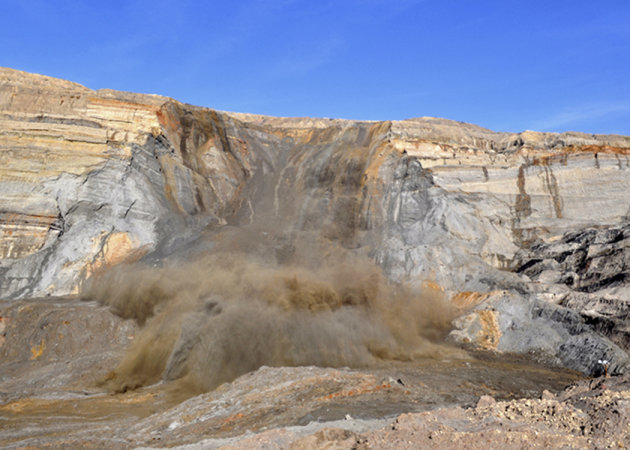
Rescuers have identified the five people who went missing after a landslide in southwest China's Guizhou Province. The disaster struck on Monday morning in Longchang Township in the city of Kaili, burying six work sheds.

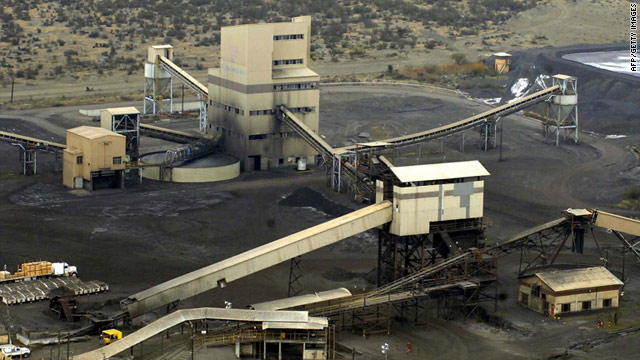
About 100 meters away from the landslide, there is a coal mine, called Ping Di. When the landslide happened, about 20 coal miners were doing preparation work inside for the restart of work after Chinese New Year. Hearing the loud sound, all of them rushed out safely.

Coal miner of Longchang, Guizhou Province, said, "I didn't know what happened. I followed the other coal miners and ran out. I just heard some noises."

But at least six sheds of the coal mine have been buried.

Pan Mei, survivor of Longchang, Guizhou Province, said, "I was watching TV at home. I was thinking about going to the market and heard a loud noise. It lasted for about five minutes. I ran out. There was a lot of dust. When I got out, I saw the landslide."

More than one hundred fire fighters have been sent to the scene for rescue work. Traffic control has been carried out day and night. At about eight o'clock in the evening, a huge amount of stones and sands rushed down from the mountain again. This has caused a lot of difficulties in the rescue work.

The landslide is still going on. All the rescue workers and cars have to transfer to safe places.

About 80 residents living around the area have also been evacuated. Although the local government has prepared well for rescue work, experts say it is not a good time for the frequent occurrence of landslides.

Wednesday 20 February 2013

http://www.china.org.cn/video/2013-02/19/content_27997995.htm

continue reading

Sri Lanka: The need for the preservation and proper inquiries into the remains of about 200 bodies found in the mass grave at Matale


A written statement submitted by the Asian Legal Resource Centre (ALRC), a non-governmental organisation with general consultative status

1. The ALRC and its sister organisation, the Asian Human Rights Commission (AHRC), have documented numerous cases of enforced disappearances to the state of Sri Lanka and to the UN Working Group.

2. The question of enforced disappearances in Sri Lanka has been a matter of concern for the Working Group for a long period now. The particular issue that the ALRC wishes to highlight in this submission is the finding of the remains of around 200 bodies at Matale, which is under investigation by the Sri Lankan authorities. According to forensic experts who have so far done the preliminary work, the remains of the bodies indicate injuries and therefore the experts now regard the site containing these remains as a crime scene.

3. The assumption so far is that these remains are of persons who were arrested as suspects of the Janatha Vimukthi Peramuna during the period of its second uprising, known usually as the second insurrection. The period was between 1987 and 1991. According to the reports of the commissions of inquiry into involuntary disappearances there were complaints to these commissions of disappearances of persons numbering around 30,000.

4. Now that it has come to the notice of the authorities of the discovery of these remains in what may be called a mass grave it is the duty of the state to conduct thorough inquiries into the circumstances under which these persons have suffered the injuries which are evidenced by their remains and to ensure a credible course of action leading to the discovery of all the details relating to the alleged crimes.

5. An inquiry must be able to ascertain the identity of the persons whose remains have been found; where they were arrested if these persons were disposed of after arrest, what is the nature of the injuries indicated on the remains and what the historical circumstances that led to their treatment that in turn led to these injuries. Such information should finally lead to the identity of those who caused these injuries which led to the death of these persons. Once such factual details are established it would be possible to decide the course of action needed to ensure justice.

6. However, there are serious concerns about the manner in which the remains are being preserved and also the manner in which the inquiries are being conducted. There are detailed processes and techniques essential for the scientific investigation of atrocity crimes. These include methods for the location, evaluation, excavation, recovery, and recording of mass graves and the analysis of human remains and other evidence in order to establish the identity of victims and the cause and manner of their deaths.

7. The ALRC suggests that the United Nations Working Group on Enforced Disappearances should, through their experts, study the situation and the conduct of inquiries relating to the remains of the 200 or more persons found in Matale, Sri Lanka and assist the Sri Lankan government to ensure that these inquiries will meet the international standards required for such inquiries. The ALRC also suggests that the international community should assist the Sri Lankan government with expertise, equipment and the necessary financial resources for the proper conduct of investigations as well as the preservation of these remains under ideal conditions, which are required for such purposes.

8. The ALRC is concerned that if such international cooperation is not extended there is the possibility of the neglect of these remains which may lead to their destruction as a whole or in part and also that if the remains are not preserved under proper conditions their evidentiary value may progressively degenerate.

Wednesday 20 February 2013

http://www.humanrights.asia/news/alrc-news/human-rights-council/hrc22/ALRC-CWS-22-08-2013

continue reading

Peru returns bodies of war victims to families


Authorities in Peru's southern mountains have returned to their families the remains of 26 people killed in fighting between the army and Shining Path rebels in the 1980s.

The remains, including two women and three children, were exhumed from common graves in the Apurimac region late last year. Investigators managed to identify the remains so that they could be returned to their families for burial.

The bodies were handed over in a ceremony in the city of Cuzco on Tuesday. The families carried the remains of their loved ones in white coffins down the stone streets of the city, which serves as the gateway to the Inca citadel of Machu Picchu.

The victims were believed to be local residents and villagers caught in the cross fire between soldiers and rebels, officials said.

Authorities in southeast Peru have been working in recent years to identify common graves left over from the bloody war between Maoist rebels and soldiers as part of an investigation into human rights abuses.

According to Peru's Truth and Reconciliation Commission, 69,000 people were killed or disappeared between 1980 and 2000 in Peru's armed conflict.

Wednesday 20 February 2013

http://www.utsandiego.com/news/2013/feb/19/peru-returns-bodies-of-war-victims-to-families/

continue reading

Pasta de Conchos mine disaster: ‘bodies must be recovered’


On Tuesday, the seventh anniversary of the Pasta de Conchos mine disaster, the Attorney General’s Office (PGR) announced that it will begin inspecting the site in an effort to recover the bodies of the miners who died in the 2006 accident.

On Feb. 19, 2006, at about 2:30 a.m., an explosion rocked the Pasta de Conchos coal mine in Coahuila, killing 65 people. The mine is owned by Grupo México, the country’s largest mining company. Of the 65 miners buried in the blast, only two bodies were ever recovered.

Now the Labor Secretariat (STPS) has ordered a new investigation, and Secretary Alfonso Navarrete Prida said on Tuesday that it will determine whether or not it will be possible to recover the bodies.

Navarrete Prida said that “in starting a new investigation by the Attorney General’s Office, we can discover the exact technical conditions of the mine at the time and now. This will tell us what the new administration can or cannot do about the situation. “The federal government and President Enrique Peña Nieto express once more their condolences to the families of those miners for the tragedy that occurred several years ago.”

The new investigation comes as members of The National Mining and Metal Workers Union (SNTMMSRM) gathered around the Angel of Independence monument in Mexico City yesterday to commemorate the anniversary of the explosion and demand justice for the families of those killed in the disaster.

At the time of the disaster, the union leader Napoleón Gómez Sada accused the federal government of colluding with Grupo México to block a thorough investigation of the site, which miners had complained was unsafe.

Navarrete Prida said that more than 200 mining operations have been inspected since December 2012.

He added that the STPS was working with federal and state authorities to determine if the Pasta de Conchos explosion was related to organized crime.

“We want to make sure coal mines, to which there is no economic alternative, are places where conditions are adequate for workers,” he said.

Wednesday 20 February 2013

http://www.thenews.com.mx/index.php/mexico-articulos/6382-%E2%80%98bodies-must-be-recovered%E2%80%99

continue reading

Tuesday, 19 February 2013

Heavy rain suspends search for 5 miners


Intermittent heavy rain forced the search for five miners trapped inside a mining pit of Semirara Mining Corp. in Caluya, Antique, to be suspended, an official said Monday.

Rescuers stopped their search after two landslides occurred near the west wall pit.

The bodies of five miners have been recovered beneath the rubble after the west wall of the Pani-an pit caved in on the night of Feb. 13, trapping 13 people.

“Retrieval operations are temporarily suspended due to the rainy weather,” said Chief Supt. Agrimero Cruz Jr.

He said the miners who remained trapped had a slim chance of survival, though he was hoping an air pocket would allow them to breathe.

A left arm from a still unidentified miner was recovered after it was seen floating near the Pani-an pit.

The police investigators who were sent to the site to determine what caused the coal pit to collapse were still to file a report, but it appeared that whatever caused it was aggravated by the heavy downpour.

Semirara Mining Corp. on Monday said the operations at the Pani-an site remained suspended as the company and government authorities continued to search for the five missing miners.

The company said in a disclosure to the Philippine Stock Exchange that dogs had been called in to aid in the search.

“Further, the company has guaranteed financial, employment, scholarship and livelihood assistance to the families of those involved,” Semirara said.

Tuesday 19 February 2013

http://manilastandardtoday.com/2013/02/19/heavy-rain-suspends-search-for-5-miners/

continue reading

Yemeni military plane crashes in capital Sanaa, 12 dead


A Yemeni air force plane crashed in the capital Sanaa on Tuesday, killing at least 12 people, security sources said.

State news agency Saba said three women and two children were among those killed when the plane, on a training flight, came down in a western residential district. Eleven people were wounded, security sources said.

Pictures of the crash on social media sites showed one body near burning wreckage of the aircraft. Several cars were on fire and debris littered the street.

A security official said the pilot had ejected from the plane. There was no immediate word on whether he had survived.

"It's terrible and painful," resident Abdullah al-Ashwal said. "The police and medics evacuated five completely burned bodies, they were all unrecognisable."

Abdulsattar Mohammed said he saw a plane burning near houses that were also set on fire. "People were terrified and ambulances arrived late," he said.

A military official said the plane was a Russian SU-22 fighter/ground attack aircraft.

Yemen has 30 SU-22s and four SU-22UM3s in an air force with 79 capable aircraft in all, according to the 2012 Military Balance handbook issued by the International Institute of Strategic Studies.

In November 2012, a Yemeni military transport plane crashed near Sanaa airport and burst into flames, killing all 10 people aboard.

Tuesday 19 February 2013

http://uk.reuters.com/article/2013/02/19/uk-yemen-crash-idUKBRE91I0DL20130219

continue reading

Ezu River mystery: Bodies belong to executed Kidnappers


The mystery surrounding the dead bodies found floating in the Ezu River, Anambra State has finally been unraveled. The bodies belong to suspected kidnappers who have been terrorizing the South-East zone.

Investigation revealed that leaders of the zone have been greatly disturbed by the unbridled activities of notorious indigenes of the zone who have decided to derive pleasure from snatching their kith and kin for money. And in order to curb this activity, the leaders reached an unwritten agreement which is to deal with apprehended suspect extra-judicially.

Some of the states in the zone including Anambra made their House of Assembly to pass an Edict making kidnapping punishable by death.

But the law as developments would later prove has not deterred the men prone to this cruel means of making money from engaging in their terrifying activities.

It would be recalled that to press matter home, some 1000 indigene of Anambra staged a protest complaining to the State Government the effect of the activities of these men is having on their means of daily survival. Because of the rate of this nefarious crime, most children of the state living abroad have refused to come home for visits thus denying them access to much needed foreign currency useful in their daily upkeep. The protesters which included women and children cried to the Governor to find means of dealing with the issue.

Investigation revealed that most of the bodies belonged to suspected kidnappers arrested between October and November last year. And reluctant to follow the long route of prosecution, the state in connivance with the security decided to terminate the lives of these men.

Although, the initial plan was to conduct a mass burial, the men charged with the task later changed their mind in view to the task involved. But their solution has since backfired with the whole world wanting to know what triggered the dumping of such a number of bodies in the river.

Insiders informed that recent police denial of the claims made the by the Movement for the Actualization of The Sovereign State of Biafra (MASSOB) that some of the dead bodies were its members was not far from the truth but that associations do at times cut across and that some MASSOB members might have had links with kidnappers in the region, and that some existing MASSOB members may still have.

It would be recalled that the police boss in the state, Ballah Nasarawa, on February 12, 2013, no member of the movement was either killed or dumped in Ezu River by the Police.

While briefing newsmen at the police headquarters located in Amawbia, Nasarawa revealed that the names mentioned by MASSOB as some of its missing members were not in the records of the state command, adding that as far as the police were concerned, MASSOB remained a proscribed body by the government.

He said, “As far as Anambra state police command is concerned, MASSOB had been proscribed by government and must remain so. Therefore, any person that hides under the protection of MASSOB, or any illegal organization for that matter, and commits any criminal act, will be arrested and prosecuted'.

He stressed that that the command was putting the records straight, adding that all suspected criminals arrested under the guise of MASSOB were dully charged to courts.

Earlier at the beginning of the debacle, the Civil Liberties organization (CLO) in Anambra State had accused the Anambra State Special Anti-Robbery Squad (SARS) of complicity in the discovery of 50 dead bodies floating in a river in the state.

The State Chairman, Comrade Aloysius Attah and Secretary, Comrade Justus Ijeoma in a press statement pointed accusing finger at the Special Anti Robbery Squad (SARS) saying they contended that litanies of extra judicial killings have been rampant in the state insisting that government should investigate the activities of the body.

But the State Police Command through the Police Public Relations Officer (PPRO) Mr. Emeka Chukwuemeka denied the allegation, describing it as untrue and added that there were no bullet wounds on the bodies of the corpses.

Chukwuemeka stressed that an autopsy is already been carried out by a team of specialist on the bodies and that such insinuations would affect investigation into the matter.

The villagers of the small and obscure town of Amansea located at the border of Enugu and Anambra State woke up to discover dead bodies of able bodied young men floating on their river known as 'Ezu River' which empties into Anambra River from Agba Ogwudu River in Enugu State. Information gathered by National Daily then revealed that some villagers went to fetch water from the river in the morning only to discover dead bodies floating slowly, with some wedged on the banks of the river. After counting up to 50 bodies, they quickly alerted their traditional ruler, Igwe Kenneth Okonkwo who mobilized his cabinet for an emergency meeting after which the state government and the police was contacted. According to the traditional ruler who looked dazed, “I have never seen this kind of incident; in fact I do not know how to describe it. Able bodied men wasted and dumped in our river major source of water for us and other communities close to us. I cannot say actually how many bodies that were dumped inside the river but all I know is that they are too many,” he said.

The CLO had further claimed that one Olisa Ifedika who is said to be a kidnapping kingpin in the state and his gang who were arrested and has been in custody of the police is among the dead bodies found at Ezu River.

“We scrutinized the bodies and saw a mark with which he is known,” a source told National Daily but the according to the police PPRO, Mr. Emeka Chukwuemeka, the suspect is alive and in their custody where “he is helping police with investigations,” he said.

The CLO demanded that if the police are sincere in what they are saying they should present the suspects to the public; a demand that has not been met as at the time of writing this report.

Out of the total number of twenty two decomposing bodies evacuated from the river, 19 were earlier given a mass burial close to the river, but the uncertainty surrounding the deaths necessitated that three out of the lot were taken for autopsy procedures on them.

National Daily investigation gathered that following the accusations by the CLO on the state police command, the Inspector General of Police, Mohammed Abubaker, dispatched pathologists from the Police Force Headquarters, Abuja to be part of the team to forestall foul play.

The bodies were taken to the Nnamdi Azikiwe University Teaching Hospital, Nnewi, for the autopsy.

The police established that of all the deceased victims, none was a female adding that while some wore only singlet, others wore only pants with some others boxers. Nasarawa also confirmed that there were no gun injuries or machete cuts on their bodies as earlier speculated. Nasarawa stated further that investigations were still continuing on the matter, assuring that the police would be providing additional information on the matter as they became available.

Attempt by National Daily to visit the site of the exhumation near the Ezu River was stalled as the police cordoned off the area and refused anybody from gaining access. It also directed all enquiries to either the State Commissioner for Health or the Commissioner of Police but, the Commissioner for Health, Dr. Ikeako said he was yet to be briefed by the team of pathologists. He also explained that the bodies had gone so bad, having been buried for over one week and urged those seeking information on the matter to be patient until he had adequate information to give on the findings of the autopsy. Ikeako noted that the state government had already picked a bill of N1.5 million from the morticians and those who evacuated the bodies, even as more bills were being expected for the autopsy proper and embalmment.

National Daily learnt that the bodies were dumped from the top of the bridge at Amansea into the river few days before the shilling discovery and the question on the lips of people of Amansea and beyond is; when will the truth behind the dumped dead bodies be told?.

According to the men sent by the traditional ruler of Amansea, Igwe Kenneth Okonkwo to find out what happened; they said they saw traces of what looked like blood on the bridge, even as there was no sign of scuffle in the area. In their thinking, the victims were killed elsewhere and brought to the river where they were dumped but the police on their part said there were no bullet wounds on the victims' bodies.

Tuesday 19 February 2013

http://nationaldailyngr.com/current-edition/ezu-river-mystery-bodies-belong-to-executed-kidnappers

continue reading

Accident claims 16 lives on Jigawa /Kano Road


A motor accident at Durbundai village in Takai Local Council of Kano State, which is some a few kilometres from Jigawa State, has claimed not less than 16 people, members of the same family and indigenes of Waza village in Birninkudu Local Council of Jigawa state.

The accident, which occurred on Saturday, an eye-witness confirmed, also injured seven persons, who are receiving treatment at Rasheed Shekoni Special Hospital Dutse.

The eyewitness told The Guardian that the two vehicles, a Toyota Siena and Ford bus, which were coming from opposite directions, had a head on collision, claiming the lives of 11 passengers instantly.

Continuing, he stated that there were two occupants in the Toyota, a male and female, adding that he could not ascertain the number of passengers in the Ford bus but he indicated that the bus was over-loaded.

The Birninkudu Local Council Chairman, Alhaji Khali Ibrahim confirmed the accident. He said the victims were on their way to Tsangaya village of Albasu Local Council in Kano State to attend a wedding Fatiya of their relation.

Ibrahim explained that “when the accident occurred, 11 people died on the spot, adding that three died later in the hospital same Saturday and on Sunday morning, another two also passed on.

The chairman explained further that the nine dead bodies received mass burial at Waza village while two were buried at Unguwar Bashe village, a few kilometres to Waza.

The Chairman promised to foot the medical bills of those admitted in Rasheed Shekoni Specialist hospital

Governor Sule Lamido has visited the injured victims at the hospital and has also paid condolence visits to the families of the deceased.

Tuesday 19 February 2013

http://www.ngrguardiannews.com/index.php?option=com_content&view=article&id=113836:accident-claims-16-lives-on-jigawa-kano-road&catid=3:metro&Itemid=558

continue reading

Australia-bound refugees 'dumped bodies at sea'


A boatload of Myanmar refugees rescued from a sinking wooden vessel off Sri Lanka's east coast after two months at sea had been trying to reach Australia, police say.

Shocking pictures have emerged of the boat people, who were plucked to safety by Sri Lanka's navy at the weekend and taken to the southern port of Galle where they were rushed to hospital to be treated for dehydration and starvation.

A Myanmar embassy spokesman said 32 people were rescued, although initial reports from naval units had suggested there were 38.

The group comprising 31 adult males and a boy had been at sea without food for 21 days when the navy rescued them after being informed by a local fishing boat.

Survivors have told local newspapers there were 130 passengers at the beginning of the journey, and 98 died on the way with their bodies dumped to sea.

They said they were planning to go to Australia after their attempt to enter Malaysia failed.

"We have been told of 32 people rescued and we are waiting to speak to them," embassy spokesman Aung Soe Moe said.

Sri Lankan police said the rescued boat people claimed they were in a group of 130 who set out in three boats just over two months ago with the intention of reaching Australia.

The fate of the others was not known.

Saturday's rescue was the second in less than two weeks.

On February 3, the navy rescued 138 Bangladeshi and Myanmar nationals from a sinking boat. One passenger was found dead.

Local police officials said it was unclear if those identified as Myanmar nationals were Rohingya - members of a stateless Muslim minority described by the UN as one of the world's most persecuted groups - who had fled the country.

An explosion of tensions between Buddhist and Muslim communities in Myanmar's western state of Rakhine since June 2012 has triggered a seaborne exodus of Rohingya.

Tuesday 19 February 2013

http://au.news.yahoo.com/thewest/a/-/breaking/16180387/australia-bound-refugees-dumped-bodies-at-sea/

continue reading

Monday, 18 February 2013

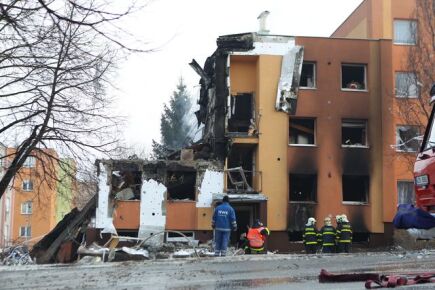
Authorities recover 4 more bodies at site of Czech gas blast, death toll at 5


Officials say the death toll after a powerful gas explosion that destroyed a three-story apartment building in eastern Czech Republic has risen to five.

Firefighters spokesman Petr Kudela said Monday rescuers working with sniffer dogs found three dead children and one more body burned beyond recognition. Another body was recovered Sunday.

Officials say 11 people were injured in the blast that occurred early Sunday in the town of Frenstat pod Radhostem.

One person is still missing.

Police spokeswoman Sona Stetinska said a gas leak apparently caused the blast, which heavily damaged the building early Sunday in the town of Frenstat pod Radhostem. Fire department spokesman Vladimir Vlcek said it would take hours to search the rubble of the building.

Monday 18 February 2013

Read more: http://www.theprovince.com/news/Authorities+recover+more+bodies+site+Czech+blast+death+toll/7979575/story.html#ixzz2LFhvoHCi

continue reading

Update: Indonesia floods, landslides kill 17


Four children were among 17 people killed over the weekend in central Indonesia after heavy rains triggered floods and landslides, officials say.

The children, aged between two and nine, died along with 13 adults when flooding and landslides hit the northern part of Sulawesi island early Sunday, said provincial disaster management agency spokesman Howke Makawarung on Monday.

"We recorded 17 people killed. All bodies were found on Sunday," he said, adding that heavy rains had hit three areas, including the North Sulawesi provincial capital of Manado which saw water levels up to 4m.

Water, which inundated around 5,000 houses in Manado, had receded by Monday and residents had begun cleaning up their homes.

A landslide which hit the city killed a six-year old boy.

"He was taking a bath in the morning when a landslide suddenly struck his house," said the capital deputy mayor Harley Mangindaan.

Indonesia is regularly affected by deadly floods and landslides during its wet season, which lasts for around six months.

Environmentalists blame logging and a failure to reforest denuded land for exacerbating flooding.

Heavy rains caused flooding in the capital Jakarta in January that left 32 people dead and at its peak forced nearly 46,000 to flee their homes.

Sunday 18 February 2013

http://www.theaustralian.com.au/news/breaking-news/indonesia-floods-landslides-kill-17/story-fn3dxix6-1226580661992

continue reading

Tragic traffic accident kills 7 in Lam Dong


Seven people, including three children, were killed and one was injured after a truck crashed into three motorcycles in the Central Highland province of Lam Dong on February 16.

The accident happened at 17.30 when the truck carrying vegetables was travelling en route from Lam Dong’s Bao Loc district to Ho Chi Minh City.

It bumped into three motorbikes in opposite direction carrying 8 people who were then caught up in the truck chassis and dragged away tens of metres. The truck plunged into the Bao Loc ravine.

Five people were killed at the scene, two other died on the way to hospital, and another was seriously injured at Lam Dong’s General Hospital 2. Among the deaths were three children.

Local police were mobilised to clear traffic and look into the cause of the accident.

They identified the six dead bodies who were all from Lam Dong province.

Vietnamese people are celebrating the traditional Lunar New Year (Tet) holiday which sees a sharp increase in the number of traffic accidents.

Preliminary reports showed that 290 traffic accidents have occurred during the week-long holiday, killing 234 people and injuring 284 others.

Sunday 18 February 2013

http://english.vietnamnet.vn/fms/society/66602/tragic-traffic-accident-kills-7-in-lam-dong.html

continue reading

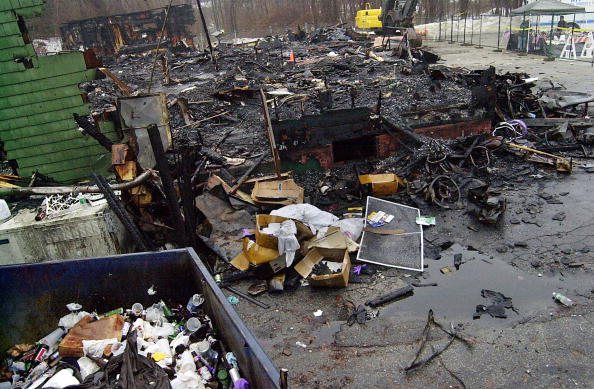
Survivors of 2003 Rhode Island nightclub fire mark 10 years


Survivors of a 2003 nightclub fire that killed 100 people and relatives of those killed huddled together in bitter cold Sunday at the site of the disaster to mark the 10th anniversary of the fire.

Some brought flowers and paid their respects at the handmade crosses that dot the site for each person who died. Others cried and spoke of missing their loved ones and the difficulty of moving past such trauma.

"People that weren't here really don't understand why we can't let this stuff go. I was 30 seconds away from dying," said Walter Castle Jr., 39, a survivor who suffered third-degree burns in his lungs, throat and bronchial tubes. He said he lost many friends and was in counseling until 2009. Recently, as the 10th anniversary approached, he began having terrible nightmares and had to go back into counseling.

"It's just very tough," he said.

The anniversary of the blaze is Wednesday. The fire broke out when pyrotechnics for the rock band Great White ignited flammable packing foam that had been installed in The Station club as soundproofing. Last month, a fire at a nightclub in Brazil killed more than 230 people under circumstances that were eerily similar: A band's pyrotechnic display set fire to soundproofing foam.

Among those who spoke Sunday was former Gov. Don Carcieri, who took office the month before the fire and still gets choked up when speaking about it. He remembered the days families waited at a hotel for word that their loved ones' remains had been identified, and the anger everyone felt, asking how the tragedy could have happened. But he also remembered how people in Rhode Island, a state with a population of just 1 million, pulled together to help each other.

"At a time of our state's worst tragedy, in some sense, it was our people's finest hour," he said.

Angela Bogart, who was 19 when her mother, Jude Henault, was killed in the fire, said she has come to know and understand her mother more in the 10 years since she died, especially since she has become a mother herself.

"My mom lives in me in everything I do. I hear her voice wherever I go," she said. "When I walk hand-in-hand with my little girl, my mother is holding her other hand."

The ceremony also featured musical performances, a reading of the names of the people who died and 100 seconds of silence.

While somber, the annual gathering at the fire site took on a more hopeful tone this year than in years past because a foundation set up to build a permanent memorial secured ownership of the site in September after years of trying. On Sunday, the Station Fire Memorial Foundation released final plans for the memorial.

They call for a 30-foot-high entrance gate topped by an Aeolian harp. Wind passing through the harp will create music, a reminder that it was music that brought people together that night.

The permanent memorial will include an individual memorial for each person who died and commemorate the survivors, first responders and those who helped care for families of the dead and survivors in the weeks and months after the fire. It will also include a pavilion as a gathering place.

Families are being asked to remove the crosses and other personal mementos that have been left at the site at the makeshift memorial that has developed over the years. The items left behind will be buried in a capsule under an area that is now the parking lot. There will be no digging on the land under where the club once stood because of the fear of disturbing human remains.

While much of the materials and labor to build the memorial will be donated, foundation officials say they need to raise $1 million to $2 million to build and maintain it.

The foundation hopes to break ground in the spring. Construction of the memorial could take one to two years.

Gina Russo, who was badly burned in the fire and whose fiancé was killed, is president of the foundation and said the memorial would turn the site into something beautiful.

"It's a happy moment going forward," she said.

Sunday 17 February 2013

http://www.usatoday.com/story/news/nation/2013/02/17/rhode-island-nightclub-fire-station-anniversary/1926737/

continue reading

Sunday, 17 February 2013

DNA test confirms ID of Tamil Nadu Express fire victim


Hopes of the parents of TN express fire mishap victim Jaswant Singh, 17, of Punjab were shattered after the DNA test carried out at Centre for DNA Fingerprinting Department (CDFD), Hyderabad, recently proved that one of the unclaimed bodies is their biological son. The parents have been searching for him believing that he is alive.

It may be recalled that 28 passengers travelling in S-11 coach of Tamil Nadu Express bound for Chennai were charred to death in a fire mishap soon after the train crossed Nellore railway station during the early hours of July 30 last year.

Railway police have sought DNA test with blood samples of the parents of Jaswant Singh and Avinash. The samples of the parents were compared at CDFD with the tissue and bone samples of two bodies and also with six body pieces recovered from the coach. The samples of the male body tallied with the blood samples of Jaswant Singh parents, Ravinder Singh and Kamaljit Kaur.

Railway DSP of Nellore G. Srinivasa Rao had informed Ravinder Singh about the DNA matching after receiving the report few days ago. Close relatives of the victim Gurudev Singh, Amarik Singh and Manjit Singh came to Nellore on Saturday at the instance of the DSP.

The relatives decided to take Jaswant’s bones collected for DNA test and immerse in a holy river at Shri Kartarpur Sahib in Punjab since last rites were already performed before burying at Nellore. They decided to offer prayers at the graveyard where Jaswant Singh was buried.

Sunday 17 February 2013

http://www.deccanchronicle.com/130217/news-current-affairs/article/dna-test-tallied-punjab-boy

continue reading

Foreign experts to help recover bodies in Semirara


Two foreign experts arrived yesterday in Caluya, Semirara Island in Antique to assist officials of the Semirara Coal and Mining Corp. in the recovery of the bodies of workers trapped in a mining pit during a landslide last Feb. 14.

The foreigners, an American guest instructor and an Australian volunteer, arrived with Broderick Train, officer of the Provincial Disaster Risk Reduction Management Council (PDRRMC), to check on the incident command activation, according to Chief Superintendent Agrimero Cruz Jr., Western Visayas police director.

Cruz said K-9 dogs have marked two areas believed to be where the missing miners were trapped.

“Retrieval operations using backhoes and bulldozers are still on going for the five still missing workers. Five K-9 units are already at Panian pit to assist in locating the victims,” he said.

The bodies of five other victims were recovered shortly after the landslide. Three other workers were rescued and are now at the hospital undergoing treatment.

Cruz said the foreigners would coordinate with other government agencies in the area, while two personnel from the Department of Labor and Employment (DOLE) are tasked to conduct an investigation on the incident.

He said Semirara Mayor Genevive Lim-Reyes announced that she would give financial assistance worth P20,000, while the Municipal Disaster Risk Reduction Management Council would also give P10,000 to affected families.

Police said a mass was held in the area for the safe recovery of the missing workers.

Authorities established a command post on Saturday morning at the barangay hall of Semirara, manned by police personnel led by Senior Police Officer 1 Arturo Diorda, who was assigned to coordinate with the local government of Semirara.

Cruz said Train would take over as incident manager once he arrives at the site.

PNP Caluya and the provincial disaster management council are in the process of gathering information to come up with a comprehensive report on the incident.

Meanwhile, organized labor yesterday called on the government to look for alternative and safer sources of energy instead of using coal in power generation.

The Partido ng Manggagawa (PM) said that the use of coal put the lives of mining workers in danger.

Sunday 17 February 2013

http://www.philstar.com/headlines/2013/02/18/910120/foreign-experts-help-recover-bodies-semirara

continue reading

At least 10 dead in Indonesia landslides, floods


Landslides and floods triggered by torrential rain in northern Indonesia have killed at least 10 people and sent hundreds fleeing for safe ground.

Disaster official Sutopo Purwo Nugroho says mud and rocks cascaded down hills Sunday in seven sub-districts of Manado, the capital of North Sulawesi province, while more than 1,000 houses were flooded after downpours caused a river to burst its banks.

He says nine bodies were pulled from the mud and wreckage of crumpled homes and another from water.

About 1,200 people fled to temporary shelters.

Rescuers are searching for those who may still be buried beneath mud and rocks. Seasonal downpours cause dozens of landslides and flash floods each year in Indonesia, where millions of people live in mountainous areas or near fertile flood plains.

Sunday 17 February 2013

Read More at: http://www.wlos.com/template/inews_wire/wires.international/21ea9664-www.wlos.com.shtml#.USD330Fb7jI

continue reading

Forensic Studies Commence On 154 Skeletal Remains


Forensic studies into the skeletal remains that were exhumed from a mass grave near the Matale Hospital have commenced following the conclusion of excavation work at the gravesite.

Judicial Medical Officer (JMO) Dr. Ajith Jayasena said that 154 skeletal remains were exhumed from the mass grave when the excavation work was completed last week.

He explained that although some preliminary tests were conducted on the skeletal remains during the excavation work, the proper forensic analysis would now be carried out with the help of more experts including professionals in conducting dental forensics. “We conducted some preliminary tests due to the fragile state of some of the bones that were exhumed from the grave,” Dr. Jayasena said. When asked if the skeletal remains would be sent overseas for further forensic examinations, he observed that samples have not been sent overseas so far and that it was up to the Criminal Investigations Department (CID) to organize the funds to send the skeletons overseas.

“I have requested courts to get some dental forensic experts from Colombo to visit Matale to carry out examination work since the bones are too fragile to be sent to Colombo,” Dr. Jayasena added.

According to the JMO, once the period of the skeletal remains are determined, DNA tests would be conducted to identify the dead. Meanwhile, the controversy surrounding the Matale mass grave has taken a new twist with the JVP calling on the government to hold a comprehensive inquiry into the largest mass grave to be excavated in the country.

The JVP last week claimed that the preliminary inquiries conducted on the skeletal remains has indicated that they belonged to the period between 1988 and 1989. It was also the period of the JVP insurgency. JVP parliamentary group leader, Anura Kumara Dissanayake said that the skeletal remains unearthed from the Matale mass grave belonged to the comrades who were murdered during the height of the insurgency in 1988-89. He pointed out that the preliminary investigations have also revealed that the persons buried in the mass grave have been tortured.

“The investigations on the bones that were uncovered have revealed that some of them have not decayed or broken according to the normal decaying process. Some bones have indicated that they had been broken with the use of force and skulls that have been separated from the rest of the remains have shown that the separation was due to an external force,” Dissanayake explained. Dissnayake added that some persons involved in killings that took place during the 1988-1989 period were now members of the government. However, he urged the government to conduct a comprehensive investigation into the mass grave, reveal those responsible and take action against them.

Saturday 16 February 2013

http://www.thesundayleader.lk/2013/02/17/forensic-studies-commence-on-154-skeletal-remains/

continue reading

Friday, 15 February 2013

Police: 2 bags from Missoni plane found in Bonaire


Police on the tiny island of Bonaire said Thursday that two pieces of luggage from a missing plane that was carrying the CEO of Italian fashion house Missoni has washed up on a local beach.

In Curacao, Bonaire police spokesman Hans Baltus confirmed that two bags found earlier this week on a rocky beach were from the missing plane carrying Vittorio Missoni, his wife and four others. Baltus declined to provide information about the nametags on the battered bags, citing an ongoing investigation.

However, Missoni family friend Claudio Verna in Italy said that authorities in Bonaire phoned him Tuesday to tell him that two bags were found that belonged to the missing CEO. He said the bags were discovered Tuesday by a local newspaper reporter on the tiny island off Venezuela.

Baltus said police were in contact with Verna as a family representative.

The BN-2 Islander plane carrying Missoni and the others vanished shortly after takeoff on Jan. 4 from Los Roques, a tiny archipelago that is a dependency of Venezuela. It was destined for Caracas, the South American nation's capital.

Late last month, a bag belonging to a tourist who missed that flight washed up in nearby Curacao, which lies some 200 miles (320 kilometers) west of the resort islands of Los Roques. It was the first sign of debris from the missing plane.

From Italy, Verna said the Missoni family and friends of the missing couple are still hoping that the plane did not plunge into the ocean.

"You cannot exclude that someone could launch bags in the sea. We are not in the condition now to exclude any other option," he said.

Verna said he will fly to Venezuela next week and try to advance plans to hire a boat to search for the missing plane.

Baltus said the two bags found in Bonaire are expected to be sent shortly to authorities in Venezuela.

Italy's air safety agency has said the pilot of the vanished plane had an expired medical fitness certificate and that the company operating the aircraft wasn't yet authorized to fly. However, the National Flight Safety Agency has said that neither factor is being blamed for the disappearance at this time.

Seven minutes after takeoff, the pilot reported that he was at 5,000 feet and 10 nautical miles from the Los Roques airport, according to the agency. The last radar readings showed the aircraft accelerating at 5,400 feet before it quickly lost altitude and speed, veering to the right until it disappeared from the radar.

Friday 15 February 2013

http://www.huffingtonpost.com/huff-wires/20130214/cb-curacao-venezuela-missing-plane/

continue reading

Bureau to trace missing people in mysore


"Based on the guidelines of the Supreme court and the Union ministries of social welfare, home affairs and women and children we have now decided to give special attention to tracing missing persons," said Mysore city police commissioner, K. L. Sudheer, adding that the missing persons bureau in Mysore , only the second of its kind in the state, would be set up in the next four or five days at the Mysore City Crime Records Bureau.

It will store both hard and soft registers of missing persons, accident victims and even unidentfied bodies. The bureau would be expected to coordinate with all police stations and ranges both in Mysore district and neighbouring districts, including Bengaluru, said the commissioner blaming love affairs and emotional disturbances in nuclear families for many of the people going missing in the city.

Of those who went missing last year, 94 minor girls and 85 women have already been traced, but the hunt is on for the others. In 2011, of the 114 minor girls and 214 women who went missing, 89 girls and 170 women were traced and returned to their families .

In all of the 678 people who went missing from Mysore in 2012, only 468 people have been traced so far. And in 2011, of the 634 people reported missing, the police has managed to find 479.

Friday 15 February 2013

http://www.deccanchronicle.com/130215/news-current-affairs/article/now-bureau-trace-missing-people-mysore

continue reading

More bodies found in Semirara landslide


The bodies of a still undetermined number of miners trapped when a mining pit in Antique collapsed Wednesday have been found, but they have yet to be retrieved after operations were halted because of the stench, police said.

In a phone interview, Senior Inspector Rico Andaza, Caluya police chief, said reports reaching his office said that rescuers have already identified the exact location of the missing miners, but he could not say if all five missing miners have been found.

“Basta ang sabi sa report is natukoy na daw iyong location noong mga nawawala pero hindi alam kung ilan at kung buhay o patay mga nakita,” he said, adding that operations were halted to wait for doctors called in by the Semirara Mining Corp. to ascertain the condition of the victims.

In its latest report, the National Disaster Risk Reduction and Management Council identified the remaining missing victims as Leovigildo Porras, jan Riel Planca, Randy Tamparong, Richard Padernilla, and Junjie Gomez.

Disinfectants were said to have been sprayed at the area to clear the stench.

Andanza earlier said that rescue operations continued all through the night at the mining pit in Barangay (village) Semirara in Caluya, Antique.

Thirteen miners were initially trapped when the mining pit collapsed while they were reportedly taking a break.

Three were immediately rescued, and five were later found, but already dead.

The NDRRM identified the rescued miners as Marjun Catoto, Adrian Celmar, and Leonardo Sojor. Catoto has been released from the hospital, it said.

The fatalities were identified as George Bragat, Abner Lim, Joven Hocate, Efren Equiza, and Anthony Sibet. The NDRRM earlier reported that missing victim Porras was among the fatalities, and fatality George Bragat was among the missing victims.

The Semirara Mining Corp. said it was investigating the cause of the landslide.

“The management is in the process of determining the cause of the accident in coordination with relevant government authorities. Meanwhile, it has stopped operations to ensure the safety of all its personnel,” George San Pedro, Semirara Mining Corp. resident manager said in a statement, adding that the company is to extend full support to the families of affected personnel.

Superintendent Marloe Marfil, Antique provincial director-officer-in-charge, has said that the area has been declared as a “danger zone.”

Wednesday 15 February 2013

http://newsinfo.inquirer.net/359125/more-bodies-found-in-semirara-landslide

continue reading

At least 18 killed in Afghan bus crash, say officials


Afghan officials say at least 18 people have been killed in a traffic accident in the country’s southeast.

Deputy provincial governor in Ghazni Ahmad Ali Ahmad said the accident took place on Thursday on Afghanistan’s main north-south highway, when a bus with more than 50 passengers on board rammed into a truck. He added that here were also numerous injuries.

The deputy provincial governor further said the accident was due to reckless driving on the part of the bus driver, who was speeding on a narrow part of the highway in the Qarabagh district.

The main hospital in Ghazni province confirmed the death toll.

Thursday 15 February 2013

http://dawn.com/2013/02/14/at-least-18-killed-in-afghan-bus-crash-say-officials/

continue reading

Thursday, 14 February 2013

Bloodsucking humans in medieval times


The 16th-century woman was discovered among medieval plague victims in 2006. Her jaw had been forced open by a brick—an exorcism technique used on suspected vampires in Europe at the time.

The discovery marked the first time archaeological remains had been interpreted as those of an alleged vampire, project leader Matteo Borrini, a forensic archaeologist at the University of Florence in Italy, said when the skull was first revealed in March 2009.

Borrini found the vampire skull while digging up mass graves on the Venetian island of Lazzaretto Nuovo.

Scholars trace the myth that humans rise from the dead and suck the blood of others to medieval ignorance about how diseases spread and bodies decompose.

For instance, as the human stomach decays, it releases a dark "purge fluid." This bloodlike liquid can flow freely from a corpse's nose and mouth.

When mass graves were re-opened during epidemics to deposit fresh corpses, the Italian diggers often encountered older, bloated bodies with purge fluid seeping out of their mouths — conditions that scientists now know result from the buildup of gases in decomposing organs. In earlier times, however, this was regarded as a sign that the corpses were drinking the blood of others.

In addition, the fluid sometimes moistened the burial shroud near the corpse's mouth so that the cloth sagged into the jaw. This could create tears in the cloth that made it seem as if the corpse had been chewing on its shroud.

Vampires were thought by some to be the causes of plagues, and the superstition took root that shroud-chewing was the "magical way" that vampires infected people, Borrini said.

Inserting objects—such as bricks and stones—into the mouths of alleged vampires was thought to halt the spread of disease.

This skull with a mouthful of brick, he said, is "evidence of exorcism against a vampire."

Medieval Italians thought that the only known way to kill the undead was to stick a brick in their mouths so that they would starve.

Thursday 14 February 2013

http://www.nbcnews.com/id/37981373/ns/technology_and_science-science/#.UR0ikEH3TUI

http://news.nationalgeographic.com/news/2010/02/100226-vampires-venice-plague-skull-witches/

continue reading

Cynicism underlies officials' lack of respect for dead


A landslide last month in southwestern China killed 46 villagers. Once the bodies were uncovered, the local authorities cremated them without getting prior agreement from family members.

This caused a storm of protest and criticism from relatives of the deceased, as well as from the public. Authorities in Zhenxiong County, Yunnan Province, sparked further outrage when they admitted that the cremations were prompted by a desire to maintain stability.

That one's family member dies in a disaster is devastating enough. The fact that the local government went ahead with such a decision and deprived the families the chance to send their loved ones off properly is salt in the wound. Such a method of "maintaining stability" can only make matters worse.

So why are local officials so thoughtless?

In fact, they had carefully calculated their own interests in making this decision. They must have been afraid of the families "using the dead to press the living," thinking they might react irrationally when they actually saw the horrible state of their excavated loved ones.

On the contrary, especially from a long term point of view, this kind of behavior hurts the feelings of the families of the deceased, threatens public order and undermines good morals. It makes the already poor credibility of the government even worse. Unfortunately, we see this kind of thing repeatedly in China.

Just as unfortunate, "using the dead to press the living" is often the last remedy the weak have to act against the strong.

Take a custom in my hometown in the central province of Hunan as an example. When a woman killed herself due to family disputes, her clan gathered to prevent her body from being buried in the hopes such a scene would ruin the husband's family.

This is, of course, illegal and not worth promoting. However, when one considers the historical background of the custom, one may understand and feel more sympathy.

For starters, in traditional Chinese society, women have a very low status. It's not rare that women suffer abuse from their mothers-in-law or violence from their husbands. The protection of a woman thus depends not on the law, but on the forces that her family can muster. It is very difficult to expect the law to uphold justice when a woman commits suicide because of domestic violence. This is why her family clan creates havoc as a way to punish the husband's family.

Respect the Dead

From the viewpoint of the modern rule of law, this kind of practice is primitive, a type of vigilante justice. But under specific historical circumstances, the approach does have a deterrent effect and to a certain extent curbs the ill-treatment of women.

So why is it that the practice of taking the dead to press the living still goes on? The most basic element of a civilized society is to respect the dead. Respecting the deceased is respecting the value of life.

A while ago, various local governments in Henan Province implemented by force a policy of flattening tombs. Like others, I believe this is because to those officials the skeletons are just meaningless waste. The fact that that waste has to give way to economic development has broken the bottom line of civilization.

Naturally, funerals and the handling of bodies can evolve in accordance with economic and social changes. For instance, cremation can take the place of burial. But the premise of respect for the deceased is not to be denied. This implies respecting the deceased's will and, in some cases, his or her religion.

All civilized societies respect the dead. If the rules made by the powers-that-be of the living world breach such rules of civility for mere utilitarian purposes, then it's doomed to face revolt.

Far too often, local authorities in China try to settle conflicts in the quickest possible way, fearing neither financial costs nor social taboos, for the sole purpose of maintaining stability. Such a cynical way of ruling must come to an end.

Thursday 14 February 2013

http://english.caixin.com/2013-02-08/100490853.html

continue reading

Memorial for missing prisoners


More than two years after the search for the remains of 12 political prisoners who died while imprisoned on Robben Island began, a memorial will be erected in their honour at the Stikland Cemetery.

The memorial is expected to be completed later this year. Representatives of the prisoners’ families and former political prisoners who were incarcerated with the men gathered at the cemetery yesterday to pay homage to Jimmy Simon, Mountain Langben, Lameki Kula, Mlungisi Mqalu, Frank Mani, Rueben Laiwa, Solomon Makisi, Matinise Batyi, Sipho Khalipha, Zincwasile Mvalwana, John Poni and Charlie Mkele.

The bodies of the men – all of whom died in the 1960s of natural causes – have never been found as there is no official map of the cemetery. But the cemetery’s records show they are buried there. Madeleine Fullard, head of the NPA’s missing persons task team – who have had archaeologists and forensic experts searching for the men’s remains for the past two years – said they have been unable to positively identify any of the exhumed remains as that of the men.

The men are believed to have been buried in the paupers’ section of the cemetery where people who died in poverty between 1960 and 1970 are buried, Fullard said.

The project is a joint initiative between the South African Heritage Resources Agency, the Robben Island Museum and the City of Cape Town.

Sibongiseni Mkhize, chief executive of the Robben Island Museum, said: “This project is about the people who made Robben Island what it is today. This is not the end of the search for the remains of our loved ones, but merely a symbol to show we remember them.”

Kwedie Mkalapi, a PAC veteran who was imprisoned on Robben Island in the 1960s, described Fullard and her team as “people of honour” and thanked them for their determination.

“At least now we have a place to visit when we want to remember our friends,” Mkalapi said.

He vividly remembers his time on Robben Island, especially the fear on the faces of his fellow prisoners when the security police helicopter would fly overhead.

“We would ask: ‘Whose son are they coming to collect today?’”

He called on fellow Robben Island veterans to record their memories. Mkalapi said: “Until they speak for themselves, the world will not have a proper record of what happened on this island.”

Thursday 14 February 2013

http://www.iol.co.za/the-star/memorial-for-missing-prisoners-1.1470251#.UR0fUUH3TUI

continue reading

Victims identified in Ukraine plane crash


Investigators have identified all the five people killed in a plane crash near Ukraine’s Donetsk city, authorities said Thursday.

“The bodies of all the victims have been identified,” Deputy Prime Minister Alexandr Vilkul told a press conference without giving details.

As of Thursday morning, a total of 9 people were hospitalized following the crash, he said.

All the victims were soccer fans, who were heading for the Wednesday night European Champions League match between Germany’s Borussia Dortmund and Shaktar Donetsk.

According to local media, deputies of the Odessa city council and local businessmen were among the plane passengers.

The An-24 plane from the southern resort of Odessa crashed while landing at the Donetsk airport with 52 people on board.

The authorities have ordered an investigation into the accident.

Thursday 14 February 2013

http://www.nzweek.com/world/victims-identified-in-ukraine-plane-crash-49116/

continue reading

‘Malukula’ robs dead


Police in Kabwe have arrested a mortuary attendant they suspect to be among the people who stole money and personal effects from victims of the Chibombo road accident victims.

Some bereaved families and members of the public are seeking answers on what happened to the money and property carried by the people who died in last Thursday’s accident.

Central Province police commissioner Standwell Lungu confirmed the arrest of the mortuary attendant but he did not give his name or the health institution he works for.

Kabwe General Hospital (KGH) medical superintendent George Chipulu said all mortuary attendants are working and his Liteta Hospital superintendent Chisha Kalonde said she was not at the station to establish if the attendant arrested by police is from her hospital.

“We are holding one mortuary attendant in connection with the missing cash and property of some accident victims,” Mr Lungu said.

He also said the police are aware about allegations being made against police officers who were at the accident scene, in connection with the missing money and property.

He said police are investigating the whereabouts of the money and personal effects to establish the truth.

He said it is unfair to allege that police looted money and property from the accident scene when there were already so many people at the scene before the police arrived.

“When our officers arrived on the scene, they found a lot of people who were removing bodies from the bus. Others were transporting the bodies to the hospital,” he said.

Mr Lungu said when attending to accident victims, the police first ensure that saving lives comes first before they can think of property.

“As professional people, we first have to preserve lives, clear any obstruction on the road and then we look at the property,” he said.

He warned that police will cast their net wider to bring to book all the people who stole from accident victims. Last Thursday, 54 people perished in a horrific road accident on the Great North Road in Chibombo when a Zambia Postal Services Corporation-operated passenger bus collided with a truck laden with mealie-meal.

Thursday 14 February 2013

http://www.daily-mail.co.zm/index.php/local-news/item/10464-%E2%80%98malukula%E2%80%99-robs-dead

continue reading

Four dead, 6 missing in Antique mining accident


Four people were confirmed dead while 10 remained buried following a landslide at an open coal mining pit in Antique early Thursday, police said.

Superintendent Marloe Marfil, Antique provincial director-officer-in-charge, said 13 miners were initially said to have been buried following a landslide at Semirara Coal & Mining Corp., in Barangay (village) Semirara in Caluya, Antique around 12:50 a.m.

Three were immediately rescued, but four other male workers were later recovered dead. The bodies were recovered between 10 a.m. and 11 a.m.

Regional police chief Agrimero Cruz Jr. said the three workers were taken to hospitals.

Cruz said searchers are looking for the 10 missing workers buried in the avalanche that tumbled down from one side of the privately-run coal-mining pit in Antique province.

Marfil said the rescue operation is being conducted only by workers of the mining company after the area was declared a danger zone.

“Hindi na makapasok ang pulis (Police can’t enter the pit),” Marfil said.

Reports had it that the workers were taking a break when the incident happened.

It was not immediately clear what triggered the landslide and if the rainy weather in the area contributed to the accident. Cruz said it happened far from residential areas.

Regional disaster-response officer Rosario Cabrera said authorities are coordinating with the company that runs the coal mine to help in the rescue.

Philippine President Benigno Aquino III on Thursday ordered the National Disaster Risk Reduction Management Council (NDRRMC) to determine the cause of Wednesday's mining accident in the central Philippine province of Antique which has caused at least four dead and six missing.

Presidential Spokesman Edwin Lacierda said Thursday the president also instructed the NDRRMC to update him on the results of the investigations. Aquino also instructed he Department of Social Welfare and Development to extend immediate assistance to the victims and their families.

Thursday 14 February 2013

http://www.globaltimes.cn/content/761540.shtml

http://newsinfo.inquirer.net/358611/3-dead-in-antique-mining-pit-landslide

continue reading

Wednesday, 13 February 2013

Deaths reported in Ukraine plane crash


At least four people died when a plane made an emergency crash-landing in Ukraine on Wednesday, the Russian news outlet, state-run RIA Novosti, reported.

There were 45 people on board when the AN-24 crashed in the Donetsk region, an emergency official said. At least two people are unaccounted for. Thirty-nine were evacuated before the airliner caught fire, the official said.

"The plane missed the landing strip, turned upside down and broke into pieces," the official said.

The Donetsk-bound charter flight was carrying soccer fans from Odessa. They were heading to a UEFA Champions League game between Shakhtar Donetsk and Borussia Dortmund, the Ukrainskaya Pravda website reported.

Wednesday 13 February 2013

http://edition.cnn.com/2013/02/13/world/europe/ukraine-crash/

continue reading

Police Chief condones Chibombo looting


Inspector General of Police is embarrassed by police officers who allegedly looted money and luggage of the accident victims in Chibombo last week.

Libongani has also appealed to any member of the public that were involved in the looting to return the accident victims’ and survivors belongings.

“If at all any officer got money or we can have evidence that they in fact got that money, then we are going to deal with those officers because it is unprofessional for police officers especially those who go to such a scene to assist injured persons and investigate what has happened to get money. So the reports indeed are disturbing,” she said.

Some family members of the Post Bus accident victims have accused the police of ransacking bodies and looting money and luggage.

It has been alleged by survivors and family members of the deceased that many lost money and luggage during the accident in Chibombo.

A few family members of the deceased and survivors have claimed the loss of about K40 million.

Wednesday 13 February 2013

http://zambiareports.com/2013/02/13/police-chief-disburbed-by-chibombo-looting/

continue reading

Ezu River: Corpses to be exhumed again


The 25 unidentified corpse which were found floating on Ezu river in Awka, Anambra State, may again be exhumed for the second time, following revelations that the police did not give approval for their burial.

Apart from the non-approval by the police, the corpses were hurriedly buried at the bank of the river which is the only source of water for the community.

These were the feelers from the Senate Committee on Police Affairs and Security and Intelligence which visited Ezu river in Amansea, Awka north local government area of the state yesterday.

Vanguard investigation team was already at Ama-Owerri, in Amansea at the time of their arrival.

The committees discovered that the corpses were not properly buried and that they could be washed back into the river any time it overflows its bank.

The committees, led by Senator Muhammed Magoro, had asked Anambra State Commissioner of Police, Bala Nasarawa, whether he gave approval for the burial which he denied. The committee expressed disgust over the burial, without the approval of the police who ougtht to be investigating the matter remarked that it was wrong to bury them close to the river bank.

“The corpses were buried close to the river which is the only source of water and if the river overflows its bank, the corpses will be washed back to the river, he said.”

The State Commissioner of Health, Dr Lawrence Ikeakor said the bodies would be exhumed.

This will be the second time the bodies will be exhumed. The bodies were first exhumed for autopsy after examination on three of the bodies were carried out.

The committees were not happy that other neighbouring communities as Ugwuoba were not represented.

There were contradictory reports on how the bodies were found. While some said the bodies were already decomposed and floating, others said there were blood stains on the bridge which is approximately 200 meters from a police post, indicating that the bodies were fresh but the police commissioner while responding to question by members of the committee, said there were no blood stains found in the area.

Vanguard investigation revealed that a woman living in the area said she noticed a vehicle parked on the bridge and some people were throwing some objects into the river. “Around 3am while I was preparing my Kunnu for sale, I noticed some people were at the bridge throwing objects into the river.”

Igwe Kenneth Okonkwo of Amansea, who disclosed that no member of the community was missing, after being prompted by the senate committee, said the community is employing the traditional means of fact finding which he said would soon be concluded.

Wednesday 13 February 2013

http://www.vanguardngr.com/2013/02/ezu-river-corpses-to-be-exhumed-again/

continue reading

Tanzania: Eight perish in Coast Region crash


At least eight people, including four students, died in a road accident that occurred on Morogoro-Dar es Salaam Highway on Monday evening at Kibiti in Coast Region, the Regional Police Commander, Mr Ulrich Matei, has confirmed.

Three people were injured in the accident. Mr Matei said the accident occurred after a motor vehicle with Registration Number T 363 AZG, a Toyota Mark II, collided with a Mitsubishi Fusso with Registration Number 433 AYQ.

He said that the Toyota, which was in high speed caused the accident when its driver, Abuu Ahmed (21), failed to control it, and collided with the Fusso that was heading for Morogoro from Tanga. According to the RPC, Ahmed (the driver of the Toyota) also died.

He was heading for Dar es Salaam from Morogoro. He named the deceased as Esau Enos (16), a Form Three student, Bahati George (18), Latifa Maneno (17) both being Form Four students and Stella Isaack Kazimoto (18), all students from Chalinze Secondary School.

Other deceased victims are Hassan Kulunga, Maria Sadick Lelela and her three-year-old child identified as Samuel Ismail from Ubena Lulenge. The dead also included the driver of the Toyota Mark II, Abuu Ahmed. The injured victims include William Tobias (30), a resident of Matombo in Morogoro Region and Ahmade Juma (36).

These were rushed to Chalinze Health Centre. The bodies of the deceased were preserved at Tumbi Hospital Mortuary. Following the accident, Mr Matei asked drivers and other users of roads to abide by traffic rules and regulations.

Wednesday 13 February 2013

http://allafrica.com/stories/201302130178.html

continue reading

Bodies of Komi Miners Killed in Blast Identified


The Investigative Committee confirmed Tuesday that 18 workers died in Monday's methane explosion in a mine in the Komi republic and said all the bodies had been identified by relatives.

Local and federal authorities had cited differing numbers of fatalities after the accident Monday morning in the town of Vorkuta, with emergency officials saying only 16 had been confirmed dead.

One miner who was seriously injured in the blast was flown to a Moscow hospital, where he was in critical condition Tuesday, a Health Ministry representative told Interfax. Two other miners who were injured were being treated in a Vorkuta hospital.

The blast at the Vorkutinskaya coal mine was the second fatal accident at a Russian mine in less than a month.

Wednesday 13 February 2013

Read more: http://www.themoscowtimes.com/news/article/bodies-of-komi-miners-killed-in-blast-identified/475436.html#ixzz2Km1nwOGW

continue reading

4 more bodies found, launch death toll now 18


Four more bodies were recovered Wednesday morning, five days after a launch capsized in the Meghna river at Gazaria upazila of Munshiganj.

Of the bodies, two were found floating in Meghna river of the upazila while two more in Shatnol area of Chandpur.

One of the deceased was identified as Abul Hasan of Matlab in Chandpur.

With the recovery of the bodies, the death toll of the launch tragedy now stands at 18, reports our Munshiganj correspondent quoting Tariqul Islam, assistant superintendent of police (ASP) in Munshiganj.

At least 12 people were killed and many went missing after a Chandpur-bound launch MV Saros capsized in Meghna river after being hit by a sand-laden cargo on February 8.

One day after, two more bodies were recovered when salvaged ship towed the launch to shore.

Locals found a floating body at Manikchar of Gazaria upazila in Munshiganj around 10:45am Wednesday and informed police. Later, police recovered the body.

Around 12noon, another unidentified body was found floating at Ismanichar area of the upazila.

Police also recovered two bodies from Shatnol area of Chandpur in the morning whose identity could not be known immediately.

Wednesday 13 February 2013

http://www.thedailystar.net/newDesign/latest_news.php?nid=44742

continue reading

Bodies of seven stampede victims yet to be identified


There are still seven unclaimed bodies lying in the mortuary of the SRN hospital while rest 29 bodies have been identified.

Additional director, health, Dr Ramesh Kumar told TOI "After identification and subsequent postmortem, we have handed over the bodies to their family members (after all formalities) and further arranged ambulances so that the family members could take the bodies to their respective destinations."

He added: "There are still seven unclaimed bodies whose identities are yet to be ascertained.

Scores of people have arrived SRN hospital and mortuary in search of their family members, relatives, friends and even nears and dears who were still missing.

As per information, more than 127 people including 43 children are reportedly missing from Mela area and both police and family members are trying to trace out their current locations.

Family members visited the Lost & Found camp also thinking that the missing persons would be reaching at camps. Patesar Singh, a resident of Gonda, who was searching for his missing mother, said that his mother along with two others had come to Allahabad to take holy dip but his mother unfortunately went missing. Despite extensive search at various places, her location was yet to be ascertained.

The family members keep on taking rounds of Lost & Found camp as well as police station concerned to get the locations and reunion.

Mela police officials claimed that they have been coordinating with volunteers and organizers of Lost & Found camp as well as city police and intensified a drive in search of missing ones.

The Mela police claimed to have compiled the details of missing persons and inputs have been shared with all police stations and outpost to get them traced at the earliest.

Wednesday 13 February 2013

http://timesofindia.indiatimes.com/city/lucknow/Bodies-of-seven-stampede-victims-yet-to-be-identified/articleshow/18475946.cms

continue reading

Erratic power causes Pantang corpses to decompose in morgue


Corpses in Ghana’s morgue in Pantang hospital are decomposing as a result of the erratic power supply to the area.

The whole nation has been feeling the effects of the load shedding exercise, which has locally been christened the ‘dum-so-dum-so’ phenomenon.

Commercial activities are suffering and residents are feeling the pinch as government, power producers and distributors continue to project different dates for the exercise’s conclusion, which was previously set for late last year.

Joy News’ reports that even in death, the corpses in Pantang, Accra are not exempted from the anguish that comes with erratic power supply.

Authorities at the hospital have removed over a hundred corpses from the freezers and dumped them on the bare floor because the frequent black outs have rendered the machines useless.

They explained to Adu that the heat in the freezers caused by the frequent power outages is speeding up the decomposition of the corpses.

According to mortuary attendant Thomas Awuku, the best option to stop the bodies from decomposing under the circumstances is to remove them from the freezers and dump them on the floor.

The solution is certainly not an optimal one, as Adu reported a foul stench emanating from the morgue.

Hospital administrator Yaw Adjei said the facility has been without consistent power for four days. As if by design, the lights went off again in the middle of the interview, though it was no surprise to the administrator and his colleagues.

He said the hospital has a generator but that it cannot provide electricity to most parts of the hospital.

Mr Adjei explained that the hospital spends at least GHC1,000 a week on fuel to power the generator.

He hopes that authorities will improve the power supply to the hospital soon.

Tuesday 13 February 2013

http://edition.myjoyonline.com/pages/news/201302/101281.php

continue reading

Three killed, five missing after Yangtze ferry collision


Three people died and five others went missing after a ferry boat collided with a cargo ship and sunk Tuesday in a section of the Yangtze River, China’s largest, in the central province of Hubei.

The accident took place at 3:15 pm when the boat was crossing the river southward from Jianli county of Hubei Province to Yunxi district of Yueyang City, Hunan Province, the city government said in a statement.

The boat, which is designed to carry a maximum of 20 passengers, had 14 people aboard at the time of the accident.

All the 14 people, all from Yunxi district, fell into the river after the collision.

Rescuers from local maritime authorities’ patrol boats and five other boats helped to rescue nine people, but three were already drowned, the statement said.

The search and rescue is underway to locate the missing people.

Tuesday 12 February 2013

http://www.asianews.co/five-missing-after-yangtze-ferry-sinking/

continue reading