Tuesday, 23 October 2012

Taiwan hospital fire kills 12, injures 60

TAINAN, Taiwan — At least 12 people were killed and 60 injured when an early-hours blaze tore through a hospital catering mainly to bed-ridden and mentally ill seniors in southern Taiwan on Tuesday, health authorities said.

The fire started in a nursing facility housing more than 100 elderly in Tainan city who were evacuated during the incident, a local health official said.

An earlier estimate by an official had placed the number of injured at 72 but the figure was revised down in a health department statement.

The cause of all the deaths was believed to be smoke inhalation while the injured were rushed to a dozen hospitals for treatment, the official said.

It was the worst hospital fire in recent years and the cause of the fire is under investigation, she added.

Fire officials said that the blaze possibly started in a storage room on the second floor of the five-storey building, a branch of the public Sinying Hospital.

Television footage showed the burnt-out second floor and bed-ridden and wheelchair-bound patients being carried out to the hospital's lawn.

"It was pitch black and the heavy smoke was unbearable, it's really horrifying," a survivor was quoted by the Central News Agency as saying.

The patient said he was lucky to escape the fire as he was able to walk on his own and was later rescued by firefighters.

Tainan mayor Lai Ching-te told reporters that the fire was unusually deadly because the hospital was in a relatively remote area and most of the patients were immobile.

Relatives of the patients rushed to the hospital seeking their whereabouts as health minister Chiu Wen-ta assured the public that the authorities will identify the dead and injured as soon as possible, according to TVBS cable news channel.

Chiu also announced that an island-wide check on fire equipment in all medical facilities will be conducted this week, though there has been no suggestion so far that faulty equipment was to blame for this incident.

A woman complained to reporters that she only learned about the fire on TV since the hospital failed to notify the patients' families, and that she was still unable to locate her relative after several hours.

By afternoon, some relatives had arrived at a local funeral home to identify the bodies of their loved ones as social and charity workers offered support.

The fire also raised concerns in the local media about whether staffing had been sufficient, as there were only six workers on night duty for the 70 patients.

Premier Sean Chen expressed his shock at the incident and sent his condolences to the families of the victims, his office said in a statement.

Tuesday 23 October 2012

http://www.google.com/hostednews/afp/article/ALeqM5gSmDJT-2Y9oVNjBLas2CvqZP72yQ?docId=CNG.5a983813907399a00445368df8c5e45c.d1

continue reading

At least eleven dead as floods take their toll

At least eleven people, including a five-year-old boy, have died in incidents related to heavy rainfall in the Eastern Cape according to provincial Disaster Management.

Disaster Management’s Captain John Fobian said among those the eleven confirmed drownings was a five-year-old boy from Buffalo Flats who had fallen into a stream on Sunday. His body was recovered an hour later near Duncan Village.

Fobian said an 11-year-old child had also drowned on Saturday after being swept away while crossing a river near Mthatha. He said four other people had also died in Mthatha, Kleinskool, Horseshoe Valley and Coffee Bay, while crossing rivers.

Last week a police officer and two relatives were travelling across the Cebula bridge when their car was washed away. Their bodies were later recovered. A Witteklip resident came across the body of a woman on the bank of the Van Stadens River gorge. Fobian said it was believed she had also died while attempting to cross the river higher upstream.

With regards to traffic Fobian said the Coastal route between Port Elizabeth and East London, the R72, had been reopened to light vehicles, but that any trucks, heavy or articulated vehicles were requested to still make use of the route via the N10 and then through Bedford, taking the R360 to Grahamstown or the R63 to Fort Beaufort and East London.

He said there were still reports of mudslides on the R72 and the roads, specifically around Boknes and Port Alfred were in bad condition due to flooding.

Fobian said the SA National Roads Agency, along with various contractors were busy inspecting the area of the N2 where a giant sink hole measuring at least 25m wide and 50m deep had formed, completely engulfing a section of the road and preventing any thoroughfare.

It is estimated that the road will take around three months to repair.

Fobian said while rain had for the most part abated, areas were still saturated and requested people to exercise caution, especially when crossing low level bridges or streams.

Tuesday 23 October 2012

http://www.metronewspaper.co.za/2012/10/22/at-least-eleven-dead-as-floods-take-their-toll/

continue reading

Further exhumations have come to an end

The bodies of further 2 victims of the Smolensk air crash, exhumed today in Warsaw, have been brought to the Cracow Forensic Medicine Institute. They are to be transported today to Wroclaw, after they have been examined with a tomograph.

In Cracow the coffins are to be opened in accordance with the protocol and the bodies will be examined with a computed tomograph. Then the bodies will be transported to Wroclaw where an autopsy will be carried out and DNA samples will be taken. Prosecutor captain Marcin Maksjan from the Chief Military Prosecutor's Office explains that it may happen within the next 2 days.

Early in the morning in Warsaw there were 2 exhumations of the victims of the Smolensk air crash - one of them was in the Temple of Divine Providence and the other one - in the Powazki Cemetery. According to the media, one of the exhumed victims might be the last President in exile, Ryszard Kaczorowski.

The decision concerning the exhumations was made ex officio after an analysis of the medical documentation concerning 2 bodies and after comparing them with the evidence. It turned out that there was quite a lot of doubt as to the identity of the bodies. There is also a suspicion that once again the bodies have been swapped.

"We do not conceal the fact that there is doubt as to the identity of the bodies. It is probable that due to the wrong identification of the 2 bodies they have been buried in wrong graves," said prosecutor Maksjan.

It turns out that the investigators are planning further exhumations. By the end of 2012 2 further exhumations of the bodies of the Smolensk air crash victims are to be carried out.

Tuesday 23 October 2012

http://freepl.info/3157-further-exhumations-have-come-end

continue reading

Monday, 22 October 2012

Couple recover wedding photos lost in New Zealand earthquake

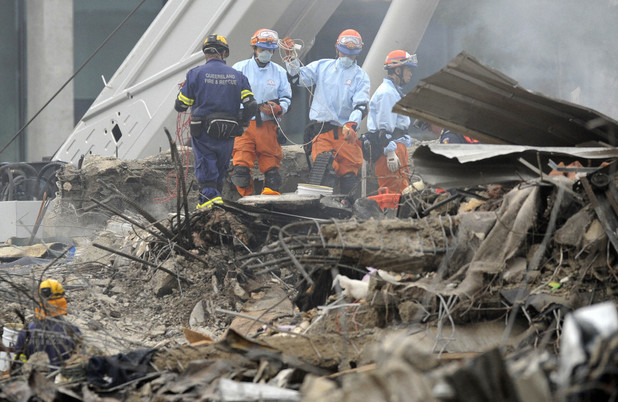
A New Zealand couple have managed to recover a camera containing their wedding snaps 18 months after losing it in the Christchurch earthquake.

Fen Jerimiah and Martin Burley had thought their photographs were lost forever after they dropped the camera when rushing to safety during the quake.

The newlyweds were forced to flee from their home during the 6.3 magnitude tremors, which struck the city in 2011. They had tried to keep hold of memories from their recent nuptials by grabbing the small digital camera, but lost their grip on it as they tried to escape the falling debris.

Jerimiah and Burley had assumed they would never be able to look at the images again, but when walking past the site of their old (and now silt-covered) driveway last week, they noticed what looked like a digital camera partly submerged in the mud. Burley removed the broken and buckled object and began the painstaking process of cleaning the memory card.

"I was more pessimistic," admitted Jerimiah. "I didn't really think it'd still work.

"I'm glad he was more like 'Yeah, let's try this'."

"It was one of those 'wow' moments," added Burley, who gently scrubbed dirt from the surface of the card using - among other things - an old toothbrush.

"I thought these had gone forever," he said of the photographs. "[It's] really cool. Special day for both of us."

The couple have now safely transferred the pictures to a computer.

Monday 22 October 2012

http://www.digitalspy.co.uk/odd/news/a432249/couple-recover-wedding-photos-lost-in-new-zealand-earthquake.html

continue reading

Nine killed as boat capsizes in Gulbarga

Nine persons were killed as a boat carrying them capsized at Khaja Kotnoor lake near Srinivas Saradagi Friday night.

The bodies have been fished out of the lake.

The tragedy struck when a country boat meant for fishing capsized due to overloading. The dead have been identified as Bilkish Banu, Hoora Begum, Anees Begum, Khajamiya, Ayesha, Sanabanu, Shama, Nasir, Rehana Shabber Khan.

Two families of Naya Mohalla in the City had gone for picnic to Khaja Kotnoor lake. During the first round of boating, the ride was safe as only six persons were aboard.

But in the second round 12 members boarded the boat. Unable to take the burden, the boat capsized killing nine people. Three other members on board swam to safety.

A mass burial was organised after the post mortem at the district hospital. District in charge Minister Revu Naik Belamagi, Gulbarga North MLA Qamarul Islam and others visited the hospital.

The University Police have booked a case against the boatman under sections 280 (rash navigation of vessel) and 304 (A) (causing death by negligence) of the Indian Penal Code. The boatman, however, is absconding.

Deputy Commissioner N S Prasanna Kumar said a compensation of Rs 10,000 each will be given to the next of kin of the victims, under the National Family Benefit Scheme

(NFBS). Also, the tahsildar will pay Rs 1,000 to the family members of each of the deceased as funeral expenses.

Maintaining that Khaja Kotnoor lake was unsafe for boating, Prasanna Kumar said that steps would be taken to ban illegal boating in the lake.

Sunday 21 October 2012

http://www.deccanherald.com/content/286838/nine-killed-boat-capsizes-gulbarga.html

continue reading

Sunday, 21 October 2012

Four bodies extricated from Arunachal accident site, four more to be recovered

ITANAGAR: Police on Sunday extricated the bodies of four persons out of the total eight who died on Saturday in an accident on the Bhalukpong-Bomdila road in West Kameng district of Arunachal Pradesh.

"We have managed to extricate four bodies so far. An operation is on to lift the other bodies from the area where the accident occurred," West Kameng SP T T Lama said.

Eight persons died on the spot while eight others miraculously escaped when a pick-up van carrying them skidded off the road and fell into an 800-feet deep gorge on Saturday evening. All the passengers in the vehicle were porters of the Army Special Corps battalion stationed at Tawang.

The injured were admitted to Bhalukpong Primary Health Centre on Saturday and were evacuated to Tezpur on Sunday morning, the SP said. The driver said the accident occurred because he fell asleep at a critical turning point.

Two locals spotted them after hearing the screams of the wounded driver. They managed to bring him up to a point about one km ahead of Sattle near Zero point. They called other passers-by for help and alerted the Army, Bhalukpong, Rupa and Bomdila police stations.

The SP's private security officer Naik Passang Dorjee along with the drivers of two private vehicles went down the gorge. They located the eight surviving passengers of the total 16 travelling in the van.

Sunday 21 October 2012

http://timesofindia.indiatimes.com/city/guwahati/Four-bodies-extricated-from-Arunachal-accident-site-four-more-to-be-recovered/articleshow/16906079.cms

continue reading

Ogun road disaster: 12 bodies recovered from Omu River

It was tears and sorrow yesterday as 12 bodies of passengers inside a coaster bus that plunged into Omu River near Area J4 in Ijebu East Local Government Area of Ogun State. The victims, mostly women, were said to have belonged to Odowuyi Women Social Club.

They boarded the Hyundai coaster bus from Sango Ota area of the state, heading for Uronigbe/Oriohwon Local Government Area of Edo State. Sunday Sun reliably gathered that the accident occurred after the vehicle’s driver, who was said to be on top speed, dosed off on the wheels. It was further learnt that most women in the vehicle were also fast asleep and could not have noticed when the driver skidded off the expressway.

Speaking with newsmen, Information Officer of the National Emergency Management Agency (NEMA), South-West Zone, Mr. Ibrahim Farinloye, said 21 passengers, including the driver and his conductor, were inside the ill-fated vehicle. He said the actual number of causalities would be determined when the agency visits the bus station to obtain the passengers’ manifest.

Also, Unit Commander of the Federal Road Safety Commission (FRSC), Ijebu Ode Command, Mr. Isa Seidu, said three out of the 21 passengers, who fell out of the vehicle before it plunged into the river, were rescued alive on Friday afternoon and taken to Ore Hospital. Mr. Seidu attributed the cause of the accident to over-speeding, adding that there were three gullies on the path the vehicle veered into before plunging into the river, adding that the gullies could have prevented it from plunging into the river.

According to him, “big stone gullies and another hindrance could have stopped the vehicle even if the driver was sleeping. But he went straight into the river because he was asleep.” The Ijebu-Ode Unit Commander of the state’s Traffic and Enforcement Corps (TRACE), Mr. Hamsat Tommy, and the DPO of Ogbere Division, Mr. Osamanye Isunmekhe, who corroborated the FRSC claim, said rescue effort started as early as 6 a.m. on Saturday.

According to them, it took the local divers over eight hours before pulling out the vehicle from the river at exactly 2.20 p.m. One of the relatives of the victims, Doris Nwokoma, said in tears that her elder sister, Mrs. Afoma Idehen, was among the deceased. Husbands of the victims were also at the recovery scene, with one of them nearly jumping into an oncoming vehicle as he sighted his late wife’s luggage. He said amidst wailing ‘that is my wife’s bag ooo. Chinekemeee!”

Officials of NEMA, FRSC, Fire Service, Red Cross, police and the local vigilante team worked assiduously for hours before completing the operation around 3 p.m. on Saturday. Bodies of the deceased have been deposited at the Ijebu-Ode mortuary, while the search for the remaining six bodies continues today.

Sunday 21 October 2012

http://sunnewsonline.com/new/cover/ogun-road-disaster-12-bodies-recovered-from-omu-river/

continue reading

Saturday, 20 October 2012

Last president of exiled Polish government to be exhumed

Ryszard Kaczorowski, a victim of the 2010 Smolensk air disaster and last president of the Polish-government-in-exile is to be exhumed on Monday as his remains may have been confused with those of another victim.

Kaczorowski's remains will be exhumed together with those of a second male victim, whose identity has not been disclosed.

The exhumations follow the confirmation last month that two other crash victims, including the late Solidarity activist Anna Walentynowicz, were buried in the wrong graves.

Last week Dr Viktor Kolkutin, the Russian doctor in charge of the identifications of victims, claimed that his team's work could not be held responsible.

“I can only say that absolutely everyone received what they identified,” Dr Viktor Kolkutin told the Polish edition of Newsweek.

“What happened after the coffins departed from Moscow to Poland we do not know,” he said.

“We did not lead the coffins to the graves where they were laid to rest,” he said.

Kolkutin noted that relatives of the victims were “in shock” during the identification process, and that almost a third of the 96 victims were not easily recognisable.

Ryszard Kaczorowski was born in 1919 in the city of Bialystok, north east Poland, an area that was occupied by the the Soviets in 1939 during the first phase of World War II.

He was arrested in 1940 as a leader of the so-called Szare Szeregi (The Grey Ranks) a scouting group that worked in tandem with the Polish resistance.

Kaczorowski was deported to Siberia but later freed by an amnesty the following year, alongside thousands of other internees.

He joined the army that was being formed in Russia by General Wladyslaw Anders, who had himself been freed from internment by the Soviets.

The so-called Polish Second Corps journeyed to Iran, where it regrouped and joined the fight against the Nazis as part of the British 8th Army.

Kaczorowski fought in several battles in Italy, including Monte Cassino.

After the war he did not return to Poland, as did the majority of Anders' veterans, owing to the installation of a communist regime in his homeland.

He settled in UK, where the Polish government-in-exile was based.

He was elected president in 1989, having previously served as a minister.

Nevertheless, owing to the collapse of the Iron Curtain, his term was short-lived, and he returned the presidential insignia to Poland in December 1990 in a ceremony at the Royal Castle in Warsaw.

He was a regular visitor to Poland, as an honoured guest of the republic, taking part in countless events.

Following the Smolensk air disaster, he was laid to rest in Warsaw's national pantheon, the Temple of Divine Providence.

Five victims of the crash have been exhumed thus far and wo turned out to have been buried in the wrong grave

Saturday 20 October 2012

http://redaktorext.polskieradio.pl/1/9/Artykul/115896,Last-president-of-exiled-Polish-government-to-be-exhumed

continue reading

Major General Al Raisi inaugurates the second Victims Identification Course in collaboration with the INTERPOL

The International Criminal Police Organization “INTERPOL” announced that the United Arab Emirates is the first country in the Middle East to acquire membership of the International Criminal Police Organization (widely known as INTERPOL) on Disaster Victim Identification.

The announcement was made during the opening of the second course on Disaster Victim Identification, held at the Eastern Mangroves Hotel, under the supervision of the Victims Affairs Office at the Ministry of the Interior, in the collaboration and coordination with the International Criminal Police Organization. The opening session was attended by Central Operations Directors and a number of concerned police entities and external partners from different institutions in the state.

During the opening of the International course, Major General Ahmed Nasser Al Raisi, Director General of Abu Dhabi Police Central Operations, said that collaboration in exchanging information and expertise between the International Criminal Police Organization (INTERPOL) and the Victims Affairs Office of Abu Dhabi Police Crisis and Disasters Management Department has contributed a quantum leap in developing the work mechanisms and the professional level of the employees.

The course included a number of topics related to Victims Identification, during disasters and crisis. The topics were discussed by experts from the International Criminal Police Organization such as Steve Sergeant, victim identification expert from the Victims Affairs Office of the Crisis and Disaster Management Department, who highlighted the social and legal responsibility to identify the victims of disasters and crisis and how to determine their identities.

The expert Simon Dzedrofski, Director of Victims Identification branch in the INTERPOL in Lyon, France, commended the UAE’s keenness to identify the victims, pointing out that UAE is the first country in the Middle east to acquire membership at the International Criminal Police Organization (INTERPOL) specialized in DVI.

Dzedrofski talked about the history of the INTERPOL, established in 1923, and the reasons behind its establishment, its different development stages to finally becoming the biggest international police organization, including 188 countries, pointing out that it was recognized by the United Nations in 1971. Moreover, he added that more countries will be joining the INTERPOL in the upcoming years.

He also mentioned that the official languages used at the organization are: Arabic, English, French and Spanish. Establishing the Victims affairs Office constituted a landmark in the terms of decision-making, and the use of work mechanisms in accordance with international standards, thus proving the commitment ofVictims Affairs Office employees to work as per these standards, which earned the office a an important status in the region.

In the same context, Joan Coetzee, Victim identification expert at the International Criminal Police Organization (INTERPOL), talked about the importance of the INTERPOL and its role in identifying victims; stressing that the task of identifying disaster victims is a complex task, and no entity or state can individually identify victims without help, particularly since these “helpers” includes volunteer experts, health services and other organizations.

Joan confirmed that the process of Victims Identification faced several challenges which may affect the search and selection processes. One the challenge is the public opinion which asks for a speedy completion of the work without taking into consideration the difficulties involved. As challenges, we can also mention the media that plays a significant role in guiding the public opinion; as well as the political positions of some countries represented by the direct intervention in the organization’s work during the victim’s identification process, or through practicing political pressure in order to accelerate the completion of the mission.

Saturday 20 October 2012

http://www.adpolice.gov.ae/en/News/uae.first.identify.victims.aspx

continue reading

The truth lies six feet under

NOT TOO long ago, Kashmiris saw a ray of hope when Chief Minister Omar Abdullah announced that he would revoke the draconian Armed Forces Special Powers Act. However, he failed to walk the talk. The interlocutors’ report met the same fate. Now, the issue of thousands of unmarked graves dotting the meadows and mountains of the state has reached a similar conclusion.

When the mass graves were discovered in 2005, Omar had agreed to use DNA tests to identify the corpses. But in a report published on 13 August, the Home Department (of which Omar is in charge) has not only declined DNA testing, but also labelled those buried as “combatants” amid pleas from hundreds of families that their relatives may have been buried in unmarked graves after fake encounters.

The government’s action-taken report (ATR) was filed in reply to the State Human Rights Commission (SHRC), following the latter’s April 2012 finding of 2,156 unidentified bodies at 38 burial sites in north Kashmir, of which 574 were identified as those of local residents. The SHRC had demanded DNA testing of the corpses. However, the government said DNA testing would be done only when the complainant could locate the graveyard and the grave in which their relatives might be buried with a “fair amount of certainty” — a rider ridiculed by human rights activists and the families of the missing.

It’s pertinent to note that the government’s ATR is entirely based on police FIRs, thus making it a contentious report.

“The government’s report is aimed at burying the past,” says Razia Sultana, 36, whose 22-year-old quest to find her missing father ultimately led human rights groups to the unmarked graves. She started searching for Raja Ali Mardan Khan (then 55) of Bela Boniyar village, located 90 km from Srinagar, after he didn’t return home on 13 May 1990. The last time he was seen was at a provision store with a bag of sugar and a pack of cigarettes in his hand.

“I lodged a missing persons report but the police’s reaction was that he might have crossed the LOC (Line of Control). I was shocked. He didn’t need to because he had a government job. Anyway, he was too old to go for gun training,” she says.

Sultana’s mother and sister made a trip to Pakistan-occupied Kashmir (POK), but they failed to locate Khan. Since then, she has visited many graveyards, police stations, torture cells and militant hideouts.

It was during the October 2005 earthquake when a team of human rights activists led by the J&K Coalition of Civil Society (JKCCS) and the Association of Parents of Disappeared Persons (APDP) reached Bela Boniyar with relief that Sultana disclosed the presence of mass graves.

Four years later, in November 2009, the JKCCS and the International People’s Tribunal on Human Rights and Justice in Kashmir came out with their preliminary report called ‘Buried Evidence’, which revealed the presence of 2,700 unmarked graves spread across 55 villages of Kupwara, Baramulla and Bandipora districts.

TEHELKA TREKKED to Bimyar, perched on a mountain overlooking paddy fields and the gushing Jhelum beneath the foothills, located 20 km away from Baramulla town.

In 2003, Atta Mohammad, 65, a farmer, was forced by the police and the Indian Army to become a gravedigger on what was until then a wasteland. “I wasn’t a professional. It took me four hours to dig a grave,” he recalls. “But as the body count rose, I was digging graves at a faster rate.”

He remembers burying the first body. “That night, I vomited. I couldn’t sleep at all. The mutilated face kept haunting me,” he says. The experience made Mohammad decide not to dig any more, but the bullet-ridden bodies started to come in threes and fours; one day the toll was nine. Just like cops and soldiers, families too started pouring in, but very few were successful in identifying the graves of their relatives.

Out of 200 graves, only six bodies have been identified. Relatives would confirm from Mohammad about the clothes and appearance of the body he had buried. The next day, they would come with marble tombstones with the names of the victims etched on them. “At least for some, the struggle would end there. But there are many who came and left dejected. They think their kith and kin are buried here. But there’s no way to prove it,” he says.

Mohammad narrates a chilling incident when a body came for burial and he wanted help in shifting the body. He asked Ghulam Mohiuddin Dar, an electricity board employee working in Bimyar, to assist him. Dar refused. “The next day, Dar came with tears in his eyes. He told me the boy that I had buried was his son,” he recalls.

In fact, when Mohammad went to POK to visit his relatives in 2006, nine bodies were brought to Bimyar for burial. One of the buried, he would later learn, was his nephew Mohammad Saleem, who had gone missing. The old man never tried to open any of the graves to locate his body.

There are bones beneath the Kichama earth too, located 8 km from Baramulla town. Of the skeletal remains of 105 people, not a single body has been identified.

“Each body bears bullet marks. Some are surely not from Kashmir, but the others seem to be local youth,” says Ghulam Mohammad Mir, 42, who oversees the graveyard. “The security forces say they were killed in gunbattles. They would dump the bodies and we would oblige them.”

Mir shows a grave that contains three bodies. According to him, the police and the army had brought the partially burnt bodies, who they claimed were militants. The villagers buried them in a single grave after removing their tattered clothes. Even today, the clothes remain tied to the tree trunks waiting for anyone to identify them.

AMONG THOSE who called the government report “an insult to the families of the disappeared” is lawyer Parvez Imroz of the JKCCS. While demanding DNA testing of the unmarked graves, he compares the situation with Pakistan’s violence-hit Balochistan. “We slam Pakistan for its poor human rights record, but even they have allowed a UN team to visit the conflict-ridden state. Pakistan has also appointed a three-member parliamentary committee to look into missing person cases that run into hundreds. But when it comes to Kashmir, where the figures are in the thousands, the government not only refuses to identify the dead, but also asks families of the disappeared to identify the grave.”

Even the SHRC’s Division Bench member Rafiq Fida criticises the official stand: “There are cases when a person from south Kashmir was found to be buried in the north. The government’s decision to do DNA profiling only when someone can tell with a fair amount of clarity where his relative is buried is ridiculous. If people knew where their missing are buried, why would they knock on the government’s doors?”

Then there are several cases that puncture the government’s claims that all those buried were combatants. Kashmir already has fake encounter cases such as Pathribal, Ganderbal and Machil in which the dead were dubbed Pakistani militants and buried in unmarked graves before their exhumation and DNA profiling indicated that they were local youth killed for promotions and rewards.

Reyaz Ahmad Bhat’s death is one such example. On 29 April 2007, the army’s 47 Rashtriya Rifles (RR) and the police’s Special Operations Group claimed to have killed four Pakistan-based Lashkar-e-Toiba militants, who were then buried at Sedarpora in Kupwara. Later, three of the bodies were identified as those of locals killed in fake encounters: Bhat, Manzoor Wagay and Sartaj Ganai. The identity of the fourth body was never ascertained. The bodies of Wagay and Ganai were exhumed and buried in Shopian and Pulwama, respectively.

At Kailashpora in Srinagar, where Bhat lived before disappearing on 4 April 2007, Safina and Javaid Ahmad Bhat are seeking DNA testing of the other two graves to ascertain which of the two graves contains their brother’s body. “We learnt about the death eight months after his disappearance when an anonymous caller said that our brother has been killed. The police showed us a picture of our dead brother, a copy of the FIR declaring him a Pakistani terrorist and the graveyard he was buried in. But we are still not sure in which grave,” says Safina.

In fact, there are cases in which the lack of DNA testing has seen several families claiming one body. For example, when the army’s 18 RR claimed to have gunned down two militants during an encounter in Kupwara on 24 April 2004, Noor Mohammad Shah and Syed Mustafa of Waliwar village in Ganderbal district claimed the bodies and approached the Kupwara District Magistrate for exhuming the bodies. Permission was granted and the bodies were buried again in Ganderbal.

The case took a U-turn on 2 October 2005 when Madan Lal of Nangocheck lodged a written report in Lalpora Police Station saying that Major Vijay Char of 18 RR had taken his son Bhushan Lal on 13 April 2004 along with three other Jammu-based labourers to Kupwara. Madan Lal alleged that the youth were killed in a fake encounter and demanded DNA tests.

‘If people knew where the missing are buried, why would they knock on the government’s doors?’ asks Rafiq Fida

A three-member forensic team from New Delhi was invited to take the samples. However, villagers of Waliwar refused to allow the process, saying reopening the graves would amount to “insulting their religion and the dead people”.

There was another twist in 2005 when an anonymous letter informed Madan Lal that his son was killed in a fake encounter. The letter named a Colonel and a Major as being responsible. When Madan Lal tried to find out more, he reportedly came across Captain Sumit Kohli, who told him that “the person who wrote the letter to you will make sure you get justice”.

A few months later, Captain Kohli was found dead. The army said that Kohli had committed suicide, but his family said the Shaurya Chakra winner was murdered “because he was going to blow the lid off some fake encounters”. The case is being heard in the Punjab and Haryana High Court while human rights activists continue to demand DNA tests to establish who is buried in the graves, which could help solve Captain Kohli’s mysterious death.

BUT THE state prefers to stay silent on the issue. Although Principal Secretary (Home) Braj Raj Sharma agreed at first to be interviewed, he backed off, citing a busy schedule. The chief minister didn’t respond to TEHELKA’s request for comments, despite his personal secretary Asghar Ali agreeing to fix a brief interview. No other senior civilian official would agree to discuss the government’s policy on the issue.

But reliable sources within the police’s human rights cell confirm the presence of unmarked graves in all the districts of Kashmir. TEHELKA has also learnt that officials have found 6,000 persons to have gone missing in the past two decades, a figure all the governments have denied in the past, while human rights groups have maintained that more than 8,000 people have disappeared while in custody.

Although the ATR says no person has come forward despite Omar’s announcement last year that families can lodge complaints for DNA profiling with the police’s CID department, police sources confirm that no such circular was published in any of the leading Kashmiri newspapers. Families who spoke to TEHELKA also pleaded ignorance about the existence of such a cell. The government’s position is that DNA profiling of all the graves will take many years and requires plenty of resources. But world-renowned forensic anthropologist Dr Mark F Skinner of Simon Fraser University, Canada, told TEHELKA in an email interview that DNA testing a body per se is not expensive (“a few hundred dollars, I think”). “The expense arises from the need for excavation, data tracking and contacting relatives for comparative DNA.”

“This is why I suggest taking the help of the International Commission on Missing Persons to deal with such situations,” says Dr Skinner, who was part of the UN team that probed Afghanistan’s mass graves when it was under Taliban rule.

Even as human rights activists have sought the intervention of international agencies in the probe of unmarked graves, those TEHELKA met are left with a strange dilemma. Sultana wants to end her struggle by finding a grave that contains her father, which she says is only possible if all the graves are DNA tested. Safina too says a DNA test is a must to establish which grave contains her brother’s remains. But the emotional Mohammad doesn’t want any grave to be reopened. “How can you hand over to anyone a father a son or a brother represented by a skull, headless torso or a limbless carcass? After burying 200 such bodies, I can guarantee that they won’t withstand the suffering,” he says.

Saturday 20 October 2012

http://www.tehelka.com/story_main54.asp?filename=Ne271012TRUTH.asp

continue reading

Central American mothers search for the missing children in Mexico

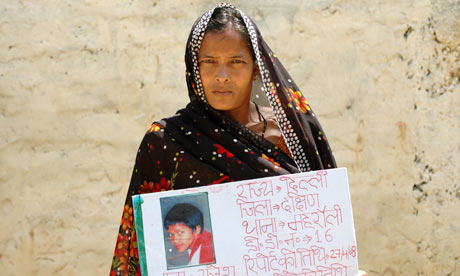
This woman, identified only as “a Central American woman”, has a name just like her son whose photo she is holding. He disappeared on his journey through Mexico to find work in the US. His mother is traveling in a “Caravana de Madres” with 60 other women whose children have also disappeared on that journey. The women from Nicaragua, Honduras, El Salvador, & Guatemala will travel 2,858 miles (4,600 kilometers) from Guatemala across Mexico to the US border on what is called, “the route of the immigrant.” They are mothers looking for their children; their banner is: “I follow your footprints with the hope of finding you.”

Showing photos of their desaparecidos (missing), the Caravana will visit migrant shelters, hospitals, morgues, brothels, & cemeteries, looking for every clue about the fate of their children. Along the way, they will be hosted by Mexican immigration & human rights activists & organizations; they will attend events & rallies organized by students & other activists at universities & venues in 23 towns & cities. The mothers will share their stories to give a human face to immigrants; they will demand investigations & search procedures by the Mexican government & the exhumation of bodies found in mass graves & in cemeteries, where hundreds of immigrants are buried without identification. They will visit San Fernando, a city in Tamaulipas near the US border, where 72 migrants were massacred & near the sites of several other such atrocities. "All Mexico is a graveyard of immigrants," reads a sign displayed by the Caravana. One hopes they can come as far as the US-Mexican border to bear testimony to the thousands of unidentified immigrants who lose their lives in that crossing, to shout their demands to the US government, & to rally the support of human & immigrant rights activists in this country.

An estimated 300,000 Central Americans make that dangerous journey every year & although the Mexican congress has ruled it legal for them to cross Mexico, the Mexican government, in violation of its own laws & in collusion with the US government, makes that journey one of the most dangerous immigration routes in the world. Immigrants are forced to travel on the tops & sides of freight trains while buses heading north are stopped & searched by federal police for immigrants. Along the route, they face every possible kind of violence, including rape, torture, beatings, dismemberment, kidnapping, extortion, murder. Many are murdered, dismembered, & dumped in mass graves or on the highway. The National Human Rights Commission of Mexico registers more than 10,000 migrant kidnappings annually in Mexico. The Mesoamerican Migrant Movement estimates 70,000 Central Americans have disappeared in Mexico in the last six years--a period coinciding with the deployment of 45,000 Mexican soldiers in a so-called drug war against trafficking cartels. The Mexican government attributes this violence to the drug cartels but they need to explain why so many Mexican civilians & immigrants have died while so few drug traffickers have been apprehended--& why drug trafficking has grown exponentially in Mexico in that same period & has in no way been impeded.

In retracing the migrant route north, the Caravana says, “We are on the heels of impunity’s footsteps. While there is one mother searching for a lost child…we will not stop searching & bearing witness no matter how long it takes, no matter how much effort, danger or work it implies.” In their struggle for human rights & justice, they deserve our most active solidarity. (Photo by Oscar Martinez/Reuters)

Saturday 20 October 2012

http://angryarabscommentsection.blogspot.co.uk/2012/10/mothers-of-central-america-search-for.html

continue reading

Relatives of Antiguan plane crash victim still to receive body

Relatives of the late Sandrama Poligadu, who fell victim to a recent place crash in Antigua, are calling on the Ministry of Foreign Affairs to aid in the communication process between them and Antiguan officials.

The accident occurred October 7 in Antigua and “two weeks later we still can’t get the body.”

Speaking to this newspaper Wednesday, son of the deceased, Kisnasammy Poligadu, said that attempts were made to solicit help from the Ministry, but so far no such assistance has been forthcoming.

Further, he stated that a Ministry of Foreign Affairs staffer directed the family to the Ministry of Public Works for assistance.

The distraught eldest offspring of the victim, speaking on behalf of the family, said that they are going through a hard period coping with the death of his mother; but it is even more disturbing that the body has not yet been handed over.

Poligadu said that his brother-in-law Krishan Khan had flown from Montserrat (the woman’s intended destination) to Antigua to identify the body. However, he neither has been able to tie up arrangements to bring her remains back home or ascertain how soon the body would be made available to be transported back to Guyana.

Poligadu noted that from the little information gathered, the process is being held up as Antigua awaits a foreign pathologist to carry out a post mortem examination. A friend of the family indicated that “I am the one who advised them to contact the Ministry of Foreign Affairs as I thought the entity would have been most fitting to assist in this regard.”

The bereaved family had initially expressed concern about who is going to stand the expense for the body to be transported to Guyana.

When contacted, the Ministry of Foreign Affairs officials were reluctant to comment on the matter.

Hours after leaving her homeland, the 57-year-old from Williamsburg, Corentyne, Berbice, died when a nine-seater Montserrat-bound Britten-Norman Islander crashed shortly after takeoff from Antigua.

The family indicated that the fatal journey marked the woman’s first air trip. She was on her way to see her hospitalized, pregnant daughter who lives in Montserrat. Her son-in-law, Krishan Khan, was awaiting her at the Montserrat Airport.

He, however, suspected something had happened after there was an unusually lengthy delay. His worst fears were confirmed when the airport authorities informed him that the plane had crashed during take- off on Runway Seven at the VC Bird International Airport, Antigua.

Khan immediately informed the woman’s relatives in Guyana.

Poligadu made the connecting flight from Guyana to Trinidad from where she took a plane to Antigua.

Speculation is that weather conditions may have been a factor in the crash. There had been heavy rains accompanied by thunder and lightning before and around the time of the crash.

Meanwhile, reports are that Fly Montserrat was grounded on Wednesday by authorities. The airline on Tuesday received a letter from the Eastern Caribbean Civil Aviation Authority restricting it from flying to any Eastern Caribbean member state, the rjrnewsonline.com reported yesterday.

Montserrat Premier Reuben Meade confirmed that the ban will remain in place until the airline meets certain requirements.

The Eastern Caribbean CAA ban follows another incident in which a Fly Montserrat aircraft, carrying seven passengers from Antigua, rolled onto the grass on landing at John Osborne Airport in Montserrat on Tuesday morning. There was no injury and the aircraft was not damaged. The airport has been closed until the aircraft can be moved for further investigation.

Saturday 20 October 2012

continue reading

Dundas’s haunted heritage

Read the following story about the 'legacy' a temporary mortuary location may leave behind years after its use. This is an important consideration when choosing a location for a temporary mortuary after a disaster. This has similarities to the use of refrigration trucks provided by local butchers for example. Here's the story:

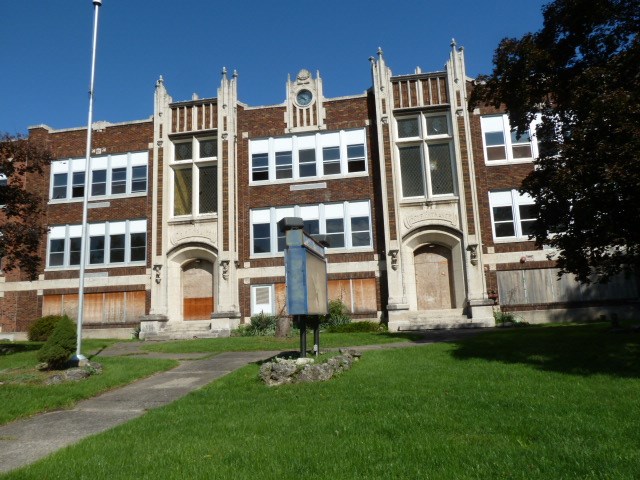
Dundas District is an old high school (built in 1929), which has recently been converted into a condominium complex. It was used as a morgue after a horrific train crash and has been haunted ever since.

On Christmas night in 1934, a train derailed on the tracks just above the school and the auditorium of the school was used as a morgue for the victims of the crash. 18 people were killed and it’s rumoured that their bodies still roam the halls at night. There have been many eyewitness accounts of paranormal activity, including the story of an ex-principal who stayed at the school late to catch up on work only to see his office sabotaged by spirits that he could not see.

The ghosts of the train crash aren’t the only ones who haunt the school. There was also a pact made by five janitors two decades later and the pact was whoever died first was to haunt the school, like the victims of the crash. Russell, the janitor who came up with the pact, died first. There have been many stories of Russell’s ghost lurking the third floor, where his janitorial closet was. He’s said to be a friendly ghost who liked to play pranks on students and faculty. Former janitors have said their mop buckets had been moved, chairs had stacked on tables of classrooms they’ve yet to clean, and some hallways were already moped before they had the chance to clean them.

All these stories may just be urban legend, but they’re stories that have been circulated among the Dundas community for many years. Ask anyone who has attended Dundas District and they’ll certainly have a haunted story to tell.

Saturday 20 October 2012

http://www.satelliteonline.ca/2012/10/19/hamiltons-haunted-heritage/

continue reading

Another black Saturday on Ogun Expressway - 33 die in Ogun crash

No fewer than 33 people were feared dead yesterday, when a luxury bus conveying them plunged into a river at J4 area, along the Ogbere axis of Sagamu-Ore-Benin Expressway.

Three persons, including a pregnant woman, however, survived the incident, which occured about noon.

The Nigerian Compass on Saturday learnt that the vehicle was still in the river as at 6:30 p.m. while rescue efforts were being intensified to find other bodies possible survivors.

Sources said the bus, loaded with an unknown number of passengers, veered off a dual-carriage bridge on the expressway, before plunging into the river.

It was not known where the bus was coming from or heading to as at press time.

Officials of the Federal Road Safety Corps (FRSC) and Traffic Compliance and Enforcement Corps (TRACE) were moblised to the scene immediately after the accident.

FRSC Unit Commander, Ijebu-Ode, Mr. Seidu Osilama, confirmed the accident, yesterday.

Osilama could, however, not ascertain the number of casualties, saying rescue measures were being put in place to use local divers and cranes to bring out the bus and possible survivors inside the water.

It was gathered that the pregnant woman, who escaped death in the mishap, hung on a tree.

Ogun State Police Public Relations Officer (PPRO), Mr. Muyiwa Adejobi, could not be reached for comment on the incident

Saturday 20 October 2012

http://www.compassnewspaper.org/index.php/component/content/article/35-headlines/8921-another-black-saturday-on-ogun-expressway-33-die-in-ogun-crash

continue reading

Shock Fate Of India's 'Stolen' Slum Children

Shocking new crime figures have revealed as many as 50,000 children are going missing from the streets of India every year.

Campaigners claim the youngsters are often 'stolen' by criminal gangs to fuel a growing black market in child labour and prostitution.

For the parents of the victims the not knowing what has happened to their son or daughter is often the hardest part.

Kunwar Pal is overcome with grief. His 12-year-old son Ravi went out for a bike ride two years ago but never returned.

He said: "My life revolved around my son but since he disappeared I have lost everything including my happiness and my job."

It is the poorest families who are most at risk from the growing problem.

Children from the slums are easily snatched from the streets as their parents are often both working and struggling to make ends meet.

One of the worst affected areas is New Delhi.

According to recent crime data, as many as 20 children go missing in the capital every day and at least five of them are never traced.

The police say their job as investigators is made much more difficult because poorer parents often do not even have a photograph of their missing child.

They have now launched a scheme using theatre to try and educate children about the dangers of stranger danger.

They are also taking portraits of children in the areas the human traffickers target, so if the worst does happen, the parents at least have a photographic record of the child they can show detectives.

But many parents with missing children say the police are simply not doing enough.

Tajwar Sultana says her granddaughter, who was three when she vanished in 2009, is just another statistic for the police to ignore.

The family were at a wedding party when their little girl was taken.

She said: "Her mother is in a terrible state. Our situation is worse than death."

There are now demands for tougher punishments for the human traffickers who prey on India's children.

But activists fear as the police struggle with the enormity of the challenge the problem of India's 'stolen' sons and daughters will continue to get worse.

Rajesh was 14 when he disappeared. Beneath a mop of jet black hair, his clear brown eyes glance sideways out of the picture that is all his family have left of him.

He was his parents' only son and they doted and relied on him. One morning in April last year, his mother, Sunita, asked him to go out to fetch water. She remembers him loading the empty plastic containers on to his cart and setting off cheerfully down the lane. It was the last time she saw him. Rajesh, like tens of thousands of other Indian children every year, had simply vanished.

'It would have been better that he died,' she says, tugging at her headscarf and dabbing at tears. 'At least then I would have known, but now I don't know whether he is alive or dead.'

Official figures show that 44,000 children disappear each year in India. Some are eventually recovered, but one in four remain untraced. Yet, with many parents reporting that police are reluctant to register cases or investigate and other parents complicit in the sale of their own children, the true figure is believed to be much higher - with some estimates of up to a million children every year.

Investigations by Indian authorities and aid agencies have found that many children are kidnapped and sold for adoption, into slavery, or worse. They believe that some end up in the UK.

A new report by India's human rights commission says that, while some of the children are killed almost immediately, others are 'working as cheap forced labour in illegal factories/establishments/homes, exploited as sex slaves or forced into the child porn industry, as camel jockeys in the Gulf countries, as child beggars in begging rackets, as victims of illegal adoptions or forced marriages, or perhaps worse than any of these as victims of organ trade and even grotesque cannibalism.'

Every day there are pictures in the classified sections of children who have vanished. 'Search for kidnapped boy,' one advert began last week. 'Abhayjeet Singh, 13, 5'2'. Kidnapped on 13 August in Prashant Vihar.' Hundreds more are listed in the books of organisations trying to help the parents who search for years in the hope of finding their lost children: Anikat, eight months old, missing since July 2003; Sultana, five, disappeared in 2007; Nitesh Kumar, seven; Sunita, five ... the list goes on.

The plight of the disappeared has been brought home to India by fresh revelations about the abduction and sale of children, often to order. An adoption agency and orphanage trading as Malaysian Social Services, in Chennai, is accused of acquiring children from criminal gangs who had taken them from the poorest parts of southern India.

The children were renamed and prospective adoptive parents were presented with faked pictures of mothers they believed were offering the children up for adoption. Seven people have been arrested after some of the children were found in Australia. A previous investigation into another Indian agency revealed that two children adopted by an Australian couple had been sold by their drunken and abusive father without their mother's knowledge for the equivalent of £20.

India has a huge problem with orphanages crammed with genuinely unwanted children; it is estimated that there are 11 million abandoned children in the country and last year the Indian government's Central Adoption Resource Authority announced that it planned to make international adoption easier, especially for British parents.

But it is those children who have been taken from loving homes without the consent of their parents that is causing the concern. Last week, Dan Toole, the South Asia regional director of Unicef, said he believed the UK was one of the main destination countries, a view supported by India's National Centre for Missing Children. 'In India you also have children being trafficked to Europe, to the USA, to the Far East, primarily for labour and sexual exploitation,' Toole said.

International adoption was also a serious problem, he added, though researchers were hampered by a lack of official statistics. Asked if some of those offered for adoption ultimately ended up in the UK, he replied: 'I would guess so but we don't have numbers on them. I know international adoptions are happening in India. [Parents] come from almost every Western nation.'

Anuj Bhargava, managing trustee of India's National Centre for Missing Children, said that in most cases of international adoption, parents were unaware of what had happened. Referring to international adoption in general, he said: 'In a lot of cases, children are being sent to foreign countries. We have been contacted by children who have been kidnapped in India and adopted through an orphanage by foreign parents.' By the time the children were old enough to explain what had happened, it was too late, he said. 'A lot of cases of this type are happening. I believe people from abroad pay a lot of money to get the child adopted.'

For the families whose children are snatched to meet this demand, the heartache is unbearable. Many search for years in the hope of one day finding their children again. Sitting in a small room in the village of Neb Sarai in south Delhi, Sunita stares at the picture of Rajesh. She is a small woman, dressed in a black sari decorated in red and orange detail. She is unwell today, because yesterday she walked eight miles to the satellite city of Gurgaon in the baking sun looking for her boy. Rajesh, who was unable to speak because of a birth defect, disappeared on 26 April last year.

Sunita has two daughters, aged four and five, but Rajesh was her only son. 'I spend most of my time crying,' she says, dabbing again at her tears. Rajesh had left the house at 10am. When he had not come back by 1pm, she started worrying. He had only drunk a small cup of tea in the morning, and would be hungry. 'I started searching for him with my friends. Late at night, about midnight, I went to the police to file a report. They wrote it down but when I went back again the next day they threatened to slap me if I bothered them again.

'The police said it was their responsibility to file a report and that was where their job ended. They said it was my responsibility to find him. I was so terrified that I would be thrashed that I did not go again.'

Instead, she started to search the city, and never stopped. 'I only knew that he may have been kidnapped. I don't know why someone would take him.' The sobs become more intense. 'He used to smile a lot, that's what I remember whenever I am going to sleep. I can see his smile. But no one cares about it. No one will listen. Whenever I prepare food for my girls I think of him and how he would have enjoyed the meal too and now I don't enjoy cooking any more.'

Delhi has the second highest official abduction rate in India, after Kolkata. The Nav Shristi (New Birth) organisation helps parents in the Neb Sarai area of the city whose children have disappeared. It has a long list of children on its books, some missing for years. It produces plastic-wrapped cards for them to show to people; a photograph, the child's name and the date they went missing. Its files contain reports on each case, sad little typed form letters with the name of the missing child inked in and a picture pinned to one corner of the sheet.

'I am the father/mother/guardian of Sanjay missing since 02/06/05,' one reads. 'I did my best to locate him/her but failed. I have tried to lodge my complaint in Sangam Vihar police station but deliberately the officer in charge of said police station declined to entertain my complaint.'

Vikas was 10 when he vanished seven years ago. His black and white picture shows a small boy with big eyes. One of a family of three boys and two girls, he had been doing well at school, especially mathematics, but classes had broken up for the summer.

His mother, Kamini, remembered him running off with his friends to play. She had not seen him since. 'He went to the playground with his friends at about 6am, but he did not come back. His friends said he was playing with them and then they noticed he was not there. They began searching for him but couldn't find him. He must have been abducted,' she said.

The police took their report and said they would call if they heard anything, but seven years later, the call has never come. 'My friends said he would be fine and that one day he would come home, but he has not. For the first three or four years I spent every penny on searching for him. I searched the whole of Delhi. Once a year I go to my home in Bihar to look for him and whenever a lead comes up, I go,' she said.

Anuradha Maharishi, from the child charity Bal Raksha (formerly the Indian branch of Save the Children) said children from the poorest areas were the most common targets.

'Sometimes they are lured with food or told they will have a better life and they come voluntarily,' she said. 'Children say they have been given a sedative injection and they wake up and find they are in a railway station and if they make a sound they are burned with cigarettes.'

She said that changes to the adoption laws had made it likely that more children would end up abroad. 'There is a business of taking children and putting them up for adoption,' she said. 'It is a big big issue. What people think of as legitimate adoption agencies are actually stealing them and selling these children to desperate parents.'

A spokesman for the British High Commission in Delhi said anyone from the UK planning to adopt in India should seek advice from the Foreign Office. But for the parents of the children who are taken, it is often too late.

'It is true: missing is worse than death,' said Anuj Bhargava. 'If a child dies, the parents know they are gone, but if they are missing, they die every day.'

Saturday 10 October 2012

http://uk.news.yahoo.com/shock-fate-indias-stolen-slum-children-020857110.html

http://www.guardian.co.uk/world/2008/sep/07/india.humantrafficking

continue reading

Many students killed in bus crash in south-west Iran

At least 26 students have been killed and a further 12 injured in a bus crash in south-western Iran, the country's media report.

The driver lost control while driving the bus at high speed in wet weather and it overturned, a police official was quoted as saying by state radio.

It was travelling between Izeh and Lordegan, about 500km (310 miles) south-west of the capital Tehran.

Iran has one of the worst road safety records in the world.

Road traffic accidents kill nearly 28,000 people and injure or disable 300,000 people a year in Iran, a country of 75 million people, according to statistics from Unicef, the United Nations Children's Fund.

Road accidents occur at a rate 20 times higher than the world average in Iran, Unicef said.

The number of people who survived the crash was put variously at 12 and 14.

The injured were being treated in nearby hospitals, the Fars news agency reports.

Saturday 20 October 2012

http://www.bbc.co.uk/news/world-middle-east-20014662

continue reading

Friday, 19 October 2012

UK airmen buried in Malaysia 67 years on

The remains of eight British World War II airmen have been buried with military honours in Malaysia, nearly 70 years after their plane crashed while on a mission in South-East Asia.

The eight were crew members of a Royal Air Force plane that left the Cocos Islands, today a part of Australia, on August 23, 1945.

They were to drop supplies to British soldiers in the finals days of Japanese occupation of what was then Malaya, but never returned.

The plane wreckage was found in a deep jungle by tribesmen in 1991, but the remains of the airmen were not uncovered until 2009.

In a sombre ceremony, the eight men were remembered and honoured by name as families and relatives paid their last respects.

As an army bugler played, an honour guard lowered their remains in a single casket at a Commonwealth war grave in a suburb outside Kuala Lumpur.

"This is the final goodbye. I am pleased that after such a long time, there is a fitting conclusion to it all," said Geoffrey Dovey, 83.

His brother William Kenneth Dovey was only 20 when he died.

Buried were 63 human bones and 18 possible human bones.

They were found with personal belongings of the victims that have been returned to their families, including a charm bracelet, dog tags and rings.

It was the second mass military burial of its kind in Malaysia this year.

The remains of nine British servicemen who died with three others in a 1950 plane crash while fighting communist insurgents in then-British-ruled Malaya were interred in the cemetery.

Both planes were found largely due to the Malaya Historical Group, a non-profit organisation that has carried out many expeditions to crash sites.

Both expeditions were partly funded by the Malaysian army.

Shaharom Ahmad, a member of the wreck-hunting group, said it had also helped locate the crash sites of another 13 World War II aircraft, and hoped to get funds to unearth the remains of the victims.

He estimated there were another 50 such crash sites that had not been explored due to the tough terrain.

"It is a labour of love" to help bring closure to families of those who died, said Shaharom.

Sue Raftree, a British defence ministry official, said there were at least 20,000 British airmen missing worldwide during the wars.

She said the government doesn't fund expeditions to excavate for remains, but conducted proper burials once remains were handed over to the government.

Friday 19 October 2012

http://au.news.yahoo.com/thewest/a/-/world/15156220/uk-airmen-buried-in-malaysia-67-years-on/

continue reading

Baldia factory blaze: Forget the toll, it’s just about closure now

The flames may have long been extinguished, but the ghosts of the ill-fated Baldia Town factory continue to haunt.

For Rasheeda, a visit to the gutted factory is almost an everyday routine. In front of the sealed building, enclosed by police officers and containers, she puts forward the usual question about her son Khurshid.

“Has his body been found?”

“No bibi. Go away from here. No one can go inside.”

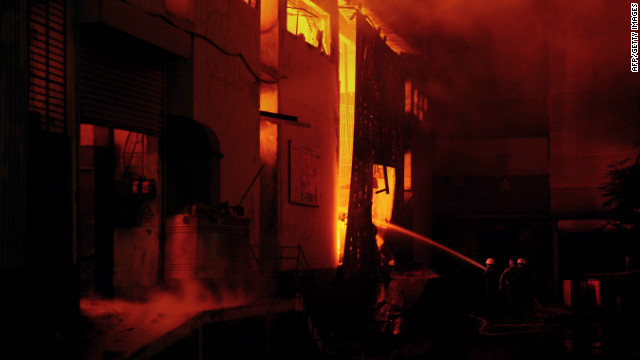
And just like any other day since September 11, she returns home with no news about her son, one of 259 people who perished in the flames of Pakistan’s largest factory fire. Rasheeda is from one of 70 families who all but know their fate, but continue to wait for that final closure.

A month-and-a-half since the disaster, there is no official record, no list, no names being put forward by authorities of how many people worked at the factory, how many were present the day the fire broke out, or an exact death toll.

Investigation Officer Jahanzaib Khan told The Express Tribune that he has requested the court to allow him to meet the owners of the factory to fetch records of the workers — both alive and deceased.

Jahanzaib has finally conceded that the number of workers feared dead might be much higher than what authorities have revealed officially.

“The death toll might be higher. The confusion would clear once we are allowed to retrieve information from the factory’s administration block which was safe from the fire.”

But with only 500 of the said 1,200 workers registered, this seems a daunting task, he adds.

With such discrepancies, chances of the number of workers who died in the inferno seem to be higher than the official toll of 259. The police officer has received 100 complaints of people gone missing in the factory fire. Social activists have put up a list of 74 victims whose bodies have not been found yet.

Those lying in the Edhi morgue are only 32.

The former commissioner says that 11 body parts were found separately from the site.

Trade unionist Nasir Mansoor, who helped locate the 74 families, says that there is a huge question over the issue of where the remaining bodies are. “Why is the government mum over it? Have the bodies been swallowed by the earth? There is no system in place to find them.”

Swallowed or not, the leading fireman of the operation, Feroze Khan, believes that those who are missing have either turned to charred remains and ashes in the top floor mixed with smouldered furniture, or been washed away. “I saw human remains.”

Roshan Ali Shaikh, who was the city’s commissioner when the fire broke out, told The Express Tribune that the death toll was announced on the number of bodies that were found from the factory — but admits the actual number could be higher.

“It’s likely that more people died in the fire and nothing remains of them. Four years ago, when a fire broke out in a chemical factory in the city, there was no trace [of survivors] when fire-fighters went to douse it. Nothing was found of them.”

Majority of the 32 unidentified bodies at the Edhi morgue are not intact. In the cold storage room, covered with white sheets, there are charred limbs and exposed bones. “It is difficult to point out if they belong to a man or a woman,” said an official.

Out of the 39 bodies which were brought initially, DNA results of only seven have come out. “If the government takes no action in the coming days, we will have to bury them ourselves.”

Meanwhile, family members, and representatives of trade unions and civil society have demanded that the government take concrete steps to identify the remaining bodies and hand them over to the families.

During a meeting organised at the Pakistan Medical Association House on Wednesday, speakers said that the government should consider workers whose whereabouts are not known ‘dead’.

Friday 19 October 2012

http://tribune.com.pk/story/453668/baldia-factory-blaze-forget-the-toll-its-just-about-closure-now/

continue reading

Thursday, 18 October 2012

NGO disposes of 55 unclaimed bodies

RANCHI: As many as 55 bodies which were lying unclaimed at the mortuary of the Rajendra Institute of Medical Science (RIMS) here were finally cremated on the bank of Jumar river on Sunday. The forest department provided wood for the cremation of the bodies. A local NGO which came to know about the unclaimed bodies at the RIMS morgue cremated these according to Hindu rituals on river bank.

RIMS director Tulsi Mahto said it was not the responsibility of the hospital to dispose of unclaimed bodies.

"There no time limit prescribed in law for disposal of the bodies which lays unclaimed for long. When it's a dead body where nobody comes forward to claim it then it becomes a state property. Hence it's the states responsibility to dispose of such bodies. Today the 55 unclaimed bodies were disposed of with help on an NGO," Mahto said.

The Ranchi Municipal Corporation (RMC) health officer said, "The problem was from the forest department who were not providing wood for the cremation. Now when they provided the wood the bodies were finally cremated." The forest department provided 155 quintals of wood for the purpose, while the RMC provided labour for cleaning and vehicles to carry the bodies to the cremation site.

"The bodies were in such bad shape that it was difficult to distinguish their sex. Most of them were in a decomposed state and were totally disfigured," Murda Kalyan Committee president Tubul Charkrabarty.

Thursday 18 October 2012

http://timesofindia.indiatimes.com/city/ranchi/NGO-disposes-of-55-unclaimed-bodies/articleshow/16816379.cms

continue reading

What now for Bali's broken hearts?

BROKEN hearts don't mend in 10 years.

Not all of them, not if Bali is any guide.

Some may never heal, not completely.

That much was clear from the 10th anniversary memorial service for those killed in the 2002 bombings.

Such gatherings are important. They allow those most deeply affected to express their grief and to acknowledge their loss, yet again, but also to help each other and feel the solidarity unique to those suffering the same pain.

But the next big public milestone anniversary, whether it be a 15th or a 20th year, is a long way off. For some families there won't be a next one because they have decided to draw a line in the sand now. What is to become of Bali's broken hearts?

Many are travelling pretty well these days, considering what they have been through; others less so.

Many feel 10 years is long enough; it's time to turn a new page and get on with their lives. But brave words and strong intentions are one thing; carrying them out is another.

"Closure is a funny word," said Adam Condon, making his first trip back to Bali since helping to identify six dead teammates from Sydney's Coogee Dolphins rugby league team, including his best friend Josh Iliffe.

"I don't think there is such a thing as closure," he said, a sentiment echoed time and again by bereaved families.

He went back to the morgue at Denpasar's Sanglah hospital, where body bags and body parts were piled up in the grim aftermath of the bombings in 2002.

"It's just something I wanted to get off my back," he said.

"I can't really put words to it. Walking through here was overwhelming. I felt sick to my stomach as soon as I walked in."

Did it help? "That remains to be seen."

The extent of the collective trauma is difficult to quantify, but 88 Australians were among the 202 dead. Multiply that figure by all of their family members and close friends, and it's clear those profoundly affected number in their hundreds and even thousands.

Some family members blame grief for adding to the toll.

Christine Rowland, of Melbourne, whose 33-year-old sister Bronwyn was killed in the terrorist attacks, said: "Mum died two years later of a broken heart, so we lost both of them."

Danny Hanley, who lost his daughters Renae and Simone, spoke at the service, urging mourners to "leave the broken, irreversible past in God's hands, and step into an invincible future with him".

But he told a reporter later he would have expected a lot more healing in 10 years, saying: "A lot of parents feel the same way. Time will never heal them. Families still feel terribly hurt and robbed. Another 10 years onwards it won't make any difference to me. I just can't get it out of the back of my mind."

Harry Wallace, from Byron Bay, NSW, also lost a daughter, 29-year-old Jodi. "She had only been here a few hours," he said. "She didn't even get to sleep in the bed (in the room) she had booked into. That's a pretty hard thing to live with."

Julia Gillard noted how the survivors and families, all this time later, were still at different stages of grief.

She attended last Friday's commemoration as prime minister, having just avoided the bombings as a tourist, ending a holiday with her sister and a nephew the day before.

"Nothing can replace the empty seats at your family table, the graduations and christenings you will never know," she said, but there was a "grim reassurance" in knowing the terrorists did not achieve what they set out to do.

Former prime minister John Howard told the gathering: "A decade on, we renew that effort of comfort and compassion and struggle to understand the continuing pain."

The media has been full of stories of that pain.

Norelle Quayle, whose husband Simon coached Perth's Kingsley football club, which lost seven players, told how she recently opened a box of newspaper clippings she had put away for her husband. "I opened it and read everything, and I finally realised how terrible it was," she said.

For Pat Paltridge, a Kingsley mother whose 20-year-old son Corey died on the dance floor of the Sari Club, the penny didn't seem to drop until someone talked to her about the 10th anniversary.

"It was like it was finally real, that before I didn't believe it had happened," she said. "So this year is probably the hardest for me."

The Kingsley clubhouse will always be open on October 12, the date of the bombings, for survivors to return for a barbecue and a "huddle" together after 11pm, the time of the bomb blasts.

"We've said that we'll keep opening the doors until nobody turns up," said club organiser Jan Pearce, whose son Duane survived the bombings. "I think that'll be a while yet."

Daniel "Shorty" Mortonsen found he had to put physical distance between himself and his old football club, the Dolphins, so he shifted from Sydney to Perth.

He and Adam Condon visited "ground zero" in Kuta's narrow main street, where they placed six cans of beer, one for each of their dead teammates, at the Bali memorial.

"I bet they've opened a nightclub up there, and they're all drinking beer," he said, glancing at the sky. "And by the time we get up there they won't let us in, because we'll be too old."

Thursday 18 October 2012

http://www.theaustralian.com.au/news/breaking-news/what-now-for-balis-broken-hearts/story-fn3dxiwe-1226498551411

continue reading

Families of Disappeared Persons Wait for Answers

Pale face. Faint voice. Tearful eyes. It has been long since they are knocking the doors of human rights organizations in the capital with a faint hope. The prime time of their life has been spent knocking the doors of governmental bodies and are still they are pinning their hope on the rights activists, with the faint hope of getting justice. The questions like why, where and how arise inside them. Issues as family tension, worry of educating and bringing up their children are there; still they are doing their best to find out about their disappeared relatives.

These are the daily routine and the worry of the families of 934 people like Cham Kumari Basnet of Baglung whose loved ones were disappeared by the state and the Maoists during the conflict. Why our relatives were disappeared? Where were they taken? In which situation they are in? How and who will make it public? These are some of the questions haunting them all the time. Our questions remain unanswered, says Jagannath Subedi, father of one disappeared person, Deepak Subedi of Kewalpur VDC-6, in Dhading. We still get goose bumps when I remember the night when our loved ones, sleeping under the same roof, were abducted, arrested and disappeared by either of the conflict parties, says Dhana Kumari Tharu of Rupandehi who says that she is tired of knocking the doors of organization and governmental bodies to find the whereabouts of husband. Her husband was disappeared by the state on August 27, 2005. After that, there is no information about his situation.

According to the INSEC's data, 934 people were the victims of enforced disappearance at the hand of the state and the rebels during the conflict. NHRC recorded that 809 people were disappeared by the State, 227 by Maoists whereas 127 by unidentified groups. On August 30, 2012, ICRC stated that total of 1,401 people were disappeared during the armed conflict.

"The dead bodies are identified and cremated, but we don’t have any information about the situation of our loved one", Nawaraj Luitel of Naubise in Dhading says. "Our demand is either show their dead bodies or show them alive ". Luintel's younger brother Hari Prasad Luitel has been made disappeared since 2003 September 2. Luintel further says that since Hari's disappearance every 'Bhai Tika' or the festival of Brother's Day has been filled with sorrow, grief and distress. Nepal Nagarkoti of Champi in Lalitpur is living through the same distress since then. He says, "Since 2003, every "Bhai Tika brings only with grief and sorrow, our happiness has been shattered by armed conflict". His brother remains disappeared since September 2, 2002." If someone knocks the door at night, I feel like my husband has come back", says Kalpana Manandhar of Dhading.

Act of enforced disappearance has been defined as when a state or non-state agency arrests or abducts someone but fails to publicly acknowledge their detention.. The act of enforced disappearance was practiced in in Panchayat regime;however, it drastically increased after the armed conflict. It is pledged in 7-point agreement signed by the Maoists and the seven political parties and in Interim Constitution that they would be finding out the truth about the people who disappeared during the armed conflict and making them public. The Comprehensive Peace Accord (CPA) signed between the Maoists and the government in November 21, 2006 has stated that whereabouts of the people disappeared during an armed conflict, by state or non-state, would be made public within 60 days. But, it has nearly been six years and neither state nor the Maoists are serious about it. The former rebels, , who has already been at the helm of the state many times, chose to disregard this matter while in contrary to their vowed commitment, their leadership has put a clause of blanket amnesty on" Truth and Reconciliation Commission Ordinance 2012" and submitted it to the President for his approval.

The familiesof the disappeared people were in hope, especially after the CPA. They were quite happy knowing that they will learn about their disappeared loved ones . But six years have elapsed and the problem is intact. There was no happiness in the face of the families of the disappeared who came from different districts during the "Day of the Disappeared Persons " to give pressure to the government. After the Ordinance is presented to the president for approval about giving blanket amnesty, they are worried about being denied of justice they have fought for so long.

Thursday 18 October 2012

http://www.inseconline.org/index.php?type=features&id=5&lang=en

continue reading

Mortuary buries 35 unclaimed bodies in Naivasha

Naivasha district public health department Tuesday night buried 35 unclaimed bodies in a mass grave.

The health body got the permit to bury the bodies from the Naivasha law courts early last month.

Speaking while after overseeing the burying of the bodies on Tuesday night, district public health officer Samuel King’ori called on the Ministry of Health to expand the morgue in the town to ensure a bigger capacity to store more bodies.

He said the number of dead bodies in the morgue increased continuously as people who brought in the dead often gave them falsified information.

King’ori added that in their follow up, they often tried to trace the relatives of the dead in through their phones but were often off.

“Even when we appeal to the relatives to try and trace them but they do not show up,” he added.

The health officer admitted that the mortuary was already overstretched and they needed a bigger morgue.

Thursday 18 October 2012

http://nakuru.hivisasa.com/news/mortuary-buries-35-unclaimed-bodies-naivasha

continue reading

Landslide kills children in Peru's jungle

Several children were among the victims when a mudslide sent a mass of tree and rock debris crashing into homes in Peru's jungle Wednesday, killing at least 11 people.

Ten more people are unaccounted for, according to the country's state news agency.

Heavy rains set off the natural disaster in the San Martin tropical forest in Peru's northeast, which destroyed "at least 10 houses and a pedestrian bridge," Andina news agency reported.

Six of the 11 bodies recovered so far appear to be children. Residents are working with civil defense officials and the military to find victims in the rubble, but the flooding of a local river is hindering their efforts.

At least a dozen homes were swept away as mud and rocks crashed into the village of El Porvenir in the province of San Martin.

The provincial mayor, Ronald Garcia, said at least five children were among the dead and that whole families were unaccounted for.

Heavy rain in the area has triggered several landslides in recent weeks.

"It's a jungle area, next to the village passes a river, houses were on the edge of ejection of this ravine, and the flood swept through those that were there," the head of the National Civil Defence Institute (Indeci), Alfredo Murgueytio, told Peruvian radio.

Mr Garcia said some of the missing people may have fled into the hills to save their lives.

"Whole families are missing," said Mr Garcia. More than 80 families live in the village, he said.

El Porvenir residents are mostly coffee farmers, officials said.

Peru's government is sending humanitarian aid, including tents and sheets, the state news agency reported.

Thursday 18 October 2012

http://www.bbc.co.uk/news/world-latin-america-19987471

continue reading

Search on for burial site of Tarawa coastwatchers

Attempts are being made to locate and identify the remains of Otago coastwatchers executed by Japanese soldiers on Tarawa Atoll 70 years ago.

The New Zealand Defence Force (NZDF) hoped to learn in the next few months whether a potential burial site was worth excavating on the Kiribati atoll.

A team from JPac (Joint Prisoners of War, Missing in Action Accounting Command) would soon be on site to investigate an area identified as a potential mass grave from aerial photographs taken before the atoll was destroyed by naval gun fire towards the end of World War 2.

NZDF director of commemorations, heritage and protocol John McLeod said if the JPac team discovered anything to suggest New Zealand remains were in the vicinity, a full excavation could follow.

But he did not want to get relatives' hopes up and said the search was "one step at a time".

More than 5000 Japanese remained buried on Tarawa, which was extensively damaged in the war.

"The impact of a naval shell will shift a small hill, so if remains were buried two or three feet down and naval gunfire landed anywhere nearby it would shift them. The whole island was hit by naval gunfire, then the Americans bulldozed a lot of it to build a runway," Mr McLeod said.

The defence force was responsible for any New Zealander missing in action, including the 17 coastwatchers beheaded by their Japanese captors on October 15, 1942.

Among them were Clifford Pearsall, of Lawrence, and Arthur Heenan, of Middlemarch.

Mr Heenan's younger brother, Bob Heenan (86), who lives in Mosgiel, said he held little hope of his brother's remains being found and returned.

"It's been such a long time and they don't seem to be making very much progress. There are so many bodies there, it would be very difficult," he said.

Mr McLeod said there had been "quite a few" efforts to locate New Zealand remains on Tarawa, including immediately after World War 2.

In February, the defence force learnt of a possible burial site, identified last year by JPac experts, which was underneath a modern cemetery.

"The plan is to do some exploratory work to identify whether in fact that is a possible location.

"Based on what is found, New Zealand would then look at doing an excavation once we had the necessary approvals from the local authorities," Mr McLeod said.

Remains would have to be forensically examined to see whether they were of New Zealanders.

"Wherever you dig on the island, you'll find bones. That's a fact of life. All we can do is give it our best shot," he said.

The NZDF would keep looking for coastwatchers' remains.

"There's a commitment to provide some comfort for families. We may never find anything, but we owe it to their memory to keep trying," Mr McLeod said.

Coastwatchers were recognised during a commemoration at the National War Memorial in Wellington this week, on the 70th anniversary of the Tarawa execution.

American organisation History Flight had offered to assist any New Zealand effort to locate, identify and retrieve coastwatchers' bodies from Tarawa.

The non-profit organisation had searched out and retrieved missing American World War 2 servicemen from the Pacific and identified three locations on Tarawa where it believed New Zealand coastwatchers were buried.

Thursday 18 October 2012

http://www.odt.co.nz/news/dunedin/230801/search-burial-site-tarawa-coastwatchers

continue reading

Investigators: Factory fire victims were trapped behind locked doors

During a factory fire that left more than 250 people dead in Karachi, one of the workers, Abdul Ghani, struggled to find his wife, who also worked there.

"I remember thinking if I can't save her, I hope I burn to death with her," Ghani said.

The father of two young daughters, Ghani described in terrifying detail his account of what happened when a fire broke out at the denim factory where he worked on September 11.

"The fire was so intense I couldn't get in," he said.

While firefighters struggled to control the flames, family members took matters into their own hands and tried entering the burning building to save their loved ones.

"We broke the wall down and found bodies melted onto each other... piled up and completely burnt," Ghani said.

His wife died in the factory fire.

Several trapped workers jumped from the upper floors to escape the flames, said Mustafa Jamal, a senior government official who was at the scene.

Pakistani investigators say most of the victims were trapped behind locked emergency exits -- which is a serious violation of worker safety laws. The company denies the doors were locked and blames a late response by firefighters, who, along with witnesses, say they arrived within minutes.

RINA group-- an Italian company that inspected factories on behalf of an international watchdog group-- confirmed that the factory owned by Ali Enterprises had passed inspection on August 20, a few weeks before the fire.

Its audit report said, "Access to fire extinguishers and passages leading to exits was maintained free from any kind of obstruction. Primary exits and emergency exits are kept unlocked while employees are inside facility."

After the fire, RINA issued a statement on its web site expressing sympathy for the victims and noted that "the certification body is not in a position to verify the day-by-day implementation of the system." The statment also said, "RINA has decided, as a precautionary measure, to voluntarily suspend new certification activities in Pakistan." It has pledged to conduct an internal investigation.

While some 70 bodies have yet to be identified, criminal proceedings against the factory owners will begin as late as next year, said Faisal Siddiqi, the victims' lawyer.

Police officials said the owner of the factory was released due to his deteriorating health, but his two sons Shahid Bhaila and Arshad Bhaila who were involved in the day-to-day function of the factory are being held in jail and could face murder charges.

CNN tried to reach the defendants' lawyer several times, but he was unavailable for comment.

The provincial government has pledged to compensate the families of the victims, but Ghani said he has yet to see any kind of support.

Arif Elahi, the Secretary of Labor, said, so far, more than 173 victims' families have been compensated with up to $9,000 by different government agencies.

"We are still identifying some of the bodies," Elahi said. "As soon as we know who they are, we will compensate the rest of the families."

Siddiqi, the legal counsel for the victims, said that they've "asked the government for a comprehensive inspection of all factories, details of transparent compensation for the victims' families and an independent judicial commission that will investigate the fire."

Both a police investigation and a government inquiry into the fire have been completed and are expected to be submitted shortly.

The fire is believed to be the worst manmade disaster in Pakistan's history, according to the National Disaster Management Authority.

The fire raises new questions about possible lapses in safety measures and the enforcement of factory fire codes in Karachi's booming industrial sector, said Siddiqi.

"It is only a matter of time that something like this could happen again," he said.

Pakistan has one of the largest textile industries in the world, shipping $13.8 billion worth of textiles mostly to the U.S. and Europe this year. Textiles account for 63 percent of Pakistan's exports.

The tragedy in Karachi has forced factory owners to re-evaluate the enforcement of labor laws in their own factories, an owner of a factory told CNN.

"I wish that this kind of tragedy never happens to anyone else," said Ghani, who lost his wife in the fire.

Thursday 18 October 2012

http://edition.cnn.com/2012/10/17/world/asia/pakistan-factory-fire/

continue reading