Wednesday, 15 July 2015

Without war, Dover mortuary, lab roles shift


For the better part of 14 years of war, the transfer cases and bodies never seemed to stop arriving at Dover Air Force Base.

"We used to look at the casualty board and hope for a break," said James Parsons, an embalming technician with Air Force Mortuary Affairs Operations, the only U.S.-based funeral home dedicated to the nation's fallen military. "Now? Now it's good."

In 2007, the worst year of the fighting in Iraq and Afghanistan, some 1,020 military casualties were shipped home, according to Air Force Col. Dan Merry, AFMAO's commander. Last year, the overall total fell to 60. "And it has gone down gradually since," said William Zwicharowski, Port Mortuary branch chief, who was with AFMAO, and the agencies that preceded it, for the entirety of the conflicts.

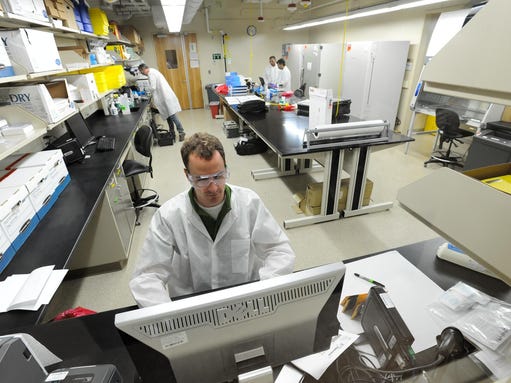
So trimming, and training, are now the watchwords at AFMAO. Its next-door neighbor at Dover, the Armed Forces Medical Examiner System, has also shifted gears, from performing autopsies on every returned casualty from Iraq and Afghanistan to studying lessons learned, taking on more emerging historical DNA identification work and helping non-defense agencies with medical legal death investigations.

"We're staying busy," said Army Col. Ladd Tremaine, director of AFMES, noting the group's increasingly worldwide responsibilities for the federal government. "Most of our work is not done back in that autopsy suite. Most of my examiners are on the road."

It's been a remarkable shift. A total of 6,852 U.S. military personnel have died overseas since 9/11. All were carried off a cargo jet ramp, one by one, and into the complex that houses the two agencies. Even as stunned family members were welcomed, comforted, even counseled, the remains were being scanned (for explosive material), catalogued, autopsied, embalmed and prepared for burial.

Now, the number of dignified transfers from overseas has slowed to a crawl.

"We are not used to it," said Zwicharowski, a former Marine. "We've almost slammed the brakes on now. Which is great. ... It's probably the best problem I've ever had in my life, [which] is to not have 10, 20, 30 bodies to process a day. So it's a good problem to have."

The slowdown is giving AFMAO time to take stock of itself. Recently borrowed mortuary personnel are being returned to other bases - as well as to Dover's Air Force Reserve unit, the 512th Airlift Wing, which it has relied on heavily during the wars. AFMAO could get even smaller, Merry said.

AFMAO has 50 personnel assigned, but that could be halved "if we stay this way for a year or two," Merry said – adding that this could quickly change if the U.S. keeps increasing its small combat presence in theater.

"If we get 30 or 40 thousand boots on ground, in harm's way, we'd start plussing back up," Merry said.

To prepare for the unexpected – a mass casualty event, e.g. – Merry is implementing a more efficient rapid "recall" system. "We're looking at a system where we can hit a button and get everybody we need back here, fully trained, fully checked out, ready to go," he said.

"It's not a matter of if," Zwicharowski said. "It's a matter of when, unfortunately."

That was the case when 11 Louisiana National Guardsmen were killed in a March helicopter crash during training in Florida. All the troops were brought to Dover; AFMAO reached out to the Navy to borrow licensed embalmers to help out, Merry said.

With fewer permanent personnel on staff, Zwicharowski said, "We're turning to training on mannequins, restorative art training, embalming training, and licensing."

Training is particularly important for specialists who sometimes handle bodies in far worse shape than those that typically arrive at a mortuary. Roadside bombs were the No. 1 killer in these wars.

Tremaine's AFMES is responsible not only for worldwide U.S. military autopsies but medical legal death investigations for the entire federal government across the globe – agencies such as the FBI and NASA – which is why his examiners often find themselves traveling.

"The sheer numbers have decreased," Tremaine said. "The complexity of our cases has increased. Department of Justice has been using us extensively over the past year." He pointed to the police shooting death of Michael Brown in Ferguson, Missouri, which was investigated by the FBI.

"When something like Ferguson occurs, you're going to have the locals investigate it, and … the same thing happened here in Baltimore recently – you're going to have the family request a second autopsy," Tremaine said. "Who's going to be the ultimate arbitrator or make sure that everybody's playing on an even field? Who's the honest broker? Well, we've essentially become that honest broker. We come in as a federal entity; we get to see all the evidence and information; and potentially do a tertiary post-mortem examination, independently. And then we present that to the Department of Justice."

In addition to its autopsy work, AFMES recorded in detail war injuries with an eye toward improving combat trauma care. Tremaine wants to make that database more easily accessible.

"All throughout the war, we've been very active in identifying the glaringly obvious, and getting that information out quick," he said. "Now it's time to sit back and look at all the information in its totality, and discover those non-glaring issues that will only be captured through more in-depth research. Can we discover something else that can potentially change techniques, tactics and procedures in the future?"

AFMES' DNA Lab will also stay busy performing DNA analyses on remains from past conflicts, such as those of the sailors and Marines who died at Pearl Harbor aboard the USS Oklahoma who were buried, unidentified, in mass graves in Hawaii and are now being exhumed.

Wednesday 15 July 2015

http://www.delawareonline.com/story/news/nation/military/2015/07/14/without-war-dover-mortuary-lab-roles-shift/30162767/

continue reading

South Korea selects China consortium for Sewol ferry salvage


A Chinese-led consortium was selected Wednesday as the preferred bidder to take on the massive task of raising the South Korean passenger ferry that sank last year with the loss of more than 300 lives, most of them schoolchildren.

The 6,825-tonne Sewol ferry sank off the southwest coast in April 2014. A total of 295 bodies were recovered, but nine remained unaccounted for when divers finally called off the dangerous search of the sunken vessel last November.

The Sewol lies 40 metres (130 feet) down on the sea bed and bringing it to the surface represents a substantial technical challenge. The salvage operation is scheduled to begin in September and take as long as one and a half years.

The Ministry of Oceans and Fisheries said it would begin negotiations next Monday with the consortium involving China's state-run Shanghai Salvage Co. and a South Korean firm, which beat six other competitors including European and US firms.

Shanghai received good marks for its experience in salvaging sunken vessels, including a cruise ship that sank in China's Yangtze River with the loss of more than 400 lives last month, it said.

The ministry said it would talk with the second candidate -- a consortium led by China's state-run China Yantai Salvage -- if negotiations with Shanghai fail.

Shanghai offered to lift the ferry for 85.1 billion won ($74 million) by using a frame built with metal beams on the sea floor instead of drilling holes into its side.

"We regarded Shanghai Salvage's idea as safe ... because the Sewol's hull remains fragile," Yeon Yeong-Jin, a ministry official in charge of salvage, told reporters.

The overloaded Sewol was carrying 476 people, including 325 students from the high school in Ansan, when it sank. Only 75 students survived. Strong currents and muddy waters at the site of the sunken vessel greatly hampered the search efforts last year, leaving two divers dead and dozens injured.

The families of those still missing had led a campaign for the ferry to be brought to the surface.

The shock accident -- blamed on the ship's illegal redesign and overloading left unchecked by regulators -- prompted calls to overhaul the nation's lax safety standards and tackle deep-rooted corruption.

Wednesday 15 July 2015

https://uk.news.yahoo.com/south-korea-selects-china-consortium-sewol-ferry-salvage-050346113.html#6qTOsSw

continue reading

Japan tsunami: Diving into the world of the dead to find their relatives


Twice a month two Japanese men put on scuba gear and go diving. One is looking for his wife, the other for his daughter, both of whom were swept away by the devastating tsunami that struck Japan four years ago. They know they are no longer alive, but the hope of finding something - anything - gives them a much-needed sense of purpose.

Underneath the glittering waters of Onagawa Bay, in Japan's north-eastern Miyagi Prefecture, fridges, TVs, cars, trucks and fishing gear lie scattered on the sea floor, under a layer of mud.

"Imagine a big city, put it in a grinder and throw it all into the ocean," is how one oceanographer described the effect of the Japanese tsunami.

Under water, things are still mostly where they were left by the violence of the waves.

In the sunlight up above, on the other hand, everything has changed.

Fishing boats are again going about their business - the Japanese diet is built around seafood and it's a key part of the local economy.

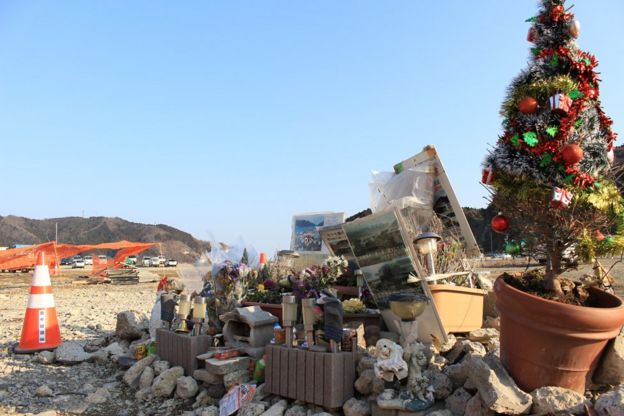
The wreckage of a thriving port has been cleaned away. In its place there is now a vast expanse of concrete - empty except for, in one corner, a modest shrine made up of some laminated pages of A4, a pink plastic chrysanthemum, and, rather incongruously, a Christmas tree.

This is where the Onagawa branch of the Shichijushichi (77) Bank used to stand and the shrine is there to commemorate it.

When the tsunami warning sounded at 14:50 on the afternoon of 11 March 2011, the bank's employees were busy tidying up the damage caused by the earthquake that had shaken the building a few minutes earlier.

Their manager was out seeing clients. Driving back along the coast he could see the sea sharply withdrawing - a sure sign of an imminent tsunami. As soon as he walked in he told everyone to stop and to climb on to the roof of the two-storey building as quickly as possible.

Sure enough, as soon as they got there, they heard the siren and the municipal broadcast warning people to evacuate to high ground - just a few hundred metres away were the steep slopes of Mount Horikiri, where some people were already seeking shelter.

One employee asked if she could go home because she was worried about her children. The manager said he couldn't stop her, so she ran to her car, which was parked 300m away, and drove home.

The manager told those remaining to watch the sea, just 100m away in normal conditions, and to listen out for further news. The radio warned that a 6m-high tsunami would hit at 15:10.

Among the 13 bank employees up on the roof that day was 47-year-old Yoko Takamatsu. Her husband Yasuo had dropped her off by car that morning, though they only lived a few minutes' drive away. During the short short journey they had talked about what to have for dinner. "Don't say: 'Anything is fine!'" she had said.

With Yoko on the roof was her colleague, 26-year-old Emi Narita, from the neighbouring town of Ishinomaki, where her father Masaaki ran a fish-processing plant. She had seen him just the night before, when she went over to pick up her dinner - her grandmother still liked to cook for her.

As the workers stood nervously on the roof they debated whether there was time to flee to the nearby hospital - a much taller and stronger building, but they decided to stay. After all, a 6m-high tsunami would only reach the first floor. Some went down to get their coats - it was cold, there was still snow on the ground.

Yoko sent her husband a text message: "Are you safe? I want to go home."

The tsunami swept into Onagawa moments later. Footage filmed by a survivor shows how the dark water moved swiftly and relentlessly into town, pushing over everything in its path. Buildings gave way and cars and trucks were picked up like toys, and acted like floating battering rams adding to the wave's destructive power. Within minutes the sea had engulfed areas that were once considered safe.

The bank flooded quickly - it took just five minutes for the water to fill half the building. The workers decided to climb up even higher on top of an electrical room standing on the roof of the two-storey building. As they climbed the 3m vertical ladder the strong wind almost blew them off.

Many people witnessed their desperate bid to escape to safety. A Facebook post reads: "We get a lump in a throat every time we think about the female bankers who, wearing skirts, had to climb the ladder with unimaginable fear, and male bankers who threw off their coats at the last minute regardless of the cold weather, their fear, despair and regret."

The tsunami turned out to be far, far bigger than anyone expected.

The town's defences had largely been based on the worst tsunami in living memory - a 6m-high tsunami in Chile in 1960. But this one reached more than three times higher.

As a consequence many designated shelters were inundated - even the hospital was flooded, killing four people in the building itself and an estimated 16 in the car park.

Onagawa was one of the areas hardest hit by the tsunami," says Tsutomu Yamanaka, a relief co-ordinator who arrived a week after the disaster for the aid organisation Japan Platform.

The coastline of the region is a series of submerged river valleys shaped "like the teeth of a saw", he says, and tsunamis reach great heights as the water funnels into the crevices.

A town has little chance in this battle between ocean and mountain. Satellite pictures show how the sea reached in and clawed the town away. More than 5,000 buildings were washed away or damaged beyond repair.

"Buildings had been torn from their foundations," says Yanamaka, describing the scene he witnessed when he arrived in Onagawa. "A train had been swept to the hill far from the station."

The morning after the tsunami Yasuo Takamatsu made his way to the municipal hospital to find Yoko. He soon had to abandon the car and push a path through the wreckage.

He was stunned to find she wasn't there.

"There were lots of people taking refuge there, but I was told she'd been taken away by the tsunami," he says. "After that I just couldn't stand up. I'd lost all my strength like it had been washed away."

It took Emi Narita's father, Masaaki, longer to find out about his daughter's fate in the chaotic days after the disaster.

He himself had only just driven to safety with his mother-in-law, the tsunami "coming over a few cars behind us".

For four days he was unable to contact his wife, who was working as a nurse away from home. It was she who told him Emi was missing. "I couldn't believe it. I can't believe it even now," he says. "Until that moment, I had no doubt that she would be safe."

Local authorities were overwhelmed by the scale of the disaster, the staff reeling from their own personal losses, on top of massive practical and logistical problems.

Almost one in 10 of the town's residents was dead or missing. The majority of survivors were staying in special accommodation for evacuees. They spent their days searching for loved ones, picking through the chaos and walking for miles along the breakwaters on the shoreline.

Takamatsu was there too, looking for his wife, Yoko. "I searched everywhere for her, but she was nowhere to be found," he says.

The only thing that was eventually recovered was Yoko's mobile phone, found in the parking lot behind the 77 Bank building. At first, Takamatsu thought it wouldn't work because it had been soaked with water, but months later, he took the phone out and tried it.

Miraculously, it came to life. Then he saw she'd tried to send another message that never reached him. It said: "The tsunami is disastrous."

The 77 Bank building, just over 10m tall, was knocked over by the force of the tsunami.

Of the 13 people on the roof, one, amazingly, survived - he held on to floating debris and was swept out to sea, almost losing consciousness in the icy water before he was rescued by a fishing boat hours later. The bodies of four bank staff were found, but eight are still missing, Emi and Yoko among them. The worker who left the building by car survived.

"I couldn't understand why they escaped to the rooftop," says Narita. "There's no more escape there. If they had escaped to the mountain, they could have climbed to a higher place. I thought evacuation to the mountain was a matter of course."

The toppled building itself was cleared away along with all the other buildings in the port area, bar one, which was left as a memorial. Although the town began to rebuild, for the bereaved families it was hard to move on.

"We are still stuck in 2011," says Narita.

Takamatsu is haunted by the message Yoko sent. "I have this feeling that she still wants to come home," he says.

"I wish I had gone to pick her up at the bank after the earthquake struck, but I'm still not sure what would have been the right decision. The tsunami warning told us to stay away from the shoreline, and if I'd gone down to pick her up, chances are I would have been taken out by the tsunami as well.

"But at the same time, I wish I'd gone and saved her."

Two years ago, when he saw divers from the Japanese Coast Guard out searching for the remains of the missing, it gave him an idea: he could do the same, and perhaps bring Yoko home.

"So I learned to dive. I felt like I could meet her one day as long as I kept diving," he says.

Takamatsu needed to qualify for a diving licence, and he began taking lessons at a diving school. When he talked to Narita about it, and offered to look for Emi too, Narita decided to join him.

Learning to dive was a challenge for these men, both in their mid-50s. Takamatsu was terrified by the thought of his oxygen failing, and having to come up for air. "At 5m below, I could swim up without much trouble, but at 20m deep it gets dangerous - thinking about those things always scared me," he says.

Narita had other problems. "I didn't get scared, but I couldn't control my body under the sea at all," he says. He found it hard even to regulate his breathing. "I never considered quitting, but I struggled."

After months of training, the two men qualified last summer, and have since completed more than 80 dives. The search has given them purpose and lifted their spirits.

"I couldn't do anything before I started diving, but after I decided to find my daughter by myself, I could become positive about it - a bit. I get encouraged by searching for her," says Narita.

"It was depressing not doing anything," says Takamatsu. "At first I just wanted to find my wife, but now I hope I can find others too."

It's hard work. The bay is very deep and most objects are buried under a thick layer of mud, which, when disturbed, also makes it hard to see. They have good days. On one they found a child's calligraphy box with his name on it, and a wedding album.

Anything with a name goes back to the owners. Wallets, bank books, and stamps are handed to the police. Photographs can often be restored. An estimated five million tonnes of debris was dragged into the sea by the tsunami. Two-thirds sank just off the coast, covering the sea floor and damaging the marine environment. About a third floated away, in giant patches that could be tracked on satellite images.

Boats, buoys, propane tanks and refrigerator doors are still washing up on the shores of North America and Hawaii.

But much of the tsunami debris has joined the "plastic smog" that collects in oceanic gyres. Marcus Eriksen, from the 5 Gyres Institute, led an expedition to the debris field in June 2012 - 5,000 miles east of Tokyo they spotted buckets, laundry detergent bottles, half a boat, and a still-inflated truck tyre. "One day a shoe drifted by," says Eriksen. "What was eerie was that the laces were still laced at the top - it left us thinking."

The bodies of more than 2,000 people, of the 16,000 estimated to have died, have never been recovered.

So what about those missing from Onagawa - how far could they have travelled? Not far, says Hiroshi Kitazato from the Japan Agency for Marine-Earth Science and Technology. "I think they sank immediately in the bay. I talked to fishermen in Onagawa town, they said that in the past couple of years they've found no bodies in their fishing nets. This means that in the first two or three years they dredged up dead bodies."

Kitazato points out that, coming from a small community, those fishermen would probably have known who they had fished up. "They would have felt very bad," he says.

Four years on, this is less likely to happen - organic matter will have mostly "returned to nature", says Kitazato. "Now, we seldom find bodies or their belongings during research activities."

Kitazato's work is aimed at helping ecosystems recover, but after the tsunami many people "felt awful about the sea" he says, and part of his remit is to explain to them how the ocean works. His team goes into schools to show its positive side - "how ocean organisms are beautiful and how the oceanic system is useful for human life."

Many of Onagawa's citizens moved away to escape their memories of the disaster - and to find work. Takamatsu stayed, and, through diving, has a new-found appreciation of the sea. "I found creatures which I had never seen, beautiful fish such as lumpfish," he says. "You cannot see such worlds usually."

Despite the seeming hopelessness of their task, Takamatsu and Narita have no intention of giving up. "I still have a hope we can find something - maybe a human body, regardless of whether it's my daughter's or not," says Narita.

His only memento of Emi is a painting he commissioned after her death, which has pride of place in the living room - all of his own photographs were lost, along with the family home.

"I want to search for my daughter as long as my body allows me to. If I just give up, there's zero chance. If I keep searching, I might have a chance at least."

Takamatsu feels the same way. "I want to continue my search as long as my strength lasts, even though the chances of finding her are slim. I know that she has already passed away, but I don't want her to be left alone under the sea.

"Honestly, I still want to find her and bring her home."

Wednesday 15 July 2015

http://www.bbc.co.uk/news/magazine-33294275

continue reading

As many as 100 bodies believed to be sub-saharan migrants wash up on Libyan shore


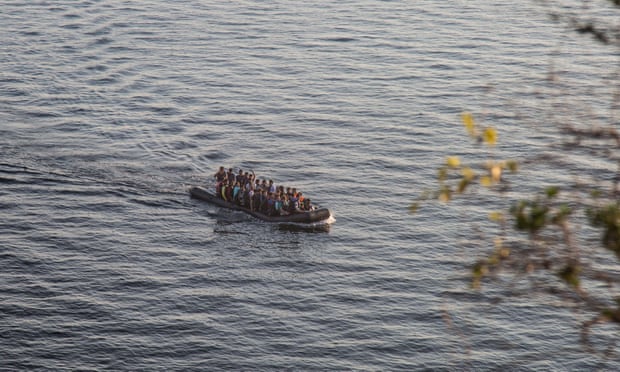
As many as 100 bodies believed to be sub-saharan migrants have been found in the sea and the shores of the Tajoura, a coastal town about 10kms east of Tripoli, according to spokesman for the capital’s anti-immigration department.

Details are still a bit sketchy but a the spokesman said there were women and children among the dead. He could not confirm their numbers or indicate their nationality. They are believed to be the victims of a shipwreck off Tajoura, which is known as a sending spot for migrants heading for Europe on boats.

The bodies recovered in Tajoura are being transferred to a hospital in the capital. More details throughout the day.

If the number of dead is confirmed it would be the biggest tragedy by far since April 18 when 850 migrants are believed to have lost their lives in a single shipwreck off Libya.

A record 1,780 migrants had lost their lives in the Mediterranean up to that point but the deaths slowed down after EU leaders reacted by expanding the search and rescue effort to unprecedented levels. In a statement on Friday, the UN refugee agency (UNHCR) put the number of migrant deaths in the Mediterranean up to that point at 1,900.

On the same day the statement was issued, however, 12 migrants were recovered dead after the boat they were on capsized off Libya. Earlier in the week, Turkish and Greek coastguard mounted a search for 19 people believed to have drowned while crossing between the two countries.

Wednesday 15 July 2015

http://migrantreport.org/breaking-dozens-of-bodies-wash-up-on-libyan-shore/

continue reading

Tuesday, 14 July 2015

Pushkaram Stampede: Death toll rises to 27


Twenty-nine pilgrims, 23 of them women, were crushed to death in a stampede on the first day of Godavari Maha Pushkaralu, considered the 'Mahakumbh of south', on Tuesday.

Around 50 people were hospitalized; the condition of 15 of them is critical.

Sources said 5,000 pilgrims were thronging Pushkara Ghat in Andhra Pradesh's Rajahmundry at 8.30 am with another 1 lakh people queuing outside the main venue when the stampede broke out.

Most of the victims were women and some of them have not been identified yet. The injured were rushed to Government Hospital in the city. The stampede occurred at around 8.30 am, about an hour after chief minister N Chandrababu Naidu left the ghat. Preliminary information indicates that a large number of pilgrims were kept waiting due to the presence of VVIPs including the chief minister and his cabinet colleagues besides a large group of bureaucrats and other VIPs for more than two hours.

Huge crowd, poor crowd-control, closing of the ghat for more than two hours after pushkaram began since VIPs were taking holy dip apparently led to the stampede at Rajahmundry.

Soon after the VVIPs left the premises after the inauguration, pilgrims jostled with one another reach the ghat. As crowds swelled, the pilgrims pushed each other resulting in the stampede near the Fort gate of the Kotagummam. Adding to the chaos, the police personnel used mild force to control the crowds. Minutes later, several women were found unconscious and a dozen others were injured. They were all rushed to the hospital but to of no avail. The condition of 14 others who are under treatment is reported to be critical.

According to eye witness accounts, the stampede took place because the devotees were anxious to have holy dip in the pushkar, which is the main ghat in Rajahmundry though there are quite a number of ghats along the river bank. They said that the barricading of the pushkar ghat has in fact led to the stampede as the pilgrims did not move in the queue but tried to squeeze through the barricades to enter the ghat as there the rush was unimaginable.

Another problem was that the authorities had arranged only one passage into the ghat as a result of which those who were getting in and those who are getting out pushed each other in opposite directions. "When such a huge crowd collects, the movement should be unidirectional only. If the passage is meant for pilgrims moving in both the directions it is the perfect recipe for disaster. At Pushkar ghat this is what has happened," an official on condition of anonymity, said.

As this time, the pushakaram is called Maha Pushkaram, the crowd that descended on this fist sized town was quite huge, beyond the expectations of the officials. This apart, though there is VIP ghat, the VIPS including Chief Minister N Chandrababu Naidu chose to take holy dip at pushkar ghat only. This has forced the officials to close the ghat for more than two hours and the crowd kept swelling outside the ghat. After Naidu et al left at about 8 a.m., the ghat was thrown open to ordinary pilgrims and all of them tried to move at once. This apart, those who had already taken the holy dip began coming out of the ghat and the two streams of the people began pushing the other away.

"The people were packed like sardines at the ghat. There is not even an inch of room left between one person and the another. In this kind of situation, if a small portion of the crowd loses balance, it would lead to a domino effect. This is what has happened," the official said. Though Saraswathi Ghat has been prepared for the VIPs, which is less than one km away from the pushkar ghat, the chief minister and the other ministers took the holy dip at the pushakar only. This apart, the vehicles of the chief minster and the ministers were parked on the road which drastically reduced the space necessary for easy movement of people, eye witnesses said.

Chandrababu Naidu who is reviewing the situation with his deputy Nimmakayala China Rajappa asked the officials to stagger the crowds so the pilgrims would be distributed evenly to other ghats but the officials are not able to make much progress in implementing his direction. Naidu later vistied the victims undergoing treatment.

Tuesday 14 July 2015

continue reading

Nepal closes a National Park to give mating Red Pandas some privacy, implications for body recovery efforts


Langtang National Park, Nepal’s first Himalayan national park and the one nearest to capital Kathmandu, has been declared a restricted zone by local authorities to allow red pandas to mate.

The shy creature, called habre in Nepal, loves to live in quiet places and is easily scared by noises. When frightened by sound, it will even leave its young cub behind and run away. As the red panda’s breeding season starts from mid-June, the national park has been closed to visitors and even firewood gathering by locals has been prohibited for two months.

With only 10,000 individuals remaining in the world, around 1,000 red pandas are found in eight protected areas of Nepal – from Kanchenjunga Conservation Area in the east to Makalu Barun National Park and Buffer Zone, Sagarmatha National Park and Buffer Zone, Langtang National Park and Buffer Zone, Manaslu Conservation Area, Annapurna Conservation Area, Dhorpatan Hunting Reserve and Rara National Park and Buffer Zone in the west. Besides Nepal, the animal is found in the mountainous regions of India, China, Bhutan, Myanmar and Laos.

The red panda, also called fire fox, was discovered decades earlier than the giant panda. It is a carnivore turned herbivore and feeds mainly on young bamboo shoots and leaves.

Though the shy creature dons the Mozilla Firefox logo and millions of Internet browsers use it daily, only a few know that it is a red panda.

Red pandas are listed as endangered species by the International Union for Conservation of Nature (IUCN). Although red pandas are not poached generally, they fall prey to the traps laid for musk deer and other wild animals. The herders and the chauris, the yak-cow hybrids, disturb and destroy the red panda habitats, though not intentionally. Habitat loss is another major concern for conservationists.

The Nepalese government together with the wildlife organisation WWF has involved local communities in the conservation of this species in Langtang. Likewise, the Red Panda Network has been working with communities to monitor and preserve red pandas since 2007.

The restriction period at the Langtang National Park till mid-August will provide a peaceful environment for the red pandas to mate. Soon after, International Red Panda Day will be celebrated on 19 September, further raising awareness about its conservation.

Tuesday 14 July 2015

http://globalvoicesonline.org/2015/07/13/nepal-closes-a-national-park-to-give-mating-red-pandas-some-privacy/

continue reading

Missing and murdered: searching for the lost in Mexico


The woman’s body appeared in the middle of March.

She had been left next to a sewage canal in Mexicali, a Mexican city that borders the dry and dusty Imperial Valley in California. There was a bag over her head, her hands and feet tied with duct tape. She was the eighth woman to have been killed in the city since the beginning of 2015 – as of June, 12 have been murdered. Still more have vanished without a trace.

Mexicali, the capital of Baja California state, is not unique among border cities. All along the United States-Mexico border, women and girls are going missing. They are often of indigenous descent, brought north from impoverished rural areas by the lure of better economic prospects and the possibility of crossing into the U.S. There is also a strong element of structural racism that contributes to the apathy of Mexican authorities when indigenous women disappear, critics say.

Sometimes they aren’t found, but other times their bodies turn up in the desert, desiccated by the heat, or dumped in trash heaps, or left under bushes. The murders of women have reached such epidemic proportions in the past two decades that a new term has entered Mexico’s lexicon: femicidio, or femicide. The Mexican government claims a massive backlog on missing and murdered women cases means many deaths remain unsolved.

“This issue’s been going on for a long time … the mistreatment of women, especially women of colour, the abuse of women, the disappearance of women. And it’s not only happening on the U.S.-Mexico border, it’s also happening on the U.S.-Canadian border,” says Enrique Morones who runs Border Angels, a volunteer group based in San Diego, that fights for immigration reform. “But you don’t hear those stories, and those stories are important that they be told.”

In Ciudad Juarez, a city across the border from El Paso, Tex., Marisela Ortiz Rivera is trying to make sure those stories are heard. She’s the co-founder of a group whose name translates into English as May Our Daughters Return Home, launched after her student, 17-year-old Lilia Alejandra Garcia Andrade, was abducted and murdered in 2001. She began the group with Lila’s mother, Norma Andrade. “There are various aspects of this extreme violence against women here,” Ms. Ortiz Rivera says. “There’s that machista culture, that male chauvinism, which is responsible for domestic violence, street violence, violence against women they don’t know. But there’s also groups – big syndicates – that exist on the border, that exist to kidnap and sell women. And there’s impunity … it’s big business.”

In Canada, the RCMP have identified more than 1,100 cases of missing and murdered indigenous women since 1980. A report issued by the Mounties on June 19 identifies family violence as the foremost cause of the disappearances and murders. The Native Women’s Association of Canada has long urged the government to examine the broader systemic causes of the violence. In a letter to the United Nations Permanent Forum on Indigenous Issues this spring, it stated: “The social and economic marginalization of Indigenous women and girls not only makes them prey for violent men, but is also used by officials as a justification for failing to protect them.”

In Mexico, May Our Daughters Return Home organizes demonstrations to bring attention to the disappearances, and pressures the government and the global community to do more to help victims of gender crime. Their visibility made Ms. Ortiz Rivera and Ms. Andrade targets almost immediately.

“We received so many death threats, that we would be murdered, that our families would be murdered,” Ms. Ortiz Rivera says. That same year, Ms. Andrade was shot several times by a group of men as she left work, and a few months after that, slashed in the face with a knife while supposedly under police protection. Both women continue their work, but Ms. Ortiz Rivera now lives in El Paso, on the U.S. side of the border.

Juarez has been nearly synonymous with femicides for more than a decade, but its notoriety overshadows the same problems along the rest of the border, which spans four U.S. states – California, Arizona, New Mexico and Texas – and six Mexican states, Baja California, Sonora, Chihuahua, Coahuila, Nuevo Leon and Tamaulipas. (The only area in Mexico with a higher incidence of violence against women is the crime- and corruption-ridden southern state of Guerrero.)

According to the UN, more than 2,500 deaths of women in Mexico every year can be attributed to gender-targeted violence. The National Citizen Femicide Observatory, or OCNF, says at least six women are targeted and killed every day in Mexico. Of those, less than a quarter are investigated. Of those investigations, fewer than 2 per cent lead to a sentence.

Mexico’s police have dismissed these deaths and disappearances as a side effect of drug use or sex work. The government also claims that many of the women who disappear are actually in the U.S., living and working under the radar, and that there is no way to find them – an assertion scoffed at by friends and family of the missing.

Mexico’s attorney general’s office says that budget cuts and bureaucratic foul-ups have created a years-long accumulation of cases that need investigating. No one seems to know exactly how many people are missing in the country, although Human Rights Watch says at least 27,000 have gone missing since 2006.

“Even though the government is doing things, it is not enough. The only thing … families want to know is where the missing people are,” says Eliana Garcia Laguna, a politician and human-rights attorney who worked on missing-persons cases for the attorney general’s office until she resigned in May.

The backlog of cases has spurred citizens to begin doing their own investigations. “We work with relatives directly,” says geneticist Ernesto Schwartz, 33, who is from Mexico and works as a research fellow at England’s Durham University. He co-created Citizen-Led Forensics, Mexico’s first independent DNA bank.

“Most of the relatives that are governing our project are in Tamaulipas, a very dangerous area, Monterrey, Coahuila, in the north part of Mexico … even though this isn’t about Juarez and other high-profile parts, I think – I hope – that we have an impact in the whole region.”

There are glimmers of hope. Mexico’s government recently provided Citizen-Led Forensics with DNA kits and some investigative help in Mexico’s southern state of Guerrero, in which at least 20 mass graves have been found since last September, when people began looking for 43 vanished student teachers from Ayotzinapa.


At the same time, an influx of women and families asking for asylum in the United States in the past year has brought international scrutiny to the violence and inequality that plagues parts of Mexico and Central and South America.

In the state of Baja California, prosecutors brought their first femicide case against a man accused of strangling his girlfriend, setting the stage for legal precedents that may reverberate all along the border, and beyond.

Ms. Ortiz Rivera, the schoolteacher turned activist, said that despite the threats and fear she lives with on a daily basis, she intends to keep pressure on the Mexican government and the international community.

“The corruption that exists … in the murders and disappearances, it’s all met with impunity because the corruption among authorities is so entrenched that any real investigation would bring down this entire, profitable network,” she said.

Group helps identify human remains along U.S., Mexico border, notify families

Robin Reineke works out of Arizona to help find and identify remains of migrants who die crossing into the United States.

Ms. Reineke, a doctoral candidate in anthropology, co-founded the Tucson-based Colibri Center for Human Rights, a non-profit organization that does similar work to that of Citizen-Led Forensics, only in the U.S. She says while it’s rare for them to find migrants who have been murdered – usually they die from hunger, thirst or exposure to the elements – the people they find are victims of a deeper, more subtle violence.

“Basically, if you look at the quotas, there isn’t a legal way [into the United States],” said Ms. Reineke. “The service entrance to America is through the desert, and what U.S. federal policymakers did in the nineties was made that crossing deadly.”

In the 1990s, the U.S. Border Patrol began tightening security around checkpoints in Texas and California. Operation Hold The Line and Operation Gatekeeper added more fencing and surveillance to the busiest known regions for undocumented entry. By 1997, Congress had effectively doubled both the Immigration and Naturalization Service’s budget and number of Border Patrol agents.

The result of the additional staffing and fences pushed hopeful migrants deeper into the hot deserts of the borderlands, dramatically increasing the number of deaths due to exposure there.

“It’s mind-boggling to me how acceptable this appears to be to the American public,” said Ms. Reineke.

According to U.S. government statistics, there have been more than 6,330 migrant deaths while crossing into the country since 1998. However, many more people remain unaccounted for. Many families of the missing already living in the United States are reluctant to draw attention to themselves by asking the government for help, as they fear deportation. Reineke’s group not only works to identify human remains in the desert, but to track down and notify their families, as well.

Tuesday 14 July 2015

http://www.theglobeandmail.com/news/world/mexicos-epidemic-of-missing-and-murdered-women/article25137141/

continue reading

Saturday, 11 July 2015

Cyprus marks four years since Mari disaster


CYPRUS marks four years since the deadly explosion at Mari today.

The incident occurred on 11 July 2011, when 98 containers of explosives that had been stored for 2½ years in the sun on the base near Zygi self-detonated.

The resulting explosion killed 13 people, 12 of them immediately, including Captain Andreas Ioannides, the Commander of the Navy and the base commander, Lambros Lambrou.

Also killed were four navy personnel and six firefighters, while a further 62 people were injured.

The explosion severely damaged hundreds of nearby buildings including all of the buildings in Zygi the island's largest power station, responsible for supplying over half of Cyprus' electricity.

As a result, much of Cyprus was without power in the immediate aftermath of the incident and rolling blackouts were initiated in order to conserve supplies.

Saturday 11 July 2015

http://famagusta-gazette.com/cyprus-marks-four-years-since-mari-disaster-p28767-69.htm

continue reading

Tunisia recovers 27 migrant bodies from Mediterranean Sea


The bodies of 27 migrants of sub-Saharan origin have been recovered off the coast of Tunisia in the past week, a spokesman for the country's civil protection agency told AFP on Friday.

"Since July 3, 27 bodies have been recovered, most of them off Ben Guerdane", a port in the south of the country, Mongi El Kadhi said.

Earlier, an official at Ben Guerdane port, Fathi Abab, had said 16 bodies that had washed ashore were thought to be of people who had drowned trying to reach Europe.

On June 10 off the same port, Tunisia's navy rescued 356 migrants, mainly Africans but also including Syrians and Pakistanis who had left Libya on a makeshift vessel on their way to Europe.

On Sunday, 17 Tunisian migrants were picked up from an inflatable boat off the northern town of El Haouria, the defence ministry said.

People smugglers have taken advantage of the chaos gripping Libya since the 2011 uprising toppled dictator Moamer Kadhafi to step up their lucrative smuggling business.

According to UN High Commissioner for Refugees figures, of the more than 219,000 migrants who tried to cross the Mediterranean in 2014, at least 3,500 lives were lost.

Hundreds have also died this year attempting to make the perilous crossing to Europe, including some 750 people when a trawler sank in April.

Tens of thousands of migrants fleeing war and hunger in Africa and the Middle East have crossed the Mediterranean to Italy and Greece this year, with the vast majority departing from the coast of Libya.

The International Organisation for Migration said last night that thousands of migrants had been rescued in the last 24 hours in the channel of Sicily, despite strong winds.

Saturday 11 July 2015

http://www.thesundaily.my/news/1486503

continue reading

Pipeline blast in Nigeria kills 12 people at repair site


An explosion at an Eni pipeline in Nigeria killed at least 12 people and injured three others, the Italian oil major said in a statement on Friday.

The men were part of a maintenance crew, including security and environment officials, carrying out repairs on Thursday afternoon on the Tebidaba-Clough Creek line near the town of Azuzuama in the Niger delta's Bayelsa state.

On Friday morning, environmental activist Morris Alagoa, whose colleague had traveled to the scene, said that authorities were still combing the area for bodies.

"Four bodies were seen floating on the river today as the search continues," Alagoa said.

Iniro Wills, state commissioner for the ministry of the environment, said that the cause was still being investigated and one of his staff was still missing.

"Three victims rescued are now at the hospital. Two were severely burnt," Wills said.

Eni has a joint venture with Nigeria's state oil company.

Saturday 11 July 2015

http://www.reuters.com/article/2015/07/10/us-nigeria-oil-eni-idUSKCN0PK1AI20150710

continue reading

Italian rescue effort gives dignified burial to refugee shipwreck victims


Six victims of a shipwreck in which an estimated 800 fleeing people drowned in the Mediterranean were buried in Italy on Thursday (July 9), nearly three months after their deaths. The bodies were recovered by the Italian navy from the wreck around 380 metres below sea level.

The six wooden coffins were lowered into graves in the community cemetery on the outskirts of Catania, Sicily's second city. Each was marked with a number to identify those buried as victims of the shipwreck on 18 April, when a boat crammed with refugees and migrants sank in the Mediterranean.

A woman's body retrieved immediately after the disaster was buried alongside the remains of five people who were recovered from the sea between 29 June and 1 July by the Italian navy. As of July 10, the total number of bodies recovered from the seabed numbered 13.

The coffins were lowered into the ground by local authority workers, most dressed in sky blue shirts with gold crosses hanging around their necks. As they worked under the baking midday sun, a digger cleared ground for a further seven coffins due to arrive Friday.

A sprig of flowers was thrown onto each coffin as they were laid to rest. There was no formal funeral service.

Italy's prime minister, Matteo Renzi, had previously expressed his wish to have the victims' bodies returned to their relatives, although the depth of the shipwreck and the difficulty in identifying remains makes this almost impossible.

Those who came to be buried in Catania were instead laid to rest between Sicilians' mausoleums and well-kept graves, close to those of a number of people who drowned in 2013. Nearly 600 people died in two separate incidents in October 2013, prompting shocked reactions from EU leaders.

It was however the capsizing in April 2015 -- the worst such incident in decades -- which led the EU to triple funding of its Frontex led Triton and Poseidon sea operations. The increase in search and rescue missions has led to a drastic reduction in the number of deaths. Between January and April 2015, almost 1,800 refugees and migrants drowned or went missing in the Mediterranean. Over May and June, the figure fell to 80.

The number of refugees and migrants taking the dangerous journey across the Mediterranean to Europe is however increasing, with 137,000 people arriving in the first six months of 2015 compared to 75,000 during the same period last year.

The majority of those taking the Mediterranean Sea route to reach Europe are people fleeing war, conflict and persecution. A third of people arriving by boat in Italy or Greece are Syrians, escaping an ongoing conflict which has prompted more than four million people to flee their home country. UNHCR data shows the second and third largest groups are from Afghanistan and Eritrea.

Saturday 11 July 2015

http://www.unhcr.org/559fd26d6.html

continue reading

Friday, 10 July 2015

More than five thousand bodies found in Colombian mass graves


Groups of experts were able to find until today four thousand 332 mass graves in Colombia, in sites where more than five thousand bodies were exhumed during the past six years, the general attorney Eduardo Montealegre confirmed.

These efforts are part of the missing persons search mechanisms, implemented by the research body to clarify crimes that have occurred in the context of the armed conflict.

The research body also seeks to return the victims bodies to their families, the official said. According to estimates, some 45,000 Colombian were target of the phenomenon known as enforced disappearance during the confrontation, which has lasted more than 50 years.

The general victim´s figure is around 6.8 millions, mostly of them were displaced from their places of origin because of the violence.

Friday 10 July 2015

http://www.plenglish.com/index.php?option=com_content&task=view&id=3969341&Itemid=1

continue reading

Forensic artist’s images reunited tsunami dead


It takes more than a keen eye and an agile hand to give a semblance of life to the dead.

But for former police forensic artist Shuichi Abe, 65, it is a profession he aims to pass down through generations of police officers after his groundbreaking work in identifying victims from the March 11, 2011, earthquake and tsunami.

“The eyes and mouths have changed in autopsy photos. You have to think about when they were still living,” said Abe, who is now retired from the Miyagi Prefectural Police.

Abe’s most daunting work began in January 2012.

Using his trusty pencil and the top forensics data available, he began the task of reconstructing the faces of victims from the Tohoku disasters to reunite them with their loved ones.

But being able to flesh out faces that have been charred beyond recognition or bloated from months at sea, with only the vaguest traces of humanity remaining, is a tall order.

“The best thing is when there is no work to be done at all,” said Abe, who is on a mission to teach his unconventional methodology to police officers around the country.

Abe recalls the autopsy chamber where the bodies of victims lay squeezed side by side in coffins when he was an assistant deputy chief of the forensics division at the time of the 3/11 disasters. Only the agonizing screams of family members clutching at their loved ones would break the silence.

Spending most of his time simply staring at the photos of the dead, Abe painstakingly restored many of the faces of the victims who could not be identified through DNA analysis because too much time had gone by.

He is able to return that certain sparkle to lifeless eyes even when faces have been all but obliterated.

“I want to return names to people who are called by numbers,” said Abe, who has completed 97 forensic art portraits.

Inquiries began streaming in from people who thought they might have recognized loved ones after the portraits were publicized in May 2012. Twenty-four bodies were positively identified.

He received a letter from a kindergarten student that said “Thank you for finding my granddad.”

In early June, Abe traveled to Aomori to teach police officers interested in the forensics art field. As material, he used 22 photos of victims from the Tohoku disasters. Some were frustrated they are unable to produce a likeness.

“I wouldn’t call (their portraits) good yet. Also, there’s not enough time (to teach them),” said Abe.

The work of a forensic artist is never done.

Friday 10 July 2015

http://www.japantimes.co.jp/news/2015/07/10/national/forensic-artists-images-reunited-tsunami-dead/

continue reading

12 migrants drown, 500 rescued in Mediterranean off Libya


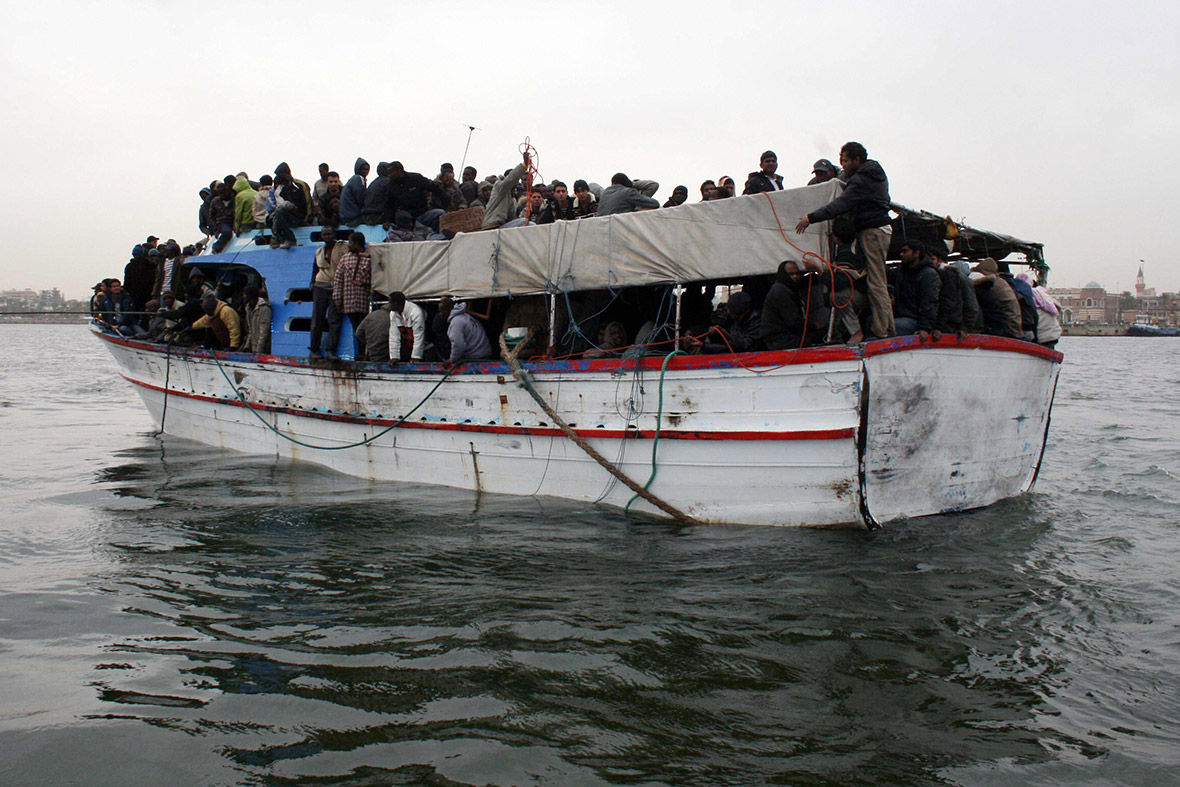
Twelve migrants died on Thursday when their overcrowded rubber dinghy sank off the coast of Libya, the Italian Coast Guard said, while some 500 were rescued in the latest episodes in the Mediterranean migrant crisis.

The corpses of the victims were found in the sea by the Coast Guard ship Dattilo some 40 miles north of Libya, a Coast Guard spokesman said. The Dattilo saved 106 people from the same dinghy, which was "half submerged" when help arrived.

The Dattilo is still involved in other rescue operations involving boats in difficulty, the spokesman said.

A total of 393 other migrants were saved in four different operations carried out by the Dattilo on Thursday. Another 106 migrants were saved by two Coast Guard frigates operating off the southern Italian island of Lampedusa.

No details were available on the nationalities of the victims or those rescued.

Tens of thousands of migrants fleeing war and hunger in Africa and the Middle East have crossed the Mediterranean to Italy and Greece this year, with the vast majority departing from the coast of Libya. More than 2,000 are estimated to have drowned.

Friday 10 July 2015

http://ca.reuters.com/article/topNews/idCAKCN0PJ2O720150709

continue reading

24 dead in Bangladesh charity handout stampede


A stampede during a Ramadan charity handout killed at least 24 people in Bangladesh on Friday as hundreds of desperately poor people tried to get their hands on free clothing, police said.

The stampede in the northern city of Mymensingh erupted when crowds of people tried to force their way into a factory compound through a small gate after massing outside before dawn, according to local police chiefs.

Television footage from the site showed scenes of utter devastation, with hundreds of torn and blood-spattered sandals abandoned at the gate of the chewing tobacco factory, which is located around 120 kilometres (75 miles) north of the Bangladeshi capital Dhaka.

"We have so far recovered 24 bodies. Most of the dead are poor and emaciated women and two children," Mymensingh police chief Moinul Haque told AFP, putting the number of injured at more than 50.

Kamrul Islam, the senior officer at a police station near the factory, said the death toll was likely to rise further while local media said scores of people had also been injured.

"We have handed over 24 bodies to the relatives," Islam said.

Many of the victims were ferried by cycle rickshaws to a nearby hospital with television footage showing relatives rushing through the entrance and corridors, cradling the lifeless bodies of their loved ones in their arms.

"My wife had gone there to collect some clothes for herself and for our children," Mohammad Robiul, a rickshaw-puller, told the Somoy Television news channel.

"I don't know what will happen to my kids," Robiul, who lost his wife in the tragedy, added before bursting into tears.

A witness told the bdnews24 website that the stampede began when a number of people fell to the ground as a melee erupted.

"As the gate was opening, everybody ran towards it, pushing and shoving each other and then they started falling," said rickshaw-puller Dulal Mia.

"Once one person fell to the ground, another 15 to 20 people fell, too. The people got killed when they closed the gate."

Prime Minister Sheikh Hasina expressed deep shock over the tragedy, according to the state-run BSS news agency.

In a condolence message, the Prime Minister offered prayers and "conveyed profound sympathy to the bereaved families", the agency said.

Meanwhile, the religious affairs ministry said it would pay each family 10,000 taka (around $125) to cover the cost of the funerals of their relatives.

Police and local officials said that the owner of the factory and six other people have been arrested for failing to ensure public safety.

"Legal action will be taken against them," District Governor Mustakim Billah told reporters.

A special police committee has been set up to investigate the tragedy and is due to report its findings within the next three days.

Police said up to 1,500 people had massed outside the factory at around 4:45 am (2245 GMT on Thursday) after the owners had announced they would distribute free clothes to poor people in accordance with Islamic ritual.

Rich Bangladeshis often distribute free clothes to poor people during the Muslim holy month of Ramadan, which began on June 19.

But the handouts have sparked several deadly stampedes over the years.

Around 40 people were killed in a similar stampede at a garment factory in the northern city Tangail in 2002.

Factory safety has been a major issue in Bangladesh since the collapse of a clothing manufacturing complex in April 2013 that left more than 1,100 people dead, making it one of the worst industrial accidents in history.

Friday 10 July 2015

http://news.yahoo.com/17-dead-bangladesh-charity-handout-stampede-police-035032984.html

continue reading

Why we are excavating the dead of Srebrenica


On Saturday, world attention will focus for a few hours on the town of Srebrenica in eastern Bosnia. The systematic killing that took place 20 years ago constitutes the only recognised genocide on European soil since the second world war.

Weeks after the killings, the perpetrators returned, excavated the mass graves with mechanical diggers and transported bodies and body parts to secondary graves in an attempt to disperse and conceal evidence of the crime. This was an enormous undertaking considering that almost 8,000 people had been executed.

For nearly two decades, the International Commission on Missing Persons (ICMP), of which I am director general, has worked with families of the missing, local Bosnian authorities and domestic and international courts to locate and identify the victims of Srebrenica. This has made it possible for families to bury their dead with dignity, and it has made it possible to piece together what happened and to prosecute some of those who were responsible for the murders.

On Saturday, at a ceremony that will be attended by world leaders as well as tens of thousands of mourners, more than 100 newly identified bodies will be laid to rest in the cemetery at Potocari, near Srebrenica.

The killers’ attempt to hide evidence by scattering body parts made the usual identification process using articles of clothing, distinguishing physical features and identity documents almost impossible. In 1999, ICMP made the decision to harness a new technology, DNA, to identify the victims. Many observers were sceptical about the efficacy of what was then an untried approach – but it turned out to be astonishingly successful: the number of identifications increased exponentially. Today, almost 7,000 of the 8,000 missing from Srebrenica have been identified using DNA.

Beyond Srebrenica, in Bosnia and Herzegovina as well as other countries in the region of the western Balkans, including Serbia, Croatia, Montenegro, Kosovo and the former Yugoslav Republic of Macedonia, more than 40,000 persons went missing during the brutal conflicts between 1991 and 2001. Today, more than 70% of those persons have been accounted for.

However, accounting for the missing has also involved establishing why they went missing and who was responsible, and it entails upholding the rights of survivors.

The vast majority of the missing in Bosnia and Herzegovina were male, which means that women became single heads of their households and had to deal with often hostile and usually male-dominated authorities when trying to assert their rights to justice and social and economic benefits.

Those who killed in Srebrenica in July 1995 believed they could get away with murder. They thought they could erase the identity of their victims permanently. They were wrong.

The work of ICMP, in particular the scientific evidence of the identity of victims from the conflicts of the 90s, has made it possible to piece together an incontestable narrative of crimes, and to present this evidence in numerous trials, including those of Radovan Karadลพiฤ‡ and Ratko Mladiฤ‡.

While this is something that gives substance to the familiar cry of “Never again,” it will be up to the countries in the western Balkans, and in particular Bosnia and Herzegovina, to engage in an honest reckoning with the past, rather than narratives based on chauvinism or denial.


At the end of last year, the Netherlands, the UK, Sweden, Belgium and Luxembourg signed a treaty establishing ICMP as an international organisation in its own right, and by the end of this year we will move our headquarters from Sarajevo to The Hague, where we intend to play a key role in implementing what is emerging as a new global consensus on missing persons – whether the cause is armed conflict or migration or crime or natural disaster.

Once, when I was visiting a woman whose son had been missing for more than a decade, my host took a small blue tin of skin cream and opened it carefully. She pointed to the indentation on the smooth white surface of the ointment. It was her son’s fingerprint, the only physical memorial of his presence on this Earth.

There are no ways of quantifying human love, but there are tangible and useful ways of dismantling the legacy of hate. Accounting for the missing and safeguarding the rights of survivors, including the rights to truth and justice, is among those ways.

Friday 10 July 2015

http://www.theguardian.com/commentisfree/2015/jul/09/srebrenica-20-years-on

continue reading

Thursday, 9 July 2015

Srebrenica women tell tale of loss through objects of memory


Twenty years ago Saturday, Bosnian Serb troops led by Gen. Ratko Mladic carried out Europe's worst carnage since the end of World War II - a massacre of 8,000 Bosnian Muslim men and boys that a United Nations court calls a genocide. As Dutch peacekeepers stood helplessly by, the Serbs stormed the Srebrenica safe haven, separating men and boys from women. They drove the males away in trucks and massacred 2,000 on the spot. About 15,000 Bosnian Muslim men and boys fled into the woods; the Serbs hunted 6,000 of them down and killed them one by one - some 8,000 in all. The bodies were dumped in mass graves that were bulldozed to hide the evidence, causing remains to be jumbled up into a jigsaw puzzle that has yet to be fully solved. About 1,000 victims remain to be found. Many families have reburied a few bones identified as belonging to their loved-ones through DNA testing.

Two decades later, Srebrenica's women still grieve. Here are some of their stories told through cherished objects.

___

HUSBAND'S SHIRT

Fazila Efendic, 64, keeps her husband Hamed's old terracotta-color shirt in the closet. He was 46 when the Bosnian Serb troops shot him dead in the forest. "When I miss him, I open the closet, touch the shirt and I can't say if I feel better or worse then," she says. "But I must touch it." It's the same thing with the school diplomas of her only son Fejzo, who was 20 when he was killed in the Srebrenica massacre. "He won several regional competitions in math and physics. He was a very good child." She showed a white handkerchief with blue stripes that her son gave her before Srebrenica fell. "I carry it around wherever I go," she said. She found the remains of both men years ago and buried them at the Srebrenica Memorial Center, where they lay with nearly 7,000 other victims. She found Hamed in 2003 in one mass grave and Fejzo - or rather two of his leg bones - in 2013 in another.

___

HANDFUL OF CLAY

Meva Hodzic takes out a tobacco box, a rusted Swiss knife and a key from a plastic box, and with them fall crumbs of clay. She puts the clay back in the bag, because it's a kind of relic, too: It comes from the mass grave where her husband was found after Serbs killed him in the forest, as he fled carrying the three objects. "It belongs to these items and they should stay together. I was asked to give all this up for a museum of items found in mass graves. But, no," she says "how can I do that if it's the only thing I have left from him?" Mujo ran into the forest with the other Srebrenica men after promising to come back to find her in the purported safe haven that was under Dutch peacekeeper protection. Instead, parts of Mujo's body turned up after the war in three different mass graves. He was put together and identified through DNA analysis. "Besides him I lost two brothers, my father, two sons-in-law and my nephews."

___

PICTURE OF SORROW

When Remzija Delic, 58, wakes up in the morning, the first thing she sees on the wall is the picture of her husband Sabit. Then she gets up and looks through the window at the former factory that the United Nations turned into their military headquarters after they declared Srebrenica a safe haven - staring hard at its gate. She goes to the stove and puts the water on boil for her morning coffee. When she returns to the window, she sees her neighbor walking down the street to work, and her face grows dark. She says he was the Bosnian Serb army soldier who separated her husband from her at the factory gate, selecting him to become one of the victims of the massacre. She also lost her father, two brothers and several nephews. As Sabit was trying to board the bus transporting the Srebrenica women to government-held territory, she says, the neighbor grabbed him by the back and yelled: "No. Not you." He pushed him over to the crowd of men chosen for killing, according to Delic. Forensic experts found Sabit, 40, in a mass grave. "You know, all this did not make me hate the Serbs," she says. "There are some wonderful people among them."

___

TOBACCO BOX AND FLINT

Djulka Jusupovic, 65, carefully handles a tobacco box made of cans of U.N.-delivered food, along with a piece of flint used to make fire with during the war. After three years of Serb siege, the population ran out of lighters or matches and improvised just like cavemen did. "Someone would make fire with this in his garden in the morning, then everybody would come with a piece of wood to light it and take it home to make a fire," she said, describing life in a town that was on the brink of starvation before the bloodletting began. She keeps the items in several plastic bags. They are still as dirty as they were found when found on her husband, Himzo, as he was excavated from a mass grave. These days she rarely looks at the objects. Each time she takes them out, she remembers what the forensic experts told her when they handed them to her: Himzo, after being shot, may have still been alive when buried.

___

HOME-KNIT SWEATER

"Once this sweater was white like snow," says 60-year-old Kadira Gabeljic. "I knitted it myself." She points to it in a picture of the clothes wrapped around her husband's skeleton when forensic experts found him. "Now it's black from the dirt of the mass grave they found him in, and it is torn in the middle from bullets that rattled through his stomach when the Serbs shot him." Her only two children, sons Mesud, 16, and Meho, 21, followed their father Abdulah and the other men fleeing through the woods. All three were hunted down and slaughtered. Her 42-year-old husband and Meho were taken to a warehouse in the nearby village of Kravice and locked inside with another 1,000 other men who were hunted down. Then the Serbs threw hand grenades inside and mowed down the crowd through the windows, until they killed all of them. Forensic experts later found their body parts in four different mass graves. "Actually, they only found parts of Meho," she said. "The head and legs. The middle part is still missing. I buried what I had."

Thursday 9 July 2015

http://www.ksby.com/story/29507535/srebrenica-women-tell-tale-of-loss-through-objects-of-memory

continue reading

Scientists are struggling to identify more than 100 mummified migrant bodies in Texas


Bodies in trash bags, bones in milk crates, and skulls wedged between caskets. That’s the horrific scene researchers found when they excavated a county-run South Texas graveyard for suspected undocumented immigrants last year.

Forensic scientists are now struggling to reunite the more than 120 bodies they excavated from Sacred Heart Cemetery, in Falfurrias, Texas, with their families. The process has been slow going: There’s no funding for the scientists’ work, and only three people have been identified so far. Experts say this is likely how many dead migrants are buried across Texas, where this kind of treatment of the dead isn’t against the law.

Usually, counties are supposed to take DNA samples and clearly mark graves of unidentified bodies. Then they upload that DNA data to a national missing persons database. But in Brooks County, Texas, the site of the cemetery, that didn’t happen: no DNA samples were taken, bodies were buried haphazardly, autopsy reports are rife with errors, and the county only has death records for a third of the people in their cemetery.

Baylor University anthropology professor Lori Baker arrived at Brooks County in the summer of 2013 with her students, offering to help identify bodies. She expected to find maybe a dozen bodies they could work on. Instead, they dug up more than 50, in various states of decay, over the course of 10 days. The next summer, they went back and dug up another 70, some dating back more than a decade. And there are still graves left to exhume.

“It was really frustrating to see the lack of respect that the funeral home had for these individuals in their final resting place,” Baker told Fusion. “They didn’t seem to care about them.”

An investigation published in the Texas Observer last week found that the county and funeral home responsible for the cemetery likely violated numerous regulations—but because the state has very vague laws about how to bury corpses, no one was found criminally responsible.

According to the Observer‘s report, the county hired a local doctor with no experience as a pathologist to conduct autopsies of the bodies. And they contracted the burials to a local funeral home, Funeraria del Angel Howard-Williams, which Baker said was the most to blame. “They were the ones getting paid a substantial money for the burial, between $1,100 and $1,400 dollars,” she said. “That’s plenty of money to buy an eight-dollar body bag.” The funeral home declined to comment to Fusion.

About 90 miles north of the border, Brooks County has become a (literal) hotspot for migrant deaths: hoping to avoid a border patrol checkpoint in Falfurrias, the county seat, migrants walk through scrub brush and desert, where temperatures can rise beyond 100 degrees in the summer.

But Brooks is hardly an exception; about half of the 6,300 immigrants who have been found dead near the border since 1998 are still unidentified, the Houston Chronicle reported. Baker, who has started to investigate similar cemeteries in other Texas counties, thinks that bodies of suspected migrants are treated the same way across most of the state. “It’s a bigger problem than I think most people know,” she said.

And while state lawmakers approved $2.3 million to expand the DNA database this year, there’s no funding to identify these bodies, leaving the work to volunteers: Students at Baylor and Texas State University are now trying to identify the corpses and get them back to their families. They comb through missing persons reports, take DNA samples, and share their findings with consulates in Guatemala, Honduras, El Salvador, and Mexico. “It’s a pretty long process when you have a mummified body,” Baker said.

One of the corpses in the cemetery belonged to Elmer Barahona, who was 20 in June 2012 when he left his 2-year-old daughter behind in El Salvador to go find work in Houston. He made it 1,500 miles across Mexico and the U.S. border, but while running across the desert in 100 degree heat to evade the checkpoint in Falfurrias, he hurt his leg and collapsed. The smuggler helping him and others left him behind for dead. County officials found his body and threw him into the cemetery with the others.

Like other unidentified migrants who made it across the border but didn’t survive, he was left nameless and unclaimed until 2013, when researchers excavated the cemetery. They identified him thanks to a brown plaid shirt wrapped around his injured leg. His body is now in a Houston funeral home, waiting for final approval from the Salvadoran government to come home.

The identification finally gave some peace to Barahona’s family, including his aunt, Marta Iraheta, who had been criss-crossing South Texas, visiting morgues with photos of her nephew. “I felt like I was in hell,” Iraheta recalled at a 2013 vigil in Houston. She urged attendees to remember the missing, and asked for their prayers: “Pray for him, for his family, and for those that remain in the desert that came in search of the American Dream.”

Thursday 9 July 2015

http://fusion.net/story/162922/scientists-are-struggling-to-identify-more-than-100-mummified-migrant-bodies-in-texas/

continue reading

Human remains found in Langtang


Remains of a foreigner, who was missing after an avalanche hit the Langtang region following the devastating earthquake on April 25, were found on Friday.

Police suspect that the human remains could be of a French national Renelouis Dutreve.

According to the District Police Office, Rasuwa, the French passport bearing 14 DI 17741 number was recovered for the site.

It has been learnt that the human remains have been sent to the Tribhuvan University Teaching Hospital in the capital city for examination.

Thursday 9 July 2015

http://thehimalayantimes.com/nepal/human-remains-found-in-langtang/

continue reading

Wednesday, 8 July 2015

The 261 unclaimed bodies of the Karachi heatwave; why do they remain unclaimed or identified?


It’s a fear that stalks furtively, the fear of dying alone, unloved and unmourned. Blended in this are worries about physical helplessness, about the indignities of the processes of death. But above all, dying alone seems an indictment of how we have lived, as if the universe itself scrawled ‘could do better’ across a report card untainted by anything of note. As if we never mattered.

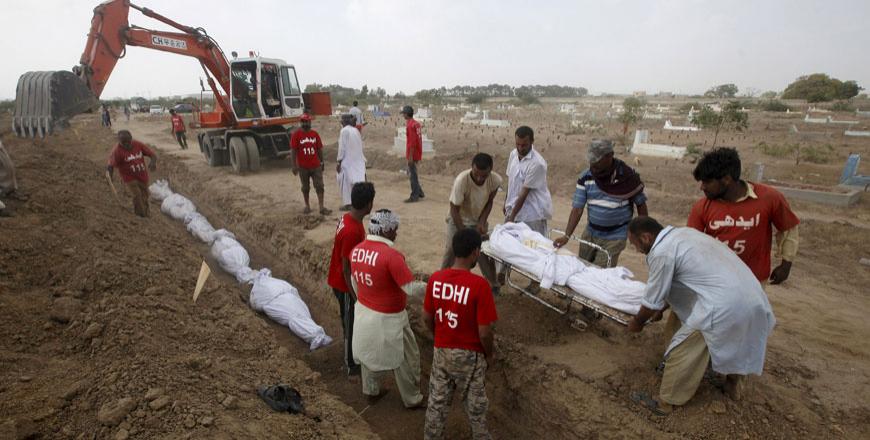
That is why, two weeks after the killer heatwave in Karachi left some 1,233 dead, many are still wondering about the 261 ‘unclaimed bodies’. Who were they, these people only Edhi wept over? Were they once distinguishable in a crush of humanity, these dead who are now a series of numbers in a communal grave? Did they ever matter, even to themselves?

The search for answers takes me to the Edhi morgue.

Set in the sprawling Edhi complex in Karachi’s stolidly middle-income Federal B Area, the morgue is the only one in the city that allows even the indigent the right to dignity in death. The beige marble of the cavernous, 18×24 main hall offers respite from the late afternoon sun and white energy savers dispel the gloam. Three fans suspended from the false ceiling lazily swish around swarms of flies as well as eddies of cool and hot air. And every once in a while, when you’re least expecting it, rises the stench of putrefying bodies.

It’s hard to describe this smell: a strange composition of the stewing juices of decomposing flesh, unwashed human bodies and rotting flowers, laced with traces of formaldehyde. Faint but perceptible are base notes of blood, piss, sweat and shit — reminders that this too was once human, alive. It’s less a scent than a physical being, which clings to and then wafts off the clothes, the bodies of the Edhi staff, pirouettes on the beams of sunlight slashing the marbled floor and seemingly vapourises in the afternoon heat.

Ghulam Hussain has been working here for the last 10 years and we settle down for a chat on the marbled ledge that runs around the room. “It was so hot, you couldn’t sit here; the heat seared through the marble,” he says of the weekend of June 21. “We buried some 300 unidentified people that week, of which 39 were subsequently claimed by relatives.”

We’re interrupted by three women in abayas, stifling sobs; they are here to identify a body. Hussain skims through their paperwork, there’s a rapid-fire exchange in Sindhi. I hear “gunshot victim” and try to quell my curiosity by focusing on two pink spots on the floor (guava juice? bloodstains?) and then the light goes out. A volunteer appears with an emergency light and the three disappear, with their trailing abayas, into the cold storage area to the left.

So who were the 261 they buried? Vagrants? Heroin addicts? Professional beggars? The detritus of society?

Hussain recoils visibly. “No,” he says emphatically. “Some were heroin addicts — between 30 to 35 in total — but the rest were healthy, well-built, well-nourished people.” He seems to grapple for a word, a description that will convince me. “Kaam karne wale log the [they were working class people],” he concludes miserably, as he scans my face to see if I’ve understood.

Before I can cross-question him, the room erupts in wails. The women are back and for the next few moments, Hussain is transfixed. Does it still affect him? “I am a human being,” he says simply. “Doctors, policemen can’t afford to get emotional; it would affect their work. But we…” It’s an ethos Abdul Sattar Edhi personifies. A printed ‘appeal’ in Urdu hangs on the wall at the Edhi office near Mereweather Tower.

Employees and volunteers are reminded that Edhi himself begs for alms on the streets and any person who steps into Edhi offices to donate deserves to be treated with courtesy and respect. “If you can’t do so, please quit your job. This is God’s work; it will continue without you as well.” Under the shadow of this veiled threat, Edhi staff engage in the business side of their work: a man shuffles in, carrying four bright blue polyethene bags. “Kaffan hain [are these shrouds]?” asks Anwar Kazmi, who also functions as Edhi’s spokesperson. The man nods: “Cotton hai [it’s cotton cloth]” These men are intimately familiar with the modalities of death — Kazmi gives me a detailed account of how much graves cost in which part of the city — but, as Hussain shows, they have yet to lose their compassion.

So if less than 15 per cent of the unidentified dead were vagrants, beggars and addicts, why weren’t the other bodies claimed? One of the rumours swilling around the city puts forward economic reasons: meteoric demand fuelled a price hike and the cost of a grave rose from between Rs5,000 and Rs10,000 to as much as Rs50,000 in some cases. Those who couldn’t afford these rates were forced to step back and let Edhi bury their dead. Kazmi finds the idea plausible: “We received more than 10 times the amount of dead people we usually do so it is possible that the high cost of graves pushed people to leave bodies unclaimed.”

But Hussain disagrees vehemently. “It’s very difficult to identify decomposing bodies, even for relatives,” he says, as he leads me to the front desk of the morgue, which doubles as an office. As per procedure, an unidentified body is kept in the Edhi morgue for three days before burial. Apart from the standard autopsy-type details (gunshot/stab wound etc), the Edhi staff also makes a note of the precinct the body was discovered in and takes a photograph of the deceased before burial. These details, along with an assigned death number, are inscribed by hand in fat registers and help claimants identify their loved ones.

The first calls on June 21 started coming in around 11am, when people began fainting across the city. By the time the day ended, there were 280 bodies and Karachi’s administration had collapsed under their combined weight.

Hussain hands me a two-inch thick stack of 4×8 colour photographs, held together with a flimsy rubber band. All are headshots of people in advanced stages of decomposition. As the bodies of the heatwave victims putrefied, they released gases that contorted facial features. Hussain quietly watches me sort through the unending stream of bulbous eyes, protruding, mottled tongues and bloated, blackish-grey faces with thin trickles of blackish-maroon blood. There are faces where the flesh seems to be hanging on the face by a gravity-defying miracle, the skin stretched taut over eye sockets that could have been hewn from stone. There are others where the facial muscles lost the battle against the dead person’s canines and the premolars, the moment frozen in a grotesque grimace. And there are yet others whose features are indistinguishable behind thick plastic sheets.

“Some of the bodies were so decomposed, we had to wrap them in plastic just so we could bury them,” he explains softly. “It’s very hard to identify even your loved ones when they’re in this state.”

According to Kazmi, the first calls on June 21 started coming in around 11am, when people began fainting across the city. By the time the day ended, there were 280 bodies and Karachi’s administration had collapsed under their combined weight. The hospitals were overwhelmed, the city ran out of ambulances, the morgues were filled to capacity and yet the dead kept coming.

The city’s Samaritans are rightly credited for pulling themselves up by their bootstraps and rescuing a city in crisis: doctors at government hospitals pulled 72-hour stints, aid workers pushed themselves to exhaustion and beyond, citizens flooded hospitals with bottled water, ice blocks, juice and biscuits. But the suffocating blanket of heat that enveloped Karachi worked against everyone, undermined everyone’s effort. There were people who collapsed on the streets, Hussain reminds me, and by the time the bodies were picked up by an ambulance and taken to a hospital, pronounced dead and then ferried to a morgue, a couple of hours had passed. There were long queues everywhere: for ambulances, at hospitals, at the morgues, even for burial. “From the time a body arrived at our doorstep, there was a three to five-hour wait before we could put it in storage,” he says.

There was a two-hour wait for even those that brought their relatives to be bathed prior to the funeral. And all this while, the bodies baked in ambulances in the heat. “Do you wonder that people couldn’t recognise their relatives after such advanced decomposition? Some bodies were so bad, we couldn’t even wait the stipulated three-day period before burial,” he grimaces.

We return to the main hall and shortly after, the gunshot victim is wheeled out for bathing, the sheet slipping to show the exit point of the bullet on his forehead.

Now Hussain takes me inside the cold storage area, which comprises two 20×30 rooms. Three-tiered shelves run across both lengths of the first room, with neatly stacked bodies on them, while an empty rack stands in the centre. It’s sparsely populated today: just seven or eight bodies. The built capacity for the unit is 200 — Hussain says they get between 30 and 40 bodies per day on average.

But in the last week of June, the morgue had between 300 and 350 corpses here. “We took out this central stretcher to make space,” he tells me, as he gestures around the room, which is used by families who need to delay burials. “We just put sheets on the floor and began to pack the bodies in — there were three rows there under the AC, another row extending from this corner — there were just so many bodies.”

We walk further down, into the second room, where the corpses professionally trussed up by hospital staff give way to those casually draped with shrouds with ‘Edhi’ stamped across them in blood red. Even in death, the indigent are a separate social category unto themselves. Hussain points towards the exposed feet of one. “The addicts have this weather-beaten colour; just look at his long and dirty toenails, the matted hair and beard. The others are unidentified too but they don’t look like this.”

We return to the main hall and shortly after, the gunshot victim is wheeled out for bathing, the sheet slipping to show the exit point of the bullet on his forehead. A male relative comes up and asks sotto voce about the wound. “Don’t worry; we’ll clean him up well for the funeral,” Hussain murmurs, before he turns to talk to two Pathan boys carrying a child wrapped in a prayer mat. Yet another wants to know what the charges for bathing a five-day-old girl will be. “Don’t worry about that; just get her bathed. You don’t even need to get a receipt,” he says.

I’m suddenly desperate to leave so I make my excuses. Unlike everyone I’ve ever interviewed, Hussain doesn’t bother asking me when this article will be printed. As I walk towards my car, I’m hoping the afternoon sun will sterilise my being and remove the smell — that smell. After 10 minutes in the airconditioned car, I can’t smell it anymore and I relax.

Except the smell doesn’t really dissipate. It just lodges itself at the back of my throat, to rise again when I am safe at home and about to sip my first cup of tea.

Wednesday 8 July 2015

http://tns.thenews.com.pk/261-unclaimed-bodies-after-karachi-heatwave/

continue reading