Thursday, 11 June 2015

Post-mortem on 22 bodies from death camps completed so far


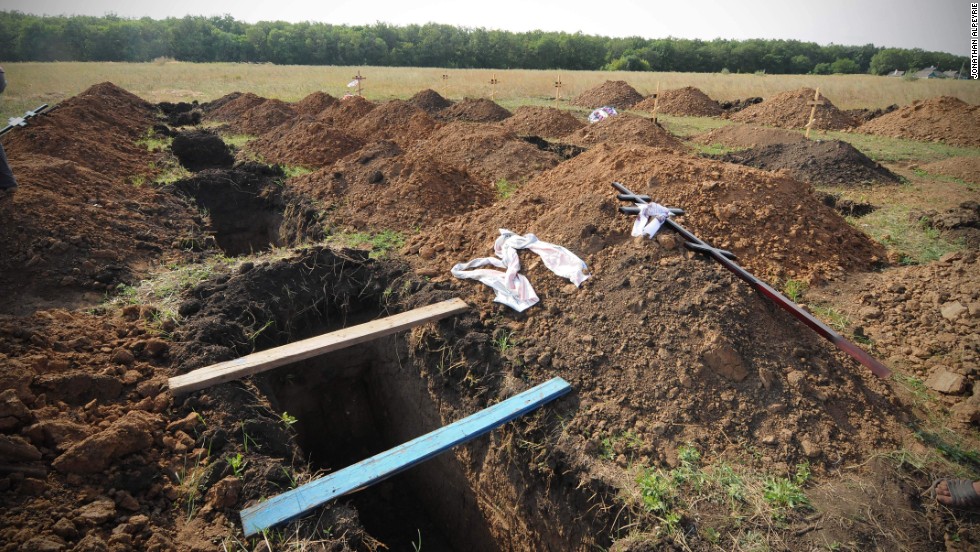
22 bodies recovered from the abandoned migrant camps close to the Perlis-Thai border have been completed so far, police say.

Perlis police chief SAC Shafie Ismail said of the 22 bodies, 14 were between the ages of 20 and 40; 12 between the ages of 40 and 60, two aged 17 to 25; and 60 and above, one.

"Of the 22 bodies, 21 are male, but we could not determine the gender of one more body," he said. Without elaborating further, Shafie said the medical forensics team were in the midst of examining 84 other remains at the Sultanah Bahiyah Hospital in Alor Star, Kedah. In a span of three weeks, police officers retrieved a total of 106 bodies from 139 graves found on the higher contours hills on the Nakawan range.

Most of the bodies brought down were skeletal remains and highly-decomposed remains. Police will use the findings by the pathologists to ascertain if there are criminal reasons to their deaths.

On May 11, police found 28 settlements and 139 burial plots deep in the jungles of Wang Kelian. The discovery was made after two weeks of thorough combing through the 50km Malaysia-Thai border in Perlis.

Police learnt about the existence of the camps where traffickers detained large groups of migrants but could not pinpoint the exact location until the discovery of camps in Thailand early last month.

Thursday 11 June 2015

http://www.nst.com.my/node/87798

continue reading

37 Bodies Recovered, Many Still Missing In Cameroon Boat Wreck


Thirty seven bodies have been recovered after an accident that occurred last Saturday involving two boats carrying over 200 passengers along river Benue in northern Cameroon.

Reports quoted official sources as saying on Tuesday that no fewer than 10 people had been rescued while many other people are still missing. Cameroon’s public broadcaster has reported that the country’s national navy was still searching for survivours and victims of the accident in which two boats collided.

Having left Lagdo region heading to Rey Bouba locality in the same region, the two boats that were said to be overloaded, collided after being swept away by strong winds, security sources said.

Over 200 passengers are thought to have been on board both boats with unknown quantity of merchandise. Some of the victims were identified as traders returning from the Lagdo weekly market, while others were identified as family members coming from a customary Muslim marriage ceremony.

With only 10 survivors rescued four days after the accident, hopes of the rescue teams finding more survivors have continued to fade. As a first measure to prevent such catastrophes from recurring, the governor of Cameroon’s northern region, Jean Abate Edi’i has banned night travels by boat along river Benue.

Official statistics cited by the media indicate that on some days, especially market days, over 500 small boats move between Lagdo and Rey Bouba locality

Thursday 11 June 2015

http://leadership.ng/news/439712/37-bodies-recovered-many-still-missing-in-cameroon-boat-wreck

continue reading

China: Morticians volunteer for somber task of preparing the bodies of the 434 Eastern Star victims


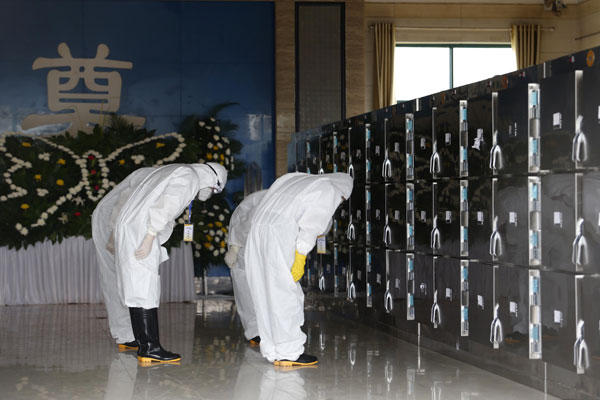
More than 100 morticians have gathered in Jianli county, Hubei province, to complete the somber task of preparing the bodies of the 434 Eastern Star victims for cremation or return to their families.

Zhang Wei, who manages a funeral parlor in Hankou and arrived with 15 morticians, said they would provide special care.

"It is the mortician's job to let every deceased depart with dignity," said Zhang, who has 30 years of experience.

"I exhorted every co-worker to move and clean the bodies with extra care. I asked all of them to put their heart and soul into every procedure in their work."

The cruise ship with 456 people aboard capsized in stormy weather on the Yangtze River on June 1 in the country's worst shipping disaster in 70 years. Only 14 people survived and eight remain missing.

Experienced personnel from several cities-including Tianjin, Guangzhou and Wuhan-gathered in Jianli to ensure that the remains are handled with dignity and respect.

Chen Pin, a mortician from Wuhan who volunteered to help, said she and four other colleagues were extremely saddened when they cleaned the body of a 3-year-old girl, the youngest victim of the disaster.

"I burst into tears when I dealt with the body. When I placed the girl on a workbench, I could hardly control the shaking of my hands. I felt truly sorry for the victims, and most of them were elderly people who are supposed to have had a nice trip," Chen said.

"It's hot in Jianli, and the job is not easy," she added. "We usually started work at 5 am and worked until 10 pm. It took two or three hours to prepare each body. On a couple of nights, we worked till midnight."

DNA samples from the bodies have been collected and more than 100 victims had been identified as of Tuesday morning.

Thursday 11 June 2015

http://www.ecns.cn/2015/06-11/168842.shtml

continue reading

Mount Kinabalu earthquake: Last remaining two missing victims identified


The last remaining two missing victims of Friday’s earthquake in Ranau have been identified by forensic teams.

Sabah Police Commissioner Datuk Jalaluddin Abdul Rahman said the verification was made after DNA samples of the two Singaporeans were identified by the Disaster Victim Identification (DVI) teams from Malaysia and Singapore.

“DVI teams were able to identify the identity of the victims through body parts retrieved from the scene,” he told a press conference at the state police headquarters in Kepayan here yesterday.

Their remains would be handed over to the families once the DNA tests had been completed, he told a news conference at the Sabah Police headquarters here.

"The families have sent over blood and tissue samples which we have sent to the Chemistry Department for verification," he said.

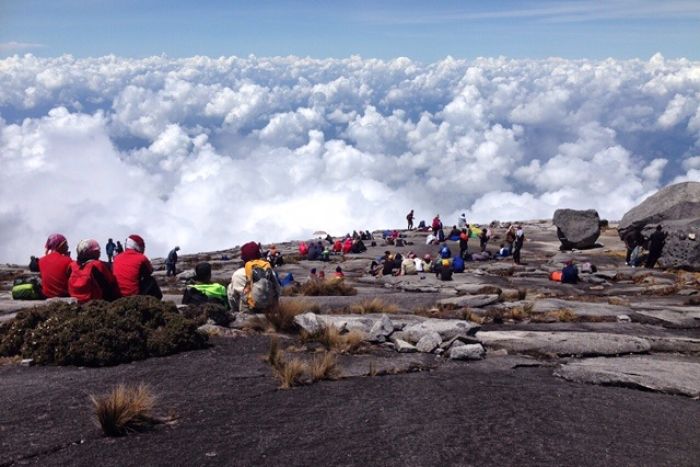
Altogether, 18 people, 14 mountain climbers and four guides, were killed when the 5.9-magnitude earthquake rocked the Ranau and Kundasang areas at 7.15am last Friday and sent rocks and boulders crashing down Mount Kinabalu, Southeast Asia's highest peak at 4,101 metres.

Ten of the dead were Singaporeans; six, Malaysians; one, Japanese and one, Chinese. They were at various stages of climbing Mount Kinabalu when the earthquake struck.

Jalaluddin said 14 of the bodies had been identified and handed over to the next-of-kin.

"The post mortem of the bodies of the Japanese and Chinese will be done after the families arrive here, most probably today," he said.

The dead Singaporeans comprised three teachers and seven pupils from the Tanjong Katong Primary School. They were on an excursion up the mountain.

In SINGAPORE, the Ministry of Education, in a statement, expressed its deep appreciation to the Malaysian police, armed forces, other authorities and the many individuals for their support, assistance and contribution to the search and rescue and recovery efforts "of our students and teachers".

"We will continue to provide support to the families during this difficult time," the ministry said.

Thursday 11 June 2015

http://www.dailyexpress.com.my/news.cfm?NewsID=100497

continue reading

47 die in Nepal landslide


At least 47 people were killed and 80 injured when a landslide swept away a number of villages of Taplejung district in Nepal, officials said.

Many more were reported missing in the disaster on Wednesday evening. Police said 16 bodies had been recovered.

The affected regions are located in a remote area from the district headquarter, Myaglung, and it takes at least nine hours to reach the spot.

"As of now, people have recovered the bodies of 16 people and they told us that 50 others have perished in the landslide," said Surendra Prasad Bhattarai, assistant chief district officer of Taplejung.

At least six villages -- Liwang, Thokling, Thinglabu, Khalung , Khokling and Lingket -- were affected by the landslips.

The number of casualties may rise. Continuous rains and flash floods in the streams have hampered rescue efforts, police said.

Helicopters of the Nepali Army from Kathmandu have not been able to reach the affected site due to bad weather. Locals and police personnel are involved in the rescue work.

Only two of the injured have been ferried to the district hospital. The remaining are yet to receive medical treatment.

Thursday 11 June 2015

http://en.prothom-alo.com/international/news/69105/47-die-in-Nepal-landslide

continue reading

Eastern Star disaster: 342 bodies identified


Forensic experts are using DNA matching to identify bodies from the Eastern Star ship disaster. As of Thursday morning, 342 bodies had been identified, but the forensic experts' work is far from a simple process.

One hundred and seventy specialized medical workers have been working around the clock to match DNA samples with those from the bodies.

The process is taking place in the DNA laboratories of the public security bureaus in the cities of Wuhan and Jingzhou, in central China's Hubei province.

The matching process needs DNA samples from both the victim and their direct family. Many of the families are in different places in China. For those who do not have direct family—or have only one direct family member—experts will try other methods to identify the bodies. In some cases, they will compare the victims' DNA to those collected from items of their daily use.

Eight provinces and cities, including Shanghai, Tianjin and Jiangsu, have begun to collect DNA samples from the victims' homes. And the public security bureaus will continue to work around the clock to identify every victim of the Eastern Star ship disaster.

Thursday 11 June 2015

http://www.ecns.cn/2015/06-11/168967.shtml

continue reading

Wednesday, 10 June 2015

Ghana: Bodies of Goil fire were not handled with dignity says former health chief


A former Director General of the Ghana Health Service (GHS), Professor Agyeman Badu Akosa has expressed disgust at the way the bodies of those who died in the fire at the Goil fuel station at the Kwame Nkrumah Circle were transported to the morgue.

He was of the view that a similar situation in other countries, especially in more developed countries, would have seen the bodies being wrapped in body bags.

“Anywhere else, all the bodies would have been put in body bags and the body bags would have been appropriately transported to the morgue.”

After last Wednesday’s floods and fire outbreak at the Goil Fuel Station, there were pictures and video footages of the dead bodies being put into the bucket of trucks and being transported to the morgues without any covering.

Prof. Badu Akosa told Citi News, the manner in which the bodies were handled was unprofessional and must not be repeated under any circumstances.

He explained that he was “very distressed the way their bodies were just hurled into the bucket of the pick-ups.”

According to him, it did not “in any way dignify the human beings who had lost their lives under such tragic circumstances. I think as a country, we can do better than that.”

Prof. Akosa pointed out that because the incident was a national catastrophe, “the first thing I would have thought that the morgues will do will be that if they do not have a cold room, they will embalm the bodies.”

“This is almost like a certificate of urgency so what you need to do is to preserve each body in as near the state in which it was brought to the morgue as possible even before relations are brought in to identify the bodies.”

He noted that the families of the victims are already apprehensive while getting into the morgue to identify their relatives “so if you expose more than one body to most people, they will not be actually looking at the body they have come to identify.”

“In most cases, you present the bodies in a manner that they can go from body to body to be able to identify.”

Wednesday 10 June 2015

http://www.ghanaweb.com/GhanaHomePage/NewsArchive/artikel.php?ID=361785

continue reading

Teams return to Mount Ontake to search for bodies, eight months on


Search teams returned to the peak of Mount Ontake on Wednesday for the first time in eight months to continue looking for the bodies of six hikers missing since the volcano erupted.

The disaster left 63 people dead or missing, bludgeoned by rocks and buried beneath scalding ash. Rescue work was called off last year when winter set in.

Around 50 people, including police, firefighters and volcanologists, began an exploratory ascent of the mountain in Nagano Prefecture with a view to resuming a full-scale search next month, after the conclusion of Japan’s annual rainy season.

The 3,067-meter peak was thronged with hikers viewing the region’s spectacular autumn colors when it burst unexpectedly to life on Sept. 27 last year.

It was Japan’s deadliest eruption in almost 90 years.

Dramatic mobile phone footage taken by survivors showed rocks raining down as clouds of ash engulfed people close to the summit.

Search and rescue teams last year trudged through thick, clay-like ash to recover 57 bodies in sometimes treacherous conditions, despite fears over toxic fumes and a possible further eruption.

The operation was suspended in October as autumn’s rains began to give way to snow, which soon made the peak impassable.

“There is a part of me that feels rather worried about what it is like up there,” said senior police officer Noriyuki Hayashi, of Nagano prefectural police, as the team prepared to ascend Mount Ontake. “But we will do what we can.”

The team observed a moment of silence below the mountain, which — even in the summer months of June — still has snow-covered ravines.

Aerial footage showed the searchers’ bright outerwear set against the gray lunar landscape of the ash-covered peak.

Ontake is one of scores of active volcanoes across the country, which sits on the so-called “Ring of Fire,” where a large proportion of the world’s quakes and eruptions are recorded.

Last month, authorities evacuated Kuchinoerabu Island, off the coast of Kyushu, when a volcano erupted there.

Autopsies on bodies recovered from Ontake last year revealed many of them died from injuries caused by flying rocks.

That led to a recommendation in March that people who climb Mount Fuji — also a volcano — should carry helmets and goggles with them.

Wednesday 10 June 2015

http://www.japantimes.co.jp/news/2015/06/10/national/teams-return-mount-ontake-search-bodies-eight-months/#.VXhmEM9Viko

continue reading

Forensic science in search of the ‘disappeared’


During Guatemala’s internal armed conflict (1960-1996) almost 200,000 people are thought to have been killed or 'disappeared' at the hands of repressive and violent regimes. Those lives matter. Their families’ demands are clear: they want to know what happened to their loved ones and they want their remains returned. They need truth and justice.

Guatemala’s method of uncovering human rights violations can help other post-conflict areas, says Fredy Peccerelli.

Using forensic sciences, the Forensic Anthropology Foundation of Guatemala (FAFG) is assisting families by returning their loved ones’ remains, promoting justice, and setting the historical record straight.

A multidisciplinary process

The FAFG is a civil-society scientific organisation that works to strengthen the judicial system and respect human rights by investigating, documenting and generally uncovering evidence of human rights violations — particularly massacres and enforced disappearances — from the conflict.

The FAFG team applies techniques drawn from criminology, forensic anthropology, forensic archaeology, forensic genetics and social anthropology in a multidisciplinary human identification system.

Our investigators explain the process to families and family organisations using presentations. We speak to them as equals and give them information so they can make decisions about their participation. If we gain their trust they will share information with us about the victim, the event, and family genealogy. We also ask the relatives to provide DNA reference samples. “The FAFG’s multidisciplinary methods and approach are transferable to other post-conflict countries and situations with missing people, such as migration or natural disasters.”

Archaeologists then locate the graves using witness testimony or archaeological field surveys for depressions and other signs of graves. They then excavate, document, and exhume the remains. The grave is treated as a crime scene, so a forensic archaeologist will record all the details, such as any associated artifacts and other evidence to help determine how people were restrained and killed. This can include metal fragments (usually ballistics), rope, cords tying hands and/or feet and neck, blindfolds and gags.

Forensic anthropologists then analyse the skeletal remains to establish the biological profile of the victim. They determine characteristics such as age, height and sex based on features such as tooth development in children and differences between male and female pelvic girdle. This examination also reveals other individualising characteristics such as whether the person had previously broken bones or recovered from a disease. Forensic anthropologists also investigate the cause of death.

As part of this process a small piece of bone is cut from the left femur or tooth, as studies have shown that DNA is best protected in these dense areas of the human skeleton. The sample is then brought to our lab for analysis.

At the lab forensic geneticists compare the genetic profile of the victim obtained from the bone sample to the genetic profile of the families. Both are stored and continuously compared in our National Genetic Database of Relatives and Victims of Enforced Disappearance.

We use all of the information gathered throughout the entire process to ensure the victim’s identity is returned with dignity and certainty, thereby reconnecting families.

Setting the record straight

The FAFG’s evidence supports findings by Guatemala’s Historical Clarification Commission, that most victims of the civil war were Maya indigenous people living in the rural highlands, including women and children.

In Guatemala City the ideals and dreams of academics, religious leaders, student leaders, unions, and other politically motivated individuals frightened the regimes. The state responded to this fear disproportionately, killing and massacring 160,000 people and ‘disappearing’ 40,000 — rupturing Guatemala’s social fabric and forever changing the future and geography of the country.

The objective, rigorous investigations conducted by the FAFG clarify the truth so that history is properly acknowledged and recorded. The physical evidence proves what happened, supports the testimonies of families, and can be used in a court of law to hold the intellectual authors and perpetrators of the crimes responsible more than three decades since their crimes were committed.

Justice beyond Guatemala

Apart from empowering families in Guatemala, the forensic work has provided prosecutors with evidence in other parts of the world too. For example, in Bosnia FAFG personnel helped with the exhumation and the forensic investigation process that provided evidence in four genocide trials in The Hague. FAFG personnel investigated and contributed to these trials to gain justice for the families, just as we are doing in Guatemala.

As funding priorities shift according to the international development priorities that are in fashion, transitional justice (the process of coming to terms with human rights abuses) must not be pushed off the funding table — it is currently transitioning off the agendas of major donors. Civil society organisations like FAFG, that conduct forensic investigations into human rights violations, provide concrete evidence of the brutality of the past and have a huge impact on the families affected.

The FAFG’s multidisciplinary methods and approach are transferable to other post-conflict countries and situations with missing people, such as migration or natural disasters. Local capacity must be built according to local legislation, and it must involve passionate and dedicated individuals because searching for the missing is a long-term process. Once started, the process must be sustained. The families will expect it, they deserve it, and they can be empowered by it.

We must continue to listen to the demands of family members because their lives and the lives of those disappeared and killed matter. We cannot move forward as long as the disappeared and missing remain undignified and unidentified in clandestine graves throughout Guatemala and the rest of the world.

Wednesday 10 June 2015

http://www.scidev.net/global/conflict/opinion/forensic-science-search-disappeared-guatemala-conflict.html

continue reading

Search for Bodies in Capsized Eastern Star Ship Search Ends: Identification of Victims Begins, Seach for 8 Missing People Continues in River


China has confirmed that 434 bodies have been found and eight are still missing from the Eastern Star cruise ship, which capsized on the Yangtze River following a tornado on the night of June 1. Officials have began identifying the victims and releasing their bodies to their relatives.

According to local sources, DNA identification and forensic analysis is being used to help identify the victims in order to have their bodies returned to their families. Experts have already collected DNA samples from the recovered bodies.

They also finished collecting blood samples from the victims' relatives who helped in their identification. Presently, up to 281 victims have been identified through their DNA, according to CCTV. On Tuesday, encoffiners in Jianli County began to hold encoffination ceremonies for the 434 victims of the Yangtze River accident, according to Xinhua.

Min Jianxion, associate counsel for China's Ministry of Public Security, said authorities will use different methods to to identify victims from their DNA if their immediate relatives are not available.

According to CRI English, one option is to dispatch people to the residences of the victims in order to collect DNA samples from their immediate relatives and match them with the bodies found.

Experts consider DNA sampling to be one of the most reliable ways of identifing a person. China reportedly has 145 DNA testing specialists divided into 21 groups, who are responsible for collecting and matching victims' DNA. Once matches are confirmed, the personal belongings of the victims will also be returned to their relatives.

Meanwhile, insurance companies have initiated a "green channel" so that relatives of the victims of the capsized Easter Star can speed up their claims.

China Insurance Regulatory Commission deputy chairman, Huang Hong, said insurance companies have been told to make the claiming process simpler and faster. Under normal circumstances, the death certificate or certificate of permanent residence de-registration of the insured person must be presented to forward claims, however, this step has reportedly been ignored. All they have to do now is get the certificate from the government before they can avail claims.

Meanwhile, Global Times reported that the Eastern Star will be moved from the site in order to allow divers to continue their search for the missing victims. The ship will be tugged 10km upstream in Jianli County. The search for the remaining eight people would reportedly be extended to approximately 1300 km along the Yangtze River, where the Eastern Star ship capsized while going downstream to Shanghai's Wusong Estuary.

Wednesday 10 June 2015

http://www.chinatopix.com/articles/53162/20150610/china-confirms-434-dead-eight-missing-in-capsized-ship.htm

continue reading

Families of quake victims must wait two weeks for DNA confirmation


The families of two Singaporean victims killed in last week’s earthquake must wait another two weeks for DNA confirmation before they will be allowed to take the bodies home.

Despite positive identification by the police, Queen Elizabeth Hospital director Dr Heric Corray said that the hospital is running DNA tests based on samples and data received from the families for final confirmation before they can release the bodies.

“We feel that DNA testing is required to be able to ascertain the bodies. This will be the final confirmation,” he said to reporters here today.

Yesterday, Prime Minister Datuk Seri Najib Razak said one victim’s family was in Kota Kinabalu to give a DNA sample while the other family had sent DNA data through e-mail and forensic experts are working round-the-clock to identify the remains.

Earlier today, Sabah police commissioner Datuk Jalaluddin Abdul Rahman said that body parts found on Mount Kinabalu were identified to be those of 13-year-old student Navdeep Singh Jaryal and 35-year-old teacher Mohammad Ghazi Mohamed from Tanjong Katong Primary School.

He said Malaysian police worked with its Singaporean counterpart to identify several body parts including arms, legs and torso picked up from the mountain summit using a disaster victim identification guide.

Meanwhile, Dr Corray said all the bodies have been claimed except for the family of the Japanese national who were likely to be arranging logistics to transport the body back following post mortem today.

“His body is still with us and we are just waiting for his family to take it. The last one was to the family of the Chinese national, who came here today,” he said.

The death toll from the magnitude 5.9 earthquake is now officially at 18, including six Malaysians, 10 Singaporeans and one Chinese and Japanese national each.

The deaths were caused by blunt trauma or injuries sustained from falling or being hit by a hard object, believed to be when the victim, who were climbing Mount Kinabalu, got hit by falling rubble from the quake.

The earthquake, some 16km northwest of the town of Ranau and in Kinabalu Park, is the largest to have hit Malaysia.

Wednesday 10 June 2015

http://www.themalaymailonline.com/malaysia/article/families-of-quake-victims-must-wait-two-weeks-for-dna-confirmation#

continue reading

Ghana: Govt directs DNA tests for unidentified flood/fire disaster victims


Government has authorised the testing of DNA samples on bodies of last Wednesday’s flood and fire disaster at the Kwame Nkrumah Circle in Accra.

Speaking at the one week memorial service for the victims held at the forecourt of the State House, President Mahama said several bodies have still not been identified and a DNA test will help family members claim their relatives for the necessary funeral rites.

He said, “In due course each of the names will be released to the public to ensure that these individuals will be remembered eternally. We are still in the process of identifying the dead. To that end government has given authorization for DNA tests to be conducted on the bodies from the disaster that have not yet been identified.”

He added that “This will allow families that are unsure of the fate of their members and who are still not accounted for to be able to bring DNA samples so confirmation can be made. With this official confirmation, claims can be quickly granted for the return of their loved ones’ remains.”

He said, "We will intensify our efforts to ease the suffering of those whose lives have been affected."

The President has also asked relatives to visit the Korle-Bu Teaching Hospital, 37 Military Hospital and the Police Hospital to seek guidance on how to go about this.

He also revealed that the official death toll from the twin disaster stands at 152 contrary to reports by sections of the media that over 200 hundred people perished in the disaster.

"Our search and rescue is over and our provisional death toll from the disaster is 152," he said.

Over 150 people lost their lives in a GOIL fuel station explosion at the Kwame Nkrumah Circle in Accra after long hours of a heavy downpour which also flooded the city.

The inter-faith, inter-denominational National Memorial Service will be held at the forecourt of the State House.

Wednesday 10 June 2015

http://pulse.com.gh/news/accra-twin-disaster-govt-directs-dna-test-for-unidentified-flood-fire-victims-id3849548.html

continue reading

Tuesday, 9 June 2015

17 killed in Peru bus fall


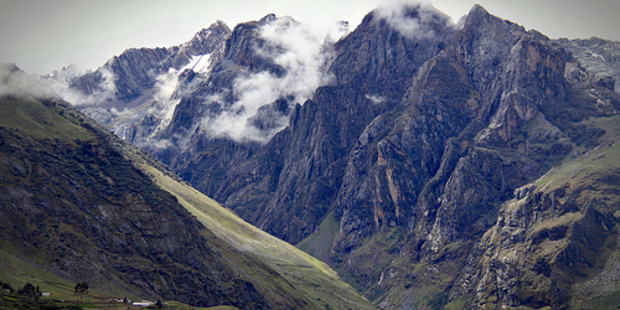
A truck carrying schoolchildren home from a parade has fallen into a ravine in Peru’s Andes Mountains, killing 17 people and injuring 33, authorities said.

Five of the injured are in “grave condition” after the accident near the remote community of Cahuac, 160 miles north east of the capital, Lima, said hospital director Rosa Pascual.

Fifteen of the dead were pupils aged nine to 15.

The truck was returning from a flag day parade when it fell about 1,000ft into the ravine, said Huanuco governor Ruben Alva.

School director Yonel Espinoza said the children decided to get in the back of the truck because they wanted to avoid the 90-minute walk from the parade site back to Cahuac, where they lived.

Peru’s transport system is plagued by old vehicles and poor roads, often through mountainous regions, contributing to a high accident rate. According to the transport minister, 3,110 people died in road accidents in Peru in 2013.

Tuesday 9 June 2015

http://www.irishexaminer.com/breakingnews/world/17-mostly-children-killed-in-peru-bus-fall-680765.html

continue reading

Rohingya expert: Dozens of corpses wash to shore in Myanmar


Dozens of corpses have washed to shore in Myanmar's western state of Rakhine in the last month, an advocacy group and villagers said Wednesday. Some were believed to be Rohingya Muslims trying to escape trafficking ships, while others were Bangladeshi.

Ye Htut, the presidential spokesman, and other officials were in meetings and could not immediately be reached for comment.

Rakhine State Minister Maung Maung Ohn had no word on the bodies but his office was checking into the report.

At least 47 bodies washed up on beaches and the mouths of rivers May 12-24, many so badly decomposed they were unrecognizable, said Chris Lewa of the Arakan Project, which has been monitoring activities in the isolated, northern tip of Rakhine for more than a decade.

Lewa — who provided a village-by-village breakdown and the dates each corpse was found — believes they drowned while trying to swim to shore.

Religious leader Ashu Dular and other residents in two villages contacted by The Associated Press by phone gave similar accounts, together tallying at least 18 corpses in a much less complete survey.

Myanmar has denied blame for a humanitarian crisis that has gripped Southeast Asia since early May, with more than 4,600 desperate and hungry boat people rescued in five countries after a massive, regional crackdown on human trafficking prompted some captains to abandon their human cargo at sea.

The United Nations says around half those brought to land have been Rohingya, fleeing violence and discrimination in their predominantly Buddhist country; the remainder, it says, are Bangladeshis, escaping poverty.

Myanmar, which denies the existence of the Rohingya, insists all those who have fled by boat in recent months were Bangladeshi. The government has gone to great lengths to make sure it is not disproven — at least not on its own soil.

Its Navy detained journalists, including the AP, over the weekend, erasing their camera memory cards, when they were trying to confirm the nationalities of 727 migrants on a boat hidden away for days near a remote island.

The ship was being towed Wednesday to northern Rakhine.

And late last month, Myanmar's government claimed a ship with more than 200 migrants — all Bangladeshis — had been recovered. But many more Rohingya were taken off the ship and brought to shore under the cover of darkness before they landed, said Araf, a 26-year-old woman, who was among those who said she was forced to disembark with her five children. Others in Sittwe, the state capital, had similar accounts.

For months, ships crammed with hundreds of migrants stayed in the Bay of Bengal, hoping to leave after the security crackdown eased. That didn't happen and conditions on board deteriorated, recent escapees complaining they were getting almost nothing to eat and were badly beaten if they made any noise. Some bought their freedom with help from family and friends, paying hundreds of dollars.

"In some cases, brokers started using fishing boats to bring a few people to shore," said Lewa. "But they were afraid to come too close and dropped them as near to the coast as they could."

Her team saw bodies on beaches and in the mouth of a tiny river along Rakhine's northern tip. Many were believed to be Bangladeshis, dropped off in Myanmar because they felt it was not safe to disembark in their own country during a high alert, she said.

Of the 47 bodies found, 15 corpses washed up in Alei Than Kyaw; 14 in Oo Daung River; 11 in Tha Pyay Taw; six in Tha Ya Kone and one in Myinn Hlut, the Arakan Project said.

Tuesday 9 June 2015

http://news.yahoo.com/rohingya-expert-dozens-corpses-wash-shore-myanmar-103910963.html?utm_content=buffer7fefb&utm_medium=social&utm_source=twitter.com&utm_campaign=buffer

continue reading

Wooden crosses in the Donetsk steppe: volunteers search for bodies of victims


In the midst of the Donetsk steppe on the mountain stands a wooden cross. Is similar, only much more put on the roads of Ukraine As amulets. On the cross hangs a soldier helmet plywood plate below the faded marker inscription: "Here lie four Ukrainian warriors, which finished it off, then set fire to their And dumped near the road. Buried fifteen. 09. 2014 ".

"Here the locals buried the soldiers of the Ukrainian army. Like the river found them, close to the road, after the battle, " says Victor Fly, the Deputy head of the Union of Afghanistan veterans of Lugansk region.

This organization together with the people's militia LNR AND Ukrainian volunteers of the humanitarian mission "Black Tulip" are engaged in the search, exhumation And transfer of the Kiev bodies of soldiers of the armed forces. Watching all the Commissioners of the OSCE.

"Here are four lies below another. Believe me, this is only a small proportion of all burials, which we send data. We have a lot of bodies are Not even Buried. Parts are collected in the fields, in the debaltseve area, for example", says Victor.

And this cross, And a helmet, And ubiquitous grasshoppers, And all This bathed in afternoon sun Prairie, As if merged. The peace And quiet." As if there is war, " I freeze.

"Don't relax - and chuckled low rebel in a dark green camouflage - you see at the bottom of the river?(Five hundred meters from us flows the Seversky Donets river). It is already the Ukrainian district, snipers, probably in the bushes sat down, holding us at gunpoint ".

"Oh, don't bother with us W OSCE! And volunteers over theirs. Won't shoot.

Tuesday 9 June 2015

http://news.rin.ru/eng/news///113649/

continue reading

Ops to exhume human trafficking mass graves ends today, 106 bodies found


Operations to exhume and remove the skeletal remains of victims of human trafficking that began on May 25 came to an end today.

Malaysian police said seven more shrouded bodies were found in seven graves at Bukit Genting Perah around 2.10pm and were brought down at 5.55pm today via Felcra Lubuk Sireh.

The latest findings bring the total number of bodies found to date to 106.

“With the latest discovery, operations to exhume the remains carried out by the police comprising forensic experts, the criminal investigation department and the General Operations Force came to an end today,” the police said in a statement here today.

Yesterday, 31 graves were discovered but only 30 skeletal remains were found (one grave was empty). The remains were removed from the site of the graves at Bukit Genting Perah via Felcra Lubuk Sireh.

On June 5, 14 shrouded skeletal remains were exhumed from 12 graves (two graves had remains of two people) in the forest reserve of Mata Air and yesterday 20 shrouded remains were found in 20 graves at the same site.

Prior to that 35 corpses and human skeletons were removed from Bukit Wang Burma.

Tuesday 9 June 2015

http://www.themalaymailonline.com/malaysia/article/ops-to-exhume-remains-of-human-trafficking-ends-today

continue reading

Fog disrupts the search operation at Mt Kinabalu


The operation to locate two Singaporeans listed as missing at Mt Kinabalu following Friday's earthquake that hit Ranau has to be temporarily put on hold due to foggy conditions.

Ranau Police Chief Deputy Superintendent DSP Farhan Lee Abdullah called off the mission at about 5.30pm on Monday.

He said DNA tests on body parts believed to belong to the two missing would be speeded up to bring some closure to the search and rescue effort.

"As of today, the number of deaths still remains at 16," he told reporters, here.

Farhan also said 12 bodies have so far been claimed by family members.

Sabah is also considering the possibility of only allowing children aged above 15 years to climb Mount Kinabalu in the wake of the death of six children in Friday's quake.

State education director Jame Alip said he had spoken about the matter to state Tourism, Culture and Environment Minister Masidi Manjun, who is also the state executive councillor in charge of education.

Meantime Malaysian authorities have received DNA from families of the two Singaporeans missing. The DNA samples were taken from one of the families in Kota Kinabalu, and information on the other was received via email. Defence Minister Hishammuddin Hussein said the process of DNA matching will take time. In the meantime, the search and rescue operation will continue, until the DNA matching is done and victims are identified.

On Sunday, Sabah Tourism, Culture and Environment Minister Datuk Seri Masidi Manjun told reporters that 16 bodies had been recovered while two people were still classified as missing until post-mortem examinations were completed.

Those confirmed killed as a result of the 5.9-magnitude quake, that also rocked Southeast Asia's highest peak, were six Malaysians, seven Singaporeans, a Filipino, a Chinese national and a Japanese national. The two missing Singaporeans are a teacher and a pupil.

In Kota Kinabalu, several family members were seen waiting in a special room at the Queen Elizabeth Hospital where identification and post-mortem examinations were being conducted on the remains brought there.

Tuesday 9 June 2015

http://www.dailyexpress.com.my/news.cfm?NewsID=100423

http://www.channelnewsasia.com/news/singapore/search-for-two-missing/1902186.html

continue reading

204 bodies from Eastern Star identified by DNA matching


Ten days have passed since a tornado upturned the Eastern Star cruise ship. With two more bodies found, eight passengers are still missing and the death toll has reached 434.

The search mission inside the ship has been completed. The focus of the search has now turned to the river bottom, especially among the huge rocks underwater. Police are also searching along the river's downstream.

More than 140 forensic experts are identifying the dead through DNA testing and arranging funeral services. Officials say more than 200 bodies have been identified by DNA matching. Authorities have started to hand over the bodies to their family members.


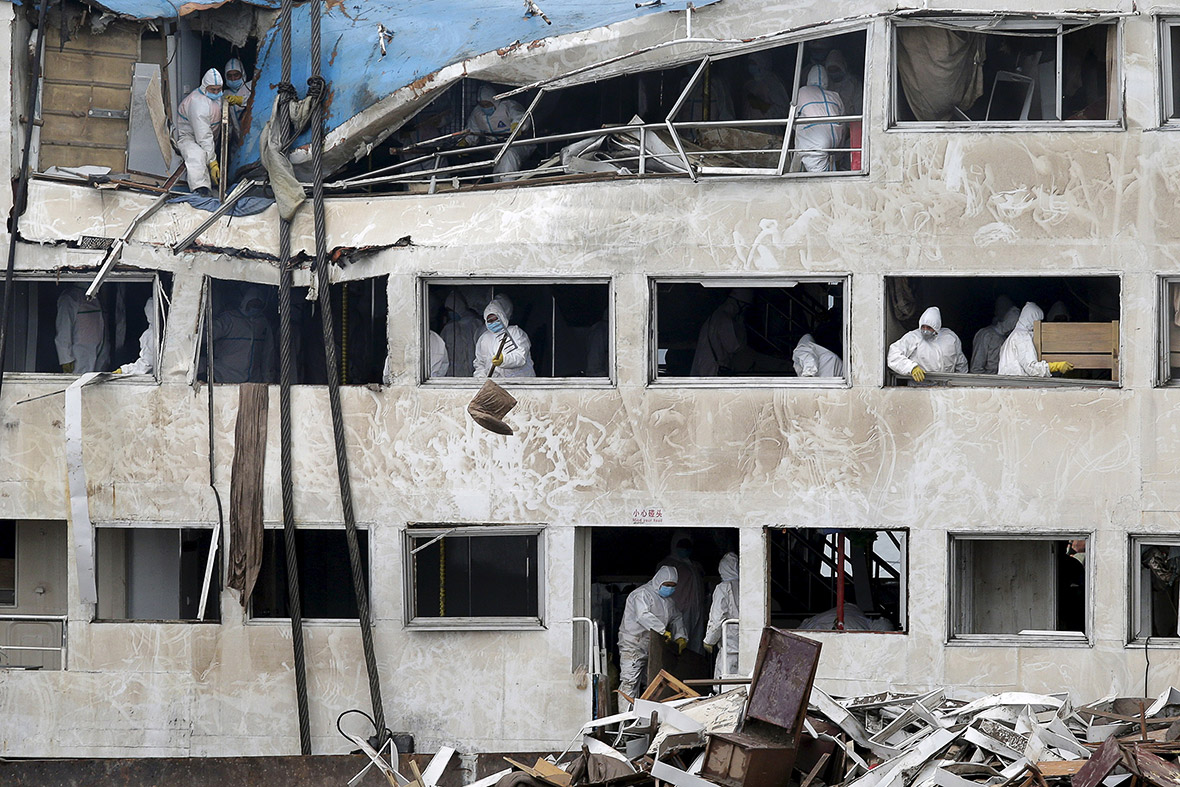
Video footage reveals the devastation inside the cruise ship in China which capsized in a freak storm on the Yangtze river last week. Rescue teams use circular saws to cut through muddy mangled metal in the hull as passengers' personal belongings lie strewn around. They are continuing with a detailed search of the ship.

Tuesday 9 June 2015

http://english.cntv.cn/2015/06/09/VIDE1433816761417446.shtml

http://www.theguardian.com/world/video/2015/jun/08/china-devastation-inside-capsized-yangtze-cruise-ship-video

continue reading

Monday, 8 June 2015

Remains of human limb found in Kedarnath two years after tragedy


Skeletal remains of a human foot were found lying under a heap of rubble in a structure close to Kedarnath temple nearly two years after a catastrophic deluge hit the shrine and other parts of Uttarakhand in June 2013 leaving a trail of death and devastation.

The remains of a human foot were sighted on Saturday as some locals were clearing debris from a structure in a narrow bylane about 50 metres from the Himalayan shrine, Rudraprayag Superintendent of Police Barinderjit Singh told.

The remains of the human limb were cremated after conducting necessary formalities like DNA sampling and panchnama the same day, he said.

However, the official said that there was nothing curious about skeletal remains still being found from the area despite several combing operations conducted there in search of bodies since the tragedy.

"The remains of over six hundred persons that have been cremated in Kedar valley so far were the ones found on the surface. "We are yet to remove 50-60 feet of rubble lying in the area surrounding the shrine and it wouldn't be surprising if we come upon something lying underneath," Singh said.

Entire floor of buildings is lying underneath the debris. Now that locals have been permitted to remove the debris from the structures, the possibility of something or the other being found cannot be ruled out, he said.

Monday 8 June 2015

http://www.ibnlive.com/news/india/remains-of-human-limb-found-in-kedarnath-two-years-after-tragedy-1003377.html

continue reading

23 bodies of Nepal quake victims still unidentified

Altogether 23 dead bodies still remain unclaimed at the Tribhuvan University Teaching Hospital (TUTH) in Maharajgunj awaiting identification even five weeks after the April 25 Great Earthquake.

Eight of the bodies are appendages and other body parts while the rest are whole body, according to the Nepal Police. Deputy Inspector General Kamal Singh Bam, spokesperson of Nepal Police, said all the bodies that could not be identified in the districts have been brought to the TUTH.

“Although we have put the details of the dead bodies that still remain unclaimed and unidentified on our website and trying to reach to as many people as possible, the effort seems to be of little or no avail,” said DIGBam. He said the Nepal Police has also formed a special team comprising of forensic experts to help with the body identification process.

Monday 8 June 2015

http://www.ekantipur.com/2015/06/08/capital/23-bodies-of-quake-victims-still-unidentified/406270.html

continue reading