Tuesday, 2 June 2015

Helicopter on quake relief mission crashes in Nepal


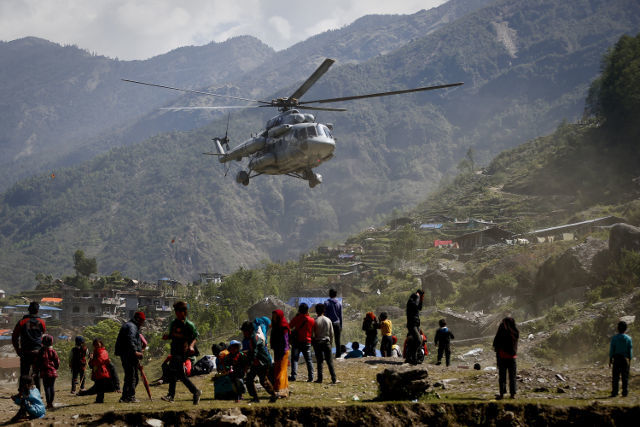
A small helicopter on an earthquake relief mission crashed in high mountains in northeast Nepal on Tuesday, killing at least four people, the army said.

The aircraft, operated by private company Mountain Air, crashed in the district of Sindhupalchowk, about 60 km (38 miles) northeast of Kathmandu.

Sindhupalchowk, which borders Tibet, was one of the regions worst hit by the April 25 and May 12 earthquakes that killed 8,700 people. A massive international relief and rescue operation was carried out for the victims of the disaster.

"We have recovered four bodies from the crash site," said Brigadier General Jagadish Chandra Pokharel, spokesman for the Nepali army.

Some media reports said the chopper hit electric power lines before it crashed, but Pokharel said the cause of the crash was unclear.

Six American and two Nepali soldiers were killed when a U.S. Marines UH-1Y Huey helicopter, also on a relief mission in the neighboring district of Dolakha, crashed in dense mountain forests on the day of the second big earthquake.

Authorities have found DNA evidence at the crash site indicating that five more people may have been on board the U.S. helicopter when it came down, a U.S. military spokesman has said.

Tuesday 2 June 2015

http://news.yahoo.com/helicopter-quake-relief-mission-crashes-nepal-124852317.html

continue reading

Malaysian police get permission to exhume remains via Thai territory


Malaysian police have received permission from the Thai authorities to use a route in Thailand to begin exhuming bodies from graves at a transit camp in the Mata Ayer Forest Reserve, Lubuk Sireh.

Perlis police chief, Senior Asst Commissioner Shafie Ismail said as many as 91 graves had been identified in that area.

“The transit camp is quite far from the camp at Wang Kelian (where several bodies were exhumed). Operations at Wang Kelian have ended and the police and forensic teams will rest before starting operations on Wednesday,” he said when contacted by Bernama today.

Yesterday, Minister in the Prime Minister’s Department, Datuk Seri Dr Shahidan Kassim disclosed the new transit camp located about 100 metres from the Thai border.

The camp is guarded by General Operations Force personnel.

Tuesday 2 June 2015

http://www.themalaymailonline.com/malaysia/article/malaysian-police-get-permission-to-exhume-remains-via-thai-territory

continue reading

57 bodies identified as Onitsha tanker fire death toll rises to 70


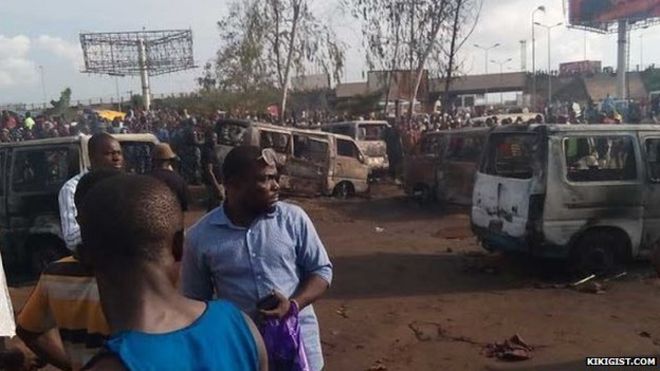
More than 60 people have died in south-eastern Nigeria after a fuel tanker crashed into a busy bus station and caught fire, officials say.

Eyewitnesses say the driver lost control of the tanker as it was going downhill in the city of Onitsha.

Rescue workers say 12 other vehicles caught fire in Sunday's incident, which police say was an accident.

The tanker loaded with petrol on Sunday hit a house and exploded in a huge ball of fire, killing 69 residents.

The death toll went up by one yesterday.

Among the dead were four members of the Onitsha Newspaper distribution, Directors Association (ONDDA).

This was confirmed by the vice chairman of the association, Mr. Emmanuel Uwakwe.

Besides, the Vice Chairman of the Red Cross Society of Nigeria in Anambra state, Prof. Peter Katchy, said yesterday that one of the drivers who was taken to the hospital on Sunday after the incident had died, bringing the death toll to 70.

Katchy said 57 of the hospitalised victims burnt beyond recognition had been identified. Thirteen are yet to be identified.

The Red Cross helmsman said the evacuation of bodies was continuing at Toronto Hospital in Onitsha to the Nnamdi Azikiwe Teaching Hospital for forensic analysis.

Vice Chairman of the Vendors Assocaition in Onitsha, Mr. Uwakwe, said the association lost two distributors and two vendors – Ifeanyi Nzekwe, one simply identified as “local man”, Ifeoma and a new vendor whose name he did not remember.

Uwakwe said: “We are in pains and agony. We have visited the injured ones at the hospital. Honestly, what happened on Sunday was a national calamity”.

The senator-elect for Anambra Central Zone, Hon. Uche Ekwunife, has condoled with the families of those that died.

Ekwunife, who cut short her official engagement to visit the scene at Upper Iweka, was sad over the loss of lives and property.

Anambra Central Zone comprises seven local government areas, including the Upper Iweka Area where the incident happened.

Ekwunife said: “It is unfortunate that we continue to lose our loved ones in such careless and difficult situations.

“I want to express my deepest condolences to the families that lost their loved ones in the ugly incident and pray for the repose of the souls of the deceased”

“I promise to make legislation alongside my fellow senators that would put an end to such horrible incidents on Nigerian roads,” Mrs Ekwunife said.

In 2012 more than 100 people died in a blaze as they tried to get oil from an overturned tanker in southern Nigeria.

Tuesday 2 June 2015

http://thenationonlineng.net/new/57-bodies-identified-as-onitsha-tanker-fire-death-toll-rises-to-70/ http://www.bbc.co.uk/news/world-africa-32959825

continue reading

Sinkings in South Korea and China present divers different tests


As divers scramble to save hundreds trapped in a capsized cruise ship in China's Yangtze River, the scene in some ways evokes Northeast Asia's last major maritime disaster: the ferry sinking last year that killed more than 300 people off South Korea's southwest coast. Yet even at this early stage, there are far more differences than similarities.

Here are some key points comparing the South Korean and Chinese sinkings:

RESCUE SPEED

Already, Chinese divers have reportedly pulled two survivors from the cruise ship, with four others located. It took divers in South Korea more than three agonizing days just to enter the ferry Sewol after it sank on April 16, 2014. By that time, all they could do was retrieve bodies. For those three days, as TV cameras filmed the ferry as it sank, and a stunned nation watched, divers and rescue workers failed repeatedly to get into the ship. Officials said the extreme currents around the South Korean islands where the ferry sank, the cold water temperature and the unpredictable weather made it too dangerous for divers to enter.

SHOWING ANGER

Outrage will likely take a different form in China than it did in South Korea, where families of victims sometimes accosted and screamed at officials who visited the scene of the disaster. That anger lingers among many here who see the rescue operations as criminally botched. For the last year, dozens have camped in a major South Korean square to protest the government's handling of the disaster. So great was the uproar that South Korea's president eventually disbanded the much-maligned coast guard, creating a new body meant to oversee national safety issues. Though families in China's capsizing are already expressing their anger, it seems unlikely something similar could happen in their authoritarian country, where crackdowns on dissent are common.

THE CAPTAINS

One similarity: Both captains survived. It is too early to say what will happen in China, of course, but the Sewol captain is one of the most hated men in recent South Korean history. He was among the first to escape, filmed by cameras leaping in his underpants from the sinking ship onto a coast guard vessel. He was arrested on suspicion of negligence and abandoning people in need. The rage that he escaped early and unhurt was compounded here by claims that he and his crew botched the evacuation, telling the mostly schoolchildren inside to remain where they were, even as the ship sank and capsized. In April, the captain was given a sentence of life in prison by an appellate court on a homicide conviction.

RESCUE CHALLENGES

It's not clear how successful the Chinese rescue operations will be or, if largely unsuccessful, how long the recovery of bodies will take. But the Sewol recovery operations dragged on for seven months, until November when the government called them off. By that time, they'd searched for more than 200 days and recovered 295 bodies; nine are still missing. The physical toll was extreme. Every day divers would gather at a dock and check the weather and currents. If allowed to dive, they had to feel along the side of the ship until they could find a window they could crack open with hammers. Thick sediment inside often made flashlights useless, and divers had to creep along using their hands to feel where they were. Their only lifeline was a 100-meter oxygen hose, and it was a constant battle to keep it from getting snagged. Several divers had to make rapid ascents to the surface, risking decompression sickness, also known as the bends, which in severe cases can be fatal. Two divers died in the Sewol operations.

Tuesday 2 June 2015

http://www.whig.com/story/29215106/sinkings-in-s-korea-china-present-divers-different-tests

continue reading

Hundreds missing, many elderly tourists, after ship capsizes on China's Yangtze


Rescuers fought bad weather on Tuesday as they searched for more than 400 people, many of them elderly Chinese tourists, missing after a cruise boat was buffeted by a freak tornado and capsized on the Yangtze River.

The accident on Monday night is likely to end up as China's worst shipping disaster in almost 70 years.

Divers and other rescue workers pulled five people they found trapped in the upturned hull of the four-deck Eastern Star, a fraction of the 458 people state media reported were on board when the ship capsized.

Distraught relatives of some of the passengers scuffled with officials in the city of Shanghai, where many of those on board booked their trips, angry about what they said was a lack of information.

Dozens of rescue boats battled wind and rain to reach the ship, which lay upturned in water about 15 meters (50 feet) deep.

The Xinhua news agency said rescuers could hear people calling for help from inside the ship's hull and television showed rescuers cutting through it with an angle grinder.

One of the people pulled from the capsized boat was a 65-year-old woman. Divers fixed breathing equipment to her nose and mouth to bring her up from under the water.

About another dozen people had been rescued and six bodies recovered, media reported, leaving more than 430 people unaccounted for.

China's weather bureau said a tornado hit the area where the boat was, a freak occurrence in a country where tornados do happen but are not common.

The disaster could bring a bigger toll than the sinking of a ferry in South Korea in April 2014 that killed 304 people, most of them children on a school trip.

The People's Daily, which published a passenger manifest on its microblog, said those on board the Eastern Star ranged in age from three to more than 80.

Tour guide Zhang Hui, 43, told Xinhua the boat sank very fast and he scrambled out a window in torrential rain, clutching a life vest as he could not swim.

"Wave after wave crashed over me; I swallowed a lot of water," Zhang said, adding that he was unable to flag down passing boats and finally struggled ashore as dawn broke holding onto a branch.

President Xi Jinping had ordered that no efforts be spared in the rescue and Premier Li Keqiang went to the scene of the accident in central Hubei province, Xinhua said.

About 60 family members gathered outside a travel agency in Shanghai and demanded information.

"I only found out about this on the television news while I was at work and I came here," said 35-year-old Wang Sheng, whose said his mother and father were on board. "I cried all the way here and here I can't find anyone, the door is locked."

CAPTAIN DETAINED BY POLICE

The ship's captain and the chief engineer, who were among the few to be rescued, had been detained by police for questioning, Xinhua said.

According to the Yangtze River navigation administration, the pair said the ship sank quickly after it was caught in the tornado.

Xinhua reported that initial investigations had found the ship was not overloaded and it had enough life vests on board for its passengers. Those rescued were wearing life vests, Xinhua said.

Among those on board were 406 tourists, many of them elderly, along with 47 crew members and five tour guides, the People's Daily said.

State radio said the ship went over in about two minutes and no distress call had been issued. Seven people swam to shore to raise the alarm, media said.

Fishing boats were among the dozens of vessels helping in the search and rescue, Xinhua said, and more than 1,000 police with 40 inflatable boats had also been sent.

The Eastern Star, which has the capacity to carry more than 500 people, was heading to southwestern Chongqing city from Nanjing, capital of Jiangsu province. It sank at around 9:28 p.m. in the Jianli section of the Yangtze, Asia's longest river.

Accidents of this magnitude are uncommon in China where major rivers are used for tours and cruises. A tug sank on the Yangtze while undergoing sea trials in January, killing 22 of 25 people on board.

In the worst previous incident of its kind in China, the steamship Kiangya blew up on the Huangpu river in 1948, killing more than 1,000 people.

The Eastern Star is owned by the Chongqing Eastern Shipping Corporation, which runs tours along the Three Gorges section of the Yangtze.

Wang Jianhua, its vice general manager, said it had never suffered an incident of this magnitude. The official Hubei Daily said the company has been operating since 1981.

Tuesday 2 June 2015

http://news.yahoo.com/chinese-ferry-458-aboard-sinks-storm-12-rescued-001452986--finance.html

continue reading

Monday, 1 June 2015

Nepal quake deaths now reach 8,699


The toll in the devastating 7.9-magnitude earthquake that struck Nepal on April 25 has reached 8,699, police said on Monday.

Among the victims, 4,801 were females and 3,896 were males. The gender of two of the victims is yet to be identified, said the latest update provided by the Central Police News Room of Nepal.

Police said that 79 bodies discovered after the quake were those of foreigners.

Among the dead, 1,729 people were from the Kathmandu valley.

As per the region-wise break-up of the toll, 58 people died in the eastern region, 6,455 in the central region, 455 in the western and two in the mid-western region. No deaths were recorded in the far-western region.

Authorities have handed over 8,671 bodies to their family members, while 193 Nepali nationals and 80 foreigners are still missing, police said.

The number of injured people receiving treatment at various hospitals stands at 4,653.

Monday 1 June 2015

http://www.business-standard.com/article/news-ians/nepal-quake-deaths-now-reach-8-699-115060101284_1.html

continue reading

Sunday, 31 May 2015

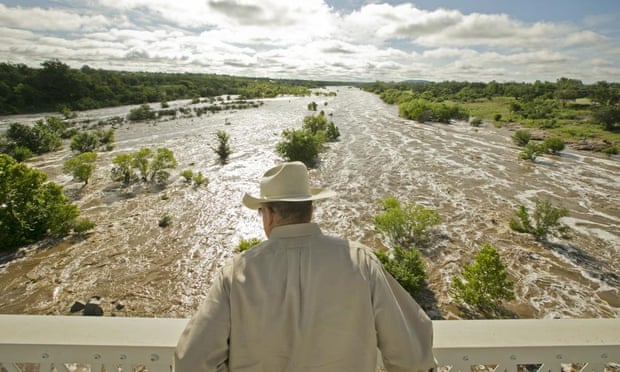
Texas floods: death toll rises as body is recovered and 11 people are still missing


Dallas police said on Saturday a man’s body had been recovered from standing water, after storms flooded parts of the metro. The find brought the death toll in Texas and Oklahoma from storms and floods since Memorial Day weekend to 29 – 25 of them in Texas. Eleven were still missing on Saturday.

In Oklahoma, state troopers said their officers shot dead a man during an argument arising from an attempted flood rescue.

The Dallas-Fort Worth area saw another round of heavy rain on Saturday, a day after President Obama signed a disaster declaration. The White House said the president ordered federal aid on Friday, to supplement other recovery efforts in the area that has been affected by severe weather since 4 May. Texas governor Greg Abbott had earlier requested a presidential disaster declaration.

Discussing the discovery of the body in the metro system, a Dallas police spokesman, Juan Fernandez, said officers found the man, who was not immediately identified, floating in the water. Fernandez said the body was sent to the county medical examiner’s office.

Storms dumped as much as 7in of rain across the area on Thursday night. The other Dallas-area death discovered on Friday was a man who drowned in his truck after it was swept into a culvert in the suburb of Mesquite.

Rivers around the Dallas area have all swelled in the last week. Before Saturday’s rain, the National Weather Service (NWS) said 16.07in of rain fell across the Dallas area in May, easily eclipsing a 1982 record of 13.66in.

Sunday 31 May 2015

http://www.theguardian.com/environment/2015/may/30/dallas-texas-heavy-rain-floods

continue reading

Saturday, 30 May 2015

Perlis migrant mass grave: Post-mortem on human remains in Wang Kelian begins June 7


Come June 7, the health ministry will begin conducting post-mortem on human skeletal remains found at grave sites in Wang Kelian, Perlis.

Minister, Datuk Seri Dr S. Subramaniam said the post-mortem was aimed at determining whether the skeletal remains and those found at human trafficking camps at the Malaysia-Thai border were those of murder victims.

He said for this purpose, the ministry had formed the CSI-DVI (Criminal Scene Investigation-Disaster Victim Identification) and the PM-DVI (Post Mortem-DVI) teams.

"The CSI-DVI has been stationed at the recovery site to help in the process of collecting samples, while the PM-DVI team is at the Sultanah Bahiyah Hospital, Alor Setar to perform the post-mortem on the remains," he said in a media conference here today.

On Monday, Inspector-General of Police Tan Sri Khalid Abu Bakar announced the discovery of 139 graves and 28 transit camps abandoned by a human trafficking syndicate in Wang Kelian, close to the Malaysia-Thai border.

Dr Subramaniam said three post-mortem procedures would be conducted simultaneously to speed up the process of identifying the bodies before samples were sent to the Malaysian Chemistry Department for DNA tests.

He added the post-mortem procedures involved several small teams comprising forensic medical, forensic science, forensic dentistry, radiology and DNA teams.

On the DNA database, Dr Subramaniam said it would be conducted on all bodies found and the data would be kept by the ministry and the police.

"We cannot take the easy way out in the process of identifying the victims. As such, we will be isolating the DNA of each body for reference purposes to facilitate further action towards determining the DNA of the person found in each grave," he said.

The minister said as of last night, 15 body bags had been sent to the Sultanah Bahiyah Hospital morgue.

He said the police had also provided a cold storage container which would enable the hospital to hold more bodies for the post-mortem.

Saturday 30 May 2015

http://english.astroawani.com/malaysia-news/post-mortem-human-remains-wang-kelian-begins-june-7-minister-61091

continue reading

India's deadly heat wave drags on, death toll tops 1,800


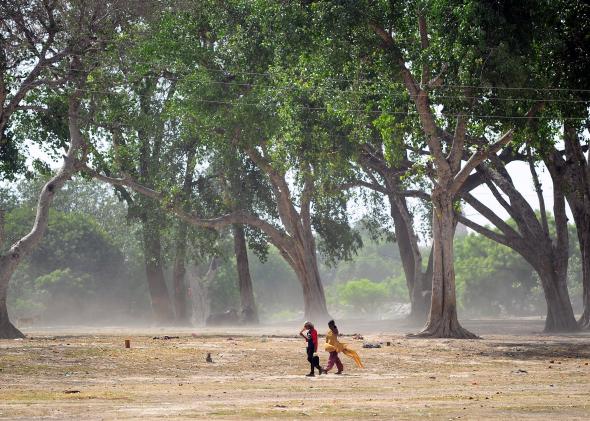
Temperatures dipped marginally in southern India Friday where a deadly heatwave has killed at least 1,800 people, officials said.

The bulk of casualties were reported from the southern states of Andhra Pradesh and Telangana, which saw their highest sustained summer temperatures in 12 years over the past week.

At least 300 more deaths had been counted in Andhra Pradesh since noon Thursday and more than 100 in Telangana, taking the total toll in these two adjacent states to 1,774, disaster management unit officials of the two states said.

"Most of those who died are poor people who are forced to work in the open because of their livelihoods or the elderly," said Andhra Pradesh disaster management commissioner P Thulasi Rani.

Many of the deaths were reported from Andhra Pradesh's coastal districts where the mercury hovered above 44 degrees Celsius (111 Fahrenheit) for a week but showed a dip Friday to the high 30s (up to 102 Fahrenheit).

Another 43 deaths were reported from the eastern Indian state of Orissa, seven from Gujarat state in the west and two in the national capital, NDTV news channel reported.

The meteorological office predicted the heatwave would continue into the weekend but may ease by Monday when the seasonal monsoon rains are expected to hit the Kerala coast.

Government agencies were advising citizens to drink plenty of water, keep their heads and bodies covered to avoid sunstroke and keep indoors as much as they could.

Saturday 30 May 2015

http://www.bellinghamherald.com/2015/05/29/4319408_indias-deadly-heat-wave-drags.html

continue reading

Italy rescues 4,200 boat migrants in Mediterranean on Friday, 17 die


More than 4,200 migrants and refugees have been rescued in the past 24 hours in the Mediterranean during 22 separate operations carried out by naval vessels and merchant ships.

The operations were coordinated by the Italian Coast Guard from its national rescue centre in Rome and involved 4,243 people being rescued from nine boats and 13 large rubber dinghies.

Seventeen dead bodies were found on one of the dinghies – migrants who had reportedly died of exhaustion, thirst, exposure, or a mixture of all three.

All the rescues were carried out in the southern Mediterranean, off the coast of Libya, as the refugees tried to reach Italian shores.

The multiple rescues represented “a complex scenario which required the involvement of numerous naval units from the Coast Guard, the Italian navy, the Guardia di Finanza (a frontier police force) and the Irish and German navies, as well as several merchant ships which were diverted by the national rescue centre,” the Coast Guard said in a statement on Saturday.

Around 250 of the migrants were rescued by a Belgian ship, which went to the aid of a smuggling boat after its engine stopped working and it started drifting.

The Belgian, German and Irish ships have been deployed to the Mediterranean as part of an expanded search and rescue operation which was ordered by the EU a few weeks ago after the Mediterranean’s worst tragedy for decades, when a fishing vessel packed with an estimated 800 migrants capsized. Only 28 people survived the disaster.

An Irish ship was heading to the port of Palermo in Sicily with 410 rescued refugees on board.

More than 40,000 migrants and asylum seekers have reached Italy so far this year. An estimated 1,800, including women and children, lost their lives during the journey.

Many of them are fleeing war, civil conflict and persecution in countries such as Syria, Eritrea, Mali and Nigeria.

The EU is planning to take military action against people smugglers operating along the coast of Libya, in a campaign that could begin in June.

Saturday 30 May 2015

http://www.telegraph.co.uk/news/worldnews/europe/italy/11640433/Italy-rescues-4200-boat-migrants-in-Mediterranean-on-Friday.html

continue reading

Friday, 29 May 2015

The Heysel disaster - 30 years on


May 29, 1985 will forever remain in the memories of football fans affiliated with Juventus and Liverpool. As the clubs prepared for the European Cup final in the Heysel Stadium in Brussels, Belgium, fights broke out in the stands and the ensuing violence claimed the lives of 39 fans, as well as leaving over 600 injured.

Liverpool and Juventus were today marking the 30th anniversary of the Heysel disaster which claimed the lives of 39 fans.

The tragedy occurred before the 1985 European Cup final when trouble broke out between supporters before kick-off at the run-down stadium in Brussels.

Thirty-nine people were killed, and more than 600 injured, after Reds fans charged their Italian counterparts by breaking through a thin wire fence separating them.

The Juventus fans fled, but their way was blocked by a concrete wall at the side of the terrace. The wall collapsed, crushing scores of innocent fans.

Incomprehensibly, UEFA demanded the game go ahead while the bodies of the dead were still being counted. Michel Platini’s penalty won the cup for Juventus – though the Frenchman later told how “something inside me died” that night.

“I don’t play football to see 39 people dead in the stadium – this is not my philosophy of football,” he said.

The late sports journalist Arthur Hopcraft described the way fans assembled within football stadia in The Football Man, which gives some sense to the conditions at Heysel.

“They are more evocative of the wonder of childhood than even old comic strips are. They are hideously uncomfortable. The steps are as greasy as a school playground lavatory in the rain. The air is rancid with beer, onions, belching and worse. The language is a gross purple of obscenity. In this incomparable entanglement of bodies lies the heart of the fan’s commitment to football.”

Hopcraft’s words came at a time when hooliganism was on the increase in England. Leeds United fans attacked Bayern Munich supporters in the 1975 European Cup final, while there was violence between Roma and Liverpool fans before and after the European Cup final nine years later; former Reds player Kenny Dalglish recollects that “Liverpool fans suffered horrendous abuse at the hands of Italian fans”. There were further incidents in 1985 involving Millwall, Luton Town, Leeds and Birmingham City.

The problems within English football were well known in the build-up to the final, but blame has also been laid at UEFA’s door for the Heysel disaster as the stadium was archaic and far from fit to host the final. Liverpool asked UEFA to use another stadium on grounds of safety, but the request was rejected. Instead, a portion of the ground was cordoned off as a ‘neutral’ section – Section Z. Few police were posted near the temporary dividing fence between Section Z and Liverpool fans in Section Y as the authorities believed that the neutral fans would act as a buffer.

he scenario could not have been further from reality. The Times reported “the Belgian football union had taken the decision to sell the tickets, rather than allocate them to the two finalist clubs to increase its profits from the game.” These fell into the hands of ticket touts, who sold the majority of the ‘neutral’ tickets to Italian expatriates.

By seven o’clock, the two sets of fans were almost side by side. There was no ‘buffer’ between them. The majority of the Liverpool fans in the stadium had been drinking for much of the day. Eye witnesses recall Bianconeri fans began to launch missiles into the Liverpool sections – stones from the dilapidated terracing and pieces of crumbling steps were launched into the mass of supporters.

As kick-off approached, Liverpool supporters charged towards the Italians and broke through the thin chicken-wire fence that divided the two sets of fans, and in the midst of the fighting many of those in the neutral section were forced back towards the other Juventini. They were crushed against a concrete wall at the opposite end of the enclosure; some tried to scale the wall and jump over to escape the violence. The poorly constructed and antiquated wall collapsed onto the fans on the opposite side under the pressure.

Thirty-two Italians, four Belgians, two French people and one Northern Irish man were killed, crushed by the collapsing wall or trampled by other supporters attempting to escape.

Andrea Lorentini says of his father, who went to the match. “My father Roberto was a medic and at a certain point of the fight he noticed a young man who was wounded.

“He went over to carry out CPR on him and while doing that he was caught up in the fighting of the English fans who were fuelled by alcohol. My grandfather, Otello, meanwhile, managed to save himself and was reunited with his two nephews. Not long afterwards, they tragically found Roberto, who was dead.”

Over 600 more were injured. In the chaos, more Italians attempted to reach the Liverpool fans to enact retribution, unaware of the tragedy that was unfolding. One Italian was reported to have fired a gun, though it was later revealed to be a starting pistol. Phil Neal made a plea for calm over the PA system and the game eventually went ahead, with the authorities desperate not to antagonise the situation by postponing the fixture. “I have absolutely no recollection of the match," Neal reflected. "As soon as we heard people had died we lost all interest in the match.”

Kenny Dalglish added: “We saw the Italian fans crying, and they were banging on the side of our bus when we left the hotel.”

“If this is what football has become, let it die,” read L’Equipe after the match. Het Nieuwsblad headlined with “Police powerless against British alcoholics”, but the Corriere della Sera deplored, “The culpable impotence of the police.” UEFA’s official observer Gunter Schneider remarked, “Only the English fans were responsible. Of that there is no doubt.”

Twenty-seven people were arrested for manslaughter by the British police in the aftermath, 14 of whom were convicted. A blanket ban fell on English clubs’ participation in European competitions for five years, while Liverpool had to serve an extra year’s ban. Liverpool would suffer their own local tragedy in 1989 with the Hillsborough Disaster, which cost the lives of 96 fans.

Heysel was never used for a football match again until it was demolished and rebuilt a decade later. “That day we were all victims,” Ian Rush mused. “That day changed football forever.”

No official inquiry was ever undertaken. UEFA were not questioned about their decision to stage the European Cup final at the ageing venue, nor were the Belgian authorities queried on their policing or the ticketing allocation.

Efforts were made to repair relations between the two clubs when they met in the Champions League in 2005, with a number of gestures commemorating the event performed prior to the match at Anfield. Ian Rush and Michel Platini carried a banner that bore the message, 'In Memory and Friendship': In Memoria e Amicizia.

In addition, home fans held up placards that formed the word ‘Amicizia’. Some of the travelling fans applauded the gesture, though others turned their backs on it. A plaque was unveiled outside Anfield’s Centenary Stand to commemorate the deaths of the 39 fans at Heysel.

Thirty years after the tragedy, both Juventus and Liverpool have commerorated the anniversary on social media, while Sepp Blatter led a minute's silence at Friday's FIFA Congress prior to the election of the next president.

Friday 29 May 2015

http://www.goal.com/en/news/1717/editorial/2015/05/29/12199812/the-30th-anniversary-of-heysel-the-tragedy-at-the-european

continue reading

Bodies of six school children located in Laos' ferry disaster, 4 missing


Search parties in Laos have located the remains of six of the 10 school children that had gone missing and been presumed drowned after a vessel ferrying students and teachers across a major Mekong tributary capsized Tuesday morning, local police have confirmed.

Speaking to Xinhua, a police spokesman said the bodies of five girls and one boy were located by search parties operating some 2- 3 kilometers downstream from where the incident took place at Pak- Ngum district 60 kilometers from Vientiane's central business district.

Little hope has been held for the children lost due to the strength of the waters close to where the 354-kilometer tributary meets the longer and more powerful Mekong River.

It is believed the 5th grade elementary school group was on its way to take examinations in preparation for graduation and in preparation to enter lower secondary school.

The incident has renewed calls for construction of a cross- river bridge in the area to alleviate the need for risky passenger crossings.

Friday 29 May 2015

http://www.globaltimes.cn/content/924139.shtml

continue reading

Five more bodies found at Nepal crash site of US helicopter


Authorities have found DNA evidence that five more people may have been on board a US military helicopter that crashed during a humanitarian relief mission after the Nepal earthquake.

Investigators are exploring the possibility that the five new suspected victims of the crash were villagers picked up by the helicopter during its relief mission, a Nepali army spokesman said.

The helicopter and its crew were part of the large international aid effort after a massive earthquake and major aftershock struck Nepal on April 25 and May 12, killing more than 8,600 people and making hundreds of thousands homeless.

Six US Marines and two Nepali soldiers are known to have died in the crash, the cause of which has yet to be determined.

"While no positive identification has yet been made, there is DNA evidence of five individuals in addition to the six US Marines and two Nepalese soldiers who have already been identified," said Lt. Col. Rob James, a public affairs officer for the US Marines, in a statement to Reuters.

The Nepal Army said the new remains were found on May 25, 10 days after the bodies of the soldiers were found among the wreckage of a US Marine Corps UH-1Y helicopter that went down in the mountains northeast of the capital Kathmandu.

Earlier this week, Nepalese media reported that five people from devastated villages in Dolakha district had gone missing after boarding an unidentified aid helicopter.

A team of US and Nepalese medical and forensic experts are performing DNA tests on the remains to identify all of the victims in tandem with the joint investigation by both militaries into the crash.

Brigadier General Jagadish Chandra Pokharel, spokesman for the Nepal Army, said DNA from the five would be sent to the United States for testing along with DNA samples from relatives of the missing villagers to see it there is a match.

The US military did not comment on whether it had any prior indication that there may have been additional passengers on board the aircraft. "We are all committed to ensuring all remains - whether U.S. or Nepalese - are positively identified," an official said.

Friday 29 May 2015

http://www.independent.ie/world-news/five-more-bodies-found-at-nepal-crash-site-of-us-helicopter-31263008.html

continue reading

Thursday, 28 May 2015

Iraq 'exhumed 470 bodies from Tikrit mass graves'


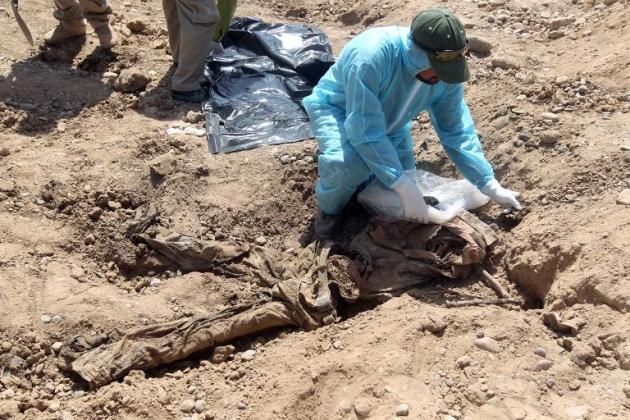
Iraq has exhumed the remains of 470 people believed to have been executed by jihadists near Tikrit last year in what is known as the Speicher massacre, the health minister said Thursday.

"We have exhumed the bodies of 470 Speicher martyrs from burial sites in Tikrit," Adila Hammoud said at a press conference in Baghdad. In June 2014, armed men belonging or allied to the Islamic State group abducted hundreds of young, mostly Shiite recruits from Speicher military base, just outside the city of Tikrit.

They were then lined up in several locations and executed one by one, as shown in pictures and footage later released by the Islamic State group. Some were pushed into the Tigris river, others hastily buried in locations that were discovered when government and allied forces retook Tikrit from the jihadists about two months ago.

The highest estimate for the number of people killed in one of the worst atrocities committed by IS stands at 1,700.

First list of names

"These bodies come from four burial sites... One of them was bigger than the others and contained 400," said Ziad Ali Abbas, the chief doctor at Baghdad's main morgue.

He said forensic examination of the exhumed remains was conducted with foreign assistance, including from the International Committee of the Red Cross.

Hundreds of families whose sons, fathers and brothers went missing at the time of the IS-led offensive in Iraq have been waiting for confirmation that their loved ones were among the Speicher victims.

Officials at Thursday's press conference said the first list of names would be released next week, after weeks of DNA testing.

Identification documents the victims were carrying at the time of their capture were also found near burial sites.

Officials had said in mid-April that up to 10 different suspected burial sites were identified in the Tikrit area as a result of its recapture by government forces in late March and the first days of April.

Combined with a call by the country's top Shiite cleric Grand Ayatollah Ali al-Sistani for Iraqis to take up arms against them, the Speicher massacre played a key role in the mass recruitment of Shiite volunteers to fight the jihadists.

One of the spots where the Speicher cadets were executed is a police building in the sprawling Tikrit palace complex former president Saddam Hussein built in his hometown.

The quay where the victims were shot in the head and pushed into the Tigris has, since Tikrit was retaken, been turned into an improvised shrine. Relatives, many of whom will never have a body to bury, have streamed to the site over the past two months along with fighters, delegations of officials, students and others.

Thursday 28 May 2015

https://uk.news.yahoo.com/iraq-exhumed-470-bodies-tikrit-mass-graves-082702060.html

continue reading

Nepal recovers more human remains from U.S. chopper crash site


Nepal has found more human remains at the site where a U.S. military helicopter crashed during a mission to aid victims of the country's earthquake, the army said on Wednesday.

The recovery was made on May 25, 10 days after the bodies of six U.S. Marines and two Nepali soldiers were found among the wreckage of the aircraft in mountains northeast of the capital Kathmandu.

Nepali media said five people from earthquake-devastated villages in Dolakha district had gone missing after being taken aboard an aid helicopter. It was not known which aircraft they had boarded.

“We have started investigations into whether these human remains belonged to the eight people (two Nepalis and six U.S. Marine corps) killed in the crash or to other people,” the Nepali Army said in a statement.

“The army is trying to find out if the U.S. Marine Corps helicopter had any persons other than the military personnel from the two countries," it added.

“The facts will be known only after joint investigations and DNA tests the reports of which will be made public without delay."

The Marines' UH-1Y Huey helicopter disappeared while distributing aid in a remote area of Nepal. The quakes on April 25 and May 12 killed at least 8,676 people.

The cause of the crash is so far unknown.

Thursday 28 May 2015

http://news.yahoo.com/nepal-recovers-more-human-remains-u-chopper-crash-182232012.html

continue reading

Lufthansa begins repatriation of victims of Germanwings disaster


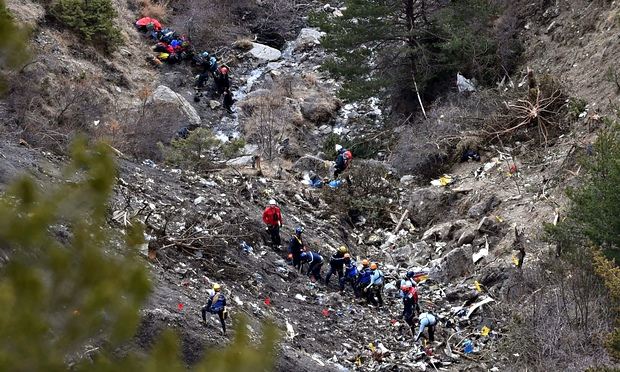
The bodies of victims of the Germanwings flight that crashed into the Alps in March of this year are now being repatriated to their home towns. Lufthansa, the parent company of the Cologne airline, has been contacting relatives over the last week, and asking relatives where they wish the remains to be sent.

It took a commission until May 15 to identify the 150 victims and authorities have warned that, unfortunately, there is very little biological material to give families, as the plane and all its occupants were destroyed beyond recognition.

The morning of March 24 saw around 50 Spaniards board the Barcelona-Dรผsseldorf flight. Spanish relatives of 45 passengers are believed to be reaching an out of court settlement on compensation with the company.

Thursday 28 May 2015

http://www.euroweeklynews.com/3.0.15/news/on-euro-weekly-news/spain-news-in-english/129126-lufthansa-begins-repatriation-of-victims-of-germanwings-disaster

continue reading

Tuesday, 26 May 2015

Oceanline SC2018: Four bodies recovered from sunken barge


Four bodies have been recovered so far from a barge that sunk off the coast of Singapore last week.

The search for the 14 sailors missing from the Oceanline SC2018, a Bolivian-registered sand barge has been ongoing since the vessel capsized May 20. The bodies of one Malaysian man and two Chinese men were discovered Friday and over the weekend. A fourth body, that of another Chinese crewman, was recovered at around 11:00 am today.

The search operation has been greatly hindered by rough sea conditions over the weekend and into Monday.The Malaysian Maritime Enforcement Agency (MMEA) stated that diving operations were called off around 3:30pm today due to strong currents. According to Malaysian news sources, today’s rescue operation consisted of a ship, four boats and a total of 28 rescue divers.

The bodies have been brought to the Marina Jetty at Tanjung Pengelih for additional investigation.

The Oceanline SC2018 was carrying a cargo of sand between two Malaysian cities on May 20 when it reportedly capsized due to rough waves. One crewman was rescued immediately following the incident, but ten crewmembers still remain unaccounted for.

Tuesday 26 May 2015

http://www.maritime-executive.com/article/four-bodies-recovered-from-sunken-barge

continue reading

Last bodies recovered after Colombia mine tragedy that killed 15


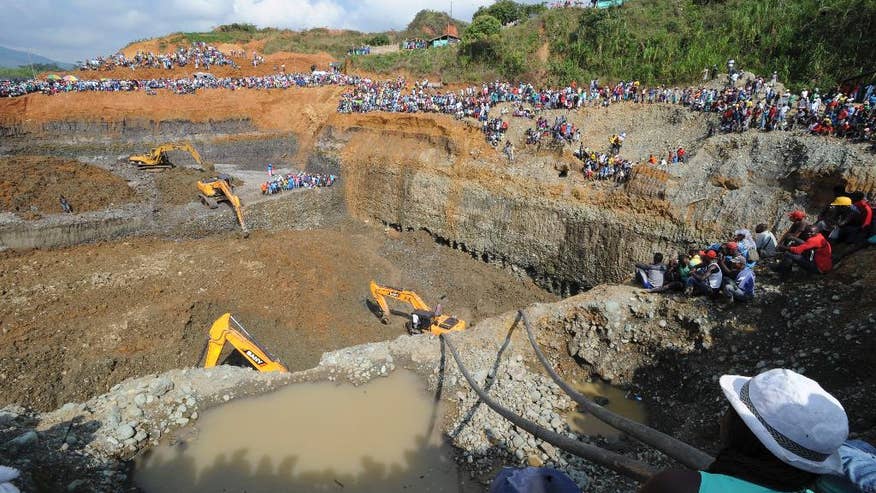
Emergency workers have recovered the final bodies of people killed in a collapsed, unlicensed gold mine on an indigenous reservation in central Colombia, bringing the official toll to 15 dead, authorities said Monday.

"After 12 days of working around the clock... the bodies of the 15 miners who were trapped in the El Tunel gold mine when it was suddenly flooded... have now been recovered," said a statement from government disaster relief agency UNGRD, after the final two were brought out Monday.

The May 13 accident -- inside a reservation for indigenous Colombians in Caldas department -- rocked the central-western town of Riosucio. Investigators say a power cut in the area likely shut off the mine's water pumps, flooding the shafts and leading to the collapse.

The workers at the mine had no formal contract with the company for their high-risk work, according to the National Mining Agency.

Colombia is a major gold producer and business has boomed over the past decade as the price of gold has risen from less than $400 per ounce to almost $1,200.

Tuesday 26 May 2015

http://www.globalpost.com/article/6560184/2015/05/25/last-bodies-recovered-after-colombia-mine-tragedy-killed-15

continue reading

Monday, 25 May 2015

Malaysia mass grave: Forensic team carrying out test to identify bodies


The police forensic team is carrying out identification process on the bodies following the discovery of mass graves believed to have been used to accommodate refugees in Padang Besar.

Home Minister Datuk Seri Dr Ahmad Zahid Hamidi in a press conference at the Parliament said the team was responsible to carry out forensics tests on the exhumed bodies in determining whether they were Rohingya or Bangladeshis.

"This is the same team that was dispatched to Ukraine to identify remains of the flight MH17 victims. I would like to also thank the Inspector-General of Police (Tan Sri Abdul Khalid Abu Bakar) and his deputy (Datuk Seri Noor Rashid Ibrahim) who visited the locations identified by the VAT 69 Commando Unit and the General Operations Force (GOF) there.

"We are also cooperating with the Thai government if any individuals (suspected to be involved in human trafficking) have escaped over to Thailand. The cooperation is not only on legal matters but also extended to humanitarian efforts," he said.


Zahid added that the Penang state government should extend assistance in preparing facilities to house the Rohingya. "We should focus on extending any form of assistance on humanitarian grounds rather than politicising the matter."

Zahid was responding to news reports that the state government wanted Rohingya and Bangladeshi migrants to be placed on federal government-owned lands citing space constraints. Zahid had earlier told the house all the police personnel were trained to carry out policing duties including the monitoring of the social media that was being used as platform of recruitment by the militant groups.

He was responding to a question by Dr Ko Chung Sen (DAP, Kampar) who asked for the allocated number of police personnel and funds to address the Islamic State (IS) and terrorism; and whether the 126,000 policemen are being assigned to monitor the social media to track potential terrorists.

Penang Chief Minister Lim Guan Eng in a separate Press conference reiterated the lack of land to house the refugees. "We are not saying that we refuse to help the Rohingya, but we are facing land constraints to build the facilities," said Lim.

Malaysia confirms discovery of 23 trafficking camps, 139 grave sites believed to contain migrants

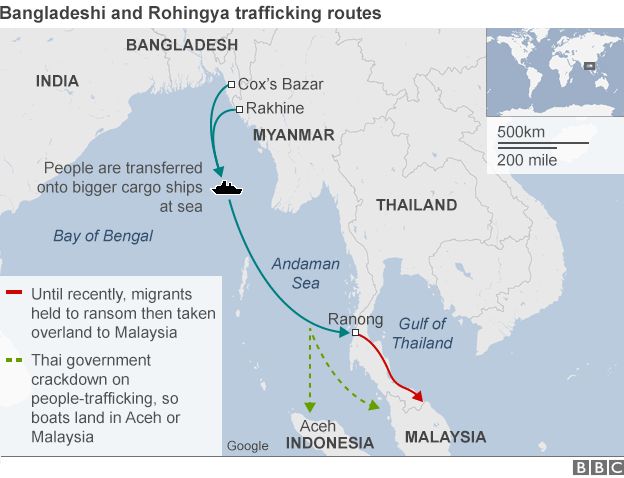
Malaysia's police chief has confirmed the discovery of 139 grave sites and 28 human-trafficking camps in the country's remote northern border region.

National police chief Khalid Abu Bakar revealed the findings at a press conference a day after the government announced on Sunday the discovery of camps and graves, the first such sites found in Malaysia since a regional human-trafficking crisis erupted earlier this month.

"[Authorities] found 139 suspected graves. They are not sure how many bodies are inside each grave," General Khalid said.

He added that the number and size of the 28 camps found suggested they might have housed a combined hundreds of people.

The largest could hold up to 300 people, another had a capacity of 100, while the rest could hold about 20 each, he said.

The first decomposed body was brought down to a police camp set up at the foot of the mountains where the graves were discovered on Monday evening.

The operation took nearly five hours due to the rough terrain.

"The body was only bones and little bit of clothing on it," Padang Besar police officer-in-charge Rizani Che Ismail said.

He said the cause of death was not immediately apparent.

The discovery was the latest evidence of the lethal nature of the region's human-trafficking trade and has been condemned by Malaysia's prime minister Najib Razak.

"I am deeply concerned with graves found on Malaysian soil purportedly connected to people smuggling," Mr Najib said on his Facebook page.

"We will find those responsible."

However, a politician from the Malaysian opposition has accused authorities of colluding with human traffickers.

"Large numbers, you're talking people in the hundreds are being brought across the border," Rasiah Sivarasa said.

"Extensive ransoms are being collected from their families back in Bangladesh or wherever they come from.

"Some of them who can't pay these ransoms are sold as slaves to plantations, to fishing boats.

"I cannot believe, therefore, that the authorities do not know about this."

Monday 25 May 2015

http://www.nst.com.my/node/85492

http://www.bbc.co.uk/news/world-asia-32872815

continue reading

Dover DNA lab to help ID Pearl Harbor remains


A gram of bone. If well-preserved and accompanied by the right genetic reference samples, it's enough to put a name and a face on an unknown soul thought lost to the ages.

In the coming months and years, experts in Dover and Hawaii will analyze nearly 400 such fragments, and the remains from which they're taken, as they launch a project with particular resonance this Memorial Day: identifying the sailors and Marines killed on Dec. 7, 1941, when Japanese attackers sank the USS Oklahoma. For the past 65 years, those remains have been buried as unknowns in graves at the National Memorial Cemetery of the Pacific in Honolulu.

The experts' work at two agencies with a long history of teaming up: the Armed Forces DNA Identification Laboratory at Dover Air Force Base and the newly reorganized Defense POW/MIA Accountability Agency in Hawaii.

Preservation was an unlikely byproduct of the two years the fallen sailors and Marines spent in their watery grave before the ship was righted during a massive salvage operation. No one knew it at the time, but the skeletonized bodies that were recovered were exposed to leaking fuel oil that would protect the bones from micro-organisms, preserving the DNA.

"That has actually inhibited bacterial growth in the remains," said Debra Prince Zinni, a forensic anthropologist with the Defense POW/MIA Accountability Agency, or DPAA. "And the success rate in getting the DNA from the remains is extremely high."

The exhumations will begin in June, according to Navy Capt. Edward Reedy, a forensic pathologist and as DPAA's medical examiner, the Defense Department's top identification official for past conflicts.

Initially, officials will try to match remains with dental records. Anthropological comparisons will follow. A DNA technician will cut the bone samples to be sent to Dover, where scientists and technicians working in sealed, sterile labs at the Armed Forces DNA lab will examine them.

The DNA results will be returned to Hawaii, where all the research will be combined to provide positive identifications, and subsequent release of remains to surviving family members.

"This is a project that I've been working on for many, many years now," said Zinni, who grew up in Wilmington and attended Ursuline Academy, where she was a standout athlete. "And to see that there's finally going to be some movement toward the identification is really remarkable. It's very rewarding work. But more than that, it's actually very humbling to be able to help these families get answers."

Many should. Between family reference DNA samples and dental records, officials have identifying information for about 88 percent of those unaccounted for, according to Tim McMahon, the Armed Forces DNA lab's deputy director for forensic services. Combined with advances in DNA science, he said they expect a high number of identifications.

"We expect that at least 80 percent ... will be individually identified," Zinni said.

In 2003, independent research convinced officials to unearth one casket of Oklahoma unknowns. Through the work of Zinni and others, five crewmen were identified, bringing the total recovered from the ship and unaccounted for to 388 (another Oklahoma sailor who'd been recovered from outside the ship and not buried with the ship's unidentified crewmen was identified in 2007).

Additional anthropological, dental and DNA analysis of the casket determined that it contained the sparse remains of more than 100 individuals. This prompted the Navy and Marine Corps to begin collecting reference samples from surviving family members.

In 2009, Congress, unhappy with the pace of positive identifications, mandated an increase to 200 missing service members annually by 2015. A year ago, then-Defense Secretary Chuck Hagel ordered an overhaul of the process, merging the two organizations responsible for finding missing personnel from past conflicts into the Defense POW/MIA Accounting Agency.

The Navy didn't want the Oklahoma exhumation to happen. In a May 2014 letter to family members of the Oklahoma crew, obtained and published by Stars and Stripes, a senior Navy official argued that "the sailors and Marines of USS Oklahoma would be outside the sanctity of the grave for a third time following their heroic sacrifice at Pearl Harbor." It would also be a drawn-out process, the official wrote, and "many" would likely remain unaccounted for.

Last month, the Pentagon overruled. Deputy Defense Secretary Robert Work, citing advances in forensic science and extensive family member participation in the collection of reference samples, ordered the project to begin and be completed within five years. He also ordered the disinterment of the remains of all unknowns in all permanent U.S. military cemeteries, given certain criteria.

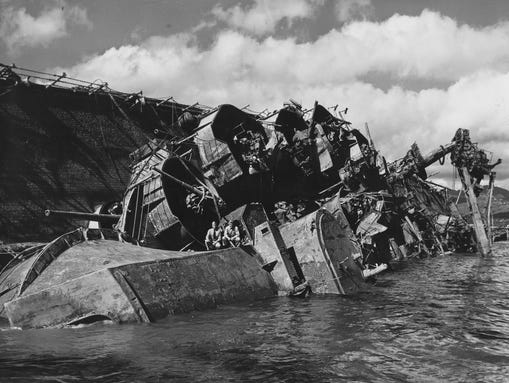
The Japanese attack on Pearl Harbor 73 years ago was timed to catch the U.S. Navy on a sleepy Sunday morning. Shortly before 8 a.m., Japanese aircrews attacked, zeroing in on the eight battleships in port, seven of them parked in a row alongside Ford Island. Three air-launched torpedoes struck the Oklahoma, which was moored outboard of the USS Maryland. Multiple torpedo hits followed, ripping open Oklahoma's port side.

According to the Maryland's deck log, the 583-foot battleship began capsizing at 8:10 a.m. It was one of eight battleships – and 21 vessels, all told – sunk or badly damaged. Another 188 aircraft were destroyed and 2,403 Americans were killed.

Thirty-two crewmen were rescued from the overturned Oklahoma by civilian shipyard crews who struggled to cut through the bottom of the ship with pneumatic hammers and torches. A total of 429 crew members were killed – none from Delaware – and most were recovered from the ship during salvage operations, from July 1942 to May 1944.

Of those, 36 were positively identified and buried, leaving 393 buried in two Navy cemeteries until September 1947, when all were disinterred and moved to the Army's Central Identification Laboratory.

The bones had been "generally commingled." At the time, the only accepted way to identify skeletonized remains was through dental records, and 27 exhumed crewmen were identified in this way. Official arguments over whether or not to present a skull to a family without other associated remains, however, ended the effort. By 1950, all were buried in 61 caskets, interred in 45 locations, at the national cemetery in Honolulu, known as "The Punchbowl."

Beginning next month, the remains will again be exhumed. Four to six stainless steel caskets will arrive at the Defense POW/MIA Accounting Agency at any one time. Each will have a technician and scientist removing the remains, wrapped in green wool Army blankets, and cleaning them for examination.

Forensic dentists will examine the skulls and most likely make the first identifications, Zinni said. Positive matches to dental records will be considered as positive IDs, and families will be notified and given the choice to either accept the fragments or wait for further post-cranial identification that could associate other portions of the skeleton with that sailor or Marine.

Meanwhile, a DNA technician will cut the bone samples to be sent to Dover. The minimum required size is 0.8 grams, but Reedy said the agency usually sends about twice that amount. Ninety percent of a body's bones will yield testable amounts of DNA; the best samples are taken from the densest bones, such as femurs, according to Reedy.

Human cells with a nucleus contain two forms of DNA: nuclear and mitochondrial. Every nucleated cell has a single nucleus, and people get half of the nuclear DNA from their mother and half from their father, making newer samples typically easy to identify.

There's far more mitochondrial DNA in a single cell, increasing the chances of successful identification in older remains – if analysts have reference samples from the maternal line.

At Dover, the samples are completely cleaned by analysts wearing lab coats, gloves and masks, then taken under clear hoods, where the outer layers of the bones are sanded off, washed and ground into a fine powder. A "demineralization buffer" the lab developed and introduced in 2006 reduces the amount of bone powder needed to get results to 0.1 grams, and dissolves the bone completely, allowing analysts to track any trace of either nuclear or mitochondrial DNA, McMahon said.

What's left is a liquid composed of the DNA and any cellular waste generated during this extraction process. This is then purified, then "amplified" to allow analysts to generate the large amounts of DNA required for testing, he said.

The demineralization process, a further advance in DNA testing technology, has now been adopted by labs worldwide, Reedy said.

"With the advances ... we have a very high success rate," McMahon said.

To confirm the findings, the entire process is duplicated; two separate samples are initially extracted, and assigned to two different teams. "The answers have to match for us to report it out to the DPAA lab," McMahon said. "We're dealing with highly degraded samples. So the chance of having a modern contaminant is increased."

Back in Hawaii, the anthropologists attempt to piece together the skeletal remains in an effort to find matches. Anthropologists measure the bones and generate statistical probabilities that some belong to the same person; determine how well bones fit with one another at the joints; and develop biological profiles of the remains to determine age, ancestry and so forth.

This task – trying to retrofit the commingled skeletal remains of nearly 400 individuals – is less onerous than it sounds, because there's less similarity between like bones than one might think.

"It is amazing how different bones can be," Zinni said. "The shapes, the densities, the robustness, the length." Proper fits will preclude the need to test each bone for DNA, Zinni said. It's both a cost-saving effort and a way to further substantiate the other findings.

Once a positive identification has been made, DPAA in Hawaii will notify the casualty assistance officer assigned to a fallen service member's survivors. The next step – whether they want to wait for further remains identification, for instance – is up to them.

"It's the right thing to do," Reedy said. "Everyone deserves a name, everyone deserves to go home. And that's what really drives me, personally – is this moral and ethical obligation I have to return service members who gave their lives in defense of our country, to their loved ones."

"It's a very sacred mission," McMahon said.

Officials would like to identify every bone. But, said Zinni, "The reality is there probably will be group remains identified at the end of the process." Those will be buried together, she said.

A memorial to the 429 crew members who were killed stands on Ford Island, just outside the entrance to the Battleship Missouri Memorial. The Missouri was the last battleship ever commissioned; the Japanese surrendered on its decks on Sept. 2, 1945. It is moored on the spot where the Oklahoma was sunk.

The battleship Oklahoma is gone forever. Two years after being raised, the Navy sold the patched-up ship for scrap to a California salvage company, which began towing the battleship to Oakland in the spring of 1947. On May 17, about a fifth of the trip complete, the ship began listing to port – the same side that had been so heavily damaged. The tow lines were cut, and the Oklahoma sank to the ocean floor.

Monday 25 May 2015

http://www.delawareonline.com/story/news/nation/military/2015/05/24/dover-dna-lab-help-wwii-remains/27806021/

continue reading