Saturday, 2 May 2015

Final coffins from MH17 crash to be brought home to Netherlands


The last seven coffins carrying human remains from the crash site of Malaysia Airlines Flight MH17 will be flown home to the Netherlands today, bringing to an end an on-again off-again search bedevilled by fighting between Ukrainian troops and pro-Russian separatists.

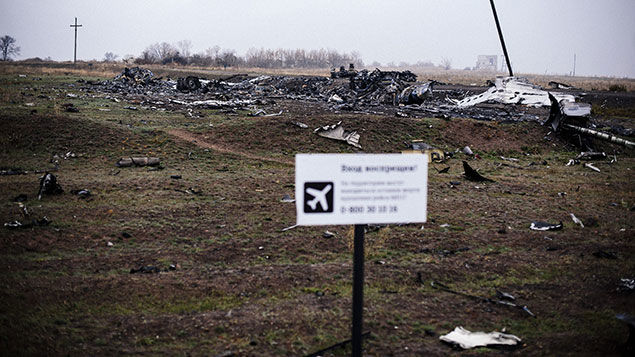
A 30-strong team of Dutch, Malaysian and Australian investigators managed to reach the site in eastern Ukraine a week ago. They have since recovered about 50 cubic metres of wreckage, as well as body parts and a large number of personal belongings, including passports, rings and watches.

“We have done everything that is humanly possible,” said team leader, Pieter-Jaap Aalbersberg, Amsterdam’s police chief. He confirmed that despite snowfalls in the area, they managed to search parts of the site that had previously been too dangerous to reach.

Two unidentified

Mr Aalbersberg said he was “very hopeful” that the body parts would allow forensic experts at a military base in Hilversum to name the final two of the 298 passengers and crew who remain to be identified 10 months after the Boeing 777 was apparently shot down by a Russian-made missile.

By a process of elimination, it is known that those two final victims were Dutch. However, their families still await news of formal identification, which it’s anticipated may now be possible as a result of DNA matches.

The search for remains now officially over, the last seven coffins are due to be flown home to Eindhoven airport on board a C-130 Hercules of the Royal Netherlands Air Force via the “air bridge” to Kharkiv, in the northeast of Ukraine.

When the plane touches down, Operation Bring Them Home – launched in the hours immediately after Flight MH17 disappeared en route from Amsterdam to Kuala Lumpur on July 17 last year, with the country still in deep shock – will come to its poignant conclusion.

The remains will be greeted on the tarmac at Eindhoven by relatives and friends, as well as by representatives of the government and of the Dutch royal family, and will be given full military honours.

After the Last Post is sounded, they will be transferred in a slow procession, accompanied by police motorcycle outriders, to Hilversum, where the ID work is still going on. Thousands of people are expected to turn out to pay their respects.

Because the wreckage could be crucial to any possible criminal proceedings, it will join previous consignments in a sealed aircraft hangar. There it will be unloaded, photographed, scanned and categorised, before the examination begins.

As much of the jet as possible is being pieced together on a specially constructed frame, although much of the fuselage was badly damaged by fire.

Saturday 2 May 2015

http://www.irishtimes.com/news/world/europe/final-coffins-from-mh17-crash-to-be-brought-home-to-netherlands-1.2197390

continue reading

You don't actually need to bury the dead immediately after a natural disaster


It's a persistent myth that the bodies of the dead after a natural disaster are a big health risk. Sadly, most of the people who die in disasters such as earthquakes or floods are healthy. That means their bodies aren't likely to hold disease that can spread to survivors. (The situation is different for disasters such as the Ebola outbreak in West Africa, during which dead bodies were a major transmitter of illness.)

Public health organizations have been trying for the last decade to get the message across that it's OK to leave bodies unburied after natural disasters, to give people time to identify their deceased loved ones, but as recently as 2013, officials in the Philippines buried people in mass graves following a typhoon there. There are many better ways to prevent disease outbreaks after natural disasters.

In fact, it may actually be better for public health to go about burials more slowly, as natural-disaster consultant Claude de Ville de Goyet argued in an op-ed published in the Pan American Journal of Public Health in 2004:

The inability to mourn a close relative, the lingering doubt on the whereabouts of the disappeared, and the legal limbo of the surviving spouse or child all contribute to the many potential mental health problems associated with disasters and the difficult rehabilitation process that follows.

Mental health is just as crucial as any other aspect of health following disasters. Giving survivors time to identify, mourn, and bury disaster victims in the same way that they would have, had their loved ones died in any other way, is an important part of the healing process.

Saturday 2 May 2015

http://www.psmag.com/health-and-behavior/give-people-time-to-mourn

continue reading

Heaton mining disaster's 200th anniversary marked this weekend


A community will come together this weekend to mark the exact day 200 years ago when a Tyneside colliery was struck by disaster.

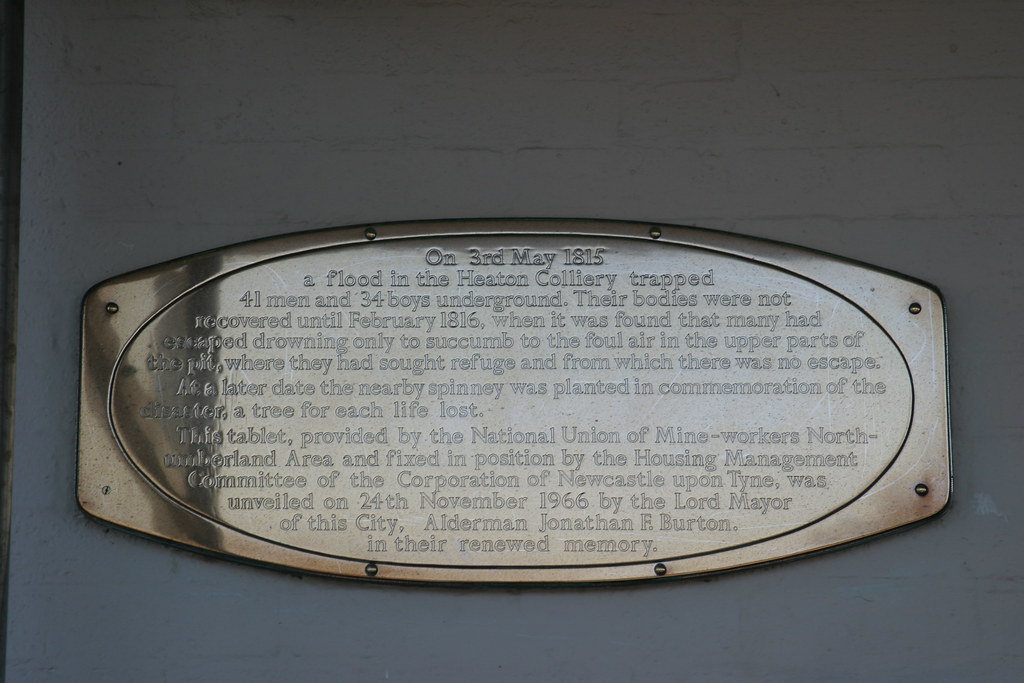
On May 3, 1815, where St Teresa’s Church now stands on Heaton Road, 110 men and boys were working underground on the early shift.

The Heaton Main Colliery miners hit the old workings of an 18th Century pit, from which water gushed in “with the roar of thunder.”

The inrush trapped 75 workers. Despite valiant attempts, rescuers were unable to reach them.

It was not until January 6, 1816, that the first body was discovered – more than eight months after the tragedy. Another five weeks passed before another 55 victims were found in one spot.

On Sunday, St Teresa’s Church will be the venue for a service of remembrance from 6pm, which will also feature a new song about the disaster by folk legend Jonny Handle, music by the Backworth Colliery Band, Heaton Voices choir, dancing by the children of St. Teresa’s School and other guests.

On Saturday, there will also be events and family activities from 2pm - 4.30pm at The Spinney in High Heaton, which was previously thought to have marked the location of the disaster and where two plaques commemorate the catastrophe.

Also on Saturday at 7.30pm St Teresa’s church hall will stage an evening of mining songs with Heaton Voices and the Appletwig Songbook group. Tickets are £5.

“The events will be an opportunity for people to remember the loss of life but also to mark the fact that Heaton was internationally significant in the development of mining in the 18th and 19th Centuries,” said Heaton History Group secretary Chris Jackson. “There is sadness over the disaster but also pride in Heaton’s mining past.”

The group has won backing from the Heritage Lottery Fund to research the areas’s mining history and place a series of plaques at significant locations.

After the disaster, the North East’s leading mining engineer, John Buddle, wrote that the pitmen “had evidently survived the accident for some time as they had killed a horse and cut the flesh out of his hams,” although little had been eaten.

The final bodies were not located until March 6, 1816. Most of the victims were buried in a corner of St Peter’s churchyard in Wallsend.

Retired history teacher and Heaton-born and bred resident Les Turnbull, has researched the disaster for his book published earlier this year called A Celebration of Our Mining Heritage, published by Chapman Research at £15 in conjunction with the North of England Institute of Mining and Mechanical Engineers and the Heaton History Group.

He said: “The disaster of 1815 must be remembered but it would be a travesty if this single event should be allowed to take precedence over a century of achievement.

“By remembering the achievements of the industry we establish the most appropriate memorial to those who lost their lives in winning coal.”

Les tells how the relatives of the victims were asked to descend into the mine to identify family members as decay was so advanced that moving the bodies to the surface would have destroyed the evidence.

Elizabeth Thew’s youngest son John had survived, but she had to look for her husband, her eldest son George and her middle son William.

She identified William by his auburn hair. In one of his pockets was found his tin candle box on which he had written: “Fret not, dear mother, for we are singing while we had time and praising God. Mother follow God more than I ever did.”

On the other side, her husband had written: “If John is saved, be a good lad to God and thy mother.”

Saturday 2 May 2015

http://www.chroniclelive.co.uk/news/north-east-news/heaton-mining-disasters-200th-anniversary-9162971

continue reading

Friday, 1 May 2015

Volunteers burn Nepal’s unclaimed bodies as death toll rises


Morgues have no space for newly-arrived bodies in Kathmandu.
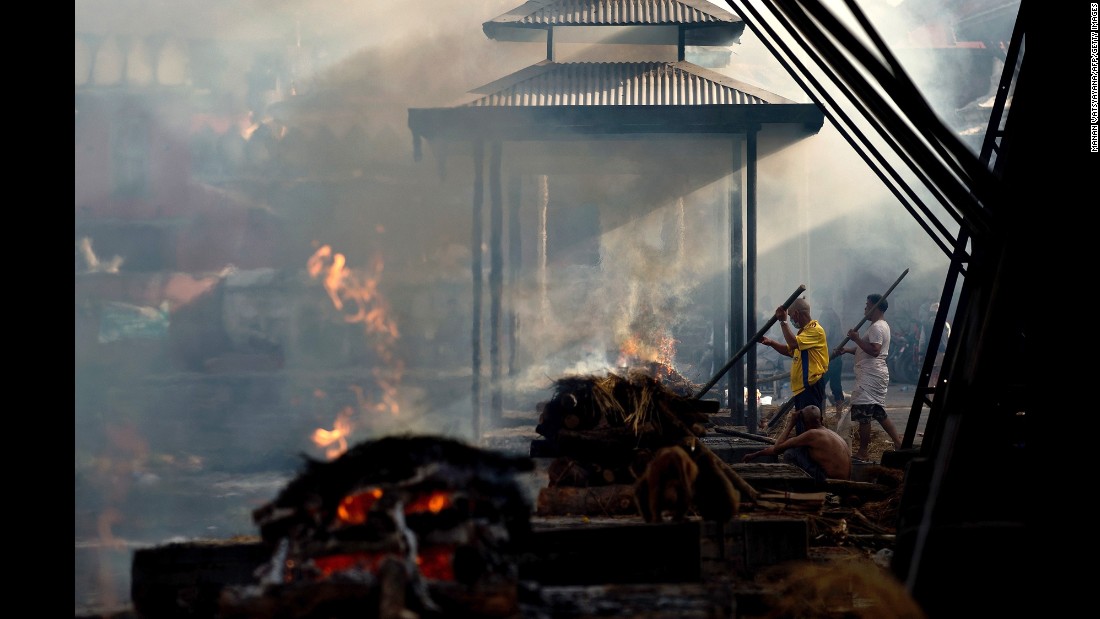
The crematory pyres outside the revered Pashupatinath Temple in Kathmandu spew grey-white smoke into the bright sun of Friday afternoon. Below, local women wade into the shallows of the revered Bagwati, splashing water on their arms to wash and cool down. At the water’s edge, families gather to bid goodbye to their loved ones. But six days after a 7.8 magnitude earthquake rattled this landlocked nation, officials are struggling to figure out where to store their unclaimed dead.

“We just do not have enough space in the refrigerators” says Bishnu Joshi, an officer with the municipal government in Kathmandu. Wearing a black athletic jacket and matching face mask, Joshi directs the large flatbed trucks lined with the dead, swarmed by flies. After entering the temple compound, the trucks must drive down a crude, mud-worn slope and into the Bhagwati River, through the shallows, and onto the grassy shoal at the river’s center. There, team of volunteers, wearing plain clothes, latex gloves, and medical masks, climb into the flatbed, lifting, dragging or pushing the bodies, wooden with rigor mortis, onto waiting stretchers for deposit atop hastily arranged funeral pyres.

Unlike the formal cremation ceremony, familiar to the thousands of visitors who pass through Pashupatinath each year, there was no pomp or circumstance to this afternoon’s procedure. The unclothed and uncovered bodies are simply tipped off the stretcher, two bodies to each pile, and set alight by the young volunteers as a small but vocal crowd looked on.

These bodies are the unclaimed dead housed at Tribhuvan University Teaching Hospital in Kathmandu. As the death toll has passed 5,500, the university is running out of areas to store the bodies.

Volunteers help move the bodies. “I just wanted to help this week,” said Ramos Tamang, an 18-year-old college student who studies management. As droplets of sweat dripped from his forehead to the edge of his medical mask, the smell of decomposed matter wafted up from his latex gloves. Tamang describes the job as a “horror”, but it is one he’s committed to. His uncle and grandfather were killed last weekend when the family home, in the town of Nuwakot, collapsed. With his friend, Suhesh Kattel, 17, Ramos has joined one of many groups distributing aid and providing assistance in the aftermath of the disaster.

Kattel was similarly moved after visiting his friend’s father, who had his hand amputated due to injuries sustained during the earthquake. “My family wasn’t a victim of this earthquake,” Kattel told TIME, looking beyond the river to the opposite bank where families wait for their loved one’s turn on the cremation pyre. “I feel so sorry for all these families.”

Down on the shoal, young men like Kattel and Tamang are joined by 13 volunteers from the Khawalung Monastery. The monastery’s students, like Tashi,19, have supplied all volunteers with latex gloves as protection while moving the bodies. The students, dressed in sleeveless red robes and bright yellow vests, have matching yellow baseball caps.

“I am pretty scared of the dead bodies,” says Tashi, his arms, legs and face still wet after washing up after the day. They had disposed of 20 bodies in just over 30 minutes, but through the hottest time of the day. Asked why he had decided to volunteer, particularly given his apprehension, he said he was eager to find some way he could help.

Officials expect the death toll to climb to 6,000 as rescue and relief teams move through the countryside. According to an official in the forensic unit at Tribhuvan University Teaching Hospital contacted Friday evening, there are 33 unclaimed bodies in the morgue, 26 have yet to be identified, and the hospital is adding an average of 10 bodies to the morgue each day.

Friday 1 May 2015

http://time.com/3843202/nepal-cremation-bodies/

continue reading

Mass graves unearthed at human-trafficker camp in Songkhla


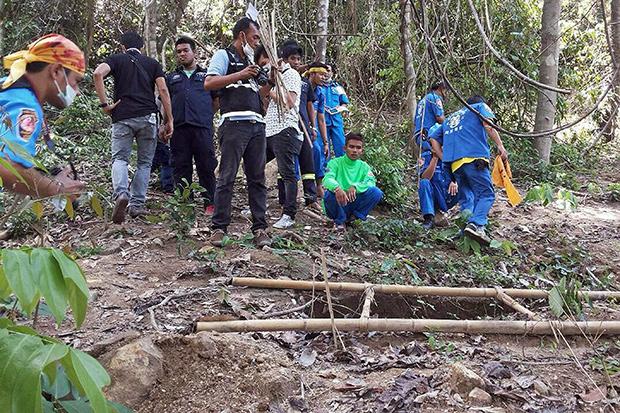
More than 30 bodies were discovered Friday in shallow graves at a human-trafficking camp near the Malaysian border with the national police chief saying 20 more could be found.

Pol Gen Somyot Pumpunmuang said he had received reports from Songkhla provincial police and soldiers of 50 graves at the remote camp located in a mountainous jungle section of tambon Padang Besar in Songkhla's Sadao district.

The dead are suspected to be Rohingya Muslim refugees from Myanmar and Bangladesh who starved to death or died of disease while awaiting payment of ransoms to be smuggled into Malaysia by a trafficking gang comprising Thai, Myanmar and Malaysian nationals.

Some of the bodies were buried, while others were covered with clothing and blankets at a shelter in the mountains of southern Songkla province, Pol Col Weerasant Tharnpiem told The Associated Press.

"There are 32 graves, four bodies have now been exhumed and are on their way... to hospital to for an autopsy," Sathit Thamsuwan a rescue worker, who was at the scene soon after the site was found, told assembled media around 3.30pm.

Reuters reported that two more bodies were left to rot out in the open above ground.

By late afternoon, the exhumations had stopped pending the arrival of forensic teams.

"The bodies were all decayed," he said, adding a single man from Bangladesh survived and is being treated at a hospital in nearby Padang Besar, Malaysia. The hospital confirmed the extremely emaciated Bangladeshi man had survived and was in stable condition.

Pol Gen Somyot said the smugglers were believed to have abandoned the sick man when they moved Rohingya migrants across the border into Malaysia two days ago.

Officials were alerted to the graves by a local man who stumbled upon them while foraging for mushrooms. Mr Sathit, of the Maikom Sadan municipal rescue service, told the Phuketwan website that authorities had to trek 50 minutes up a hill to reach them.

The corpses have to be carried out, as vehicles cannot reach the grave sites.

Reports quoted investigators as saying that the camp held 200-300 Rohingya migrants. Pol Gen Somyot, however, described the site as a virtual "prison camp" where migrants were held in makeshift bamboo cells.

"There are 32 places that look like graves and whether there is one body or several bodies in those graves, we will we have to wait and see," he was quoted as saying by AFP.

Pol Gen Aek Angsananont, the deputy national police chief, said the camp, covering about one rai of land, had a bedroom and a canteen. It is only 300 metres from the northern Malaysian state of Perlis. The camp is very close to the border and authorities are trying to determine if it resides on Thai or Malaysian soil.

"This location helps traffickers transport the migrants at any time and it is difficult for officers to arrest them," he said.

Traffickers usually set up camps in random locations to avoid authorities, then leave behind any sick or dead when threatened with detection.

Authorities said they suspect there could be around 50 bodies buried at the camp.

The discovery, the first of its kind in Thailand, highlights the brutal nature of the trafficking trade in which hundreds are believed to have died in camps or at sea, Reuters reported.

Every year, thousands of Rohingya and Bangladeshi boat people arrive in Thailand, brought by smugglers. Many are taken by road to camps in the jungle, where traffickers demand a ransom to smuggle them south across the border to Malaysia.

Last year, Thailand was downgraded to the lowest tier on the US State Department's influential Trafficking in Persons report, which annually ranks countries by their anti-trafficking effort.

Friday 1 May 2015

http://www.bangkokpost.com/news/general/548439/33-bodies-unearthed-at-human-trafficker-camp-in-songkhla

continue reading

Thousands still missing after Nepal quake


Thousands of people were still missing in Nepal on Friday as food and help began to trickle through to those stranded in remote areas after last week's earthquake which killed 6,250.

Up to 1,000 Europeans are still unaccounted for, mostly around popular trekking routes, the head of the European Union (EU) delegation in Nepal said.

"We don't know where they are, or they could be," Ambassador Rensje Teerink told reporters. Officials said it was hard to trace the missing because many backpackers do not register with their embassies.

"It does not mean that they are buried. They could have left the country without telling anyone before the earthquake struck," Teerink said Reuters.

Nepal's home ministry said it had not been informed that the number of EU citizens missing after Saturday's earthquake could be as high as 1,000.

"If that is the case then why are the embassies not informing us? Why have they not contacted the Nepal government?" home ministry spokesman Laxmi Prasad Dhakal told Reuters.

The number of people unaccounted for from France, Italy, Spain and the Netherlands is 371 according to checks Reuters made with their governments, while all Irish citizens, Croatians and Romanians have been traced. Other European nations are yet to provide an updated figure on how many of their citizens are unaccounted for.

Bodies are still being pulled from the debris of ruined buildings, while rescue workers have not been able to reach some remote areas.

The government put the number of injured at more than 14,350.

In the capital Kathmandu, many unclaimed bodies were being quickly cremated because of the need to avert disease and reduce the stench of corpses in areas where buildings had collapsed.

Many of the dead could be migrant workers from neighboring India, local officials said.

"Morgues are full beyond capacity and we have been given instructions to incinerate bodies immediately after they are pulled out," said Raman Lal, an Indian paramilitary force official working in coordination with Nepali forces.

Aid was slowly reaching remote towns and villages nestled in the Himalayan mountains and foothills of the impoverished nation. But government officials said efforts to step up the pace of delivery were frustrated by a shortage of supply trucks and drivers, many of whom had returned to their villages to help their families.

"Our granaries are full and we have ample food stock, but we are not able to transport supplies at a faster pace," said Shrimani Raj Khanal, a manager at the Nepal Food Corp.

Army helicopters have air-dropped instant noodles and biscuits to remote communities but people need rice and other ingredients to cook a proper meal, he said.

Many Nepalis have been sleeping in the open since the 7.8 magnitude quake, with survivors afraid to return to their homes because of powerful aftershocks. According to the United Nations, 600,000 houses have been destroyed or damaged.

Information Minister Minendra Rijal said the government would provide $1,000 in immediate assistance to the families of those killed, as well as $400 for cremation or burial.

The U.N. said 8 million of Nepal's 28 million people were affected, with at least 2 million needing tents, water, food and medicines over the next three months.

UNPRECEDENTED DAMAGE

Finance Minister Ram Sharan Mahat said Nepal would need at least $2 billion to rebuild homes, hospitals, government offices and historic buildings and appealed for international backing.

"This is just an initial estimate and it will take time to assess the extent of damage and calculate the cost of rebuilding," Mahat told Reuters.

Prime Minister Sushil Koirala told Reuters earlier this week the death toll from the quake could reach 10,000.

That would surpass the 8,500 who died in a 1934 earthquake, the last disaster on this scale to hit the nation sandwiched between India and China.

Home ministry spokesman Dhakal said that though the 1934 quake was more powerful, fewer people lived in the Kathmandu valley then.

"The scale of reconstruction will be unprecedented," Dhakal said.

While international aid has poured in, some Nepalis have accused the government of being too slow to distribute it.

"There have been cases where villages have pelted stones on trucks carrying aid and food supplies. They must have been really hungry and angry to do so," said Purna Shanker, who works at the government's commodity trading office.

In Sundarkhula, a village close to the quake's epicenter west of Kathmandu, villagers said they were searching their destroyed homes for food.

Bharat Regmi, 28, said he jumped out of the first floor as the quake lifted his house from its foundations. When he went back a few days later, he and two of his friends found a bag of potatoes in the rubble.

"We are living on water and whatever we can dig out from the house," he said, standing under steady rain near the highway to Kathmandu. Later, he crept back under a thin orange sheet, shared with about a dozen other villagers.

Tensions have also flared between foreigners and Nepalis desperate to be evacuated.

In the Himalayas, climbing is set to reopen on Mount Everest next week after damage caused by avalanches is repaired, although many have abandoned their ascents.

An avalanche killed 18 climbers and sherpa mountain guides at the Everest base camp.

Friday 1 May 2015

http://www.reuters.com/article/2015/05/01/us-quake-nepal-collapse-idUSKBN0NI12120150501

continue reading

Kenya: Search on for at least nine nissing Narok floods victims


The search for nine missing bodies swept by flash floods in Narok on Thursday is still ongoing.

Kenya Red Cross, National Disaster Management, the National Youth Service and members of the public are involved in the search.

KRC Narok Coordinator Ali Juma said visibility and the water levels of the river have hampered rescue efforts, but assured they would continue with the search until all are accounted for.

Juma said the bodies could have been washed hundreds of kilometres downstream, in the incident that occurred on Thursday evening.

He appealed to the residents to be cautious and not underestimate the depth of flood water.

At least 15 bodies were recovered from floods in a town west of Nairobi and dozens more were still missing, local media reports said. “It’s difficult to say what the true extent of the damage is, given there is a lot of debris to sort through,” Michael Aiyabei of a Kenya Red Cross team told Capital FM News in Narok.

The death toll is expected to rise as torrential rain continued to pound Narok and rescuers pulled more bodies from the waters. “Forecasts suggest that weather conditions will continue to be very unsettled and will remain so throughout the week, with potentially intense rain falling on already saturated ground from tonight,” the Narok County government said in a statement Tuesday. “Further heavy rainfall is likely to increase river levels, leading to flowing of low-lying land and roads, as well as increasing the risk of groundwater flooding.”

Heavy rains in Kenya this month have submerged towns and villages this week, forcing around 1,500 people to leave their homes in Kisumu and Homa Bay counties. Swollen rivers have swept up houses, cars, crops and farm animals. The massive downpour -- coupled with poor drainage and irrigation -- has caused rising water levels in the area, local media said.

“I have lost at least 10 cows because of the floods. We do not have food to eat, we have been left with nothing,” David Owinyo, a father of eight from Kisumu, told the Daily Nation in Kenya on Monday.

Kisumu Gov. Jack Ranguma said he has asked the national government for help draining the overflown rivers, a project that the county government cannot fund alone. “Unfortunately, the budgets for that was left with the national government,” he told Capital FM News on Tuesday.

The Nairobi County government has appointed a task force to oversee the improvement of drainage within the capital after heavy downpour wrecked roadways and marooned pedestrians and vehicles Sunday, the Star newspaper in Nairobi reported.

Dozens of people die each year during Kenya's rainy season, which usually lasts from March until May. In 2013, tens of thousands of people were affected by flash floods and landslides in Kenya. In addition to claiming lives and damaging homes, the floods contaminated water sources and put already vulnerable communities at higher risk of water-borne illnesses such as diarrheal disease and cholera.

Friday 1 May 2015

http://allafrica.com/stories/201505011016.html

http://www.ibtimes.com/kenya-floods-scores-feared-dead-torrential-rain-turns-roads-rivers-1901462

continue reading

MH17 disaster: Search for remains and wreckage ends


Investigators say they have finished recovering human remains and wreckage from the site of the MH17 plane crash in eastern Ukraine.

A final flight carrying seven coffins will arrive in the Netherlands on Saturday.

Personal belongings such as watches, rings, and passports have also been found.

The Malaysia Airlines passenger plane was shot down in July 2014, with the loss of all 298 people on board. Pieter-Jaap Aalbersberg, head of the Dutch-led mission, said the team had done "everything humanly possible" in the recovery process on Wednesday.

He said many more body parts had been discovered, and the team was hopeful the finds would allow the final two victims to be identified.


DNA tests will be carried out on the remains when they have been returned to the Netherlands. Investigators have not ruled out finding more remains or wreckage in the future.

'Burn sites'

The plane had been flying from Amsterdam to Kuala Lumpur on 17 July when it went down over rebel-held territory in eastern Ukraine.

The Dutch Safety Board's final report is expected to be ready around October.

A preliminary Dutch report said the plane broke up after being penetrated by "high-velocity objects".

Forensics scientists have been working at two so-called "burn sites" - where there were large explosions when the plane came down - as well as another area of ground, reports the BBC's Tom Burridge in Donetsk.


The wreckage of the plane was spread over an area of approximately 70 sq km (27 sq miles).

The mission says its work was delayed by the continuing conflict and because the ground was frozen during the winter. However, because of gains made by the rebels in recent months, the fighting in eastern Ukraine has moved further away from the crash site, our correspondent adds.

Dutch Foreign Minister Bert Koenders is due to fly to the Ukrainian city of Kharkiv on Friday.

A team of 20 Dutch and four Malaysian military police have been searching for more human remains, and any personal belongings of the 298 people who died.

Personal belongings of the passengers, including watches, rings, driving licences and passports, have been found during the latest search.

Other possessions, that were collected from the crash site by local residents last year, have also been given to the Dutch mission, so they can be passed on to the relatives of the victims.


Friday 1 May 2015

http://www.bbc.co.uk/news/world-europe-32534501

continue reading

Thursday, 30 April 2015

Rain hampers Nepal rescue efforts


Rescue teams toiled in pouring rain on Thursday in the debris left by last week’s devastating earthquake in Nepal, but officials said the chances of finding any more survivors was bleak as the death toll neared 5,500.

While rescue teams were out in the capital Kathmandu despite the rain, helicopters could not fly to the worst-hit areas in the countryside of the impoverished Himalayan nation.

“There may not be any more survivors,” said Rameshwor Dandal, chief of the disaster management centre at Nepal’s Home Ministry. “The rain is adding to the problems. Nature seems to be against us.”

Anger over the slow pace of the rescue flared on Wednesday with protests outside parliament. In the interior, villagers blocked trucks carrying supplies, demanding the government do more to hasten the distribution of aid that has flooded into the country but has been slow to reach those in need.

An official from the Home Ministry said the number of confirmed deaths from Saturday’s earthquake had risen to 5,489 by Thursday morning. Almost 11,000 were injured, and more than 80 were also killed in neighbouring India and Tibet.

Many people have been sleeping in the open after the quake — the United Nations has said 600,000 houses were destroyed or damaged. It has said eight million people have been affected, with at least two million in need of tents, water, food and medicines over the next three months.

Mr. Dandal said foreign rescue teams had told him that their work is almost done because there is little chance of finding any survivors.

A Nepali-French rescue team pulled a 28-year-old man, Rishi Khanal, from a collapsed apartment block in Kathmandu on Tuesday after he had spent around 80 hours trapped in a room with three dead bodies.

However, doctors amputated one of his legs on Wednesday because of damage from prolonged internal bleeding.

Nepal is appealing to foreign governments for more helicopters. There are currently about 20 Nepali Army, private and Indian Army helicopters involved in rescue operations, according to Laxmi Prasad Dhakal, a Home Ministry official. China is expected to send helicopters on Thursday, he said.

Prime Minister Sushil Koirala has told Reuters the death toll could reach 10,000, with information on casualties and damage from far-flung villages and towns yet to come in.

That would surpass the 8,500 who died in a 1934 earthquake, the last disaster on this scale to hit the nation of 28 million people sandwiched between India and China.

Worry of disease

In Kathmandu and other cities, hospitals quickly overflowed with injured soon after the quake, with many being treated out in the open or not at all.

Guna Raj, who works for a Kathmandu-based NGO specialising in providing sanitation, said there have been outbreaks of diarrhoea in relief camps because of a shortage of toilets and clean water.

“In the next few days or weeks I am sure there will be an outbreak of epidemics,” said Mr. Raj, who is involved in the relief effort. Tensions between foreigners and Nepalis desperate for relief surfaced, rescuers said, as fresh avalanches were reported in several areas.

Members of Israeli search-and-rescue group Magnus said hundreds of tourists, including about 100 Israelis, were airlifted out of Langtang in Rasuwa district, a popular trekking area north of Kathmandu hit by an avalanche on Tuesday. But at least two foreigners, whose nationalities were as yet unknown, were found dead, the Home Ministry said.

Fights had broken out there because of food shortages, Magnus team member Amit Rubin said. One of the trekkers said there had also been scuffles over places on the rescue helicopters.

The quake also triggered an avalanche on Mount Everest that killed at least 18 climbers and guides, including four foreigners, the worst disaster on the world’s highest peak.

Thursday 30 April 2015

http://www.thehindu.com/news/international/rain-hampers-nepal-rescue-efforts/article7157594.ece

continue reading

Wednesday, 29 April 2015

Mozambique plane crash victims buried


The unidentified remains of those killed when a Mozambican plane crashed in northern Namibia in November 2013, were buried at the Gammams Cemetery in Pionierspark yesterday morning.

The aircraft crashed in the Bwabwata National Park in the Zambezi region in November 2013, while flying from Maputo to Luanda in Angola. There were 27 passengers and 6 crew members on board when the plane crashed, killing all on board.

The event was attended by officials of the Mozambican LAM airline and the managing director of Avbob Namibia, the funeral parlour that carried out the burials.

A Muslim cleric and a Christian pastor conducted services before the six coffins containing the remains of the deceased were lowered into three graves.

Mozambican airline officials yesterday refused to comment on the burials.

On board the plane were 10 Mozambicans, nine Angolans, five Portuguese citizens, a Portuguese-Brazilian citizen, a French citizen and a Chinese citizen. Early last year, the National Forensic Science Institute (NFSI) said there were more than 600 body parts and that they had positively identified 16 passengers.

The institute also said although some families were against the repatriation of the bodies at first, they changed their minds later.

Wednesday 29 April 2015

http://www.namibian.com.na/indexx.php?id=26113&page_type=story_detail

continue reading

How amateur mappers are helping recovery efforts in Nepal


In the waning days of April 2014, two months after Malaysia Airlines Flight 370 disappeared somewhere near the South China Sea, 60-year-old American pilot Michael Hoebel reported that he had found it. Unlike many searchers, Hoebel was not employed by a government, or an airline; he claimed he had discovered the wreckage of the passenger jet from the comfort of his home computer. He was not alone: About 8 million other people logged onto the global-imaging crowdsource website Tomnod during the initial, frenzied search for Flight 370.

It was not the site's first crowdsourcing campaign, but it was by far its most popular. Tomnod, a project of the geospatial content company DigitalGlobe, provided armchair plane-hunters like Hoebel with constantly updated satellite images of the rapidly growing search area and the tools to digitally “tag” mysterious shapes in the sea. More essentially, it gave people the world over a way to feel like they were really helping to find the plane. They didn't, really: Hoebel’s “plane," off the coast of Thailand, wasn't a plane at all. Flight 370 is still missing, over a year after it fell off of radar.

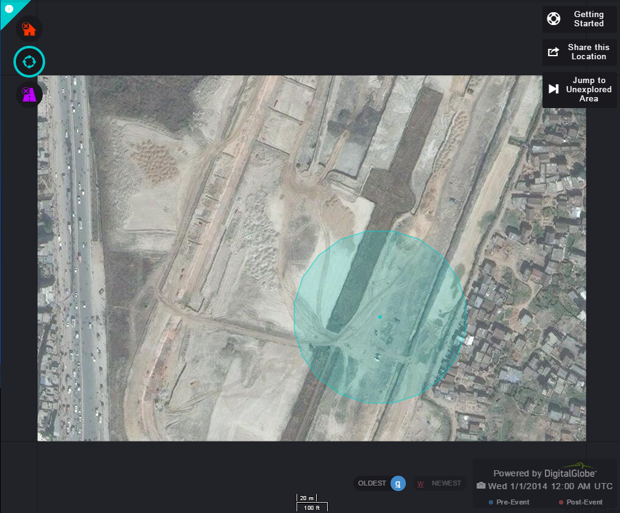
But the amateur satellite-image-perusers are still at it, and Kevin Bullock, director of product management at DigitalGlobe, says this current Tomnod campaign may be more important. Last Saturday night, a 7.8 magnitude earthquake hit near Kathmandu, the capital and largest city in Nepal. By Sunday morning, DigitalGlobe's satellite had captured images of the destruction in the city and its surrounding villages and had uploaded them online—nearly 5,700 square miles in all.


Since then, over 16,500 volunteers have used the Tomnod platform to compare the new satellite images with the old, placing 74,000 tags on major destruction areas, damaged roads, and ravaged homes. Their crowdsourced data is plugged into an algorithm that identifies frequent tag agreements to discover which areas are in need of the most help. That information is then made available to relief groups, who can use the images to target survivors in need of food, water, tents, and medical supplies.

“What’s interesting to me is that that Malaysian Flight 370 grabbed the world’s headlines, but it’s a needle in a haystack situation. We haven't found the plane,” Bullock said in a phone interview. “There’s a stark difference with Kathmandu. …Here we are actually helping to save lives. We can really show [where help is needed] with coordinates.”

The Tomnod community—DigitalGlobal says about 1 million people are registered users of the site—hasn't quite taken to the challenge of mapping post-earthquake Nepal like it did to the mystery of the plane. (The Nepal campaign has seen just 0.2 percent of the total volunteers of the Flight 370 campaign, though it's still too early for a final engagement tally.) Still, amateur mappers have congregated around the campaign's social media sites to share tips and tricks.

As with much amateur online work, parts of the Tomnod campaign feel frustratingly ineffectual—a little bit like a way for people with all the privileges of internet access to feel good about doing little. As CityLab pointed out Monday, professional mappers are already volunteering to map Nepal’s devastated areas through the open-source mapping platform OpenStreetMap, where their more sophisticated skill sets give them a better chance to help humanitarians on the ground, and more quickly. (While Tomnod's data helps groups pinpoint problem areas, Bullock explains, the OSM data will actually allow them to navigate Nepal's altered topography to get there.)

But Tomnod’s strength is simplicity. While OSM’s more advanced software is less accessible to the lay Internet user, the crowdsourced campaign can be used by anyone. “I have a 9-year-old daughter, and she can do this,” Bullock says. “Anyone can do this. …. You can pull out your phone and just spend five minutes contributing to the cause.”

There's another benefit. Over 4,600 bodies have been pulled from the rubble in Nepal, and that number will certainly rise. But statistics and photos of disaster in faraway lands are a dime a dozen, and empathy doesn't come cheap. In other words: Getting those in wealthy countries to donate is not an easy task. But there's something devastatingly unique and striking about Tomnod's grainy pictures of destruction from above. You'll toggle through before and after pictures to find that a road or a cluster of homes is just gone.

Wednesday 29 April 2015

http://www.citylab.com/tech/2015/04/how-amateur-mappers-are-helping-recovery-efforts-in-nepal/391703/

continue reading

Nepal earthquake: DNA test to identify Assam victims


The Assam government will conduct DNA tests to identify the bodies of its residents who died in the Nepal earthquake.

Assam home commissioner L.S. Changsan today said seven persons from Assam -all from Guwahati - were feared dead. Six bodies have been identified by family members so far. The seventh body, suspected to be that of Padma Majumdar of Hengerabari here, could not be identified as her family members said it was not hers.

Padma was one of a group of eight from Hengerabari who went to Kathmandu on pilgrimage and was caught in Saturday's disaster. Five of the group are feared dead. Four bodies were identified by a group of relatives who reached Kathmandu yesterday. Padma is feared to be the fifth person killed from the area.

Kalpana Adhikari from Bhangagarh area and Hema Saikia from Narikal Basti area of the city were also killed.

Changsan said DNA tests would be conducted on all the bodies to be doubly sure about their identity. "We have collected DNA samples from the family members of the victims and it will be matched with those of the bodies," she added.

The official said there was delay in bringing the bodies to the state because of problems in flight movement in Kathmandu and inclement weather.

"The Kathmandu airport with its limited capacity is incapable of catering to an emergency situation like this. Aircraft have to keep hovering in the sky for an hour or two before they can land. We are expecting the bodies to reach Delhi tonight," she said.

Officials in the ministry of external affairs said the bodies would be brought from Kathmandu only in Indian Air Force aircraft. Around five IAF aircraft have been pressed into service at Kathmandu.

"Flight communication was affected today because of inclement weather. Yesterday, flight service was affected by a riot-like situation when more than 5,000 Indian nationals tried to enter the airport. Police had to be called in to control the situation," Changsan said.

A survivor who reached Guwahati today said there was a 3km-long queue by Indian nationals at Tribhuvan International Airport in Kathmandu. She said she could come only because of help offered by an airport official in catching a flight without having to wait in queue.

"Buses from Assam have reached Nepal today and we hope it would reduce the burden on flights and chances of further such situation," she said.

Changsan said a police team, led by inspector-general S.N. Singh, would leave for Kathmandu tonight and try to bring back people from Assam stranded there by road.

She said additional director-general of Assam police Umesh Kumar who tried to board a flight from Delhi to Kathmandu yesterday could not do so and reached Nepal capital this morning.

Changsan said of the 141 people from Assam reportedly missing in Nepal, 92 have so far either reached Delhi or Guwahati - five of them reached here today - while 13 have been traced and found to be safe. "Seven injured are in hospitals in Kathmandu and our efforts are on to trace the remaining 22," she added.

The relatives of a family of five from Noonmati here, who have been doing business in Kathmandu for the past 15 years, said they had talked to them on Friday, a day before the earthquake. "But after the quake their mobile number is not working," a relative said.

The external affairs ministry could not give specific data on how many people from the Northeast were stranded in Nepal.

Mockdrill

A district-level joint mock drill on earthquake was conducted at the Assam Secretariat in Guwahati today. A mock evacuation exercise was conducted in Block D and E to generate awareness among people in case of disaster.

A task force, comprising the National Disaster Response Force (NDRF), State Disaster Response Force, fire & emergency services and civil defence, operated under the supervision of the Assam State Disaster Management Authority for planning and co-ordination of the exercise. NDRF rescuers displayed extrication methods like rope rescue, highrise rescue and victim stabilisation.

Wednesday 29 April 2015

http://www.telegraphindia.com/1150429/jsp/frontpage/story_17304.jsp

continue reading

Commemorating the Quintinshill rail disaster


Dumfries and Galloway will commemorate the centenary of the Quintinshill rail disaster on 22 May 2015.

The Quintinshill rail disaster on 22 May 1915 claimed 227 lives, including 216 servicemen of The Royal Scots as they headed for Gallipoli. Another 246 people were injured. The train crash, near Gretna, remains the UK’s worst rail disaster.

A troop train that had departed from Larbert station crashed into a local service at a junction near Gretna. An express train bound for Glasgow ploughed into the wreckage just moments later.

Many of those who died in the tragedy were servicemen with the Leith-based Royal Scots, who were travelling to Liverpool before they sailed to Gallipoli.

The events at Gretna on 22 May will be followed by a commemoration in Leith the next day.

They will be included in the national World War One centenary commemoration programme.

The programme of events includes a march to Quintinshill rail siding; the opening of a Roll of Honour at Gretna Old Church; a commemorative tree planting at Gretna Green war memorial; the premiere reading of Quintinshill poem at Stormont village hall; and a wreath laying at Quintinshill Bridge. HRH The Princess Royal will visit the region to participate in the commemorations.

Council Leader Ronnie Nicholson said, “As we commemorate the events in World War 1, it’s important that we take time to respectfully mark the centenary of this momentous event, which took place in our region. Our Council is working with local communities and a range of appropriate organisations to deliver a fitting tribute.”

Wednesday 29 April 2015

http://www.bbc.co.uk/news/uk-scotland-south-scotland-31364439

http://www.falkirkherald.co.uk/news/local-news/falkirk-men-among-quintinshill-rail-disaster-victims-1-3746492

continue reading

Tuesday, 28 April 2015

At Civil War's end, a steamboat disaster that history forgot


What remains of the greatest maritime disaster in U.S. history lies buried beneath an Arkansas beanfield where the Mississippi River once ran.

A century-and-a-half later, residents of the nearest town and descendants of passengers aboard the steamboat Sultana are gathering to commemorate a disaster that was overshadowed by Abraham Lincoln's assassination.

Along Highway 55 entering Marion, Arkansas, a small banner welcomes the descendants arriving for Monday's anniversary. Workers are feverishly restoring a mural depicting the steamboat as they seek to give the disaster its place in history.

The Sultana blew up on April 27, 1865, about seven miles north of Memphis, Tennessee, claiming as many as 1,800 lives, according to historical estimates. The Titanic claimed fewer — 1,517 — when it sank 45 years later.

But the momentous events of April 1865 — Lincoln's death and Gen. Robert E. Lee's surrender among them — all but eclipsed the tragedy on the Mississippi.

That month, thousands of Union prisoners newly freed in the South were being sent back north on steamboats. The Sultana was carrying six times its capacity with almost 2,500 people, among them many emaciated, injured or sick Union veterans.

"The nation had just endured four long years of civil war, over 600,000 lives were lost and people were accustomed to reading about thousands of men dying in battles," said Jerry O. Potter, a Memphis lawyer who counts himself among a handful of Sultana experts.

At 2 a.m. on April 27, as the Sultana navigated a swollen Mississippi that was flooded to treetop height and about 4 miles wide, three of the steamer's boilers exploded, sending flames and passengers into the air.

Residents of the tiny towns that dotted the river lashed together logs to make rescue rafts. Marion Mayor Frank Fogelman said people on both sides of his great-grandfather's family were among those rescuers.

"My grandmother made reference to it in the family Bible," Fogelman said. "The way I understand it, they used the raft to remove people from the wreckage and put them up in the treetops and then came back for everyone once all the survivors were away from the wreckage and the fire."

Passengers who escaped the burning ship struggled in the dark, cold water. Hundreds died of hypothermia or drowned. Bodies were still being pulled from the riverbanks months later, while others were never recovered.

The wreckage is now buried about 30 feet beneath a field not far from Marion, inside the river's flood-control levees. The river has since run a new course and runs about a mile east of the spot.

It wasn't until last year that the state of Arkansas erected a bronze plaque at the edge of a parking to memorialize the tragedy. Those who know the Sultana's story are hoping Monday's anniversary events will help make the sinking more than just a footnote to the end of the Civil War.

When the memorial is over, the 12,000-person town plans to turn a temporary exhibit into a permanent Sultana museum. The exhibit includes documents, photos, a canoe-sized replica of the steamboat and a wall covered in white panels with the name of every soldier, civilian and crew member.

"We've had a few people see this list and find an ancestor," said Norman Vickers, a local historian. "We hope more people will come and look at it, and maybe find something."

Potter, who wrote "The Sultana Tragedy" in 1992, is still researching the stories of those involved.

He recalled one former soldier who failed to re-board the Sultana when it steamed from Memphis. The soldier paid a local man to ferry him out to the Sultana so he could continue on to Ohio. The ex-soldier died in the disaster, but his best friend survived to tell about that twist of fate.

Years later, sitting at a descendants' reunion, Potter was able to connect the two families.

"That has been the one of the most rewarding parts of this, being able to help descendants make that connection," he said.

"Because to me, the greatest tragedy of the Sultana is that history has forgotten these men."

Tuesday 28 April 2015

http://www.newsadvance.com/news/state/at-civil-war-s-end-a-steamboat-disaster-that-history/article_3d722942-ecee-11e4-8b0c-178860c112e4.html

continue reading

Google, Facebook join Red Cross to find thousands missing after Nepal quake


German development worker Caroline Siebald and her boyfriend Charles Gertler, an American glaciologist, were on a rafting trip in Nepal when the earthquake struck and initially panicked about how to let their families know they were safe.

After about 30 attempts, Gertler, 25, managed to get a phone call through to his mother in Massachusetts in the United States, and she registered them as safe on Facebook's "Safety Check". Within minutes, their friends and families saw the news.

"I had messages from my best friends in kindergarten saying 'Oh my God, I'm so glad you're alive'", Siebald, 22, told the Thomson Reuters Foundation.

From migrant Nepali domestic workers in India to IT professionals in Brazil, people across the globe have taken to social media sites such as Facebook and Google to look for missing relatives and pass on news of survival in Nepal.

In India, which has the highest population of Nepali migrants in the world, many have been frantically trying to phone home, horrified as they watch television pictures showing bodies being pulled out of the rumble of collapsed buildings.

"I don't know anything about my son who is in a village with my parents far from Kathmandu. I am calling on the phone all the time, but I can't get through. I can't eat, sleep or work," said Usha Tamang, a nanny of Nepali nationality working in Delhi.

Elsewhere in the world, others are searching for relatives and friends who were visiting the Himalayan nation during its peak tourism season.

An estimated 300,000 foreign tourists were in the country, several hundred of whom were on Mount Everest, when Saturday's 7.9 magnitude quake struck, killing more than 3,700 people.

TRACING THE MISSING

The International Committee of the Red Cross (ICRC) was one of the first agencies to launch an online platform to trace the thousands of people who are missing.

The family tracing service publishes lists of names and information on people who are safe and well, hospital patients, people who are looking for relatives, sought persons or those who are dead.

Individuals can access these lists directly on the webpage to look for the names of their family members or register themselves as safe or in danger.

Facebook has also launched its Safety Check tool https://www.facebook.com/safetycheck/nepalearthquake for Nepal, drawing praise from Facebook members.

"It's a simple way to let family and friends know you're okay. If you're in one of the areas affected by the earthquake, you'll get a notification asking if you're safe, and whether you want to check on any of your friends," Facebook CEO Mark Zuckerberg posted.

"When disasters happen, people need to know their loved ones are safe. It's moments like this that being able to connect really matters."

An IT professional in Brazil was one of many who said that the initiative had helped her trace her family.

"My father and friends are in the area and one of the first contact points we had to get some news was Facebook. This media is not always about likes and fun," the woman wrote in response to Zuckerberg's post.

"When you or someone in your family is in danger, you'll try ANY kind of contact and I'm glad Facebook helped me today. Connection is what matters."

Another application, the Google Person Finder https://google.org/personfinder/2015-nepal-earthquake/, first launched after the 2010 Haiti earthquake, uses SMS to allow anyone to search or update information on missing people.

On Saturday Jacqueline Brown registered Angus Brown, 46, from London, as safe. "Angus has emailed, he is in Lumboche with Martin. Both are fine, warm and have food," she said. The service is currently tracking about 5,800 people.

Telecommunications firms and tech companies such as Apple, Microsoft and T-Mobile, joined the relief effort by either waving call and text fees, facilitating donations or making donations outright.

Apple has launched a partnership with the American Red Cross, asking iTunes users to donate money through its iTunes Store for the relief efforts. Apple says that 100 percent of the donations will be made to the American Red Cross in its ongoing efforts to help survivors. Twitter is also helping to raise funds through not-for-profit organizations, including UNICEF.

Google has launched its Person Finder to help people determine whether those who may have been in the area of the earthquake are safe. Person Finder users can say whether they're "looking for someone" or "have information about someone." The service is designed for victims or people who know victims to update their family and friends on their current status. For instance, the service can provide peace-of-mind to family members, telling them that a victim is safe and sound. Google has also reduced its international calls charge to Nepal via its phone service Google Voice to one cent per minute. The company previously charged 19 cents per minute to call Nepal.

Google engineer Dan Fredinburg, who worked in the company's Project X division, was among at least 17 climbers killed when an avalanche set off by the 7.8-magnitude earthquake rolled into the climbers' base camp on Mount Everest. His death was confirmed by Google, which indicated that three other Google employees were on the mountain with Fredinburg at the time of the avalanche. "He has passed away," Lawrence You, Google's director of privacy, wrote in a blog post. "The other three Googlers with him are safe, and we are working to get them home quickly."

Soon after the Nepal earthquake hit, Facebook CEO Mark Zuckerberg activated his company's Safety Check feature, allowing those who may have been in the area to let friends and family know they're fine. "When disasters happen, people need to know their loved ones are safe," Zuckerberg wrote on Saturday. "It's moments like this that being able to connect really matters. My thoughts are with everyone who's been caught up in this tragedy."

Telecommunications companies are also helping out. Time Warner, Verizon and AT&T have all offered their customers free calls to Nepal. Time Warner is additionally offering free calls to India and China through May 25; and Verizon and AT&T are offering free texting.

The technology companies' efforts could prove integral to helping people in Nepal in the wake of Saturday's 7.8-magnitude earthquake. The earthquake, the biggest to hit Nepal in 81 years, has so far left more than 3,700 people dead and is feared to have killed many more.

The catastrophe has mobilized humanitarian aid from around the world and several prominent organizations, including the American Red Cross, are on the scene to help those in need. The exact extent of the damage and ultimate impact on the Himalayan nation is still being evaluated, but the earthquake was strong enough to severely damage Katmandu and caused an avalanche on Mount Everest.

Nepal is seeking help in every way. Spokespeople for the country's government have said to reporters on the scene that the country lacks "the proper facilities" to properly address such a major natural disaster.

The technology industry's response is similar to how it responded following Japan's own disaster in 2011 following a major earthquake and tsunami. Nearly all of the major companies in the industry provided relief efforts to help victims.

Despite their best efforts, technology companies can only do so much to connect with people in Nepal. The country is one of the poorest in the world and just a third of its population of 30 million people is actually online. According to reports, the earthquake has taken down critical infrastructure, including Internet access, which could make efforts for victims to communicate even more difficult.

Tuesday 28 April 2015

http://news.yahoo.com/google-facebook-join-red-cross-thousands-missing-nepal-164119287.html

http://www.cnet.com/news/tech-companies-rally-behind-nepal-earthquake-survivors/#ftag=YHF65cbda0

continue reading

Monday, 27 April 2015

Nepal earthquake: Bodies being cremated as aftershocks hamper relief effort


Sleeping in the streets and shell-shocked, Nepalese cremated the dead and dug through rubble for the missing Sunday, a day after a massive Himalayan earthquake killed more than 2,200 people. Aftershocks tormented them, making buildings sway and sending panicked Kathmandu residents running into the streets.

The cawing of crows mixed with terrified screams as the worst of the aftershocks — magnitude 6.7 — pummeled the capital city. It came as planeloads of supplies, doctors and relief workers from neighboring countries began arriving in this poor Himalayan nation. No deaths or injuries were reported from the early Sunday afternoon quake, but it took an emotional toll.

"The aftershocks keep coming ... so people don't know what to expect," said Sanjay Karki, Nepal country head for global aid agency Mercy Corps. "All the open spaces in Kathmandu are packed with people who are camping outdoors. When the aftershocks come you cannot imagine the fear. You can hear women and children crying."

Saturday's magnitude 7.8 earthquake spread horror from Kathmandu to small villages and to the slopes of Mount Everest, triggering an avalanche that buried part of the base camp packed with foreign climbers preparing to make their summit attempts. At least 17 people died there and 61 were injured.

The earthquake centered outside Kathmandu, the capital, was the worst to hit the South Asian nation in over 80 years. It destroyed swaths of the oldest neighborhoods of Kathmandu, and was strong enough to be felt all across parts of India, Bangladesh, China's region of Tibet and Pakistan.

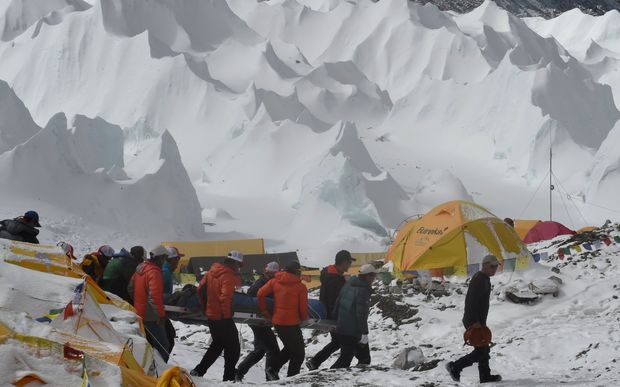
A Japanese tourist is taken on a wheelchair to a hospital after being evacuated from Mount Everest Base Camp By the afternoon of 26 April, authorities said at least 2,169 people had died in Nepal alone, with 61 more deaths in India and a few in other neighboring countries. At least 721 of them died in Kathmandu alone, and the number of injured nationwide was upward of 5,000. With search and rescue efforts far from over, it was unclear how much the death toll would rise.

But outside of the oldest neighborhoods, many in Kathmandu were surprised by how few modern structures — the city is largely a collection of small, poorly constructed brick apartment buildings — collapsed in the quake. While aid workers cautioned that many buildings could have sustained serious structural damage, it was also clear that the death toll would have been far higher had more buildings caved in.

Aid workers also warned that the situation could be far worse near the epicenter. The U.S. Geological Survey said the quake was centered near Lamjung, about 80 kilometers (50 miles) northwest of Kathmandu, in the Gorkha district.

Roads to that area were blocked by landslides, hindering rescue teams, said chief district official Prakash Subedi. Teams were trekking through mountain trails to reach remote villages, and helicopters would also be deployed, he said by telephone.

Local aid worker Matt Darvas said in a statement issued by his group, World Vision, that he heard that many remote mountain villages near the epicenter may have been completely buried by rock falls.

The Saturday midday quake flattened homes and historic sites but casualties in rural areas were said to be much less than estimated because thatch-roof houses common in villages and open spaces proved a blessing


The villages "are literally perched on the sides of large mountain faces and are made from simple stone and rock construction," Darvas said. "Many of these villages are only accessible by 4WD and then foot, with some villages hours and even entire days' walks away from main roads at the best of times."

Nepal's worst recorded earthquake in 1934 measured 8.0 and all but destroyed the cities of Kathmandu, Bhaktapur and Patan.

"There were at least three big quakes at night and early morning. How can we feel safe? This is never-ending and everyone is scared and worried," said Kathmandu resident Sundar Sah. "I hardly got much sleep. I was waking up every few hours and glad that I was alive."

As day broke, rescuers aided by international teams set out to dig through rubble of buildings — concrete slabs, bricks, iron beams, wood — to look for survivors.

With people fearing more quakes, tens of thousands of Nepalese spent Saturday night outside under chilly skies, or in cars and public buses. They were jolted awake by strong aftershocks early Sunday.

n the Kalanki neighborhood of Kathmandu, police rescuers finally extricated a man lying under a dead body, both of them buried beneath a pile of concrete slabs and iron beams. Before his rescue, his family members stood nearby, crying and praying. Police said the man's legs and hips were totally crushed.

Hundreds of people in Kalanki gathered around the collapsed Lumbini Guest House, once a three-story budget hotel and restaurant frequented by Nepalese. They watched with fear and anticipation as a single backhoe dug into the rubble.

Police officer RP Dhamala, who was coordinating the rescue efforts, said they had already pulled out 12 people alive and six dead. He said rescuers were still searching for about 20 people believed to be trapped, but had heard no cries, taps or noises for a while.

Most areas were without power and water. The United Nations said hospitals in the Kathmandu Valley were overcrowded, and running out of emergency supplies and space to store corpses.

Plumes of smoke, meanwhile, rose above the capital as friends, relatives and others gathered by the river to quickly cremate loved ones' remains.


Most shops in Kathmandu were shut; only fruit vendors and pharmacies seemed to be doing business.

"More people are coming now," fruit seller Shyam Jaiswal said. "They cannot cook so they need to buy something they can eat raw."

Jaiswal said stocks were running out, and more shipments were not expected for at least a week, but added, "We are not raising prices. That would be illegal, immoral profit."

The quake will likely put a huge strain on the resources of this impoverished country best known for Everest, the highest mountain in the world. The economy of Nepal, a nation of 27.8 million people, relies heavily on tourism, principally trekking and Himalayan mountain climbing.

With Kathmandu airport reopened, the first aid flights began delivering aid supplies. The first to respond were Nepal's neighbors — India, China and Pakistan, all of which have been jockeying for influence over the landlocked nation. Nepal remains closest to India, with which it shares deep political, cultural and religious ties.

India suffered its own losses from the quake, with at least 61 people killed there and dozens injured. Sunday's aftershock was also widely felt in the country, and local news reports said metro trains in New Delhi and Kolkata were briefly shut down when the shaking started.

People try to free a living man from the rubble of a destroyed building after an earthquake hit Nepal Other countries sending support Sunday included the United Arab Emirates, Germany and Francrestored to main government offices, the airport and hospitals.

Among the destroyed buildings in Kathmandu was the nine-story Dharahara Tower, a Kathmandu landmark built by Nepal's royal rulers as a watchtower in the 1800s and a UNESCO-recognized historical monument. It was reduced to rubble and there were reports of people trapped underneath.

The Kathmandu Valley is listed as a World Heritage site. The Buddhist stupas, public squares and Hindu temples are some of the most well-known sites in Kathmandu, and now some of the most deeply mourned.

Nepali journalist and author Shiwani Neupane tweeted: "The sadness is sinking in. We have lost our temples, our history, the places we grew up."

Cremations near Pashupatinath temple

Grieving families on Sunday cremated hundreds of victims of Nepal's earthquake near the famed Pashupatinath temple here, confusion and overcrowding marking the final rites.

Relatives jostled for space in the vast area to cremate the dead. Lack of adequate space forced hundreds to perform the last rites outside the designated spots.

More than 2,300 people have been officially declared dead in Saturday's devastating quake that measured 7.9 on the Richter scale. The government has warned that the toll may rise.

Nepal-India earthquake complete coverage

With most deaths reported so far in and around the Kathmandu Valley, there was heavy pressure on the Hindu cremation ground near the temple dedicated to Lord Shiva.

The funeral of more than 100 people took place on Sunday within a short time. "People are conducting the last rites wherever they can and without following the proper rituals," a witness told IANS.

Hundreds waited in serpentine queue to cremate their near and dear ones.

Hindus form 80 percent of Nepal's 29 million people. Buddhists account for another 10 percent.

Monday 27 April 2015

http://www.independent.co.uk/news/world/asia/nepal-earthquake-bodies-being-cremated-as-aftershocks-hamper-relief-effort-10204999.html

http://timesofindia.indiatimes.com/world/south-asia/Hundreds-cremated-near-Pashupatinath-temple/articleshow/47061055.cms

continue reading

Sunday, 26 April 2015

Google launches ‘Person Finder’ after devastating earthquake hits Nepal


Google India has launched its ‘Person Finder’ instance to help track missing persons after a massive 7.9 earthquake hit Nepal on Saturday.

Google’s Person Finder is a free tool that helps friends and family members search for missing persons after a calamity. People can request and provide information about missing persons on the site.

Google Person Finder has been assisting the world in face of calamities since 2010 Haiti earthquake and has helped numerous people to reconnect with their loved ones after disasters. It was also launched in India after the devastating 2013 Uttarakhand floods.

Search is also available through SMS in India and the US. Users just have to text “search ” to +91-9773300000 in India or +1-650-800-3978 in the US.

All data which is part of the Google Person Finder is public and anyone can search for it. Press, NGO’s etc can all add to the database and there’s also a Person Finder API to get updates on the same.

Sunday 26 April 2015

http://news.xinhuanet.com/english/2015-04/25/c_134184324.htm

continue reading

Rescue efforts intensify in Nepal


A 6.7 magnitude aftershock has struck Nepal amid a desperate search for people trapped by the earthquake, which has killed more than 2,000 people.

The aftershock, felt as far away as New Delhi, sent people in Nepal's devastated capital running on to the street once again, witnesses reported.

"Massive aftershock. A wall of a old house next to mine has collapsed now. Kathmandu is in shock again. People on streets," one Kathmandu resident tweeted.

It hit as teams from all over the world headed to Nepal to search for survivors and provide food and shelter to people left homeless by Saturday's 7.9 magnitude quake.

Indian air force planes were among the first to arrive, landing on Sunday with 43 tons of aid, including tents and food, and nearly 200 rescuers.

UK teams set to join the relief effort include 14 volunteers from from UK charity Search and Rescue Assistance in Disasters.

They are heading to Kathmandu with 1.5 tons of specialist equipment to rescue people from collapsed buildings. The quake, which hit on Saturday, flattened houses and temples and triggered an avalanche on Everest which killed 17 – the worst ever loss of life on the mountain.

Police in the capital Kathmandu say bodies are still arriving at one hospital in the city.

Officer Sudan Shreshtha told reporters his team had brought in 166 corpses overnight.

Tens of thousands of terrified Kathmandu residents also spent the night outside in freezing temperatures fearing another major tremor.

Officials fear the death toll could rise as the desperate search for survivors continues. Many countries and international charities have offered aid to Nepal to deal with the disaster.

The shallow 7.8 quake struck at midday (local time) on Saturday in central Nepal, about 81 kilometres northwest of the capital Kathmandu. It caused massive damage in the Kathmandu Valley.

Victims have also been reported in India, Bangladesh, Tibet and on Mt Everest.

Australian authorities are trying to contact hundreds of their people, with about 350 still not confirmed as safe. Desperate rescue efforts underway.

The death toll could rise, as the situation is unclear in remote areas which remain cut off or hard to access. Many mountain roads are cracked or blocked by landslides.

Scores of bodies have been ferried to hospitals in the capital Kathmandu, many of which are struggling to cope with the number of injured.


More than 700 have died in the capital alone.

Medics are expecting a fresh influx of patients on Sunday as supplies run low. Rescuers in places used their bare hands to dig for survivors still buried underneath piles of rubble and debris overnight on Saturday.

Army officer Santosh Nepal told the Reuters news agency that he and his soldiers had to dig a passage into a collapsed three-storey residential building in Kathmandu using pickaxes because bulldozers could not get through the ancient city's narrow streets.

"We believe there are still people trapped inside," he told Reuters. Many historic buildings in the capital, including the Darahara Tower, have been destroyed.

Bodies recovered after avalanche

Seventeen bodies have been recovered after an avalanche triggered by the earthquake buried part of Mt Everest's Base Camp sparking fears for hundreds of climbers on the mountain.


Rescue team personnel carry an injured person towards a waiting rescue helicopter at Everest Base Camp. The Mountaineering Association said it was the worst disaster ever on the mountain.

It said a further 61 people were injured and the first rescue helicopters had only now been able to get in to fly them to a medical centre.

There are 100 climbers at Everest Camps 1 and 2 above base camp and all are safe, according to the Mountaineering Association.

But it said it will be difficult to evacuate them because the Icefall Route back to Everest Base Camp was damaged. It is the start of the main climbing season and officials estimate at least 1000 climbers including 400 foreigners were either at Base Camp or up the mountain when the quake struck.

Sunday 26 April 2015

http://www.dailymail.co.uk/news/article-3055731/Nepal-earthquake-nightmare-waiting-happen-Experts-knew-disaster-coming-Kathmandu-preparing-just-week-ago.html

https://uk.news.yahoo.com/rescue-teams-rush-nepal-earthquake-zone-054425473.html#FSiV8fJ

continue reading

Saturday, 25 April 2015

Mount Everest avalanche triggered by Nepal earthquake kills at least 18: reports


A powerful earthquake in Nepal has triggered an avalanche on Mount Everest, killing at least 18 people, according to reports.

An Indian army mountaineering team found 18 bodies on Mount Everest, after the avalanche swept through the base camp.

More than 1,000 climbers had gathered there at the start of the climbing season.

The earthquake hit Nepal and north India on Saturday afternoon, killing more than 1,300 people and collapsing buildings in Kathmandu.

Since then, climbers on the world's highest mountain have pleaded for help, saying an avalanche has destroyed camps and sent slabs of ice crashing in a "huge disaster".

"An avalanche from Mt Pumori has hit the base camp, burying a part of it," Nepalese tourism official Gyanendra Shrestha said.

"We don't have the details yet, but 10 have been reported dead so far, including foreign climbers."

"We are trying to assess how many are injured. There might be over 1,000 people there right now, including foreign climbers and Nepalese supporting staff."

Romanian climber Alex Gavan said on Twitter that there had been a "huge avalanche" and "many, many" people were up on the mountain.

"Running for life from my tent. Everest base camp huge earthquake then huge avalanche," he said.

"Huge disaster. Helped searched and rescued victims through huge debris area. Many dead. Much more badly injured. More to die if not heli asap," he later tweeted.

Another climber, Daniel Mazur, said Everest base camp had been "severely damaged" and his team was trapped.

"Please pray for everyone," he said on his Twitter page.

Rescue efforts hampered by snowy conditions

Rescue efforts are underway but heavy snow has prevented helicopters from reaching climbers, an official said.

AFP reporters on approach to the base camp said no rescue helicopters were on their way.

"We got caught in an earthquake on Everest. We are both OK ... snowing here so no choppers coming," they said.

But medics already at base camp for the climbing season were working hard to "save lives", doctor and mountaineer Nima Namgyal Sherpa said on his Facebook page on Saturday.

"Many camps have been destroyed by the shake and wind from the avalanche. All the doctors here are doing our best to treat and save lives," Dr Nima said.

Mohan Krishna Sapkota, joint secretary in the Nepalese tourism ministry, said the government was struggling to assess the damage on Everest because of poor phone coverage.

"The trekkers are scattered all around the base camp and some had even trekked further up. It is almost impossible to get in touch with anyone," Mr Sapkota said.

Choti Sherpa, who works at the Everest Summiteers Association, said she had been unable to call her family and colleagues on the mountain.

"Everyone is trying to contact each other, but we can't. We are all very worried," she said.

One climber, Arjun Vajpai, told India's NDTV that he had not been able to establish radio communication with anyone from his team.

"We had some 10 to 15 climbers including some sherpas up there and we still don't have any confirmation reports [of] whether they are OK or not," he said.

"It is snowing here for the past one and a half days. We haven't been able to establish radio communication with them."

An avalanche in April 2014 just above the base camp on Mount Everest killed 16 Nepali guides, making it the deadliest incident on the mountain.

April is one of the most popular times to climb Everest before rain and clouds cloak the mountain at the end of next month.

Saturday 25 April 2015

http://www.abc.net.au/news/2015-04-26/nepal-earthquake-triggers-deadly-mount-everest-avalanche/6422142

continue reading

Devastating Nepal quake kills over 1,300, some in Everest avalanche


A powerful earthquake struck Nepal and sent tremors through northern India on Saturday, killing more than 1,300 people, touching off a deadly avalanche on Mount Everest and toppling a 19th-century tower in the capital Kathmandu.

There were reports of devastation in outlying, isolated mountainous areas after the midday quake of magnitude 7.9, Nepal's worst in 81 years, centred 50 miles (80 km) east of the second city, Pokhara.

As fears grew of a humanitarian disaster in the impoverished Himalayan nation of 28 million, an overwhelmed government appealed for foreign help. India was first to respond by sending in military aircraft with medical equipment and relief teams.

A police spokesman said the death toll in Nepal alone had reached 1,341, about half of them in the Kathmandu Valley. A further 36 fatalities were reported in northern India, 12 in Chinese Tibet and four in Bangladesh.

The quake was more destructive for being shallow, toppling buildings, opening gaping cracks in roads and sending people scurrying into the open as aftershocks rattled their damaged homes.

Thousands prepared to spend the night outside, setting up makeshift tents, sitting around campfires and eating food provided by volunteers.

Indian tourist Devyani Pant was in a Kathmandu coffee shop with friends when "suddenly the tables started trembling and paintings on the wall fell on the ground.

"I screamed and rushed outside," she told Reuters by telephone from the capital, where at least 300 people died.

"We are now collecting bodies and rushing the injured to the ambulance. We are being forced to pile several bodies one above the other to fit them in."

An Indian army mountaineering team found 18 bodies on Mount Everest, where an avalanche unleashed by the earthquake swept through the base camp. More than 1,000 climbers had gathered there at the start of the climbing season.

Choti Sherpa, who works at the Everest Summiteers Association, was unable to call her family and colleagues on the mountain. "Everyone is trying to contact each other, but we can't," she said. "We are all very worried."

TOURIST TRAIL

A second tourism official, Mohan Krishna Sapkota, said it was "hard to even assess what the death toll and the extent of damage" around Everest could be.

"The trekkers are scattered all around the base camp and some had even trekked further up. It is almost impossible to get in touch with anyone."

Around 300,000 foreign tourists were estimated to be in various parts of Nepal for the spring trekking and climbing season in the Himalayas, and officials were overwhelmed by calls from concerned friends and relatives.

Nepal, sandwiched between India and China, has had its share of natural disasters. Its worst earthquake in 1934 killed more than 8,500 people.

Political instability does little to boost Nepal's resilience; it has still not upgraded its weather forecasting system despite being surprised by unseasonal blizzards last autumn that killed 32 in the Annapurna massif.

In 2001, Nepal made global headlines when the crown prince, Dipendra, gunned down 10 members of his family, including his father, King Birendra Shah, before killing himself.

A Maoist rebellion subsequently transformed the kingdom into a republican democracy and abolished the monarchy altogether in 2008. A new constitution has yet to be agreed, however.

"This earthquake is the nightmare scenario," said Ian Kelman of the UCL Institute for Risk and Disaster Reduction in London.

"The country has ... suffered terrible conflicts, poor governance, and heart-wrenching poverty, all of which created and perpetuated the vulnerability which has been devastatingly exposed."

TOWER TOPPLED

Among the Kathmandu landmarks destroyed by the quake was the 60-metre-high (100-foot) Dharahara Tower, built in 1832 for the queen of Nepal, with a viewing balcony that had been open to visitors for the last 10 years.

A jagged stump just 10 metres high was all that was left of the lighthouse-like structure. As bodies were pulled out of the ruins, a policeman said up to 200 people had been trapped inside.

At the main hospital in Kathmandu, volunteers formed human chains to clear the way for ambulances to bring in the injured.

Across the city, rescuers scrabbled through the rubble of destroyed buildings, among them ancient, wooden Hindu temples.

"I can see three bodies of monks trapped in the debris of a collapsed building near a monastery," said Pant, the tourist. "We are trying to pull the bodies out and look for anyone who is trapped."

EVEREST AVALANCHE

The Everest avalanches, first reported by climbers, raised fears for those on the world's loftiest peak a year after a massive snowslide killed 16 Nepali guides just above base camp.

Romanian climber Alex Gavan tweeted that there had been a "huge earthquake then huge avalanche" at base camp, forcing him to run for his life.

In a later tweet Gavan made a desperate appeal for a helicopter to fly in and evacuate climbers who had been hurt: "Many dead. Much more badly injured. More to die if not heli asap."

Another climber, Daniel Mazur, said the base camp had been severely damaged and his team were trapped. "Please pray for everyone," he tweeted.

The tremors were felt as far away as New Delhi and other cities in northern India, with reports that they had lasted up to a minute.

Indian Prime Minister Narendra Modi dispatched a military air transporter with three tonnes of supplies and a 40-strong disaster response team to Nepal. Three more planes were to follow, carrying a mobile hospital and further relief teams.

Saturday 25 April 2015

http://uk.reuters.com/article/2015/04/25/uk-quake-nepal-collapse-idUKKBN0NG07F20150425

continue reading