Saturday, 13 December 2014

Dozens of bodies found 'piled up' in Sierra Leone hospital after unreported Ebola outbreak


Dozens of bodies were discovered in a Sierra Leone hospital on Wednesday after an Ebola outbreak went unreported by health officials.

By the time the World Health Organisation (WHO) was called in, 87 people were dead, and the virus had hit eight of the area's 15 chiefdoms.

The WHO response team arrived on Wednesday, and what they found was disturbing. "They uncovered a grim scene," the agency said in a statement.

The local hospital had curtained off a section of the facility where 25 bodies were found. The organisation buried 87 people in 11 days, "including a nurse, an ambulance driver, and a janitor drafted in to removing bodies as they piled up."

The district had only reported 119 Ebola cases through December 9, and only 24 cases were reported last week. Over 350,000 people live in Kono District.

"We are only seeing the ears of the hippo," feared Sierra Leone Director of Disease Prevention and Control Dr Amara Jambai.

Sierra Leone recently overtook Liberia as the country with the highest number of reported Ebola cases with 7,897 infections since the outbreak began early this year.

However, Liberia reported 3,177 deaths from the virus, while Sierra Leone reported just 1,768.

Sierra Leone Health Minister Abu Bakarr Fofanah said that only laboratory-confirmed deaths are being recorded by the West African nation.

"It is difficult to put an exact figure on the deaths," he told Reuters. "They are adding suspected cases, so that is causing the discrepancies in the results. We are going by the textbook."

As of December 7, over 6,000 people have died from the Ebola outbreak that began in Guinea this spring. There have been nearly 18,000 confirmed or suspected cases of Ebola infection this year.

Saturday 13 December 2014

http://www.christiantoday.com/article/dozens.of.bodies.found.piled.up.in.sierra.leone.hospital.after.unreported.ebola.outbreak/44362.htm

continue reading

Georgia National Guard trains for disaster situations


The Georgia National Guard Homeland Response Force is making sure their volunteers know what to do in the event of a disaster.

"It gives them the opportunity to go, within range, and exercise their skills and what they're required to do in case a disaster happens in the United States," says Lt. Col. Michael Maddox.

The guardsmen will practice multiple scenarios at a training center in Perry. One of them is a search and rescue simulation. They must also pass a test in order for them to get their certifications.

"It doesn't just have to be a terrorist incident. It can also be a hurricane, a tornado, or anything that involves mass casualties," explains Sgt. Tyler Stanton.

During one exercise, trainees pretended a building had collapsed and searched for survivors. Once they found them, they cleaned the victims to rid their bodies of contaminants before sending them to the medical area for treatment.

Volunteers with the Homeland Response Force acted as victims during the simulations. They say training with real people better prepares them because they never know what they will really expect in a real-life situation.

"You don't know what exactly what you're going to expect when you get out into the field and you're out actually doing this type of stuff in real world. So, it's good to keep the soldiers on their toes," adds Stanton.

Guardsmen are tested about every two years to make sure they are up to date on training.

The guardsmen will begin their testing Saturday. They must pass and be certified in every element.

Saturday 13 December 2014

http://www.41nbc.com/story/d/story/georgia-national-guard-trains-for-disaster-situati/36937/YppDk2rCDUiQ9o0GmnN9iQ

continue reading

Illegal structures vulnerable, but no disaster management plan in place


The district administration's response time to the building collapse in Narhe village in the wee hours of October 31 was about two hours, say locals, and that too was possible because a clerk from the tahsildar's office lives in the locality and alerted his superior within minutes of the collapse. His superior alerted his seniors in turn and the rescue operation started.

Narhe village is not a remote area, but is fairly well connected to the city by road. But like hundreds of villages surrounding the city, Narhe is not quipped with a Village Disaster Management Committee (VDMC), which is mandatory for panchayats.

It was unchecked construction on hills that led to the landslide in Malin village in Ambegaon taluka, located about 100kms from Pune city. The entire village had vanished in the landslide that claimed 151 lives. The National Disaster Response Force and the district collectorate were engaged in rescue and clearing operations for the next 10 days. But the response time to this tragedy was very delayed. It was a bus conductor who sent the alert about the tragedy when he saw debris in place of the village in the morning. It was evening by the time the first disaster management team reached the spot.

"There is absence of early warning system in our disaster management operations. Early warning systems are important to save lives. It is a fact that we are poorly equipped when it comes to disaster management," said R K Pachauri, director- general TERI. "We have to put institutions and mechanisms, which will protect life and property," he said.

The state government and district administration maintain that all is well with the disaster management plan and mechanism. The claims notwithstanding, the system is yet to show any result.

The Pune Municipal Corporation's (PMC) integrated disaster management plan report expresses doubt over the city's preparedness in case of a calamity. According to the report, the city would be caught unawares, its fire stations, fire tenders, staff and other critical equipment may prove inadequate, and its mechanism to protect water supply from probable terror attacks may fall short. "The city falls in the low capacity category to prevent and mitigate hazards. The civic body lacks a coordinated communication set-up that could warn the public and remain in communication with control mechanisms. The staff is not trained in performing emergency support function and incident response system functions," the plan added.

"The situation in the fringes is even more vulnerable. There are buildings that have come up on hills, river bodies, nullahs and even in quarries filled up with murrum. The illegal buildings must be demolished, but then there is political pressure," said a senior district official. He added that it is impossible to have a disaster management plan for illegal structures.

However, people living in such illegal buildings say they are aware of the possibility of a calamity, but have no choice. "I have to live here as my parents have invested in this apartment," said Mudassar, a private cab driver from Kondhwa. The building he lives in was constructed by a small time developer, which has no permissions in place to the best of Mudassar's knowledge. But he continues to stay here with his wife and children, hopeful that the developer hasn't compromised on the building's quality.

Saturday 13 December 2014

http://timesofindia.indiatimes.com/city/pune/Illegal-structures-vulnerable-but-no-disaster-management-plan-in-place/articleshow/45500544.cms

continue reading

More than 100 feared dead after Indonesia landslide


More than 100 Indonesian villagers are feared to have died after a landslide triggered by torrential rain obliterated their rural community in Central Java.

Rescue workers were using their bare hands to claw through thick mud in search of survivors on Saturday after Jemblung village was swallowed up by a cascade of earth at around 6pm the previous day.

"It was like a nightmare," a survivor called Wahono, told the Associated Press.

"We suddenly heard a terrible roar and we were immediately fleeing from the rain of red soil. Many failed and they were buried in the ground." Imam, another survivor, told local television: "There was a roaring sound like thunder. Then I saw trees were flying and then the landslides."

By Saturday afternoon, 18 bodies had reportedly found buried under the mud or in the wreckage of smashed homes. They were removed from the area in orange and black body bags. Another 90 people were missing, feared dead, officials said.

"Rescuers are still trying to find more victims," Sutopo Purwo Nugroho, spokesman for the National Disaster Mitigation Agency, said in a statement.

"The challenge is that the evacuation route is also damaged by the landslide."

*Attempts to evacuate survivors from the area had begun on Friday night but were suspended because of the risk of further landslides, according to Pos Kota, an Indonesian newspaper.* *The Indonesian National Board for Disaster Management* had ordered police, military and volunteers into the area but a lack of communications was also hampering the rescue effort, reported Indonesia's *Antara News. * "The threat of possible repeat of the landslide at the scene is still hampering the search and rescue operation," the official told Xinhua, China's official news agency.

The national disaster agency said 15 people had been rescued. Eleven of those had to be hospitalized. The agency said hundreds of people, including police, soldiers and residents are digging through the debris with their bare hands, shovels and hoes searching for the missing.

More rain Saturday has hampered rescue efforts. Some heavy equipment has been brought in to help with the search.

The rainy season has begun in Indonesia, a time when landslides triggered by heavy downfalls and floods are common.

Few nations suffer more from the effects of natural disasters than Indonesia. Landslides are common during the October until April monsoon season and the country also suffers from volcanic eruptions, earthquakes and flooding.

The Indonesian city of Banda Aceh was ravished by the 2004 Indian Ocean tsunami that claimed almost 230,000 lives. The Boxing Day 2004 disaster was caused by a 9.0-magnitude earthquake off the Indonesian island of Sumatra.

Saturday 13 December 2014

http://www.telegraph.co.uk/news/worldnews/asia/indonesia/11291815/More-than-100-feared-dead-after-Indonesia-landslide.html

continue reading

'Bay Area’s Titanic’: 1901 shipwreck near Golden Gate found


Scientists have located the wreckage of a passenger ship that crashed in 1901 near the site of what is now the Golden Gate Bridge, killing 128 people.

The ship, named the City of Rio de Janeiro, was discovered with the help of a remote submersible last month in 287 feet of water about a half mile from San Francisco, the San Francisco Chronicle reported.

The ship was carrying 210 passengers, many of them Chinese emigrants, when it crashed on rocks in heavy fog. It went down in 10 minutes, with many of the passengers trapped in their berths below. Their bodies were never recovered.

"Many of these people were about to start a new life in a new country," said Robert Schwemmer, maritime heritage coordinator for the Office of National Maritime Sanctuaries. "They were only perhaps an hour away from the dock in San Francisco. That is something to think about."

Mr Schwemmer said the City of Rio de Janeiro disaster is often called the Bay Area's Titanic.

The location of the wreckage was a mystery until an expedition that included Mr Schwemmer and James Delgado, a maritime historian, made the discovery.

Mr Delgado said the discovery was "like turning on the light in a dark room. It's great. That's why we do what we do."

Scientists from the National Oceanic and Atmospheric Administration have taken 3-D and sonar images of the wreckage.

The Rio, which carried 210 passengers and crew, crashed into the rocks at Fort Point near where the Golden Gate Bridge now stands, in a heavy fog, on Feb. 22, 1901. There was panic and confusion aboard, and the ship went down in 10 minutes. Many of the passengers were trapped in their berths below, and their bodies were never recovered.

James Delgado, a marine historian, calls the wreck a sunken cemetery. “It is a mud-filled tomb,” he said.

Most of the passengers and nearly all of the crew were Chinese. Many were emigrants on the last leg of a long journey from Asia. The ship’s last voyage began in China. The Rio stopped in Japan and Hawaii before heading for San Francisco Bay.

Fog obscured the Golden Gate on the night of Feb. 21, 1901, so Capt. William Ward anchored the ship just off the Cliff House, in sight of San Francisco.

Fateful decision

But before dawn, the fog seemed to lift, and after consulting with Capt. Frederick Jordan, the bar pilot, Ward weighed anchor and headed for the Golden Gate. The fog closed in again, however, and about 5:30 a.m. Feb. 22, the Rio ran onto the rocks.

There was tremendous confusion, according to accounts at the time. The officers and crew spoke different languages, and the lifeboats were never launched,. The ship’s lights went out, and the ship drifted off the rocks and sank.

Schwemmer is touched by the tragedy of that long-ago morning. “Many of these people were about to start a new life in a new country,” he said. “They were only perhaps an hour away from the dock in San Francisco. That is something to think about.”

Only 82 of the 210 people aboard were saved, many by the crews of Italian fishing boats heading out to sea. Ward went down with his ship. More than a year after the Rio sank, the vessel’s wooden pilothouse floated loose from the wreckage and drifted to Fort Baker on the Marin side of the Golden Gate. Inside were Ward’s remains. The Chronicle reported that he was identified by a watch he always wore and a watch fob made of a silver Chinese coin.

Scientists and treasure hunters have been looking for the Rio for years, partly based on century-old rumors that the ship carried a fortune in silver. A group whom Delgado and Schwemmer call “treasure hunters” thought they had found the wreck in the Golden Gate in 1987.

Search went awry

However, the searchers were unable to reach it, and the remote-controlled underwater vehicle they were using was lost in the swirling currents of the Golden Gate. Also, the NOAA scientists say, the expedition’s coordinates were off. So the search went on.

Delgado, who has studied shipwrecks for years, believes the rumors of sunken treasure were wrong. The silver bars in the old sea story were actually bars of tin, he said.

But the real scientific treasure lay in finding and photographing the wreck. Earlier this fall, an outfit named CodaOctopus Products was demonstrating some of its equipment to the San Francisco Police Department’s Marine Unit, which was interested in underwater searches. The demonstration took place near the Golden Gate where the freighter Fernstream sank in 1952.

New technology

Schwemmer and Delgado, who had been conducting research involving wrecks earlier in the year, heard about it, and CodaOctopus and Gary Fabian, a sonar expert, joined in the expedition to find the Rio.

“It was a beautiful clear November day, and the sea was flat calm,” said Schwemmer. “We had to work at slack water, between the tides. We could only make a few passes. I was glued to my seat. We were close to Fort Point. And there it was.

“You could see the bow clearly, and then the stern, all buried in 113 years of mud.”

Finding the wreck, Delgado said, “was like turning on the light in a dark room. It’s great. That’s why we do what we do.” The ship will likely remain where it is, buried in more than a century of mud and debris, like a maritime graveyard.

Saturday 13 December 2014

http://www.telegraph.co.uk/news/worldnews/northamerica/usa/11290033/San-Francisco-passenger-ship-wreck-found.html

http://www.sfgate.com/bayarea/article/The-Bay-Area-s-Titanic-finally-found-near-5948837.php

continue reading

Friday, 12 December 2014

Highland Towers disaster: Memories still fresh after 20 years


It has been 21 years since the Highland Towers tragedy, but for Kuala Lumpur Hospital (HKL) Forensic Department head Dr Mohd Shah Mahmood, the memories remain fresh.

For the then-budding forensic pathologist, it was an unforgettable baptism by fire, enduring two weeks of sleepless nights identifying the remains of the victims with three other forensic experts.

Highland Towers, a luxury apartment in the opulent neighbourhood of Taman Hillview, Ulu Klang, Selangor, crumbled in less than five minutes after a landslide crashed its Block 1 at 1.35pm, sparking one of the biggest rescue operations the country had seen then.

Dr Shah, who has been in the forensic field for 24 years, said he recalled the events as clearly as though it had happened yesterday.

“It was in my third year in forensics, and my first year as a forensic pathologist. I was in Bangsar assisting the police on a murder case at a construction site when I was told that a residential building had collapsed.

“I was told by HKL to immediately formulate a disaster identification plan for the recovery efforts,” he told the New Straits Times yesterday.

He said one forensic team, including him, was on standby at HKL, while a smaller team was posted to the site, together with the police, search teams and volunteers, in case they recovered any body parts that would then be immediately screened for verification.

Dr Shah said the bodies came in slowly due to the difficulty in recovery as they were trapped underneath the rubble.

“Nevertheless, we wanted to do our best to ensure family members and friends were able to claim and give a proper burial to their loved ones.”

He said the majority of the injuries were fatal, with many having suffered crushed abdomens, lungs and ribs.

He was told that rescuers heard the victims’ knocking and cries for help from beneath the rubble up till the seventh day. He noted that it was medically impossible as the victims’ injuries would have not allowed them to survive more than a day.

“Although 47 victims suffered massive injuries, our team was able to identify them based on belongings, such as jewellery and clothing.

“Some victims were identified based on documents, identification cards and driving licences in their wallets. Even though the bodies were decomposed, many were identified by their fingerprints,” he said, adding that not many of the bodies required DNA comparisons.

However, there were moments of “gallows humour” amidst the gloom.

“There was one isolated case where a set of remains had been brought to the hospital. After a detailed examination, we realised it was a piece of chicken thigh that had bypassed the screening.”

He said such incidents would usually happen in housing areas as most homes had refrigerators with various types of meat in their freezers, adding that it was mistaken with bodies that had been badly mangled.

Dr Shah noted that the fatality count could have been higher if the incident had occurred at night instead of noon. He explained that each block had 48 units, and with 48 victims, it averaged one victim per unit.

“What influenced the number of fatalities was the fact that it occurred at 1pm, when government workers were at work (Saturday was still a working day then) and those in the private sector enjoying their day off by lunching outside or shopping.

“If it had happened at 1am when everyone was asleep in their homes, it would have been three people per apartment on average, tripling the death count.”

He said all victims were recovered and identified within two weeks.

Following the Highland Towers disaster, Dr Shah had been deployed to the Lahad Datu intrusion, the 2013 Genting Highlands bus crash and the Malaysia Airlines MH17 tragedy.

Friday 12 December 2014

http://www.nst.com.my/node/61783

continue reading

Two more MH17 bodies identified (article in Dutch)


De laatste vier nog niet geรฏdentificeerde slachtoffers van rampvlucht MH17 zijn allen Nederlanders. Deze week zijn opnieuw twee slachtoffers van rampvlucht MH17 geรฏdentificeerd.

Dat heeft het ministerie van Veiligheid en Justitie donderdag bekendgemaakt.

Een van de geรฏdentificeerden heeft de Nederlandse nationaliteit. De nationaliteit van het niet-Nederlandse slachtoffer wordt niet bekend gemaakt, op verzoek van de ambassades van de betrokken landen. De nabestaanden van de slachtoffers zijn ingelicht.

Sinds juli is het Landelijk Team Forensische Opsporing (LTFO) bezig met de identificatie van de 298 omgekomen slachtoffers van de vliegramp met het toestel van Malaysia Airlines, in het oosten van Oekraรฏne.

Vorige week werden drie slachtoffers geรฏdentificeerd. Eind november kwamen voor het laatst kisten met stoffelijke resten van slachtoffers aan in Nederland.

Informatie

Het is volgens het ministerie nog niet te zeggen of en wanneer de overige vier vermisten worden geรฏdentificeerd.

Het kan zijn dat alsnog informatie beschikbaar komt van de lichaamsdelen die al in Hilversum zijn. Maar het is ook mogelijk dat hun stoffelijke resten nog niet zijn geborgen op de rampplek in het oosten van Oekraรฏne.

Bij de ramp op 17 juli kwamen alle 298 inzittenden van de Boeing 777 van Malaysia Airlines om het leven, onder wie 196 Nederlanders.

Friday 12 December 2014

http://www.nu.nl/binnenland/3950635/laatste-vier-niet-geidentificeerde-slachtoffers-mh17-nederlands.html

continue reading

Thursday, 11 December 2014

South Korea to take over search after Bering Sea fishing disaster


South Korean officials are expected to take over on-scene control of search efforts following the deadly sinking of a fishing vessel in the western Bering Sea last month.

The U.S. Coast Guard has been overseeing the effort with the cutter Alex Haley on site. But with the scheduled arrival of the South Korean vessel Sambong this weekend, the Coast Guard plans to take on a role of search and rescue planning, Rear Adm. Dan Abel, commander of the Coast Guard in Alaska, said on Wednesday.

Abel said two South Korean aircraft will be based out of Joint Base Elmendorf-Richardson in Anchorage as part of the response. There are daily briefings on the matter, as well.

Moon Duk-ho, consul general for the republic of Korea in Seattle, was scheduled to tour the Coast Guard command center and get an update on the agency's response Wednesday, but his plane was unable to land in Juneau, due to foggy conditions.

Seven people survived the sinking of the Oryong 501, which occurred in Russian waters but was close enough to a boundary line that the Coast Guard was allowed to respond.

Abel said the remains of 27 people have been recovered. Another 26 remain unaccounted for, he said.

Russian officials, according to the Coast Guard, reported that the vessel had been hit by a wave that flooded the boat's storage chambers with seawater.

The Coast Guard was alerted that the vessel had sunk the evening of Nov. 30. After speaking with rescue coordination officials in Russia and South Korea, the Coast Guard deployed its largest search aircraft from Kodiak, about 850 miles from the scene. It arrived at first daylight, Abel said.

Good Samaritan Russian fishing vessels that also responded recovered the survivors, as well as remains, debris and rafts, he said.

Officials are hopeful they might still find survivors, but Abel said with the most optimistic of assumptions — that the person is dry, in a raft and wearing winter clothing like a parka, boots and glove — survivability is about 168 hours. That ended last weekend.

The search area has covered 7,400 square miles, he said.

Thursday 11 December 2014

http://www.thestate.com/2014/12/10/3865511_skorea-to-take-over-search-after.html

continue reading

Malaysia: JAKIM can handle bodies of Muslims at disaster sites


The Malaysian Islamic Development Department (Jakim) is always ready to provide assistance in handling bodies of Muslims who die in tragedies or disasters.

Minister in the Prime Minister’s Department Jamil Khir Baharom said although there was no specific unit to handle bodies of victims in disaster areas, the agency had a standard operating procedure practised by its staff.

“We have an SOP where our officers and staff handle the bodies at all the mosques and major hospitals in the country, including accident victims. “So when there is a need following a disaster, we can use our officers who are always ready.

“This means that the existing SOP is applicable (in case of disaster),” he told reporters after attending a ceremony to present certificates of appreciation to Jakim officials who were involved in the handling of the bodies of Muslim victims in the Malaysia Airlines MH17 flight tragedy, at the Parliament House here today.

The certificates were presented by Prime Minister Najib Tun Razak.

Thursday 11 December 2014

http://www.freemalaysiatoday.com/category/nation/2014/11/19/jakim-can-handle-bodies-of-muslims-at-disaster-sites/

continue reading

Tuesday, 9 December 2014

Typhoon Hagupit leaves at least 21 dead, disaster preparedness saves lives


At least 21 people were killed by the storm, the Red Cross said, with the eastern island of Samar worst hit, but it caused far less damage than feared.

Thousands of people are heading home after about a million people were evacuated from vulnerable areas.

The city of Tacloban, which bore the brunt of Super Typhoon Haiyan last year, has emerged relatively unscathed.

Albay province, which evacuated more than half its population, has called for those people to go home.

After spending three days at a school in Polangi, families are packing into small military trucks, holding one or two plastic bags with the essentials they brought with them.

They worry about the state in which they'll find their homes but many are most worried about their rice fields, their only source of income.

One woman reached her house and found it flooded and uninhabitable. For her that means at least one more night in the evacuation centre.

Hagupit has been nowhere near as powerful as Typhoon Haiyan - known as Yolanda in the Philippines - which tore through the central Philippines in November 2013, leaving more than 7,000 dead or missing.

In Tacloban, Hagupit blew away roofs and flooded streets, but the area has escaped the wider devastation of last year.

"There were no bodies scattered on the road, no big mounds of debris," local woman Rhea Estuna told the Associated Press by phone from Tacloban. "Thanks to God this typhoon wasn't as violent."

Tacloban Mayor Alfred Romualdez told the BBC that the immediate task was assessing damage to the temporary shelters in which some people have been living.

He said that the weather was good now but that high tides were making it harder for waterways to drain, despite work to clear debris.

UN official Orla Fagan told Reuters that a lot of people have begun returning to their homes. "In Tacloban this morning, the sun is shining, people just started going back," she said.

The storm made its fourth landfall on Monday night, hitting Batangas province some 100km (60 miles) south of Manila with winds of roughly 100km/h.

At its height, as it approached land on Saturday, gusts of up to 250km/h were recorded.


Lessons learnt help Philippines avoid high death toll

As Typhoon Hagupit churned across the Philippines on Sunday, residents of the eastern part of the island nation expressed relief that they had joined the hundreds of thousands who had evacuated to safer ground.

Ms Eleanor Llaneta, 60, decided to follow the advice of her neighbourhood captain and leave her home in Albay province, on the south-eastern tip of Luzon Island, on Friday, more than a day before Typhoon Hagupit made landfall.

In past years, she might have considered staying put, but a year’s worth of news about the devastation of Typhoon Haiyan, which left more than 7,300 people dead or missing after hitting the Philippines in November 2013, convinced her that prudence was the best course. “We only knew about storm surges after Tacloban,” said Ms Llaneta, referring to the city that Haiyan left filled with mud, debris and dead bodies just over one year ago.

Typhoon Hagupit weakened into a tropical storm on Monday, leaving at least 21 people dead, and forcing more than a million people into shelters, but sparing most of the central Philippine region still haunted by last year’s monster storm.

While the worst was over in central island provinces, where the sun peeked out yesterday after days of stormy weather, Manila and outlying provinces braced themselves as Hagupit blew nearer with maximum sustained winds of 105kmh and gusts of 135kmh.

Forecasters said the storm was expected to slam into a Batangas provincial town about 110km south of Manila by nightfall. Although considerably weaker from its peak power, the storm remains potentially dangerous and could still whip storm surges that could overwhelm coastal villages, they said.

In Albay province, Ms Llaneta and about 560,000 others were evacuated ahead of the storm, said local officials. As of 4am on Sunday, more than 1.2 million people had been evacuated nationwide, Ms Gwendolyn Pang, secretary-general of the Philippine Red Cross, wrote on Facebook.


Hagupit is expected to hopscotch across islands as it makes its way west. Maximum sustained winds near the centre had dropped to about 160kmh by Sunday morning, but the slow churn over the nation could dump large amounts of rain, setting off floods and mudslides.

The Mayon volcano rises over Albay, adding a further risk of landslides to the wind, floods and storm surges that often follow typhoons. In 2006, Typhoon Durian dumped heavy rain on the area, setting off mudslides that buried villages below Mayon and killing more than 1,000 people.

One significant development in disaster preparedness in the Philippines is a much wider knowledge of the threat from storm surges, the walls of water pulled along by typhoons that can quickly flood low-lying coastal areas. In Tacloban last year, a wall of water from Typhoon Haiyan ripped across a peninsular neighbourhood known as San Jose, crumpling cement houses and causing many deaths.

An assessment of that disaster by a German government-funded sustainable development agency said many residents in Tacloban, where the storm surge was the cause of most of the fatalities, had not been familiar with the risks and did not evacuate. “Serious warnings and more effective evacuations along the coastline could have saved many lives,” the report said.

In the year since Haiyan, residents have been exposed to much more discussion about the risks of typhoons, and evacuees in the city of Legazpi said that had contributed to their willingness to leave their homes.

Tuesday 9 December 2014

http://www.todayonline.com/world/asia/lessons-learnt-help-philippines-avoid-high-death-toll-typhoon

http://www.bbc.co.uk/news/world-asia-30370012

continue reading

Remembering the 2004 tsunami in Banda Aceh


Ten years after a tsunami hit this city on Dec. 26, 2004, killing 167,000 people, roads and bridges have been rebuilt, there are houses on the beach, trees have grown back, and the millions of tons of debris that covered the island are gone. But for a first-time visitor, reminders of the disaster seem to be everywhere.

A sculpture of a giant wave marks Lambaro, one of four mass gravesites, where 46,000 bodies are buried. A hotel front desk displays a photo of smashed boats filling its parking lot. The dome of a mosque — torn off its building a mile (1.6 kilometers) away — rests in an emerald-green rice field.

Water streams down the cave-like walls of the Tsunami Museum, which serves as both a memorial and evacuation site, with a knoll on high ground offering refuge in case another tsunami strikes. The center of the museum is an atrium that rises above a park, decorated with the word "Peace" and the flags of countries that provided assistance. Exhibits explain how the community worked together to rebuild, and how the once-embattled province even found ways to make peace after the disaster, with rebels in a long and bloody separatist fight signing a deal with the central government.

Almost everyone in Banda Aceh has a story to share. Dara Umarra and her neighbors have in their yards two wrecked boats that came to rest there after the storm. Visitors can climb in one boat, but it's tilted at a steep angle. I couldn't position myself squarely on the ladder and as I dangled from the rungs, I wondered what it was like trying to cling to anything stable to survive the waves.

A massive, 2,500-ton steel barge that housed a floating diesel power generator, the Apung 1, was carried 5 kilometers (3 miles) inland. Walkways and five flights of stairs leading to a viewing tower allow visitors to appreciate its sheer bulk. A monument outside the barge honors victims from the immediate area. A copper-colored sculpture, symbolizing the height and color of the massive waves, surrounds a clock tower where time is stopped just before 8 a.m., the moment when the earthquake struck, unleashing the tsunami.

One of the most-visited sites is a long fishing boat that crashed on top of a house. A ramp leads to the roof, and you can also walk underneath where it's wedged between two dwellings. The boat provided a refuge for 56 survivors.

..View gallery In this Aug. 11, 2014 photo, Dara Umarra, left, and her boyfriend, Septian talk outside Umarra's …Some memorials include photo galleries of the destruction and recovery. They do not attempt to sanitize. Mixed in with photos of debris and rebuilding are graphic images of human suffering.

The Baiturrahman Grand Mosque, with its 35-meter (115-foot) minaret, pearly white walls and seven majestic black domes, survived the tsunami largely unscathed, with hundreds of locals taking refuge there. Visitors can wander through the mosque's pillars and admire the chandeliers, marble floors and architecture. It's beautifully lit at night, and Friday prayers offer a colorful experience. Be aware that the province has implemented a version of sharia or Islamic law, and visitors to the mosque must cover up. Sarongs can be borrowed by those who come unprepared.

While residents tolerate tourists in shorts elsewhere, modest clothing covering legs and shoulders is more socially acceptable. Local women are veiled and dress conservatively. Lumpuuk, a few kilometers (miles) to the south of Banda Aceh, is known for its beaches, but if you're planning on swimming in a bikini, it's best to stick to the area near the cliffside bungalows where most of the tourists congregate.

A short ferry ride from Banda Aceh to the north is the island of Pulah Weh, or Sabang. It's legendary among in-the-know divers, and non-divers can enjoy snorkeling, fishing, hiking and views from hotel balconies. Prices are moderate by Western standards: A spacious upscale bungalow with water view at Casa Nemo is less than $40 a night. The nicest beach near the port is Sumur Tiga, about 20 minutes away, and much of the island is ringed by easily accessible coral reefs. The closest thing to a typical beach town is Ipoih, an hour from port. Sharia law bans alcohol, but some restaurants and beach hotels geared toward tourists quietly sell beer. Organized tourist activities — such as water excursions — come to a halt Friday mornings for the Muslim holy day.

While all the tsunami sites are somber reminders of one of the worst natural disasters in modern history, visitors cannot help but feel Aceh's resilience. A multi-billion dollar reconstruction effort, widely considered a success, has left the province in many ways better off than others in Indonesia, which remains a poor country despite sustained economic growth over the last 10 years. A huge tower inside the museum is engraved with just a few names of the dead, but the dark funnel reaches up to the bright sky.

Tuesday 9 December 2014

http://news.yahoo.com/remembering-2004-tsunami-banda-aceh-154040787.html

continue reading

Six killed as private jet crashes on Maryland home


A private jet has crashed into a house in a suburb of Washington DC, killing three people on board and three on the ground, fire officials say.

The small plane came down in Gaithersburg, Maryland, on Monday, setting two other homes on fire.

Witnesses told local media that the plane seemed to be struggling to maintain altitude before it crashed.

A Federal Aviation Administration spokeswoman said the jet was trying to land at a nearby airfield.

The Embraer Phenom 100 twin-engine plane crashed about one mile (1.6km) from the Montgomery County Airpark, Montgomery county fire department spokesman Pete Piringer told reporters.

A mother and two children in the home hit by the plane who were initially reported as missing have now been confirmed as dead, officials said.

The house was nearly completely destroyed. The two other homes also had significant damage.

Neighbour Fred Pedreira told the Associated Press he had seen the plane coming down.

"He was 90 degrees - sideways - and then he went belly-up into the house and it was a ball of fire," he said.

Tuesday 9 December 2014

http://www.bbc.co.uk/news/world-us-canada-30383922

continue reading

Friday, 5 December 2014

Families of 'missing' MH370 passengers asked to provide DNA samples to identify bodies


Families of passengers and crew members aboard Malaysian airlines flight MH370 have been asked to provide DNA samples even though the plane is still missing.

The next of kin were informed about the move at a press briefing in Kelana Jaya, Malaysia this week, at the Malaysia Airlines (MAS) Academy. A MAS spokeswoman said that the briefing was provided by the Royal Malaysian Police Forensics team, reported News.com.au.

Those who attended the briefing said that the DNA samples were needed for "safe keeping" in case the flight was found.

"With reference to reports on the ante-mortem DNA sampling that was mentioned at the recent MH370 family briefing at MAS Academy in Kelana Jaya, this briefing was provided by the Royal Malaysian Police’s Forensics team," according to MAS media relations on Friday.

"As such, the ante-mortem procedures will be addressed by the police or the relevant authorities," it said.

MAS said that their top priority is to "provide care and assistance" to the families of the passengers and crew affected by the MH370 tragedy.

Flight MH370 en route from Kuala Lumpur to Bejing went missing on March 8. It was carrying 239 people, comprising 227 passengers and 12 crew members.

The flight is expected to have gone down into the Indian Ocean after drifting off-course, nine months ago.

An intensive underwater operation has searched more than 8000 square kilometres but has not found any trace of the Boeing 777 aircraft.

Friday 5 December 2014

http://www.aninews.in/newsdetail6/story194535/families-of-039-missing-039-mh370-passengers-asked-to-provide-dna-samples-to-identify-bodies.html

http://www.thestar.com.my/News/Nation/2014/12/05/MAS-DNA-MH370/

continue reading

17 dead in migrant ship off Libya


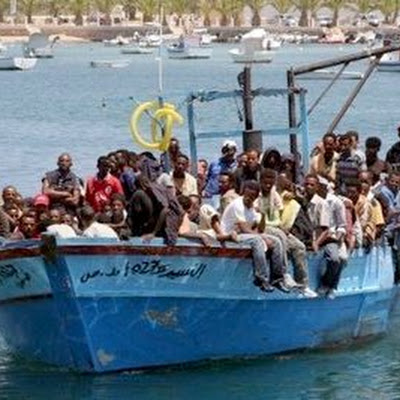
Sixteen people died on a rubber dinghy carrying migrants from Libya to Italy, Italian authorities said Friday, after they rescued a total of 278 people in three sea operations.

The victims were found Thursday by two coast guard patrols and a private tug boat, along with 76 survivors, the Italian navy said in a statement.

The navy said the 16 migrants were already dead when the dinghy was found, presumably from hypothermia and dehydration.

Another migrant died of a pulmonary embolism shortly after rescue crews reached the rubber boat Thursday, and yet another was airlifted in critical condition to a hospital on the Sicilian island of Lampedusa to be treated for hypothermia, the navy said in a statement.

The bodies were expected to arrive in Sicily‘s Porto Empedocle later on Friday.

Italian Interior Minister Angelino Alfano, speaking from Brussels, said the incident took place about 75 kilometres from Libyan shores and 185 kilometres south of Lampedusa - Italy‘s southern outpost in the Mediterranean.

Navy patrols intercepted two other dinghies on Thursday, rescuing 100 and 102 migrants respectively.

Another migrant died of a pulmonary embolism shortly after rescue crews reached the rubber boat Thursday.

Seventy-four survivors were heading toward Port Empedocle aboard the Navy ship Etna, which picked them up at sea.

The EU operation, launched last month after Italy phased out its more robust rescue program, foresees patrols 30 miles (50 kilometers) from the Italian coast. The Italian-run Mare Nostrum rescue operation had patrolled waters much closer to Libya.

Human rights organizations have criticised Italy for its decision to scale down its Mare Nostrum rescue mission in the Mediterranean following the November 1 launch of a parallel EU sea patrol operation, Triton, which has a smaller remit.

Foreign Minister Paolo Gentiloni stressed that, despite plans to wind down Mare Nostrum completely, Italian authorities would continue to step in in emergency situations.

Gentiloni stressed that even with the more limited EU patrols, Italian ships would still intervene to help those in need.

Friday 5 December 2014

https://news.yahoo.com/reports-least-17-die-migrant-ship-off-libya-095343719.html

http://en.europeonline-magazine.eu/italy-coast-guard-recovers-16-bodies-from-migrant-boat-off-libya_366872.html

continue reading

Turkey Recovers Last Bodies From Flooded Ermenek Coal Mine


Turkish rescue workers recovered the last of 18 bodies trapped inside a flooded coal mine on Thursday, as efforts to extract the workers reached a grim conclusion nearly six months after the country’s deadliest mining catastrophe.

The six-week push to extract workers at the Ermenek mine in southern Anatolia’s Karaman province was complicated by flowing water underground which shifted the bodies around the mine, according to Energy Minister Taner Yildiz.

Initial findings suggest that the Ermenek mine flooded after yearslong water buildup in old galleries breached pressure thresholds, triggering an explosion, the local public prosecutor’s office said last month.

While the latest disaster pales in comparison to the fire at the country’s Soma coal mine in the western province of Manisa that killed 301 workers in May, it rekindled a debate about safety standards in Turkish industry.

The government of President Recep Tayyip Erdogan has had to fend off criticism for its failure to reverse the industry’s dire record. Workplace fatalities have continued since the Ermenek accident, including the death of two Chinese workers when a mine in the Black Sea region caved-in. This year more than 350 miners have died in workplace accidents and disasters, more than triple the 95 deaths in 2013.

“The energy lobby in Turkey is strong and merciless,” said Ozgur Ozel, a main-opposition Republican People’s Party lawmaker from Manisa.

“The responsibility is on the government, and there is an administrative side of this. We have a mind-blowing, careless situation at hand that doesn't value the lives of people,” said Mr. Ozel.

The government must take steps to bolster oversight of mines, end subcontracting that puts inexperienced personnel down mine shafts, and adopt international labor conventions, he said in a telephone interview.

Ankara has focused attention on alleged failings of management of the mining companies. The government has pledged to draw up new regulations after the back-to-back disasters, having already reacted to criticism of its handling of the Soma disaster by reducing length of mining-industry shifts to six hours a day from eight.

“We see what kind of results a possible neglect can lead to,” Mr. Yildiz said previously in televised remarks from Ermenek at an earlier point in the search.

“In both Soma and here. there are faults. And whether it is on the private sector, the public sector, or whoever, [they] must definitely have a response.”

Turkey has ramped up inspections and halted operations at 68 mines, more than half of the 111 locations under review after identifying dangerous working conditions, said Halil Etyemez, a deputy at the Labor and Social Security Ministry, in comments carried by the state news agency, Anadolu.

The Ermenek mine’s operator, Has Sekerler Madencilik, said in a statement last month that the deadly accident appeared to be a natural disaster, a finding that Mr. Yildiz has publicly rejected. The company also maintains that it fulfilled all workplace safety requirements and had passed necessary inspections.

Friday 5 December 2014

http://online.wsj.com/articles/turkey-finds-last-bodies-from-flooded-ermenek-coal-mine-1417697084

continue reading

4 more bodies found in trawler disaster


The bodies of two Korean and two Southeast Asian sailors who were aboard the trawler Oryong 501 were found in the western Bering Sea on Thursday.

The trawler owned by Sajo Industries and carrying 60 people sank on Monday while fishing for Alaska pollack.

Twenty bodies have now been found, including six Koreans, 12 Southeast Asians, and two unidentified bodies. Thirty-three remain missing.

Rescuers searching for survivors of a shipwreck off Russia's Pacific coast had previously discovered four empty inflatable life-rafts in the area where the tragedy took place.

Seven people were rescued after the craft was swamped by a large wave as the crew hauled in its catch on Monday, one of whom later died of hypothermia. The rest of the crew was missing.

South Korea's government and Sajo Industries, the vessel's operator, said there were 60 people on board: 11 South Koreans, 13 Filipinos, 35 Indonesians and a Russian fisheries inspector. Russian authorities said there were 62 people on board.

Other fishing vessels as well as aircraft of the US Coast Guard joined the search for survivors after the Oryong-501 sank near Cape Navarin in the Bering Sea off the coast of Chukotka in Russia's Far East.

Rescue efforts continued overnight but were hampered by snow showers, high winds and 22ft waves, and were stopped as darkness fell on Tuesday. They are due to resume on Wednesday. However, the chances of finding more survivors are slim, said Artur Rets, head of the rescue team in the Russian port of Petropavlovsk-Kamchatsky.

"In such water a person without a wetsuit can hold out for about 15 minutes. None of the rescued sailors were wearing wetsuits."

Mr Rets said the 83-metre boat had been "swamped by a wave".

"The storage area was flooded, then the hold; the rudder and fuel system jammed," he said. "Those are the initial assessments."

The New York Times reported from Seoul that the Oryong-501 left for the Bering Sea from a port in Busan, South Korea, in July. It was one of six South Korean trawlers allowed to catch a total of 40,000 tons of pollack this year under a fisheries deal with Russia.

The ship previously operated under a Russian flag as the Orion-501.

A US Coast Guard ship and a Hercules-C130 plane are expected to join the search again on Wednesday.

The survivors rescued on Monday were three Filipinos, three Indonesians and the Russian inspector.

Diplomats from South Korea's consulate in Vladivostok said they would be liaising with the trawler's owners and families of the missing crew.

Friday 5 December 2014

http://english.chosun.com/site/data/html_dir/2014/12/05/2014120501590.html

continue reading

Monday, 1 December 2014

Bringing up the bodies: Mexico’s missing students draw attention to 20,000 ‘Vanished’ others


The shocking disappearance of 43 student teachers lifted the lid on the open secret of Mexico’s many others who’ve disappeared amid drug-fuelled violence.

They found the first grave in a thicket of spiny huisache trees clinging to the hillside outside the town of Iguala. Under a pounding midday sun, about a dozen men and women watched as an older man plunged a pickaxe into the heavy soil. Some offered advice on where and how to dig; mostly they looked on in silence.

When he turned up a human femur, Mayra Vergara turned her back and broke into silent tears. She had hoped that today she might find some clue to the fate of her brother Tomรกs, a taxi driver who was kidnapped in July 2012, never to be seen again. But whoever lay in the shallow grave, she said, they deserved more than this.

“Even if it isn’t my brother in there, it is still a person. A person who deserved a proper burial,” she said, her face contorted in anger and grief. “And the question is when? When are they going to do something for us?”

The disappearance and probable massacre of 43 student teachers after they were attacked and arrested by Iguala’s municipal police two months ago has focused world attention on the horror of Mexico’s drug violence – and the official corruption that allows much of it to happen.

A wave of protests triggered by the massacre put President Enrique Peรฑa Nieto under acute political pressure.

But the incident has also lifted the lid on the open secret of Mexico’s many other disappeared: amid the drug-fuelled violence of recent years, some 20,000 people have simply vanished.

Relatives of the missing have largely remained silent for fear of retribution. Now, however, many have found new strength to denounce the terror imposed by criminal gangs – often in blatant collusion with state authorities.

“It is time to lose our fear and take advantage of the moment to say what we need to say so that everybody knows that this is not just about the 43,” said Claro Raรบl Canaรกn, who was looking for some clue to the fate of two of his sons who went missing in 2008.

“In these hills there are probably hundreds of graves. In Mexico there are thousands.”

In the days and weeks after the students went missing, investigators found a series of mass graves just a few miles from the poverty-stricken outskirts of Iguala. Residents later told reporters how they had often seen convoys of gunmen– and municipal vehicles – heading up dirt tracks that lead to nowhere. They remembered the screams that sometimes pierced through the night.

Thirty-eight bodies have been removed from the mass graves, but DNA tests have shown that none is that of a missing student. So far, four have been identified, including a Ugandan priest who was reportedly killed after refusing to baptise a drug lord’s child.

The search for the students has since moved elsewhere, but over the past couple of weeks, relatives of “the other disappeared” began to get organised.

Already, data has been gathered on 200 cases. More are expected to come forward.

“It is so hard to go on like this without some kind of sign that will let us rest from all the pain, and all the waiting,” said Reina Marcelo, whose husband and son were abducted from the family’s used car lot in May 2011. “I am still frightened, but less so now there are a lot of us.”

It was this sense of common purpose which helped take a caravan of about 50 relatives into the hills on a recent morning, guided by information from a local farmer who said the area had “smelled very bad” about a year ago. Once there, they dispersed among the thorny trees looking for patches of sunken ground which suggested something lay buried beneath. Calls for shovels and pickaxes followed. Little plastic flags on sticks were ready to mark those that yielded bones or teeth.

“We are breaking the law, but we have to find a way of forcing the government to move,” said Miguel รngel Jimรฉnez, a member of a vigilante group which argues that Mexico’s security crisis can be solved by local militias and regional self-government. Now the group is also galvanising the search for older remains. “What the government seems to want is for everybody to just forget about what went on here.”

Distrust of the authorities also underlies a plan to develop a DNA database of the relatives, with a newly created NGO called Citizen Forensic Science, designed to guard against the authorities prematurely closing cases by handing over the wrong bodies to the wrong relatives.

While some searched among the trees or hacked away at the ground, other relatives in the group described years of fruitless visits to government and judicial offices that left them feeling officials were mocking their pain.

“Even if it isn’t my brother in there, it is still a person. A person who deserved a proper burial”

Others said they never even bothered to make an official report. After all, the fact that local authorities colluded with local criminal groups was common knowledge long before the students were attacked by municipal police and allegedly handed over to the Guerreros Unidos drug gang.

Francisca Soรฑanez’s father went missing in August last year while delivering newspapers. Two of her sons were dragged from the family home by armed men a month later. She assumed this was retaliation for having reported the first crime. She didn’t report the second.

In some cases the collusion appears just as blatant as in the case of the students: Canaรกn’s two boys were last seen within sight of a municipal police checkpoint; Marรญa Luisa Bastiรกn’s grandson went missing from the city prison.

Laura Garcรญa knew soldiers had bundled her brother Francis Alejandro and five others into a vehicle outside the family-owned disco in 2010 because of CCTV images on a disk pushed under her door. The soldiers came from the Mexican Army’s 27th battalion, based in Iguala – the same unit that did nothing to stop police attacking and disappearing the students on 26 September.

Garcรญa’s case was taken up by several international human rights groups, but still no progress was made. “If they had paid attention to us before this wouldn’t have happened,” she said. “This whole thing with the students is like watching the same movie again. The faces of their parents are just like my mother’s.”

Garcรญa has given up hope that her brother could still be alive, but many relatives still find some tainted solace in the idea that their loved ones could have been forcibly recruited into the gangs, an idea also nurtured among parents of the disappeared students.

This has meant many days hanging around the morgue after reading news of shoot-outs, as well as dangerous trips into poppy-growing areas, following rumours of slave labour.

For now, however, the search for the other disappeared is concentrated on efforts to pressure the authorities into meticulous examination of the graves the relatives are partially uncovering in those Iguala hills.

Sunday’s caravan returned to the city having identified six sites containing bones and one with clothes. They left as the leaden sun started to dip; federal police stretched yellow crime scene tape around the sites.

“At least we want to be able to bury them properly,” Vergara had said after seeing that first femur. “At the moment we don’t even have a place we can go to cry.”

Monday 1 December 2014

http://www.constantinereport.com/bringing-bodies-mexicos-missing-students-draw-attention-20000-vanished-others/

continue reading

Microbus-truck collision kills 14 in Minya


A truck and a microbus collided on the Ring Road near Abo Shanaf Bridge in Minya, Saturday night, leaving 14 dead and 2 injured, state media reported.

All of the deceased were aboard the microbus, which turned over on the side of the road after the crash, according to state-owned Al-Ahram. The victims were residents of villages in Minya.

The ambulance and security forces arrived at the scene of the accident, and then the injured were transferred to the Minya University Hospital. As for the deceased, 11 bodies were transferred to the Minya General Hospital Morgue and the remaining 3 to the Fever Hospital Morgue.

Approximately 12,000 people die each year in Egypt as result of road accidents, according to a 2012 World Health Organization report.

A recent accident in Beheira that left 18 dead and 18 injured led the cabinet to implement amendments to the traffic law on 5 November.

The amendments, which came into effect on 24 November, include harsher penalties for wrong-way driving, driving under the influence or exceeding the speed limit.

Monday 1 December 2014

http://www.dailynewsegypt.com/2014/11/30/microbus-truck-collision-kills-14-minya/

continue reading

Sunday, 30 November 2014

Minnesota history: Most deadly shipwreck is least known


It’s late November, so when talk turns to Minnesota shipwrecks, Lake Superior quickly comes to mind. The Edmund Fitzgerald vanishing in a 1975 gale with 29 aboard. The frozen bodies chipped from the icy deck of the Mataafa just off Duluth’s piers in 1905. And so on.

But Minnesota’s largest maritime disaster went down some 200 miles south of Duluth Harbor in Lake Pepin, that rodent-in-the-snake widening of the Mississippi River.

On July 13, 1890, 215 people in Red Wing piled on to the Sea Wing, a wooden paddle-wheeler less than three years old, and its barge cohort, the Jim Grant. The people, decked out in Victorian Sunday finery, were on an excursion to Lake City — where Gov. William Rush Merriam and other dignitaries gathered for a weekend exhibition at the Minnesota National Guard’s summertime encampment. Cannons would be fired, bands would play, soldiers would march in formation and a grand time would be had by all.

It was hot, humid and sticky. So many people wanted to take the pleasure cruise — perhaps hoping it would be cooler out on the water — that the barge was tied on to the Sea Wing to accommodate about 70 of the 215 passengers.

Scattered showers and some squalls foretold the trouble to come. At 5 p.m. in St. Paul, a tornado spun across Lake Gervais, killing six and injuring 11.

David Niles Wethern, the storekeeper skippering the Sea Wing, wouldn’t have known about the lethal twister in St. Paul, but he sensed conditions were growing ominous. He blasted the Sea Wing’s whistle at 7:30 p.m. and sailed north for Red Wing at 8 p.m.

Passengers were crammed shoulder to shoulder in the cabin on the skinny boat — 135 feet long but only 16 feet wide with a 22-foot-high pilot house. Straight-line winds began to whip Lake Pepin, with waves swelling from six to eight feet.

The barge rocked violently behind the Sea Wing, whose crew cut the line connecting the boats — figuring they’d fare better, lurching and rocking on their own.

At 8:30 p.m., a monster wave in the middle of the river channel lifted the Sea Wing — not yet as far north as Maiden Rock on the Wisconsin side. Passengers on the now-severed barge would later recount how the Sea Wing climbed to a 45-degree angle before completely flipping over and capsizing.

In the packed cabin, suddenly tossed upside down, water flooded in. Those who escaped and clung to wreckage in the river were pelted by “hen’s egg-sized” hail. It would take three days to recover all the bodies.

Men in town, hearing of the disaster, piled into rowboats despite the wicked conditions, trying to save whom they could. Lifeboats weren’t required on river boats. Life jackets were there, but few donned them, thinking they could wait out the downpour in the cabin.

Many of the 98 bodies pulled from the cabin and the water were pocked with hail stones. Fifty of 57 females on board were among the dead and 77 of the victims were from Red Wing — including sisters Anna and Julia Persig, both in their 20s.

Their great niece, Diane Johnson of Cottage Grove, doesn’t know for sure. But it’s possible her husband Fred Johnson’s great grandfather might have hauled their corpses up to the funeral home in Red Wing.

A Swedish immigrant who worked in the King’s stable in Stockholm, Carl Oscar Anderson worked as a wagon driver in Red Wing. He scurried with his team to the levee to transport the dead.

Nearly 125 years later, Goodhue County Historical Society director Dustin Heckman and author Fred Johnson are trying to rekindle interest in what might be the biggest Minnesota disaster no one has ever heard of.

Johnson, 69, is a retired elementary teacher who taught for 34 years on St. Paul’s East Side. In the mid-1980s, he wrote a book called “The Sea Wing Disaster: A Tragedy on Lake Pepin.” He recently updated the book, published by the Goodhue Historical Society, with more photos and family stories sparked by the first edition.

“I’ve learned over a lifetime that virtually no one in Minnesota knows the story of the Sea Wing,” Fred Johnson said. “Such a large number of people died suddenly and were forgotten.”

On the Tuesday after the storm, 44 funerals were held in Red Wing alone — then a town of 6,000. Authorities in Washington were aghast and ordered steamboat inspectors to conduct a hearing.

They found Captain Wethern negligent of overloading the boat and starting off in the face of dangerous weather. Their findings were forwarded to the federal district attorney’s office in St. Paul, who never prosecuted Wethern. Among the dead were his wife and one of their two sons. Maybe they felt he’d suffered enough for his flawed judgment.

Sunday 30 November 2014

http://www.startribune.com/local/284224171.html?page=all&prepage=1&c=y#continue

continue reading

Bodies of two trapped miners recovered from Ermenek mine


Search and rescue teams on Nov. 29 reached the remains of two more workers who were killed in a mine disaster in the southern Anatolian town of Ermenek, while efforts are continuing to reach six others in the facility.

Eighteen miners were trapped underground after a flood at a coal mine in Ermenek in Karaman on Oct. 28. A total of 12 miners’ bodies have been recovered from the mine so far.

The bodies of two miners have been sent to Ermenek State Hospital for an autopsy.

Turkey’s disaster management agency (AFAD) released a statement on Nov. 29, saying a team of 603 people, including 315 search and rescue officers, were continuing the rescue efforts.

Some 88 percent of the mine was scanned and 3,652 wagons of debris have been removed from the mine so far, the statement said.

The teams advanced 14 meters in 24 hours but there are still 231 meters to search, it added.

The officials from the Ermenek Courthouse said the exact cause of death for the workers would be determined by an official report prepared by the Forensic Medicine Institute after examinations on samples taken from the bodies are completed, Anadolu Agency has reported.

Meanwhile, daily Bugรผn reported on Nov. 28 that autopsies conducted on the 10 miners who have been found so far revealed that they died of coal gas poisoning.

Eight of the miners, who were huddled around each other when they were found dead on day 22 of the rescue efforts, climbed a wall and waited there for 15 hours for help before succumbing to the poisoning, the report said.

Sunday 30 November 2014

http://www.hurriyetdailynews.com/bodies-of-two-trapped-miners-recovered-from-ermenek-mine.aspx?pageID=238&nID=74999&NewsCatID=341

continue reading