Tuesday, 8 July 2014

27 Gambian migrants among dead aboard ship to Italy


At least 27 of the 45 illegal migrants found dead in a boat on its way to Italy last week were Gambian, police sources said Monday.

The victims were among hundreds of other African migrants trying to cross Libya to Italy. The dead were discovered by rescuers in the hold of a ship in waters off Sicily.

"It has been confirmed to us that 27 people among those who died last week are Gambians, which is sad news to us," a senior police officer told Xinhua on condition of anonymity.

"We are really worried and so concerned about the death of our citizens who do take this clandestine journey to Europe, through North African Arab countries. These are really our concerns," the officer added.

According to the Italian police, 45 African migrants were found in the narrowest part of the boat, which was carrying more than double its capacity, and are thought to have suffocated. 566 survivors were rescued.

Tuesday 08 July 2014

http://www.shanghaidaily.com/article/article_xinhua.aspx?id=228439

continue reading

Monday, 7 July 2014

Helicopter crash in Vietnamese capital's west kills 16, injures 5


A military helicopter crashed in the west of Vietnamese capital Hanoi on Monday morning, killing 16 people and injuring five.

Approximately at 7:45 local time (0045 GMT) on Monday, a helicopter crashed in Hoa Lac of Thach That District during a parachute training exercise, reported Vietnam's state-run news agency VNA.

The Russian-made Mi-171 plane of the Helicopter Regiment 916 of the Air Defense-Air Force Service's Air Division 371 took off from Hoa Lac Airport in Hanoi's western district of Thach That at 7:30 a.m. local time (0030 GMT) with 21 people onboard.

Some 16 minutes later, it lost contact and came down in Hoa Lac village, Binh Yen commune, about 3 km from the airport.

The cause of the accident is under investigation, said the report.

A middle-aged woman told Xinhua at the scene that she saw a helicopter hovering above when she was working at a paddy field.

"It is quite normal to see helicopter hovering above here because there is a military airbase located 2 km away. However, I then felt strange as the helicopter kept flying around," she said.

"I heard an explosion and saw the helicopter crash down to the paddy fields," she told Xinhua.

The eyewitness said she saw three people jump out of the helicopter after the explosion and get burnt.

"After the officials came, around six to seven bodies were pulled out of the wreckage," she said.

"Then I was evacuated from the site by military officials," she said.

At 11:00 local time (0400 GMT), Xinhua reporters saw ambulance vans and military vehicles still coming out from the village site. The entrance to the village has been blocked.

Earlier, Phi Quoc Tuan, Vietnam's Capital Military Region Commander, by telephone told reporters at 9:00 a.m. (0200 GMT) that the accident occurred during training.

Monday 07 July 2014

http://www.shanghaidaily.com/article/article_xinhua.aspx?id=228364

continue reading

Gas explosion kills 17 miners in northwest China


Rescue workers have recovered the bodies of seventeen people who were trapped over the weekend after a gas explosion at a coal mine in China's western region of Xinjiang, state-run media reported on Monday, just a month after another deadly mine accident.

The latest accident happened at about 8:43 p.m. local time on Saturday when 20 people were working at a coal mine about 120 kilometers (74 miles) from Urumqi, the capital of Xinjiang. Three of the miners were able to escape, but the other seventeen workers remained trapped underground in unknown condition.

Rescue workers began pouring nitrogen into the coal mine on early Sunday morning to dilute the gas concentration, but the process had to continue for at least 24 hours before it was safe to enter the pit. Once the process was completed on early Monday, rescue workers went in and confirmed the seventeen missing miners had been killed.

It was not immediately known what caused Saturday's accident at the mine, which is owned by the Dahuangshan Yuxin Coal Mining Company. The state-run Xinhua news agency said the cause of the accident was being investigated but offered no other details.

Safety conditions at mines in China have rapidly improved in recent years, though they continue to be ranked as the world's most dangerous with 1,049 deaths reported in 2013, according to official figures. The Chinese government reported 1,384 fatalities in 2012, down from 1,973 fatalities in 2011, 2,433 fatalities in 2010, and 2,631 fatalities in 2009.

China shut down scores of small mines in recent years to improve safety and efficiency in the mining industry. The country has also ordered all mines to build emergency shelter systems which need to be equipped with machines to produce oxygen and air conditioning, protective walls and airtight doors to protect workers against toxic gases and other hazardous factors.

One of the worst mining accidents in China in recent years happened in November 2009 when 104 workers were killed after several explosions at a coal mine in Heilongjiang province. More recently, 22 workers were killed on June 3 in a gas outburst at a coal mine near the city of Chongqing.

Monday 07 July 2014

http://wireupdate.com/gas-explosion-kills-17-miners-in-northwest-china.html

continue reading

Seven killed, nine missing in China landslides


Seven people were killed and nine others have gone missing in two mudslides triggered by flash floods in southwest China's Yunnan Province.

Five people were washed away and several houses were flattened last evening in Dongshan Village, according to the county government of Yongsheng.

Three bodies have been found. More than 200 rescuers are searching for the two missing.

Relief goods such as food and quilts have been sent to the affected areas, state-run Xinhua news agency reported.

In Ludian County, four people were killed and seven others were reported missing after a rainstorm-triggered mudslide.

Continuous downpour has battered the Ludian County, leading to torrential floods and mudslides in many areas, said the Ludian County government.

Longtoushan and Lehong townships are the worst hit townships in the County.


Rescuers have rushed to search for the missing people.

Local governments have initiated an emergency rescue and allocated relief goods to the disaster-hit regions.

Monday 07 July 2014

http://www.outlookindia.com/news/article/Seven-Killed-Nine-Missing-in-China-Landslides/848545

continue reading

Identities of 18 Uttarakhand tragedy victims established


Identities of 18 victims of Uttarakhand natural calamity, out of a total of 630 bodies recovered from Kedar valley since the start of combing operations last year, have been established, police said on Monday.

191 persons from different states had submitted DNA samples of their kin, who went missing from the valley during the disaster that ravaged the hill state last year.

18 of those samples, have matched with those provided by Uttarakhand police to the Forensic Science Laboratory (FSL), Hyderabad, media cell in-charge of state police, Pradeep Godbole said.

The claimants, who had approached the police with the DNA samples of their missing kin, hail from different states including Rajasthan, Gujarat, Madhya Pradesh, Delhi, Uttar Pradesh, Haryana, and Jammu and Kashmir, he said.

Since the start of combing operations last year, a total of 630 bodies were recovered and disposed of in Kedar valley which suffered extensive damage in last year’s deluge in which thousands were killed and thousands went missing.

“We had sent the DNA samples provided by 191 persons of the relatives who had gone missing after the tragedy. 18 of the DNA samples have matched so far with the ones provided by Uttarakhand police to FSL, Hyderabad,” he said.

The bodies which continued to be found in Kedar valley until recently even a year after the tragedy have been cremated by the police after their DNA sampling and other formalities amid Vedic rituals.

Uttarakhand police have requested families which lost their kin in the tragedy to submit their DNA samples to the cops either by coming to Dehradun or to the police in their own respective states which will direct them to Uttarakhand police.

“We request all such families to come forward and give the DNA samples of their missing kin. This will help us establish the identities of more and more tragedy victims,” Mr. Godbole said.

Monday 07 July 2014

http://www.thehindu.com/news/national/identities-of-18-uttarakhand-tragedy-victims-established/article6186583.ece?ref=sliderNews

continue reading

Saturday, 5 July 2014

Eleven people feared killed in Polish plane crash - emergency services

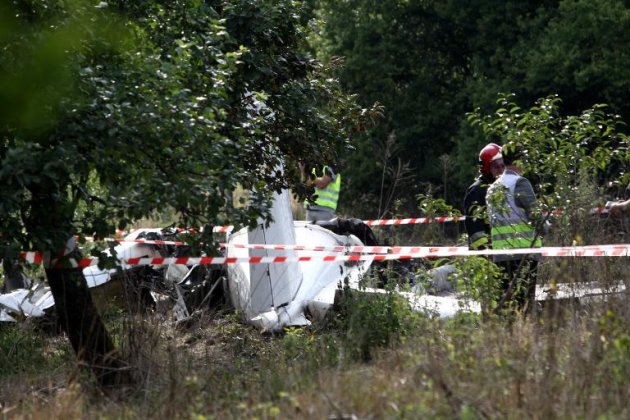
Eleven people were killed and one person is seriously injured after a plane crashed at a parachute club close to Czestochowa, in the south of Poland, a spokeswoman for the emergency services said.

"Twelve people were on board the plane and the only survivor was taken to hospital and is in a serious condition," Justyna Sochacka told AFP.

The plane, a Piper Navajo, reportedly had 11 parachutists and a pilot on board.

"It was flying from the south and the engine was making strange sounds," said eyewitness Barbara Minczykiewicz, a resident of the village of Topolow where the plane crashed, quoted by Poland's Gazeta Wyborcza broadsheet daily.

"It was flying very low, close to houses. It tilted to one side on its wing and caught fire," she said.

Village residents managed to pull one live person and two bodies out of the air craft, according to Minczykiewicz.

The light plane took off from an air field in Rudniki, near Czestochowa.

The causes behind the crash were not immediately known, but Polish media reports suggested the air craft was carrying passengers in excess of its capacity.

Saturday 05 July 2014

https://uk.news.yahoo.com/11-die-plane-crash-poland-parachute-club-170620166.html#6nRMS9l

continue reading

Building collapse tragedy: Two families fight over body at morgue


Adding a twist to the building collapse tragedy, members of a family had to bring a body back to the city after discovering it wasn't their kin's, while two other families fought for another body at the Government Royapettah Hospital on Friday.

A mutilated body, mistakenly identified as Prakash Raut, was being transported by his family to home in Kendrapara district in Odisha when it was learnt that Raut was alive and recuperating at Sri Ramachandra Medical Centre.

"The body was identified by his brother as that of 25-yearold Prakash Raut. We completed the legal formalities and sent the body with him for cremation. But when the real Raut emerged from the debris, we immediately called the driver and asked him to return," said a senior health department official.

Raut was on the seventh floor when the building collapsed in Moulivakkam. He was rescued 72 hours later. Officials said the mutilated body, now at the mortuary in Royapettah, was yet to be identified. As Raut's family celebrates, two families are at loggerheads over the identity of a body at the Royapettah mortuary.

Gowri Naidu, 35, and Chinnam Naidu, 45, of Vizianagaram in Andhra Pradesh had died in the building collapse. Their family members have been waiting at the morgue for five days to check if their kin's body had arrived. On Friday, Lokesh saw a mutilated body and claimed it was his father Chinnam Naidu, while another man called Simhasanam said it was that of his brother Gowri Naidu.

Finally, based on the description given by both the families and the doctor's advice, it was decided that the body belonged to Gowri Naidu. " To avoid such confusion, we have collected DNA samples of all the bodies that have arrived from the collapse site. We will run tests if necessary," said a senior doctor.

Meanwhile, to make space for bodies of victims of the tragedy, Government Royapettah Hospital have sent 38 unidentified bodies belonging to victims of road and rail accidents to the mortuaries attached to Government General Hospital and Kilpauk Medical College Hospital.

Saturday 05 July 2014

http://timesofindia.indiatimes.com/city/chennai/Building-collapse-tragedy-Two-families-fight-over-body-at-morgue/articleshow/37810405.cms

continue reading

Devastating Bosnian floods unearths mass grave containing 24 people


The remains of 24 people believed to be Muslims and killed during the ethnic cleansing war of the 1990s in Bosnia are exhumed by heavy flooding that hit the country two months ago.

Lejla Cengic, spokesperson for The Missing Persons Institute of Bosnia-Herzegovina (MPI) told AFP on Friday that torrential floods in May removed a three-meter layer of ground, exposing a mass grave site on the left bank of the Bosna River in southern part of the country.

She said 24 bodies were found in the area between the towns of Maglaj and Doboj, after a month-long excavation operation to exhume bodies uncovered by flooding.

“Most of the victims had their hands tied around their backs, while several were killed by a bullet fired at a close range to the neck,” Cengic said.

The remains are thought to belong to Muslim men from the village of Jablanica, near Maglaj, killed by Serb forces in June 1992, at the start of the war.

Their identity will be confirmed by DNA analysis.

Torrential rains hit Serbia, Bosnia and Croatia in mid-May, killing 77 people in the Balkans’ worst floods and landslides in more than a century.

The disaster forced tens of thousands of people from their homes and caused damage estimated at two billion euros.

Bosnia’s 1992-1995 war claimed some 100,000 lives. More than 9,000 people are still missing, official data shows.

Saturday 05 July 2014

http://www.presstv.ir/detail/2014/07/05/369969/floods-uncover-bosnia-war-graves/

continue reading

Friday, 4 July 2014

Building collapse: Death toll rises to 61, rescue operations may end tomorrow


Tamil Nadu Government today set up an inquiry commission to probe the collapse of a 11-storey under-construction residential building here in which the death toll has mounted to 61 with no survivors found for the second straight day.

As rescue operations by multiple agencies entered the sixth day, Chief Minister J Jayalalithaa announced that the one-man commission headed by Justice (Retd) R Reghupathy will probe the circumstances leading to the collapse of the building at suburban Porur on June 28.

"The Commission will find out whose ignorant attitude resulted in such a mishap that left many workers dead and others injured and decide on (fixing) those responsible for it," she said in a release.

The rescue team personnel could not find any survivor for the second consecutive day today and pulled out 14 more bodies with the toll mounting to 61 as they indicated the operations might be nearing completion soon.

"As of now, 61 are dead and out of this 41 are men and 20 women," K Kulandaisamy, Director, Public Health told PTI.

The focus of the rescue operations was on reaching a spot - estimated to be around 2,000 square feet in the basement - where 20-25 people were feared trapped, revenue officials said adding they wanted to ensure all survivors were pulled out.

The massive rescue work undertaken by government agencies like the National Disaster Response Force (NDRF), state disaster response force, police, fire and rescue services, revenue, public works, health and revenue departments is likely to be wrapped up on Friday evening, on the seventh day after the building collapsed.

More than 1,500 rescue workers, including police personnel who were deployed for crowd management, were involved in the operations.

"There is a general consensus among all agencies involved in the rescue operation that the chance of finding more bodies is very remote. We will have a review meeting at 11am on Friday and take a joint decision," said NDRF commandment M K Verma.

DIG of National Disaster Response Force S P Selvan said the operations were likely to end by tomorrow evening.

"We hope that the rescue work will be fully completed by evening tomorrow," he said.

A total of 27 persons, including eight women, were rescued alive till July 1.

In a related development, Chennai Metropolitan Development Authority today commenced inspection of high-rise buildings in the city in the backdrop of the mishap.

Eighteen teams comprising 54 officials from the CMDA inspected eight multi-storeyed and 12 special (high-rise) buildings in various parts of the city, a senior CMDA official said.

Friday 04 July 2014

http://www.dnaindia.com/india/report-building-collapse-death-toll-rises-to-61-rescue-operations-may-end-tomorrow-1999445

continue reading

Poland finds skeletons in search for Stalinist victims


Investigators in Poland have unearthed seven skeletons in the search for a mass grave that may contain the remains of “a thousand” people murdered during the dark days of Stalinism.

The human remains were found in an unmarked grave in a Warsaw cemetery in the early stages of a hunt to locate the last resting place of hundreds of people who were executed, tortured to death or died in captivity in the years following the end of the Second World War.

“There is no doubt they were prisoners,” said Professor Krzysztof Szwagrzyk, the investigator leading the search at the cemetery where he believes “a thousand” people could be buried. “There was evidence in the grave we discovered. These people were at the bottom of a pit and their remains were entwined. The bodies weren’t arranged.”

Investigators have appealed to the descendants of anybody who disappeared during the Stalinist period to come forward and submit DNA samples in order to help identify the dead.

Thousands of people were arrested by the secret police in a government campaign to remove anyone believed to be an enemy of the state. Many of those imprisoned, often on bogus and fabricated charges, had been in the wartime Polish Home Army: the massive underground military organisation that had led Polish resistance to German occupation. But along with fighting Nazis, it had also drawn the hatred of Stalin and Poland’s communists because of its loyalty to the Polish government in exile and its commitment to an independent Polish state. After the war, anybody linked to it faced persecution, 
arrest and even death.

In particular, investigators want to find the remains of Captain Witold Pilecki. A Polish war hero, Capt Pilecki got himself arrested deliberately and sent to Auschwitz in order to write a report on the camp, and in doing so became the first man to document the Jewish Holocaust. After three years at Auschwitz, in 1943 he escaped and resumed his struggle against German occupation.

Despite his wartime record, in 1948 Capt Pilecki was executed by the communist government for allegedly working for “foreign imperialism” and he has no known grave.

The hunt for the captain and the hundreds who perished with him has been complicated by new evidence revealing the communist government buried people on top of the graves in 
an attempt to conceal its 
crimes.

“We have new information about the ‘death pits’ and it turns out that in an effort to erase any traces of unmarked graves, in the 1980s senior politicians from the Polish People’s Republic and military top brass were buried over them,” said Marcin Golebiewicz, one of the men leading the search for the dead.

Friday 04 July 2014

http://www.scotsman.com/news/world/poland-finds-skeletons-in-search-for-stalinist-victims-1-3466112

continue reading

Italy migrants: ‘Seventy missing’ off Sicily


At least 70 migrants have been lost at sea after their boat capsized off Sicily, survivors have said.

The latest disaster to hit migrants trying to reach Italy emerged from a group rescued by the Italian navy who spoke to UN workers.

Thousands of migrants have tried to cross the Mediterranean from North Africa in recent days.

Earlier, Italian officials said 45 people had died on another boat discovered two days ago.

Initial reports on Monday had put the number of deaths on the boat – which had been carrying about 600 migrants – at 30.


The navy said that those who died were crammed into a compartment below decks. They were either crushed or asphyxiated.

The discovery was made when rescuers boarded the vessel to evacuate a number of people said to be in distress, two of them pregnant women.

The boat has since been towed to the port of Pozzallo in southern Sicily and the bodies of those who died have been taken away.

The cause of many of the migrant tragedies in recent months has been the poor quality of the overcrowded boats making the crossings to Italy, largely from Libya and Tunisia,

The latest disaster to emerge involves a boat that capsized in the Strait of Sicily, the stretch of sea between the island and Tunisia.

Local prosecutor Giovanni Salvi told Italian media that 101 people were apparently on board the overcrowded boat. The navy managed to rescue 27 of those on board, he said, emphasising that the details were yet to be confirmed.

There has been a significant increase in the number of migrants trying to cross the Mediterranean to Italy in recent weeks.


EU border agency Frontex says almost 60,000 migrants have already landed in southern Italy this year. The record of 63,000 set in 2011 is likely to be broken within weeks.

Most are from Africa or the Middle East and pay large sums to people smugglers in Libya who transport them in unsafe fishing vessels.

Officials say one reason for the rise in numbers is because of Libya’s continuing political instability.

Italy – which bears the brunt of migrants making the perilous crossing – launched a rescue operation in the Mediterranean last year but has repeatedly appealed for help from the EU to tackle the problem.

Friday 04 July 2014

http://www.bbc.co.uk/news/world-europe-28131675

continue reading

Death toll rises in SW China landslide

The death toll in a landslide in southwest China's Yunnan province has risen to five with ten still missing, local authorities said on Friday.

Rescuers retrieved three more bodies as of Thursday evening after the landslide on Monday in Latudi village, Shangpa Town, Fugong county, the emergency response and rescue headquarters said.

After the accident, two people were confirmed dead, three others were injured and another 13 were missing, it said.

More than 1,100 rescuers have cleared nearly 60,000 cubic meters of earth. Search efforts are still under way.

Friday 04 July 2014

http://www.ecns.cn/2014/07-04/122438.shtml

continue reading

Thursday, 3 July 2014

The tragic, mostly forgotten story of the Sea Wing disaster


Lurid St. Paul newspaper headlines trumpeted dreadful news of a July 13, 1890, steamboat disaster: “Whole Families Forced into the Darkness of Another World Clasped in Each Other’s Arms”; “A Voyage of Pleasure That Ended on the Shores of Another World”; “The Tornado on Pepin’s Treacherous Bosom the Crowning Calamity of all Minnesota Annals.”

Sea Wing, a stern-wheeled steamer packed with 215 passengers on a Sunday cruise, had capsized on Lake Pepin, drowning 98. The steamboat and its attached barge had been about five miles north of Lake City, returning to Red Wing, when struck by a frontal thunderstorm. Straight-line winds flipped the boat.

For four days, Minnesotans and the rest of the nation followed the horrific story. Red Wing, soon labeled in newspapers as the “City of the Dead,” was home to 144 of the passengers. Residents knew little of who died or survived the accident until Monday morning when a steamboat carrying dozens of bodies reached the Red Wing levee with its grim cargo. A city in mourning saw 44 funerals conducted on Tuesday alone.

But many Sea Wing victims were still in the lake. A Minnesota National Guard regiment encamped at Lake City’s Camp Lakeview took over recovery operations from Lake City civilians. They searched for up to 40 still believed missing. As groups of relatives and friends of victims looked on, Guardsmen cannonaded and dynamited the lake in dramatic, but unsuccessful, attempts to raise bodies. On Thursday the drowned began surfacing, most unrecognizable.

Of 57 women and girls on board, only seven survived. Most of them were in the Sea Wing’s main cabin when the boat capsized and were immediately drowned.

Tragic vignettes of the accident and its victims emerged. Couples about to be married drowned; entire families killed; a mother clutching her baby, buried together as they had been found; initial survivors killed by hail as they struggled in the water; two sisters perishing when their escorts lost grips on their hair; family members struggling to identify badly disfigured remains.

Criticism of David Wethern, the ship’s captain, was tempered by the fact his wife and a son were among the drowned. Wethern and his steamboat sailed from Diamond Bluff, on the Wisconsin side of the Mississippi. That small community and neighboring Trenton each suffered ten dead. An accident investigation found Wethern guilty of “unskillfulness” and overloading his vessel.

The Sea Wing disaster, so familiar to turn-of-the-twentieth-century Minnesotans, slowly disappeared from memory. Frederick L. Johnson, author of “The Sea Wing Disaster” (Goodhue County Historical Society, 1986) and the forthcoming expanded version of the original—”The Sea Wing Disaster: Tragedy on Lake Pepin”—said the calamity, so localized to Red Wing, Lake City, and Diamond Bluff, was largely lost outside of those communities.

Thursday 03 July 2014

http://www.zumbrota.com/articles/2014/07/02/tragic-mostly-forgotten-story-sea-wing-disaster

continue reading

Wednesday, 2 July 2014

Cargo plane crashes into building in Kenya

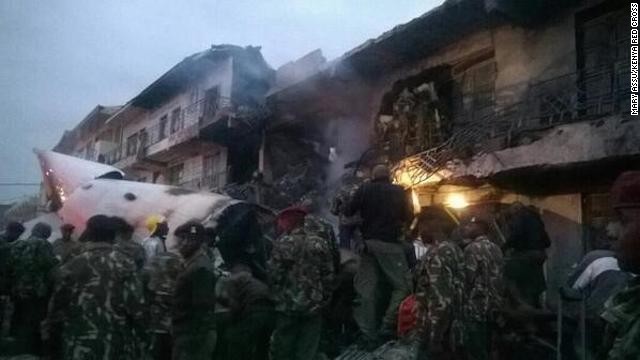
A cargo plane crashed into a commercial building shortly after takeoff from an airport in Nairobi, Kenya, early Wednesday, the country's airport authority said.

All four people on board are feared dead.

The Fokker 50 plane crashed shortly after takeoff from Nairobi's Jomo Kenyatta International Airport.

The Kenyan Red Cross said one body has been recovered from the crash site.

Rescue crews are looking for more.

Because the crash occurred early in the morning, there was no one inside the building, the airport authority said.

Wednesday 02 July 2014

http://www.cnn.com/2014/07/02/world/africa/kenya-plane-crash/

continue reading

Forensic expert re-lives horror of handling hundreds of Boxing Day tsunami bodies


A forensic expert today revealed how the horrors of handling bodies from the Boxing Day tsunami left him scarred for life and drove him to suicide.

David Collins, from Consett, County Durham, won a £465,000 legal battle nearly 10 years after being deployed on the disaster-hit coastline of Sri Lanka in 2004.

The 45-year-old worked 16-hour days managing a mortuary and branded the experience as a “production line of bodies” after 98ft waves ravaged the shoreline and claimed the lives of nearly 230,000 people.

Now - after Irwin Mitchell helped him win a compensation battle with employers from the National Policing Improvement Agency - David has re-lived his harrowing experience of identifying and fingerprinting hundreds of victims.

David, who was one of the UK’s leading forensic experts on disaster zones and even wrote Association of Chief Police Officers (ACPO) guidelines, revealed how he was charged with identifying victims of the western world.ave now admitted they had breached the duty of care they owed him in failing to refer him to occupational health on his return from Sri Lanka.

He spent six weeks in the Sri Lanka capital, Colombo, where he examined bodies and ran a mortuary. In the month before his arrival, local police forces had been forced to bury the dead in a bid to preserve their bodies.

The dad-of-two, who worked with Durham Constabulary for nine years before taking up a role as a forensic advisor, was based near the British Embassy but was left wracked with guilt as he helplessly told loved ones of Sri Lankan victims he could not help them.

He said: “When we first arrived the Americans and the Dutch were there with helicopters and planes. We made an 11-hour drive to the city of Galle in these white UN-style jeeps. It was just a scene of total devastation. We were driving past roads that looked like paradise but then the smell hit you. It was like a mass grave.

“A lot of my trauma and a lot of my nightmares was because we were there to exhume bodies and identify people who were not Sri Lankan. A lot of my issues were because of the guilt.

“I did hundreds of post-mortems on people with Durham Police and it was a very, very sterile environment. But in Colombo we were defrosting bodies in the street before carrying out post-mortems.

“There were a lot of Sri Lankan families crying and grabbing my clothes, they were trying to see if we knew where there families were. Listening to them cry was part of my nightmares and flashbacks. I felt like I was lying to them.”

He added: “I wrote the exit strategy with another police officer. There were 58 bodies that were potentially not Sri Lankan that we couldn’t identify so we had to bury them. I felt like those people were just forgotten.”

Despite witnessing the full horrors of the disaster his employers failed to give him a debrief on his return to the UK and he broke down with post-traumatic stress disorder.

David said: “I didn’t know the effect it was having on me. I was working purely on adrenaline and you felt very special because you felt you were saving the world. When you got a hit on DNA or fingerprints you felt fantastic - that was closure for the family of a missing victim. But when I got back my life just went in a downward spiral.”

On the anniversary of the disaster, on December 26, 2010, David tried to take his own life. When he was found at the rear of Consett Police Station with a noose around his neck it prompted him to get help.

He said: “It’s been a long six years seeking help but I’m much better now. I nearly lost my house, my wife, my kids, everything.

“I’m so proud that they stuck with me and I’ve got them back now. I used to be really, really angry but now I know I can’t have the bitterness to move on.

Isobel Lovett, a specialist workplace illness solicitor who represented David from Irwin Mitchell’s Newcastle office, said: “Mr Collins’ life has been turned upside down by his experiences in Sri Lanka, when he should have been given more help by his employer to minimise the risk of PTSD and its impact on his life. He has lost a career he loved.”

Record pay out to police worker

David Collins’ compensation payment, one of the biggest made to a police worker, was so large that it had to be listed in the Home Office’s annual accounts, published last week.

In the section on losses and special payments, it stated: “A compensation payment of £464,000 was paid by the College of Policing in respect of an employee who suffered from post-traumatic stress disorder.”

At the time of his employment David was employed by Centrex, an agency which no longer exists.

The forensic elements of Centrex were moved into the National Policing Improvement Agency (NPIA) and subsequently to the College of Policing in December 2012 which was established as the professional body for policing.

A College of Policing spokeswoman said: “UK policing often assists international police forces by providing policing specialists to assist in training and on occasions operational responses.

“In 2005, the Home Office put together a deployment of policing experts to help in the response to the Sri Lankan tsunami. The contingency deployed included forensic experts, including David Collins, who was employed by Centrex at the time.

“Following a review of the 2005 deployment the College of Policing recognises that there were matters Centrex could have dealt with better, including post-incident support. The College has negotiated, in good faith, an arrangement that should see Mr Collins receive the treatment and support he needs to recover from his injuries and lead an active life.

“As an organisation that has unique skills and the ability to deploy those skills on demand anywhere in the world, there are always likely to be associated risks with such deployments.

“However, we recognise there are lessons to be learned from this unique deployment and as the new professional body for policing we will ensure that any learning is applied to future deployments of this kind.”

Wednesday 02 July 2014

http://www.chroniclelive.co.uk/news/north-east-news/forensic-expert-re-lives-horror-handling-7310643

continue reading

Chennai building collapse: More bodies recovered


With the recovery of five more bodies from the debris, the death toll in the collapse of a 11-storey building at Moulivakkam in Chennai has gone up to 47.

According to sources in the rescue team, the death toll is expected to rise.

A total of 73 people were caught under the debris in the building collapse Saturday evening. Of the total, 27 are alive and have been rescued.

A person who was rescued Tuesday told officials that several people were watching television in a room along with him when the building collapsed.

As strong stench emanated from the debris, rescue workers were vaccinated by the health department against infectious diseases.

Some of the residents living near the accident site have vacated their homes unable to bear the stench.

The bodies that are being recovered now are in a decomposed state, making it difficult for relatives to identify them. One of the ways to identify the bodies is by doing a DNA test.

The residential project Trust Heights was being developed by Prime Sristi Housing Pvt. Ltd. The project comprised two 11-storey blocks - The Belief and The Faith.

Most of the people trapped under the debris are said to be construction workers and some might have taken shelter in the building as it was raining at the time of the collapse, people in the area said.

Giant steel rod cutters and other equipment have been pressed into service, while sniffer dogs and sophisticated cameras are at the accident site to locate trapped people.

The rescue efforts are continuing in full swing at the accident site.

Wednesday 02 July 2014

http://www.thehindu.com/news/cities/chennai/chennai-building-collapse-more-bodies-recovered/article6169704.ece

http://www.newindianexpress.com/cities/chennai/Chennai-Building-Collapse-Death-Toll-Rises-to-47/2014/07/02/article2311137.ece

continue reading

Monday, 30 June 2014

Many missing as Apete makeshift bridge collapses


Ibadan, the Oyo State capital, experienced downpour at the weekend, culminating in a massive flooding, which killed no fewer than 15 persons in different parts of the ancient city.

The incident, which was similar to what the city experienced on August 26, 2011, also led to the destruction of homes and landed properties worth millions of naira.

THISDAY learnt that about 10 lives were lost at Apete due to the sudden collapse of make-shift bridge, which the people in the area had been using since the collapse of the main bridge on August 26, 2011.

It was also gathered that five other persons including three children of the same parents were found under the ruble of a Cherubim & Seraphim church, which the flood brought down when the Olodo River overflowed its bank.

As a result of the deaths recorded at the Apete Bridge, a group of irate young men yesterday stormed the workstation of the contractor currently reconstructing the Ijokodo-Apete road and the bridge linking the two communities in anger.

Consequently, the aggrieved youths destroyed equipment and property at the contractor’s station worth millions of naira.

Recounting the scale of damage incurred due to the incident, an Olodo resident, Mr. Fatai Osuolale, told THISDAY that a white garment church and some structures built few metres away from the river bank were submerged.

Osuolale said the river overflowed its bank and flooded houses around the bank, thus leading to the loss of property and five lives including three children of the same parents said to be under spiritual refuge in the church. He explained that the river “is named Egberi and its source is traced to Osun river. Inside the river, people regularly perform spiritual bath while others come to wash clothes, okada and other things.”

Osuolale said residents and good Samaritans “are still searching for the bodies of the victims. Only one has been found so far while a Nissan Micra swept off by the flood around Odan Village has been recovered from the river.”

On Apete’s incident, THISDAY learnt that the victims were part of the residents that fell from the makeshift bridge shortly after the rain. But an eyewitness said he was part of the team that rescued some people who fell into the river from the bridge.

The eyewitness said the makeshift bridge “has become extremely weak and a no-go- area for residents of the community because its base has been swept off.

“When the rain which started around 4.00 pm stopped, some of the residents decided to make use of the makeshift bridge and in the process fell into the river and were swept away.

“We heard the cry of people who fell into the river around 6:30 p.m. I decided to join the rescue team. We eventually succeeded in rescuing about six people while not less than 10 others were killed as a result.”

Consequently, the aggrieved youths in Apete and its environs protested the death of 10 persons who drowned on Saturday evening after a makeshift bridge collapsed.

The youths, violently, stormed the contractor’s workstation, therefore destroying caterpillars, office equipment and other property belonging to the company.

While the angry youths also broke into the work station and offices within, hundreds of residents in the area were waiting at the river bank for rescue operation to commence.

Some of the residents were pelting stones and other objects at a team of security personnel who stood at the Ijokodo end of the road to maintain order.

One of the security men, Mr. Bassey Etum employed by the construction company said he had to run for his life alongside five other colleagues when the irate youths earlier came on Saturday night.

Etum said: “After the river had overflowed its banks, residents at the community said people drowned because of the bridge that collapsed. They vented their anger on the company and destroyed our machines and equipment.

“They stole computers and other office equipment too. There were six security men here when they came Saturday night. They wanted to lynch us so we ran into a nearby forest. When we returned around 11 p.m., nothing was left untouched; the whole place had been vandalised.”

Monday 30 June 2014

http://www.thisdaylive.com/articles/flood-ravages-ibadan-again-claims-15-lives/182246/

continue reading

Forensic lab takes blood samples of Beas river tragedy victims


The AP Forensic Science Laboratory has taken the blood samples of the parents of Himachal Pradesh Beas River tragedy victims.

Experts are making DNA profiles to match them with that of the bodies retrieved from the Beas River. APFSL director A. Sharada said, “Out of the 24 students of VNR Vignan Jyothi Institute of Engineering and Technology missing six bodies are yet to be recovered from the water. 20 days have passed. So the bodies will be putrefied and distorted beyond recognition. In such cases DNA fingerprinting is a must.” So the APFSL has called in the parents of the students for collecting the samples. So far the parents of four students visited APFSL and had given blood samples.

“We started making DNA profiles. DNA experts at the Simla lab will collect the body parts of the students as and when they are recovered from the river. They will make the DNA profiles and match them with that of those sent by us. Then the identification will be quick,” said Sharada.

Monday 30 June 2014

http://www.deccanchronicle.com/140630/nation-current-affairs/article/forensic-lab-takes-blood-samples-beas-river-tragedy-victims

continue reading

At least 30 dead in migrant boat accident off Italian coast


The Italian navy has found about 30 bodies in a fishing boat carrying hundreds of migrants between Sicily and the North African coast.

The migrants who died appeared to have been asphyxiated.

The discovery was made when rescuers boarded the vessel to evacuate a number of people said to be in distress, two of them pregnant women.

The navy says that over the weekend it rescued more than 5,000 migrants trying to cross from North Africa.

The figure was released soon after news emerged of the discovery of the bodies.

The navy said that those who died were crammed into a compartment below decks.

The fishing boat was carrying about 600 migrants and is now being towed to the town of Pozzallo, southern Sicily.

Correspondents say that it is not clear whether the boat was sinking when it was intercepted.

The BBC's Alan Johnston in Rome says the latest discovery will again focus attention on the dangers faced by those who are so desperate to reach Europe they choose to make the journey aboard hopelessly overcrowded and unseaworthy vessels.

The Italian authorities say more than 60,000 migrants have already landed in southern Italy this year, and that the record of 63,000 set in 2011 is likely to be broken.

Most are from Africa or the Middle East and pay large sums to people smugglers in Libya who transport them in unsafe fishing vessels.

Officials say one reason for the rise in numbers is because of Libya's continuing political instability.

Italy - which bears the brunt of migrants making the perilous crossing - has repeatedly appealed for help from the EU to tackle the problem.


Earlier this month, at least 39 people drowned off Libya after an overloaded, inflatable boat capsized while trying to cross to the Italian island of Lampedusa.

Last October, 360 people died when a boat sank off Lampedusa.

The navy said it rescued some 1,577 migrants over the weekend, adding to the nearly 60,000 who have made their way to Italy since the beginning of the year.

That is compared to 42,000 in all of 2013.

Monday 30 June 2014

http://www.bbc.co.uk/news/world-europe-28082969

continue reading

Sunday, 29 June 2014

The secret scars of Erebus


There aren't words for the cold. It's a cold that penetrates through layers and layers of clothes, that freezes your boots and hurts your lungs when you breathe. Nor are there words for the silence, the utter vacuum of sound that envelops you when you first set foot on the ice-covered expanse of Antarctica.

These sensory assaults greeted a small group of New Zealand police officers on arrival at the white continent in late 1979. They'd found themselves in the harshest place on earth - an alien landscape where storms whip up from nowhere and leave you praying for your life, where crevasses open up and threaten to swallow you.

But as harsh and unrelenting as Antarctica is, these natural ravages were a mere fraction of a horrifying whole. The 11 police officers were there to a do a particular task - retrieve the bodies of passengers lost to the snow of Mt Erebus.

Stuart Leighton was the youngest. At 22, he had just a couple of years under his belt, graduating in 1976, and serving at Lower Hutt Police Station.

He had joined the new Disaster Victim Identification (DVI) Squad in 1978, thinking it would be useful if there were ever an earthquake in Wellington.

Like most New Zealanders, Leighton found out about the Erebus crash when it was announced on television on the evening of November 28. And while he shared the horror that the whole country was feeling, unlike other New Zealanders he knew he might soon have a much more personal experience of the disaster.

"There were four of us in my team," he says. "We recovered 94 bodies between us. I can't tell you the worst of what we saw. It would be unprintable."

Leighton is now 57. He lives in North Canterbury with his wife Claire and is the operations manager for the police's southern communications centre. It has taken him decades to work through what happened on that mountain.

For a young man, an event of such magnitude was bound to have a profound impact. He was put on a plane, flown to a foreign world, and confronted with unimaginable horror: aching cold and terrible sights and smells that still trigger horrific memories.

And what he saw stayed with him for years, long after he returned from the crash site. "I can sum up returning home from Erebus in two words: 'Very difficult'."

The late 1970s was a different era. A young policeman was expected to deal with such carnage - the Kiwi "she'll be right" attitude was the order of the day. Support following the operation was minimal, to say the least.

He and other officers were sent for a psychological assessment within a week of their return. Another one followed six months later. But he was pretty much left to fend for himself. And for years he lived alone with the horror of the event.

It all came to the fore around 15 years ago when he was asked to contribute to another documentary. The trauma caused by having to recollect his time on Erebus was profound. "I had a meltdown."

But this was the catalyst for his seeking and receiving counselling vital to his recovery. "It's been a very long journey," he says.

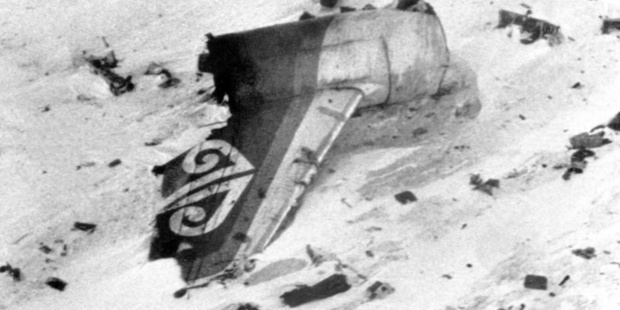
In Greek mythology, Erebus was the personification of darkness. And when Air New Zealand Flight TE901 flew into the side of Erebus, the crash on this dark mountain inflicted a permanent scar on our nation's consciousness.

The subsequent investigation and Royal Commission of Inquiry revealed a tangled web of obfuscation unlike anything seen before in New Zealand.

Justice Peter Mahon, who performed the inquiry, summed it up: Air New Zealand had been involved in "an orchestrated litany of lies" to cover up the truth of that horrible day. However, the Judicial Committee of the Privy Council in 1983 found he had acted in breach of natural justice with his conclusion that Air New Zealand had been involved in a conspiracy.

The Erebus disaster affected lives throughout New Zealand and the wider world. Many lost friends and family, including the uncle of documentary director and producer Charlotte Purdy, Gordon Brooks.

When Purdy's cousin Virginia attended a memorial service for the 30th anniversary of the tragedy, Greg Gilpin, another of the police officers sent to Erebus, spoke about the recovery effort. ­Virginia was so moved - much of what was said was new to her and to other relatives at the service - that she suggested Purdy look at turning the stories into a documentary.

Purdy agreed the recovery story needed to be told. She began to contact the men involved in "Operation Overdue", men still traumatised by their memories, and asked if they would share their stories on screen.

The resulting documentary, Erebus: Operation Overdue, opened the Documentary Edge Festival in Auckland in May. It transfixed audiences and won Best New Zealand Feature, Best Directing, Best Editing and Best Cinematography at the festival.

Leighton was resistant when Purdy approached him in 2011 about the documentary. Erebus "never goes away", he says, and as one of the only remaining active policemen who worked on the crash site, calls from journalists were common.

"But she was persistent," he says. "And what made a difference was that a family member had been on the plane. But I really had to think my way carefully through the whole thing."

Leighton hopes sharing his experiences publicly will make people think about those who have to deal with death on a regular basis.

"Of course, it's incredibly important to think first about the ­victims and their families. "But I would be happy if the documentary helps people to spare a thought for the emergency services people and their families who have to clean up after such tragedies."

Leighton has dealt with his fair share of snow in North Canterbury. But he has never been back on a mountain. "Erebus was my first experience of snow and I'd never been on a mountain before. The experience I had there really imprinted on me. I associate mountains with what happened on Erebus, so I avoid them."

But he would like to go back to the disaster site one day. "It will probably never happen, but it would help me greatly if I revisited the place. I understand why old soldiers want to go back to the battlefields. It would be a final step in the healing process."

Greg Gilpin, then a sergeant, attended a training day for DVI Squad, as did Leighton, at National Police Headquarters the day TE901 went down.

The timing was particularly cruel. "There was a feeling coming through, even during that training, whether we would ever use it. Little did we know it was going to occur that very day."

Gilpin had been with the police for 14 years. The then-33-year-old had been involved in other tragedies, including the Wahine sinking in 1968. He was stationed at Taranaki St Police Station in Central Wellington.

He is now 67 and lives in Manukau with his wife Vivienne. When he retired in 2011 he was the country's longest-serving police officer.

Like Leighton, he heard confirmation of the plane crash on the news. He had also never been on snow or ice but had a sense he might be called to help. The call came at 3am the next day and he was told he was on standby for the recovery operation.

Later that day he packed his warmest clothes and said goodbye to Vivienne and their three young children. He was genuinely concerned he might never see them again.

The first few days after arrival at Scott Base were taken up with negotiating the recovery mission. The DVI Squad was then trained in survival training on Ross Island. This proved invaluable - the team faced harsh weather, opening crevasses and ­extreme cold.

On December 1, Gilpin was appointed co-ordinator of the recovery teams on site by Operation Overdue Inspector overseer Robert Mitchell.

And on December 3, Gilpin and Leighton were sent to the crash site. They were joined by Mitchell, who returned to base later that day.

The landing on the mountain was hair-raising. "It took a while for the pilot to find anywhere to drop us off. And as there wasn't a helicopter pad at the crash site we had to jump from the helicopter.

"We couldn't see anything because of the snow being whipped up by the rotor blades. We jumped a few metres, but it felt much higher. I'll always remember that drop." But the initial sight of the crash site was even more jarring.

Gilpin had experience with death. "I knew I could cope with the bodies," he says. But the huge site, littered with fluttering green and red flags (green to indicate bodies or body parts, red for crevasses) was outside his experience or imagination.

"It was the sheer numbers that got me. There was such an overwhelming sense of sadness. It still has a huge effect on me."

The painstaking recovery process was physically and mentally harrowing. The police, aided by US navy photographers and mountaineers, performed their jobs with the highest level of professionalism and bravery, in the most trying of conditions.

But their efforts were largely unacknowledged on their return - and it took 27 years for that to come.

"There was no real recognition for what we did," says Gilpin.

"The job was done and that was it. It was a sign of the times I guess, but it really hurt." But he says the support of his family, friends and neighbours was wonderful. "My wife Vivienne in particular was a huge support. She'll tell you that I changed after I came back. But she helped me through it."

The missing evidence

The members of Operation Overdue were charged with the recovery of bodies as well as retrieving the passengers' possessions. And during this time policeman Stuart Leighton turned up a piece of evidence that could have proved pivotal to the subsequent enquiry.

It was a ring binder that belonged to flight Captain Jim Collins. The ring binder contained pages with hand-written technical writing and numbers that appeared to relate to the flying of the aircraft.

"When it was given to me, I realised that this could be very important," says former Inspector Greg Gilpin. "I saw the first five to seven pages of it. I made sure I sealed it properly with two plastic bags and it was transported by helicopter to McMurdo."

The day-to-day recovery process meant Gilpin didn't have much time to consider what happened to the ring binder. "I treated it as briefed by the air accident investigator," he said. "I really thought everyone would be working towards the same cause, to determine what had occurred."

It was only later that Gilpin became aware of the ring binder again. In a documentary on the Commission of Inquiry, Justice Peter Mahon, who led the commission, is shown rubbing the ring binder on his face, and asking a witness where he thought the pages could have gone.

Gilpin felt a jolt of horror when he realised what he was seeing. "We had seen those pages. The witness suggested the pages had been removed because they were soiled, but that was not true. I regret not holding on to the ring binder, as it turned out the contents would have been important evidence."

Justice Mahon later determined the ring binder would have contained the incorrect co-ordinates that led to the crash.

Captain Collins was initially blamed for the crash. After the crash, the ring binder was returned to his wife, Maria, with its pages missing. In 2007, she laid a complaint with the police over the removal of the pages from the ring binder.

The police investigation found there was little possibility of identifying any criminal offending relating to the pages' removal and to this date there has been no satisfactory explanation for the disappearance of those pages.

"My feelings have been well documented, but I'm adamant that the ring binder's pages were intact and undamaged when we found it," says Gilpin.

Sunday 29 June 2014

http://www.nzherald.co.nz/nz/news/article.cfm?c_id=1&objectid=11284082

continue reading