Sunday, 23 March 2014

Another deadly road accident in Egypt kills 17


Seventeen workers were killed Sunday after their company vehicle crashed in an accident on the Cairo-Alexandria Desert Road near Beheira governorate.

At least two injured and were sent to a nearby hospital, according to Al-Ahram Arabic news website.

The dead were transferred to Gharb Al-Nobara Hospital morgue.

No further details were given on the circumstances of the accident.

Egypt is notorious for its poor road safety. According to the World Health Organisation, 12,000 Egyptians are killed in accidents annually.

Only two weeks ago, 25 people, including three children, died in a road accident in the Sinai Peninsula when a passenger bus collided with a parked truck carrying 50 tons of building materials.

Sunday 23 March 2014

http://english.ahram.org.eg/NewsContent/1/64/97348/Egypt/Politics-/Another-deadly-road-accident-in-Egypt-kills-.aspx

continue reading

Maharashtra tanker blast toll rises to 10


The toll in Saturday’s petrol tanker blast went up to 10 with two more people dying due to their injuries, officials said here Sunday.

According to investigating officer D.K. Palwankar of Kasa police station, near Dahanu town, the process of identifying the victims is underway and three men have been identified so far.

The DNA tests will be conducted to ascertain the identity of other victims before the bodies are handed over to their relatives, he said.

Among the dead are at least two women, while 24 injured people have been shifted to hospitals in Mumbai and Thane, Palwankar said.

The tanker was carrying around 35 tonnes of petrol when the driver lost control over it Saturday afternoon on the Mumbai-Ahmedabad national highway.

The tanker skidded, overturned, caught fire and exploded on the highway near Charoti village around 2.30 p.m.

Police officer Preeti Patil of Kasa police station said the burning, speeding tanker skidded down the highway, knocking down around 10 other vehicles in its path.

One restaurant and some small shops in the vicinity were damaged as leapt out from the tanker.

An hotel Apsara where the tanker went and halted was badly damaged due to the flames.

Teams of firefighters and police rushed to the site for rescue operations as massive traffic snarls blocked both sides of the highway near the Charoti toll post. One side of the highway could be cleared for traffic only by 6 p.m.

Eight injured people were admitted to hospitals.

The bodies and the injured have been taken to the Kasa Primary health centre. Doctors at the centre said that though the dead were identified by their relatives, the bodies may have to be sent for DNA analysis as they are badly charred.

An hotel Apsara where the tanker went and halted was badly damaged due to the flames.

The premises of the Hotel Apsara suffered up to 70 per cent damage due to the fire as the flames from the vehicles parked near the hotel swept up its walls.

The flames from the explosion also damaged a jeep, three Tata Magic taxi vans, three autorickshaws and 10 motorcycles.

Some of the clients who were trapped in the hotel due to the fire were later rescued by the fire personnel. “As it was lunch time, there were many truck drivers and passengers inside the hotel,” said Jadhav.

“Until the fire is completely extinguished, we would not be able to ascertain the number of people stuck inside the burning vehicles, but as of now, seven persons have been confirmed dead,” said an official.

Sunday 23 March 2014

http://timesofindia.indiatimes.com/india/Seven-burned-alive-as-oil-tanker-explodes-on-Mumbai-Ahmedabad-national-highway/articleshow/32499712.cms

continue reading

70 years later, U.S. soldier killed in Normandy returns home

U.S. Army Private First Class Lawrence S. Gordon — killed in Normandy in 1944, then mistakenly buried as a German soldier — will soon be going home to his family.

But don’t thank the American military for this belated return. The Pentagon declined to act on his case, despite exhaustive research by civilian investigators that pointed to the location of his remains.

Instead, Gordon’s family and advocates used the same evidence to persuade French and German officials to exhume Gordon and identify him through DNA testing. That’s right: the relatives of this U.S. soldier, who fought against the Germans, are relying on Germany to bring him back home.

Gordon’s case is another example of breakdowns in the American system for finding and identifying tens of thousands of missing service members from past conflicts. More than 9,400 troops are buried as “unknowns” in American cemeteries around the world. Yet, as ProPublica and NPR recently reported, the Joint Prisoners of War/Missing in Action Accounting Command (J-PAC) rarely disinters any of those men to try to use DNA to identify them. On average, just 4 percent of such cases move forward.

A Pentagon review ordered by Defense Secretary Chuck Hagel of how the military is managing its mission to find and identify MIAs concludes next month.

Gordon’s family benefited from a fluke of circumstance: Gordon was in a German cemetery in France, not an American one, allowing his case to advance without the U.S. military’s participation.

Jed Henry, a filmmaker from Wisconsin whose grandfather served in Gordon’s unit, took up Gordon’s case in 2011. Henry scoured records, witness statements and various archives and pieced together evidence about Gordon’s whereabouts.

Gordon’s family knew only that he was killed in Normandy when a German shell hit his armored car in August 1944. Gordon’s bloody wallet was sent home to his mother in Canada. (Gordon had Canadian citizenship, but he was born to American parents and decided to enlist in the U.S. Army.)

Henry found paperwork revealing the Army had recovered the destroyed vehicle and two badly burned, unidentifiable bodies. They were buried as American unknowns.

After the war ended, the Army dug up both sets of remains, finding they wore German clothing. Using fingerprints, one was identified as U.S. Army Pvt. James Bowman, who had been in the turret of the car next to Gordon.

It was impossible to use fingerprints to identify the other set of remains. The bones were given a number, X-356, for lack of a name. Because of the German clothing, they were turned over to the Germans, who interred them in a crypt in France.

That evidence was enough to persuade the French and German governments to exhume the remains last fall and test for DNA, but not the Pentagon.

“Why is that we had enough evidence to convince the French and the Germans but not the Americans?” Henry asked. “Why is the burden of proof in America so much higher? It’s ludicrous.”

The April 2013 internal J-PAC memo argued that the evidence was too thin to eliminate the thousands of other men who died in the area during that time, concluding “that the association between [Gordon] and this set of remains was possible but improbable.” J-PAC historian Jeffery Johnson questioned whether it was even within the agency’s authority or responsibility to try to identify Gordon because he was a Canadian citizen.

Another J-PAC official told Henry in an email that the case didn’t meet the criteria for disinterment set by Pentagon policy. In practice, J-PAC’s scientific director, Tom Holland, has broad leeway to interpret that criteria and he has set an extraordinarily high standard that has led to the 96 percent rejection rate. J-PAC did only one World War II disinterment in 2013 and none in 2012.

So the critical tests on the remains were performed by France’s National Forensic Science Institute, which found that DNA from a molar matched that of Gordon’s nephews, according to a letter from the French prosecutor overseeing the matter.

Dirk H. Backen, the Brigadier General of the German Defense Attaché, sent a personal letter to Gordon’s namesake and nephew, Lawrence R. Gordon, after learning of the test results, the Milwaukee Journal Sentinel reported.

“Eventually, justice has won. My congratulations for showing such honorable commitment, patriotism, faith and courage to walk that long path for your uncle,” Backen wrote. “He will come home and that is what counts. He fell in a battle against my countrymen, but he did this under a just cause: To liberate Europe from fascism and to restore peace, freedom and humanity. His sacrifice was not in vain.” There will be a ceremony on June 10 in France to turn Gordon’s remains over to his family. For the flight across the Atlantic, representatives of the Canadian, German and French military will escort Gordon, Henry said. It’s unclear if the American military will be there, he added.

The remains will go next to the University of Wisconsin for an anthropologist and odontologist to inspect. The lab there will also test the DNA to confirm the French results. The family has invited J-PAC to observe the process but has opted not to give the remains to the agency to examine independently.

The family won’t wait on the U.S. government to proceed with burying Gordon in Saskatchewan on Aug. 13, the 70th anniversary of his death, Henry said.

The Defense Prisoner of War/Missing Personnel Office said in a statement that “we strongly believe that Pfc. Gordon will receive full military benefits and honors suitable to the honorable service and sacrifice that he made for all of our Countries during the Second World War.”

Gordon’s family and advocates are frustrated the U.S. military is just now stepping up to be involved.

J-PAC’s “mission statement says to achieve the fullest possible accounting of soldiers,” Henry said. “They’re never going to get everybody, but they can certainly do a hell of a lot better than what they’re doing.”

Sunday 23 March 2014

http://www.salon.com/2014/03/22/70_years_later_u_s_soldier_killed_in_normandy_is_finally_coming_home_partner/

continue reading

Final rites: ‘Mothers can’t even recognise their children’


The death toll has risen to 42 people when two passenger buses carrying smuggled petrol and diesel on their rooftops caught fire after a fierce collision with a truck on the RCD Highway near Gadani Morr in Lasbela district of Balochistan on Saturday.

Police and rescuers had confirmed 37 deaths in the tragic accident and inferno till the filing of this report.

The collision and resulting fire was so fierce that one of the buses and the truck were completely burnt and the passengers did not get a chance to escape the fire and were burnt alive before the rescuers arrived.

Police officials from Hub, Coast Guards personnel, Frontier Corps officials as well as volunteers of the Edhi Foundation and a couple of fire tenders reached the spot and took part in rescue activities and the shifting of bodies and injured to hospitals in Karachi.

Officials said most of the deaths occurred due to the hydraulic doors and sealed windows of the air-conditioned buses. When the buses caught fire after the collision their doors were jammed and people could not escape from the windows due to the presence of iron bars.

There were reports of some six to seven Pakistan Navy personnel among the dead in the accident who were returning to their bases in Karachi from Balochistan but Navy officials neither confirmed nor denied such reports.

A spokesman for the Pakistan Navy said an investigation was under way to find out if Navy personnel were also on board the buses but added that the actual situation could only be ascertained after DNA tests. He said samples were being taken for DNA tests as almost all the bodies were completely charred and were not identifiable.

The Edhi Foundation said they received 37 bodies, of which 36 were shifted to the mortuary as they were charred beyond recognition while the body of the driver of the ill-fated truck, who was identified as Nasir Ali, was handed over to his family.

Anwar Kazmi, spokesman for the Edhi Foundation, said the truck driver was burnt alive on the driving seat of the truck after the accident and he was identified due to his body’s presence in the truck, but the 36 bodies taken out of the buses were completely charred and it was even difficult to distinguish between male and female bodies.

“Three to four bodies were of children who can be identified due to their size and height, otherwise they were unrecognisable,” he added.

Forensic scientists collected the DNA samples of the charred bodies and sent them to Islamabad for identification as it was the only solution left to identify the ill-fated passengers who perished in the accident.

“Mothers cannot even recognise their children,” says Riasat Ali, a clerk at the Edhi Morgue in Sohrab Goth, Karachi. “Today’s incident reminds me of the 2012 Baldia Town factory fire in which everyone was burnt to death as well,” he recalls, as he sweeps away ashes on the floor.

Scores of burnt bodies – and body parts – lie wrapped in white cotton shrouds, tucked away on stretchers of the morgue.

The stench of burnt flesh pervades the hall which was crammed with 37 charred bodies of passengers of the ill-fated bus that collided with a truck early Saturday. Outside the hall, some relatives of the victims cling to their cell phones, while some carry photographs of their loved ones to help in the identification.

“I took these [pictures] from their houses, but I think these are useless now,” says Salman, as he chokes. He has come to the Edhi mortuary to identify his friends, Zafar and Khalid. “I came here to take their bodies to their parents so that they can bury them.”

Shakir, who lives in Lyari, Karachi, is also waiting outside the mortuary. “Akhtar and Tanveer were in the bus and since the accident, their phones are not responding,” he says about his friends who were coming from Balochistan in the bus. “But all bodies are burnt. They decompose if you touch them,” he exclaims. “I could not even differentiate between a man and a woman. God save us from such days.”

“We have identified the drivers of the two trucks – only because their bodies were found in the driving seats,” says Ahmed Edhi, the assistant in-charge of Edhi Karachi Zone. One of the bodies has been handed over to the heirs, he adds. Thirty-six bodies remain in the mortuary but they can only be identified after DNA tests.

Edhi spokesperson Anwar Kazmi says that male and female recognition is not possible but they know that five bodies are of children.

The Sindh Health Department has set up an information desk at the Edhi Cold Storage for the collections of samples for DNA identification.

Sunday 23 March 2014

http://tribune.com.pk/story/686194/final-rites-mothers-cant-even-recognise-their-children/

http://www.thenews.com.pk/Todays-News-13-29262-42-die-as-accident-causes-inferno-on-RCD-Highway

continue reading

Nigeria: Scores of human skulls found in Ibadan


Residents of Oyo State capital on Saturday evening received with shock the discovery of an underground dungeon where hundreds of human skulls were found.

Most of the people who besieged the site, in Soka area in Oluyole local government area of the state, wept when a search party went to the underground located in the state's capital and uncovered several corpses of persons killed inside the dungeon.

As at the time of filing this report, many of such skulls were still being discovered. Apart from hundreds of skulls, human body parts, including decomposed ones, disused clothes, shoes, pictures and voter cards were found at the scene.

It was gathered that the search party was combing the area for nine missing people while 16 people were rescued from the site.

It was gathered that about 20 decomposed bodies were discovered, including about 18 males and five females, looking skinny with chains on their legs.

One of the women was said to have been delivered of a baby early yesterday, but the infant was sold. The woman was brought out of the bush; she had stains of blood on her.

When asked to explain how she got to the place, she uttered a few words and fainted. About nine of them were lying on the ground, very weak and unable to speak.

There were human skulls, bones and other parts found in the bush.

It was a forest of death as there were also open graves where bodies were dumped.

It was gathered that the bush was where human parts were freely sold to people who often came to the area at night.

A source informed that some Fulani herdsmen were usually seen in the bush with their cattle.

One Akeem Isiaka (38) was arrested at the scene and taken away by security agents to Sanyo police station .

Inside the bush were the bodies dumped in some open containers and some deep dry wells where their captors dropped them.

In one of the buildings, an abandoned factory where the captives were slaughtered and sold in parts to clients was found.

There were clots of blood on the floor of the room and a platform built by wooden plank. Some mechanics around the area confirmed that many high-profile people usually visited the area especially in the night to patronise their clients.

When contacted , the Oyo State police command spokesperson, Mrs Olabisi Clet-Ilobanafor, said some arrests were made yesterday, but the prime suspect was at large. She, however, declined to mention the number of people arrested.

The police spokesperson said some security personnel have been detailed to the scene to prevent the people from taking the remains.

Every year, hundreds of Nigerians lose their lives to ritual killings.

Their body parts are sold for large sums of money to people who believe they will become more powerful through magical potions containing human flesh and blood.

Sunday 23 March 2014

http://allafrica.com/stories/201403230024.html

continue reading

Update: At least 19 dead, 32 missing in Uganda Lake Albert boat capsize


At least 19 people were dead and 32 others missing in a boat accident off Lake Albert in Western Uganda on Saturday, according to reports quoting local security officials. Lake Albert lies along the Uganda-Congo border, and is about 100 miles long and 20 miles wide. Ugandan police officials said among the bodies recovered in the accident, 16 were children.

Reports say there were over 96 people on board the vessel with most of them being refugees from Democratic Republic of Congo at the Kyangwali Refugee Settlement located in Hoima District South West Uganda.

The cause of the accident is believed to have been overloading as the ill-fated vessel was transporting people from Kyenjonjo to Hoima. Some reports say the captain of the boat has survived and has since been arrested.

The refugees were reported to be on their way to Democratic Republic of Congo from Kyangwali and Bugoma in Hoima district.

Authorities said at least 45 passengers were rescued with 32 others still missing even as search and rescue operations continued with a police marine unit and fire brigade scouring the area.

Sunday 23 March 2014

http://www.rttnews.com/2290312/at-least-19-dead-32-missing-in-uganda-lake-albert-boat-capsize.aspx?type=gn&utm_source=google&utm_campaign=sitemap

continue reading

Saturday, 22 March 2014

Soldiers killed during WW1 named via DNA from relatives


Ten soldiers who died in World War One and whose bodies were found in France five years ago have been named after DNA analysis of samples from relatives.

Since the discovery of the bodies in 2009 the Ministry of Defence (MoD) has been tracking down potential relatives in the hope of identifying them.

The remains were spotted during construction work near the French village of Beaucamps-Ligny.

They were found alongside five other bodies which are yet to be named.

All the soldiers were with 2nd Battalion The York and Lancaster Regiment, and are believed to have died in battle on 18 October 1914.

The men are due to be given a funeral with full military honours in October, while investigations continue to try and track down relatives for the remaining bodies.

'Amazing'

Retired computer programmer Peter Hague, 70, of Chinley, Derbyshire said he was "astonished" to find that his cousin twice-removed Cpl Francis Carr Dyson was among those identified.

"It is always strange, and poignant moment when you discover you are related to someone like this, I suppose the sadness of his death is mitigated when you know they died during service for their country," he said.

Mr Hague, who is widowed with two children, said some years ago he had researched his own family background and was aware of the existence of Cpl Dyson.

And after posting details on a genealogy website, Mr Hague said he was contacted "out of the blue" by a genealogist working on behalf of the MoD.

"I gave a DNA mouth swab about six months ago, and it has led to this, it's amazing really," he said.

History

Defence minister Lord Astor of Hever said: "Our thoughts remain with all those who have made the ultimate sacrifice in the service of our country.

"Although these soldiers fell almost a century ago, the Ministry of Defence still takes its responsibility extremely seriously to identify any remains found, trace and inform surviving relatives and to provide a fitting and dignified funeral so they rest in peace."

The funeral of the men has been organised by the 4th Battalion The Yorkshire Regiment, which traces its history back to The York and Lancaster Regiment.

The 10 soldiers who have been identified are:

* Pte Herbert Ernest Allcock, born in Leeds, with family now living in Lancashire
* Pte John Brameld, born in Sheffield with family living in Yorkshire
* Cpl Francis Carr Dyson, born in Wakefield with family now living in Derbyshire
* Pte Walter Ellis, born in Doncaster with family living in Yorkshire
* Pte John Willie Jarvis, born in Rotherham with family living in Yorkshire
* Pte Leonard Arthur Morley, born in Boxhill, Surrey with family now living in Canada
* Pte Ernest Oxer, born in Rotherham with family living in Yorkshire
* Pte John Richmond, born in Nottingham with family living in Nottinghamshire
* Pte William Alfred Singyard, born in Newcastle upon Tyne with family now living in Lincolnshire
* L/Cpl William Henry Warr, born in Dorset with family now living in Somerset

A DNA sample from retired BT manager Barrie Richmond was able to identify his great-uncle Pte Richmond.

Mr Richmond of Ravenshead, Nottinghamshire said: "We are surprised and amazed and excited - and humbled. He was a great-uncle we didn't know anything about - perhaps it was the grief, that people didn't want to speak about it.

"We have found out so much about him. He enlisted in October 1904, signed on for three years, served in India, then worked in the lace making industry before being recalled in 1914.

"He was from Radford, Nottinghamshire, and married wife Ellen, but they had no children."

'Emotional'

For 69-year-old retired teacher, Marlene Jackson of Garstang, Lancashire, she discovered she had a great-uncle, when her DNA matched that of Pte Allcock.

She said: "It was quite a surprise when they initially phoned, I had no idea I had a great-uncle, it was never talked about in the family.

"They said would I mind giving my DNA, and I did and now it's confirmed.

"He was the brother of my grandmother Ethel, who died aged 102 in 1988. He had enlisted as a soldier and served in India and Ireland before the war, leaving his wife, also Ethel, and two daughters when he died.

"I feel quite emotional about this, I never knew I had a great-uncle who had died in France. We're going to the re-burial in October."

And for Maureen Simpson, 75, from Stradbroke, Sheffield, who is the grand-daughter of Pte Brameld, the process had allowed her to "close the book" on the mystery of her relative's final resting place.

"It will be lovely to see them properly buried. It is what they deserve," she said.

Saturday 22 March 2014

http://www.bbc.co.uk/news/uk-26690387

continue reading

MH370 Malaysia plane: How maths helped find an earlier crash


Statisticians helped locate an Air France plane in 2011 which was missing for two years. Could mathematical techniques inspired by an 18th Century Presbyterian minister be used to locate the mysterious disappearance of Malaysia Airlines Flight MH370?

In June 2009, Air France flight 447 went missing flying from Rio de Janeiro in Brazil to Paris, France.

Debris from the Airbus A330 was found floating on the surface of the Atlantic five days later, but the mystery of why the plane crashed could only be answered by finding the black box and the cockpit voice recorder.

You may think that having found the debris it would be easy to find the rest of the plane, but it's not that simple - after a number of days, the material would have moved with the ocean current.

Software does exist that can simulate how the debris has travelled from the initial impact. It is used regularly by the US coast guard.

But in this case, because this area near the equator is known for unpredictable currents - particularly at that time of year - it was no help.

American, Brazilian and French ships, planes and submarines all searched for the plane, but they couldn't find it.

At this point France's aviation accident investigation authority, BEA, made a call to a group of statisticians in the US who had expertise in finding objects lost at sea.

"The French BEA had already done a wonderful job of coming up with different theories for why the aircraft might have crashed," she says.

They also had lots of data about historical crashes and the results of the searches that had already been carried out.

To turn all this information into numbers and probability, Keller and her team from Metron Inc in Virginia, relied on Bayesian statistics named after a British Presbyterian minister called Thomas Bayes.

This type of thinking allows you to assess various scenarios at once - even contradictory ones. The probability of each being true is brought together to give you the most likely solution. And if you find new information, you can revise your model easily.


Keller and her colleagues went through all the available information and assessed the uncertainties of each piece of data - applying Bayesian principles of probability to work out the most likely location of the plane.

The team split up the search area into a grid, and applied to each cell a figure representing the probability that the plane would be found there.

To calculate these figures, they first looked at the theories about what caused the plane to crash. For instance, they assessed the likeliness of various mechanical failures, and came up with a probability for each scenario.

They then assessed historical data from previous crashes, noting, for example, that planes were usually found very close to where they were last known to have been.

Finally, Keller and her team lowered the probability of the plane being found in locations that had already been searched.

"There are two components to Bayesian maths which make it unique. It allows you to consider all the data you have including the uncertainties which is very important because nothing is certain," says Keller.

"And to combine it all - it even allows you to combine views that contradict each other.

"For instance with the Malaysian search, you have that arc to the north and the arc to the south. It's either one or the other but it can't have gone both ways, but [Bayes] allows you to preserve all your theories and weight them."

The second benefit is that the Bayesian approach is very flexible, Keller says. It allows you to update your body of knowledge at any time. If something new comes up, you factor it in and update the probability map.

In the case of the Air France plane, they could be sure that the plane had come down within a 40-mile radius of the last location pinged out by its on-board computer system.

Yet this area was so huge that the investigators were struggling to know where to look.

The probability map Keller provided gave, by contrast, a much tighter area to search.

A team went out there, hoping that finally the mystery would be solved. But those hopes were dashed. There was no sign of the plane.

It seemed the statisticians could not help after all.


Some months later, though, Air France got back in touch and asked Keller to make one last attempt to analyse the data.

This time, she and her colleagues decided they were not happy with one of their initial assumptions.

The historical data showed that after a crash, the black box will be emitting a signal in 90% of cases.

In the immediate aftermath of the crash, search teams had spent a lot of time sweeping the areas close to the last known location, listening for the ping of the black box or voice recorder.

They had heard nothing. So Keller and her team had decided there was a very low probability the plane would be found there.

But what if neither the black box nor the voice recorder were sending a signal?

The Metron statisticians now adapted their model to this possible scenario and came up with a new area of highest probability.

A team returned to the scene to look - and this time they found the plane.

The mystery of the crash was solved. The black box and voice recorder data appear to show that the pilots were given faulty speed readings, responded inappropriately, and lost control of the plane.

"It still was a minor miracle that we found it," says Keller.

"It was lucky that the wreckage was on the bottom of the ocean floor, on a very sandy area. There were some areas down there that looked like the Himalayas - in terms of mountains, crags, and valleys."

If the plane had been in one of those areas, she says, "it could have been undetected forever".

Keller says she is not sure Malaysia Airlines Flight 370 will be found.

"It's a big world out there. And I know people are saying - how could you possibly hide or not find a Boeing 777?

"[But] it's very likely if we don't get any breakthroughs, it's at the bottom of the Indian Ocean and we will never find it, sadly."

Even finding debris might not mean finding the bulk of the plane.

"If we found wreckage at this point, it would tell us it was in one body of water rather than the other," Keller says. "But it's so long since the plane would have crashed that I don't think the wreckage is going to be very helpful."

Saturday 22 March 2014

http://www.bbc.co.uk/news/magazine-26680633

continue reading

Uganda: Scores feared dead in Lake Albert boat capsize


Scores of passengers are believed to have died after a boat they were traveling in capsized on Lake Albert in Kibaale district Saturday morning.

Many of the over 100 passengers of the ill-fated vessel were traders, police said.

They were en route to the DR Congo from Kyangwali and Bugoma in Hoima district when they encountered mechanical difficulty in Kitenile, leading to the boat capsize.

The incident occurred at between 10.30am and 11am local time. The police could not readily confirm the death toll by press time.

About 10 survivors had been rescued and 20 bodies recovered by the time of filing this report.

Efforts to look for more survivors and recover bodies are still going on.

Four years ago, some 70 people were involved in a fatal boat fatality when their boat capsized on Lake Albert. Many were killed in one of the worst boat disasters in Uganda's history.

Coincidentally, the incident occured on a Saturday.

In the 2010 capsize, the fateful vessel carried traders, school children, luggage and tonnes of fish.

Boat accidents are common on Uganda’s lakes. More than 10 people died in a boat accident on the Ugandan side of Lake Victoria in July 2010 and more than 50 were killed in a boat capsize in August 2010.

Saturday 22 March 2014

http://www.newvision.co.ug/news/653788-scores-feared-dead-in-l-albert-boat-capsize.html

continue reading

Foreign and deceased: Unclaimed bodies in Costa Rica


Since 2012, the cryogenic chambers of the Forensic Pathology section of the Judicial Branch in Costa Rica have served as the final resting place of 37 deceased individuals whose bodies have never been claimed. Many of the dearly departed were citizens of the United States, Nicaragua, El Salvador, Italy, Bulgaria, and ten other nations; however, a few Costa Rican citizens are also among the unclaimed.

According to an investigative report in daily tabloid Diario Extra, the accumulation of unclaimed bodies comes at a deep cost to the Judicial Branch. Many of the bodies should have already received proper burial, but financial constraints, hope and matters of religious faith often delay the process.

The Posthumous Chambers

When a physician in Costa Rica cannot determine that a death occurred under natural circumstances, agents from the Organization of Judicial are called in -even when the demise was accidental. The same goes when a criminal act or foul play is suspected, but there is one exception to this rule: If the decedent cannot be identified, he or she will be taken to the Forensic Pathology morgue at the Judicial Complex in San Joaquin de Flores, province of Heredia. This where they enter one of the two chambers where they will lie in wait.

Both cryogenic chambers are kept at three degrees Celsius (about 37 degrees Fahrenheit). The busy Chamber One houses up to 30 bodies; it is used when the dearly departed has been identified and relatives or loved ones are on their way to claim them. Chamber Two has a much higher capacity; this is where the unclaimed and unidentified lie in wait. Some have been here a few months; others have been here for a couple of years.

The Final Resting Place

Most autopsies in Costa Rica last about four hours; although some cases have required pathologists to take turns and work on a single body for 16 hours. In the past, the remains of the unidentified and unclaimed have been donated to medical schools where they are used as scientific cadavers. That has not been the case in the last three years due to internal rulemaking.

Some think that the unidentified and unclaimed should not be kept in the morgue for so long. In Costa Rica, however, a mindset of hope prevails; hope for relatives, loved ones or even Good Samaritans to eventually come forward and take the dearly departed home -or at least pay them final respects in solemnity.

By virtue of her Constitution, Costa Rica is a Catholic nation. Faith in the Paschal Mystery is strong, for in death we are reminded that God promised us eternal life; albeit one that is ephemeral here on Earth. Saint John Neumann Catholic Church of Sunbury, Ohio explains this very elegantly:

“[The] Church intercedes on behalf of the deceased. We are confident in the conviction that death is not the end nor does it break the bonds of family, friendship and community that are forged in life.

The Church through its funeral rites commends the dead to God’s merciful love and pleads for the forgiveness of their sins. The celebration of the Christian funeral brings hope and consolation to the living.”


Once the rules dictate that the unclaimed and unidentified are to be given the Paschal Mystery, a legal notice is published by Diario Extra. Although this notice can be published in any newspaper of record, it just so happens that the daily tabloid Diario Extra is known to sacrifice premium advertising space for the purpose of publishing legal notices and other items of special interest to immigrants and the poor in Costa Rica.

After the legal notice is published and embassies are notified (in the case of foreigners), forensic staff waits two weeks for someone to come forward and claim the dearly departed from Costa Rica; deceased foreigners are given two months. The Holy Burial is performed by a Catholic Chaplain along with forensic staff. The decedent are placed in a simple casket made of true pine or laurel before they are lowered into their own burial space, which is marked with what little information may be available about them. The cost to the Judicial Branch is about $2,000 per burial; this cost includes unpaid overtime and the cemetery plot.

Earth to earth, ashes to ashes, and dust to dust: The unclaimed rest at the Calvo Cemetery in the appropriately-named Sacred Heart of Jesus neighborhood, in the lovable city of San Jose. Should loved ones come forward after the burial, they will have a very nice place to visit and pay respects to their dearly departed.

Saturday 22 March 2014

http://news.co.cr/foreign-and-deceased-unclaimed-bodies-in-costa-rica/33991/

continue reading

10 women drown as boat sinks in India


A pall of gloom descended over a village near Deoli in Tonk district on Friday when 10 women labourers drowned when their boat capsized in Banas river. Five other women and a sailor managed to swim to the river bank. It has come up during preliminary investigation that the boat may have capsized after getting stuck in fishing net.

The incident exposed illegal boating in Banas river and how they are used to ferry people despite being overcrowded. Locals staged demonstration and blocked a road demanding compensation for the families of the victims. Chief minister Vasundhara Raje expressed grief over the tragedy. She also sought a report on places where boating takes place. She asked the principal secretary, transport to ensure safety of people who have to use boats for transportation.

The mishap occurred around 9am. "The women were from nearby Kasir village and were on their way to work. They were using a boat to cross the Banas river when it capsized," said a police officer.

The officer said that there were 16 people on the boat, including 15 women labourers and the sailor. "The boat capsized when it was in the middle of the river. Ten women drowned and died, while six others, including the sailor managed to swim to the river bank," said the officer.

Senior police and administration officers rushed to the spot to launch a rescue operation. All the 10 bodies were fished out with help of villagers. The bodies were rushed to a government hospital for post-mortem.

As the news of the mishap spread like wildfire, villagers gathered at the hospital in huge numbers. They blocked a road outside the hospital and demanded compensation for the victims' families.

The villagers said that the mishap could have occurred due to fishing nets. "The boat may have got stuck in a fishing net and lost balance. Besides, it was a small boat carrying 16 people," said the officer.

Villagers said that similar mishap have occurred several times in the past, but the administration still does not bother to do verification of the boats' condition and safety measurements. The sailor do not have license and also do not carry life saving jackets.

District collector Dr Teena Kumar took a meeting of senior officers and instructed them to ensure that all safety measures are followed in the future.

Boating accidents are common in India because many ferries are poorly built and are often overcrowded and there is little regard for safety regulations.

Saturday 22 March 2014

http://timesofindia.indiatimes.com/City/Jaipur/10-women-killed-as-boat-capsizes-in-Tonk/articleshow/32444418.cms

continue reading

Pakistan: Accident on Quetta-Karachi highway leaves 38 dead


Two passenger coaches and two trucks collided on the Quetta-Karachi highway leaving at least 38 people dead and 15 others critically injured, Express News correspondent Shezad Baloch reported on Saturday.

The accident took place in the Gaddani area of Lasbela district and the injured were taken to hospitals in Hub as well as Karachi for medical assistance. Emergency was declared at the hospitals.

Women and children were among the deceased. Eidhi officials said that the incident occurred 12km away from Gaddani Morh.

One coach was on its way to Karachi from Quetta while the other was going to Karachi from Turbat.

After the collision, the vehicles had caught fire and were completely destroyed.

Deputy Commissioner Amir Sultan confirmed the death toll and said the number of the people killed may rise as most of the bodies were burnt beyond recognition.

“I do not think anyone escaped or is alive on the Turbat-Karachi bound bus,” he added.

The passenger bus was carrying illegal Iranian diesel and the collision with a truck lead to a huge explosion.

“Government of Balochistan will investigate the incident,” stated spokesperson of Balochistan government Jan Mohammed Buledi, adding that the government will compensate the grieving families.

“The passenger bus tried to overtake a vehicle and collided with a truck coming from the opposite direction. There was a huge explosion after the collision as the bus was carrying oil,” District Police Officer (DPO) Ahmed Nawaz Cheema told The Express Tribune.

Cheema added that at the same time another passenger bus coming to Karachi from Quetta collided with another truck at the same place, leaving two people dead.

The Turbat-Karachi bound bus was being driven by the conductor when the accident occurred, Express News reported. The coach driver was asleep in the back at that time, a doctor at the Civil Hospital in Karachi said.

Rescue operation is underway and none of the deceased have been identified as of yet. DNA samples will be sent to Islamabad for identification.

“The incident took place around 5 am. Rescue workers, police and fire tenders reached the scene soon,” said a rescue worker.

Chief Minister Balochistan Dr Malik Baloch ordered an inquiry into the incident. “It is a tragic incident and I extend my grief and sorrow with the grieving families,” he stated.

Saturday 22 March 2014

http://tribune.com.pk/story/685903/accident-on-quetta-karachi-highway-leaves-15-dead/

continue reading

Friday, 21 March 2014

Malaysia Airlines MH370: Air France investigator warns of 'colossal' task


Investigators seeking the missing Malaysia Airlines plane face a “colossal task” that is “far, far harder” than the two-year search for an Air France plane that crashed into the Atlantic, the man who led the French inquiry has warned.

Alain Bouillard’s comments came as experts described the hazardous stretch of deep waters that may contain debris belonging to flight MH370 as “one of the most hostile environments in the world”.

Mr Bouillard was in charge of the hunt for AF447 that crashed into the Atlantic Ocean on June 1, 2009 between Rio de Janeiro and Paris with 228 people on board. It only took six days for French and Brazilian naval forces to find the first bodies and the Airbus A330 tailpiece. But that was only the beginning of a long search to recover the main wreck and above all the flight recorders.

Mr Bouillard, 63, worked for France’s air accident investigation bureau, or BEA, a world authority on probing air crashes and also led the investigation into the Concorde crash outside Paris in 2000.

Three BEA members are helping the Malaysian authorities in their search for flight MH370 that disappeared en route from Kuala Lumpur to Beijing plane on March 8 with 239 people on board.

Four planes were trying to check whether two objects seen on satellite images were debris from the Boeing 777 in an area 1,550 miles south-west of Perth.

“This disappearance is still a great mystery, and will lead to an inquiry and a search that is far, far harder that what we had looking for Air France 447,”Mr Bouillard told The Telegraph.

“Firstly we had many more clues. We knew that the Air France plane had a problem, thanks to 24 ACAR messages sent over four minutes; we knew its precise location four minutes before impact, which allowed us to reduce our search zone to only 40 nautical miles,” he said. “That is nothing compared to the surface area of today’s search.”

He said he would remain very “prudent” over sightings of debris. “We were initially put off by satellite images of a fuel slick that turned out to be a false lead. Planes found debris that had nothing to do with the crash including of another plane on a beach,” he said.

If these indeed prove to be from flight MH370, he said experts would have to immediately start studying the currents in this zone to work out the “reverse drift” - a theoretical estimate of the initial position of bodies and debris by studying currents and winds in the crash area.

“Objects that have drifted for two weeks will have travelled a long way in that time. If you have currents at four knots, that mean four nautical miles per day and a considerable distance in 14 days,” he said.

Adding to the challenge, the images of the debris were taken eight days after the plane was spotted, meaning the debris itself would have floated much further east since the images were captured.

“After you have identified and examined some debris, you can piece together how the plane broke up. Was it in the air, was it during a sea landing, or did it hit the ocean surface? From that you can build up a scenario,” he said.

If the latest wreckage sightings turn out to be correct, the search will have to overcome a series of almost unimaginable challenges, not least waters so deep that only a handful of vessels would be capable of scouring the seabed for the plane’s black box.

“It [the possible debris] is in the middle of nowhere in one of the most hostile environments in the world,” said Professor Charitha Pattiaratchi, an expert on the Indian Ocean from the University of Western Australia.

Mr Bouillard said, however, that reaching the wreck was not the hardest task facing search teams. “We found the AF 447 at around 12,000 feet. The Phoenix Towed Pinger Locator (which can detect emergency black box beacons) can go down to around 6,000 metres. The first question is: where was the point of impact? We can only send out serious means once we have defined a much smaller search area.”

The search for Air France’s main wreck and black boxes long proved fruitless, despite gathering all the world’s vessels capable of finding them. These included underwater drones whose sonar can sweep large surface areas of the seabed to find objects; a deep towed sonar; two remotely operated vehicles and three autonomous underwater vehicles.

In the end they did away with complex equations predicting the wreck’s likely location and simply scoured the zone systematically. After detecting a large object on the sea floor, they sent down remote vehicles equipped with high definition cameras. Mr Bouillard was in the ship watching in real time when the black boxes were found. “It was a euphoric moment.”

He added: “Naturally we saw many mummified bodies, some lying down others still in their seats, all of which were brought back to the surface in a special container.”

“They still had the form of bodies but after two years were surrounded by a kind of white cocoon of micro-organisms and we had no idea what state they were in inside.”

Mr Bouillard said: “In this search, the means today are American - the drones, the remotely operated vehicles. But we can bring our experience in the methodology – all the experience we gained.”

Malaysian authorities said they had been speaking to French BEA experts on how they dealt with the “raw emotions” of passengers’ families. “The difficulty at first is to above all validate real information and not spread information that turns out to be false leads, it’s terrible for the families,” said Mr Bouillard. “Above all, we found it difficult to deal with the’ incomprehension that we weren’t able to find the plane, even within a 40 nautical mile zone.”

As for the current probe, he said: “There are three main questions you must ask in an inquiry. First, what happened, how did it happen and why did it happen? Today, we still have still made no progress on what happened.”

"It will be highly complex, collosal task and a result is anything but guaranteed."

Friday 21 March 2014

http://www.telegraph.co.uk/news/worldnews/asia/malaysia/10712857/Malaysia-Airlines-MH370-Air-France-investigator-warns-of-colossal-task.html

continue reading

Eight drown as boat capsizes in Bisalpur Dam


Eight persons today drowned when the boat they were in capsized in Bisalpur Dam in Tonk district, police said.

Around 15 persons, mostly labourers, were going in the boat from Kasira to Nagadia village in the Deoli police station area when the tragedy occurred at 10 A.M., they said.

While four of the boat's passengers were rescued by villagers and a rescue team, operations are in full swing to trace the remaining three or more missing persons, they said.

The District Collector and Superintendent of Police of Tonk have rushed to the spot.

The exact cause behind the mishap is yet to be ascertained, police said, adding that the eight bodies have been recovered.

Friday 21 March 2014

http://news.outlookindia.com/items.aspx?artid=833405

continue reading

Zambia: UTH records rise in number of unclaimed bodies


University Teaching Hospital management says dealing with over 30 unclaimed bodies every month is a huge challenge.

Hospital public relations manager Mwenya Mulenga said yesterday that the recent increase in the number of unclaimed bodies was also contributing to the shortage of space in the fridges at the hospital mortuary.

He said UTH disposes of over 30 unclaimed bodies every month and also spends about K7,000 every month to dispose the unclaimed bodies of.

"We have seen an increase in the number of unidentified bodies because of the so many unidentified patients that we have in the hospital that end up dying.

The unclaimed bodies are the ones that end up congesting our hospital fridges," Mulenga said. "Just two weeks ago, we disposed of about 33 bodies. There are many more that we need to dispose of this month. If we do not dispose them of this month, then the number accumulates and we can't allow that situation."

Mulenga said the high number of unclaimed bodies was contributing to the stench in the hospital and was also putting pressure on the compressors.

He said UTH was working with Lusaka City Council to ensure that many more bodies were disposed of as quickly as possible.

Mulenga said it was unfortunate that many families were neglecting their sick relatives at the hospital.

"When they die, no one comes to claim the body. One measure we have put in place is that when they are registering, they have to indicate their full physical addresses, but at times even if they do this, when their relative dies, they are nowhere to be found. They switch off their phones and when we try to follow them up; we at times discover that they have relocated," he said.

He said there was need for the general public to stop neglecting their sick relatives and make efforts to visit the hospital to identify their missing relatives.

Friday 21 March 2014

http://www.postzambia.com/post-read_article.php?articleId=46574

continue reading

Thursday, 20 March 2014

At least nine killed in train crash in southern Turkey


At least nine people were killed and five others injured after a passenger train crashed Thursday into a minibus that was carrying workers to a factory.

Basri Guzeloglu, the local governor, said the train slammed into the vehicle at a level crossing near the Mediterranean port city of Mersin.

All the dead were in the vehicle. Three of the injured were said to be in a serious condition.

Guzeloglu said the cause of the accident would be investigated, but media reports suggested a signaling fault that saw the crossing's barrier arms up at the time of the accident.

No one aboard the train, traveling from the southern city of Adana to Mersin, was hurt.

Dogan news agency video footage of the scene showed the mangled wreckage of the vehicle lying near the tracks.

Thursday 20 March 2014

http://abcnews.go.com/International/wireStory/killed-train-accident-turkey-22980467

continue reading

Wednesday, 19 March 2014

1 dead, 8 missing after Tokyo ship collision


Freighter vessel Beagle III collided with the boxship Pegasus Prime and sank at the mouth of Tokyo Bay on 17th of March, 2014.

According to initial information 1 crew member, from Chinese origin is in critical condition and another 8 are still missing.

Beagle III, a 12,630 GT, Panama-registered cargo ship loaded with steel coil sank after she collided with Pegasus Prime, a 7,406 GT South Korea-registered container carrier in the Urga waterway. The collision between both ships occurred at 3:10 local time (UTC6:10 p.m.) on Monday at the mouth of Tokyo Bay in Japan.

Japanese Coast Guard spokesperson informed there were 20 crew members aboard Beagle III at the time of the collision with Pegasus Prime. Twelve were safely rescued by the coast guard, but one of them has been stated to be in a cardio-respiratory arrest. The spokesperson also added that 8 other crew members were still missing.

It's known that "cardio-respiratory arrest" is a term, usually ussed from the rescue staff in Japan before medics officially pronounce death.

Nineteen patrol vessels and 2 helicopters were initially dispatched at the place of the collision between Beagle III and Pegasus Prime to conduct a search and rescue operation for the missing 8 crew members. The Japanese Coast Guard spokesperson said rescuers were searching 9 hours after the collision.

At the time of the accident, there were 8 crew members from Myanmar and 6 South Koreans aboard the collided container ship Pegasus Prime. Two of the South Korean crew members sustained minor injuries when they tried to lower a lifeboat at water, but others were in good condition.

According to the Japanese Coast Guard, the sea was in calm at the time of the collision between Pegasus Prime and Beagle III.

UPDATE: South China Morning Post released information that Chinese Embassy in Japan sent a briefing regarding the collision of Pegasus Prime and Beagle III to an officer on duty at China Search and Rescue Centre located in Beijing, but they decided not to send a rescue boat due to the sensitivity of the location.

Wednesday 19 March 2014

http://www.maritime-executive.com/article/1-Dead-8-Missing-After-Tokyo-Collision-2014-03-18/

continue reading

Tuesday, 18 March 2014

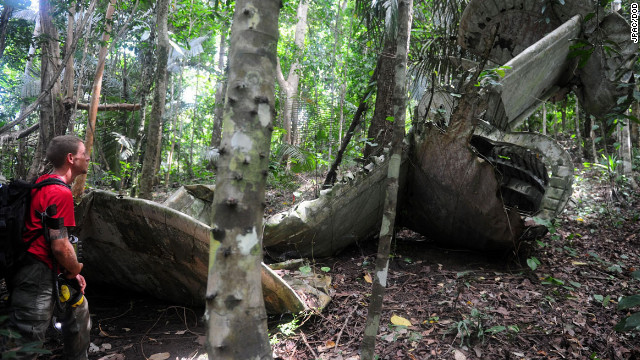
1942: TWA Flight 3 - Movie star Lombard and 21 passengers die in plane crash


Within a few hundred yards of the top of Double Up Peak, 11 miles north of Goodsprings, Nevada, a doughty band of six searchers found the missing TWA plane which crashed at 7:30 last evening, carrying movie star Carole Lombard and 15 army pilots to their death.

The ship apparently failed to clear the crest by a short distance, crashed and fell back down the mountainside some 450 yards, where it was found in three feet of snow at 10:30 this morning by searchers who went in from Goodsprings.

The party was led in by Lyle Van Gordon, former high school football star, who saw the crash last night and the subsequent fire, marked the spot and was waiting for the group when it arrived early this morning from Las Vegas.

Deputy Sheriff Jack Moore, Robert B. Griffith, George Bondley, Jack Hart and Otto Swartz comprised the party, which left at daybreak on foot and climbed straight up the mountain to the scene of the tragedy.

They spent only a short time there, left Hart and Bondley to guard the wreckage and returned to Las Vegas to report their findings and organize a party to return and bring out the bodies.

The 19 passengers aboard and members of the crew were apparently all instantly killed, their bodies strewn over an area several hundred yards in diameter. The ship was completely demolished.

There was no theory at all as to the possible cause of the disaster, for the pilot apparently flew into the mountain which is only 7,500 feet in height and nothing of an obstacle to the big Douglas transport ship.

The army pilots aboard were returning from Albuquerque (N.M.), where they had just ferried several planes to the new bomber base.

Miss Lombard, her mother and press agent were returning to Hollywood after a trip to Indianapolis to open a drive for the sale of defense bonds.

The Goodsprings party was the only one operating from that side of the mountain but there were more than 100 searchers on the Blue Diamond side.

Immediately rescue crews were organized in Las Vegas, ambulances were sent out, army officers and soldiers, sheriff’s deputies, police officers, firemen and volunteers started out, warmly dressed for the long hard search over the rough terrain.

Clem Malone, city employee, reported that he got within perhaps a half a mile of the burning plane but was stopped by a deep chasm.


He traveled on the old Potosi mine road as far as he could by car, then went on foot for the rest of the way.

Elevation of the mountain where the plane crashed is about 8,000 feet and heavy snow is reported on the ground there. The mountain stands about 4,000 feet above the surrounding terrain.

One of the first searching parties out last night was Jack Larry, John F. Cahlan, news editor for the Review-Journal; James H. Down, Jr., advertising manager for the Review-Journal; Tweed Wilson, old-time Indian resident of the area; A. McKnight, rancher and Woody Pierce, police officer of Las Vegas.

Pierce returned to his police duties early this morning, and the others set out on horses furnished by McKnight and the Wilson ranch to pursue the search.

Only a short time later, G.C. “Buck” Blaine, Dan Campbell and R.R. Russell arrived at the scene with their horses and started the search. They were joined by many others whose names were not reported there, all intent on locating the missing ship and passengers for whom little hope was held.

Major H.W. Anderson, executive officer at the army air corps gunnery school, Major Paul Holtz and about 25 soldiers joined in the search last night and today both on the ground and in the air.

Clark Gable arrived in Las Vegas at 1 o’clock this morning by plane after receiving word at the Burbank airport that the ship was missing. He was accompanied by a party of close friends and business associates who included Eddie Mannix, William Streeter and Howard Strickling.


TWA and army planes flew over the area from early this morning until the ship was located. A party of TWA and CAA officials came to Las Vegas to join in the search.

Las Vegas was the center of the news interest in the nation last night and today as long distance telephone calls from press associations and newspapers poured in from Los Angeles, Salt Lake City, Chicago and New York. The plane crash story was a “flash” on the wire of the United Press whenever a new report was sent out and this story took precedence over all others.

One or more reporters and photographers came to Las Vegas from Southern California to represent the United Press, Associated Press and International News Service.

The peace officers of Clark County and Las Vegas joined with the volunteers in conducting the search with CAA and army officials.

Frank Caldwell of the investigation section of the civil aeronautics board’s safety bureau came to Las Vegas to investigate the TWA liner’s crash. Two air safety investigators, W.E. Carey of Santa Monica, California, and Perry Hodgeden of San Francisco, were ordered to the scene.

The pilot of the TWA liner, which left its starting point at LaGuardia airport in New York City at 10 p.m. Thursday, was W.C. Williams. His co-pilot was Morgan A. Gillette and the hostess was Miss Alice F. Getz.

The plane took off from the Las Vegas airport after stopping for fuel. It was learned that the plane had intended to land at Boulder City but was unable to do so because of the lack of lighting at the field. It then came to Las Vegas, refueled, took off again and flew on the course toward Los Angeles.

Seven minutes later, it broke its radio contact with the Las Vegas control station without explanation and the crash is believed to have occurred about 20 minutes later.

Following is a list of passengers aboard the airliner which crashed near here last night: Corporal MB. Affrine, air corps; Second Lieutenant James C. Burham, air corps; Sergeant A. M. Belejekak, air corps; Second Lieutenant Hal E. Browne, Jr., air corps; Sergeant Frederick P. Cook, aircorps; First Lieutenant Robert E. Croch, air corps; Frederick J. Dittman, air corps, rank undetermined; Second Lieutenant K. T. Donaahue, aircorps; Mrs. Clark Gable (Carole Lombard), Hollywood; Lois Hamilton, Detroit, Michigan; First Lieutenant Robert F. Negren, air corps; Sergeant Edgar A. Negren, air corps (brother of Lieutenant Negren); Second Lieutenant Charles D. Nelson, air corps; Mrs. Elizabeth K. Peters (Mrs. Gable’s mother), Hollywood; Second Lieutenant Stuart L. Swenson, air corps; Private Martin W. Tellrank, air corps; Sergeant David C. Tilgman, air corps; Private Nicholas Varsamine, air corps; Otto Winkler, movie press agent, Hollywood. Crew members: Pilot Wayne C. Williams; co-pilot Morgan A. Gillette and Hostess Alice F. Getz.

Tuesday 18 March 2014

http://www.rgj.com/article/20140318/LIV/303180015/From-1942-Lombard-pilots-die-plane-crash?nclick_check=1

continue reading

Four ways to repair the Pentagon’s effort to ID the missing


Last week, we wrote about the Pentagon’s efforts to find and identify the 83,000 service members missing from past conflicts – of which the military ID’d just 60 last year. As our story laid out, the mission has been hampered by outdated scientific methods, a lack of public outreach and cumbersome bureaucracy.

Lawmakers and Pentagon leadership have zeroed on the overlapping agencies and lack of clear chain of command in the mission. Last month, Secretary of Defense Chuck Hagel ordered a review of how the military manages the effort.

But streamlining the structure won’t be enough, many outside experts say. Here are four ideas to really fix the effort.

Overhaul use of DNA

The main agency involved is the Joint Prisoner of War/Missing in Action Accounting Command, which runs the forensics laboratory used to identify the remains of the missing. J-PAC starts with historical and medical records first and leaves DNA last.

That’s backwards from all other modern day efforts to identify the missing, which begin the process with DNA and let that powerful tool lead the process. Using DNA as the primary identification method was used in Argentina after the dirty war, in the Balkans after the genocide there, and here in the United States after 9/11 and Hurricane Katrina.

If changes don’t bring the methods up to date with the latest forensics techniques, Ed Huffine, a DNA expert, said, “The system will still fail.”

Another issue is the type of DNA J-PAC uses. It relies on mitochondrial DNA, which is passed down from the mother and is consistent along the maternal line for generations. A grandmother shares the same mitochondrial DNA with her daughter and her daughter’s children, for example.

But other scientists involved in identifying the missing stopped using maternal DNA almost 20 years ago. Instead, in places like Argentina and Bosnia, scientists use nuclear DNA, which can be compared to the mother, father, children and siblings of the person to make a positive ID. It’s also faster and cheaper to process than mitochondrial DNA.

In Bosnia, they would extract DNA from a bone on a Monday, sequence the DNA on a Tuesday and do any necessary troubleshooting by the end of the week, said Huffine, who helped designed the effort in Bosnia. For the Pentagon, similar DNA processing often takes months.

Since J-PAC works decades-old cases, scientists would face times when nuclear DNA samples from immediate family might not be available. In those cases J-PAC must rely on maternal DNA, using, for example, the DNA from a missing soldier’s niece. But here too, experts say, J-PAC could make better use of DNA.

J-PAC won’t rely on maternal DNA to make an ID, because it can be shared across different families. However, even the most common mitochondrial DNA is only shared by 5 percent of the population – meaning J-PAC could be 95 percent sure of the person’s identity when using it, according to Joshua Hyman of the University of Wisconsin. He and others argue that DNA is the strongest and fastest place to start an ID, regardless of the type, rather than leaving it last in the equation.

Family samples of maternal DNA could also be combined with samples of paternal DNA to make a match. J-PAC should request all the different types of DNA to be sequenced at once.

Do a national, high-profile outreach campaign to collect needed DNA samples for WWII – before it’s too late.

Siblings are among the best DNA matches for WWII missing service members, especially if the MIAs had no children. That generation is dying. The Pentagon could enlist the help of Hollywood – Tom Hanks and Steven Spielberg have been suggested – to publicize a massive effort to collect as many DNA reference samples from family of the missing. TV ads, social media, radio and YouTube videos and more could all be used to solicit participation. The U.S. government has actually given Argentina millions of dollars in grants to do just that.

The more samples for a missing service member are on hand the easier it is to make a match.

“Given that close relatives of WWII soldiers are older, how long are we going to wait to collect their DNA? They represent the best opportunity to find a match,” Hyman said. “Are we just waiting for the issue to go away, assuming that when they die there will be no one left that cares enough to cause a fuss?”

Do massive disinterments of 9,400 unknown service members to try to identify with DNA

More than 9,400 service members from WWII and the Korean War are buried as “unknowns” in American cemeteries around the world because of the limitations of science at the time. But many of them could now likely be identified if the Pentagon exhumed the remains for DNA testing.

“Seems to me like the logical approach,” Clyde Snow, a world-renowned forensic anthropologist said.

With the copious records the U.S. military has, the unknowns could be broken down into like groups from theater, battle or event, and dug up accordingly to keep it manageable.

In order to be both efficient and respectful of the remains, scientists say the bodies could be left in place and tested using a mobile DNA unit and then housed in a mausoleum while DNA cross referencing is done.

Embrace outside help

Experts say about 45,000 MIAs are recoverable, likely an overwhelming task for any one organization or agency. So some people formerly involved in the effort have suggested enlisting universities, historical organizations, military unit associations, veterans and other interested groups.

At J-PAC’s sister agency, the Defense Prisoner of War/Missing Personnel Office, there was an idea floated of building regional centers that could be responsible for researching and building cases on the missing from their area. That would tap into a pool of people who care deeply about those who are missing, building “a cadre of people who are focused towards the mission in manageable chunks,” said Navy Commander Renee Richardson, formerly of DPMO.

“We’d be leveraging all the things universities already do,” said Richardson. “If you go to a university, let’s say Harvard, and tell them, ‘from your class of ‘37, you still have three people missing from WWII.’”

This would require much more openness with records and findings than the Pentagon has been willing to share in the past, Richardson said.

In the search for remains – the hardest task of the mission – locals can often help. There are Belgians, for example, who live near the Battle of the Bulge and have long worked to find missing American soldiers. They have the a dvantage of speaking the native language and being a part of the community, but are often shunned by the Pentagon.

Anthropologists have also suggested outsourcing overseas archaeological operations for continuity and efficiency. Rather than flying scientists from Hawaii to spend a few weeks looking for remains in, say, Papua New Guinea, there could be a team stationed there. Their work would be continuous rather than filled with the time lags of sometimes years between digs that hinders J-PAC’s efforts.

Tuesday 18 March 2014

http://newpittsburghcourieronline.com/2014/03/18/four-ways-to-really-fix-the-pentagons-effort-to-id-the-missing/

continue reading

Seven migrants drown trying to reach Greece, 2 missing


The Greek Coast Guard recovered the bodies of seven migrants, including two children, who drowned in the Aegean Sea after trying to reach the Greek island of Lesvos from Turkey on a plastic rowboat, officials said on Tuesday.

Another eight migrants were rescued and two were missing, according to a spokeswoman for the Merchant Marine Ministry who said a Turkish cargo ship spotted two of the survivors in the early hours of Tuesday morning and informed the Greek authorities. “The migrants told the Turkish crew their boat had capsized and the Turks alerted us.”

The nationalities of the migrants were not immediately known.

A Greek Navy rescue helicopter and five Coast Guard vessels searched the sea between Lesvos and Turkey for signs of the missing. A Greek cargo ship and a passenger ferry joined the search later in the day.

It was unclear how the migrants’ boat capsized, the official said, noting that weather conditions at sea had been very good. She did not confirm local reports describing the migrants as Syrian.

Greece remains a major transit country for migrants from poor or war-torn nations seeking a better life in the European Union. Athens has repeatedly appealed for help in handling a seemingly relentless influx. Hundreds of people attempt to reach the Greek islands from Turkey in boats that are often overloaded and unseaworthy.

In January, 12 people drowned when a boat carrying immigrants from Afghanistan and Syria overturned near Farmakonisi, another island in the Aegean. The incident occurred while the migrants’ fishing boat was being towed by a Greek Coast Guard vessel, drawing condemnation by international human rights groups and triggering an investigation by a Greek prosecutor.

Last month, the European Union’s border protection agency Frontex said the number of migrants entering the bloc illegally rose 48 percent in 2013 compared with the previous year.

Tuesday 18 March 2014

http://www.nytimes.com/2014/03/19/world/europe/migrants-drowned-trying-to-reach-greece.html?_r=0

continue reading