Monday, 16 September 2013

Storms hit Mexico on opposite coasts; at least 33 dead


Tropical Storm Ingrid and the remnants of Tropical Storm Manuel drenched Mexico's Pacific and Gulf coasts with torrential rains Monday, flooding towns and cities, cutting off highways and setting off deadly landslides in a national emergency that federal authorities said had caused at least 33 deaths.

The governor of the Gulf Coast state of Veracruz announced Monday afternoon that 12 people had been killed when a landslide hit a bus traveling through the town of Altotonga, about 40 miles northwest of the state capital. Gov. Javier Duarte said the death toll could grow as bodies were recovered.

More than 23,000 people have fled their homes in the state due to heavy rains and 9,000 are in emergency shelters.

The heaviest blow Sunday fell on the southern coastal state of Guerrero, where Mexico's government reported 14 confirmed deaths. State officials said people had been killed in landslides, drownings in a swollen river and a truck crash on a rain-slickened mountain highway.

Mexico's federal Civil Protection coordinator, Luis Felipe Puente, told reporters late Sunday that stormy weather from one or both of the two systems also caused three deaths in Hidalgo, three in Puebla and one in Oaxaca.

Getting hit by a tropical storm and a hurricane at the same time "is completely atypical" for Mexico, Juan Manuel Caballero, coordinator of the country's National Weather Service, said at a news conference with Puente.

Authorities in the Gulf states of Tamaulipas and Veracruz evacuated more than 7,000 people from low-lying areas as the hurricane closed in, and the prospect of severe weather prompted some communities to cancel Independence Day celebrations planned for Sunday and Monday.

Manuel came ashore as a tropical storm Sunday afternoon near the Pacific port of Manzanillo, but quickly began losing strength and was downgraded to a tropical depression late Sunday, although officials warned its rains could still cause flash floods and mudslides. The U.S. National Hurricane Center said the system dissipated early Monday.

The rains caused some rivers to overflow in Guerrero, damaging hundreds of homes and disrupting communications for several hours.

Early Monday, Manuel's remnants had maximum sustained winds of about 30 mph (45 kph) and was moving to the northwest at 8 mph (13 kph). It was about 5 miles (10 kilometers) west of Puerto Vallarta.

Manuel was expected to dump up to 15 inches of rain over parts of Guerrero and Michoacan states, with maximums of 25 inches possible in some isolated areas. Rains of 5 to 10 inches were possible in the states of Colima, Jalisco and Nayarit, with possible maximums of 20 inches in some places. Authorities said the rains presented a dangerous threat in mountains, where flash floods and mudslides were possible.

Ingrid also was expected to bring very heavy rains. It had maximum sustained winds of 60 mph (95 kph) early Monday and was centered about 25 miles (40 kilometers) west of the coastal town of La Pesca in the border state of Tamaulipas. It was moving west-northwest at 8 mph (13 kph). A tropical storm warning was in effect from La Cruz to Rio San Fernando.

More than 1,000 homes in Veracruz state had been affected by the storm to varying degrees, and 20 highways and 12 bridges were damaged, the state's civil protection authority said. A bridge collapsed near the northern Veracruz city of Misantla on Friday, cutting off the area from the state capital, Xalapa.

Thirteen people died in the state this month when a landslide buried their homes in heavy rains spawned by Tropical Depression Fernand.

Monday 16 September 2013

http://www.sfgate.com/news/world/article/Big-storms-hit-Mexico-on-opposite-coasts-33-dead-4817865.php

continue reading

Robot subs search for Concordia bodies


Workers have begun trying to right the wrecked Costa Concordia cruise ship off the Italian island of Giglio, in the biggest salvage operation of its kind.

The 290-metre ship has lain on its side since it foundered off the Tuscan coast on the night of January 13, 2012 in a tragedy that claimed 32 lives.

The unprecedented operation, which was delayed by several hours by overnight storms, began this morning (local time) after a maritime exclusion zone was established around the site.

Relatives hope to find the bodies of the final two missing victims of the shipwreck during the high-risk operation to right the capsized cruise liner.

Two bodies - that of an Italian mother celebrating her 50th birthday and an Indian waiter - are trapped and have yet to be recovered.

"They are probably in a lifeboat that was sunk when the ship capsized," said Alessandro Centurioni, the environmental commissioner in Giglio, who has helped to plan the salvage operation. "I think they will be just bones after a year and a half in the sea."

The righting of the 114,500-tonne ship, more than double the weight of the Titanic, will be the largest-ever salvage of a passenger vessel. Fifty-six cables weighing 26 tonnes each will haul it off the rocks and rotate it 65 degrees to upright in a method called "parbuckling". The riskiest part of the 10 to 12-hour operation will come in the early hours, when the maximum force - up to 7,000 tonnes per cable - will be applied.

Five robotic submarines will be standing by to look for the bodies.

The ship is full of rotting food and experts say that it could release a foul smell. An inventory of the provisions included 8,200kg of beef, 10,800 eggs and 10 bottles of holy wine for Mass.

"It's possible that when the boat is righted, there could be a release of gas that was trapped inside [the fridges]," Mr Centurioni said.

Elio Vincenzo, the husband of the missing woman, Maria Grazia Trecarichi, was due to arrive in the island last night. "I'm thinking only of my wife. These have been very hard months without Maria Grazia, but I hope with the rotation they will find her underneath," he said. "I'm counting on it."

Mr Vincenzo said that his wife did not get on the same lifeboat as his daughter, who was also onboard but survived, because she was cold and had gone below deck to fetch a jacket.

Kevin Rebello, the brother of Russel Rebello, 33, the lost Indian waiter, is expected to arrive in Giglio to follow the search on Tuesday, once the rotation is complete.

Father Lorenzo Pasquotti, the local Catholic priest, said: "We are waiting and waiting - with hope. Some people are afraid, but the people of the salvage consortium are working hard. If it goes bad, it will be because of the sea, not them."

Monday 16 September 2013

http://www.theaustralian.com.au/news/world/costa-concordia-salvage-operation-begins/story-e6frg6so-1226719925952

continue reading

Costa Concordia underwater: What’s inside of wrecked cruise ship?


The nautical blue paint spelling out “Costa Concordia” has almost all bubbled and chipped off the bow of the once luxurious cruise liner after 20 months under salt water off the Italian island of Giglio.

One can get glimpse of just what it’s like in and under the Concordia by the vast array of mesmerizing underwater videos released by Italy’s coast guard and the Titan Micoperi salvage team tasked with removing the rusting hulk.

The seabed is still littered with sun deck chairs that floated from the ship’s balconies and upper deck when it finally came to a rest in January 2012. Fish swim around the sunbed legs and seaweed has grown through some of the mesh seating. The beds are spread out in a surreal scene that looks like a set from an underwater science fiction film. Shoes, mattresses, dinner plates and thousands of pieces of cutlery shimmer in the divers’ lights on a bed of sea grass.

Divers have not been deep inside the massive ship for nearly a year. The salvage divers only work on the outside of the ship and do not have authority to enter the vessel, with the exception of a work area they have created with a false floor on the upper port side deck, unless accompanied by Coast Guard divers.

Not only is the Concordia still chock full of passengers’ possessions the Costa Cruises company hopes to return, but the ship is still considered a crime scene. Thirty-two people died in the accident and the ship’s erstwhile captain, Francesco Schettino, is facing charges of multiple manslaughter and causing the shipwreck after piloting the 290-meter ship into the rocks on Giglio last year.

The last divers to comb through the Concordia’s sunken bowels were there to search in vain for the last two victims, still believed to be trapped somewhere under the ship or buried in a watery grave at the bottom of the hollow hull. The salvage crew believe they know about where the bodies might be found, but there is no guarantee until the ship is lifted whether they will be found at all.

In the weeks after the accident, the divers called the inside of the ship a “toxic stew” of spilled oil, rotting food and floating tableware. There were five massive restaurants on the ship — each one in operation when the ship crashed at 9:42 p.m. on January 13, 2013, spilling tables of buffet food into the water. More than a dozen kitchens and freezers had enough food to feed the 4,200 passengers and crew for a week, plus extra supplies that all cruise ships carry in case of emergencies and delays. Many of the freezers burst and their contents were gobbled up by sea life and the colony of sea gulls that has multiplied on the island since the disaster.

Fishermen off Giglio say that the fish have changed, too. They are much larger and harder to catch after gorging on the ship’s offerings. The freezers that have not burst under the water pressure are still locked with their rotting thawed contents sealed inside. Fridges too, filled with milk, cheese, eggs and vegetables, have been closed tight since the disaster. One has to only imagine leaving a home freezer — a fraction of the size of the industrial freezers used by cruise ships — unplugged for 20 months to get an idea of the type of rancid mess trapped inside.

Rodolfo Raiteri, head of the Coast Guard dive team, told CNN that his divers had to confront an array of deep-sea threats, from floating knives to lethal bed sheets and flowing curtains that could have easily become entangled in the divers’ safety cords. There were also floating chairs and large chunks of marble and crystal chandeliers that constantly detached and fell from the sideways ship’s ceilings every time the ship creaked and shifted as it settled onto two underwater rocky mountain peaks. All that debris, along with thousands of dinner plates, can be seen stacked against the underwater windows in some of the salvage video.

The ship has compressed three full meters in the 20 months since it crashed, and each time it groans and twists, windows break as their frames adjust and once-attached items are lodged free. On cruise ships, dining room tables are all affixed to the floors to keep passengers from chasing sliding tables in rough seas. Raiteri described the bizarre scene his divers faced swimming among the sideways tables, sometimes encountering plates of food and floating champagne bottles in their search for victims.

Senior cabin service director Manrico Giampedroni, one of the last survivors to be pulled out of the wreckage alive, became trapped half submerged in the ship’s dining room when his leg got caught among fallen furniture. He survived for 36 hours on floating food and stayed awake by drinking caffeinated beverages until rescuers found him. If he had fallen asleep, he would have drowned. Incidentally, Giampedroni was later convicted of involuntary manslaughter in a plea bargain for his role in the deaths for not being at his duty station to help evacuate the ship.

In addition to the general rule of thumb that you don’t blow up ships where there are still unrecovered victims, one of the main reasons the Concordia is being refloated rather than blown up or dismantled on site is because of the toxins and personal effects still trapped in the ship’s 1,500 staterooms. The ship’s engines are still thick with lubricants and the kitchens are still filled with cooking oils and non-soluble materials that would pollute the sea.

Giglio, which lies within the Pelagos Sanctuary, the largest protected marine wildlife park in the Mediterranean, is flush with exotic sea life and coral reefs. The putrid stew inside the ship’s 17 deck-structure will eventually have to be purified or pumped out before the ship is refloated sometime next year, and the personal effects are another matter.

All that was in the Concordia the moment it wrecked is presumably still there, save the ship’s bell, which mysteriously disappeared two months after the wreck based on surveillance video taken by authorized divers. An investigation into who could have stolen the bell has caused some concern that other items, especially high price items from the ship’s gift shops, could have also been pilfered. Everything inside the ship is expected to be recovered and returned to its original owners, no matter how water-logged it may be, but that could be months from now when the ship is eventually towed and dry docked for dismantling.

Each of the cabins has a locked safe, presumably still filled with passengers’ valuables including cash and jewelry. There are also countless cameras, laptops, iPads and cellphones that passengers left behind, not to mention luggage. The ship had only been at sail for three hours, so many passengers likely didn’t take time to unpack, but instead headed to the nearest dining room or bar to relax as the ship set sail. One suitcase floated to the nearby island of Elba and its soggy contents were delivered to the owner nine months after the disaster. Many more suitcases have been spotted by divers at the bottom of the sea.

Nick Sloane, the head of the salvage operation for Titan Micoperi, the joint American-Italian venture to rescue the Concordia,, says that if explosives were used, the ship’s smaller contents would become dangerous projectiles. “Mattresses and passports would scatter the sea,” he says. But the real danger would be flying cutlery, cooking knives, bottles and broken glass.

If the “parbuckling” goes well and the giant 114,000-ton vessel is tipped upright sometime in the next week, much more than the 65 percent of the ship that is under water now will be submerged. The platforms that will provide a base on which the Concordia will rest are some 30 meters below the sea level, meaning many of the staterooms that were dry until now will sink underwater. Some of the toxic water will be displaced and pushed out of the upper cabins. Some freezers that are still sealed could burst under new water pressure. And almost every window on the ship’s outer cabins is expected to break as the ship’s frame twists.

Sloane says the noise will be deafening as metal twists and windows pop. The ship has been rigged with cameras and microphones to help the salvage crew monitor the ship’s structure as it is lifted. As Sloane says, ships this size were never meant to lie on their sides, and they are not built to be lifted. The salvage team says they will be able to contain any spillage of toxins with oil booms now in place around the work site. The broken glass and new debris will join what is already at the bottom of the sea.

There will never be the scale of environmental disaster that was already averted by removing the ship’s 2,400 tons of fuel shortly after the ship crashed, but there are still major risks involved with salvaging the Concordia. If the parbuckling fails and the ship breaks apart as it is rotated, the rotten contents — moldy mattresses, passports, toxic stew and all — will spill into the once-pristine sea. And even if it succeeds, this part of the Mediterranean will never be quite the same again.

Monday 16 September 2013

http://fox2now.com/2013/09/15/costa-concordia-underwater-whats-inside-of-wrecked-cruise-ship/

continue reading

Sunday, 15 September 2013

Veterans revisiting battlegrounds of the Vietnam War to help reunite the families of fallen Viet Cong with personal effects


Ben Roberts-Smith knows how it feels to go to war.

But a trip to Vietnam with a group of veterans showed him a side of war he had never experienced.

"It was amazing to see these guys who were shooting at each other 40 years ago and are now able to sit down and have a beer together," he said.

"I can't imagine being able to do that."

Cpl Roberts-Smith, who was awarded the Victoria Cross for bravery in Afghanistan, spent four days revisiting battlegrounds of the Vietnam War and helping reunite the families of fallen Viet Cong with items taken from soldiers' bodies at the time.

Of all the items that were returned, some of which have spent decades tucked away in small military museums, one stuck in Cpl Roberts-Smith's mind.

"It was a picture a Vietnamese soldier had drawn of his wife and on the back of the picture he had written the names of his children," he said.

"When we went back his wife was still alive.

"To be able to give that back to her and see what it meant to her . . . she was overcome with emotion. You can only imagine what that's like.

"It was extremely emotional for them (the Australian veterans) at the point of handing back items to the families." "

The trip, dubbed Operation Wandering Souls, was the work of military researchers at the University of NSW, including Vietnam War veterans.

As well as collecting personal effects to return to the families of lost Viet Cong soldiers, the team has compiled a database of burial sites to help find those Vietnamese still deemed missing in action.

The project was deemed particularly important in part because Vietnamese culture considers those who die in unrecorded graves to be "wandering souls". The personal belongings of someone who has died also have significance.

Vietnam has previously helped Australia find and repatriate its dead soldiers.

Cpl Roberts-Smith said he jumped at the chance to visit.

"To be able to go and see the battlefields was fantastic," he said. "To be able to go with those Vietnamese veterans was a once in a lifetime experience.

"It was a humbling experience to see what it meant to them. I know that feeling, I know why they did what they did.

"From an Aussie point-of-view or a soldier point-of-view I think it was important to go back and pay my respects to the men who lost their lives there."

Sunday 15 September 2013

http://au.news.yahoo.com/thewest/a/-/wa/18937807/vietnam-visit-humbles-hero/

continue reading

Search for remains of Bosnian victims continues


The Missing Persons Institute (MPI) of Bosnia and Herzegovina on Monday will continue to search for the bodies of victims at the recently found mass graves at the Tomasica site near Prijedor (Bosnia).

The existence of the mass graves was discovered by a former member of the Army of the Republika Srpska.

Head of the Regional Office of the MPI of Bosnia and Herzegovina Mujo Begic told the Anadolu Agency (AA) today that the teams found the skeletal remains of one female person on Thursday.

"We found one more body. The skeletal remains are mostly complete”, he said adding that teams will continue the activities on Monday.

The director of the (MPI) of Bosnia and Herzegovina Amor Masovic said earlier to the AA that victims were probably prisoners of Prijedor concentration camps, Keraterm and Trnopolje during the last Bosnian war.

According to the first opinion of pathologists, most of them were killed in other locations, and then relocated to the area of ??the Tomasica site and hidden under the layers of soil.

Revelation of mass tomb at the Tomasica site near city of Prijedor which is assumed to be the largest in the last ten years that has been found in northwestern Bosnia re-opened, never healed, wounds of Prijedor Bosniaks and Croats.

Mass graves at the site Tomasica near Prijedor originates from the Bosnian war, and is thought to hide non-Serb victims from the city of Prijedor and around which have remained missing since 1992.

So far found and identified are 2,082 victims of Prijedor and still search for about 1,200 Bosniak and Croatian victims killed during the war in and around the Prijedor area continues.

Sunday 15 September 2013

http://www.worldbulletin.net/?aType=haber&ArticleID=117960

continue reading

24 killed in Afghan mine collapse


A tunnel collapsed in a coal mine in Afghanistan's north, killing at least 24 workers and leaving three others missing.

Some 14 area residents trying to aid in the rescue were overcome by fumes and had to get treatment.

Workplace safety standards are poor in Afghanistan as in many developing nations, and such accidents are common. But concern about such standards is likely to grow in the coming years as the government tries to develop a wealth of mineral resources in the country - a challenging goal as it battles a Taliban insurgency.

The mine tunnel collapse occurred on Saturday in Ruyi Du Ab district of Samangan province, a remote area where the insurgency does not have a significant presence yet. A police official said more than 1,000 villagers in the area rushed to the scene, using their hands, shovels and other tools to try to dig out the workers.

Akram Baigzad, the provincial police chief, said 24 bodies had been recovered of a total of 27 workers. Fumes left around 14 rescuers with breathing problems, but none died as a result, he said.

Sunday 15 September 2013

http://www.belfasttelegraph.co.uk/news/world-news/24-killed-in-afghan-mine-collapse-29580715.html

continue reading

Bodies of 2 pilots found nearly 72 years after Lake Muskoka crash


More than 70 years after their plane crashed into Lake Muskoka, the bodies of two airmen have finally been recovered.

Leading Aircraftsman Theodore (Ted) Bates of the Royal Canadian Air Force and Flight Lieutenant Peter Campbell, a member of the British air force, will be buried in Guelph, Ont. on Tuesday with military honours.

They went missing on Dec. 13, 1940 when their Nomad 3521 collided mid-air with another aircraft.

Theodore Bates and Peter Campbell went missing after their plane plunged into an Ontario lake during a search and rescue exercise.

The Canadian navy’s diving unit recovered their bodies nearly a year ago, but the Department of National Defence did not formally announce that until Friday.

The government said it withheld the information from the public to protect “against disturbance" of the crash site. “It’s been a long time, but there is going to be closure,” Bates’ brother Tom told CTV Barrie.

In a news release, Minister of National Defence Rob Nicholson said the recovery “will provide closure to the families of Flight Lieutenant Campbell and Leading Aircraftsman Bates, as well as reassure them that the ultimate sacrifice made by their loved ones will never be forgotten.”

Bates and Campbell went missing during a search-and-rescue operation involving another airman who had disappeared during training the previous day. Their plane collided with Nomad 3512, another aircraft that had been searching for the same pilot.

The wreckage of Nomad 3512 and its pilots were recovered shortly after the crash. But many feared that Bates and Campbell’s bodies were lost forever.

In 2007, Matt Fairbrass, who heads up the Lost Airmen Project, discovered the missing wreckage using a side-scan sonar.

“We had no idea there was actually remains, we were just hoping to have artifacts for an exhibit,” Fairbrass told CTV. The OPP’s Underwater Search and Recovery unit eventually located the aircraft in 2010.

At that time, divers recovered personal effects and the aircraft's three .30 calibre machine guns.

The Royal Canadian Air Force said it’s now working out the logistics of pulling the plane wreckage from the lake.

Sunday 15 September 2013

http://www.ctvnews.ca/canada/bodies-of-2-pilots-found-nearly-72-years-after-lake-muskoka-crash-1.1455328

continue reading

Two bodies found, 15 missing as ferry capsizes in western Bangladesh


Two bodies were found and 15 people were still missing after a boat sank into the mighty river Padma in western Bangladesh Saturday evening, police and fire service said Sunday.

Abdur Rahman, a fire service official at Rajshahi district, some 256 km west of capital Dhaka, told Xinhua by phone Sunday morning that a overcrowded ferry carrying around 50 passengers sank into the mighty river Padma late Saturday afternoon due to rough weather.

Rahman said around 35 passengers swam to shore, but 15 others remained missing.

He said the rescuers of the fire service recovered the bodies of a kid and a man from the river.

The strong current of the mighty river was hampering the rescue operation, he said, adding that rescuers suspended the operation at 8 p.m. local time Saturday.

Fire service men feared the strong current might flush the bodies of the missing passenger to the downstream of the river.

Ferry and boat disasters are common in Bangladesh, which is crisscrossed by about 250 rivers. Ferry is still a key means of transport in the country. Most of the ferry boats are often overcrowded.

At least 112 bodies were recovered after a ferry capsized in Bangladesh's central Munshiganj district in March 2012.

Sunday 15 September 2013

http://www.globaltimes.cn/content/811381.shtml

continue reading

Saturday, 14 September 2013

Flood-hit Colorado awaits more rain; 172 people remain unaccounted for


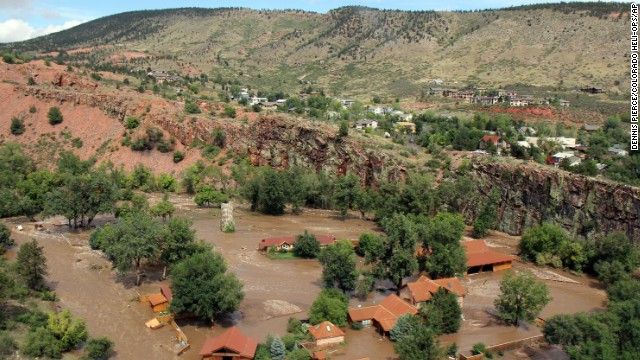
As furious waters flow through flood-devastated northern Colorado, fears and tales of devastation grow.

At least four people have been killed and 172 are unaccounted for, officials say.

The nightmare is far from over as the state awaits more rainfall Saturday, threatening to send swollen rivers gushing through streets choked with debris. The rain is expected to come down heavy Sunday.

It will not be as much as the 15 inches dumped in some spots this week, but it could cause more flooding in areas where water has already receded, forecasters warned.

Residents got some relief Friday when rains subsided, giving a clear view of towns turned into abrupt lakes, homes and businesses inundated with muddy water and bridges devoured by raging creeks. Homes dangled off cliffs.

Rescuers have retrieved the bodies of the four who died in the waters. Many more people are cut off by devastated roadways, and authorities don't know how long it will take to reach them.

Gov. John Hickenlooper warned an extensive recovery is ahead for the affected area from the state's center into the northeast.

"This is not going to get fixed in a week," he said. "We have lost a great deal of infrastructure."

Human toll

Currents swept away a woman who got out of her car Thursday in Boulder County. A man jumped out of the car to save her. Both drowned.

Authorities have recovered both bodies, said Sheriff Joe Pelle. An additional body turned up in the same county. Rescuers recovered yet another in El Paso County.

In Denver, rushing waters swept a man into a drainage pipe with his dog. Both were saved after traveling two blocks in the water, police said.

All the people unaccounted for were in Boulder County alone.

"These are people whose family or friends haven't been able to reach or account for them, not necessarily in harm or dire need," said county spokeswoman Gabrielle Boerkircher.

President Barack Obama declared an emergency for Boulder, Larimer and El Paso counties, FEMA announced Friday. The declaration allowed FEMA to bring in four rescue teams, the largest ever deployment in Colorado, officials said.

The clear skies allowed for an uptick in evacuations.

National Guard troops using "high-profile" trucks to wade through water evacuated 550 people from the Boulder County town of Lyons, CNN affiliate KUSA reported.

It had been cut off since the flooding began Wednesday night -- without water or sewer service, in many cases without electricity.

Saturday 14 September 2013

http://edition.cnn.com/2013/09/14/us/flooding-colorado/

continue reading

After disasters, DNA science is helpful, but often too pricey


Human DNA is the ultimate fingerprint. A single hair can contain enough information to determine someone's identity — a feature that's been invaluable for identifying the unnamed casualties of natural disasters and war. But forensic scientists who use DNA say the technology isn't always available where it's most needed, like in poor countries, or in war zones like Syria.

The technology is often too expensive or too complicated, and where there are large numbers of unknown dead, you need far more than just DNA profiling equipment. You also need sophisticated computer programs to organize and match DNA samples from numerous family members, as well as experts to read the samples properly.

, a medical ethicist at Carnegie Mellon University, says that while there are numerous groups that do DNA identification worldwide, and the process is often ad hoc and erratic.

It was largely the Indian Ocean tsunami that got forensic experts thinking. There were tens of thousands of unidentified bodies, and DNA experts flocked to Thailand to set up labs. Tom Parsons, a DNA expert with the , says Thailand got the attention because western tourists died there. Their governments sent teams to find their bodies, but it didn't go well.

"All of the world's first-rate forensic teams took off to Thailand, where white people were killed," Parsons says, "with no centralized plan, pushing and pulling." Governments funded the effort because they wanted their citizens' remains back. But it was "really a mess," says Parsons. Different groups wouldn't share their technology, and even disagreed on how to do the DNA analysis. There was little coordination.

Eventually Interpol, the international police organization, intervened. The commission ended up identifying some 900 people, mostly Thais who might not have been identified otherwise.

Parsons says in the end the DNA work in Thailand was a success, but it revealed to forensic experts that there might be a better way to do this — that in fact a permanent organization with DNA "chops," money and an international mandate to respond to disasters might work better.

"Our concern was that there should be a mechanism in place that would allow access to DNA identification beyond just ability to pay," London says. "Too often if there isn't a funder out there, then people who are missing relatives won't get access to the technology."

So forensic scientists are calling for the creation of a DNA identification organization — one that functions much in the same way the International Atomic Energy Agency does, which sends inspectors to nuclear facilities.

But in an article in the journal Science that a global DNA identification organization would face political obstacles, especially from governments at war with their own citizens.

Saturday 14 September 2013

http://www.npr.org/blogs/health/2013/09/13/221865970/dna-science-helpful-but-too-pricey-for-many-countries

continue reading

Rescue teams finish work at hospital fire site in Novgorod region


Rescue teams have finished their work at the site of a deadly fire at a nursing home for the mentally ill in the Novgorod region, which, as was reported earlier, claimed 37 lives, Russian Emergency Situations Ministry spokesman Oleg Voronov told journalists on Saturday.

"The emergency and restoration work and the clearance of the rubble have been completed," Voronov said.

Rescuers have retrieved 35 bodies and also body parts from the rubble of the nursing home destroyed by the fire, and the remains will be subjected to forensic medical tests, he said.

Day of mourning will be declared in Novgorod region

The administration of the Novgorod region will make a decision on declaring a day of mourning for those killed in the region's psychiatric hospital fire by Friday evening, the Novgorod region's Governor Sergei Mitin, who is now at the accident site, said.

"I think a day of morning will be declared. We will make a definitive decision by Friday evening," he said.

Saturday 14 September 2013

http://voiceofrussia.com/2013_09_14/Rescue-teams-finish-work-at-fire-site-in-Novgorod-region-1221/

continue reading

Friday, 13 September 2013

Remains of 2 airmen missing since WWII found


Their bodies were missing for decades after they disappeared behind enemy lines.

Now the remains of two U.S. Army Air Force troops who died during World War II are set to be buried in Arlington National Cemetery next week after search crews found them in the mountains of Papua New Guinea, the U.S. Defense Department POW/Missing Personnel Office said Thursday.

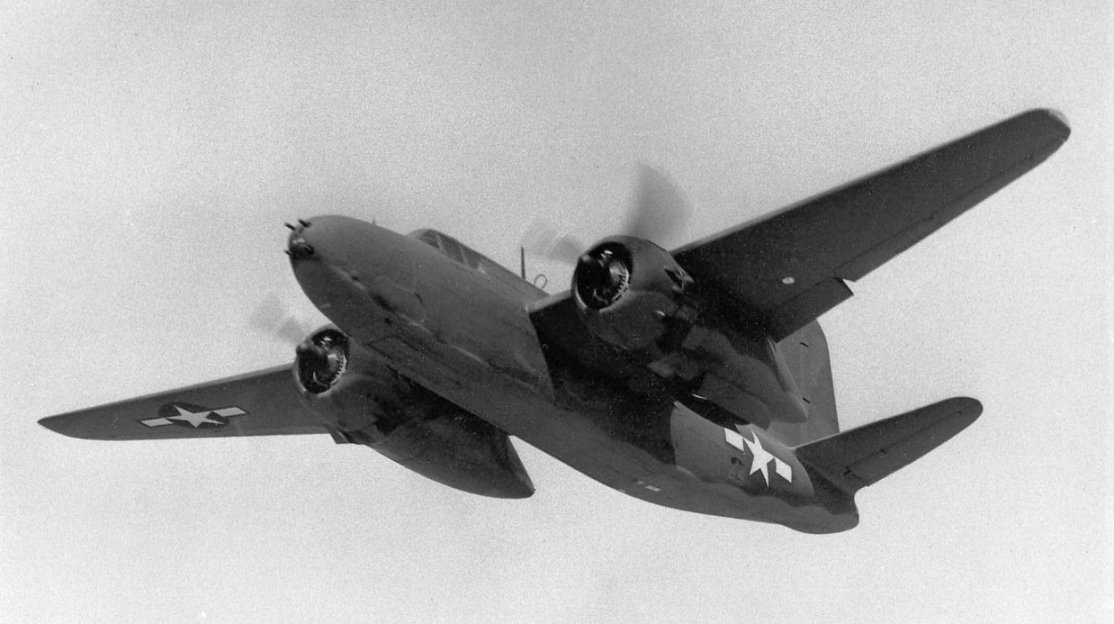
The A-20G Havoc bomber in which U.S. Army Air Force 2nd Lt. Valorie L. Pollard and Sgt. Dominick J. Licari were flying crashed after attacking enemy targets on March 13, 1944, the Defense Department said.

Their remains were recovered when the crash site was excavated last year.

More than 400,000 U.S. troops were killed during World War II, and the remains of more than 73,000 were never recovered or identified, the Defense Department says.

Papua New Guinea, an island country in the western Pacific, is north of Australia and just south of the equator. Much of the nation is covered in rugged terrain and rain forests.

Friday 13 September 2013

http://edition.cnn.com/2013/09/12/us/wwii-airmen-remains-found/

continue reading

Yearning for their return, kin of 25 persons missing in U’khand stay away from festivities

In this festive season, the families of those who have gone missing in the Uttarakhand floods continue to grieve for their near and dear. On Friday, it would be three months since the tragedy struck Uttarakhand. Twenty-five persons, including 16 women, from Pune, Pimpri-Chinchwad and other parts of the district have gone missing. The affected families have now lodged an FIR with the local as well as the Uttarakhand police.

Dhanashree Kadam's search for her missing parents, Yashwant and Alka More, has drawn a blank. This, she said, despite her brother visiting Uttarakhand twice. "It is an ordeal for our family. We never thought that our lives would take such a tragic turn. Even during Ganesh festival and Gauri festival, we are not in the right spirits to celebrate. I am obsessed my the thought of my parent's well-being. How can we celebrate festivals without them?" she asked.

Vasant Kamthe still hopes for a safe return of his four family members, including his wife. "Those who are missing might have been hospitalised and would have been too critical to contact us. To keep myself going on, I recently even consulted a fotune-teller, who told me my family members were possibly safe and could be back home by September end," he said.

Pune District Disaster Management Officer Vitthal Banote said the Uttarakhand police had recently visited Pune and met with the families of those missing. "They collected photographs of the missing persons and asked for their identity marks. They also confirmed the identity of families of those missing," he said.

Banote said though 160 more bodies were found in the third round of combing operations in Kedar Valley, there was nobody from Pune. The group of 25 missing persons is believed to have belonged to Shivgauri Travels. They have been missing from Rambada sector of Uttarakhand, which was completely destroyed.

Friday 13 September 2013

http://www.indianexpress.com/news/yearning-for-their-return-kin-of-25-persons-missing-in-u-khand-stay-away-from-festivities/1168576/

continue reading

Dozens missing in Russian psychiatric hospital fire


A fire raged through a Russian psychiatric hospital on Friday, killing at least three people and leaving dozens missing as police searched the surrounding area for survivors.

More than 30 others were feared dead, officials said on Friday.

The pre-dawn fire at a ward for severely ill patients was the second deadly blaze at a psychiatric hospital in Russia this year and is likely to prompt criticism of the state over its treatment of the mentally ill and other vulnerable citizens.

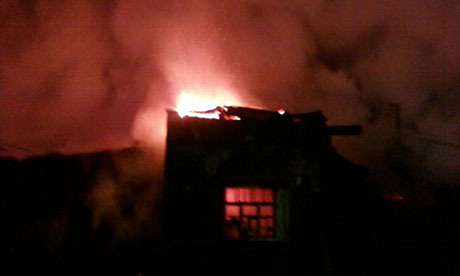
The fire in the one-storey hospital in the village of Luka in the north-western Novgorod region broke out about 3am local time Friday (midnight BST) and quickly engulfed the mostly wooden structure dating back to the 19th century, the emergency situations ministry said.

Authorities had long warned that the building was unsafe and called for its closure.

Emergency officials said that 23 of 60 people who were in the building when the blaze broke out were evacuated. Emergency teams found the bodies of two patients and a nurse, who they said died while trying to rescue others.

Another 34 people remained unaccounted for and were feared dead. Emergency workers were combing a nearby forest for patients who might have fled the blaze.

Some of the missing might have escaped, ministry official Oleg Voronov said on Ekho Moskvy radio.

The building housed male patients, state-run RIA reported.

Investigators suspect the blaze was caused by a patient setting a bed on fire, Interfax news agency reported, but regional governor Sergei Mitin said it might have been accidental.

"Medical personnel saw a patient who was shrouded in flames ... It's possible that he was smoking in bed and the mattress caught fire," Mitin said, according to Interfax. He said the ward that caught fire housed severely ill patients.

Emergency officials and prosecutors had sought to have the building condemned as unsafe, but a court instead ordered management to correct unspecified flaws by August 2014, the head of safety oversight for the ministry said.

"The building that burned was unfit for use," the official, Yuri Deshevykh, told Itar-Tass.

There have been many fires with high death tolls at state institutions such as hospitals, schools, drug treatment centres and homes for the disabled in the past decade, raising questions about safety measures, conditions and emergency exit routes.

In April, a fire at a psychiatric hospital outside Moscow killed 38 people.

Yuri Savenko, president of the independent psychiatric association of Russia, said after that fire the dilapidated state of psychiatric hospitals was pushing death tolls in such incidents up. He said a third of the buildings at such facilities had been declared unfit for use since 2000.

Friday 13 September 2013

http://www.theguardian.com/world/2013/sep/13/dozens-missing-russian-psychiatric-hospital-fire

continue reading

Thursday, 12 September 2013

Mudslide kills 14 in Eastern Mexico


The death toll from a mudslide in a mountainous area in the Mexican Gulf state of Veracruz has risen to 14, with eight children among the dead, emergency management officials said.

The mudslide occurred on Tuesday in Tecoa, a community outside the city of Coscomatepec, located nearly 300 kilometers (186 miles) from Mexico City, following heavy rains, Veracruz emergency management office spokesmen told Efe.

The first bodies found were those of a woman and her two children, an 8-month-old boy and an 8-year-old girl, emergency management officials said.

Five more bodies were found a few hours later by rescue teams digging through the mud and debris.

Rescue teams found six more bodies, including that of a newborn, in the evening, emergency management officials told Efe. Six of the victims have been identified, officials said.

Rescue teams found Pablo Torres Morales, 9, and Susana Trujillo, 21, alive, emergency management officials said. The boy and the young woman are expected to survive, officials said.

Mexican army units were deployed to the area to provide assistance and remove the tons of mud and rock.

Veracruz has been drenched by torrential rains that have caused flooding in the cities of Cordoba, Orizaba and Coscomatepec. At least 16 cities have been affected by the rains and floods caused as 15 rivers and streams overflowed their banks, the Veracruz emergency management office said.

Damage has been reported in 22 rural communities and 22 other areas, while more than 250 people have been evacuated from their homes and taken to shelters, officials said.

Thursday 12 September 2013

http://www.hispanicallyspeakingnews.com/latino-daily-news/details/mudslide-kills-14-in-eastern-mexico/27021/

continue reading

Families of disaster victims demanding answers


Thought-provoking article:

Families of some of the victims of the 2011 earthquake and tsunami disaster are refusing to accept the idea that the loss of loved ones was due simply to fate.

They have been fighting court battles to find convincing answers to questions about the tragedies even though they know that doing so prolongs and could even magnify their agony. They believe that the lives of their loved ones could have been saved.

Two and a half years have passed since the Great East Japan Earthquake and tsunami. I visited some bereaved families in Miyagi Prefecture, where more than 10,000 people perished in the epic disaster.

There is little debris left in areas engulfed by the tsunami. Dump trucks were coming and going, while heavy machinery was being operated noisily.

But lurking behind banners of “rebuilding” was deep sorrow that is refusing to abate.

Five children of the Hiyori kindergarten in the city of Ishinomaki died after the pickup bus carrying them was swallowed by the tsunami. Families of four of the victims have filed a lawsuit against the kindergarten. The first ruling in the case is expected shortly.

In the town of Onagawa, 12 employees and staff members at a branch of the 77 Bank, a regional lender, died or remained unaccounted for after they took refuge on the rooftop of the branch building. Families of three of them filed a suit against the bank just one year ago.

At Okawa Elementary School in Ishinomaki, a total of 84 children, teachers and school staff members died or went missing. An investigative committee set up by the municipal government at the initiative of the education ministry is looking into the tragedy.

Discussions with bereaved families point to a common element in all these heart-wrenching tales.

As details about what the people at these disaster sites actually did on that day in March 2011 have emerged, it has become clear that the victims could have been saved if a different course of action had been chosen.

What if, for instance, the pickup bus of the kindergarten had stayed put with the children at the facility after the earthquake, instead of heading toward the sea (to take them to their parents at home)?

What if the bank employees had taken refuge on elevated ground that was just a few minutes' walk from the branch building, rather than going up to the rooftop?

What if the children at the Okawa Elementary School had fled to a hill at the back of the school, which even children could have climbed, instead of staying at the schoolyard for up to 50 minutes until the tsunami arrived?

The question haunting the bereaved families is why these alternatives were not chosen.

The answers they have received so far from the institutions boil down to one point: It was not expected that the facilities would ever be hit by a tsunami.

Meetings to explain what happened were held, but not much vital information has been offered, according to bereaved families. If the claim that it could not be helped is accepted, they think, the same mistake could be made again.

Lawsuits over these cases inevitably focus on the issue of liability for damages. There is no guarantee that the plaintiffs will get what they really want: truth, sincere apologies and soul-searching to ensure that such tragedies will never happen again.

Some of the people who led the evacuations also died.

Whatever the outcomes of the lawsuits, the court battles alone may not lead to improved safety and better preparedness for natural disasters.

Despite being well aware of all of this, the bereaved families felt compelled to take legal action. One of the plaintiffs asked, “Are we acting out of line?”

The only thing society can do for them is to keep making serious efforts to understand the depth of their sorrow and learn lessons from the calamity to prevent similar tragedies.

Thursday 12 September 2013

http://ajw.asahi.com/article/views/AJ201309120043

continue reading

DC 50 years ago: Delhi-bound I.A.C. Viscount crashes; 13 passengers and 5 crew aboard killed


All the 18 persons on board an Indian Airlines Viscount (VT-D-10) were killed this morning when it crashed at Jojou village near the Mania railway station on the Agra/Gwalior line according to an I.A.C press release issued here this evening.

The bodies are being flown to Delhi. The ill-fated aircraft was on a scheduled flight (night airmail) from Nagpur to Delhi. It left Nagpur at 0230 hours this morning and reported to ground control at 0340 hours that it would land at Palam at 0434 hours.

This was the last message received. Two IAC Dakotas with senior officers of Indian Airlines left Safdarjung early in the morning in an attempt to locate the aircraft which had, by then, become overdue.

The wreckage was sighted four miles east of the Mania railway station by an IAF Fairchild Packet which had joined the search. According to the message received from the aircraft, the wreckage appeared to be completely burnt out.

An IAF helicopter had been rushed to the scene of the accident with medical supplies. Another Dakota had left Safdarjung this evening for Agra with relations of the passengers and crew of the ill-fated aircraft.

Thursday 12 September 2013

http://www.deccanchronicle.com/130912/commentary-op-ed/commentary/dc-50-years-ago-delhi-bound-iac-viscount-crashes-13-passengers

continue reading

First 16 unidentified bodies of the 1953 North Sea Flood (watersnoodramp) exhumed


Sixteen unidentified bodies of the 1953 North Sea Flood (watersnoodramp) have been exhumed in Serooskerke on Tuesday and Thursday. According to Irma Disk, team leader of the National Missing Persons Bureau, DNA has been successfully extracted.

32 unknown people are buried in Schouwen-Duiveland who have died during the flood. Experts from the police and the Netherlands Forensic Institute attempt to identify the unidentified bodies 60 years after the disaster.

Further exhumations will take place in Nieuwerkerk and Ouwerkerk later this month.

Anyone who has lost a family memmber in the Big Flood can submit a DNA sample. The DNA samples extracted from the bones of the unidentified and those obtained from family members will be entered and compared in the DNA database for missing persons at the Dutch Forensic Institute.

The DNA material from the first 16 unknowns is brought to the NFI. The big question is whether there they will be able to obtain a DNA profile. "We can do very much now in terms of DNA analysis. But it happens that it is not possible to get a DNA profile from ancient remains. This has to do with acids are in the ground, or how much salt the ground contains, "explains Irma Disk.

Thursday 12 September 2013

(Original article in Dutch)

http://www.telegraaf.nl/binnenland/21885730/__Opgraving__watersnooddoden___.html

continue reading

India: Railway Police grapple with high cost of DNA profiling for unidentified bodies


High costs involved in DNA profiling of unidentified bodies recovered from along the railway tracks have led to a pile-up of cadavers in mortuaries at government hospitals coming under the Railway Police in Salem Sub-Division.

This sub-division alone has to deal with about 400 unidentified bodies in a year. Coimbatore accounts for 30 corpses in a year.

Under such circumstances, the Forensic Sciences Laboratory in Chennai wants the Railway police to go in for DNA profiling of bodies only in the event of the case being major, unusual or sensational. Railway police find this to be a tricky affair. In the absence of DNA profiling, when there is a claim (that the deceased was a legal heir of someone or someone was a legal heir of the deceased and also in the event of a case of death on or alongside the track being re-opened or challenged in court), Railway Police find it difficult to prove the identity and relationship of the victim with the claimant.

In most train accidents, the face of the victim is damaged beyond recognition. Legal procedures do not allow for recognition of a body by the complexion, height or dress worn by the accident victim at the time of death. The courts strictly go by DNA profiling.

The Railway Police have another problem to grapple with. Until, someone comes up with a claim of relationship with a person found dead along a railway track, the Railway Police are not be able to know whether the case can be classified as major, unusual or sensational.

In the absence of DNA profiling, the police will be in a fix in the court of law, say officers in the Railway Police who have been dealing with death on the railway tracks.

Officers dealing with such issues say that the only solution to the problem would be to allocate adequate funds to the Forensic Sciences Laboratory to perform a profile for all requests.

Forensic science experts admitted to The Hindu that the DNA kits were very expensive. They also admit that DNA profiling is the surest way to face legal implications that might arise in future. In Coimbatore region, there were 98 deaths on the tracks (including suicides and accidents) in 2011 and the number went up to 111 in 2012 and till July this year, it was 66.

Thursday 12 September 2013

http://www.thehindu.com/news/cities/Coimbatore/railway-police-grapple-with-high-cost-of-dna-profiling/article5119222.ece

continue reading

With no closure from tsunami, fisherman prays before empty grave of his wife


Yoshinori Iwatsuki bows his head and says a prayer in front of a gravestone here, unsure if his words will be heard.

“I usually pray here, but the grave is empty,” Iwatsuki, 65, said on Sept. 11.

Two and a half years ago, the tsunami that swamped the northeastern coast of Japan swept away his 63-year-old wife, Kimiko. Iwatsuki was on a tuna-fishing vessel off South America at the time, and it took him nine months to return to Japan.

Since then, Iwatsuki has tried desperately to locate Kimiko’s remains for closure. He has repeatedly called police for information, attended meetings on identifying bodies, and even sought the services of a necromancer.

But as time passes, he is losing hope.

As of Sept. 10, the official toll from the Great East Japan Earthquake and tsunami was 15,883 dead and 2,654 missing. In the hard-hit prefectures of Iwate, Miyagi and Fukushima, 114 bodies are unidentified.

DNA tests have been conducted on these remains, and pictures have been shown to potential relatives. But additional information and clues to the identities of these bodies have become scarce.

Iwatsuki currently lives in temporary housing in Ichinoseki, Iwate Prefecture, and every month, he takes a bus and a taxi to visit a temple in Kesennuma that contains the empty grave of his childhood sweetheart.

He is also somewhat haunted by the last words she said to him: “Nothing is broken here. There’s no problem.”

Iwatsuki, who was born and raised in Kesennuma, became a wireless operator on a tuna-fishing vessel immediately after graduating from high school. His vessel fished mainly in waters off South America, and his work usually kept him away from home for five months at a time.

His semi-annual dates with Kimiko, a former classmate, were joyous occasions, and the two were married when they were 25 years old.

Even after marriage, the couple lived far apart for most of their years. As tuna catches declined and fuel costs rose, Iwatsuki’s fishing excursions became longer.

In June 2010, Iwatsuki’s vessel departed from Japan for an extended fishing operation. During the journey, Iwatsuki communicated with Kimiko via satellite phone twice a month.

Two days before the March 11 disaster, Iwatsuki learned from a shortwave broadcast that an earthquake measuring a lower 5 on the Japanese seismic intensity scale of 7 had hit Miyagi Prefecture. He called Kimiko to ask if she and Kesennuma were OK.

In their last conversation, Kimiko reassured her husband that everything was fine.

But then the magnitude-9.0 earthquake struck, spawning a tsunami that wiped out entire communities in the Tohoku region.

Iwatsuki was off the coast of Peru when he learned of the disaster back home from a news agency report. He tried to contact Kimiko, but she did not answer the phone.

Several days following the disaster, his eldest son and daughter who live in Tokyo visited evacuation centers and morgues in the Tohoku region to find their mother.

They came across a carpenter who had been working behind Iwatsuki’s home when the earthquake struck. The carpenter said that he told Kimiko to flee after an evacuation warning was issued.

He said he saw her enter the home apparently to prepare to evacuate but did not know what had happened to her and could not recall what clothes she was wearing.

Iwatsuki received this information from the children by e-mail, and grew frustrated by his inability to help in the search. Six of the 20 crew members of the fishing vessel were from Kesennuma or neighboring Minami-Sanriku. One of them learned that his home had been destroyed by the tsunami.

But they could not ask the captain to suspend operations to return home because of fears of a low tuna catch.

It was not until December 2011, nine months after the disaster, that Iwatsuki and his colleagues returned to Japan.

As the vessel approached the Kesennuma beach, Iwatsuki saw that his home was gone. He threw a bouquet of flowers into the sea where he believed his wife had been when the waves carried her away.

Iwatsuki submitted a notice of Kimiko’s death without finding her remains. He held a funeral in February 2012 and ordered a grave.

Kimiko was a shy but serious woman who was good at dressmaking, Iwatsuki said. The couple had spent almost all of their time together when the fisherman was in Japan.

He now says he feels guilty for not being home for a chance to save Kimiko from the tsunami.

Last fall, the bereaved husband visited Mount Osorezan in Aomori Prefecture, a site where the spirits of the dead are said to gather. Female necromancers called “itako” are believed to be able to summon the souls of the dead and deliver messages in their voices in a ritual known as “kuchiyose.”

Although Iwatsuki asked an itako to summon Kimiko’s spirit, the itako just said commonplace things such as “how sweet of you to come” and “I’ve been waiting for you.”

Iwatsuki still visits a police station to ask if Kimiko’s remains have been confirmed through DNA testing.

He has also attended gatherings that provide information on unidentified bodies. Although Iwatsuki has already seen every picture of the disaster victims at such sessions, he could not find any definitive clues on Kimiko, a 150-centimeter-tall, chubby woman in her 60s.

The ocean, which has provided Iwatsuki’s livelihood, took away so much for so many families on March 11, 2011.

The 1995 Great Hanshin Earthquake that struck the Kobe area killed 6,434 people, but it did not trigger a tsunami. Only three people are reported missing from that disaster.

In the 1993 earthquake and tsunami off southwestern Hokkaido, 28 people, or 12 percent of all dead or unaccounted-for victims, are missing, and 401 people, or 8 percent of the total, in the 1959 Ise Bay typhoon are listed as missing.

Iwatsuki said he has never blamed the sea for Kimiko’s death. But he said he has been reluctant to board a boat or even look at the water from a distance since he lost his wife.

“I had been leaving all domestic affairs, including child upbringing, to my wife,” Iwatsuki said. “(During the last fishing trip,) I thought that it was time for me to stay on the beach and ease the burden she had long been shouldering.”

Thursday 12 September 2013

http://ajw.asahi.com/article/0311disaster/quake_tsunami/AJ201309120092

continue reading