Friday, 30 August 2013

Minister moves fast on Pike mine re-entry plan


Solid Energy's board has approved a staged re-entry proposal and it's in the hands of Energy Minister Simon Bridges, RadioLive reports.

"I'm not prepared to put a timeline on this but we're moving as quickly as possible," Mr Bridges told NZ Newswire on Friday.

"In the end, any plan to explore the drift must be safe, because more lives can't be put at risk, technically feasible and financially credible."

Mr Bridges says he's considering the plan and taking advice from officials at the Ministry of Business, Innovation and Employment.

The plan has to be approved by the ministry's high hazards unit, and will need cabinet sign off.

Families of the 29 victims of the 2010 explosion have been trying for years to find a way into the mine to recover the bodies.

They worked with the government, health and safety experts and Solid Energy - which now owns the mine - on the re-entry plan.

It involves a seal being put in, allowing a team to go 2km up the mine's drift to the point where it collapsed.

It's thought most of the bodies are beyond that point, but families' spokesman Bernie Monk has previously said it's hoped some can be recovered.

The government has promised $10 million to help pay for the operation, if it gets final approval.

Friday 30 August 2013

http://news.msn.co.nz/nationalnews/8714893/pike-river-re-entry-another-step-closer

continue reading

Cebu ferry tragedy toll now 96


Two more bodies were recovered from the wreck of the MV St. Thomas Aquinas late Thursday afternoon, bringing the confirmed death toll in the August 16 sinking of the ferry off Cebu to 96, with 41 still missing, authorities said.

Lieutenant Jim Alagao, spokesman of the Armed Forces’ Central Command, said the bodies were those of a male and a female.

Lieutenant Commodore Noel Escalona, operations officer of the Naval Forces Central has issued a call for more volunteer deep-sea divers as the current pool of divers need to rest from their constant immersion underwater.

"If there are any qualified deep-sea divers, they may reach us at the Naval Task Group," he said, adding that the divers must be able to dive to a depth of 150 feet.

Friday 30 August 2013

http://www.interaksyon.com/article/69690/cebu-ferry-tragedy-toll-now-96

continue reading

Enforced disappearances in Sri Lanka


As the world marks the International Day of the Disappeared today the London based human rights group Amnesty International (AI) called on the government to investigate thousands of cases of enforced disappearances reported in Sri Lanka.

According to AI, in Sri Lanka, some 12,000 complaints of enforced disappearances have been submitted to the UN since the 1980s – making it second only to Iraq. But it says the actual number of disappeared is much higher, with at least 30,000 cases alleged up to 1994 and many thousands reported after that.

“The number of disappeared people in Sri Lanka is astounding. The government has to stop making empty promises and once and for all seriously investigate the tens of thousands of cases of enforced disappearances,” said Yolanda Foster, Amnesty International’s Sri Lanka expert.

This year’s Day of the Disappeared coincides with the visit of UN High Commissioner for Human Rights, Navi Pillay, to Sri Lanka. She met the family members of some of the disappeared.

Amnesty International has documented several new case studies of enforced disappearances in Sri Lanka that have never been published before.

On 26 July 2013, the Sri Lankan government announced that it will establish a Presidential Commission of Inquiry to look into enforced disappearances from the final years the conflict (1990-2009), but AI says there are questions about the commission’s independence from the government.

Similar commissions appointed in the past have accomplished very little and some have had close ties to the authorities, undermining their independence. There have been ten commissions on disappearances since the early 1990s, but their recommendations have largely been ignored, and few of the many alleged perpetrators they identified have been brought to justice.

During the final bloody months of the armed conflict in 2009, thousands of people disappeared after their arrest or capture by the Sri Lankan security forces or abduction by the Tamil Tigers. Very few of those cases have been resolved. In addition there has been blatant intimidation reported against families and others seeking to take remedial action.

The Prevention of Terrorism Act (PTA) gives the security forces wide powers to arrest suspected opponents of the government and detain them incommunicado and without charge or trial for long periods – conditions which provide a ready context for deaths in custody, enforced disappearances and torture.

Victims and their relatives have faced enormous difficulties in seeking redress. Hundreds of relatives have filed habeas corpus petitions in an attempt to trace ‘disappeared’ prisoners but the procedure has proved slow and ineffective.

Friday 30 August 2013

http://colombogazette.com/2013/08/30/ai-tells-lanka-to-probe-missing/

continue reading

Enforced disappearances still an appalling reality in the Americas


Enforced disappearances in the Americas are not only an inheritance of the dark past of the authoritarian governments of the 1970s and 80s, but also an appalling ongoing practice, Amnesty International said as it marked the International Day of the Victims of Enforced Disappearances.

“In Colombia and in Mexico, the authorities aren’t facing up to a serious ongoing problem of enforced disappearances,” said Guadalupe Marengo, Amnesty International’s Americas Programme Director.

“Both countries’ governments are failing to effectively investigate these cases and bring those suspected of criminal responsibility to justice. This impunity only fuels new enforced disappearances, as the perpetrators believe there are no consequences for their actions.

Meanwhile in other countries in the region – including Argentina, Chile, Uruguay, Bolivia, Peru, El Salvador, Guatemala and Haiti – thousands of people are still missing decades after internal conflicts and political repression.

“For truth and justice to prevail, it’s absolutely essential that the victims’ relatives find out the whereabouts of their disappeared loved ones,” said Marengo.

“Each person matters. Within the horrific figures of thousands of disappeared, lies the pain and trauma of the relatives searching for their loved ones.”

Mexico

In Mexico, more than 26,000 people were reported missing or disappeared between 2006 and 2012 – many at the hands security forces or criminal gangs. The almost complete failure to investigate most cases has prevented the true number of enforced disappearances, in which public officials are implicated, from coming to light. However, the National Human Rights Commission is just examining 2,400 ongoing cases of enforced disappearances.

In a report launched last June, Amnesty International documented more than 85 emblematic cases of enforced disappearances out of 152 cases of people reported disappeared or abducted.

“Impunity remains almost total and, in spite of repeated promises from the authorities, the search for the victims is still ineffective. The Mexican government does not seem to be really committed to end enforced disappearances,” said Rupert Knox, researcher on Mexico for Amnesty International.

“The authorities are keen to blame criminal gangs for all disappearances, ignoring their direct responsibility to prevent and punish the cases in which public officials are implicated and their obligation to investigate all cases before ordinary civilian courts. The relatives of the disappeared are frequently denied any information and families are often forced to carry out their own investigations at great personal risk. It is the brave and constant demands of relatives for truth and justice, that keeps the flame of hope alive,” said Knox.

In the northern city of Nuevo Laredo alone, four people disappeared in the space of six days from 29 July-3 August this year after marines stopped and detained them at different checkpoints around the city. Despite eyewitness testimony confirming the detentions, the naval authorities continue to deny responsibility for the disappearances and the government has done nothing to locate the victims.

Colombia Colombia’s long-running internal armed conflict has left at least 25,000 victims of enforced disappearances in its wake since 1985. According to official figures, there were more than 190 suspected cases in 2012.

“Enforced disappearances carried out by paramilitaries and the security forces, either acting alone or in collusion with each other, have been a hallmark of the country’s 50-year-old armed conflict, and many cases continue to be reported,” said Marcelo Pollack, Amnesty International researcher on Colombia.

“Very few of the perpetrators have ever been brought to justice. Recent legislative measures to broaden the scope of military jurisdiction are likely to make it even harder to bring to justice those suspected of criminal responsibility for human rights abuses, including enforced disappearances.”

Both Mexico and Colombia have ratified the International Convention for the Protection of All Persons from Enforced Disappearance but have failed so far to recognize the competence of the Committee on Enforced Disappearances to receive and consider individual complaints, placing in doubt their commitment to uphold their treaty obligations in practice.

In other countries across the region, enforced disappearances are no longer as prevalent as in the past, but they do still happen.

Brazil

In Brazil, the whereabouts of Amarildo, a bricklayer from Rocinha, Rio de Janeiro’s biggest favela, are still unknown after he was detained by police officer on July 14 after he was reportedly mistaken for a wanted drug dealer. Several human rights organizations, including Amnesty International have denounced his disappearance.

Police say he was released after a criminal records check, but none of his relatives or friends have seen him since, and surveillance cameras installed near the entrance to the police station recorded Amarildo’s entry, but not his exit.

Dominican Republic

The case of Juan Almonte in the Dominican Republic is as emblematic as Amarildo’s, but older and more complex. An accountant and a member of the Dominican Committee of Human Rights, Almonte was last seen on 28 September 2009, when witnesses say he was detained by police officers while walking to his office in Santo Domingo.

The police have always denied arresting him and the authorities have not complied with repeated calls from the Inter-American Commission and Inter-American Court of Human Rights to investigate his case. Following his disappearance, his relatives and lawyers reported being monitored by police, both in cars and in the street in front of their houses. Juan’s sister also received anonymous telephone calls asking her to stop publicizing her brother’s disappearance.

Friday 30 August 2013

http://www.amnesty.org/en/news/enforced-disappearances-still-appalling-reality-americas-2013-08-29

continue reading

Nepal marks Int'l Day of the Victims of Enforced Disappearances


Nakkali Budhamagar had given birth to her first child, when the ‘people’s war’ was launched in Rolpa in 1996. She was so focused on raising her child that she hardly noticed the rebellion around her. It was only when her husband Buddhiman, a school teacher, was interrogated by security forces on charges of being a Maoist sympathiser that they decided to move to Kathmandu in 2003.

Buddhiman left for Malaysia after that. However, when he returned in 2005, he could not make it beyond the airport. His whereabouts remain unknown to this day.

Nakkali’s story is one of the 932 cases (INSEC data) of disappearance during a decade-long Maoist insurgency. According to a report of the International Centre for Transitional Justice (ICTJ) released on the eve of the International Day of the Victims of Enforced Disappearances on Thursday, about 90 percent of the missing are males, while 66 percent of them were married when they disappeared.

Seven years after the signing of the Comprehensive Peace Accord (CPA), the government has not made public the whereabouts of the missing. Although families of the disappeared find the government’s interim relief package ‘ridiculous,’ the bankrupt wives of the missing men are left with no option but to accept it. “I had to take the money despite that fact that I lost my husband. It was never a bargain for money but the state treated like one,” she says. “Accepting the amount was painful, but I had no other option.”


The CPA had committed to make public the whereabouts of the disappeared within six months of the signing of the accord. However, nothing of that sort has happened so far. The National Human Rights Commission (NHRC) identified 846 cases of disappearance s and recommended the government take action, but in vain.

The bill for the Truth and Reconciliation Commission was brought in through an ordinance. However, that too landed into controversy for failing to meet international standards. Legal experts and rights activists say the bill is fraught with problems.

A group of victims jointly filed a writ petition in the Supreme Court in March, challenging the ordinance. Among other things, they demanded that the provision of blanket amnesty on serious human rights violations be scrapped. The SC has postponed hearings on the case five times.

International rights institutions, including the Office of the High Commissioner for Human Rights‚ Human Rights Watch and International Commission of Jurists, have already objected to the ordinance.

“We are not hoping for anything to happen from the government side as the chief justice himself is the executive head,” says Ram Kumar Bhandari, founder of the National Network of Families of Disappeared and Missing. Bhandari’s father was detained and disappeared by the state in 2001. “The government has violated our cultural rights and snatched away our dignity by not making public the whereabouts of our family members,” he says.

While the families of the disappeared are in a limbo as they don’t know whether they should be performing the last rites of their loved ones, this fact has exposed women in particular to abuses and social discrimination.

The ICTJ report says that the wives of the disappeared are considered neither ‘wives’ nor ‘widows’ and that they lack a ‘recognisable social status’ in Nepali society.

“It is hard to accept that my husband is dead until I see his body,” Nakkali says.

Transitional Justice Advocacy Group, a loose network of NGOs, INGOs and victims’ groups actively working in the field of human rights and transitional justice, is organising a series of programmes to commemorate the International Day of the Victims of Enforced Disappearances. Through the programmes, it plans to raise awareness on the issue of enforced disappearance s.

“Political parties tried to protect their interests instead of protecting the rights of the victims,” NHRC member Ram Nagina Singh told an interaction organised by the NHRC here on Thursday.

And now with the dissolution of the Constituent Assembly, there is no parliament to discuss the non-compliance of recommendations made by the NHRC to take action against those responsible for the disappearances, Singh said.

Friday 30 August 2013

http://ekantipur.com/2013/08/30/headlines/Disappeared-mens-wives-bearing-the-brunt-Report/377222/

continue reading

Five things you should know about disappearances


Every year in dozens of countries around the world, thousands of men, women and children are detained by state authorities for no reason, never to be seen again. They are the “disappeared”. In 2012 alone, Amnesty International documented such cases in 31 countries. Here are five facts you should know on International Day of the Victims of Enforced Disappearances, 30 August.

Since the beginning of the uprising that led to armed conflict in Syria two years ago, there’s again been a dramatic increase in the authorities’ use of enforced disappearances to silence opposition and sow fear among their friends and relatives. Thousands of people have been arrested, with many held incommunicado at unknown locations at which torture and other ill-treatment are reported to be rife. This adds to the some 17,000 people, mostly Islamists, who were disappeared in the late 1970s and early 1980s in the country.

In Sri Lanka, some 12,000 complaints of enforced disappearances have been submitted to the UN since the 1980s. But the actual number is much higher, with at least 30,000 cases alleged up to 1994 and many thousands reported after that.

In Mexico, more than 26,000 people were reported missing or disappeared between 2006 and 2012 – mainly in the context of the violence between drug cartels and security force deployments to combat organized crime. The security forces are responsible for some of these but investigations in almost all cases are so poor that victims are rarely found and virtually no one has been held to account.

More than a third of the countries where Amnesty International documented enforced disappearances in 2012 were in sub-Saharan Africa, in: Angola, Chad, Cรดte d’Ivoire, Democratic Republic of the Congo, Equatorial Guinea, Eritrea, Gambia, Mali, Mauritania, Nigeria and South Sudan.

Despite constant requests by the relatives of the missing, the UN Interim Administration in Kosovo (UNMIK), responsible for the investigation and prosecution of crimes under international law, failed to investigate hundreds of the enforced disappearances and abductions that took place during the 1998-89 armed conflict in Kosovo, and in its aftermath.

Friday 30 August 2013

http://www.amnesty.org/en/news/day-disappeared-2013-2013-08-30

continue reading

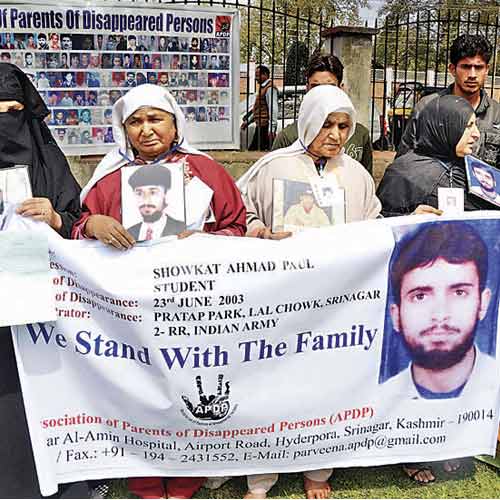
In Kashmir, 'half-widows' suffer in silence


Forty-year-old Haleema Begum was once a proud and happy homemaker, but now she lives on the support of her parents and neighbours.

Haleema became a half-widow 12 years ago when her husband, Mushtaq Ahmad Bhat, was abducted by gunmen. Half-widow is a term used to describe the women whose husbands are missing in Jammu and Kashmir.

According to the Association of Parents of Disappeared People (APDP), more than 8,000 people have gone missing in J&K during the last two decades of turmoil. “One morning he left home to drop tiffin box at his brother’s shop. But he never returned. He was abducted by masked gunmen and taken to unknown place. For 12 years we have been going from pillar to post but to no avail,” Haleema told dna.

Tragedy struck again for Haleema when her son fell from a tree some years later. “We could not afford Rs25,000 for his surgery and that is why his arm has been permanently dislocated. We have no means of livelihood. My husband had surrendered and joined police as an SPO. He was the breadwinner. Now we are living on the support of my parents and villagers,” she added.

Similar is the story of Riyaz Ahmad Mir, who has not given up his fight for justice for his father Ghulam Mohammad Mir, a government employee. Mir was picked up from his home by the security forces 16 years ago. “We have filed a case. Insha Allaha we hope justice will be done,” said Riyaz.

On the International Day of Disappeared (August 30), human rights activists have demanded naming and shaming of those responsible for the disappearance of people. “The institutional culture of institutional culpability and impunity has resulted in enforced and involuntary disappearance of at least 8,000 persons. This is a crime against humanity. The government of the day is also complicit in this crime against humanity,” Khurram Parvez, Programme Coordinator, J&K Coalition of Civil Society.

“Almost 7,000 unmarked graves have been discovered in five districts so far. But the government is not willing to conduct DNA test of the bodies. Therefore on this day we not only want to show solidarity with victims but also press for justice to these victims,” Khurram added.

Friday 30 August 2013

http://www.dnaindia.com/india/1881810/report-in-kashmir-half-widows-suffer-in-silence

continue reading

30 August: International Day of the Disappeared


The International Day of the Disappeared (30 August) is a reminder that a great number of people are missing as a result of conflicts around the world.

Each year, on this day we commemorate those who have gone missing in armed conflicts or other situations of violence – and remembers the plight of their families.

The impulse for the day came from the Latin American Federation of Associations for Relatives of Detained-Disappeared (Federaciรณn Latinoamericana de Asociaciones de Familiares de Detenidos-Desaparecidos, or FEDEFAM), a non-governmental organization founded in 1981 in Costa Rica as an association of local and regional groups actively working against secret imprisonment and forced disappearances in a number of Latin-American countries.

Work on secret imprisonment is an important part of the activities for a number of international bodies and organizations in the fields of human rights activism and humanitarian aid, including for example Amnesty International (AI), the Office of the United Nations High Commissioner for Human Rights (OHCHR) and the International Committee of the Red Cross (ICRC). The International Day of the Disappeared is an opportunity to highlight these institutions' work, increase public awareness, and to call for donations and volunteers.

Of those agencies, the ICRC has additional privileges due to its special status as a non-governmental sovereign entity and its strict policy of neutrality. In some cases, the ICRC is the only institution granted access to specific groups of prisoners, thereby enabling a minimum level of contact and inspection of their treatment. For affected families, messages transmitted by the ICRC are often the only hint about the fate of these prisoners.

Visiting those detained in relation to conflicts and enabling them to maintain contact with their families, is a very important part of the ICRC's mandate. But the definition of the Missing or the Disappeared goes far beyond the victims of enforced disappearance. It includes all those whose families have lost contact as the result of conflicts, natural disasters or other tragedies.

These missing may be detained, stranded in foreign countries, hospitalized or dead. Through its tracing services and working with the 189 national Red Cross and Red Crescent Societies around the world, the ICRC seeks to obtain information about their fate on behalf of their families. It reminds governments and other groups of their obligations to respect the families' right to know the fate of their loved ones. It also works with families of the missing to help them address their particular psychological, social legal and financial needs.

Imprisonment under secret or uncertain circumstances is a grave violation of some conceptions of human rights as well as, in the case of an armed conflict, of International Humanitarian Law. The General Assembly of the United Nations adopted a Declaration on the Protection of all Persons from Enforced Disappearance as resolution 47/133 on December 18, 1992. It is estimated that secret imprisonment is practiced in about 30 countries. The OHCHR Working Group on Enforced or Involuntary Disappearances has registered about 46,000 cases of people who disappeared under unknown circumstances.

“Every year, hundreds of thousands of people are separated from loved ones in such situations,” said Marianne Pecassou, the head of the ICRC team dealing with the missing. “The families will tell you that what they need more than anything else is to find out what happened to the person who vanished – unfortunately, in too many cases, that question may never be resolved. But they also have other needs that go far beyond this.”

Sometimes the needs stem from legal issues relating to the unresolved status of the missing person. These issues can involve such matters as inheritance, property, marital status or even the custody of children. There can also be financial needs caused by the costs involved in searching for the missing relative or in supporting the family if the person who disappeared was a main breadwinner.

However, as Milena Osorio, the ICRC’s mental health and psychosocial support adviser explains, there are often huge psychological needs as well. These can involve emotional isolation, feelings of guilt, anger, depression or trauma, and tensions among family members or with members of their communities. “The families of missing people frequently find themselves grappling with uncertainty. Most societies have religious or cultural rituals to deal with death,” said Ms Osorio, “but there is very little to help the families of missing persons.”

According to sources, more or less 2,300 persons a day have been missing throughout the world. The status of such person is unknown whether they are alive or dead.

Nothing yet has been effective enough since the laws and jurisdictions are complex ones. In some countries, facilities have been given to post the photographs of missing persons on websites, bulletin boards, milk cartons and postcards.

United Nations in its website claims that enforced disappearance is used as a tool for spreading terror within the social circles. Today, entire global community is affected because of the disappearing. Today it is largely used as a ploy to suppress the opponents of the political parties.

The families which suffer from the dilemma of enforced disappearances without a death certificate or dead body. These pacts of Silence, an unspoken agreement among those involved in the disappearances are done in various countries including Chile.

“Families have the right to know what happened to missing relatives. To find that out is their primary need, but further needs must also be addressed by governments and by organizations such as Red Cross or Red Crescent societies,” said Ms Pecassou.

On 30 August, the International Day of the Disappeared, the ICRC will unveil a publication entitled “Accompanying the Families of Missing Persons: A Practical Handbook,” which is intended to help those within and outside the International Red Cross and Red Crescent Movement who strive to assist the families of the missing. The 154-page manual is dedicated to “all those who have to endure the anguish caused by the disappearance of a loved one.”

The new publication complements the familylinks.icrc.org website launched last October by the ICRC to help people find missing relatives. The website also provides information on Red Cross and Red Crescent services that help people restore contact with family members in countries around the world.

“In the 10 years since the 2003 International Conference on Missing Persons and their Families, we have developed a much deeper understanding of the wide range of needs of these families,” noted Ms Pecassou. “We understand that our response to those needs, if it is to be adequate, must be holistic and multi-disciplinary. We are hopeful the new manual will provide guidance in that direction.”

In Armenia, the ICRC continues to provide the families of the missing with material assistance via micro-economic projects, such as the distribution of livestock or house renovations. Together with local partners, the ICRC also provides psycho-social support to the families, helping them to cope with the trauma of their loss.

Friday 30 August 2013

continue reading

Thailand must do more on The Day of The Disappeared


Thai authorities have failed to honor past pledges to resolve cases of enforced disappearance and hold those responsible to account, Human Rights Watch said today.

August 30, 2013 is the International Day of the Disappeared.

The government of Prime Minister Yingluck Shinawatra signed the International Convention for the Protection of All Persons from Enforced Disappearance on January 9, 2012, but since then there has been no progress in the parliament to ratify this important human rights treaty.

The Thai penal code still does not recognise enforced disappearance as a criminal offense.

''For many years Thai officials have committed enforced disappearances with little fear of being held to account for their actions,'' said Brad Adams, Asia director at Human Rights Watch.

''The government proclaims its opposition to this heinous crime, but has done nothing to end it.''

For instance, Nasulan Pi was last seen on January 17, 2012, at a teashop near his house in Joh Ai Rong district, Narathiwat province, when two armed men in military uniform forced him into a car and drove off.

His fate and whereabouts remain unknown. Nasulan is the 39th person reported ''disappeared'' since 2002 in connection with the government's counterinsurgency operations in Thailand's southern border provinces.

In March 2007, Human Rights Watch published a report detailing 22 cases of enforced disappearance that strongly implicated the Thai security forces. In none of these cases has there been a successful criminal prosecution of the perpetrators.

Under international law, a state commits an enforced disappearance when government officials take a person into custody and then deny holding the person, or conceal or fail to disclose the person's whereabouts.

Family members and lawyers are not informed of the person's whereabouts, well-being, or legal status.

''Disappeared'' people are often at high risk of torture, especially when they are detained outside of formal detention facilities such as police jails and prisons.

Enforced disappearances occur beyond Thailand's southern border provinces, Human Rights Watch said.

The Justice Peace Foundation, a well-respected Thai human rights group, has documented enforced disappearance cases in other parts of the country since 2011 - including 12 people from the northern region, 5 from the western region, and seven from the northeastern region.

''The many unresolved enforced disappearance cases show the failure of justice in Thailand,'' Adams said.

''The Yingluck government should end this terrible abuse and turn its promise for justice into action.''

Adopting the policy of the earlier government of Gen. Surayud Chulanont in 2007, the Yingluck government since 2012 has provided financial assistance to the families of the disappeared in the southern border provinces.

But offering money is no substitute for serious investigations into the whereabouts of the forcibly disappeared and appropriate prosecutions of those responsible, Human Rights Watch said.

Specifically, Human Rights Watch called on the Thai government to undertake the following measures to end impunity for enforced disappearances:

..Promptly ratify the International Convention for the Protection of All Persons from Enforced Disappearance.

..Urgently adopt all necessary legislation, regulations and other measures, including making enforced disappearances a criminal offense, to fully comply with the convention even before its ratification.

..Ensure that the police and prosecutors conduct prompt, competent, and impartial investigations into all allegations of enforced disappearances.

..Prosecute all officials, regardless of rank, found responsible for enforced disappearances and other abuses, including those ordering enforced disappearances or who knew or should have known about such abuses but took no action to prevent or prosecute them.

..Ensure that all persons detained by the police and the military are held at recognised places of detention, and are not subjected to torture or cruel, inhuman or degrading treatment. Upon detention, their whereabouts should immediately be made known to family and legal counsel. They should be allowed contact with family and unhindered access to legal counsel of their choice.

..Provide prompt, fair, and adequate compensation for the victims and family members of those who have disappeared or were otherwise arbitrarily detained.

..Strengthen the independence and capacity of the police, the Justice Ministry's Department of Special Investigation, prosecutors, and the National Human Rights Commission to ensure more thorough and effective investigations and public reporting of allegations of enforced disappearances and other human rights abuses.

..Invite the United Nations Special Rapporteurs on torture and on extrajudicial, summary or arbitrary executions, and the UN Working Groups on enforced and involuntary disappearances and on arbitrary detentions, to Thailand to investigate and report on the situation. Recommendations of these special rapporteurs and working groups should be implemented in a timely manner.

''Thailand should make resolving enforced disappearances a top human rights priority,'' Adams said. ''Dozens of families across the country who are waiting for answers expect no less.''

Friday 30 August 2013

http://phuketwan.com/tourism/thailand-day-disappeared-says-rights-group-18724/

continue reading

Chile marks International Day of the Disappeared


It has been 40 years, but Gabriela Zuรฑiga is no closer to knowing what happened to her husband than she was the day he was taken by Chilean security forces on Aug.15, 1974.

“I don’t know where he was taken, where he was killed, when he was killed. I know it happened but that is all,” Zuรฑiga told The Santiago Times.

Zuรฑiga is now the communications director for the Group for Relatives of the Disappeared (AFDD) that continues to search for answers in the more than 1,000 cases in which there is no information at all about the fate of the victims. The AFDD is spearheading a number of events to coincide with the International Day of the Disappeared, Aug. 30, as well as the upcoming 40th anniversary of the coup which was the spark that instigated the thousands of crimes against humanity committed by military and security forces across Chile from 1973-1990.

“In the first few months of the dictatorship there were a lot of prisoners who didn’t show up on any list,” Zuรฑiga said. “Then the systematic disappearances started in 1974.”

The term “disappeared” or “forced disappearances” refers to the practice of arresting individuals and secretly detaining them, likely torturing, interrogating and killing them, then secretly disposing of the body without ever releasing any information about the status of the detainee. In this way, the victim simply disappears, with no records of detention or information about their final whereabouts. According to the Rome Statute of the International Criminal Court, this act constitutes a crime against humanity.

Ana Piquer, director of Amnesty International Chile, told The Santiago Times that states used systematic disappearances to terrorize both the targeted individuals and their families and communities.

“The practice of enforced disappearance has been frequently used as a deliberate strategy to instill terror among the population and extend the sense of insecurity, many times against political opponents, ethnic or religious groups, and inflicts suffering and psychological damage not only to the victims but also to family members,” Piquer said.

Pact of silence

Families are then left without a body to bury or death certificate — instead they only have questions. Thanks to what has become known as the “pact of silence” in Chile, an unspoken agreement among those involved in the disappearances to not say anything, those questions remain unanswered even after the crimes have ceased. Victims’ families lack closure, not knowing with certainty that a loved one is not still out there somewhere, and issues are raised over their legal statuses, often preventing them from somewhat of a normal life.

“I am legally still married to a living man,” Zuรฑiga told The Santiago Times.

She explained that because her husband was never declared dead, she remains legally a married woman, unable to remarry despite having lost her husband 40 years ago.

“I was 21 when it happened, now I am 60,” she said.

For Zuรฑiga, having to answer questions like, “Where is your husband? What is his status?” when applying for travel visas, or jobs only adds to the victimization. She noted that the same trauma happened to the children of the disappeared who would have to answer questions about their missing parents when attending school.

Olga Weisfeiler, whose brother Boris is the only U.S. citizen on the list of disappeared, also expressed this feeling of continued trauma. She has tirelessly fought for answers in her brother’s case since his disappearance in 1984, making many trips to Chile in search for documents and clues.

“This prolonged investigation has been very distressing and placed enormous strain on my family,” Weisfeiler told The Santiago Times. “In almost 29 years I have not been able to come to terms with this tragedy. I have been unable to get on with my own life.”

She blames inaction from the government as a major reason for the lack of answers.

“All those cases of the disappeared in Chile are taking too long to investigate and the judicial system in Chile is way too slow,” Weisfeiler said. “It seems Chile is especially prolonging suffering of its people with such slow judicial system. Forty years has already past but more than half of the cases are still not even close to finished.”

One thing that all those looking for answers can agree upon, is that time is not on their side.

“Many of the relatives are dying, and [the perpetrators] are also dying, and they need to say what they know,” Zuรฑiga said.

The AFDD will be hosting a screening of the documentary “Vivas Voces” about the history of the group and its work to mark the international Day of the Disappeared on Friday at 6:30 p.m. at the Cine Arte Alameda in Santiago. They will also have a flower ceremony at the Cementerio General at noon on Saturday.

Friday 30 August 2013

http://www.santiagotimes.cl/chile/human-rights-a-law/26659-chile-marks-international-day-of-the-disappeared

continue reading

Nepal: ICRC support programme for families of disappeared


A comprehensive support programme, aptly named ‘Hatemalo Accompaniment Programme’, run by the International Committee of the Red Cross (ICRC) with support from the local NGO Kopila Nepal has served as a soothing balm for the families of the people disappeared during the decade-long armed conflict.

The programme was launched by the ICRC with an aim to resolve the psychosocial problems haunting the families of the disappeared. The programme has served as a platform for the families to come together and share their problems.

“I had been living under the illusion that I was the only one with the pain, but the realisation that there are hundreds like me across the country has helped me come to terms with the pain of losing a loved one,” said Radhika Simkhada from Gorkha, currently residing in Pokhara Buspark area. Simkhada had lost her husband and son to the war—both were allegedly disappeared by the state.

Although the exact figures remain unknown, the ICRC data show that more than 1,380 people are unaccounted for till date. Deumaya Gurung from Syangja—whose son Bishnu Gurung allegedly went missing after the Maoist rebels took him on June 12, 2005—said that she had been relieved of the burden, after finding people having similar fate. Rita Dahal, a counsellor for Kopila Nepal, said the victims had been living under mental duress, feeling lonely, weak socially and economically, and tense as they could not confirm whether the missing were dead or alive. And due to various accusations and indifferent treatment by the society, the victims felt dejected. After the programme, the victims are now able to come out in the open and share their problems, added Dahal.

Along with psychosocial counselling, the programme has been providing administrative, economical, legal and social support , said Dahal. According to Andanath Baral, chairperson of the Society of the Families of the Disappeared, the programme had relieved the elderly leading a difficult life after losing their breadwinners. According to the Society, there are 24 families with their kin missing in Kaski. Binod Koirala, chief of the ICRC’s regional office, said the programme is operational in 26 districts benefiting around 1,000 families. Concluding that psychosocial counselling alone does not suffice, the ICRC has started economic sustenance programme, providing the victims with seed money.

Friday 30 August 2013

http://ekantipur.com/2013/08/30/national/icrc-balm-for-kin-of-missing-persons/377235.html

continue reading

Ghosts linger in Halifax


In April 1912, the Titanic went down after colliding with an iceberg during its maiden voyage from Southampton to New York City.

But it was Halifax, on Canada's eastern coast, which dealt with the ghastly aftermath of the calamity that killed about 1500 people.

Local mariners of four Halifax recovery ships plucked hundreds of bodies from the frigid water and took them back to their home port.

Walking around the bustling town, signs of its seafaring past are still strongly evoked - as are the chilling stories that surround the tragedies that occurred here.

Staff at The Five Fishermen Restaurant and Grill on Argyle Street, the town's entertainment hub, regularly report seeing odd levitating and disappearing figures dressed in turn-of-the-century garb.

"I saw a tall man wearing a black trench coat and hat standing by the post the other day. Another time there was a woman with a child floating outside the window," says Matt Relf, a barman at the restaurant.

Walking around the dimly lit restaurant, with its dark wood panels and grandeur from a time gone by, it's hard not to be spooked by the tales.

The fact the restaurant is now as renowned for its ghost stories as its delicious cold-water lobster and other Nova Scotian seafood might be because it was previously the site of the John Snow & Co Funeral Home.

Following the Titanic disaster, the bodies of some of the wealthier victims, among others, were brought to the funeral parlour.

Just five years later, in 1917, it was besieged with more mass-scale death when most of the 2000 bodies from the Halifax harbour explosion were carted in.

The explosion was caused by the collision of a French cargo ship, laden with wartime explosives, and a Norwegian vessel in the strait.

But it's not all doom and gloom: Halifax has a colourful charm reminiscent of its nautical past.

Downtown, lines of attractive, multi-coloured terrace houses, now converted into lively pubs and restaurants, serve up the State's signature dish (seafood chowder), Alexander Keith's India pale ale and a hefty dose of Canadian charm.

Further down the hill on the waterfront, the Maritime Museum of the Atlantic is believed to have the biggest and finest collection of wooden Titanic artefacts in the world.

Here you can sit in a replica deckchair, view an elaborate carved-wood balustrade from the Titanic's forward grand staircase (where you can almost see Leonardo DiCaprio waiting for Kate Winslet in the 1997 blockbuster).

It's in this museum where, for the first time, I can actually fathom two well-known concepts about the tragedy - first, a replica gives my imagination plenty to work with in regards to the size of the behemoth ship and second, the jarring double standards onboard.

A luxurious first-class ticket on the Titanic cost $2500, whereas one could snag a spot in the more cramped third-class quarters for a mere $40.

Maintaining the strict class segregation during the grim clean-up operation, first-class bodies were removed from the Halifax-based rescue cable steamer Mackay-Bennett in coffins, while second and third-class dead were relegated to canvas bags and crew on open stretchers.

The dead were dispatched to three cemeteries in town - Mount Olivet, Baron de Hirsch and Fairview.

The biggest collection of Titanic graves in the world is at the Fairview Cemetery, on the north end of town. Visitors can follow signs through the nondescript but pleasantly green cemetery to lines of small, neat gray granite markers inscribed with the name and date of death of the 121 victims resting here.

Some families paid for larger markers with more detailed inscriptions, but occupants of at least a third of the graves were never identified and their markers bear only the date of death and marker number.

At the far end of the row, there is a stone for the Unknown Child.

The inscription reads: "Erected in the memory of an unknown child whose remains were recovered after the disaster of the Titanic".

He was later identified as Sidney Goodwin, a one-and-a-half-year-old English baby who was lost along with his entire family.

Today the gravesite is overflowing with colourful stuffed teddy bears and toys left by touched visitors.

On the waterfront, children enjoy jumping, climbing and sliding down the belly of a modern submarine- themed playground inspired by the area's nautical theme.

The coast on either side of Halifax is dotted with traditional fishing villages with typical Nova Scotia pastel-coloured weatherboard houses, picturesque lighthouses and the constant rolling presence of the North Atlantic Ocean.

But when the fog comes in, everything changes - the sparkling blue ocean is disguised by thick grey nothingness, punctuated only by a distant roar of waves or an eerie silence.

It's easy to see how so many ships met their demise on this jagged coastline.

Friday 30 August 2013

http://au.news.yahoo.com/thewest/travel/a/-/travel/18705777/ghosts-linger-in-halifax/

continue reading

INS Sindhurakshak: Six submarine victims identified


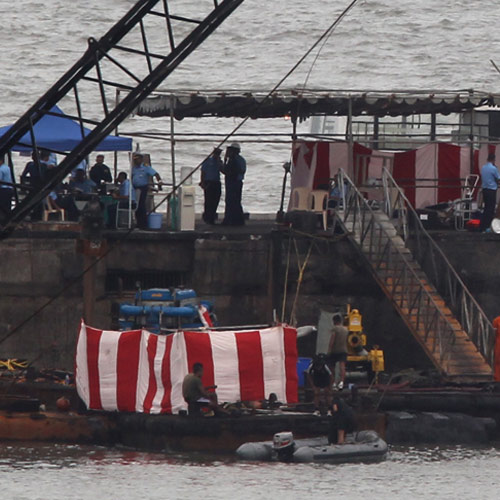
The Indian Navy on Thursday identified the bodies of six victims of the August 14 INS Sindhurakshak submarine disaster. The remains were handed over to their respective families.

FSL director Dr MK Malve confirmed the development. "We have received DNA samples of 10 bodies so far. Of them, we have matched six samples and the report has been sent to authorities concerned," said Malve, refusing to divulge any further details.

On August 14, there was an explosion on the Russian-made Kilo-class submarine, in which 18 navy personnel were feared dead.

While Liju Lawrence, Seetaram Badapalli, Rajesh Tootika and Vishnu V's bodies were handed over to their relatives, the bodies of Kewal Singh and Malay Haldar will be sent to their native place.

Since the day of the catastrophe, the navy's focus has been to recover bodies of its sailors. Till now, body parts of 11 persons have been recovered.

“Claimants of only four bodies were present. So those were handed over. The other two bodies will be sent to their native place since their families don't stay here,” sources said.

The bodies were badly mutilated and in the early stages of decomposition. The navy had to rely on a DNA analysis for identification.

The bodies were sent to JJ Hospital for an autopsy. They were kept in cold storage, at a temperature of 2-4°C. The morgue in naval hospital INHS Asvini does not have the wherewithal to maintain such low temperatures, said a source.

Bone and tooth samples from the bodies have been sent for DNA analysis at state-run forensic laboratory in Kalina.

Friday 30 August 2013

http://www.dnaindia.com/india/1881693/report-ins-sindhurakshak-six-bodies-identified

continue reading

Thursday, 29 August 2013

Mexico train accident toll rises to 11


The number of confirmed fatalities in last weekend's train derailment in the southeastern state of Tabasco stands at 11, but the search for additional victims continues, Mexican authorities said.

"Civil defense elements found two more bodies in the La Tembladera zone. The victims of the derailment now total 11," the Tabasco emergency services office said on Twitter.

Seven of the fatalities have been identified as undocumented Honduran migrants who hopped aboard the northbound freight train known as "La Bestia" (The Beast).

Central American migrants headed for the United States ride on top of the freight train or in openair wagons, with hundreds of people sometimes clinging to the train's cars.

The train derailed around 3:00 a.m. Sunday outside Huimanguillo, a city near Tabasco's border with Veracruz state.

Besides the dangers inherent in hopping onto moving trains, Central American migrants must contend with criminals and corrupt Mexican officials.

Gangs kidnap, exploit and murder migrants, who are often targeted in extortion schemes, Mexican officials say.

Thursday 29 August 2013

http://www.vidalatinasd.com/news/2013/aug/29/11-confirmed-dead-in-mexico-train-accident/

continue reading

One more body of Lac-Megantic train disaster victim ID'd


The Quebec coroner's office announced Thursday that it has identified the body of four-year-old Alyssa Charest Begnoche, who died in the July 6 Lac-Megantic train disaster.

Begnoche was the 39th identified person out of the 42 bodies that provincial police officers recovered from the rubble of the train wreck in Lac-Megantic's downtown. The train derailment killed 47 people.

It could take months before Begnoche's body is returned to her family. As of mid-August only 10 bodies had been released.

The coroner's office said it will return the majority of the bodies by Christmas. Identified bodies are kept to aid in the process of identifying others, the office explained.

"The task is very complex," coroner's office spokeswoman Genevieve Guilbault said. However, she said that when a body is ready to be released, "the family is informed within 15 minutes."

Provincial police said in early August that they stopped searching for bodies.

"We are certain that we did everything we could (to find the five missing bodies,)" Lt. Guy Lapointe said on Aug. 1.

Thursday 29 August 2013

http://www.northumberlandtoday.com/2013/08/29/body-of-girl-4-who-died-in-lac-megantic-idd

continue reading

Sao Paulo building collapse kills at least 8 and injures dozens


At least eight people were killed and 25 injured when a building collapsed in Sao Paulo, officials said.

Firefighters worked through the night and into today searching with sniffer dogs to rescue people who may be trapped in the rubble. It is feared the death toll may rise as bodies are discovered.

The commercial building under construction “pancaked” onto itself yesterday. News reports said 35 people had been working on it at the time. People passing by on the street might also have been caught up in the falling debris, the reports said.

Nearby cars were covered with slabs of concrete which broke free from the building as it collapsed.

The two-storey building was for a chain of clothing stores called Torra Torra and had been under construction for three months.

An investigation has been launched into the incident. It was not immediately clear what caused the two-storey building to collapse.

“The work of finding victims requires patience and a skilled search,” Captain Marcos Palumbo of the fire department said.


“The number of deaths is likely to rise. It’s a situation full of risk and difficult access. The teams haven’t had more contact with anybody else under the rubble.”

Collapsing buildings whether under construction or old and poorly maintained

Such accidents involving old and poorly maintained buildings or those under construction occur frequently in Sao Paulo.

Brazil’s economic capital, home to 11million people, is one of 12 cities that will host next year’s World Cup.

Thursday 29 August 2013

http://www.standard.co.uk/news/world/sao-paulo-building-collapse-kills-8-and-injures-dozens-8787156.html

continue reading

Three more bodies recovered; Cebu ferry disaster toll rises to 94


The number of fatalities from the collision of a passenger vessel and a cargo ship in Cebu last Aug. 16 further rose to 94 as of Thursday morning, the Philippine Coast Guard (PCG) said.

n a post on its Twitter account Thursday noon, the Coast Guard said this brought down to 40 the number of people deemed missing.

As of 9:45 a.m., the Coast Guard said 733 had been rescued while 94 were confirmed dead, while 40 are missing and the subject of search operations.

Among those found dead on Thursday were two kids and an adult, Naval Forces Central operations officer Lt. Cmdr. Noel Escalona told reporters on Thursday.

The dead bodies were found in the sunken ship’s passenger section, Escalona added.

Coast Guard spokesman Cmdr. Armand Balilo said search-and-rescue operations by divers from the PCG, the Navy and the Philippine National Police, as well as volunteer divers, were continuing.

“The diving operations continue today,” said Balilo, chief of the Coast Guard’s public affairs office.

Earlier, he said the divers had already covered up to 60 percent of the vessel and were scheduled to look into the ship’s tourist cabins.

According to the PCG official, “three more bodies were recovered this morning, in addition to the 11 found on Wednesday.”

As of 11:58 a.m. Thursday, the number of missing ferry passengers and crew members stood at 40. The command placed the number of rescued passengers and crew at 639 and 104, respectively.

The Coast Guard station in Cebu has been making “revisions on the number of casualties based on body parts recovered, as well as validations by 2Go Travel, the Cebu Provincial Disaster Risk Reduction and Management Council and representatives of the Department of Health, Balilo added.

The shipping company 2Go Travel operated the St. Thomas Aquinas.

Thursday 29 August 2013

http://newsinfo.inquirer.net/477121/14-more-bodies-recovered-from-sunken-ferry

http://www.gmanetwork.com/news/story/324117/news/regions/coast-guard-cebu-ferry-disaster-death-toll-now-94

continue reading

Enumclaw service honors 32 Marines killed in 1946 Rainier crash


The annual memorial service honoring military men who died on Mount Rainier more than 66 years ago will take place Saturday.

The event, hosted by Pierce County Detachment 504 of the Marine Corps League, is scheduled to begin at noon at Veterans Memorial Park.

On December 10, 1946, six Curtis Commando R5C transport planes carrying more than 200 U.S. Marines leave San Diego en route to Seattle. The aircraft, flying entirely by instruments at an altitude of 9,000 feet, encounter heavy weather over southwest Washington. Four turn back, landing at the Portland Airport; one manages to land safely in Seattle, but the sixth plane, carrying 32 Marines, vanishes. Search-and-rescue aircraft, hampered by continuing bad weather, are unable to fly for a week and ground searches prove fruitless. After two weeks, the search for the missing aircraft is suspended. The Navy determines that the aircraft was blown off course by high winds and flew into the side of Mount Rainier (14,410 feet). In July 1947, a ranger at Mount Rainier National Park spots wreckage on South Tahoma Glacier. Search parties examine the debris and confirm that it came from the missing plane. Four weeks later, the bodies are found high on the face of the glacier, but extremely hazardous conditions force authorities to abandon plans to remove them for burial. The 32 U.S. Marines remain entombed forever on Mount Rainier. In 1946, it was the worst accident, in numbers killed aboard an aircraft, in United States aviation history and remains Mount Rainier’s greatest tragedy.

On Monday, July 21, 1947, Assistant Chief Ranger Bill Butler, age 38, was hiking up Success Cleaver on his day off, monitoring snow levels and climbing conditions, when he spotted some aircraft wreckage, including a bucket seat, high on South Tahoma Glacier. The following day, Butler flew over the area in a Navy reconnaissance plane to assist photographing the area where he saw the debris. The wreckage couldn’t be seen from the air, but Butler was able to pinpoint the location without difficulty.

It was at about the 9,500-foot level on a huge snow-field rife with deep crevasses and sheer ice precipices, below an almost perpendicular 3,000-foot rock wall. The terrain was so treacherous that none of the park rangers or mountain climbing guides recalled anyone ever traversing the glacier’s face. As gravity drags the glacial ice down the mountainside, at an approximate rate of 10 inches per day, fissures open and close, causing avalanches and rock slides and collapsing snow bridges over crevasses.

The accident

The Curtis Commando (C-46/R5C) was the largest and heaviest twin-engine transport aircraft used by the U.S. military during World War II (1941-1945). Originally developed as a 36-seat commercial airliner, it was used to haul cargo and personnel and for towing gliders. Although the plane had a service ceiling of 24,500 feet, it was restricted to flying at lower altitudes when hauling passengers because the cabin was unpressurized.

At 10:36 a.m. on Tuesday, December 10, 1946, six Curtis Commando R5C transport planes carrying more than 200 U.S. Marines departed El Toro Marine Air Station near San Diego on a six-and-a-half hour, non-stop flight to Naval Air Station Sand Point in Seattle. The flight encountered extremely bad weather over southwestern Washington and four of the planes turned back, landing at the Portland Airport. The two remaining aircraft, flying entirely by instruments (IFR), pressed onward toward Seattle.

At 4:13 p.m., Major Robert V. Reilly, pilot of aircraft No. 39528, radioed the Civil Aeronautics Administration (now the Federal Aviation Administration) radio range station at Toledo that he was flying IFR at 9,000 feet and, with ice forming on the leading edges of the wings, requested permission to fly above the cloud cover. The plane was estimated to be approximately 30 miles south of Toledo, the mid-point between Seattle and Portland. When Major Reilly failed to contact Toledo, establishing his new altitude, air traffic controllers became concerned. Although buffeted by the storm, the fifth Curtis R5C flew through the weather without major difficulty, landing at NAS Sand Point shortly after 5:00 p.m.

Under normal circumstances, the powerful Civil Aeronautics Administration (CAA) radio range station at Everett should have been able to receive transmissions from Major Reilly’s aircraft by 4:30 p.m., but heard none. Frantic efforts by the CAA, as well as the Army and Navy, to contact the plane were fruitless. The CAA’s ground transmission network queried other airfields around Western Washington, but there was no trace of the missing transport. All of the Curtis R5C’s had sufficient fuel to fly for 10 hours, giving officials hope that Major Reilly had landed his plane safely at some remote location.

Still, the lost Marines would not be forgotten. The search for the missing plane resumed the next summer, after some of the snow had melted. Meanwhile, the Navy conducted a thorough investigation into the facts and circumstances surrounding the aircraft’s disappearance. Families of the missing men offered a $5,000 reward to anyone finding the plane.

After analyzing the evidence, Navy officials concluded the missing plane, traveling at approximately 180 m.p.h., crashed into the side of Mount Rainier. Major Reilly was flying an IFR course, corrected for a southeast wind. However south of Portland, the wind changed direction, blowing from the west at 70 m.p.h. This wind shift, unknown to the pilot, pushed the plane approximately 25 degrees to the east, directly on a path into Mount Rainier. Their analysis was bolstered by reports from persons on the ground along the supposed line of flight where the Curtis R5C disappeared, who reported hearing a plane flying overhead. They believed the wreckage, if it could be located, would be scattered on one of the glaciers on the south or southwest side of the mountain.

Search for wreckage and remains

At dawn on Wednesday, December 11, 1946, Army, Navy, and Coast Guard search planes were poised to start an intensive search of the area where the aircraft was presumed to have disappeared. But poor visibility and bad weather throughout southwestern Washington kept all the search planes grounded. Air rescue units remained on alert, waiting for a break in the weather. Another concern was the missing aircraft's color, black, making the wreckage extremely difficult to spot from the air. Most search activity was limited to investigating leads provided by local citizens who reported hearing airplane engines around the time Curtis R5C disappeared.

Although it was well off Major Reilly’s designated flight plan, the search for the aircraft was concentrated around Randle, Longmire, and Paradise in the southern foothills and slopes of Mount Rainier (14,410 feet). John Preston, Superintendent of Mount Rainier National Park, and other park rangers reported hearing a plane fly over the area about 4:15 p.m. on Tuesday afternoon, just minutes after Major Reilly’s last transmission to Toledo. Many of the rangers thought the aircraft might have crashed into the Nisqually Glacier on the south slope of the mountain.

On Friday, December 13, 1946, Assistant Chief Ranger William Jackson Butler (1909-2000) and Paradise District Ranger Gordon Patterson climbed to Panorama Ridge, elevation 6,800 feet, in a desperate effort to scout Nisqually Glacier for signs of the missing aircraft. But visibility there was almost zero and they were driven back by a blizzard. The rangers reported hearing the roar of avalanches on the glacier, which could have easily buried any wreckage forever.

Bad weather in Western Washington continued for the next five days. High winds and heavy rain caused flooding at lower elevations, severely hindering search efforts and disrupting communications. More than five feet of snow fell on Mount Rainier, making it almost impossible to locate any trace of the plane on the mountain.

On Monday, December 16, 1946, the weather cleared for the first time in a week and conditions were ideal for an aerial search. Twenty-five Army, Navy, and Coast Guard aircraft were launched to search the slopes of Mount Rainier and as far south as Toledo in Lewis County for any sign of the missing Curtis R5C transport. But all the search planes returned without sighting any trace of wreckage. An intensive search around and west of Nisqually Glacier by air and ground units failed to uncover a single clue to the plane’s whereabouts. Still, authorities suspected that the aircraft had crashed on Mount Rainier or somewhere in the vicinity.

Two weeks of searching produced nothing and at that point chances of the Marines' survival were nil, so in late December efforts to find the aircraft were suspended. Park rangers thought that recent heavy snows on Mount Rainier would have covered any signs of wreckage.

In July 1947, a ranger at Mount Rainier National Park spots wreckage on South Tahoma Glacier. Search parties examine the debris and confirm that it came from the missing plane. Four weeks later, the bodies are found high on the face of the glacier, but extremely hazardous conditions force authorities to abandon plans to remove them for burial.

On Wednesday, July 23, 1947, the Navy established a radio relay station and base camp at Indian Henry’s Hunting Ground, altitude 5,800 feet, on the slopes of Pyramid Peak. That afternoon, Butler, accompanied by seven expert mountaineers, hiked five miles from the Longmire Ranger Station to the base camp, where they spent the night. They planned to embark at 4:00 a.m. the following morning, but bad weather delayed the mission.

Finally, at 9:00 a.m. on Thursday, July 24, 1947, the search party started the arduous three-and-a-half mile climb towards South Tahoma Glacier. They split into three groups, each taking a different route, making the search of the glacier safer and more efficient. Because it was believed that vibrations from aircraft motors could trigger avalanches and rock slides, endangering the climbers, all planes were warned to stay clear of Mount Rainier.

That afternoon, the first fragments of an aircraft were found at the 9,500-foot level, strewn over a quarter-mile-wide area and partially embedded in the ice. Initial efforts to free pieces of the wreckage with ice axes proved unsuccessful. Although no bodies were located, searchers found a Marine Corps health record, a piece of a uniform, a seat belt, a temperature control panel and fragments of an aircraft’s fuselage. At about 5:30 p.m., the mountaineers returned to the base camp at Indian Henry’s Hunting Ground with their discoveries. There Navy officials positively identified the health record as belonging to a marine aboard the missing Curtis R5C transport.

On Friday, July 25, 1947, the mountaineers returned to South Tahoma Glacier to search for signs of the 32 missing men, but the weather had deteriorated, greatly increasing the hazards on the glacier. Throughout the day, the climbers, battling rain and snow, were constantly bombarded by falling rocks and encountered two large crevasses that had opened overnight. They recovered additional evidence identifying the wreckage, including a knapsack containing Marine Corps health and service records, and saw considerably more that could not be extricated from the ice. But no bodies were found although searchers dug several feet down into the ice at various locations to inspect debris.

On Saturday, July 26, 1947, Navy officials announced that, due to the extremely difficult and dangerous conditions on the glacier, the search for the missing men had been suspended. Photo reconnaissance aircraft would continue monitoring the crash site so that if and when conditions on the glacier improved, further attempts could be made to find and recover the bodies.

On Monday, August 18, 1947, Assistant Chief Ranger Bill Butler was on a scouting trip around the South Tahoma Glacier with two park rangers when he spotted a large piece of wreckage at the 10,500-foot level. The rangers investigated and found the crushed nose section of the Curtis R5C, which had been buried under several feet of snow since winter. The sun had melted the snow down to the glacial ice, revealing the nose section with the bodies of 11 men tangled inside. The rangers returned to park headquarters at Longmire and notified officials at Naval Air Station Sand Point of their discovery.

The Navy responded immediately, establishing a base camp at Indian Henry’s Hunting Ground. Over the next few days, Navy and National Park Service officials discussed the feasibility of the removing bodies from the glacier for burial. The general census was it would take at least 20 experienced mountain climbers, at great personal risk, about two weeks to bring 32 bodies from the crash site to the base camp. Butler explained that conditions on the glacier were so bad, it took four hours to get to the site of the original wreckage. Snow bridges, which were there previously, had collapsed and new crevasses had opened up all through the ice. Although it was only another half mile up the glacier, it took another four hours to reach the wreckage of the nose section. Before making any decisions, Navy officials advised they would seek expert advice from the Army’s famous Mountain Division about recovery efforts.

Meanwhile, the Navy Department and National Park Service had been planning a memorial service for the lost Marines on Sunday, August 24, 1947 at Longmire. Parents and relatives were due to arrive in Seattle as early as Tuesday. Although circumstances had changed dramatically, the decision was made to proceed with the service.

On Friday, August 22, 1947, 17 climbers, led by Assistant Chief Ranger Butler, returned to the glacier to survey the new site and search for more bodies. In addition to the 11 men found in the crushed nose section, 14 more bodies, most encased in ice, and a considerable amount of the broken plane, were discovered wedged in a crevasse. A heavy volume of rocks and boulders falling from the glacier’s headwall forced the search party to withdraw, but they brought out wallets, rings, watches, and personal papers of many of the men who died. The Naval Public Information Office in Seattle announced that all 32 Marine bodies had been located; 25 had been seen and there was no doubt the other eight were there also.

On Monday, August 25, 1947, 13 climbers, led by Assistant Chief Ranger Butler, returned to South Tahoma Glacier to assess the feasibility of removing the bodies for burial without undue hazard. Included in the survey party were nine experts in mountain and winter warfare from the Army’s Mountain Division. The following day, officials from the Army, Navy, and National Park Service met at Fort Lewis to discuss the recovery problems. After careful consideration, all the experts agreed to abandon the mission because it would endanger the lives of the recovery parties. Clinching the decision was a letter written after the memorial service by parents of six of the Marines aboard the ill-fated plane, stating that sufficient effort had been made to recover their son’s remains.

The 32 U.S. Marines remain entombed forever on Mount Rainier. In 1946, it was the worst accident, in numbers killed aboard an aircraft, in United States aviation history and remains Mount Rainier’s greatest tragedy. Although there have been more than 325 fatalities in Mount Rainier National Park since it was established by Congress in 1899, the plane crash on December 10, 1946, remains the greatest tragedy in the mountain’s history.

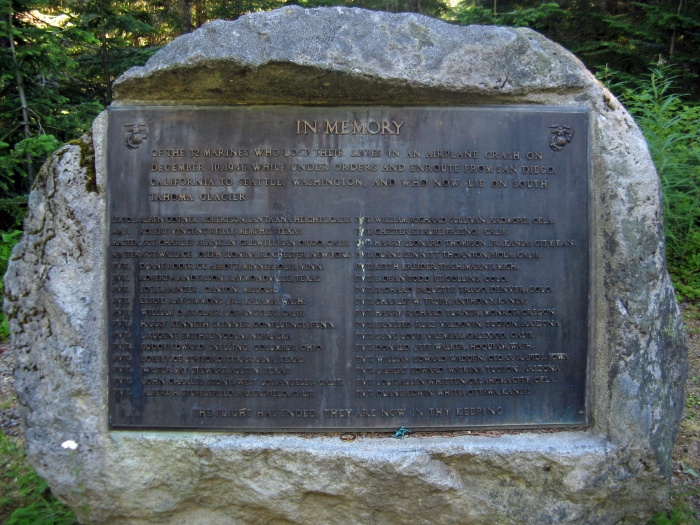
Eventually, a stone memorial was placed within sight of the glacier. A duplicate of that memorial was created and placed at Veterans Memorial Park.

Thursday 29 August 2013

http://www.courierherald.com/news/221558041.html

http://www.historylink.org/index.cfm?DisplayPage=output.cfm&file_id=7820

continue reading

41 dead in Kenya bus disaster


At least 41 people were killed Thursday in a bus crash west of the Kenyan capital Nairobi, the Kenyan Red Cross said.

"It is a horrible scene. Bodies are strewn all over," traffic police official Samuel Kimaru said by telephone from the scene near the town of Narok.

"It is difficult to tell exactly what happened but all indications point to speeding and possibly overloading," he said. "It is quite disturbing."

Traffic Commandant Samuel Kimaru said they suspect the driver lost control of the bus before the accident happened. Other witnesses it took long to rescue those who had been trapped under the bus wreckage after it overturned in a ditch.

He added the bus driver lost control of the City to City bus before it veered off the road and plunged into a valley hitting stones and trees before landing on its roof.

The scene of the accident is about 15 kilometers from Narok and common with such incidents and locals have been calling for measures to curb them.

The Kenyan Red Cross said it had confirmed 41 deaths and 27 others with "multiple injuries".

The bus was travelling from Nairobi to Homa Bay on the banks of Lake Victoria.

It was about halfway into the journey when it veered off the road and plunged into a valley, rolling over several times.

The Red Cross said the accident occurred shortly after 2:00 am (2300 GMT Wednesday). Pictures from the organisation showed the bus in the bushes at the bottom of a hill, its roof ripped off.

Kimaru said police had "a difficult time recovering the bodies because this place is hilly and bushy".

"We've dozens others injured and we are not certain how many because they were taken to various hospitals... we have officers checking with the hospitals," Kimaru said.

Thursday 29 August 2013

http://www.google.com/hostednews/afp/article/ALeqM5jcwtwuE1tHWjGZMDsLnFrwKGKu_w?docId=CNG.a64851ece57485cd6e0a45177d6b4054.1c1

http://www.standardmedia.co.ke/?articleID=2000092213&story_title=41-killed-in-narok-bus-accident

continue reading

50,000 missing children reports investigated in past decade


An average of 18 reports on missing children were filed in the State each day last year, more than double the figure recorded 10 years earlier.

Garda statistics reveal that 51,193 reports on missing children have been investigated in the past decade, with 6,661 of them received last year, a 141 per cent increase on the total for 2003.

The figures show 207 children who were reported missing between 2003 and 2012 “remain untraced”, with the whereabouts of a further 174 adults who went missing in the same period also unknown.

The figures show 19,922 adults were reported missing in the 10-year period, with men accounting for just under two-thirds of the total.

Foreign nationals

Almost 27 per cent of the adults reported missing over the period were foreign nationals, who in 2005 accounted for more reports (850) than Irish nationals. The figure has fallen significantly since then and last year just 281 of the 2,093 adults missing were not Irish.

Garda sources say while it is impossible to determine where the untraced adults have gone, some are foreign nationals who have most likely left Ireland. Others, both Irish and foreign, have perhaps decided to leave their homes and deliberately have no contact with friends or family.

“Some of those missing have probably taken their own lives but their bodies have not been found and so if they were initially reported missing they would still be classed as missing,” said a Garda source.

The same source added some of the missing adults may have been murdered and their bodies disposed of but that such cases would be small in number.

Gardaรญ said many of the children reported missing would fall into the “tug of love” category. “You see more cases in the past few years, especially where men and women from different countries have kids and then separate – one might take off to their home country and take the kids without permission and so the other parent reports them missing.”

Gardaรญ believe other missing foreign children entered Ireland unaccompanied only to be taken into care and go “missing” from care after parents living here take them illegally. Sources acknowledge that some missing children may have been murdered or trafficked into the sex trade.

Girls were more likely to be reported missing than boys in the 10 years covered by the statistics, with girls accounting for 3,000 more reports than boys.

Categories of risk

Just under 12 per cent of those reported missing in the period were listed as non-Irish nationals with the numbers in this category rising sharply between 2003 and 2005 (from 581 to 912) before falling again in recent years.

The provisional figures were provided by Minister for Justice Alan Shatter to Fine Gael TD for Kildare North Bernard Durkan in response to a parliamentary question.

Mr Shatter said all reports of persons going missing remain under investigation until the person is located.

Missing persons reports are divided into three categories of risk – high, medium and low.

High-risk cases relate to situations where immediate action is needed such as child abduction or the threat of suicide.

Medium-risk cases are those where a person may have disappeared of their own volition and low-risk cases are those when there is no apparent threat to the life of the missing person.

Thursday 29 August 2013

http://www.irishtimes.com/news/crime-and-law/50-000-missing-children-reports-investigated-in-past-decade-1.1508737

continue reading