Thursday, 29 August 2013

Mexico train accident toll rises to 11


The number of confirmed fatalities in last weekend's train derailment in the southeastern state of Tabasco stands at 11, but the search for additional victims continues, Mexican authorities said.

"Civil defense elements found two more bodies in the La Tembladera zone. The victims of the derailment now total 11," the Tabasco emergency services office said on Twitter.

Seven of the fatalities have been identified as undocumented Honduran migrants who hopped aboard the northbound freight train known as "La Bestia" (The Beast).

Central American migrants headed for the United States ride on top of the freight train or in openair wagons, with hundreds of people sometimes clinging to the train's cars.

The train derailed around 3:00 a.m. Sunday outside Huimanguillo, a city near Tabasco's border with Veracruz state.

Besides the dangers inherent in hopping onto moving trains, Central American migrants must contend with criminals and corrupt Mexican officials.

Gangs kidnap, exploit and murder migrants, who are often targeted in extortion schemes, Mexican officials say.

Thursday 29 August 2013

http://www.vidalatinasd.com/news/2013/aug/29/11-confirmed-dead-in-mexico-train-accident/

continue reading

One more body of Lac-Megantic train disaster victim ID'd


The Quebec coroner's office announced Thursday that it has identified the body of four-year-old Alyssa Charest Begnoche, who died in the July 6 Lac-Megantic train disaster.

Begnoche was the 39th identified person out of the 42 bodies that provincial police officers recovered from the rubble of the train wreck in Lac-Megantic's downtown. The train derailment killed 47 people.

It could take months before Begnoche's body is returned to her family. As of mid-August only 10 bodies had been released.

The coroner's office said it will return the majority of the bodies by Christmas. Identified bodies are kept to aid in the process of identifying others, the office explained.

"The task is very complex," coroner's office spokeswoman Genevieve Guilbault said. However, she said that when a body is ready to be released, "the family is informed within 15 minutes."

Provincial police said in early August that they stopped searching for bodies.

"We are certain that we did everything we could (to find the five missing bodies,)" Lt. Guy Lapointe said on Aug. 1.

Thursday 29 August 2013

http://www.northumberlandtoday.com/2013/08/29/body-of-girl-4-who-died-in-lac-megantic-idd

continue reading

Sao Paulo building collapse kills at least 8 and injures dozens


At least eight people were killed and 25 injured when a building collapsed in Sao Paulo, officials said.

Firefighters worked through the night and into today searching with sniffer dogs to rescue people who may be trapped in the rubble. It is feared the death toll may rise as bodies are discovered.

The commercial building under construction “pancaked” onto itself yesterday. News reports said 35 people had been working on it at the time. People passing by on the street might also have been caught up in the falling debris, the reports said.

Nearby cars were covered with slabs of concrete which broke free from the building as it collapsed.

The two-storey building was for a chain of clothing stores called Torra Torra and had been under construction for three months.

An investigation has been launched into the incident. It was not immediately clear what caused the two-storey building to collapse.

“The work of finding victims requires patience and a skilled search,” Captain Marcos Palumbo of the fire department said.


“The number of deaths is likely to rise. It’s a situation full of risk and difficult access. The teams haven’t had more contact with anybody else under the rubble.”

Collapsing buildings whether under construction or old and poorly maintained

Such accidents involving old and poorly maintained buildings or those under construction occur frequently in Sao Paulo.

Brazil’s economic capital, home to 11million people, is one of 12 cities that will host next year’s World Cup.

Thursday 29 August 2013

http://www.standard.co.uk/news/world/sao-paulo-building-collapse-kills-8-and-injures-dozens-8787156.html

continue reading

Three more bodies recovered; Cebu ferry disaster toll rises to 94


The number of fatalities from the collision of a passenger vessel and a cargo ship in Cebu last Aug. 16 further rose to 94 as of Thursday morning, the Philippine Coast Guard (PCG) said.

n a post on its Twitter account Thursday noon, the Coast Guard said this brought down to 40 the number of people deemed missing.

As of 9:45 a.m., the Coast Guard said 733 had been rescued while 94 were confirmed dead, while 40 are missing and the subject of search operations.

Among those found dead on Thursday were two kids and an adult, Naval Forces Central operations officer Lt. Cmdr. Noel Escalona told reporters on Thursday.

The dead bodies were found in the sunken ship’s passenger section, Escalona added.

Coast Guard spokesman Cmdr. Armand Balilo said search-and-rescue operations by divers from the PCG, the Navy and the Philippine National Police, as well as volunteer divers, were continuing.

“The diving operations continue today,” said Balilo, chief of the Coast Guard’s public affairs office.

Earlier, he said the divers had already covered up to 60 percent of the vessel and were scheduled to look into the ship’s tourist cabins.

According to the PCG official, “three more bodies were recovered this morning, in addition to the 11 found on Wednesday.”

As of 11:58 a.m. Thursday, the number of missing ferry passengers and crew members stood at 40. The command placed the number of rescued passengers and crew at 639 and 104, respectively.

The Coast Guard station in Cebu has been making “revisions on the number of casualties based on body parts recovered, as well as validations by 2Go Travel, the Cebu Provincial Disaster Risk Reduction and Management Council and representatives of the Department of Health, Balilo added.

The shipping company 2Go Travel operated the St. Thomas Aquinas.

Thursday 29 August 2013

http://newsinfo.inquirer.net/477121/14-more-bodies-recovered-from-sunken-ferry

http://www.gmanetwork.com/news/story/324117/news/regions/coast-guard-cebu-ferry-disaster-death-toll-now-94

continue reading

Enumclaw service honors 32 Marines killed in 1946 Rainier crash


The annual memorial service honoring military men who died on Mount Rainier more than 66 years ago will take place Saturday.

The event, hosted by Pierce County Detachment 504 of the Marine Corps League, is scheduled to begin at noon at Veterans Memorial Park.

On December 10, 1946, six Curtis Commando R5C transport planes carrying more than 200 U.S. Marines leave San Diego en route to Seattle. The aircraft, flying entirely by instruments at an altitude of 9,000 feet, encounter heavy weather over southwest Washington. Four turn back, landing at the Portland Airport; one manages to land safely in Seattle, but the sixth plane, carrying 32 Marines, vanishes. Search-and-rescue aircraft, hampered by continuing bad weather, are unable to fly for a week and ground searches prove fruitless. After two weeks, the search for the missing aircraft is suspended. The Navy determines that the aircraft was blown off course by high winds and flew into the side of Mount Rainier (14,410 feet). In July 1947, a ranger at Mount Rainier National Park spots wreckage on South Tahoma Glacier. Search parties examine the debris and confirm that it came from the missing plane. Four weeks later, the bodies are found high on the face of the glacier, but extremely hazardous conditions force authorities to abandon plans to remove them for burial. The 32 U.S. Marines remain entombed forever on Mount Rainier. In 1946, it was the worst accident, in numbers killed aboard an aircraft, in United States aviation history and remains Mount Rainier’s greatest tragedy.

On Monday, July 21, 1947, Assistant Chief Ranger Bill Butler, age 38, was hiking up Success Cleaver on his day off, monitoring snow levels and climbing conditions, when he spotted some aircraft wreckage, including a bucket seat, high on South Tahoma Glacier. The following day, Butler flew over the area in a Navy reconnaissance plane to assist photographing the area where he saw the debris. The wreckage couldn’t be seen from the air, but Butler was able to pinpoint the location without difficulty.

It was at about the 9,500-foot level on a huge snow-field rife with deep crevasses and sheer ice precipices, below an almost perpendicular 3,000-foot rock wall. The terrain was so treacherous that none of the park rangers or mountain climbing guides recalled anyone ever traversing the glacier’s face. As gravity drags the glacial ice down the mountainside, at an approximate rate of 10 inches per day, fissures open and close, causing avalanches and rock slides and collapsing snow bridges over crevasses.

The accident

The Curtis Commando (C-46/R5C) was the largest and heaviest twin-engine transport aircraft used by the U.S. military during World War II (1941-1945). Originally developed as a 36-seat commercial airliner, it was used to haul cargo and personnel and for towing gliders. Although the plane had a service ceiling of 24,500 feet, it was restricted to flying at lower altitudes when hauling passengers because the cabin was unpressurized.

At 10:36 a.m. on Tuesday, December 10, 1946, six Curtis Commando R5C transport planes carrying more than 200 U.S. Marines departed El Toro Marine Air Station near San Diego on a six-and-a-half hour, non-stop flight to Naval Air Station Sand Point in Seattle. The flight encountered extremely bad weather over southwestern Washington and four of the planes turned back, landing at the Portland Airport. The two remaining aircraft, flying entirely by instruments (IFR), pressed onward toward Seattle.

At 4:13 p.m., Major Robert V. Reilly, pilot of aircraft No. 39528, radioed the Civil Aeronautics Administration (now the Federal Aviation Administration) radio range station at Toledo that he was flying IFR at 9,000 feet and, with ice forming on the leading edges of the wings, requested permission to fly above the cloud cover. The plane was estimated to be approximately 30 miles south of Toledo, the mid-point between Seattle and Portland. When Major Reilly failed to contact Toledo, establishing his new altitude, air traffic controllers became concerned. Although buffeted by the storm, the fifth Curtis R5C flew through the weather without major difficulty, landing at NAS Sand Point shortly after 5:00 p.m.

Under normal circumstances, the powerful Civil Aeronautics Administration (CAA) radio range station at Everett should have been able to receive transmissions from Major Reilly’s aircraft by 4:30 p.m., but heard none. Frantic efforts by the CAA, as well as the Army and Navy, to contact the plane were fruitless. The CAA’s ground transmission network queried other airfields around Western Washington, but there was no trace of the missing transport. All of the Curtis R5C’s had sufficient fuel to fly for 10 hours, giving officials hope that Major Reilly had landed his plane safely at some remote location.

Still, the lost Marines would not be forgotten. The search for the missing plane resumed the next summer, after some of the snow had melted. Meanwhile, the Navy conducted a thorough investigation into the facts and circumstances surrounding the aircraft’s disappearance. Families of the missing men offered a $5,000 reward to anyone finding the plane.

After analyzing the evidence, Navy officials concluded the missing plane, traveling at approximately 180 m.p.h., crashed into the side of Mount Rainier. Major Reilly was flying an IFR course, corrected for a southeast wind. However south of Portland, the wind changed direction, blowing from the west at 70 m.p.h. This wind shift, unknown to the pilot, pushed the plane approximately 25 degrees to the east, directly on a path into Mount Rainier. Their analysis was bolstered by reports from persons on the ground along the supposed line of flight where the Curtis R5C disappeared, who reported hearing a plane flying overhead. They believed the wreckage, if it could be located, would be scattered on one of the glaciers on the south or southwest side of the mountain.

Search for wreckage and remains

At dawn on Wednesday, December 11, 1946, Army, Navy, and Coast Guard search planes were poised to start an intensive search of the area where the aircraft was presumed to have disappeared. But poor visibility and bad weather throughout southwestern Washington kept all the search planes grounded. Air rescue units remained on alert, waiting for a break in the weather. Another concern was the missing aircraft's color, black, making the wreckage extremely difficult to spot from the air. Most search activity was limited to investigating leads provided by local citizens who reported hearing airplane engines around the time Curtis R5C disappeared.

Although it was well off Major Reilly’s designated flight plan, the search for the aircraft was concentrated around Randle, Longmire, and Paradise in the southern foothills and slopes of Mount Rainier (14,410 feet). John Preston, Superintendent of Mount Rainier National Park, and other park rangers reported hearing a plane fly over the area about 4:15 p.m. on Tuesday afternoon, just minutes after Major Reilly’s last transmission to Toledo. Many of the rangers thought the aircraft might have crashed into the Nisqually Glacier on the south slope of the mountain.

On Friday, December 13, 1946, Assistant Chief Ranger William Jackson Butler (1909-2000) and Paradise District Ranger Gordon Patterson climbed to Panorama Ridge, elevation 6,800 feet, in a desperate effort to scout Nisqually Glacier for signs of the missing aircraft. But visibility there was almost zero and they were driven back by a blizzard. The rangers reported hearing the roar of avalanches on the glacier, which could have easily buried any wreckage forever.

Bad weather in Western Washington continued for the next five days. High winds and heavy rain caused flooding at lower elevations, severely hindering search efforts and disrupting communications. More than five feet of snow fell on Mount Rainier, making it almost impossible to locate any trace of the plane on the mountain.

On Monday, December 16, 1946, the weather cleared for the first time in a week and conditions were ideal for an aerial search. Twenty-five Army, Navy, and Coast Guard aircraft were launched to search the slopes of Mount Rainier and as far south as Toledo in Lewis County for any sign of the missing Curtis R5C transport. But all the search planes returned without sighting any trace of wreckage. An intensive search around and west of Nisqually Glacier by air and ground units failed to uncover a single clue to the plane’s whereabouts. Still, authorities suspected that the aircraft had crashed on Mount Rainier or somewhere in the vicinity.

Two weeks of searching produced nothing and at that point chances of the Marines' survival were nil, so in late December efforts to find the aircraft were suspended. Park rangers thought that recent heavy snows on Mount Rainier would have covered any signs of wreckage.

In July 1947, a ranger at Mount Rainier National Park spots wreckage on South Tahoma Glacier. Search parties examine the debris and confirm that it came from the missing plane. Four weeks later, the bodies are found high on the face of the glacier, but extremely hazardous conditions force authorities to abandon plans to remove them for burial.

On Wednesday, July 23, 1947, the Navy established a radio relay station and base camp at Indian Henry’s Hunting Ground, altitude 5,800 feet, on the slopes of Pyramid Peak. That afternoon, Butler, accompanied by seven expert mountaineers, hiked five miles from the Longmire Ranger Station to the base camp, where they spent the night. They planned to embark at 4:00 a.m. the following morning, but bad weather delayed the mission.

Finally, at 9:00 a.m. on Thursday, July 24, 1947, the search party started the arduous three-and-a-half mile climb towards South Tahoma Glacier. They split into three groups, each taking a different route, making the search of the glacier safer and more efficient. Because it was believed that vibrations from aircraft motors could trigger avalanches and rock slides, endangering the climbers, all planes were warned to stay clear of Mount Rainier.

That afternoon, the first fragments of an aircraft were found at the 9,500-foot level, strewn over a quarter-mile-wide area and partially embedded in the ice. Initial efforts to free pieces of the wreckage with ice axes proved unsuccessful. Although no bodies were located, searchers found a Marine Corps health record, a piece of a uniform, a seat belt, a temperature control panel and fragments of an aircraft’s fuselage. At about 5:30 p.m., the mountaineers returned to the base camp at Indian Henry’s Hunting Ground with their discoveries. There Navy officials positively identified the health record as belonging to a marine aboard the missing Curtis R5C transport.

On Friday, July 25, 1947, the mountaineers returned to South Tahoma Glacier to search for signs of the 32 missing men, but the weather had deteriorated, greatly increasing the hazards on the glacier. Throughout the day, the climbers, battling rain and snow, were constantly bombarded by falling rocks and encountered two large crevasses that had opened overnight. They recovered additional evidence identifying the wreckage, including a knapsack containing Marine Corps health and service records, and saw considerably more that could not be extricated from the ice. But no bodies were found although searchers dug several feet down into the ice at various locations to inspect debris.

On Saturday, July 26, 1947, Navy officials announced that, due to the extremely difficult and dangerous conditions on the glacier, the search for the missing men had been suspended. Photo reconnaissance aircraft would continue monitoring the crash site so that if and when conditions on the glacier improved, further attempts could be made to find and recover the bodies.

On Monday, August 18, 1947, Assistant Chief Ranger Bill Butler was on a scouting trip around the South Tahoma Glacier with two park rangers when he spotted a large piece of wreckage at the 10,500-foot level. The rangers investigated and found the crushed nose section of the Curtis R5C, which had been buried under several feet of snow since winter. The sun had melted the snow down to the glacial ice, revealing the nose section with the bodies of 11 men tangled inside. The rangers returned to park headquarters at Longmire and notified officials at Naval Air Station Sand Point of their discovery.

The Navy responded immediately, establishing a base camp at Indian Henry’s Hunting Ground. Over the next few days, Navy and National Park Service officials discussed the feasibility of the removing bodies from the glacier for burial. The general census was it would take at least 20 experienced mountain climbers, at great personal risk, about two weeks to bring 32 bodies from the crash site to the base camp. Butler explained that conditions on the glacier were so bad, it took four hours to get to the site of the original wreckage. Snow bridges, which were there previously, had collapsed and new crevasses had opened up all through the ice. Although it was only another half mile up the glacier, it took another four hours to reach the wreckage of the nose section. Before making any decisions, Navy officials advised they would seek expert advice from the Army’s famous Mountain Division about recovery efforts.

Meanwhile, the Navy Department and National Park Service had been planning a memorial service for the lost Marines on Sunday, August 24, 1947 at Longmire. Parents and relatives were due to arrive in Seattle as early as Tuesday. Although circumstances had changed dramatically, the decision was made to proceed with the service.

On Friday, August 22, 1947, 17 climbers, led by Assistant Chief Ranger Butler, returned to the glacier to survey the new site and search for more bodies. In addition to the 11 men found in the crushed nose section, 14 more bodies, most encased in ice, and a considerable amount of the broken plane, were discovered wedged in a crevasse. A heavy volume of rocks and boulders falling from the glacier’s headwall forced the search party to withdraw, but they brought out wallets, rings, watches, and personal papers of many of the men who died. The Naval Public Information Office in Seattle announced that all 32 Marine bodies had been located; 25 had been seen and there was no doubt the other eight were there also.

On Monday, August 25, 1947, 13 climbers, led by Assistant Chief Ranger Butler, returned to South Tahoma Glacier to assess the feasibility of removing the bodies for burial without undue hazard. Included in the survey party were nine experts in mountain and winter warfare from the Army’s Mountain Division. The following day, officials from the Army, Navy, and National Park Service met at Fort Lewis to discuss the recovery problems. After careful consideration, all the experts agreed to abandon the mission because it would endanger the lives of the recovery parties. Clinching the decision was a letter written after the memorial service by parents of six of the Marines aboard the ill-fated plane, stating that sufficient effort had been made to recover their son’s remains.

The 32 U.S. Marines remain entombed forever on Mount Rainier. In 1946, it was the worst accident, in numbers killed aboard an aircraft, in United States aviation history and remains Mount Rainier’s greatest tragedy. Although there have been more than 325 fatalities in Mount Rainier National Park since it was established by Congress in 1899, the plane crash on December 10, 1946, remains the greatest tragedy in the mountain’s history.

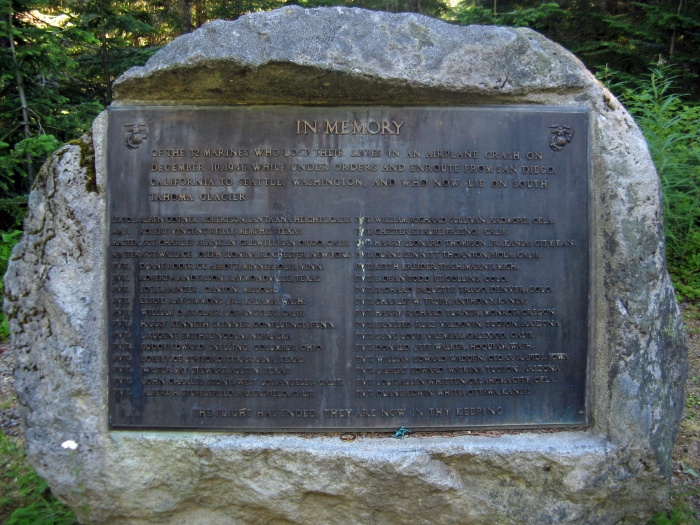
Eventually, a stone memorial was placed within sight of the glacier. A duplicate of that memorial was created and placed at Veterans Memorial Park.

Thursday 29 August 2013

http://www.courierherald.com/news/221558041.html

http://www.historylink.org/index.cfm?DisplayPage=output.cfm&file_id=7820

continue reading

41 dead in Kenya bus disaster


At least 41 people were killed Thursday in a bus crash west of the Kenyan capital Nairobi, the Kenyan Red Cross said.

"It is a horrible scene. Bodies are strewn all over," traffic police official Samuel Kimaru said by telephone from the scene near the town of Narok.

"It is difficult to tell exactly what happened but all indications point to speeding and possibly overloading," he said. "It is quite disturbing."

Traffic Commandant Samuel Kimaru said they suspect the driver lost control of the bus before the accident happened. Other witnesses it took long to rescue those who had been trapped under the bus wreckage after it overturned in a ditch.

He added the bus driver lost control of the City to City bus before it veered off the road and plunged into a valley hitting stones and trees before landing on its roof.

The scene of the accident is about 15 kilometers from Narok and common with such incidents and locals have been calling for measures to curb them.

The Kenyan Red Cross said it had confirmed 41 deaths and 27 others with "multiple injuries".

The bus was travelling from Nairobi to Homa Bay on the banks of Lake Victoria.

It was about halfway into the journey when it veered off the road and plunged into a valley, rolling over several times.

The Red Cross said the accident occurred shortly after 2:00 am (2300 GMT Wednesday). Pictures from the organisation showed the bus in the bushes at the bottom of a hill, its roof ripped off.

Kimaru said police had "a difficult time recovering the bodies because this place is hilly and bushy".

"We've dozens others injured and we are not certain how many because they were taken to various hospitals... we have officers checking with the hospitals," Kimaru said.

Thursday 29 August 2013

http://www.google.com/hostednews/afp/article/ALeqM5jcwtwuE1tHWjGZMDsLnFrwKGKu_w?docId=CNG.a64851ece57485cd6e0a45177d6b4054.1c1

http://www.standardmedia.co.ke/?articleID=2000092213&story_title=41-killed-in-narok-bus-accident

continue reading

50,000 missing children reports investigated in past decade


An average of 18 reports on missing children were filed in the State each day last year, more than double the figure recorded 10 years earlier.

Garda statistics reveal that 51,193 reports on missing children have been investigated in the past decade, with 6,661 of them received last year, a 141 per cent increase on the total for 2003.

The figures show 207 children who were reported missing between 2003 and 2012 “remain untraced”, with the whereabouts of a further 174 adults who went missing in the same period also unknown.

The figures show 19,922 adults were reported missing in the 10-year period, with men accounting for just under two-thirds of the total.

Foreign nationals

Almost 27 per cent of the adults reported missing over the period were foreign nationals, who in 2005 accounted for more reports (850) than Irish nationals. The figure has fallen significantly since then and last year just 281 of the 2,093 adults missing were not Irish.

Garda sources say while it is impossible to determine where the untraced adults have gone, some are foreign nationals who have most likely left Ireland. Others, both Irish and foreign, have perhaps decided to leave their homes and deliberately have no contact with friends or family.

“Some of those missing have probably taken their own lives but their bodies have not been found and so if they were initially reported missing they would still be classed as missing,” said a Garda source.

The same source added some of the missing adults may have been murdered and their bodies disposed of but that such cases would be small in number.

Gardaí said many of the children reported missing would fall into the “tug of love” category. “You see more cases in the past few years, especially where men and women from different countries have kids and then separate – one might take off to their home country and take the kids without permission and so the other parent reports them missing.”

Gardaí believe other missing foreign children entered Ireland unaccompanied only to be taken into care and go “missing” from care after parents living here take them illegally. Sources acknowledge that some missing children may have been murdered or trafficked into the sex trade.

Girls were more likely to be reported missing than boys in the 10 years covered by the statistics, with girls accounting for 3,000 more reports than boys.

Categories of risk

Just under 12 per cent of those reported missing in the period were listed as non-Irish nationals with the numbers in this category rising sharply between 2003 and 2005 (from 581 to 912) before falling again in recent years.

The provisional figures were provided by Minister for Justice Alan Shatter to Fine Gael TD for Kildare North Bernard Durkan in response to a parliamentary question.

Mr Shatter said all reports of persons going missing remain under investigation until the person is located.

Missing persons reports are divided into three categories of risk – high, medium and low.

High-risk cases relate to situations where immediate action is needed such as child abduction or the threat of suicide.

Medium-risk cases are those where a person may have disappeared of their own volition and low-risk cases are those when there is no apparent threat to the life of the missing person.

Thursday 29 August 2013

http://www.irishtimes.com/news/crime-and-law/50-000-missing-children-reports-investigated-in-past-decade-1.1508737

continue reading

Wednesday, 28 August 2013

ICMP calls on Bosnia to implement law on missing persons


To mark the occasion of August 30, the International Day for Missing Persons, a press conference was held on Wednesday at the Sarajevo War Theater.

Coordinator of the Department of Justice and Civil Society at the International Commission on Missing Persons (ICMP) Matthew Holliday said that the ICMP honored 40,000 people as missing in the former Yugoslavia conflict.

"In Bosnia, where about 30,000 people disappeared, the remains of more than 70 percent of missing persons have been idenified after a hard labouring process,“ Holliday said, adding that there are still about 9,000 missing persons in Bosnia and Herzegovina.

He reminded Bosnian authorities that even the Constitutional Court of Bosnia and Herzegovina had confirmed that certain aspects of the Law on Missing Persons have not been implemented.

This year began the process of reassessing the 11 ossuaries in the country. Holliday said that these audits are very important to ensure that all the remains of missing persons will be identified.

He also stressed the importance of governments in the Balkans creating a list of missing persons in the region.

"ICMP urges Bosnian authorities to join other governments in the region in the process of creating a regional list of missing persons as a result of the conflict in the '90s in the former Yugoslavia," said Holliday.

He concluded his speech by calling on the Bosnian government to sign a declaration by the ICMP to demonstrate their willingness to participate in resolving the issue of missing persons.

Wednesday 28 August 2013

http://www.worldbulletin.net/?aType=haber&ArticleID=116310

continue reading

Western Balkans: Authorities must support families of missing persons


Two decades after the Balkan conflicts, almost 12,000 people are still missing. Lina Milner is the ICRC’s regional coordinator for the missing persons issue in the Western Balkans. On the occasion of the International Day of the Disappeared, she talks about what the ICRC is doing to help the families of those who went missing and calls on the authorities to act rapidly to give them the answers they need.

In the 22 years since the Balkan conflicts started, almost 35,000 people have been reported to the ICRC as missing. The fate and whereabouts of some 23,000 people are now known, but the families of over 11,800 people are still waiting for answers. Most of those cases relate to the conflict in Bosnia-Herzegovina, with over 7,800 still unaccounted for. For Croatia and Kosovo, the figures are approximately 2,200 and 1,700 people respectively.

Over the years, a number of measures have been taken, such as:

- the collection and processing of tracing requests;
- the consolidation of missing persons lists in public books of missing persons;
- appeals to people to report the disappearance of relatives;
- the setting up of mechanisms that enable the authorities to honour the families’ right to know what has happened to their relatives;
- supporting the establishment of family associations;
- obtaining the support of the international community.

The ICRC regularly reminds the authorities that they bear the principal responsibility for providing the families with answers. We also raise awareness of challenges and possible solutions.

In the last 12 months, only 800 cases have been resolved in the entire region, almost exclusively through exhumations at known gravesites. The authorities do acknowledge the importance of the issue and they have committed themselves to helping the families. But progress is far too slow. They must do much more to eliminate obstacles and to ensure that the families’ right to know what happened to their relatives is respected.

The main obstacle is that we don’t know what happened to the people who are still missing. In particular, we don’t know where the dead are buried. There must be more gravesites, in addition to the ones that have already been discovered. The authorities in each context must find out where these gravesites are, and they must share this information. They need to be looking through their archives, and asking the intelligence services, ministries, the armed forces, the judiciary, etc. They should also be consulting former commanders who were in charge of specific areas when people disappeared.

And then there are the legal and forensic obstacles. In Bosnia-Herzegovina and Kosovo in particular, the authorities are lagging behind in the implementation of existing laws on missing persons and their families. They also have limited capacity to recover, analyse, and identify human remains, including unidentified sets of remains still lying in morgues. The authorities need to implement existing legislation, develop the necessary forensic capacity, allocate the necessary resources and formulate a comprehensive strategy for dealing with unidentified remains.

Thousands of families living in the region and elsewhere face the anguish of not knowing what has happened to a missing relative. Behind each and every missing person there is a family. These families have to deal not only with years of uncertainty but also with the loss of the family breadwinner and with isolation, stigmatization and other psychosocial and administrative problems.

What helps them deal with the situation is hope, the hope that they will receive an answer. The ICRC and its Red Cross partners have been supporting them. Everything we do, we do for the families, with the aim of ensuring respect for their right to know.

On the International Day of the Disappeared, we call upon the authorities of the region to give these families their unreserved and unconditional support, and to take rapid, concrete steps to end their pain.

Wednesday 28 August 2013

http://www.icrc.org/eng/resources/documents/interview/2013/08-28-disappeared-missing-western-balkans-milner.htm

continue reading

Cebu ferry disaster death toll reaches 91


The number of fatalities from the collision of a passenger ship and a cargo vessel in Cebu waters last Aug. 16 reached 91 Wednesday evening, state-run Philippines News Agency reported.

Citing figures from the Philippine Coast Guard, the PNA said at least 91 bodies had been recovered as of 6:30 p.m.

With this, only 43 remained missing while 733 people had been rescued, the PNA report quoted the Coast Guard as saying.

The victims were from the MV Saint Thomas Aquinas 1, which sank after colliding with the cargo vessel MV Sulpicio Express 7.

Wednesday 28 August 2013

http://www.gmanetwork.com/news/story/324026/news/nation/cebu-ferry-disaster-death-toll-reaches-91

continue reading

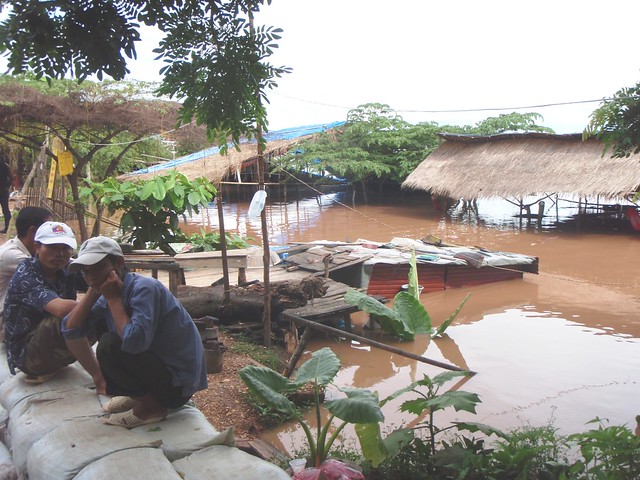
Floods in Laos kill 20, damage rice crops


Flash floods and heavy monsoon rains have battered Laos, killing at least 20 people, washing away roads and damaging crops, a U.N. official said on Wednesday.

Rains along with typhoons that grazed Laos in June and July have affected about 116,000 people in seven of 17 provinces, leaving many without access to clean water, and damaged 14,000 hectares (5,400 sq miles) of rice, the United Nations said.

"We've had near-misses from typhoons in the north of the country and received the rains that came with them," Glenn Dodge, head of the U.N. Resident Coordinator's office in Laos, told Reuters by telephone from Vientiane.

The United Nations warned last year that the country of 6.4 million could face more natural disasters due to climate change and needed to be better prepared.

Isolated for decades, Laos has become one of Asia's fastest-growing economies thanks to a mining and hydro-power boom.

The landlocked Communist country is constructing a $3.5 billion Chinese-backed hydropower dam -- the first of 11 planned for the lower Mekong river -- despite concerns raised by environmentalists.

Wednesday 28 August 2013

http://www.reuters.com/article/2013/08/28/us-laos-floods-idUSBRE97R0BB20130828

continue reading

Mexican officials identify bodies of all 12 kidnap victims


Mexican authorities have confirmed that 12 bodies pulled from a mass grave last week belong to young people kidnapped from a Mexico City bar in May, an official said.

A 13th body was recovered from the grave outside the capital but officials have not indicated whom it might be.

Seven young men and five women ranging between 16 and 34 years of age were reported missing in the days after the group went to the bar in the Zona Rosa district on 26 May.

Surveillance footage showed some of them being led to cars outside the after-hours bar.

There was no obvious sign of force on the surveillance footage. The men who took them away were not masked and did not seem to be carrying weapons.

There was no trace of the missing people until their bodies were discovered in a grave covered with lime, cement and asbestos on the outskirts of Mexico City.

An official from the federal attorney general's office said the bodies were identified through DNA testing and other means.

The office said in a statement that the remains were handed over to the city prosecutors, who are leading the investigation.

But some relatives of the victims said they were shown clothing found at the grave but that they did not belong to their loved ones.

"The clothes they showed us don't belong to any of the kids," Leticia Ponce, mother of 16-year-old Jerzy Ortiz, told AFP.

The families refused to take the bodies because they first want independent forensic experts from Argentina to examine the remains.

The brazen mass killing has tarnished the capital's image as an oasis from the drug-related murders and kidnappings that have plagued the country in recent years.

More than 70,000 people have been killed in drug violence since 2006.

Official figures say 26,000 people have gone missing across Mexico since December 2006, when the army was deployed to fight crime gangs.

Amnesty International has accused the Mexican government was not doing enough to investigate the disappearances of thousands of people.

Wednesday 28 August 2013

http://au.news.yahoo.com/thewest/a/-/breaking/18690441/mexican-officials-identify-bodies-of-12-kidnap-victims/

http://www.bbc.co.uk/news/world-latin-america-23840046

continue reading

31 victims of Aquinas sinking still unidentified


With the bodies already in an advanced state of decomposition, identifying the remaining cadavers from the ill-fated MV St. Thomas Aquinas will have to be done through DNA cross matching.

Twelve days after the Aug. 16 sinking of the ship off the coast of Talisay City, 31 bodies have yet to be identified.

Of the 81 bodies recovered, 51 have been identified by the forensics team of the police.

Of those identified, 48 have been released to their families after completing paperwork needed to authenticate the identity of the victims.

Dr. Expidito Medalla, head of the Regional Epidemiology and Surveillance Unit – 7 of the Department of Health, said the process is tedious but necessary.

“The best way is to have DNA (testing) but we are asking for relatives to be patient since it takes time,” he added.

“We encouraged the siblings or parents of the victims to undergo DNA test in order to match their genes exactly,” he added.

DNA samples will be sent to Camp Crame where DNA matching will be conducted.

Dr. Rene Cam, medico-legal officer of the National Bureau of Investigation in Central Visayas (NBI-7), yesterday said that aside from the lengthy DNA process – which could take about a month, it is also expensive.

Half a million pesos is usually needed for 50 DNA samples.

But he promised that results of DNA testing is 99.99 percent accurate in identifying decomposed bodies.

Wednesday 28 August 2013

http://newsinfo.inquirer.net/476213/31-victims-of-aquinas-sinking-still-unidentified

continue reading

Death toll in Mexico migrant train wreck rises to 9


The death toll in the derailment of a cargo train carrying migrants in southern Mexico rose to nine after authorities found three bodies inside a freight car, officials said Tuesday.

The train known as “The Beast,” which carries Central American migrants who pay smugglers to sit atop freight cars, careened off the track in a swampy and remote area of Tabasco state on Sunday.

The train was believed to be carrying upwards of 250 migrants as it traveled slowly along a river before eight of 12 wagons packed with scrap metal flipped to their side. Authorities used cranes to lift the cars.

Search teams continue combing the wreckage of the freight train that derailed over the weekend in the southeastern Mexican state of Tabasco "to rule out the existence of more victims of the accident," while the bodies of the six Honduran migrants killed in the derailment are being repatriated, the National Migration Institute, or INM, said Tuesday.

A Federal Police plane is scheduled to fly the remains of the dead migrants Tuesday from the airport in Villahermosa, the capital of Tabasco, to the Honduran city of San Pedro Sula.

Ruben Gomez Aguilar, 27; Felix Ponce Aguizon, 58; Gerardo Antonio Sandoval Diaz, 23; Jose Manuel Guerrero Sabillan, 20; Darlin Adriel Valle Banegas, 19; and Rufino Aguilar Ferrera, 22, were killed when the freight train known as "La Bestia" (The Beast) derailed on Sunday, the INM said in a statement.

Central American migrants headed for the United States ride on top of the freight train, with hundreds of people sometimes clinging to the train's cars.

A delegation of Foreign Relations Secretariat officials, Federal Police officers and INM officials accompanied the bodies to Honduras.

Luis Felipe Puente, Mexico’s national civil protection coordinator, later said on Twitter that three more bodies were discovered.

Although the federal transport ministry is investigating the accident and said the train was moving at just 10 kilometers (six miles) per hour, Tabasco state authorities blamed the derailment on speed and rain.

Officials "continue providing assistance to the migrants affected by the accident at shelters opened in the states of Tabasco and Veracruz," the INM said.

"There are more injured, but they did not want assistance because they feared being deported and preferred to stay like that," the Rev. Alejandro Solalinde, who is known for his work with Central American migrants, said.

Shelters along the route covered by the train are preparing to handle injured migrants who might show up over the next few days, the Mexican priest said.

The freight train derailed around 3:00 a.m. Sunday outside Huimanguillo, a city near Tabasco's border with Veracruz state.

The train went off the tracks close to the community of La Tembladera, officials said.

An estimated 300,000 Central Americans undertake the hazardous journey across Mexico each year on their way to the United States.

The trek is a dangerous one, with criminals and corrupt Mexican officials preying on the migrants.

Gangs kidnap, exploit and murder migrants, who are often targeted in extortion schemes, Mexican officials say.

Central American migrants follow a long route that first takes them into Chiapas state, which is on the border with Guatemala, walking part of the way or riding aboard freight trains, buses and cargo trucks.

Wednesday 28 August 2013

http://www.thejakartaglobe.com/international/death-toll-in-mexico-migrant-train-wreck-rises-to-9/

http://latino.foxnews.com/latino/news/2013/08/27/search-continues-for-victims-mexico-train-derailment/

continue reading

Eight killed in Vadodara buildings collapse, over 24 still trapped


Eight people have died and dozens more have been trapped in the collapse of adjacent three-storey apartment buildings in western India, according to police.

The first building collapsed at approximately 4.30am local time, police said, and the other fell half an hour later, pinning more than 30 people under the debris of an apartment block that was home to about a dozen families in Vadodara, Gujarat state.

Police said rescuers were working to pull out the people trapped under the rubble, several of whom were wounded.

"Seven bodies have been retrieved and seven people evacuated so far," a local official told the BBC.

Most of the occupants of the 14 apartments in the first building were sleeping when it collapsed. The adjacent housing block was evacuated minutes before it buckled

About 14 families were staying in the building.

Manish Bhardwaj, Vadodara Municipal Commissioner, Satish Sharma, city police commissioner and city Mayor Bharat Shah and other senior officials have rushed to the site.

"Rescue and relief operations are in full swing. However, it is difficult to tell the exact number of people trapped under the debris. A few people, including a minor girl, have been rescued from the site so far," Vadodara mayor Bharat Shah said.

Talking to PTI, he said, "I was admitted to hospital and soon after learning about this mishap, I am on my way to the site.

Army and National Disaster Response Force (NDRF) teams have arrived to assist the fire brigade in the rescue work.

Gujarat chief minister Narendra Modi consoled the death of the persons while asking the state authorities to conduct the rescue operations to bring out all those trapped inside.

He also asked the state finance minister Nitin Patel to rush at the spot for monitoring rescue operation launched by Vadodara municipal corporation and national disaster relief force.

Chief minister also announced a relief of Rs. two lakh for the kin of the deceased and said an inquiry commission will probe the incident.

Built for the economically weaker sections by the Vadodara Urban Development Authority (VUDA), the buildings were in dilapidated conditions and locals blamed the poor construction and no maintenance by the authorities.

"We had drawn the attention of authorities like VUDA about the buildings but they paid no heed and now both buildings collapsed as we had feared," local residents told local channels.

The injured have been rushed to SSG hospital for treatment.

Building collapses are common in India as builders try to cut corners by using substandard materials, and as multistorey structures are built with inadequate supervision.

Wednesday 28 August 2013

http://www.hindustantimes.com/India-news/gujarat/6-killed-in-Vadodara-buildings-collapse-over-24-still-trapped/Article1-1113955.aspx

http://www.theguardian.com/world/2013/aug/28/indian-building-collapse-dead-trapped

continue reading

BAHID Conference - Call for Papers

We are pleased to announce that the next conference of the British Association for Human Identification (BAHID) will take place on Saturday 30 November & Sunday 1 December at Chancellors Hotel and Conference Centre in Manchester (UK). The usual 'welcome reception' will take place on Friday evening 29 November. The theme of the conference will be centered around ‘Preparing for Disasters’ with invited talks from forensic experts and disaster planners. The British Association for Human Identification (BAFA) will hold a meeting and workshop(s) on Sunday 1 December.

Submissions of oral papers and poster presentations from all disciplines relating to human identification and disaster planning are invited. We particularly encourage presentations of student research dissertations. BAHID will award £500 in prize money for the best student presentation(s) and £100 for the best student poster. Please submit an abstract of no more than 250 words to bahid73@yahoo.co.uk.

Your submission should include details of all contributing authors, their professional or institutional affiliations, and email contact details of the corresponding or presenting author. Please indicate whether this will be an oral presentation or a poster presentation. Student presenters should indicate their eligibility. After assessment of all the abstracts by the BAHID Conference/Scientific Committee you will be notified if your submission has been successful.

Final date for abstract submissions: 30 September 2013

If you have any questions, please contact j.bikker@dundee.ac.uk (BAHID Membership Secretary) or info@bahid.org

Wednesday 28 August 2013

continue reading

In Mexico, families fight red tape to find the missing


When 12 young bar goers vanished in the heart of Mexico City three months ago, their relatives rushed to hospitals and police stations desperately searching for missing loved ones.

Frustrated with the investigation's slow progress, the families blocked streets in protest, won meetings with the city's attorney general and barged into his press conferences when they felt they were being neglected.

On Tuesday, a Mexican official said 12 of 13 bodies found in a mass grave outside the capital last week were identified as the kidnap victims, but the relatives asked independent Argentine forensic experts to confirm it.

The mass abduction has cast a spotlight on Mexico's struggle to solve thousands of disappearances and the efforts families have to undertake themselves in the face of all-too-often uncooperative officials or shoddy police work.

"Authorities make an effort to investigate in those cases where families make enough noise that the cost for authorities of negligence is too high to ignore," Nik Steinberg, a Human Rights Watch researcher who wrote a report on Mexico's disappeared, told AFP.

"If the families don't exert public pressure in cases of disappearances, they have little hope of investigations even being opened."

The Heaven bar case is Mexico's most high-profile mass kidnapping since President Enrique Pena Nieto took office in December, vowing to reduce the abductions and murders linked to drug cartels that vexed his predecessor.

"The Heaven case is emblematic because it shows that Mexico is still unable to respond to disappearances committed by organized crime," said Pilar Tavera, director of Propuesta Civica, a civil society group.

In an effort to crack cases, the federal attorney general's office said Monday it would offer rewards for tips that help them find missing people.

The agency has created a special unit of 12 prosecutors to investigate disappearances. They face a database of 26,000 people who vanished between 2006-2012, but officials say the figure is likely lower because many left home willingly.

The unit's creation is a positive step, Steinberg said, but "Pena Nieto needs to do much more given how widespread the problem is and given the inadequate response of police up to now."

When they do investigate, authorities often fail to carry out "the most basic steps" like visiting morgues or interviewing witnesses, he said, while Tavera said victims are often painted as criminals.

Countless Mexican families have had to conduct their own police work and track down witnesses at great risk to their own lives, or pressure authorities with protests.

What's surprising is that this happened in Mexico City, considered largely immune from the disappearances and killings plaguing states terrorized by drug cartels.

"If we didn't make a lot of noise, nothing would have happened and (the missing) would have just become statistics," said Eugenia Ponce, aunt of 16-year-old Jerzy Ortiz, one of the 12 who were snatched in broad daylight on May 26.

Ponce had gone to a police station to look for her nephew, only to be told to look elsewhere. The "Amber Alert" system, which immediately triggers searches of missing minors, was never activated for Ortiz.

They were told they had to wait the customary 72 hours to file missing person reports. It took two weeks for prosecutors to call it a kidnapping after security camera footage showed a group of men bundling the victims into cars.

Mexico City Attorney General Rodolfo Rios defended his agency Monday, saying it detained seven suspects and would keep working until all those responsible are caught.

He said the kidnapping was payback for the killing of a drug dealer in a dispute between two gangs, but relatives deny the 12 were involved in crime.

Maria Guadalupe Fernandez, a member of the United Forces for Our Disappeared in the northern state of Coahuila whose son disappeared in 2009, said the Heaven case ended tragically but that at least parents will have closure.

"This case can be a paradigm for investigations. It took three months, but they found them," she said. "The (Heaven) parents will get their children. But our grief just goes on and on, in limbo."

Wednesday 28 August 2013

http://www.globalpost.com/dispatch/news/afp/130827/mexico-families-fight-red-tape-find-the-missing

continue reading

Japan: Six more police forces to receive DNA-testing gear


The National Police Agency will deploy automated DNA-profiling equipment to six more prefectural departments by next March to speed up criminal investigations and the identification of bodies recovered from disasters, police sources said Tuesday.

As a result, 11 prefectural forces will have the equipment, which is capable of testing about 80 samples at the same time. Using conventional methods, experts need to test samples manually — a method that is too slow to respond to requests from investigators.

Objective evidence such as DNA test results has come to play an important role in criminal trials, the sources said.

In 2012, the police submitted some 270,000 samples for DNA-profiling tests, a more than tenfold increase from 2005.

The NPA received ¥940 million in the fiscal 2012 supplementary budget to deploy the equipment in the Kanagawa, Aichi, Hyogo, Miyagi, Ishikawa and Hiroshima prefectural police departments.

Wednesday 28 August 2013

http://www.japantimes.co.jp/news/2013/08/27/national/six-more-police-forces-to-receive-dna-testing-gear/

continue reading

Tuesday, 27 August 2013

Rwanda Tribunal digs up partial truth


The International Criminal Tribunal for Rwanda (ICTR) based in Arusha, Tanzania, is due to conclude its business at the end of 2014 following several deferrals. A United Nations Security Council Resolution set up the tribunal in 1994.

Analysts have globally recognised the ICTR’s role in bringing perpetrators of the 1994 Rwandese genocide to justice. However, for a variety of reasons, they also believe that the tribunal has not entirely fulfilled its mandate.

With a year and a half left of its tenure, the ICTR has tried 75 people, sentenced 46 and acquitted 12. Of the 46 defendants who have been sentenced, 17 cases are still pending before the Appeals Chamber, although most of these appeals are at an advanced stage.

Human Rights Watch (HRW) has been a regular observer of the ICTR’s proceedings which started in 1997. Carina Tertsakian, a researcher in the Africa division of HRW commended “the important role” played by ICTR in bringing those accused of being most responsible for the genocide of Tutsis in Rwanda. According to her, the Rwandese justice system would not have been able to apprehend such senior leaders of the former regime.

According to the United Nations, the genocide claimed at least 800,000 lives particularly amongst the Tutsis.

But Tertsakian admits that the ICTR has had some weak areas. “We believe one of the main weaknesses of the ICTR is that it has not opened a single case for war crimes committed by members of the former rebel group, the Rwandan Patriotic Front (the RPF is now in power in Kigali) even though this was well within its mandate,” she told IPS.

“Credible evidence of the crimes committed by RPF soldiers exists. This important part of ICTR’s mandate has not been executed.”

In Kigali, genocide survivors have united under a group called Ibuka, which means ‘remember’ in Kinyarwanda. They give credit to the tribunal for sending a strong message to the architects of the genocide, particularly those still in hiding, but also express some disappointment.

“The ICTR worries them, which is a cause for celebration. But it is not much if you consider the vast means at the tribunal’s disposal,” said Naphtal Ahishakiye, Ibuka’s executive secretary. He is dismayed that nine of the accused are still at large, including billionaire Félicien Kabuga who is often referred to as the principal funder of the genocide.

According to ICTR spokesperson Roland Amoussouga, the tribunal has cost 1.6 billion dollars as of Dec. 31, 2011.

Ibuka has also denounced certain judgements. “In a number of cases, the tribunal acquitted defendants or handed down sentences that were too lenient, even where reliable evidence was put before it,” said Ahishakiye, who also believes that the ICTR “has contributed practically nothing to Rwandese reconciliation.”

The same criticism was made by the Rwandese government on Jun. 21 this year after a UN debate on international criminal justice. “The ICTR, particularly the Appeals Chamber has, on several occasions in the last months, acquitted a number of members of that cabinet, some of whom had been heavily sentenced at the first instance,” protested Rwandese diplomat Olivier Nduhungirehe.

ICTR officials have to date refused to comment on these “purely political” criticisms.

Those opposing the new regime in Kigali also have their grievances with the ICTR. The United Democratic Forces (UDF), a party created in exile and which is struggling to get registered in Rwanda, claims that the main failure of the Arusha tribunal is to have not sought the perpetrators of the Apr. 6, 1994 strike on the plane carrying then president Juvenal Habyarimana.

“The lack of will to try those responsible for the attack which triggered the genocide is for us a massive failure. It is clear that there was political pressure from some quarters,” said Jean-Baptiste Mberabahizi, spokesperson for the party exiled in Belgium. He denounces this as “the justice of the victor over the vanquished.”

According to French academic and Great Lakes specialist André Guichaoua, “assessments of the qualitative and quantitative achievements of the ICTR may be mixed, but the tribunal has paved a way forward.” He believes that “the prosecutor’s office, judges and their personnel tried the principal architects of the genocide, created jurisprudence and set standards in matters of justice and truth.”

Guichaoua, who was the expert witness in several of the ICTR cases recognises that the tribunal “gave priority to the pursuit and trial of the architects of the genocide” of Tutsis.

But, he pointed out to IPS, the lack of legal proceedings for crimes allegedly committed in 1994 by members of the former rebel forces now in power in Kigali “has undermined the credibility (of ICTR), the scope of its rulings, the unveiling of truth and the comprehension of facts.”

Guichaoua believes that successive prosecutors of the tribunal, with the consent of the UN Security Council, have all succumbed to Kigali’s stonewalling. For this reason he believes the ICTR’s mission has not been fully accomplished.

The ICTR was scheduled to conclude its mandate at the end of 2008, but its officials requested an extension to the end of 2009. At the end of 2010, the Security Council passed a resolution requiring that that all matters be wound up by the end of 2014.

Tuesday 27 August 2013

http://www.ipsnews.net/2013/08/rwanda-tribunal-digs-up-partial-truth/

continue reading


The UN Interim Administration Mission in Kosovo (UNMIK) singularly failed to investigate the abduction and murders of Kosovo Serbs in the aftermath of the 1998-1999 conflict, Amnesty International said in a report published today.

It comes on the eve of a UN Security Council debate on Kosovo on 29 August.

“UNMIK’s failure to investigate what constituted a widespread, as well as a systematic, attack on a civilian population and, potentially, crimes against humanity, has contributed to the climate of impunity prevailing in Kosovo,” said Sian Jones, Amnesty International’s expert on Kosovo.

“There is no statute of limitations on crimes against humanity. They must be investigated and the families of the abducted and murdered must receive redress. The UN should not be allowed to shirk its responsibility any longer.”

In Kosovo: UNMIK’s Legacy: The failure to deliver justice and reparation to the relatives of the abducted, Amnesty International reveals how UNMIK failed to investigate reports of abductions and killings, despite being charged by the UN Security Council with protecting human rights in Kosovo.

The report is based on the initial findings of the Human Rights Advisory Panel (HRAP) set up by UNMIK to receive complaints from those who consider their rights to have been violated by UNMIK. The HRAP has received some 150 complaints from relatives of missing persons – primarily Kosovo Serbs believed to have been abducted by members of the Kosovo Liberation Army (KLA). Each complainant claimed that UNMIK had failed to investigate the abduction and subsequent murder of their relative or relatives.

The panel found that in several cases UNMIK was not able to present any evidence that an investigation took place, while in others UNMIK police appear to have given up on the investigation after the victim’s body had been handed over to the relatives. In one case UNMIK police were even unaware that the bodies of a missing husband and son had been found and returned to their family for burial.

In spite of the panel’s findings and recommendations, no further measures appear to have been taken by UNMIK to provide redress and reparation.

Although the report focuses on the abductions of Kosovo Serbs, allegedly by the KLA, Amnesty International’s own research has led to similar findings with regard to UNMIK’s failure to investigate enforced disappearances of ethnic Albanians by Serb forces.

Since 1999-2000, Amnesty International has monitored UNMIK’s progress in a number of emblematic cases of enforced disappearance and abduction. In five cases, involving the enforced disappearances of 27 ethnic Albanians, no-one has yet been brought to justice. In 10 other cases involving the abduction of 13 Serbs and Roma, only one perpetrator has been brought to justice, but by the Serbian authorities.

For nearly a decade after the conflict, UNMIK police and prosecutors failed to initiate prompt, effective, independent, impartial and thorough investigations into many reports of enforced disappearances and abductions. As a result, very few of those suspected of criminal responsibility for the war crimes and crimes against humanity have been brought to justice in international or domestic courts.

“Years have passed and the fate of the majority of the missing on both sides of the conflict is still unresolved, with their families still waiting for justice. The cases considered to date by the HRAP reveal how the victims of human rights violations have been left in limbo due to the lack of will within the UN system to ensure they receive appropriate compensation and other reparation,” said Sian Jones.

UNMIK’s responsibilities for police and justice ended on 9 December 2008, when the European Union Rule of Law Mission in Kosovo (EULEX) took over its policing, prosecutorial and judicial functions. This included responsibility for the investigation and prosecution of serious crimes, including crimes under international law. EULEX inherited 1,187 war crimes cases which UNMIK had failed to investigate

“While it is now up to EULEX to open investigations into cases of post-war abduction and murder, UNMIK must make sufficient funds available to provide the relatives of the missing with adequate and effective compensation for moral damages and their pain and suffering, in accordance with international law and standards,” said Sian Jones.

“The legacies of the Kosovo conflict must be resolved – this includes resolving the fate of missing persons from all communities in Kosovo, bringing to account those responsible for war crimes and crimes against humanity, and providing reparation. Only when that happens can the scars of the past conflict start to heal.”

Tuesday 27 August 2013

http://www.amnesty.org/en/news/un-must-make-failure-investigate-kosovo-missing-2013-08-27

continue reading