Wednesday, 7 August 2013

Lost in the system: Unidentified bodies on the border


Over the past decade, thousands of people have died in the desert borderlands of the United States. As has been demonstrated repeatedly, the deaths are a result of U.S. border enforcement policies that have made border crossings much more dangerous than they were before the era of border militarization. But the number of deaths is only the tip of the iceberg when it comes to understanding the ugliness unfolding on the border. Hundreds are unidentified, hundreds are missing, and distraught relatives are getting lost in the spaces between the various bureaucracies that can’t or won’t help.

One of these family members, Reyna, last spoke with her husband, Felix, on July 8, 2009. He called her from Altar, Sonora, to tell her that he would be crossing the border into the United States the following day. Having been deported to Mexico the previous May, he was in a hurry to get back to her, since she was struggling to make ends meet alone with two small children.

A few days after Felix’s call, Reyna got a call from his coyote, or professional smuggler. Felix didn’t make it. He had collapsed in the desert and was left behind somewhere near a road frequented by the Border Patrol near a place called Choulic.

In the summer of 2011, almost two years after Felix went missing, a friend and I visited Reyna and her children in their home in rural North Carolina. Finding her was difficult. She could not read or write or give me directions. As we drove around in circles in a rural area, we began to notice white feathers all over the grass outside the car. By the time we turned down Reyna’s road, the feathers were covering the ground and the air was thick with the stench of chemicals, manure, and blood from a nearby poultry processing plant. Reyna’s home was one of about a dozen trailers lining an unpaved loop. At the entrance to the loop was a small, dilapidated shack with a sign outside reading Tienda. The windows were covered with ads in Spanish for international calling cards.

We sat with Reyna for about an hour and a half as she described what had happened, what Felix was wearing, the color of the metal restorations on his front teeth, the fact that he’d had a bad knee and how that was what had probably gotten him into trouble in the desert. We learned that she worked for the poultry processing plant and that she and her children were undocumented. Her living conditions, likely on company land, were dire. Reyna’s children, an eight-year-old boy and a five-year-old girl, clung to her and whispered in her ear as we spoke. Her son gently pulled a small cockroach out of her hair and wiped the tears off her face as she described to us how the ordeal had affected her family:

“It has been so hard. We suffer so much. We don’t know anything. He wanted to be with his wife. He wanted to be with his kids. And they love him so much. And they need their papa. And I need him. They need new things. They say, ‘Mama, I want new clothes, I need a backpack.’ I have to work all night and into the day to pay the rent. And we have two children in Guatemala. Without knowing where he is, I don’t know what to do. I can’t do it all by myself. For two years now, we know nothing of him.”

I met with Reyna for two reasons—to collect more information about Felix so that he might be identified among the unidentified bodies at the Pima County Office of the Medical Examiner (PCOME), and to inform my dissertation research on death, disappearance, and identification on the U.S.-Mexico border. Felix’s case is one of many collected from families, foreign consulates, and immigrant rights and humanitarian groups as part of the Pima County Missing Migrant Project (PCMMP), which sought, beginning in 2006, to organize all such data for southern Arizona. The project now has records for nearly 1,400 missing persons last seen alive crossing the border.

Relatives of the missing, like Reyna, are calling agency after agency for help. Some have called more than 20 different offices. Most of these calls are never returned. The calls that do come are from mysterious people claiming to have the person, willing to release them only after thousands of dollars have been wired to them. Other calls come from private investigators, promising to unearth hidden information—again for a price.

The data provided by relatives to various agencies are inconsistently shared with others, especially with medico-legal offices tasked with investigating the deaths of bodies found in the desert. Although the PCMMP has successfully organized most of these data for Arizona, border-wide, the problem continues. There is no centralized repository for all reports of missing persons last seen crossing the U.S.-Mexico border. Hence, a family could report a missing person to an office in one state, while the body is discovered in another. There is still no consistent way for these records to be connected.

This is not just a border problem, but a national one. In 2009, the U.S. Department of Justice launched the National Missing and Unidentified Persons System (NamUs), an online relational database designed to match missing person reports with records for unidentified decedents found throughout the country.

Although NamUs is enormously useful, it relies on local jurisdictions to enter their own records for unidentified remains, and many medico-legal offices still do not use the system. The PCOME, an office with exemplary practices, uploads all cases of unidentified remains into NamUs. But the full potential of NamUs is not reached unless information is entered for both unidentified remains and missing persons. Until recently, NamUs could not accept reports for most missing migrants because a police tracking number was required, and U.S. police agencies usually will not take reports for missing foreign nationals. In addition, many relatives of missing migrants will not call police for fear of deportation, which could lead to further family separation.

In the summer of 2012, the PCOME became the first non-police entity authorized to enter missing person reports into NamUs. With a backlog of 1,400 cases, the data entry is taking considerable time. However, with only about 400 of the cases published, identifications are already being made, and families with whom the project had lost contact are finding their reports online, then calling and providing more information.

Despite these strides, there are problems. Although NamUs has granted the project access, coming up with funding for the work of getting the reports into NamUs is challenging, because the federal and state agencies that typically support this type of work cannot use their money on missing foreign nationals. Moreover, even when all the information is complete, NamUs will not resolve all the cases. NamUs uses non-genetic information to make connections between unidentified and missing—the date of disappearance and date of death, the clothing the person was wearing, the dental condition, scars, tattoos, and so forth. Because such a large number of the unidentified are highly decomposed or skeletal, and because there is so little information about many of the missing migrants, a large portion of the cases will never be resolved without comparing DNA taken from the body to DNA taken from relatives of the missing person.

The PCOME has taken DNA samples from all the unidentified decedents discovered over the past decade. These samples are sent to Bode Technology Laboratories in Virginia, where DNA is extracted, profiled, and entered in a database. To identify remains in this context, an identification hypothesis is first made between a particular missing person and a particular unidentified body. Then a one-to-one comparison is made using DNA profiled from the family and DNA profiled from the remains.

Thanks to the efforts of the Argentine Forensic Anthropology Team (EAAF), a massive comparison system capable of producing blind matches is in progress. EAAF’s Border Project has the goal of creating a regional system, including Central America, Mexico, and the United States, to centralize the exchange of information about missing migrants and unidentified remains. In collaboration with governments and nongovernmental organizations, EAAF has created DNA banks for families of missing migrants in El Salvador, Honduras, Guatemala, and Chiapas, Mexico. The DNA sequenced from these families is then sent to Bode Technology, the same lab where PCOME sends DNA sequenced from the unidentified dead. Dozens of identifications have already come out of this work.

While this is good for the PCOME and the families who live in one of the areas where EAAF has established (or will establish) a DNA bank, there are enormous challenges to addressing the problem on a border-wide, regional scale. For many cases of unidentified remains discovered in the United States, DNA data are uploaded into the FBI’s Combined DNA Index System (CODIS). But DNA samples taken from families of missing migrants cannot go into this system for comparison because by law, the DNA must be collected by a U.S. law enforcement agency, and most law enforcement agencies are not taking these reports for reasons discussed above. Also, for a variety of reasons, CODIS does not have DNA for anywhere near all cases of unidentified remains discovered along the border. Through conversations with families and officials in other counties, I have learned that some medico-legal offices are not taking samples for DNA before remains are buried as unknowns. Also, the requirements for entering DNA data into CODIS are very high, and for cases of weathered bone, which may not produce a complete profile, the data cannot be uploaded.

The point is that the DNA taken from the bodies is not being compared with DNA taken from the families on any massive scale. Those of us working toward a comprehensive system to help the families of the missing are coming up against massive bureaucratic, transnational roadblocks. The result is that hundreds, likely thousands, of family members are still waiting for word about their missing loved ones, while in the meantime the bodies are being found, examined, and buried or cremated as unknowns. Even if a family reports someone missing immediately, and even if the body is found right after death, the two events will very likely not be connected.

Reyna reported Felix missing to both the Guatemalan and the Mexican consulates; although he was Guatemalan, he used a Mexican alias and false ID. Indeed, when meeting with Reyna, I saw that there were two reports for Felix in the project list of missing persons—one in his real name and the other under his alias—but neither had the correct date of disappearance in the desert.

When I returned to Tucson from North Carolina, I searched among the unidentified dead for Felix, not expecting to find anything. It had already been two years, and it was likely that his body either had not been found or was so highly decomposed that I would not be able to find him without DNA. But when I opened the binder full of unidentified-persons reports to July 2009, there was a man, found near Choulic, Arizona, on July 9 with metal restorations on his front teeth. I recognized Felix from the photos Celia had given me. I called her in North Carolina and told her that I might have found him. She walked down the road to the tienda, called, told me the e-mail address of the person working there, and within a few minutes was looking at a photo of her husband, taken the day after he died in 2009.

Due to errors in taking data from the family, Felix had remained unidentified for over two years. His body was kept in the morgue at PCOME for nearly a year and was then released as unidentified, with a number rather than a name. He was cremated and his remains were kept in the Pima County Public Cemetery in Tucson among hundreds of others, until he was finally identified. Reyna asked for Felix’s remains to be sent to her in North Carolina, rather than to Guatemala, because, she said, it was their home and it was where he wanted his family to be. He had wanted his children to have the opportunities that growing up in the United States could provide.

For Reyna, two years of anguish were over. For me, frustration, anger, and guilt followed the phone call. Felix’s case was representative for me of the many ways my hands are tied when it comes to helping the families of the missing. If we had had NamUs as a tool at the time, the records likely would have been linked earlier. If forensically trained people rather than consular officials had been taking the information, maybe the data would have been of better quality. If we had had a DNA matching system, Felix’s family would have been able to submit DNA and probably get an answer much sooner than they did.

But Reyna did finally find out, and was able lay her husband to rest and tell her children what had happened to their father. Hundreds of others are still waiting for news. The daily experiences of exclusion that immigrants like Reyna and Felix go through are repeated in this context, where they are excluded from the technologies and systems that have been designed to address the basic human right to know what happened to a missing loved one. The poultry processing plant and Reyna’s run-down trailer are inseparable from Felix’s death and disappearance in the desert. The suffering of the families of the missing is a call not only to identify the dead but to recognize that these people too are loved, missed, and irreplaceable.

Wednesday 7 August 2013

http://nacla.org/news/2013/8/6/lost-system-unidentified-bodies-border

continue reading

New Zealand: Plan to enter Pike River mine ready to go


3 News has learned a plan to re-enter the Pike River mine is complete and ready for approval.

The plan has been developed by mine owner Solid Energy, the families and the Government. And the Prime Minister has pledged $10 million to pay for it.

For nearly three years the families of the 29 men killed in the Pike River disaster have been waiting for re-entry to the mine.

"I understand these things are being discussed and they're working through it literally right now," says Energy Minister Simon Bridges.

The joint committee has been working on a proposal to enter the mine's tunnel since February. Two sources have told 3 News it's been completed.

The plan now goes to the five-person Solid Energy board, we're told, this month. If they deem the plan safe and so does the Government's High Hazards Unit, it's rubber-stamped and sent to the Energy Minister to be taken to Cabinet.

"I won't muck around," says Mr Bridges. "I will move on that with real haste and get that to Cabinet."

Once with Cabinet, it won't take long for the Government to open its purse and fund the exploration.

"I wouldn't expect that to take more than days – certainly not weeks or months," says Mr Bridges.

Prime Minister John Key personally pledged the money to enter the mine – up to $10 million. But he says beyond the tunnel, or drift, which is blocked by rockfall, entry into the mine itself may be impossible.

"I worry about how far we'll be able to get up the drift," says Mr Key. "But going no further, they'll be close to their loved ones, but not close enough."

But this plan could still lead to bodies being recovered.

"It would probably be small numbers of men," says Mr Key.

"There is still the door for prosecutions to happen, so I think it's important we get down there and do the whole job, and number one is get the men out and answer those questions," says families' spokesman Bernie Monk.

The plan could still stall through these final stages of approval process because of safety concerns. But Mr Monk says the families are now in the best position they've been in, in the almost three years since the explosion, and they will keep the pressure on.

Wednesday 7 August 2013

http://www.3news.co.nz/Plan-to-enter-Pike-River-mine-ready-to-go/tabid/423/articleID/308011/Default.aspx

continue reading

Foreign climbers: Taliban kill officers probing massacre


Pakistan-based Taliban fighters opened fire on a group of police officers investigating a June massacre of foreign climbers, killing three, officials said on Tuesday. The Pakistani Taliban claimed responsibility for the June 22-23 pre-dawn attack when gunmen dressed as policemen stormed a base camp on Pakistan's second-highest peak of Nanga Parbat, killing 10 foreign climbers and a local guide.

The attack shocked the international climbing community and several expeditions to Pakistan have been cancelled, depriving its starving economy of much-needed cash at the height of the climbing season. A group of officers investigating the massacre came under attack in the troubled Diamar district of Gilgit-Baltistan province late on Monday. Gunmen opened fire on their motorcade.

"Though no major arrests have been made so far related to the June 23 shooting of foreigners, these officials were investigating the killings of foreigners," a senior security official told Reuters. A Pakistani Taliban spokesman claimed responsibility for the attack on police. Victims of the mountain assault included climbers from China, Lithuania, Nepal, Slovakia, Ukraine and one person with joint US-Chinese citizenship. One Chinese climber escaped.

Nanga Parbat, one of the world's highest mountains, is popular among international mountaineers because of its challenging terrain, but growing violence has damaged the potentially lucrative tourism industry. Once-peaceful areas of northern Pakistan where the mountain is located are increasingly infiltrated by militants seeking to gain footholds beyond their traditional hideouts on Pakistan's porous border with Afghanistan.

Wednesday 7 August 2013

http://www.brecorder.com/general-news/172/1218571/

continue reading

DNA test in probe over ‘body at Arbroath cliffs’

Police probing reports of a mystery body in the sea are testing a half-eaten McDonalds meal found at the shore for DNA.

Police received a call from a member of the public saying they saw a male in the water just north of Arbroath cliffs on Saturday.

Coastguard, the local lifeboat crew and a rescue helicopter were called in to coordinate a full-scale search of the area over the weekend, but nothing was recovered.

However, officers did find a Lee Cooper cardigan and spectacles on the foreshore, as well as a “partially consumed” meal and drink, understood to be from McDonalds.

And with no reports of any missing person, police were examining the objects in a bid to establish the owner.

Inspector Graham Young said the inquiry would continue in the hands of Eastern section and take the form of land-based investigations.

He said: “The caller was very clear that they saw a body in the water.

“The Coastguard carried out a search of the water on Saturday and Sunday, but nothing was found. We have got items of clothing and background inquiries will continue.

“There are no reports of any missing persons. The partially consumed meal and drink will be taken away for DNA testing.”

Police were also looking at the possibility that the sighting of the body reported may be a seasonal worker.

Inspector Young added: “That is a real possibility and could be why nobody is aware of them, hence the reason it has not been reported.”

A spokesman for Police Scotland, Tayside Division, appealed to anyone who may have any information that would help with the inquiry to contact them.

Wednesday 7 August 2013

http://www.eveningtelegraph.co.uk/news/local/dna-test-in-probe-over-body-at-arbroath-cliffs-1.117772

continue reading

Rain, landslide kill 15, bury hundreds in Kerala’s hills


At least 15 persons have died and several were reported missing because of heavy rain, which started on the night of Sunday-Monday, and landslides in the hilly district of Idukki, south-central Kerala.

The devastation took place when a huge mound of rock and slush came crashing down at Chiyyappara in Idukki while relief work was going on.

Cochin International Airport was closed for two days after its runway was flooded and many flights were diverted or cancelled.

Many vehicles are feared trapped in the debris and the state government has sought the help of the army and the National Disaster Response Force.

The toll was likely to go up, said a senior district official. There are unconfirmed reports that some foreign tourists too are trapped.

Incessant rain hampered rescue and relief at several places and the government has asked tourists to avoid hill stations. Chief minister Oommen Chandy has called an emergency cabinet meeting to review the situation and step up relief operations. Two ministers have gone to Idukki to co-ordinate relief work.

“We have sought help from the army and navy for rescue operations. We are closely monitoring the situation. Some of the dams have already crossed the danger mark,” Chandy said.

In Idukki many houses built on the slopes of hills have been swept away in flash floods and landslides.

Since roads were blocked due to heavy landslides, many areas in the district remain isolated.

Wednesday 7 August 2013

http://www.hindustantimes.com/India-news/Kerala/Rain-landslide-kill-15-bury-hundreds-in-Kerala-s-hills/Article1-1103544.aspx

continue reading

10 people killed, 52 injured after bus falls into gorge in Himachal Pradesh


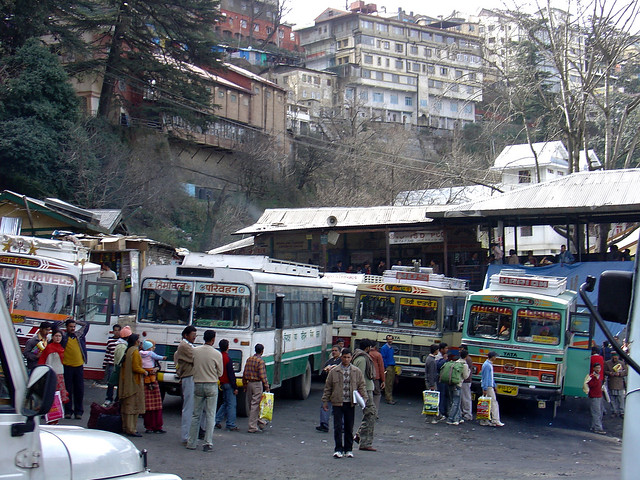
Ten people were killed and 52 injured when a state-run overcrowded bus skidded off the road and fell into a 200-metre deep gorge in Shimla district on Tuesday, an official said.

The accident took place near Nerwa in Chopal tehsil, some 120 km from Shimla, an official said. The accident spot has witnessed heavy rains.

Seven bodies were recovered from the wreckage of the bus while the injured were taken to hospitals, deputy commissioner Dinesh Malhotra said.

The bus, ferrying passengers from Shimla to Pehlog, was overcrowded, one of the survivors told police.

Witnesses said the bus driver probably lost control over the vehicle when he was trying to reverse it to make way for a vehicle coming from the opposite side.

Rescue workers said the death toll could rise. Most of the injured have been admitted to nearby hospitals.

Most victims were from nearby villages of Nerwa. The dead included two residents of Uttarakhand and one from Bihar.

Eyewitnesses said the administration had a tough time extricating the victims from the badly mangled bus.

It took hours for rescuers and police to climb down the mountain and bring up the bodies. Even the rainfall in the region hampered the rescue operation, police officials said.

The locals began rescue operations even before authorities reached the spot.

Expressing grief, chief minister Virbhadra Singh ordered a magisterial inquiry and announced a compensation of Rs. 100,000 for the next kin of the dead.

Chopal, adjoining Uttarakhand, is one of remotest places in the state and scarcity and low frequency of passenger buses often leads to overcrowding of the vehicles.

Wednesday 7 August 2013

http://www.hindustantimes.com/India-news/Shimla/8-killed-as-bus-rolls-down-a-gorge-in-Himachal/Article1-1104289.aspx

continue reading

Tuesday, 6 August 2013

China's child abductions


Thousands of Chinese children kidnapped by traffickers every year are never found because of corruption, police apathy and the complicated nature of the crime, according to a filmmaker who has made a documentary on the subject.

Charlie Custer, whose film "Living with Dead Hearts" was released last week, said most of the younger children abducted in China are boys sold for adoption to couples with daughters but no sons.

Boys are also sought by couples unable to conceive or unable to pay the fines imposed on families breaching China's one child policy. Given China's traditional preference for males, an infant boy is worth thousands of dollars on the black market, he said.

Tricked by traffickers, adoptive parents are often unaware that the children in their care have been stolen from their biological parents, Custer added.

"There's also demand for children to be involved in street begging, pickpocketing ... and of course, there's demand for slave labour and prostitution for the teenage kids that are kidnapped," Custer told Thomson Reuters Foundation in a telephone interview from the United States, where he is now based after spending several years in China.

The exact number of child abductions is unknown.

Before the Chinese government stopped releasing annual estimates of the number of kidnapped children more than a decade ago, it said around 10,000 children were kidnapped every year, Custer said.

The authorities stopped publishing numbers partly because they were embarrassed by the continuing problem, partly because of the difficulty in determining which children were snatched and which were runaways or missing for other reasons, he added.

The U.S. State Department, citing media reports, says as many as 20,000 children are kidnapped for illegal adoption each year, while Custer said independent reports put the number of children kidnapped in China yearly as high as 70,000.

HOPELESSNESS

"Like a lot of these big social issues in China, there's interest in resolving this problem at the highest levels of government," Custer said, pointing to the work of a national anti-kidnapping taskforce responsible for rescuing many children.

But there is less interest in investigating the crimes at local level.

"Some officials and some police organisations are actually bribed by traffickers, so there's this issue of corruption that is part of it. There's also just the fact that there's not a lot of motivation for a lot of local police officers to solve cases like these," Custer said.

Part of the reason is the vast distance kidnapped children are forced to travel to avoid detection, often moving several times across several jurisdictions or passed through many hands.

Investigating such cases becomes extremely time-consuming, requiring many layers of cooperation among local police departments, Custer said.

"For a lot of local police, it's not worth it. It's not a worthwhile use of their time. It doesn't bring in any extra money. It doesn't raise their conviction rates, their success rates because most of the cases aren't resolved," he added.

The pain of having no information and no lead to pursue is vividly captured in the documentary, which follows three sets of parents in their quest to find their missing children.

Aged only two, Liu Jingjun was dressed in a black and blue cotton jacket and trousers when he disappeared from an alleyway where he had been playing with other local children in Taiyuan, the capital of Shanxi province.

His parents and grandparents have been searching for him ever since - using websites such as "Baby Come Home" which allow parents to post photos of their missing children and browse pictures of homeless children.

"No matter where you go, as long as we're alive, your mum and dad, as long as we have breath, we'll be trying to bring you home," Jingjun's father says, addressing the camera.

Lei Xiaoxia was 12 when she disappeared from school, and Yuan Xueyu, who had left home and found work on a construction site, was 15 when he went missing.

"The feeling of losing your child, it's like being hopeless. We are living with dead hearts," Xiaoxia's mother says.

UNEXPECTED CONSEQUENCES

In all cases the police are depicted as incompetent or uninterested - for example, failing to check video taken from surveillance cameras or not bothering to interview teachers and schoolfriends of the kidnapped children.

The kidnappings have unexpected consequences too. One man describes how the uncle of a kidnapped child is killed in a motorbike accident while searching for him. Another man whose child was kidnapped speaks of the pressure from family and neighbours to leave his wife, who they blame for not being more watchful.

Over time, the search for missing children also drains the pockets of many parents as they try single-handed to find their children. They lose income taking time off work to follow up reports of a sighting, and have to pay for flyers to be printed or to take trains to other towns and cities.

"Obviously, you know that somebody's child being kidnapped is devastating emotionally for the family, but it was surprising to see the extent to which that destroys the rest of people's lives," Custer said.

By the end of the film, not one set of parents has been successful in their search.

"The situation turned out to be even bleaker than we had expected," Custer said.

CHILD SMUGGLING RING EXPOSED

At least seven families have come forward to report their children missing after police in Shaanxi smashed a sophisticated child-smuggling operation involving an obstetrician last week, Chinese media reports.

Fan Ningning, a female villager who lived in Weinan city’s Fuping County, said that in recent years she had twice given birth at a local maternal hospital, the Beijing News reported. Fan said she had been told by a doctor to “discard” her babies because they had “congenital diseases”. She now believes her children are still alive and living with a “host family”.

Fan’s hopes of seeing her children again were sparked by the high-profile police operation which uncovered the human trafficking operation. Newspapers in China on Monday reported that Fuping police rescued a newborn boy from its host family in nearby Henan province. The infant had allegedly been abducted by an obstetrician and sold to human traffickers.

Police have also arrested Zhang Shuxia, an obstetrician working at a hospital for children. She had allegedly persuaded a couple to give up their child last month, after informing them he was infected with hepatitis and syphilis, police said. Worried the “sick baby” could be a heavy financial burden, the parents allowed Zhang to “dispose” of it.

State media reported on Tuesday that the baby boy had been reunited with his parents, mother Dong Shanshan and father Lai Guofeng. “Dong held him tightly as family members wept before the parents knelt to thank police for recovering the infant,” the China Daily said.

Police also detained two other people accused of re-selling babies, the newspaper reported citing police sources. The doctor sold the baby for around 21,000 yuan to a member of the child smuggling ring. This man then sold the child for 50,000 yuan to another criminal suspect, who handed it to the host family for 60,000 yuan, the report explained.

Yet there are other cases reported. A spokesman for Fuping police told the paper that they had received seven similar reports from other families. More reports are likely.

Elaborating on the case of Fan Ningning, the Beijing News reported that she had given birth to a girl and a boy in 2008 and 2009. When a doctor told her the children had congenital diseases, no physical examination was performed on them, nor was Fan asked to sign a letter of consent allowing them to be taken away from her.

Child trafficking is a serious problem in China. It is often blamed on the “one-child” policy which has put a premium on families having baby boys. Consequently, baby girls are sometimes sold off, abandoned, or put up for adoption.

Under the policy, which aims at controlling China’s more than 1.3 billion population, people in urban areas are generally allowed only one child, while rural families can have two - if the first is a girl.

In a much publicised case, Chinese police rescued 89 children and arrested 355 suspects last December after breaking up a series of child trafficking rings.

Tuesday 6 August 2013

http://www.trust.org/item/20130806110826-5vmtb/?source=hpeditorial

http://www.scmp.com/news/china-insider/article/1294624/more-parents-report-missing-children-after-baby-smuggling-ring

continue reading

Investigators looking for mass grave in Medvedja


Representatives of missing persons commissions from Belgrade and Pristina started investigating the grounds in the village of Svirce.

The village is the suspected location of a mass grave containing bodies of Albanians killed in 1999, said Mayor of Medvedja Slobodan Draskovic.

He told Tanjug that so far they are just going over the grounds and trying to locate the sites where the grave might be located.

"Representatives of EULEX and the Red Cross are also in the field. They are scanning the grounds at a location known as Kapija (the Gate) along the administrative line with Kosovo, more precisely the area between Medvedja and the municipality of Kosovska Kamenica," said Draskovic.

This is the second time in the last two years that representatives of missing persons commissions and international organizations have searched Medvedja for possible mass graves.

Excavations carried out in the village of Sijarina in September 2011 did not yield any findings.

Tuesday 6 August 2013

http://www.b92.net/eng/news/crimes.php?yyyy=2013&mm=08&dd=06&nav_id=87195

continue reading

2 dead, 6 missing after China colliery blast


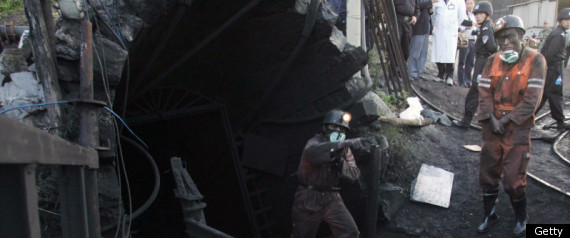
Two miners have been confirmed dead, and six others remain trapped on Tuesday after a gas blast hit an illegal coal mine in Southwest China's Yunnan Province on Monday, rescuers said.

They pulled two bodies out on Monday afternoon, but said the rescue was progressing slowly due to difficulties in clearing the blockage that resulted from the blast-triggered cave-in.

Eight workers were estimated to be trapped following the accident that occurred at 3:40 pm on Monday at the mine in Qingmen Village, Zhaoyang District of Zhaotong City, according to the district government.

Police said they had detained the mine's owner.

Tuesday 6 August 2013

http://www.globaltimes.cn/content/801974.shtml#.UgEV_nefDnE

continue reading

9 bodies recovered after deadly Vietnam boat accident


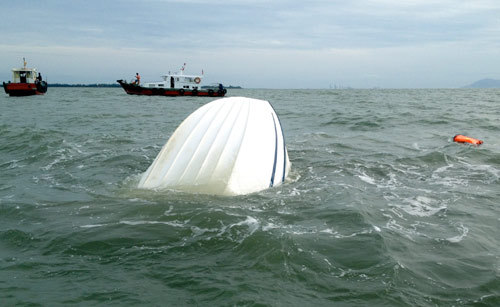
Rescuers have recovered the bodies of three women and six men who died after a motorboat capsized in rough conditions off the Ho Chi Minh City coast last Friday.

Twenty one others who were rescued are reported to be in stable condition after treatment.

At around 9 p.m. on Friday the boat carrying 30 employees of the PetroVietnam Steel Pipe Joint Stock Company capsized and sunk due to strong winds and waves some 7.5 nautical miles off Can Gio District.

The vessel, which had come from the Mekong Delta province of Tien Giang, was heading for the beach city of Vung Tau for the weekend.

After receiving distress signals from the boat, the Area III Marine Rescue and Research Center in Ba Ria – Vung Tau Province rushed rescue vessels to the spot and managed to save the 21 people, who included an American couple.

By early Saturday morning rescuers had found the ill-fated boat but not the nine people, including helmsman Pham Duy Phuc, who were missing.

At 11:40 a.m. the first missing person, a woman named Nong Thi Thien, 34, was found inside the vessel.

By Monday morning all nine bodies were found.

Authorities are investigating the accident.

Tuesday 6 August 2013

http://www.thanhniennews.com/index/pages/20130805-9-bodies-recovered-after-boat-sinks-off-vietnam-metro-coast.aspx

continue reading

Moscow’s killing fields: inside a Stalinist execution site


Across from the sprawling Gazprom offices just south of Moscow, there is a forest. It is quiet, full of mushrooms and dead leaves. The only people usually there are a pair of monks, who live by a church built on the property.

The forest is part of a village known as Kommunarka, a pre-revolutionary estate turned collective farm. In the mid-30s, it became the dacha of secret police chief Genrikh Yagoda, the man who would ignite Stalin's Terror.

Then, from 1937 to 1941, between 10,000 and 15,000 people are believed to have been shot there and buried in mass graves. They were diplomats, scientists and journalists. They were Russian, Chinese, Polish, Mongolian, English and many more. Their bodies have never been raised; they lie beneath the soil, the silent victims of forgotten crimes.

On a cloudy afternoon in August, a small group of foreign and Russian volunteers is working in the depths of the forest, in one of the areas thought to be a burial ground. They are clearing out old growth and throwing it onto a fire; the ashes of dead tree limbs and leaves flutter up and then down as the flames grow.

They are part of a summer camp run by a German nonprofit, the Action Reconciliation Service for Peace. They range from students to pensioners. And they have chosen to spend two weeks of their summer helping to uncover some of the 20th century's darkest sins.

After pulling off Kaluzhskoye Shosse, visitors walk down a dirt path that leads to a seafoam-green wooden fence. This is the dacha's original entrance, built in the 1920s and the one the victims would have been brought through. Today, a shiny new plaque states that "on this ground lie thousands of victims of the political terror of the 1930s to the 1950s. Preserve their eternal memory!"

Visitors buzz to be let inside by the monks. On the other side, they immediately encounter a wooden cross, and three small obelisks honoring Mongolian officials, Yakutians and the first procurator of Moscow, all of whom lie here.

A dirt road leads to Yagoda's dacha, a green wooden cottage with a brick chimney. The NKVD head was famed for his love of the finer things, lavishly decorating his apartments and country home; according to Stalin biographer Simon Sebag Montefiore, he boasted that his garden held 2,000 roses and orchids. He also kept a large stash of pornography in the dacha.

Yagoda himself would become Kommunarka's first victim. After spearheading the construction of the Volga Canal, which claimed tens of thousands of lives, he orchestrated the Terror's first show trial, of Grigory Zinoviev and Lev Kamenev, in 1936. But Stalin didn't trust him to handle the mass terror to come, and had him arrested in April 1937. He was shot in March of the next year by his successor, Nikolai Yezhov, and buried on the property.

It was Yezhov who turned Kommunarka into one of the new Terror's killing fields, the second biggest in Moscow. According to research conducted by Memorial, around 32,000 people were shot in Moscow in 1937‑1938; of these, almost 21,000 were buried at Butovo, several hundred were cremated at Donskoi Monastery and the remainder are believed to have been buried at Kommunarka.

Kommunarka kept its secrets hidden for most of the Soviet era. It wasn't until perestroika that its role in the Terror could be discussed, let alone researched. The land remained in the hands of the KGB's successor, the FSB, until 1999, when it was transferred to the Russian Orthodox Church, which established St. Catherine's Monastery there and built a church next to Yagoda's former dacha.

‘Screams in the night'

That green house is now home to a pair of monks.

Father Alexander, a Tolstoy lookalike with a trailing white beard, emerged from the house at the sound of visitors, holding a wooden staff. A white cat reclined on the dacha's front steps. The monk has lived on the property since it was given to the church.

"A lot of blood was spilled here, a lot of pain that people endured, so we had to pray for this place," he said. "You can kill a person, but their soul remains."

There is a small chapel inside the dacha now, with an altar on the spot where NKVD officials once took off their leather coats.

"When you stand here now, you don't feel anything anymore," he said, gesturing toward the trees with his staff. "But before, when the church was being built, the construction workers were afraid to leave the house to go to the toilet. They were too scared.

"We thought we heard screams in the night, groans."

If you go deeper into the trees along the edge of a barbed wire fence, the path empties out into a small clearing. A dozen or so trees are marked with photographs and makeshift plaques placed there by relatives.

A marble headstone-like plaque is dedicated to Vasily Nesmeyanov, a head scientist at the Department for Surveying and Cartography who lived in the House on the Embankment.

Others are simple photos attached to the tree trunks with scotch tape, their ink fading. Many of the photos are of the victims after they had been arrested, a few hours or days before their execution.

Konstantin Ochalis, a Greek emigre who worked at publishing house Profizdat, is one of the latter. Wearing a knitted scarf and blazer, dark hair slicked back, Ochalis stares out from his arrest photo with calm, yet knowing, eyes.

New names continue to be added to the lists of those killed that are kept by both Memorial and the church, as relatives find new information in archives or on the Internet.

Finding burial pits

A few yards ahead of the photos, Mikhail Mokeyev, 37, was attacking dead trees with a hatchet. As the lay assistant at the monastery, he has lived at Kommunarka for almost a decade. Unlike Father Alexander, he seems to embody little of the suffering that happened on its grounds, and has a ready smile.

Mokeyev was wearing a blue pair of overalls emblazoned with the Gazprom logo. A gas pipeline goes through Kommunarka, an odd reminder of the present. "They help us out," he said. "They took us to visit Butovo yesterday."

Beside him, the volunteers were collecting branches. This summer marked the Kommunarka camp's second year, which concluded on August 3.

Alexandra Lipitskaya, the local coordinator for Action Reconciliation Service for Peace, explained that the project deals with memory. Many of the organization's programs grapple with the crimes of Nazi Germany, staging summer camps ("sommerlager") to clean up former Jewish cemeteries and organizing lectures by Holocaust survivors at former concentration camps.

In Russia - where many gulags, execution sites and other places of terror are unmarked parts of the landscape - the project is unique.

"It might seem strange to have Germans come to Russia," Lipitskaya said. "But quite a few Germans are buried here."

Campers slept in an unfinished wooden house, which the monks say will one day be a museum about Kommunarka. After rising early and working in the forest for several hours, they broke for lunch at two o'clock.

The afternoons were filled with field trips to sites such as Butovo, the other mass shooting ground from the 1930s, and Sukhanovskaya Prison, where NKVD chief Lavrenty Beria is said to have personally interrogated his victims. A trip to Memorial's headquarters was their main glimpse of central Moscow.

"It's less practical work than I'm accustomed to at these camps," said Anna-Marie Grosse-Guette, a German participant in her 50s who has previously worked with programs related to the Holocaust. "But we tried our best, despite the weather."

Mokeyev was quick to point out that they were not exhuming bodies; digging requires state permission, which they lack. Rather, they were cleaning up the area to prepare for a new round of land surveying, which will use probes to determine the burial pits' size and the probable number of bodies they contain.

At Butovo, excavations have been carried out, and a small museum has been built on the spot. Kommunarka, however, remains relatively unstudied; the forest spans 20 hectares, and researchers don't know precisely where the mass graves are located.

After examining one patch of forest, researchers determined that the area contained one burial pit four meters deep and 12 meters wide. Mounds of comparable size at Butovo were found to contain around 140 bodies.

‘My mother told me not to pick mushrooms here'

There is some debate over whether the victims were executed on the site, or shot in Moscow and their bodies brought to Kommunarka. A pensioner cutting logs with a chainsaw, who did not wish to be named, said that he grew up next to the forest.

"My mother told me not to pick mushrooms here," he said. "She understood what it was." But he thinks the shootings took place elsewhere.

"We never heard shots."

Alexander Ivanov, 54, disagrees. His grandfather was Ivan Ivanov, an Old Bolshevik who served as secretary of Astrakhan's Central Executive Committee. He knew his grandfather had been repressed and rehabilitated in 1957, though his parents never discussed it.

Three years ago, however, he found his grandfather's file at the central FSB archives. It stated that Ivanov had been shot at Kommunarka in 1941. Three days after his death, on July 10, 1941 the entire leadership of Mongolia was shot and buried there. As the Germans advanced on Moscow that fall, 220 people were shot on a single day in October.

There is a small clearing off a dirt road to the side of the main entrance. "In the 10 years that the church has been here, we haven't mowed anything, we haven't chopped anything down, but still nothing grows there," Mokeyev said. This is thought to be the resting place of the victims of 1941. Probes have confirmed that it is a burial pit.

"My wife saw on TV that volunteers were working here, foreigners, and suddenly I felt ashamed," Ivanov said. "I understood that I had the opportunity to help... to try to do something so that there's some kind of remembrance."

The fight for a memorial

The church is working with Memorial to try to turn Kommunarka into a memorial to those who died, creating a museum and an official gravesite. There has also been a proposal to erect a wall with the victim's names. The plan for now is only to fix where the mass graves are located. To do more detailed research, they need government backing, which so far has failed to materialize.

But Mokeyev said that may change with Kommunarka's incorporation into New Moscow, the massive expansion of the city's official territory into its southern suburbs. The planned location for the government's gleaming new administrative buildings is right next to the forest.

As work in the forest slowly continues, relatives keep piecing together information about the people taken from them.

Ivanov has taped a small portrait of his grandfather and his arrest photo on a tree near the clearing where he might rest. At the tree's base lies a pile of red carnations.

In the clearing where relatives have attached names and photos of their loved ones to tree trunks, there is one that stands out from the rest. The name "Jonathan Marshall" is printed on a white sheet of computer paper. The paper states that he was born in 1898 and died in 1938. But beyond that, nothing is known about Marshall. His name is nowhere to be found in the monastery's records or the Memorial database; monastery representative Mikhail Mokeyev said he doesn't even know who put the marker there.

Over 60 nationalities are thought to be buried at Kommunarka, including some Englishmen. But over half of their names and stories remain unknown.

Tuesday 6 August 2013

http://themoscownews.com/arts/20130805/191824544/Moscows-killing-fields-inside-a-Stalinist-execution-site.html

continue reading

After 15-year search, mom finds son in pauper's grave


In a graveyard filled with those who died with no money and sometimes no family, he died with even less.

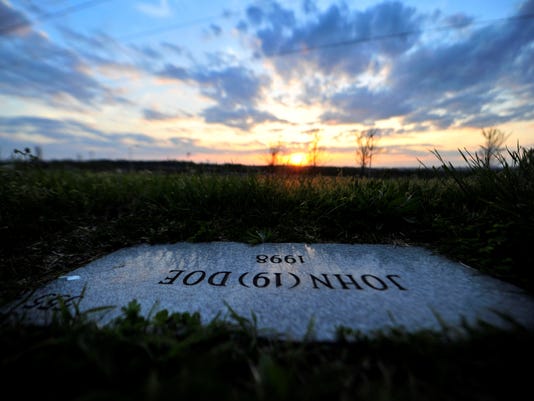
His gravestone simply read, "John (19) Doe."

He was the 19th unidentified man buried in the Bordeaux Cemetery. He lies in plot #555, a grave overlooking the Whites Creek Wastewater Treatment Plant. And around him lie 1,001 others who died penniless and, in some cases, unmourned.

They're just a few of those buried in Nashville's paupers' graves. And the city says the numbers have been growing.

Names and dates of most of the 10,000 buried in Nashville's paupers' graves in cemeteries throughout the city are most likely lost forever.

Among those who died penniless this year: a country music writer who kept Johnny Cash's number in his Rolodex, the mother of a disabled adult daughter who cannot care for herself and a man whose death was mourned only by the social workers who helped him at the end of his life.

"No telling how many stories are in those graves," said Sylvia Nolan, a lifelong Nashville resident.

One of them, she just found out in March, is her son. His story spans 15 years of heartache, loss and mystery — one in which the answers lay just 3 miles away from her home in an anonymous grave.

One where a police mistake in 1998 may have needlessly prolonged her pain.

He was a reserved boy who found release from a hard life in North Nashville in sports. He was a budding track star, nicknamed "Flagpole" because of his skinny frame, who wowed coaches at Pearl-Cohn High School with his speed. He was a young man whose mental illness may have led him to the end of his short, tragic life, in a burnt, rolled-up carpet on a dead-end street.

When his body was found, nobody knew who he was. He was just "John (19) Doe."

Today, thanks to DNA testing, we know his name was LeRyan Nicholson.

"I've been looking for him and I don't know. Honest to God, I didn't know. I just prayed. One night I just prayed, it was his birthday ... last year. And I said, 'Lord give me closure because I'm so tired of pain,' " Nolan said. "But I didn't want this kind of closure."

Mental illness takes over

Nolan struggled with being a young, single mother at the John Henry Hale public housing project. Money was tight. It wasn't the safest place in town.

As LeRyan got older, he became a fierce protector of his little sister, Ameera El, and his stepsister, Candace Williams. He was quiet but sweet.

In high school, he came out of his shell. There, he found sports.

"He was a great runner," said Billy Fellman, principal at The Academy at Hickory Hollow and a teacher and coach at Pearl-Cohn High School in the 1990s. "As a freshman, he won the city championship in the mile and half-mile, top five in the district and region as a freshman. He was just a natural talent."

And then, one day, during his sophomore year, he stopped going to school. He began to grapple with mental illness. In his late teens, he moved out of his mother's home and stayed with other relatives.

"It was like he was confused as he was talking. It didn't make a lot of sense. Jumping from one thing to another, not completing a thought," Williams said.

In what would have been his senior year, LeRyan entered Job Corps. It was a voluntary boot-camp-like training program in which he would earn his GED and get vocational training. But when he returned from it in late 1997, his mental demons were worse.

Nolan tried to get him help, taking him to Vanderbilt. He went on medication. He picked up smoking. His hair started to turn gray, even though he was only 18.

LeRyan continued bouncing from relative to relative until the spring of 1998. In April of that year, he left home and didn't come back.

Nolan filed a missing persons report on April 12, 1998, but police were not optimistic.

"They said, 'We'll look for him.' But by him being grown, they said to me … that he probably wanted to go out on his own," Nolan said.

She never heard from her son again.

'A mistake was made'

In May 1998, Metro Social Services got a new order. Invoice No. 2023 was for $235. The instructions on the invoice were straightforward.

"DROP OFF IN GRAVE 555."

A few weeks earlier, an unidentified man was found at the dead end of Mary Street, right next to the Mt. Bethel Baptist Church Christian Center. On April 13, 1998, a resident there reported finding the smoldering remains of someone.

The body had been rolled up in a carpet, dumped against a fence and set on fire. It was burned beyond recognition.

The man had been murdered.

Sgt. Gary Kemper, who now heads Metro's Cold Case Unit, said detectives worked feverishly. They developed persons of interest, even went out of state to conduct interviews.

But the case went cold in 2001. They never identified "John (19) Doe."

They never put two and two together when LeRyan Nicholson went missing April 12, 1998, only to have the burned body of a young man matching his description show up the very next day.

"They just didn't follow up correctly. A mistake was made," Kemper said. "When you look at it now, it's hard to understand why."

While police overlooked the possible connection between the missing man and the sudden appearance of an unidentified murder victim wrapped in a burned carpet, LeRyan's mother was looking everywhere for her son.

In 2012, on what would have been LeRyan's 33rd birthday, Williams stumbled upon a government website called NAMUS. The site contains nationwide databases for missing persons, unidentified remains and unclaimed bodies.

Williams searched around the time LeRyan went missing. She got an immediate hit, that of a young man whose burned remains were found at the end of Mary Street.

John Doe.

Williams called Metro police, who obtained Nolan's DNA and compared it to a sample taken in 1998 when John Doe's autopsy was performed. And then, one March day in 2013, Nolan got an answer after 15 years of waiting. It wasn't what she wanted to hear. But it was an answer.

"They told me they already buried my baby, my son, without me," Nolan said. "They said, 'We can put a name to him now.' "

Putting a name to him also breathes new life into the murder case, said Metro police detective Danny Satterfield, who is taking the lead.

"In working a homicide, there's nothing we can do for that victim," Satterfield said. "But what we can do for that family is find out what happened and who's responsible. And we don't give up."

A prayer for a son

Danny Hubble figures he has dug more than 500 graves in his career. As a team leader for some of Metro Parks' laborers, he began helping to bury Nashville's poorest when the city opened Bordeaux Cemetery in 1985.

The first person buried there also was a murder victim

On May 17, 1985, Gordon Charles Lambert was put to rest there. He had been found dead in an alley near 501 Fifth Ave. S.

Hubble dug his last grave in 2006, when the Bordeaux Cemetery filled up.

But this year, on May 30, Hubble returned to Bordeaux Cemetery to do something he had never done. A gravestone needed switching. A gravestone he probably put there, 15 years ago.

Nolan, along with Carol Wilson, head of Metro's Indigent Burial Program, and two parks employees walked through the freshly cut grass to plot #555: "John (19) Doe."

Quietly, Hubble and his colleagues pried the old gravestone from the ground. They hefted a brand-new stone — a simple square with a name and dates — out of its shipping container and lowered it with a small thud.

"LeRyan Nathaniel Nicholson, 1979 – 1998."

Tuesday 6 August 2013

http://www.usatoday.com/story/news/nation/2013/08/05/mom-finds-missing-son-in-paupers-grave/2618983/

continue reading

Survivors of 1945 sinking of the USS Indianapolis describe terrifying explosions and shark attacks during worst sea disaster in U.S. Naval history


More than a dozen men who survived the worst sea disaster in U.S. naval history - the World War II sinking of the USS Indianapolis - have gathered in the cruiser's namesake city for the final large-scale reunion of the famed ship's dwindling number of survivors.

Thirty-eight of the 317 men who survived the ship's July 1945 sinking and five days in the Pacific's shark-infested waters are still alive, but they're now in their late 80s and early 90s and many use wheelchairs.

Harold Bray, an 86-year-old from Benicia, Calif., said he and the 14 other survivors attending this year's reunion decided Friday that any future gatherings will be smaller and less frequent because so many of the survivors are in poor health.

'We decided to stay together until the last guy's standing, but the goal is to continue at a smaller scale,' said Bray, chairman of the USS Indianapolis Survivors Organization. 'Some of the guys are in wheelchairs now and travel is pretty tough for them.'

Bray said the survivors will nonetheless keep telling the story of the ship's sinking, their survival and the role they played in helping bring the war to a close.

The USS Indianapolis was halfway between Guam and the Philippines in shark-filled waters when a Japanese submarine sank it with torpedoes on July 30, 1945, in the war's closing weeks.

'Whoom. Up in the air I went,' Loel Dean Cox, who was just 19 when the ship was torpedo, told the BBC about the first explosion. 'There was water, debris, fire, everything just coming up and we were 81ft (25m) from the water line. It was a tremendous explosion. Then, about the time I got to my knees, another one hit. Whoom'

The second torpedo nearly tore the ship in half. Cox said fires raged below deck as the ship began listing onto its side.

'I turned and looked back. The ship was headed straight down. You could see the men jumping from the stern, and you could see the four propellers still turning.

'Twelve minutes. Can you imagine a ship 610ft long, that's two football fields in length, sinking in 12 minutes? It just rolled over and went under.'

Just days earlier, the Indianapolis had visited the island of Tinian in a secret mission to deliver the uranium-235 and other components for the atomic bomb later dropped on Hiroshima by the Enola Gay, which took off from the remote island.

The Indianapolis' mission was so secret she sailed alone, unescorted by ships better equipped to detect and fight Japanese submarines. The ship's commander had even requested an escort but was denied by Navy officials.

Additionally, the Navy failed to pass on information that Japanese submarines were still active in the area.

'I never saw a life raft. I finally heard some moans and groans and yelling and swam over and got with a group of 30 men and that's where I stayed,' Cox said.

'We figured that if we could just hold out for a couple of days they'd pick us up.'

The Indianapolis sent several SOS signals before it became submerged, but the message wasn't taken seriously. Nor did Navy officials take much notice when the ship failed to arrive at its destination on time.

An estimated 900 of the ship's servicemen survived the vessel's nighttime sinking, but before rescuers arrived five days later, drowning, delirium, dehydration and shark attacks had claimed all but 317 of the men.

The Indianapolis' death toll - 880 members out of a crew of 1,197 died - is the U.S. Navy's worst single at-sea loss of life. But reports of the tragedy were buried by the news of the Japanese surrender, and interest in the ship's story was not revived until the 1975 movie "Jaws" featured a character who told of the sinking and the survivors' days of agony.

The sharks came from miles away to feast on the carnage from the wreck. They then started eating those who had survived the explosions.

'We were sunk at midnight, I saw [a shark] the first morning after daylight. They were big. Some of them I swear were 15ft long,' Cox said.

'They were continually there, mostly feeding off the dead bodies. Thank goodness, there were lots of dead people floating in the area.

'We were losing three or four each night and day,' Cox said. 'You were constantly in fear because you'd see 'em all the time. Every few minutes you'd see their fins - a dozen to two dozen fins in the water.

'They would come up and bump you. I was bumped a few times - you never know when they are going to attack you.' As the sharks continued to attack, clouds of blood in the water grew and attracted more to the area, leading to even more attacks.

'In that clear water you could see the sharks circling. Then every now and then, like lightning, one would come straight up and take a sailor and take him straight down. One came up and took the sailor next to me. It was just somebody screaming, yelling or getting bit,' Cox said.

Edgar Harrell, an 89-year-old from Clarksville, Tenn., who is one of only two ex-Marines among the remaining survivors, said the horrors he witnessed - including sharks devouring men around him - became too much for him to bear after he returned home.

While many survivors kept what they saw and heard to themselves, Harrell said the lingering trauma he'd suffered left him unable to focus on the college courses he enrolled in immediately after the war.

'I learned early on that you had to get it out, you had to tell others what happened,' he said. 'Once I did it was a relief.'

Clarence Hershberger, an 87-year-old survivor from De Leon Springs, Fla., who uses a wheelchair, hadn't planned on attending the reunion, which ends Sunday. He'd been feeling poorly but decided Monday to make the trip to Indianapolis, where a black granite memorial honors the ship and its crew.

He said that when all of the survivors are gone he hopes the survivors' relatives and others keep reminding the public about the ship and its crew's sacrifice.

'Somebody's got to keep the story alive,' Hershberger said.

Among the roughly 250 friends and relatives of the survivors attending the reunion is Hunter Scott, whose seventh-grade history project as a 12-year-old from Pensacola, Fla., helped lead to a reassessment of the court-martial of the ship's commanding officer, Rear Admiral Charles B. McVay III.

McVay was court-martialed for not sailing a zigzag course to evade submarines, but his men believed he was made a scapegoat. In 2000, 32 years after McVay committed suicide, Congress passed an act clearing his name.

Scott is now a 28-year-old Navy helicopter pilot based in California and he said the men's incredible story of survival convinced him to enlist in the Navy.

'There's 38 of them left and I really wanted to see these guys and catch up. They're like grandfathers to me, it's like seeing family,' he said. "They're heroes."

Tuesday 6 August 2013

http://www.dailymail.co.uk/news/article-2384393/Survivors-1945-sinking-USS-Indianapolis-explosions-shark-attacks-worst-sea-disaster-U-S-naval-history.html

continue reading

Saptakoshi boat capsize: 3 dead, 20 missing


Around 20 passengers have gone missing after a boat carrying 90 people onboard capsized in the Saptakoshi River at Chatara of Sunsari district on Monday afternoon.

Three female bodies have been recovered, said APF Inspector Chakra Thapa, who is heading the rescue operation at the incident site.

One of the deceased has been identified as Parbati Khadka of Rampur Thoksila. "There were around 90 people onboard according to the passengers though we are not certain about the exact number. Seventy people have already come in contact," said Thapa.

The ill-fated boat was heading for Sombare Ghat of Udayapur district from Chatara.

Police have suspected that the boat might have overturned as the passengers scrambled to get off the boat while it was close to the shore.

Locals, security personnel of Nepal Police and Armed Police Force have been involved in the rescue of the missing passengers.

Meanwhile, a team led by Chief District Officer of Sunsari has reached the site.

Tuesday 6 August 2013

http://ekantipur.com/2013/08/05/headlines/Saptakoshi-boat-capsize-3-dead-20-missing/375942/

continue reading

Monday, 5 August 2013

Malaysia ends search for 33 Indonesians missing at sea


Malaysian rescuers said on Monday they would stop searching for 33 Indonesians missing at sea, more than four days after their boat sank on their way home to celebrate Eid al-Fitr, with seven confirmed dead.

The wooden boat was believed to be smuggling 44 people, including women and children, from Malaysia's southern state of Johor to Indonesia's Batam island. It sank in rough seas on July 25. Four men were rescued the following day.

Amran Daud, an official with the Malaysian Maritime Enforcement Agency (MMEA), said in a statement that search and rescue operations would stop at sunset on Monday as chances of finding survivors had become "increasingly thin".

Rescuers recovered the bodies of four more men on Monday despite rough seas and heavy rain hampering efforts.

Three other bodies -- two women and a man -- were found on Sunday, far away from the accident site as strong currents are believed to have scattered the corpses.

Amran said authorities decided to stop search efforts after "assessing various aspects, including monitoring by helicopters" without finding any clues of survivors.

"But MMEA will continue to have routine patrols in the area, and if there are new leads we will mobilise our members," he said, adding 130 rescuers had scoured an area of almost 3,000 square miles (7,800 square kilometres) since last Friday.

The boat, which authorities believe was "not seaworthy", capsized in high waves about 13 nautical miles (24 kilometres) off the coast.

The passengers are believed to have been illegal migrants who came to Malaysia to work but wanted to return to their country to celebrate Thursday's Eid al-Fitr, the end of the Muslim fasting month of Ramadan, without passing border controls.

One of the survivors found on Friday said he paid some 1,300 ringgit ($400) for what was to be his first trip home in 13 years.

A search and rescue coordinator told AFP that as many Indonesians sought to sneak back to their country and maritime officials had stepped up patrols, smugglers were choosing more dangerous disembarkation points along the coast.

"It's too dangerous to travel there for small vessels... The swell is big, the wind is strong, the weather unpredictable," he said, referring to the part of the coast from where Thursday's ill-fated boat left.

An estimated four million foreigners, mostly from poorer countries in the region such as Indonesia and Myanmar, work in Malaysia -- many illegally. They fill low-paying jobs shunned by locals on plantations, construction sites and in factories.

Migrant labour right activists have called on Malaysia to further step up patrols and charge boatmen and any official found to be taking bribes to turn a blind eye to the smuggling.

Monday 5 August 2013

http://www.channelnewsasia.com/news/asiapacific/malaysia-ends-search-for/766032.html

continue reading

‘It was an act of God’


The Rana Plaza victims were cheated out of their rightful dues by the BGMEA that worked out the compensation package by profiling the industrial accident as a natural disaster.

“The building collapse was beyond the owner’s control. It was an act of God,” said Atiqul Islam, president of Bangladesh Garment Manufacturers and Exporters Association (BGMEA).

The garment sector’s apex trade body employed Sections 12, 16 and 20 of Bangladesh Labour Law 2006 to formulate the compensation package under which the victims were paid much less than what they deserve.

Section 12 of the law stipulates that owners can shut down their factories anytime in case of events beyond their control. Such events include fire, malfunction, blackouts, epidemic and violence. Once it is established that an incident falls under Section 12, the factory owner has the right to lay off workers in line with Section 16.

Section 20 says the workers laid-off under Section 16 are entitled to 30 days’ gratuity for each year’s service.

“We paid the workers following this formula,” said Islam. He noted that the BGMEA had paid a month’s salary and overtime payments to every worker who survived the collapse.

The trade body has paid some 2,785 workers of the complex from the Tk 7 crore it pooled from its 2,500-odd members, who contributed Tk 25,000 each.

The families of the dead workers did not receive anything as they could not prove to be the nominees of the victims during the disbursement of salaries.

The relatives of the 291 missing workers, whose DNA profiling is yet to be completed, also didn’t get anything.

AKM Nasim, senior legal counsellor at the Bangladesh Centre for Worker Solidarity, a workers’ rights group, said the Rana Plaza victims are entitled to additional three months’ salaries under the termination benefit scheme.

“It is unfortunate that the BGMEA opted for another scheme that is inapplicable for the circumstances.”

He said the Rana Plaza collapse was not an “act of God” by any stretch of imagination. “There was no flood, cyclone, earthquake or heavy downpour.”

“How can it be an act of God when it was gross negligence on the part of the employers and the building owner that brought about the catastrophe?”

As an instance of their negligence, the lawyer mentioned that workers were forced to enter the building despite detection of big cracks in its pillars the previous day. “The BGMEA is now saying such things to avoid paying full compensation to the workers.”

Tanjib-ul-Alam, a Supreme Court lawyer, echoed Nasim’s words, and termed the trade body’s attitude very irresponsible.

“It was not an act of God at all. The heavy generators on the rooftops created strong vibrations — enough to make the building collapse.”

Monday 5 August 2013

http://www.thedailystar.net/beta2/news/it-was-an-act-of-god/

continue reading

How Kenyan hospitals abet the illicit body parts trade


Kenyan hospitals are reluctant to adopt technology to identify unclaimed bodies thereby giving room for illicit body parts business to thrive, industry sources say.

Adopting modern biometric system on patients when they are admitted to hospital would be helpful in the identification process.

A source at Kenyatta National Hospital says his supervisors have been frustrating efforts to adopt technology to boost identification process.

Unidentified group

“My bosses have been fighting the use of fingerprint technology which helps in identification. This has helped make it much easier to have more bodies placed in the unidentified group which are later marked for disposal through city mortuary,” said the source at KNH mortuary.

“Action on the bodies begins once a body is piled in the ready-for-disposal group. It’s like a licence to tamper with the remains,” he said.

KNH had not officially responded to our inquiries on the process they follow in reducing unidentified bodies, most of which become targets of the deadly trade.

“There is a recent case where someone wanted a tooth as an exhibit in a court case. This is simple, all you need is just pluck it from the bodies lined up for disposal and give it to him. He paid Sh5,000,” the attendant told The Standard.

KNH public wing was handling about 900 bodies at the time of this investigation. It has a capacity to hold 300 bodies.

Best practice also demands that before disposal, bodies should be wrapped in a special bag so that they can be retrieved in future.

But in Kenya, most are buried in mass graves and unless a DNA test is conducted, it is increasingly getting difficult to trace and retrieve bodies when need arises.

Funeral Services Association of Kenya (FUSAK) is now calling for adoption of fingerprinting and videotaping technology to help in documentation and reducing the number of unknown people.

There is also need for regulation on how new institutions offering medical studies get their cadavers for learning purposes.

Though most bodies are acquired free of charge, some institutions are trading the bodies.

“They fetch about Sh75,000. This is the price we were selling them to Kenyatta University when they began their medical training school. Though they are not supposed to be sold, there are other costs such as embalming and storage that make it necessary that someone pays for them,” said Mr Ezra Olack, the national chairman of FUSAK.

Keeping brains for medical students is a most common practice. This is done most of the time even without the consent of relatives.

“They are placed in paper bags. Sometimes even briefcases are used to smuggle them out,” he says.

Water that’s been used to wash the dead is also regarded as a hot cake.

Several beliefs

“There are several beliefs about water used to wash the dead ranging from boosting business prospects to snagging husbands. This is one of the most demanded things,” an attendant at City Mortuary said.

“There was a time when a lady wanted to get someone’s husband. So she came for the water. I don’t know most of the details but when the man asked to bathe, the lady is said to have mixed the water with the one collected here and the man went berserk,” he chuckles.

It is understood that the disciplined forces demand for blood of the dead, mostly when one has died in mysterious circumstances.

Monday 5 August 2013

http://www.standardmedia.co.ke/?articleID=2000090136&story_title=how-kenyan-hospitals-abet-the-illicit-body-parts-trade&pageNo=2

continue reading

Photos of missing persons will be displayed till Friday


The display of pictures of missing persons and unidentified dead bodies that was put up at the rural police headquarters at Adgaon from August 2, will now be extended till Friday.

The past three days, the photo gallery has seen a steady flow of relatives of missing persons from various parts of Nashik and adjoining districts. According to officials of the rural police, 304 people have visited the photo gallery, including 125 on Sunday. Most of the visitors were from Nashik city, rural Nashik, Jalgaon and Dhule.

Apart from two dead persons who were identified on August 2, two more were identified on Saturday. The police said they did not have the names of the persons found dead. Relatives who have been able to recognize the missing persons have gone to the respective police stations for further verifications.

For instance, relatives of a person gone missing from Wadner Khakodi near Malegaon and found dead in the jurisdiction of the Kotwali police station in Ahmednagar, have recognized the photo and have gone to the concerned police station for further verification. Similarly, another person gone missing from Gangapur police station and found dead in the jurisdiction of the Karhad police station has been identified.

Approximately 2,500 photos of missing persons and unidentified dead bodies have been put up by the police of Nashik rural, Nashik city, Amravati city, Solapur rural, Satara, Jalgaon, Buldhana, Sangli, Thane city, Latur, Navi Mumbai, Aurangabad rural, Dhule, Nandurbar, Thane rural Ahmednagar, Akola and Ratnagiri.

On the first day of the opening of the gallery, two bodies were identified. The police said the two bodies identified were that of Karbhari Gaikwad (82) of Dhanori, Kopargon, and Anna Manik Pagare (25) of Gaikwad Chowk, old Dhule city.

In view of the rising number of missing persons and dead bodies of unidentified persons, director general of police Sanjeev Dayal has given instructions to gather photos of all missing persons and unidentified dead bodies and display them at various police commissionrates and rural police stations.

Inspector R J Desai of the crime branch, Nashik rural, said that superintendent of police Pravin Padwal has directed to continue with the photo gallery for a few more days in view of the flow of visitors.

Relatives of missing persons have been appealed to attend the display as photos of such persons with the police from across the state have been put up.

Monday 5 August 2013

http://timesofindia.indiatimes.com/city/nashik/Photos-of-missing-persons-will-be-displayed-till-Friday/articleshow/21610755.cms

continue reading

Underwater CCTV cameras fail to give clues in Punjab bus mishap case


Closed circuit television (CCTV) cameras, installed in the Bhakra Main Line (BML) canal at the Khanauri head for identifying floating dead bodies, failed to capture images of the victims of the bus, which fell into the canal near Sirhind in the wee hours of July 31. The low intensity underwater CCTV cameras, installed in May 2012, could not provide footage of any of the bodies floating in the canal after the accident even as relatives of the victims waited for days for the remains of the departed.

Office-bearers of an NGO, Sahara Charitable Trust, which installed the CCTV cameras, have stressed on the need for installing powerful underwater cameras, post the bus mishap. "The cameras of low intensity failed to withstand the pressure of gushing waters. The purpose of installing these cameras was defeated," said Karamvir Chohan, a Sahara activist.

Floating bodies in BML reach Khanauri head and sometimes get entangled in the wire mesh. People from far off places come in search of missing persons. To help such persons, who come looking for their relatives presumed to have been washed away in the canal, Sahara has constructed a platform and a few rooms for them.

Sensing the urgency, Sangrur district administration has approached Sant Longowal Institute of Engineering and Technology (SLIET) to prepare a foolproof design for locating floating bodies in BML canal. They have also contacted the design centre of Bhakra Beas Management Board (BBMB) in this regard.

Sangrur deputy commissioner (DC) Kumar Rahul said, "Cameras, under and over water, were installed last year to locate floating bodies from a distance. But the underwater cameras failed to withstand pressure and broke down. We have now taken up matter with SLIET and BBMB to design and install five cameras at different locations in the canal."

He said cameras capable of locating bodies at the bottom of the canal were needed. "The principal secretary (irrigation) has assured us that there is no dearth of funds for installing the cameras," the DC said.

Monday 5 august 2013

http://timesofindia.indiatimes.com/city/chandigarh/Underwater-CCTV-cameras-fail-to-give-clues-in-Punjab-bus-mishap-case/articleshow/21611961.cms

continue reading

Punjab bus tragedy: 15 bodies recovered


A Punjab Roadways bus travelling from Delhi to Amritsar fell into the Bhakra canal in Punjab's Fatehgarh Sahib District around 2 am on July 31. Bodies of 15 people, so far have been recovered who were on board.

Body of bus conductor, Raman Kumar, resident to Batala has also been recovered.

Bus went two-and-a-half kilometres downstream leaving hardly any chances of survival of as many as 42 passengers.

Nine deceased have been identified, SHO Sirhind S S Virk said today.

At least 27 persons were feared drowned after a Punjab roadways bus on way from Delhi to Amritsar.

District administration is making all efforts to locate the bodies of the missing persons, Fatehgarh Sahib Deputy Commissioner Arun Sekhri said.

Most of dead bodies were recovered from Patiala and Sangrur districts and kept at the mortuary of Rajindra Hospital, Patiala, he said.

Amloh Naib Tehsildar Nirpal Singh Tiwana has been made nodal officer at Rajindra Hospital to update the family members of missing persons about any development, Sekhri said.

The Deputy Commissioner said help line numbers at district administrative complex, SSP office and Civil Hospital, Fatehgarh Sahib is providing regular information.

Monday 5 August 2013

http://www.punjabnewsline.com/punjab/punjab-bus-tragedy-15-bodies-recovered/84135

continue reading