Sunday, 23 June 2013

Montenegro: At least 16 killed, 30 injured when Romanian bus crashed In Moraca Canyon


At least 16 people got killed and 30 injured in a serious car crash that happened today around 5 p.m. on the highway Podgorica-Kolasin, when bus with Romanian license plates crashed in the canyon of river Morača, as reported by the TV “Vijesti”.

Previously it was reported that Bus was Ukrainian. Until 6:50 p.m. about 30 injured persons were pulled from the abyss. According to “Vijesti”, bus came out of the tunnel, broke the fence at the beginning of the bridge and stopped in a ravine about 30 to 40 meters from the road.

Police said the bus plunged from a bridge over the Moraca river during a rain storm.

The reporter of “Vijesti” at the scene reports that dead bodies can be seen on the slope. Special search and rescue teams are already at the scene.

Rescuers have made a cordon that descends through the undergrowth to pull out the injured.

Shortly before 7 p.m. helicopter was able to land in the nearby village Seoce. Police blocked one lane so the ambulance could reach the scene of the accident. The staff of the Clinical Center in Podgorica are on full alert.

“There were 46 people on board,” Interior Minister Rasko Konjevic said. Nine passengers have life-threatening injuries.

Director of Emergency Center in Podgorica Vladimir Dobričanin told TV Montenegro that 31 adults and one child were admitted to the hospital. A child has minor injuries, and other passengers are with severe injuries.

The accident occurred near the restaurant “Pocinak” and Moraca Monastery.

Sunday 23 June 2013

http://inserbia.info/news/2013/06/montenegro-at-least-20-killed-when-ukrainian-bus-crashed-in-moraca-canyon/

continue reading

Mexico pursuing vanished victims of its drug wars


Rosa González cannot shake the memory of the state investigator who was too afraid of reprisals to take a full report, the police officer who shrugged when the ransom demand came, the months of agonizing doubt and, most of all, the final words from her daughter before she disappeared.

“I am giving you a hug because I love you so much,” her mentally disabled daughter, Brizeida, 23, told Rosa hours before she was abducted with her 21-year-old cousin after a party more than two years ago.

In thousands upon thousands of cases, the story may well have ended there, adding to the vast number of Mexicans who have disappeared. Unlike those in other Latin American countries who were victims of repressive governments, many of Mexico’s disappeared are casualties of the organized-crime and drug violence that has convulsed this nation for years.

But here in Nuevo León State, prosecutors, detectives, human rights workers and families are poring over cases together and in several instances cracking them, overcoming the thick walls of mistrust between civilians and the authorities to do the basic police work that is so often missing in this country, leaving countless crimes unsolved and unpunished.

About 26,000 missing-person reports sit in the federal government’s database, everything from drug-related abductions to runaways, and the administration of President Enrique Peña Nieto, who took office in December, has promised to do more to find out what happened.

Often, that would require the authorities to investigate themselves. This month, the national human rights commission said it was looking into 2,443 cases in which the police or military, corrupted by criminal gangs, appeared to be the abductors.

But public pressure from victims’ families and international groups has been mounting, repeatedly condemning the widespread failure to investigate the scourge of disappearances. After a series of protests by mothers of victims at the federal attorney general’s office in Mexico City, it announced two weeks ago that a unit was being assembled to delve into the cases.

“We are not doing magic,” the attorney general, Jesús Murillo Karam, told reporters at the announcement. “We are going to get as far as you can. We are going to exhaust all the options and speak with absolute truth about the possibility of results.”

Advocates for the victims remain skeptical, saying the real work needs to be done at the state and local level, where the cases are first reported and most investigators and leads reside.

Here in Nuevo León, one of the states hardest hit by violence, they have praised the prosecutor’s office for working with a local human rights group and family members to review several dozen cases, sometimes performing investigations that were never done in the first place.

Another look at Ms. González’s case last year helped lead the police to a gang leader who was arrested in January. He confessed to abducting and killing the women, and directed the authorities to the remains of the cousin; further testing of bones at the site is under way to determine if any belong to Ms. González’s daughter. “Whatever God may want,” Ms. González said through tears, “whether my daughter is alive or dead, I am resigned to whatever may come.”

Since agreeing in June 2011 to reopen dozens of cases, out of thousands here in the past several years, the authorities and their civilian counterparts have met monthly to go over leads and any progress made on them. Fifty-two cases have been resolved, with some people found dead and others alive, including 12 this year who were discovered to be in the custody of the authorities, unknown to their families. About 40 people have been arrested on abduction or homicide charges, 16 of them police officers.

“Nuevo León is one of the only states where you see prosecutors actually doing the due diligence of conducting investigations, meeting with families, going to the crime scene, taking common-sense steps to advance the investigation,” said Nik Steinberg, an investigator with Human Rights Watch, which in February published a damning report on the disappeared. “To search for the missing and find the people responsible for taking them, in Mexico where normally investigators don’t do any of that, that is progress.”

Mexico has only a rough sense of how many people have disappeared amid a surge of violence over the past several years that has left tens of thousands dead in battles between drug gangs, organized-crime groups, the police and the military.

Sometimes people vanish en masse; a dozen young people, two of them sons of convicted drug dealers, were kidnapped from a Mexico City bar last month and have not been found.

The federal government’s huge database of missing-person reports was compiled by the previous government, and last month the new interior secretary said the list was being combed through, expressing confidence that many cases were not abductions or the result of foul play, but rather more mundane instances of people leaving home and moving to new places, including the United States.

Still, many others are cold cases, with little forensic evidence to go on, witnesses who refuse to testify and concerted efforts by criminal gangs to do away with the bodies.

Maximina Hernández has been looking for six years for her son, José Lara Hernández, a police officer from a Monterrey suburb who apparently was intercepted on his way home from work and abducted by men in a sport utility vehicle. A witness saw the whole episode but refuses to give details to investigators, out of fear or possible involvement in the crime, she said.

“I don’t want to go against anybody,” she said. “I just want to know where my son is.”

Eduardo Ayala, who helps coordinate the investigations at the Nuevo León prosecutor’s office, acknowledged the challenge of the cases but said the authorities were making headway, in part because the state had fired about two-thirds of its police forces in a mass cleanup of corruption begun in 2011. “There is much left to do, but we are moving ahead,” he said. “The police now go to every corner of the state to investigate where they did not before.”

He said the state, working with the United Nations and experts from other countries, is writing a protocol to standardize how such cases should be handled.

Much of the impetus has come from Consuelo Morales, a Catholic nun who directs a local human rights organization known as Cadhac.

“We have a checklist,” she said. “Did they take a DNA sample, did they get cellphone records, if there was a license plate number of the car that took the victim did they check that?” Ms. Morales said that in many cases, initially, the answers were often no.

Ms. González, after chasing rumors that her daughter had been spotted in several other cities, took her case to Ms. Morales last November, two years after the abduction. They met with prosecutors and tracked down the case file, filling in details left out before and cross-matching it with current investigations.

The police were building a separate case against Jaime Cabello Figueroa, 40, an organized-crime boss who operated in the town where the women were seized. When he was detained in January, the police said he confessed to or was implicated in several killings and disappearances, including the case of Ms. González’s daughter and the cousin.

Ms. González now wants to speak directly to him, so he can see her pain and offer more information on her daughter. She said she had paid a ransom, but then contact with the captors ceased. The police never followed up, making her wonder if some were involved.

“They told me if I walk into that jail and talk to him, the bad guys will have eyes on me and have me followed outside,” she said. “But if they are going to kill me, they are going to kill me. I am fighting for my daughter to be found, wherever she is.”

Sunday 23 June 2013

http://www.nytimes.com/2013/06/23/world/americas/mexico-pursuing-vanished-victims-of-its-drug-wars.html?pagewanted=all&_r=0

continue reading

Symbolic funerals for missing victims of Uttarakhand floods


Having lost all hopes of retrieving the bodies of near-and-dear ones who died in flash-floods in Uttarakhand, "symbolic funerals" are being conducted at many places in the state of Madhya Pradesh.

The relatives of BJP's Indore Division's General Secretary, Bhagwan Singh (45) conducted symbolic funerals for him, his wife Sugan Bai (40) and their close relative Roopsingh (70) by burning wheat flour effigies at Jhalaria village.

Singh, his wife and Roopsingh were on pilgrimage to Kedarnath. Their whereabouts in the aftermath of devastating floods and landslides in the northern state are not known.

Similar rites were conducted at Ujjain district's Hasampur village for Bhartiya Kisan Sangh Malwa Prant president Indersingh Solanki (60) and his wife Leelabai (55).

Solanki and his wife too were in Kedarnath region when the disaster struck and they are presumed to be dead.

At neighbouring Dewas district's Chandana village, symbolic funeral of 50-year-old Devkunwar Bai was conducted. Her death was confirmed, but the body was not received.

Sunday 23 June 2013

http://zeenews.india.com/news/nation/symbolic-funerals-for-missing-victims-of-uttarakhand-floods-in-mp_857189.html

continue reading

Saturday, 22 June 2013

Kedarnath turns into ghost town, bodies pile up


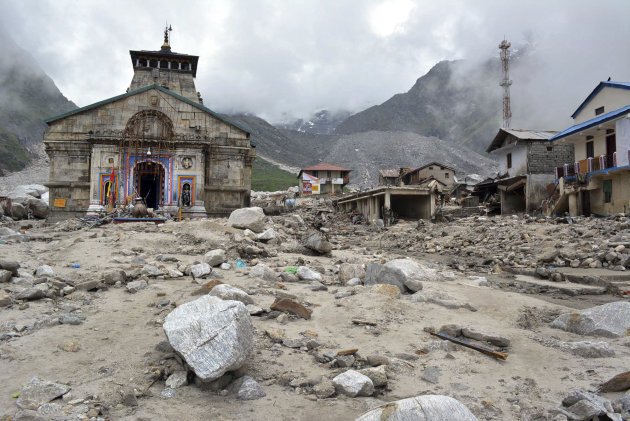
Hellish rains have turned Kedarnath into a ghost town. Though the outer structure of the temple seems intact, there are bodies piled up outside its gate.

According to reports, rain water gushed into the town from the summit behind the shrine carrying rocks and boulders, destroying everything on its path.

The most ironic part of the tragedy is despite the mobile phone towers remaining intact, there is no electricity due to which people were unable to contact their families as their phones ran out of charge.

IAF has already started rescue operation in the area.

Survivors all praise for Army

Having several brushes with death, survivors of the Himalayan tsunami which left a trail of destruction in Uttarakhand were all praise for Army, which they said has given them a second life.

Sukhvinder Singh, a Ludhiana native who was stuck for eight days on the way to Hemkund Sahib, said, "I was en route to Hemkund Sahib when the disaster struck. The situation was deteriorating with the passage of time...We were bit relieved when Army stepped in. They gave us food and water and helped us in every possible way. Had they not been here, we wouldn't have survived."

Recalling his horrific experiences during the past few days, Aman Bisht, who arranges treks to Hemkund Sahib every year, said, "The road links were shattered and down there we had no bridges left. And even if there was a road somewhere, it was broken. The Army has been very supportive."

Another survivor from Punjab, who was rescued from Joshi Math, said he was able to contact his family only with the help of army personnel.

One Sharan, who along with his family was rescued from Badrinath and brought to Chamouli relief camp yesterday, said, "The situation is pathetic. Had the army not been there, we would not have any chance of coming back ever.

157 of 671 Tamil Nadu pilgrims rescued, reach Chennai

Tamil Nadu government today said 157 of the total 671 pilgrims from the state, stranded in flood-ravaged Uttarakhand, have returned home and officials have established contact with over 380 persons still awaiting return.

Following chief minister Jayalalithaa's announcement about taking steps on a war-footing to rescue Tamil Nadu pilgrims stranded there, a team of high-level officials led by the state's Special Representative in Delhi are camping in Uttarakhand and coordinating rescue efforts with officials there, a state government release here said.

Of the 671 pilgrims, 157 of them have been rescued and reached Chennai, while 118 of them have been lodged at Tamil Nadu House in Delhi and they will be sent home by air.

Officials have established contact with 382 people even as efforts are on to rescue 14 others stranded in Gaurikund, it said, adding that one person is yet to be contacted.

Meanwhile, around 100 pilgrims reached Chennai from Delhi today by a government carrier.

No damage to Hemkund Sahib gurdwara: Trust

The Shri Hemkund Sahib Management Trust today said no damage has been caused to the Hemkund Sahib shrine by the rain fury in Uttarakhand and it is safe.

"The main gurdwara building is intact and no loss has been caused to the 'sanctum sanctorum' where the Birs (religious scriptures) is installed," Vice Chairman Narinderjit Singh Bindra said.

He told over phone that he had received information from SHSMT staff from Hemkund Sahib that on the intervening night of June 16 and 17, water level of the lake adjoining the shrine had increased as glacier from the uphill came down.

The staffers have erected embankments of sand bags in and around the gurdwara.

Bindra said the Punjab government and other organisations should coordinate with them before sending relief material and vehicles "so that we could inform them what type of help is required there."

Asked about the rescue operation at Hemkund Sahib and Gurdwara Govind Dham, he said that "all pilgrims would be evacuated by Sunday morning.

Helplines abuzz with frantic calls

Control rooms of various state governments set up here are abuzz with frantic phone calls as relatives of stranded tourists in flood-ravaged Uttarakhand are calling anxiously to find out their whereabouts.

While operations are underway on a war footing to rescue pilgrims stranded in various places, authorities at the control rooms are trying to console anxious victims and family members calling to know the whereabouts of their dear ones.

"We are receiving about 1,000 calls daily, mostly from family members back home who are trying to locate their dear ones," said an official at the control room set-up by the West Bengal Government.

An official of the control room operated by the Chhattisgarh government in Delhi said, "We are sorting out the data of the rescued persons that is provided to us by the Uttarakhand government and the family members are being informed."

Budhaditya Mukherjee, one of the rescued pilgrims from West Bengal, said the ordeal began last Wednesday when he was stuck at the Hanuman Choti on his way to Yamunotri, when incessant rains forced him and a group of pilgrims with him to turn back.

"We saw the hotel near ours crash into the Yamuna as the flood washed away the soil below it," he said.

"There was knee deep slush on the road, but our driver managed to turn around and after travelling till Kharati, we saw police officials trying to make a road using JCBs, as the highway washed off," he added.

He said that the locals and the rescue officials helped us in reaching one of the camps operated by the state government who rescued him and brought him to Delhi, while seniors in his group were provided facilities to travel back to Kolkata.

The rescued pilgrims said that the major problem was shortage of food, though various camps were trying their best to provide it.

"The food in the hotels located in the safer areas are being sold at double the price, while the camps are trying their best to provide food to stranded pilgrims," said Mukherjee, who stayed at a makeshift camp before being shifted to Delhi.

According to officials of the West Bengal control room, a family from Kolkata was rescued along with 200 others this afternoon from a gorge near Kedarnath by the Army.

"There are calls from people of the neighbouring states also, who might not be getting through the helplines set-up by their states, we are trying to help them also," said the official from the West Bengal control room.

"The biggest problem we are facing is that the pilgrims are moving out on their own, so it is difficult to pin-point their location and inform the rescuers," said a control room personnel of the Chhattisgarh government.

Saturday 22 June 2013

http://timesofindia.indiatimes.com/india/Uttarakhand-Kedarnath-turns-into-ghost-town-bodies-pile-up/articleshow/20716875.cms

continue reading

Senior Nicaraguan Air Force chiefs killed in helicopter crash


A number of senior members of the Nicaraguan air force have been killed in a helicopter crash that has claimed a total of 10 victims.

Air Force Chief of Staff Colonel Manuel Lopez and Counterintelligence head Colonel Chester Vargas were among those killed in the crash, which took place near the capital Managua on Thursday.

The Russian-made Mil Mi-17 helicopter came down near Lake Managua, west of the capital, at around 10:30 a.m. local time (1630 GMT) as it was on its way back from a military base in the northwest of the country.

An investigation is underway to determine the cause of the incident.

Soldiers in charge of searching the area have recovered a number of bodies from the lake, while strong winds are making the task more difficult.

According to some reports, those aboard the helicopter were coming back from a training session in the northwestern town of La Paz Centro.

The helicopter had sent a distress call moments before it went down.

Saturday 22 June 2013

http://www.presstv.ir/detail/2013/06/21/310197/nicaraguan-air-force-chiefs-die-in-crash/

continue reading

O'Loan appeals for fresh Disappeared information


Nuala O'Loan yesterday urged anyone with even the smallest amount of information to come forward so the families of seven people 'disappeared' by republican paramilitaries can bury their remains.

The former police ombudsman was speaking at the launch of The Disappeared of Northern Ireland's Troubles, a book which tells the personal stories of families of those whose loved ones were abducted, murdered and secretly buried.

The bodies of 10 of the victims have so far been recovered. The Independent Commission for the Location of Victims Remains is still searching for seven people murdered and secretly buried in unmarked graves.

Earlier this week actor Liam Neeson added his voice to the campaign to have the bodies returned to their loved ones saying they were living in a "cruel and inhumane limbo".

Many of the families were gathered at the Lyric Theatre in Belfast yesterday for the launch of the book, produced by the Wave Trauma Centre.

"This is something that should never have happened and should never be allowed to happen again," Mrs O'Loan said.

"While the rest of us want so much from life, the families just want one thing, they want to bring their loved ones home.

"Information passed to the commission is confidential, the families are never told where or who it came from, there will be no police visit, no prosecution.

"The law is there to protect those who come forward and I would appeal to them help bring these boys home to their families."

John McClory from west Belfast went missing in 1978. His sister Eileen said the book provides a permanent record for future generations.

His remains were eventually discovered along with those of Brian McKinney at Colgagh, Inniskeen, Co Monaghan on June 30 1999.

An inquest heard he had been shot in the back of the head but also his skull had been smashed with a heavy object.

"John was only a child - he was 18 and had just started his first job at the site of Mary Peters track," she said.

"He went out to go to work one day and just never came back.

"I will never forget our mother at John's funeral. As we walked together she said to us, 'Hold your head up high, we have nothing to be ashamed of'.

"She was a proud woman. She died nine months later.

"My brother was just a child. He never got to be the person he could have been, never even had a girlfriend.

"I'd loved to have seen him all grown up married with a child of his own but he never got that chance.

Saturday 22 June 2013

http://www.irishnews.com/news/o-loan-appeals-for-fresh-disappeared-information-1266172

continue reading

Himalayan Flood:Google app to trace missing people


Google has launched a whole new app “Person Finder” to find missing people in flood affected areas of Uttarakhand in Northern India. The Himalayan flood, lately called the ‘Himalayan Tsunami’ took a heavy toll of life as many people are still missing, while 550 dead bodies have been found in flood affected areas. Constant downpour made things worse and rescue teams are facing severe obstacles. Army helicoptors are not enough to trace missing villagers or travelers. So, Google, the ultimate search engine comes to the rescue to help find missing flood victims. This app will trace people in flood affected areas of Northern India.

The real number of missing people is still under conjecture, as at least 1500 people have been rescued by the army; but 70,000 pilgrims were amassed there and many are still missing. Google desires to trace the missing people by their new app “Google Person Finder”.

“Google Person Finder” is a web application that allows individuals to post and search for the status of relatives or friends affected by a disaster, Google said in a blog post. Google is also trying to include it on social networking sites as more and more people are commenting on the lethal situation on their accounts. The Himalayan flood ravaged Northern India making its residents and pilgrims suffer the incredible force of the flooding. The big stones along with the water caused devastating casualties.

The tool can help trace the missing people in flood-affected regions of Uttarakhand and is available in Hindi and English, it added. All data entered into Google ‘Person Finder‘ is available to the public and searchable by anyone to trace missing persons. The program also lets press agencies, non-governmental agencies and others contribute to the database and receive updates by using the Person Finder APP based on the PFIF open standard.

“Since last week, the state of Uttarakhand in India has been grappling with severe floods. Given that most of these areas in the state are highly inaccessible with intermittent communication, Google Crisis team bring you the Person Finder,” the blog post by Jayanth Mysore, Google APAC Senior Product Manager, said.

The monsoon fury, accompanied with downpour and landslides still kept 50,00 people stranded and the missing people reaching an unbelievable numer. The army is hopeful that giving the people its utmost support, will be aided with the help of Google. Many helplines are opene to take care of pilgrims. Now they just need to know the technique for finding missing people. The devastated people can now hope against hope of finding their loved ones.

People are still being rescued from remote hamlets of Rudraprayag, Chamoli and nook-est corners of Uttarkashi. So, in spite of the destruction, people are still hopeful of finding their relatives or lost family members. So, it’s Google’s noble course to assist in finding the missing ones. Though some still doubt its usefulness, Google developers are eager to trace missing people using this whole new app from remote villages of Uttarakhand. They are eager to combat the Himalayan flood in their own way.

So, the Himalayan flood may strangle the country but it could not snatch the will power of its people. Army men are doing their best to find and rescue trapped people. And now, Google joins hands with new application to trace missing individuals by its “Person Finder” data.

Saturday 22 June 2013

http://guardianlv.com/2013/06/himalayan-floodgoogle-app-to-trace-missing-people/

continue reading

India monsoon floods kill at least 560; thousands missing


Nearly 600 people have been killed in the Uttarakhand flood devastation, chief minister Vijay Bahuguna has said, while ActionAid warned of thousands of possible deaths.

Four days after a cloudburst almost destroyed Kedarnath, home to one of India's most revered shrines, Bahuguna told CNN-IBN news channel that 556 bodies had been found even as the military and security forces rescued a large number of those stranded in the hills.

The government has so far admitted to only about 200 deaths.

"(A total of) 556 bodies have been recovered and there are reports more could be buried under the debris," the chief minister said. "This kind of disaster has never happened in the Himalayan history."

He said it would "take a long time to rebuild Uttarakhand" and that no pilgrimage to Kedarnath would be possible for at least the next two years.

Debabrat Patra, ActionAid India's regional manager for Uttar Pradesh and Uttarakhand, said the situation in the hill state was "catastrophic".

"Our partners in the region have reported that nearly 5,000 people are still missing in Kedarnath, presumed dead," he said, in a grim forecast of what could turn out to be one of India's worst natural disasters.

Uttarakhand saw over 60 hours of continuous and heavy rains coupled with few incidents of cloudbursts at various locations June 14 to 17, which led to the flooding of the state's main rivers: Alaknanda and Bhagirathi.

According to officials and Vishwa Hindu Parishad (VHP) activists, the largescale flooding had destroyed innumerable hamlets and villages and led to the destruction of major areas such as Kedarnath and Ram Bada.

Vinod Kumar Sharma, who reached Dehradun Friday after being stranded with his family for four days minus food, told IANS there were 15,000 people -- locals and pilgrims besides hundreds of mules — in Kedarnath alone when the calamity took place.

"Barring some, there is no trace of the people and animals," Sharma said. "As of today no one can give a precise figure of the dead and missing. It is impossible."

Chief minister Bahuguna said about 30,000 people had been evacuated till now from the hills. "It is very tragic that so many people have died ... It will take another 15 days to complete evacuation."

In New Delhi, Cabinet secretary Ajit Kumar Seth put the number of those evacuated at about 50,000.

Bahuguna said the rescue operation involving the military, paramilitary forces and civilians was taking time because roads had been badly damaged.

ActionAid said nearly 75,000 pilgrims were still stranded. Both ActionAid and the cabinet secretary warned of fresh rains in the hill state from Monday. This would further hinder the rescue operation.

Chandragupta Vikram, the VHP's Dehradun president, told IANS that human life was obliterated in Kedarnath "within just 15 minutes".

"There was a huge explosion," Vikram said. "It happened behind the Kedarnath shrine. It turned out to be a cloudburst. Suddenly the place was overwhelmed by water.

"With the water came huge boulders and tonnes of mud. It took just 15 minutes for the destruction at Kedarnath."

A disaster management official said although 45 helicopters were engaged in rescuing people, re-fuelling was causing concern as they have to fly to Dehradun for fuelling.

"There are enough choppers. That is not the problem. The real issue is making fuel available for them, that is something that we are looking into carefully," M Shashidhar Reddy, vice-chairman of the National Disaster Management Authority (NDMA), told IANS.

He said no one anticipated devastation on such a huge scale.

Home minister Sushilkumar Shinde said some 50,000 people were still stranded in Uttarakhand and many could be buried in the debris across the hills.

Lt Gen Anil Chait of the army's central command said his men would do their best to rescue everyone.

"No more people will die there. We will rescue all those who are stranded. We will trudge every trail, every footpath and bring home anybody who is trapped," he told the media.

Saturday 22 June 2013

http://timesofindia.indiatimes.com/india/556-bodies-found-in-Uttarakhand-govt-warns-of-fresh-rain/articleshow/20705472.cms

continue reading

Dead in the water


It’s been all of five years since the sinking of the MV Princess of the Stars and, like other disasters involving Philippine vessels, there is yet no closure.

The 23,824-ton ship left Manila at 8 a.m. on June 21, 2008, on its way to Cebu City, and sank off the coast of Sibuyan island in Romblon at noon, after being buffeted by waves whipped up by Typhoon “Frank.”

Witnesses said the waves were as tall as mountains.

It would later be established that the vessel owned by Sulpicio Lines Inc. and skippered by Capt. Florencio Marimon had set sail despite the bad weather after getting clearance from the Philippine Coast Guard. Some 860 people were on board.

In the flurry of activity that followed, initial rescue operations yielded only 52 survivors.

Divers of the Philippine and US Navies circled the wreck, knocked repeatedly on the hull, and heard nothing. Soon after, the operational focus shifted to retrieval as corpses were found floating in the surrounding waters. Divers who managed to get into parts of the ship glimpsed luggage and bodies floating in the shell, but could not reach them. The dimensions of the tragedy became clear: Most of the missing were likely trapped inside the Princess of the Stars when it sank.

The magnitude of loss was horrific; among the dead were more than 20 children. Alexander de la Cruz lost his 8-year-old daughter, Angeline, who had just come back from the United States. Her last words to him were haunting: “I love you, Papa.” Other stories of loss were no less sorrowful. Jimmy Relativo was on board with his pregnant girlfriend, Roselyn Ligan, and they were on their way to inform her father of their nuptial plans. “I was thrown overboard and got separated from her,” Relativo said. “When I glanced back to the ship, she was gone.”

Over 300 bodies would be found, leaving more than 400 still missing. For many of those who lost loved ones in the sinking and have yet to find remains to bury or mourn over, the interminable wait drags on.

Early this month, Estella Jeli traveled to Romblon with officers and staff of the Public Attorney’s Office in the undimmed hope of finding the remains of her siblings, Jonil and Jackie, 17 and 7, respectively, when the Princess of the Stars went down. “We don’t mind [the long wait],” Jeli said. “We will not stop looking for them. All we want is to give them a decent burial.”

For years the hull of the vessel jutted out of the sea off Sibuyan—a grim reminder of what had transpired there. In 2011 the hull was finally hauled away, but half of the ship remains underwater, filled with secrets.

Salvage divers have since gone down to recover what they could and surfaced bearing fragments of lives—a gold wedding ring, passports, seaman’s documents, a school ID, bank passbooks. “These only strengthen our hope of recovering the hundreds of bodies still down there,” said PAO chief Persida Acosta. The salvaging company has said it would take three to five years to open each cabin, a dangerous undertaking by itself.

Sulpicio Lines is no stranger to maritime disaster.

In December 1987 its MV Doña Paz collided with the oil tanker MT Vector, killing 4,000 people.

The incident remains on record as the worst maritime disaster in peacetime. Three other Sulpicio ships have also gone down.

For the sinking of the Princess of the Stars, multimillion-peso law suits were filed, the Department of Justice supported the filing of charges of reckless imprudence resulting in homicide against Sulpicio vice president Edgar Go and the ship’s captain Marimon, who remains missing to this day.

But, to the outrage of the grieving families, the Court of Appeals has cleared Go of the charges. In February 2010 Sulpicio Lines Inc. ceased to exist; unthinkably, the company changed its name to Philippine Span Asia Carrier Corp. An official said the move was a way of starting over.

The company has moved on, but the grieving families have no such luxury. Their loss remains ever open—a wound that does not heal.

Five years after the fact, the wreck of the brightly named Princess of the Stars continues to remind Filipinos of the dangers they face during the length of the typhoon season, of the exceedingly slow grinding of the wheels of justice, of the closure lost at sea. Saturday 22 June 2013 http://opinion.inquirer.net/55133/dead-in-the-water

continue reading

Ten dead, 20 missing as migrant boat sinks off Gabon


The boat had left Nigeria and was within 15 minutes of arriving in Gabon’s capital Libreville when it went down late on Tuesday night. Gabonese authorities rescued 23 survivors and the search continued into Friday.

“Last night we had six bodies and since this morning we have found four more, which makes a total of 10 recovered bodies. The immigrants drowned,” said a member of the nautical brigade of Gabon’s national police, who asked not to be named.

Police said the survivors – from Benin, Nigeria and Burkina Faso – claimed to have each paid the boat’s crew up to 500,000 CFA francs ($1,000) to take them to Gabon, where they hoped to find work.

Local newspapers reported that the human traffickers attempted to extort more money from the immigrants and had begun throwing those who could not pay overboard.

Gabonese authorities said they were investigating the cause of the sinking.

Oil-rich Gabon’s relatively high wages for manual laborers have made the tiny central African nation a popular destination for regional migrants.

But entrance requirements are strict, pushing many to enter the country illegally, often using the dangerous sea route from Africa’s most populous country, Nigeria.

At least 45 people died when a wooden boat carrying 166 migrants bound for Gabon capsized off Nigeria in March.

Some 35 people taking the same route died after their boat sank off Cameroon in 2008.

Saturday 22 June 2013

http://www.channelstv.com/home/2013/06/22/ten-dead-20-missing-as-boat-sinks-off-gabon/

continue reading

Thursday, 20 June 2013

Mardan blast victims laid to rest as death toll hits 34


The victims of the Shergarh suicide blast were laid to rest in their respective areas as the death toll reached 34 on Wednesday.

Investigation Office Mumtaz Bacha said that 30 persons were killed while 96 sustained injuries in the suicide blast at the funeral prayer.

However, the locals said that the death toll was higher because some of the families had not shifted bodies of their relatives to hospitals.

Thursday 20 June 2013

http://www.thenews.com.pk/Todays-News-2-184796-Mardan-blast-victims-laid-to-rest-as-death-toll-hits-34

continue reading

At least 30 dead, 9 missing in Peru bus crash


At least 30 people died and nine are missing after a bus plunged into a river in Peru's central jungle province of Chanchamayo, local police said Wednesday.

Fifteen people are known to have been injured in the crash.

Highway Police chief Col. Rodorico Cubas told RPP radio that so far 30 bodies had been recovered and 15 people were being treated at local hospitals, adding that nine people remain unaccounted for.

"We're still waiting to recover nine bodies or injured people," Cubas said, adding that the injured had been transported to hospitals in communities closest to the accident site.

The police chief said that the bus went off the roadway for unknown reasons before entering a tunnel and ended up plunging into the Tarma River, some 370 kilometers (229 miles) from Lima.

Witnesses to the crash told RPP that the bus went down a 50-meter (163-foot) slope into the river and that the weather conditions at the scene had been making it difficult for emergency crews to attend to the injured and recover the bodies.

Peru's Sutran land transportation and shipping authority said that the vehicle had all the relevant permits and obligatory insurance.

The head of the Chanchamayo Health Network, Hernan Condori Machado, said that his hospital received one dead body and 10 injured people after the accident.

The injured are being treated at the hospital in La Merced, the health center in San Ramon and the Social Security Hospital in Chanchamayo.

Authorities at the morgue in La Merced said that 26 bodies had been received there, but they did not provide the identities of any of the dead.

Bus accidents - some of which result in dozens of dead and injured - are relatively commonplace in Peru's interior, where the geography, the poor state of roadways and vehicles, as well as driver imprudence or error can all be contributing factors.

Thursday 20 June 2013

http://www.globalpost.com/dispatch/news/agencia-efe/130619/at-least-30-dead-9-missing-peru-bus-crash

continue reading

Inquest to start into asylum boat sinking


An inquest into the presumed deaths of more than 100 passengers on board an asylum seeker boat that sank north of Christmas Island last year will begin next week.

West Australian coroner Alastair Hope will preside over the inquiry into the sinking of the boat known as SIEV 357, which was carrying 212 people when it sank about 204 kilometres north-west of Christmas Island on June 21, 2012.

Seventeen bodies were taken to Christmas Island, 85 people were reported missing and presumed dead, and 110 were rescued. The passengers were from Afghanistan, Pakistan and Iran.

The WA coroner does not have powers to investigate the missing people but does have jurisdiction for the 17 whose bodies were recovered, and will hold an inquest into how they died.

Two of the bodies have not been identified and one of them may never be identified, a directions hearing previously heard.

The listing comes as findings were finally revealed from an inquest into the SIEV 69, which sank on its way from India to Christmas Island in 2009.

The inquest, which was complete some six months ago, focused on Tharmeswaran Thambiaiya, a 29-year-old Sri Lankan whose body was the only one recovered from 13 who died in the incident.

In his findings, Mr Hope said language barriers and bad phone lines meant distress calls had delayed possible help for hours.

When a Taiwanese fishing vessel, the FV Kuang Win, did reach the floundering ship, it prompted two asylum seekers to swim from their stricken vessel - only to be turned away and made to swim back in dangerous conditions.

The Taiwanese boat then left the area to continue fishing, despite frantic radio messages for them to stay - an act that Mr Hope described as "callous and irresponsible".

"The recorded comments made by someone on the FV Kuang Win ... showed a remarkable disregard for the suffering and deaths of those on board SIEV 69," Mr Hope said.

Thursday 20 June 2013

http://www.smh.com.au/wa-news/inquest-to-start-into-asylum-boat-sinking-20130620-2ol1s.html

continue reading

102 bodies identified in Bin Jawad mass grave


The Missing People and Martyrs Ministry announced that the remains of 102 bodies in a mass grave in Bin Jawad, near Sirte have been identified.

At a press conference held today, the Head of Laboratories and Investigations Department at the Ministry, Adel Aboud, said that the mass grave had contained 156 corpses, and the department has received 184 DNA samples from families who thought that their missing ones were among them.

Sixty-five percent of the corpses has been identified, Aboud added, remained unknown bodies because none of the 184 DNA samples matched.

On March 2012, some families had identified their missing sons by their photos, clothes, and IDs under supervision of Forensic Department and Public Prosecution Aboud said.

According to the Director of Technical Department for Missing Persons Search, Dr.Essam Zuraiq, there are still 2,516 people listed as missing in Libya.

Thursday 20 June 2013

http://www.libyaherald.com/2013/06/19/bodies-identified/

continue reading

Uttarakhand monsoon: evacuations in Kedarnath town, thousands still missing


Rescue and relief operations were intensified on a massive scale on Thursday in flood-ravaged Uttarakhand as multiple agencies evacuated the worst-affected Kedarnath town and other areas even as the death toll is feared to be in several hundreds.

About 50,000 people were still said to be stranded in various parts of the state that was hit by cloudburst and floods in the upper reaches that left several hundreds of homes, rest houses and buildings in ruins and thousands of people missing.

The official death toll still stood at 150 but Chief Minister Vijay Bahuguna said the casualties could run into several hundreds which will be known only when areas become accessible and water recedes.

The state government’s disaster mitigation and management centre had in the morning said that the causalities could run into thousands with about 90 dharamshalas (resthouses for pilgrims) swept away in the flash floods.

In the wake of poor connectivity and communication, relatives of several pilgrims who came from outside the state were struggling to find the whereabouts of their dear ones.

The upper reaches of the state lay mute witness to the death and devastation caused by nature’s fury due to Saturday’s cloudburst and landslides and a complete estimate of which was still not available.

Uttarakhand Principal Secretary (Home) Om Prakash told reporters here that 1,000 people have been evacuated from different places. There are still around 200 people in and around Kedarnath valley and tomorrow their evacuation will be done.

ITBP chief Ajay Chadha, whose 1,000 men are involved in relief work in Uttarakhand, told reporters in Delhi that the worst affected Kedarnath temple area has been evacuated of people and there could still be about 400-500 people in the upper reaches.

He said Army will launch operations on Friday to bring these people down. The Rambada area around the famous Kedarnath temple was still in slush and debris and there could bodies submerged in it, he said.

Mr. Chadha also said they were not in a position to give the complete death toll in the disaster unless bodies are recovered. There could be a lot of people who could have been washed away but in such situations eyewitness accounts could sometimes be exaggerated, Mr. Chadha said.

Twentytwo helicopters have been deployed to rescue and evacuate over 22,000 stranded people to safer locations through hundreds of sorties. Food, medicines and other essentials were also carried to the needy by the defence forces.

The ITBP DG, who is also in-charge of the National Disaster Response Force (NDRF), said 17 bodies were recovered by the troops of the specialised force from the Kedarnath area. The state government has been informed.

Gaurikund, the base camp for those going to Kedarnath temple, also witnessed rescue of 250 people today by small helicopters.

Thursday 20 June 2013

http://www.thehindu.com/news/national/other-states/thousands-feared-dead-in-uttarakhand-rescue-efforts-intensified/article4833175.ece?homepage=true

continue reading

Tuesday, 18 June 2013

DNA testing of Rana Plaza collapse victims uncertain


The fate of DNA test to know the identities of dead bodies of Rana Plaza victims hangs in the balance as the apparel apex body and the government are allegedly trying to shift the responsibility of bearing the cost for the purpose onto each other, sources said.

According to an estimate, around Tk 5.0 million is required for carrying out the DNA (Deoxyribonucleic Acid) test for some 100 dead bodies that were recovered from rubbles of the multi-storied building at Savar. The building-collapse left at least 1,130 people killed and about 1,800 others injured.

Both the sides are still in a process of exchanging letters and documents and pushing each other for bearing the cost of the DNA test even nearly two months after the tragedy.

As a result, the families of the victims are still in the dark about whether they would either be able to know the identity of their near ones or get compensation money.

Sources said uncertainty over funding will further delay the DNA profiling process and the payment of compensation to the victims' families as well.

On May 27, the National Forensic DNA Profiling Laboratory (NFDPL) of the Dhaka Medical College, in a letter to the Deputy Commissioner of Dhaka, sought the funds for DNA testing while the next day the former wrote to the ministry of labour and employment (MoLE) in this regard.

On June 12, the MoLE wrote another letter to the Bangladesh Garment Manufacturers and Exporters Association (BGMEA), urging it to provide the money.

The letter issued by the MoLE said each sampling needs Tk 5,000 and approximately 1,000 samples need to be tested.

"An amount of Tk 5.0 million will be needed for DNA profiling of 1,000 samples," the letter said.

"We have requested the BGMEA to arrange the money for DNA testing as it did the same in case of Tazreen fire victims," Labour Secretary Mikail Shipar told the FE recently.

But the BGMEA sources said a buyer contributed the money worth Tk 0.5 million for DNA testing of unidentified dead bodies of the 53 Tazreen fire victims, not the association.

BGMEA vice president Md Shahidullah Azim said the association will request the concerned authority to provide the money from the PMO fund.

When asked why the association is trying to collect the money from the PMO fund, the BGMEA leader said it is because of a co-ordinated effort to see that none is deprived.

"The PMO has all the documents and it is doing all the necessary works related to compensation and other things," he added.

Sources said the Tazreen incident involved less money while the magnitude of the Savar disaster is huge.

But none including the government, the BGMEA and the buyer groups is coming forward to take the responsibility in this regard as it needs much more money compared to that of Tazreen, they added.

Thirty seven garment workers out of 47, burnt beyond recognition in the Tazreen fire on November 24 last year, have been identified through DNA profiling.

Nazma Akhter, a labour activist said both the government and the BGMEA should stop shifting of responsibility to each other.

"The workers died not because of their faults. Both the garment owners and a section of dishonest officials in government bodies are responsible for the collapse of the building," she said. Both the BGMEA and the government have to take the responsibility in this regard for the speedy identification of those dead workers, she said.

She also called for speedy efforts to give compensation to the families of the victims.

Of the Rana Plaza collapse victims, 291 unidentified bodies out of 318 were buried at Jurain graveyard and samples of hair, teeth and nail were collected for the DNA testing by the NFDPL.

The remaining 27 bodies were handed over to relatives as per their claim while 10 bodies were again handed over to the concerned authority after finding the claimed ones alive. The process of collecting samples of those 10 bodies is going on, according to the NFDPL.

About 544 blood samples of family members and relatives of 291 dead bodies have been collected until June 16 and every day the NFDPL is collecting samples from the relatives.

The NFDPL sources said the result of DNA testing might take six months while the blood sampling takes less time.

Tuesday 18 June 2013

http://www.thefinancialexpress-bd.com/index.php?ref=MjBfMDZfMTlfMTNfMV8yXzE3MzU0OQ==

continue reading

11 die as vehicle falls into gorge in Himachal Pradesh


Eleven people, including nine women and a child, were killed on Tuesday when their vehicle skidded off the road and fell into a 500-foot-deep gorge near this Himachal Pradesh picturesque resort, police said.

The victims were travelling in a commercial multi-utility vehicle from Patlikuhl when the accident occurred at Nathan village near Naggar, some 15 km from Manali, investigating officer Neel Chand Sharma told IANS.

Eleven bodies have been recovered from the wreckage of the vehicle, while six injured people have been hospitalised, he said.

Most of the victims, who were locals, died on the spot. The cause of the accident is yet to be ascertained, he added.

Eyewitnesses said bad condition of the road due to recent heavy rains may have caused the accident.

Governor Urmila Singh and Chief Minister Virbhadra Singh have expressed grief over the accident.

This was the second major accident in the state in less than a fortnight.

Nineteen people, including eight women, were killed and 13 injured when a private bus carrying them skidded off a road and fell into a 500-foot gorge in Sirmaur district on June 7.

Tuesday 18 June 2013

http://www.ndtv.com/article/cities/11-die-as-vehicle-falls-into-gorge-in-himachal-pradesh-381207

continue reading

India monsoon floods toll rises to 64 people


At least 64 people are dead and tens of thousands have been left stranded after early monsoon rains caused flooding and landslides in India.

The rains are at least twice as heavy as usual in north-west and central India, with the Himalayan state of Uttarakhand the worst hit.

The Indian Air Force has scrambled a dozen helicopters to reinforce a military-backed rescue mission in Uttarakhand, often referred to as the "Land of the Gods" because of its many Hindu religious sites.

Local government officials in the state capital Dehradun say they are overwhelmed by the scale of the disaster.

"So far, we have found 54 bodies and 17 others are still missing," top disaster management official Piush Rautela told AFP.

"The situation is really very bad out there. More than 600 buildings have toppled or been swept away and there are 75,000 people including pilgrims stranded at various places."

Among the dead in Uttarakhand state are four members of the same family, who died when their home was hit by a landslide as they slept.

The rains have washed away bridges, roads, houses and multi-storey buildings in the state.

Rising water levels in some towns have also swept away cars, earthmoving equipment and even a parked helicopter.

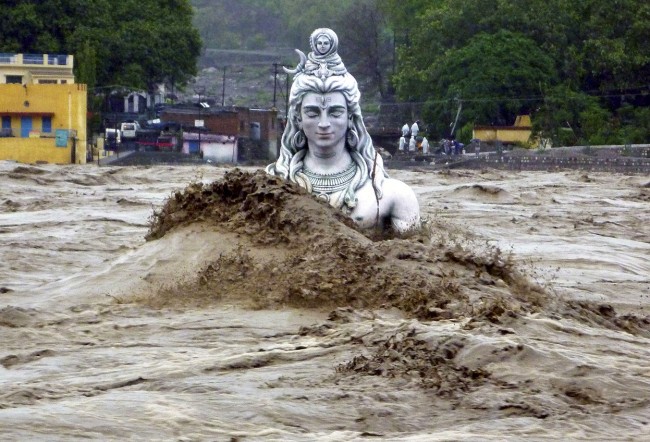
A giant statue of Lord Shiva was submerged up to its head in the tourist hub of Rishikesh.

Roads in many areas have been destroyed, leaving hundreds of pilgrims stranded on their way to visit shrines in remote areas.

Authorities have cancelled pilgrimage trips, fearing further rains and landslides in the state.

"Right now our priority is to save as many lives as possible and the scale of destruction will be assessed later," Mr Rautela said.

Tuesday 18 June 2013

http://www.abc.net.au/news/2013-06-18/at-least-60-killed-in-india-monsoon-floods/4763808

continue reading

More than 1,200 migrants reach Italy by boat, drownings reported


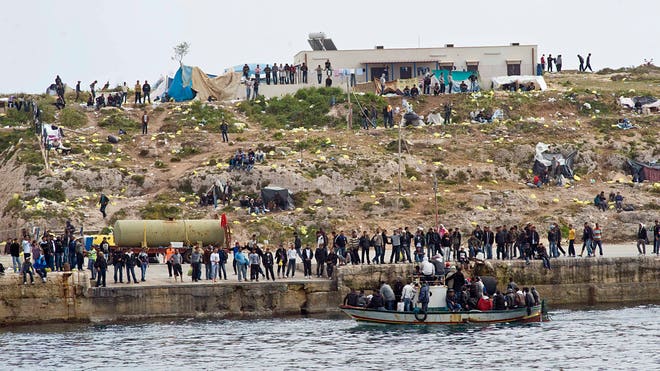
More than 1,200 migrants reached Italy over the weekend after attempting the perilous sea passage from Africa in flimsy vessels, the Italian coast guard said on Monday.

The coast guard said it had rescued most of the migrants at sea after intercepting nearly 20 boats and was still searching for others but it could not confirm reports that up to 10 people had died during the attempted crossing.

This year's first wave of summer heat has brought with it relatively calm waters, prompting impoverished immigrants desperately seeking work in the European Union to set off in rubber rafts and wooden boats. Many do not survive the passage.

Italian media reported that 95 immigrants were saved from a large raft. The survivors told of as many as 10 who had died after a Tunisian fishing boat cut loose the tuna cages it was dragging and that several immigrants were clinging onto.

"We do not have a confirmation of this," a coast guard spokeswoman said. "These are rumors from people we rescued but we found no bodies."

Italy's Foreign Ministry said it had not heard of the incident, which reportedly took place in international waters.

In 2008, a picture of 27 Somali immigrants clinging to the tuna nets of an Italian fishing boat came to symbolize a tragic summer in which many boats sank in choppy waters during the crossover, drowning unknown numbers.

Thousands of immigrants seek the southern shores of Italy every summer, when the waters in the Strait of Sicily become calm enough for small boats to make the crossing, usually from Libya or Tunisia.

They come seeking work in the EU and many do not remain in Italy. Those who do, or who are taken into Italian custody, can be sent home.

Tuesday 18 June 2013

http://www.reuters.com/article/2013/06/17/us-italy-migrants-idUSBRE95G0EZ20130617

continue reading

3 bodies recovered from sea after a Malaysia-bound trawler capsized in the Bay near Teknaf


Police recovered three bodies, including one woman and two children, were recovered around 10am Monday from Kochubunia area under Teknaf Upazila after an illegally Malaysia-bound trawler capsized in the Bay near Teknaf in Cox’s Bazar on Sunday morning.

One of the deceased was identified as Abdur Rahman, 50, the driver of the trawler.

The trawler sank with 30 passengers, including women and children, on board. 22 of them managed to swim ashore while others went missing, locals said.

One more person is still missing since the trawler capsized early on Sunday.

Teknaf BGB 42 Battalion commander Lt Col Jahid Hasan said all of them are Rohingyas, he said.

A human trafficking gang was sending those people to Malaysia, Teknaf police said, adding that police arrested three members of the gang in this connection.

Mohammad Farhad, officer-in-charge of Teknaf Police Station, confirmed the incident.

Tuesday 18 June 2013

http://www.thedailystar.net/beta2/news/six-bodies-found-in-bay/

continue reading