Tuesday, 21 May 2013

10 killed as canoe capsizes in Congo River

Ten people died after a canoe capsized Monday in River Congo, in the DR Congo's southwestern Bas-Congo Province, the regional administrator told the media.

The administrator, Mr Germain Kapula, said that the canoe was transporting 17 people from Madimba to Maselele, to take part in a wedding ceremony.

He said that besides the 10 bodies retrieved, there were three survivors including a baby.

Mr Kapula added that rescue efforts were underway to try and find the four missing bodies.

Canoes are the main means of transport in Bas-Congo Province, but almost all do not undergo any security checks, thus making them unreliable.

Tuesday 21 May 2013

http://www.africareview.com/News/Ten-killed-in-southwest-DRC-boat-accident/-/979180/1858890/-/y9nlcmz/-/index.html

continue reading

Arizona desert: Identifying unidentified migrants


In the Pima County Medical Examiner’s Office here — repository of the nation’s largest collection of missing-person reports for immigrants who have vanished while crossing the United States-Mexico border — 774 sets of remains awaited identification in mid-May, stored in musty body bags coated in dust.

For the family of Andrés Valenzuela Cota, the remains represent a chance to turn the page on a sad chapter of family history. Mr. Cota was 45 when he disappeared on July 15, 2011, after calling a niece in Los Angeles and asking her to send $100 to a Western Union office in Cananea, Mexico, a staging point for smugglers bringing migrants through Arizona.

As Congress debates the most sweeping changes to the country’s immigration system in decades, the remains stored here are also a nagging reminder of the complicated variables of the border-security equation. The number of migrant apprehensions declined precipitously in recent years, one of the strongest indicators that fewer people have tried to cross the border illegally. But the number of migrant deaths has remained high.

“Less people are coming across,” said Bruce Anderson, the chief forensic anthropologist at the medical examiner’s office, “but a greater fraction of them are dying.”

There were 463 deaths in the past fiscal year, which ended Sept. 30 — the equivalent of about five migrants dying every four days, according to an analysis by the Washington Office on Latin America, a human rights group. In the time federal statistics have been compiled, only 2005 had more deaths, and in that year, there were more than three times as many apprehensions.

As security at the border has tightened, pushing migrants to seek more remote and dangerous routes, the largest number of the deaths last year occurred along the punishing stretch of desert that spans the southernmost tip of the Border Patrol’s Tucson sector, the busiest along the border.

The only riskier stretch is the Rio Grande Valley sector in Texas, where, from Oct. 1 to April 30, law enforcement officers or ranchers found the bodies of 77 immigrants, or more than half the number of bodies recovered there in all of the past fiscal year: 150.

In that sector, the most deaths have occurred in Brooks County, small and struggling at 944 square miles, where the average household income is $25,000. The number of migrant remains recovered is on pace to double that of last year, a record for the county, at 129, said a county judge, Raul Ramirez. Most of the dead are believed to be from Central America, Judge Ramirez said.

In Tucson, the medical examiner’s office, which handles autopsies for the border counties in the Tucson sector — three of Arizona’s four border counties — received 49 sets of remains from Jan. 1 to May 9, Dr. Anderson said. Each was assigned a number, then photographed, cataloged, weighed and measured. Clothes, tattered by the elements and wildlife, were placed in plastic bags.

For years, identification of the remains was elusive because there were so few clues. Few immigrants from impoverished rural communities could be traced with dental records. ID cards, found in pockets and backpacks, were unreliable because many were forgeries, bought by Central Americans to elude the authorities in Mexico, which the migrants had to cross illegally before reaching the United States.

Assembling the remains, like linking a mandible that arrived in the office early this spring to a set of remains that was missing one, is like solving a grisly puzzle. It requires manually searching the color-coded paper case files lining the walls in Dr. Anderson’s office: one shelf for cases from the late 1990s, when there were few, and the rest for the more than 2,100 deaths since 2001.

“The cause and manner of death is easy: it’s either there or it’s undetermined,” said Dr. Gregory L. Hess, chief medical examiner in Pima County. “It’s what goes on in trying to identify the person that can take a long time.”

Early this month, the office unveiled a computerized mapping database bearing the records of 1,826 migrants who died in the desert, listing GPS coordinates for where they were found and, if known, their sex, age and cause of death. It gives the public the first comprehensive glimpse of the complexity of the problem. Combined, the hundreds of red dots that represent people who died of exposure to the intense desert heat and cold, by far the most common among the causes of death, look like an unshapely bruise.

The project began five years ago, through a partnership with Humane Borders, a nonprofit group that had already been plotting the deaths. An anonymous donor provided $175,000 to develop the database.

The lone mandible had been plucked from deep inside the desert near Three Points, west of Tucson. Angela Soler, a forensic anthropologist at the office, searched the database for bodies found in the same area. There were 52 in a six-mile radius.

Dr. Soler started by focusing on those that were closest. One was the complete body of a man found and identified in 2008. Another was found in 2012, an unidentified Hispanic man between 20 and 35, the most common demographic among dead migrants. She pulled the file and found that the body was missing a mandible. (DNA tests are under way to determine whether they are a match.)

“It took hours to do what might have taken months,” she said.

In March, the Pima County Medical Examiner’s Office asked the family of Mr. Cota, the migrant who disappeared in 2011, for his dental records to see if he was among the unidentified dead stored there. There were seven possible matches among the bodies found in Cochise County, for which the office handles autopsies and where Mr. Cota is believed to have entered the country, based on what he told his relatives on his last phone call.

A brother-in-law, who asked not to be identified because he feared the drug cartels that control the human-smuggling business, said the family had filed missing-person reports on both sides of the border; visited local hospitals, police stations and prisons in Arizona; and retraced Mr. Cota’s route, posting fliers bearing his name and photograph in communities along the way.

“Every door we’re knocking is closed,” the brother-in-law said. “Nothing opens.”

Mr. Cota lived for 20 years in California, most of it illegally, overstaying a visa. When his mother became deathly ill, he left for Los Mochis, in the Mexican state of Sinaloa, to say goodbye.

In September 2010, he tried to cross back through San Diego using a fake passport, but he was caught and imprisoned for 45 days. After his release, he tried twice to sneak across the border, without success. A relative eventually told him to go to a Mexican border city, Nogales, where a smuggler could bring him into Arizona “for a discounted rate,” his brother-in-law said.

On his last call, Mr. Cota said he was about to start his journey, but had to leave his cellphone behind. He promised to call again in six days.

On May 9, Robin C. Reineke, a cultural anthropologist at the medical examiner’s office, searched the database for a match, going through the cases from Cochise County one by one. Mr. Cota was not among them. The search goes on.

Tuesday 21 May 2013

http://www.nytimes.com/2013/05/21/us/immigrant-death-rate-rises-on-illegal-crossings.html?pagewanted=all&_r=0

continue reading

Tsunami: Naming the Dead (video)


In Thailand around 5,000 people are thought to have been killed when the giant wave struck on Boxing Day 2004. The number of foreigners reported missing in the disaster prompted the Thai government to enlist the help of forensic experts from across the globe. They set up a specialist disaster victim identification centre, where identification work is still continuing months after the disaster hit.

For those who lost relatives in the disaster the identification and repatriation of a body is essential in allowing them to start rebuilding their lives.

The tsunami swept through an area of Thailand hundreds of miles across, scattering debris and the dead alike. Simply recovering all the bodies was a mammoth task for a police force already stretched to the limit rescuing injured survivors. With so many bodies being recovered, temples were being used as temporary mortuaries. With no electricity or running water they were hardly ideal. But there was simply nowhere else to take them.

Photographs of the bodies had been posted outside these temples. Friends and relatives desperately trawled them for any signs. But for the forensic experts, the idea that relatives could be relying on visual identification was worrying. Mistakes can always be made when distressed relatives try to confirm the identity of their loved ones by sight. In Thailand the conditions made identification even more difficult.

The heat of the Thai sun accelerated the decomposition process, leading to discolouration of the skin and causing the outer layers of skin to begin peeling off. The heat also meant bacteria grew at an extreme rate. Bacteria give off gases which can cause bodies to swell, further hampering visual identification.

The situation was eventually brought under control. A new mortuary was constructed with refrigerated containers for storage of the bodies and purpose-built examination rooms. Only now could the full forensic procedures begin.

Tuesday 21 May 2013

http://www.youtube.com/watch?v=ZQypaDUIz4A

continue reading

At least five illegal migrants drown off the coast of northern Morocco


At least five illegal migrants drowned off the coast of northern Morocco as they were attempting to reach Spain, the Moroccan authorities said late on Monday.

The rescue services were alerted to the presence of a "polyester boat with a group of illegal immigrants on board that was in difficulty off the Marchica lagoon, in Nador province," local authorities were quoted as saying by the official MAP news agency.

They arrived at the scene and recovered five bodies, all male, while managing to save seven of the passengers, including four women, who were taken to hospital in Nador for treatment.

Nador lies next to Melilla, a Spanish enclave bordering Morocco on the Mediterranean coast, one of the European Union's only two land borders with Africa, along with the other Spanish territory of Ceuta to the west.

Thousands of African immigrants attempt to reach Spain every year from northern Morocco, either via Melilla or by crossing the Strait of Gibraltar, often in overcrowded and makeshift boats.

In the early hours of Monday, more than 30 sub-Saharan migrants stormed the six-metre (20-foot) border fence at Melilla, five of whom managed to penetrate the territory, according to the Spanish authorities.

Last month, 11 African migrants, including three women and two children, died when their boat carrying 34 people capsized in Moroccan waters as it was heading for Spain.

Tuesday 21 May 2013

http://www.thelocal.es/20130521/five-drown-in-spain-morocco-migration-crossing#.UZtqpXfdfTA

continue reading

Three years on, Mangalore air crash victims a faded memory


It was one of India's worst aviation disasters. But on its third anniversary, not even the memorial to the 158 persons killed in the Mangalore plane crash of May 22, 2010, remains. The IX 812 Dubai—Mangalore flight overshot the runway and crashed into a valley at Bajpe.

The Ground Zero has been overrun by dense foliage. The steel frame of the memorial, which was vandalized five months after it was erected, is gone. The Tannir Bavi burial site, where 12 unidentified victims were laid to rest, is unmarked and can't be easily located. The Air India Express disaster and its victims seem to have been forgotten.

But the tragedy remains etched in the memory of the victims' relatives and those who were closely associated with the victims. One such person is Robert Pinto of Valencia. Yuganthar Rana and Mohammed Ali, Air India crew killed in the crash, were his tenants. His communication with various authorities regarding a memorial at the burial site has been stonewalled.

The last communication regarding a memorial at the mass burial site was by the Airports Authority of India (AAI) to the Dakshina Kannada administration in September 2011, asking for information on the ownership of the site.

"If the allotted site belongs to AAI, the office will take up the matter with the corporate headquarters,'' stated then airport director MR Vasudeva.

Air India sources said: "We cannot go and build a memorial either at Kenjaru Ground Zero as it's private land or at Tannir Bavi because it belongs to the port. The district administration and port authorities have to take a call on this. The port had given the land on the explicit understanding that graves had to be left unmarked and no memorial could be built. There was tremendous time pressure on us at that time to bury the bodies, and the civil administration helped us with that site."

Pinto said the main objection of Air India officials to building a memorial at Tannir Bavi is that a high-tension power line runs over the site. "Weren't they aware of this earlier? Why did they have to chose such a site where the victims' memory cannot be perpetuated," he asks.

Families of the victims are still waiting for the ‘right compensation’ in at least two courts.

“We had questioned the disparity in awarding the compensation of women and children who died in the crash as some of them were given lower than the recommendation of the Montreal convention. The recommendation of the convention does not discriminate women and children when awarding compensation. We had challenged it in the Kerala High Court, but Air India got it set aside through the divisional bench, which forced the Mangalore Air crash Victim’s Families Association (MACVFA) to file a revision petition in the Supreme Court,” said Mohammad Beary, president of the Association.

In the second set of compensation cases, a few families thought that they were entitled for a higher compensation but they did not get what they expected. “18 families questioned the lower compensation in the Mangalore court. The Kerala HC, in its order, had observed that those who were dissatisfied with the compensation, can approach the court. Air India had closed the issue after awarding compensation. In some cases, Air India had given compensations up to Rs8 crore, while in some other cases, the compensation was lower than the recommended sum in the Montreal convention. Hence, the case has been reopened as per the observation of Kerala HC,” Beary added.

However, some of the families of the victims have been quietly leading their lives without bothering much about the legal issues over the compensation. The association membership and attendance of members in the meetings has been dwindling and this time (on May 22) the association may not even hold a meeting of the families as many of them are totally out of contact. “We will have a quiet meeting at the homes of one of the victims in Mangalore and another in Kasargod,” he said.

Rana and Ali were Pinto's tenants for more than two years. Ali, who had got a job in Saudi Arabia, was serving the last 15 days of his contract with Air India.

The 51-year-old Mayankutty K.P. is one of the seven lucky survivors from the Air India Express plane crash in Mangalore three years ago, on May 23, 2010.

Like many of the next-of-kin of the dead victims of the Mangalore plane crash, he has had to engage in a protracted legal battle to claim due compensation for the crash.

Mayankutty, who now works for a real estate company in Umm al Quwain, at half the salary that he used to earn before the tragedy, said he has filed a case in the Kochi High Court with another plane crash survivor, Krishnan Koolikunnu, for claiming due compensation in tune with international civil aviation rules.

He said Krishnan, his co-passenger on that fateful flight, is now unemployed and is searching for a job in Qatar, where he is on a visit visa.

“I am thankful to God that I could escape from the blazing plane and was saved by a fraction of a minute. I was sitting on seat 22F by the window,” he reminisces.

Mayankutty hails from Kannur, Kerala. Most of the air crash victims hailed from Mangalore, Malabar region of Kerala. He travelled to the Mangalore airport, which is almost the same distance as Calicut Airport from his home town.

“All of a sudden there were sudden violent jolts to the plane, and it felt as if the aircraft had hit something. I could see from the window that the front of the plane was on fire, and all I could hear was screaming and crying of my co-passengers, especially children seeking help,” Mayankutty recalls the dreaded event.

“They were shouting in different languages,” he says. “Their cries for help still wake me up at night and I think this will haunt me till my death,” he says.

“I was shocked and did not know what to do because the lights had gone off inside the aircraft. Suddenly, I could see light from a small crack in the middle of the aircraft. After unfastening my seat belt, I rushed to the area and with full force jumped through the small gap,” he says.

“There were many families on the aircraft because it was summer vacation time, and what I could hear clearly were the cries of children calling their parents for help. I thought my death was near.”

Of the 166 people on board the Air India Express Flight IX-812 (Dubai to Mangalore) that crashed in Mangalore on the morning of May 23, 2010, the only survivors were Ummer Farooq Mohammed (26), Joel Pratap D’Souza (24), Mayankutty, Krishnan Koolikkunnu, Pradeep G.K., Mohammed Usman of Hampanakatta and Puttur Ismail Abdulla (35).

After jumping from the aircraft, Mayankutty, then 48 years old, landed in a forest and sustained head injuries, but he ran for life through the thick forest and reached a railway track.

“After I jumped from the plane, the entire plane was on fire and all the people still inside died. I still don’t know how I escaped. As the third anniversary of the tragedy approaches, I keep praying for those who died in the plane crash.”

Mayankutty was rushed to a nearby hospital, and he had only his passport and mobile phone with him. The checked-in luggage, handbag and everything in the plane went up in flames. “It was a very special journey for me because we were planning to celebrate our 25th wedding anniversary. I had bought a special gold ring and necklace as gift for my wife Fathu. I kept the necklace and ring in the suitcase because I wanted to show her immediately after reaching home,” he said. “Even though I lost the gold ornaments, I have presented myself alive as her wedding silver jubilee gift.”

He claims that while some relatives of the crash victims got compensation of up to Rs7,500,000 (approximately Dh515,000), others are still fighting for due compensation. Mayankutty says he received Rs500,000 (approximately Dh34,000).

“I was discharged after undergoing treatment at the Mangalore hospital for four days. I spent five months in India, and lost my job as the Public Relations Officer of Emirates Shipping Company. After six months, I came back in search of a new job and joined a real estate company in Umm al Quwain at half the salary I used to get earlier,” he says.

Krishnan, another passenger who survived the crash, was working as a foreman in a construction company here. “He too lost his job and has been jobless for some time now. He is still searching for a decent job in Doha (Qatar), where he is on visit visa. Many people, ministers, Indian businessmen and companies promised jobs for plane crash survivors and the relatives of the victims. As far as I know, nobody got any job. These were all false promises,” Mayankutty says.

A case has been filed in the Kochi High Court jointly by Mayankutty and Krishnan. After working for a decade in the UAE and earlier in Saudi Arabia, Mayankutty feels that he has to continue working till his elder son, Munavar Mayankutty, currently an MBA student in India, get a decent job.

“I did not want to come back to the Gulf. I did not get a decent compensation from the insurance company. We are still fighting the case in the court,” he said, adding that he is in touch with Krishnan.

Mayankutty, like other survivors, is optimistic that he will get due compensation “On the occasion of the third anniversary of the Mangalore plane crash, I pray for all the victims, including 19 children. I am fortunate to have survived the tragedy,” he says.

“It is unfortunate that we have to fight a case in the court to get compensation. Of course, Rs500,000 is not the right amount of compensation. Some people got Rs7.5 million,” he said. Tuesday 21 May 2013

http://timesofindia.indiatimes.com/city/mangalore/Three-years-on-Mangalore-air-crash-victims-a-faded-memory/articleshow/20166055.cms

http://www.dnaindia.com/bangalore/1835409/report-after-3-yrs-they-still-await-rightful-compensations

http://www.emirates247.com/news/their-cries-for-help-still-haunt-me-mangalore-aie-crash-survivor-2013-05-12-1.506046

continue reading

Death toll rises to 21 in Indonesian mine collapse


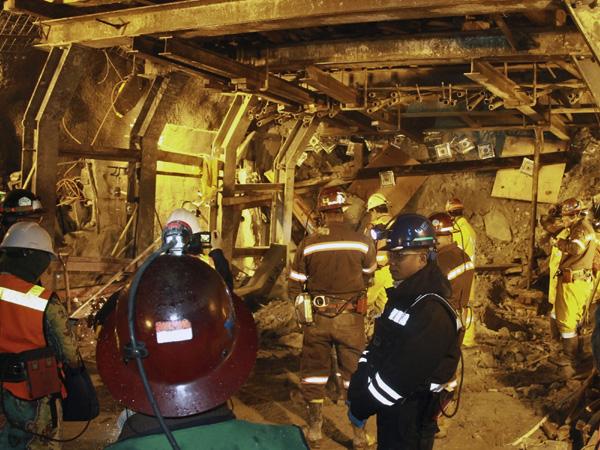
The death toll from a mine tunnel collapse in eastern Indonesia has risen to 21, the US operator said Tuesday, as rescuers searched for another seven workers now also presumed dead.

The accident happened on May 14 at Freeport-McMoRan's Grasberg, one of the world's biggest gold and copper mines in mountainous, remote Papua province, and 10 workers were rescued alive soon afterwards.

Search teams pulled another four bodies out of the rubble overnight, taking the confirmed toll to 21, according to a statement from Freeport's Indonesian subsidiary.

Rescue efforts have been slow due to the unstable situation at the tunnel, with rocks continuing to fall from the roof.

Freeport-McMoRan president and chief executive Richard Adkerson arrived on site at the weekend to visit the injured workers and the families of those still buried, and hundreds have held prayer ceremonies in Papua and Jakarta.

Indonesian President Susilo Bambang Yudhoyono said on Monday that the government would "carry out a thorough investigation into the cause of the disaster, the technological factors, and whether there was any negligence".

Operations have been halted at the mine since last week as a mark of respect for those affected by the accident.

Workers demanding safer conditions were blocking a road leading to the facility for a seventh day, using heavy machinery, such as dump trucks, and planks of wood.

The tunnel was part of an underground training facility, not one of the mining areas. The 38 people inside at the time of the accident were direct employees and contract workers undergoing safety training.

Tuesday 21 May 2013

http://www.google.com/hostednews/afp/article/ALeqM5hvvADOuvWzreVawmek9Z1SpN76MQ?docId=CNG.f7588c985108f110244d4316d0bb495e.321

continue reading

Oklahoma tornado: Children trapped in wreckage and at least 91 dead after massive storm rips through suburbs


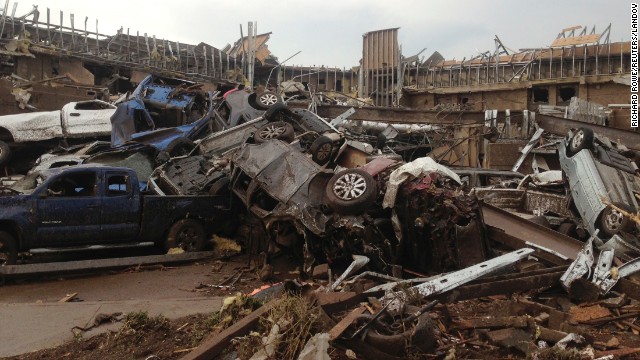
A tornado that may be remembered as among the largest and most destructive in American history roared through a heavily populated suburb of Oklahoma City, cutting a swathe as much as two miles wide and flattening homes, shops, hospitals and, perhaps most devastatingly, schools that had no time to evacuate.

Officials say the death toll could top 91 with 20 children among those killed - many from a single elementary school that had been ripped apart by the twister, which was said to have sustained circulating winds of 200mph or more. Debris from the twister dropped like rain in Tulsa, a hundred miles away.

Officials made clear that the numbers wounded and killed was likely to rise quickly. At least 120 patients had been rushed to area hospitals of whom 10 had critical injuries, officials said. Also among those admitted for treatment were more than 50 children, they added.

President Barack Obama declared a major disaster and ordered federal aid to supplement state and local recovery efforts.

The tornado, which for now is measured as an EF4 but might yet be upgraded to a top-level EF5, ploughed through the community of Moore just to the south of Oklahoma City in the early hours of the afternoon. That in itself was unusual. It is more usual for twisters to strike in the evening hours, when schools, at least, have emptied out. The first warnings were issued at about 3.40 pm local time. The twister began its deadly march about eight minutes later.

News network choppers watched as the giant funnel cloud marched with unbearable slowness as commentators speculated where it was landing, block by block. Suddenly, as the nation watched, the funnel ‘roped out’, the moment when the twister dies. It was then only a few minutes before same helicopters turned into the area to see what kind of damage had been done. Very quickly, the terrifying of the carnage became clear.

As ever with tornadoes, the distance between destroyed and untouched could have been measured in feet. But structures that fell on the wrong side of the dividing line were often shredded. As emergency crews rushed in a first, desperate focus of activity was the Plaza Towers Elementary School, where 75 young students and staff were taking shelter when the twister hit. Almost nothing of the school building was left standing when it had passed.

Last night, rescue crews were swarming across the heaps of rubbish that the school had been reduced to, moving gingerly, listening for signs of life below and trying not to dislodge debris that might hurt anyone buried beneath. There was concern that as many as 25 pupils were still not accounted for as darkness fell. But in those few hours of daylight that rescuers had left several of the children were successfully pulled from the rubble alive.

“About two minutes after I got there, the school started coming apart,” said James Rushing, who had rushed to the school moments before the tornado hit. His 5-year-old foster son was enrolled in class there. Children who survived spoke of how teachers had lied down on top of them to offer some modicum of protection.

In May of 1999, the same Oklahoma City suburb was hit by a tornado so powerful it produced the fastest winds ever recorded on the surface of the Earth – just over 300 MPH. It is meanwhile exactly two years since a single tornado killed 158 people in Joplin, Missouri, just the other side of the Oklahoma state line.

Governor Mary Fallin said: “We need lots of prayers tonight”.

“The storm developed very, very rapidly, and we believe there were children in the (Plaza Towers) school. We don't know if any of them were taken out, but we do know there were some children in the school itself.”

Tuesday 21 May 2013

http://www.independent.co.uk/news/world/americas/oklahoma-tornado-children-trapped-in-wreckage-and-at-least-91-dead-after-massive-storm-rips-through-suburbs-8624560.html

continue reading

Monday, 20 May 2013

At least 12 dead in blast at China explosives plant


At least 12 people died and 11 were missing Monday after a blast destroyed an explosives workshop in the eastern Chinese province of Shandong, state media said.

The explosion scattered rubble up to 200 metres away, killing at least a dozen people at the factory owned by the Poly Explosives (Jinan) Company in Shandong's Caofan township, the semi-official China News Service reported.

Thirty-four people were in the workshop and eight others were working nearby at the time of the explosion Monday morning, the agency quoted officials as saying.

By late afternoon, rescuers had recovered 12 bodies and sent 19 injured people to hospital, including two in serious condition, the agency said.

Firefighters were still searching for 11 missing people, it said.

State television showed footage of the rescuers using a crane to sift through the remains of the flattened concrete and brick building.

Poly Explosives specialises in explosives for civilian use. Its plant in Caofan covered an area of 66 hectares and produced more than 30,000 tons of explosives annually, reports said.

Monday 20 May 2013

http://www.enca.com/world/factory-blast-kills-5

continue reading

Exhumation of Tawergha mass grave completed


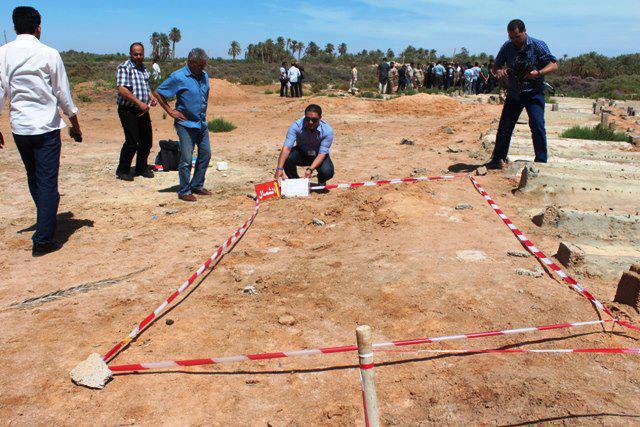
Searchers have uncovered a total of 11 bodies in the mass grave in Tawergha, at the end of the first stage of the delicate operation.

The final stages of the exhumation was watched by the Minister of Martyrs and Missing People, Ali Gadour during a visit to the site today.

It had been suspected originally that there were 25 corpses in the three graves discovered in the Subkha area of the town. The authorities had been directed to the site by information given by a former officer in Qaddafi’s army.

” The second stage of the operation will begin tomorrow, Sunday,” said Hamed Malki, the spokesman for the ministry told the Libya Herald. “This is to take the bodies to Misrata hospital to do autopsies and begin the [DNA] sampling process in order to identify them.”

The discovery of the mass grave led to angry protests yesterday in Misrata, against the return of Tawerghans to their town. Tawerghan leaders have denied any of their people were involved in the killings and called for an independent investigation into the Subkha grave, which reportedly contained victims who had been handcuffed.

Ten days ago the community’s leaders announced a peaceful return to their city on 25 June. They asked that protection be provided them by the local authorities as well as international bodies such as the Red Crescent and the Red Cross.

It has been reported that another mass grave, with at least seven bodies, has been discovered at Qalaa, in the Nafusa mountains. Ministry officials will shortly start an exhumation there.

Monday 20 May 2013

http://www.libyaherald.com/2013/05/18/exhumation-of-tawergha-mass-grave-completed/

continue reading

Rescuers recover 6 more bodies from collapsed Indonesian mine


Rescuers recovered six more bodies from the collapsed Freeport Indonesia mine, a report said on Monday, bringing the total number of fatalities to 14 while the same number is still trapped.

The remains of victims Retno Arung Bone, Artinus Magal, Hengky Ronald Hendambo, Ma’mur, Petrus Frengo Marangkerena and Petrus Padak Duli were recovered by the Emergency Response Team, according to a release from Freeport.

Thirty-eight of Freeport Indonesia’s permanent and contract workers were in safety training program on Wednesday when the Big Gossan underground facility collapsed. The confirmed death toll has hit 14, while 14 others are still trapped and 10 have been saved, according to the company.

House of Representatives Deputy Speaker Priyo Budi Santoso, who lead a team of lawmakers in a visit to the tunnel, called on the government to investigate the accident.

“We suggest the government to inspect and investigate it and it should be initiated by the Ministry of Energy and Mineral Resources,” Priyo said in a press conference in Timika on Sunday, as quoted by Antara news agency.

Priyo said the ministry should establish a team to inspect the condition of the 250-kilometer underground tunnel, which has been used since 2000.

He also asked Freeport Indonesia to also compensate victims and their families.

“We want to ensure that the compensation and other social costs would be prepared as soon as possible by Freeport,” Priyo said, adding that the company should also pay attention to the children of the victims.

Monday 20 May 2013

http://www.thejakartaglobe.com/news/rescuers-uncover-6-more-bodies-from-collapsed-freeport-mine/

continue reading

Bangladesh National DNA Profiling Laboratory requires expensive DNA software for collapse victims


The National DNA Profiling Laboratory cannot match DNA samples taken from more than 200 bodies recovered from Rana Plaza, with the DNA samples taken from more than 450 people claiming the bodies, because they do not have special software required for conducting the tests.

Dhaka Medical College Hospital (DMCH) laboratory officials said they needed software known as MFISys (mass fatality identification system), which costs over Tk10m, and would enable them to conduct around 100,000 DNA sequencing tests from the samples collected so far. They also cited a shortage of lab technicians as an obstacle to performing the crucial task.

Till 3pm on Monday, the National DNA Profiling Laboratory had DNA samples from 212 dead bodies and 464 persons who are laying claim to them.

Talking to the Dhaka Tribune, laboratory chief Dr Sharif Akhtaruzzaman said his facility was able to conduct primary DNA analysis but was not equipped to conduct the necessary tests. He confirmed they need the US licensed MFISys software. He stated the Ministry of Women and Children Affairs had been informed.

The DMCH lab chief, when asked how long it may take to complete the identification process, said it depended on how soon the software was procured.

He stated: “Although we are yet to get assurance about funding, we have already communicated with the US company that develops it, who said they would send two experts to train local forensic officers when we buy the software.”

Up until yesterday, 1,127 bodies were recovered from the rubble of Rana Plaza at Savar, 15 workers succumbed to injuries in hospitals, while some bodies were buried in Jurain graveyard after taking DNA samples.

The number of people looking for missing workers has gone up as relatives flock to the DMCH forensic laboratory to check the bodies taken there are not of their loved ones.

Dr Sharif stated after the Tazreen Fashions incident, the lab tested 65 samples to identify 69 workers who died in the devastating fire, out of which they were able to identify 41. He however warned, “The situation is different now. The number of samples is much higher.” Adding, “DNA sequencing for two samples must match and the numbers of tests we need to conduct will exceed 100,000. We have also kept bone and tooth sample from some of the badly decomposed bodies. It takes longer to test bones than to test blood samples.”

The fee charged for DNA sample test is normally around Tk5, 000 at the National DNA Profiling Laboratory, but it has not yet been decided who will pay for the tests needed for the victims of Rana Plaza. The DMCH laboratory head said he had also informed the concerned ministry about this issue.

Monday 20 May 2013

http://dhakatribune.com/bangladesh/2013/may/14/dna-tests-requires-expensive-software

continue reading

Relatives still looking for a trace at Bangladesh collapse site


A middle-aged father, looking for trace of his only daughter, held on to the barbed wire around the now empty lot where the eight-storey Rana Plaza used to stand.

“I have nobody here and I cannot tolerate this anymore. Please help me find the body of my daughter, Monira Khatun,” Md Munnaf Miah, breaking down in tears, told Dhaka Tribune on Saturday.

Munnaf, 54, has already found the dead bodies of his only son and daughter-in-law, who also worked at a garments factory inside the collapsed building that killed 1,127 people.

Even five days after the end of the rescue operation, a good number of family members of victims, who are still unaccounted for, continue to throng the building site, nearby Enam Medical College and Hospital and Adhar Chandra High School at Savar.

Holding photographs of their missing relatives, many cry and ask the Almighty for help. Most of them come in the morning and wait until nightfall, only hoping to find the corpses of their loved ones.

But those still searching for the missing find it hard to get fresh answers, as all information booths have been removed from the area.

“I have searched every possible place, including hospitals and morgues, but did not find my daughter. The authorities said they would announce at the site if they find any match to (buried) bodies through DNA tests. So I come here almost every day,” said Kashem Molla, who lost his daughter, Parvin Akhter.

Upozila Nirbahi Officer of Savar thana, Md Kamrul Hasan Molla, told Dhaka Tribune that authorities are working to figure out the number of victims still missing, and they have opened a control room at his office.

“We will evaluate all information on the missing, and hand it over to the relevant authorities,” the official said.

The Rana Plaza, which housed five factories, a shopping mall and a bank, collapsed on the morning of April 24, a day after cracks were discovered in the eight-storey building. Last Monday evening, the army-led rescue operation was officially called off after 20 days. Authorities then put up a barbed wire fence around the site, after removing all the rubble.

Some 2,434 were rescued alive _ 12 of whom died in hospital later, while 1,127 bodies were recovered from the ruins. Only two unclaimed corpses remain at the Dhaka Medical College Hospital Morgue. Other unidentified bodies have been buried at the Jurain graveyard after keeping DNA samples, but it will take at least three months to match them with relatives, experts said.

Monday 20 May 2013

http://dhakatribune.com/bangladesh/2013/may/19/relatives-still-throng-collapse-site

continue reading

Sunday, 19 May 2013

Pakistani toll in Siachen avalanche rises to 128


The death toll in an avalanche in the Siachen glacier region last year has risen to 128, following the recovery of three more bodies, the Pakistani military said. The bodies of three soldiers were recovered from Gayari sector of Siachen Saturday, the Associated Press of Pakistan reported.

On April 7, 2012, at least 140 soldiers of the 6 Northern Light Infantry Battalion and a few civilians came under a huge avalanche in Gayari.

An army spokesman said Operation Gayari was suspended in November 2012 due to winter conditions. At least 121 bodies were recovered till then.

Following the melting of snow, search for the remaining 19 missing personnel began April 15. As many as 228 military personnel and 29 heavy engineering equipment pieces like excavators and drilling machines were deployed in the operation.

The recovery efforts would continue till they find the last man, the spokesman said.

Sunday 19 May 2013

http://www.hindustantimes.com/world-news/Pakistan/Pakistani-toll-in-Siachen-avalanche-rises-to-128/Article1-1062545.aspx

continue reading

Iran road crash 'kills smuggled Afghanis'


A car packed with Afghanis smuggled into Iran has collided with another vehicle and burst into flames, killing nine Afghanis and five Iranians, media reports say.

The IRNA news agency said the crash occurred shortly after midnight in the southeastern province of Sistan Baluchistan, on a route Afghanis use to illegally cross the border in the hope of finding work in the Islamic republic.

"The Peugeot 405 was carrying 11 Afghans who had entered the country illegally," traffic official Colonel Farzad Malek Mohammadi said, quoted by IRNA, blaming the drivers for excessive speed and drifting from the road.

"Nine of them died on the spot due to the fire, while the remaining two have been taken to hospital for treatment to serious burns," he said.

Three people in the other car, as well as the drivers of both vehicles, were also killed, he added.

In a similar accident in April a pickup truck smuggling fuel crashed into a car carrying 15 Afghans in southeastern Iran, killing all on board as well as three Iranians.

Nearly a million Afghanis live in Iran illegally, according to official figures released in 2012.

Iran is one of the world's deadliest countries for road accidents.

Some 20,000 people are killed each year in a country with a little over 17 million vehicles for its 75-million-strong population.

Despite the high number of crashes, the authorities say deadly accidents have decreased in recent years as police take a more rigid line on the rules of the road.

Sunday 19 May 2013

http://www.dailytelegraph.com.au/news/breaking-news/iran-road-crash-kills-smuggled-afghanis/story-fni0xqlk-1226646323420

continue reading

Landslide in DR Congo's North Kivu Province leaves 47 people missing


At least 47 people were reportedly missing following a landslide in the eastern province of North Kivu in the Democratic Republic of Congo (DR Congo), local sources disclosed on Sunday.

The revelation was made after an evaluation of the disaster in Rubaya in North Kivu on Thursday.

Local officials also denied reports that the accident was caused by a collapse of a quarry, describing it as a natural catastrophe.

A mass of soil was detached from the mountain and swallowed up the people who were going on with their normal activities at the foot of the mountain, according to the officials.

A rescue team was rushed to the scene of the tragedy but until now, no survivor or body has been found.

Local authorities linked the landslide to deforestation in the region.

Sunday 19 May 2013

http://www.globaltimes.cn/content/782633.shtml#.UZko6atzA34

continue reading

Cuban natural disaster drill ends today


The drill Meteoro 2013, oriented to reinforce the people's readiness to face high intensity hurricanes and other disasters, ends in Cuba today.

The two-day exercise was based mainly on experiences drawn from the passage of Hurricane Sandy and the occurrence of other similar events.

The Civil Defense General Staff said that the first day was devoted to management and command bodies at all levels, which reviewed and assessed the effectiveness of measures adopted in 2012 to curb risks in territories and economic entities.

The people's mass mobilization is scheduled for today. They are aware of their significant role in complying with relief and rescue plans to protect human life and economic resources, so as to curb vulnerabilities and face successfully any epidemiological situation.

Sunday 19 May 2013

http://www.plenglish.com/index.php?option=com_content&task=view&id=1426981&Itemid=1

continue reading

March 5, 1968: Belle Isle mining catastrophe


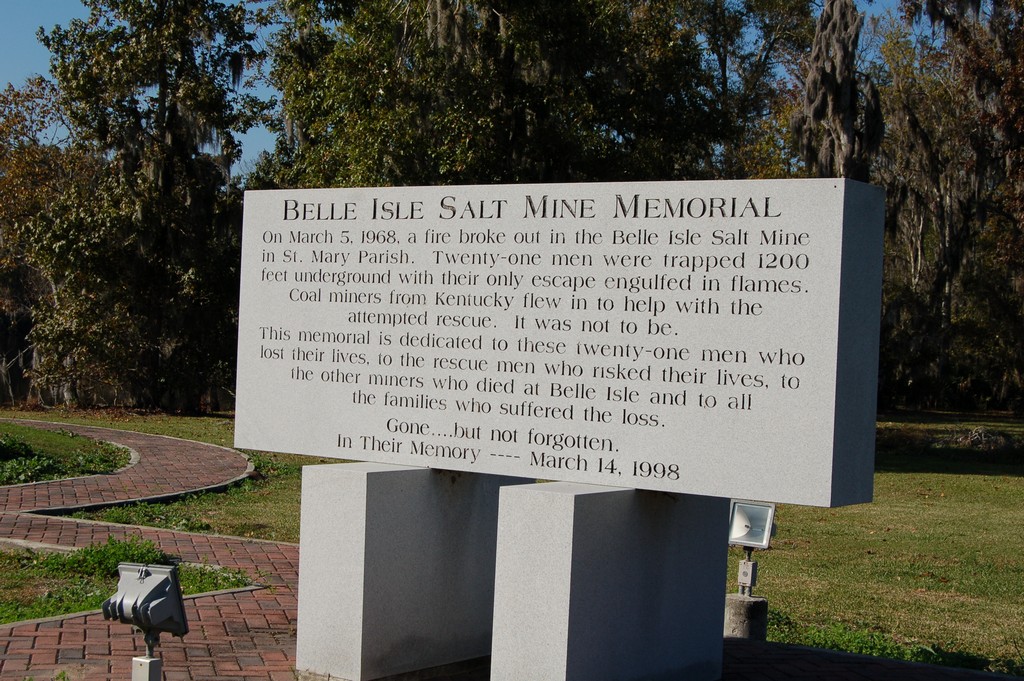
The catastrophe at Belle Isle continues to trouble former employees and family members of the 21 victims who perished 1,250 feet below the salt mine. The disaster occurred shortly before midnight on March 5, 1968, when a huge fire began inside the mine and subsequently killed the miners. It was Louisiana’s worst salt mine disaster. Cargill, the owner of the mine, had no rescue teams, so experienced rescuers from Kentucky were called in.

Although a complete federal safety inspection of Belle Isle had never been made before the incident, it had been visited several times by Bureau of Mines representatives at the request of Cargill. Inspections were made on between 1963 and 1967. The most recent was on August 9, 1967, nearly seven months before the catastrophe. After the last inspection, it was suggested that Cargill opened another shaft to be used as an emergency exit. According to reports when the accident occurred, Cargill planned to sink a second shaft about 900 feet from the only existing shaft entrance at Belle Isle.

At the time of the Belle Isle tragedy, there was a total workforce of 60 employees, of which 32 were classified as regular underground employees. Some of these employees actually worked underground intermittently, including staff officials who spent some time below. The mine had a single shaft with an inside diameter of 16 feet. The mine was operating at 1,250 feet below the surface, producing an average of 6,400 tons of salt daily.

Meanwhile, the day after the salt mine tragedy, two teams of rescuers consisting of 14 volunteers boarded a chartered flight from Madisonville, Ky. The DC3 landed at Patterson air field with the nation’s top mine rescuers. They were quickly flown by helicopter and arrived at Belle Isle near midnight, 24 hours after the fire inside the salt dome.

Ed Holeman of Sullivan, Ky., and Dilford Holmes of Madisonville, Ky., were the first rescuers to volunteer to go down the salt mine. Equipped with gas masks, they were lowered in a makeshift bucket fashioned from a discarded fan casing. The rescuers were armed with a bullhorn but were forbidden to leave the bucket. They called out to the trapped miners; however, there was no response. It took seven trips down the mine shaft over a three-day period enduring 95 degree temperatures heavily laden with carbon monoxide before all 21 victims were located. It took an additional two dozen more trips down the shaft over several more days before their bodies were finally taken topside. The date was March 12, 1968, exactly one week after the ordeal began.

The victims were brought up in the makeshift bucket three at a time. According to the St. Mary Parish Coroner, Dr. G.P. Musso Jr., 20 of the miners died from carbon monoxide poisoning and one from head trauma — probably from falling debris. F. Clayton Tonnemaker, former Green Bay Packer football great and Cargill VP, had the unfortunate task of informing the victim’s families of the fate of their family members. “It was pandemonium, family members were sobbing and screaming uncontrollably,” said Russell Landry of Kaplan, who had been a 20-year-old maintenance electrician at the mine. Landry had quit his job two weeks prior to the mine disaster. Safety was Landry’s main reason for leaving, and it was his crew that perished that day in 1968.

The oldest victim of the tragedy was 50, the youngest was 20. Three of the victims were brothers-in-law; they had married three sisters — all from Abbeville. Six of the victims had five years’ experience, several had been employed three to four years; a few had been there for several months. One of the victims had been working for eight days, while another had been employed for only four days. Neither of the two new hires had drawn their first paycheck.

Although evidence was examined during a six-month investigation, neither the cause of fire nor the point of origin could be definitely established. According to a final report, it appears that the fire originated in the lower part of the shaft at about, or below, the mining level.

Special thanks go to Debbie (Holeman) Guess, who was instrumental in obtaining the needed funds for the creation of a bronze memorial statue honoring all of the fallen salt miners,and to art teachers, Jenny Authement and Mike Howes from Nicholls State University for their larger-than-life size sculpture of a salt miner, which is on display at the Franklin visitor center. Thanks also go to Russell Landry of Kaplan and Allen LeBlanc of Abbeville for their contribution to the Belle Isle articles and to Arthur Olivier from Grand Mary, who was selected as the model for the sculptors to design and create the memorial statue. Olivier was not only employed at Belle Isle, he lost a son and two nephews in the ill-fated mine.

Sunday 19 May 2013

http://www.theadvertiser.com/article/20130519/LIFESTYLE/305190008?nclick_check=1

continue reading

More bodies recovered from reservoir: Jhiri bus mishap toll rises to 42


Three more bodies were recovered from the reservoir of a hydropower project situated on the Beas river near Aut area, taking the death toll in the Jhiri private bus mishap reached to 42. People spotted these bodies flowing in the river and informed the police.

The local administration provided ex gratia of Rs. 15,000 to the aggrieved families.

Two bodies were recovered on Friday and the body of a student of Industrial Training Institute (ITI), Kullu, was recovered on Saturday.

The student has been identified as Nihal Chand, 21. He was a resident of Binola village of Anni tehsil area of Kullu district, whereas the bodies recovered on Friday have been identified as Krishna Devi, 40, of Takoli village of Mandi district and Ram Singh of Sarachi village of Kullu district.

The name of the student was not in the list of suspected missing people. It is feared that five more people, including an infant, have been washed away in Beas river water and their bodies are yet to be recovered.

A private bus owned by Asoka Bus Services, Kullu, rolled down into Beas river on May 8, killing 39 people.

Sunday 19 May 2013

http://www.hindustantimes.com/India-news/HimachalPradesh/Jhiri-bus-mishap-toll-42/Article1-1062683.aspx

continue reading

Indonesia: Four more bodies recovered from collapsed mine tunnel


The bodies of four more victims of a tunnel collapse at the Big Gossan underground training facility at the PT Freeport Indonesia mine have been recovered by the company’s Emergency Response Group (ERG).

The victims were identified as Aris Tikupasang, Hengki Hendambo, Jhoni Tulak and Viktor Sanger.

Jhoni’s body was brought out at around 10 p.m. local time on Saturday; it was subsequently taken to his home in Timika.

“We received Jhoni’s body in Timika at 7 a.m. on Sunday, and on Monday it will be flown to Buakayu, Tana Toraja, via Makassar,” his relative, Yohanis Burrang, told The Jakarta Post on Sunday.

The bodies of Aris and Viktor were pulled out from the collapsed tunnel at 5 p.m. local time on Sunday while Hengki’s body was later found at 6:45 p.m. Their bodies are still at Tembagapura Hospital.

Papua police spokesperson Sr.Comr.I Gede Sumerta Jaya said that with the latest bodies recovered, the casualty toll in the incident was nine dead and 10 injured.

The evacuation process to locate 19 workers who were still missing was ongoing, he added.

Freeport has suspended production activities and all of its activities are currently being focused on the emergency.

The tragedy occurred when the tunnel’s roof in the QMS Underground area of Big Gossan suddenly collapsed at around 7:45 a.m. local time on Tuesday.

PT Freeport Indonesia’s head of mine technical operations, Nurhadi Sabirin, said that a number of experts equipped with world-class equipment had been deployed to complete the rescue work as fast as possible.

Sunday 19 May 2013

http://www.thejakartapost.com/news/2013/05/19/four-more-bodies-recovered-collapsed-tunnel.html

continue reading

Saturday, 18 May 2013

Virtual autopsy: does it spell the end of the scalpel?


Anyone who has spent any time in a courtroom knows how easy it is for a skilled defence lawyer to plant doubt in the mind of a jury. Even in a relatively straightforward case, such as a hit and run, jurors are frequently presented with such a confusing array of photographic and forensic evidence that it is very difficult to know what has taken place and who may be at fault.

But what if there was a kind of technology that could reconstruct the crime scene in 3D and match it to other forensic imaging data? Furthermore, what if this technology could see through skin, bone and even soft tissue to detect bullet fragments overlooked by traditional pathologists equipped only with a scalpel and the human eye?

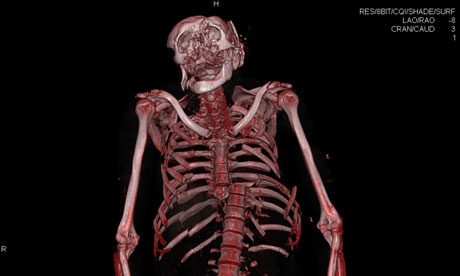
That is the promise of virtual autopsy – or "virtopsy" – a radical new approach to forensic imaging developed in Switzerland that is fast winning converts in Britain and elsewhere.

Just as forensic pathologists at the University of Leicester recently used computed tomography (CT) to identify the two fatal blows to the Plantagenet king Richard III, so a team of Zurich-based radiologists and pathologists is now using similar CT and magnetic resonance imaging (MRI) technology to help solve modern-day murders and crimes.

The difference is that the Swiss team, led by Professor Michael Thali of the Institute of Forensic Medicine in Zurich, has gone a stage further, not only using X-ray imaging to create scalpel-free 3D images of intact cadavers but also building a "Virtobot" capable of carrying out precise postmortem tissue sampling – and all without exposing pathologists to harmful radiation or bodily contaminants.

The result is a technology that is both "all seeing" and arguably more objective than conventional autopsies, which inevitably result in the destruction of tissue and can only be recorded, photographically, in two dimensions.

"Virtopsy removes the element of subjectivity," says Thali. "You are no longer relying on the judgment of one person – the lone pathologist. Instead, we are creating a permanent data set that can be viewed by anyone anywhere in the world and which can be reviewed at any point if new evidence comes to light."

The idea for virtopsy was born 10 years ago when Thali's predecessor, Richard Dirnhofer, the then director of the Institute of Forensic Medicine in Bern, began chewing over a high-profile case in Zurich that turned on whether a spanner had caused injuries to the skull of a murder victim. Since then, Dirnhofer and Thali have used 3D photogrammetry to match weapons and other objects, such as car bumpers, to fatal injuries sustained in several murder and accident cases and it is a measure of how far the technology has come that virtopsy-style imaging was recently featured on the US forensic medical drama CSI.

But is it really possible to reconstruct crime scenes in 3D so as to leave no doubt as to who or what caused the fatal blow? And no matter how astounding the images from virtopsies, can they ever be a substitute for hard physical evidence collected by more traditional methods?

The answer to the second question, in Switzerland at least, would appear to be yes. 3D photogrammetry and surface scanning are already admitted in Swiss courts and, in uncontested cases where invasive postmortems risk offending cultural sensibilities, CT and MRI imaging are now often deemed sufficient. In Manchester, coroners now routinely give families the option of an MRI scan to establish the cause of death and Guy Rutty, chief forensic pathologist to the East Midlands Forensic Pathology Unit (EMFPU) and a member of the Leicester team that exhumed Richard III, recently called for cross-sectional autopsy imaging to be made available on the NHS. "There are important religious, cultural and humanitarian benefits offered by non-invasive autopsies," he argues. "As people become more familiar with the technology, demand is expected to grow."

So what is virtopsy and how does it work? The Zurich team begins by taking a scan of a cadaver using 3D photogrammetry and a projector that casts a fringe pattern over the surface of the body. Next, they slide the cadaver into a CT scanner and take up to 3,500 x-ray slices from head to toe. With the aid of markers placed strategically on the skin, the surface and interior of the cadaver are then aligned to create a 3D image complete with bones and internal organs. By adding MRI to the same image, the Zurich radiological team can also see the state of soft tissue and whether there are injuries to the heart, brain or abdominal organs.

The Virtobot builds on these forensics procedures by adding a robotic arm that can be manoeuvred into position via a remote computer so that tissue samples can be taken with a biopsy needle at the precise locations where the scans indicate forensically relevant findings. Virtopsy also allows pathologists to see that precise location of foreign material, such as shrapnel or bullet fragments, making it easier for the material to be extracted by hand.

In addition, the virtopsy team can perform CT angiography, a procedure that entails injecting a contrast agent into blood vessels with a needle in order to reveal leaks and lesions that can be overlooked using conventional autopsy methods. Finally, the same 3D surfacing scanning can also be used on injury-causing instruments or even entire cars, enabling forensics experts to compare blows and bruising to a victim's body with, for instance, the shape of a car bumper or a hammer found at the crime scene.

The technology has already been used in several hit and runs, including an incident on a country road near Bern in 2007 where 3D crime scene imaging was used to prove a motorist's culpability in the death of a cyclist. (The 3D reconstruction showed the cyclist had been hit from behind, not from the side as the motorist had claimed, and that the bike had been lifted and thrown several metres forward, indicating that the driver had been speeding.)

Virtopsy is also ideally suited to cases where victims have suffered significant traumas or multiple injuries in which the original cause of death may have become obscured by extensive tissue and bone damage. Take the image below, showing the marks on a middle-aged male who was savagely kicked and beaten by a group of men in the Zurich area. Using 3D photogrammetry and surface scanning, Thali's team was able to match several of the perpetrators' shoes to imprints in the victim's face, arms and armpit, evidence that could enable investigators to identify which member of the group was responsible for the man's injuries.

In another recent case, in which a 50-year-old man shot his wife in the back of the head with a small handgun, investigators were baffled by the absence of an exit wound. Once again, Virtopsy came to the rescue, with CT imaging showing that the bullet had travelled through the brain at a right angle and dropped through the foramen magnum to lodge in the spinal canal, an unusual location difficult to access by conventional autopsy.

One of the most powerful illustrations of the potential of Virtopsy, however, is the graphic image of a young mechanic who was killed a few months ago when his head was crushed under a collapsing engine block and scaffold. At the accident scene, the mechanic was almost unrecognisable. However, by scanning his fractured skull, radiologist Thomas Ruder was able to rapidly assess the bone fragments without disturbing the pattern of the fracture lines. Scanning the bone fragments also makes it easy to visualise the skull on the desktop. "Imagine trying to piece together a shattered skull using conventional methods," says Ruder. "Not only would it be bloody but it would take days. Now I can do it with a few mouse clicks."

In this case, there is little doubt the mechanic's death was accidental and due to the injuries he sustained when the engine block collapsed on his head. But if, for instance, at a later date it was suspected the accident had been staged, investigators could re-examine the pattern of fracture lines for signs of an earlier blow with a blunt instrument, much as the team at Leicester were able to go back and match the marks on Richard III's skull with the blows he is supposed to have sustained from a sword and halberd in 1485.

"Unlike traditional autopsies, which are invasive and result in the destruction of tissue, Virtopsy leaves the cadaver intact and creates an objective 3D data set that can be shared with other experts," says Ruder. "And if 10 years from now new evidence comes to light, you can return to the original data set at any time. I've had a couple of cases where I've initially overlooked relevant findings only to detect them when reviewing the case with a colleague."

Dirnhofer goes further, arguing that in the near future 3D matching could become as routine in courts as DNA matching. "Virtopsy has the potential to replace the autopsy one day," he says. "I think we'll see it happen gradually, just as DNA analysis gradually replaced blood group analysis."

However, some police and legal experts are not so sure, pointing out that in complex cases a virtual autopsy can never be a substitute for the real thing, particularly where a successful criminal prosecution may depend on matching a bullet extracted from the victim to the rifling on the barrel of a particular gun. Unless and until juries become used to 3D imaging evidence, defence lawyers are also likely to exploit juries' unfamiliarity with virtopsy to raise doubts about prosecution cases.

Professor Thali's solution is to follow the Manchester coroners' model and use virtopsies as a filter, with a conventional autopsy only being performed if the virtopsy is unable to detect the cause of death, or in cases of homicides where every piece of evidence from both imaging and autopsy might be of value.

He points out that in Japan nearly all the large hospitals with emergency facilities already use CT postmortem imaging and clinical scanners to screen for unusual deaths and determine whether a scalpel postmortem is required. And in May experts from all over the world are due to attend the second International Society of Forensic Radiology and Imaging conference in Zurich to agree common training standards and professional guidelines.

Virtual imagining not only has the potential to revolutionise criminal forensics. Following the catastrophic bushfires in Australia in 2009, teams of radiologists and pathologists working in pairs used CT imaging to scan the contents of 255 body bags and identify 161 missing people. Such technology could prove similarly valuable in future mass disasters, whether caused by forest fires or tsunamis.

"In the beginning, there was a lot of scepticism about 3D imaging, particularly from within the medical community," says Thali. "But once people realise that virtual autopsy allows you to detect many pieces of evidence you can see in a traditional autopsy, and often more, they usually change their minds."

Saturday 18 May 2013

http://www.guardian.co.uk/science/2013/feb/23/virtual-autopsy-virtopsy-forensic-science?fb=native&goback=.gde_4126895_member_218673095

continue reading