Saturday, 19 January 2013

Glencoe avalanche, four dead, say police


Four people have died after an avalanche in Glencoe in the Scottish Highlands, the Northern Constabulary has said.

A party of six climbers, three men and three women, were caught up in the avalanche on Bidean Nam Bian, at about 14:00.

One male member of the party raised the alarm.

The sixth climber, a woman, is in a serious condition in hospital in Fort William.

It is understood the party were descending from a peak on the south side of the valley, when the slope they were on broke away.

The climbers were descending close to Church Door Buttress, when the snow slope broke away.

Five of them were swept down the mountain and engulfed by ice and snow.

One, who had avoided being swept away, raised the alarm, and a major rescue effort got under way.

One female climber was recovered alive but has serious head injuries.

Nicola Sturgeon, Scotland's deputy first minister, expressed her concerns on Twitter, saying: "Dreadful news from Glencoe. Thoughts with all those affected."

Saturday 19 January 2013

http://www.bbc.co.uk/news/uk-scotland-21101217

continue reading

Skeletons from Bali’s Past: Large Waves Uncover 1965 Killing Field Near Cucukan Village, Gianyar, Bali


The large waves that hit Bali’s eastern shore at Gianyar have wreaked havoc on parts of the shoreline and dredging up a dark page in Bali’s history. The Cucukan Beach front at Medahan Village, Blahbatuh yielded up a number of human skeletons when waves eroded the shoreline on Monday, January 14, 2013.

According to Bali Post, the strong wave hitting the shore reopened mass graves of those executed during the violence following the 30 September Movement (Gestapu) of 1965.

The bones scattered along the beach also yielded up a wristwatch, thought to belong to one of the dead.

Based on reports for local villagers, the area where the bones were found was used for the execution of suspected Communist Party Members in 1965.

Many of the graves are located in an area just west of a private villa owned by former president Megawati Soekarnoputri. One villager estimated there were some 200 unmarked graves located in this area.

Some 20 meters to east of the mass graves, another body wrapped in burial shroud was revealed by the waves. Ida Bagus Arka, the chief of the Cucukan Village, said that the area was also used for the burial of unidentified victims of crime. The body uncovered was buried in 1997 was that of a 19-year-old man brought there by police and hospital workers for burial.

The bones uncovered by the waves will now be gathered and burnt with the ashes to be eventually committed to the seas in accordance with Balinese tradition.

Saturday 19 January 2013

http://www.balidiscovery.com/messages/message.asp?Id=9030

continue reading

Death toll from floods in Indonesia’s capital rises to 14


The death toll from floods in Indonesia’s capital has climbed to 14 after searchers pulled three more bodies from the waters.

Indonesia’s national disaster management agency said Saturday that the body of a 35-year-old member of the city’s search and rescue team was found on the banks of an overflowing river late Friday. Another man was found dead near his flooded home in western Jakarta.

The third body of a male worker was found Saturday in the flooded basement parking of a building in central Jakarta.

The agency said most victims were electrocuted or drowned. Electricity supplies have been cut to several flooding areas to prevent electrocutions.

A dike in central Jakarta collapsed late Wednesday amid floods that swamped Jakarta. Successive governments have done little to mitigate the flooding threat.

Saturday 19 January 2013

http://www.washingtonpost.com/world/asia_pacific/death-toll-from-floods-in-indonesias-capital-rises-to-14/2013/01/19/7e611488-6210-11e2-81ef-a2249c1e5b3d_story.html

continue reading

Body found as bushfires continue across Vic, NSW


One man has been killed and communities in Victoria and New South Wales remain on alert as large bushfires continue to burn out of control.

The fires turned deadly on Friday evening when Victorian police confirmed the death of a man near Seaton in the Gippsland region.

The man's body was found inside a burnt out car in the Glenmaggie bushfire area.

"The body of the male has yet to be formally identified. Police are investigating and will prepare a report for the Coroner," Victoria Police said in a statement.

Five homes have been destroyed by the Glenmaggie blaze which has burnt through 48,000 hectares and is creating spot fires up to 1 kilometre ahead.

The fire has slowed in pace, but is moving steadily toward the farming hamlet of Licola.

About 10 residents have decided to stay in the area and Country Fire Authority (CFA) crews are also there to defend homes.

The CFA says Licola Road is closed and the fire is making its way towards Mount Useful and The Springs.

Fire Services Commissioner Craig Lapsley says the community is well prepared.

"The township itself, those that have stayed behind have said they are willing to fight it out. They've had fires around them before," he said on Friday.

"They, with their fire trucks around them, will have an interesting night. It's a decision that's quite gutsy I think, but they've made that decision to stay and I think they'll do quite well."

All of Friday's emergency warnings in Victoria and New South Wales have been downgraded, but several new fires have started.

Two fires have broken out near the Murray River in Victoria's north-east.

A fire in Mt Lawson State Park, near Tallangatta, is believed to have been caused by a lightning strike on Friday night.

It is burning out of control in remote bushland but is not threatening private property.

Further east, another fire has been reported in the Burrowa Pine Mountain area, near Corryong.

Sydney city sweltered on Friday as it recorded its hottest day since records began, with temperatures getting to 45.8 degrees.

The extreme heat across NSW also made it a busy day for firefighters as they battled over 100 fires.

The state received three emergency alerts on Friday before they were downgraded.

A cool change during the evening also brought strong southerly winds, leading to the loss of two homes and two sheds in a fire at Millingandi, near the Bega Valley.

Authorities say other properties along the Princes Highway are at risk.

NSW RFS spokeswoman Brydie O'Connor says firefighters will be kept busy through the night.

"That southerly change is moving through the state, it's moved through the Hunter area now," she said.

"It brought with it a lot of force, some very gusty volatile winds, winds gusting up to 90 kilometres per hour on some parts of the coast.

"We've still more than 120 fires burning and that's due to that lightening that also came through the state."

A fire is currently burning in the Ku-Ring-Gai Chase National Park, north of Sydney.

The RFS says a watch and act alert is in place for blazes at Cessnock, Deans Gap, Boorowa, Coonabarabran and Millingandi.

Cooler temperatures are expected for Sydney on Saturday, but the extreme heat is set to persist in many other areas of the state.

Saturday 19 January 2013

http://www.radioaustralia.net.au/international/2013-01-19/body-found-as-bushfires-continue-across-vic-nsw/1075552

continue reading

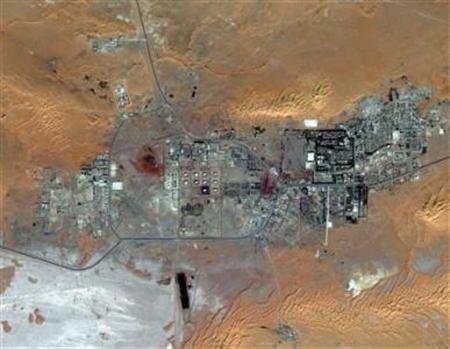
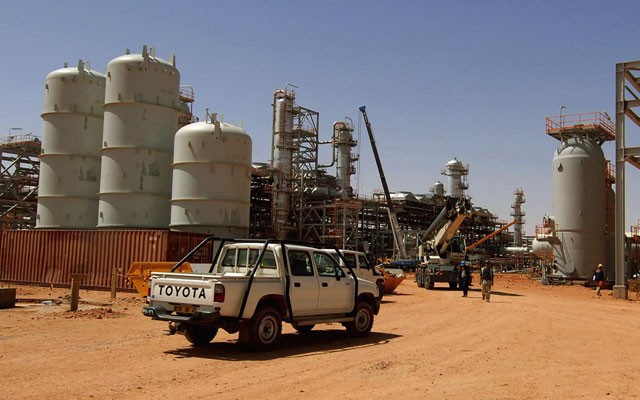
Burned bodies found at besieged Algeria gas plant


The Algerian army on Saturday carried out a "final assault" on al Qaeda-linked gunmen holed up in a desert gas plant, killing 11 of the Islamists after they took the lives of seven foreign hostages.

"It is over now, the assault is over, and the military are inside the plant clearing it of mines," a local source familiar with the operation told Reuters.

The state oil and gas company, Sonatrach, said the militants who attacked the plant on Wednesday and took a large number of hostages had booby-trapped the gas complex with explosives.

The exact death toll among the gunmen and the foreign and Algerian workers at the plant near the town of In Amenas close to the Libyan border remained unclear.

Earlier on Saturday, Algerian special forces found 15 burned bodies at the plant. Efforts were underway to identify the bodies, the source told Reuters, and it was not clear how they had died.

Sixteen foreign hostages were freed on Saturday, a source close to the crisis said. They included two Americans, two Germans and one Portuguese.

Britain said fewer than 10 of its nationals at the plant were unaccounted for.

The attack on the plant swiftly turned into the biggest international hostage crises in decades, pushing Saharan militancy to the top of the global agenda.

Reports earlier put the number of hostages killed at between 12 to 30, with many foreigners still unaccounted for, among them Norwegians, Japanese, Britons and Americans.

The U.S. State Department said on Friday one American, Frederick Buttaccio, had died but gave no further details. The French defence minister said he understood there were no more French workers among the hostages.

Two Norwegians were released overnight, leaving six unaccounted for, while Romania said three of its nationals had been freed. A number of Japanese engineering workers were still unaccounted for.

Scores of Westerners and hundreds of Algerian workers were inside the heavily fortified compound when it was seized before dawn on Wednesday by Islamist fighters who said they wanted a halt to a French military operation in neighbouring Mali.

Hundreds escaped on Thursday when the army launched its operation, but many hostages were killed.

Saturday 19 January 2013

http://sg.finance.yahoo.com/news/foreigners-still-trapped-sahara-hostage-crisis-083141930--finance.html

continue reading

Friday, 18 January 2013

10 killed, 53 injured as bus, trailer truck collide in the Philippines


Ten people were killed while 53 others were injured last Wednesday afternoon when a trailer rammed a commuter bus on the national highway here.

The fatalities were identified as Lyle Carmita, 15, Almira Pamandanan, 36, Cayetana Fernandez, all of Toledo City; Julie Pajamutan and Dionny Pajamutan, of Naga City; Emmanuel Gaudise, 28, of Toledo City; trailer truck driver Antonico Omayag, 40, of Cebu City; Melvin Costanilla of Toledo City, Lilita Etang, 51, of Balamban town, and James Lee Carpentero of Toledo City.br>
Five of the victims died on the spot while the others died at the Vicente Sotto Memorial Medical Center in Cebu City.br>
The injured were rushed to Carmen Copper Hospital and the Toledo City Hospital.br>
Police said the truck, with license plate GUF-405 and driven by Omayag, rammed the BT bus with license plate GWH-253 that was driven by Jimmy Limoran.br>
The truck was cruising along the national highway in Barangay Uling in Naga City when it hit the bus that was traveling toward Toledo City from Cebu City.br>
Police said the trailer truck was hauling a bulldozer and going downhill.br>
Traffic investigator Police Officer 2 Cristino Canono said Omayag lost control of the vehicle when the truck’s brakes malfunctioned.br>
Canono said the bus tried to swerve away from the trailer truck that hit the left side of the bus.br>
The truck dragged the bus several meters and the vehicle fell in a canal.br>
Witness Terry Bacaro, 55, said that she was in a nearby store when she saw the speeding truck honking its horn before it rammed the bus.br>
Marilou Carpentero, 44, of Toledo City, one of the injured passengers, is the mother of one of the fatalities, James Lee Carpentero.br>
Mrs. Carpentero, who suffered a cut in the forehead, said she and her son were on their way home to Toledo.br>
She said they came from the Vicente Sotto Memorial Medical Center in Cebu City where her son was earlier treated for wounds he suffered after he was hit by a tree that fell near their house.br>
Carpentero said they were seated at the back portion of the bus and James Lee was pinned by the metal bars of the bus.br>
Jing Firmeza, mother of injured victim Lyle Firmeza, said that her son was celebrating his 15th birthday that day.br>
She said that her daughter was also on the bus on her way home to Toledo City when she was knocked unconscious by the collision.br>
Friday 18 January 2013br>
http://www.222.philstar.com/headlines/2013/01/18/898290/truck-rams-bus-10-killed-53-hurt-cebu

continue reading

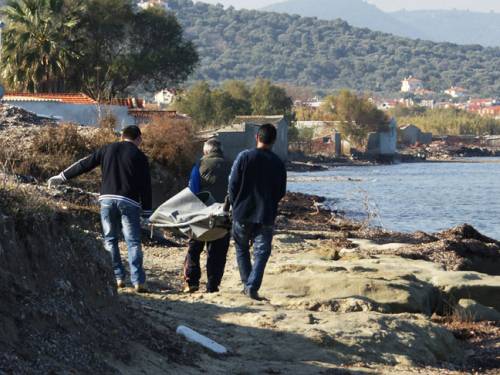
3 dead migrants found off Greek island


Greece's coast guard says the bodies of three male would-be migrants have been retrieved in the waters off the eastern Aegean island of Chios.

Two bodies were found Sunday morning by fishermen and the third later by a coast guard vessel. The men's national origins were not immediately clear, but they may have been trying to cross into Greece from Turkey.

A coast guard spokesman, speaking on condition of anonymity because he was not authorized to speak on the record to media, confirmed that an autopsy on the first two bodies showed they had drowned.

Tens of thousands of illegal migrants cross into Greece annually, most over the land and sea border with Turkey.

The sea crossing, brief but often through turbulent waters and involving overloaded boats, is sometimes fatal.

Friday 18 January 2013

http://www.huffingtonpost.com/huff-wires/20130113/eu-greece-migrants/?utm_hp_ref=sports&ir=sports

continue reading

Granville train disaster remembered


The 83 victims of Australia's worst train disaster have been remembered in a moving ceremony that also honoured the victims of the Sandy Hook school massacre in the US.

The packed 6.09am train from Mount Victoria to Sydney derailed and crashed as it approached Granville station about 8.10am on January 18, 1977.

The train smashed into a bridge, which collapsed on two carriages. In addition to the death toll, 210 people were injured.

About 250 survivors, relatives, emergency service workers and dignitaries gathered near the crash site on Friday to mark the 36th anniversary.

"The thing that surprised me is that crowds are still very large, even after all these years," said John Hennessey, president of the Granville Memorial Trust.

"It's still very raw and you could hear that in their voices and the stories they tell you."

The ceremony was held around a large granite memorial stone with the names of all the victims inscribed on it.

Twenty-six roses were laid on the stone to commemorate the teachers and children who died in the Sandy Hook Elementary School massacre in the US in December.

The lord mayor of Parramatta, John Chedid, described the Granville tragedy as a "very, very sad day".

The national secretary of the Rail, Tram and Bus Union, Bob Nanva, said the lessons of the crash must never be forgotten.

"The Granville Rail Disaster will live in our memories forever," he said in a statement. "We must ensure we never see another disaster on the same scale."

He urged the NSW government to put more funding into rail maintenance.

A report into the Granville crash concluded that a derailment was "inevitable" because the condition of the track was poor.

Friday 18 January 2013

Read more: http://www.smh.com.au/national/granville-train-disaster-remembered-20130118-2cz0l.html#ixzz2IMNfETAX

continue reading

Eleven dead in Jakarta floods, 18,000 evacuated: Disaster agency


Eleven people have died in flood-related incidents in Jakarta, and more than 18,000 people were forced to leave their homes, Indonesia's National Disaster Mitigation Agency said on Friday.

"Floods are occurring still and since January 15, 11 people have died, five of whom from electrocution," said agency spokesman Sutopo Purwo Nugroho.

Friday 18 January 2013

http://www.straitstimes.com/breaking-news/se-asia/story/eleven-dead-jakarta-floods-18000-evacuated-disaster-agency-20130118

continue reading

Foreigners still caught in Sahara hostage crisis


More than 20 foreigners were still either being held hostage or missing inside a gas plant on Friday after Algerian forces stormed the desert complex to free hundreds of captives taken by Islamist militants.

More than a day after the Algerian army launched an assault to seize the remote desert compound, much was still unclear about the number and fate of the victims, leaving countries with citizens in harm's way struggling to find hard information.

Reports on the number of hostages killed ranged from 12 to 30, with anywhere from dozens to scores of foreigners still unaccounted for.

Norway's Prime Minister Jens Stoltenberg, eight of whose countrymen were missing, said fighters still controlled the gas treatment plant itself, while Algerian forces now held the nearby residential compound that housed hundreds of workers.

Leaders of Britain, Japan and other countries expressed frustration that the assault had been ordered without consultation. Many countries were also withholding information about their citizens to avoid helping the captors.

Night fell quietly on the village of In Amenas, the nearest settlement, some 50 km (30 miles) from the vast and remote desert plant. A military helicopter could be seen in the sky.

An Algerian security source said 30 hostages, including at least seven Westerners, had been killed during Thursday's assault, along with at least 18 of their captors. Eight of the dead hostages were Algerian, with the nationalities of the rest of the dead still unclear, he said.

Algeria's state news agency APS put the total number of dead hostages at 12, including both foreigners and locals.

Norway's Stoltenberg said some of those killed in vehicles blasted by the army could not be identified. "We must be prepared for bad news this weekend but we still have hope."

Northern Irish engineer Stephen McFaul, who survived, said he saw four trucks full of hostages blown up by Algerian troops.

The attack has plunged international capitals into crisis mode and is a serious escalation of unrest in northwestern Africa, where French forces have been in Mali since last week fighting an Islamist takeover of Timbuktu and other towns.

"We are still dealing with a fluid and dangerous situation where a part of the terrorist threat has been eliminated in one part of the site, but there still remains a threat in another part," British Prime Minister David Cameron told his parliament.

A local Algerian source said 100 of 132 foreign hostages had been freed from the facility. However, other estimates of the number of unaccounted-for foreigners were higher. Earlier the same source said 60 were still missing. Some may be held hostage; others may still be hiding in the sprawling compound.

Two Japanese, two Britons and a French national were among the seven foreigners confirmed dead in the army's storming, the Algerian security source told Reuters. One British citizen was killed when the gunmen seized the hostages on Wednesday.

Those still unaccounted for on Friday included 10 from Japan and eight Norwegians, according to their employers, and a number of Britons which Cameron put at "significantly" less than 30

France said it had no information on two Frenchmen who may have been at the site and Washington has said a number of Americans were among the hostages, without giving details. The local source said a U.S. aircraft landed nearby on Friday.

The attackers had initially claimed to be holding 41 Western hostages. Some Westerners were able to evade capture by hiding.

They lived among hundreds of Algerian employees on the compound. The state news agency said the army had rescued 650 hostages in total, 573 of whom were Algerians.

"(The army) is still trying to achieve a ‘peaceful outcome' before neutralizing the terrorist group that is holed up in the (facility) and freeing a group of hostages that is still being held," it said, quoting a security source.

MULTINATIONAL INSURGENCY

Algerian commanders said they moved in on Thursday about 30 hours after the siege began, because the gunmen had demanded to be allowed to take their captives abroad.

A French hostage employed by a French catering company said he had hidden in his room for 40 hours under the bed, relying on Algerian employees to smuggle him food with a password.

"I put boards up pretty much all round," Alexandre Berceaux told Europe 1 radio. "I didn't know how long I was going to stay there ... I was afraid. I could see myself already ending up in a pine box."

The captors said their attack was a response to a French military offensive in neighboring Mali. However, some U.S. and European officials say the elaborate raid probably required too much planning to have been organized from scratch in the single week since France first launched its strikes.

Paris says the incident proves that its decision to fight Islamists in neighboring Mali was necessary.

Security in the half-dozen countries around the Sahara desert has long been a pre-occupation of the West. Smugglers and militants have earned millions in ransom from kidnappings.

The most powerful Islamist groups in the Sahara were severely weakened by Algeria's secularist military in a civil war in the 1990s. But in the past two years the regional wing of Al Qaeda gained fighters and arms as a result of the civil war in Libya, when arsenals were looted from Muammar Gaddafi's army.

Al Qaeda-linked fighters, many with roots in Algeria and Libya, took control of northern Mali last year, prompting the French intervention in that poor African former colony.

The Algerian security source said only two of 11 militants whose bodies were found on Thursday were Algerian, including the squad's leader. The others comprised three Egyptians, two Tunisians, two Libyans, a Malian and a Frenchman, he said.

The plant was heavily fortified, with security, controlled access and an army camp with hundreds of armed personnel between the accommodation and processing plant, Andy Coward Honeywell, who worked there in 2009, told the BBC.

The apparent ease with which the fighters swooped in from the dunes to take control of an important energy facility, which produces some 10 percent of the natural gas on which Algeria depends for its export income, has raised questions over the value of outwardly tough security measures.

Algerian officials said the attackers may have had inside help from among the hundreds of Algerians employed at the site. The attackers benefitted from bases and staging grounds across the nearby border in Libya's desert, Algerian officials said.

U.S. Defense Secretary Leon Panetta said those responsible would be hunted down: "Terrorists should be on notice that they will find no sanctuary, no refuge, not in Algeria, not in North Africa, not anywhere.... Those who would wantonly attack our country and our people will have no place to hide."

WARNING OF MORE ATTACKS

The kidnappers threatened more attacks and warned Algerians to stay away from foreign companies' installations, according to Mauritania's news agency ANI, which maintained contact with the group during the siege.

Hundreds of workers from international oil companies were evacuated from Algeria on Thursday and many more will follow, said BP, which jointly ran the gas plant with Norway's Statoil and the Algerian state oil firm.

The overall commander of the kidnappers, Algerian officials said, was Mokhtar Belmokhtar, a one-eyed veteran of Afghanistan in the 1980s and Algeria's bloody civil war of the 1990s. He appears not to have been present.

Algerian security specialist Anis Rahmani, author of several books on terrorism and editor of Ennahar daily, told Reuters about 70 militants were involved from two groups, Belmokhtar's "Those who sign in blood", who traveled from Libya, and the lesser known "Movement of the Islamic Youth in the South".

Britain's Cameron, who warned people to prepare for bad news and who canceled a major policy speech on Friday to deal with the situation, said he would have liked Algeria to have consulted before the raid. Japan made similar complaints.

U.S. officials had no clear information on the fate of Americans. Washington, like its European allies, has endorsed France's military intervention in Mali.

Friday 18 January 2013

http://www.reuters.com/article/2013/01/18/us-sahara-crisis-idUSBRE90F1JJ20130118

continue reading

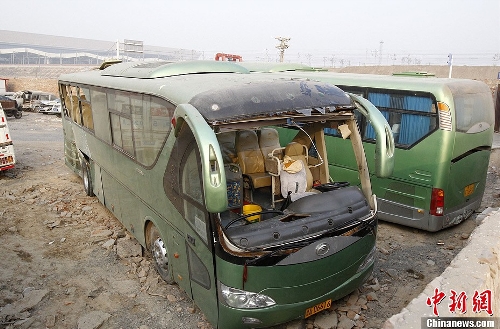
Seven dead in Foxconn bus accident


Seven people were killed after two company buses collided in Zhengzhou, capital of Henan province, on Jan 17.

Both buses were owned by Foxconn Technology Group, a PR manager surnamed Cai from the company confirmed.

The accident occurred at a crossing at about 8:40 am, the website of Zhengzhou-based Dahe Daily reported.

More than 10 were injured and sent to hospital, said the report.

Foxconn Technology Group is the world's largest maker of computer components and an important supplier to Apple. Foxconn has about 1 million employees on the Chinese mainland. More than 100,000 of them work at its Zhengzhou factory.

Friday 18 January 2013

http://www.chinadaily.com.cn/china/2013-01/17/content_16134323.htm

continue reading

The Modern Magic in Africa's Witchcraft Industry


Witchcraft beliefs in Africa returned to the news cycle towards the end of 2012 following reports of mass exhumations in Benin. In the dead of night, over 100 corpses were dug up from a cemetery near Porto Novo and mutilated – reportedly so that body parts could be sold on the black market. In recent months, there has also been a string of UN and NGO reports linking African witchcraft beliefs to child abuse, killings and human trafficking.

In coverage of such stories, it is often suggested that witchcraft beliefs, and the abusive practices that can follow, are deeply rooted in African tradition and local cultural heritage. An Al Jazeera documentary about witchcraft accusations and infanticide in northern Benin, for example, stresses the role that witchcraft plays in Beninese tradition and the difficulties faced by authorities in eradicating entrenched superstitions. Similarly, some reports emphasise the “traditions” that inform witchcraft-related child killings.

But while the role played by cultural heritage is undeniable, it is critical to separate ‘traditional’ elements from more modern innovations. Studies suggest that witchcraft-related practices have undergone rapid transformations in the last 20 years. According to a UNICEF report, for example, witchcraft accusations directed at children only date back around 10 or 20 years; prior to this, the accused were typically elderly women.

Today’s witchcraft beliefs and practices are as much products of modern dynamics as they are informed by long-standing tradition. Witchcraft beliefs are not remnants of ‘pre-modern’ cultures but contemporary phenomena embedded in, and partly constituted by, specific and current cultural and socio-economic contexts.

One important factor in these modern witchcraft beliefs is the recent rise of Pentecostal churches and other evangelical religions in West Africa, facilitated by modern media technologies.

Several religious figures, for example, use television and the internet to advertise their usually expensive services as exorcists. Prior to his arrest, "Bishop" Sunday Ulup-Aya in Nigeria earned $261 for each child he delivered from demonic possession. Similarly, Helen Ukpabio and her African evangelical franchise, Liberty Foundation Gospel Ministries, encourage witchcraft and demon-related fears, and call on people to subscribe to the organisation or pay hefty fees for exorcisms. On her website, Ukpabio sells publications and films including titles such as Married to a Witch, The Coven and Unveiling the Mysteries of Witchcraft, the last of which sells for $25.

The use of modern media is not limited to Christian churches however. Benin has also seen the emergence of evangelical Vodun priests such as Dah Aligbonon Akpochihala, who hosts his own radio show and frequently appears on television to dispel misconceptions about the Vodun religion.

Although it is clearly too simplistic to suggest these evangelical practitioners are primarily responsible for driving witchcraft beliefs, their pervasive presence and use of popular media has inevitably contributed to the continued infusion of such beliefs into the general cultural landscape and popular conscience. The magic of the market

Market forces are also central to today’s witchcraft beliefs. Again, although we must be careful not to over-emphasise the importance of such forces, economic dimensions are inextricable from, and central to, contemporary beliefs.

On the one hand, these influences can operate from a top-down perspective. Practitioners such as Helen Ukpabio have helped create a lucrative market in anti-witchcraft goods and services, thus subjecting beliefs to the kind of marketing strategies typical of any modern capitalist industry.

Demand for charms and services that supposedly protect against sorcery have led to some shocking events in West and Central Africa. The corpse mutilations in Benin are one example. “The desecration of graves is about money in this region”, commented Joseph Afaton, director of the cemetery in Dangbo, Benin, where the desecrations took place.

In certain parts of West and Central Africa, people with albinism are said to have magical powers and an IRIN report estimates that a "complete set of albino body parts" – including all four limbs, genitals, ears, nose and tongue – can sell for about $75,000 in Tanzania.

Adding another economic layer to the issue, in many cases children accused of witchcraft end up as child labourers. Several industries in West Africa rely heavily on child labour, including cocoa farming in the Ivory Coast, and witchcraft beliefs are sometimes deliberately manipulated by human traffickers to silence victims and coerce them into accepting their fate.

From selling charms to child labour then, numerous parties stand to benefit from witchcraft beliefs and the human rights violations often facilitated by such beliefs. Toil and trouble

On the other hand, economic forces can be seen to affect witchcraft beliefs from a more bottom-up perspective.

Interestingly, the UNICEF report mentioned above suggests that child witch accusations often take place in circumstances where families are unable to support their own children. A comparative survey published in the report found that impoverished regions of Africa in which children were able to support themselves experience a far lower frequency of child witch accusations even in cases where witchcraft beliefs form part of local tradition.

Additionally, modern scares often enter into discourse about sorcery. For example, a Beninese student told Think Africa Press that, prior to a car journey, he never told anyone where or when he was travelling lest someone employ sorcery to try to kill or injure him in a car crash. Traffic accidents are indeed a significant modern danger in Benin, causing over 2% of all deaths. The UNICEF report also cites urbanisation and the dissolution of the traditional family as factors behind recent transformations in the nature of witchcraft accusations.

Sorcery in Africa is not a simple concept, as Joachim Theis, UNICEF’s child protector in West Africa, explains in an IRIN report: “It has spiritual, economic and social drivers... It gets blurred with all sorts of other beliefs, but it cannot always be put into one box”.

Witchcraft beliefs are complex, varied and dynamic. They are not purely tradition but nor are they merely a response to rapid modernisation. They overlap many areas of life and society, and are intertwined in modern processes and even legal institutions – performing witchcraft is a recognised crime in Cameroon, the Central African Republic, Chad and Gabon, and children can be imprisoned for it.

As well as being mindful of tradition therefore, NGOs and governmental bodies working to prevent child abuse and infanticide need to target these very modern and tangible realities: the explicit ‘witchcraft industry’, anti-witch legislation, child labour and human trafficking, poverty, urbanisation and family dissolution. If all they have left to face in the end is tradition, then they will have made considerable progress.

Friday 18 January 2013

http://thinkafricapress.com/society/african-witchcraft-modern-reality

continue reading

11 killed, scores injured as bus collide with truck


Eleven people died and scores seriously injured in a road accident along the Nairobi-Mombasa highway on Thursday night.

Police and witnesses said eight passengers died on the spot while three others succumbed to injuries at Moi District Hospital.

The bus and trailer drivers were among those killed in the Ndii area near Voi town. The stretch is a black spot.

On Friday, Taita OCPD Samson Kiine said 22 people were seriously injured in the 7pm incident.

“Nine people have so far died in the road accident and 22 others seriously injured and admitted to Voi District hospital,” said Mr Kiine.

A witness, who identified himself as Mwangi said he counted 10 bodies at the scene, while the eleventh victim reportedly died in hospital.

Mr Kiine said the bus belonging to the Star Ways Bus Company, was traveling from Mombasa to Nairobi, while the lorry was heading to Mombasa.

The police officer said the bus driver swerved to avoid hitting a stationary lorry along the highway but collided with truck.

“It appears the bus driver was speeding hence causing the accident. We are however still investigating the cause of the accident,” he told The Standard On Saturday.

He said careless driving was responsible for many road accidents and warned motorists found flouting traffic rules, would face the full force of the law.

The accident comes barely a month after 29 passengers, sustained serious injuries when their bus collided with a trailer at Taita village along the highway during the Christmas festive. More than 3,000 Kenyans die annually from road accidents.

Meanwhile, an aspirant for the TNA nominations in Ndaragwa died after he was involved in an accident along Nyahururu-Nyeri road.

Kennedy Wambugu, who was vying for Kiriita pondo county ward representative died after his vehicle rolled at Kianugu area.

Wambugu,30, was heading to Leshau from Ndaragwa tallying center in preparation for the TNA nominations. He was following up the ballot papers from the station.

According to Nyandarua OCPD Benjamin Onsongo, the vehicle he was in had a tyre burst and rolled.

Two people who he was with, among them his brother, sustained minor injuries and were treated and discharged from Nyahururu District Hospital.

The incident has caused shock among voters who expressed sympathy to his family.

“It is a big loss to us since he is the person that we were voting for. We are now confused on who to vote for the seat,” said Lucy Njoki, a voter.

Friday 18 January 2013

http://www.standardmedia.co.ke/?articleID=2000075351&story_title=Kenya-11-killed,-scores-injured-as-bus-collide-with-truck

continue reading

Dana Air Crash: Bodies Of Pilot and Co-Pilot Not Found


The bodies of the two pilots of the crashed Dana Air’s MD-83 Plane which crashed and claimed the lives of 153 passengers were not found at the site of the crash as they were completely incinerated by the post-crash inferno.

153 body bags were recovered from the site of the Dana Crash of the 3rd of June, 2012. Of that figure, the Pathologists conducting an inquest into the cause of the crash were able to identify the bodies of 148 persons.

These details were given in court on Friday when the Chief Medical Examiner and Consultant Pathologist of the Lagos State University Teaching Hospital (LASUTH), Prof. John Obafunwa, testified before a Coroner Court sitting at the Lagos High Court, Ikeja.

The American Pilot, Mr. Peter Waxtan, 55, and his Indian Co-Pilot, Mr. Mahendra Rathore, 34, whose bodies were not found were among the 153 persons aboard the plane and other persons on the ground, were killed in the crash.

Prof Obafunwa, who along with other experts conducted series of postmortem tests on the bodies recovered from the crash site, said a total of nine persons among the 153 persons aboard the plane could not be identified.

He said the team of experts could not identify the bodies of the Pilot and the Co-Pilot after exhaustive deliberation and consultation.

“Bodies of other crew members were however identified.”

He said apart from Waxtan, and Rathore, who were certain to be on the plane, the other seven names of passengers on the manifest whose bodies were not found, might actually not have boarded the plane.

The consultant testified that “it is either these individuals were not on board the plane or some other passengers used their names to get on board.

“It is also possible some of them were completely incinerated” he added.

According to Prof Obafunwa, among the 148 bodies identified with their names, three of them were identified through the DNA analysis carried out in the United Kingdom and the three were discovered to be among the bodies of those who died on the ground.

Bags of body parts

Led in evidence by the counsel for the state’s Attorney General, Mr Akinjide Bakare, the pathologist said three unidentified bodies were still being kept in the mortuary

He said among the 153 body bags received by his team, two among the bags contained different parts of the body of the same person.

The pathologist also tendered in court the final report of the series of tests carried out on the bodies.

The autopsy reports on the 148 identified bodies with their names and 170 CDs of images also formed part of documents admitted as exhibits at Friday’s proceedings.

The images in the CDs, part of which were shown during the proceedings contained the X-rays, dental structure, bodies of the identified victims and bone samples of some of the victims.

Prof Obafunwa said two-thirds of the bodies removed were burnt beyond recognition, some suffered “heat fracture”, a situation whereby some limbs were completely burnt out, and some were decapitated.

Magistrate Oyetade Komolafe has adjourned till January 25 for lawyers representing Dana Air and other parties to cross-examine the Pathologist.

Friday 18 January 2013

http://www.channelstv.com/home/2013/01/18/dana-air-crash-bodies-of-pilot-and-c0-pilot-not-found/ Note by blogger: Pictures of the alleged (relatively intact) body of Captain Peter Waxtan are circulating on the Internet. If this is indeed the body of the captain, what happened to his remains? Can anyone shed light on this?

continue reading

Thursday, 17 January 2013

Official says stability behind cremations of landslide victims


An official from Zhenxiong county, Yunnan Province, where a landslide recently claimed 46 lives, admitted on Wednesday that it was partially for stability's sake that the county government hastily incinerated the bodies of the victims without approval from the victims' families.

Zhu Henghui, director of Zhenxiong county government administrative office, said stability played a part in the decision making process of incinerating the victims' bodies, which led to protest from local villagers, who blocked the roads and demanded an explanation on Sunday.

Despite the announcement from the government claiming the landslide was a natural disaster, local villagers believe that the Gaopo coal mine, which is 500 meters from the landslide scene, is to blame for the landslide.

Zhu has agreed Wednesday to let villagers, who sent a joint letter to the State Council Wednesday to demand an re-investigation, check the local coal mine after the Chinese New Year, Beijing Times reported on Thursday.

Zhu could not be reached by the Global Times as of Thursday night.

Hu Peiwen, deputy head of the publicity department of Zhenxiong county, told the Global Times that the local government has dispatched work teams to persuade the villagers to claim the ashes of their beloved ones.

"The government's incineration of the bodies was done to prevent emotional distress to the villagers once they see them," Hu said, adding that epidemic prevention is another factor in the decision.

Hu's opinion was echoed by Zhou Chengwu, director of the Zhenxiong funeral parlor, who told the Xinhua News Agency that as the only funeral service provider in the area, the funeral house simply did not have enough ice tanks to store all 46 bodies.

"It's a small town and we only have limited resources. It's routine to incinerate bodies within 24 hours for those who died in natural disasters such as earthquakes and landslides," Zhou said.

As of Wednesday night, no family member of the victims has picked up the urns from the Zhenxiong funeral house, the Beijing Times reported.

"We are working on persuading the villagers. Most of them have showed a certain degree of understanding of our work," Xiong Tao, an official from the publicity department of the Zhenxiong government, told the Global Times.

Despite the government assurances, Luo Yuanshou, the brother of one victim, said he still hasn't picked up his sister's ashes and that he finds the incineration highly inappropriate.

"I don't understand what they mean by maintaining stability. If it is truly a natural disaster like the officials have claimed, there is no need to fear how villagers would respond. The fact that they incinerated the bodies so hastily is a sign of cover-up. I will not claim my sister's urn until I find out what truly caused the disaster," Luo told the Global Times.

Thursday 17 January 2013

http://www.globaltimes.cn/content/756679.shtml

continue reading

Landslide Survivors Demand Investigation of Mine’s Role


Relief efforts continue in Yunnan, where a remote village was decimated by a landslide last Friday. 46 people died, including 19 children. China Daily reported that 29 of the victims were from a single clan, now reduced to just three members. Many survivors are now living in tents, awaiting pre-fabricated housing and the eventual construction of a new settlement nearby.

Crowds of survivors protested outside the local disaster relief headquarters on Sunday night, after it emerged that victims had been cremated without their families’ approval. Local authorities apologized, but explained that they were not equipped to deal with so many dead bodies at once. From Xinhua:

“Why can’t I see my child for the last time?” Luo Yuanju, a migrant worker who hurried home after she got the tragic news that she had lost 29 relatives in the landslide, told the Beijing News. “This cremation was done without our approval. Why couldn’t the authorities wait for one or two days?”

[…] Government authorities had cremated all the bodies by Sunday, triggering anger from the victims’ families. According to the tradition of the village, where dwellers are mostly members of the Yi ethnic minority, the bodies of the dead are usually buried instead of cremated.

Lei Chuying, deputy head of Zhenxiong county, said cremation orders were given due to consideration of epidemic prevention and people’s feelings.

“Many parts of the bodies were missing while the buried were dug out,” Lei said, “The painful scene might cause trauma among relatives.”

An official investigation quickly concluded that the landslide was an entirely natural disaster, but local authorities have still faced criticism over their lack of preparedness. From Global Times:

Jiang Xingwu, a geological expert in Yunnan, told a press conference on Saturday afternoon that the area’s steep incline of 35 to 50 degrees and the composition of the soil made it prone to landslides.

Jiang said that the earthquakes with magnitudes of 5.7 and 5.6 which hit neighboring Yiliang county in September 2012 were also a cause, and the continued rainy and snowy weather over the past month led to the saturation of the slope, with gravity eventually causing the landslide.

The People’s Daily, a flagship newspaper of the Communist Party of China (CPC) Central Committee, Sunday questioned why there wasn’t any early warning given the prolonged rainy and snowy weather over the past month.

[…] Also of concern was the fact that a 2010 geological disaster prevention plan by the Zhenxiong government showed that the local government had compiled files for 184 hazardous sites including 29 major ones areas, but Gaopo village was not on the list.

In addition, some locals continued to voice suspicions that nearby mining activity was really to blame. From Xinhua:

Some villagers believe the landslide may have been triggered by a gas explosion, and they doubt the experts’ conclusion that the coal mine boundary was 500 meters away from the landslide.

“The mining area is right beneath the landslide,” a coal miner in Gaopo said, as quoted by media on Monday.

Witnesses told Xinhua they saw “earth and rocks sprayed up into the air” when the landslide occurred. At the same time, some other villagers said they had not been to the scene and only heard about the “explosion” from others.

[…] Wang Shijun, another person who lost family in the landslide, said a big crack appeared before the landslide. “Big enough to swallow a bull.”

However, some villagers said the crack was 1 meter wide and some said a half meter wide, while others said there was no crack.

Luo Yuanshou, the brother of a victim, initiated the joint letter and sent to the State Council on Wednesday. The villagers believe the Gaopo coal mine, which is 500 meters from the landslide scene, could have played a role in the landslide. Villagers wondered why the hillside remained stable following a 50-day snowstorm in 2008.

Luo told the Global Times that the villagers are demanding the State Council order the State Administration of Coal Mine Safety, the Ministry of Land and Resources and the China University of Geosciences to investigate the landslide. The original investigation “hastily concluded the landslide had nothing to do with the mine without even an on-site investigation of the mine. The hill was not that steep and is covered with vegetation,” said Luo.

Jiang Xingwu, who headed the original investigation, told the Global Times Wednesday that he stands by the results of his investigation, adding he understands that the villagers may want another opinion.

The preference for burial over cremation is not limited to the Yi: see ‘Henan Officials Commit a Grave Error‘ on CDT. Neither is Friday’s landslide the only apparently natural disaster for which human activity has been blamed: see ‘2008 Sichuan Earthquake Likely Man-Made‘.

Thursday 17 January 2013

http://chinadigitaltimes.net/2013/01/yunnan-landslide-survivors-protest-unapproved-cremations/

continue reading

Illegal sale of dead bodies at city hospitals


The number of unclaimed and unidentified dead bodies lying in the government hospital mortuaries’ is increasing every year by almost 10 per cent.

According to the ‘missing people’ complaints filed at the Satya Harishchandra Foundation (SHF), an NGO that cremates unknown, unclaimed dead bodies there is a steady increase over the last few years.

The foundation that cremated 1,145 bodies in 2011, held last rites for 1,330 bodies in 2012, an increase of 184 bodies compared to the previous year.

These bodies are usually received from Osmania government Hospital and Gandhi Hospital.

The NGO officials say that they have established the foundation in 2004 and ever since they have been witnessing a regular increase in the number unidentified, unclaimed dead bodies.

In 2006, a total of 176 bodies were cremated and the figures have doubled in the recent years.

“The density of the population in Hyderabad has also increased with a lot of rural population migrating to the city.

Many people desert their family members in the hospital unable to take care of them,” explains secretary of SHF Mahesh Kumar.

The founder and general secretary of SHF K Rajeshwar Rao, added that while the number of bodies from Gandhi (673) are higher compared to OGH (657) this year, which is usually the other way around.

“This year’s number is still low compared to 736 bodies in cremated from OGH.

The reason is that there is an illegal sale of dead bodies from that hospital to private medical colleges.

Though it is permitted to sell unclaimed, unidentified dead bodies it should be done with the consent of the police, following several other protocols,” says Rao.

Mahesh Kumar also mentions that although both the hospitals sell around 15 dead bodies a month for `15,000 per body, few workers at the hospital sell more dead bodies illegally.

When Express contacted the OGH authorities on the issue, they refused to comment on the topic and said no such illegal sale of dead bodies is taking place.

However, Rao said otherwise.

“Medical colleges require a number of bodies for dissection.

Many bodies are even sent to other states like Kerala, Delhi as the law in those places doesn’t permit the sale of dead bodies, instead encourages people to donate.

He said according to the GO number 231, only unclaimed dead bodies can be also but not unidentified ones.

“Unknown bodies should be given to police,” said Kumar.

Rajeshwar Rao also said that after the number bodies arriving from OGH had declined in 2010 to 533 from 736 in 2009 and he filed an RTI application at all police zones.

“According to the RTI report, 593 unclaimed/unknown bodies were sent from the police stations to the hospitals between January 2010 - September 2011 and they were sent to us for cremation,” he adds.

He says that a majority of these dead bodies are from rural areas, economically poor who cannot afford medical care, mentally disturbed and elderly people left by their children from old city areas.

The attitude of the hospital authorities should change.

The tracing of the missing persons has come down from 27 per cent in 2008 to less than 7 per cent in 2012,” Rao ascertained.

Thursday 17 January 2013

http://newindianexpress.com/cities/hyderabad/article1423715.ece

continue reading

Arizona: Naming the dead from the desert


It's the job of a forensics team in Arizona to identify the bodies of migrants found in the desert. Anthropologist Robin Reineke describes how she pieces together the sad jigsaw puzzle of personal attributes and belongings.

There are many ways to enter the US. The way that's taken by the very poorest is to come through the Sonoran Desert on foot.

It's a very forbidding place - the temperatures in the summertime are regularly in the triple digits Fahrenheit and there's no water.

Groups of people will walk for three to five days, travelling by night and drinking out of cattle troughs or whatever they can find. It's unlikely they will see other people for the duration of the trip.

At present, Tucson, Arizona has almost 800 unidentified bodies of migrants who didn't make it to the other side.

They were found by border patrol, by citizens of the Tohono O'odham Indian reservation, or by ranchers or hikers. I compare these unidentified remains to lists we have of missing persons, collected from families of migrants last known to have been attempting the crossing.

When there is a possible match, I call the family.

Recently, I called the wife of a missing man. "There's someone who could potentially be your husband," I told her. "Can I ask you some questions?

"Did he have any tattoos? You said that he was missing an upper molar. Could you tell me more about that?"

One day in the desert heat is enough to make a body unrecognisable, so the possessions that are found with the remains can be incredibly important to the family.

There's often an interesting combination of objects. Mostly it is the normal stuff that anyone would take with them on a trip - toothpaste, socks, snacks, water.

But then there are these very personal items - photographs of loved ones, handwritten notes from family members, kids' drawings.

The letters are from the children or wives of those we've found dead, wishing them luck and telling them that they're loved, that they should be very careful on the journey, that the family's prayers are with them, that the family's hopes are with them.

And the photos have been touched and pulled out over and over again, then folded up and put back carefully.

Some of the items have unspoken stories.

There was a young kid - he was probably only 15 or 16 years old - and the soles of his shoes were just completely worn off. He had been carrying one orange paper flower.

I remember a man who had a small dead hummingbird in his pocket. I know that for a lot of indigenous North American peoples hummingbirds hold a sacred significance - they represent hope and love and they're a powerful protective symbol.

With certain objects, my familiarity with Mexican and Central American cultures helps me to make a guess about where someone came from.

For example, many migrants carry prayer cards - small cards with a saint or a holy scene printed on them with an accompanying prayer. A prayer card of the Virgin of Juquila is likely to have belonged to a Oaxacan traveller, since it is there that she is venerated.

You can think of it like a puzzle - a puzzle which has a great deal of importance to a lot of people.

While most anthropologists who work in human identification are physical or forensic anthropologists who specialise in skin and bone, I am a cultural anthropologist focused on the social world.

My training helps me bridge the gap between forensic scientists and the families of the missing, who are generally indigenous people.

The forensic scientists and I have a lot of faith in science, which is a belief system. It requires trust in officials, in the scientific method, in technology. Many families of missing migrants are coming from communities in Mexico or Central America that have been violated for centuries by officials, scientists and technologies. There is a lot of mistrust.

Moreover, the family is looking for something recognisable, something that carries the trace of the person they knew.

______________________________

Case ML #10-00533
The owner of these prayer cards was found by an off-duty border control guard while he was hiking on a remote mountain, on 12 March 2010

The male, aged between 22 and 35, had likely died years earlier, since little more than his skeleton remained


______________________________

They can get fixated on details scientists might consider nearly irrelevant, like the buttons on a pair of trousers or a brand of tennis shoes. These are things that have meaning to them. They are also things that someone can change, unlike their DNA or fingerprints.

So while I might be trying to arrange a DNA comparison with a family, they'll be asking to see photos of the remains. Sometimes they show up in my office, having driven for hours, asking to see the body.

Generally, we don't allow this unless the dead person is recognisable. Some might argue that it is not our job to protect families from the truth. But if they see an unrecognisable, decomposed corpse or skeleton, they may not only be traumatised, they may simply reject the identification. I've been involved in a few of cases where we have come very close to a positive ID and the family suddenly rejects involvement or says we're lying.

Because of the highly decomposed nature of the bodies, the calls I make are never as simple as, "I am sorry to inform you…" Instead, it's the beginning of a process that could take months. It unfolds as a kind of a negotiation between the scientists and the families. Both sides have the same goal - to find the missing person.

But for the scientists, the problem is an unidentified dead body, whereas for the families, the problem is a missing living person. These realities pull them in opposite directions.

And, coming after a long period of not hearing anything, these are months of agony for families. What they have already endured is terrifying. You cannot grieve without a body - without certainty that the person is gone. Every single day that you are living a normal life, you know they could be suffering.

One case that stands out is a large group of Guatemalans that were all from the same town, who attempted to cross in the summer of 2010.

The man who was leading the group had crossed before, maybe five or 10 years earlier. But the border had completely changed - it is a lot more difficult to cross over now. The man got lost with this whole group of friends and relatives following him.

One of them was able to call his wife and tell her that they were lost, that they had been walking for seven days, that they were out of food and water, that some of the group had been vomiting blood, that they knew they were going to die.

I received all the reports of the missing and a big sleuthing operation began. Three sets of bodies were found in different locations, months apart. We were able to identify five of them. The other seven or eight remain missing.

I went to Guatemala with my husband in the summer of 2011 to meet the families of the dead and missing from this group. I was struck by the difference between those whose loved ones had been identified and those who were still waiting.

Even with the knowledge that the whole group had been lost in the desert, and that some of them had come home in coffins, the families of the missing were distraught - sickened by the condition of not knowing. Their faces are burned into my memory.

I won't pretend that I have an easy job and that I don't take some of it home. I work with an incredible team, who have taught me everything. And I have a wonderful husband and a fuzzy dog at home to keep me sane.

And I feel very honoured to be doing this work. The unidentified are here in Tucson and I feel an obligation to them.

The immigration issue is tough but it's not intractable.

For me, it's frustrating that there is so much attention on the physical line of the border, and on border security. When hundreds are dying each year, their bodies rotting in the desert, we have to think about what is an effective border, what is effective security - and security for whom? It is time to really think about what we have done as a continent to cause people to risk their lives in such large numbers.

Immigrants are being blamed for a lot at the moment - they're being scapegoated. I feel that these people were, by and large, good, hard-working people that did not mean any harm. By attempting the crossing they were trying to do the very best for their families.

I would definitely do the same thing.

______________________________

Case ML #11-00206


Money

Many migrants carry all the money they have. Before they meet up with their coyote (guide) they are often carrying the payment with them in cash, which is usually more than $2,500.

This is very dangerous. Every year, hundreds of Central American migrants fall prey to criminals, especially drug cartels and gangs.

False Mexican Voter ID card

When false Mexican ID is found with unidentified remains, Robin’s team look at their missing lists from neighbouring countries – in this case, the owner was Honduran.

He would have needed false ID to travel through Mexico, where he would also have been considered an “illegal”. Another reason for the fake ID is that if he had been caught trying to cross into the US, he would only have been deported back to Mexico rather than all the way to Honduras.

SIM cards

These are not uncommon. Migrants often carry them as back-up in case their cell phones get taken.

List of names and numbers

This is one of the most common items found with migrants. The guides often take their cell phones at the start of the journey, so the migrants carry numbers with them instead.

The numbers were key to helping the team identify this individual, who was found in January 2011, about 10-15 months after his death.

Someone from the Mexican consulate called one of the numbers and spoke to a person who knew a man using false ID. He was ultimately identified through a DNA match, thanks to the Argentine Forensic Team, which funds a large number of DNA comparisons for Central Americans.

Prayer card

The words read “Cristo mi piloto” (Jesus is my pilot) with a prayer on the back.

Wallet

Since all travellers carry wallets, and many of them are very similar, these rarely help in the identification process.

______________________________

Thursday 17 January 2013

http://www.bbc.co.uk/news/magazine-21029783

continue reading

Mastung bombing: Funerals offered for 15 victims


The Shia community of Rawalpindi offered funeral prayers on Wednesday for 12 persons killed in the Mastung terrorist attack after their identities were determined through DNA testing a day earlier.

Before handing over the 12 bodies, which included two women, the Shia community offered their funeral prayers at IJ Principal Road near Muhammadi Imam Bargha in New Katarian.

The bodies of three victims hailing from Rawalpindi were earlier handed over to their relatives for burial, while the other 12 were given to their relatives after the collective funeral. Five of the dead bodies would be taken to Sindh, and rest to different areas of Punjab for burial.

Four other dead bodies remain at Holy Family Hospital.

Speaking after the funerals, Majlis Wahdat Muslimeen (MWM) Pakistan Secretary General Allama Nasir Abbas Jafri criticised the government for their failure to curb terrorism and especially the targeted killings of Shias in Balochistan.

He said if governor rule was rescinded as demanded by the Balochistan Assembly, they would start protesting against the federal government as the elected government of Balochistan’s only achievement was five years of failure to protect the common man.

All politicians are gathered in Lahore to safeguard their interests but they had never sit together to bring out a collective policy against the terrorism in the country.

DNA verification

On Tuesday, the district administration of Rawalpindi received identity confirmation of 18 out of 19 bodies from the Mastung attack and had initiated the process of handing them over to their heirs.

In response to a request from the medical superintendent of Holy Family Hospital (HFH), where 16 dead bodies were kept after being brought from Quetta two weeks ago, the Institute of Biomedical and Genetic Engineering (IBGE) Islamabad on Tuesday sent the reports for samples from 18 victims.

The Rawalpindi district administration took samples from the bodies and blood samples from relatives of the unidentified and sent them to IBGE for DNA profiling.

The bodies, which could not be visually identified due to the circumstances of their deaths, were flown in to Rawalpindi from Quetta on a C-130 on January 1 after the December 31, 2012 bombing of a bus carrying Shia pilgrims near Mastung.

Apart from the 16 bodies at HFH, three were kept at District Headquarter Hospital (DHQ) and the administration waited for the arrival of samples of the bodies taken at Quetta to match them with samples from claimants.

After a wait of 10 days, the Rawalpindi administration was informed that the samples taken at Quetta had been lost and new samples should be taken for further identification of the bodies.

A senior doctor at HFH said they had to pay Rs10,000 per sample to the IBGE and the bodies were to be transported to their native areas in Punjab and Sindh.

Rawalpindi District Coordination Officer (DCO) Saqib Zaffar said the administration was trying to contact the relatives of the dead and leaders of Shia community to hand the dead bodies.

He said there were three dead bodies from Rawalpindi, while the rest were to be transported to different areas of Punjab and Sindh.

Regarding the 19th victim, the DCO said it was being kept under consideration for further test to determine the relationship between the deceased and the claiming relative.

About the transportation of the dead bodies, he said it was preferred that the families themselves collected the bodies, however, if they could not afford to, the district government would help them in the process.

Thursday 17 January 2013

http://tribune.com.pk/story/495001/mastung-bombing-funerals-offered-for-15-victims/

continue reading

String of bomb blasts in Iraq kill at least 22, mostly Shiite pilgrims


Insurgents unleashed a string of bomb attacks mainly targeting Shiite Muslim pilgrims across Iraq on Thursday, killing at least 22 people and extending a wave of deadly bloodshed into a second day.

The eruption of violence follows nearly two weeks of relative calm, and threatens to enflame rising tensions among Iraq’s ethnic and sectarian groups.

The worst attack took place near Dujail, 80 kilometers (50 miles) north of Baghdad, where a pair of car bombs exploded near pilgrims who were traveling on foot to a shrine in the town of Samarra.

The head of the Salahuddin provincial health directorate, Raed Ibrahim, said 11 people were killed and more than 60 were wounded in that attack.

“We heard thunderous explosions, and everybody went outside and saw burning cars and several bodies on the ground. Market stalls on both sides of the road were on fire,” said Naseer Hadi, who works in the Dujail post office.

The pilgrims were heading to Samarra to commemorate the death of two prominent Shiite Imams who are buried in the al-Askari shrine there.

A 2006 bombing at the gold-domed shrine that was blamed on al-Qaida in Iraq set off years of retaliatory bloodshed between Sunni and Shiite extremists that left thousands of Iraqis dead and pushed the country to the brink of civil war.

The attacks in Dujail came hours after a car bomb struck a bus carrying foreign pilgrims near the southern Shiite holy city of Karbala. Four people were killed and 12 were wounded in that attack, according to police and hospital officials.

The explosion tore through the undercarriage and blew out most of the windows of the white and blue tour bus that got hit. Nusaif al-Kitabi, deputy chairman of the Karbala provincial council, said the bus was carrying pilgrims from Afghanistan.

In the town of Qassim, 125 kilometers (78 miles) south of Baghdad, a parked car bomb exploded near a bus stop, killing five people and wounding 20. The casualties included Shiite pilgrims who were heading to Karbala, said police and hospital officials.

Shiite pilgrims are a favorite target for Sunni insurgents who seek to undermine the country’s Shiite-led government and provoke a return to sectarian fighting.

In northeastern Baghdad, a roadside bomb apparently meant to hit an army patrol missed its target and struck a civilian car, killing 2 passengers and wounding two others, said police and hospital officials. Like most other officials, they spoke on condition of anonymity because they were not authorized to release the information to reporters.

Thursday’s bloodshed comes a day after a wave of attacks killed at least 33 people across Iraq in the country’s deadliest day in more than a month.

Thursday 17 January 2013

http://www.washingtonpost.com/world/middle_east/iraqi-officials-car-bomb-attack-kills-4-shiite-pilgrims-heading-to-shrines-south-of-baghdad/2013/01/17/47d7d3b8-6079-11e2-bc4f-1f06fffb7acf_story.html

continue reading