Monday, 7 January 2013

Six killed in snowmobile crash


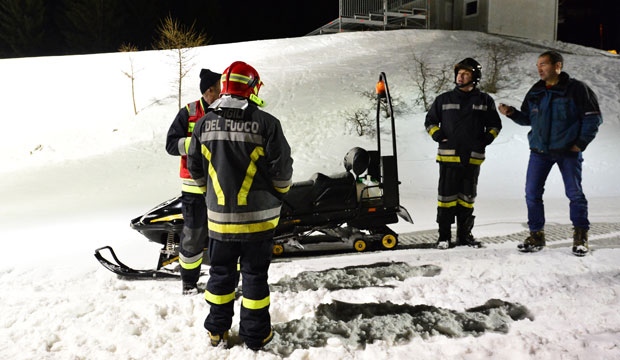
Six Russians have been killed and two others were injured when their snowmobile slammed into a fence and flipped over into a ditch during a night run down an Italian ski slope.

RAI state radio reported that the crash occurred on an unlit slope late yesterday on Mount Cermis in north-east Italy.

The Russian consul general in Milan, Alexei Parmonov, said on Russian state television that he was in contact with Italian investigators, who he said suspect the crash was caused by excessive speed. They also were checking the possibility of a mechanical malfunction.

Russian news reports said the snowmobile was pulling a sled, which is where most of the passengers were sitting.

Mr Parmonov identified the four men and two women who died in the crash. Five of them and also one of the injured men were tourists from Krasnodar, a region in southern Russia that includes Sochi, which is preparing to hold the 2014 Winter Olympics.

One of the dead women and the other injured man worked in Italy in the tourist industry.

The Russian diplomat gave the names of the dead as Denis Kravchenko, Irina Kravchenko, Vyacheslav Sleptsov, Yulia Yudina, Lyudmila Yudina and Rafilya Pshenichnaya. The injured, he said, were Boris Yudin and Azat Agafarov.

Mr Yudin's 17-year-old son, who stayed behind in the hotel, lost his mother and sister in the accident, while his father was taken to hospital with multiple fractures, Mr Parmonov said.

In 1998, a US Marine jet, flying low on a training run from a nearby air base, accidentally sliced a ski gondola's cable on Mount Cermis, sending the cable car crashing to the ground and claiming 20 lives.

Sunday 6 January 2013

http://www.express.co.uk/posts/view/368907/Six-killed-in-snowmobile-crash

continue reading

13 feared dead as tanker rams into bus


No fewer than 13 persons lost their lives in a multiple auto crash along Ogbomoso-Oyo-Ibadan road on Sunday morning. The accident which specifically occurred at Odo-Oba village few kilometres to Ogbomoso, according to eyewitnesses involved a fully loaded petroleum tanker coming from Oyo/Ibadan end road and an 18-seater commercial bus coming from Ilorin/Ogbomoso.

The tanker was said to have collided with the commercial bus at a sharp bend along Odo-Oba village, resulting in the auto crash. The eye-witnesses added that the impact of the collision made the tanker to upturn and spill its inflammable cargo which eventually led to an explosion. The explosion was compounded as another fully loaded tanker had broken down at the same scene for the past one week. The driver of the commercial bus, the eyewitness added, lost control of the vehicle and the passengers were flung out of the vehicle. Only three of the passengers were lucky to escape.

The dead bodies of the victims of the accident were later taken to Bowen University Teaching Hospital, Ogbomoso. As a result of the accident, there was heavy traffic jam along the Ibadan/Ogbomoso/Oyo expressway. Men of the State Fire Service, police, Federal Road Safety Commission (FRSC) had hectic time controlling the traffic.

Officers of the Nigerian Army and the National Emergency Management Authority (NEMA) were also on hand to join in the rescue operation and ensured that the property of the victims were not stolen by hoodlums. The spokesman of NEMA in the South-West, Alhaji Ibrahim Farinloye described the accident as very unfortunate, adding that the scene had to be cordoned off and traffic diverted to another routes around the area. As at the time of filing this report, men of the FRSC were still struggling at the scene controlling traffic.

Sunday 7 January 2013

http://sunnewsonline.com/new/cover/15-die-in-petrol-tanker-bus-accident/

continue reading

Sunday, 6 January 2013

Five killed in road mishap in Sheohar


Intense and blinding fog claimed lives of five farm workers in the wee hours on Sunday when the truck carrying them turned turtle and fell into a pond near village Sonbarsa under Tariyani police station in Sheohar district.

The deceased were identified as Devendra Rai, Naresh Sahni, Sanjay Ram, Manoj Ram and Vijay Sahni, all natives of village Sonbarsa and were in their 30s. They were returning from Mohania in Kairmur district after the end of paddy harvesting season. The truck was full of finished paddy, which they had received in lieu of wages. About 25 labourers were on the truck, when the accident took place. Nearly half part of the truck was submersed in the pond.

Sheohar DM Anil Kumar and SDPO SM Vakil Ahmad reached the spot soon after the accident and supervised the rescue operation with the help of officials and villagers. The bodies were sent to Sitamarhi for post-mortem and the six injured labourers were admitted to the primary health centre (PHC), Tariyani, where the doctors said that they were out of danger. Meanwhile, former union minister Raghunath Jha has demanded an inquiry into the incident and a compensation of Rs 5 lakh each and government job to the kin of the victims.

Sunday 6 January 2013

http://timesofindia.indiatimes.com/city/patna/Five-killed-in-road-mishap-in-Sheohar/articleshow/17918627.cms

continue reading

Baldia factory fire: Seven more bodies identified through DNA tests


Seven more bodies of the Baldia factory fire, which were lying in Edhi’s cold storage, have been identified through DNA tests.

According to Edhi official Anwar Kazi, five of the seven indentified bodies were taken by the families while the remaining two are still with Edhi.

Pakistan Institute of Labour Education and Research (Piler) executive director Karamat Ali confirmed the identification of these bodies. “There are several more that need to be identified since their families are suffering,” he said.

The fourth month of the Baldia factory fire incident culminates next Friday, and 21 bodies have yet to be identified. At a news conference on Saturday, Ali announced that a German-based textile company, KiK Textilien, has signed a Memorandum of Understanding (MOU) with Piler, under which the company will pay compensation to the victims of Ali Enterprises, the factory in which over 260 workers were burnt to death.

“Some of the workers’ bodies have decomposed and are unidentifiable, but their families are suffering as they have not received any compensation from the government despite all their struggles and efforts,” he said. Under the MOU, those victims’ whose families have not received any compensation from the government will be paid first. They will be compensated up to the level of assistance extended by the government departments and other sources so far.

KiK will be extending $1 million in the first phase, while the amount of compensation in the second phase will be determined after negotiations between all stakeholders. The company is also willing to compensate workers, who faced severe injuries in the fire leading to disabilities and loss of future employment, he added.

According to Ali, the number of missing workers is more than 21. “Piler along with other labour organisations is going to submit a petition in the Sindh High Court to seek an independent commission to manage the compensation process.”

This problem could be solved easily once the original factory records are found, he said. It will show how many workers were inside, he added. “Another way is to get testimonies from those workers who survived.”

In case the court does not establish such a commission, Piler will form a committee of prominent citizens, who have been associated with social causes and have a clean reputation. Labour rights activist Nasir Mansoor, Habibuddin Junaidi, Noor Mohammad and Rehana Yasmeen were also present at the news conference. They criticised the government for taking DNA samples for three times from the victims’ families without solving their problems.

Sunday 6 January 2013

http://tribune.com.pk/story/489663/baldia-factory-fire-seven-more-bodies-identified-through-dna-tests/

continue reading

Update: Death toll of collapsed boat in Indonesia reaches 7


An official involved in the rescue work of the recently-capsized boat in Indonesia's Maluku province said on Saturday that one more body was discovered, making the total fatality to seven.

Previously on Friday rescuers discovered six bodies from the capsized boat with a total of 11 people on board. Three of the passengers managed to survive after they swam to an island nearby.

"Merlin was found this morning. The body is placed in the hospital at the moment," Mochtar Ingratubun, head of Southeast Maluku regional disaster mitigation agency said in Ambon, the capital city of Maluku province. He was referring to 14-year-old Merlin Tabalubun, the latest boat passenger found dead.

Rescuers are now intensifying search for Jems Ohoira of eight years old, the only boat passenger who had not been discovered. 24 vessels from the military, water police and local fishermen were taking part in the effort to find the missing one, the Kompas.com reported.

The ill-fated wooden boat sailed from Tanimbar Kei island on Thursday bound to Langgur, the largest city in Southeast Maluku, and was capsized at 6 p.m. local time after being hit by tidal wave, according to the survivors' accounts.

Mochtar said that rescue efforts were conducted since Friday morning after the authority got initial information about the capsized boat from the survivors.

Sunday 6 January 2013

http://www.china.org.cn/environment/2013-01/06/content_27601046.htm

continue reading

Search for bodies begins after Tasmania bushfires


Authorities have begun searching for bodies amid fears lives may have been lost in bushfires that have ravaged southern Tasmania.

More than 100 buildings have been destroyed by the fires, which continue to burn on the Tasman Peninsula, and while there have been no confirmed deaths, police say they have fears for a number of people.

Acting Police Commissioner Scott Tilyard said up to 100 people had not made contact with family or authorities by Sunday afternoon and the search for bodies has so far centred on destroyed properties in Dunalley, Boomer Bay and Marion Bay.

"It's not to say those people have necessarily come to harm, but we can't totally eliminate that until we have contact with those individuals," Tilyard told reporters.

"But we have to brace ourselves for the fact we may locate one or more deceased people."

He said police teams were checking around eight properties an hour.

"At this stage we have not located any deceased people," he said on Sunday afternoon.

"There are a lot of premises that need to be checked. Until we've had the opportunity to check every one of those locations we won't be in a position to confirm there has been no deaths."

Tasmania Fire Service (TFS) chief fire officer Mike Brown said crews were having trouble accessing parts of the Tasman Peninsula as they battled to bring the Forcett fire under control.

"There is still some problems getting fire vehicles into the Tasman Peninsula to work more on protecting properties and protecting assets," he said.

He said around 60,000 hectares have been burned out while another blaze of around the same size continues to burn out of control in remote areas of the southwest of the state.

While that blaze is not affecting any communities, Brown said Parks and Wildlife were checking on its register for any bushwalkers who may be in the area.

He said there was no time frame on when the fires would be brought under control.

"Our predictions over the next week is that temperatures will warm up a bit," he said.

More than 1000 people have been evacuated from the peninsula to Hobart via boat, with the final ferryload of 180 people departing Nubeena for the capital early on Sunday morning.

Hundreds more have sought refuge with relatives and in evacuation centres across the region, including at the Port Arthur historic site.

Acting Premier Bryan Green has announced financial assistance saying hundreds of Tasmanians have been affected.

"This is a very harrowing time for many Tasmanians and our communities have more challenges to face in the weeks and months to come," he said in a statement on Sunday.

The threat posed to communities by the Forcett bushfire was downgraded to watch and act, but the blaze continues to burn out of control, and has already done massive damage throughout the peninsula.

The town of Dunalley was the worst hit, with around 65 homes and the town's school destroyed, while dozens more buildings were razed at Connellys Marsh, Eaglehawk Neck, Murdunna, Copping and Primrose Sands.

Brown said a bushfire near Bicheno had destroyed between 10 and 15 homes, and burned around 7000 hectares.

The fire continues to burn out of control and the town's main access route, Coles Bay Road, was closed again after briefly reopening on Sunday morning.

Firefighters and support personnel have flown in from Victoria and NSW to assist the fight.

The federal government is making disaster relief funding of up to a $1000 ($1259) per person available to those Tasmanians affected by the bushfires.

Speaking in Sydney, Minister for Emergency Management Nicola Roxon said the government had made emergency funding available from noon AEDT (2pm NZT) on Sunday for those impacted by the fires.

"People living in the local government areas affected will be able to claim up a $1000 ($1259) per adult and $400 ($503) per child," she said.

"Other emergency assistance will be made available for people who need money for food and temporary accommodation.

"That comes on top of the funding that Tasmania and the commonwealth together will invest to rebuild those communities."

Roxon said the emergency relief funding was not means-tested but residents had to be affected by the fires and live in certain local government areas to be eligible.

The funding aid had so far been activated in three local government areas with assessments currently being done on two others, she said.

"We're very conscious that our emergency relief organisations do swing into action very quickly here," Roxon said.

She said she could not predict how many people might need the emergency cash.

"We've got a long way to go this summer," she said.

Yesterday insurers declared the bushfire-hit towns a catastrophe and police powers were increased when the Tasman Peninsula was declared a serious-incident site.

Electricity company Aurora said it could take several weeks to restore power in some areas, with 300 poles down on the Tasman Peninsula.

Sunday 6 January 2013

http://tvnz.co.nz/world-news/search-bodies-begins-after-tasmania-bushfires-5312618

continue reading

Friday, 4 January 2013

Temporary ID documents for Khayelitsha fire disaster survivors


Home Affairs Minister Naledi Pandor will visit survivors of the Khayelitsha fire disaster in Cape Town today. She will lead a team of government officials who will issue temporary identity documents to affected residents.

Three people have been confirmed dead while 3000 have been displaced by the fire that broke out on New Year's Day. Disaster management officials say it's possible that more bodies could be recovered.

Spokesman Wilfred Solomons-Johannes of the city's disaster risk management centre said at 1.12am a fire was reported at Thembeni informal settlement in Du Noon.

"The fire destroyed 15 formal houses and another 220 shacks in the area. As a result of the fire 800 people were left displaced," he said.

The blaze also damaged the overhead electricity supply and technicians were repairing the system at 3.30pm on Tuesday.

Meanwhile, in Khayelitsha a fire destroyed 120 shacks on Monday at 7.15pm leaving 200 people homeless at the WD-section.

Solomons-Johannes said another devastating fire broke-out at BM-section of Khayelitsha at 4.45am on Tuesday.

A large contingent of public safety agencies from Disaster Risk Management, Fire & Rescue Services, Metro Emergency Medical Services, City's law enforcement agencies brought the flames under control.

"The blaze destroyed over 800 shacks leaving more than 3 000 people homeless," he said.

The Home Affairs Department is working with the Social Development Department to provide emergency relief.

The aid organisation, Gift of the Givers, is also offering help. The City of Cape Town says it will upgrade a section of the township.

Friday 4 January 2012

http://www.sabc.co.za/news/a/1599dd804e0e123d8519b7f251b4e4e2/Pandor-to-visit-the-Khayelitsha-fire-disaster-survivors-20130104

http://www.timeslive.co.za/local/2013/01/02/khayelitsha-thembeni-fires-kill-three-leaves-4000-homeless

continue reading

4 killed in Nigeria canoe mishap


Four passengers were killed on Thursday when a canoe capsized at the Hadejia River in Kirikasamma local government area of northern Nigeria's Jigawa State, local police authorities have confirmed.

The wooden canoe was conveying nine passengers when it had a head-on collision with a bigger canoe moving from the opposite direction, according to state police spokesperson Abdu Jinjiri.

He said five people were immediately rescued by local divers, while the bodies of four others were discovered several hours after the canoe mishap. "The rescue effort was difficult due to the rising wave in the water and it took the divers several hours to recover the dead bodies," he added.

Jinjiri said the victims were traveling from Machina Community in Yobe State to Gubunsa village in the northern Jigawa State. According to him, the canoe passengers were on their way to a wedding ceremony at the Gubunsa village when tragedy struck.

A three-year old boy was among the casualties, he said, adding that further investigation had commenced to ascertain the cause of the accident.

Friday 4 January 2013

http://news.xinhuanet.com/english/africa/2013-01/04/c_132078328.htm

continue reading

16 killed as minibus taxi and truck collide


Sixteen people were killed in a head-on collision between a truck and a minibus taxi outside Bronkhorstspruit in Gauteng this week.

This is a continuation of the carnage on South African roads that has claimed at least 1280 lives so far over the festive period.

The horror accident on the notorious R568 main road between Bronkhorstspruit and Ekangala happened after a south-bound truck had a tyre burst, veered and crashed into a north-bound minibus taxi with 16 passengers, including the driver, on Wednesday.

Only a female passenger, who was sitting in front next to the taxi driver, and the truck driver survived the crash.

The 16th victim was a female vendor who was selling maize by the roadside. She was crushed to death when the truck dragged the minibus off the road into the veld.

When Sowetan arrived at the scene at about 6pm, body bags were all over the place with police and emergency services personnel hard at work removing bodies from the veld and laying them next to the road.

The unidentified female survivor and the truck driver were taken to Bronkhorstspruit Hospital.

A police spokesman said the driver was in a critical condition.

Ashref Ismail of the Road Traffic Management Corporation said this was one of the accidents that had the highest number of casualties since December 1. He said the truck's right front tyre had burst, causing it to crash into an oncoming minibus taxi, breaking it in two.

"It is alleged that the truck was travelling at high speed and there were no skid marks on the road. This shows that the driver could not apply the brakes."

The bodies were taken to a mortuary for identification.

Friday 4 January 2013

http://www.sowetanlive.co.za/news/2013/01/04/16-killed-as-minibus-taxi-and-truck-collide

continue reading

At least 7 children killed in China orphanage fire


At least 10 people, including seven children were killed in two separate fire accidents in China.

Seven children died when fire engulfed a private orphanage home in Lankao county in north China's Henan Province today.

A spokesman for the Lankao county government said the fire, which broke out around 8:30 am, was contained within two hours. Four children died at the scene of the fire, while another three perished on their way to a local hospital.

One injured child is receiving treatment at the hospital. The spokesman said rescuers do not yet know exactly how many children were in the house when the fire began, state-run Xinhua news agency reported.

The house is apparently a private orphanage, as local residents said a woman named Yuan Lihai has used the home to shelter orphans and abandoned children. Rescue efforts, as well as an investigation into the cause of the fire, are still under way.

Also three people died and two were injured when a tanker truck slammed into a residential building and caught fire in the same province.

The accident took place yesterday on a section of National Highway 312 in Xixia County of the city of Nanyang, Xinhua reported.

The tanker, loaded with liquified gas, collided with a truck while attempting to pass the vehicle, then veered off the road and slammed into a roadside building. Rescuers have found the bodies of three dead people at the scene, and the two slightly injured people have been sent to hospital.

Further investigation into the accident is underway

Friday 4 January 2013

http://news.xinhuanet.com/english/china/2013-01/04/c_132079586.htm

continue reading

Comilla crash death toll 6


Six people were killed and at least 20 others injured when a bus carrying picnickers and a truck collided head on in the district's Chouddagram on Friday morning.

Mainamati Highway Police Station Acting Officer in Charge Moshiur said the incident took place in the Harisardar area at around 7:30am.

He confirmed identity of four of the deceased. "The injured are at Chouddagram Upazilla Health Complex... 12 of them are critical."

Chouddagram Police Station Acting OC Mozammel Hossain said four people were killed on the spot while two more succumbed to injuries after being rushed to the hospital.

He said the picnic bus from Dhaka was headed for Sitakunda Ecopark in Chittagong. "The bus carried a banner with BSTI Staff Quarters written on it."

Miarbazar Highway Police Station Sergeant Shahabuddin Ahmed said both vehicles had been salvaged. "Bodies have been sent to the Comilla Medical College and Hospital for autopsy."

As of now, only four of the deceased have been identified. They are:

Bus driver Matabbar, 42, son of Nur Islam from Gouripur Upazilla's Aatgram village in Mymensingh; truck driver Montu Molla, 40, son of late Javed Molla from Madhukhali's Bhagar in Faridpur; bus passenger Kamal Pasha Ratan, 40, son of Ali Ashraf – an employee of BSTI staff quarters in Dhaka; and Abdul Hakim, 42, son of Suruj Mia from Bancharampur's Haidarnagar in Brahmanbaria.

Friday 4 January 2013

http://bdnews24.com/details.php?id=239394&cid=2

continue reading

Police operation identifies body of man missing for 24 years


The body of a man killed by a train nearly 24 years ago was finally identified in 2012 as part of the national drive to bring closure to families who have lost relatives.

Derek Burns, 20, of West Calder, West Lothian, was interred in an unmarked grave in London after he was struck by a train in March 1989. Extensive inquiries at the time had failed to identify him.

But as part of Operation Santana, the investigation into unidentified bodies found on the train system by British transport police, investigators established that on the day he died Burns had visited his girlfriend at an address close to West Hampstead station, north-west London.

He had been reported missing to Lothian and Borders police the day before and was never seen again by his family.

With the new information his body was exhumed for DNA tests, which confirmed his biological ties to his family.

His father, Derek Burns Sr, said he had gone into his son's bedroom the morning he went missing to see if he wanted to join him on a work trip that day.

"The weather was awful and he said: 'No thanks, Dad,' so I said OK and left," said Burns. "He did not appear for dinner that night or contact us, which was very unusual for him as he was a home person."

His father later found out his son had gone to London to see his girlfriend and find a job. He left without taking his driving licence, passport or any spare clothes or toiletries with him, a lack of distinguishing documentation which was a major reason for the delay in identifying him.

His father said at the time he was finally identified in October last year: "We are relieved that our son has now been found and we can at last put our minds at peace. We are very grateful to the police for the work and effort they have put in, and would also like to thank the help and assistance we have had over the years from the charity Missing People."

Friday 4 January 2013

http://www.guardian.co.uk/uk/2013/jan/04/police-operation-body-man-missing

continue reading

Police launch website to identify 1,000 mystery bodies


The body of an unidentified man recovered from the sea off North Wales 30 years ago will be exhumed later this month in the hope that it can be returned to his family.

The exhumation from an unmarked grave at Menai Bridge cemetery, on the Isle of Anglesey, is part of a nationwide attempt by police forces to put names to 1,029 unidentified bodies in the UK dating back to the 1950s.

The national Missing Persons Bureau, which is the driving force behind the work, has established a website containing images and identifying features of the individuals who have remained nameless for so many years, in the hope of closing some of the cases. The site is one of only a few such facilities in the world.

As well as the 1,029 men and women, it contains details of 105 babies who lie in unmarked graves, unclaimed by families, sometimes for decades. Among them is an infant known as the Burythorpe baby, a boy of around 34 weeks' gestation who was found wrapped in plastic bags at Burythorpe Bridge in North Yorkshire in January 2001.

Forensic tests established the child had died two years earlier but despite extensive enquiries his parents have not been traced.

Some of those who remain unidentified drowned in fast-flowing rivers; others were found in abandoned outbuildings, under railway bridges or on the roadside.

In most cases the only clues to who they are come from identifying features on their bodies, such as a broken ankle or a tattoo, or the possessions they were found with – in one case, a pair of gold-rimmed reading glasses in a black case.

Joe Apps, manager of the Serious Organised Crime Agency's UK Missing Persons Bureau, said: "For us it is about asking how we can be in such a developed society and yet have such a large collection of unidentified people, when it is actually quite difficult to disappear nowadays.

"So how is it we haven't been able to recognise these people? There will be a family that is missing someone and it is right they know where their loved ones are."

The work relies to a large extent on developments in DNA testing, which could at last give some of these individuals identities. But it is painstaking work and, so far, only some eight bodies have been identified.

There are hopes that in the coming weeks the body of the man lying buried in Anglesey will join that list. The body was buried in 1983 after being recovered from the sea.

North Wales police have been given permission to exhume the remains after contact was made with the family of a Norwegian seaman, who believe he might be their relative.

The evidence was strong enough for the north-west Wales coroner to sign the exhumation certificate, and later this month the operation, involving police and forensic experts, will take place. Detective constable Don Kenyon, who is running the investigation, said it was a "rare and sometimes sensitive process".

"The circumstances surrounding this man's death are not suspicious – we are merely attempting to identify him for his family's sake," he said recently.

"That process will involve carefully obtaining DNA samples and comparing them against the DNA from individuals we have identified as possible family members."

In Norfolk, the family of Michael Sutherland were able to hold a memorial service for him late last year, 23 years after his body washed up on a north Norfolk beach. When an investigation failed to identify him, villagers in Weybourne held a funeral service before his burial at a local churchyard.

But detectives took a fresh look at the case as part of their review of unidentified bodies in Norfolk and Suffolk, and exhumed the body to retrieve a DNA profile. When the profile was crosschecked against the missing persons database, it matched that of Michael Sutherland.

His sister Ann Stockton, from Cleethorpes, travelled to Norfolk last November with other family members for a long-delayed dedication service to her brother.

Thames Valley police has used a forensic artist to draw eight individuals whose bodies were found in Buckinghamshire, Oxfordshire and Berkshire, with some deaths dating back to the 1970s.

Detective sergeant Craig Kirby, of the force's major crime review team, said: "This is the most significant work we have done and it fits into the national picture. As police, there is nothing more important that we can do than to bring resolution to families, either within the criminal justice system or working with the coroner to identify people that we find."

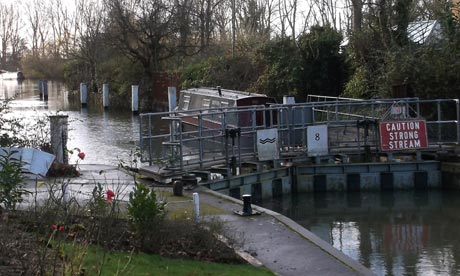
Retired detective Andy Steel investigated one of the eight unexplained deaths: a body found trapped in weir gates in the Thames at Sonning Lock on January 2 1995. He still has the log book he recorded when he was called out that morning.

"It was a frosty morning, the body was trapped in the weir," he said. "He had been in the water for some time. We called in a search team and retrieved the body, and we took it to hospital for forensic tests.

"We took certain items from the body. The most important to my mind was a lovely pair of glasses, which folded into themselves and fitted into a black pouch.

"I remember thinking then: 'Oh, we will identify this chap for sure'."

But 18 years on the unnamed man – aged between 30 and 50 – has never been claimed. The body had been in the water, police estimate, for anything up to 18 months and was so badly decomposed there were no internal organs. Police obtained a dental outline and circulated the details to dentists across the country, but there were no leads.

"We trawled through the missing persons database but there was no one fitting his description," said Steel. "We made several appeals but no one came forward to say that looks like my father, or grandfather.

"These things stay in your mind. It is the only case in my career that remained unresolved and I am hoping this latest publicity might resolve it."

Friday 4 January 2013

http://www.guardian.co.uk/uk/2013/jan/04/missing-persons-bureau-unidentified-bodies

continue reading

2012 in Bangladesh marked by disasters, political confrontations


Along with confrontational politics, Bangladesh witnessed thousands of casualties from natural and man- made disasters in 2012, casting a shadow on its development.

In one of the worst tragedies in Bangladesh's history late in the year, at least 112 workers of a factory at Ashulia on the outskirts of capital Dhaka were killed.

Dozens of workers also sustained injuries as a fire on Nov. 24, claimed to be "an act of sabotage," raged through the eight-storey Tazreen Fashion Limited, where global brands, including U.S. retail giant Wal-Mart, were manufactured.

Data from the Fire Service and Civil Defense Directorate (FSCDD) showed that about 200 people lost their lives in 6,659 fire incidents in Bangladesh during the year, with hundreds being injured.

The Tazreen tragedy happened after a boat with over 110 passengers capsized on Nov. 7 in the Bay of Bengal near Shah Porir Island in Teknaf close to Bangladesh's southeastern border with Myanmar, leaving an unknown number of people missing.

Rescuers said those passengers were going to Malaysia in search of work.

A week earlier another motorboat with 135 illegal migrants on board capsized in the Bay of Bengal, leaving dozens of people missing. Their destination was also Malaysia.

According to the FSCDD, some 1,000 people were killed and about 3,000 others injured in hundreds of road and sea accidents including a fatal ferry collision in March which claimed 138 lives.

Ferry accidents, often blamed on overcrowding, faulty vessels and lax rules, are common in Bangladesh, which also has one of the highest fatality rates of road accidents in the world mainly due to shoddy highways, poorly maintained vehicles, violation of traffic rules by abusive drivers and a lack of monitoring of the traffic department.

Officials say the death toll in man-made disasters such as fire, road and waterway accidents in 2012 could be much higher if the figures from other sources, including those from the police, are added up.

"The accuracy of our statistics is in a very tough position. But it can be assumed. According to police and various data, every day the number of fatalities in road accidents varies from 15 to 50. On average the figure is around 30," said Hasib Mohammed Ahsan, director of the Accident Research Institute of the Bangladesh University of Engineering Technology.

Experts say Bangladesh, situated by the Bay of Bengal, has become more vulnerable in recent years to man-made and natural disasters because of the government's apparent lack of a political will and resourcefulness in protecting its people.

Tornado and cyclones, killing hundreds of people every year, are common occurrences in this calamity-prone South Asian country of about 153 million people whose per capita income is still less than 850 U.S. dollars.

Super cyclone Aila swept across southern Bangladesh on May 25, 2009. It caused widespread damage and affected around 3 million people, leaving at least 179 dead.

Though the country did not suffer from a big cyclone in 2012 like that, a total of 131 people lost their lives in natural disasters that occurred in about a dozen districts across the country in three weeks of June and July.

Most of the deaths were caused by landslides and the others by collapse of walls, lightning and floods caused by violent windstorms, SM Golam Kibria, senior spokesman of Bangladesh's Ministry of Food and Disaster Management, told Xinhua.

Analysts blamed the country's confrontational politics for a lack of planning and of contingency measures in times of calamities.

Friday 4 January 2013

http://www.shanghaidaily.com/article/article_xinhua.asp?id=117106

continue reading

Nutts Corner air crash: A forgotten tragedy


Sometimes, Stephen Auld takes a drive north into County Antrim, and spends some time standing quietly by the side of the busy road, a few hundred yards from the Nutts Corner roundabout.

As he approaches his 61st birthday he's thinking of the mother he lost there more and more often.

"It's trying to imagine in your mind's eye exactly what happened that night" he said.

"The conditions, the feelings of the people as they travelled in towards Nutts Corner, and ultimately crashed."

January 1953 was a dark month for Northern Ireland.

Most people remember the tragic loss of the car ferry "MV Princess Victoria" and 133 lives near the end of the month.

Fewer remember the single worst aviation disaster Northern Ireland has ever seen, a few weeks earlier.

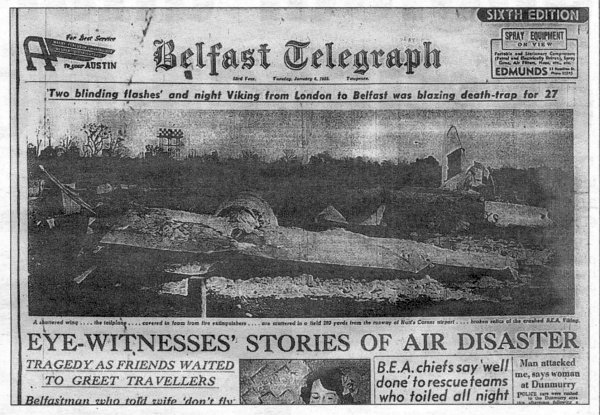
On the evening of 5 January, a BEA Vickers Viking aircraft named "Lord St Vincent" was approaching Nutts Corner airfield having flown from Northolt in West London.

As the pilot took over from the air traffic controllers on the ground, they informed him he was flying a little higher than the path which would have brought him safely to the end of the runway.

A subsequent report found that he must have overcompensated and came down sooner.

The aircraft hit some landing lights, then a vehicle and finally a building, before breaking up. Although a steward and seven passengers survived, 27 others were killed.

Among them was 30-year-old Patricia Auld, known to her family and friends as "Rosie".

A Londoner, she had met her husband George when they were both in the Royal Navy during the war, and they had married and made a life in Belfast.

She was coming home from her father's funeral.

When she lost her life at Nutts Corner, her baby son Stephen was almost one year old.

Ten years later the airfield was shut down, flights coming instead in and out of Aldergrove airport a few miles away.

Nowadays the site is used for motorsport and car boot sales. Some of the land is used by local businesses and training centres. It is difficult to be sure exactly where the crash happened.

As a young boy, Stephen Auld knew nothing of the tragedy until he found a photograph of his mother and asked who it was.

Now he wishes there was something to remind people of the loss of life that night, 60 years ago.

"There is no memorial or mark anywhere of what happened that night" he pointed out.

"No one has actually said 27 people perished here all those years ago."

Over the years Stephen has looked into the details of the crash to try and understand why he lost his mum.

But it has also been an important task for the Ulster Aviation Society.

Guy Warner explained what was discovered.

"It was a very dark night, there was no moon, and some drizzle. The board of inquiry came to the conclusion later on that the captain had got it slightly wrong. The pilot had made an honest mistake."

He added: "In summary you could say it was an accident which happened due to pilot error, but there were mitigating circumstances."

Stephen and the society have been in touch with Antrim Borough Council to see what kind of memorial to the crash victims and their families might be possible.

A special reception is being held for them on Saturday 5 January, the 60th anniversary of the disaster.

"Obviously we should all remember the dreadful Princess Victoria disaster, which I do think in part has overshadowed the disaster at Nutts Corner," he said.

"And perhaps that's why people don't remember it so well. Hopefully this will go some small way to redressing the balance."

Friday 4 January 2013

http://www.bbc.co.uk/news/uk-northern-ireland-20805870

continue reading

Photo retoucher restores memories to disaster survivors


Behind every photograph is a story, and New York-based photo retoucher Becci Manson wants to make sure the stories of disaster survivors struggling with the pain of losing loved ones are preserved.

This desire inspired her to initiate a project to retouch photos damaged by the earthquake and tsunami that struck northeast Japan on March 11, 2011.

"It's a great way to help out — to give people those memories back," Manson, 38, said as she recounted her initiative to restore photographs in the tsunami-hit cities of Rikuzentakata and Ofunato and the town of Yamada, all in Iwate Prefecture, one of the three areas most heavily damaged by the disasters.

"For some people, those pictures were the only thing they ever got back," the Briton said. "When people lose loved ones, I think they realize how important photos are because sometimes these are the only tangible physical things they have left."

Manson usually retouches photos for clients such as fashion magazines, but the project in the Tohoku region was her first endeavor to restore photos that were damaged by Mother Nature.

When she volunteered to come to Japan in May 2011, she only planned to stay for three weeks to help with initial postdisaster needs, which included cleaning homes and clearing ditches with All Hands Volunteers, a U.S. nonprofit group. She ended up staying for six months.

Manson shared her experience last June in a TED Talk lecture. She said then that looking at the piles of photos, she "couldn't help but think as a retoucher that I could fix that tear and mend that scratch, and I knew hundreds of people who could do the same."

Manson said the project, which was fully supported by All Hands, began with several dozen volunteers and spread through such social media sites as Facebook and LinkedIn, with 80 people wanting to help from 12 different countries.

To date, over 500 volunteers worldwide have helped retouch hundreds of photos for 90 families. She said volunteers pitched in from across the world, including the U.S., Europe and Asia.

The photo retoucher had no personal connection with Japan until the disasters but developed a "pretty emotional experience" with the local community. She is particularly thankful for a local woman who helped "hand clean" photos, a necessary step before retouching.

She said it was heartening to restore tsunami-damaged photos, especially those of weddings and babies. The task was different from her usual work of trying to "make skinny models skinnier, perfect skin more perfect, and the impossible possible."

One photo she remembers fondly is that of a little girl in a ballerina outfit. It was covered in scratches.

"It was a really nice start to a project to realize what we could do," Manson said, adding she and volunteers would set up stations in communities with a laptop and scanner so she could upload the photos immediately to a cloud server.

She noted the project also offered a chance for volunteers outside Japan to help, saying, "A lot of people wanted to volunteer and come to Japan, but they either couldn't afford it or couldn't take time off work."

As much as she wanted to repair more photos, she was often pressed by time constraints and difficulty salvaging heavily damaged photos. For example, there was a photo of a woman dressed in a wedding kimono where the sides of the kimono were blurred. "When images like that came in, we needed to make sure we had some very, very experienced and talented retouchers so that they can be fixed correctly," she stressed.

"Some things are delicate; the wedding kimono . . . it's like fixing someone's face — if you don't get it right, it doesn't look like it should, it's pointless doing the job," Manson said, adding that each photo has both a personal and historic value.

More than a year after the disasters, her photo retouching efforts have resonated through the hearts of groups in the U.S. that have decided to launch similar projects in response to tropical storms in their communities.

With Hurricane Sandy hitting closer to home in New York, Manson remains eager to share the idea of retouching disaster-damaged photos and is ready to help Japan again if she is needed.

In her TED lecture, Manson said photos are "our memory-keepers and our histories, the last thing we would grab and the first thing you'd go back to look for."

"That's all this project was about, about restoring those little bits of humanity, giving someone that connection back," she said.

Friday 4 January 2013

http://www.japantimes.co.jp/text/nn20130104f3.html

continue reading

University of Copenhagen opens Center for Disaster Research


With climate change increasingly wreaking havoc the world over, besides traditional natural disasters such as earthquakes and tsunamis, managing natural disasters more efficiently is a priority for the future. For that reason, the University of Copenhagen has created the Copenhagen Center for Disaster Research (COPE), a hub of multidisciplinary expertise on disaster management, based on analysis and intelligence.

One of the main concepts behind COPE is the Disaster Situation Room, a place where both researchers and specialists with first-hand experience in disaster relief can meet to brainstorm and provide advice during disasters. One of the key aspects of the center’s ethos is to bring analytical skills into disaster management. This includes factoring in, for instance, cultural aspects of the populations affected, which provide clues on how to proceed more effectively. The center will collect data from each case to build a knowledge bank by monitoring relief aid activities, media coverage and political agendas.

The media will be a main focus of the center’s work, since media coverage influences how relief work is carried out and what it achieves. Despite its role in creating awareness of disasters, its focus often can do more harm than good. Peter Kjรฆr Mackie Jensen, head of the research center, cites as an example the relief efforts after the earthquake that devastated Haiti in 2010. While people were dying in the streets, financial resources were going mainly towards digging survivors out of the rubble because the latter made for more dramatic TV.

The idea for the center was inspired by the handling of the 2004 tsunami in Asia during the Christmas holiday season. At the time, hundreds of thousands of people lost their lives. Faced with a tragedy of unprecedented scale, relief operations lacked coordination and, as a consequence, there was less collaboration between different fields of expertise than there could have been.

Other organizations involved in COPE are the Copenhagen Business School and the Danish Emergency Management Agency (DEMA). Besides the center, the University of Copenhagen also offers a Master of Disaster Management.

Friday 4 January 2013

http://www.gizmag.com/university-copenhagen-center-for-disaster-research/25622/

continue reading

60 year ago: Princess Victoria ferry disaster


Sixty years ago this month 133 people lost their lives when the Princess Victoria sank off Northern Ireland’s coast. It was one of the UK’s worst post-war sea tragedies yet today the terrible loss is barely remembered by the wider public.

It was one of the UK’s worst peacetime sea disasters. The lives of 133 people were lost when the car ferry Princess Victoria sank in a ferocious gale off the Co Down coast on January 31, 1953.

Not one woman or child on board survived, and it is regarded as “a generation’s Titanic” — but very little is known about the tragedy outside Northern Ireland and Scotland.

Now ahead of the 60th anniversary of the disaster calls have been made for more to be done to ensure future generations remember the worst maritime disaster in the waters of the British Isles.

The roll-on roll-off ferry went down with only 44 survivors — all men — out of 177 people who set out that stormy morning on the short crossing from Scotland.

Annual commemorations are held in Larne and Donaghadee and memorials also stand in Larne, Stranraer and Donaghadee.

Many of the victims were from Northern Ireland and in Larne, and most families were said to be affected in some way.

But Ards Councillor Mervyn Oswald (below) said more needs to be done to “preserve the memory” of the victims and the tragedy for future generations.

He said a commemorative service held in St Anne’s Cathedral, Belfast should be considered.

“There were 133 lives lost and with the Deputy Prime Minister of Northern Ireland Major Maynard Sinclair losing his life, it warrants a commemorative-type service,” he said.

“It is certainly something that should be thought about.”

Mr Oswald said discussions between Ards and Larne councils should develop.

“I think this year will hopefully revive and spark a discussion that both councils should be thinking about how to preserve these histories,” he said.

“How to commemorate it and to bring it to the forefront of the younger generation is always a difficult ask but I think it is fast fading.”

The author of Death In The North Channel: The Loss Of The Princess Victoria, Stephen Cameron, described the 1953 disaster as a “generation’s Titanic”.

“There were no women and children who survived,” he said.

“They were all put into one lifeboat. That lifeboat was set adrift and then lifted by the waves and smashed against the hull of the ship and they were all thrown into water — not one woman or child survived because of it. The families still feel the pain very much.”

Mr Cameron, however, said he believed the current commemorations are “fitting”.

“I do feel what is there is fitting for the victims,” he said.

“But this was the largest loss of life in the water surrounding the United Kingdom and it is little mentioned apart from here in Northern Ireland — this was a generation’s Titanic.”

In Larne, the annual service overseen by the Royal Antediluvian Order of Buffaloes will be held adjacent to Larne Leisure Centre at 11am.

Also being considered is an unveiling of a painting of the Princess Victoria purchased by Larne Council.

The wreckage of the ferry still lies at the bottom of the Irish Sea, five miles north east of the Copeland Islands.

And discussions will also take place over whether a ferry will be organised to travel to the sinking site at sea to lay wreaths on the water.

Donaghadee will host a memorial service on January 27 and a weekend of fundraising events to help preserve the lifeboat that saved 33 of the 44 survivors.

The Sir Samuel Kelly lifeboat was launched on the night of 31 January 1953 from Donaghadee harbour.

A brass band concert to a 1953 ‘night at the movies’, will also be held with all proceeds raised going to help preserve the Sir Samuel Kelly.

It began as just another regular ferry crossing from Stranraer to Larne on the stormy day the Princess Victoria sailed out of the sheltered waters of Loch Ryan in January 1953.

Warnings of severe gales in the Irish Sea had been issued earlier in the day and another vessel had already been forced to drop anchor in the loch after encountering hurricane-force winds.

Despite the fierce storm, at 7.45am the roll-on/roll-off ferry — with her open stern protected only by five-foot-high doors — set sail under the command of Captain James Millar Ferguson with 177 passengers on board.

Within hours the stormy conditions would overwhelm the ferry, and the resulting disaster would send shockwaves around the British Isles.

Princess Victoria would never reach her destination. Instead, she sank in the 21-mile stretch of water between Stranraer and Larne with the loss of 133 lives.

The storm struck its fatal blow just 90 minutes after the vessel set sail. At 9am a massive wave burst through the stern doors, buckling them hopelessly out of shape.

Crew members struggled desperately to keep the mangled doors closed, but sea water surged onto the car deck.

As the belly of the ship filled with water, the Princess Victoria began to list dangerously.

Wearing their lifejackets, passengers tried in vain to bail out flood water which had seeped into the lounge area. At 10.32am the first SOS signal was sent out. However, a lifeboat was given the wrong directions to get to the foundering ferry.

Just after 1pm the Radio Officer sent a signal, giving her position and alerting other vessels in the area that they were about to abandon ship. But the wrong co-ordinates were given.

At 1.58pm the last message from the ferry's radio operator was transmitted. By 2pm, the list was so bad that lifeboats on the starboard side could not be lowered.

Two of the boats carrying women and children dropped down suddenly into the treacherous seas and capsized. Their occupants were hurled into the turbulent, icy waters.

Three others floated clear, but then the ferry flipped over.

The mission to rescue the passengers and crew was badly hampered by the fierce winds.

When rescue vessels managed to reach the crippled ship, waves had risen to a height of 50 feet.

As she sank, Captain James Ferguson stood with one hand firmly grasping the rail of his ship, the other raised in salute.

There wasn't one woman or child on board who survived the disaster. Only 44 men were saved.

Among the dead that Saturday were the Victoria's master, Captain James Ferguson, the deputy Prime Minister of Northern Ireland, J Maynard Sinclair, and the MP for North Down, Sir Walter Smiles.

Those on board Princess Victoria were not the only victims of the sea that day.

To the north of her final resting place, the trawler Michael Griffith was also lost, claiming the lives of the 14 on board and two of the crew of the Islay rescue lifeboat.

For their bravery, Portpatrick, Donaghadee and Cloughy lifeboat crews received RNLI awards.

A 35-day inquiry into the events found that the stricken Princess Victoria had been in an “unseaworthy condition.”

The owners, British Railways, were held entirely to blame.

It concluded: “If the Princess Victoria had been as staunch as the men who manned her, then all would have been well and this disaster averted.”

Former Belfast Telegraph Sports Editor Malcolm Brodie was one of the first to report on the sinking of the Princess Victoria

The day was one of the worst I’ve ever seen in the UK. The wind was howling throughout Northern Ireland.

I was in the Belfast Telegraph office at about noon and we already knew the ship was having difficulty in crossing the North channel — but that was the story for the entire fleet at sea that day because of the weather.

We had heard there was a woman whose husband was a seafaring captain had been listening to an exchange on a short-wave radio.

I went up to the house and she had the radio in a cubbyhole. I sat down and soon grasped the entire story.

As the drama unfolded, I began to realise it was something special and of a greater magnitude than at first thought. The reception on the radio was first class but it all ended when the skipper of a coaster ship said there was nothing that could live in those seas and they were pulling out.

I went down to Donaghadee that night and it was a very poignant scene.

The lifeboat did a round-up of all the people who had been aboard — and when you realised the number involved it became clear that this was one of the greatest sea tragedies in Irish history.

One neighbour of mine asked me if their relative’s name was on the list of survivors — and unfortunately I had to tell them it wasn’t.

Later, we interviewed a seaman on the ship and asked him why none of the women and children were saved.

He said that when they went down to the lifeboats they would have been standing up as they boarded and would simply have tumbled into the sea.

We were stunned at just how many lives had been lost in such a small area of sea, although it has always been known as one of the most dangerous stretches of water in the world.

The Belfast Telegraph told the terrible story on its front page that night and the next day we turned out a special edition.

The repatriation arrangement was made at Donaghadee. The whole place was in a state of shock and utter sadness at the scale of the loss of life.

Of course, it was a reminder of the Titanic — not as large a disaster, but still as tragic.

The story was an exercise in how the Belfast Telegraph tells big stories affecting Northern Ireland.

As journalists, we were looking at the horror and the sadness that was developing among the relatives of those who had drowned.

It was a heartbreaking story for the paper — and recalling it now brings it all back to me.

Friday 4 January 2013

Read more: http://www.belfasttelegraph.co.uk/news/local-national/northern-ireland/princess-victoria-the-disaster-that-sank-from-memory-16257135.html#ixzz2GyLYMFcY

continue reading

China's ghost brides


A single man will always cause trouble. Even after he’s dead.

“A man who dies unmarried will be restless, he’ll move around haunting, making all sorts of problems for his family,” says Chang Libing, a researcher on Chinese customs and history at Shanxi University, explaining long-held local superstitions.

The lonely man’s spirit will torment his family with demands and neediness. There underlies the belief in parts of China including here in Shanxi province, where old superstitions die hard, that a man must go to the grave with a wife.

Even though high-speed trains and big coal money are changing the cities, an hour or two south of the capital Taiyuan lie villages trapped in another time. Traditional cave homes have been replaced by earthen villages that wind and sand blended back into the yellow hillsides. Many of these villages are losing women from their graves, bodies disappearing in the dark of night.

In Shanxi, a tradition outlawed decades ago has made a big comeback: ghost marriages. It’s not the same as it once was, when two families would meet and agree to marry off their dead children for the afterlife. Rather, grave robbing has become big business, with female corpses in these parts selling for between a few hundred dollars to upwards of $7,000, depending on age at death and time elapsed.

“Market economics have changed traditional customs,” said Chang.

The Wei brothers of Dafa village experienced this shift from the worst vantage, losing the bodies of their mother and stepmother to grave robbers two years ago.

Though the practice is widely known and on the rise (there are no official numbers), it took months to find a family willing to talk, as protecting ancestors after death is extremely important in Chinese culture. The Wei brothers, Wei Yinxi and Wei Fuxi, are angry enough to go public because they believe they know who did it.

For years, the Weis believed their family graveyard was unlucky. Five generations were too many buried in the plot overlooking their farm. The hard, yellow earth was crowded and the spirits of those buried beneath restless.

Those spirits, the brothers believed, kept causing bad luck. There was evidence: Two of the five Wei brothers died young; drought was withering crops.

Their late father was married three times. He and all his wives were dead, buried in that crowded plot.

When it came time for the Weis to move their parents to better grounds, the family turned to Jia Haizheng, the local feng shui master, a self-taught expert in the ancient principles and practices. Jia consulted his charts and returned with this advice, Wei Yinxi recalled:

“Dig up all the bodies and place them in red boxes outside the graves, just next to each person’s original grave. The timing isn’t exactly right so we’ll return two days from now and move their bodies to the new graves.”

Said Chen Bianping, the younger Wei brother’s wife: “The feng shui master helped us choose the time, the place. He decided everything. Every step.”

That evening, the brothers couldn’t sleep, suspecting something amiss. In the morning they returned to the family plot.

The red boxes remained, surrounded by two sets of new footprints that appeared in the night. Inside two of the boxes were only stones, left to weigh them down. The bones of their mother and stepmother were gone.

The trouble began when their 18-year-old brother died several years earlier, unmarried. Because he died single, the Weis hired Jia, the feng shui master, to make him a “flour bride,” the likeness of a woman sculpted from wheat flour paste and painted as though on her wedding day.

“She looked so beautiful, even her lips were like a real, living person’s,” recalled Chen, the younger Wei’s wife, explaining why the family trusted the feng suhi master.

“She was really perfect,” Chen said. “Because of that we felt very strongly that he was the right person to advise on where to move the parents.”

The Communist Party of China outlawed ghost marriages decades ago, along with a list of old superstitions believed to be keeping people bound to backwards and unproductive ways. Old folks here say the practice never went away, it just went underground, with ghost weddings taking place after dark, only whispered about. Now, they’ve become big business.

There’s a thriving trade in the bodies of dead women. State-run media, the English version of the Global Times newspaper, recently ran a report saying that oil barons in this region were causing inflation in corpse prices.

Nevermind the dead women have no say on who will be their husbands for all of eternity. There is money to be made, and in China, money talks.

With not enough women in China, tens of thousands of men are dying single and their numbers will only rise. The situation is especially evident in places like Shanxi, where coal-mining accidents claim the lives of thousands of young men every year.

When the Wei family’s mother and stepmother went missing in 2009, police launched an investigation. By then, any evidence was gone. They women are now likely buried with other men, strangers.

Jia, the feng shui master, is cagey, shying away from questions and denying knowledge of where the bones went. His grimy shop, a five-minute drive from the Wei family home, is filled with elaborate paper funeral ornaments, books on geomancy and calendars of auspicious dates. His 8-year-old son’s English grammar book lies open on the family’s shared bed.

“When you want to prepare a new grave, you have to pick the exact date and the exact place,” says Jia. “Changing the particulars could be just as unlucky.”

The Wei family paid him nearly $100 for consulting services on moving the graves. The trade in dead women is far more lucrative than feng shui advice.

For their part, the Wei family is desperate for answers. Police detained the feng shui master for a few days, but said that without evidence, they can’t take the case any further.

“They told us there are rules now, that 10 years ago they could have beaten him into a confession, but today there’s nothing they can do,” said Wei Fuqi, shaking his head. “I don’t know how we can ever find them now.”

Thursday 3 January 2013

http://www.globalpost.com/dispatch/news/regions/asia-pacific/china/110615/chinas-ghost-brides

continue reading

Mudslide deaths rise to 13, two unaccounted for


The death toll of last week’s mudslide in Keiyo South District has risen to 13.

This is after one more body was yesterday found in the mud a few kilometers from River Kerio.

Bodies of Kipruto, 14, a Standard Eight candidate at Menone Primary School, and two year-old Kipkogei Kibet from Simit village are still missing.

People searching for missing villagers found the body of a woman identified as Alice Cheruiyot, 37.

Residents said the deceased had rescued her three other children, but when she returned for the fourth one, Kipruto Cheruiyot, the floods swept her and the child.

Area DC Arthur Bunde said they have asked residents to be on the lookout especially on the riverbanks and rubbles of the destroyed houses for the missing bodies.

“Red Cross have been helpful and we have been searching for missing bodies together until we found the woman,” said the DC.

He added they would not relent on the search until all residents are accounted for. Survivors of the landslide continued receiving assistance as they camped in schools.

Fellow residents from Elgeyo/Marakwet County extended a helping hand to the over 60 displaced households.

Residents from Kamwago village and its environs donated food, clothes, and beddings to the victims who are camping at Chororget Primary School.

Titus Teimuge, co-ordinator of the exercise, said the victims needed help.

Teimuge said it was sad that after a whole year of hard work, the victims had their granaries washed away by heavy rains that further rendered them homeless.

He attributed the tragedy to cultivation on escarpment and constant cutting of trees that has weakened the soil cover.

Teimuge expressed the need for residents in the larger Keiyo South to start growing trees along the escarpment.

“It is time we take it upon ourselves to plant trees on the escarpment and avoid cultivating on the slopes because it weakens the soil cover,” Teimuge said.

Keiyo South MP, Jackson Kiptanui, has since appealed to the Government to relocate people living in landslide prone areas.

“The Government should fast track relocation of persons living in disaster prone areas. In this region alone, we have over 1,000 households who need urgent relocation,” Kiptanui said.

Thursday 3 January 2013

http://www.standardmedia.co.ke/?articleID=2000074226&story_title=Mudslide-deaths-rise-to-13,-two-unaccounted-for

continue reading