Saturday, 1 August 2015

MH370 wreckage may not provide the closure grieving families seek


For those who lost loved ones on Malaysia Airlines Flight 370, the utter mystery of exactly what happened nearly 17 months ago has only compounded their grief.

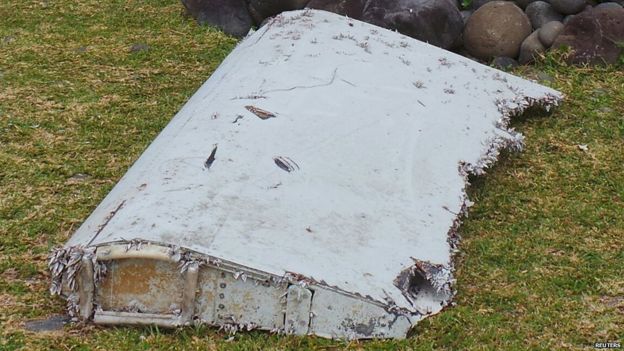
But with the discovery of a barnacle-encrusted wing part on Reunion Island in the western Indian Ocean this week, there is, for the first time, a strong clue about what may have happened to MH370 and its 239 passengers and crew on that fatal flight from Kuala Lumpur to Beijing.

The finding is a possible punctuation point in an open-ended story. But it is unlikely to bring anything like full closure say those who have also lost loved ones in mysterious circumstances and have had to grapple with how to grieve the missing.

Ask Bret McCann, whose parents Lyle and Marie McCann vanished on a road trip to British Columbia five summers ago. "I've read about this," he says, "and it's called ambiguous loss, where, psychologically, you're not really sure what happened. I mean. It still bothers me."

Or ask Crystal Dunahee, for whom not having any closure is her daily reality since March 24, 1991, the day her four-year-old son Michael disappeared from an elementary school playground in Victoria, B.C.

Her situation, Dunahee says, has no real comparison to this latest glimmer of hope the families of flight MH370 victims have received.

"You have a plane incident. You know they were on the plane. Whereas we have nothing to show what happened to Michael or where he may be now. We have nothing.

We have no answers."

Just some facts

Sometimes, says author and New Hampshire-based grief counsellor Ashley Davis Bush, when people are seeking what they call closure, they're hopeful they can put an end to the pain because we are, what she calls, "a pain-averse culture."

"What they don't realize is that even when those events occur, whether it's finding a piece of evidence or prosecuting someone or finding an answer, the pain is still going to be there."

Davis Bush doesn't deny that new information can bring a certain amount of relief to grieving families. She simply cautions that "it is not going to erase the pain. It will just give you some facts that provide an answer."

In the McCann case, the last time the retired couple, both in their 70s, were seen alive was July 3, 2010. Video surveillance footage shows Lyle filling up their motorhome at a gas station in their hometown of St. Albert, Alberta.

Lyle and Marie McCann went missing in July 2010 after leaving St. Albert on their way to B.C. (RCMP)

Two days later their burned out RV was discovered in a remote area near Edson. Their bodies were never found.

At first, family members chose to believe they were lost. "For all that winter of 2010 to 2011 we looked after my parents' house, shovelled the snow and kept it clean. So by the next summer police were telling us they were ... gone," says Bret McCann.

A year after the McCanns disappeared, a court declared them legally deceased. And shortly after, the family held a public memorial service on what would have been the couple's 59th wedding anniversary.

Afterward, some family members told Bret McCann that the memorial helped them feel "better." But for him, it had another purpose: to continue the search for his parents.

"I mean, it was a meaningful memorial, but it was also another way to keep it in the public eye."

A mother's pain

Dunahee says she'd much rather know what happened to Michael, even if the answer would be heartbreaking.

"It's always there. We don't have the closure that we need to move on 100 per cent."

For her part, Davis Bush likes to remind people that "we want to believe that pain will stop, but you don't want the love to stop. Feeling the grief is part of having loved them."

For the families of those lost on MH370, their public grieving has been an eventful roller coaster of emotions in the full glare of the world media.

They've watched desperately as authorities chased several, sometimes erroneous leads and searched a vast expanse of the Indian Ocean, to no avail.

Many of the families have already stated that even if the debris is determined to have come from the missing Boeing 777, it's only one piece of a very large puzzle and not nearly enough to give them any real understanding of what happened.

That's not dissimilar to what Bret McCann is going through. Next March, Travis Vader will go on trial for the first-degree murders of Lyle and Marie McCann in Alberta.

But when asked whether that is where the McCann family hopes to find conclusive answers as to exactly where his parents may be, McCann sighs deeply.

"I think we'll know a lot more after the trial, but we won't know everything. I think we'll just ... accept that."

Saturday 1 August 2015

http://www.cbc.ca/news/world/mh370-wreckage-may-not-provide-the-closure-grieving-families-seek-1.3174553

continue reading

Friday, 31 July 2015

Eight persons remain missing one month after Darjeeling landslides


A month after the devastating landslides hit the Darjeeling hills, eight persons still remain missing, with search operations called off a couple of days ago.

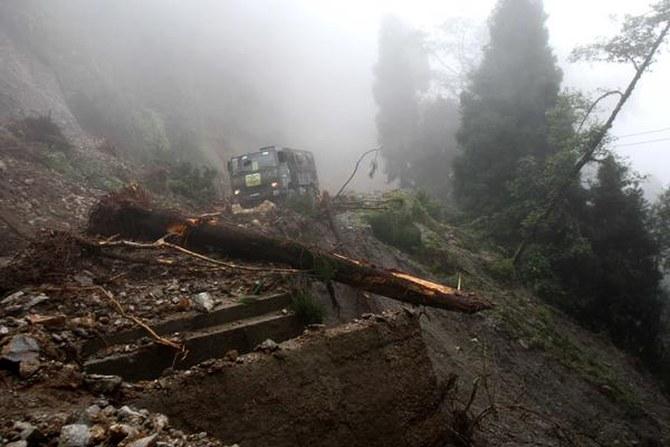
On the night of 30 June, heavy rainfall had led to devastating landslides throughout the Darjeeling hills, with major impact seen in Mirik and some areas of Kalimpong sub division with several persons dead and missing.

Search operations were executed jointly by NDRF, SSB, state police disaster management team, and locals, who recovered some of the bodies of the deceased.

According to district administration sources, a total of eight missing persons are yet to be traced in the hills, of who five are from Kalimpong sub division area (1 from 8th Mile and 4 from Kholakham) and three are from Tingling, Mirik, under Kurseong sub division.

The bodies of one Ramesh Rai resident of 7th Mile Kalimpong, recovered from Melli area on 5 July and nine year old Shreha Sharma Suvedi, recovered from Tingling on 6 July were the last of the missing persons found.

A cousin of the Suvedi family, Balkrishna Suvedi said that that on devastating 30 June night, a total of 19 persons lost their lives in the landslides at Limbu Dhura, Tingling, in Mirik out of which 11 were from their family.

The rest were from the Thapa and the Aaley familes.

He added that out of the 19 persons missing, sixteen bodies have been recovered. The bodies of three persons from the Suvedi family, namely Ramlal Suvedi, Kumari Suvedi and Dipraj Suvedi are yet to be found.

He added that on 13 July, they had also performed the last rites of those who had died in the 30 June night landslide excluding the three missing members.

He said that till recently the SSB personnel were seen working in the landslide hit areas to find the missing persons, but for the past couple of days, they too have not been seen conducting search operations.

"As such, we are really worried and in a Dilemma regarding the missing members," he added.

When asked, Darjeeling district magistrate, Anurag Srivastava, he said that for the past couple of days, they have called off the search operation. According to records, 32 people were killed and eight missing persons are yet to be traced out in the hills, he added.

Friday 31 July 2015

http://www.thestatesman.com/news/bengal/the-case-of-the-missing-8/79105.html

continue reading

34 still missing in Kullu bus accident


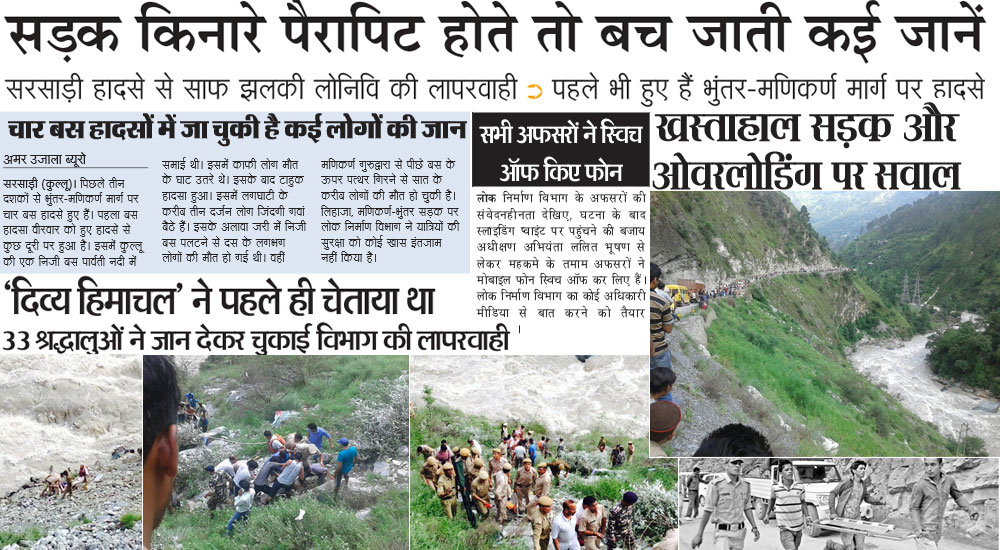
Eight days after the tragic accident in which a bus with 69 people on board plunged into the Parvati River near Sarsari village, search and rescue teams have been unable to locate 34 passengers with only 12 bodies fished out till now. Of these one victim remains unidentified.

Relatives of those still missing have become desperate with many of them wandering near the accident site in hopes, which are swiftly evaporating, of finding their loved ones.

Gurmail Singh, a resident of Mansa district in Punjab, whose 22-year-old son Preet Singh was on the ill fated bus, said the tragedy had left him and his family members shattered. "I'm now a completely broken man and my wife continuously asks me about whether our son has been found," he told this reporter.

After the tragedy Gurmail and his family members arrived at the accident site along with his relatives and have been milling around in the scorching heat every day for any sign of Preet but without success, leaving them completely depressed. Like him there are about other 40 relatives of the missing bus passengers camping in Kullu, hoping against hope the search teams will be able to locate them.

The district administration has deployed 160 diving experts and others including personnel of the National Disaster Response Force, Sashastra Seema Bal (armed border force), Indo-Tibetan Border Police and the police in the search operation. The state government has now sought the assistance of the Indian navy for employing sonar, a technique that uses sound propagation, in the search efforts.

Meanwhile, families of the bus passengers whose bodies have been retrieved have urged the Punjab government to give a compensation of `10 lakh to each of them.

Friday 31 July 2015

http://www.hindustantimes.com/himachalpradesh/hopes-fading-for-35-still-missing-in-bus-mishap/article1-1374805.aspx

continue reading

All 23 people aboard crashed Lao helicopter confirmed dead


All 23 people on a Lao military helicopter that crashed earlier this week while traveling to northern Laos have been confirmed dead, military officials and state media said Thursday, though the cause of the accident remains unknown.

Air traffic control in the capital Vientiane lost contact with the MI-17 helicopter—registration number RDPL-34062—at 1:10 p.m. local time on July 27, shortly after it departed Wattay International Airport, heading for Houaphan and Xieng Khuang provinces.

The aircraft was located Wednesday crashed in a remote area of Xaysomboun province’s Longchaeng district, a Lao military official told RFA’s Lao Service, adding that all 19 passengers and four crew members were killed in the accident.

“We have accessed the crash site—all the people on board were killed because the helicopter hit a mountain in eastern Longchaeng district,” the official said, speaking on condition of anonymity.

“The recovery team can now retrieve all the bodies from the crash site.”

An official with Division 703 of the Lao Air Force told RFA that the remains of the dead would be flown to Vientiane for identification and then turned over to relatives for funeral proceedings.

Lao state media cited a Ministry of Defense statement Thursday confirming that all people aboard the helicopter died in the crash.

The ministry said that an investigation is underway into the cause of the crash, but preliminary findings suggest recent heavy rains and extreme weather in the region is likely to blame.

The weather has also hampered recovery efforts by a task force committee assigned to the site, which is reportedly located deep in in the jungle on a slope of Phu Bia Mountain in Longchaeng.

On Wednesday, a senior official from the Ministry of Defense told RFA that at least one of the 19 passengers was a “high-ranking military patient” who had received treatment in Hospital 103 in Vientiane and was returning to Houaphan province.

Hospital 103 is a military hospital operated by the Ministry of Defense which was built to treat soldiers.

A doctor from Hospital 103 told RFA on Wednesday that three other passengers were health professionals from the facility accompanying the patient in the helicopter.

The identities of the other passengers and crew members were not immediately known.

Recent air disasters

Aircraft in impoverished Laos are mostly outdated, and the country has suffered at least two major air disasters within the last two years.

On May 17 last year, a Ukrainian-made Antonov AN-74TK-300 aircraft owned by the Lao military crashed while approaching an airport in Xiengkhuang, killing 17 passengers, including Lao Deputy Prime Minister Douangchay Phichit, Minister of Public Security Thongbanh Sengaphone, and two other high-ranking officials.

The group was en route to attend the 55th anniversary of “strategic gains” made by the Lao military during the Indochina War, according to state media.

The crash, which was attributed to a technical error by the pilot, is the second deadliest air disaster in Lao history, after the crash of Lao Airlines Flight 301 seven months earlier.

On Oct. 16, 2013, Flight 301—an ATR-72 turboprop—plunged into the Mekong River during bad weather as it approached Pakse Airport in southern Laos’s Champasak province, killing all 49 passengers.

Six Australians, seven French, five Thai, three South Koreans, two Vietnamese, as well as passengers from China, Myanmar, Taiwan and the U.S. were killed in the crash, which was also attributed to pilot error.

Friday 31 July 2015

http://www.rfa.org/english/news/laos/dead-07302015181429.html

continue reading

Thursday, 30 July 2015

Nepal landslides kill at least 20, bury 2 villages


Landslides triggered by torrential rain in Nepal swept through two villages on Thursday, killing at least 20 people, the home ministry said.

The landslides struck the villages near the resort town of Pokhara, 125 kilometres west of Kathmandu shortly after midnight. At least 22 houses were destroyed, said ministry spokesman Laxmi Dhakal.

Krishna Bahadur Raut, a government official in the area, told Reuters about a dozen people were missing.

Two powerful earthquakes in Nepal this year that killed almost 9,000 people are believed to made slopes across the mountainous country unstable and raised the risk of landslides during the rainy season, which lasts from June to September.

Soldiers and police officials were working in heavy rain using shovels and their bare hands to search for villagers, most of whom were in their beds when the landslide struck.

The government has asked for mechanical diggers and other heavy equipment to help with the search, but their arrival from Pokhara has been held up by landslides on the roads.

Despite years of preparation for earthquakes, the government had been slow to map landslide-prone areas.

Thursday 30 July 2014

http://www.cbc.ca/news/world/nepal-landslides-kill-at-least-20-bury-2-villages-1.3173486

continue reading

Wednesday, 29 July 2015

14 bodies found in migrant ship in Mediterranean


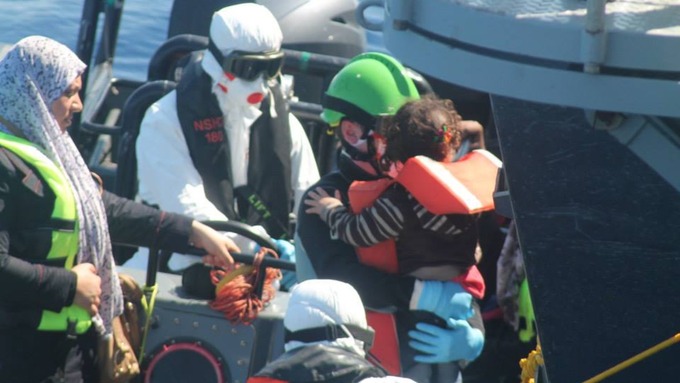
An Irish military ship has recovered 14 bodies from a small unseaworthy fishing boat carrying more than 500 migrants.

The vessel was found around 80 kilometres north-west of the Libyan capital Tripoli.

The cause of death is as yet unknown but migrants are offen at sea for says and suffer from dehydration and sun exposure.

A ship operated by Medicines Sans Frontieres helped in the rescue and one of its members, Juan Matias Gil, described the challenge facing Europe.

“It is impossible to believe, it is very difficult to believe, that these people are coming in these conditions. We havent had another major tragedy so far because we have been very lucky and there are rescue boats are around. But for sure the operation is not enough for all the needs that we are facing.”

Later today more than 1,000 migrants are due to arrive at the Italian ports of Messina and Reggio Calabria in the latest wave of people willing to risk the perilous journey across the Mediterranean to Europe.

So far this year more than 1,900 migrants have died in the attempt.

The European Union is still struggling to formulate a policy on ho to deal with those trying to get to Europe.

Earlier this month the bloc failed to agree on how to spread 40,000 asylum seekers in Greece among its members over the next two years, postponing the decision until the end of the year.

The LE Niamh naval ship, which has so far rescued more than 1,200 migrants as part of the international humanitarian mission, was sent to the scene.

An Irish Defence Forces spokesman said: "During searches of the barge the crew of the LE Niamh recovered 14 bodies from below the deck of the barge."

Wednesday 15 July 2015

http://www.euronews.com/2015/07/28/fourteen-migrant-bodies-recovered-in-the-continuing-exodus-from-north-africa/

continue reading

The tragedy of the USS Indianapolis


Its sinking in shark-infested waters 70 years ago is still regarded as the worst naval disaster in US history.

On November 6, 1968, a 70-year-old man was found dead on the lawn of his home in Litchfield, Connecticut.

In his hand he clutched a toy sailor. The body was that of Charles Butler McVay III, a retired rear-admiral in the US Navy.

He had shot himself with his Navy issue revolver but, in some ways, tragedy and injustice had broken Charles McVay many years earlier.

From November 1944 until July 1945, he had served as captain of the USS Indiana polis, flagship of the 5th Fleet.

Shortly after midnight on July 30, 1945, the ship was hit by Japanese torpedoes and sank within 12 minutes.

Nearly 900 of the 1,197 aboard survived but they remained adrift in the Pacific for five days before being rescued.

By then only 317 were left. The rest had perished by drowning, dehydration, exposure or shark attacks.

It remains the biggest US naval disaster of the war and Captain McVay, quite wrongly, got the blame.

If they were hungry, they’d eat a little of you. If not, they’d leave you alone. The fear was constant Seventy years later, the tragedy of the USS Indianapolis is to be told in two Hollywood films.

One of them, Men of Courage is in production in Mobile, Alabama, with Oscar-winner Nicolas Cage playing Captain McVay.

Despite its scale, the disaster – and the shameful incompetence of the US Navy high command – remained little known for years.

On July 29, 1945, the Indianapolis was returning from a top-secret mission to deliver enriched uranium and other parts to the island of Tinian in the Pacific.

The materials were destined for use in Little Boy, the atomic bomb that would later be dropped on Hiroshima.

The delivery completed, the Indianapolis called at Guam for a change of crew, then set sail for Leyte, in the Phillippines.

At 12.14am on July 30, two torpedoes from a Japanese submarine struck the ship on her starboard bow.

Three hundred of her sailors never got the chance to obey the order to abandon ship.

No lifeboats or life rafts were launched.

The others jumped into the dark waters of the Pacific, many before they had time to grab a life jacket.

As the Indianopolis sank, her four propellers were still turning.

The ship had no sonar to detect submarines but the crew managed to send three SOS signals.

However, it soon became clear that the 880 drifting survivors faced other perils.

They had no food or water and nothing to cling to except each other.

By day they burned under the fierce sun. By night, they froze.

And then there were the sharks – hundreds of them.

“I saw a shark the first morning after daylight,” recalled Loel Dean Cox, then 19, who had come on duty at midnight.

“I swear some were 15 feet long but then they all looked that big swimming beneath you.”

At first the sharks feasted on the dead bodies but soon they began picking off the living.

“We were losing three or four each night and day,” said Cox.

“Every few minutes you’d see a dozen or two dozen fins coming at you.

"They’d bump you but you never knew when they would attack.

“If they were hungry, they’d eat a little of you. If not, they’d leave you alone. The fear was constant.”

On the third day, Cox saw a shark shoot towards him “like lightning” and take down the man next to him.

“I stayed in half shock after that. All you could do was pray it wouldn’t be you.”

The men huddled together in groups in the hope of deterring the sharks.

At first they talked constantly but as the hours stretched into days, their tongues became swollen with thirst.

Some began to hallucinate. One sailor believed he was in touch by walkie-talkie with a submarine but warned that no one who wet the bed would be rescued.

One of Cox’s friends became convinced the Indianapolis was floating just below the ocean surface and announced he would dive to the second deck where the supply of drinking water was stored.

He resurfaced, raving about how good the water tasted.

Minutes later he choked to death, with brown foam at his mouth from drinking salt water.

On the fourth day, two US Navy aircraft flew over the sailors without seeing them.

Just before sundown, they were finally spotted by a seaplane flying so low that the men in the water could see a man waving.

“That was when the tears came,” said Cox.

“That was the happiest time of my life.”

As he waited for rescue, drifting in and out of consciousness, he became aware of a bright light.

“It came down out of a cloud.

"I thought it was from heaven but it was the rescue ship shining its spotlight up into the sky to give all the sailors hope and let them know someone was looking for them.”

But why had it taken so long to rescue them?

Why was there no response to the three distress signals sent from the Indianapolis?

Before the voyage, Captain McVay had requested a destroyer escort.

Despite the Indianapolis having no sonar and despite evidence of Japanese submarine activity in the area, the request was denied.

Instead, the admirals had simply instructed McVay to adopt a “zig-zag” course. Why?

Captain McVay never got an answer.

Instead he became the scapegoat that the US Navy clearly needed.

In November 1945 McVay was found guilty of “hazarding his ship by failing to zig-zag”.

Even the Japanese commander of the submarine that had fired the fatal missiles testified that zig-zagging would have made no difference.

By then the public were celebrating the Japanese surrender and had little stomach for wartime calamities.

Despite 380 US ships being sunk in the war, McVay was the only captain court-martialled for losing his.

For years the navy denied receiving any distress signal but when they were eventually declassified, papers relating to the disaster revealed that all three had been received and ignored.

One commander was drunk, another didn’t want to be disturbed and the third suspected a Japanese trap.

No one had reported the ship’s failure to arrive in Leyte because no one was tracking it.

McVay retired in 1949 as a rear-admiral but for the rest of his life he was haunted by abusive letters and phone calls from the families of the dead sailors.

Eventually he could take no more. He was finally exonerated in 2000 after an unrelenting campaign by some of the survivors, aided by a 12-year-old Florida schoolboy who interviewed 150 of them for a history project and gave evidence before the US Congress.

Until then, the only mainstream reference to the Indianapolis was in the 1975 blockbuster Jaws, in which shark-hunter Quint, played by Robert Shaw, reveals he survived the sinking.

There are now only 32 survivors of the Indianapolis, among them Richard Stephens who has given his first-hand account to Nicolas Cage.

After five days in the sea, Loel Dean Cox’s hair, fingernails and toenails fell out.

He returned to his home town in Texas and died there in January, aged 89.

The horror had never faded for him. “I dream every night and I have anxiety every day,” he said.

“But I’m living with it and sleeping with it and getting by.”

Wednesday 29 July 2015

http://www.express.co.uk/news/history/594535/Tragedy-of-the-USS-Indianapolis

continue reading

As peace talks advance, Colombia struggles to find its missing


"I know the grave was here," says the ex-combatant, Andres Martinez, wiping his brow as a forensic expert starts in with a shovel near the rural town of Chaguani.

Though it's only mid-morning, the motley team of forensic staff, prison guards and ex-rebels from the Revolutionary Armed Forces of Colombia (FARC) have already dug one trench in heavy rain, hoping to find the bones of a victim of the 50-year conflict.

The missing man, who the FARC says was a member of a rival group shot in battle, is one of at least 52,000 Colombians who have disappeared during a long war between Marxist rebels, government troops and right-wing paramilitaries.

Most were killed and buried in unmarked graves across the country.

As the government wades through complex peace talks with the FARC, rights advocates and families of the disappeared hope the rebels will reveal grave locations as part of a deal for them to avoid long prison terms and be allowed to enter politics.

Victims' groups warn that unless more bodies are exhumed, identified and returned to their families, Colombia risks handicapping its post-conflict development.

"The past is going to haunt them," said Christoph Harnisch, head of the International Committee of the Red Cross's (ICRC) office in Colombia.

An estimated 220,000 people have been killed in the war.

The violence, and the unknown fate of so many missing people, has stalled Colombia's development. The government is hoping for a peace deal this year and says its could add 2 percentage points to annual growth, but that would be at risk if implementation goes badly.

Even with an easing of the conflict over the last decade, work inside Congress is often stalled as lawmakers dissect each others' links to different armed groups.

Experts say the challenge facing Colombia could be even greater than in Argentina, Chile and Guatemala - where the disappeared of late-20th century conflicts were largely victims of the government - because so many armed groups are involved, complicating efforts to collect information.

Handcuffed to a prison officer, the ex-FARC fighter Martinez, who will serve just eight years in prison in exchange for information about bodies, points to where he thinks the grave is.

"Length-wise, this way."

"Is the body dismembered or whole?" excavation official Hugo Villalobos asks.

"Whole."

Apart from locating graves, usually in remote jungle or mountain terrain, the biggest obstacles to identification are investigators' lack of training, funding and equipment.

The workload will balloon if a peace deal is signed.

"Obviously it would mean an increase - an exponential increase," says Alvaro Polo, head of excavations for the attorney general's office in Bogota, where forensic staff pore over skeletons in their morgue. He says his team would need to double in size from roughly 70 now.

The ICRC calculates that nearly 70,000 people remain unaccounted for, more than the government's estimate, though some disappearances may be unrelated to the war.

The numbers are high even by the standards of Latin American conflicts. In Guatemala's brutal civil war, up to 45,000 people went missing. About 30,000 "disappeared" under military rule in Argentina, while 3,000 went missing during Chile's dictatorship.

UNIDENTIFIED BODIES

"Until we have bones, something we can say goodbye to, he's still alive," said Marcela Granados, 28, cradling a photo of her father Jose, who was taken by paramilitaries from their ranch in northeast Colombia in 2003.

Despite testimony from a neighbor, who saw him beaten, and the capture of one perpetrator, his remains were never found.

Polo's unit has excavated 6,000 bodies since 2007, more than 10 percent of the government's missing count.

Nearly half of the remains have been returned to families, but another 3,000 bodies lie unidentified in morgues.

Some have preliminary identifications, based on witness testimony or other evidence, but the majority are "pure unidentifieds" - meaning investigators have zero leads.

Victims mostly come from poor, isolated rural families who lack decent communication, hobbling efforts to get DNA samples to match with bodies that have been found.

Rights groups say investigators rely too much on testimony from ex-fighters and fail to use other techniques: interviews with communities, records of armed groups' movements or satellites and radar.

Stefan Schmitt, a German forensic expert who has met with Colombian officials, said Colombia should compile a definitive database of the disappeared because once "flashy exhumations" finish the unidentified stop being prioritized.

"You end up with warehouses full of remains," he said.

Finding the disappeared is easier said than done.

Staff often carry equipment for hours through inhospitable terrain to reach sites and few are certified to use technologies like ground-penetrating radar, said Polo.

Excavations in dangerous areas require army protection or helicopter transport. Captured insurgents sometimes withdraw testimony following threats, canceling exhumations.

Even when digs do occur, they fail to turn up remains at least half the time.

"Peace will bring something big," said forensic anthropologist Maria Alejandra Marino, packing up her equipment after eight hours work at the Chaguani excavation, where no remains were found.

Wednesday 29 July 2015

http://ca.reuters.com/article/topNews/idCAKCN0Q228820150728?sp=true

continue reading

Tuesday, 28 July 2015

Search on for 28 missing in Kullu


Search operations continued on the sixth day on Tuesday for the 28 passengers from Punjab who got drowned when their bus fell into the swollen Parvati river in Himachal Pradesh.

Eleven bodies have been taken out and 23 people rescued, police said. The passengers were travelling to a Sikh shrine in Manikaran.

Kullu Deputy Commissioner Rakesh Kanwar told IANS over the telephone that search operations were on to locate the bodies.

Though one more body was recovered from the river, it was not that of the missing passengers, he said.

The official said the bus was still untraceable, and the divers could not successfully carry out the operation as the river was still in spate.

"The flow in the river today (Tuesday) came down marginally owing to less rain in the catchment area. We are hopeful that the water level will decrease in one or two days," he added.

Rescuers said there were chances that the remaining bodies, which were in the process of getting bloated, would start surfacing in the water.

In the first two days, nine bodies were recovered.

Over 150 rescue workers are involved in the search operation, focusing on the 44 km downstream stretch of the river from the accident spot to Pandoh dam.

Most bodies, officials said, were either trapped under the rocks or buried in the riverbed silt.

Meanwhile, parents and family members of many of the missing passengers met Chief Minister Virbhadra Singh here on Tuesday and sought cooperation from the government to locate the bodies.

The chief minister assured the families all possible help, including providing ex-gratia to the accident victims.

Tuesday 28 July 2015

http://news.webindia123.com/news/Articles/India/20150728/2650690.html

continue reading

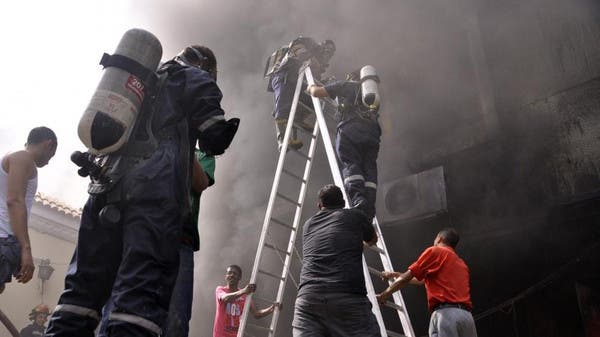
Fire at Egypt furniture factory kills 25


A fire at a furniture factory outside Cairo killed 25 people on Tuesday, the spokesman for Egypt's health ministry said.

Another 22 people were injured by the fire in El Obour, an industrial city about 35 kilometres (22 miles) northeast of Cairo, Hossam Abdel Ghaffar said.

The cause of the fire was not immediately clear, he said.

A separate fire at a food market in Egypt's second city of Alexandria left 11 people injured on Tuesday, a health ministry official in the city said.

At least 35 people died last week in a boat collision on the Nile that prompted criticism of Egypt's transportation and infrastructure safety standards.

Health Ministry spokesman Hossam Abdel-Ghaffar said in a statement that the injured and dead were transported to local hospitals.

Video footage posted on social networks showed thick smoke billowing from the factory as rescuers crowded to help the victims.

Such accidents are relatively common in Egypt, given the dilapidated state of many buildings and failure to adhere to industrial safety norms.

In September 2014, six people died and 22 were injured when a textile dyeing factory collapsed in Cairo in an accident blamed on poor construction.

Tuesday 28 July 2015

http://www.shanghaidaily.com/article/article_xinhua.aspx?id=294631

http://english.alarabiya.net/en/News/middle-east/2015/07/28/Egypt-factory-fire-kills-19-workers.html

continue reading

Colombia searches dozens of bodies at Medellin landfill site


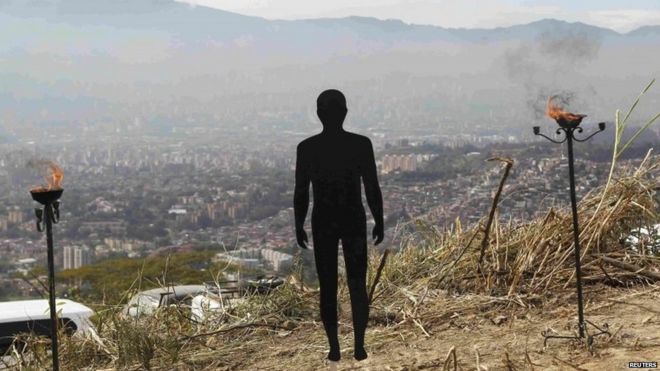
Forensic experts in Colombia have begun a search for dozens of bodies at a landfill site believed to be one of the largest urban mass graves in the world.

Relatives of possible victims held a ceremony at the site on the outskirts of the city of Medellin before the excavation started.

The bodies of 90 to 300 people are thought to be buried there.

The disappearances date from 2002, when the army launched an operation against left-wing rebels in the area.

The operation was ordered by Colombia's president at the time, Alvaro Uribe.

Right-wing paramilitaries filled the void when the rebels left the Comuna 13 shantytown area and they are blamed by many for most of the killings.

Criminal gangs are also accused of involvement in some of the disappearances.

Medellin was once considered one of the world's most violent cities.

It was the home of the Medellin Cartel, the drug-trafficking organisation led by Pablo Escobar, who was killed in 1993.

Some 20,000 tonnes of earth will be removed over the next five months in the search for the bodies, reports the BBC's Natalio Cosoy in Bogota. 'Drop of hope'

A ceremony at the site, including a religious service, marked the beginning of the excavation.

"It took us 13 years to get here. This is a drop of hope," said Luz Elena Galeano, leader of an organisation of women fighting for justice for their missing relatives.

Relatives laid flowers and images of their loved ones on the site.

"The ceremony was moving and a commitment to peace and reconciliation," said Colombia's Interior Minister Juan Fernando Cristo.

More than 200,000 people have been killed since hostilities between the army and Colombia's main rebel group, the Farc, began in 1964.

Both sides have been engaged in nearly three years of peace negotiations, which are being held in Cuba.

Earlier this month, the Colombian government announced a de-escalation of attacks against the rebels, who had announced a unilateral ceasefire.

The talks are aimed at ending hostilities, which would lead to the Farc giving up its armed struggle to join the legal political process.

Tuesday 28 July 2015

http://www.bbc.co.uk/news/world-latin-america-33684670

continue reading

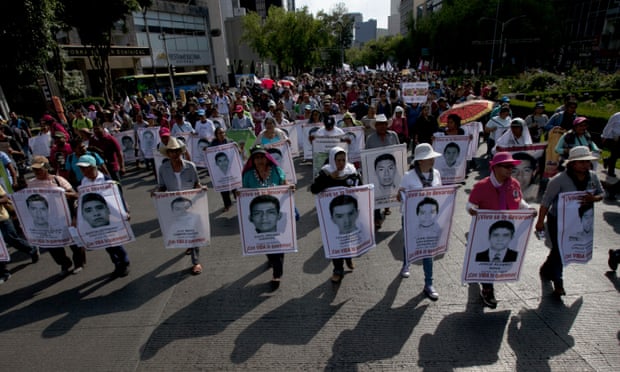
Search for missing Mexican students turns up 129 bodies unrelated to case


The search for 43 Mexican student teachers who disappeared after they were attacked by cartel gunmen and corrupt municipal police officers in September has unearthed the bodies of at least 129 other murder victims.

The corpses were found in 60 clandestine graves across Guerrero, the southern state where the youths vanished 10 months ago, the attorney general’s office said on Monday. None is thought to be linked to the case of the students from the Ayotzinapa teacher training college.

The new figures, which were released following a freedom of information request by the Associated Press, have prompted fresh anger at the government’s failure to tackle Mexico’s epidemic of disappearances – and its refusal to investigate allegations that the army may have also played a role in the Ayotzinapa attack.

Only 16 of the 129 bodies have so far been identified; 20 were women, 92 were men, while the gender of the rest has yet to be determined.

Many of the bodies were discovered by grieving families who launched their own search parties after the attack on the Ayotzinapa students.

The attack, in the town of Iguala about 190km (120 miles) south-west of the capital, left six dead and 43 trainee teachers missing. The case has prompted mass protests across Mexico and widespread international condemnation.

So far 110 people have been charged in relation to the attack, but no one has yet been prosecuted.

Scepticism about the official version of events continues to grow, and some relatives of the missing students still cling to the hope that they may still be alive.

Last week, the National Commission for Human Rights said it had found at least 30 omissions in the official investigation.

The government has so far rejected calls by an independent team sent by the Inter-American Commission on Human Rights to investigate the army’s possible involvement.

Omar Garcรญa, who survived the attack, told the Guardian: “We’re living in a very serious situation where anyone can be disappeared and murdered, buried in a secret grave and be forgotten, unless their families look for them. The fact that only 16 people have been identified out of 129 shows the state’s lack of will to investigate. Mexico has forensic scientists and anthropologists capable of doing the work, but they’re not given access because there is no political will.”

In Guerrero, the actual number of bodies found since the students disappeared is likely to be higher as the new figures released by the attorney general includes graves discovered between October and May, and only those where specialists were involved in the exhumations.

Nonetheless, the staggering number of mass graves discovered in a single state has refocused attention on Mexico’s disappearance problem.

More than 23,000 people have been reported missing since 2006, and the whereabouts of most remain unknown. Meanwhile around 15,000 bodies have not been identified. Investigations are seriously hampered because there is still no reliable missing persons and DNA database.

Claudia Rangel Lozano, professor of sociology and history and expert in disappearances at Guerrero Autonomous University, said: “While the case of the 43 students has international attention, there are many more families in Guerrero, and all over Mexico, looking for disappeared relatives who the government has no interest in helping.

“It is outrageous and very sad that the state is more interested in issues like energy reform than helping families find their disappeared relatives. There are no trials, no one is punished, and no effort to understands the patterns of violence or the role played by the army, and so the terror continues.”

Meanwhile the relentless violence in Guerrero continues as warring drug cartels battle over opium growing territory and trafficking routes.

The latest murder figures released today revealed 943 murders in Guerrero in the first six months of the year – a 20% rise on the previous year.

Guerrero’s murder rate – 26 per 100,000 people – is four times higher than the national average.

“This latest macabre revelation confirms what we had already found: the sheer magnitude of the crisis of enforced disappearances in Guerrero and elsewhere in Mexico is truly shocking,” said Amnesty America’s Erika Guevara Rosas.

Tuesday 28 July 2015

http://www.theguardian.com/world/2015/jul/27/mexico-search-missing-students-129-bodies

continue reading

Monday, 27 July 2015

Iraqi Kurds hopeful long-missing Halabja children still alive


Nearly three decades later, dozens of children are still missing from Halabja following the chemical bombardment of the city in 1988 by Iraq’s then Baathist military.

Families of the missing children say their loved ones could still be in neighboring Iran where they took refuge with thousands of others fleeing the chemical attacks in Halabja that left more than 5,000 people dead. The families say since they never found the bodies of their children, strong possibilities remain that they are still alive but have no knowledge about their own families in Halabja.

“We are constantly looking for our beloved children,” said Muhammad Saeed, whose family is missing their two sons who disappeared without a trace when the traumatized family tried to flee the gas attack toward the Iranian border on the evening of March 16, 1988.

“Whenever anyone knocks on our door, we become exited hoping the separation is over and our loved ones are finally at the door,” Saeed said.

So far seven children have returned to their families in Halabja after Kurdish authorities were able to establish their identities through advanced DNA tests.

Saadon Muhammad, who is the director of a support group for the victims of the Halabja bombing, said the DNA tests were necessary since many others have claimed to be from Halabja but were later proved not to be.

“We have had three such incidents when people have come forward and said they were from the city, but afterwards changed their accounts and said they were not,” Muhammad said explaining how some claimed to be from the city for financial reasons, as the Kurdistan Regional Government (KRG) decided to compensate the missing people who returned to Halabja by granting them land and monthly wages.

Maryam, 33, came to Halabja to find her family but returned to Iran when authorities could not find her relatives in the city.

“She came back in May but her case is still unfinished which shows how slow the process is,” Luqman Qadir, the head of the Halabja Victims Society, which has been caring for Maryam since she returned, told Rudaw.

Authorities say there are four other people now residing in Iran who claim to be from Halabja and that they hope to conduct tests to find their original families.

Monday 27 July 2015

http://rudaw.net/english/kurdistan/260720151

continue reading

Saturday, 25 July 2015

Two days after Kullu bus accident, body of woman pilgrim found in Larji dam


Two days after a private bus from Punjab fell into the Parbati river in Kullu, the body of a woman pilgrim travelling in it was recovered from Larji dam, 40 km downstream from here. Thirty-five pilgrims and the bus, PB-19 M-3085, are still missing.

A daylong frantic search on Friday yielded little as only one body was recovered and the bus wreckage couldn’t be found.

Kullu deputy commissioner Rakesh Kanwar told Hindustan Times on Saturday that rescue teams had been deployed at five locations to trace the missing victims, all of them pilgrims from Barnala, Bathinda, Anandpur Sahib and Mansa districts of Punjab.

Nine bodies were retrieved till Friday, while one was recovered on Saturday morning from Larji dam, where the Mandi district administration has set up a control room to fish out bodies of the victims washed away after the bus fell into the river.

“The National Disaster Response Force team has been deployed at the accident site near Sarsari village on the Bhunter-Manikaran road. Indo-Tibetan Border Police (ITBP) personnel are conducting a search at Jiya, where the Beas and its tributary Parbati meet 15 km downstream from the accident site. Seema Suraksha Bal personnel are deployed at Jhiri, Aut and Larji on the 40-km stretch,” Kanwar said.

Over 600 personnel of the National Disaster Response Force, Indo-Tibetan Border Police, Sashastra Seema Bal, Bhakra Beas Management Board, police and the home guard have been engaged in the search operation from the accident spot to Bhuntar along the banks of the Beas up to Larji and Pandoh Dam.

The dam gates have been shut to prevent the bodies flowing downstream. A general alert has been sounded in the twin districts, asking people to keep immediately inform the administration in case any body is spotted on river banks.

At least 23 persons, including the driver and the conductor, were rescued and admitted to a hospital in Kullu on Thursday. Four seriously injured persons had been referred to PGI, Chandigarh, said Kullu Deputy Commissioner Rakesh Kanwar, adding the efforts were on to locate the bus wreckage as the possibility of the bodies trapped inside it were high. The 52-seater private bus was packed to capacity with 67 passengers.

“All 19 injured victims have been discharged from the regional hospital in Kullu. The bodies of nine victims have also been handed over to their families,” the deputy commissioner said.

The bus met with the accident in Sarsari village on the Bhuntar-Manikaran road, some eight km from Bhuntar.

Kullu’s Deputy Commissioner Rakesh Kanwar told IANS that a massive search operation was continuing for the remaining victims.

He said the focus of the search operation was to locate bodies trapped under boulders on the 10-15 km-long downstream stretch of the river from the accident spot.

Most of the bodies, officials said, were either trapped under rocks or buried in the riverbed silt.

A team of the National Disaster Response Force also reached the spot to locate the missing people.

“Our rescue workers are basically facing problem of poor visibility. The river bed is full of mud and silt. There are also big boulders and rocks,” an official said.

Meanwhile, family members of the missing people have reached the accident site.

Some of the relatives were apprehensive that the bodies might wash away 20-30 km further as the river stretch is narrow downwards and the current is strong.

This is the second major accident involving tourists in Himachal Pradesh in a little over a year.

Twenty four students of a Hyderabad-based institute and a tour operator were washed away in the Beas river in Mandi district on June 8 last year when water was released into the river without warning from a nearby hydropower project.

It took almost a month to retrieve all the bodies from the river.

Saturday 25 July 2015

http://www.hindustantimes.com/himachalpradesh/two-days-after-kullu-bus-accident-body-of-woman-pilgrim-found-in-larji-dam/article1-1372991.aspx

http://www.tribuneindia.com/news/nation/kullu-bus-accident-fate-of-35-pilgrims-remains-uncertain/111156.html

http://www.canindia.com/2015/07/kullu-accident-two-more-bodies-found-toll-nine/

continue reading

Anonymous migrant graves deserve humane policy solution


A year ago, a Globe investigation exposed in stark detail the lack of an established process for families of relatives who have disappeared while attempting to cross the US-Mexico border illegally. But little progress has been made since then, and many of the missing are never found, or end up buried anonymously in public graves.

The lack of recourse for families of the hundreds who have died after crossing the border begs for a humane solution. Federal authorities must strengthen policies to mandate consistent identification of the dead. To allow anonymous mass graves on American soil is cruel to families and denies the basic human right that every individual deserves a degree of dignity — no matter where they come from or how they died.

The growing body count of migrants underscores the treacherous journey of crossing the border into the United States. Chief Deputy Sheriff Benny Martinez of Brooks County, Texas, testified before Congress earlier this year that his department has recovered bodies of those who crossed illegally at a rate of about six per month over the past six-and-a-half years.

The humanitarian dilemma has not gone unnoticed, but it still demands new rules and federal assistance to create a reliable identification system. A consortium of forensic experts formed the Reuniting Families Project (RFP) to assist in efforts to identify bodies of migrants, some of whom had been buried by the county in public cemeteries without having a DNA sample taken as required by law. The group has been unearthing public graves of migrants near the border since 2003. Since 2013, RFP has exhumed more than 120 bodies of unidentified border crossers.

Many law enforcement officers and ranch owners in Brooks County have repeatedly called for increased awareness and more resources to manage the sickening status quo, insisting it is not about the politics of immigration, but essentially a human rights issue. “If dead human beings don’t catch your attention, what the hell else is going to? We’re just trying to be human about it,” a local rancher told the Associated Press.

Humanity toward deceased unidentified migrant border-crossers needs to be codified in law enforcement circles, as the Globe’s report made clear. East Boston resident Maria Interiano’s brother went missing two summers ago as he crossed the border illegally into Texas. It was a heartbreaking tale of dead ends as Maria tried to find out what happened to him — she didn’t even know there is a federal database, the National Missing and Unidentified Persons System, where her brother’s DNA profile could be found. Local law enforcement agencies are also sometimes reluctant to investigate when it’s unclear if the disappearance occurred in their jurisdiction.

Migrants should never be buried in US soil without consistent, codified efforts to identify them. The ongoing pressure at the US-Mexico border — along with beefed-up security — guarantees that there will be more extreme and dangerous efforts to cross into the United States, and certainly more tragic deaths. Federal and local authorities must work together to stop unnecessary suffering for families in the aftermath.

Saturday 25 July 2015

https://www.bostonglobe.com/opinion/editorials/2015/07/24/anonymous-migrant-graves-deserve-humane-policy-solution/d1DUIpiwHCpPxkZoSs79XL/story.html

continue reading

Germanwings crash victims remembered in French Alps memorial ceremony


Four months to the day since Germanwings Flight 4U9525 crashed in the French Alps, relatives and friends have gathered at a memorial ceremony near the crash site. Compensation for victims' families remains unsettled.

More than 300 people in the quaint French town of Le Vernet remembered the 150 people who died on March 24 when their flight from Barcelona to Dรผsseldorf crashed in the French Alps outside the town.

Authorities who examined cockpit voice and data recorders from Germanwings Flight 4U9525 concluded that 27-year-old German co-pilot Andreas Lubitz, who had a history of severe depression, appeared to have intentionally crashed the plane.

Around half of the crash victims were German, among whom where 16 high school students and two teachers who had been on a school exchange trip in Spain. Other passengers came from Spain, Britain, Denmark, Australia, the US, Israel, Mexico, Columbia, Argentina, Japan and the Netherlands. 'Sense to life'

Guests attended an interfaith ceremony on Friday at the memorial stone that was erected shortly after the crash, before releasing 149 balloons over the mountain range, each one representing a crash victim, not including Lubitz.

"Now the relatives must find a sense to their lives again," Rabbi Daniel Dahan said at the service.

At a separate ceremony on Thursday evening, the remains of victims who were unable to be identified were laid to rest in a communal grave. Germanwings memorial in Le Vernet, France

The bodies of people were able to be identified by French police were returned to the countries of origin in June.

According to Steffen Rudolph, the ombudsman for relatives of the victims appointed by the German government, all but one of the 150 victims' bodies have been repatriated.

It's difficult for the families - "a grave still exists here, there are over 3,000 remains buried here," aviation attorney Christof Wellens said. Intentional crash

At the end of Friday's ceremony, the mayor of Prads-Haute-Bleone, Bernard Bartolini, said the disaster remains present in the mountainous region. "We owe this place to the relatives," Bartolini said, adding that plans were already in place for a second memorial.

"We want neither a massive press furor, nor a big spectacle," he said. "It shouldn't become some kind of Disneyland." Compensation row

Taking a backseat to the memorial on Friday was the ongoing public row between Lufthansa and lawyers representing the victims' relatives over the amount of compensation each family will receive.

The airline has offered around 100,000 euros ($109,000) per family on average, depending on family size. After a total of 75,000 euros per family unit, Lufthansa also agreed to pay an additional 10,000 euros to each immediate relative, including parents, children and spouses.

Despite demands from lawyers for 200,000 euros per family, the airline has insisted that its offer goes "well beyond" what it is legally bound to pay.

Saturday 25 July 2015

http://www.dw.com/en/germanwings-crash-victims-remembered-in-french-alps-memorial-ceremony/a-18606544

continue reading

Pakistan floods: Death toll rises as more bodies recovered


Twenty-four more people were killed today as floods triggered by heavy monsoon rains inundated northern Pakistan, raising the overall death toll in the flooding to 46.

The rescuers recovered 24 more bodies from the deluged Chitral district in Khyber Pakhtunkhwa province, police said.

The already inundated district has been lashed with heavy rainfall since Sunday, which have swept away roads and bridges, cutting away remote areas from the district headquarters.

It prompted the Pakistani government to dispatch troops there to rescue those trapped by the flooding. The army says it is using helicopters to evacuate people from remote villages.

The district's Mor Kahu area is the worst-hit where around seven villages have been swept away. It has been already cut off from rest of the district and there are reports of shortages of food and medicines.

The overall death toll due to flooding in the country has climbed to 46 nationwide, police said.

Prime Minister Nawaz Sharif, Pakistan Tehreek-e-Insaf chief Imran Khan and Chief Minister Pervez Khattak had yesterday visited Chitral and inspected the damages caused to the infrastructure.

The Prime Minister has announced Rs 500 million aid relief package for those affected in the district besides Rs 5 lakh for each destroyed house as compensation and waiving of the agriculture loans.

National Disaster Management Authority said that in the largest province of Punjab, 366 villages and over 2,00,000 people were affected, while crops on 2,05,366 acres of land were damaged.

The latest spell of rains, which started on Friday, is likely to continue for another two days in Pakistan, according to officials.

Saturday 25 July 2015

http://www.business-standard.com/article/pti-stories/pak-floods-rains-kill-24-more-people-toll-reaches-46-115072500640_1.html

continue reading

Friday, 24 July 2015

At least 40 migrants drown and 90 are rescued when a rickety inflatable boat capsizes off Libyan coast


As many as 40 African migrants have reportedly drowned off the Libyan coast after their overcrowded inflatable boat capsized and sank.

Another 90 migrants managed to survive the perilous journey across the Mediterranean sea and were rescued by a German naval vessel, which took them to the Sicilian harbour of Augusta.

It is believed the sunken boat had as many as 140 migrants on board. One survivor recalled how the boat started taking in water and the weak rubber began to deteriorate as the boat sunk.

The staggering number of illegal migrants who have arrived this year has now reached 60,000, according to the UN.

The rapid increase in the flow of migrants comes after 170,000 migrants arrived into Europe in 2014.

All 40 of the victims, who drowned in the sea, are believed to have come from sub-Saharan countries including Senegal, Mali and Benin. Whilst it is unclear where the migrants were hoping to end up once they were in Europe, it is thought their boat was destined for the Italian coast when it sank on Wednesday.

A team from the Save the Children charity that interviewed some of the survivors said up to seven teenagers, aged about 15 or 16, were also believed to have died in the incident.

One survivor, known as Sami, said the boat they were travelling in started to disintegrate shortly after it put to sea from the Tripoli area. 'Unfortunately the rubber was of a very bad quality,' she said, speaking by telephone from Sicily, where the survivors had come ashore after being rescued by a German navy vessel.

Save the Children said the German ship brought 283 refugees and migrants to Port Augusta. Two other boats brought a further 669 immigrants to Sicily and southern Italy during the day.

Italy has become one of the main entry points in Europe for immigrants seeking a better life, with many - mostly from Africa and the Middle East - reaching the country so far this year via the Mediterranean.

Many of the migrants travel from as far as Darfur and Afghanistan, making long road journeys in the back of lorries to reach the departure points in Turkey and Libya.

The 90 migrant fatalities comes as the United Nations estimates that some 1,900 would-be migrants have died since January trying to make the crossing.

Often the boats used are in poor condition and not fit for a long journey across the tempestuous Mediterranean sea.

Friday 24 July 2015

http://www.dailymail.co.uk/news/article-3173097/At-40-migrants-drown-90-rescued-rickety-inflatable-boat-capsizes-Libyan-coast.html

continue reading

Chicago’s Deadliest Day, 100 Years Ago


On July 24, 1915, nearly 900 people died when SS Eastland capsized in the Chicago River. It was a particularly astounding loss of life considering that, unlike in most deadly shipwrecks, the calamity occurred only 19 feet from shore in the middle of a metropolis. On the 100th anniversary of the SS Eastland catastrophe, look back at the deadliest disaster in Chicago history.

Even the falling drizzle couldn’t dampen the soaring spirits of the crowd who gathered on the banks of the Chicago River on July 24, 1915. Employees of the Western Electric Company, the country’s only telephone manufacturer, savored a rare Saturday off and looked forward to a day of fun with family and friends at the company’s annual summer excursion to Michigan City, Indiana. Not wanting to miss a single enjoyable moment, passengers with picnic baskets and baby carriages in tow began to board SS Eastland, the first of five vessels chartered by Western Electric, at the early hour of 6:30 a.m.

Women in long summer dresses and men in three-piece suits chuckled and joked as the slender steamship occasionally rocked from side to side during the hour-long boarding in what felt like a preview of the roller coaster and other stomach-dipping amusements that awaited them on the other side of Lake Michigan. Deep below deck, however, Eastland’s crew knew the listing was no laughing matter. “The Speed Queen of the Lakes” may have been one of the Midwest’s fleetest ships, but it was hardly the safest. The ballast system, which was designed to keep the steamer on an even keel, suffered from repeated malfunctions, and at least twice before—in 1904 and 1907—the vessel nearly capsized. “Eastland’s owners were aware of stability problems that needed to be repaired but planned to postpone them until after the sailing season ended in 1915 because of the expense,” says Michael McCarthy, author of “Ashes Under Water: The SS Eastland and the Shipwreck That Shook America.”

The required addition of lifeboats on the top deck in the wake of the 1912 sinking of Titanic and a recent 500-passenger capacity increase authorized by inspectors only compounded the steamship’s stability problems. With its three decks packed to its new 2,500-person limit, Eastland began to creep away from its berth at 7:30 a.m., but as its stern swung into the Chicago River, the ship’s listing from side to side turned violent.

“Look out, she’s tipping!” cried warehouse workers along the river. Dishes and bottles crashed to the floor. Panic along with the Chicago River gushing through gangways and portholes swept across the decks. Frightened passengers and crew jumped to the dock as the last line holding Eastland to the wharf snapped like a whip.

For those on board the steamer, the world suddenly turned sideways.


Eastland rolled onto its port side and rested partially submerged in less than 20 feet of water. “It lay like a toy boat of tin wrecked in a gutter,” reported the Chicago Tribune. The unfortunate passengers who happened to be on the port side were crushed by the hundreds of people, deck chairs and other furniture that suddenly fell on top of them. “The entire crowd of men, women and children came slipping and sliding and sprawling down with a mass of lunch boxes, milk bottles, chairs—rubbish of every sort—on top of them,” said passenger George Goyette. “They came down in a floundering, screaming mass.” As the enclosed decks filled with water and debris, the mob of humanity who tried to scale the staircase to the promenade deck, now turned sideways, turned the lone escape path into a deathtrap.

Screams mixed with gurgles as survivors struggled to stay afloat in the filthy river, a toxic cocktail of raw sewage and detritus from Chicago’s stockyards. Few passengers knew how to swim, and even those who did were weighed down by their water-logged dresses and heavy suits. Rescue boats scrambled to the scene as welders ran with torches in hand to the crippled steamer. Hearing the muffled cries of the desperate passengers pounding on the metal hull, the welders began to cut rectangular escape hatches when Eastland’s horrified captain, Harry Pedersen, incredibly protested that they were “ruining his ship.” “The captain showed more regard for the company property than the people inside,” McCarthy says.

As doctors tried to force water out of victims’ lungs with pulmotors, rescue workers hoisted lifeless bodies found by divers working in the dark holds of the ship. In all, the Eastland tragedy claimed 844 victims, including more than 50 infants. In just mere minutes, the capsizing wiped out 22 entire families.

Pedersen, the ship’s engineer and four of its owners stood trial for the disaster, but a federal judge changed the original charges from criminal negligence and manslaughter to conspiracy to operate an unsafe ship. As McCarthy notes, the owners may have been negligent, but there certainly was no conspiracy. Represented by the legendary Clarence Darrow—who was in the “valley of his career” according to McCarthy after accusations of bribing jurors on an earlier case—the six men were all found not guilty. No one was ever held criminally responsible for the disaster, and a civil trial that dragged on for more than two decades ultimately provided little money to victims’ families. “I don’t believe justice was done,” McCarthy says. “The Eastland story offers an example of how important it is to bring charges against people who have endangered lives and how careful you must be to pin the charges on them.”

Although the Eastland disaster was the deadliest in Windy City history—claiming seven times the lives as the official death toll from the Great Chicago Fire—it quickly faded from public memory. McCarthy attributes this in part to the lower economic status of the victims as well as the timing. “This happened just before the U.S. entered World War I, and the world-changing events eclipsed so much else of what was going on,” he says while adding, “It is remarkable that something so catastrophic wouldn’t be better remembered.”

Friday 24 July 2015

http://www.history.com/news/chicagos-deadliest-day-100-years-ago

continue reading

Egypt boat accident death toll climbs to 31


The number of people who died after a boat collision in Cairo has risen to 31 after 13 more bodies were retrieved, the Health Ministry said on Friday.

A search operation was still ongoing at the site of the accident in Giza, part of the Greater Cairo zone, three days after the boat sank in the River Nile after a cargo ship hit it, the ministry added.

Reports meanwhile conflicted about the number of the people who were aboard the pleasure boat when the accident took place late on Wednesday.

While some witnesses said there were around 60, officials put the figure at around 35.

Egypt's health ministry said on Friday that the death toll from a collision of cargo ship and a boat on the Nile carrying people celebrating the holidays of post-Ramadan feast on Wednesday has risen to 31, after several more bodies were retrieved from the river.

The captain of the cargo ship and his assistant have been detained pending investigations. According to early investigations, the ship was not meant to travel at night.

According to AFP, the family and friends of a young couple had hired the boat to celebrate their recent engagement. However, it is unclear whether the young couple were among those killed.

Some 150m far from the coast, the front of the boat has appeared on the surface, with some of the remained ornaments and broken colored lamps, and silent music speakers that never stopped playing popular songs in very loud voice, while the backward of the boat was still sinking.

Awaiting people in lines near the coast were staring cautiously at the rescue team who appears from time to time around and near the boat sometimes with victims and many times with empty hands.

Families in queues were standing near the Nile river coast on Friday, while others are searching among the recovered bodies in hospitals for their missed relatives.

On Thursday, family members and locals staged a protest following the tragedy. Protesters cut off roads in Warraq and briefly clashed with security forces, according to Al-Ahram.

"Our family cemetery isn't wide enough for burial of our victims in one time, " Moustafa Ali said when he stood outside the morgue room of Tahrir Hospital to receive corpses of his family members.

Ali has lost seven persons of his relatives including his wife and two children in two boats collision late on Wednesday.

Ali told Xinhua that two of his family's beloved are still missing, "I had to experience the grief of burial two times: we will hold a funeral and bury five bodies, then we will attend a second funeral for other two victims when retrieved."

Egypt’s Ministry of Health, meanwhile, stated that rescue operations would continue and that the death toll is expected to rise.

Boat accidents are frequent in Egypt due to overloading and failure to comply with safety standards.

In 2006, Egypt had its worst maritime tragedy when more than 1,000 people drowned in a ferry boat sinking in the Red Sea.

Friday 24 July 2015

http://gulfnews.com/news/mena/egypt/egypt-boat-accident-death-toll-climbs-to-31-1.1555499

http://www.shanghaidaily.com/article/article_xinhua.aspx?id=294088

continue reading