Monday, 12 August 2013

Auschwitz death march victims regain identities


In the Polish town of Miedzna, roughly 15 kilometers southwest of Auschwitz, is a mass grave containing the bodies of 42 camp inmates who were murdered during the death march in January 1945. The mass grave is in the local cemetery, near a large wooden church. Until last month, the victims’ identities were unknown. At the end of last month, in a special ceremony attended by a rabbi, a priest, town residents and a delegation from Israel, a new marker bearing the names of those victims who had been identified was placed over the grave.

The identification of the victims and the placing of the stone were made possible after months of research into the victims’ identities by Gil Paran, a guide for Israeli delegations to Poland. The research and the new grave marker were funded by the Israeli telecommunications company, Bezeq. “The victims went from being anonymous casualties to people with an identity and sometimes a face as well,” Paran said. Bogdan Tarnowski, the mayor, said during the ceremony that “the choice between good and evil, between light and darkness, is up to us alone and the Nazi period is a warning light for us about the abysses we must never reach again.”

The victims were part of a group of roughly 25,000 inmates from Birkenau and Auschwitz who were marched through the village on their way to the trains that took them to Germany, where the intention was to use them for the war effort. Forty-two of the victims set out on January 18, 1945 and were murdered that same day or the next at the latest. Their corpses were retrieved from the road and the forest by local residents, by order of the Germans. Thirty-nine of them were buried in the cemetery on January 19, and three more were buried later.

The commemoration of the names of death-march victims is part of a large-scale project that began several years ago. So far, the project has collected the names of victims from five sites along the death-march route. A different group of Israelis, including retirees from the Mossad, the Shin Bet, the Airports Authority and Bezeq, worked at each site. Yaki Ganz, who also works as a guide for delegations to Poland, got Bezeq on board, which made the new grave marker in the Miedzna cemetery possible.

Jozef Cieply, a survivor of the death march, wrote in his memoirs: “In the vicinity of Rajsko, not far from the camp, I noticed the hunched figure of a woman at the side of the road. It was the corpse of a prisoner, shot by SS guards. I saw the greatest number of corpses of shot prisoners between the localities of Miedzna and Cwiklice. One of our friends, who came from Poznan, counted 114 corpses. These were the bodies of those marching ahead of us. The corpses lay scattered on the road and we had to step around them. I remember that a German kapo tried to move a corpse that was lying at the side of the road, causing a delay. The entire contents of the skull, which evidently had been blown to bits by a gunshot, lay on the road. The sight was so shocking that the kapo gave up and left the corpse as it had been.” Another survivor, Oswald Gruszczyk, recalled: “We walked on the road, which was full of snow. Clogs, mugs and blankets fell onto the road. Ahead of us walked a group of women from Birkenau. After a walk of several hundred meters we saw, just a few meters away, bleeding corpses of women lying in the ditch.”

A resident of the town testified: “After I arrived at the police station, two wagons were waiting.... They collected inmates who had been murdered on their way from the bridge to the Miedzna junction. The second wagon collected bodies from the forest to the Miedzna junction. Together, 42 corpses were collected in both wagons. They were later buried in a mass grave in the cemetery.” Another resident testified: “Together with a few other men, we collected the bodies and they were buried in a mass grave.... The picture of the prisoners who were found shot in the forest is particularly etched in my memory. One woman prisoner survived for two freezing days after crawling into the forest, but she died during efforts to resuscitate her. She was buried with the other victims.” Paran says that “in almost every village, the inhabitants were summoned to collect the bodies, and they buried them in mass graves. Each village has its own story.”

In some places, the victims’ names were written down in the cemetery records, in the Germans’ documents or slips of paper. In this case, the victims were identified when an archived document was discovered. On January 19, 1945, the commander of the German police station in Miedzna reported the discovery of 39 bodies of the Auschwitz inmates — 29 women and ten men. Only 25 of them were identified by their prison number. “Others had no identifying marks,” the commander wrote.

When Paran began checking and cross-checking the numbers on the commander’s telegram, he found that most of the inmates buried there were Jews from Poland, Hungary, Czechoslovakia and the Netherlands. Of the Jews buried in the mass grave, three men were identified by name. Of the Poles buried there, one woman and one man were identified by name. Another prisoner was identified by name as well, but his origin remains unknown. In addition, five inmates of Auschwitz whose inmate numbers are known are buried there, together with 17 other victims about whom nothing is known.


Among the victims who have now been identified: Sandor Wohl, 16, a Jewish teenager from Hungary, born May 12, 1928. He was deported to Auschwitz in August 1944.

Israel Hershson Kogen, 55, a Jewish man born in 1890 in Lublin, Poland, who worked as a waiter. He was deported to Auschwitz in 1941.

Zeiwel Giser, 33, of Poland, born December 1, 1912. He was deported to Auschwitz from the Grodno Ghetto on December 8, 1942.

Balbina Kruk, 53, of Poland. Born in 1882, she was deported from Warsaw to Auschwitz in 1944 after the Polish uprising.

Josef Jankowski, of Poland. He arrived at Auschwitz as part of a group deported there by the Gestapo in Lodz on August 3, 1943.

Monday 12 august 2013

http://www.haaretz.com/jewish-world/.premium-1.540885

continue reading

For Delhi's destitutes, he is the last hope


In dark streets, every night, he appears as a beacon of hope to those left for dead. He takes drug overdose and accident victims to hospital and gives the dead the dignity of a decent end - all this simply because, once an addict himself, he knows what it is to be one of them.

Khushi Ram, 52, a resident of north Delhi's Mori Gate, repairs metallic shop shutters by day. But by night, he becomes a messiah and walks a 4-km radius that reports more than one-fifth of the total number of dead bodies recovered across Delhi annually.

As per Delhi Police records, he has taken 34 unclaimed dead bodies to the Bara Hindu Rao Hospital between April 2008 and October 2012. Eight more were wheeled in just in the nick of time.

"Though I don't have the papers to prove it, I've helped 60 people in four years," he says, "But there's a long way to go before I can say I've fulfilled the promise I made to my father."

On a winter night in 2005, Ram's father was livid after he found him vomiting in a drain with a needle in his arm.

"He told me he was ashamed of me - I wasn't the son he had. Those words made me turn my life around. I promised him I'd change and help clean the streets in whatever way I can."

After a year at a rehab centre, a different Khushi Ram returned to the streets. According to locals, he's a godsend.

"Given the staff crunch, whatever help we get from the public is invaluable. Sometimes, the only difference between a fresh accident victim and an unidentified dead body is a minute's delay. Khushi Ram has helped tilt that balance for the better at least half a dozen times," said an official from the local police station.

The state government's public grievances cell has also instructed the Delhi Police's vigilance department to help Khushi Ram in whatever way possible.

According to Delhi Police records, 1,808 dead bodies were found in different parts of the Capital till August 9 this year, with 374 of these being found in the north Delhi district. As many as 147 were discovered in the Kashmere Gate area.

Monday 12 August 2013

http://www.hindustantimes.com/India-news/NewDelhi/For-Delhi-s-destitutes-he-is-the-last-hope/Article1-1106769.aspx

continue reading

Rosario death toll rises to 18, three people remain missing


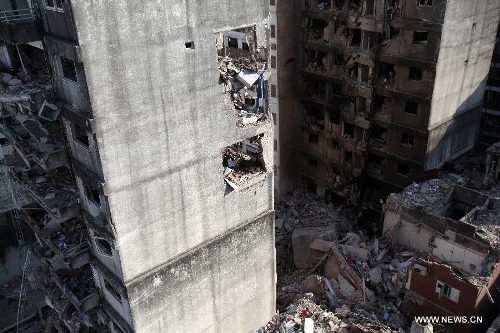
Rescuers working at the site of a major gas leak explosion which this week caused a building to collapse, found three more victims making the death toll reach 18. Three people were still missing, the Santa Fe province authorities informed today.

Rosario's Health Secretary Leonardo Caruana said two female bodies were found in the last hours and they were identified as 76-year-old Oclides Eraceli Ceresole, and 65-year-old Ana Rizzo.

Tuesday's tragedy left more than 60 people injured, 11 of them still hospitalized. Meanwhile, rescue workers continued a frantic search for the missing ones.

Monday 12 August 2013

http://www.buenosairesherald.com/article/138224/rosario-death-toll-rises-to-18-three-people-remain-missing

continue reading

Forensic anthropologist says he can identify unknown dead on USS Oklahoma


A forensic anthropologist is confident his research lab can identify hundreds of USS Oklahoma servicemen buried as unknowns in Hawaii. He just needs permission from the Department of Defense to do so.

John Byrd, director of the Central Identification Laboratory, became involved with the USS Oklahoma project in 2003 when Pearl Harbor survivor Ray Emory showed the lab critical information about the nearly 400 remains.

More than 600 U.S. servicemen killed during the Dec. 7, 1941, attack on Pearl Harbor are buried as unknowns in the National Memorial Cemetery of the Pacific. Roughly two-thirds of these belong to the USS Oklahoma. The commingled, unidentified remains may not be as unknown as they appear, Emory claimed.

Unknown graves

Emory, now 92, first visited the cemetery in Honolulu more than 20 years ago to honor those killed at Pearl Harbor. Dubbed the Punchbowl for resembling the serving dish, the National Memorial Cemetery of the Pacific is tucked away within a volcanic crater. The burial ground is home to 34,000 military veterans.

Emory expected to find an organized area dedicated to the hundreds of servicemen who lost their lives in the battle.

Instead he found nothing.

After failing to locate them himself, Emory, who was stationed on the USS Honolulu in 1941, asked the caretaker where he could find the Pearl Harbor graves. The answer horrified him. They were spread all over the area, the caretaker told him.

The graves were listed only as “unknown,” making it impossible for visitors to distinguish which grave held remains from which ship or from which war.

Emory scoured through Army and Navy records, finding whatever information he could about the burials.

The results were startling.

In 1950, 61 caskets carrying the remains of about 400 unknowns from the USS Oklahoma were buried in the Punchbowl.

He dug further and discovered a deceased personnel file listing the names of 27 servicemen from the ship whose remains were believed to be identified in 1949. An anthropologist didn't approve the identifications, however, and the remains were buried with the rest.

For more than a decade, Emory tried convincing officials to exhume these remains so they could be re-identified and returned to their families. He won a small victory after officials finally relented and added the ship names to the grave markers.

In 2003, he caught a bigger break.

Identification difficult

The Central Identification Laboratory is run by the Joint POW/MIA Accounting Command, a Department of Defense task force charged with accounting for all Americans listed as prisoners of war and missing in action. Byrd and other representatives sat down with Emory and found his information credible.

The scientists decided to unbury a casket believed to be holding the remains of five of the 27 servicemen. They found what they were looking for, but not what they expected.

“What we thought we were going to find were discrete sets of remains packaged in the normal nurturing manner,” Byrd said. “Instead, what we found was that all of the remains of the sailors were commingled.”

Along with the scrambled remains of the five sailors, the team found bones belonging to about 100 servicemen.

The Central Identification Laboratory eventually identified the five sailors, and the remains were delivered to their families. USS Oklahoma Fireman 3rd Class Alfred Livingston's body was pulled out of the ocean and was believed to have belonged to the USS Arizona. He was identified in 2007.

The identifications will end there, however, if the laboratory is not permitted to recover the rest of the buried remains.

After a series of failures in the late 1940s, researchers realized they could not identify individual sailors with the technology they had, he said. The order was given to separate the remains according to parts — such as legs, arms and heads — and then bury them in 61 caskets in the Punchbowl.

“That's a very unusual thing to do, and I don't know of any other cases where they've done that from that era,” Byrd said.

Technology has drastically improved since the '40s, but the segregated bones make it impossible for Byrd's team to identify the other remains from the casket without the rest.

He said the Central Identification laboratory has applied to recover the 60 remaining caskets from the Punchbowl, and he's still waiting for an answer.

Navy spokeswoman Lt. Cmdr. Sarah Flaherty told The Oklahoman the Department of Defense initiated a working group to examine the challenges and issues associated with recovering the remains. It is unknown how long it will take to reach a decision, she said.

While the working group convenes, the Department of Navy is seeking support to conduct a memorial and burial ceremony for the remains currently held by the laboratory. If approved, the ceremony would be Dec. 7, 2014, at the USS Oklahoma Memorial on Ford Island.

“The consideration for us for having the ceremony is that people who are survivors of the USS Oklahoma are not getting any younger,” Flaherty said. “The memorial ceremony ... offers temporary closure and a cogent place for survivors to treat as a final resting place in the interim.”

She said the ceremony would not hinder identification efforts if the working group approves the project to retrieve the buried caskets. The Central Identification Laboratory has already collected the needed DNA from the remains in its possession.

“There's nothing else that can be pulled,” Flaherty said. “That doesn't mean that identities have been recovered, but the information has been pulled from those remains.”

Closure for comrades

If the request to disentomb the 400 remains is approved, the outcome would be significant, Byrd said.

“We don't want to be overly optimistic, and we don't want to build unrealistic expectations, so we hedge a little bit when we think we can identify at least three quarters of them,” he said. “Maybe more.”

Byrd estimates these results would take about five years to be reached.

After two decades of arguing with officials, Emory has accepted he may not live to see closure for his comrades. But he doesn't keep fighting for himself. He does it for the families of the unidentified servicemen whom he believes have been neglected by the government.

“I'm 92, so I'll be dead before they get a lot of this done, but I just keep going along and doing my own thing,” he said. “And maybe someday something will happen, something will get done. But there's nothing I can do except maybe scream at some congressman or senator and say, ‘Hey. What do you intend for these people to do?'”

Monday 12 August 2013

http://m.newsok.com/forensic-anthropologist-says-he-can-identify-unknown-dead-on-uss-oklahoma/article/3868823

continue reading

Six Egyptian migrants drown on 20-metre swim from boat to Sicily beach


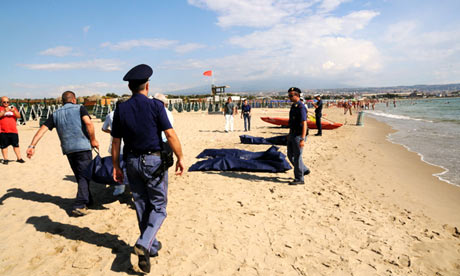
Italy was shaken over the weekend by the deaths of six young Egyptians who drowned while trying to swim 20 metres from a wooden fishing boat to the shore, and whose bodies were laid out in bags beside sun umbrellas on a popular Sicilian beach.

The prosecutor of Catania, Sicily's second city, opened an investigation after the boat, which had been carrying more than 100 migrants from Egypt and Syria, ran aground on a sandbar near the Lido Verde resort.

Roberto D'Arrigo, a spokesman for the Catania coast guard, told the Guardian that some of the passengers had jumped into the water to try to swim to safety, while others had remained on board.

Among the 98 survivors were about 50 minors, many of them small children, he said.

It was suspected that the six men who died, and who were identified on Sunday as Egyptians between 17 and 27 years old, may not have known how to swim. The Ansa news agency reported that the youngest was to have turned 18 this month.

According to the UN, about 8,400 migrants and asylum seekers landed on the coasts of Italy and Malta during the first six months of this year, many of them from Egypt, Syria and countries in sub-Saharan Africa.

It is rare, however, for boats to approach populated shorelines near Italian cities, and investigators were reported as saying they thought the vessel may have taken a wrong turn. At about the same time as the migrants arrived, so too did three large cruise ships carrying some 12,500 tourists keen to view Mount Etna from the port.

Police have arrested two Egyptians, aged 16 and 17, on suspicion of assisting illegal immigration, but are said to fear that the smugglers may have managed to flee from the boat.

The Catania prosecutor, Giovanni Salvi, is looking into possible charges of multiple manslaughter in relation to the disaster. He told the Catholic newspaper L'Avvenire that the fishing boat may have been towed most of the way by a larger ship and said he suspected links to an "organised network".

Separate investigations had already indicated that local crime organisations were involved in the people smuggling, he said.

D'Arrigo said coastguards had launched an emergency rescue attempt after receiving an alert via the police from the Lido Verde's owner, who had heard cries coming from the beach.

Rescuers transported those still on the boat back to land and pulled others out of the water, he added.

The resort's beach was closed after the deaths, and Catania's city council called a day of mourning for Wednesday, when the funerals may be held.

Speaking on Italian radio on Sunday, Italy's foreign minister, Emma Bonino, said there was no miracle solution to a phenomenon which often leads to fatalities off the country's coastline. At the end of last month, 31 people were feared to have died while trying to reach the island of Lampedusa, the destination for most migrants and asylum seekers from Africa and the Middle East.

"Whether it be a dream or illusion, these people risk ending up in the hands of real merchants of illusions or death," said Bonino.

"But we're talking about people who are fleeing because of hunger or war or a mixture of the two, and therefore there is no miracle solution."

Her words were echoed in the testimony of a survivor in Catania, who said he had decided to leave Syria because he was unable to finish his exams. Yahia Khaddam, 19, told La Repubblica he had paid $1,500 (£1,290) for the journey, which he felt he had no choice but to make.

"Either you fight or your flee," he was quoted as saying. "I had to risk death in order to live. I accepted the risk. I paid, and I'm alive."

Monday 12 august 2013

http://www.theguardian.com/world/2013/aug/11/egyptian-migrants-drown-sicily-resort

continue reading

Six killed after Indonesian volcano eruption, search on for children's bodies


Hot lava from an erupting volcano killed six people sleeping in a beach village on a small island in eastern Indonesia on Saturday, after ash and smoke from the volcano shot about a mile into the air, officials said.

Mount Rokatenda in East Nusa Tenggara province erupted early Saturday morning, and nearly 3,000 people have been evacuated from the area on Palue island, according to the National Disaster Mitigation Agency. The volcano has been rumbling since October.

The victims who died included three adults and two children, said agency spokesman Sutopo Purwo Nugroho, adding that the age of the sixth person killed was unclear. He said that the adults’ bodies were recovered from Ponge beach in Rokirole village, but that the children’s remains had not been found.

Officials continued searching Sunday for the bodies of two children buried by the hot lava as rumbling could still be heard from Mount Rokatenda on the small island of Palue in East Nusa Tenggara province.

Nearly 3,000 people have been evacuated from the area since the volcano erupted early Saturday morning, according to the National Disaster Mitigation Agency. The volcano had been active since last October.

Tini Thadeus, head of the local disaster agency, said the six victims, who died while sleeping in a beachside village, were among those who had refused to leave last year when evacuations were carried out to establish a safety zone around the volcano.

"On their belief, if all the old villagers abandoned the red (danger) zone, then lava will destroy the residential area," Thadeus said from Kupang, the provincial capital. Among the dead was a 58-year-old woman, the grandmother of the two children who also died.

"But unfortunately, not like in the past, lava from Saturday's eruption flowed northward and hit them," Thadeus said, adding that during earlier eruptions since the 1930s, volcanic material had always flowed southward.

Thadeus said he was not optimistic about recovering the children's bodies since they were buried under hot volcanic material.

He said small explosions could still be heard coming from the peak, which was still spewing smoke up to 600 meters (656 yards) into the sky.

"But all of the villagers have been evacuated out of the danger zone" near the crater, he said.

Video footage on Indonesia’s TVOne showed giant plumes of white and gray smoke and ash belching from the volcano into a sunny blue sky. Prior to Saturday’s eruption, many residents had already been moved to safer areas.

The disaster agency said the volcano spewed ash and smoke about 2km into the air. The eruption lasted about seven minutes, said Frans Wangge, who heads the volcano’s monitoring post.

He said the hot lava burned trees around the beach and villages, and made it difficult to reach the area where the victims were killed.

Domi Dange, a Catholic priest helping those who fled to the district town of Maumere on nearby Flores island, said some residents, who had refused to leave when the area was earlier cleared, were sleeping under tents near the beach. However, details about the six people who were killed and where they were located at the time of the eruption remained unclear.

Local authorities, including police and army officials along with members of a search and rescue agency, were heading to tiny Palue island to help with evacuations.

“We will see the best steps to be taken, but clearly they have to be evacuated,” said Yoseph Ansar Rara, chief of Sikka District, which oversees the island. He said those already evacuated had agreed to be relocated to Flores island.

Mount Rokatenda is one of about 129 active volcanoes in Indonesia, an archipelago of more than 17,000 islands that’s home to some 240m people.

The country is prone to earthquakes and volcanic activity because it sits along the Pacific “Ring of Fire,” a horseshoe-shaped series of fault lines.

Monday 12 August 2013

http://www.irishexaminer.com/world/indonesian-volcano-erupts-killing-six-239535.html

http://www.cbsnews.com/8301-202_162-57598009/search-on-for-childrens-bodies-after-indonesian-volcano-eruption/

continue reading

18 dead in Alexandria traffic pile-up


Eighteen people were killed and three injured on Sunday in a major traffic pile-up in Egypt's Mediterranean city of Alexandria. The accident, which involved five vehicles, took place on the international road to the west of the city, Amr Nasr, head of Alexandria's ambulance service, told Anadolu Agency.

According to Nasr, most of the fatalities died on the spot.

Ibrahim al-Roubi, head of the emergency department, said the three passengers who survived the accident had all sustained serious injuries.

Deadly traffic accidents are common in Egypt due to poor road maintenance and lax supervision and law enforcement by local transportation bodies.

Monday 12 August 2013

http://www.worldbulletin.net/?aType=haber&ArticleID=114959

continue reading

One more body found under coal heap debris in Sundargarh


The death toll in the Sundargarh coal mine tragedy rose to 10 with the recovery of one more body on Sunday morning. Later in the day, hundreds of agiatated villagers gheraoed the Balinga police outpost with four bodies.

As family members of missing persons and local villagers waited anxiously near the mishap spot at Kulda-Basundhara open cast coal mines of Mahanadi Coalfields Limited (MCL), around 150 km from here, agitated locals marched to the Balinga police outpost and demanded compensation of Rs 25 lakh to the family of each deceased and a permanent job to the victim's family.

The incident took place when some people from nearby villages were collecting coal from the overburdened dump yard located near the mining area, an MCL spokesman said.

Some of them were buried when a portion of the coal dump suddenly collapsed, probably due to heavy rains that lashed the area yesterday, he said, adding search and rescue operation was immediately launched at the site.

Like the previous day, heavy downpour interrupted rescue operations for about an hour on Sunday. But people converged at the site in large numbers expecting recovery of their kin from the coal overburden, which collapsed on Saturday when around 30 locals were collecting remnant coal.

While the confirmed death toll stood at 10, more bodies are feared to be lying below the debris. MCL sources said 60 per cent of the debris had been removed. Rescue operations, which were stopped during the night after recovery of nine bodies, resumed around 10 am. One body was recovered by evening. "Since it is a large patch about 40 to 50-metre long, the operation is taking time," said general manager, Basundhara coal mines, A K Singh.

Four excavators were pressed into service. We have called for one more to expedite operations," he added.

Those dead were identified as Mukteswar Kumar (27), Gurubari Majhi (55), Bhagabati Majhi (50), Sumanta Kharsel (35), Dulari Bhoi (55), Rajesh Dhandi (15), Raimal Seth (50) (all natives of Balinga village), Sukesh Satpathy (29) of Kurla village under Bhasma police station and Deepak Nayak (50) of Gomadera under Belpahar police station of Jharsuguda district. "We have handed over the bodies to the family members after proper identification and post mortem," said SP (Sundargarh) Sanjeev Arora.

Locals accused MCL of ignoring development work under periphery development scheme and demanded improvement of roads and other infrastructure. "The locals are in an agitated mood and might lodge an FIR against senior MCL officials alleging that the company was responsible for the mishap," said a police officer.

Political leaders made a beeline to the mishap spot and met the victims' families. Sundargarh MP Hemananda Biswal and Sundargarh Sadar MLA Jogesh Singh, both from Congress, had visited the spot on Saturday. Commerce and transport minister Subrat Tarai, who represents Raghunathpalli in Sundaragrh, went to the area on Sunday and discussed details of the rescue operation with officials.

Monday 12 August 2013

http://timesofindia.indiatimes.com/city/bhubaneswar/One-more-body-found-under-coal-heap-debris/articleshow/21771053.cms

continue reading

Friday, 9 August 2013

More than 20 missing, 9 bodies recovered after boat capsize near Wardha


More than 20 people, mostly labourers, are missing and nine bodies have been recovered so far after a boat was smashed into two pieces when it hit a Hanuman statue installed in the middle of Vana river near Wardha on Thursday evening.

Nearly 35 to 40 labourers were saved from drowing and rescue efforts are on.

The labourers from Hingan Ghat had travelled by boat to Kalhapur-Dabha village for daily work and returning home in the evening when the mishap took place at around 5:30 pm.

Volunteers of Bhoi Samaj jumped into the river and saved most of the labourers from drowning.

More than 10 persons have been admitted to the local hospital for treatment. The boat was said to be 15 years old.

Friday 9 August 2013

http://www.indiatvnews.com/news/india/more-than-missing-bodies-recovered-after-boat-capsize-near-wardha-26122.html

continue reading

How Kenyan hospitals abet the illicit body parts trade


Kenyan hospitals are reluctant to adopt technology to identify unclaimed bodies thereby giving room for illicit body parts business to thrive, industry sources say.

Adopting modern biometric system on patients when they are admitted to hospital would be helpful in the identification process.

A source at Kenyatta National Hospital says his supervisors have been frustrating efforts to adopt technology to boost identification process.

Unidentified group

“My bosses have been fighting the use of fingerprint technology which helps in identification. This has helped make it much easier to have more bodies placed in the unidentified group which are later marked for disposal through city mortuary,” said the source at KNH mortuary.

“Action on the bodies begins once a body is piled in the ready-for-disposal group. It’s like a licence to tamper with the remains,” he said.

KNH had not officially responded to our inquiries on the process they follow in reducing unidentified bodies, most of which become targets of the deadly trade.

“There is a recent case where someone wanted a tooth as an exhibit in a court case. This is simple, all you need is just pluck it from the bodies lined up for disposal and give it to him. He paid Sh5,000,” the attendant told The Standard.

KNH public wing was handling about 900 bodies at the time of this investigation. It has a capacity to hold 300 bodies.

Best practice also demands that before disposal, bodies should be wrapped in a special bag so that they can be retrieved in future.

But in Kenya, most are buried in mass graves and unless a DNA test is conducted, it is increasingly getting difficult to trace and retrieve bodies when need arises.

Funeral Services Association of Kenya (FUSAK) is now calling for adoption of fingerprinting and videotaping technology to help in documentation and reducing the number of unknown people.

There is also need for regulation on how new institutions offering medical studies get their cadavers for learning purposes.

Though most bodies are acquired free of charge, some institutions are trading the bodies.

“They fetch about Sh75,000. This is the price we were selling them to Kenyatta University when they began their medical training school. Though they are not supposed to be sold, there are other costs such as embalming and storage that make it necessary that someone pays for them,” said Mr Ezra Olack, the national chairman of FUSAK.

Keeping brains for medical students is a most common practice. This is done most of the time even without the consent of relatives.

“They are placed in paper bags. Sometimes even briefcases are used to smuggle them out,” he says.

Water that’s been used to wash the dead is also regarded as a hot cake.

Several beliefs

“There are several beliefs about water used to wash the dead ranging from boosting business prospects to snagging husbands. This is one of the most demanded things,” an attendant at City Mortuary said.

“There was a time when a lady wanted to get someone’s husband. So she came for the water. I don’t know most of the details but when the man asked to bathe, the lady is said to have mixed the water with the one collected here and the man went berserk,” he chuckles.

It is understood that the disciplined forces demand for blood of the dead, mostly when one has died in mysterious circumstances.

Friday 9 August 2013

http://www.standardmedia.co.ke/?articleID=2000090136&story_title=how-hospitals-abet-the-illicit-body-parts-trade

continue reading

Argentine rescuers find cat, three more bodies located


A cat was pulled alive from the ruins of an apartment building that collapsed in a huge gas explosion, but with 11 people still missing, hundreds of rescuers tried without success Thursday to find more human victims.

Authorities identified 10 of the dead, and by late Thursday rescuers were working to pull three out more bodies they had located in the rubble.

More than 60 people were injured as Tuesday's blast rocked Rosario, Argentina's third-largest city, and several remained in critical condition.

"Until we remove the last brick, we'll always expect to find people alive," federal police commissioner Angel Poidomani, leading one of the rescue teams, told Rosario's La Capital newspaper Thursday morning. But by late evening, he seemed less optimistic.

"We're working on three bodies in different places of the building. The extractions are difficult because of the kind of collapse, which requires a great deal of caution in the removal of the rubble," Poidomani said. "We're working with dogs and cameras to reach different places, but we still haven't found any more signs of life."

With damaged towers on both sides of the rubble pile in danger of collapsing on the rescuers, police and firefighters were working as carefully as possible, following the scents of the body-sniffing dogs and clues from a fiber-optic cable that captures sounds and movement.

Engineers were figuring out how to reinforce fire-damaged columns, and some heavy equipment finally got access to the pile.

Poidomani compared it to surgery. "These are nine floors of a building that ended up compacted, 5 or 6 meters high. Reaching the center of this heap is very difficult," he said.

Politicians nationwide canceled Thursday's closing campaign rallies ahead of Sunday's primary elections after President Cristina Fernandez, who visited the disaster site Wednesday, called for two days of mourning nationwide. Anti-government marches went on as planned Thursday night, with fewer people joining in than during previous protests.

Two repairmen are in custody as a judge probes possible criminal negligence. Residents had asked for a valve to be replaced after complaining to the Litoral Gas company that despite a previous repair days earlier, natural gas wasn't reaching their kitchens.

But the company said it wasn't advised before Tuesday's follow-up repair job, which involved replacing a valve, and wasn't asked to turn off the gas beforehand.

Friday 9 August 2013

Read more here: http://www.star-telegram.com/2013/08/08/5066328/argentine-rescuers-find-cat-11.html#storylink=cpy

continue reading

Thursday, 8 August 2013

Rosario explosion: rescue works continue, 11 people still missing


Rescue teams continue with rubble removal works coming closer to the site of the explosion, Rosario city Mayor Mรณnica Fein confirmed two-days after disaster struck at the Santa Fe province locality resulting in at least 12 people dead and 11 still missing.

“We have not found major structural damages and in most cases neighbors asked us to focus on the building works; we are very grateful,” Fein told reporters as she went over the accident site at 2000 Salta Street in downtown Rosario where a gas leak caused a major explosion and collapse of a 10-storey building early on Tuesday.

Gas technician repairman Carlos Osvaldo Garcรญa and his assistant who were trying to repair the building’s gas system were detained for questioning in connection with the explosion.

Around 25 teams of catastrophe and rescue experts continue to work on the disaster area with main focus on the search for missing people as well as on safety issues to determine impacts and risk of collapse in nearby buildings also hit by the explosion.

Meanwhile, the national government announced a two-day national mourning with President Cristina Fernรกndez de Kirchner visiting the victims of the worst tragedy in Rosario's recent history on Wednesday.

Thursday 8 august 2013

http://www.buenosairesherald.com/article/137986/rosario-explosion-rescue-works-continue-11-people-still-missing-

continue reading

Vietnam war victims missing for 40 years found alive in jungle, central Vietnam


An 82-year-old man and his 41-year-old son have been found living in a forest in central Vietnam after they went missing during the country's war with the US, an official says.

The older man could communicate a little in the Cor ethnic minority language, but his son only knew a few words, an official at Tay Tra commune in Quang Ngai province said on Thursday on condition of anonymity.

Ho Van Thanh was last seen running into the woods with his then-infant son Ho Van Lang after a bomb exploded in his home, killing his wife and two other children in 1973, newspaper Dan Tri reported.

They were discovered when two people from a nearby village ventured 40 kilometres into the forest looking for firewood and spotted the two men's tree house. The villagers reported the find to local authorities who recovered the pair on Wednesday.


The two men survived by cultivating forest vegetables and hunting animals. They had no contact with the outside world, the report said.

Photographs in local media showed the younger man with dishevelled hair wearing a loin cloth made from tree bark.

Thanh, who was fighting for North Vietnam when the bomb exploded, left behind another son, Ho Van Tri.

"My father is very weak and the doctors are taking care of him, but my brother's health is fine even though he looks very thin," said Tri, who was six months old when his father fled into the jungle.

Thanh is being treated at a medical centre while his son is being looked after by his nephew, Ho Ven Bien.

"My uncle doesn't understand much of what is said to him, and he doesn't want to eat or even drink water," Bien said.

"He's very sad. He doesn't say anything now," he said. "We know he wants to escape my house to go back to the forest so we have to keep an eye on him now."

Hoang Anh Ngoc, chairman of the district, said local authorities had visited Thanh at the medical centre and given him food.

"I asked officials to keep a close eye on the two men to make sure they don't escape back into the forest," he said.

The discovery has shaken the small community, which thought the two men dead.

"No one could imagine Thanh and his son could live 40 years in isolation in the hard conditions of the jungle," said villager Ho Van Xanh.

Thursday 8 August 2013

http://www.theaustralian.com.au/news/breaking-news/vietnam-war-victims-found-in-jungle/story-fn3dxix6-1226693737409

continue reading

Florida: Exhumations approved at Reform School where boys disappeared


The Florida Cabinet gave the go-ahead Tuesday for dozens of unmarked graves, buried deep in the woods near a now-defunct reform school, to be exhumed, in an attempt to return the bodies to their families.

Gov. Rick Scott along with the rest of the Florida Cabinet voted to allow University of South Florida researchers to begin exhumation at the site of the former Dozier School for Boys in the panhandle city of Marianna.

"It's a relief. The real work has yet to begin, but now we can now move forward," said Erin Kimmerle, a University of South Florida anthropologist who is leading the effort. "We will go slow and test our methods and really be able to make progress when it dries off."

Many of the families were present in Tallahassee at the Cabinet meeting. Attorney General Pam Bondi voted in favor of the effort.

"From the beginning, I have supported efforts at the Dozier School for Boys in order to provide family members who lost loved ones with closure," she said in a written statement.

The small cemetery dates back to the early 1900s. For years, former inmates say children who were sent to the reform school were beaten and mysteriously disappeared.

Rusting white steel crosses mark the graves of 31 unidentified former students. Using ground-penetrating radar, Kimmerle's team have located what she says appears to be 18 more remains than previously thought. All are unidentified.

State and school records show that out of nearly 100 children who died while at the school, there are no burial records for 22 of them, Kimmerle said.

"This decision puts us a step closer to finishing the investigation," said U.S. Sen. Bill Nelson of Florida. "Nothing can bring these boys back, but I'm hopeful that their families will now get the closure they deserve."

Only 10 families have been identified as having descendants who are buried here. Many are seeking to claim the bodies of their loved ones so they can be buried properly in family cemeteries. DNA has already been collected from many of them.

Glenn Varnadoe says his father, Hubert Varnadoe, and Hubert's brother, Thomas Varnadoe, were sent to Dozier for stealing. A month later, administrators allegedly woke up Hubert Varnadoe and took him to a place in the woods where men had just buried Thomas Varnadoe.

The cause of death was listed as pneumonia. Glenn Varnadoe wants his uncle's body found so his uncle can be buried properly.

"I think this is a banner day for every kid who ever went through Dozier, for the kids who are dead, buried and forgotten," he told CNN. "They will finally be remembered and given a proper burial and finally respected as human beings."

Former students said the deaths were at the hands of abusive administrators, but a 2009 state investigation determined there was no evidence of criminal activity.

In the wake of that investigation, more former students -- now senior citizens -- have come forward with stories of abuse, including alleged beatings, killings and the disappearance of students,during the 1940s, 1950s and 1960s.

"These are children who came here and died, for one reason or another, and have just been lost in the woods," Kimmerle said in an interview earlier this year. "When there's no knowledge and no information, then people will speculate and rumors will persist or questions remain."

Kimmerle, who worked on an international forensics team that amassed evidence used in Yugoslavian war crimes trials, called the Florida project a humanitarian effort for the families of the former students and for the community.

Many wonder if the tales of beating and murder are true or if anyone can be charged with any crimes.

Glenn Hess, the state attorney for Jackson County, Florida, where Marianna is located, said, "From a prosecutor's point of view, these things happened so far in the past, the probability that they're going to be able to put a probable cause with a homicide with a probable cause that somebody did it, are probably remote."

Researchers are hoping to begin the exhumation process later this month. It will be a tedious scientific process which the families hope, may one day, answer the mysteries of what really happened at Marianna.

Thursday 8 August 2013

http://edition.cnn.com/2013/08/06/us/florida-reform-school-exhumations/index.html

continue reading

European Commission - Directorate-General for Ente : Results of EU research project could help align international standards for the identification of missing persons and victims of large-scale disasters


Finding and identifying victims after a natural disaster is not just a matter of deploying sophisticated technology such as detection devices. It also depends on quickly matching up circumstantial information with the victim to confirm the latter's identity. Yet post-disaster investigative techniques and approaches across the globe are far from standardised.

Any delays in this regard mean agony for the families of missing persons or victims as witnessed after the December 2004 tsunami that struck southeast Asia. It left humanitarian and law enforcement authorities overwhelmed by the scale of the victim identification required. As a result, on-site cooperation was ad-hoc and hugely challenged by all the different operational methodologies, training and instances of duplication, with national disaster victim identification teams focused on identifying their own nationals.

One EU-funded Security Research project known as FASTID ("FAST and efficient international disaster victim Identification") aims to change that.

Currently, international police cooperation to identify disaster victims is supported by Interpol's "Disaster Victim Identification" (DVI) forms. Running 17 pages or more in length, the forms contain a massive amount of paperwork that is hard navigate quickly for research and investigative purposes.

To improve the ability of international police cooperation to better identify unclaimed bodies FASTID has developed a prototype database system to simplify and accelerate the cross-matching ability of DVI information. The new prototype system was implemented on Interpol's hosted platform at its headquarters in Lyon, France.

The prototype's database offers decentralised access for use in conjunction with mass fatality events. However, according to FASTID's research team, their protoype's conversion into operational use would aid not only international police cooperation for disaster victim identification but also support the daily requirements of policy forces as they carry out domestic investigative work on missing persons or unidentified bodies. The team also developed training material to support and encourage global common operational methodologies for identification tasks and similar approaches to data recording across Interpol's 190 member countries.

A 36-month project coordinated by Interpol, FASTID was launched in April 2010 and concluded its work in March 2013. It had a total research budget of nearly EUR 3 million of which the EU provided 75 percent. For more information, see FASTID's website at: http://www.interpol.int/Projects/FASTID

Thursday 8 August 2013

http://www.4-traders.com/news/European-Commission-Directorate-General-for-Ente-Results-of-EU-research-project-could-help-align--17174538/

continue reading

DNA tests on Neruda remains to be done out of Chile


Chilean justice ordered that DNA tests on the remains of poet Pablo Neruda, as part of the probe to know the causes of his death, be carried out abroad.

This was ordered by judge Mario Carroza, who in his previous resolution invested the Legal Medical Service (LMS) of Chile to carry out the probe, declared today Neruda's nephew and lawyer of that family, Rodolfo Reyes to daily El Mercurio.

According to the lawyer, the new order does not specify the place where samples will be sent, but it establishes that he and his two brothers will be subject to genetic exams in order to confirm that the exhumed bones from the tomb in Isla Negra, Valparaiso, belong to the writer.

Last July, judge Carroza decided that if identification results do not coincide with those tests, they would be made from the bones of Neruda's parents, buried in the South.

The study is being made to determine if his death was due to natural causes or murdered on dictator Augusto Pinochet's orders.

The Chilean Communist Party (PC), organization to which the intellectual belonged all his life, member of its Central Committee, senator and candidate to the presidency of the Republic.

Reyes is also part of the criminal lawsuit filed by the PC to determine if the cause of death were substances administered to him.

The lawyer Eduardo Contreras, representing the PC, has insisted the first thing to determine in all this process is if the remains exhumed on April 8 really correspond to the poet.

The cause was opened in 2011, after Neruda's driver, Manuel Araya, revealed that a strange injection was put on the abdomen of the Nobel Literature laureate in 1971, while he was in the Santa Maria clinic.

The poet, who suffered from cancer, died on September 23, 1973, 12 days after the coup against president Salvador Allende.

In a recent interview with Prensa Latina about the investigation process, Contreras insisted there was no guarantee that the bones in the tomb of Isla Negra belonged to Neruda.

In the opinion of the plaintiff lawyer, the procedure is very necessary if we take into account that in the 80s, Pinochet ordered the so-called Televisores operation.

This action implied that the military took remains of arrested disappeared persons and threw them to the sea, burned them and changed their tombs so if in the future, there would be a judicial probe the bodies could not be found.

"If they did that with many persons, why could they not do that too with Neruda?", asked the jurist.

Thursday 8 August 2013

http://www.plenglish.com/index.php?option=com_content&task=view&id=1743891&Itemid=1

continue reading

People of Guinsaugon seek record of existence 7 years after devastating landslide


After half of a mountain collapsed and buried the entire village in 2006, the government also virtually erased from its records the community that once thrived in Guinsaugon, a farming area.

For years, residents of the village who lived through the tragedy and moved to another area were nonexistent as far as government census records are concerned.

Erasing the people of Guinsaugon from government records could have been done as simply as this—census takers visit the landslide site, take a look around and, finding no house standing, write down zero on their population tally forms.

After seven years, the people of Guinsaugon may finally be able to put themselves back in official existence.

A $27,000 donation was given to them to help them build homes, restore farms and make government see that there are people again on what many had thought is now just a graveyard covered by tons of boulders, soil and debris that collapsed on homes and bodies that have never been recovered.

The money would be used, according to village chief Beauty Cabacungan, to resurvey Guinsaugon.

Cabacungan said the donation gave survivors of the landslide, who cling to their identities as the people of Guinsaugon, hope in reclaiming their farms and their IRA, the village’s share in national income.

Cabacungan said while the survivors of the landslide kept returning to the original village site to farm, they had not been allowed to build homes there. She is now asking authorities to allow the people to build even shacks on top of the landslide site.

“Most of us are farmers,” Cabacungan said.

According to Nap Cuaton, the mayor of St. Bernard, the donation came from various sources. The money is being held in trust in bank.

Cuaton said he would seek advice from the Mines and Geosciences Bureau and Department of Interior and Local Government over Cabacungan’s request for the people to be allowed to build houses again where Guinsaugon originally stood.

More than 1,000 people, including more than 200 children trapped in their classrooms, had been buried alive when a portion of Mt. Kan-abag collapsed after several days of heavy rains, sending tons of boulders and soil hurtling down Guinsaugon on Feb. 17, 2006.

Survivors had been transferred to the village of Magbagakay, also in St. Bernard, near the boundary of San Juan town, which refuses to cede jurisdiction over the relocation site, leading to a boundary dispute.

Thursday 8 August 2013

http://newsinfo.inquirer.net/460837/people-of-guinsaugon-seek-return-of-ira-record-of-existence

continue reading

Serbia and Kosovo search for mass grave together


Belgrade and Pristina plan to hold a joint investigation at the site of a suspected mass grave from the 1999 Kosovo war near the south Serbian town of Medvedja.

Missing persons commissions from both Serbia and Kosovo, along with officials from the Serbian war crimes prosecutor’s office and the EU rule-of-law mission in Kosovo, are visiting the site of the suspected mass grave near the border on Wednesday.

The Kosovo missing persons commission has said that it has information that there is a possible mass grave in the mainly ethnic Albanian-populated village of Svirce.

Two years ago, the Serbian missing persons commission also examined this area because there were indications that there might be a mass grave in the nearby village of Tupale, but nothing was found.

This is the second suspected mass grave from the Kosovo war that Serbia has promised to probe this year.

The Serbian authorities announced in July that they would again investigate a suspected mass grave in the south-western town of Raska that could contain the bodies of ethnic Albanians killed during the war.

The issue of missing persons and mass graves in Serbia was also raised recently by Belgrade’s war crimes prosecutor after a confession from a top Serbian official charged by Hague Tribunal, Vlastimir Djordjevic, who said last month that he knew about graves containing the bodies of Albanian civilians on Serbian territory.

The Serbian prosecutor then filed a request to the Hague court to interrogate Djordjevic about the subject.

Several international organisations, including the United Nations and the International Committee of the Red Cross, expressed concerns earlier this year that the search for more than 1,700 people who remain missing since the conflict between Serbian forces and Kosovo rebels had “stalled”.

In his recent quarterly report on the situation in Kosovo, UN secretary-general Ban Ki-moon welcomed recent efforts to normalise relations between Belgrade and Pristina, but also said that more must be done to find out what happened to people who disappeared during wartime and whose bodies have not yet been found.

Thursday 8 August 2013

http://www.balkaninsight.com/en/article/serbia-and-kosovo-search-for-mass-grave-in-medvedja-1

continue reading

21 bodies cremated from tonnes of debris lying in Kedarnath


Twenty-one bodies were extricated on Wednesday from tonnes of debris lying in Kedarnath and consigned to flames after necessary rituals.

This takes the number of bodies disposed of at the Himalayan shrine to 140 since the start of operations over a month ago, police said.

The process of extricating the bodies from under heaps of rubble lying close to the shrine which witnessed massive devastation in the June calamity was frequently hampered by bad weather and lack of heavy stone cutting equipment with the police and NDRF personnel engaged in the operation.

However, with a slight improvement in the weather on Wednesday, the exercise gained momentum at the shrine with the disposal of 21 bodies after necessary religious rituals and completion of other formalities like their DNA sampling, police sources in Dehradun said.

Police and NDRF personnel are jointly carrying out the exercise under the supervision of DIG G S Martoliya, they said.

Ornaments like rings, earrings, bangles and necklaces found on the bodies have been preserved to help their kin identify them, police sources here said.

While the number of bodies cremated so far at Kedarnath is 140, the total number of bodies disposed of in the entire Kedar valley since the start of operations has risen to 215.

Over 6,000 were feared killed in devastating floods, landslides and cloudbursts in the state in June this year.

Thursday 8 August 2013

http://ibnlive.in.com/news/21-bodies-cremated-from-tonnes-of-debris-lying-in-kedarnath/412617-3-243.html

continue reading

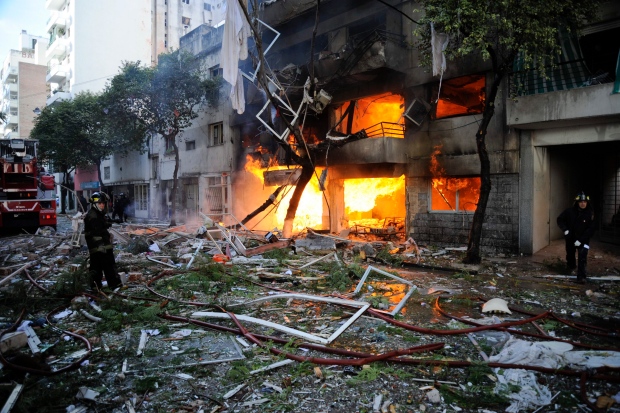
12 die in building explosion in Argentina, dozen missing


Leaking gas was likely to blame for an explosion that killed at least 12 people, injured 60 more and brought down part of a building in Argentina on Tuesday, state media reported Wednesday.

A man who was working at the scene in the city of Rosario before the blast ignited at 9:15 a.m. local time has been taken into custody, said the Telam news agency, which cited investigator Juan Curto.

The explosion gutted one multi-story residential building, and destroyed at least one other building next to it, while blowing out the windows of surrounding structures, images broadcast by CNN affiliate Canal 9 showed.

A swath of white smoke and dust dominated the skyline of the city, located about 200 miles northwest of the capital, Buenos Aires. Firefighters swung extended ladders around to upper balconies and windows to rescue residents stranded on top floors.

Rubble and shards of glass filled the streets below, as fire engines arrived Tuesday to douse the blaze, and medical teams tended to bleeding victims.

Rescuers are still searching for over a dozen people who were in the residential building at the time of the blast, local newspaper Clarin reported.

Thursday 8 August 2013

http://edition.cnn.com/2013/08/07/world/americas/argentina-building-collapse/index.html?hpt=hp_t3

continue reading