Friday, 28 December 2012

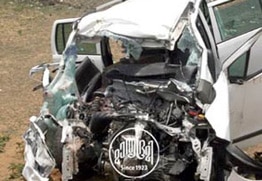
7 killed in Kollam van-bus collision


In a head-on collision between a van and a fast passenger bus of the Kerala State Road Transport Corporation at Nilamel on Friday morning, seven persons were killed. Seventeen of those critically injured have been admitted to the Medical College Hospital, Thiruvananthapuram and another four to the Gokulam Medical College Hospital, Venjarumoodu.

All those killed were travelling in the van and are natives of Bharathannur in Thiruvananthapuram. They were returning after a pilgrimage to Mookambika and were on the way to a relative’s house at Kadakkal. Police said the accident occurred at about 6.40 am.

Those killed were identified as Swanesha (40), Vijayamma (55), Rukmini (48), Usha (45), Ajit (35), Unnikuttan (7), and the van driver Shaji (35). Four bodies have been kept at a hospital in Kadakkal, two at the Thiruvananthapuram MCH and one body at the Gokulam MCH.

Chief Minister Oommen Chandy will visit Nilamel and Kaddakkal on Friday to assess the situation. The van suffered heavy damage in the accident and Fire and Rescue Force personnel along with the police and locals had a tough time rescuing those trapped in side.

Friday 28 December 2012

http://www.thehindu.com/news/states/kerala/7-killed-in-kollam-vanbus-collision/article4248327.ece

continue reading

Fire erupts in hutment: 6 die


Fire erupted in the huts resulting six children dead in the Goath Umar Manjothi area of the city on Thursday.

Sources said that late night fire stretched in the hutment. At least six children succumbed to burn injuries, said sources.

Rescue teams recovered three dead bodies. All victims were between ages of four to eight year, sources added.

Sources further said that there was risk of more deaths. Fire brigade trying to control over fire but rescue efforts were hurdled by darkness.

Friday 28 December 2012

http://www.thenewstribe.com/2012/12/28/fire-erupts-in-hutment-6-die/

continue reading

Cyborg Cockroaches May Be Future Emergency Responders


Researchers say they've figured out a way to create cyborg, remote-controlled cockroaches, hoping one day the resilient creatures could be steered into disaster zones to gather information and look for survivors.

Video footage from the experiments at North Carolina State University shows the part-robot roaches being directed along a curving path via remote control. The researchers say they attached a lightweight chip with a wireless receiver and transmitter onto Madagascar hissing cockroaches and wired a microcontroller to the insects' antennae and cerci — the sensory organs on the bug's abdomen that cause it to run away from danger.

With electrical signals, the researchers stimulated the cerci to trick the roaches into thinking they needed to scamper away from a predator. Once moving, charges sent to the antennae controlled the insects' direction. A signal sent to one antenna could make a roach think its feeler was touching a wall, sending it in the opposite direction, a statement from NC State explained.

Researchers were able to precisely steer the roaches along a curved line.

"Building small-scale robots that can perform in such uncertain, dynamic conditions is enormously difficult. We decided to use biobotic cockroaches in place of robots, as designing robots at that scale is very challenging, and cockroaches are experts at performing in such a hostile environment," NC State researcher Alper Bozkurt said in the statement.

"Ultimately, we think this will allow us to create a mobile web of smart sensors that uses cockroaches to collect and transmit information, such as finding survivors in a building that's been destroyed by an earthquake," Bozkurt added.

The researchers reported the results of their experiments late last month at the annual International Conference of the IEEE Engineering in Medicine & Biology Society in San Diego, Calif.

Other researchers have floated the possibility of technologically enhanced roaches. Scientists at Case Western Reserve University demonstrated how the insects could be outfitted with an implantable biofuel cell powered by a sugar the bugs make from their food. Electricity from such a cell then could be used to power sensors on the insect or to manipulate it by remote control.

Video footage can be found here

Friday 28 December 2012

http://www.livescience.com/23016-remote-controlled-cyborg-roaches.html

continue reading

In New Bataan, they buried the dead, finally, but temporarily


They finally buried the dead three weeks after super typhoon Pablo hit this town on December 4, but only temporarily.

At the public cemetery in Purok 4, Barangay Cabinuangan on Thursday afternoon, the caskets had been placed in individual niches and the body bags in compartments, but the tombs had not been sealed.

Cemetery caretaker Faustino Tawaay said workers were not able to seal the tombs because they ran out of hollow blocks.

A total of 324 bodies were reported buried here between December 21 and 26.

But even if the hollow blocks were delivered and the workers sealed the tombs by Friday, these will remain temporary until the National Bureau of Investigation’s Disaster Victim Identification (DVI) teams return on January 4 to exhume the remains and take their DNA samplings.

Assistant Health Secretary Romulo Busuego told MindaNews he could not understand why the NBI took a break from getting DNA samples from the victims’ remains. Busuego came here Wednesday afternoon with regional health director Abdullah Dumama and provincial health officer Renato Basanez to ensure that the bodies, already in an advanced state of decomposition, were buried.

Fr. Edgar Tuling, parish priest of the San Antonio de Padua church, also wondered by the NBI left. He said he thought the NBI teams would return immediately after Christmas.

Municipal sanitary inspector Bernardita Pebujot said the NBI is coming back on January 4.

In last year’s Typhoon Sendong disaster, the NBI’s DVI teams worked continuously to get DNA samplings from an even bigger number — some 1,200 victims in the cities of Cagayan de Oro and Iligan – before the bodies were buried.


384 buried; 426 bodies “found”

Pebujot told MindaNews a total of 324 bodies of unidentified victims were buried in the public cemetery between December 21 and 26: 55 on December 21; 46 on the 22nd and 223 on the 26th. Sixty others were earlier claimed and buried by their relatives, placing the total number of buried victims at 384 as of December 26.

Of the 324 bodies, the NBI’s DVI managed to process only 55, Pebujot said. The remaining 269 victims await exhumation for DNA sampling before their tombs are finally sealed.

The white board at the Incident Command Center here listed 426 as the “number of casualties (dead) found” as of 1:26 p.m. of December 27, up by five more from 421 on December 23, as the clean-up operations in the town continue to unearth more bodies.

Marlon Esperanza, municipal information officer, acknowledges that the figures don’t tally.

If a total of 426 bodies were found, as the Command Center’s listing shows, and a total of 384 had been buried, where are the remaining 42 bodies?

Esperanza told MindaNews on Thursday afternoon that they are still validating the list. But he noted that some relatives apparently claimed to have identified their loved ones from among the remains even if they did not, so that death certificates could be issued. Death certificates are required to avail of government’s financial assistance or claim insurance benefits.

Isolated cemetery

Pebujot said they buried the 55 victims already processed by the NBI on December 21, tried to bury the 46 on December 22 but fled the cemetery without sealing the tombs because “dako na ang sapa” (the waters in the new river were fast rising).

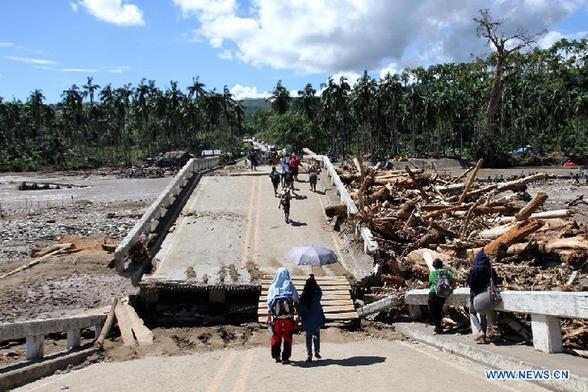
Since the super typhoon, the cemetery has been isolated, the road leading to it destroyed by the flashfloods or debris flow of rocks and boulders that carved a hundred meter-wide river course that cut across the road and swept away houses, banana plants and cornfields and portions of the cemetery.

Busuego’s team was not able to cross to the cemetery but from across the river at around 2 p.m. on Wednesday, Dumama was informed by phone by the provincial sanitary inspector from the side of the cemetery that 119 bodies had been buried that day – 103 adults and 16 children – and that weather-permitting, they would be able to bury about a hundred more.

In the evening, Pebujot said a total of 223 bodies were buried and that there were no remaining bodies lying on the cemetery grounds anymore.

She said government workers constructed 108 individual niches and 12 compartments at 30 each that could accommodate a total of 468.

Esperanza explained they tried to bury the dead the following week but the intended graves that took two days to dig for the supposed mass burial on December 12, were not approved by the NBI.

He said the NBI told them to construct individual niches and compartments.

Esperanza said the bodies were initially laid down on the tennis court fronting the command center, the same site where now lie a hundred donated white caskets that arrived on December 22.

Pebujot said they could not use the caskets anymore because the waterlogged bodies wouldn’t fit and the decomposed remains were better off inside body bags.

As more bodies turned up, Esperanza said the NBI asked for a holding area, which was later identified to be the DA nursery. But Esperanza said the NBI asked for another holding area, so they moved the dead to the cemetery, to await DNA sampling and burial.

He said the NBI asked the town to provide them gloves, face masks and disinfectants but later informed them they would return “January 4 or 15.”

Looking for the missing

Esperanza said entire families were killed but they have yet to determine exactly how many. In Barangay Andap, barangay officials particularly at the purok level, had been asked to list down the missing in their areas. The Command Center lists 419 missing as of December 26.

Pebujot recalled that as soon as bodies were retrieved, they would immediately announce so that relatives of the missing could come to identify their loved ones. But as the days passed, fewer people would come to open the body bags.

She said she understands the situation not only because the stench of decayed flesh is unbearable but also because relatives complain they can’t identify their kin, anyway, from among the decomposing remains. Also, she added, time spent trying to identify a missing loved one from among the body bags, would be time spent away from ensuring the remaining members of the family can eat three meals a day.

Identifying the victims include checking on the thumbmarks, dental records and DNA sampling but getting the thumbmarks is no longer possible given the state of decomposition and only a few have dental records so the only option left is through DNA matching.

Emily Mulit, who lost 15 relatives in the hardest hit village of Andap, among them her mother-in-law, said her husband had tried to identify their loved ones from among the decomposing remains in body bags, but failed.

Mulit said those who had death certificates already received assistance from the government. She said their relatives remain listed under “missing” even if they were seen to have been swept away by the floods.

Esperanza said survivors whose loved ones have remained missing have repeatedly asked them when the NBI would take their DNA samplings.

He said the NBI has yet to finish taking samplings from the victims before samplings are taken from the surviving relatives

Friday 28 December 2012

http://www.mindanews.com/top-stories/2012/12/28/in-new-bataan-they-buried-the-dead-finally-but-temporarily/

continue reading

Chasnala mine disaster victims remembered


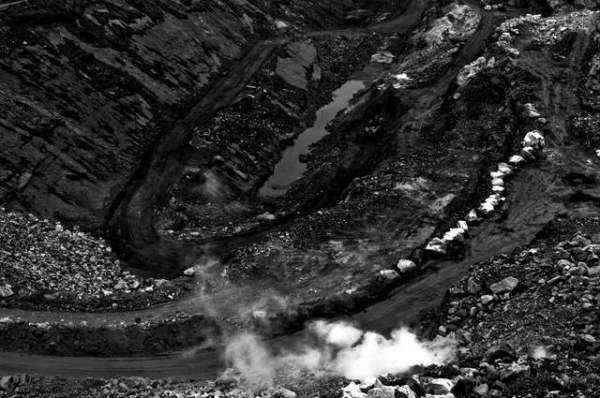
Rich tributes were paid to 375 miners who met their watery grave at Chasnala colliery on this day way back in 1975.

The deafening sound of siren broke the eerie calm at around 1.35pm and hundreds of heads bowed to pay homage to the departed souls. The pain of being separated from their near and dear ones was writ large on the faces of women who lost their husbands and children who lost their parents in the worst-ever mine accident of the country.

Family members of the miners who died in the accident paid homage by offering puja at the Shaheed Smarak built in their memory. General manager J K Bhowmik led the team of colliery officials in laying the wreaths.

CITU leader S K Bakshi along with trade union leaders, mining staff and workers followed suit.

At 1.35pm on December 27, 1975, there was a blast in the joint horizon of pits 1 and 2 in the deep mines of Chasnala colliery that damaged the barrier separating the mine from the water body lying just above the pit. Nearly 5 crore gallons of water gushed in the mine and all the 375 mine personnel, both officials and workers, met their watery grave inside the mine.

Pumps were brought in from Poland, Russia and US to drain out water from the inundated mine but to no avail. Ministers from the Centre and state kept camping at Chasnala to expedite rescue operation. But the first dead body could come out only on the 26th day of the accident with the help of Russian pumps. Many bodies were rendered beyond recognition and many of them were identified with the cap-lamp allotted to them for entering the mine.

A case of criminal negligence was lodged against the colliery officials but most of them got acquitted for want of proper evidence and many of them died during trial.

GM Bhowmik said, "The company was taking all measures to avoid recurrence of such incidents and ensure safety of the miners. We are monitoring the gas level and temperature in the mine round the clock with the help of sensors and all the miners are provided with safety gears before entering the mine."

JVM MLA and AITUC leader Dhullu Mahto who arrived late demanded the colliery management to clear the pending cases of appointment to the kin of those who lost their lives in the accident within a month and threatened of a chakka-Jam if the management failed in complying with the demand. He also demanded the colliery management not to lodge cases against villagers lifting coal for their personal use. Instead, cases should be lodged against racketeers lifting coal through trucks and wagons, he added.

Friday 28 December 2012

http://timesofindia.indiatimes.com/city/ranchi/Chasnala-mine-disaster-victims-remembered/articleshow/17792691.cms

continue reading

Nine killed, 11 injured in Osun in auto crash


Nine persons were killed and eleven sustained severe injuries on Thursday in an auto crash which occurred along Gbongan-Ife Express Road, Osun State, South west Nigeria.

It was gathered that the accident, which took place around 1.30pm, at kilometer 2, opposite Gbongan Community High School involved a white coloured Toyota Hiace commuter bus marked XA 477 MAP and a Man Diesel Truck, with registration number XA 585 ALK.

Eye witness account revealed that the accident was allegedly caused by over speeding of the two vehicles involved as the impact of the crash created panic around the area.

Frantic efforts made by sympathizers to rescue the victims failed to yield positive results as some of the victims died on the spot, while others had their head severed from the mangled bodies.

When contacted the sector commander of the Federal Road Safety Corps (FRSC), Osun State command, Imoh Etuk confirmed the development, saying that “Preliminary investigations showed that the accident was caused by over speeding”.

According to him, “People involved in the accident are 20. They are 12 females, five males, one male child and 2 female children. The number of people who died is nine, which include six female adults, two male adults and a child”.

Friday 28 December 2012

http://dailyindependentnig.com/2012/12/nine-killed-11-injured-in-osun-in-auto-crash/

continue reading

At least 13 people killed in Nepal bus accident


A bus has veered off a mountain road and plunged into a river in western Nepal, killing at least 13 people and leaving 19 others critically injured.

Police official Binod Ghimire said the bus veered off a road near Dhasrathpur village and rolled 50 metres before plunging into the Gam river Friday morning.

The area is about 400 kilometres northwest of the capital, Katmandu.

Police and army personnel were helping rescue efforts, but details were sketchy.

Traffic accidents are common in Nepal, and are generally blamed on poorly maintained roads and vehicles.

A Department of Foreign Affairs and Trade spokesperson confirmed no foreigners were among the casualties.

Friday 28 December 2012

http://dawn.com/2012/12/28/at-least-13-people-killed-in-nepal-bus-accident/

continue reading

Truck crash kills five in central Cuba


Five people, including three children, have been killed and seven others injured when a truck overturned in the central province of Villa Clara, local media reported on Friday.

The truck of the state-run sugar group Azcuba overturned on a highway in the municipality of Quemado de Guines on Thursday, official daily Granma said, adding that the seven injured, including two children, have been taken to the main health centers in the province.

An investigation into the cause of the accident was underway, the report said.

Traffic accidents are the fifth leading cause of death on the island and the first among people aged between 15 and 49, official data showed.

Friday 28 December 2012

http://www.nzweek.com/world/truck-crash-kills-five-in-central-cuba-39981/

continue reading

10 dead, 10 injured in S China road accident


Ten people, including five children, were killed and 10 others injured after a minibus fell into a mountain valley Friday morning in south China's Guangxi Zhuang autonomous region.

A nine-seat minibus carrying 20 people plunged into the valley around 6 a.m. while en route from the regional capital of Nanning to Dahua, a Yao ethnic county, said a spokesman with the county government.

Eight passengers died at the scene, while one died on the way to hospital and another after arriving at the hospital.

The 10 injured are receiving treatment, including a three-month-old infant who is in critical condition, the spokesman said.

The infant's mother, 24-year-old Wei Yuefang, said she and her family were in the minibus heading for the home village of Bahaotun in Qibainong township to attend a wedding.

She said she was carrying her sleeping daughter when the accident happened, adding that they were thrown out of the vehicle while it was falling into the valley.

"Passengers who were still conscious shouted for help. Nearby villagers came and saved us," said Wei.

The cause of the accident is under investigation.

Friday 28 December 2012

http://news.xinhuanet.com/english/china/2012-12/28/c_132069640.htm

continue reading

Quinta death toll rises to 11


The death toll of tropical storm Quinta was raised to 11 as more bodies were found after the flooding in Visayas, the National Disaster Risk Reduction and Management Council (NDRRM) said on Friday, December 28.

Two people are still missing in Batangas and Capiz.

In its 6 am situation update, the NDRRMC noted most of the victims drowned in the floods and 5 came from Iloilo, while Eastern Samar registered 4 and Capiz and Leyte one each.

Three of the fatalities in Eastern Samar belonged to the same family and perished when a tree fell on their hut and crushed them near Maydolong.

The death toll from the latest storm was relatively low as the public, alarmed by the huge number of fatalities left by typhoon Pablo, were quick to take precautionary measures, NDRRMC chief Benito Ramos told AFP on Thursday.

"They were all aware that a typhoon was coming. They were all aware of what happened with [Pablo]. The deaths are minimal compared to [Pablo]," he said.

As of Friday, the total number of affected population has topped 28,000 in regions V, VI, VII and VIII, and about 15,600 people have been evacuated.

Quinta made landfall on Tuesday and has now virtually dissipated over the South China Sea (West Philippine Sea) after being downgraded first to a tropical depression and finally to a low pressure area.

It is the 17th and presumably last storm to affect the archipelago in 2012.

Friday 28 December 2012

http://www.rappler.com/nation/18692-quinta-death-toll-rises-to-11

continue reading

Thursday, 27 December 2012

China, Philippines on top of Asian countries worst hit by disasters in 2012


The Philippines is placed second only to China in the list of countries in Asia worst hit by disasters during the year, according to a report released recently by the United Nations Office for Disaster Risk Reduction (UNISDR).

The UNISDR said the Philippines had the second most number of disasters in the first 10 months of the year with 16 recorded disasters, next only to China with 18 recorded calamities.

The report, however, covered disasters that struck the region only from January to October this year and did not include typhoon "Pablo" (international code name "Bopha") that devastated a wide swathe in the island of Mindanao in the southern Philippines on Dec. 4 and left more than 1,000 dead and another 800 missing.

According to the report, the toll on the economy of the calamities that occurred in Asia in 2012 exceeded 10 billion U.S. dollars and that future disasters may represent a serious threat to the region's otherwise healthy economies.

A total of 83 disasters hit Asia from January to October of this year, leaving some 3,103 people killed and some 15.1 billion U.S. dollars in damages. About 64.5 million people were affected by these disasters across the region.

The UNISDR said Asia accounted for more than half the total disaster-related deaths in the world, 74 percent of affected people and a third of the economic toll due to natural calamities in the first 10 months of the year.

The report said that in 2012 floods were the most frequent disaster occurring in Asia (44 percent) and had the highest human and economic impact. Floods accounted for 54 percent of the death toll in Asia, 78 percent of people affected and 56 percent of all economic damages in the region.

According to the report, Pakistan suffered large-scale loss of life from floods for the third successive year as 480 people died in floods between August and October. Floods in China (June-July) affected over 17 million people and caused the highest economic losses of 4.8 billion U.S. dollars.

In southern, south-eastern and eastern Asia, 83 disasters caused 3,103 deaths, affected a total of 64.5 million people and triggered 15.1 billion U.S. dollars in damages in 2012, the report said.

Globally, the UNISDR said, these three regions accounted for 57 percent of the total deaths, 74 percent of the affected people and 34 percent of the total economic damages caused by disasters in the first 10 months of 2012.

The Democratic People's Republic of Korea (DPRK), which was hit by severe flooding in July, topped the count with 13.3 million affected residents while Sri Lanka, which suffered quakes and storms this year, had 8.6 million people exposed to disasters.

British risk consultancy Maplecroft, in its assessment of 197 countries worldwide, also said that the Philippines, Bangladesh and Myanmar headed the list of 10 countries whose economies were most vulnerable to catastrophes or having "extreme risk" category.

Only one other country, the Caribbean state of Dominican Republic, falls into this category.

The other countries in the top 10 were India, Vietnam, Honduras, Laos, Haiti and Nicaragua.

Maplecroft's "Nature Hazards Risk Atlas" looks at the impact of natural disasters on a country relative to its economy, taking into account preparedness to deal with such events and social ability to rebound.

The ADB has also released its own study saying that Asia must act now to pave the way for green, resource-friendly cities or face a bleak and environmentally degraded future.

Thursday 27 December 2012

http://www.china.org.cn/environment/2012-12/27/content_27531101.htm

continue reading

Czech investigation of post-war violent events in Dobronin closed


The Czech police have closed their more than two-year enquiry into the alleged post-war violence of Czechs against local Germans in the Dobronin village near Jihlava, the police told CTK today, adding that only those harmed in this case will be acquainted with the results.

Pavel Penaz, from the regional police directorate, said the police cannot comment on the course or the result of the investigation.

"The regional state attorney has reserved the providing of information on the case for herself," Penaz said.

The police checked the case of human remains uncovered in the Budinka and U Viaduktu localities near Dobronin for more than two years.

In Budinka, the remains of local Germans who allegedly fell victims to Czech violence at the end of WWII, were taken out from a mass grave in August 2010. Anthropologists then said the bodies of at least 13 people, aged from 30 to 60, were buried in Budinka.

The cause of their death is unclear. According to some information, they were beaten to death by shovels and hoes, but anthropologists have not confirmed this.

The police investigated the case on suspicion of murder.

Remains of another three people were uncovered in Dobronin's U Viaduktu locality.

All remains were sent for an analysis to the Anthropological Institute in Brno and for DNA tests to the Criminology Institute in Prague.

The uncovering of the human remains stirred strong emotions in Dobronin. The remains were ceremonially buried at the Jihlava cemetery this September.

According to the media's previous information, the last possible witness of the Dobronin May 1945 events died in the hospital in the regional centre Jihlava in early 2011. According to the police, the witness was questioned but his information could not be taken for relevant in view of his high age and the way he presented his testimony.

Thursday 27 December 2012

http://www.ceskenoviny.cz/news/zpravy/czech-investigation-of-post-war-violent-events-in-dobronin-closed/882226

continue reading

Gipuzkoa wants to exhume Basque fighters killed in Spain´s Civil War


The city of Donosita-San Sebastian and the Diputacion (provincial government) of Guipuzkoa want to exhume the bodies of around 100 gudaris, or Basque fighters, who were killed in the Spanish province of Asturias in 1937 during the Spanish Civil War.

The plan, presented by the mayor of Donostia-San Sebastian Karlos Izagirre and Guipuzkoa provincial deputy Martin Garitano, both from the pro-independence coalition Bildu, is part of a 50,000 euro project to remember Basque victims of the Spanish Civil war 1936-1939.

Historians says tens of thousands of victims of the Civil War and the repression under General Francisco Franco that followed still lie unidentified in mass graves around Spain. The matter of exhumations is still controversial in Spain more 70 years after the Civil War.

The project unveiled by Izagirre and Garitano includes the exhumation of fighters of a Basque brigade killed by Franco´s troops while they fought under the orders of Candido Saseta, whose remains were found in the village of Areces in Asturias.

The remains of Saseta, commander in chief of the Basque militias, were exhumed in 2008 and reburied with honours in his hometown of Hondarribia.

Izagirre said more than 100 fighters are believed buried in mass graves in Areces, most of them from Guipuzkoa. About 20 are from Donostia-San Sebastian, he said.

Most of them belonged to the Eusko Indarra battalion and were members of the ANV party who "dreamt with the freedom of Euskal Herria," he said.

Marina Bidasoro, director of Gipuzkoa´s Historic Memory and Human Rights department, said they have been in touch with local authorities in Asturias, and said the exhumations could start in February.

Thursday 27 December 2012

http://www.eitb.com/en/news/politics/detail/1210722/spanish-civil-war--gipuzkoa-wants-exhume-basque-fighters/

continue reading

Dead bodies of 100 tsunami victims still in Karapitiya hospital


Dead bodies of 100 tsunami victims are still in the mortuary of the Karapitiya hospital, said its director DR Shelton Perera.

These are bodies hitherto unidentified and have been deposited in the mortuary for the past eight years. Perera said that they are still in an identifiable condition.

Thursday 27 December 2012

http://www.srilankanews.lk/news/general-news/1448-dead-bodies-of-100-tsunami-victims-still-in-karapitiya-hospital

continue reading

Storm leaves 6 dead in central Philippines


A late season storm has left at least six people dead in separate incidents in the central Philippines but has spared a southern region that was devastated by a typhoon that killed more than 1,000 people weeks earlier.

The national disaster agency said in a report Thursday that three people died when a tree fell on their house in Eastern Samar province, where Tropical Storm Wukong made landfall on Christmas Day. Three others drowned in Iloilo province.

Civil Defense chief Benito Ramos said disaster officials were still investigating the death of man earlier reported killed in a landslide. He said it's possible that the man actually was beaten up and pushed off a ravine.

The storm has weakened into a low pressure area over the South China Sea off Palawan province, southwest of Manila.

"The worst is over," Ramos said.

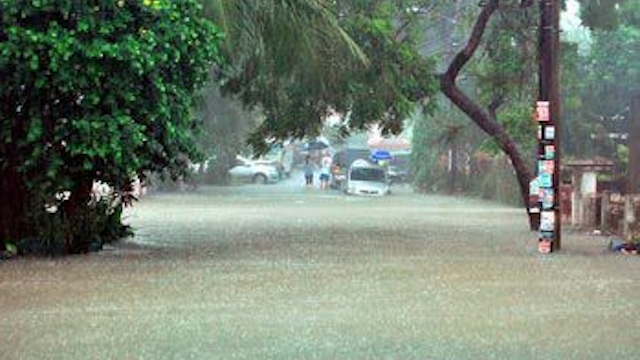
Officials said heavy rain on mountains surrounding Kalibo, the capital of Aklan province on Panay Island, caused a river running through the city to overflow and triggered a flash flood late Wednesday. No casualties were reported but many houses near the river appeared to suffer damage, said Efren Trinidad, executive assistant to Kalibo Mayor William Lachica.

The flooding was aggravated by the high tide, preventing the river from emptying most of the water into the sea, Trinidad said. He said canals were blocked by heavy silt brought down from the nearby hills.

The city is the gateway to the famous island resort of Boracay, which was not affected.

"As we were conducting rescue operations, flights were coming in because the weather was fine. The moon was shining while we were being flooded. It was ironic," Trinidad said, explaining that rains fell mostly over the mountains.

It was the 17th storm to hit the country this year.

Typhoon Bopha lashed the main southern island of Mindanao early this month, killing at least 1,067 people and leaving more than 800 missing. It triggered flash floods laden with mud, boulders and uprooted trees that rampaged through farming communities, wiping out entire villages, according to the Civil Defense Office.

It reported Thursday that Bopha caused nearly 37 billion pesos ($902 million) in damage to agriculture, private property and infrastructure, making it one of the worst storms to hit the country in recent years.

Thursday 27 December 2012

http://www.wkrn.com/story/20429991/storm-leaves-4-dead-in-central-philippines

continue reading

Bodies of 8 victims of fireworks unit blast cremated


Bodies of eight victims of Parakkallur fireworks unit explosion were cremated separately in their villages on Wednesday with high police security to avoid any untoward incidents.

"While bodies of Shanthi Saravanan (40), owner of the fireworks unit and her son S Suriya (10) were cremated in Parakkallur village, K Sivagami (40), K Deepa (12), Kesavan (13), Thangam (50), Eswari (35) and Vijaya (33) were cremated at Vellar and Senkattur Pirivu Valavu villages respectively," said V Mahalingam, local village head for 18 settlements in the locality, including Parakkallur.

"We were planning to cremate all the victims at one place but relatives of the deceased wanted to be cremated in their villages. So, we cremated them in their own villages after performing final rituals," Mahalingam added.

"All the bodies were handed over to the relatives on Wednesday afternoon after the post-mortem conducted at the Salem government hospital," sources said.

"Two police constables were deployed for each body until the crematorium," said a police officer.

Meanwhile, Salem district superintendent of police Ashwin M Kotnis visited the blast spot along with the deputy controller of explosives from Vellore district.

Ashwin said, "The deputy controller of explosives conducted a detailed investigation at the spot. He confirmed that the explosion had occurred only when the workers were drying the gun powder in the open place near the unit. Fire sparks might have erupted at that time and spread to the entire unit. One of the deceased, Deepa Kuppusamy, also confirmed this in her dying declaration to the Mettur judicial magistrate."

The SP said there were only six workers, including Shanthi, Sivagami, Thangam, Palaniappan, Eswari and Vijaya, working at the manufacturing unit on Tuesday morning. Around 12pm, the children Deepa, Suriya, Ammu, Sathiesh, Pavithra, Kesavan, Pasupathi and Manoj Kumar came to the unit to give lunch for their parents. The children were playing near the place where the gun powder was dried when the explosion took place, Ashwin said.

"This was informed by Deepa to the magistrate. Even we thought that the children were working there," the SP added.

Thursday 27 December 2012

http://timesofindia.indiatimes.com/city/coimbatore/Bodies-of-8-victims-of-fireworks-unit-blast-cremated/articleshow/17775700.cms

continue reading

Kabul confirms deaths of 21 Afghan immigrants near Greece


Afghanistan's Foreign Ministry December 25 confirmed that 21 Afghans died when a ship capsized off the Greek coast earlier this month, Radio Free Europe reported.

The boat, which was carrying illegal immigrants, set off from Turkey and capsized in stormy weather December 13. Women and children, including at least two toddlers, were among the victims.

Janan Musazai, a spokesman for the Foreign Ministry, said 21 bodies were handed over to Afghan officials.

Thursday 27 December 2012

http://centralasiaonline.com/en_GB/articles/caii/newsbriefs/2012/12/26/newsbrief-19

continue reading

Siachen disaster: Soldiers body recovered in Gayari


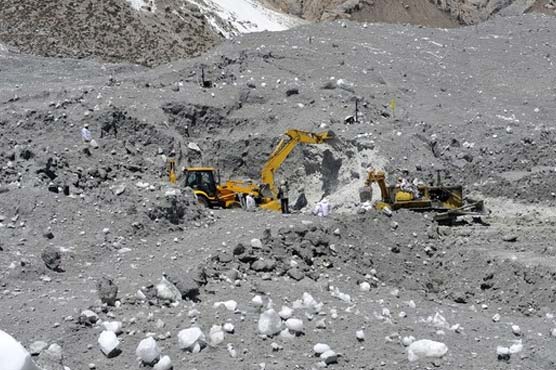
The body of one of the soldiers buried in the Siachen glacier following a massive avalanche on April 7 has been recovered.

On April 7, a total of 137 Pakistani soldiers and civilians were buried in Siachens Gayari sector after a military camp was hit by a massive avalanche.

Pakistani personnel and experts from Germany and Switzerland launched search and rescue operations following the incident.

The rescue officials working round the clock met first success on the 50th day when they recovered the body of one missing soldier.

The soldier was identified as Mohammad Hussain who belonged to village Shagar Thang near Skardu.

The body was shifted to CMH Goma while excavation work to find more bodies continued at seven different sites.

Thursday 27 December 2012

http://dunyanews.tv/index.php/en/Pakistan/112332-Siachen-disaster-Soldiers-body-recovered-in-Gayar

continue reading

Seven killed in Embu accident


At least seven people died instantly and scores others were injured when a lorry rammed into a matatu (Slang for a 14 sitter passenger service bus) along Embu-Nairobi road a short distance from Embu town.

The impact of the lorry tossed the matatu about 50 metres from the spot where it was picking customers until it hit a tree which stopped it.

Among the dead was a pedestrian who was said to have been walking along the shoulders of the busy highway.

Eye witnesses said the lorry was heading down hill on a steep terrain and it appeared the driver was trying to hand start it when its brakes failed and gathered high speed before ramming into the Matatu.

They said the lorry's brakes failed after it failed to be hand started by the driver who was said to have been drunk at the time he attempted to start it.

The Matatu was picking passengers destined for Thika when the accident occurred.

The conductor of the ill fated Matatu Antony Mugendi said he was outsides calling for the passengers when the accident occurred and added that he could not ascertain the whereabouts of his driver.

The lorry is used for transporting animal feed but it could not be established which was its destination.

Eastern Provincial Traffic Enforcement officer Martin Asin said the lorry had been parked at Shell Petrol Station the previous night and in the morning failed to start.

Asin said the driver was assisted by some people to hand start the lorry at around 12.30pm, which then gained momentum because of the steep road but failed to start and thus could not brake.

“The matatu was picking customers on its way to Nairobi when the lorry rammed it from behind and pushed it some distance away,” said Asin.

He said it was not clear the number of people that were in the lorry but added that they arrested the driver and he was being held at the Embu Police Station.

He attributed the accident to break failure of the lorry while most of those dead were at the rear of the Matatu.

Although the injured were rushed to the nearby Embu Provincial General Hospital police had to transfer them to private medical institutions due to the ongoing nurse's strike leading to more deaths of the seriously injured ones.

Thursday 27 December 2012

http://www.standardmedia.co.ke/?articleID=2000073772&story_title=Kenya-Seven-killed-in-Embu-grisly-accident

http://www.kbc.co.ke/news.asp?nid=79574

continue reading

Thirteen dead in Ecuador bus accident


Thirteen people are dead and 37 others injured after a bus plunged into a ravine in a mountainous area of central Ecuador, officials say.

The governor of Tungurahua province, Lira Villalba, told reporters the bus went off the road between the provincial capital Ambato and the town of Pillaro on Wednesday. Initial investigations have shown brake failure was the likely cause.

About 40 people were aboard the bus at the time of the accident, the television network said.

The injured were taken to clinics in Ambato, Ecuavisa said.

Road accidents are a serious problem in Ecuador, with an annual average of 33 deaths per 100,000 residents - one of the highest mortality rates in Latin America.

Over the past four years, an average of about 4800 people have died each year in road accidents in the Andean nation - or 13 people a day, according to road safety watchdog group Justicia Vial.

Wednesday 26 December 2012

http://www.theaustralian.com.au/news/breaking-news/thirteen-dead-in-ecuador-bus-accident/story-fn3dxix6-1226543884105

continue reading