Tuesday, 25 December 2012

Eight dead, many left homeless in Philippine fires


Eight people were killed and thousands left homeless as two fires struck the Philippine capital on Christmas Day, with one of the blazes sparking a riot in a slum, officials said.

Seven charred bodies, all believed to be from one household, were recovered after a blaze razed a row of old apartments in northern Manila at dawn, fire officer Francisco Mabunga told AFP.

The cause of the blaze, which broke out as the metropolis of 14 million people held Christmas Eve parties that lasted until dawn Tuesday, is under investigation, officials said.

"They are all believed to be from a family that owned the apartment row and lived in one of the units where the fire was suspected to have started," Mabunga added.

A second blaze broke out at a sprawling shantytown, sparking riots that left one man dead and lead to two suspected rioters being arrested, said Manila fire marshal Santiago Laguna.

"They (residents) started grabbing hoses from our firefighters, who could not do anything as they feared for their own safety," Laguna said in a radio interview.

He said a man was beaten up and later died from his injuries in the melee as the blaze consumed the shantytown in the San Juan district. Arson is believed to be the cause of the blaze.

Laguna said residents were apparently angered by the delayed arrival of firefighters. He said the emergency workers could not get their fire trucks through narrow streets jammed with parked vehicles.

Volunteer firefighter Willy Tiongson, his bloodied head wrapped in a bandage, told GMA television that his team was met with a shower of rocks and other projectiles as they drove into the slum.

Mr Laguna said residents were apparently infuriated by the delayed arrival of firefighters and took it upon themselves to grab fire hoses to aim at their blazing houses.

However he said the residents were themselves to blame.

"Our fire trucks had difficulty entering the narrow streets that were blocked by parked cars and carts," he said.

"Our firefighters had to drag the hoses into the alleys, where they were attacked."

Mr Laguna said the cause of the apartment blaze was under investigation, though he added electrical circuits had probably overloaded from increased use during Christmas Eve parties across the metropolis of 14 million people.

The shantytown blaze left some 2,000 families homeless, Laguna said, adding that equated to around 8,000 people without a roof over their heads at Christmas.

An AFP photographer on the scene saw hundreds of people left homeless huddled on the floor of two basketball courts nearby. –

Tuesday 25 December 2012

http://www.thesundaily.my/news/573371

continue reading

Eight trapped in galamsey pit; two feared dead


Information gathered by XYZ News indicates that eight people have been trapped in a galamsey pit at Subrisufante a suburb of Tepa in the Ashanti region.

The pit is reported to have collapsed on Sunday evening.

Residents close to the pit have managed to rescue two people who are reported dead. Their bodies have since been deposited at the Tepa Government Hospital.

Six more people are still reported trapped in the pit with rescue efforts ongoing to save their lives.

According to Radio XYZ’s Ashanti regional correspondent, Isaac Bediako Justice, the pit collapsed on Sunday evening. Reports also indicate that officials of the National Disaster Management Organization are yet to arrive at the site to help in the rescue mission.

Tuesday 25 December 2012

http://www.ghanaweb.com/GhanaHomePage/NewsArchive/artikel.php?ID=260427

continue reading

An empty chair left at table helps families remember the missing

Some of the families of the country's 'missing' leave vacant chairs at the Christmas dinner table to mark their painful absence.

Former garda Tosh Lavery, who chairs the Searching for the Missing group, said the festive season in particular was a "horrible" time for the families of those who vanished.

"It is very hard to counsel someone about a missing person, it is different from a bereavement, so no one can empathise with them unless you are in that situation," said the former garda, who spent 30 years diving rivers and lakes in search of the missing.

"Some people have a vacant chair at Christmas to mark that person."

Mr Lavery said some of those who went missing did so intentionally, while others may have met unfortunate accidents or been deliberately killed.

"Over 30 men are missing in the Limerick area. I've no doubt some of them have been killed and buried," he said.

The former garda appealed to those who might now be older and raising families of their own to call the Searching for the Missing helpline on 086 8956917 in confidence and leave information on where some of the missing might be located.

In 2011, there were 8,511 people reported missing to Garda Missing Persons Bureau, with the latest available figures showing 28 of those were still missing.

Michael Deely, from Naas, Co Kildare, revealed he had drawn strength from his Catholic faith in the 12 years since son Trevor went missing.

"We have a prayer service every year," Mr Deely said.

"Christmas is a particularly difficult time, it is a time of friends coming back, and coming home."

The 22-year-old was last seen in the early hours walking along Haddington Road after a Christmas party on December 8, 2000.

His father said they were still hoping a member of the public would contact gardai with information.

Gerry Daly Snr (72), from Tallaght, Dublin, said he had "no idea" what had happened to his son, security dog trainer Gerry Daly Jnr (42), who disappeared from his home in Bailieboro, Co Cavan, on June 26, 2011.

His son lived in the same area as former garda John Kerins, who was found shot dead in November. Mr Kerins was arrested and questioned after his neighbour vanished.

Heartbroken father Bob Shanahan (70) said each festive season had been particularly difficult since their son Gussie disappeared from the streets of Limerick 12 years ago.

The family believe the 20-year-old employee of computer firm Dell may have been killed.

"From the moment you wake up, you are hoping and praying someone will have the courage to tell you what happened," he said.

Tuesday 25 December 2012

http://www.independent.ie/national-news/an-empty-chair-left-at-table-helps-families-remember-the-missing-3335412.html

continue reading

Monday, 24 December 2012

Van plunges into pond, killing 11 kindergartners in China

minivan carrying 15 children to kindergarten plunged into a roadside pond in a rural area of eastern China on Monday, killing 11 children, state media and an official said.

Three children died at the scene of the accident in Guixi city in Jiangxi province and another eight died later in hospital, said an official from the propaganda office of the city's Communist Party committee. Four children survived, said the official, who like many Chinese bureaucrats gave only his surname, Jiang.

The accident is the latest in a string of deadly crashes in China involving school children.

Police detained the driver for questioning and were investigating the cause of the accident, the official Xinhua News Agency said.

Photos on the Shanghai-based Oriental Morning Post's website showed a silver minivan partially submerged in a grassy pond, with one of its three windows on the right side broken.

The minivan belonged to Chunlei kindergarten, which doesn't have a government license to operate, according to an article on the website of state broadcaster China Central Television that didn't cite any sources. The van taking the children to school was travelling too fast and swerved to avoid a vehicle parked on the side of the road, ending up in the pond, CCTV said.

Photos on its website showed pairs of tiny shoes and brightly colored school bags lined up on the ground near the scene and an injured child being treated.

The Hong Kong-based Information Center for Human Rights & Democracy said in a statement that cited no sources that the van was made to carry seven people but was overloaded with 17. The human rights group also said it took 70 minutes for an ambulance to arrive.

Overcrowding on school buses is common in rural China, where the education system is short of funds and children are forced to travel far to get an education because of school closures.

Last year, a nine-seat private school van overloaded with 62 kindergarten children and two adults crashed head-on with a truck in rural western China, killing 19 children and the adults.

The accident caused public uproar and Chinese Premier Wen Jiabao pledged more support for school bus safety and said central and local governments would bear the cost of bringing often-shoddy buses up to standard. The kindergarten head, who owned the vehicle, was later convicted of a traffic accident crime and sentenced to seven years in prison.

Accidents happen frequently in China, reportedly because of poorly maintained vehicles and reckless driving habits.

Monday 24 December 2012

http://www.cbc.ca/news/world/story/2012/12/24/china-road-children-plunge.html

continue reading

No claim made so far on unmarked graves: Omar


Not a single claim in respect of the bodies buried in unmarked graves across north Kashmir has been made to the state government yet, Chief Minister Omar Abdullah today said. No DNA profiling has thus been conducted to link the blood sample of anyone to that of those buried in the graves.

Militancy in J&K at present was at an all-time low, just 5 per cent as compared to the 2002 levels, said Omar while batting for the withdrawal of the Armed Forces Special Powers Act (AFSPA) from parts of the Valley. “On the one hand the J&K Police and the CRPF are praised for a good job and on the other they are not trusted to handle the situation. The Army should be withdrawan from areas where people don’t want the Army,” he said.

The State Human Rights Commission had in 2011 detailed the existence of 2,730 bodies in close to 38 unmarked graves in north Kashmir raising the hopes among families who have been saying that their kin disappeared following militancy and could be among those buried in unmarked graves.

But no such linkage has yet been established with Omar Abdullah today saying in response to The Tribune query that no one had given a blood sample yet or identified a grave where their kin could be buried to enable the state to exhume the body to determine the truth.

The state had earlier told the families to identify the graves of their missing relatives and give blood samples so that the government could exhume the particular body and conduct DNA tests on it to match the samples.

“We had earmarked an officer in the state human rights cell. We had asked families to come forward with DNA samples. No one has come,” the CM said while raising the pitch for the establishment of a Truth and Reconciliation Commission through a joint initiative between India and Pakistan to determine the truth behind the Valley’s disappearances and bodies in unmarked graves.

“A Truth and Reconciliation Commission straddling the Line of Control must be set up by India and Pakistan to determine the truth behind the Valley’s disappearances. Answers to this question don’t lie here alone.

Everyone who disappeared wasn’t killed by security forces here. What about those killed by militants and those who may have died during training in Pakistan-occupied Kashmir camps?” asked the Chief Minister.

He argued that it was easy to say that the alleged forged elections of 1987 in J&K were the root of militancy. “But is the answer so simplistic? Where did militancy start? What happened to our people?

Monday 24 December 2012

http://urdutahzeeb.net/articles/blog1.php?p=20456&more=1&c=1&tb=1&pb=1

continue reading

NEMA activates search and rescue teams nationwide for yuletide period


The National Emergency Management Agency, NEMA, said it has activated its emergency Search and Rescue Teams to be on full alerts in the event of any emergency situation during the yuletide season.

The Director General of the Agency, Muhammad Sani-Sidi, made the disclosure in his office at the weekend while receiving the communiquรฉ of the 2012 Annual Media Retreat of Journalists and Information Officers on Disaster and Emergency Management in Nigeria.

“All Search and Rescue Officers of the NEMA and that of other response agencies as well as trained emergency volunteers throughout the federation have been put on alert in case of any untoward development between the Xmas period and the New Year.

“The activation of Search and Rescue officers to be on full alert has been the tradition of the agency in its collaborative efforts with other agencies and volunteers in responding to distress situation,” he said.

The NEMA boss also lamented the inability of the Nigerian Communication Commission, NCC, to provide the country with a 3-digit National Emergency call line as obtained in other jurisdictions.

“We are waiting for NCC to work out the emergency toll free number as soon as possible to help us on disaster management,” he said.

Mr. Sani-Sidi also noted that most states have lukewarm attitude to the subject of emergency management and combating disasters by not complying with legal mandates to establish their State Emergency Management Agencies . He added that in the case of those that have established, most of them are yet to become functional because they are not adequately funded.

He tasked journalists to take governors and local government chairmen to task on the need to establish functional emergency management bodies.

“Every Nigerian now look forward to NEMA to respond to emergencies and combat disasters whereas, only situations beyond the coping capabilities of State and Local Emergency outfits that supports and assistance could be referred to NEMA as the national body,” he said.

He also stated that disaster management will soon be included in both primary and secondary school curricula in the country as a result of efforts of his agency. He explained further that students have graduated from the six post graduate departments that NEMA funded in the six geo-political zones across the country.

On the 15-point communiquรฉ, the NEMA boss promised to implement most of the recommendations especially those pertaining to creation of information centres at emergency scenes to create synergy in dissemination of information and reportage during emergencies. He also promised to improve partnership with the media on dedicated programmes and columns in electronic, print and even online media.

Monday 24 December 2012

http://premiumtimesng.com/news/112446-nema-activates-search-and-rescue-teams-nationwide-for-yuletide-period.html

continue reading

Eight killed in coal mine blast in NW Pakistan


At least eight labourers were killed and around 50 others injured in a coal mine blast on early Monday morning in the northwestern region of Pakistan , local media and officials said.

According to the reports, the incident took place in the early hours of Monday morning in the Doli area of Lower Orakzai, one of the seven northwestern tribal regions of Pakistan.

Officials of the local administration said that at the time of incident around 60 laborers were working in the mine while around two dozen others luckily had already come out to take breakfast minutes before the blast took place.

The initial reports said that the explosion occurred as gas accumulated due to the absence of proper ventilation in the mine.

According to the eyewitnesses and first hand rescuers, at least seven labourers were killed on the spot while others got injured and fell unconscious. One of the injured also succumbed to his injuries on the way to the hospital.

All the killed people belonged to the Shangla district of the northwestern province of Khyber Pakhtunkhwa.

One week before, the same kind of blast killed at least five people in another coal mine in the same area.

Pakistan's miners always complain about the lack of proper security measures and rescue facilities in the mines.

Monday 24 December 2012

Read more: http://www.indiavision.com/news/article/topnews/381026/eight-killed-in-coal-mine-blast-in-nw-pakistan/#ixzz2FythQ7Xm

continue reading

Foreign cargo crew reported missing off Batanes


Members of the Philippine Coast Guard are searching for 17 foreign missing seafarers who have abandoned a distressed Korean vessel off northern Philippine province of Batanes, the Coast Guard said today.

The Coast Guard said the missing crew included 11 Myanmar nationals and 6 Koreans, who abandoned their vessel at about 165 nautical miles east of Batan Island in Batanes in Northern Luzon.

Immediately upon receiving the distress alert from the MRCC Korean Coast Guard on Saturday, the Coast Guard units in Northern Luzon and Batanes made joint efforts for rescue operation.

The search and rescue are continuing at sea areas where the vessel was abandoned.

Sunday 24 December 2012

http://www.philstar.com/breaking-news/2012/12/23/889416/foreign-cargo-crew-reported-missing-batanes

continue reading

Shipwreck in Congo River leaves 9 dead, scores missing

Searchers in the Democratic Republic of Congo on Sunday looked for about 100 people still missing from a shipwreck that more than 200 people survived and in which nine are confirmed dead.

The boat sank around 9:30 p.m. local time (3:30 p.m. ET) Friday along the Congo River near Maluku, which is part of the capital city of Kinshasa in the western part of the central African nation, according to a United Nations radio report.

The vessel -- the MB Mobek, which was early into its route and was carrying several tons of merchandise -- went down after striking an obstacle.

Maluku Mayor Papy Epiana told UN Radio on Sunday that authorities don't have a copy of the ship's manifest "because we haven't seen the general or the commander." But they believe about 100 people are missing, while more than 200 survived.

"We have recovered nine bodies since Friday," Epiana said.

Monday 24 December 2012

http://edition.cnn.com/2012/12/23/world/africa/congo-boat-sinks/index.html?hpt=hp_t3

continue reading

Philippine typhoon death toll may reach 1,500

The death toll from Typhoon "Pablo" will likely hit 1,500, making it the second deadliest since the country began keeping records, Benito Ramos, head of the National Disaster Risk Reduction and Management Council (NDRRMC), said on Saturday.

Ramos said that so far, the council had counted 1,067 dead with more than 800 still missing nearly three weeks after the typhoon, internationally named "Bopha," struck with winds up to 200 kilometers per hour, devastating communities and farmlands.

"It (the death toll) will go higher. But let us not assume the missing are already dead," he told Agence France-Presse, estimating fatalities at "about 1,500" but adding that the search for the missing continued.

The toll from Pablo is expected to exceed the 1,268 confirmed dead from Tropical Storm "Sendong" (Washi) a year ago. If it reaches 1,500, it would make it the second deadliest storm to hit the Philippines since 1947, when the Philippines began keeping records a year after independence.

Tropical Storm "Uring" (Thelma), which killed at least 5,101 in 1991, remains the deadliest on record, the government statistics bureau said. Typhoon "Nitang" (Ike), which claimed 1,363 lives in 1984, is listed as second.

Thousands of people remain homeless after Pablo brought flash floods that wiped out whole towns.

However, Ramos expressed confidence there would be no rise in health problems as the government had brought enough food and medicine to care for those affected.

"It will be contained. The government presence is felt by the people already," he said.

In the hard-hit town of New Bataan in Compostela Valley, a forensics team from the National Bureau of Investigation was working double time so that 351 bodies could be identified and buried, according to Marlon Esperanza, the municipal information officer.

Of the unidentified bodies, 111 are in coffins while 240 others are in body bags in the damaged public cemetery, where the NBI examination was being conducted.

Esperanza said relatives wanted to bury the unidentified corpses, but the task of digging a common grave was being hampered by rain, which also was making search operations difficult.

"People are still searching for family members and friends," Esperanza said.

The Department of Social Welfare and Development (DSWD) and the Claretian Pastoral Care of the sick have deployed volunteers to conduct stress debriefing to the families of typhoon victims in New Bataan.

"Many of the survivors have lost their livelihood and family members. Through the sessions, we hope to ease the tension, anger and other negative emotions brought by Typhoon Pablo," said Fr. Arnold M. Abelardo, head of the 13-member Claretian volunteers.


Sunday 24 December 2012

http://www.asiaone.com/News/AsiaOne%2BNews/Asia/Story/A1Story20121223-391230.html

continue reading

Sunday, 23 December 2012

6 dead in Magura boat tragedy

At least six passengers -- including three of a family-- were drowned when a boat capsized mid-river in Magura on Saturday.

"The accident occurred on the Nabaganga River near sadar upazila's Buzruk Srikundi village around 2am," Sub-Inspector Liton Kumar of Magura Sadar Police Station said.

Locals said 12 residents of Srikundi were returning on a boat from a Kirtan (Hindu devotional singing sessions) in Boroi village, across the Nabaganga.

The boat suddenly overturned in the mid-river amidst heavy fog, they said.

The villagers immediately got into the rescue act and fished out the body of one Brijit Pramanik, 65. Five more bodies were recovered in the morning.

The other deceased were identified as – Nirapad Pramanik, 60, his younger brother Prajit Pramanik, 57, his grandson 'Dipti', 10 and Uttam Pramanik, 37.

The police officer said the accident might have been due to overloading. Most of the passengers also could not swim to safety, despite knowing how to swim, because they were in heavy winter clothers, he said.

But some could be rescued. The Upazila Nirbahi Officer (UNO) Tadibur Rahman Khan was supervising rescue operations in the morning.

The police official said that the villagers had recovered all the dead bodies before divers from Khulna could reach the site of the accident.

Mohammad Hanifuddin, assistant deputy commissioner of Magura, and Mohammad Tabibur Rahman, Sadar upazila nirbahi officer, visited the spot in the morning and handed over Tk 25,000 to each family of the victims.

Sunday 23 December 2012

http://bdnews24.com/details.php?id=238603&cid=2

continue reading

Five Dead in House Fire in Central Russia


Five people, including two children died in a fire that broke out in a residential house in Tambov in central Russia, the local police reported on Sunday.

The fire erupted on Saturday in a one-storey wooden house. Electrical short circuit was the likely cause of the blaze, the police said.

The firefighters spent over four hours in extinguishing the fire.

“During the rubble clearance, the rescuers found the bodies of three adults and two children aged ten and three,” the police said.

Russia has an extremely poor fire safety record. Around 15,000 people die in fires across the country annually. In the United States, with more than twice the population, the figure is around 3,400 deaths a year.

Sunday 23 December 2012

http://en.ria.ru/russia/20121223/178348575.html

continue reading

Despair sweeps Philippine storm survivors


Weeks after Typhoon Bopha tore through the southern Philippines leaving more than 1,000 dead and hundreds missing, residents of this town are still adrift on a sea of hopelessness.

Anna Jane Saigod, 16, is not sure about how to fend for herself and two other siblings who survived the storm. Twelve members of her family - parents, a younger sister and nine relatives - are missing and Saigod says she is lost in the typhoon's aftermath.

"We are left alone, and now we don't know what to do and what will happen to us in the coming days," she said, clutching her three-year-old brother, Tito.

More than 300,000 people are now homeless, according to the International Federation of the Red Cross.

Currently, the three have found shelter in a school-turned-evacuation centre. Food is scarce and they eat only what aid agencies provide them.

But more scarce is hope of reuniting with their missing relatives. An estimated 800 people remain missing, and the chances of their return grow slimmer each day.

Saigod has scoured every possible place and even followed the stench of bodies buried under logs and mud, but with no luck in finding her parents.

"Weeks have passed but we lost touch of them. My younger brother was asking where mother is, and I simply say she’s just out to the market for food."

Since floodwaters receded, New Bataan has become high on despair and low on hope. The only things rising amid the devastation are stinking rubbish and the foul smell of rotting corpses.

"The situation is totally unacceptable," said Marivic Helandes, 32, a mother of two children.

Threat of disease

About 200 unidentified bodies were buried in a mass grave Saturday with the threat of disease becoming increasingly more dangerous.

An estimated 150,000 children under the age of five and 35,000 pregnant and lactating women are at risk of nutrition deficiencies because of increasing diarrhoea oubreaks and respiratory infections, officials say. In Davao Oriental, two people have died and another 300 have been sickened by diarrohoea.

"The health condition of my kids is at risk. We need a good place to stay. Every morning it’s cold here since we are in open space. Sometimes, if the wind goes to our direction, we can smell the dead bodies coming from the cemetery," Helandes said.

The elderly among the survivors recall a similar storm some 60 years ago, but the scale of this devastation is infinitely more severe."If you don’t have sickness and you are staying here, surely you will get sick," she added, pointing out the debris everywhere.

Saigod and Helandes are just two among the 6.2 million people in the southern Philippines affected by the typhoon.

Sunday 23 December 2012

http://www.aljazeera.com/indepth/features/2012/12/201212237565413785.html

continue reading

Mexico Drug War: List Of Missing Raises Doubts In Mexico


Federal police officer Luis Angel Leon Rodriguez disappeared in 2009 along with six fellow police as they headed to the western state of Michoacan to fight drug traffickers.

Since then, his mother, Araceli Rodriguez, has taken it into her own hands to investigate her son's disappearance and has publicized the case inside and outside Mexico. She's found some clues about what happened but still doesn't have any certainty about her son's whereabouts.

As Mexican troops and police cracked down on drug cartels, who also battled among themselves, Leon was just one of thousands of people who went missing amid a wave of violence that stunned the nation. A new report by a civic participation group has put a number for the first time on the human toll: 20,851 people disappeared over the drug war.

With at least another 70,000 deaths tied to drug violence, the numbers point to a brutal episode that ranks among Latin America's deadliest in decades. In Chile, nearly 3,100 people were killed, among them 1,200 considered disappeared, for political reasons during Augusto Pinochet's 1973-1990 dictatorship, and at least 50,000 people disappeared during 40 years of internal conflict in Colombia.

The new database is shedding needed light on Mexico's unfolding tragedy. It's also sparking angry questions about why it doesn't include all of the disappeared.

Neither Rodriguez's son nor his six colleagues who went missing on Nov. 16, 2009, are in the database, which was allegedly leaked by the Attorney General's Office to a foreign journalist. The group Propuesta Civica, or Civic Proposal, released the data on Thursday.

Rodriguez's mother said she's been in touch with authorities investigating the case and has spoken about it in several public forums about the missing.

"I don't think any government entity has a complete database," she said.

A spokesman for federal prosecutors, who would not allow his name to be used under the agency's rules, said the Attorney General's Office had no knowledge of the document.

As compiled by Civic Proposal, the report reveals the sheer scope of human loss, with the missing including police officers, bricklayers, housewives, lawyers, students, businessmen and more than 1,200 children under age 11. The disappeared are listed one by one with such details as name, age, gender and the date and place where they disappeared.

Some media in Mexico have reported that the number of missing could be even greater, at more than 25,000, with their estimates reportedly based on official reports, although media accounts didn't make the reports public.

"We're worried because several of the people gone missing in the state of Coahuila, and that we have reported to authorities, don't appear on the database," said Blanca Martinez of the Fray Juan de Larios human rights center in that northern border state. She's also an adviser to the group Forces United for Our Disappeared in Coahuila, made up of relatives searching for loved ones.

Martinez said that between 2007 and 2012 the group registered 290 cases of missing people. The database released Thursday lists 272 cases in the state since 2006.

"We have no doubt that the authorities have done absolutely nothing" to solve them, she said.

Public attention to Mexico's disappeared has grown especially since 2011 when former President Felipe Calderon publicly met with members of the Movement for Peace with Justice and Dignity, a human rights group led by poet Javier Sicilia. His son was allegedly killed by drug traffickers that same year.

Sicilia's movement demanded that the thousands of killed and missing should be treated as victims of the drug war, even if they were criminal suspects. Calderon's government responded that it would create a missing persons database, but authorities have not made it public so far. Calderon also ordered the creation of a special prosecutor in charge of assisting crime victims and supporting the search for the missing.

"There is nothing worse for me than having a missing relative. Not knowing where the person may be is very serious and so ... in every case that comes to us, we try to find a solution, to find the person," said Sara Herrerias, the head of Provictima, the office established by Calderon to help crime victims.

Herrerias, however, was cautious talking about the number of missing and said she could only discuss the cases that her office has dealt with.

In 14 months, she said, Provictima has handled the cases of 1,523 missing people, most of them allegedly taken by members of organized crime but with some cases also reportedly involving government authorities. Of the total number, 150 people have been located, 40 of them found dead.

Herrerias declined to talk about the possible magnitude of disappearances. "I don't like to talk when I don't have hard data," she said.

Estimates of the missing vary. The National Human Rights Commission, which operates independently from the government, has said that some 24,000 people were reported missing between 2000 and mid-2012, in addition to some 16,000 bodies that have been found but remain unidentified.

The government of President Enrique Pena, who took office Dec. 1, estimates the number of unidentified bodies at about 9,000 during Calderon's previous six-year administration.

Civic Proposal director Pilar Talavera said that although her group saw inconsistencies in the database, they decided to disclose it not only to help the public understand the scale of the violence, but also to pressure authorities to disclose official information on disappearances.

While the numbers help, what the relatives of the missing need most, of course, is to just learn what happened to their loved ones.

Since the disappearance of Rodriguez's then-23-year-old son, a dozen alleged members of the La Familia drug cartel have been arrested as suspects in his case. Rodriguez said she has interviewed four of them, who have told her that her son and the other six officers were killed and their bodies "disintegrated."

She said that so far no one has given her any clues about where her son's remains are.

"If it's true what the criminals say ... even with that, my heart asks to find Luis Angel," Rodriguez said. "For me Luis Angel is still missing."

Sunday 23 December 2012

http://www.huffingtonpost.com/2012/12/23/mexico-drug-war-missing-list_n_2355789.html#slide=1630097

continue reading

Tragedy at Tissa Wewa


Five people died after a boat carrying 22 people capsized in the Tissa Wewa around 3.30 pm yesterday.

Police have recovered five bodies. Police and people of the area rescued the others, police said.

According to the Police Media Centre, two people are still missing. Search operations are underway to find them.

The victims have been identified as residents of Homagama and Godagama. They were on their way back after a pilgrimage to Kataragama.

Sunday 23 December 2012

http://www.sundayobserver.lk/2012/12/23/new36.asp

continue reading

Slain migrants: Bodies shifted to morgue in Karachi


The bodies of 11 would-be migrants were shifted to Edhi Morgue in Karachi for identification, said the deputy commissioner of Gwadar on Saturday.

The men were trying to reach Europe via Iran but their journey was disrupted in Gwadar’s Suntsar area by gunmen who ambushed their vehicles on Friday.

Deputy Commissioner Gwadar Sohailur Rehman Baloch told The Express Tribune that the victims could not be identified. “Only one person, Shamsuddin from Sialkot, had a CNIC but the image is not clear on the card,” Baloch said.

“We have shifted the bodies to Edhi Morgue Karachi for the identification process,” he said.

Balochistan Home Secretary Akbar Hussain Durrani has said that Pashto-speaking people could also be amongst the deceased.

Durrani said that all available resources were being used to curb illegal movement on border areas. “Whenever illegal migrants are arrested and presented before the court they plead that they are moving in Pakistani territory and after getting released they try their luck again,” he said.

Durrani said that Federal Investigation Agency (FIA) and federal interior ministry had been informed about the incident and asked for serious steps to curb such mishaps in future.

Human trafficking

Human trafficking goes unchecked on the Pakistani side. The 11 victims who wanted to reach Europe via Iran for a bright future had crossed hundreds of security check posts from Punjab to Karachi and onward from Bela to Mekran close to the Iranian border. It is unclear why the illegal migrants were not stopped at any inter-city or inter-provincial checkpoint.

Sunday 23 December 2012

http://tribune.com.pk/story/483334/slain-migrants-bodies-shifted-to-morgue-in-karachi/

continue reading

'No Christmas' for Philippine typhoon victims


Survivors of a typhoon that ravaged the southern Philippines will bypass Christmas this year as they hole up in evacuation centres and continue to bury their dead, officials said.

Instead of presents and carols, thousands of people on the island of Mindanao will be more concerned with food, water and shelter, civil defence chief Benito Ramos said.

Instead of a traditional Christmas dinner, the government will distribute special packs of spaghetti, corned beef and fruit salad.

"There will no celebrations. It is just too sad. It will just be a regular day. We do not call it Christmas," he told AFP as relief workers rushed supplies to towns flattened by Typhoon Bopha, which slammed into the island on December 4.

So far 1,067 people have been confirmed dead, with more than 800 missing, according to the government.

Ramos said that - unlike in the rest of the majority-Catholic Philippines - there would be no Christmas parties in the storm hit towns, just the burials of bodies.

Many of the dead are in an advanced state of decomposition after failing to be identified.

Ramos denied reports that bodies had been dumped in a mass grave.

"There was a semblance of a decent burial after the 17 bodies were identified," he said.

The burial was helped by the donation of 500 coffins from a province north of Manila, he added.

Ramos's office said there were still 13,940 people living in evacuation centres almost three weeks after the storm. More than 959,000 others have returned to the ruins of their homes or are staying with relatives.

Dr. Martin Pareno, nutrition coordinator for Action Against Hunger International, said in a recent visit to the affected area he had seen people desperate for help.

"It's a heartrending thing. There is no sign of Christmas in the whole area," he told AFP.

"The number one problem is shelter, clearing debris, sanitation. There is no electricity or water service. They will have to provide for that before any social activities."

Sunday 23 December 2012

http://www.news.com.au/world/no-christmas-for-philippine-typhoon-victims/story-fndir2ev-1226542725835

continue reading

7 dead, 19 injured in C China's road accident


Seven people were dead and another 19 injured in a road accident Sunday morning in Zhengzhou, capital of central China's Henan Province, local police said.

The accident happened at about 9:45 a.m. in the city when a truck collided with a passenger bus, killing two people instantly.

The injured have been sent to a local hospital, police said.

Qu Hongwei, driver of the passenger bus, died in the accident. The driver of the truck, Meng Kai, is being questioned by police.

The cause of the accident is under investigation.

Sunday 23 December 2012

http://www.china.org.cn/china/2012-12/23/content_27493044.htm

continue reading

5 motor banca crew missing in Palawan


Authorities have launched search and rescue operations for five missing crew members of a passenger motor banca, which sank off Palawan, the Coast Guard said today.

The unregistered motor banca carrying five crew and five passengers was bound for Balabac, Palawan, when it encountered engine trouble between the Sumanahan Reef and the Lumbacan Island last Thursday.

The five passengers decided to disembark using a service boat and safely proceeded at the Balabac Pier and they reported the incident to the Coast Guard Detachment in the area for the immediate rescue of the five remaining crew onboard.

But rough sea conditions hampered the search and rescue operation.

Sunday 23 December 2012

http://www.philstar.com/breaking-news/2012/12/23/889305/5-motor-banca-crew-missing-palawan

continue reading

Traditions in Chad harm, kill underfed children


On the day of their son's surgery, the family woke before dawn. They saddled their horses and set out across the 12-mile-long carpet of sand to the nearest town, where they hoped the reputed doctor would cure their frail, feverish baby.

The neighboring town, almost as poor and isolated as their own, hosts a foreign-run emergency clinic for malnourished children. But that's not where the family headed.

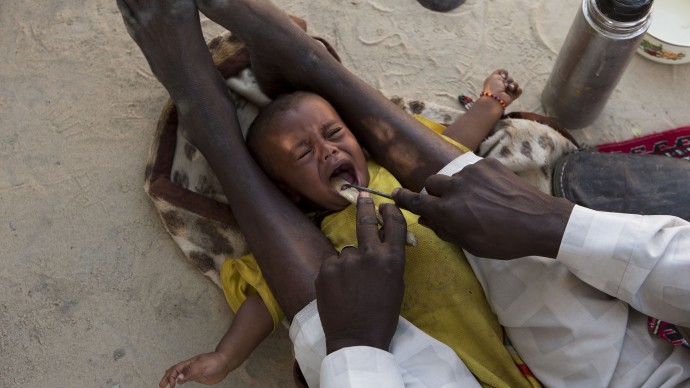
The doctor they chose treats patients behind a mud wall. His operating room is the sand lot that serves as his front yard. His operating table is a plastic mat lying on the dirt. His surgical tools include a screwdriver. And his remedy for malnourished children is the removal, without antiseptic or anesthesia, of their teeth and uvula.

That day, three other children were brought to the same traditional doctor, their parents paying up to $6 for a visit, or more than a week's earnings. Not even a mile away, the UNICEF-funded clinic by contrast admitted just one child for its free service, delivered by trained medical professionals.

The 4:1 ratio that you see in this sandy courtyard on just one day in just one town is a microcosm of what is happening all over Chad, and it helps to explain why, despite an enormous, international intervention, malnutrition continues to soar to scandalous levels throughout the Sahel.

The world poured more than $1 billion into the band of countries just south of Africa's vast Sahara Desert to address hunger this year alone, according to a United Nations database. A third of that money went to Chad, where 15 percent of children are acutely malnourished, says a report by aid group Save the Children. That's among the highest rates in Africa.

There are now 32 clinics equipped with the latest technology to halt starvation, most within a few hours' walk of affected families. If a child makes it to one of these centers in time, the chance of survival is remarkably high.

Yet acute malnutrition is only getting worse in the Sahel, where every year, cemeteries fill up with the bodies of children who wasted away within walking distance of help.

In 2010, 55,000 children were treated for the most acute form of malnutrition in Chad. In 2011, it was 65,000. The expected caseload for 2012 is 127,300, according to the report published in June. Overall, in the eight countries in the Sahel, the number of admissions has doubled in just three years.

One reason is that families simply do not take advantage of the safety net created for them, and cling instead to traditions that can end up killing rather than healing their children.

"We try to tell them the consequences. That these are not good treatments. That if the child has diarrhea, he should go to the hospital," says Laurent Blague, director of child protection at Chad's Ministry of Social Welfare. "Unfortunately, this is tradition."

Eight-month-old Abdallah Lamine had been sick for a month, but it wasn't until he started vomiting that his parents made the trip to the medicine man, Haki Hassane.

The mother rode a red horse, carrying her baby's hot body in her lap. She could feel the fever consuming him even through her clothes.

The remedy the healer prescribes for malnourished children is the removal of the uvula, the tiny ball of flesh that hangs from the back of the throat, which he says "gets in the way of the food." For fever, he prescribes the removal of the child's teeth.

In baby Abdallah's case he prescribed both. He grabbed the baby by one arm, placed him on the mat and pinned him down. As the child began to shriek, he dug the unwashed screwdriver into the baby's pink gums, until four tiny teeth popped out.

The healer wiped down the holes in the child's mouth with a corner of a ratty blanket, stained with the blood of the other children he'd treated that day. Then he handed the petrified, whimpering toddler to his stone-faced mother.

Tooth extraction and the removal of the uvula is common in this part of Chad. Elsewhere, the treatment for diarrhea is burning the child's anus with a rod heated over a fire. Other treatments include draining the "bad blood," a procedure recommended when children's bodies swell, a sign of severe malnutrition.

Similar practices prevailed in Europe and America as late as the 18th century. The advances in world medicine since have made their way to Chad in the form of internationally-run clinics, but they continue to be seen as foreign. More than half of Chad's people still use traditional healers, according to a survey by the Pew Forum on Religion and Public Life in 2010, whose remedies can be effective for some ailments.

Malnutrition is not one of them. Already malnourished children who have their uvula cut can't eat for at least a week, says health official Blague. When the child does eat, the open wound often gets infected. This worsens the malnutrition.

Because the infection can last several weeks, families believe their baby has simply contracted a different ailment. Chad's government has never addressed these harmful practices. The issue remains extremely sensitive, in part because the healers claim their gift came from Allah and in part because many local officials were submitted to such practices themselves when they were children, aid workers say.

Hassane says in 30 years of practice, he's never fielded any complaints from parents whose children became sicker.

"If a child has fever or diarrhea, once he opens his mouth, I can instantly tell. If I put my finger on his gum and feel it, I can tell if it's due to his bad teeth. Once we take out this bad tooth, the diarrhea stops," Hassane says. "And if the child gets sick again, it's because he had some other illnesses in his system."

Moussa Mahamat Ali, the chief of the healers in the town of Mao, the regional capital, claims that all the children who have come to him have been cured of malnutrition.

"If the child is sick ... he has yellow hair, he doesn't eat, he's skinny, it's because of the bad teeth," says the 75-year-old Ali. "This is a treatment for malnutrition. No one has ever told me that this is bad."

By the time children do turn up at the United Nations-funded centers, they have already been through hell. Nearly every week, health workers here admit dangerously emaciated children with a foamy substance coming out of their mouths.

Malnutrition is the underlying cause for the deaths of 2.6 million children every year, according to a study published in the scientific journal, The Lancet. That's a third of the global total for children's deaths.

At the feeding center in the town of Mao, run by the French aid group Action Against Hunger, a mother has come in carrying a bundle in her arms. When she pulls back the sheet, the health workers gasp. It looks like she has brought in a skeleton.

The best predictor for the severity of malnutrition is the circumference of a child's upper arm, the World Health Organization has found over years of responding to famines in Africa. Less than 115 millimeters indicates the child is at risk of imminent death.

This child's arms measure just 80 millimeters around. She weighs 5.2 kilograms (11.4 pounds), slightly more than a healthy newborn. She is 3 years old.

It takes a moment for the health workers to realize that the little girl, Fatime, has been admitted before.

Fatime's short history is a litany of the well-meant customs that get in the way of a child's health, and possibly even her life.

She was born underweight. Women in Chad, including her mother, are discouraged from eating during pregnancy, in the hope that a small child will be easier to deliver.

Fatime's mother stopped breastfeeding her when she became pregnant with her youngest child. She was told that pregnancy tainted her milk and could poison the child still nursing.

Zara Seid, the mother, collected the bitter chaff left over when women pound millet into flour, mixed it with water and painted it on her breasts. The bitter taste repelled the toddler, and she was weaned overnight.

Yet in a place where food is hard to come by, it meant that Fatime began her precipitous fall into undernourishment.

Malnutrition and disease work in a deadly cycle, and soon Fatime got sick with diarrhea and a fever. The lack of a proper diet weakens the immune system and makes childhood diseases more severe. The sick child then loses more weight, making recovery more difficult.

More than a year ago, Fatime's mother brought her into the clinic.

Like many African women, though, her mother needed permission from her husband to leave her family and stay away. And she knew he was starting to get impatient.

Over the pleas of the health workers, she left the clinic only a week after she got there. And upon the advice of villagers, she went to the traditional healer, a one-day visit instead of a three-week hospital stay.

The medicine man diagnosed the child's illness as the result of her baby teeth. He heated a blade in the fire and pulled them out.

"I thought this would bring back my daughter's health, so I took heart from that, even if it was hard to see her in pain," says Seid. "After we took out the bad teeth, it seemed like she was getting better. ... Then she got seriously worse."

It took the death of Fatime's baby cousin from malnutrition for her father to finally give her mother the permission to make a second, 1.5-hour journey to the clinic.

By the time Fatime made it to the clinic the second time, she didn't look much bigger than a fetus. Zara Seid kept her daughter wrapped in a cloth, as if embarrassed to show her body, the frightening sight of a child on the knife's edge of starvation.

Her head is bald except for a few tufts of hair. Her mouth is infected with lesions, and stained purple with the antifungal wash the nurses use daily. When she tries to drink formula, she coughs until her tiny, doll-like chest heaves.

Her legs are insect-like, unable to hold her up. They dangle, lifeless. Her arms are no bigger than a shower rod.

Flies are attracted to her, as if she is already dead. They land on her face and crawl in and out of the corners of her eyes.

These mistakes lead here, to a set of humps in the sand. There's a burial ground in every village in this part of Chad, including in Djiguere, where Fatime's cousin lies under the newest hump of sand.

The big mounds are where the adults are buried. But the majority of the piles in the cemetery are small. Some are no larger than a loaf of bread.

Fatime may or may not make it. In the week since she arrived at the feeding center, she's gained 200 grams (7 ounces).

At home in the village, her father, Mahamat Ibrahim, says he has no regrets about having had his daughter's teeth extracted. Bad teeth are to blame for a child not growing, he says.

"This is something that everyone here knows," he says. "It's only the doctors at these foreign hospitals that don't know this. And that's why we avoid taking our children there."

His youngest child is five months old. In a few weeks, her baby teeth will start coming in.

If she falls sick, he plans to take her to the healer to yank them out.

Sunday 23 December 2012

http://www.chron.com/news/world/article/Traditions-in-Chad-harm-kill-underfed-children-4141808.php#photo-3933881

continue reading