Sunday, 26 August 2012

Tanker-bus crash inferno kills 36 in China

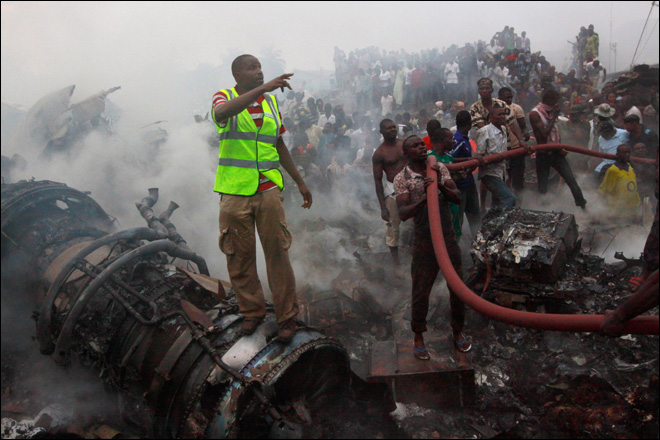
At least 36 people died in a fiery collision between a methanol tanker and a double-decker sleeper bus on a motorway in northern China on Sunday, officials and state media said. Both vehicles caught fire and only three of the 39 people onboard the bus survived the crash, which occurred around 2:00 am, Xinhua news agency reported.

A total of 36 bodies were pulled from the debris and three people were taken to hospital.

Details of the crash -- which happened 200 metres (yards) from a motorway service station at Yanan city in Shaanxi province -- were still unclear.

Yue Jiuxiang, a local traffic police official in charge of the rescue operation, said most of the passengers were asleep at the time of the crash.

"Soon after the collision, the bus was engulfed by flames," he told state-broadcaster China Central Television.

"The front part of the bus was seriously damaged. Also most of the passengers were sleeping. This is why so many people died."

Yue said the bus was en route from Baotou in Inner Mongolia to the Shaanxi provincial capital Xian when the collision occurred.

Police were investigating the cause of the accident which happened on the Baotou-Maoming Expressway, which spans the length of China from the northern city of Baotou to the southern province of Guangdong.

An official at Yanan city government information department surnamed Liu told AFP: "The confirmed death toll is now 36. I don't have any further details."

China's roads are highly dangerous, with traffic laws and safety widely flouted, and truck drivers typically overworked.

Last year more than 62,000 people died in traffic accidents, state media said, citing police figures.

Vehicles carrying explosive materials -- which must first get permission from the police before travelling on the roads in China -- are involved in many accidents.

At least 20 people were killed in June near the southern city of Guangzhou when two trucks collided and sent petrol into a timber mill below the road, causing a massive blaze.

Buses are also commonly involved in road accidents as operators often seek to cram as many people as they can into their vehicles to maximise profits and drivers hurtle down highways.

Twenty-three people were killed and three injured in April when a bus and truck collided in the eastern province of Anhui. Another collision between a tour bus and a truck the same month left 13 dead and 21 injured.

Sunday 26 August 2012

http://www.hindustantimes.com/world-news/China/Tanker-bus-crash-inferno-kills-36-in-China/Article1-919537.aspx

continue reading

Refinery Blast In Venezuela Kills At Least 39

A huge explosion rocked Venezuela's biggest oil refinery and unleashed a ferocious fire on Saturday, killing at least 39 people and injuring more than 80 others in one of the deadliest disasters ever to hit the country's key oil industry.

Balls of fire rose over the Amuay refinery, among the largest in the world, in video posted on the Internet by people who were nearby at the time. Government officials pledged to restart the refinery within two days and said the country has plenty of fuel supplies on hand to meet domestic needs as well as its export commitments.

The explosion shattered walls of nearby shops, ripped out windows from homes and left the surrounding streets covered with rubble and twisted scraps of metal.

President Hugo Chavez declared three days of mourning and ordered an investigation to determine the cause of the explosion. "This affects all of us," Chavez said by phone on state television. "It's very sad, very painful."

Vice President Elias Jaua, who traveled to the area in western Venezuela, said on state television late Saturday that at least 39 people were killed by the explosion, up from the earlier death toll of 26. He said that the dead included 18 National Guard troops and that six of the bodies had not yet been identified. Other officials said earlier that the dead included a 10-year-old boy.

In a neighborhood next to the refinery, shopkeeper Yolimar Romero said she was at her computer when a shock wave swept over the area shortly after 1 a.m.

"At that instant, the whole house shook as if it were an earthquake," she said. "The windows went flying off with their frames and everything."

Electricity was knocked out, leaving Romero in the dark and her house filled with smoke. She found a flashlight and started looking for her husband and three children.

Outside on the street, the family saw scattered hunks of brick walls and ruins of a National Guard post and about 20 other homes. Bodies were being pulled from buildings down the street.

At least 86 people were injured, nine of them seriously, Health Minister Eugenia Sader said at a hospital where the wounded were taken. She said 77 people suffered light injuries and were released.

Officials said firefighters had largely controlled the fire at the refinery on the Paraguana Peninsula, where flames were still visible on Saturday night after billowing dark smoke all day.

The blast occurred about 1:15 a.m. when a natural gas leak created a cloud that ignited, Oil Minister Rafael Ramirez said.

"That gas generated a cloud that later exploded and has caused fires in at least two tanks of the refinery and surrounding areas," Ramirez said.

Images shortly after the explosion showed the flames casting an orange glow against the night sky, and injured survivors on a stretcher and in a wheelchair. The bloodied bodies of victims were loaded onto pickup trucks.

Ramirez said a panel of investigators was being formed to determine the cause of the gas leak. A prosecutor was appointed to lead the investigation and troops were deployed to the area.

While the cause of the disaster remains unclear, some oil workers and critics of Chavez's government have recently pointed to increasing numbers of smaller accidents and spills as an indication of problems within the state-run company.

"We warned that something was going to happen, a catastrophic event," said Ivan Freites, secretary general of a 1,200-member union of oil and natural gas industry workers in Falcon state where the refinery is located. He spoke in a telephone interview from an area near the refinery, where he could see the flames raging in the distance.

The refinery complex's general manager, Jesus Luongo, denied that a lack of maintenance was to blame, saying in the past three years more than $6 billion has been invested in maintaining the country's refineries.

Ramirez said the explosion hit an area of storage tanks, damaging nine tanks.

"All of the events happened very quickly," Ramirez said. "When we got here in the middle of the night, at 3 or 3:30 in the morning, the fire was at its peak."

The oil minister said that supplies of fuel had been cut off to part of the refinery and that firefighters were using foam to extinguish the flames in one of the remaining tanks.

"This regrettable and sad event is controlled, is under control," Ramirez said on television, while plumes of smoke continued to billow.

Amuay is part of the Paraguana Refinery Complex, which also includes the adjacent Cardon refinery. Together, the two refineries process about 900,000 barrels of crude per day and 200,000 barrels of gasoline. Venezuela is a major supplier of oil to the U.S. and a member of the Organization of Petroleum Exporting Countries.

Ramirez said the state oil company Petroleos de Venezuela SA should be able to "restart operations in a maximum of two days."

"We want to tell the country that we have sufficient inventories of fuel. We have 10 days of inventory of fuel," Ramirez said. He said the country's other refineries were operating at full capacity and would be able to "deal with any situation in our domestic market."

An official of the state oil company, known as PDVSA, said the country also has enough supplies on hand to guarantee its international supply commitments. The official spoke on condition of anonymity because he wasn't authorized to speak publicly about the matter.

In terms of international oil markets, the disaster is not likely to cause much of a ripple, said Jason Schenker, an energy analyst and president of Austin, Texas-based Prestige Economics LLC. Noting that other refinery accidents and shutdowns regularly occur around the world, he said: "There's likely to be relatively limited impact on global crude or product pricing."

"The real tragedy," he said, "is that these events continue to happen, not just in Venezuela but everywhere. It is a dangerous business."

Gustavo Coronel, an energy consultant and former PDVSA executive, called the tragedy "probably the worst one the oil industry has had in many years."

"Accidents happen, of course, although the problem with PDVSA is the inordinate amount of accidents that have taken place during the last years," Coronel said. Considering the overall record, "we are not talking about bad luck but about lack of maintenance and inept management," he said.

The labor leader Freites, who has worked at the refinery for 29 years, said workers had repeatedly alerted state oil company officials to problems that they feared could lead to an accident. "We've been complaining about problems and risks, including fires, broken pipes and a lack of spare parts," Freites said.

One opposition group comprised of former PDVSA employees, Gente del Petroleo, or Oil People, said it could not yet pass judgment on the cause of the explosion. But it but noted there had been ample concerns about lack of maintenance and poor management.

The group said in a statement that since 2003, 79 other serious accidents have been reported at the Paraguana Refinery Complex, collectively killing a total of 19 workers and injuring 67 others.

Opposition leader Henrique Capriles, who is challenging Chavez in the country's Oct. 7 presidential election, expressed condolences to the victims and their families.

"We Venezuelans are one, and we grow in the face of this type of situations," Capriles said.

Sunday 26 August 2012

http://www.npr.org/2012/08/25/160031185/officials-refinery-blast-in-venezuela-kills-7

continue reading

Slovenia hot-air balloon victims identified, investigation underway

LJUBLJANA - Slovenia said Saturday it has identified the four people killed in Thursday's hot-air balloon crash as Slovenian citizens, among them a couple with their 11-year-old child.

"The fourth person killed was a woman, also from Slovenia," Joze Balazic, head of Slovenia's forensic institute, said Saturday.

The identification had to be carried out using the DNA of the victims since their bodies were found charred in the basket of the hot-air balloon that crashed and burst into flames near Ljubljana early on Thursday.

The accident happened when a sudden change in the weather forced the pilot of the balloon with 32 people on board, mostly tourists, to attempt an emergency landing.

Due to its size and the strong winds blowing close to the surface, the pilot lost control of the balloon, which hit a tree and caught fire, according to eye witnesses.

Out of the 28 persons who were hospitalised on Thursday, six remain in critical condition, among them the pilot of the balloon, hospital authorities said late on Friday.

Slovenian police have launched an investigation to determine whether there were irregularities concerning the flight organised by a private company selling balloon flights to tourists.

Local media reported the pilot did not have a valid flying license and that he decided to take off although the weather forecast indicated possible storms. Police have not yet confirmed the reports.

Sunday 26 August 2012

http://news.asiaone.com/News/Latest%2BNews/World/Story/A1Story20120825-367561.html

continue reading

Saturday, 25 August 2012

FIRE TRAGEDY VICTIMS TO UNDERGO DNA TESTS

A team of doctors from Nairobi is expected in Homa Bay District to carry out DNA tests on pupils of St Theresa Asumbi Girls Boarding Primary School who died in a fire.

The doctors are expected tomorrow morning to carry out the tests to help identify the bodies that were burnt beyond recognition.

Homa Bay DC Nur Dube said some parents had not identified their children, and the best solution was a DNA test.

Homa Bay Hospital Medical Superintendent Ojwang’ Ayoma confirmed that only four children had been identified. The medic’s statement negated previous reports that indicated that the number of bodies identified children had risen to five.

Dr Ayoma said his medical officers were ready to help any parents identify their children, especially if the deceased’s individual conditions can allow.

“We received some parents and many relatives of the deceased girls yesterday. We identified four of them while the other four have not been identified.” Ayoma added.

The bodies are still lying at the Homa Bay District Hospital Mortuary where they were taken on Wednesday night.

Parents and relatives used various methods such body posture, teeth arrangement, and other parts of the body, which were not destroyed completely, to identify their children.

There are contradictory reports as to what the pupils were doing in school even though Education Minister Mutula Kilonzo had outlawed holiday tuition. The school management said the students were from an academic tour of Nairobi and Nakuru, while parents say the pupils were on holiday tuition.

Saturday 25 August 2012

http://www.standardmedia.co.ke/m/story.php?id=2000064809

continue reading

Bagmati boat capsize: 3 bodies found‚ scores missing

RAUTAHAT: At least three persons died and an unknown number of people went missing as a boat, with about 50-55 people on board, capsized in the swollen Bagmati River bordering Sarahi and Rautahat districts on Saturday afternoon.

The jam-packed boat was coming towards Laxmipur Ghat of Rautahat from Manpur of Sarlahi on the otherside of the river when it overturned at around 2:30 pm.

Police said one person has been rescued alive and has been taken to Garuda of Rautahat for treatment.

Two bodies were fished out from the swollen river, while one of the two persons who was rescued alive died.

The deceased are identified as Apsana Khatun (13), Rajima Khatun (20) and Nisrat Khatun (37) of Gamariya, Parsa-7 Laxmipur.

It has been learnt that Nisrat's two children were also on board the ill-fated boat. Their whereabouts is not known.

Two boaters—identified as Ramjodhi Sahani and Wazir Sahani of Manpur, Sarlahi—are at large after the incident, while all other people riding the boat are said to be missing.

Security personnel and locals are launching a search operation for the missing.

Saturday 25 August 2012

http://www.thehimalayantimes.com/fullNews.php?headline=Bagmati+boat+capsize%3A+3+bodies+found%E2%80%9A+scores+missing&NewsID=344772

continue reading

Friday, 24 August 2012

Bodies of 2 pilots flown to Cebu

CEBU CITY, Philippines—The bodies of the two pilots of the light plane that crashed off Masbate with Interior Secretary Jesse Robredo were flown to Cebu on Thursday.

The body of Captain Jessup Bahinting, 61, chair and chief executive officer of Aviatour Air, was accompanied by his daughter Sarah Lynn on board a Beechcraft RPC 9980 plane, which landed at the Mactan Cebu International Airport at 8:01 a.m.

At 3:03 p.m., Cessna 182 RPC 2214 arrived with the body of Bahinting’s Nepali copilot, Kshitiz Chand, 21.

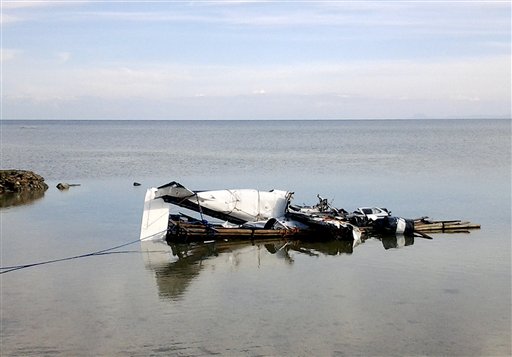
Bahinting and Chand piloted the Piper Seneca plane that was supposed to bring Robredo from Cebu to Naga City in Camarines Sur. But the plane reportedly experienced engine trouble and was trying do an emergency landing at the Masbate Airport when it crashed into the sea.

Bahinting’s body was retrieved from the right side of the cockpit on Wednesday, according to media reports. Sarah identified her father through his Fossil watch and ring.

Bahinting’s wife Margarita expressed dismay at the reports that her husband was found on the right side of the cockpit, saying this was erroneous.

She said that her husband was at the left side of the plane, on the seat of the main pilot. She said the media reports could be misconstrued that Bahinting had allowed the student pilot to handle the plane.

The body of Chand was found floating near the crash site Thursday morning.

Bahinting’s friends and the students of Bahinting’s Aviatour Flight School, formed a line when the small plane arrived. They were all emotional as Bahinting’s wife cried when the body bag containing the remains of her husband, was pulled out of the plane, said former Cebu City Councilor Sylvan Jakosalem.

Bahinting’s body was taken to St. Peter Funeral Homes on New Imus street where the wake would be held until Sunday noon. It will be transferred to Ginatilan town, about 135 km southwest of Cebu City, for burial on Monday, said Sarah Lynn.

Chand’s father, Tek Bahadur Chand and uncle, Damand Chand, arrived in Cebu at 3:17 p.m. on board another plane. Chand’s body was expected to be flown to Nepal.

Friday 24 August 2012

http://newsinfo.inquirer.net/256222/body-of-robredos-pilot-transferred-to-cebu

continue reading

Thursday, 23 August 2012

10 die in Jaipur of rain-triggered disasters

Jaipur, Aug 22 (IANS) Rains continued to create havoc as the death toll rose to eight in this Rajasthan capital in incidents of wall collapses and electrocution, an official said Wednesday.

Two more deaths were reported from rural areas in Jaipur district, he added.

Prime Minister Manmohan Singh telephoned Chief Minister Ashok Gehlot and took stock of the situation. An officials said that Manmohan Singh had assured all possible help in tackling the situation.

Over 100 colonies in low-lying areas and the Walled City are inundated since Tuesday night, theofficial said.

“In view of the situation, the chief minister took a meeting of senior administration officers and instructed them to launch the relief work on a war footing. He has asked the district collectors to arrange and use all disaster management equipment to bring relief to the people across the state who were affected due to rains,” a senior administration official told IANS.

He added that the district collectors have been asked to arrange for sacks of sands and use them in low-lying areas, so that water does not gather in residential colonies. Control rooms have also been set up at district headquarters where affected people can call and seek help.

“Jaipur and some other districts in northern and eastern parts of the state have been asked to remain extra alert as warning of another spell of heavy rains have been made by the meteorology department,” said the officer.

Normal life and vehicular traffic came to a standstill in several districts, including Sikar, Dausa, Jhunjhunu and Dholpur due to the heavy rains.

The Jaipur district administration had announced a holiday for all government and private schools Wednesday.

Heavy rains, that began lashing the city from 11 p.m. Tuesday, were estimated at 148.4 mm Wednesday morning.

With the rains continuing for nearly four hours, people spent a sleepless night as water gushed into their houses, damaging belongings.

In several slum areas, people were forced to take shelter on rooftops.

Mayor Jyoti Khandelwal told reporters that markets in the walled city and the slum areas in Jawahar Nagar, Shashtri Nagar and Sodala were the worst-affected.

“All senior officials and disaster management staff of Jaipur Municipal Corporation are in the field assessing the situation and pumping water out of the inundated colonies,” said Khandelwal.

But residents complained of poor management by JMC.

“Rains have been continuing for one week. However, municipal officials did not take precautionary measures,” Shilpa Kumawat, living in the low-lying Johari Bazaar said.

She and her family have been trying to pump accumulated water out of their house since morning.

Electricity supply too had snapped in almost half of the city in the morning due to the rain.

Thursday 23 August 2012

http://www.thaindian.com/newsportal/enviornment/10-die-in-jaipur-of-rain-triggered-disasters-lead_100640051.html

continue reading

Most Fukushima quake deaths were elderly

TOKYO, Aug. 22 (UPI) -- Most of the people who died in the aftermath of the Japanese earthquake, tsunami and nuclear crisis were elderly, an agency report says.

The Reconstruction Agency study found about 90 percent of the 1,263 disaster-related deaths were of people at least 70 years old, The Mainichi Shimbun reported.

More than half of the victims, or 638 people, died from effects of the triple disaster in March 2011, the agency said. Of those, 433 died in Fukushima Prefecture, the location of the nuclear energy facility heavily damaged by the quake and tidal wave.

Of the total deaths, about half died within one month of the disaster. About 80 percent died within three months.

Fatigue from living in evacuation centers was cited as the single biggest cause of post-disaster death.

Many of the Fukushima victims died after being forced to move from hospitals or nursing homes after the reactor was damaged.

The report said 283 died because hospitals were not able to function or because the victims' illnesses worsened.

The report recommended upgrading existing laws to ensure adequate emergency food supplies, proactive action against bad weather and prevention of disaster-related deaths by providing appropriate health care.

Thursday 23 August 2012

Read more: http://www.upi.com/Top_News/World-News/2012/08/22/Most-Fukushima-quake-deaths-were-elderly/UPI-44801345658506/#ixzz24MuqzAhX

continue reading

Heavy rain, floods kill 14 in Pakistan: Officials

ISLAMABAD: Flash floods triggered by heavy rain have killed at least 14 people and destroyed dozens of houses in northern Pakistan, officials said on Thursday.

Irshad Bhatti, a spokesman for the country’s National Disaster Management Authority said the death toll may rise as survey teams have reported more deaths but are still assessing the extent of damages.

Most of the deaths were reported in the northwestern province of Khyber-Pakhtunkhwa, where nine people died and more than 50 houses were destroyed. In Pakistan-administered Kashmir, six people were killed after a roof collapsed.

“The death toll may rise, we are assessing the damages. Rescue work is continuing and relief activities have started,” Bhatti said.

Adnan Khan, an official from the Khyber Pakhtunkhwa confirmed the death toll and said he feared more deaths.

“Dozens of families have suffered and their houses were destroyed, several people are still missing” Khan told AFP.

Floods in Pakistan in the summer of 2011 affected 5.8 million people, with floodwaters killing livestock, destroying crops, homes and infrastructure as the nation struggled to recover from record inundations the previous year.

Thursday 23 august 2012

http://tribune.com.pk/story/425167/heavy-rain-floods-kill-14-in-pakistan-officials/

continue reading

Mass grave raises ghosts from the past

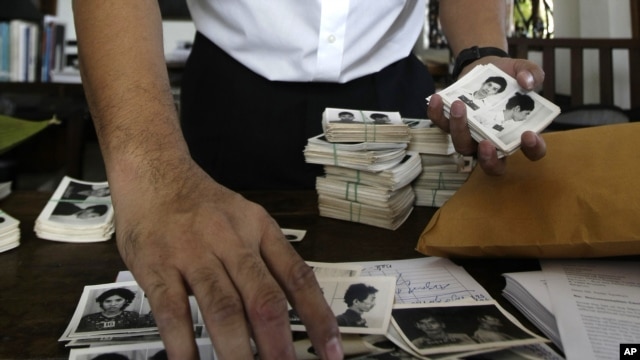
DO DONTREI, Cambodia — It was four grey skulls resting on a bed of jumbled bones that again triggered Chea Nouen's memories: breast-feeding her baby with her hands and feet shackled; her husband thrown into a pit to be turned into human fertilizer, her own marches to the killing fields — where she was saved three times by an executioner.

The past came hurtling back earlier this month when a new mass grave was discovered in this village in northwestern Cambodia, one of the bloodiest killing grounds in the country. Like most of Cambodia's some 300 known mass grave clusters, it is not being investigated or exhumed to find out what happened.

More than three decades after the Khmer Rouge ultra-revolutionaries orchestrated the deaths of nearly 2 million people, or one out of every four Cambodians, this country has not laid its ghosts to rest. Cambodia's regime prefers to literally bury the past, especially since some of its current leaders, including Prime Minister Hun Sen, were once Khmer Rouge.

But 63-year-old Chea Nouen and other survivors in this small, farming community cannot forget, hold their tears in check or banish the nightmares when they daily tread over the unexamined bones of 35,000 victims and live among restless souls that still hover, they believe, over homes and rice fields. Also unfinished is the pursuit of justice: Neither the three top Khmer Rouge leaders nor local executioners have been punished, with the exception of a controversial jail sentence of 19 years for the former prison chief known as Comrade Duch.

In April, Chea Nouen was invited to the capital, Phnom Penh, to hear a top Khmer Rouge official, Nuon Chea, offer his defense to a U.N.-backed tribunal: I didn't know. I was just carrying out orders. It's an exaggeration. The U.N. and the tribunal say they are following the law. But Chea Nouen calls the trial "an absurdity," incredulous that it has taken six years, $160 million and mountains of documents to prove a case against three now feeble octogenarians when all seems so starkly clear to the villagers at Do Dontrei.

"At my age and health, I cannot confront the Khmer Rouge, " says the 63-year-old woman. "But I would be pleased to tell my story."

Her body is almost skeletal and wracked by persistent illnesses from the Khmer Rouge years, but Chea Nouen's animated face, striking poses and still supple hands conjure up the past in powerful pantomime.

She contorts her body, demonstrating how her legs and arms were bound to an iron bar. Her face grimaces in remembered pain. A soldier points a pistol to her temple, another searches her body for hidden valuables. In shock, she drops her 2-month-old son to the prison floor. For seven days, almost sleepless and surviving on just water, she cradles her child, twisting her body to allow him to suckle at her breasts. Chea Nouen, back in the present, brushes tears away with a yellow towel.

Their family, with two children, had been arrested one morning while riding in an ox-cart. A day after her release, her husband was taken away to the foot of a hill, close by the recently discovered grave, where the Khmer Rouge vented their hatred of former government soldiers like him with singular fury.

Blindfolded, hands tied behind their backs, they were savagely beaten, slashed with machetes and pushed into pits stocked with rice husks that were set ablaze. The ashes and decomposed bodies fused into fertilizer to be scattered over the rice fields.

Although still under official arrest, Chea Nouen was released to a Khmer Rouge complex that included dormitories, a warehouse and communal dining. She grew vegetables, worked grueling hours in the rice paddies and kitchen. One of her sons succumbed to illness, the other died of starvation.

Of the hundreds of workers who passed through the center, all of them women, only seven survived the deprivation and a methodical killing machine not unlike those at Nazi concentration camps. Executions took place once or twice a week, with batches of 60 to 80 prisoners, and often timed to the fertilizer production.

"We are all just like fish in the water. One day they will hook us all," she told a co-worker who sensed her own time had come and asked Chea Nouen to take gold she had secreted to pass on one day to her children. Chea Nouen declined, believing she herself wouldn't survive. The following day, after the evening meal, her friend disappeared.

Chea Nouen rises, head bent to the ground, her arms clasped behind her as if pinioned by ropes. She is trudging off with a line of others toward the pits. The killers await them, naked torsos sweating. She hears shouts, wailing and cursing from those about to die. Then, the chief of the execution squad, a man she had provided with bath water, halts the file of prisoners.

"I don't know why he was so kind and saved my life. He did it three times. Maybe he felt sympathy for me. Maybe he loved me," she says. Nhorn was the only name she knew him by, and after the Khmer Rouge downfall she never saw him again.

"Whenever I think of the Khmer Rouge time I don't feel hunger or thirst," she says, sinking into her chair in a ramshackle hut open to the rains and mosquitoes. "I feel nothing except the feeling that I am already dead."

She has a proper house in the village, home to some 600 people, but prefers the forest retreat where she can better raise chickens, ducks and four cows, and where there is a peace and quiet for which she longs.

Her face still flushed, Chea Nouen ends her story on a lighter note, relating how a ghost appeared in the dream of the businessman who bought the land with the skulls from a farmer, one day after the remains were found. The spectral visitor recommended he go for the number 50 in a lottery. He won $1,500 and paid for a ceremony at the newly-found grave.

"My husband never comes to see me or give me a winning lottery number, so I'm still poor," she laughs. "I didn't even pray for a lottery number at the ceremony. I just thanked the spirits for saving my life."

The remains from the grave were placed in a makeshift shrine under the shade of three palm trees, and the villagers of Do Dontrei brought soup, rice, desserts and a little money to the crude altar as offerings.

They worry that the spirits are troubled. There is a widespread belief in Cambodia that the bones of the deceased — especially those who met violent deaths — should be collected, cremated and prayed over lest they remain in the place they died to haunt the living.

But rural folk — the "little people," as they have been called — still have little voice or legal recourse in face of rich power-brokers, and the businessman who purchased the land for $4,700 for construction has close connections in the nearby provincial capital of Siem Reap. So the digging continues.

Khung Leang, a handsome 53-year-old woman with a ready smile, says she may never know where her entire family lies. She conducted rites for their souls, but they still return to her in disturbing dreams.

"They stood here. But they refused to come up," she says, sitting on steps leading to the first story of her stilt-propped house. "My father said, 'I can't enter because there is a stick in the house and I will be beaten.' I didn't know, but there was actually one there. I threw it away, and a few days later they came again. And again they refused to come into the house. My father just stood on these steps, crying."

Khung Leang thinks of the "crimes" that led to the slaughter of her mother, her father and all six of her siblings. They had been damned as "rich capitalists" because they sold sweets in the market. Later, they were discovered eating chicken soup one night as a family, violating bans on private property and eating outside communal quarters. The last of her father's three "crimes" was "destroying Khmer Rouge property" by failing to stop cows he was ordered to herd from grazing in a rice field.

Her father was taken away first. She doesn't know how he died. Later she was told that before his execution, he pleaded with friends: "Please take care of my daughter. She will soon be alone."

And she was. They all followed him, even the youngest, her four-year-old sister, because the Khmer Rouge liked to say: "If you don't want grass to grow you have to pull out all the roots underneath."

Like Chea Nouen, she regards her cheating of death — twice — as miraculous.

Like many women and despite protest, she was forced into marriage with a man the Khmer Rouge had chosen for her. And like many young couples, they were assigned to a mobile brigade, tasked with back-breaking work in remote areas after separation from their families. She was away when her family was exterminated.

Sometime later, she and others were being herded to an execution site when a Khmer Rouge cadre suddenly barked, "That is enough. We have reached our quota today. Take the others back."

A cooling evening breeze sweeps through the garden around Khung Leang's home as she finishes her tale, one with a happy ending. A sprightly little girl, one of six grandchildren, rushes into her arms. A handsome 23-year-old son returns from teaching school.

Their family makes ends meet, growing rice and vegetables and still selling the traditional sweets from rice and palm sugar that once precipitated the tragedy. Her husband — the same she once adamantly rejected — drives a motorcycle taxi.

"He is a very kind-hearted man," she says.

Pools of stagnant, milky green water lay at the bottom of the burial pits. The backhoe gouged out more earth.

"If the investigators don't come and conduct a proper search, all the remains will soon disappear," said farmer Chhorn Kry, standing at the grave's edge, near where nine members of his wife's family were executed.

The survivors of Do Dontrei believe the spirits are still trapped. They say the graves must be opened, with proper rites, so that the spirits can fly, look for their relatives and ascend to heaven. Chea Nouen compares it to water flowing out after a bottle is opened.

Khung Leang adds a contemporary, political twist to the ancient belief: "There are many souls still with us here. They are wandering around our village, hovering above us, because they are still waiting for justice."

Thursday 23 August 2012 http://www.waxahachietx.com/apnews/world/mass-grave-raises-ghosts-from-the-past/article_d7877476-ecb3-11e1-8257-0019bb2963f4.html

continue reading

One body retrieved Nine feared drowned in Chenab

MUZAFFARGARH - Nine people were feared drowned in the River Chenab at Head Punjnad on Tuesday.

Rescue 1122 officials said on Wednesday that a boat carrying 13 people capsized due to strong river current.

Locals said these people got onto the boat along with five motorcycles after traffic on the bridge got clogged due to an influx of picnickers at the recreational place.

Of the 13 people, six were rescued by local divers or they swam out of the river, while seven were missing till Wednesday evening.

Illegal boat operators offer their services to people to take them to other side of the river when traffic on the bridge gets stuck up.

Boat operators Qasim Borani and Jamil charged Rs200 per head from people crossing the river by boat despite the fact that the district government has imposed a ban on boat operations in Chenab and Indus rivers.

The ban was imposed in 2008 when eight people drowned in the River Chenab near Sher Shah Bridge on Aug 14 the same year.

Civil Defence and police have failed to implement the ban.

Acting DCO Muzaffar Ali Sial said rescues were searching for the bodies and police had arrested a boatman and two boat contractors.

Journalist from Alipur Syed Hasan said local divers were also taking part in the rescue operation on the request of the families of missing persons. He said divers had been promised Rs20,000 to Rs50,000 for recovery of each body.

Wednesday 22 August 2012

http://dawn.com/2012/08/23/one-body-retrieved-nine-feared-drowned-in-chenab/

continue reading

10 pupils feared dead in dormitory inferno

At least ten pupils of Asumbi Boarding Primary School, in Homa Bay County, are feared dead after a fire razed their dormitory on Wednesday night.

Initial reports indicate that the ten were among class seven and eight pupils attending August holiday tuition in the school. The institution is run by the Asumbi Catholic Church parish.

The fire is suspected to have been caused by an electricity surge after a daylong power blackout in the area.

Unconfirmed reports also indicate the dormitory's door may have been bolted from outside.

Parents whose children were at the school began streaming at the institution as soon as word on the fire went out. They were however frustrated by the school's administrators who were not forthcoming with details of the inferno.

Not even the efforts by the Police and Red Cross to get the school's administrators to give an official statement worked, as the Catholic nuns and teachers went in hiding at the convent.

Rangwe DO Daniel Cheruiot, who spoke at the scene, said he counted at least eight charred remains of girls.

“Eight bodies have been recovered from the scene and taken to the Homa Bay District Hospital Mortuary,” he said.

Mr Cheruiyot said the girls had been trapped inside the dormitory, which appeared to have been locked from outside.

Homa Bay OCPD Francis Kumut also said about ten girls were feared dead in the fire.

Parish Priest Reverend Aloise Okumu said the pupils were under the care of Catholic nuns.

Thursday 23 August 2012

http://www.nation.co.ke/News/10+orphans+feared+dead+in+dormitory+inferno/-/1056/1485326/-/v4xu26/-/index.html

continue reading

DNA Test Results Identify Phuket Fire Victims

BANGKOK – Authorities are awaiting DNA test results to confirm the identity of a third victim who died in an August 17 fire at a Phuket discotheque.

At the Office of the National Police Bureau, Pol. Lt. Gen. Jarumporn Suramanee, Assistant Commissioner, confirmed the identities of two Thai victims. A fourth victim is also being identified through forensic investigation.

The two Thai women were identified as Ms. Niphapak or Sumalee Soodtasorn, and Ms. Duangporn Bootkro.

The four charred bodies were “burnt beyond recognition” and require DNA testing to determine their identities. A total of 11 people were also injured in the fire at the Tiger Discotheque.

The other two bodies are believed to be males. One victim awaiting confirmation by DNA testing is believed to be Mr. Emmanoel Becard, a Frenchman.

To help identify Mr. Emmanoel, his nail-cutting scissors and toothbrush were retrieved from his room by the forensic Evidence Verification unit, to compare with DNA samples from his burnt body. But it is difficult to find DNA from such toiletry items, an EVU officer said.

The police are coordinating with the France embassy to compare Mr. Emmanoel’s dental records with his dentist, along with the DNA of his parents.

As for the cause of the deadly fire in the 2-story building, Pol. Lt. Gen. Jarumporn said a preliminary inspection indicated it may have started from an electric cable.

The fire appears to have started in the ceiling of a second-floor room reserved for dancing, he said. There may have been more oxygen in that area to feed the flames and cause the fire to spread rapidly, he speculated.

Other media accounts report that witnesses saw sparks coming from a lighted sign outside the building before the fire started.

The police spokesman was asked if the deadly Phuket fire had any similarities to the 2009 fire at the Santika nightclub in Bangkok. That fire on New Year’s Eve killed 66 people and injured 222 others.

Pol. Lt. Gen. Jarumporn Suramanee replied that the Phuket building had similar flammable Styrofoam material that covered 20 percent of its interior. After the Santika fire, new regulations were passed to limit the use of Styrofoam to 10 percent of a building’s interior.

The Phuket building had six fire exits to comply with regulations, the police spokesman said. But the exits appeared inadequate for the size of the building. Also, not all the exits were accessible from the ground floor.

The design of the building’s interior also does not match the application form submitted to the municipal office to operate the nightclub, he said.

Thursday 23 August 2012

http://www.pattayadailynews.com/en/2012/08/23/dna-test-results-identify-phuket-fire-victims/

continue reading

Wednesday, 22 August 2012

Three dead in Mara plane crash, Kenya

AN AIRCRAFT with 14 passengers has crashed in Kenya's Maasai Mara national park, one of the East African's country's most popular safari destinations for tourists, officials said.

Two pilots and a woman passenger died Wednesday after a plane crashed at an airstrip in the Maasai Mara Game Reserve.

Six passengers on board the 5YUV7 light aircraft, belonging to Mombasa air, were seriously injured as the pilots prepared to land at Ngerede Airstrip near the Mara Safari Club.

The airstrip manager Daniel Jivai, who spoke to Nation on the telephone, said he saw the aircraft wobble before it came down at around 12:17 pm.

He said 12 tourists, who were travelling from Mombasa to the Mara, were on board the plane at the time of the accident.

Three of the passengers were trapped in the wreckage but were rescued by hotel and airstrip personnel.

The rest of the passengers were receiving first aid.

“When we saw it coming down, there was a swift response from hotel personnel, tourists, and other visitors around the place and we managed to put off a small fire on one of the engines," said Mr Jivai.

A government team led by Narok South district commissioner, Chamwanga Mongo, was deployed to the area to carry out investigations.

Tourists travelling to see the spectacular wildebeest migration from Serengeti plains in Tanzania to the Mara are opting for air travel due to the bad state of the Narok-Mara road.

Cooperatives minister Joseph Nyaga, who was in Narok for an official function, cut short his speech to observe a minute of silence for those who died in the accident.

Wednesday 22 august 2012

http://www.nation.co.ke/News/Three+dead+in+Mara+plane+crash/-/1056/1484818/-/jo9nok/-/index.html

continue reading

4 more bodies washed ashore at Lagos bar beach

Divers at the Lagos Bar Beach say four bodies, including a two year old boy, were recovered Monday morning, bringing the number of those confirmed dead in Saturday’s ocean surge to eight.

Controversy still trails the number of people who died in the unfortunate incident which occurred last Saturday.

One person had died Saturday after the Atlantic Ocean charged into Kuramo Beach in Lagos; while three bodies were recovered Sunday morning.

When the Nigerian Tribune visited the beach on Monday, one of the bodies seen, which was one of the four recovered on Monday, was that of a man, while there was nobody around, as of the time of the visit, to aid in its identification or evacuation.

The latest corpse washed ashore, at the time of filing this report, made it a total of eight recovered bodies, as seven bodies had earlier been recovered. However, according to information gathered, many people are still believed to be missing.

Mr Abe Edwards, who identified himself as the secretary of the security unit of Kuramo Beach, disclosed that he had personally identified no fewer than four bodies, adding that there was the possibility that more bodies would be recovered as time went on.

“I cannot really quantify the total number of people that died, because more bodies are recovered almost on daily basis. Today, the body of a baby girl, perhaps not more than a few months old, was recovered, while another, which has been identified as Olumide, has also been recovered.

“As you may know, it was a case of a surge, not just mere drowning. Therefore, it is not impossible that some bodies could be trapped in sand, and this would take excavation to find,” he said.

Also speaking to the Nigerian Tribune on the development, Mr Steve Richard, who identified himself as a frequent fun seeker at Kuramo and who claimed to have been around when the incident happened, insisted that apart from those who were swept away from their homes by the water, no fewer than four security personnel, who had attempted to rescue some of the people, also died in the process.

Following the incident, the Lagos State government rolled bulldozers into the beach, demolishing all the shanty structures around.

Wednesday 22 August 2012

http://tribune.com.ng/index.php/lead-stories/46262-4-more-bodies-washed-ashore-at-lagos-bar-beach

continue reading

Argentine team excavates migrant graves in Mexico

MEXICO CITY (AP) — Argentine forensics experts said Tuesday they have started excavating paupers' graves in southern Mexico that are believed to contain the bodies of migrants who died but were never identified.

Team member Mercedes Doretti said the group expects to find about 80 bodies dating back from two months to 12 years ago. The bodies were found without identification near roadways or railway tracks, on a route popular among Central American migrants trying to reach the United States.

Over the years, authorities collected the bodies and buried them in common graves in the cemetery in Tapachula, near Mexico's border with Guatemala.

Most migrants who cross Mexico are from Central America. They frequently suffer assault, kidnapping, robbery and death as they try to reach the United States.

The Argentine Forensic Anthropology Team hopes to extract DNA from the bodies to try to find matches with relatives of missing migrants.

"There are families who have been waiting years for an answer" on the fate of missing relatives, Doretti said.

Doretti said Tuesday there should be no problem extracting DNA, but the process could take two or three months. The experts, including forensic medical examiners, forensic anthropologists and archaeologists, began digging Monday.

They requested permission to excavate from the Chiapas state prosecutors office to work on the project in conjunction with non-governmental organizations. The team has traveled to other Central American nations, aiming to build databases by interviewing the relatives of the missing and taking DNA samples from them that can be used to look for matches.

Previously, a delegation of forensic experts came to Mexico in 2006 to unearth and identify the remains of murdered women found in the border city of Ciudad Juarez. The team has also exhumed bodies of people "disappeared" during dictatorships and victims in countries afflicted by civil wars.

Amid violence against migrants and among drug gangs, Mexico faces a huge backlog in identifying bodies. Nearly 16,000 bodies found in Mexico since 2000 remain unidentified, according to the National Human Rights Commission, an independent government agency.

While the Argentine team has been working for almost 30 years in its homeland, and about 26 years in countries around the world, this is the first time it has exhumed migrants' remains in Mexico.

Wednesday 22 August 2012

http://www.wane.com/dpp/news/international/Argentines-excavate-migrant-graves-in-Mexico_50052524

continue reading

Dana crash: DNA shocker at mortuary

It is double tragedy for the family of Mr. Moses George, who was killed in the June 3, 2012 Dana plane crash in Lagos.

There is confusion over the Deoxyribonucleic Acid (otherwise called DNA) test result of the retired Fire Service official.

His body was intact when the family identified him after the incident.

In fact, he had an identification card on him.

The puzzle facing his family is how to collect his body whose DNA was one of the 132 results that arrived from the United Kingdom on August 6.

However, in a frantic effort to prove Hannah’s paternity and also claim the victim’s body from the mortuary, the family has re-submitted samples from Hannah and the victim’s younger sister to the Consultant Forensic Pathologist and Chief Examiner, Lagos State University Teaching Hospital (LASUTH), Prof John Obafunwa.

Recall that on the arrival of 132 DNA results from the United Kingdom on August 6, LASUTH and the Lagos State Government officials met with the bereaved families of the ill-fated plane to brief them on the processes and procedures of collecting the bodies, which were to commence the following day.

As various families besieged LASUTH mortuary to collect the bodies, the George family left no stone unturned to ensure the collection of their late brother’s remains, which they said they identified and were intact at the Lekan Ogunsola Memorial Mortuary, LASUTH.

But to the family’s amazement, their late brother’s name was not among those results pasted on the mortuary wall that were ready for collection.

Prior to the DNA test requirement by LASUTH, a cousin to the late George, Chief Moses Olajide, told Daily Sun that Hannah, the daughter of the deceased, and himself have identified his uncle’s body in the mortuary.

Olajide maintained that the late Assistant Comptroller of Fire Service was neither burnt nor mangled.

Olajide lamented that he began to panic when he discovered that his uncle’s name was not among those whose DNA results arrived from the UK.

He said: “A day after the incident, my cousin (Hannah) and l came here (LASUTH) to identify the body of my uncle. We saw it in the mortuary. The body was intact.

“His identity card was hung on him. The name was number 22 among the names of identifiable bodies released by the hospital.”

“I understand there were 16 bodies that were burnt beyond forensic analysis or some families could not show up with reference samples.

“But our case does not fall into any of these categories. So, where is his body?”

At this juncture, the family raised the alarm, asking for the whereabouts of their late brother.

Olajide, who is one the representatives of the family, lamented that the hospital management was reluctant in telling him what to do.

He bemoaned what he called the lackadaisical attitude with which officials of the hospital were responding to the family’s travail.

Another relative, who spoke on phone with Daily Sun, a cousin to the late Moses, Abiodun Anthony Dogbo, described the family’s ordeal in the process of collecting the body as untold agony.

Dogbo said: “Just imagine my late uncle’s body that was identified at first sight in the mortuary, yet after two months, we cannot still claim it. I must confess that it is prolonging and aggravating our pains.

“I wish everybody understands what we are talking about.

“The only daughter he had was pregnant when the incident happened. It took God’s intervention before she was delivered of her baby.

“I know they have good intention for not giving the victims mass burial. But the procedures of collecting the bodies are too demanding.

“If others could succeed in collecting their relatives, whose bodies were burnt and some dismembered, I see no reason why my late uncle’s body that was intact should become a mystery. I don’t want to think otherwise, l believe the body is somewhere. I beg them to give it to us.”

Dogbo, who claimed to be the family’s spokesman, added: “In short, l am confused at the moment.

“Prof. said the DNA results did not correspond with that of the man (deceased).

“Really, I don’t understand what is happening. What could that mean?

Not satisfied with Prof. Obafunwa’s analysis of the DNA results, the family inquired what should be done to collect their late brother’s body.

Daily Sun authoritatively gathered that fresh test was to be conducted, as samples had been collected from the deceased’s sister in addition to Hannah’s.

Wednesday 22 August 2012

http://sunnewsonline.com/new/national/dana-dna-shocker-at-mortuary/

continue reading

Tuesday, 21 August 2012

Last two bodies recovered

JOHOR BARU: ALL the five illegal immigrants who went missing after the boat they were in capsized last Thursday were confirmed dead.

This followed the discovery of the last two bodies off Tanjung Ayam at Pengerang, one at 11.13am and the other at 6.45pm, on the first day of Hari Raya.

No documents were found on them.

The search and rescue operations involving 96 personnel from the Malaysia Maritime Enforcement Agency (MMEA), Marine Operations Force and Singapore Coast Guard, which began at 8.25pm last Thursday, was called off.

MMEA southern region enforcement chief First Admiral Adon Shalan said only the tekong and another illegal immigrant survived the boat tragedy.

"The case has been referred to the Kota Tinggi district police."

It was reported the boat left an undesignated jetty at Kampung Pasir Putih in Pasir Gudang here about noon and was heading towards Pulau Batam, Indonesia, when it was struck by strong waves and sank off Tanjung Pengelih on Thursday.

The tragedy only came to light more than eight hours later when a fisherman rescued the boat's tekong, Harman Latip, 44, off Tanjung Pengelih.

The fishermen alerted the Johor Baru Maritime Rescue Subcentre at 8.25pm the same day.

The MMEA and the Marine Operations Force sent out a 30-member search and rescue party to the site of the incident.

At 9.30pm, one of the victims was found clinging to a buoy.

The Singapore Coast Guard later joined the search and rescue operations. They found the first body in their waters about 2am on Friday.

The second body was found three nautical miles southeast of Tanjung Stapa at 6pm on Friday, and the third, at 2.15pm on Saturday, off Tanjung Pengelih.

The tekong is believed to have been sending the illegal immigrants back to Indonesia for Hari Raya when the boat sank.

At least 10 boats had been spotted attempting to smuggle out illegal immigrants from Johor during Ramadan.

However, most of them had to make a U-turn and hide in forests nearby or abandon their trips after they were spotted by the authorities.

Tuesday 21 August 2012

Read more: Last two bodies recovered - General - New Straits Times http://www.nst.com.my/nation/general/last-two-bodies-recovered-1.127364#ixzz24DI8FLF5

continue reading

Philippines: body of MP found after plane crash

The body of the Philippines's interior secretary, Jesse Robredo, has been found in the sea off a central province where his small plane crashed three days earlier, according to officials.

Robredo's body was pulled out from the overturned fuselage of the twin-engine Piper Seneca about 55 metres under water and 800 metres off the coast of Masbate province early on Tuesday, said the transport secretary, Mar Roxas.

Roxas said the bodies of the plane's Filipino pilot and Nepali student pilot were still inside the cockpit.

"At 7.25 this morning, our volunteer divers found the fuselage with bodies inside," Roxas told reporters in Masbate.

Robredo, 54, was heading to his hometown of Naga city on Saturday from central Cebu city, where he had met with local officials, when one of the plane's engines stalled 30 minutes into the flight. The aircraft crashed as it attempted an emergency landing at Masbate airport, about 235 miles south-east of Manila, Roxas said.

An aide of Robredo escaped from the plane as it sank and was rescued by fishermen, then went back to help in the search, Roxas said.

The search involving 600 coastguard, police and military personnel backed by dozens of civilians ended after a foreign deep-sea volunteer diver saw the wreckage.

As interior secretary, Robredo was in charge of the national police and provincial governments.

He was popular for his reformist views and policies and clean image that were prominent since he entered politics as Naga city's mayor in 1988, deviating from the political patronage and corruption that characterised traditional Filipino politicians. He won a Ramon Magsaysay award – regarded as Asia's version of a Nobel prize – in 2000 for good governance.

Tuesday 21 August 2012

http://www.guardian.co.uk/world/2012/aug/21/philippines-minister-dead-plane-crash?newsfeed=true

continue reading

British man confirmed dead in Thailand bar fire

BANGKOK (AP) - Thai police have confirmed a British man was among the four people killed in a nightclub fire on the popular resort island of Phuket.

Forensic experts at Bangkok's police hospital said Tuesday that they were able to use dental records to identify the body of 24-year-old Michael Pio Tzouvanni.

Police Lt. Gen. Jarumporn Suramanee said Tzouvanni died from smoke inhalation in Friday's blaze at the Tiger Discotheque on Patong beach.

He said Tzouvanni's brother confirmed the body's identity from his belongings.

Jarumporn said police were still waiting for DNA test results to help identify the other three bodies. Those are believed to be those of two Thai women and a French man.

At least 11 people were also injured in the fire.

Tuesday 21 August 2012

http://www.abc27.com/story/19326921/british-man-confirmed-dead-in-thailand-bar-fire

continue reading