Friday, 3 July 2015

Death toll from Ormoc ferry sinking rises to 45 as search resumes


The death toll from a passenger ferry that sank soon after leaving the port of Ormoc City, Leyte Thursday has risen to 45 as five bodies were retrieved from the capsized vessel on Friday, the Philippine Coast Guard said.

Authorities said all passengers and crew were now all accounted for, but moved to slowly lift up the ill-fated boat to check for more bodies after relatives insistedthey were still looking for people who were neither in the hospitals or morgues.

Search and retrieval operations resumed Friday morning to look for the missing, but by afternoon, after retrieving the last five bodies, divers stopped work; and are expected to continue retrieval operations Saturday.

Divers from the Philippine Navy and Air Force earlier joined rescuers of the Coast Guard in searching for at least 10 more missing passengers.

Ormoc City DRRM officer Ciriaco Tolibao said there was a total of 191 people on-board the MV Nirvana-B, as compared to 173 passengers earlier reported, plus 18 crew members.

As of noon Friday, Tolibao said, there were 141 passengers rescued, including the 71 people hospitalized in various hospitals in Ormoc, Leyte.

Earlier, President Benigno Aquino III ordered the PCG to conduct a speedy investigation into the cause of the sinking.

The ferry sank around 12:10 p.m. Thursday after capsizing just 200 meters from shore around 30 minutes after leaving port for Camotes island.

Authorities are still investigating the cause of the sinking and the Coast Guard has turned over the captain, identified as Warren Oliverio, and other crewmembers to Ormoc police for questioning. Reports said the vessel's owner, Joge Zarco, has also been taken into custody.

Among the angles the Coast Guard is looking into are human error, bad weather and possible overloading.

PCG spokesman Armand Balilo told reporters that the investigation will commence on Friday with the boat captain Warren Oliverio and his crews already in (PCG) custody for their statements.

Initial investigation, however, points to human navigational error as the boat reportedly made a sharp right turn, after it was hit by strong waves, causing the passengers to panic and rush to the right side of the boat, causing it to tilt slowly before capsizing.

Initial angles being followed by the probers are human error, bad weather and possible over loading.

"The ferry was found to be carrying sacks of rice and construction materials, but it doesn't look like overloaded,” Balilo said.

The PCG is checking if the vessel’s structural design had been modified because of extra-seats uncovered in the boat, and if it was approved by the Maritime Industry Authority.

Meanwhile, Cesar Retor, a survivor, said the motorboat was equipped with life jackets but none of them (passengers) wore it. “Probably because they were surprised by the incident,” Retor said.

Some of the survivors, however, said, “We were not given life vests.”

Retor said there were at least 150 sacks of cement on board but it was stockpiled in good condition.

“Ayos naman pagka-pile ng mga semento. Kaya lang nung tumagilid na ang boat namin, nalaglag na mga semento sa gilid, at tumagilid na rin ang sinasakyan namin,” Retor said.

Initial list of survivors

The Philippine Red Cross posted in its website Thursday afternoon the report of its Ormoc-based PRC on the list of victims admitted to various hospitals in Ormoc City.

Friday 3 July 2015

http://www.interaksyon.com/article/113518/search-and-retrieval-operations-resume-in-ormoc

continue reading

Gujranwala train accident: Another four bodies recovered, death toll reaches 18


Death toll in Gujranwala train accident has reached 18 after another four bodies were recovered from the canal, Dunya News reported.

Three bodies have been identified while identity of the fourth victim could not be confirmed yet.

On Thursday afternoon, about four bogies of a special train bound for Kharian carrying military troops derailed over Chanawan Bridge near Jamke Chattha and fell down in the canal.

Rescue efforts including army aviation helicopters and SSG divers underway whereas more than eighty persons have been rescued.

Railway sources said the train had 21 cargo wagons and six passenger coaches, of which four fell into the canal. The train was shifting cargo of the Pak Army from Pano Aqil to Kharian.

The pre-partition bridge that collapsed as the train was passing over it was reportedly in a dilapidated condition, however, Railway Minister Khawaja Saad Rafique said that possibility of ‘sabotage’ cannot be ruled out in this incident.

Rafique said apparently some other hand seems to be at play in the incident.

On the directives of Prime Minister Nawaz Sharif, a four-member investigation team was formed to probe the incident. The team comprises army’s engineering corps general, a brigadier and railways’s federal government inspector Mian Arshad and AGM Humayyun Rasheed.

The joint investigation team will present its report within 72 hours.

According to authorities, restoration of railway track will take more than two weeks.

Friday 3 July 2015

http://dunyanews.tv/index.php/en/Pakistan/287355-Gujranwala-train-accident-Another-four-bodies-rec

continue reading

Medan plane crash: Search ends as focus turns to identification of bodies


Indonesia has called off a search for victims of Tuesday's military transport plane crash in Medan, North Sumatra, shifting the focus to identifying bodies that were badly burned in the fire that followed.

"We are done with the crash site. Our work now is on the victim identification process. We will soon do the DNA tests," Air Force spokesman Dwi Badarmanto said.

Sixty-three bodies have been identified and sent to their families as of yesterday, while most of the remaining bodies and body parts - from the 122 people thought to have been on board the plane and those on the ground who were killed in the crash - will have to undergo DNA tests in Jakarta before being handed to their families, he added.

Police Brigadier-General Arthur Tampi, who is leading the identification process in Medan, said the 63 bodies were identified using fingerprints, birth marks, clothes, shoes or other property on the bodies. The rest were too burnt for these methods. "From today onwards, the identification process will slow as DNA testing will take time. Samples from the victims' bodies must be compared with the collected samples of the victims' relatives, and the process can be done only in Jakarta," he said.

There were 122 people on the flight, most of them servicemen and their families, said Brig-Gen Arthur. Officials have yet to determine the final death toll, or the number of soldiers and civilians killed, including those on the ground, he said.

Yesterday, rubble from the crash was loaded onto trucks and taken to the air force base in Medan to be sifted through for the more than 3,000 rounds of ammunition, two pistols and other materials missing. The recovery teams had retrieved 10 out of 12 military weapons, including assault rifles.

Locals near the crash site at the time it happened reported hearing loud wind-like noises before what sounded like firecrackers going off and then two loud bangs.

"Then we saw huge fire going up high through our window. We didn't have any idea what it was until a relative called me and said, "Get out of there! A Hercules plane crashed there!' " recounted Ms Lenny Boru Simamora, 38, who works in the nearby Beraspati Hotel. "It felt like an earthquake. We were only tens of metres from where the plane crashed. I was cleaning a room when it happened."

Friday 3 July 2015

http://www.straitstimes.com/asia/se-asia/search-ends-as-focus-turns-to-identification-of-bodies

continue reading

Thursday, 2 July 2015

Outdated methods will hamper efforts to identify USS Oklahoma remains, experts say


As the Defense POW/MIA Accounting Agency exhumes the comingled remains of 388 sailors and Marines from the USS Oklahoma who are buried in Hawaii as unknowns, experts are skeptical that scientists will be able to identify them based on outdated DNA testing methods.

The DPAA lab usually uses mitochondrial and Y-STR DNA testing in its work, methods that could put the Hawaii laboratory and the Armed Forces DNA Identification Laboratory in Delaware at a disadvantage.

“The technology they’re using is basically 1990s technology,” said Cecil Lewis Jr., presidential research professor, associate professor of anthropology at the University of Oklahoma, and co-director of its Laboratories of Molecular Anthropology and Microbiome Research. “Genomic science has aggressively moved past it.”

Nuclear autosomal DNA testing would give the agency the best chance to identify the crewmembers, who died when the Oklahoma was sunk during the attack on Pearl Harbor on Dec. 7, 1941.

Nuclear autosomal DNA, which comes from mother and father, is like a fingerprint, exclusive to a single individual, and is better suited to making speedy and precise identifications, experts said. Because of its level of certainty, it could stand alone as the only step in a successful identification process.

Mitochondrial DNA comes only from the mother, with Y-STR coming from the father. They are not precise methods and have a margin for error. Experts say they are better used in confirming an identification after weighing circumstantial, dental and other types of evidence, and in excluding a potential match.

A search of the DPAA website indicates that the lab relies almost exclusively on mitochondrial, or mtDNA, testing to identify remains.

Since 2012, DPAA — and its predecessor agency, the Joint POW/MIA Accounting Command — have put out more than 420 news announcements about remains being identified. More than 400 mention mtDNA as the means of identification. Only a few described use of nuclear autosomal DNA.

DPAA and AFDIL officials said they do use nuclear autosomal DNA, but declined to provide the number of times it has been attempted and was successful in recent years.

“As far as numbers go, we don’t talk numbers,” said Tim McMahon, the Armed Forces DNA lab’s deputy director for forensic services. “We run it on a case-by-case basis, and the results and the availability of family references will dictate when and how we will use testing.”

DPAA’s reluctance to divulge its success rate is unusual in the scientific community, said Christina Warinner, who works with Lewis at the University of Oklahoma lab.

“It is considered field standard for ancient DNA labs to publish their success rates for each study,” she said.

Which test is best?

Last year, AFDIL and the Defense POW/Missing Personnel Office stated that nuclear autosomal DNA could be used only on current war casualties.

“Unfortunately, nucDNA is not a viable tool in older remains due to many environmental factors that cause the nucDNA to degrade,” the DPMO website said before the agency was wrapped into the newly formed DPAA.

Another problem often cited by DPAA and AFDIL officials is the need for immediate family members to make a nuclear match.

“What people don’t understand is that autosomal DNA, because you receive half from your mother and half from your father, in successive generations those autosomal-STR markers are diluted, and we may have very few relevant autosomal markers present in the family reference samples that we have — if we even have a viable autosomal-STR family reference sample available,” said Navy Capt. Edward Reedy, new DPAA medical examiner. “So to sum up, generally we can’t make an identification based solely on autosomal DNA or Y-DNA because we don’t have enough autosomal markers to compare against and we may not have the proper family reference samples.”

Experts contacted by Stars and Stripes said that obtaining viable nuclear autosomal samples is more difficult than mtDNA, and that inexperienced analysts often have a hard time getting a complete DNA profile from a sample because of environmental factors, which could include the acidity of the soil or burial of remains with metal objects. However, experience and setting the proper extraction parameters have proven effective in the private sector in recent years.

Ed Huffine, former vice president of international development for forensic DNA firm Bode Technology Group Inc., used nuclear autosomal DNA last year to identify the remains of Army Pfc. Lawrence Gordon, who was killed in 1944. Huffine, who worked for AFDIL, said nuclear DNA testing enabled him to reach beyond immediate family to nieces and nephews and even cousins to make the identification.

An internal government email obtained by Stars and Stripes seems to acknowledge the AFDIL lab’s shortcomings.

“Obviously the Bode lab is superior to AFDIL, as we should have been pursuing [nuclear] DNA all this time,” said correspondence between JPAC personnel and officials from the Armed Forces Medical Examiner’s office, which includes AFDIL. The name of the sender and recipient were redacted due to government privacy policies.

Damir Marjanovic, a professor at the University of Sarajevo and former forensic genetics expert for the International Commission on Missing Persons tasked with identifying war victims in Bosnia, said that nuclear DNA is the No. 1 choice when possible.

“We have successfully used autosomal nuclear DNA in identification of the WWII victims from the mass graves in Slovenia and Bosnia-Herzegovina,” he said. “We have obtained useful autosomal nuclear DNA profiles for more than 90 percent of analyzed skeletal remains.”

Marjanovic said that he has obtained useful autosomal profiles from skeletal remains from the 13th and 15th centuries.

He would not comment on the U.S. government’s capabilities.

Joshua Hyman, director of the University of Wisconsin’s Biotechnology Center DNA Sequencing Facility, said that the debate over identifying remains shouldn’t focus just on mitochondrial versus nuclear testing. Instead, the government should work on getting its labs up to speed with emerging technologies and using DNA as part of the initial analysis of the evidence and not as a last step in identification.

He said these dated practices are happening in forensic labs across the country, including those run by the U.S. government.

Hyman and his colleagues at the University of Wisconsin, as well as Lewis and Warinner, said that next-generation sequencing is the way forward. They have been using that technology for years.

Meanwhile, the Defense Department labs have experimented with the technology but have not perfected or adopted it, according to documents.

Huffine said he worries that family members will die while waiting for DOD to identify Oklahoma remains.

“It’s like they’re using a 20-year-old computer,” he said. “Change needs to come if we’re going to ID our missing in a reasonable time frame.”

Thursday 2 July 2015

http://www.stripes.com/news/outdated-methods-will-hamper-efforts-to-identify-uss-oklahoma-remains-experts-say-1.355947

continue reading

Mumbai’s eastern suburbs account for highest 30% missing adults, minors


The city police on Wednesday said 5,894 individuals from all age groups went missing in Mumbai in the six months between November 2014 and May 2015.

Out of the total missing cases registered, 17.5% (1,033 cases) involved minor boys and girls. Most of those who had disappeared were between 14 and 18 years.

The maximum number of cases — 29% — was filed in the eastern suburbs (1,717 cases) during the period. It topped the missing count in all four categories: minor boys and girls, and men and women. The north region came after east in number of cases and was followed by central, west and south regions.

During investigations, sleuths found that most cases of disappearing teens turned out to be elopements or running away from home due to study pressure. Adults seemed to be going missing due to domestic issues or unemployment.

Gender-wise, girls (615 against 418 missing boys) and women (2,438 against 2,423 men) topped the list. Surprisingly, in the six months the Mumbai police report shows that they traced more minor girls (621) than were lost (615).

"We have managed to track down 75-80% of the total missing persons during the period. The overall tracking percentage shown is 90-100% which includes tracing of missing persons during the mentioned period and those who went missing earlier," said Mumbai police spokesperson DCP Dhananjay Kulkarni.

Most cases involving minors are those of running away from home and not kidnapping, he added.

Police officials revealed a major problem they face in missing cases is parents insisting on a kidnap case. "Though we know that most missing children have run away over some small issue or the other, we are forced to register an FIR. In a case of kidnap, a separate investigation team has to be formed. The force, already short-staffed, is assigned to a probe though most children run away and are not kidnapped," said a police officer from the central suburbs.

"Many youngsters also leave home because they are depressed or because they have quarrelled with family members," said a senior police officer. "Among older people, many "who suffer from mental ailments wander away."

"Strife in the house, parents' disapproval of teenage love affairs, pressure from parents on studies and quest of career advancement are the major reasons of teens and youths going missing," said IPS officer-turned-lawyer Y P Singh.

Thursday 2 July 2015

http://timesofindia.indiatimes.com/city/mumbai/Mumbais-eastern-suburbs-account-for-highest-30-missing-adults-minors/articleshow/47903362.cms

continue reading

15 dead, 19 injured in Peru bus crash


At least 15 people were killed and 19 others injured on Wednesday when a bus tumbled 700 metres down the side of a mountain in central Peru`s Ancash region, authorities said.

First responders have recovered 15 bodies, but "there are more, apparently", regional health director Cesar Fallaque told RPP Noticias radio, adding that the dead "are scattered across the slope".

All 19 injured passengers were initially taken to a hospital in Huaraz and were set to be transferred to better-equipped facilities in Lima, he said.

Four of the injured are in serious condition, Fallaque said.

The accident took place around 4 a.m. at a remote spot on the Conococha-Antamina highway, a police spokesperson said from the town of Chiquian.

Police are uncertain how many people were aboard the bus, she said.

The bus was travelling from Lima to Llata, a town in the Huanuco region, according to media reports.

Thursday 2 July 2015

http://zeenews.india.com/news/world/15-dead-19-injured-in-peru-bus-crash_1623390.html

continue reading

12 dead as train carrying military troops falls into canal near Gujranwala


At least 12 people, including a senior army officer, were killed on Thursday when a train carrying soldiers and military hardware fell into a canal in Gujranwala following the partial collapse of a bridge, officials said.

The accident occurred near the eastern town of Wazirabad in Punjab as it headed to the garrison town of Kharian.

A statement issued by the military said four carriages derailed as the train crossed Chanawan Bridge.

DG ISPR Asim Bajwa tweeted that eight bodies, including “Lieutenant Colonel Amir”, the commander of a unit, had so far been recovered while a further four people were missing.

“Almost 200 people were travelling on the train,” said SSP Waqas Nazir, adding that the canal has been closed to carryout the rescue operation.

“There were around 300 passengers on board,” Minister for Railways Khawaja Saad Rafique told Reuters.

“It is too early to say about the reason for the mishap. Rescue work is under way.”

More than 50 people were rescued, a military official said.

Television images of the scene showed several carriages partly submerged in the canal.

Rafiq said the cause of the crash was unknown. But a senior military official said the army suspected sabotage.

“We suspect that this was an act of sabotage… The planks on the rail were tampered with,” the official said, requesting anonymity as he was not authorised to speak to the media.

The collapse also raises concerns about the safety of infrastructure. Several TV channels reported that the bridge had been marked as “extremely dangerous”.

Later on, Prime Minister Nawaz Sharif expressed concerns for those injured in the accident.

He directed the authorities concerned to mobilise all resources to rescue the injured and restore the track.

Further, the premier directed medical aid to be given to the injured and assure safe return to their destinations.

Thursday 2 July 2015

http://tribune.com.pk/story/913541/seven-killed-as-train-derails-in-gujranwala/

continue reading

Tragedy in the sea: Ship mishaps in the last 20 years


The shocking news about the motor banca MV Nirvana-B capsizing just after leaving Ormoc port has left dozens dead and more missing. The Philippine Coast Guard is still working on rescue operations as of press time.

We list down shipping accidents in the past 20 years:

- MV Cebu City, Dec. 2, 1994. The MV Cebu City collided with Singapore oil tanker MV Kota Suria off Manila Bay and sunk. Seventy-three perished while 41 were declared missing. The MV Kota Suria incidentally, only had a dent in its bow.

- MV Viva Antipolo VII, May 16, 1995. The MV caught fire within the vicinity of Lucena, Quezon. Sixty-two died and 10 went missing.

- MV Kimelody Cristy, Dec. 13, 1995. The cold winds of December wasn’t enough to fan out the flames that engulfed the ship off the coast of Fortune Island, Nasugbu, Batangas. Twenty-four perished with 13 missing.

- ML Gretchen I, Feb. 18, 1996. Made of wood, the ML Gretchen I did not stand a chance against strong winds and sank near Cadiz City. Aside from its seaworthiness, the ship was also overloaded and had no radio on board. Fifty-one died.

- MV Princess of the Orient, Sept. 18, 1998. The MV Princess sailed from Manila to Cebu despite a raging typhoon. The ship capsized near Fortune Island, Batangas bringing with it 70 lives.

- MV Asia South Korea, Dec. 23, 1999. The ship was en route to Cebu City when it hit rocks off Bantayan Island. Water gushed in the hole, which led to its sinking. Fifty-eight were killed.

- MV Maria Carmela, April 11, 2002. Fire broke out at the ship’s cargo vessel and even burned for 3 days before sinking near Pagbilao Island in Quezon. Thirty-nine people lost their lives.

- MV San Nicholas, May 25, 2003. MV San Nicholas collided with SuperFerry 12 near Limobones Point, Corregidor. While the SuperFerry didn’t suffer major damages, the San Nicholas sunk and with it, 43 lives.

- SuperFerry 14, February 27, 2004. The only shipping disaster as a result of a terrorist attack, the SuperFerry 14 was bombed by Abu Sayyaf terrorists resulting in the deaths of 94 people.

- MV Princess of the Stars, June 21, 2008. Despite its large size, the Princess of the Stars capsized after facing rough seas off the coast of Romblon. Four-hundred thirty-seven people died with 605 people missing.

- MBca Don Dexter, November 4, 2008. The motor banca capsized after its outrigger broke near Dimasalang, Masbate. Forty-two people died with 10 people missing.

- MBca Jen Mar, December 14, 2008. Another motor banca broke its outrigger though the boat was carrying past its passenger limit. Forty-seven people died as a result of the incident.

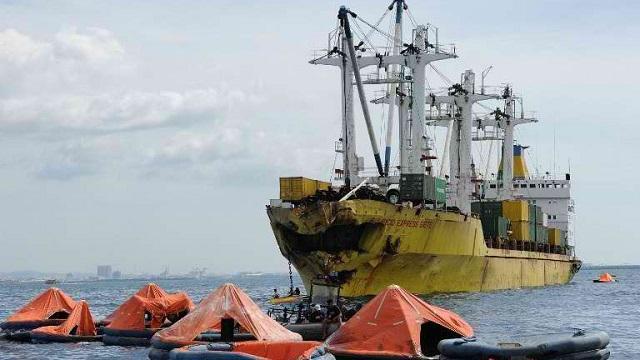
- MV St. Thomas Aquinas, August 16, 2013. MV St. Thomas Aquinas was headed for the port of Cebu when it struck MV Sulpicio Express Siete. The ship immediately began to sink. Within 30 minutes, the ship was underwater. One-hundred fourteen people perished with 23 missing.

Thursday 2 July 2015

http://www.philstar.com/news-feature/2015/07/02/1472499/tragedy-sea-ship-mishaps-last-20-years

continue reading

Tunisia identifies all 38 victims of beach terror attack, 30 British


All 38 victims of the Tunisian beach resort massacre have been formally identified, among them 30 Britons, the health ministry said Wednesday.

On Friday, 23-year-old student Seifeddine Rezgui went on a bloody rampage in Port El Kantaoui, shooting 38 foreigners with a Kalashnikov assault rifle at the popular resort’s five-star Riu Imperial Marhaba hotel.

“All the bodies have been identified. Among them are 30 Britons,” said the ministry’s director of emergency services, Naoufel Somrani.

Of the remaining victims, three were from Ireland, two from Germany and one each from Belgium, Portugal and Russia.

Britain was flying home Wednesday the bodies of eight nationals, with more repatriations expected in the coming days.

The three Irish victims were also set for repatriation Wednesday, the Tunisian health ministry said.

Friday’s death toll was the worst loss of life for Britain in a jihadist attack since the July 2005 bombings in London.

Prime Minister David Cameron has promised to back a full investigation, calling for “a response at home and abroad” to violent Islamic fundamentalism.

British police have also sent forensic experts to Tunisia to help local teams probing the attack.

The 25 British tourists who were wounded have already been flown home, while 4,000 terrified holidaymakers were repatriated at the weekend. Another 1,900 are due to return home in the coming days.

Wednesday 2 July 2015

http://english.alarabiya.net/en/News/middle-east/2015/07/01/Tunisia-identifies-all-38-victims-of-beach-massacre-30-British-.html

continue reading

Lack of data on victims slows identification


The lack of available data on the passengers of the Hercules C-130 that crashed in Medan on Tuesday has slowed the process of victim identification.

“The challenges relate to our antemortem data, which deals with DNA, teeth, birthmarks and other identifying features of the victims,” the North Sumatra Police Disaster Victim Identification (DVI) team’s deputy chairman Sr. Comr. Didiet Setyobudi told The Jakarta Post at Adam Malik General Hospital on Wednesday.

Didiet said also that identification could not be conducted immediately due to the condition of many of the 141 bodies that were admitted to the hospital.

The DVI team was reported to have identified 71 of the 141 bodies thus far.

In order to speed up the identification process, Didiet has called on the families of the victims to come to the hospital to inform the team of the victims’ physical characteristics.

Didiet also said that seven members of the National Police’s DVI team had arrived to assist with the identification process.

Head of North Sumatra Police DVI’s team, Adj. Sr. Comr. Zulkhairi, said the number of body bags and the number the victims were indeed different.

“So far we cannot discern the total number of victims because some bags contain only parts of a body,” he said.

Among the family members helping to identify loved ones was Sahat Sihombing, who held pictures of his two daughters, Ester and Rita, who were killed in the crash.

“They were students at junior high school and senior high school in Medan,” said Sahat, who is a soldier on Natuna island, Riau Islands.

He added that his daughters were on board as they wanted to meet him on the island during the holidays.

Meanwhile, heavy equipment and hundreds of personnel from the military and the police continue the process of recovering bodies at the crash site on Jl. Jamin Ginting, Simalingkar, Medan.

Commander of the Bukit Barisan Regional Military Command, Maj. Gen. Edy Rahmayadi, said the military had deployed four companies to help speed up the recovery process.

Meanwhile, the bodies of 12 Air Force personnel who were crew members of the ill-fated plane, and one civilian, have been sent to their respective villages from the Soewondo Air Base in Medan, North Sumatra, on Wednesday.

A military ceremony was held at the air base for the sending home of the bodies, led by Air Force Chief Marshal Agus Supriatna.

“We have prepared a number of aircraft at the Soewondo Air Base to transport the bodies. We will transport all the bodies, no matter how many, as the identification process at the Adam Malik hospital progresses,” Agus said.

On Wednesday, President Joko “Jokowi” Widodo led a ceremony to receive the bodies of crash victims at the Halim Perdanakusuma Air Base in Jakarta.

Meanwhile, families of Second Sgt. Joko Purwanto of Ngrampal, Sragen, Central Java, and of Chief Sgt. Sutrisno of Nogosari, Boyolali, Central Java, who were among the victims, were shocked upon hearing the news of the crash.

Parman, Joko’s uncle, said his newphew’s last contact with his family was made on early Tuesday after the sahur predawn meal.

Parman said Joko sent a text message asking for his parents’ prayers for the smooth performance of his duty.

Thursday 2 July 2015

http://www.thejakartapost.com/news/2015/07/02/lack-data-victims-slows-identification.html

continue reading

Indonesia to call off search for victims in deadly military plane crash


Indonesian authorities will call off a two-day search for victims on Thursday after a military transport plane crashed into a residential area in Sumatra, killing around 140 people, the military said.

The Hercules C-130B was carrying 122 passengers when it crashed into houses in the northern city of Medan shortly after takeoff on Tuesday, killing all on board and more on the ground.

“We have not found any bodies since yesterday, so hopefully, we will be able to finish the search-and-rescue operation today,” military spokesman Fuad Basya said.

Basya said 135 people were confirmed dead, although Indonesian media reported on Thursday at least 141 bodies had been recovered from the crash site.

The incident is the latest in a string of aviation disasters to hit Indonesia and prompted President Joko Widodo to order a review of its ageing air force fleet. The type of plane that crashed in Medan went into service half a century ago.

The Indonesian air force has now lost four C-130Bs, a model that forms the backbone of its transport fleet. Jakarta has grounded its remaining eight C-130Bs until investigators discover the cause of the crash.

The crash could spur Southeast Asia’s largest country to boost military spending, currently the lowest in the region at just 0.8 percent of GDP.

“The incident in Medan shows that the military’s transport equipment needs to be renewed soon,” parliamentarian T.B. Hasanuddin told reporters.

“We advise the government to buy newer aircraft rather than used ones even if they are more expensive,” he said.

Some victims’ families said passengers, many of whom are believed to have been civilians, had paid to get on the flight, which was headed to Tanjung Pinang in Riau Islands off Sumatra.

The air force has denied the allegations and said it will investigate any possible breach of rules.

Last December, an AirAsia passenger jet crashed en route from the Indonesian city of Surabaya to Singapore, killing all 162 people on board.

Thursday 2 July 2015

http://www.euronews.com/newswires/3029119-indonesian-military-transport-plane-crashes-in-city-of-medan/

continue reading

Dozens killed after packed Philippine ferry capsizes


At least 36 people were killed after a wooden passenger ferry with close to 200 people on board capsized in rough waters in the central Philippines on Thursday, officials said.

The Kim Nirvana was heading from the central city of Ormoc to the island of Camotes when it capsized.

Rescue boats picked up dozens of survivors who clung to the overturned hull of the vessel, one kilometre from Ormoc port on Leyte island, Ciriaco Tolibao from the city's disaster risk reduction and management office told AFP.

Divers were scouring the murky waters searching for survivors from the inside of the ship, he said. But low visibility, clouds, a choppy sea and strong winds are hampering the rescue operation at the site where the ferry capsized.

Richard Gordon, chairman of the Philippine Red Cross, told The Associated Press at 4pm Bangkok time that the air force could not operate in those conditions. He said additional divers could not fly in because of the bad weather.

At least 53 survivors were brought to the hospital while more than two dozen others walked home after the mishap, Mr Tolibao told AFP.

The Associated Press reported that among the 173 passengers were at least three Americans and a Canadian.

Lawrence Drake, 48 of New York, said he was able to revive a woman who wasn't breathing while they were in the water via mouth-to-mouth resuscitation.

He said he is a retired firefighter and emergency medical technician. He says he also saved an 8-year-old boy and the woman's pregnant daughter. He said he saw at least seven bodies floating in the water, including two children.

Mr Drake is married to a Filipina. His wife was travelling with him from Ormoc to Camotes along with her mother. They, too, survived by swimming out of the boat after it overturned.

Mr Tolibao could not immediately say how many others were missing but a report on Manila radio said at least 21 people were unaccounted for.

The wooden boat, which had 173 passengers and 16 crew on its manifest, overturned just 30 minutes after leaving the port after it encountered big waves, Mr Tolibao said.

"We're scouring the ship for more survivors who may be trapped inside the hull," he said. "We hope to finish the rescue before dark and before it starts to rain."

Survivors told AP by mobile phone that the bow of the ferry suddenly rose from the waters before the vessel flipped over on one side and began to sink near the port of Ormoc.

Leyte was ravaged by Super Typhoon Haiyan which struck in November 2013, leaving more than 7,350 people dead or missing.

The disaster-plagued Philippines is hit by about 20 typhoons and storms hit each year, many of them deadly.

Poorly-maintained, loosely-regulated ferries are the backbone of maritime travel in the sprawling archipelago.

But this has led to frequent accidents that have claimed hundreds of lives in recent years, including the world's worst peacetime maritime disaster in 1987 when the Dona Paz ferry collided with an oil tanker, leaving more than 4,300 dead.

Thursday 2 July 2015

http://www.bangkokpost.com/news/asia/611124/death-toll-mounts-after-packed-philippine-ferry-capsizes

continue reading

Darjeeling landslide: Rescue operations underway


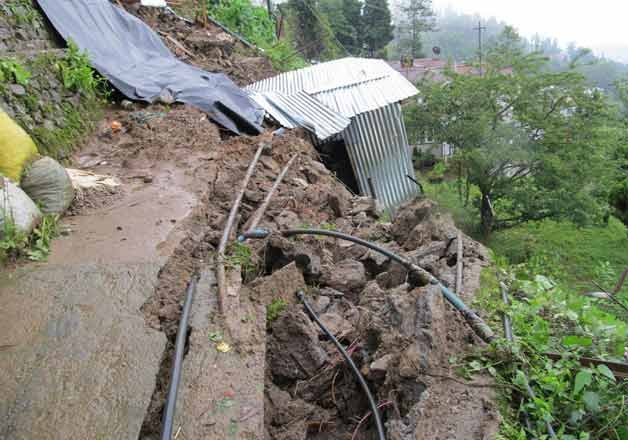
Rescue and relief operations continued in full swing in the landslide wrecked Darjeeling hills of West Bengal on Thursday with at least 12 people still missing, officials said.

The state administration has confirmed recovering 30 bodies so far from the landslides triggered by incessant rainfall since Tuesday.

Besides the National Disaster Response Force (NDRF) and the Sashastra Seema Bal (SSB), personnel from the state disaster management and administration are working at a war footing to rescue and provide relief to the affected.

As per our estimates, at least 12 people are still missing and are feared to be dead.

"The rescue operations are continuing on full swing but as of now we have not found any more bodies. Till Wednesday, 30 bodies were recovered," district disaster management official Anindya Sarkar said.

West Bengal Chief Minister Mamata Banerjee on Wednesday announced a compensation of Rs four lakh each to the families of the deceased.

About compensation for the landslide-affected, Banerjee said, "We have announced Rs 4 lakh compensation for each of the families of those who have passed away." "Administration is working round the clock to complete all procedures to hand over bodies of the victims to their families for their last rites, for which assistance is being provided by the local administration," Banerjee said in post.

Meanwhile, a fresh landslide near Gayabari has put in uncertainty West Bengal Chief Minister Mamata Banerjee's scheduled visit to Mirik the worst affected area accounting for 22 deaths alone.

Banerjee reached New Jalpaiguri on Wednesday night to supervise the relief and rescue work.

Union Minister of State for Home Kiren Rijiju is also in the region to take stock of the situation.

Many of the survivors put up in the relief shelters complained of lack of drinking water and food.

The met department has forecast widespread and heavy rainfall to continue in the region for the next 48 hours.

Large parts of Jalpaiguri district are already submerged affecting over 5,000 people. The administration has issued a red alert with rivers flowing over the danger mark.

Thursday 2 July 2015

http://economictimes.indiatimes.com/news/politics-and-nation/darjeeling-landslide-rescue-operations-underway/articleshow/47909699.cms

continue reading

Wednesday, 1 July 2015

Missing Children: Cops to record details of unescorted minors in city


In a state wide effort to trace and reunite missing minors with their families, the Maharashtra police, following a directive from the state government, has undertaken a campaign wherein all unescorted minors as well as those in the company of beggars, hawkers and other such people will be photographed and interviewed by police personnel.

The photographs of the children will also be uploaded on a state government- run website so that anyone can go through them and look for their missing children.

According to Maharashtra police sources, around 15,000 minors have been reported missing from 2010 till date, and the Ministry of Women and Child Development recently instructed the police to undertake the campaign to try and trace as many of them as possible.

The campaign, Operation Muskaan, will be enforced from July 1 to July 31 this year.

The Maharashtra Criminal Investigation Department (CID) was appointed as the nodal agency to spearhead the campaign, and accordingly, the CID issued instructions to all police units in the state and also conducted a training programme for them earlier this month.

“We held a one-day training programme for heads of Juvenile Aid Police Units (JAPUs) of all commissionerates and districts in the state on June 25, during which we instructed them about the campaign. The same instructions were also sent out in writing to all unit heads. The idea is to create a database of all the minors in the state as well as to try to trace missing children,” said Additional Director General of Police Sanjay Kumar, CID.

Explaining the working of the campaign, Kumar said that policemen have been instructed to photograph any minor that they come across at spots like railway stations, bus stops, temples, traffic signals, as well as those in orphanages and remand homes, and also fill out a questionnaire after speaking to them.

The questionnaire has only basic questions seeking information about the child, and in case the policeman find anything suspicious, further action can also be taken. “It is a common sight to see a woman with a child at traffic signals or such places, and the child might not always be hers. If the policeman who speaks to the woman and the child in her company finds something suspicious, action like DNA comparison can also be taken,” said Kumar.

All the photographs taken by the policemen will then be uploaded to the stater government website trackthemissingchild.com. Anyone in the country can access these photographs in case they are looking for a missing child.

On Tuesday, the Navi Mumbai police and the Mumbai Railway Police announced that they would be kicking off the drive from July 1.

“Any minors that are found to be kidnapped or runaways during this drive will be handed over to the Child Welfare Committee. Their parents can then approach the CWC and take them into their custody as per the legal process,” said Deputy Commissioner of Police (crime) Suresh Mengade, Navi Mumbai.

The Railway police’s drive, meanwhile, will focus on all minors staying in or working in commercial establishments on railway premises, said a Railway police officer.

Wednesday 1 July 2015

http://indianexpress.com/article/cities/mumbai/missing-children-cops-to-record-details-of-unescorted-minors-in-city/

continue reading

Haryana to launch campaign to trace missing children


Haryana Police and Women and Child Development Department have decided to jointly launch a month long campaign 'Muskaan' from Wednesday to trace and rescue missing children in the state.

DGP Y P Singhal and DG of Women and Child Development Department Amneet P Kumar informed this on Tuesday to concerned officers of both the departments. The drive aims to trace the missing, destitute and separated children and re-unite them with their parents, Singhal said.

The campaign has been divided into two parts. Under the first part, those children would be identified who have either gone missing or got separated from their parents and living like destitute, while the second part is to re-unite them with their parents or guardians, the DGP said.

He said that the first campaign of this kind was launched in the country in January 2015 in which 3,000 missing children were traced. "Out of these 99 were from Haryana," Singhal said. During the previous campaign, it has come to light that missing children are residing in shelter homes, working as domestic helpers or child labourers, living on railway stations or on bus stands and involved in begging, the DGP added.

He said that under the campaign, missing children would be searched on all these places by a team headed by a Sub Inspector constituted in each of the 21 districts, the DGP said.

Wednesday 1 July 2015

http://www.dnaindia.com/india/report-haryana-to-launch-campaign-to-trace-missing-children-2100392

continue reading

'Operation Smile' to trace missing children across Bihar


To unite 346 missing children with their parents, the Bihar Police will launch 'Operation Smile' across the state from Wednesday.

The month-long operation will be conducted under direct monitoring of its nodal agency, CID (Weaker Section), and directions have been given to all 971 police stations in the state to trace the missing children.

CID Additional Director General Alok Raj said 'Operation Smile' is being launched as per the direction of the Supreme Court to run a special campaign from July 1 to 31 to locate all missing boys and girls and rehabilitate them.

It is part of a nationwide campaign.

"As per a survey conducted by us between January 2013 and September 2014, a total of 2,874 children were missing. Out of that 2,528 were recovered. Under this operation we will try to recover the remaining 346 missing children," Raj said.

"The missing children are mostly used in human trafficking, organ trade, forced labour and as workers in hazardous industries. The number of the missing children could be more, as the data available with us is based on complaints received at police stations," he said.

Asserting that the police will also update its database of the missing boys and girls during this period, Raj said that the motto of the campaign is "Reunite me with my mother".

A standard operating procedure has been made for this purpose which will be provided to all police stations. Public awareness campaigns will be run across the state, especially at transit points like bus stands and railway stations so that common people may also lend their hand in getting the missing children located and rescued.

The CID ADG said the police will seek the help of railways and NGOs also in the campaign. Street plays and mobile vans will be used to increase the awareness.

"A website www.khoya-paya.gov.in has been launched where people can upload the photographs and information about the missing children," Raj added.

The missing children in the state are mostly in the age group of 11 to 15 years.

CID IG Vinay Kumar and SP (Weaker Section) Harpreet Kaur will be monitoring their recovery. The Bihar Police is also taking the help of civil society organisation 'Prayas' in the operation.

Wednesday 1 July 2015

http://zeenews.india.com/news/bihar/operation-smile-to-trace-missing-children-across-bihar-from-today_1622851.html

continue reading

Two MH17 victims’ remains ‘unlikely’ to be found: Dutch minister


Chances of finding human remains of the last two victims of last year’s MH17 air crash in Ukraine were “unlikely”, Dutch Justice Minister Ard van der Steur said Tuesday.

International investigators have so far matched identities with the remains of 296 of the 298 victims on board the Malaysia Airlines flight.

The jetliner was shot down on June 17 last year in war-torn eastern Ukraine, where government troops are battling pro-Russian separatists, and all on board were killed. “The last two victims have not been identified and unfortunately it’s very unlikely this will be done,” Van der Steur said in a letter to the Dutch Parliament.

Although the two victims — both Dutch — are known, investigators have found no remains at the crash site to match their DNA, despite several retrieval missions. The last mission took place in April after an area became accessible as fighting between the parties in the conflict died down.

Van der Steur said he hoped that remains already identified would have been handed over to the grieving families by July 17 this year on the disaster’s first anniversary.

The Dutch minister said all personal belongings found at the crash site would be returned by July except for a few cameras and laptops being used in the criminal investigation.

Wednesday 1 July 2015

http://www.theborneopost.com/2015/07/01/two-mh17-victims-remains-unlikely-to-be-found-dutch-minister/#ixzz3edtuIWGH

continue reading

142 body bags recovered, 59 bodies identified from Indonesia's plane crash (update)


A total of 142 body bags have been recovered from the crash of an Indonesian military plane, an official at a hospital in Indonesia's North Sumatra capital of Medan, where the crash took place, told Xinhua by phone on Wednesday.

As the body bags may contain only parts of the bodies, it is yet unclear exactly how many bodies have been recovered.

Earlier local media reports have quoted police officials as saying that 141 bodies have been recovered from the crash.

The ill-fated C-130 Hercules plane crashed into the downtown of Medan midday Tuesday shortly after takeoff. The Indonesian military said there were 122 people aboard the plane, revising their earlier statement that 113 people were on board.

Some 59 bodies have been identified from the body bags, said Sairi Saragih, an official at the Adam Malik hospital, adding " eight of those identified bodies have been brought to the airport, to be handed over by the DVI team to their families," referring to the police's Disaster Victim Identification (DVI) team that carried out the identification process on bodies of victims from the plane crash.

Some of the identified bodies of victims would be transferred Wednesday to airports where they initially board.

Wednesday 1 July 2015

http://english.cri.cn/12394/2015/07/01/3801s885359.htm

continue reading

Croatia: Remains Of 19 Serbs Identified


The remains of 19 Serb victims killed during the armed conflict in Croatia 1991-1995 were identified at the Department of Forensic Medicine and Criminalistics of the Zagreb University School of Medicine on Tuesday.

The remains were excavated in Slunj, Zadar, Sibenik, Dvor, Gracac, Zitnik, Medari, Vukovar and other locations, reads the statement issued by the Serbian government’s Commission on Missing Persons.

The victims, who were identified through the DNA analysis, will be buried as their families demand, reads the statement.

The remains of a total of 1,053 Serb victims killed in operations Flash and Storm were exhumed from registered graves in the territory of Croatia from 2001 to 2014 and 685 were identified, show the Commission’s data.

Over the last 14 years, the remains of a total of 1,314 Serbs were excavated from mass and individual graves in the territory of Croatia and former Republic of Serb Krajina and 932 of them were identified, says a release the Documentation Informational Center Veritas.

The list of missing persons composed by this NGO includes another 1,871 people of Serb nationality, including 1,315 civilians, 509 of whom are women.

Wednesday 1 July 2017

http://inserbia.info/today/2015/07/croatia-remains-of-19-serbs-identified/

continue reading

160 feared dead after two attacks on migrants in Mexico


Over 220 Central American migrants were violently attacked in two different instances in Mexico; according to Mexican newspaper Excelsior only about 60 managed to escape alive.

In one case, survivors of the attack say they were shot at by men in military uniforms. In the other case, they were brutally attacked by unidentified people armed with rifles, pistols and machetes.

The first case occurred in Las Choapas, Veracruz state, some 400 miles southeast of Mexico City. About 100 Central American migrants, including women and children, were traveling on a local freight train when they were suddenly attacked by various men armed with shotguns, handguns and machetes.

And according to Excelsior, only 44 managed to escape alive. There is no information as to the whereabouts of the remaining 56 or more migrants that were attacked, and authorities have not offered any information, which has drawn the condemnation of various human rights groups who are demanding an investigation.

However, as of the night ot June 17, no Mexican government office had responded. The second case occurred in Sonora, near the border with the United States. There is no official information regarding this case either, but according to local media, more than 100 Central American migrants were attacked by at least two men dressed in military uniforms, according to reports on Tuesday by national and international migrant organizations.

Survivors of the attack say the group was traveling toward the border in five vehicles when one of their vehicles broke down, forcing them to stop and take a break. At that point men dressed in military attire appeared. They ordered them to the ground and randomly started shooting at them. The migrants then dispersed and fled away into the desert.

Excelsior says just 16 of those migrants have so far been accounted for. Apparently, more than 84 are still missing. RELATED: 57 Migrants Freed from Kidnappers in Mexico “Some of the survivors said that they saw a number of their comrades fall to the ground during the shooting, but their intentions to escape did not allow them to see how many of them,” local media reported. According to news agency Aristegui Noticias, a 17-year-old migrant told the organizations in an interview that the migrants walked for over 10 hours without water through the desert after having escaped from the shooting. “It was the worst day of my life,” he said.

Another survivor said that “now the only thing I want, after this experience, is to hug and be close to my family.” RELATED: Mexico's Solalinde: Migrant Protest to Go Ahead Despite Threats The organizations reporting the case included Fundar, the Migrant Shelter of Saltillo, Border with Justice, Mission for Migrants and Refugees, among others. They said the armed attack against these migrants is further evidence of the violence that thousands of Central American migrants face during their dangerous trek across Mexico.

The irony, they added, is that the majority are fleeing from violence in their countries of origin, as well as poverty, in search for a better life. Recently, as statistics on the rising deportation rate of migrants in Mexico were released, the Inter-American Human Rights Commission has expressed concern over the “stepped-up actions reportedly being taken against migrant persons and those who defend their rights in Mexico,” noting that migrants and human rights defenders “continue to be targets of attacks in Mexico.”

Wednesday 1 July 2015

http://www.telesurtv.net/english/news/160-Migrants-Feared-Dead-in-Mexico-after-Being-Attacked-20150618-0001.html.

continue reading

Navy adds ocean rescue teams after 2014 ferry accident


South Korea's Navy launched new rescue teams Wednesday to beef up its emergency response to maritime accidents after the sinking of the ferry Sewol killed more than 300 people last year.

Three rescue operation teams, each composed of about 15 deep-sea divers, will kick off their operations under three Navy fleets covering the eastern, western and southern waters, the Navy said in a statement.

The new teams are mainly tasked with initial-stage response and rescue operations in maritime disaster situations, with captain-level officers heading the teams, according to the Navy.

The creation of the rescue teams is part of the Navy's efforts to prevent a repeat of last year's ferry sinking, it noted.

Succumbing to strong currents and overloading, the 6,825-ton ferry Sewol sank off the southwest coast on April 16, 2014, leaving 304 people dead or missing, most of them high school students on a field trip.

The high death toll was mainly blamed on government rescue bodies' fumbled disaster response in the initial stage of the accident.

With the deployment of new diving gear and search equipment, the teams will be able to dive as deep as 58 meters for an extended time, the Navy added.

"Since the Sewol accident, the Navy charted a plan on improving its rescue capacity and has steadily advanced that capacity to rescue speedily and systematically in a maritime accident," according to the statement.

Wednesday 1 July 2015

http://www.koreaherald.com/view.php?ud=20150701000795

continue reading

Toll in Darjeeling hills landslides rises to 28


Heavy rainfall since Tuesday triggered landslides across Darjeeling district, leaving scores of people trapped.

"So far we have recovered 28 bodies. Several others are still missing," Darjeeling Superintendent of Police Amit Javalgi said.

According to Javalgi, 20 bodies were recovered from Mirik, six from Kalimpong and one each from Sukhiapokhri and Gorubathan areas of the district.

The landslides have snapped the hills' link with Sikkim as the Rohini-Garidhura Bridge was washed away. National Highways No 31 and 10 also remained blocked due to debris from landslides.

Chief Minister Mamata Banerjee said she was monitoring the situation in the Darjeeling hills and would visit the area during the day.

In Jalpaiguri district, at least 5,000 people were affected by water-logging and their misery was compounded by the release of over 5,000 cusecs of water from the Teesta barrage.

The district administration has issued a red alert over the Teesta and Torsa rivers touching danger levels.

While the Sashastra Seema Bal and Disaster Management personnel are engaged in relief and rescue operations, North Bengal Development Minister Gautam Deb said the army has been called to help in the rescue operations.

Wednesday 1 July 2015

http://zeenews.india.com/news/west-bengal/toll-in-darjeeling-hills-landslides-rises-to-28_1622937.html

continue reading

141 bodies recovered from Indonesia plane crash


The death toll from the crash of an air force transport plane in the Indonesian city of Medan jumped to more than 140 on Wednesday, indicating a growing list of victims from the neighborhood where the plane went down.

North Sumatra police major A. Tarigan told TVOne that 141 bodies have been recovered from the rubble of a residential area where the C-130 Hercules crashed shortly after takeoff on Tuesday.

A three-storey building was left in ruins and a car destroyed on the ground when the C-130 Hercules crashed in Medan on the island of Sumatra shortly after take-off on Tuesday.

The plane's manifest showed there were 113 people on board the plane - 12 crew and 101 passengers - when it came down.

Air force chief Agus Supriatna said he did not think anyone survived the crash.

"No survivors, I have just returned from the site," he said. It is thought many of the passengers were families of military personnel. At least one child has been confirmed among the dead.

The local search and rescue agency told AFP news agency that three people were killed on the ground. Rescue teams were using heavy machinery to remove the mangled wreckage of the plane as they combed the through the rubble.

Air Marshal Supriatna said the pilot told the control tower the plane needed to turn back because of engine trouble. "The plane crashed while it was turning right to return to the airport," Mr Supriatna said.

Novi, who works at an international school near the accident site and goes by one name, said she heard the aircraft and saw it flying very low before it crashed. "It was very scary," she said, adding that she rushed to the site with her colleagues but the wreckage and plumes of smoke looked "very bad".

Janson Halomoan Sinagam said several of his relatives were on the plane when it left Medan, a city of two million people, on its journey to the remote island chain of Natuna.

"We just want to know their fate," he told a reporter from MetroTV, weeping. "But we have not yet received any information from the hospital."

Indonesian President Joko Widodo tweeted: "May the families be given patience and strength... May we remain protected from disaster."

Hitching rides on military planes to reach remote destinations is common in Indonesia, a sprawling archipelago that spans three time zones.

Between 2007 and 2009, the EU barred Indonesian airlines from flying to Europe because of safety concerns.

The country's most recent civilian airline disaster was in December, when an AirAsia jet with 162 people on board crashed into the Java Sea en route from Surabaya to Singapore.

Wednesday 1 July 2015

https://uk.news.yahoo.com/dozens-feared-dead-indonesia-plane-crash-083233022.html

continue reading

Brooks County: New law could speed the identification of dead undocumented immigrants


Action taken during this past legislative session could help speed the process of identifying the hundreds of undocumented immigrants who’ve perished while trekking across the rugged ranchlands of Brooks County. Under one bill, the Texas Forensic Science Commission is required to establish methods of extracting DNA from bodies found within 120 miles of the South Texas border.

Lawmakers also approved new funding to assist the creation of DNA profiles of the immigrants’ remains. Hundreds of the unidentified victims are buried in Sacred Heart Cemetery in Falfurrias. Last year, for the first time, more undocumented border crossers – 115 – died passing through Brooks County than the Arizona desert. 30 bodies have already been recovered this year, according to the McAllen Monitor.

The measure addressing the immigrants deaths was written by Edinburg Representative Terry Canales and was a last-minute amendment to a bill sponsored by McAllen Senator Juan Hinojosa.

Wednesday 30 June 2015

http://www.kurv.com/local/24892

continue reading

Five dead, 10 missing after ship sinks off Cameroon coast


Five people died and 10 are missing after a ship carrying 27 people from Cameroon to neighboring Equatorial Guinea sank off the coast of Tiko, an official said.

Five bodies were retrieved by deep-sea divers from the marine military corps, Divisional Officer for Tiko, Che Patrick Ngwashi, told reporters.

“Most of the passengers were business people,” he said.

The sinking occurred in heavy rain and violent wind, the ship’s captain, Eusevio Andreu Mejia, said in an interview. Of the 12 people rescued, eight were from Equatorial Guinea.

The search for the missing 10 people continues. The ship is yet to be found.

Wednesday 1 July 2015

http://www.irishtimes.com/news/world/africa/five-dead-10-missing-after-ship-sinks-off-cameroon-coast-1.2268097

continue reading

Tuesday, 30 June 2015

First bodies retrieved from bottom of Med Sea after migrant boat disaster in April


The Italian navy has brought to shore the first three bodies of more than 700 thought to be lying at the bottom of the Mediterranean after the worst migrant boat disaster since the Second World War.

It had been feared that the migrant victims of the shipwreck in April would lay buried on the seabed after the Sicilian public prosecutor investigating the disaster initially refused to bring up the bodies.

But authorities have now begun the grim task of recovering the victims, many of whom were locked inside the hold when the smuggling boat capsized and sank off the Libyan coast.

The bodies lie at a depth of around 370m below sea level and are being brought to shore with the help of a robot equipped with sonar technology and two ‘arms’ capable of lifting the weight of a human corpse. It takes around two hours for each body to be recovered.

The Navy has also recruited specialist divers, who are on board two boats, Gaeta and Leonardo.

The recovery operation began as another 2,900 migrants were rescued on Monday night, after 21 boats in the space of 24 hours were found drifting in Libyan waters. The coastguard, as well as Italian ships and British, Irish and Spanish navy vessels were all involved in the rescue operation.

The rescues lifted to nearly 68,000 the number of migrants to have landed in Italy this year, according to the International Organisation for Migration.

Matteo Renzi, the Italian prime minister, said last month that the victims of the April disaster would be brought up to show the world what had happened. “We will recover that boat and we will bring it up,” he said.

"I want everyone to see what happened. It is unacceptable to keep saying: what the eye does not see the heart cannot grieve.”

Italy and other Mediterranean countries are struggling to cope with the arrival of hundreds of thousands of migrants fleeing the civil war in Syria and repression elsewhere in Africa by sea.

But Mr Renzi failed in a recent attempt to enforce compulsory quotas of refugees on EU member states. Tuesday 30 June 2015

http://www.telegraph.co.uk/news/worldnews/europe/italy/11709282/Bodies-retrieved-from-bottom-of-Med-after-worst-migrant-boat-disaster-since-Second-World-War.html

continue reading

Nepal’s religious minorities battle for burial grounds


In a quiet corner in Rajahar, a small town in south-central Nepal, a two-decade old mosque serves not only as a place for prayer but also as one of few spaces unencumbered for the tiny, close-knit Muslim community.

On the adjoining lot, a church with a large compound and a classroom stands testament to the fact that the two religious minority groups in the Hindu majority country enjoy co-existence and interfaith harmony.

But life—or rather, death, to be specific—is harsh for them, beyond the confines of the prayer halls.

The 250-member Muslim community of Rajahar, in the district of Nawalparasi, braces for hostility whenever one among them dies.

“When someone in our community dies, we can’t bury him or her here because we don’t have a graveyard. We have to take the body to a forest in Chitwan [some 15 miles away] for burial. Even there we are faced with hostile locals, who harass us saying we were encroaching upon their land,” Nazamuddin Miya, 37, told Anadolu Agency.

A year ago, a 70-year old Muslim woman died in Rajahar. That afternoon, Miya and 30 other Muslims hired a bus that served as a hearse and drove to a forest in Ram Nagar in the neighboring Chitwan district.

Roughly 80 percent of Nepal’s 26.6 million people call themselves Hindus. Buddhists, the country’s second largest religious group, make up 9 percent of the population.

Nepal became a secular country after the end of Hindu monarchy in 2008, raising hopes of equal rights and representation for a melange of minority groups including Muslims, who make up roughly 4.4 percent, over a million of the population.

After the end of the decade-long Maoist insurgency in 2006, Nepal’s leaders pledged to deliver a democratic, inclusive constitution that addressed the grievances of marginalized communities, including Muslims and Christians.

Over the years, Nepali Muslims took part in protests demanding representation in the state structure, joining dozens of ethnic and regional groups agitating in the country’s eastern hills and Tarai plains.

But Muslim leaders say the state has continued to be discriminatory, denying them even basic rights to burial sites.

“A state doesn’t have a religion, but its citizens can follow any religion. Every religious community should be able to follow its rituals and practices. But the state has treated us like third-class citizens,” Roshan Kharel, a local Muslim leader, told Anadolu Agency.

“If the state allows us to be born as Muslim, it must also allow us to die as Muslim. And that’s when the issue of burial grounds becomes really significant for us. We have been struggling for it for several years but to no avail,” said Kharel, a former Hindu who converted to Islam during a stint as a migrant worker in Qatar.

The Muslims of Rajahar are not the only community that feels threatened and discriminated.

In Hetauda, a town of Makwanpur district, about 60 miles east of Rajahar, Christians face a similar ordeal.

“We don’t have any designated space for burial. We have buried our dead on a plot that belongs to a Hindu temple but we often face resistance from locals and temple authorities,” said Prashant Dev, a local Christian leader and publisher of a monthly Christian newspaper.

He said the Christian members of Makwanpur district, home to 22,000 Christians, have often fought for the designation of a burial ground.

“We have organized protests demanding a burial ground; I have led several delegations to the local administrator and forest office, but nothing has come out of it,” Dev told Anadolu Agency.

With the local authorities turning a deaf ear, he said, his community members were forced to buy land for a graveyard or donate to some of the 300 churches in the district to secure the burial sites.

When Nepal was hit by a 7.8-magnitude earthquake in April, nearly 10 percent of fatalities were Christians, who were in the middle of a weekly congregation.

Christians in Nepal congregate on Saturday – the day of the quake – taking advantage of the country's single-day weekend, said C. B. Gahatraj, a pastor and general secretary of the National Federation of Christians, a 5,700-member organization.

“Unfortunately, the districts that were hardest hit—Gorkha, Dhading, Sindhupalchok, Nuwakot and Kavre—are also places where most Nepali Christians live. That morning, they had gathered for prayers. So the congregants were killed in the earthquake,” he said, adding that the quake destroyed 93 churches and damaged 500 more in central and eastern Nepal.

Out of a total 8,844 victims of the quake, 778 were Christians, with most buried while praying in two neighborhoods of the capital Kathmandu and in several hamlets of the badly-hit Sindhupalchok district. While many agree on the numbers of the dead, there is no consensus on the nationwide population of Christians in Nepal. The national census puts the figure at 300,000 while Christian leaders claim there are 2.5 million.

“After the earthquake, lack of space for burial in Kathmandu forced us to move the bodies to the districts where they came from. We had been demanding burial grounds even the day before the earthquake,” Gahatraj told Anadolu Agency.

The minority religious group has fought a long and hard battle for burial grounds.

In early 2011, the issue of Christian cemeteries came to the fore after the Pashupati Area Development Trust, an autonomous body that oversees the country’s oldest Hindu temple in Kathmandu, a UNESCO World Heritage Site, said it would no longer allow non-Hindus to use the Shleshmantak forest for burials.

While dozens of bodies are cremated everyday on the banks of the Bagmati River in the temple premises, Christians secretly buried their dead in the nearby forest.

A prolonged legal battle and hunger strikes ensued. After a 40-day relay hunger strike in May 2011, the government agreed to meet the Christian community’s demands for burial grounds and formed a high level committee to look into the issue.

A year later, with the committee dragging its feet and the government reluctant to provide space for a cemetery, the Christian community resumed the public protests.

“Despite our protests and after several pledges, the government has failed to address our grievances. The state simply is not paying any attention to our plight,” Gahatraj said.

Aside from the state, the majoritarian Hindu community has also grown intolerant of the minority religious groups’ rights.

Gahatraj and Dev both cited incidents in which they were not allowed to bury their dead on riverbanks, with local people intent on denying them last rites in accordance with Christian rituals.

When a family buried the dead body of a 68-year-old Christian man on their own land, locals protested by pulling the body out and leaving it on the family’s courtyard, Gahatraj said, recalling the 2013 incident in the district of Kavre, in central Nepal.

“Then, we buried him on the banks of a nearby river. Even then, his body was unearthed,” he said.

Their attempt to give the dead man a modicum of burial was foiled again after they buried the body at a forest in Kavre district.

“It had already been several days since his death and the body began to decompose,” Gahatraj recalled.

He and the dead man’s family then hired a pick-up truck and drove several hours, first to Kathmandu and then further west.

When they were about to bury the body on the banks of the Trishuli River, a group of locals, having noticed the activities, arrived on the riverbank amid a glow of torchlight in the night.

“We were allowed to bury the body only after handing 5,000 rupees ($50) to them,” he said.

Tuesday 30 June 2015

http://www.aa.com.tr/en/culture-and-art/546974--nepal-s-religious-minorities-battle-for-burial-grounds

continue reading

Floods, landslides leave at least 28 dead or missing in China


Rain-triggered floods and landslides in four provinces since Friday have left at least 28 people dead or missing.

Five people have died in landslides in Shangcheng County, Henan Province, where heavy rain has forced the evacuation of nearly 800 people, the collapse of 100 dwellings and damage to over 200 buildings, according to the county's publicity office.

Over 6,700 hectares of crops have been damaged and power and communications have also been affected.

It is estimated that the weather has caused direct economic losses of 305 million yuan (about 49.9 million U.S. dollars).

In Shaanxi Province, floods have killed four people and left nine others missing in Foping County, where economic losses are estimated at about 170 million yuan. Power and communications were disrupted in most townships, according to the county government.

In Sichuan Province, two people were killed by landslides in Nanjiang County, which reported its worst floods since 1949. The disaster forced the relocation of 263,000 people across 48 townships. Another woman was killed by a landslide in Sichuan's Pengxi County.

On Monday it was confirmed that two people had died and five were still missing after heavy rain caused floods and landslides in Jinzhai County, Anhui Province. The downpour has battered seven provinces and a municipality in China.

Tuesday 30 June 2015

http://en.cihan.com.tr/en/floods-landslides-leave-at-least-28-dead-or-missing-in-china-1810500.htm

continue reading

Service men killed in crash en route to Vietnam remembered


Fifty years ago, 84 U.S. service men boarded an Air Force jet near Irvine bound for war-torn Vietnam, prepared to defend their country.

But the men never received their marching orders.

Shortly after the C-135 aircraft took off at El Toro Marine Air Station on June 25, 1965, it slammed into nearby Loma Ridge. The downed jet erupted in flames, spewing bodies and parts of bodies over the grassy hilltop across a mile-wide radius. All 72 Marines aboard and the 12-man Air Force crew died in the crash. The cause of the accident was never determined.

Five decades later, the crash remains the deadliest air disaster in Orange County history. But the servicemen's sacrifice was not remembered on any monument. Their names are not etched on the Vietnam Memorial walls in Washington because they died in the U.S., before receiving their official orders, the organizers of a new tribute say.

So 15-year-old Jordan Fourcher created an interactive memorial kiosk at the Aviation and Heritage Museum at Orange County Great Park, formerly the El Toro Marine base, to honor the men who lost their lives in that fatal flight. The kiosk will feature a metal base, engraved with the names of the men, and a touch-screen interactive kiosk with biographical information about each of the men, he said.

Fourcher spent a year working on a lasting monument as part of his Eagle Scout project.

"I was going to do a metal plaque in a park," said the Corona Del Mar resident. "But it turned into something so much more. Everything aligned and worked out perfectly."

On Saturday, more than 50 family members of the deceased are expected to gather at the Great Park for the unveiling of the memorial inside the Great Park hangar. Irvine Mayor Steven Choi, Reps. Dana Rohrabacher and Mimi Walters are expected to attend the event, which will feature a Marine Corps color guard and a missing man flyover with World War II-era aircrafts, Pat Macha, one of the event's organizer, said.

"Jordan has done a wonderful job on this," Macha said. "It is just amazing."

Tuesday 30 June 2015

http://www.military.com/daily-news/2015/06/29/service-men-killed-in-crash-en-route-to-vietnam-remembered.html

continue reading

At least 38 dead after military plane crashes in Indonesian city


At least 38 people have been killed after an Indonesian military plane crashed Tuesday in a residential neighborhood of Medan city in North Sumatra, a police official said, according to the Associated Press.

The pilot of the Hercules C-130 told the air control tower that the plane needed to turn back because of engine trouble, Air Marshall Agus Supriatna reportedly said.

"The plane crashed while it was turning right to return to the airport," Supriatna said, adding that there were 17 military personnel on board the plane.

Twelve crew members were on board the plane, air force operations commander Agus Dwi Putranto said on local television, according to the Associated Press (AP), adding that the total number of passengers on board was unknown. Authorities reportedly said that a rescue operation is underway.

A local hospital spokeswoman Sairi M. Saragih said that the hospital had received five bodies so far, according to AP.

Television footage showed the wreckage of the downed C-130 Hercules, a crumpled burning car and a shattered building that local media said contained a spa. Smoke billowed from the site and several thousand people milled nearby.

North Sumatra police chief Eko Hadi Sutedjo told reporters that the plane was carrying 50 people based on its manifest.

He said 37 bodies have been transported to Medan's Adam Malik hospital and include a child who was probably about a year old.

None of the bodies has been identified and it's unclear how many of the victims are military personnel and how many are civilians, Sutedjo said.

The crash of the transport plane occurred just two minutes after it took off from Soewondo air force base.

Air force chief Air Marshall Agus Supriatna said the pilot told the control tower that the plane needed to turn back because of engine trouble.

"The plane crashed while it was turning right to return to the airport," Supriatna said.

Medan resident Fahmi Sembiring said he saw the gray Hercules flying very low as he was driving.

"Flames and black smoke were coming from the plane in the air," he said. Sembiring said he stopped not far from the crash site and saw several people rescued by police, security guards and bystanders.

Indonesia has a patchy aviation safety record. Between 2007 and 2009, the European Union barred Indonesian airlines from flying to Europe because of safety concerns. The country's most recent civilian airline disaster was in December, when an AirAsia jet with 162 people on board crashed into the Java Sea en route from Surabaya to Singapore.

The C-130 accident is the second time in 10 years that an airplane has crashed into a Medan neighborhood. In September 2005, a Mandala Airlines Boeing 737 crashed into a crowded residential community shortly after takeoff from Medan's Polonia airport, killing 143 people including 30 on the ground.

Medan, with about 3.4 million people, is the third most populous city in Indonesia after the capital, Jakarta, and Surabaya.

Tuesday 30 June 2015

http://www.ibtimes.com/indonesia-military-plane-crash-least-37-killed-after-hercules-c-130-crashes-medan-1989355

http://www.roanoke.com/news/world/wire/indonesia-military-transport-plane-crashes-in-medan-dead/article_d1279cd1-1dd0-5e41-b452-5b33c043416b.html

continue reading

Italy begins recovery of 800 migrant bodies from Med shipwreck


The Italian navy said it had begun efforts to recover the bodies of some 800 migrants killed in a shipwreck in the Mediterranean in April, as authorities rescued another 4,400 people making the dangerous sea journey to Europe.

The April 18 tragedy was the deadliest sinking in the sea between Europe and Africa in decades and sparked international calls for reinforced efforts to deal with the growing migrant crisis.

"The navy... has begun the recovery of bodies outside the trawler that sank on April 18... from a depth of around 380 metres (1,246 feet)," the navy said on Twitter.

Only 28 people survived the shipwreck at the time, out of an estimated 800 on board when the vessel set sail from Libya.

Italian Prime Minister Matteo Renzi last month announced that he wanted the wreck to be brought to the surface and victims' bodies returned to their families for burial, saying the country could not "bury its conscience at a depth of 387 metres".

Also on Monday, Italian authorities said they were dealing with the arrival of another 4,400 migrants after a series of boats were rescued in the space of 48 hours from waters off Libya.

The rescues lifted to more 69,000 -- a record for the first half of the year -- the number of migrants to have landed in Italy so far this year, according to figures compiled by the International Organisation for Migration (IOM).

The latest operations involved Italian ships, British, Irish and Spanish navy vessels and a boat operated by Malta-based humanitarian organisation MOAS, the Italian coastguard said.

- 80,000 migrants -

The surge in migrant arrivals since the start of 2015 has left Italy's reception facilities, currently housing around 80,000 asylum-seekers and others seeking leave to remain in the country, under severe strain.

The situation is likely to get worse over the summer when the numbers of boats dispatched by people smugglers usually peaks. Of last year's arrivals, some 100,000 arrived between June and September.

The sharp increase in migrant arrivals has left Italy's centre-left government under constant attack from the country's vocal far-right and some regions are threatening to refuse to house any more migrants.

The crisis has also put Italy at loggerheads with its European Union partners over contested proposals to spread some asylum-seekers across the bloc and moves by neighbouring countries to tighten their border controls to restrict the numbers of migrants travelling out of Italy on their way to northern Europe.

Italy regards these moves as breaching the principles of solidarity and of free movement of people within Europe. On the other side of the debate there is a perception that Italy is not sufficiently rigorous about registering new arrivals at its ports and sending economic migrants back to their countries of origin as a deterrent to others thinking of making the trip.

According to aid groups, just over half of the migrants arriving in Italy have a legitimate claim to asylum, mostly as a result of having fled conflict in Syria or repression in Eritrea.

The civil war in Syria is also seen as being behind a surge in asylum-seekers arriving in Greece, where over 80,000 migrants have arrived this year, three quarters of them on boats which mostly leave from Turkey.

This year has also seen a sharp increase in the numbers of migrants dying during the crossings with over 1,800 fatalities reported en route to Italy and at least 27 off Greece, according to the IOM.

Tuesday 30 June 2015

http://news.yahoo.com/italy-begins-recovery-800-migrant-bodies-med-shipwreck-210959501.html

continue reading

Monday, 29 June 2015

30 more human trafficking victims buried today


The remains of 30 human trafficking victims believed to be Rohingya migrants from Myanmar, found at Bukit Wang Burma, Wang Kelian last month, were buried at a cemetery in Kampung Tualang today.

Kedah Islamic Religious Department (JAIK) director Datuk Noh Dahya said 28 of the victims were men who were buried en masse in a grave, while the bodies of two women were laid to rest in an adjacent grave.

The burial started at 3.50am and ended at 5.30am, he added.

He said there were still 55 remains of human trafficking victims undergoing post mortems at the Sultanah Bahiyah Hospital, with 40 of them expected to be buried next week.

Last week, JAIK buried 21 bodies of human trafficking victims which were found in Wang Kelian.

The burial was carried out by JAIK and the National Security Council with the assistance of local villagers, the police and members of the Kedah Rohingya Welfare Association.

Monday 28 June 2015

http://www.themalaysianinsider.com/malaysia/article/30-more-human-trafficking-victims-buried-today

continue reading

Connecticut: When a loved one goes missing, there are no easy answers


When someone goes missing in Connecticut, how hard police work to find the person can depend on which agency gets the case, officials say.

“Some will go all out; some will just take a report. It’s the luck of the draw,” said New Britain State’s Attorney Brian Preleski, who heads up a task force investigating the disappearance and murders of seven people whose remains were found in New Britain in 2007 and a few months ago. “The extent of the investigation depends on who you get.”

In a second interview, Preleski clarified those comments, saying, “To some extent, that’s true of anything in life.” He admitted there was no easy answer, but agreed that creating a less fragmented approach to investigating missing persons is “something we should think about.”

How missing persons cases are handled has come into sharper focus in recent weeks after New Britain police unearthed the remains of four more victims of a presumed serial killer. Those bodies, buried behind a strip mall on Hartford Road, joined three other sets of remains discovered in the same patch of woods in 2007.

All seven people disappeared in 2003, which has raised questions about why it took nearly 12 years to find and identify them all.

During those years, the families of some of the victims sought help from police in finding their loved ones, but say they got few answers.

Sources have named William Devin Howell as the suspected killer. He’s currently in jail, serving a 15-year sentence on a manslaughter conviction handed down in 2005 for what at that time was the presumed death of one of the missing victims, Nilsa Arizmendi.

Chief State’s Attorney Kevin Kane concedes there’s often no easy way to form a unified unit to investigate missing persons cases, but said police should at least review state policy changes from 2011 that include clearly defined steps departments should take when they get a missing persons case.

“Room for improvement”

“Clearly, there is room for improvement,” Kane said. “But we don’t want to set up a process where we are spending so much time screening cases that we have no time to investigate them. We took a good look at this in 2011 and we made some good progress, but we really haven’t taken a second look at it.”

Howell, a drifter from the South, was in this area in 2003, when the seven people disappeared.

The remains of three of the victims, Mary Jane Menard, Joyvaline Martinez and Diane Cusack, were discovered in 2007. The remains of Arizmendi, Melanie Ruth Camilini, Danny Lee Whistnant and Marilyn Gonzales were found at the same location.

All disappeared in 2003 and it took until just this spring to finally find all of their remains and to identify them because of errors made several years ago at the state crime lab, officials have said.

The lab sought and obtained a federal grant to start a cold case unit in part because of the New Britain serial killer case, said Dr. Guy Vallaro. It also has a missing persons unit which works with police departments and the Office of the Chief Medical Examiner to identify remains and gather DNA samples from families of missing persons.

The investigation took a new turn last week as members of the serial killer task force went to Hampton, Va., to search a house where Howell once lived. That search included digging up the yard to search for human remains, but nothing was found, officials said.

Until the victims were recently identified, they were among more than 1,000 cold cases in the state, including missing persons, cases that haven’t had a good lead in years.

The National Missing and Unidentified Persons System (NamUs) lists 168 missing persons in Connecticut. The number may not be accurate since police are not required to use NamUs, which can be viewed by the public, and often instead list missing persons on state and national data banks only available to law enforcement.

The techniques used to investigate vary from agency to agency. New Britain police will use “cold case cards” distributed to prison inmates in the hope they may have gleaned some information during their prison stints. They are the only playing cards inmates are allowed to use and each features a different cold case.

“Good police work must be applied to every missing persons case,” New Britain Police Chief James Wardwell said. “Any good detective will not just look within the confines of their municipality.”

There are several specialized units within the state that deal with missing persons and cold cases, but their participation in a case often depends entirely on whether the local police department in charge of the case asks for help.

Ultimately, Wardwell said, good training and good information from families are some of the best investigative tools officers need when investigating a missing person. “Law enforcement must review every missing persons case as if the missing person is in danger,” he said. “The vast majority are not. Some are runaway juveniles who are endangered because they are on the streets. In most cases, they turn up.”

“The best thing a family can do is be honest with police,” Wardwell said. “We need to know their habits, where they might get drugs, who they hang out with, where they hang out. It’s not a time to worry about snitching, folks need to be focused on the person’s safety.”

Local police can also call on the state’s Missing Persons Unit for assistance.

“We are more than willing to help any agency,” said Sgt. Matthew Gunsalus, who supervises the unit. “We will help facilitate anything that they need.” Formed in 2012, the unit has three detectives working on 12 missing persons cases and 18 unidentified human remains cases. It works with local agencies and have staff assigned to the New Britain Serial Killer Task Force, Gunsalus said.

As part of its statutory responsibilities created in a 2011 change in state law, the unit sends out Amber Alerts for missing children and Silver Alerts for missing adults over 18 who are considered disabled or have mental health issues or are over the age of 65.

It routinely contacts national clearinghouses, such as the National Center for Missing and Exploited Children and the National Missing and Unidentified Persons System. Both have databases that can be seen by the public as well as law enforcement.

State database

It also enters information on missing persons into the state database, which connects with the National Crime Information Center, which can be accessed only by law enforcement personnel.

Gunsalus said his unit does not handle cases outside the jurisdiction of the state police unless asked. He said he could not say how many missing persons there were in Connecticut without consulting his agency’s legal affairs department.

Kristin Sasinouski, technical leader at the state forensic lab DNA unit, said there’s a “discordance” between the number of DNA samples submitted to CODIS and NamUs. Many times, a person is listed as missing on NamUs but family members have not been asked to submit a DNA sample. Sasinouski’s goal is to urge family members who are missing a loved one to submit known samples to the laboratory for DNA testing.

Although Sasinouski heads the state lab’s missing persons unit, she does not have access to the NCIC database and does not know how many Connecticut missing persons are listed in that database.

The collection of DNA from family members is vital to the process, Sasinouski said. “As samples from missing persons and their relatives and/or unidentified remains are processed at the laboratory, they are uploaded into CODIS, where they search at both the State and National level against other missing persons-type cases,” she said. “This allows identifications to be made all across the country as well as within our own state.”

To search NamUs or find out more info on how to supply missing persons info to NamUs, use these links: identifyus.org/en/cases/state/7 or findthemissing.org/en/cases/state/7.

Monday 29 June 2015

http://www.centralctcommunications.com/bristolpress/article_3763008e-1dfa-11e5-b2b7-5799fc2c1141.html

continue reading