Thursday, 11 June 2015

Mount Kinabalu earthquake: Last remaining two missing victims identified


The last remaining two missing victims of Friday’s earthquake in Ranau have been identified by forensic teams.

Sabah Police Commissioner Datuk Jalaluddin Abdul Rahman said the verification was made after DNA samples of the two Singaporeans were identified by the Disaster Victim Identification (DVI) teams from Malaysia and Singapore.

“DVI teams were able to identify the identity of the victims through body parts retrieved from the scene,” he told a press conference at the state police headquarters in Kepayan here yesterday.

Their remains would be handed over to the families once the DNA tests had been completed, he told a news conference at the Sabah Police headquarters here.

"The families have sent over blood and tissue samples which we have sent to the Chemistry Department for verification," he said.

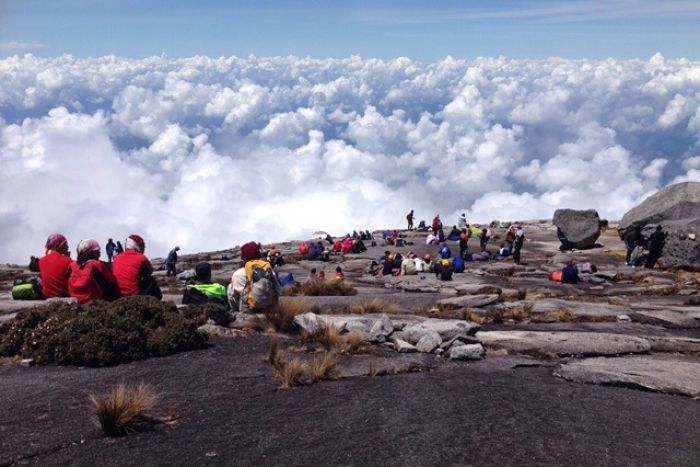
Altogether, 18 people, 14 mountain climbers and four guides, were killed when the 5.9-magnitude earthquake rocked the Ranau and Kundasang areas at 7.15am last Friday and sent rocks and boulders crashing down Mount Kinabalu, Southeast Asia's highest peak at 4,101 metres.

Ten of the dead were Singaporeans; six, Malaysians; one, Japanese and one, Chinese. They were at various stages of climbing Mount Kinabalu when the earthquake struck.

Jalaluddin said 14 of the bodies had been identified and handed over to the next-of-kin.

"The post mortem of the bodies of the Japanese and Chinese will be done after the families arrive here, most probably today," he said.

The dead Singaporeans comprised three teachers and seven pupils from the Tanjong Katong Primary School. They were on an excursion up the mountain.

In SINGAPORE, the Ministry of Education, in a statement, expressed its deep appreciation to the Malaysian police, armed forces, other authorities and the many individuals for their support, assistance and contribution to the search and rescue and recovery efforts "of our students and teachers".

"We will continue to provide support to the families during this difficult time," the ministry said.

Thursday 11 June 2015

http://www.dailyexpress.com.my/news.cfm?NewsID=100497

continue reading

47 die in Nepal landslide


At least 47 people were killed and 80 injured when a landslide swept away a number of villages of Taplejung district in Nepal, officials said.

Many more were reported missing in the disaster on Wednesday evening. Police said 16 bodies had been recovered.

The affected regions are located in a remote area from the district headquarter, Myaglung, and it takes at least nine hours to reach the spot.

"As of now, people have recovered the bodies of 16 people and they told us that 50 others have perished in the landslide," said Surendra Prasad Bhattarai, assistant chief district officer of Taplejung.

At least six villages -- Liwang, Thokling, Thinglabu, Khalung , Khokling and Lingket -- were affected by the landslips.

The number of casualties may rise. Continuous rains and flash floods in the streams have hampered rescue efforts, police said.

Helicopters of the Nepali Army from Kathmandu have not been able to reach the affected site due to bad weather. Locals and police personnel are involved in the rescue work.

Only two of the injured have been ferried to the district hospital. The remaining are yet to receive medical treatment.

Thursday 11 June 2015

http://en.prothom-alo.com/international/news/69105/47-die-in-Nepal-landslide

continue reading

Eastern Star disaster: 342 bodies identified


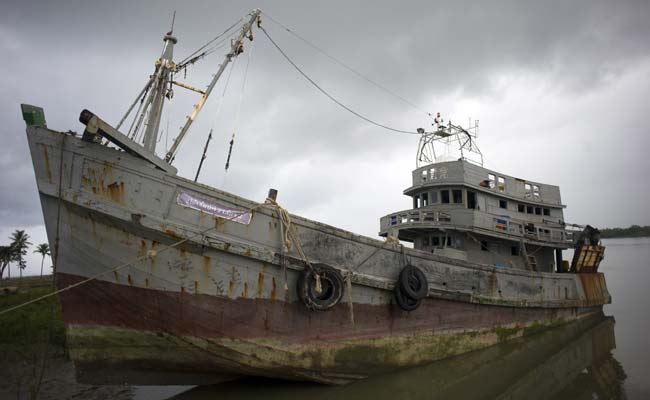
Forensic experts are using DNA matching to identify bodies from the Eastern Star ship disaster. As of Thursday morning, 342 bodies had been identified, but the forensic experts' work is far from a simple process.

One hundred and seventy specialized medical workers have been working around the clock to match DNA samples with those from the bodies.

The process is taking place in the DNA laboratories of the public security bureaus in the cities of Wuhan and Jingzhou, in central China's Hubei province.

The matching process needs DNA samples from both the victim and their direct family. Many of the families are in different places in China. For those who do not have direct family—or have only one direct family member—experts will try other methods to identify the bodies. In some cases, they will compare the victims' DNA to those collected from items of their daily use.

Eight provinces and cities, including Shanghai, Tianjin and Jiangsu, have begun to collect DNA samples from the victims' homes. And the public security bureaus will continue to work around the clock to identify every victim of the Eastern Star ship disaster.

Thursday 11 June 2015

http://www.ecns.cn/2015/06-11/168967.shtml

continue reading

Wednesday, 10 June 2015

Ghana: Bodies of Goil fire were not handled with dignity says former health chief


A former Director General of the Ghana Health Service (GHS), Professor Agyeman Badu Akosa has expressed disgust at the way the bodies of those who died in the fire at the Goil fuel station at the Kwame Nkrumah Circle were transported to the morgue.

He was of the view that a similar situation in other countries, especially in more developed countries, would have seen the bodies being wrapped in body bags.

“Anywhere else, all the bodies would have been put in body bags and the body bags would have been appropriately transported to the morgue.”

After last Wednesday’s floods and fire outbreak at the Goil Fuel Station, there were pictures and video footages of the dead bodies being put into the bucket of trucks and being transported to the morgues without any covering.

Prof. Badu Akosa told Citi News, the manner in which the bodies were handled was unprofessional and must not be repeated under any circumstances.

He explained that he was “very distressed the way their bodies were just hurled into the bucket of the pick-ups.”

According to him, it did not “in any way dignify the human beings who had lost their lives under such tragic circumstances. I think as a country, we can do better than that.”

Prof. Akosa pointed out that because the incident was a national catastrophe, “the first thing I would have thought that the morgues will do will be that if they do not have a cold room, they will embalm the bodies.”

“This is almost like a certificate of urgency so what you need to do is to preserve each body in as near the state in which it was brought to the morgue as possible even before relations are brought in to identify the bodies.”

He noted that the families of the victims are already apprehensive while getting into the morgue to identify their relatives “so if you expose more than one body to most people, they will not be actually looking at the body they have come to identify.”

“In most cases, you present the bodies in a manner that they can go from body to body to be able to identify.”

Wednesday 10 June 2015

http://www.ghanaweb.com/GhanaHomePage/NewsArchive/artikel.php?ID=361785

continue reading

Teams return to Mount Ontake to search for bodies, eight months on


Search teams returned to the peak of Mount Ontake on Wednesday for the first time in eight months to continue looking for the bodies of six hikers missing since the volcano erupted.

The disaster left 63 people dead or missing, bludgeoned by rocks and buried beneath scalding ash. Rescue work was called off last year when winter set in.

Around 50 people, including police, firefighters and volcanologists, began an exploratory ascent of the mountain in Nagano Prefecture with a view to resuming a full-scale search next month, after the conclusion of Japan’s annual rainy season.

The 3,067-meter peak was thronged with hikers viewing the region’s spectacular autumn colors when it burst unexpectedly to life on Sept. 27 last year.

It was Japan’s deadliest eruption in almost 90 years.

Dramatic mobile phone footage taken by survivors showed rocks raining down as clouds of ash engulfed people close to the summit.

Search and rescue teams last year trudged through thick, clay-like ash to recover 57 bodies in sometimes treacherous conditions, despite fears over toxic fumes and a possible further eruption.

The operation was suspended in October as autumn’s rains began to give way to snow, which soon made the peak impassable.

“There is a part of me that feels rather worried about what it is like up there,” said senior police officer Noriyuki Hayashi, of Nagano prefectural police, as the team prepared to ascend Mount Ontake. “But we will do what we can.”

The team observed a moment of silence below the mountain, which — even in the summer months of June — still has snow-covered ravines.

Aerial footage showed the searchers’ bright outerwear set against the gray lunar landscape of the ash-covered peak.

Ontake is one of scores of active volcanoes across the country, which sits on the so-called “Ring of Fire,” where a large proportion of the world’s quakes and eruptions are recorded.

Last month, authorities evacuated Kuchinoerabu Island, off the coast of Kyushu, when a volcano erupted there.

Autopsies on bodies recovered from Ontake last year revealed many of them died from injuries caused by flying rocks.

That led to a recommendation in March that people who climb Mount Fuji — also a volcano — should carry helmets and goggles with them.

Wednesday 10 June 2015

http://www.japantimes.co.jp/news/2015/06/10/national/teams-return-mount-ontake-search-bodies-eight-months/#.VXhmEM9Viko

continue reading

Forensic science in search of the ‘disappeared’


During Guatemala’s internal armed conflict (1960-1996) almost 200,000 people are thought to have been killed or 'disappeared' at the hands of repressive and violent regimes. Those lives matter. Their families’ demands are clear: they want to know what happened to their loved ones and they want their remains returned. They need truth and justice.

Guatemala’s method of uncovering human rights violations can help other post-conflict areas, says Fredy Peccerelli.

Using forensic sciences, the Forensic Anthropology Foundation of Guatemala (FAFG) is assisting families by returning their loved ones’ remains, promoting justice, and setting the historical record straight.

A multidisciplinary process

The FAFG is a civil-society scientific organisation that works to strengthen the judicial system and respect human rights by investigating, documenting and generally uncovering evidence of human rights violations — particularly massacres and enforced disappearances — from the conflict.

The FAFG team applies techniques drawn from criminology, forensic anthropology, forensic archaeology, forensic genetics and social anthropology in a multidisciplinary human identification system.

Our investigators explain the process to families and family organisations using presentations. We speak to them as equals and give them information so they can make decisions about their participation. If we gain their trust they will share information with us about the victim, the event, and family genealogy. We also ask the relatives to provide DNA reference samples. “The FAFG’s multidisciplinary methods and approach are transferable to other post-conflict countries and situations with missing people, such as migration or natural disasters.”

Archaeologists then locate the graves using witness testimony or archaeological field surveys for depressions and other signs of graves. They then excavate, document, and exhume the remains. The grave is treated as a crime scene, so a forensic archaeologist will record all the details, such as any associated artifacts and other evidence to help determine how people were restrained and killed. This can include metal fragments (usually ballistics), rope, cords tying hands and/or feet and neck, blindfolds and gags.

Forensic anthropologists then analyse the skeletal remains to establish the biological profile of the victim. They determine characteristics such as age, height and sex based on features such as tooth development in children and differences between male and female pelvic girdle. This examination also reveals other individualising characteristics such as whether the person had previously broken bones or recovered from a disease. Forensic anthropologists also investigate the cause of death.

As part of this process a small piece of bone is cut from the left femur or tooth, as studies have shown that DNA is best protected in these dense areas of the human skeleton. The sample is then brought to our lab for analysis.

At the lab forensic geneticists compare the genetic profile of the victim obtained from the bone sample to the genetic profile of the families. Both are stored and continuously compared in our National Genetic Database of Relatives and Victims of Enforced Disappearance.

We use all of the information gathered throughout the entire process to ensure the victim’s identity is returned with dignity and certainty, thereby reconnecting families.

Setting the record straight

The FAFG’s evidence supports findings by Guatemala’s Historical Clarification Commission, that most victims of the civil war were Maya indigenous people living in the rural highlands, including women and children.

In Guatemala City the ideals and dreams of academics, religious leaders, student leaders, unions, and other politically motivated individuals frightened the regimes. The state responded to this fear disproportionately, killing and massacring 160,000 people and ‘disappearing’ 40,000 — rupturing Guatemala’s social fabric and forever changing the future and geography of the country.

The objective, rigorous investigations conducted by the FAFG clarify the truth so that history is properly acknowledged and recorded. The physical evidence proves what happened, supports the testimonies of families, and can be used in a court of law to hold the intellectual authors and perpetrators of the crimes responsible more than three decades since their crimes were committed.

Justice beyond Guatemala

Apart from empowering families in Guatemala, the forensic work has provided prosecutors with evidence in other parts of the world too. For example, in Bosnia FAFG personnel helped with the exhumation and the forensic investigation process that provided evidence in four genocide trials in The Hague. FAFG personnel investigated and contributed to these trials to gain justice for the families, just as we are doing in Guatemala.

As funding priorities shift according to the international development priorities that are in fashion, transitional justice (the process of coming to terms with human rights abuses) must not be pushed off the funding table — it is currently transitioning off the agendas of major donors. Civil society organisations like FAFG, that conduct forensic investigations into human rights violations, provide concrete evidence of the brutality of the past and have a huge impact on the families affected.

The FAFG’s multidisciplinary methods and approach are transferable to other post-conflict countries and situations with missing people, such as migration or natural disasters. Local capacity must be built according to local legislation, and it must involve passionate and dedicated individuals because searching for the missing is a long-term process. Once started, the process must be sustained. The families will expect it, they deserve it, and they can be empowered by it.

We must continue to listen to the demands of family members because their lives and the lives of those disappeared and killed matter. We cannot move forward as long as the disappeared and missing remain undignified and unidentified in clandestine graves throughout Guatemala and the rest of the world.

Wednesday 10 June 2015

http://www.scidev.net/global/conflict/opinion/forensic-science-search-disappeared-guatemala-conflict.html

continue reading

Search for Bodies in Capsized Eastern Star Ship Search Ends: Identification of Victims Begins, Seach for 8 Missing People Continues in River


China has confirmed that 434 bodies have been found and eight are still missing from the Eastern Star cruise ship, which capsized on the Yangtze River following a tornado on the night of June 1. Officials have began identifying the victims and releasing their bodies to their relatives.

According to local sources, DNA identification and forensic analysis is being used to help identify the victims in order to have their bodies returned to their families. Experts have already collected DNA samples from the recovered bodies.

They also finished collecting blood samples from the victims' relatives who helped in their identification. Presently, up to 281 victims have been identified through their DNA, according to CCTV. On Tuesday, encoffiners in Jianli County began to hold encoffination ceremonies for the 434 victims of the Yangtze River accident, according to Xinhua.

Min Jianxion, associate counsel for China's Ministry of Public Security, said authorities will use different methods to to identify victims from their DNA if their immediate relatives are not available.

According to CRI English, one option is to dispatch people to the residences of the victims in order to collect DNA samples from their immediate relatives and match them with the bodies found.

Experts consider DNA sampling to be one of the most reliable ways of identifing a person. China reportedly has 145 DNA testing specialists divided into 21 groups, who are responsible for collecting and matching victims' DNA. Once matches are confirmed, the personal belongings of the victims will also be returned to their relatives.

Meanwhile, insurance companies have initiated a "green channel" so that relatives of the victims of the capsized Easter Star can speed up their claims.

China Insurance Regulatory Commission deputy chairman, Huang Hong, said insurance companies have been told to make the claiming process simpler and faster. Under normal circumstances, the death certificate or certificate of permanent residence de-registration of the insured person must be presented to forward claims, however, this step has reportedly been ignored. All they have to do now is get the certificate from the government before they can avail claims.

Meanwhile, Global Times reported that the Eastern Star will be moved from the site in order to allow divers to continue their search for the missing victims. The ship will be tugged 10km upstream in Jianli County. The search for the remaining eight people would reportedly be extended to approximately 1300 km along the Yangtze River, where the Eastern Star ship capsized while going downstream to Shanghai's Wusong Estuary.

Wednesday 10 June 2015

http://www.chinatopix.com/articles/53162/20150610/china-confirms-434-dead-eight-missing-in-capsized-ship.htm

continue reading

Families of quake victims must wait two weeks for DNA confirmation


The families of two Singaporean victims killed in last week’s earthquake must wait another two weeks for DNA confirmation before they will be allowed to take the bodies home.

Despite positive identification by the police, Queen Elizabeth Hospital director Dr Heric Corray said that the hospital is running DNA tests based on samples and data received from the families for final confirmation before they can release the bodies.

“We feel that DNA testing is required to be able to ascertain the bodies. This will be the final confirmation,” he said to reporters here today.

Yesterday, Prime Minister Datuk Seri Najib Razak said one victim’s family was in Kota Kinabalu to give a DNA sample while the other family had sent DNA data through e-mail and forensic experts are working round-the-clock to identify the remains.

Earlier today, Sabah police commissioner Datuk Jalaluddin Abdul Rahman said that body parts found on Mount Kinabalu were identified to be those of 13-year-old student Navdeep Singh Jaryal and 35-year-old teacher Mohammad Ghazi Mohamed from Tanjong Katong Primary School.

He said Malaysian police worked with its Singaporean counterpart to identify several body parts including arms, legs and torso picked up from the mountain summit using a disaster victim identification guide.

Meanwhile, Dr Corray said all the bodies have been claimed except for the family of the Japanese national who were likely to be arranging logistics to transport the body back following post mortem today.

“His body is still with us and we are just waiting for his family to take it. The last one was to the family of the Chinese national, who came here today,” he said.

The death toll from the magnitude 5.9 earthquake is now officially at 18, including six Malaysians, 10 Singaporeans and one Chinese and Japanese national each.

The deaths were caused by blunt trauma or injuries sustained from falling or being hit by a hard object, believed to be when the victim, who were climbing Mount Kinabalu, got hit by falling rubble from the quake.

The earthquake, some 16km northwest of the town of Ranau and in Kinabalu Park, is the largest to have hit Malaysia.

Wednesday 10 June 2015

http://www.themalaymailonline.com/malaysia/article/families-of-quake-victims-must-wait-two-weeks-for-dna-confirmation#

continue reading

Ghana: Govt directs DNA tests for unidentified flood/fire disaster victims


Government has authorised the testing of DNA samples on bodies of last Wednesday’s flood and fire disaster at the Kwame Nkrumah Circle in Accra.

Speaking at the one week memorial service for the victims held at the forecourt of the State House, President Mahama said several bodies have still not been identified and a DNA test will help family members claim their relatives for the necessary funeral rites.

He said, “In due course each of the names will be released to the public to ensure that these individuals will be remembered eternally. We are still in the process of identifying the dead. To that end government has given authorization for DNA tests to be conducted on the bodies from the disaster that have not yet been identified.”

He added that “This will allow families that are unsure of the fate of their members and who are still not accounted for to be able to bring DNA samples so confirmation can be made. With this official confirmation, claims can be quickly granted for the return of their loved ones’ remains.”

He said, "We will intensify our efforts to ease the suffering of those whose lives have been affected."

The President has also asked relatives to visit the Korle-Bu Teaching Hospital, 37 Military Hospital and the Police Hospital to seek guidance on how to go about this.

He also revealed that the official death toll from the twin disaster stands at 152 contrary to reports by sections of the media that over 200 hundred people perished in the disaster.

"Our search and rescue is over and our provisional death toll from the disaster is 152," he said.

Over 150 people lost their lives in a GOIL fuel station explosion at the Kwame Nkrumah Circle in Accra after long hours of a heavy downpour which also flooded the city.

The inter-faith, inter-denominational National Memorial Service will be held at the forecourt of the State House.

Wednesday 10 June 2015

http://pulse.com.gh/news/accra-twin-disaster-govt-directs-dna-test-for-unidentified-flood-fire-victims-id3849548.html

continue reading

Tuesday, 9 June 2015

17 killed in Peru bus fall


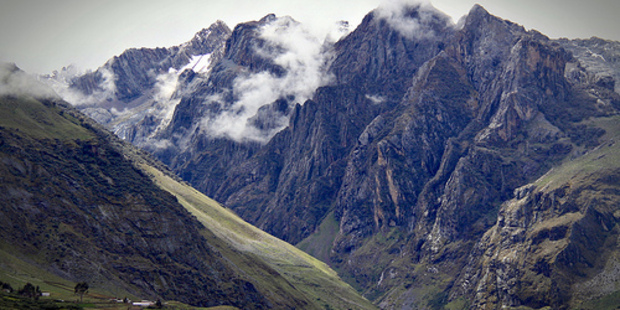
A truck carrying schoolchildren home from a parade has fallen into a ravine in Peru’s Andes Mountains, killing 17 people and injuring 33, authorities said.

Five of the injured are in “grave condition” after the accident near the remote community of Cahuac, 160 miles north east of the capital, Lima, said hospital director Rosa Pascual.

Fifteen of the dead were pupils aged nine to 15.

The truck was returning from a flag day parade when it fell about 1,000ft into the ravine, said Huanuco governor Ruben Alva.

School director Yonel Espinoza said the children decided to get in the back of the truck because they wanted to avoid the 90-minute walk from the parade site back to Cahuac, where they lived.

Peru’s transport system is plagued by old vehicles and poor roads, often through mountainous regions, contributing to a high accident rate. According to the transport minister, 3,110 people died in road accidents in Peru in 2013.

Tuesday 9 June 2015

http://www.irishexaminer.com/breakingnews/world/17-mostly-children-killed-in-peru-bus-fall-680765.html

continue reading

Rohingya expert: Dozens of corpses wash to shore in Myanmar


Dozens of corpses have washed to shore in Myanmar's western state of Rakhine in the last month, an advocacy group and villagers said Wednesday. Some were believed to be Rohingya Muslims trying to escape trafficking ships, while others were Bangladeshi.

Ye Htut, the presidential spokesman, and other officials were in meetings and could not immediately be reached for comment.

Rakhine State Minister Maung Maung Ohn had no word on the bodies but his office was checking into the report.

At least 47 bodies washed up on beaches and the mouths of rivers May 12-24, many so badly decomposed they were unrecognizable, said Chris Lewa of the Arakan Project, which has been monitoring activities in the isolated, northern tip of Rakhine for more than a decade.

Lewa — who provided a village-by-village breakdown and the dates each corpse was found — believes they drowned while trying to swim to shore.

Religious leader Ashu Dular and other residents in two villages contacted by The Associated Press by phone gave similar accounts, together tallying at least 18 corpses in a much less complete survey.

Myanmar has denied blame for a humanitarian crisis that has gripped Southeast Asia since early May, with more than 4,600 desperate and hungry boat people rescued in five countries after a massive, regional crackdown on human trafficking prompted some captains to abandon their human cargo at sea.

The United Nations says around half those brought to land have been Rohingya, fleeing violence and discrimination in their predominantly Buddhist country; the remainder, it says, are Bangladeshis, escaping poverty.

Myanmar, which denies the existence of the Rohingya, insists all those who have fled by boat in recent months were Bangladeshi. The government has gone to great lengths to make sure it is not disproven — at least not on its own soil.

Its Navy detained journalists, including the AP, over the weekend, erasing their camera memory cards, when they were trying to confirm the nationalities of 727 migrants on a boat hidden away for days near a remote island.

The ship was being towed Wednesday to northern Rakhine.

And late last month, Myanmar's government claimed a ship with more than 200 migrants — all Bangladeshis — had been recovered. But many more Rohingya were taken off the ship and brought to shore under the cover of darkness before they landed, said Araf, a 26-year-old woman, who was among those who said she was forced to disembark with her five children. Others in Sittwe, the state capital, had similar accounts.

For months, ships crammed with hundreds of migrants stayed in the Bay of Bengal, hoping to leave after the security crackdown eased. That didn't happen and conditions on board deteriorated, recent escapees complaining they were getting almost nothing to eat and were badly beaten if they made any noise. Some bought their freedom with help from family and friends, paying hundreds of dollars.

"In some cases, brokers started using fishing boats to bring a few people to shore," said Lewa. "But they were afraid to come too close and dropped them as near to the coast as they could."

Her team saw bodies on beaches and in the mouth of a tiny river along Rakhine's northern tip. Many were believed to be Bangladeshis, dropped off in Myanmar because they felt it was not safe to disembark in their own country during a high alert, she said.

Of the 47 bodies found, 15 corpses washed up in Alei Than Kyaw; 14 in Oo Daung River; 11 in Tha Pyay Taw; six in Tha Ya Kone and one in Myinn Hlut, the Arakan Project said.

Tuesday 9 June 2015

http://news.yahoo.com/rohingya-expert-dozens-corpses-wash-shore-myanmar-103910963.html?utm_content=buffer7fefb&utm_medium=social&utm_source=twitter.com&utm_campaign=buffer

continue reading

Wooden crosses in the Donetsk steppe: volunteers search for bodies of victims


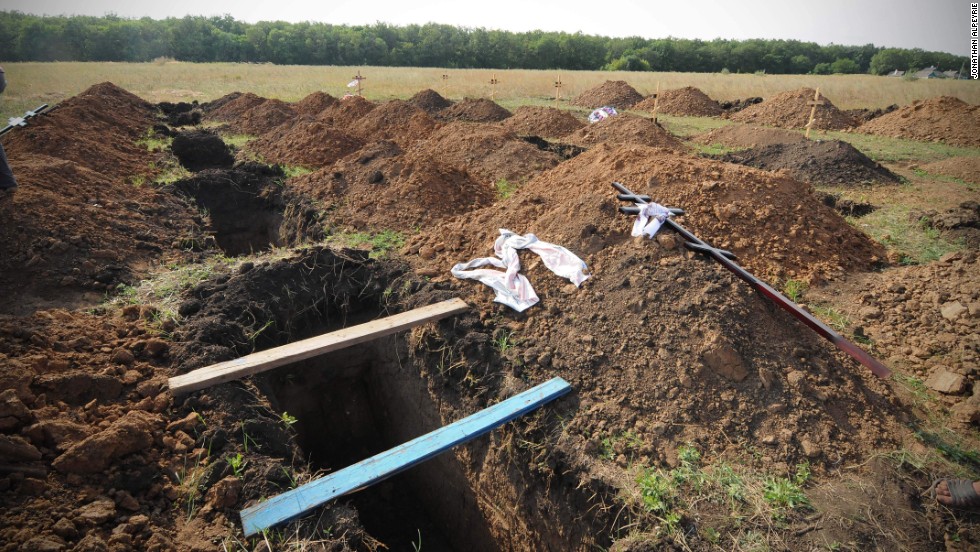
In the midst of the Donetsk steppe on the mountain stands a wooden cross. Is similar, only much more put on the roads of Ukraine As amulets. On the cross hangs a soldier helmet plywood plate below the faded marker inscription: "Here lie four Ukrainian warriors, which finished it off, then set fire to their And dumped near the road. Buried fifteen. 09. 2014 ".

"Here the locals buried the soldiers of the Ukrainian army. Like the river found them, close to the road, after the battle, " says Victor Fly, the Deputy head of the Union of Afghanistan veterans of Lugansk region.

This organization together with the people's militia LNR AND Ukrainian volunteers of the humanitarian mission "Black Tulip" are engaged in the search, exhumation And transfer of the Kiev bodies of soldiers of the armed forces. Watching all the Commissioners of the OSCE.

"Here are four lies below another. Believe me, this is only a small proportion of all burials, which we send data. We have a lot of bodies are Not even Buried. Parts are collected in the fields, in the debaltseve area, for example", says Victor.

And this cross, And a helmet, And ubiquitous grasshoppers, And all This bathed in afternoon sun Prairie, As if merged. The peace And quiet." As if there is war, " I freeze.

"Don't relax - and chuckled low rebel in a dark green camouflage - you see at the bottom of the river?(Five hundred meters from us flows the Seversky Donets river). It is already the Ukrainian district, snipers, probably in the bushes sat down, holding us at gunpoint ".

"Oh, don't bother with us W OSCE! And volunteers over theirs. Won't shoot.

Tuesday 9 June 2015

http://news.rin.ru/eng/news///113649/

continue reading

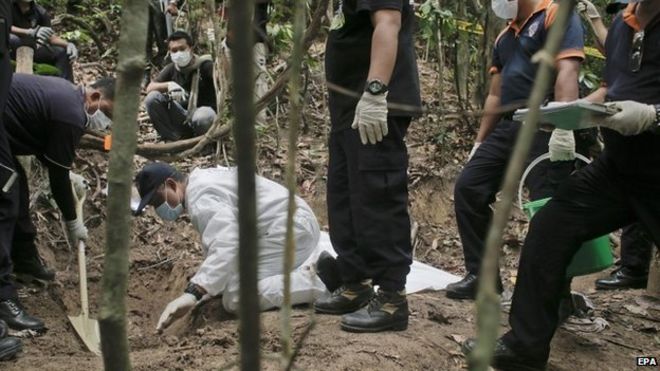
Ops to exhume human trafficking mass graves ends today, 106 bodies found


Operations to exhume and remove the skeletal remains of victims of human trafficking that began on May 25 came to an end today.

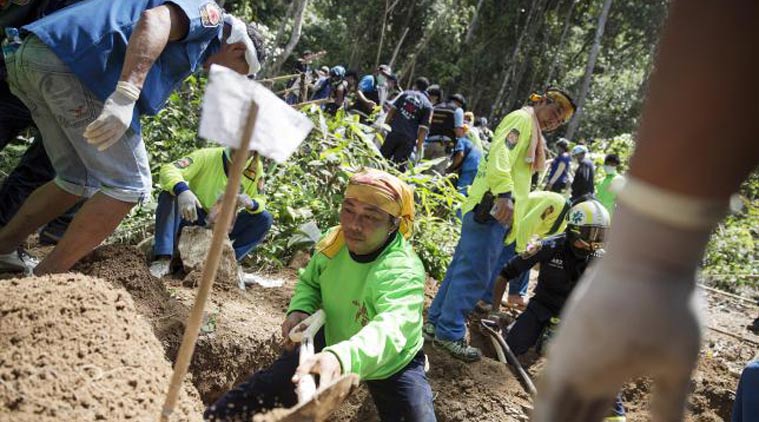
Malaysian police said seven more shrouded bodies were found in seven graves at Bukit Genting Perah around 2.10pm and were brought down at 5.55pm today via Felcra Lubuk Sireh.

The latest findings bring the total number of bodies found to date to 106.

“With the latest discovery, operations to exhume the remains carried out by the police comprising forensic experts, the criminal investigation department and the General Operations Force came to an end today,” the police said in a statement here today.

Yesterday, 31 graves were discovered but only 30 skeletal remains were found (one grave was empty). The remains were removed from the site of the graves at Bukit Genting Perah via Felcra Lubuk Sireh.

On June 5, 14 shrouded skeletal remains were exhumed from 12 graves (two graves had remains of two people) in the forest reserve of Mata Air and yesterday 20 shrouded remains were found in 20 graves at the same site.

Prior to that 35 corpses and human skeletons were removed from Bukit Wang Burma.

Tuesday 9 June 2015

http://www.themalaymailonline.com/malaysia/article/ops-to-exhume-remains-of-human-trafficking-ends-today

continue reading

Fog disrupts the search operation at Mt Kinabalu


The operation to locate two Singaporeans listed as missing at Mt Kinabalu following Friday's earthquake that hit Ranau has to be temporarily put on hold due to foggy conditions.

Ranau Police Chief Deputy Superintendent DSP Farhan Lee Abdullah called off the mission at about 5.30pm on Monday.

He said DNA tests on body parts believed to belong to the two missing would be speeded up to bring some closure to the search and rescue effort.

"As of today, the number of deaths still remains at 16," he told reporters, here.

Farhan also said 12 bodies have so far been claimed by family members.

Sabah is also considering the possibility of only allowing children aged above 15 years to climb Mount Kinabalu in the wake of the death of six children in Friday's quake.

State education director Jame Alip said he had spoken about the matter to state Tourism, Culture and Environment Minister Masidi Manjun, who is also the state executive councillor in charge of education.

Meantime Malaysian authorities have received DNA from families of the two Singaporeans missing. The DNA samples were taken from one of the families in Kota Kinabalu, and information on the other was received via email. Defence Minister Hishammuddin Hussein said the process of DNA matching will take time. In the meantime, the search and rescue operation will continue, until the DNA matching is done and victims are identified.

On Sunday, Sabah Tourism, Culture and Environment Minister Datuk Seri Masidi Manjun told reporters that 16 bodies had been recovered while two people were still classified as missing until post-mortem examinations were completed.

Those confirmed killed as a result of the 5.9-magnitude quake, that also rocked Southeast Asia's highest peak, were six Malaysians, seven Singaporeans, a Filipino, a Chinese national and a Japanese national. The two missing Singaporeans are a teacher and a pupil.

In Kota Kinabalu, several family members were seen waiting in a special room at the Queen Elizabeth Hospital where identification and post-mortem examinations were being conducted on the remains brought there.

Tuesday 9 June 2015

http://www.dailyexpress.com.my/news.cfm?NewsID=100423

http://www.channelnewsasia.com/news/singapore/search-for-two-missing/1902186.html

continue reading

204 bodies from Eastern Star identified by DNA matching


Ten days have passed since a tornado upturned the Eastern Star cruise ship. With two more bodies found, eight passengers are still missing and the death toll has reached 434.

The search mission inside the ship has been completed. The focus of the search has now turned to the river bottom, especially among the huge rocks underwater. Police are also searching along the river's downstream.

More than 140 forensic experts are identifying the dead through DNA testing and arranging funeral services. Officials say more than 200 bodies have been identified by DNA matching. Authorities have started to hand over the bodies to their family members.


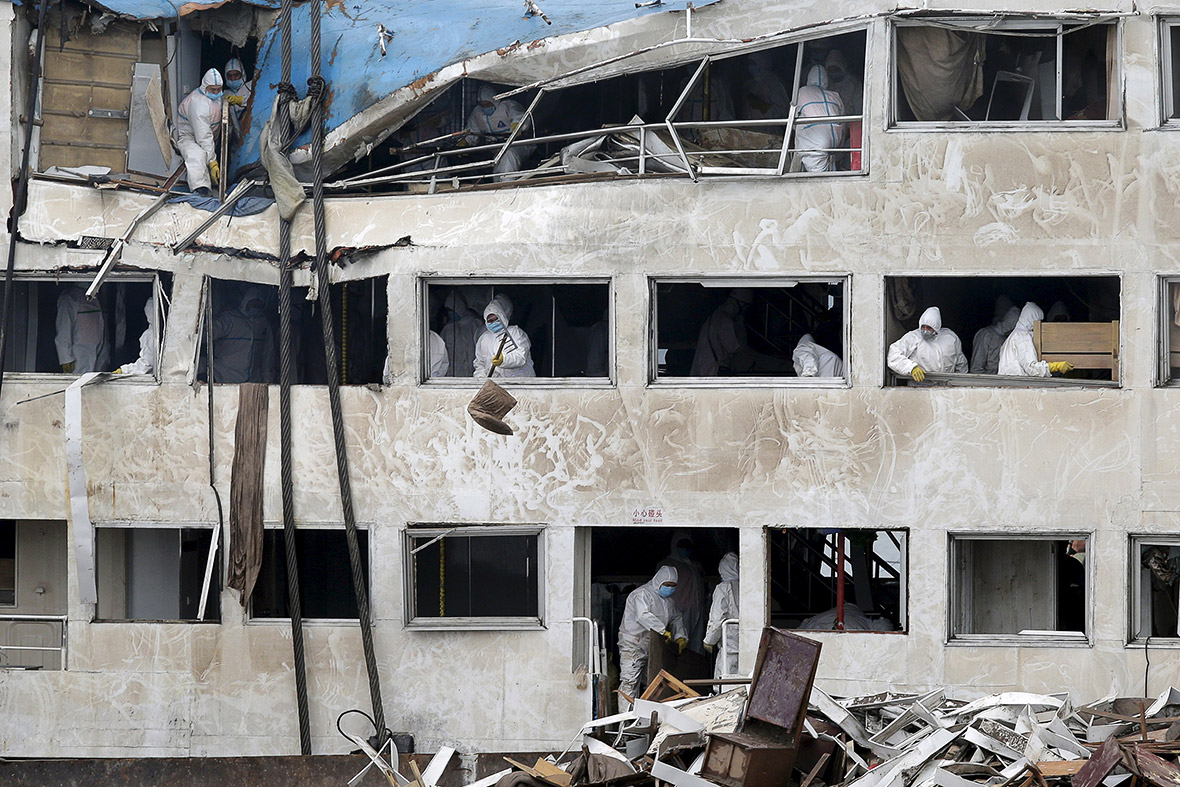
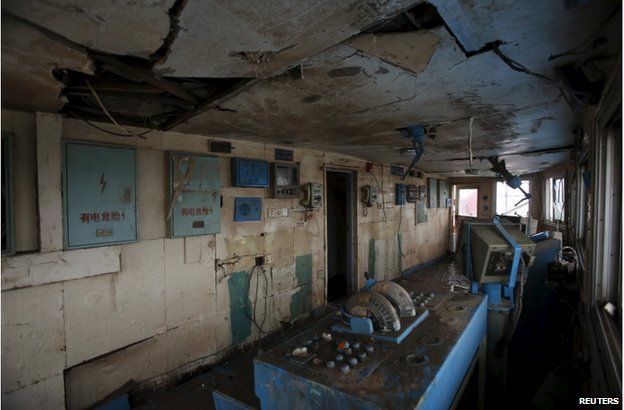
Video footage reveals the devastation inside the cruise ship in China which capsized in a freak storm on the Yangtze river last week. Rescue teams use circular saws to cut through muddy mangled metal in the hull as passengers' personal belongings lie strewn around. They are continuing with a detailed search of the ship.

Tuesday 9 June 2015

http://english.cntv.cn/2015/06/09/VIDE1433816761417446.shtml

http://www.theguardian.com/world/video/2015/jun/08/china-devastation-inside-capsized-yangtze-cruise-ship-video

continue reading

Monday, 8 June 2015

Remains of human limb found in Kedarnath two years after tragedy


Skeletal remains of a human foot were found lying under a heap of rubble in a structure close to Kedarnath temple nearly two years after a catastrophic deluge hit the shrine and other parts of Uttarakhand in June 2013 leaving a trail of death and devastation.

The remains of a human foot were sighted on Saturday as some locals were clearing debris from a structure in a narrow bylane about 50 metres from the Himalayan shrine, Rudraprayag Superintendent of Police Barinderjit Singh told.

The remains of the human limb were cremated after conducting necessary formalities like DNA sampling and panchnama the same day, he said.

However, the official said that there was nothing curious about skeletal remains still being found from the area despite several combing operations conducted there in search of bodies since the tragedy.

"The remains of over six hundred persons that have been cremated in Kedar valley so far were the ones found on the surface. "We are yet to remove 50-60 feet of rubble lying in the area surrounding the shrine and it wouldn't be surprising if we come upon something lying underneath," Singh said.

Entire floor of buildings is lying underneath the debris. Now that locals have been permitted to remove the debris from the structures, the possibility of something or the other being found cannot be ruled out, he said.

Monday 8 June 2015

http://www.ibnlive.com/news/india/remains-of-human-limb-found-in-kedarnath-two-years-after-tragedy-1003377.html

continue reading

23 bodies of Nepal quake victims still unidentified

Altogether 23 dead bodies still remain unclaimed at the Tribhuvan University Teaching Hospital (TUTH) in Maharajgunj awaiting identification even five weeks after the April 25 Great Earthquake.

Eight of the bodies are appendages and other body parts while the rest are whole body, according to the Nepal Police. Deputy Inspector General Kamal Singh Bam, spokesperson of Nepal Police, said all the bodies that could not be identified in the districts have been brought to the TUTH.

“Although we have put the details of the dead bodies that still remain unclaimed and unidentified on our website and trying to reach to as many people as possible, the effort seems to be of little or no avail,” said DIGBam. He said the Nepal Police has also formed a special team comprising of forensic experts to help with the body identification process.

Monday 8 June 2015

http://www.ekantipur.com/2015/06/08/capital/23-bodies-of-quake-victims-still-unidentified/406270.html

continue reading

55 more bodies pulled out in quake-hit Nepal


As many as 55 bodies, including of four foreigners, were recovered by the Nepal Army and villagers in a joint effort in Nepal's Langtang valley on Saturday and Sunday, police here said.

According to Deputy Superintendent of Police Pravin Pokhrel, the rescue teams of Nepal Army in coordination with local residents recovered 55 human skeletons from the village.

As many as 128 people were rescued from the village during the first phase of the rescue operation after the disaster.

Residents in Langtang area, in Rasuwa district and famous for trekking, said over 190 people were reported missing following the massive avalanche which swept away the entire village in the wake of the powerful April 25 quake that hit Rasuwa district.

Rasuwa was one of the worst hit districts in the quake, where 597 people died and 771 were injured. The worst-hit area was Langtang trekking area, one of the busiest and most admired trekking routes in Nepal.

Rasuwa district authorities have imposed a ban on travel to Langtang area, fearing landslide and avalanche. It was reopened on Wednesday following residents' demand to visit their habitation areas to search for their kin and other relatives.

The missing people include 10 Nepal Army personnel, according to Nepal Army's Laxman Thapa of Narayan Battalion posted in the area.

Officials said the search started late, as the area was cut off by road and the weather was inclement.

Search continues for scores of other villagers and tourists presumed to be missing in the region, according to the District Administration Office (DAO), Rasuwa.

A deadly avalanche set off by the devastating earthquake had wreaked havoc in the Langtang valley, a major tourist destination in the country, displacing the entire village and leaving hundreds killed.

After the killer avalanche, the local administration has shifted all 488 survivors and those affected to Kathmandu.

Residents said that along with 70 villagers, 40 tourist guides and porters, 190 people had been reported missing.

Monday 8 June 2015

http://www.business-standard.com/article/news-ians/55-more-bodies-pulled-out-in-quake-hit-nepal-115060700583_1.html

continue reading

Malaysia quake death toll reaches 16, search for bodies continues


Malaysian authorities said on Sunday 16 bodies had been recovered from the country's highest peak Mount Kinabalu after a magnitude 6 earthquake caused landslides and aftershocks.

The victims were 6 Malaysians, one from the Philippines, China and Japan, and 7 Singaporeans, including children who were on a school trekking trip.

Minister for Tourism, Culture and Environment Masidi Manjun told reporters in Kinabalu park that two people were listed as missing and that body parts had been found.

The search and rescue operations would continue on Monday, Manjun said.

Some climbers managed to make it down but more than 130 from 16 countries had been stranded on the mountain on Borneo island when the quake struck on Friday.

Rescue and recovery operations have been hampered by rubble and thick clouds which prevented helicopters from quickly retrieving the bodies.

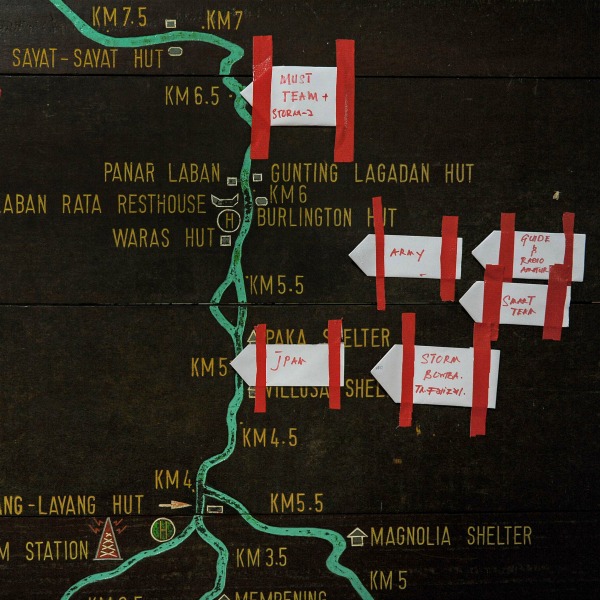
"KM6.5 of the route was dubbed "river of stones" when earthquake struck early Friday which rendered the track impassable, trapping climbers," Manjun said on Twitter.

In Singapore, the prime minister's office said the children caught in the quake were from Tanjong Katong primary school.

Prime Minister Lee Hsien Loong declared June 8 a day of national mourning.

"State flags on all government buildings will be flown at half-mast," the prime minister said in a Facebook posting.

Malaysia's Deputy Prime Minister Muhyiddin Yassin said the country needed its own earthquake monitoring centre.

"In the latest incident, no one issued any warning. It may happen again and we do not have a department responsible to monitor impending disasters here," state news agency Bernama quoted him as saying at the Kinabalu site on Sunday.

The US Geological Survey said the epicentre of the quake was about 54 km (33 miles) from the state capital of Kota Kinabalu.

Monday 8 June 2015

http://www.dnaindia.com/world/report-malaysia-quake-death-toll-reaches-16-search-for-bodies-continues-2093321

continue reading

China completes DNA collection to identify ship dead


China has completed the DNA collection needed to identify the 432 bodies recovered so far from last week's deadly Yangtze boat disaster.

The Eastern Star, mostly carrying elderly tourists, capsized on 1 June near Jianli in Hubei province.

Just 14 of the 456 passengers and crew are known to have survived.

A search is continuing for eight people who remain missing. Authorities have extended the search area to 1,000km (621 miles) downriver. The sinking was the worst maritime disaster China has seen in decades.

DNA matching

Authorities are now planning to collect DNA from family members for matching purposes.

A spokesman for China's public security ministry, Min Jianxiong, told reporters that they expect to finish matching the DNA within the next few days, and added that a number of victims had already been identified.

Meanwhile authorities have begun cremating victims so that they can return their ashes to their families for burial, as per Chinese custom.

The BBC's Celia Hatton in Beijing says activity has moved from the hollow shell of the capsized cruise ship to a nearby morgue.

Relatives were seen weeping as they arrived at the morgue in Jianli to have one last look at their loved ones before cremation, AP reported.

On Sunday - a week after the disaster took place - many congregated by the shore of the Yangtze to hold mourning ceremonies.

Meanwhile new pictures emerged of the interior of the Eastern Star - known as Dongfangzhixing in Chinese - which was pulled upright on Friday for search operations over the weekend.

Searchers said rooms were "severely ruined" and strewn with debris.

The top floor was crushed and rescuers had to break into rooms using chainsaws, according to Reuters news agency.

Our correspondent says questions still linger as to how the massive ship sank in just a few minutes, without anyone issuing a distress call.

Some in the Chinese state media argue that modifications to the ship's interior made it more difficult for those on board to escape in an emergency.

Others point to the possibility of human error and have questioned the decision to continue sailing in rough weather.

The Chinese authorities arrested the ship's captain and chief engineer, who were among the survivors, but they have not announced plans for a criminal inquiry into the disaster.

The cause of the sinking is not yet known, but survivors have spoken of an intense storm which flipped the boat over in minutes.

Monday 8 June 2015

http://www.bbc.co.uk/news/world-asia-china-33044963

continue reading

Saturday, 6 June 2015

Nepal says civilians were on crashed US copter, toll now 13


A U.S. military helicopter that crashed in Nepal last month on an earthquake relief mission was carrying five more passengers than first thought, raising the death toll to 13, Nepal's army said Friday.

Authorities initially said six U.S. Marines and two Nepalese soldiers were killed.

According to Army Spokesperson Brigadier General Jadish Chandra Pokharel, the confirmation was made after matching the DNA samples of the deceased family with the samples of their family members. The Army had collected the DNA samples of the relatives of the missing locals last week. The search for the five people was started only after they could not be found at any hospital in Kathmandu even 13 days after they were airlifted from the district. “We are preparing to hand over the bodies to the family members,” Pokhrel said. The body of Lieutenant Tapendra Rawal was handed over to his family in Dailekh where his last rites were performed last week. The body of Warrant Officer Basant Bahadur Titara will also been handed over to his family soon, according to the Army. The US Embassy in Nepal said that Nepali and US armies have been coordinating on the identification of the remains of the five civilians who lost their lives in the crash. “We offer heartfelt condolences to all those who lost their lives in this tragic accident,” said Susan Parker-Jones, director of Public Affairs at the Embassy. The UH-1 "Huey" helicopter crashed May 12 in the northeastern mountains, and the wreckage was found after days of intense searching. The first three charred bodies were retrieved by Nepalese and U.S. military teams, and the rest were found a day later.

The U.S. relief mission was deployed after a magnitude-7.8 earthquake hit Nepal on April 25. A magnitude-7.3 quake struck on May 12 and hours later the helicopter crashed.

Four of the Marines were part of the Marine Light Attack Helicopter Squadron 469 of the 3rd Marine Aircraft Wing based at Camp Pendleton near San Diego, California. Two other Marines were combat cameramen based in Japan.

The cause of the crash has not been determined. U.S. military officials have said that an Indian helicopter in the air nearby heard radio chatter from the Huey about a possible fuel problem.

Earlier this week, a private helicopter chartered by Doctors Without Borders crashed after hitting power cables, killing all four people on board. Three victims were Nepalese and the other was a Dutch woman.

The government and aid agencies have used helicopters to carry relief materials to mountainous regions where earthquake damage or the lack of existing roads has made delivery of aid all but impossible.

The two earthquakes have killed more than 8,700 people, injured thousands and destroyed many buildings. Saturday 6 June 2015

http://www.aol.com/article/2015/06/05/nepal-says-civilians-were-on-crashed-us-copter-toll-now-13/21191888/

continue reading

11 dead, 8 missing on Malaysian peak after earthquake of 6.0 magnitude


The strong earthquake that jolted Malaysia's Mount Kinabalu left at least 11 people dead and another eight missing on Southeast Asia's highest peak, a government official said on Saturday.

"As at noon time, 11 bodies have been recovered (2 identified) and eight people are still missing," Masidi Manjun, the tourism minister for the Malaysian state of Sabah on Borneo island, said on his Twitter feed.

The 6.0-magnitude quake struck near the picturesque mountain, a popular tourist destination, on Friday, sending landslides and huge granite boulders tumbling down from the 4,095-metre peak's wide, jagged crown.

The quake was centered northwest of Ranau district in Sabah state on Borneo at a depth of 54 kilometers (34 miles), Malaysia's meteorological department said.

Local media said rescuers recovered two bodies from 4,095-meter Mount Kinabalu believed to be of a local guide and a 12-year-old female Singaporean student.

Sabah police chief Jalaluddin Abdul Rahman confirmed two fatalities but couldn't give further details. Sabah Parks director Jamili Nais said several injured climbers had been brought down the mountain.

Most of the 137 stranded people were cautiously trying to descend with the help of park rangers and guides, and some were expected to reach the base camp by early Saturday, he said. Some were foreigners, but it wasn't clear how many.

The climbing route was apparently blocked or made dangerous by rocks and boulders loosened by the quake and small aftershocks, Jamili said.

Helicopters were unable to land because of bad weather and the high altitude, he said. The quake damaged roads and buildings, including schools and a hospital on Sabah's west coast.

Saturday 6 June 2015

http://www.dnaindia.com/world/report-11-dead-8-missing-on-malaysian-peak-after-earthquake-of-60-magnitude-2092875

continue reading

Ghana: 28 days to claim bodies of floods, GOIL fire victims


Families of persons who died as a result of last Wednesday’s flood and the fire at the GOIL fuel station have up to July 2, 2015 to claim the bodies.

According to the Manager of the Korle-Bu Mortuary Department, Mr George Denkyi, the law permitted unidentified bodies to be buried within 28 days of being received at the morgue.

In effect, bodies at other public health facilities will be affected by this ultimatum.

He explained that a mass burial would be held for the unclaimed bodies after July 3, 2015.

“Postmortem examination will be performed on the bodies to find the cause of death. The unclaimed ones would then be buried in a mass grave after the July 2 deadline,” Mr Denkyi told the Daily Graphic in Accra yesterday.

Meanwhile, the remains of 64 people who died as a result of floods and the fire outbreak at a GOIL fuel station at Kwame Nkrumah Circle in Accra have been identified.

More than 150 people have been killed by the floods and fire that occurred on Wednesday, June 3, 2015 in some parts of Accra.

The 37 Military Hospital has received 65 victims and out of that number, 32 have been identified, but two are charred beyond recognition. Four persons are currently receiving treatment at the Intensive Care Unit (IOU).

“There are 65 bodies in our morgue right now. They are 22 females and 43 males while 22 people are currently on admission. A male child is among those admitted.

Sources at the various health centres disclosed these figures to the Daily Graphic in Accra and said that the public was welcome to identify either the deceased or injured persons.

Fifty-seven bodies are in the Police Hospital morgue. Families have managed to identify 30 bodies at the time of going to press yesterday. The Korle-Bu Teaching Hospital received 11 bodies. Six of the deaths were flood-related.

The heavy downpour recorded in some parts of Accra left in its wake death and misery as some persons are still unaccounted for.

Scores of family members have been trooping to various health centres in search of their missing relatives.

At the time of going to press yesterday, devastated Ghanaians were moving from one hospital to another in search of either bodies or family members receiving treatment.

Some found their relatives alive and badly injured, while others have either managed to identify their dead relatives or could not identify them due to the devastating effects of the fire outbreak on their bodies.

There was a sad spectacle at the 37 Military Hospital in Accra yesterday as scores of people were in misery as a result of their inability to locate their missing relatives.

Hospital authorities have made arrangements for the general public to view and identify deceased persons and those on admission.

Troubled family members who spoke to the Daily Graphic indicated they had been to the major hospitals in Accra but were yet to locate their missing relatives.

Saturday 6 June 2015

http://www.ghanaweb.com/GhanaHomePage/NewsArchive/artikel.php?ID=361225

continue reading

Accra floods and fire disaster: Identification of the dead begins


Relatives and friends of people who died in the flood and fire disaster at the Kwame Nkrumah Circle have trooped to various hospitals in Accra to identify their loved ones.

According to reports, there are long queues at 37 Military hospital and Police hospital in Accra as relatives make desperate attempt to find missing relations nearly 48 hours after the incident.

Joy News’ Kwakye Afreh-Nuamah who went to the military hospital reported that most people could not identify their loved ones at the morgue.

“Most of the bodies have been reduced to ashes so only a DNA test will help family members identify their corpse,” he noted.

A distraught man whose sister reportedly drowned in the flood said all efforts to identify the body have proven futile.

He said his late sister who works at the Ministry of Education was going home in a pickup vehicle which was carried away by the floods.

Another man who spoke to Joy News said his friend was part of those who got burnt at the Goil filing station but he has not been able to identify the body.

126 dead bodies from Filling Station disaster sent to three hospitals

The Korle Bu Teaching Hospital, the 37th Military and the Police Hospitals have so far received 126 dead bodies from the Wednesday, June 3, Goil Fuel Filling Station disaster at Kwame Nkrumah Circle in Accra.

The breakdown at the various hospitals is as follows: Korle Bu Teaching Hospital, 3; the 37th Military Hospital, 66; and the Police Hospital, 57.

Mr Mustapha Salifu, the Head of the Public Relations Department of the Korle Bu Teaching Hospital in an interview with the Ghana News Agency, said 15 victims of the disaster were brought to the hospital of which three died through their injuries.

He said six were treated and discharged while another six are on admission; of which four are in critical condition.

He said one of the four in a critical state is yet to be identified.

At the 37th Military Hospital, Major Evelyn Ntiamoah Asamoah, Deputy Director, Public Relations in-charge of Protocol, said the Hospital recorded 46 admissions.

She said 17 persons have been treated and discharged, while 29 are on admission, with four in the intensive care unit.

Police Corporal Faustina Afia Nunekpeku, Public Relations Coordinator, Police Hospital, said the corpses comprised 31 men, 21 women and five children.

She said so far 30 bodies have been identified.

Cpl Nunekpeku said five people are on admission, while five others have been treated and discharged.

Saturday 6 June 2015

http://www.spyghana.com/126-dead-bodies-from-filling-station-disaster-sent-to-three-hospitals/

http://www.ghanaweb.com/GhanaHomePage/NewsArchive/artikel.php?ID=361097

continue reading

Stricken Chinese cruise ship lifted from Yangtze River; hundreds of bodies recovered


The death toll from China ferry disaster has risen to almost 400, making it China’s worst maritime disaster in more than 60 years.

The Eastern Star Cruise ship that capsized and plunged to the bottom of the riverbed during a storm on the River Yangtze on Monday.

Authorities said Saturday afternoon that after working through the night, they had recovered a total of 396 corpses and their search of the vessel was now complete. Fourteen people survived Monday night’s tragedy, and 46 people remain unaccounted for. Only six of the 396 recovered bodies were found outside the ship.

Yesterday a rescue operation managed to stabilise the boat and turn it upright. Hundreds more bodies were discovered by divers last night.

As soldiers and other personnel worked through the night wearing white hazmat suits and life jackets, searching with flashlights, they said they encountered hallways jammed with furniture and other debris. At times, the stench inside the ship was overpowering and many bodies were swollen, stiff or decomposed. Locked cabin doors and rooms filled with mud and silt also hampered the recovery work, and firefighters were called in at times to clear passageways.

More than 700 troops were tasked with removing the victims; a team of six was assigned to each body. Because the Eastern Star overturned in a remote area, the bodies had to be carried more than two miles to the closest road, then transported in vehicles to the mortuary in Jianli, a small agricultural town.

“When we entered the cabins, we all felt overcome by emotion,” said Zeng Xianmei, chief nurse at the paramilitary hospital in the nearby metropolis of Wuhan, choking up at a news conference.

Liu Xiaowu, chief of staff of a brigade from Guangzhou, said he was particularly determined to recover the remains of the youngest passenger, a 3-year-old girl on a trip with her grandparents. Her body was found in a first-class cabin on the upper deck.

“When our soldiers finally discovered her body, they all cried,” he said. “We all have children.”

Liu and other officials said work would now begin to collect victims’ personal effects from the Eastern Star.

Zhang Shifeng of the Ministry of Civil Affairs said authorities had worked out a standard for processing the bodies and that DNA had been collected from the 387 corpses that had arrived at mortuaries by Saturday afternoon.

Peng Jun of the local Hubei Province office of the Ministry of Civil Affairs said authorities had spent over $1.6 million buying more than 400 freezer caskets for the victims. Earlier, hundreds of refrigerated coffins were brought to Jianli but those were later deemed inadequate given how long the bodies were in the water.

Peng said that once positive DNA matches were made, family members would be allowed to see the remains of their loved ones, though he cautioned that many were disfigured. Eighty-one undertakers have been brought to the area to help prepare the bodies.

In China, the seventh day after a death is the first important day of commemoration. Asked if there were any plans for a group commemoration or memorial service on Sunday, the seventh day after the disaster, Zhang said there were no such plans because a group service would not be in accordance with Chinese tradition. But the Ministry of Transport later announced that a ceremony would be held Sunday morning.

Relatives of the passengers, many of who were tourists over 60, have asked why the vessel continued its voyage despite a severe weather warning in the Hubei province and increasingly violent winds.

Both the captain and the first engineer have been held in custody, although there has been no official cause for the accident, with the accident blamed on sudden, severe winds.

Angry relatives yesterday protested near the site of the accident, which is being tightly controlled by authorities who have confirmed they do not expect to find any more survivors.

The 76-metre vessel, travelling from Nanjing to the south-western city of Chongqing, was caught up in the heavy rains that swept across the Yangtze area on Monday evening – killing another 15 people and leaving eight missing.

The disaster has now caused a higher toll than the sinking of a ferry in South Korea in April 2014 that killed 304 people, most of them children on a school trip. It is also China's worst shipping catastrophe in seven decades.

More than 1,400 family members have come to Jianli in the central province of Hubei, where the ship went down, with many expressing frustration at the lack of information from the government.

The government says that it is doing everything possible to help the relatives, including providing free accommodation and medical services, and on Saturday state television ran an interview with a tearful family member saying how happy she was with all their help.

Peng Jun, head of Hubei province's civil affairs bureau, told reporters the treatment of the families was "meticulous".

As for the crematorium, which some family members had tried in vain to enter to see the bodies of their loved ones, he said it had a reception center that would work with families.

Authorities would work to "satisfy their reasonable demands, and provide all conveniences to them", he said.

But relatives speaking to Reuters have expressed concern about security apparently being aimed at them, including the number of police cars parked outside of hotels where they are staying.

On Saturday morning, a daily government briefing for family members was cut short after an argument broke out with a representative of the local government. One woman was carried out of the briefing after she fainted.

"There is no information at all. Everyday we're here procrastinating, wasting time. There's no clear-cut answers, there's no progress to inform us of," said Wang Shuang, 24, whose mother and uncle were on the boat.

The government is bringing in equipment to store the bodies, many of which are in an advanced state of decomposition, as well as DNA experts to help with identification.

In a sign of respect for the victims, state television will suspend certain programs and advertisements that "highlight celebrations" for the next three days, Xinhua news agency said.

Saturday 6 June 2015

http://www.reuters.com/article/2015/06/06/us-china-ship-deaths-idUSKBN0OM00L20150606

continue reading

Friday, 5 June 2015

14 more bodies recovered in Perlis jungle graves


Fourteen more bodies believed to be those of human trafficking victims were found in 12 graves which were exhumed in the Mata Air forest reserve, here today.

According to Perlis Police Chief SAC Shafie Ismail the location, known as Kubur 24 in Malaysian territory, was located about 100 metres from the Malaysia-Thai border.

“Two of the 12 graves contained two bodies. All the bodies were found properly shrouded,” he said when contacted, adding that the Kubur 24 location had 91 graves.

A total of 35 bodies had previously been brought out from Bukit Wang Burma in Wang Kelian after the Inspector-General of Police Tan Sri Khalid Abu Bakar announced on May 25 the discovery of 139 graves in 28 camps, believed to have been the transit sites of the human trafficking syndicate.

Shafie said the forensic team and the General Operations Force took more than an hour to bring down the bodies on stretchers and arrived at the Felcra Lubuk Sireh field here at 6.30 pm.

He added that all the bodies were taken by police vehicles to the Sultanah Bahiyah Hospital in Alor Setar for pathology tests.

According to Shafie, if the weather permitted, work to exhume the remaining 79 graves at Kubur 24 was expected to be completed by Tuesday.

He said the main obstacle faced in bringing down the bodies was the rocky and steep terrain which made it impossible to use the services of a helicopter.

Friday 5 June 2015

http://www.themalaymailonline.com/malaysia/article/14-more-bodies-recovered-in-perlis-jungle-graves

continue reading

Burials from Germanwings flight are delayed by paperwork errors


More than two months after a Germanwings co-pilot deliberately crashed his airliner into the French Alps, the families of the 150 people who perished in the disaster had, at long last, been preparing to put their loved ones to rest.

They had already endured weeks of anguish as French gendarmes recovered human remains from among the blackened wreckage scattered across a mountainside and still more as forensic experts then painstakingly isolated the DNA of all who had been aboard the doomed March 24 flight en route from Barcelona, Spain, to Dรผsseldorf, Germany.

Funeral announcements had been sent. Travel arrangements had been made. In Germany, home to 72 of the dead, preparations were in the final stages for a ceremony at Dรผsseldorf Airport as early as Tuesday to receive the coffins as they arrived on a dedicated cargo flight from Marseille, France. Police escorts had been ordered to accompany the hearses home.

So it was no small shock when relatives in 17 countries received an email from Lufthansa on Wednesday informing them that the plans had been upended by a bureaucratic mistake in France. The return of the remains, the families were told, had been “temporarily interrupted” for an indeterminate period because of unspecified “new official instructions,” a development that dumbfounded and infuriated relatives who had until now largely maintained a stoic public silence.

On Thursday, the families of 16 10th graders and two teachers from a high school in the German town of Haltern am See, in North Rhine-Westphalia, published a statement directing their “rage and despair” squarely at Lufthansa, the parent of Germanwings and the main interlocutor for the families since the crash.

“All this tore away loved ones from families,” the statement read. “Must more agony really be added to this pain?”

According to airline and government officials, the delay was linked to the discovery early this week of errors in the information entered into the victims’ death certificates, which rendered them invalid. According to one French official, certain details, including birth dates, were incorrectly transcribed or translated into French from their original language on more than a dozen documents.

Lufthansa and Germanwings on Thursday expressed their dismay over the delays and vowed to move forward with preparations for the repatriation while the families waited for new documents. But it remains unclear when the return of the remains can be rescheduled.

“When we have a fixed date, we will communicate this to the families,” said Heinz Joachim Schรถttes, a spokesman for Germanwings. “We are working hard to be able to have this as soon as possible.”

The death certificates had all been signed by Bernard Bartolini, the mayor of the alpine village Prads-Haute-Blรฉone near the crash site, who along with the mayors of two neighboring villages had been awarded medals from King Felipe VI of Spain on Tuesday during a state visit for their “exemplary” handling of the crash’s aftermath.

Mr. Bartolini acknowledged to a German news agency on Thursday that the documents contained typographical and spelling errors, though he indicated that the number of cases was in the low single digits.

The delay set off a broader outpouring of anger by some of the families over the circumstances of the crash and questions about whether the airline could have done more to monitor the mental health of the 27-year-old co-pilot, Andreas Lubitz, and to maintain safeguards against the suicidal intentions of a single crew member.

“Not only because Lufthansa allowed a depressed pilot to fly,” the families from Haltern am See said in a statement, explaining their frustration. “Not only because Lufthansa failed to monitor the depression through its medical controls. Not only because Lufthansa, unlike many other international airlines, was too proud” to adopt rules requiring two people in the cockpit at all times.

The new bureaucratic setback comes as prosecutors in Germany are continuing their investigations into Mr. Lubitz’s medical history and whether the nature and severity of his psychological troubles were understood by the doctors — including flight doctors employed by Lufthansa — who had seen him in the months before the crash.

Separately, prosecutors in France are moving toward a criminal investigation. They are expected in the coming days to formally appoint an investigative magistrate, who will be charged with determining whether there are grounds to pursue Lufthansa or any of its employees for criminal negligence. Legal experts said that investigation, which is similar to a grand jury proceeding in the United States, could take years.

Since the crash, Lufthansa has begun a thorough review of its pilot selection and monitoring procedures. Meanwhile, a German task force involving airlines, regulators, aircraft manufacturers, pilots, psychologists and other experts has been studying the circumstances that enabled Mr. Lubitz to deliberately crash his plane and how to minimize the risk of such disasters in the future.

Similar working groups have been established over the past month by European Union regulators and by the United States Federal Aviation Administration.

The German task force is expected to publish an initial report this summer, which could include some initial recommendations for changes to cockpit door-locking mechanisms or enhanced psychological monitoring of pilots.

Carsten Spohr, the chief executive of Lufthansa, recently proposed that regulators consider introducing random blood tests of pilots to screen for the presence of medications that can be prescribed for certain psychological conditions.

But many airline and pilot groups remain wary of any rush to introduce new rules which might have unforeseen consequences for air safety.

“All pilots are aware that at least you must take a look into all the details to find a way to reduce the likelihood of this happening again,” said Markus Wahl, a spokesman for Germany’s largest pilots’ union, Vereinigung Cockpit. He stopped short of rejecting the idea of testing for antidepressants or other drugs, but he cautioned that “whatever measures are considered must be checked against the chance that this drives sick pilots underground.”

Even if national authorities do manage to eventually agree on new measures, regulators said it could still be years before such steps could be adopted by the international aviation bodies charged with setting global safety standards.

For the families of the Germanwings victims, however, the answers to these larger questions can wait.

At the cemetery in Haltern am See, the city is planting a memorial garden with 18 trees, arranged in a classroom formation, to honor the dead from the town’s Joseph-Kรถnig-Gymnasium high school. As spring turns to summer, bereaved friends and relatives hold out hope that their loved ones can soon be laid to rest in their shade.

“They want to have their children back,” said Ulrich Wessel, the school’s principal. “And to bury them in their home soil.”

Friday 5 June 2015

http://www.nytimes.com/2015/06/05/world/europe/families-of-germanwings-victims-lash-out-as-return-of-remains-is-delayed.html?_r=0

continue reading

China controls info, isolates boat victims' relatives


Two men with earpieces stand outside the Colorful Days Hotel in downtown Jianli, the city closest to China's worst boat disaster in recent history. At the approach of a journalist, one steps forward, arm extended in an unmistakable sign to come no further.

The hotel is one of dozens in Jianli where relatives of the victims of Monday's cruise ship tragedy are being held, part of the ruling Communist Party's standard response to major disasters.

Closing off the disaster scene, isolating victims' families and restricting or barring media access are all common in such cases. The actions appear rooted in the party's fear that grief and anger could morph into broader criticisms. They worry that other people with similar grievances or political causes might coalesce around such tragedies to form an even bigger challenge.

The government has tightly controlled information about the disaster, which is feared to have killed more than 400 people, though only 75 bodies have been recovered so far. It has focused on the heroism of rescuers, including navy diver Guan Dong, who pulled two people to safety. A day after the disaster, state television began running highlight reels of rescued victims and valiant divers, with a stirring musical soundtrack.

Steve Tsang, professor of contemporary Chinese studies at University of Nottingham, said that since smartphones and social media allow virtually anyone to broadly transmit images, the party must keep strict control over disaster sites to "maintain its monopoly on the truth and the narrative."

"Once you have an alternative narrative of any sort that departs from the narrative that all Chinese media are required to follow, then questions will be asked as to what actually happened, who were to blame, did the government handle it properly," Tsang said. "All this could potentially raise questions about the legitimacy of the party to govern."

Since taking power in 1949, the Communist Party has sought to monopolize the news and control the narrative, no less so than in the case of disasters — both man-made and natural. News of the cataclysmic famine of the Great Leap Forward, in which around 30 million died — was kept from the public for decades. The 1976 Tangshan earthquake that killed a quarter-million went unreported as the slow and vastly inadequate response rumbled into action. Even an event as recent as the bloody military suppression of the 1989 student-led, pro-democracy protests centered on Beijing's Tiananmen Square remains a taboo subject.

On Thursday afternoon, official cars carried small groups of relatives to the Colorful Days Hotel, a few kilometers (miles) from where rescuers were cutting into the Eastern Star, which capsized in the Yangtze River in stormy weather. Most carried small amounts of luggage and were accompanied by escorts.

Authorities booked out many hotels in Jianli to keep family members isolated from journalists or other visitors — and to ensure a sufficient supply of rooms in the relatively underdeveloped community. As of Thursday afternoon, about 1,200 relatives of 279 of the passengers — just over half — had arrived in Jianli.

Plainclothes officers stood guard outside designated hotels and notices were issued ordering all government departments and hotels in Jianli to post duty officers on watch around the clock.

Despite the close supervision, one pair of relatives, a brother and sister, went Thursday to Jianli's Rongcheng Crematorium, where they were directed to a reception tent.

Wailing and shouting could be heard from inside as they talked with police officers and government officials, although they were relatively calm when they emerged. They were able to speak briefly to reporters before being bundled into a minivan and driven off.

"Mom was a wonderful person. She didn't deserve to die like this," said the daughter, who gave only her surname, Zhang, and said she was from the northern city of Tianjin.

She said her 60-year-old mother was retired and had been aboard the cruise with six work friends. "We came here because we just wanted to see her face for the last time."

Zhang, who was sobbing, said the authorities had brought them to Jianli and would arrange a visit to the disaster scene later. Civil Affairs Ministry officials said visits now to the accident site could hamper rescue work.

If victims' families do not comply with government demands, it can affect the compensation and treatment they receive. Dissenters can face harassment or worse. In one of the most egregious cases, parents of children killed in poorly built schools during the 2008 Sichuan earthquake were detained after demanding a thorough investigation into why the buildings collapsed while government offices survived.

In Shanghai, where many of the passengers had booked the cruise, relatives have scuffled with police as they demanded help from authorities. At least two relatives have expressed fears that their phone conversations were being monitored.

Another relative, Qin Meiping, whose 73-year-old father and 49-year-old brother were on the boat, said sadly that they had asked authorities to take them to the site, but that she still didn't know when this would happen.

AP writer Louise Watt in Beijing and news assistant Fu Ting in Shanghai contributed to this report.

Friday 5 June 2015

http://www.thenewstribune.com/2015/06/04/3824862_china-controls-info-isolates-boat.html?rh=1#storylink=cpy

continue reading

Death toll in twin fire, flood disaster hits 200


The death toll in the twin fire, flood disaster has hit 200 with some relatives still desperately searching for their loved ones.

Torrential rains Wednesday night left Accra in crisis as dozens drowned in a sea of flood that washed away humans, properties, pulled down houses and left tunnels, drains choked with debris.

In the midst of the storm, tens of passengers, drivers, petrol station attendants were also burnt to death in a horrifying fire incident at the Goil Filling Station close to the Kwame Nkrumah Circle in Accra.

Most of the deceased persons were seeking refuge at the filling station and houses and shops nearby but were burnt to death when an explosion occurred at the station.

Charred bodies were retrieved from the scene of the fire but the devastation left behind by the fire will take days or even weeks if not months to repair.

Hospitals have been flooded, not by rainwater but by human bodies driven in several vehicles and dumped at the various morgues.

The 37 Military Hospital has taken 65 dead bodies with 35 survivors on admission at the Intensive Care Unit of the hospital.

Hospital officials say they are sad about the incident but not overwhelmed.

Joy News' Matilda Wemegah who was at the 37 Military Hospital said lots of people who have besieged the hospital are still in a confused state.

They have looked at the surviving victims at the intensive care units, the morgue but still cannot locate their lost relatives.

According to them, the lost relatives cannot be contacted. All their phones are off.

They can't tell if they are alive or dead but they fear the worse.

Meanwhile, rescue efforts are over. Security officers are busy cleaning the debris left behind by the flood and fire.

So far, five cars swept by the floods from unknown destinations and which were trapped in a drain behind the Paloma Restaurant have been pulled out by the Military.

Quite a number of vehicles are yet to be salvaged, the military officials told Joy News Latiff Iddrisu.

Meanwhile, officials are said to be planning a national response strategy to ameliorate the impact of the disaster.

President John Mahama has described the incident as "catastrophic, almost unprecedented."

After touring some of the worst-hit areas, the president said, "we shouldn't continue to behave like the vultures," who would promise to cover its roof but fail to do so once the rain season is over.

He called for a change in attitude by all Ghanaians.

The flagbearer of the opposition New Patriotic Party, Nana Akufo-Addo, described the disaster as the "dark moment" in the history of the capital.

In the wake of the visitation by political players, the Bureau of Public Safety says in memory of the lost souls practical steps must be taken to solve this perennial problem once and for all.

He said officials must with urgency desilt all drains in Accra and demolish all structures in watercourses.

Friday 5 June 2015

http://www.ghanaweb.com/GhanaHomePage/NewsArchive/artikel.php?ID=360970

continue reading

Capsized Chinese ship righted as rescuers find 97 bodies so far; hundreds still missing


A search for survivors on the Yangtze River has turned into a recovery operation, as Chinese officials acknowledged that hundreds of cruise passengers had died in what is likely the country’s worst maritime disaster in 65 years.

Authorities on Friday morning said they had righted the capsized cruise ship, the Eastern Star, signaling that they had given up on finding any more survivors.

A spokesman for China’s Ministry of Transport had hinted Wednesday that hope was fading fast, saying rescuers were holding out for a miracle.

Attempts to find survivors by cutting through the capsized hull were fruitless. The Transport Ministry spokesman, Xu Chengguang, was somber at a news conference Thursday night: “What makes us deeply, deeply regretful is that our search of the areas where there was possible presence of survivors didn’t yield any discovery, didn’t create a miracle,” he said. “With no likelihood of survivors, we can start the work of righting and lifting the ship.”

Righting the vessel “will enable an audit of all the cabins to be carried out as quickly as possible and will be good for searching for the missing in the shortest period of time,” the official Xinhua News Agency said, citing the emergency-response command center. The salvaging would be done “to preserve the dignity of the dead to the utmost extent,” the command center told Xinhua.

“We have to face this,” said Jin Weifu, 40, whose father-in-law was on board the Eastern Star. “I believe most of us were already prepared for the worst.”

The Eastern Star was carrying 456 people, many of them elderly tourists, when it sank after running into what authorities said was a small tornado. Fourteen survivors have been found, including the captain and the chief engineer. The official death toll rose to 97 on Friday, leaving 345 still missing.

If they are all confirmed dead, the Eastern Star’s sinking would mark China’s worst nautical disaster since the waning moments of its civil war in the late 1940s, when two steamships packed with people fleeing the fighting sank. In 1999, a fire on a ferryboat, the Dashun, traversing the Bohai Bay left 280 people dead. Preparations for salvage work began Wednesday when two 500-ton barges with cranes were maneuvered into place around the capsized vessel, footage on state broadcaster China Central Television showed. Overnight emergency crews cut three holes along different sections of the hull in what CCTV said was a last check for signs of life. Afterward, divers girded the hull in eight places with steel cables to be used in righting the ship.

Built in 1994, the Eastern Star had a maximum capacity of 584 people. A retrofit in 1997 extended the ship’s length by 11 meters, the Transport Ministry’s Mr. Xu said. It underwent another retrofit in 2008 that cut its capacity to 534 people. In both cases, the ship conformed with technical regulations, Mr. Xu said.

Earlier on Thursday, authorities had ordered Chongqing Eastern Shipping Corp., the owner of the Eastern Star, to suspend operations of its sister ship, the Eastern Pearl. The company was also ordered to conduct a comprehensive inspection of the rest of its fleet, according to Xinhua. The Eastern Pearl has the same design as the Eastern Star, it said.

An executive at Chongqing Eastern, Qin Yuping, declined to comment, referring questions to local authorities in Chongqing.

Relatives of those aboard the ship were streaming into Jianli, the county seat nearest the site of the accident. The county government had received more than 1,200 people hoping to see the remains of their loved ones, CCTV said.

Some gathered at the sole funeral parlor in Jianli as hearses carrying bodies drove past lines of paramilitary police.

Officials told relatives they would have to wait to enter the funeral parlor, sparking at least one outburst from a couple that had traveled to Jianli from the northern city of Tianjin.

“She’s my mother! I just want to see the body, see her one last time!” Zhang Hongyi shouted, referring to her 63-year-old mother, Cao Xia, who was traveling on the Eastern Star with five friends. Ms. Zhang’s husband, Hao Guanli, asked whether his mother-in-law’s body would be cremated before they could see it.

Chinese authorities have attributed the accident to sudden high winds just before 9:30 p.m., but also have placed the surviving captain and first engineer under police custody. Passengers’ relatives have raised questions about whether the boat should have continued on after the storm started and despite a weather warning earlier in the evening.

In a sign of potential unrest among the hundreds of relatives who have descended on the small Hubei province county of Jianli, one distraught family member burst into a gathering of journalists to complain about their treatment and demand an investigation into possible human error.

“All the emphasis is on a natural disaster … but we think that this is unjust,” said Xia Yunchen, a 70-year-old university lecturer. “Apart from natural disaster were there other causes? Is this not rational to ask?”

Xia, whose older brother Xia Qinchen, from the eastern coastal city of Qingdao, was a passenger, demanded that relatives be allowed to view their loved ones’ bodies before they are cremated. In past disasters, authorities have instead cremated bodies and delivered ashes to the victims’ families, in keeping with the tight management of the aftermath of disasters and fears of spiraling unrest.

“Why do you view the common people as your enemies?” Xia cried out. “There’s no human feeling, can’t we change this habit?”

Many of the more than 450 people on board the cruise ship were reported to be retirees taking in the Yangtze’s scenic vistas. With 97 confirmed dead and more than 340 missing, the capsizing is likely to become the country’s deadliest boat disaster in seven decades. The 14 survivors of the capsizing including three pulled by divers from air pockets in the overturned boat on Tuesday after rescuers tapped the hull and heard responding yells from inside.

Most of the passengers on the Eastern Star were from Shanghai and cities in nearby Jiangsu province. Family members in Shanghai were told on Wednesday that district governments where they lived would arrange transportation to Hubei.

Among those preparing to travel from Shanghai to Jianli was Mr. Jin, who planned to go there with his wife. “The next step is to focus on appropriate funeral arrangements,” he said.

Friday 5 June 2015

http://www.wsj.com/articles/relatives-flock-to-scene-of-chinese-ship-disaster-1433410530

continue reading

Thursday, 4 June 2015

Malaysian team enters Thailand to find more human smuggling mass graves


Malaysian police and forensic experts have entered Thailand to find out at least 91 more human smuggling graves believed to be located at a reserve forest near the shared border.

The route via Ban Talok in Thailand will only take about an hour because the path is not as steep as the Wang Kelian route, where another transit camp had been discovered earlier, reports Malaysian news network Astro Awani.

Six land rovers and pick-up trucks were seen leaving the Padang Besar police station at about 9am. The vehicles are believed to be part of the logistics team which will be bringing the equipments to dig the graves.

Malaysian police had earlier said that Thai authorities have granted them five days to enter the camp and bring out the bodies through Thailand’s Banh.

Thailand police in early May had found secret human-trafficking camps on their side of the border and dozens of shallow graves. They launched a crackdown on human-smuggling following the discovery of the mass graves.

Meanwhile, 35 human skeletons found in the Bukit Burma jungle in Wang Kelian and believed to be victims of the human trafficking syndicates have been taken to a hospital for pathological processes.

To date, 139 graves at 28 temporary camps of the human trafficking syndicates were found between Kampung Wai in Kuala Perlis and Tangga 100 at Felcra Lubuk Sireh in Padang Besar.

Thursday 4 June 2015

http://www.dhakatribune.com/world/2015/jun/04/malaysian-team-enters-thailand-find-more-mass-graves

continue reading

Flash floods kill 13 in southwestern Pakistan

Br> A government official says flash floods triggered by heavy rains have killed at least 13 people in a remote village in southwestern Pakistan.

Deputy District Commissioner Wahid Shah said Thursday that rescuers were still looking for seven people who went missing following the overnight flooding in Khuzdar district in the Baluchistan province.

Shah says the floods damaged or destroyed several homes built near the embankment of a stream. Khuzdar lies 400 kilometers (240 miles) south of Quetta, the capital of Baluchistan.

Flash floods are common during South Asia's summer monsoon season. But pre-monsoon rains have also caused a lot of damage.

Thursday 4 June 2015

http://myrepublica.com/world-news/item/22098-official-flash-floods-kill-13-in-southwestern-pakistan.html

continue reading

Langtang locals returning home to recover their dead


After more than a month of sheltering at Yellow Gomba monastery at Swayambhu in the capital, the locals of Langtang VDC have begun to return to their villages in Rasuwa district in hopes of recovering the bodies of dead relatives and learning about the condition of their settlement.

The catastrophic 7.8 magnitude earthquake of April 25 triggered massive a avalanche in Langtang, which caused great loss of life and property. They locals were forced to relocate due to reoccurring avalanches.

With the earthquake aftershocks now slowly receding, they are heading back to Langtang in hopes of at least recovering the bodies of relatives who perished, if not finding them still alive.

"We've decided to go back as the government has been deaf to our requests to excavate the sites where our families remain buried, even a month after the incident," said Phinjo Tamang of Thangshap, Langtang-7.

Tamang lost his younger brother and mother in the avalanche. Like him, many locals remain unable to perform the final rites of their deceased as the bodies remain unrecovered.

Although the district administration office has prohibited entry to the incident site citing the hazards, 40 local quake victims are heading from Kathmandu to reach the site within two days. As many as 488 displaced locals from Langtang have been sheltering at the Yellow Gomba.

"Of late, the bodies of the deceased can be spotted as the snow has started melting," added Tamang.

Dawa Tsering Tamang of Langtang-5, who lost both his parents, said he is returning home in hopes of recovering their bodies. "Had the Nepal Army not rescued us on time, we too would have been buried. But we are returning as we've heard that tthe snows are melting," he added.

After losing his father, mother, brother and sister, Singey Tamang of Langtang-5 has hardly had any good sleep. He said another reason the locals are returning is that the climate in Kathmandu does not suit them. They are more used to colder climatic conditions.

Another local, Prenurba Tamang, also said that they found it very difficult to adjust to the climate in Kathmandu. Tamang, who lost six members of his family, said, "Mosquitoes don't let us sleep at night. Besides going back to recover our dead, we'd prefer the colder climate there despite the avalanche risks," he added.

"Although the government has categorized our family as 'missing' rather than 'dead', the hopes of finding them alive are very slim. We are returning to at least recover the bodies," said Singey Tamang.

They plan to start recovery operations as soon as they reach back there. They also said they will find safer places to settle in as the government failed to help them relocate properly.

As many as 210 people; including 70 locals, 40 tourists, their guides and porters, have been categorized as 'missing' from Langtang.

According to Gautam Rimal, assistant chief district officer of Langtang, 128 bodies have been excavated from the VDC so far, among which 14 are those of foreign nationals.

Thursday 4 June 2015

http://myrepublica.com/t20/item/22058-langtang-locals-returning-home-to-recover-their-dead.html

continue reading