Wednesday, 25 March 2015

Flight 4U9525 recovery effort resumes, rescuers struggle to recover bodies in Germanwings French Alps crash


The arduous search for the 150 victims of the worst aviation disaster on French soil in decades was set to resume at dawn on Wednesday, as European leaders visit the site of the tragedy to pay their respects.

Germanwings budget flight 4U9525, carrying 144 passengers including 16 German teenagers returning home from a school trip, plunged for eight minutes before hitting the side of a mountain in the French Alps Tuesday with no survivors.

There was no response to desperate attempts by air traffic controllers to hail the pilots.

The accident's cause remains a mystery but authorities have recovered a black box from the Airbus A320 at the crash site, where debris was believed to be scattered over four acres of remote and inaccessible mountainous terrain, hampering rescue efforts.

More than 300 policemen and 380 firefighters have been mobilized. Lieutenant Colonel Jean-Marc Menichini said a squad of 30 mountain rescue police would resume attempts to reach the crash site by helicopter at dawn Wednesday, while a further 65 police were seeking access on foot. Five investigators had spent the night at the site.

It would take "at least a week" to search the remote site, he said, and "at least several days" to repatriate the bodies.

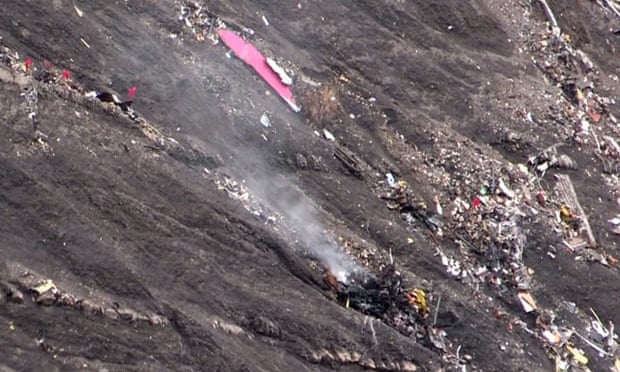
Video images from a government helicopter on Tuesday showed a desolate snow-flecked moonscape, with steep ravines covered in scree. Debris was strewn across the mountainside, pieces of twisted metal smashed into tiny bits.

The plane was "totally destroyed", a local MP who flew over the site said, describing the scene as "horrendous".

"The biggest body parts we identified are not bigger than a briefcase," one investigator said.

Christophe Castaner, a Socialist party MP in France, was one of the first to fly over the barren high altitude crash site and described a scene of horror.

“It’s a sharp ridge and steep slope that is difficult to access."

He told BFMTV that they flew over the crash site twice before they realised that small white patches were not snow, but remnants of the plane.

Jean-Louis Bietrix, a mountain guide who accompanied the first emergency services up the mountain, said there was nothing left of the plane.

“There’s debris, but you have to look closely to see things. It’s like the plane has totally disappeared,” he said.

A crisis cell has been set up in the area between Barcelonnette and Digne-les-Bains along with an emergency flight control centre to coordinate chopper flights to the crash site.

French President Francois Hollande, his German counterpart Angela Merkel and Spanish Prime Minister Mariano Rajoy were expected to reach the scene around 2:00 pm (1300 GMT).

Bernard Cazeneuve, the interior minister, said the black box had been sent to the Bureau d’Enquêtes et d’Analyses (BEA), the French air accident investigation authority, for “immediate examination”.

He added that the crash zone had been secured and that a criminal investigation team would arrive to collect evidence on Wednesday.

The French prime minister, Manuel Valls, said a helicopter crew landed near the crash site on Tuesday and found no survivors. Aerial photos showed the plane was, in the words of one official, “pulverised”. The largest piece of wreckage was little more than the size of a small car.

As the CVR was being analysed, Pierre-Henri Brandet, a spokesman for the French interior ministry in Seyne-les-Alpes, announced the suspension of the retrieval effort over Tuesday night including the search for a second black box on the isolated, rocky site.

Activities were resuming on Wednesday morning. Agence France-Presse, the French-based news agency, said more than 300 police officers and 380 firefighters had joined the operations.

Mountain rescue police were also on the scene, while five investigators had spent the night at the site.

The 144 passengers were mainly German and Spanish.

The high school in the small German town of Haltern attended by the 16 students on the plane was set to hold an event Wednesday to honour the victims.

"This is certainly the darkest day in the history of our city," said a tearful Bodo Klimpel, the town's mayor, Tuesday. "It is the worst thing you can imagine."

Spain, meanwhile, declared three days of mourning and was to hold a minute of silence across the country at noon Wednesday.

Opera singers Oleg Bryjak, 54, and Maria Radner, 33, were also on board, flying to their home city of Duesseldorf. Radner was travelling with her husband and baby, one of two infants on board the plane.

Budget airline Germanwings said the Airbus, travelling from Barcelona to Dusseldorf, plunged for eight minutes but the crew made no distress call before crashing near the ski resort of Barcelonnette.

The rapid descent was "unexplained", Marseilles prosecutor Brice Robin said.

One of the plane's black boxes has been found, but it was unclear whether it was the flight data recorder or the cockpit voice recorder. Investigators will continue searching for the second black box Wednesday.

Weather did not appear to be a factor in the crash, with conditions calm at the time, French weather officials said.

Working on assumption of 'accident'

Budget airline Germanwings said the Airbus, travelling from Barcelona to Dusseldorf, plunged for eight minutes but the crew made no distress call before crashing near the ski resort of Barcelonnette.

The rapid descent was "unexplained", Marseilles prosecutor Brice Robin said.

One of the plane's black boxes has been found, but it was unclear whether it was the flight data recorder or the cockpit voice recorder. Investigators will continue searching for the second black box Wednesday.

Weather did not appear to be a factor in the crash, with conditions calm at the time, French weather officials said.

Lufthansa, the parent company of Germanwings, said it was working on the assumption the crash was an "accident".

"Anything else would be speculation," Lufthansa vice president Heike Birlenbach told reporters in Barcelona.

She said the 24-year-old Airbus A320 had undergone its last routine check on Monday.

Germanwings executive Thomas Winkelmann said the pilot had "more than 10 years of experience" and some 6,000 flying hours on an Airbus jet under his belt. It was the fi

rst fatal accident in the history of Germanwings, and the deadliest on the French mainland since 1974 when a Turkish Airlines plane crashed, killing 346 people.

Locals described the difficult terrain that awaited rescue teams.

"Ground access is horrible ... it's a very high mountainous area, very steep and it's terrible to get there except from the air during winter," local resident Francoise Pie said.

The crash site can only be accessed after a three-hour walk from the nearest road.

Another local official, Gilbert Sauvan, told AFP: "The only possible access was by helicopter and people had to be winched down because the choppers couldn't land."

Germanwings said 67 Germans were believed to have been on board, while Spain said 45 people with Spanish-sounding names were on the flight.

Two Colombians, two Argentines, and two Australians were among the dead, according to their governments, while Hollande said Turks may also have been aboard.

Two Japanese were "very likely" on board, their government said. Belgium and Denmark said at least one of their nationals was on board, while Mexico said three of its citizens were believed to be among the victims and Britain said its nationals were also on board.

A Swedish third division football team booked on the fatal flight had changed flights at the last minute. "May they rest in peace," Dalkurd FF goalkeeper Frank Pettersson wrote on Twitter.

The world's worst air disasters remain the March 27, 1977, collision of two Boeing 747s on the runway at Tenerife in the Canary Islands, killing 583 people, and the August 12, 1985 crash into a mountainside of a Boeing 747 belonging to Japan Airlines, killing 520 people.

Wednesday 25 March 2015

http://timesofindia.indiatimes.com/world/europe/Rescuers-struggle-to-recover-bodies-in-Germanwings-French-Alps-crash/articleshow/46685191.cms

continue reading

Tuesday, 24 March 2015

Families of ferry disaster victims call for vessel recovery


Family members of the victims of last year's deadly ferry sinking called on the government Tuesday to make a decision on the recovery of the submerged ship before the first anniversary of the tragedy.

In one of the nation's worst maritime disasters, the 6,825-ton ferry Sewol sank in waters off the nation's southwestern tip on April 16, killing more than 300 passengers, mostly teenagers on a school trip to the southernmost resort island of Jeju. Nine people remain unaccounted for.

The government said it has finished evaluating how and when the ferry would be lifted from the ocean in May. But it has yet to announce whether it will actually go ahead with the plan. The recovery process has been estimated to cost 620 billion won ($560 million).

The associations of the victims' families said the government shouldn't wait any longer and urged it to promptly raise the ship.

"There are nine bodies that are waiting to be returned to their family members," the associations said in a statement.

Family members are planning to hold a variety of programs to mark the disaster's one-year anniversary coming up next month.

Starting Monday, they will stage a 416-hour sit-in at Gwanghwamun Square in downtown Seoul.

For two days starting April 4, they said they will march from a joint altar set up in Ansan, south of Seoul, to Gwanghwamun Square.

In early November, the government officially terminated the search for the missing from the sunken ferry, citing inclement weather and safety risks for divers.

Tuesday 24 March 2015

http://www.koreaherald.com/view.php?ud=20150324001218

continue reading

At least seven dead in Peru landslide


Seven people were killed and more were feared dead in Peru after a massive landslide buried parts of a town amid heavy rains, authorities said on Tuesday.

Six were missing and 25 injured in the disaster in Chosica, some 30 kilometres (18.6 miles) east of Lima, said Alfredo Murgueytio, the head of the National Civil Defense Institute, Indeci.

"There are likely more dead bodies under the debris," Murgueytio said on local broadcaster RPP.

TV images showed water and mud rushing over the town's sloped streets and a distraught woman waving a picture of a missing girl.

The main road connecting Lima to the centre of Peru, a top global producer of copper and gold, remained blocked since Monday, police said.

The landslide destroyed 65 houses and rendered another 45 unliveable, said Indeci.

Landslides and avalanches in Peru, mainly in rural towns in the Andes and Amazon, have killed 28 people and destroyed 1,245 houses so far this year, according to Indeci.

Chosica, a town tucked between mountains and next to a river, has been damaged by landslides several times in the past.

Tuesday 24 March 2015

http://www.channelnewsasia.com/news/world/at-least-seven-dead-in-pe/1739468.html

continue reading

Germanwings Airbus crashes in France, 148 feared dead


An Airbus A320 airliner has crashed in the French Alps between Barcelonnette and Digne, French aviation officials and police have said.

The jet belongs to the German airline Germanwings, a subsidiary of Lufthansa.

The plane, flight 4U 9525, had been en route from Barcelona to Dusseldorf with 142 passengers and six crew on board.

French President Francois Hollande said: "The conditions of the accident, which have not yet been clarified, lead us to think there are no survivors."

Mr Hollande said the crash was a tragedy and called for solidarity with the victims, adding that the area was very difficult to access.

He said he would be speaking shortly with German Chancellor Angela Merkel.

The plane issued a distress call at 10:47 (09:47 GMT), according to sources quoted by AFP news agency.

Search-and-rescue teams are headed to the crash site at Meolans-Revels, said regional council head Eric Ciotti

Although it began its life as an independent low-cost carrier, Germanwings is wholly owned by its parent Lufthansa.

It operates increasing numbers of the group's point-to-point short-haul routes and takes many passengers from German cities to Mediterranean sunspots.

The airline has an excellent safety record with no previously reported accidents. The average age of its Airbus fleet is just over nine years old, though flight 4U 9525 was a 24-year-old A320.

The plan was to phase out the Germanwings brand and replace it with Eurowings. There has been a longstanding dispute with the Vereinigung Cockpit union over early retirement. Pilots went on strike for three days around this time last year.

French Prime Minister Manuel Valls said he had sent Interior Minister Bernard Cazeneuve to the scene and a ministerial crisis cell to co-ordinate the incident had been set up.

The interior ministry said debris had been located at an altitude of 2,000m (6,500ft).

Interior ministry spokesman Pierre-Henry Brandet told BFM TV that it would be "an extremely long and extremely difficult'' search-and-rescue operation because of the remoteness.

Lufthansa chief executive Carsten Spohr tweeted: "We do not yet know what has happened to flight 4U 9525. My deepest sympathy goes to the families and friends of our passengers and crew.

"If our fears are confirmed, this is a dark day for Lufthansa. We hope to find survivors."

The Airbus A320 is single-aisle passenger jet popular for short- and medium-haul flights.

Tuesday 24 March 2015

http://www.bbc.co.uk/news/world-europe-32030270

continue reading

Monday, 23 March 2015

Bus pile-up kills 37, injures 70 in central Peru


At least 37 people were killed when a bus swerved into oncoming traffic in Peru Monday, leading to a multi-vehicle collision involving two other buses and a truck, authorities said.

Health Minister Anibal Velasquez, who was on his way to the crash site near the northern city of Huarmey, told local radio the accident also left 70 people injured.

Six people who were badly wounded were taken by helicopter to hospital in the capital Lima, about 300 kilometers south.

The local hospital in Huarmey overwhelmed by the number of injured, the fire department said in a statement.

Rescuers rushed to adapt other health centers in the area to accommodate the overflow, it said.

The head of the highway police, Orfiles Bravo, said a bus belonging to the Murga Serrano line had swerved into an oncoming lane on the Pan American Highway.

It was then hit by the truck and two other buses, Bravo told RPP radio.

The Murga bus "was split in two," he said.

Television images showed bodies sprawled out on the pavement after the crash.

Authorities initially gave a death toll of 22, but the health ministry said that number had increased sharply as rescue workers managed to access the wreckage.

The government declared an emergency and ordered more ambulances to the crash site, the head of the council of ministers, Ana Jara, said on Twitter.

Forty-two passengers on the Murga bus were members of a Christian evangelical church, the World Missionary Movement, who were returning from a convention in Lima.

"We are waiting for news," said church leader Roberto Perez.

Peruvian media reports said the injured and stranded passengers also included Haitian and Senegalese travelers.

Peru's roads are notoriously dangerous. In the first half of last year, 1,406 people were killed in road accidents. The full-year death toll was 3,590 in 2013 and 4,138 in 2012.

Monday's accident came as the Peruvian Congress held a forum on making the country's roads safer.

Monday 23 March 2015

https://au.news.yahoo.com/world/a/26775665/peru-bus-pile-up-kills-37/

continue reading

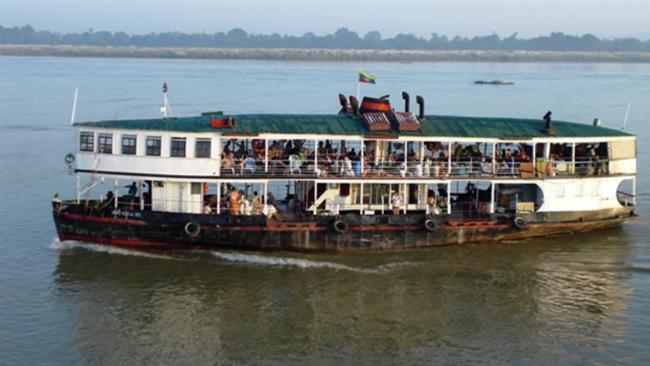
Myanmar ferry death toll rises to 69, six more victims recovered


As volunteer searchers found the bodies of six more victims of the Aung Takon 3 ferry disaster over the weekend, the Amyotha Hluttaw agreed to set up a Union-level inquiry into the sinking.

The death toll now stands at 69, though searchers believe many more bodies are still trapped in the sunken vessel off the coast of Rakhine State.

Members of the Duwunkyel philanthropic organisation, based in Kyaukpyu township, Rakhine State, began their search on March 14, the day after the ferry sank. On March 20 they found the body of a child, and five more bodies on March 22, and buried them all.

Duwunkyel announced yesterday that they would pay a K200,000 reward for the discovery of further remains.

“None of the six we found most recently were claimed by families. Some bodies have been washed up on the beaches of Kyaukpyu township,” said Ko Tun Kyi, secretary of Duwunkyel. He added that he had not seen any government officials searching.

The regional authorities said they had postponed the search because of bad weather.

Although the Rakhine State government has announced that it would pay compensation to the families of the deceased and to the survivors, the recovery teams claimed that the government had taken no responsibility for the disposition of the remains.

A survivor of the disaster, Ko Tun Win, said he believed many more bodies could be under the water. “Most people shut themselves in their cabins while the boat was sinking,” he said.

The exact number of passengers is not known, but those who were on board the vessel when it sank say it could be up to 400. Rescuers plucked 169 people from the water after the ferry went down, but the manifest showed only 214 passengers and crew.

Monday 23 March 2015

http://www.mmtimes.com/index.php/national-news/13660-ferry-death-toll-increases-as-parliament-demands-inquiry.html

continue reading

Sunday, 22 March 2015

Synagogue Collapse: Bodies of six victims still unidentified


A Consultant Pathologist, John Obafunwa, on Friday said forensic examiners have yet to identify the bodies of six victims of the Synagogue Church of All Nations building collapse.

Mr. Obafunwa, a professor and Chief Medical Examiner of Lagos State, disclosed this while presenting the final report to the coroner’s inquest set up to unravel the cause of the incident.

The inquest was set up by the Lagos State Government to investigate the Sept. 12, 2014 building collapse which killed 116 people, mainly South Africans.

The report entitled: “Report on the Collapsed Building in Synagogue Church of All Nations,’’ was admitted by the court as Exhibit 034. Led in evidence by Akingbolahan Adeniran, counsel to the Lagos State Government, the witness said autopsies were performed on the 116 bodies recovered from the collapse site.

He said the post mortem examinations were concluded on Sept. 30, 2014 and the samples for DNA examination were sent to Unistel Laboratory in South Africa.

Mr. Obafunwa said: “the first set of DNA and fingerprinting results were sent to me on Nov. 3, 2014. Thereafter, an identification committee was set up.

“At this time, 74 South Africans (as well as few from Switzerland, Zimbabwe, Democratic Republic of Congo, etc) were identified and subsequently released to the South African Authority on Nov. 15, 2014.

“Again, the identification committee sat on Feb. 4, 2015 following the receipt of other results from South Africa. “During this time, another 11 South Africans were identified and again released to their authority on Feb. 5, 2015, thus concluding the release of a total of 85 victims of South African origin.

“The respective death certificates as well as embalmment certificates were also handed over to the South African authority.’’ According to him, in addition to these figures, 25 others (comprising 22 Nigerians, two Beninois and one Togolese) were identified and released, bringing the total number of deceased individuals to 110.

He said: “there are six bodies left in the morgues (three each in Isolo and Yaba mortuaries) that are yet to be identified.

“In summary, the victims of the building collapse comprise 60 males, and 56 females; among the male victims was a child allegedly aged six years. “The distribution of the causes of death is as follows: 56 Multiple injuries, 19 Traumatic asphyxia, 19 Exsanguination, 12 Severe craniocerebral injury, nine Haemothorax following multiple rib fractures and one Congestive cardiac failure following hypertensive heart disease.

“The varying injuries seen on the victims are consistent with blunt force trauma that will normally be sustained from a collapsed building.’’ Testifying earlier at the proceedings, Oladele Ogundeji, the engineer who supervised the project, insisted that the collapse of the building was inconsistent with structural defect.

He said all the materials used for the construction were of the best quality, insisting that the foundation bases and columns were adequate to support the building.

Further hearing on the matter was fixed for March 25.

Sunday 22 March 2015

http://www.premiumtimesng.com/news/top-news/178875-synagogue-collapse-bodies-of-six-victims-still-unidentified.html

continue reading

Saturday, 21 March 2015

Another MH17 victim identified, two of the 298 passengers remain unidentified


Another victim of the disaster flight MH17 has been identified this week. The victim has the Dutch nationality. A total of 296 identified victims of the disaster in Ukraine have now been identified. The relatives of the victim have been informed.

Since July 2014, the National Forensic Investigation Team (LTFO) of the police deals with the identification of the 298 victims killed in the plane crash. It is hoped that the two remaining missing persons of Dutch nationality can be established from the recovered body parts that have been transferred to Hilversum. No indication can be given when information regarding the identity of the two remaining passengers will be available according to the Ministry of Security and Justice Saturday.

The Malaysia Airlines flight number MH17 gear crashed in July 17 last year in eastern Ukraine. All of the 298 passengers and crew died, including 196 Dutch nationals. The recovered human remains have been transferred from Ukraine to the Corporal Oudheusden Barracks in Hilversum where the identification process takes place.

Saturday 21 March 2015

http://www.telegraaf.nl/binnenland/23831609/__Slachtoffer_MH17_geidentificeerd__.html

continue reading

One more 9/11 victim at World Trade Center identified, DNA technology explained

br> A Carnegie Mellon University graduate is the latest victim whose remains have been identified in the 2001 World Trade Center attacks, moving the New York medical examiner’s office one step closer to its ultimate goal of putting a name to all of the tissue samples it has kept for years.

Matthew David Yarnell, a young New Jersey computer analyst who graduated from Carnegie Mellon University in 1997, was positively identified last week, said his mother, Michele Yarnell.

At this point, only about 60 percent of the World Trade Center remains have been identified, and many forensic experts believe it will be impossible to put a name to all of them. Still, new techniques are slowly adding verifications like Yarnell’s.

Just a year ago, medical examiner’s officials had told the family that tests had failed to find a match, Michele Yarnell said, but last week, they told her new techniques had yielded a success.

For her, the news carried no special emotional impact. “It hasn’t really changed anything. I still have the same feelings. We didn’t expect any different result. We knew that he was gone.”

While the examiner’s office would not comment on the specific tests used on Yarnell’s remains, forensic experts said the catastrophe had led to several new tools to make it easier to identify damaged tissue samples.

John Butler, a special assistant to the director of forensic science at the National Institute of Standards and Technology, said there have been four key developments in the 14 years since the Sept. 11, 2001, attacks.

First, researchers have figured out how to extract more DNA from bone samples. Where scientists used to grind up the bone, they now use a special chemical solution to dissolve it.

They also have learned how to use smaller stretches of DNA to hunt for unique markers. One key technique involves hunting for repeated sequences of nucleotides, the chemical subunits that make up DNA. A victim and his family members will often have a certain number of those repeats.

Years ago, scientists needed a stretch of 200 to 300 nucleotides to look for repeat sequences, Butler said, but his office helped develop a technique that allows them to use just 100 or so nucleotides, meaning they can hunt for identification using much smaller samples.

Forensic scientists compare the remains to known samples of DNA from the victim or from close relatives. In Yarnell’s case, the family provided the examiner’s office with a comb and toothbrush from his apartment, as well as blood samples from his mother, father and siblings.

The identity sleuths also use a chemical technique to amplify the amount of DNA in a sample. Remains damaged by fire or water, like those at the World Trade Center, often interrupted that amplification process, he said, but new chemical buffers have overcome that obstacle.

Finally, new software has been developed to virtually reassemble the pieces of DNA into a whole sequence, he said, further increasing the odds of a successful identification.

Forensic pathologist Judy Melinek, who got her training in the New York medical examiner’s before and after the 9/11 attacks, recalled that “the forces at work during the World Trade Center disaster included explosions, blunt trauma and fire. Then, after the collapse, fire suppression efforts introduced water and many remains were not recovered for months. The combination of heat, water and decomposition made identification very challenging, and that is why DNA has been used.”

New tools in the future may allow more identifications, and “this may help bring closure to some victims’ family members,” said Melinek, who wrote about her New York training in the book, “Working Stiff: Two Years, 262 Bodies and the Making of a Medical Examiner.”

Saturday 21 March 2015

http://readingeagle.com/ap/article/remains-of-carnegie-mellon-grad-911-victim-at-world-trade-center-are-identified

continue reading

Bodies of all 10 Uruguay plane crash victims located


The dead bodies of all 10 occupants of a small chartered plane that crashed in southeastern Uruguay have been found, officials told Efe.

The bodies, badly burned in a fire that erupted when the plane crashed into a lagoon, were photographed to register their position and then removed from the wreckage for identification by experts.

"It has been difficult to recognize some bodies and the judge ordered a thorough autopsy based on DNA analysis, and therefore identifying them is going to take several hours," the Maldonado provincial government said.

Nine Argentines and a Portuguese woman died in Thursday night's crash, which occurred shortly after the Buenos Aires-bound plane took off from the airport serving the resort city of Punta del Este.

The passengers worked for an Argentine company and were part of the management team for a planned convention center in Punta del Este, Uruguay's main tourist destination.

Arrangements are currently being made to receive the victims' family members.

The plane, traveling from Punta del Este in Uruguay to Argentina with eight passengers and two crewmen aboard, crashed in a nearby lagoon Thursday shortly after take-off, according to the information provided by the airport.

Personnel who had reached the crash site were maintaining a safe distance from the plane due to the high temperatures inside its fuselage and the combustible liquid that had spilled around it.

Rescue efforts during the night have been hampered by the lack of light and the characteristics of the terrain where the accident took place.

One of the travelers was a Portuguese woman, Palomeque confirmed.

According to local media reports, the plane's passengers were employees of an Argentine company working on a construction project in Punta de Este.

A total of 30 people are involved in the rescue operation including a team of firefighters, an air force helicopter and personnel from the Curbelo naval base that provided boats to reach the plane crash site.

Saturday 21 March 2015

http://www.laprensasa.com/309_america-in-english/3011776_bodies-of-all-10-uruguay-plane-crash-victims-located.html

continue reading

Rescuers tell of finding last body from Flight GE235


A prayer and the smell of lilies helped rescuers find the last missing body of the 43 victims that perished when TransAsia Airways Flight GE235 crashed into the Keelung River on Feb. 4.

Rescue workers Hu Chin-tsai and Lin Shih-bin of the Taipei Rescue Association told their stories at a ceremony on Wednesday, in which the Ministry of Transportation and Communications recognized the contributions of 93 agencies that participated in the rescue efforts. Hu said he would never forget the afternoon of Feb. 12, when he and other rescuers were searching for the body of the last victim. Hu was operating a rescue boat with Lin on board.

“We were both muttering: ‘Buddy, it has been a few days already. It’s time for you to come out, so everybody can rest,’” he said. Hu said he remembered smelling the fragrance of lilies soon afterward, similar to the flowery smell found in funeral homes, which gave him the feeling that he would soon find the body of the victim.

Before Hu knew it, he and Lin both saw human hair floating on the river and later confirmed that it was the body that they had been searching for. Hu said he believed he was destined to find the last body, adding that three rescue boats had passed through the exact same spot where the body was found before they arrived.

Hu works at Taipei City Hospital, while Lin is a borough warden in Taipei’s Zhongshan District. Both have 20 to 30 years of experience in rescuing people, having participated in disaster relief work when the nation was hit by a massive earthquake on Sept. 21, 1999, and during Typhoon Nari in 2001 and Typhoon Morakot in 2009.

Statistics from the ministry showed that 1,803 motor vehicles and 585 boats were employed to rescue survivors and retrieve the bodies of deceased victims.

Saturday 21 March 2015

http://www.taipeitimes.com/News/taiwan/archives/2015/03/21/2003614070

continue reading

1915 Britannia Mountain disaster


Just after midnight on March 22, 1915, part of Britannia Mountain fell off, just above a mining camp.

“AVALANCHE OVERWHELMS BRITANNIA MINE HEAD,” screamed the front-page headline in the Vancouver World. “50 MEN KILLED, 15 INJURED.”

In fact, there were 56 people killed, and they weren’t all men — several women and children were crushed when Jane Camp was buried under 15 metres of debris.

“In the grey light of the stars, snow, boulders and uprooted trees thundered down into the little cup-like hollow made by the mountains that rise all above the camp,” the World reported a few hours after the disaster.

“No one knows how many were swept into the depression by the slide. More than a thousand men were employed at the Britannia mine on the copper ledges or on the machinery in and around the mine.

“Hundreds of these were sleeping in their bunks, and it is feared scores have been ground up in the terrible rush of debris or smothered in snow.”

The disaster occurred in the dark, about 5.5 kilometres up the mountain above the nearest town, Britannia Beach. Communications was cut by the slide, but about 12:45 a.m. workers down the mountain knew something was amiss when hoppers that were supposed to be filled with ore were arriving empty.

A search party was sent up the mountain, in the dark, and discovered Jane Camp had been demolished.

“The cookhouse, camp-house, engine-house, store, offices, officials’ cottages and some shacks were wiped out,” reported the Province, “The volume of debris did not stop until it had reached Britannia Creek, about a mile and a half below.”

Miner Harry Baxter was one of the survivors.

“Along about midnight came a terrific wind,” he said. “It blew like the furies, and in about two seconds there was a noise which some of the boys thought was 300 cases of explosives going off in the magazine.”

A miner’s wife named Mrs. Owen had a similar story.

“I thought it was a hurricane started to blow,” she said. “You’ve heard a big wind when it tears down trees, and it thunders and lightning crashes — it was just like that. The lights went out, (and) I could hear terrible moaning.”

There were some miraculous escapes, like the three miners who were sleeping on the second floor of the mine office and were swept 300 feet, but lived. But most of the people in the path of the slide were killed.

“One of the most pathetic sights of the whole tragic scene is Thomas McCullough, shift boss, (who) is digging, digging, digging … in the hope of recovering the bodies of his wife and five-year-old daughter Isabella,” the Province reported. “Willing hands are helping him, but his task is a tremendous one. His gaunt form, with pale and drawn features and bloodshot eyes, is to be seen picking, shovelling, digging and scraping amongst the earth and rocks.”

There were various theories as to what caused the slide. The Sun reported a survivor thought it was “the constant dynamiting of the stone ribs of the mountain.” The World reported “there is a small lake at the top of the mountain, and it was suggested that seepage from this had loosened up the soil and rock.”

Geologist S.G. Evans has reviewed the evidence and believes the slide “originated as a rock slope failure from the northeast side of Mammoth Bluffs, above the portal of the Bluff Mine (beside Jane Camp).”

In a paper on the disaster that is posted online, Evans writes “the rock fabric of the Mammoth Bluffs area was dominated by schistosity that dips steeply to the southwest, creating conditions favourable for toppling on northeast facing slopes.”

Schistosity is flakes of rock in sheets. Evans writes “the rock mass” may have been “‘forced outward’ by water produced by two or three days thaw,” which caused it to topple, and produced the slide.

The Britannia disaster is the second deadliest rock slide in Canadian history, after the Frank Slide in Alberta that killed 70 people. Sadly, in 1921, the Britannia mine complex was hit by another natural disaster when a flood killed 37 people at Britannia Beach.

Saturday 21 March 2015

http://www.vancouversun.com/THIS+WEEK+HISTORY+1915+Britannia+Mountain+disaster/10906620/story.html

continue reading

Friday, 20 March 2015

31 killed as Indian train derails


Rescuers were using cutters to rip apart the mangled wreckage to search for trapped people.

Rescue workers pulled 31 bodies from the wreckage, said Ashwini Srivastava, a spokesman for the railways, and at least 50 more were injured.

The engine and two coaches of the Janata Express jumped off the tracks near Bachhrawan village in Uttar Pradesh state.

Several people were feared trapped in the wreckage, and rescue efforts were focused on bringing them out alive, said Ram Murath Yadav, a police official at the site of the accident.

One of the derailed coaches was crushed by the impact and most of the casualties were in that coach, he said.

The federal rail ministry has ordered an inquiry.

The driver of the train escaped unhurt and was being questioned, Mr Srivastava said.

Friday 20 March 2015

http://www.independent.ie/world-news/31-killed-as-indian-train-derails-31081682.html

continue reading

New World Trade Center Victim Identified by Medical Examiner


A New Jersey executive of technology at a Wall Street financial firm was identified Thursday as the latest victim of the 9/11 attacks, the Medical Examiner's office announced Thursday.

Matthew David Yarnell, 26, of Jersey City, N.J., became the 1,640 victim identified in the World Trade Center disaster in 2001.

Yarnell worked as an assistant vice president for the technical group of the Fiduciary Trust Co. and was remembered as a prankster who used to call his mother as a salesman trying to sell her random products, according to the New York Times.

The Medical Examiner identified Yarnell after they retested DNA samples from remains recovered during the recovery efforts in 2001 to 2002. There's still 1,113 victims from the attacks reported missing but have not been identified, the Medical Examiner said.

The remains of the unidentified victims were placed in a repository in the basement of the 9/11 Memorial Museum, which 17 families fought to stop in 2012.

The repository is only accessible to workers from the Medical Examiner's office, who periodically retest the DNA samples off-site to identify them, according to the 9/11 Memorial.

Friday 20 March 2015

http://www.dnainfo.com/new-york/20150319/financial-district/new-world-trade-center-victim-identified-by-medical-examiner

continue reading

Argentinian passenger plane crashes in Uruguay,: 10 killed, 3 bodies recovered


An Argentinian plane carrying eight passengers and two pilots crashed in Uruguay late Thursday, killing all 10 people on board, media reports said, citing Uruguay's air force.

The small passenger plane crashed shortly after taking off from the Laguna del Sauce International Airport in Punta del Este, Sputnik News reported. The aircraft reportedly caught fire after going down in a shallow lake near the airport.

The twin-engined Beechcraft B-90 King Air was carrying executives of an Argentinian company to Buenos Aires following a business meeting in the eastern resort city, Canal 10, an Uruguayan network reported, citing a fire services spokesperson.

Three bodies have so far been recovered from the wreckage.

Friday 20 March 2015

http://www.ibtimes.com/argentinian-passenger-plane-crashes-uruguay-all-10-board-killed-3-bodies-recovered-1853436

continue reading

More than 600,000 migrants expected to get ID cards ahead of Thai deadline


Interesting article on how the Thai Government aims to address the issue of undoumented migrant workers. It it thought that the majority of the still unidentified Thai victims of the 2004 tsunami were undocumented workers from Myanmar. Family members did not report their relative missing in fear of arrest and prosecution for being in Thailand illegally (editor).

The government hopes to dole out more than 640,000 “certificates of identity” in a new attempt to legalise undocumented Myanmar migrant workers in Thailand ahead of an impending deadline, according to officials from Myanmar’s Department of Labour.

Department of Labour director general U Myo Aung said the Thai government has warned Myanmar workers to get the identity certificates before March 31 or face possible arrest.

The number eligible for the certificate – which remains valid for two years – represents just a fraction of the estimated 3 million Myanmar migrants who work in Thailand, however.

Only holders of temporary residency cards, known as “pink cards”, that were given to migrants during a registration period that ended in October can apply.

After Thailand’s May 22 coup, the newly installed junta began tightening restrictions on the country’s foreign labour force, which is largely undocumented. Migrants lacking passports, residency cards and work permits were allowed to register for temporary documents during a June to October 2014 window. In order to extend the temporary documents, migrants’ embassies were tasked with verifying nationality and issuing identification documents by the end of March.

Of the 1.6 million total migrants who registered in Thailand by October, more than 640,000 were from Myanmar, according to the Thai Ministry of Labour figures.

The Myanmar embassy in Bangkok is making preparations to handle 600,000 applications from workers and their dependents during March, U Myo Aung said last month.

The migrant workers will be able to apply for the certificate in 21 different cities in Thailand.

Migrants who already hold a national ID as well as a Myanmar household registration document can apply directly for a passport however, U Myo Aung added.

Filing an application for the certificate will cost 30 baht (about US$1) per worker. Those who qualify will be charged another 400 baht (US$13).

However, migrant rights’ advocates said the process will not be straightforward because many pink cards contain incorrect information, including misspelled or incorrect names.

“The employer’s name might be listed as the broker’s name and that will be the problem as Thai police can arrest [the migrant] if the real employer’s name doesn’t match,” said said U Ko Tun, a coordinator for the Myanmar Migrant Workers Rights Network.

U Myo Aung confirmed this would slow down the process. He said even the names of migrant workers are sometimes spelled incorrectly on the Thai-issued cards.

“For example, we spell Myint Aung, but Thai officials might spell it Myn Ang. Then we don’t know which spelling to put on the certificate,” U Myo Aung said.

Migrant rights groups said the system, which follows several earlier attempts to register undocumented workers, will make it more difficult to work legally in Thailand.

“The registration policy generally changes with politics, so it is inconsistent. This time around it is very bureaucratic and detailed. It makes migrants and their employers have to spend time they don't feel they have,” said Brahm Press, the director of MAP Foundation in Chiang Mai.

Friday 20 March 2015

http://www.mmtimes.com/index.php/national-news/13324-more-than-600-000-migrants-expected-to-get-id-cards-ahead-of-thai-deadline.html

continue reading

Overloading blamed for ferry accident, as death toll hits 63


As teams of volunteers recovered the remains of those lost in the Aung Takon 3 ferry disaster of March 13, further details have begun to emerge of the events immediately surrounding the tragedy, including eyewitness accounts.

The death toll late on March 17 reached 63 as the recovery teams, led by young members of a local philanthropic organisation, continued their search and the disposal of the remains. Combined with the 169 people officials say were rescued, this means there were at least 232 people on board – 18 more than the official manifest – but survivors said there could have been up to 400 on the ferry when it went down.

Amid allegations the ferry was severely overloaded when it sunk, the Rakhine State government has formed an investigation commission and instructed the team to complete its report no later than yesterday, March 18. An earlier government statement blaming the weather has been dismissed.

Volunteer members of Duwunkyel free funeral service in Kyaukpyu are leading the search for the deceased.

On March 15, they found two bodies, which were buried in Myebon. A further 20 bodies discovered the following day were also buried in Kyaukpyu township.

“The bodies we found on [March 16] could not be identified because their state of decomposition was too advanced,” U Tun Kyi, a member of the Duwunkyel free funeral service, told The Myanmar Times yesterday. “We will find more bodies if we can search the sunken ferry itself.”

The volunteers found seven more bodies on March 17, at about 5:30pm. They were cremated on Myauk Kyein Island, the place nearest to where they were discovered, because it was too difficult to carry them to Kyaukpyu, said U Myo Myint Naing, one of the searchers.

“One of them was the captain. Some people recognised him. The bodies of two monks from Kyaukpyu were also found, and we cremated them here at once,” he said.

Captain U Hla Maung Thein was listed as missing as of March 17, but 10 crew members survived, rescuers said.

Of the 169 people the authorities say were rescued, most have gone home, and 33 were accommodated temporarily at the Basic Education Middle School 4 Kyaukpyu, while some of the injured are in the local hospital.

It has emerged that the ferry left Kyaukpyu port bound for the state capital, Sittwe, at about 4:30pm. Flooding began at about 7pm as it entered the waters between Naung Daw Gyi and Naung Daw Lay islands, which are notorious for treacherous currents. Attempts to stem the flooding failed, and the vessel sank at 8:15pm.

Preliminary reports estimated the death toll at 34, out of 214 passengers and crew officially listed. But ferries in these waters are known to be chronically overcrowded, as passengers pay only K2500 per ticket, instead of the K15,000 charged by private ferry companies. The Aung Takon line was owned by the government.

Survivor U Tin Win, of Toungup township in southern Rakhine State, told The Myanmar Times that the waves were just 60 centimetres (2 feet) high when the flooding started, just after the vessel had passed Naung Daw Gyi island.

“The crew asked the passengers to help bail out the water, but it just kept pouring in. Crew members were trying to lighten the load by throwing 80-pound [36.3-kilogram] bags of lime overboard. It was no good,” he said. “When I went looking for my little daughter, the ferry tilted to the left. Within 10 seconds, it went down.”

The government said the ferry was authorised to carry 120 tonnes of goods and 176 people. Survivors have told reporters there were about 400 passengers on board. Survivors have said they witnessed excessive loading on board, including bags of lime and other goods stacked on deck, as the ferry left port.

U Maung Maung Ohn said that the ferry sank because it was overloaded. Meteorologist U Tun Lwin has questioned a government statement issued on March 14 that the ferry sank due to bad weather, dismissing this claim as impossible.

The Rakhine Chief Minister said the regional government would take responsibility for the care of children who had lost their parents, and had also assumed responsibility for helping survivors now staying in Kyaukpyu to return to their families and jobs. The regional government has also paid K1.2 million to the families of the deceased and K500,000 to each survivor.

Friday 20 March 2015

http://www.mmtimes.com/index.php/national-news/13609-overloading-blamed-for-ferry-accident-as-death-toll-hits-63.html

continue reading

Thursday, 19 March 2015

Majority of Yemeni minors lack birth certificates


Interesting article from a DVI point of view.

For many people around the world, a birth certificate is a person’s first legal recognition by the state that they exist. In Yemen, 83 percent of minors remain without one, leaving them vulnerable to a number of abuses.

For parents, the first time most are asked to produce a birth certificate for their children is when they register them for school. Registration for first grade begins in Yemen at age six.

Abdulnasser Al-Jaberi, 45, is a mechanic and owns a car shop. He is also the father of seven, and says he gets birth certificates for his children right before they begin primary school.

“Why should I get these certificates right after they are born when I don’t need them until they register for school?” he asked.

A lack of Civil Status Authority offices in rural areas complicates the registration process, forcing families to put it off until they can no longer do so.

Often, children who never attend schools will not bother with getting their certificates.

Saeed Saleh Othman, a 30-year-old street vendor in Sana’a, does not have a birth certificate. Othman was born in a rural village in Wesab district, Dhamar governorate. His parents never registered his birth and he never attended school. Instead he travelled to Sana’a at an early age to work and help support his family.

“At that time people weren’t aware about the importance of birth certificates and other official documents. I didn’t get a certificate like other students because I never attended school. I came to Sana’a when I was eight to work and help my father,” Othman said.

Officials at the Civil Registration Authority say that applying for a birth certificate years after a child is born has become the norm in Yemen.

Colonel Ahmed Al-Harazi, office manager for the deputy head of the Civil Registration Authority, told the Yemen Times that most people come to claim a certificate once an occasion requesting one arrives.

“Many people come to us and request birth certificates for their children who were born years ago and want to start school. Several of those people don’t even know the exact date of birth for their children,” he said.

“Parents are unaware that without birth certificates their children lose several of their rights and may face problems in the future,” he added.

He says the Civil Registration Authority has established registration units in all public hospitals to help alleviate the problem, “but people still leave these hospitals after their children are born without registering.”

A March 2013 report by Human Rights Watch (HRW) entitled, “Look at Us with a Merciful Eye: Juvenile Offenders Awaiting Execution in Yemen,” said that Yemen has one of the lowest birth registration rates in the world.

“Between 2000 and 2010, the state registered only 22 percent of all births,” read the report.

Soraya Abu Monassar, a child protection officer at the UN Children’s Agency (UNICEF), told the Yemen Times that the latest nationwide survey conducted by UNICEF in 2013 indicated that 83 percent of children lack birth certificates.

Children in Yemen are only required to register with the government when they enrol at school, which begins at age 6. Those who do not receive an education can go a lifetime without certification.

Risks to children without birth certificates

HRW’s report said the lack of birth certificates posed an increased risk against juvenile offenders.

“Most juvenile offenders lack official birth certificates to prove their age. Yemen’s judiciary lacks impartial and accurate mechanisms to determine the age of youths in criminal proceedings, increasing the risk that juveniles are sentenced to death,” added the report.

According to HRW, while prosecutors ordered forensic examinations in some cases, the tests, “relied on error-prone and outdated methods. In some cases, both prosecutors and defense lawyers ordered age examinations that yielded different results, but courts relied on the prosecution’s examinations that estimated defendants were over 18.”

Ahmed Al-Qershi, head of Seyaj Organization for Childhood Protection, said that both parents and the Civil Registration Authority in Yemen are to be blamed for this issue.

“While most parents are unaware of the importance of such official documents, the concerned bodies fail to take the issue seriously,” Al-Qershi said. He says registration at the time of birth should be mandatory and come with fines for those who fail to do so.

Regarding juvenile offenders who lack birth certificates, Al-Qershi said that the Seyaj Organization has recorded 52 juvenile offenders nationwide who face execution because they lack birth certificates that prove their age.

“Those convicted of murder while still children are unable to prove they were under 18 years of age at the time of the crime and have received death sentences.”

Because many registrations occur years after the child was born, some parents register their children as older than they actually are, in order to enroll them in the military, Al-Qershi claims. Project to promote birth registration

In September 2013, UNICEF, the European Union and the Civil Registration Authority launched the project “Promoting Equity and Legal Identity for Children in Yemen by Improving Civil Registration.”

The project aims to offer birth certificates to the largest possible number of children in Yemen.

Abu Monassar told the Yemen Times that the four-year project aims to improve birth registration in order to promote equity among the population and legal identity for children.

“[Through this initiative], about 51 children in rural areas in Yemen were registered and received birth certificates in 2014. Children in several governorates such as Hodeida, Taiz, Lahj, Al-Dhale, Sana’a, Sa’ada and Al-Mahweet were targeted,” she said.

On Feb. 8, 2015, the project launched a campaign to offer free birth certificates for children in five rural districts of Sana’a governorate, including Al-Teyal, Khawlan, Al-Aroush, Nihm and Manakhat Haraz.

Abdullah Mohsen Daban, deputy governor of Sana’a governorate, told the Defense Ministry’s September 26 news website that the campaign eases the process of getting birth certificates for children living in rural areas.

Thursday 19 March 2015

http://www.yementimes.com/en/1869/report/4978/Majority-of-Yemeni-minors-lack-birth-certificates.htm

continue reading

Forensics identify victims of helicopter accident in Argentina


Argentine and French forensic experts have identified 10 people, two Argentine and eight French nationals, who died on March 9 when two helicopters crashed in the northern Argentine province of La Rioja, court officials told Efe.

The team used an odontological method and DNA samples given by the French victims’ families, Daniel Herrera Piedrabuena, the judge leading the investigation, told Efe on Tuesday.

The court will retain the victims’ DNA samples to confirm the findings.

The bodies would be sent to Buenos Aires and from there to Paris once the forensic process is completed.

Among the victims were three top French sports athletes: champion sailor Florence Arthaud, former 2012 Olympic gold medalist swimmer Camille Muffat, and 2008 Olympic bronze medalist boxer Alexis Vastine.

The fatal accident occurred in Villa Castelli, a remote area in the foothills of the Andes, more than 300 km (186 miles) from the provincial capital of La Rioja.

The cause of the accident is still unknown.

The two Argentine victims were the helicopters’ pilots while the French victims were participants of a new reality show that was going to be filmed in that area.

Thursday 19 March 2015

http://www.laht.com/article.asp?ArticleId=2379679&CategoryId=14093

continue reading

Wednesday, 18 March 2015

1992-1993 Georgia-Abkhazia armed conflict: ICRC helps to clarify the fate of Missing Persons


Problem of people missing during and after armed conflicts unfortunately relates to Georgia too. According to various sources, there is significant number of people who got missing during and in relation with armed conflicts of last decades in our country.

It is known that the International Committee of the Red Cross (ICRC) is actively involved in the process of searching of those people.

Ms Jelena Milosevic Lepotic, who coordinates the work related to issues of missing persons and their families, tells us more about the role and activities of the International Committee of the Red Cross.

Indeed, there are over 2000 persons missing from the conflicts of the last decades and families are still waiting for answers,. Families are ageing and they told us many times that all they want is to have an answer and be able to give a proper burial to their relatives.

The ICRC initiated a "Missing project" which aims at addressing the issue of people who were unaccounted for as a result of armed conflicts in order to prevent disappearances, locate missing persons, and also to address the needs of their families. It is important to recall that the families of the missing persons should also be seen as victims of conflicts. An international conference was organized in Geneva in 2003, which led to recommendations and best practices on various issues linked with the disappearance of people, which unfortunately excessively occurs in conflict affected countries all over the world. Georgia has, unfortunately, not been spared. Thus, it is extremely important to try to implement and put into practice what has been recommended following the Conference. Aside from the various needs the families of missing persons are facing, the most crucial one is their need to know the whereabouts of their loved ones. In Georgia, we are actively working with all the parties involved in order to address this issue of the missing people in a purely humanitarian manner in order to find their whereabouts and if deceased, to identify and hand over the human remains to the families to allow them have a proper funeral ceremony and do their mourning.

In 2010, we succeeded to set up two humanitarian mechanisms: one addressing the issue of persons who disappeared in relation with the 1989-1992 and 2008 conflicts and the other addressing the issue of persons who went missing in relation to the 1992-1993 conflict. Both mechanisms are chaired by the ICRC.

It is important to mention that the authorities are actively involved in the process. I would say we see that the Georgian, Abkhaz, South Ossetian and Russian participants to the process do realise their responsibility in getting answers for the families of missing persons.

You mentioned the two coordination mechanisms that were established and work under the auspices of the ICRC. How successful is the work of those mechanisms? What are the results achieved by now?

The two mechanisms that we established are: the Bipartite Coordination Mechanism for Clarifying the Fate of Persons Missing in Relation to 1992-1993 Armed Conflict and after and the Tripartite Coordination Mechanism for the Clarification of the Fate of Persons Missing from the August 2008 armed conflict and earlier hostilities.

Despite the complexity of the process, the work of the two mechanisms does bring concrete results. The participants to the Bipartite Coordination Mechanism keep on meeting on regular basis and exchanging information relevant to the work. The ICRC provides support with technical expertise within the framework of its mandate of a neutral humanitarian organisation. The Tripartite Coordination Mechanism is presently facing some difficulties, yet the ICRC continues providing support to the participants to overcome present difficulties and continue successful bringing of answers to the families that await them.

So far, the following results have been achieved:

Following the decision made by the Bipartite Coordination Mechanism, experts from the Argentine Forensic Anthropology team were invited by the ICRC to support exhumations and analysis of 64 sets of human remains of unidentified persons that died during the 1992-1993 armed conflict and who were subsequently buried in the site of Park Slavy in Sukhumi. . Remains of 21 individuals have been identified and returned to their families since December 2013. In 2014, exhumations of 2 sites containing remains of persons who died in the 1993 plane crash at the Babushera Airport took place. Remains of 55 individuals were exhumed and analysed. Following the DNA and anthropological analysis, remains of 9 persons have been identified.

In parallel to work of the two mechanisms, we have also initiated a project in favour of the families of the missing people.

What kind of support do you provide to families of missing individuals?

Under the project Accompaniment of Families of Missing Persons, local non-governmental organizations, Georgia Red Cross Society and a number of enthusiastic individuals in cooperation with the ICRC provided psychological, legal, social, economic and psychosocial support to the families of missing. The aim of the project is to address their various needs, and assist them to live with their ambiguous loss.

Based on their feedback this work seems to be very much appreciated. These people feel that they are not forgotten and that their specific needs are taken into consideration.

You informed about exhumations in Babushera, Sukhumi and Tbilisi. According to various media sources, some other graves might as well be exhumed. What additional information could you give us on that issue?

As mentioned previously, the participants to the Bipartite Coordination Mechanism agreed and carried out exhumations at the sites of Park Slavy (Sukhumi), Babushera and Digomi (Tbilisi). So far, remains of 30 persons have been identified and handed over to their families both in Sukhumi and in Tbilisi. The first identifications of remains exhumed from Babushera were reached in December 2014 when one family received remains of its four missing family members. Identification of 5 more individuals exhumed from Babushera has been reached and Georgian participants to the Bipartite Mechanism (Ministry of IDPs and Refugees and the National Forensic Bureau Medical Department and Morgue), with support of the ICRC, organised the handover of the identified remains to the families in February 2015. More identifications can be expected as the process of identification using anthropology and DNA analysis continues.

What ensures accuracy of identification of human remains? What are the standards applied in this complex activity?

A multi-disciplinary approach is taken towards the identification of human remains. This includes using different types of information such as data about the missing person when they were alive, the circumstances of disappearance, DNA reference samples from family members and reliable information about the location about where the bodies may have been buried. This information is compared against data collected during the scientific recovery and analysis of the human remains as well as DNA samples that are taken from the skeletal material. In this way, multiple lines of enquiry and all supporting evidence is used for a positive identification. This approach follows international best practice in the identification of human remains and ensures confidence in the results.

What are the plans for the future?

The Bipartite Coordination Mechanism and its Forensic Working Group will continue meeting regularly. The next meeting is preliminary agreed to take place sometime in the spring in Istanbul. The dates are still not confirmed. It is expected that the participants will continue working on the collection of information about potential burial places to enable future exhumations, identifications and hand overs to the concerned families.

In order to have the process running smoothly, it is expected that all institutions directly and indirectly supporting the process fulfil their agreed roles: e.g. The Ministry of IDPs and Refugees continues collecting and managing information through its department for missing persons, the National Forensic Bureau DNA laboratory continues assisting the ICRC-led and financed process of collection and storage of biological reference samples and the Georgian government continues financing the process of DNA profiling of the biological reference samples collected from family members of missing persons, etc.

At the same time, safeguarding this humanitarian process from political agenda is highly important. The ICRC together with the Georgian and Abkhaz participants will continue ensuring that the nature of the coordination mechanism – non-politicized, non-reciprocal, and humanitarian – is maintained in the future.

The ICRC will recommend to the Georgian government to form a state commission on missing persons that will facilitate a standardised and centralised management of data on missing persons, their families, potential gravesites, and other relevant data. It is hoped that this will in turn facilitate clarification of the fate and whereabouts of those registered as missing and provide long-awaited answers to their families.

Wednesday 18 March 2015

http://www.messenger.com.ge/issues/3330_march_17_2015/3330_interview.html

continue reading

Myanmar ferry accident death toll climbs to 61


The death toll in a ferry accident last week off northwestern Myanmar rose to 61 as two more bodies were recovered Tuesday, state television reported.

The report on the evening news said that the bodies of 14 males and 47 females had been found so far, and efforts were continuing to recover victims from the ship about 30 meters (90 feet) underwater.

The Myanma Ahlin newspaper reported earlier Tuesday that the number of known survivors was 169.

The crowded government-run double-decker ferry was carrying more than 225 passengers when it left the coastal town of Kyaukphyu. The ferry had travelled about 80 kilometers (50 miles) north near Myebon in Rakhine state Friday night when it hit rough seas and capsized after taking on water.

Boat accidents due to overcrowding and bad weather are common in Myanmar's river deltas and coastal regions. People rely on boat transport because of the lower cost and the inaccessibility of many areas by road.

Wednesday 18 March 2015

http://news.yahoo.com/myanmar-ferry-accident-death-toll-climbs-61-143714417.html

continue reading

South Africa: 100 bodies recovered from unmarked grave on sugar cane farm


South African authorities on Tuesday said they have discovered a suspected mass burial site containing around 100 bodies at a sugarcane farm near the southestern port city of Durban.

The bodies buried at the unmarked site are suspected to be those of former prison farm labourers.

The Vulamehlo municipality mayor and senior local government officials visited the farm last week and "discovered that there were indeed graves ... where close to 100 people were buried," municipality manager Msizi Zulu told.

"We are not quite sure if they were buried in coffins or were just dumped there." A traditional sangoma, or witchdoctor was last year "prompted by the spirits about the grave" and led the authorities to the derelict site, he said.

It is not yet clear how old the burial site is and authorities have not yet started procedures to determine the identities of those buried. Glenroy Farm, situated less than 100 kilometres south of Durban, is now owned by leading sugar conglomerate Illovo, which bought it in 1989.

A statement from a provincial cabinet meeting last week said the farm was known as having used prison farm labourers years ago. Illovo said until now, it was unaware of the existence of the graves and "has never used, and does not use, prison labour at any of its operations".

"We have been informed that a broken-down and derelict building, which was previously hidden ... by thick and overgrown vegetation on an uncultivated section of the farm, was in fact a prison building many years ago, and that the graves recently discovered may well be those of prisoners," said Illovo.

It said it had no knowledge on whether the prisoners may or may not have worked on the farm prior to its ownership of the property 26 years ago.

Wednesday 18 March 2015

http://nation.com.pk/international/17-Mar-2015/100-bodies-recovered-from-unmarked-grave-in-sugar-cane

continue reading

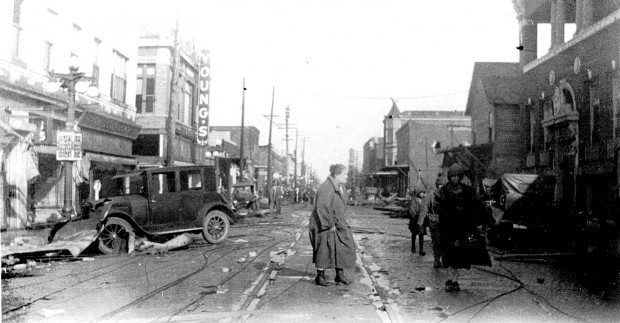
The worst storm of all: Tri-State Tornado holds records 90 years later


Wednesday, March 18, 1925, was a comparatively slow news day in Cape Girardeau.

Among the headlines on the front page of the Southeast Missourian's evening edition: "College not likely to get new building." "Girl, 18, makes second trip to the altar." "Left-hand turn into driveways now prohibited."

And this: "Small town obliterated by cyclone."

Annapolis, Missouri, about 100 miles west of Cape Girardeau, was nearly wiped out by a tornado that passed through the area about 2 p.m. that day, the story stated.

The paper also said a little damage had been reported at Appleton and Perryville, Missouri, but a line of the Cape Girardeau Telephone Co. was down between towns, making communication impossible. But the storm had been "barely noticeable" in Cape Girardeau, "there being only a brisk wind."

No doubt the town went to bed gossiping about the 18-year-old divorcee. Little did they know of the extensive damage and losses their neighbors had suffered.

March 19, 1925

Thursday's headline across the top of the front page revealed a reality few had considered: "STORM TOLL IS NEAR 1,000."

The tornado -- known today as the Tri-State Tornado -- had, indeed, touched down at Annapolis, the first of many landing spots. The tornado went on for more than 200 miles, touching down at Biehle, Missouri; Gorham, Murphysboro, De Soto and West Frankfort in Illinois; and Griffin, Owensville and Princeton in Indiana, setting records along the way that still stand 90 years later.

The National Weather Service Weather Forecast Office website, which categorizes the Tri-State Tornado as an EF5, said it had an average path width of three-fourths of a mile, traveled 219 miles and caused 3 1/2 hours of continuous devastation.

The twister caused 695 deaths, a record for a single tornado.

A record 234 deaths were reported in Murphysboro, the most for a single community from such a disaster. And 33 people died at the De Soto school -- only bombings and gas explosions have caused more deaths at high schools, according to the website.

The site said modern research suggests such a long-lasting tornado is the result of an evolving supercell, in which one storm cell leads to the development of another.

Because the Tri-State Tornado's path was continuous, however, it's believed it could have been one rare, massive storm.

Five people in Cape Girardeau and Perry counties were known to be dead and 14 injured.

But across the river, the early death-toll numbers being reported were much higher: 35 killed at Parrish, 200 at West Frankfort, 500 at Murphysboro.

Dr. G.S. Cannon of Fornfelt, who had been helping treat the injured, told the Missourian: "Several carloads of injured were placed on board trains there at midnight to be taken to a Cairo hospital, and rescue workers were still searching the ruins for more injured and dead."

March 20, 1925

Somber news of the storm's toll on the area continued to roll in Friday. It was time to bury the dead.

A revised list of those killed was printed, with one more than previously had been thought after a report came in by phone after communication was re-established.

The paper said the "latest figures indicate the death list will be more than 600 in final and official compilations."

Hundreds of mourners gathered for triple services at Whitewater Presbyterian Church near Lixville in Bollinger County, Missouri, and a double service was held in the wrecked Catholic church at Biehle.

The tales of devastation seemed endless. One 35-year-old farmer, Joe Blechle, was laid to rest even as his wife lay injured at a neighbor's house in Biehle.

The prognosis was not good for 9-year-old Hazel Statler, who was fighting death at a Cape Girardeau hospital after she sustained a depressed skull fracture when the storm stuck her school at Lixville.

Ida Steuve, who with her sister, Concordia, was injured when wind damaged the Rich parochial school in Frohna, was expected to be taken to a Cape Girardeau hospital for surgery -- if she could withstand the trip.

In Indiana, 92 were reported dead, the United Press reported.

Murphysboro

The tornado had set a record speed of 73 mph between Gorham and Murphysboro, where the death toll continued to rise. One-hundred-fifty bodies were recovered the morning of March 20; 250 people were reported injured.

The Murphysboro power plant was damaged, leaving the city without water or light. One hundred city blocks were destroyed, and 70 more, including residential areas, were swept by flames.

Five students died when the storm ripped through the high school. Four other public schools were damaged, as well, killing 12 students.

Cape Girardeau visitors to Murphysboro urged others to stay away: "The city is under martial law, with state militiamen guarding the ruins. Everywhere there were tragic signs of the disaster."

The city of Murphysboro said it welcomed aid, but urged visitors to stay away. "Raise money; send supplies, but keep the people away," one story read.

So many rescue workers flocked to Illinois towns, a general order was issued to stop the flow of people into the cities.

Supplies had been rushed to the area, but apparently some of the curious visitors had been taking advantage, and townspeople were worried food would run out.

Recovery

Over the week following the Tri-State Tornado, recovery efforts began to take shape.

The Red Cross organized to help in Biehle and Sedgewickvile.

Two representatives worked out a program to help nearly 100 left homeless in the communities, the Southeast Missourian reported March 25, 1925.

The Federal Emergency Management Agency would not be created for another 54 years, but calls were made for government intervention.

"An application will likely be made to Gov. Sam A. Baker for funds from the state appropriation, now pending in the legislature" for relief work, one story read, because local monies weren't going to be enough.

Locally, $1,400 was raised and used to help tornado victims. That equates to just over $18,600 today.

In Illinois, Gov. Lennington Small ordered immediate construction of Highway 13 north from Murphysboro to St. Louis, the newspaper reported.

Isaac Levy, chairman of the general rehabilitation committee in Murphysboro, had asked Small to order the work completed by state labor so Murphysboro citizens could get employment.

Three thousand men from the area were expected to be employed on the project within a few weeks, beginning to rebuild for their communities and their families.

Wednesday 18 March 2015

http://www.semissourian.com/story/2176506.html

continue reading

Turkey: Migrant boat disaster in the Aegean Sea kills six, 2 missing


A small boat carrying illegal Syrian and Iraqi immigrants sank off the Aegean coast of Turkey early on Tuesday. Six aboard were killed while two others are missing in the latest tragedy that befell migrants hoping to cross into Europe via Turkey A small boat carrying 16 illegal Syrian and Iraqi immigrants from Bodrum, a popular vacation resort in southwestern Turkey, to Greece's Kos Island in the Aegean Sea, sank off the Turkish coast around midnight on Tuesday. The bodies of six migrants were recovered from the sea while eight others were rescued by the Coast Guard. Search and rescue crews continue to scour the area for two unaccounted migrants.

The incident was discovered when a Syrian man was found half-conscious off the coast by a Coast Guard patrol. The man told authorities they were sailing to Kos, some 5 miles from Bodrum when their boat started taking in water and sank. He said 15 others were aboard, including Iraqi citizens. Coast Guard boats and helicopters combed the area and rescued seven others who were found alive, while six bodies were found floating near the site where the boat sank.

As search and rescue efforts were underway, the Coast Guard stumbled across another group of immigrants boarding a 7 meter-long rubber boat near the area. Immigrants are suspected of sailing together with those aboard the sunken boat. Forty-six immigrants crammed on the boat were rescued minutes before their dinghy started taking on water and was taken to shore.

The Aegean Sea is a hotbed for illegal immigration, according to figures indicating more than 12,000 immigrants were caught by the Coast Guard last year. Undocumented immigrants from Middle Eastern and Asian countries increasingly head to Europe from Turkey via the Aegean Sea despite the ever-present risk of death in overcrowded dinghies.

In the first three months of 2015, teams rescued 1,497 migrants and captured six smugglers in about 60 incidents in operations in the Aegean Sea.

The Coast Guard captured 12,872 illegal immigrants in 2014 in 524 cases as they were trying to cross into Greece via the country's islands located near Turkish territories by boarding small boats. An average number of 35 people were captured daily while the Coast Guard managed to apprehend only 74 smugglers. Immigrants pay large sums to smugglers who often abandon them halfway through the trip to escape capture.

The number of illegal immigrants captured in 2013 by the Coast Guard was 8,047, with 6,937 of them captured in the Aegean Sea. Figures rose considerably in three years, from 2,531 in 2012.

Syrians who were displaced by four years of civil war in their country make up the majority of captured migrants. Although Turkey offers a safe haven for some 1.8 million Syrian nationals, many look to travel to Europe in pursuit of better employment. Immigrants from Myanmar and Afghanistan are also among the immigrants captured most often in the Aegean Sea during their journey of hope.

Almost all trips end up with the sinking of the boats carrying immigrants, as most travel in small rubber boats that are not built for long-distance travel. The boats are generally boarded by about two dozen people despite their capacity being far below that. According to 2014 figures by the Coast Guard, the bodies of 154 people were found in 842 operations against illegal immigrants throughout 2014, but this figure might be higher since most migrants enter Turkey illegally from the country's southern and eastern borders before reaching its western shores.

Wednesday 18 March 2015

http://www.dailysabah.com/nation/2015/03/17/turkey-migrant-boat-disaster-in-the-aegean-sea-kills-six

continue reading

Indonesia ends search for AirAsia Flight #8501 crash victims; 56 people still missing


The search for remaining bodies from a plane crash in the Java Sea ends on Tuesday night, the head of Indonesia's rescue agency has confirmed.

The ships involved in the search will then be pulled out on Wednesday, Bambang Soelistyo told the BBC.

AirAsia lost contact with flight QZ 8501 on 28 December as it was flying from Surabaya in Indonesia to Singapore with 162 people on board.

The search effort has recovered 106 bodies, with 56 unaccounted for.

The families of those missing are disappointed but understand that the search cannot go on indefinitely, reports the BBC's Alice Budisatrijo in Jakarta.

Frangky Chandra, the older brother of Gani Chandra, an Indonesian man who was on board the plane, and whose body has not been found, said it was difficult for his family to move on.

"We will never stop waiting," Mr Chandra told the BBC.

He said "the most important thing" was that DV1, the official search team, has said it will help with the identification process if any more bodies are found.

Tony Fernandes, the CEO of AirAsia, told reporters last week that he was satisfied with the search operation

"We have been successful... To get more than 50% is considered a huge success," he said.

But he added that the search could not "go on indefinitely".

The fuselage of the crashed plane was located in the Java Sea in mid January and the final part of it that was recoverable was removed at the end of February. Divers established that those elements of fuselage that had to be left in the sea did not contain any bodies.

The bodies that were recovered were mostly found in and around the wreckage, with a few discovered some 1,000km away, off the Indonesian island of Sulawesi. Three were found as recently as 14 March.

Wednesday 18 March 2015

http://www.bbc.co.uk/news/world-asia-31925944

continue reading

Tuesday, 17 March 2015

Migrant boat capsizes near Bodrum, 5 drown, 3 missing


A boat crammed with migrants capsized on Monday in the Aegean sea off the coast of bodrum in Turkey, leaving five people dead and three missing, according to news agencies.

According to the private Doğan news agency, the boat, which had Syrian refugees among its occupants, had been trying to enter Greece illegally when it overturned early Tuesday off the coast of the Greek island of Kos near the Turkish coast. The five dead were all Syrian men, Doğan said.

Coast guard vessels, fishing boats and search and rescue helicopters combed the area for survivors or bodies. So far, eight migrants, including one woman, out of 16 Syrians on the boat have been rescued by the coast guard teams dispatched to the area. The Syrians who were saved were hospitalized and were suffering from hypothermia.

The boat reportedly capsized around 2:00 a.m. when it started to take on water due to windy weather conditions. Fatal accidents are frequent in the area as migrants risk the dangerous sea crossing from Turkey to Greece.

Tuesday 17 March 2015

https://www.blogger.com/blogger.g?blogID=3169324430853717798#editor/src=dashboard

continue reading

Bodies identified in Argentine chopper crash


Forensic experts have identified the bodies of the 10 victims killed when two helicopters filming a French reality show collided in Argentina, including three of France's top sports stars.

'The bodies of the eight French nationals and two Argentine pilots have been identified,' the Argentine judge leading the investigation, Daniel Herrera, said Monday.

The helicopters were filming an episode of Dropped, a reality show in which sports stars were taken blindfolded into inhospitable environments, when they collided in mid-air in a mountainous region of northwest Argentina.

The accident killed Olympic champion swimmer Camille Muffat, renowned yachtswoman Florence Arthaud and Olympic boxer Alexis Vastine, as well as five French television crew members and two Argentine pilots.

It took French and Argentine forensic experts a week to identify the bodies, which were badly burned in the crash.

Herrera said they had relied on dental and medical records and X-rays.

'The bodies are still at the morgue (in the city of La Rioja). I will sign the authorisation for them to be taken to Buenos Aires,' he said.

Tuesday 17 March 2015

http://www.skynews.com.au/news/world/sthamerica/2015/03/17/bodies-identified-in-argentine-chopper-crash.html

continue reading

Myanmar ferry accident death toll climbs to 59


The death toll in a weekend ferry accident off Myanmar's northwestern coast has increased to 59 as more bodies were recovered, state-run media reported Tuesday.

The Myanma Ahlin newspaper said that rescuers pulled 23 more bodies out from inside the ship in about 30 meters (90 feet) of water, but that the number of survivors increased to 169 from 167.

The crowded government-run double-decker ferry was carrying more than 225 passengers when it left the coastal town of Kyaukphyu. The ferry had travelled about 80 kilometers (50 miles) north near Myebon in Rakhine state Friday night when it hit rough seas and capsized after taking on water.

Boat accidents due to overcrowding and bad weather are common in Myanmar's river deltas and coastal regions. People rely on boat transport because of the lower cost and the inaccessibility of many areas by road.

Tuesday 17 March 2015

http://news.yahoo.com/myanmar-ferry-accident-death-toll-climbs-59-032848877.html

continue reading

AirAsia Flight 8501: More Bodies Recovered From Crash Site


The search for AirAsia Flight 8501, which crashed in the Java Sea on Dec. 28, will end in the next “four or five” days, Tony Fernandez, the airline’s CEO, told BBC on Monday. The news comes the same day authorities revealed that more bodies of the crash victims were recovered from the sea.

Fernandes reportedly said that the search for those on board the Airbus A320-200 could not go on indefinitely and that authorities are in constant communication with the next of kin. Last week, Fernandes said that the Malaysian low-cost airline would give "one last shot" at recovering the missing bodies.

Suryadi B. Supriyadi, director of Indonesia's search and rescue agency, said Monday that three bodies were found about nearly 130 feet from where the main fragment of the plane’s fuselage was retrieved, Sputnik News reported, citing local news website Detik.com.

So far, over 100 bodies of the 162 people on board the flight have been recovered, while the plane’s debris and flight data recorders have also been retrieved from the bottom of the Java Sea, where it went down in stormy weather. Flight 8501 was on its way to Singapore from Surabaya, Indonesia. The body of the plane’s pilot, Captain Iriyanto, is yet to be found.

Investigators are reportedly analyzing flight data recorders to determine the cause of the crash.

In January, Indonesia's transport minister said, citing radar data, that the plane made an abnormally steep climb before stalling and crashing into the Java Sea.

Tuesday 17 March 2015

http://www.ibtimes.com/airasia-flight-8501-search-end-next-few-days-more-bodies-recovered-crash-site-1849148

continue reading

18 dead in Julma bus accident


Eighteen people have been killed and fourteen injured in a bus accident at Raralihi, Jumla. The passenger bus carrying 29 people was en route to Kalikot when it overturned at Raralihi, and plunged 200 meters down the road into Tila River at 8.30AM Monday morning.

According to Police Inspector Indra Bahadur Saud, 13 people were killed on the spot while five others died during treatment. Three of the critically injured have been taken to Kohalpur Hospital in Banke for treatment while remaining passengers are being treated at Karnali Academy of Health Sciences. Only one passenger was unhurt in the accident.

Police have identified all eighteen deceased including bus driver Sagar Buda and conductor Harka Buda.

Police suspect the bus may have overturned due to slippery road but the full detail of the accident is yet to come out. Passengers say that the bus was over speeding and lost control at a turning.

Road accidents are common in the highways of Nepal. Most of these accidents are blamed on reckless driving, overcrowding, poorly maintained roads and the terrain of the country.

Tuesday 17 March 2015

http://www.nepalitimes.com/blogs/thebrief/2015/03/16/17-dead-in-bus-mishap/

continue reading

10 killed in bus accident in Chhattisgarh


At least 10 persons died, including three women and a six-year-old girl, in a road accident on Monday morning when a passenger bus crashed into railing of a small over bridge near Korba. The passengers fell into a canal from the broken windscreen, about 30 feet down in water, resulting in their death.

More than 30 persons were said to be injured in the accident. The incident took place at village Madanpur on Badni nullah, main road, inspector in charge KS Tiwari told.br>
According to eyewitnesses, the accident took place at 9.30am about 100km from Vishrampur and a team of police reached the spot for rescue operations two hours after the incident.

The bus, belonging to Hindustan bus service, was headed to Korba from Surajpur district, carrying passengers of Korba, Vishrampur, Katghora, Ambikapur and few from Palamu district of Jharkhand.

Prima facie evidence indicates that there were more women and children travelling in the bus. While nine died on spot, one woman died in hospital during treatment. The bus driver, who was said to be in inebriated, fled after the accident.

Eye witnesses said that the bus was running on a very high speed and made a huge noise when it crashed. While the left side of bus remained hanging in air, passengers sitting in the front cabin fell from bus' broken windscreen.

Police said that the bodies were sent for autopsy. A woman and her two daughters were identified among the deceased while two persons of same family were also reported dead.

Chief minister Raman Singh expressed condolence to the bereaved families and ordered Korba district administration to assist those injured.

Tuesday 17 March 2015

http://timesofindia.indiatimes.com/city/raipur/10-die-in-bus-accident-near-Korba/articleshow/46591284.cms

continue reading

Monday, 16 March 2015

Cyclone Pam: Vanuatu rescue effort as bodies collected after monster storm


A corpse in the main street, another floating in the harbour, reports of dozens dead elsewhere, and buildings and whole villages blasted into pieces.

These were some of the scenes that greeted dazed Vanuatu residents and tourists on Sunday as the rescue effort and clean-up started in the tiny Pacific island nation which was devastated by Cyclone Pam. The monster category-5 storm, which brought wind gusts of 300km/h, has weakened to a category-3 cyclone as it heads towards New Zealand's North Island

On Sunday, the country's National Disaster Management Office reported at least eight people were confirmed dead and 20 had suffered serious injuries.

Advertisement But the death and injury toll was expected to rise as search and rescue efforts ramp up. The first flights bringing outside aid landed at the newly cleared airport near the capital Port Vila about midday on Sunday.

Unconfirmed reports were circulating of more than 40 people killed in northern Penama province, according to the United Nations Office of Coordination of Humanitarian Affairs for the Pacific. The province is about 120 kilometres from Port Vila.

Two foreign nationals were thought to have drowned when their sailing boat sank in the rough seas, but their nationalities have not been confirmed.

Australian tourism operators in Port Vila on Sunday confirmed they saw bodies around the capital.

Resort project manager Bernie Millman said he had gone outside on Saturday morning to find a Vanuatu national dead in front of a resort on the main street.

It looked like some local person had been stranded during the night. Perhaps he'd had too much to drink and had been trying to get back to his home and fallen asleep," said Mr Millman.

"And he's been hit by something. They called the ambulance and the police and they came and got the body."

Charter boat operator Australian Peter Phillipps said the body of an unidentified expat had been removed from the harbour in front of his mooring in Port Vila.

He was a fellow who had been living on a yacht and got into strife. He got into the tender and was drowned. They found his body in the tender [on Saturday].

"I couldn't tell you where he was from. We used to see him standing on his yacht waving to people."

Tom Skirrow, country director for Save the Children, said the Vanuatu Government's National Disaster Management Office co-ordinating the emergency response has confirmed the eight deaths.

The victims had been recovered from Port Vila, and its surrounding areas.

"It's without doubt a small number now and it will increase significantly as we start looking around. The problem at the moment is that no one can phone, no one has any communication or any power, so it's very difficult to get accurate numbers," Mr Skirrow said in a phone interview from Port Vila on Sunday.

Thousands more are believed to be homeless across some of the country's 83 islands after the cyclone's 300km/h gusts were reported to have leveled entire villages.

Monday 16 March 2015

http://www.smh.com.au/environment/weather/cyclone-pam-vanuatu-rescue-effort-as-bodies-picked-up-after-monster-storm-20150316-144nlp.html

continue reading

Rescuers retrieve bodies after Brazilian tour bus crash kills 54


The death toll from a tour bus's horrific plunge into a densely wooded ravine in southern Brazil has risen to 54, as President Dilma Rousseff expressed her sadness over the news.

The bus went off a twisting mountain road on Saturday and crashed 400m to the bottom of the ravine, landing on its side.

Fire fighters pulled the victims from the wreckage, despite the difficult terrain and the bodies were taken to a morgue.

The bus, carrying a group of evangelical Christians to a religious event in the neighboring state of Parana, swerved off a curve on Saturday and 400 metres before coming to rest in a wooded area snarled in thick vegetation.

Rescue crews were still trying to recover the bodies of victims on Sunday. At least six survivors, including two children, were being treated for injuries.

Nearly 100 rescue workers descended on the crash site, but the difficult terrain and night fall complicated the work.

Among the dead were at least eight children and 24 women, regional government spokeswoman Ana Paula Keller said.

Advertisement The toll had initially been put at about 30 but the number rose throughout the night as rescuers continued to find bodies at the difficult-to-access crash site and other victims succumbed to their injuries at a nearby hospital.

A government official in Santa Catarina said the vehicle was likely carrying 59 people. The bus was supposed to be carrying 50 people, authorities said.

Several ambulances and a helicopter were dispatched to the area and recovery efforts resumed this afternoon.

The crash site was near a lookout point in the Dona Francisca mountains, a popular stop for tourists. The bus was operated by a tour firm and was travelling a route of about 300 kilometres between Uniao da Vitoria and Guaratuba, on the Santa Catarina coast.

Witnesses told local press that the driver lost control on the curvy stretch of highway, but the cause was still under investigation. Police said it appeared the brakes on the bus had failed.

Several drivers stopped on the roadside to try to help victims as they waited for emergency services to arrive.

Accidents on this winding road are common. The O Estado newspaper said 66 people had been killed on the highway in the last five years.

In 2007, 27 people were killed in a single accident and another crash in 1999 left 35 dead.

Monday 16 March 2015

http://www.smh.com.au/world/rescuers-retrieve-bodies-after-brazilian-tour-bus-crash-kills-54-20150315-144sq5.html

http://www.rte.ie/news/2015/0315/687193-brazil/

continue reading

Victims of Kazan fire identified


Relatives have identified 16 of the 17 bodies retrieved after last week's fire at the Admiral shopping center in the city of Kazan, 600 miles east of Moscow. Seven of the victims were foreigners, the Tatarstan department of the Emergency Situations Ministry said on Sunday.

"Sixteen bodies have been n identified at the republic forensic medicine center, including the bodies of seven foreign citizens - two from Tajikistan, one from Kyrgyzstan, one from Azerbaijan, three from Uzbekistan and one from Turkey. Also, a fragment of a male body has been identified," a ministry statement said.

Thirteen bodies have been handed over to relatives to be buried.

The fire broke out at the Admiral shopping center on March 11 at 9:30 p.m.

Monday 16 March 2015

http://rbth.co.uk/news/2015/03/15/victims_of_kazan_fire_identified_44516.html

continue reading