Sunday, 15 March 2015

Brazil bus crash: at least 40 dead after plunge off cliff


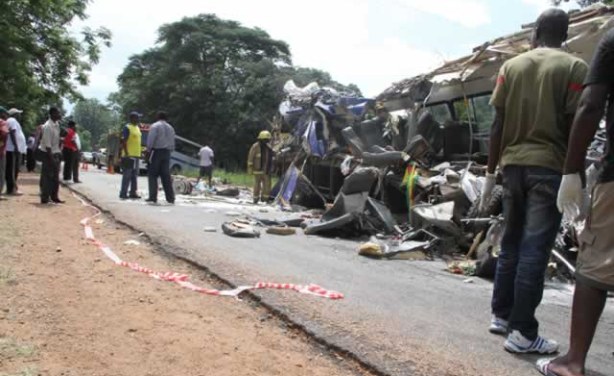
At least 49 people were killed Saturday, March 14, when a tour bus plunged hundreds of meters into a densely wooded ravine in southern Brazil, authorities said.

Among the dead were 8 children and 24 women, regional government spokeswoman Ana Paula Keller told Agence France-Presse.

The toll had initially been put at about 30 but the number rose throughout the night as rescuers continued to find bodies at the difficult-to-access crash site in Santa Catarina state, and other victims succumbed to their injuries at a nearby hospital.

The bus plunged 400 meters (1,300 feet) into a ravine and ended up on its side, snarled in thick vegetation. Rescuers struggled to account for everyone in the failing light and difficult terrain.

Fifty people were supposed to be on the bus, but authorities believed the number of passengers was higher than that.

Ten people were in the hospital. Their conditions were not immediately known.

The crash site was near a lookout point in the Dona Francisca mountains, a popular stop for tourists. The bus was operated by a tour firm and was traveling a route of about 300 kilometers (185 miles) between Uniao da Vitoria and Guaratuba, on the Santa Catarina coast.

Witnesses told local press that the driver lost control on the curvy stretch of highway, but the cause was still under investigation.

"There are people out there, on the hill, in the bus, trapped in the wreckage. But the chances of finding someone alive are pretty slim," state police Colonel Nelson Coelho said in a statement.

Several drivers stopped on the roadside to try to help victims as they waited for emergency services to arrive.

Accidents on this winding road are common. The O Estado newspaper said 66 people had been killed on the highway in the last five years.

In 2007, 27 people were killed in a single accident and another crash in 1999 left 35 dead.

Some 43,000 Brazilians are killed in road accidents annually.

And from 2002-2012, the traffic accident rate surged by over 24 percent.

With the economy growing and the population topping 200 million, an estimated 10,000 new cars are added to the roads every day.

One of the country's last major accidents was in October 2014, when a truck collided with a bus carrying high school students in Sao Paulo, killing 10 and injuring dozens more.

Despite nearly a decade of sustained economic growth that only slowed in recent years, the country has done little to improve or expand its creaky infrastructure.

The country averages more than 18 highway deaths per 100,000 people per year, compared with only about 10 in high-income countries, according to a report by the Inter-American Development Bank.

The tolls in nearby Argentina, Colombia and Chile average about 13.

Sunday 15 March 2015

http://www.rappler.com/world/regions/latin-america/86919-brazil-tour-bus-crash

http://www.theguardian.com/world/2015/mar/15/brazil-bus-crash-51-feared-dead

continue reading

13 killed, 25 injured in Nagaland bus accident


In a tragic road accident, 13 persons died while many were injured when a bus carrying more than 25 passengers fell into a narrow steep gorge at Phek town, Nagaland.

The incident occurred today at around 1.30 pm in between New and Old Phek, Nagaland.

The bus which was returning after the wedding ceremony of a Jessami village girl at Phek fell into a narrow steep gorge killing 13 persons including six women and seven men on the spot while more than four persons were in critical conditions.

The accident victims were rushed to Phek hospital for immediate treatment.

The passengers were travelling in a NST Mini bus from Phek.

Jessami CYS Chairman Khwezobe, Church chowkidar W Ayewebso, two spinsters and two bachelors have been identified from among the 13 victims.

The bodies would be brought back to Jessami village early tomorrow morning where a mass funeral would be organised at Jessami public ground.

Deputy Speaker and MLA from Chingai Assembly Constituency Preshow Shimray has deeply condoled the demise of 13 persons in the road accident.

Conveying his condolence to the breaved family members, the Deputy Speaker in a statement issued to the press late in the evening today prayed for the eternal rest of the departed souls.

Shimray also prayed for the injured persons and hoped for their fast recovery.

The Government and the district administration too have been apprised of the matter and urged to act fast so the bodies may be brought to Jessami village in good time.

Likewise the injured persons too may be taken to Imphal for medical treatment.

The Deputy Speaker also appealed to the Government to extend all possible assistance to the bereaved family members as well as to the injured persons.

Sunday 15 March 2015

http://e-pao.net/GP.asp?src=9..140315.mar15

continue reading

Huge Pacific cyclone devastates Vanuatu, at least eight dead


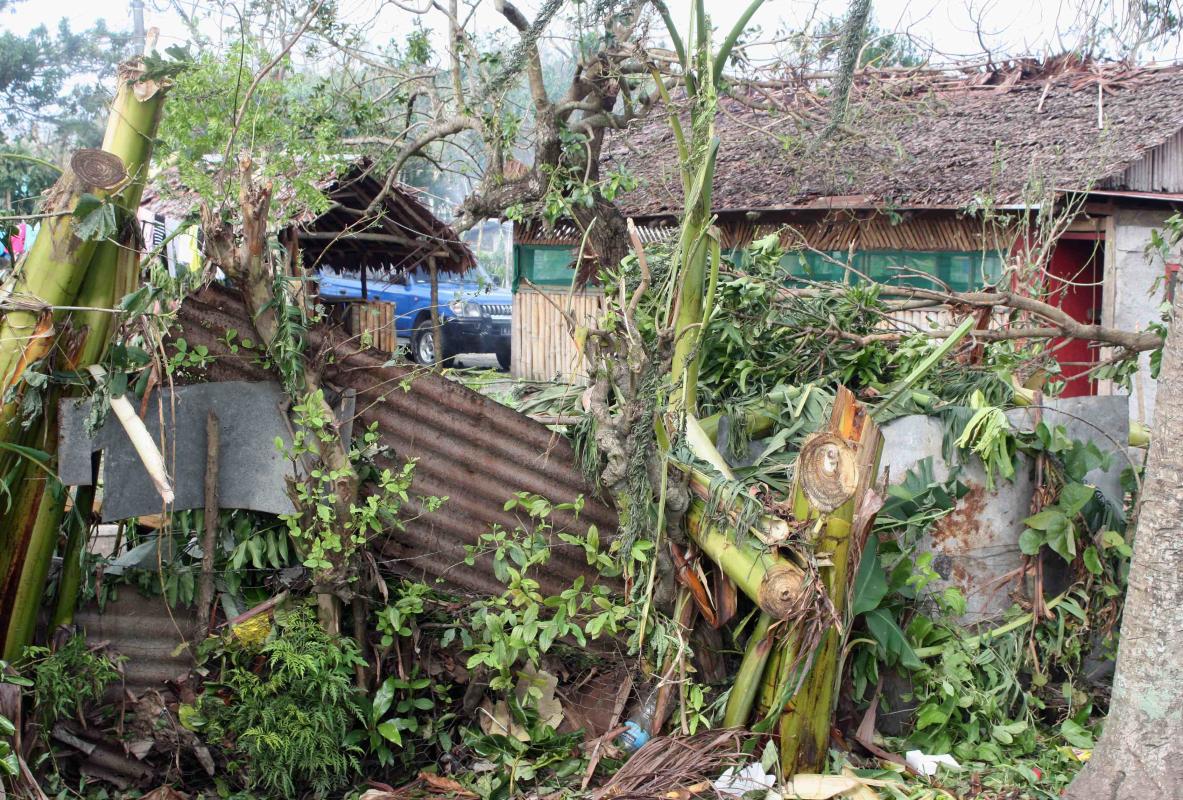
One of the Pacific Ocean's most powerful ever storms devastated the island nation of Vanuatu on Saturday, tearing off roofs, uprooting trees and killing at least eight people with the toll set to rise, aid officials said.

The United Nations was preparing a major relief operation and Australia said it was ready to offer its neighbor whatever help it could.

With winds up to 340 kph (210 mph), Cyclone Pam left Vanuatu cut off, with little power, poor communications and a looming threat of hunger and thirst.

Unconfirmed reports said the number of dead could run into dozens but aid workers said it would be days or weeks before the full impact was known.

"It felt like the world was going to end," Alice Clements, a spokeswoman for the UN Children's Fund (UNICEF), said from Vanuatu.

"It's like a bomb has gone off in the center of the town. There is no power. There is no water."

Tom Skirrow, country director for the Save the Children aid group, told Reuters that Vanuatu's National Disaster Management Office had confirmed eight dead and 20 injured. He said he expected those figures to rise substantially.

Aid workers in Papua New Guinea said at least one person had been killed by the storm there.

Satellite photographs showed the storm covering virtually all of Vanuatu, a sprawling country of 83 islands and 260,000 people 2,000 km (1,250 miles) northeast of the Australian city of Brisbane.

The president of Vanuatu, Baldwin Lonsdale, told a disaster risk conference in Japan he had no confirmed report of the impact of the storm but he appealed to the world to "give a lending hand".

Australian Foreign Minister Julie Bishop said Canberra would be willing to offer Vanuatu whatever help it could.

Formerly known as the New Hebrides, Vanuatu was jointly ruled by France and Britain until independence in 1980. It is among the world's poorest countries and highly prone to natural disasters, such as earthquakes, tsunamis and storms.

Witnesses described sea surges of up to eight meters (26 feet) and flooding throughout the capital, Port Vila, after the category 5 cyclone hit late on Friday.

Aid officials said the storm could be unprecedented in the island's history and one of the worst natural disasters the Pacific region has ever experienced.

They said the storm was comparable in strength to Typhoon Haiyan, which hit the Philippines in 2013 and killed more than 6,000 people.

FEARING THE WORST

Chloe Morrison a spokeswoman for the World Vision aid group said the storm had been terrifying.

"Trees are across the roads. Some of them are piled up so you can barely see over them,” she said. “There are reports that there have been casualties across all of the islands.

"This is going to need a long and sustained response. People in Vanuatu are subsistence farmers. They grow food for their own consumption. Crops will be absolutely wiped out from this.”

Outlying islands may take weeks to reach, aid officials said, while a lack of clean water and widespread damage to crops meant the situation could deteriorate sharply in coming days.

There were no reports of looting but Skirrow described men whose homes had been destroyed walking the streets of Port Vila with machetes and families huddling without shelter after their flimsy homes of thatch were torn away by the wind and rain.

Many residents were in evacuation centers, he said, but the authorities were ill prepared.

"These people are homeless now. These people are going to be there for probably six weeks," Skirrow said.

As darkness fell on Saturday, the storm was moving off to the south but the wind was still strong.

U.N. relief workers were gearing up for a rapid response on Sunday, with members drawn from as far away as Europe.

However, with the airport closed and high wind still blowing it was not clear how they could reach Vanuatu.

Sune Gudnitz, regional head of the U.N. Office for the Coordination of Humanitarian Affairs, said sending in military aircraft was an option, possibly from Australia.

Sunday 15 March 2015

http://news.yahoo.com/cyclone-batters-pacific-island-nation-vanuatu-u-n-024357605.html

continue reading

Saturday, 14 March 2015

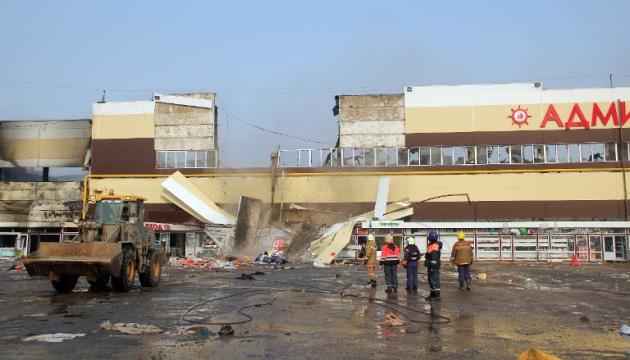
Death toll rises to 19 in Russia fire


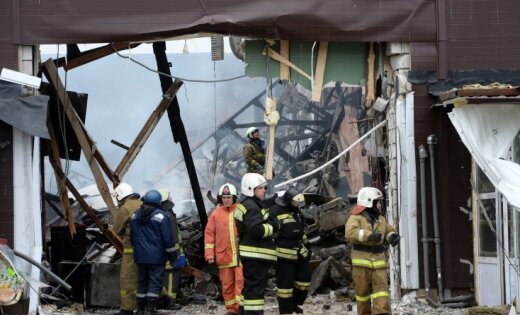
At least 19 people have been killed including a Turkish national in the fire that collapsed a shopping center in the western Russian city of Kazan on Wednesday, officials have said, APA reports quoting Anadolu Agency.

The head of a regional branch of the Ministry of Emergency Situations, Igor Panshin said Saturday that the death toll had risen to 19 from a previously reported 11.

Seventeen bodies were recovered and two bodies still remain under rubble, it was reported.

The name of the Turkish victim is Kazim Sumer, born in 1989, according to authorities in the Republic of Tatarstan, of which Kazan is the capital.

Tatarstan declared a day of mourning Saturday. The flags of Russia and Tatarstan were lowered.

A fire broke out on Wednesday in a cafe located in the mall's first floor and spread to the other two floors, the media reported.

Around 650 people had to be evacuated from the complex.

Saturday 14 March 2015

http://en.apa.az/xeber_death_toll_rises_to_19_in_russia_fire_224404.html

continue reading

33 dead, at least 12 missing after Myanmar ferry disaster


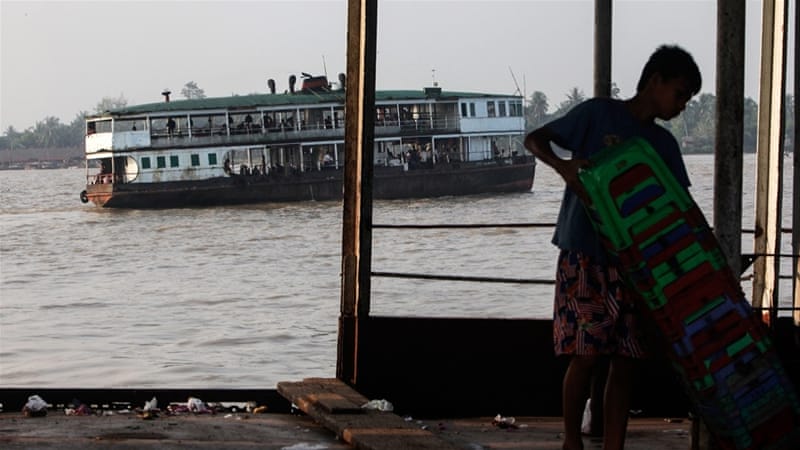
At least 33 people have drowned after an overcrowded ferry capsized in northwestern Myanmar, government officials said.

The vessel was carrying more than 200 passengers when it encountered bad weather and was hit by huge waves on its journey from the coastal town of Taunggok to Sittwe, capital of the western coast state of Rakhine, according to officials. The vessel called the Aung Tagun 3 sank late on Friday.

"The latest death toll is 33 -- four men including a monk and 29 women. At least 12 persons are still missing," a police officer in Sittwe town told the AFP news agency, speaking on condition of anonymity.

"We suspect that the boat sank because it was overloaded with goods," the police officer said, adding that the ship was listed as carrying 214 passengers and crew.

But locals said they feared the ferry was packed with unregistered ticket holders who would not have shown up on the ship's manifest, a common practice on the impoverished nation's often overcrowded ferry network.

"We don't know how many are still missing because some people were on board without official tickets," Hla Shwe, a local from Ngaputhone village, which lies a few kilometres (miles) away from where the ship went down, told AFP.

Rescuers have brought 167 passengers to safety.

Search and rescue teams aided by Myanmar’s navy are scouring the capsize site for survivors.

Boat accidents are common in the country’s river deltas and coastal regions due to bad weather, cyclones and the overcrowding of poorly-maintained vessels. People in Myanmar often travel by boat because of the low cost and as many parts of the country are inaccesible by road.

According to the Associated Press, such disasters have become troubling common in the area after sectarian violence between Buddhists and Muslims displaced as many as 140,000 people in 2012:

In recent years, Rakhine state has been the departure point for thousands of desperate Rohingya Muslims, who crowd on to small and dangerously overcrowded boats to escape persecution, often aiming for Thailand and Malaysia. [...]

Referred to by the government as Bengali, they are largely seen as illegal immigrants from Bangladesh, even if many can trace their ancestry in the country back for generations.

In October, Rohingya rights group the Arakan Project estimated that 100,000 people have fled the area by boat in the last three years.

Saturday 14 March

continue reading

Friday, 13 March 2015

Thousands die on Bangladesh's roads every year. One app offers hope.


Coming to rest against a tree at the side of the highway, the car had narrowly avoided catastrophe. Jennifer Farrell’s first instinct as a doctor was to help the motorcyclist. Just moments before, a bus had been crossing paths with the young American medic’s vehicle on the N2 – one of the world’s deadliest highways – when the motorcyclist had overtaken at speed. Running from the wreck towards the injured man, she had already anticipated that he would swiftly get up, grab his motorbike and flee.

“There’s a lot of vigilante justice in the world of road traffic accidents in Bangladesh,” she says. “People will pull people out of cars and beat them to death.” The ever-present threat of injury, or worse, on the country’s roads is a harsh reality that many in Bangladesh have simply become accustomed to.

Comparatively speaking, for every two fatalities in road accidents in the US, there are 160 deaths on the streets and highways of Bangladesh. Just under half of those killed are pedestrians, with 82% of injured parties in all road accidents succumbing to their wounds because of a lack of basic medical care at the scene.

“We’re trained in the US from the time that we are two or three years old how to dial 911, and you always just think that it’s there and you don’t realise that it’s not like that in most parts of the world,” says Farrell. Even as we speak by Skype, as if to underline the problem, the invasive and repetitive sound of car horns fills the space of her sixth-floor apartment in Dhaka.

Farrell, a Duke alumnus and Tulane University-educated doctor from Santa Monica, California, is the founder and CEO of CriticaLink – the world’s first mobile app-driven emergency medicine system, currently undergoing a trial in Bangladesh’s capital.

According to the World Health Organisation, fewer than 10% of road traffic accidents are attended by ambulances, a commodity in limited supply in a country with a population of 149m. To date, there is also no emergency telephone number to call to report accidents or summon emergency services, nor is there any emergency medical training available to doctors or nurses.

It wasn’t until her final year of college that Farrell had her first taste of trauma medicine in the developing world. With four years as a volunteer paramedic with her campus ambulance under her belt, she received a grant that took to her to South Africa to work in prisons and schools, teaching first aid to medics. By 2012, she had arrived in Bangladesh to assist a trauma surgeon in conducting similar training sessions in Asia.

“We spent about a month doing trainings with youth volunteers, doctors, medical students and security guards. We trained hundreds of people, but my biggest concern was how to connect these people with the people who need them. So this is when the idea for CriticaLink came: using mobile technology to connect these people to the people on the streets that need their help.”

Having seen the extent of mobile usage firsthand after her own car crash on the N2 highway, Farrell is adamant mobile technology has a vital role to play in bringing emergency medical care to developing countries.

“I have a picture that someone else took of everyone taking a picture of us. There’s a crowd of a hundred people and everybody is pulling out their phones to snap pictures and upload it on Facebook. If they can snap a picture and upload it on Facebook, they can snap and a picture and send it to the reporting centre.”

The premise for the innovative system is simple, and it works much the same way as Uber – the only difference is that someone is coming to potentially save your life rather than give you a ride. Using the CriticaLink mobile app, a phone call or an SMS message to report accidents goes to a call center, where volunteer operators are able to alert nearby first responders with the help of location-based technology. Within seconds, the responders have the whereabouts of the accident, with maps, up-to-date information and images at their fingertips.

So far, Farrell has trained some 3,000 people from all walks of life, with 500 registered unpaid volunteers, both male and female, aged on average 21 or 22 years old.

They are rigorously trained by qualified medics in triage, checking vital signs, protecting the head and neck, controlling bleeding, caring for burns, performing CPR and splinting fractures before they are allowed into the field. Even then, they must pass a gruelling process of review sessions, a series of practical workshops, and written and practical exams.

Although still in the pilot stage, with 125 fully certfied first responders participating in the beta test, the system seems already to be having an impact: since the start of the trial in November, it has had a number of success stories, most notably last month when a garment worker was severely injured falling from a bus.

After receiving a report from a bystander who witnessed the accident, the call center alerted through the app one of the CriticaLink first responders, who headed to the scene. “It was actually outside one of our areas, but he was close by and he went. He then alerted some of the others through the app to come and help and to meet him in Uttara, where we do have a team,” Farrell says.

From the Uttara suburb of Dhaka, they took the victim by auto-rickshaw to the nearest hospital, where she was refused treatment due to the severity of her wounds. After she was stabilized, she was eventually accepted and operated on at Dhaka Medical College and Hospital, where the responders had called ahead to make sure that a blood donor was waiting and then informed the family.

“This was a poor garment worker who probably wouldn’t have made it. She had no money to pay for transport to a hospital and had multiple internal bleeds and a head trauma,” says Farrell.

Providing a good Samaritan service free of charge in a country where the national average annual income per capita is just $700 presents the greatest challenge to the project thus far. “This kind of system has never existed in Bangladesh, so the idea of someone coming to help you out of their own free will is one that people are very sceptical of. ‘Are you going to steal from me? What do you want from me? Are you really here to help?’” explains Farrell. “I think it’s going to take time for people to recognise that we’re there to help them.”

Each year, accidents claim 5.8 million lives worldwide, nearly all of which happen in developing countries like Bangladesh. It is not uncommon to find 4,000 patients in an 800-bed hospital awaiting attention: on the floors, in the stairwells, two to a bed and, in some cases, in between and underneath them as well. To add to this, up to 100 trauma patients a day can arrive at emergency rooms seeking urgent treatment.

Of course, it is not just road traffic accidents that are pushing the overburdened healthcare system to breaking point. Bangladesh has been awash in waves of political violence in recent months amid ongoing deadlock between the government and opposition. Over 100 Bangladeshis have been killed, including the murdered American-Bangladeshi blogger Avijit Roy, in a rising tide of violence, train derailments and petrol bomb attacks on buses and buildings. And there are of course well-documented disasters, such as the Rana Plaza factory collapse on 24 April 2013, which crushed 1,129 garment workers to death.

Farrell found out the day after the disaster that she had been successful in obtaining a Fulbright scholarship to help set up CriticaLink. “I remember hearing the news about Rana Plaza and going, ‘If they don’t give this to me, they’re crazy. This is exactly why we need to do this project.’

“For me it was a sign to the rest of the world that this was something that was necessary. It was also when I knew this concept would work, as people were already trying to use social media, WhatsApp and mobile messaging to coordinate themselves.”

With plans in place to expand the project to other parts of the country by the end of 2015, Farrell is already leading training sessions in Bangladesh’s second-largest city, Chittagong, which came to world prominence due to its infamous shipbreaking yards. Workers here toil dismantling the asbestos-ridden hulks of oil tankers and container ships with limited or inadequate safety equipment; they account for a third of the trauma patients at the city’s medical center.

Ultimately, CriticaLink is a blueprint for helping millions across the developing world access medical services currently out of reach or non-existent in their countries. For her part, Farrell is confident that the app will bring about much-needed change in Bangladesh and elsewhere in the world with a greater importance being given to emergency medicine in particular – so long as there is a will and the human resources to deal with the problem.

“The skeleton of this whole system can be adapted not just to handle emergency services, but to help sexual assault cases in India or obstetric complications in rural areas. My goal is to see CriticaLink functioning and working in Dhaka, but with the ability to go anywhere. There is something there that tomorrow you could take to Ghana, to Nairobi, to South America. There’s room for technology and innovation in health, even in places with limited resources.”

Friday 13 March 2015

http://www.theguardian.com/world/2015/mar/13/bangladesh-deady-road-accidents-criticalink-app-emergency-services

continue reading

Decoration day: Ebola leaves no graves to decorate in Liberia


An article on the importance of burial rituals following the ebola crisis.

Finda Fallah sat in her tiny one-bedroom apartment, boiling up rice and leftovers with one of the few children in her family still alive.

It was the night before Decoration Day, one of the nation’s most important public holidays, when Liberians clean, paint and decorate the graves of their relatives to honor lost loved ones.

But this year, after the Ebola outbreak decimated her family, there were no plots for Ms. Fallah to tidy. Burials were banned because of the highly contagious nature of corpses. The only grave Ms. Fallah could visit was that of her brother-in-law, whose funeral led to the infections in her family.

The thought of his grave made her angry, especially because her mother, sister, husband, two nephews and her 8-month-old baby, Fayiah, were cremated, leaving painfully little to mark their passing.

“I can’t go outside,” she said the next day, when the holiday came.

Decoration Day is a tradition adopted by freed American slaves who in the early 1800s settled in the area of West Africa that became Liberia. The national public holiday, which had its 99th anniversary on Wednesday, is often as much a celebration of life as a memorial to the dead.

But this year, it was a somber affair in the aftermath of the Ebola epidemic. The outbreak disrupted the intimate funeral practices that sometimes involve the bathing of dead relatives, the braiding of hair and the kissing and touching of bodies at burial services.

“May we pause to remember all of those who lost their lives during this Ebola crisis; I say they were heroes and not victims,” said the Rev. Christopher Toe, at a church service for Decoration Day on Wednesday. “Had they not died, the international community would not have come. Had they not died the U.S. government would not have sent all the U.S. Marines they sent.”

“They did not die in vain,” he added.

A handful of deputy ministers and ministry of health staff members sat in the pews of the half-filled Presbyterian church in the heart of the capital, Monrovia, for the national celebration. Members of the United Nations Ebola mission and the Centers for Disease Control and Prevention joined them.

“Today is not an official government of Liberia memorial day ceremony for Ebola victims,” said Tolbert Nyenswah, the head of Liberia’s Ebola response. “Because Ebola is not over.”

The countdown until Liberia is officially declared Ebola-free is on. It began on March 5, when the last known Ebola patient, Beatrice Yardolo, 58, an English teacher, was discharged from a Chinese Ebola treatment unit.

Ms. Fallah, who herself was infected with Ebola, had to care for her children, nieces and nephews in an elementary school that was turned into a makeshift holding center where people suspected of having Ebola were housed, in squalid conditions, before being taken to one of the few treatment centers in the city at the time.

In a damp blue classroom, Ms. Fallah fed and cared for them, trying to separate the sick from the well. She was the only adult caring for seven children. Then the center was ransacked by angry residents in August, and she and her children were left wandering through the vast neighborhood, known as West Point.

Ms. Fallah still dreams about her little nephew, Tamba Nilo, who died in a treatment center, rolling around in a long T-shirt, saying “I’m hungry.”

Ms. Fallah believes her psychological survival now depends on forgetting. She bows her head and passes through special routes in the narrow sandy alleyways to avoid the school and the cramped house where she and her family used to live. She tries not to let her eyes dwell on women who remind her of her mother.

While Ms. Fallah survived, she does not know how much longer she can last, having only limited support from a nongovernmental organization that is paying her rent and sponsoring her niece’s school fees. Ebola survivors are now lobbying for more support.

Friday 13 March 2015

http://www.nytimes.com/2015/03/13/world/africa/ebola-thief-of-rituals-leaves-no-graves-to-decorate.html?_r=0

continue reading

Tanzania: Iringa bus crash toll reaches 50 - eight bodies identified


The death toll of the traffic accident that occurred at Changarawe village in Mafinga, Mufindi District, Iringa Region, on Wednesday morning increased to 50 people on Thursday after eight casualties died in hospitals.

Eight bodies were identified by relatives by Thursday. On Wednesday morning, 42 people who were travelling in a bus christened Majinja died instantly as 23 others were seriously injured after a container which was carried by a truck fell on the Dar es Salaam-bound bus from Mbeya.

Iringa Regional Police Commander, Ramadhani Mungi said most of the identified bodies are Mbeya traders from Soweto market saying they are yet to recognize eight people who died on Thursday.

However, he said, the identification process is going on at Iringa Referral Hospital and Mufindi District Hospital.

Mr Ramadhani Mungi, said from the scene of the carnage yesterday that the accident occurred at Changarawe village at around 10 am.

He said the container fell on the bus as the truck driver was attempting to avoid potholes along the road. "The container fell on the bus with registration number T 438 CDE when the truck carrying the container swayed while attempting to avoid potholes along the road," he narrated.

According to Mr Mungi, the accident was caused by the truck driver whose identity was not immediately established, as he was attempting to avoid the potholes while on high speed.

The Iringa Regional Commissioner (RC), Ms Amina Masenza, said the deceased's bodies were taken to Mufindi District Hospital mortuary for preservation pending collection by their relatives.

She said the injured persons were taken to the same hospital for medical treatment, while those in critical condition have been referred to the Iringa Regional Referral Hospital.

Following the accident, President Jakaya Kikwete has sent a condolence message to the RC, saying the nation has suffered a great loss.

"I'm shocked, saddened and pained from the bottom of my heart to learn that over 40 people died and several others were seriously wounded in the grisly accident," Mr Kikwete said in a statement issued by the Directorate of the Presidential Communications in Dar es Salaam.

President Kikwete assured the bereaved families that he was with them "during this hour of great need." He wished the injured passengers speedy recovery.

Iringa Chief Medical Officer, Robert Salim said the identified bodies have been collected by their relatives.

Friday 13 March 2015

http://allafrica.com/stories/201503130161.html

continue reading

DNA testing could help address humanitarian crisis at the border


Recently, the remains of yet another migrant were reported in Brooks County, Texas, a county bordering Mexico. That's the 17th dead body in that county in the first two months of 2015. Sadly, that's not really news. Hundreds of undocumented migrants are found dead along the southern U.S. border each year, and many are buried without identification. What is surprising is that most are from Central America -- not Mexico.

Last year, more than 50,000 unaccompanied children from Central America crossed into the United States. According to a recent nonpartisan congressional Government Accountability Office report, the children migrate north because of violence and economic concerns in their home countries, and to reunify with family members already in the States.

But the journey is treacherous, and some migrants don't make it -- hence the 400 dead bodies along our border each year. When a migrant doesn't survive, tracing his or her identity is not simple. Back home, the disappearance is a nightmare for their families who have no idea if their loved one is alive or dead. The Colibrรญ Center for Human Rights reports that relatives of missing migrants contact dozens of agencies in hopes of finding family members, often at great cost.

On the U.S. side, authorities struggle to identify the body, with DNA being one of the last considerations. While DNA testing seems routine on TV crime shows, in reality, it's expensive to run DNA tests and, even if you can, you need to compare results with people in a database. It is challenging enough to collect DNA from relatives of missing Americans, much less to track down relatives in distant villages in Central America. Without an international DNA database, processing DNA from unidentified migrants is not cost-effective, especially for forensic agencies and nongovernmental organizations already strapped for funds.

Just because it's hard, however, doesn't mean we shouldn't do it. Every human being has a right to an identity, even after death. Knowing where our loved ones are and whether they are safe are key values of a civil society.

An infrastructure exists to conduct this kind of DNA testing, and there is proven technology for developing secure international DNA databanks. Moreover, scores of well-intentioned nongovernmental organizations already are working with migrant families to reunify families. What we don't have is a coordinated effort to bring advocate groups together on behalf of victims and families. Too many groups are expending resources to track individuals case by case, rather than working together, and with forensic agencies, to develop a better system that respects the privacy rights of victims and families.

Another reason to develop a humanitarian DNA system for migrant families is the large numbers of unaccompanied children who enter the United States each year and whose safety we are obliged to protect. As we saw this past year, authorities have been struggling to house, screen, process and repatriate thousands of children from Central America. The sheer volume means we risk sending some of them back to situations where they will be exploited or harmed. DNA testing could prevent them from being handed over to a trafficker pretending to be their parent or uncle. A DNA system also would increase the odds of connecting detained migrant children with families in the United States -- or indeed, of identifying them if they turn up dead in a desert.

Definitions of "family" vary among cultures, so no decision to repatriate should be based solely on biological relations. The best interests of a child should supersede all other factors. Importantly, DNA and personal information collected for humanitarian purposes should be protected from secondary use by law enforcement. It is possible to protect individuals at risk of exploitation without compromising legitimate legal processes.

Working together, nongovernmental organizations, government and law enforcement can bring more families together and provide answers to more families wondering what has happened to their sons and daughters. So let's catalog DNA from relatives of the missing, here and across the border. Let's catalog DNA from human remains before they are buried. Let's develop humanitarian-rooted processes to confirm claimed relationships before we place children with traffickers.

Every three days, we discover another body in Brooks County, Texas. Every day, 137 children from Central America turn themselves in to the U.S. Customs and Border Patrol. These numbers add up to a human rights crisis that requires a humanitarian response. DNA is just one biometric tool, but it is a powerful one. We should be using it for humanitarian purposes to identify the dead and protect thousands of children in our trust.

Sara Huston Katsanis, a former DNA analyst in a forensic laboratory, is an instructor and genetics policy researcher in the Science & Society initiative at Duke University.

Friday 13 March 2015

http://www.cleveland.com/opinion/index.ssf/2015/03/dna_testing_could_help_address.html

continue reading

Death toll in Russia blaze rises to 11


The death toll after a massive fire ripped through a shopping mall in Russia has risen to 11.

Officials initially announced the deaths of a woman and four men after the blaze destroyed the three-storey building in Kazan, the capital of Tatarstan and about 800 kilometres east of Moscow.

However, six more bodies had been found, up to 25 people were still missing and it could take several days to comb through the debris, emergency ministry spokesman Andrei Rodygin told RIA Novosti news agency on Friday.

A security guard had initially tried to extinguish the fire himself and it took some time before the fire brigade was called, reports said.

Although the fire has been put out, an area of 4,000 sq m (43,000 sq ft) was razed to the ground.

Business owners who had broken through a police security cordon to save their goods from the fire were feared to be among those trapped in the rubble, Tass news agency reported.

Five hundred riot police were sent to seal off the centre to stop people entering the building, it said.

A total of 650 shoppers were rescued from the centre.

Of those who sought medical help 16 remain in hospital, say regional health authorities.

Friday 13 March 2015

http://www.skynews.com.au/news/world/europe/2015/03/13/death-toll-in-russia-blaze-rises-to-11.html

continue reading

9 victims of Florida military helicopter accident identified, 2 still missing


According to reports the bodies of seven Marines and two soldiers have been recovered from the wreckage. The other two soldiers are feared dead.

After hours of searching up and down the foggy Florida coast for survivors, Military officials announced Thursday morning they would be transitioning their search and rescue operation into a recovery effort and safety investigation.

"At this point we are not hopeful for survivors," said Colonel Monte Cannon the 96 Test Wing Vice Commander at Eglin Air Force Base

Seven marines and four soldiers were aboard the helicopter when it crashed in the Santa Rosa Sound during a routine training mission. Rescuers found wreckage and human remains Thursday, and two bodies of soldiers were recovered.

The chopper was carrying four guardsmen and seven Marines when went it crashed

According to officials, the Louisiana National Guard and the U.S. Marine Corps were operating a nighttime training exercise when the helicopter, carrying four guardsmen and seven Marines, went down. Media reports say the night was heavy with a thick fog.

Nine bodies have been identified so far.

Local crews, like the Pace Fire District, have been helping military officials search the Santa Rosa Sound for any debris or human remains but heavy fog has made their job difficult.

"The biggest thing is the weather it's a hindrance to us with the fog our visibility is limited so we're going out in groups to make sure that the safety factor is there for the boats involved," said Robby Whitfield, Chief of the Pace Fire District.

The cause of the crash is still under investigation. The recording device, similar to a black box on an airplane, is still believed to be under water with the wreckage.

Military officials have not released any names of those aboard the Black Hawk that went down.

"We have retrieved remains. That's all I can say at this point. We have an armed service medical examiner out there right now and he's working that stuff," said Eglin Fire Chief Mark Giuliano.

Another helicopter accompanying the crashed Black Hawk during the training drill returned safely.

An investigation into the cause of the crash is currently under way.

http://www.wjhg.com/home/headlines/296154851.html

http://time.com/3743785/army-blackhawk-helicopter-crash-florida/

continue reading

Hunt for survivors afer new Bangladesh factory disaster


Rescue teams searched Friday for survivors in the rubble after a factory collapsed in Bangladesh, killing at least seven people and sparking fresh criticism over the country's appalling record on workplace safety.

Hundreds of soldiers and emergency personnel worked through the night to clear debris from the site of a half-built cement factory in the port town of Mongla, the area's top administrator Shah Alam Sarder told AFP.

Twelve people were plucked alive from the rubble overnight but rescuers, who were using two cranes as well as steel cutters, were having to work painstakingly slowly for fear of triggering a fresh collapse.

Six bodies have been recovered so far and another could be seen lying under the rubble. At least 53 people were injured, including six whose conditions were critical.

More than 90 staff were on the site when the structure started to cave in on Thursday afternoon, trapping scores of workers under a mass of newly-mixed concrete and steel.

"We're trying to reach the (seventh) body by cutting through a maze of steel but it's taking hours because any mis-step could trigger a collapse in the debris or on the other side of the factory" which is still in tact, fire department director Sheikh Mizanur Rahman told AFP.

Local police chief Jahedur Rahman told AFP that up to 10 people remained unaccounted for.

Most debris cleared

However the fire service doubted whether any more workers would be found, saying that more than 80 per cent of the debris had now been cleared. The collapse comes less than two years after a garment factory complex imploded outside the capital Dhaka, leaving at least 1,138 people dead and highlighting Bangladesh's perilous labour conditions.

While that disaster did prompt some improvements and greater monitoring of safety in the garment industry, campaigners say that conditions in other workplaces remain as dangerous as ever.

"The horrifying collapse of yet another factory is a stark reminder that the root causes of threats to workers rights have yet to be addressed across the manufacturing sector in Bangladesh," said Sarah Labowitz, an expert on labour rights at New York University Stern School of Business. Survivors said that poor scaffolding and shoddy construction was the cause of the disaster.

The government has tasked a nine-member committee to complete an investigation into the case within a week, Sarder told AFP. Masud Kazi, one of the workers who was injured, told the Daily Star newspaper that he and his fellow construction workers were pouring concrete onto the roof when it started collapsing.

"Suddenly, everything broke down," he said.

"I heard a loud noise and saw the roof caving in through the middle," another survivor told private television station Jamuna. The police chief Rahman said several people were seriously injured after jumping from the collapsing roof.

"Most of the workers who were on the ground floor were mostly able to escape unhurt," he added.

Friday 13 March 2015

http://news.asiaone.com/news/asia/hunt-survivors-afer-new-bangladesh-factory-disaster

continue reading

Thursday, 12 March 2015

At least 50 Sudanese drown in the Mediterranean


At least 50 Sudanese nationals have drowned when the boat they were travelling on from Libya to Europe sank in the Mediterranean on Wednesday, multiple sources disclosed.The spokesman of the Sudanese association in Libya, Salaheldin Yahya, told local radio in Benghazi that the Sudanese were among over 100 African migrants who were heading to the Italian coast when the accident happened.

Relatives of one of the victims told APA that their relative who migrated to Libya three years ago was caught in the accident while trying to reach Europe.

Other Sudanese residents in Libya confirmed the incident.

After a group of 21 Egyptians were killed by Libyan extremists last month, many Sudanese stranded in Libya decided to seek refuge in Europe he added.

The International Organization for Migration (IOM) said recently that the Italian coastguard have rescued hundreds of African migrants from a sunken boat in the Mediterranean.

Libyan authorities are working with the IOM to recover the bodies, which could not be identified.

Thousands of African migrants attempting to cross the Mediterranean from Libya and Egypt have died in the last two years.

Thursday 12 March 2015

http://en.starafrica.com/news/at-least-50-sudanese-drown-in-the-mediterranean.html

continue reading

Kenya: Boat tragedies rise due with bad weather


Fishermen in Lake Victoria, Kenya’s biggest fresh water body, are worried about their lives as erratic weather caused by climate change has led to increased boats tragedies due to strong winds.

The strong winds have become a nightmare to fishermen who depend on the water body for their livelihood.

In the past three days, strong winds that have caused heavy currents in the lake have resulted in boats capsizing and put fishermen’s lives at risk.

In Homa Bay County, six people including a sailor narrowly escaped death on Tuesday morning when the motor boat they were travelling in capsized in Lake Victoria at Kamgere beach in Rusinga Island.

In Dunga Beach, two fishermen escaped death on Tuesday after their boat capsized due to strong waves.

Each year, an estimated 1,000 people die in boating accidents in Lake Victoria.

The Kenya Meteorological Department forecasts that the western part of Kenya, where the lake is located will experience heavy rains accompanied with heavy storms starting this week as the March-May long rainy season kicks off.

John Kiunya, the Network Beach Management Unit Chairman, Kisumu County said the bad weather have become a menace to the fishermen community.

"Fishermen are now even afraid to venture deep water as they do not know whether they will come back safely. This has affected our earnings," he said.

"We appeal to both fishermen and passengers to ensure that they use safety jackets and to venture into the lake only when it is calm to avoid such unfortunate incidences," Kiunya added.

Kiunya said they have speedy boats donated by Lake Victoria Environmental Management Programme and well-wishers to rescue fishermen and other people when boats capsizing happen.

Thursday 12 March 2015

http://www.coastweek.com/3810-Drowning-Boat-tragedies-in-Kenya-rise-due-to-bad-weather.htm

continue reading

Japan marks 4th anniversary of tsunami


Japan yesterday observed the fourth anniversary of the quake-tsunami disaster that swept away thousands of people and sparked a nuclear crisis, a tragedy that has left visible scars on the landscape and continues to wreak misery for many.

Remembrance ceremonies were held in towns and cities around the disaster zone and in Tokyo, where Emperor Akihito and Empress Michiko led tributes to those who died in Japan's worst peacetime disaster.

Television footage showed victims and volunteers joining their hands in prayer near the shell of a tsunami-hit building in the north-eastern port town of Minamisanriku, one of the many stark reminders of the destruction.

A nationwide minute of silence followed the wail of tsunami alarm sirens at 2.46 pm (1.46pm Singapore time), the exact moment a 9.0-magnitude undersea quake hit.

Thursday 12 March 2015

http://www.straitstimes.com/the-big-story/asia-report/japan/story/japan-marks-4th-anniversary-tsunami-20150312

continue reading

Bangladesh Mongla cement factory collapse kills eight


At least eight people have died after a cement factory partially collapsed in Bangladesh, police say.

About 70 people were in the building in the port town of Mongla, 200km (125 miles) south-west of the capital Dhaka, when the roof gave way. The factory had been under construction.

More than 60 people were rescued and many were taken to hospital. Many had been working on the roof itself.

Bangladesh has a history of poor building safety standards.

The collapse of the Rana Plaza complex in Dhaka left more than 1,130 people dead in 2013. Most of them had worked in the garment industry.

The disaster was one of the world's worst industrial accidents.

In Mongla, rescue co-ordinator Mizamur Rahman told BBC Bengali that six bodies had so far been recovered.

Rescuers have seen two more bodies but have not said how many more workers remain missing.

The cement factory compound is army-owned but the construction work was being carried out by a Chinese-owned firm.

Survivors said dozens of the men had been working on the roof when it collapsed.

Footage broadcast on television in Bangladesh showed piles of scaffolding, metal and concrete at the bottom of the building.

Thursday 12 March 2015

http://www.bbc.co.uk/news/world-asia-31849576

continue reading

Five killed, 25 feared dead in Russian mall fire


Russian rescue workers on Thursday combed through the incinerated rubble of a shopping mall for the bodies of 25 people still missing a day after a fire ripped through the centre, leaving five dead, local officials said.

The emergency situations ministry said it had abandoned hope of finding any survivors after the three-storey building was destroyed in the blaze in Kazan, the capital of Tatarstan 800 km (500 miles) east of Moscow.

"The roof has collapsed, people have been trapped there but no survivors," Igor Panshin, director of the emergency situations ministry in the Volga region, told TASS news agency.

He said up to 25 more bodies were likely buried in the rubble.

Those who are missing "are employees who have not contacted their relatives yet," he said.

Some 500 police officers and riot police had been deployed to seal off the building on Wednesday afternoon as panicked shopowners pushed past a security cordon into the burning centre in a bid to save their merchandise. Television footage showed towering plumes of black smoke rising from the burning building.

TASS quoted a police source as saying five people had died and 55 were injured. A total of 650 shoppers were rescued from the fire that razed a surface of 4,000 square metres (43,000 square feet).

Tatarstan prosecutors released a statement calling for the arrest of the head of a company that rented the premises for failing to properly evacuate people, and handed the case to the Investigative Committee which probes serious crimes.

Thursday 12 March 2015

https://uk.news.yahoo.com/five-killed-25-feared-dead-russian-mall-fire-124406119.html

continue reading

QZ8501: Hunt for bodies drawing to close, but AirAsia still not giving up


AirAsia boss Tony Fernandes said Thursday he was not giving up on finding more bodies from one of the airline's jets that crashed in the Java Sea last year, but flagged the hunt will draw to a close within weeks.

More than 100 bodies and the black box recorders have been recovered since Flight QZ8501 went down in stormy weather while flying from the Indonesian city of Surabaya to Singapore on December 28, killing all 162 people on board.

"My message is we're not giving up. (The families) know that because I'm speaking to them every day," Fernandes told reporters in Sydney, adding that about 60 bodies had yet to be found, including the captain.

"We have been successful from a sea operation like this. To get more than 50 percent is considered a huge success." But the Malaysian low-cost airline chief said the search could not "go on indefinitely".

"There is a time period and we've agreed with the families that this is obviously not something that can go on indefinitely," he said. "But it's important for us that the families agreed on this and that's why I give them credit that they didn't keep insisting that we go on forever.

"I'd say seven to 10 full operational days and then we'll probably have to close it down."

Fernandes did not say when the last victims had been found, but Indonesian authorities have reported far fewer discoveries of bodies in recent weeks.

The Indonesian National Transportation Safety Committee has so far shed little light on what caused QZ8501 to crash, or what occurred in the moments before the tragedy.

It found the plane climbed from 32,000 feet to well above 37,000 feet in 30 seconds, likely in an attempt to avoid a menacing storm. It then quickly returned to 32,000 feet before "gradually" descending towards the sea.

Indonesia will release the final report into the crash by August, the transport minister told AFP in February.

Fernandes, in Australia to announce new flights from the country to Indonesia, said long-haul budget carrier Indonesia AirAsia X was reviewing its safety procedures and operations although nothing had been changed as yet.

"There's no guarantee that AirAsia is never going to have another incident again as I've always said from the beginning, but what we'll do is we'll mitigate as much as possible," he said.

"We'll be transparent, we'll be open and we're working very hard on that... we owe it to those families that whatever we can possibly do to be the best, we will be the best, there's no doubt about it."

Fernandes said AirAsia was still looking at expanding its operations in Indonesia, with a view to using Bali as a hub between flights from Australia to north Asia.

Thursday 12 March 2015

http://www.telegraph.co.uk/news/worldnews/asia/indonesia/11466192/AirAsia-not-giving-up-but-hunt-for-bodies-drawing-to-close.html

continue reading

Wednesday, 11 March 2015

Spain, 4 migrants dead in shipwreck, many missing


The bodies of four migrants travelling on a boat that was reported missing three days ago while it was attempting to reach Lanzarote in the Canaries were found Wednesday by Moroccan rescuers off the coast of Tan-Tan in the Maghreb country, according to sources from rescue forces quoted by Cadena Ser radio. Search operations kicked off Tuesday to find the boat, which was carrying some 30 migrants, including six women and five children, including two newborns. Search operations started after NGO Caminando Fronteras sounded the alarm following reports that the boat had taken off from Morocco and was bound for Lanzarote before it was reported missing.

On Wednesday morning, a merchant ship found another boat carrying 11 men and two women some 175 miles south-west of Arguineguin, in the Gran Canaria island where Spanish Salvamar Talia rescue cutters and the Seasmar plane are currently directed.

Wednesday 11 March 2015

http://www.ansamed.info/ansamed/en/news/sections/generalnews/2015/03/11/immigration-spain-4-dead-in-shipwreck-many-missing_710aebb8-d7b8-4214-bada-8a52411b9263.html

continue reading

Bodies found on beach after chopper crash with Louisiana soldiers


An Army UH-60 Black Hawk helicopter has crashed in the Florida Panhandle, and seven Marines and four soldiers are missing.

Some confirmed human remains have washed ashore in the area where crews are searching for the missing, a spokesman for the Eglin Air Force Base told the Washington Post on Wednesday morning.

“We have confirmed that we have had some human remains wash ashore in the area where our search and rescue team have begun a larger scale operation,” Andrew Bourland said, adding that debris from the aircraft has also washed ashore.

The helicopter is believed to have gone down in the water and foggy conditions were reported in the area at the time of the crash, though it is too soon to say what might have caused the mishap.

According to a Pentagon official who spoke anonymously to the Associated Press, nearly 12 hours after the craft was reported missing, all 11 service members are presumed dead. However, the efforts are still considered a search and rescue operation at this time, Bourland said.

Foggy conditions in the search area have made the operation more difficult, Bourland told the Post. But with dawn breaking, efforts are expected to ramp up.

“We’ve got some daylight, but it is overcast and quite foggy,” Bourland said. “It is having an impact on getting the full scale rescue moving now.”

The helicopter carrying highly trained Marines in a special operations unit, was on a night training mission outside the base, which is near Valparaiso, Fla. It was reported missing at around 8:30 p.m. Tuesday, and debris from the crash was found at about 2:00 a.m. Wednesday on an inland stretch of beach between Pensacola and Destin. The military owns miles of beach in the area, which are typically used for training missions.

The Marines are part of a Camp Lejeune-based special operations group and the soldiers are from an Army National Guard unit based out of Hammond, La.

“Our thoughts and prayers are with the Marines, soldiers and family members of those involved in this mishap. We are working closely with all parties involved to locate our Marines and the Army aircrew as soon as possible,” Major Gen. Joseph Osterman, commander of U.S. Marine Corps Forces, Special Operations Command said in a statement.

The downed helicopter was one of two on the mission. The base said the “second helicopter and its personnel on board have returned and are accounted for at this time.”

“Names of the aircrew and Marines on board are being withheld pending [next of kin] notification,” read the statement posted by the base. “The accident is under investigation. Additional details will be provided as they become available.”

Wednesday 11 March 2015

http://www.washingtonpost.com/news/morning-mix/wp/2015/03/11/army-helicopter-crashes-in-florida-7-marines-4-soldiers-missing/

continue reading

Remains of 83 Japan tsunami victims still unidentified four years on


The remains of 83 people who perished in the 2011 Great East Japan Earthquake and tsunami remain unidentified in the hardest-hit prefectures of Iwate, Miyagi and Fukushima four years after the disaster, with boxes holding the remains temporarily placed at temples and cemeteries.

At the administrative office of the Kuzuoka Boen cemetery park in Sendai's Aoba Ward, three investigators from Miyagi Prefectural Police and Sendai city officials offered bouquets of white lilies and other flowers in front of boxes holding the remains at 10 a.m. on March 10, pressing their hands together as they vowed to identify the victims. The smell of incense sticks was wafting in the air inside the 10-tatami-mat room.

Two of the boxes bear pieces of paper reading "57-RC4" and "55-RA1," respectively. The boxes contain partial remains of victims still unidentified, which were retrieved from the sea and other locations in the wake of the March 11, 2011 disaster. The three police officers, including 61-year-old inspector Yoshihiro Konno, are members of an eight-strong investigative team dedicated to identifying the remains.

As of March 3, Miyagi Prefectural Police had identified the bodies of 9,519 disaster victims, but the remains of 18 people still remain unidentified. Apart from those, there are partial remains -- such as hands and legs -- of about 80 people yet to be identified. Those remains are tentatively placed at 10 locations in the prefecture.

"We get fewer and fewer pieces of information year by year. The creative ability of investigators is being tested," said a senior prefectural police official. Recently, the team managed to identify some of the victims from the initials of a repairer on the back cover of a watch, as well as the production records of artificial teeth.

In November 2012, the team received a letter and 30,000 yen as a donation from a sender who only identified themself as "Southern Cross." "I couldn't do anything after the quake disaster, so I am sending this hoping to offer you something warm to consume. It's the least I could do," read the letter.

A woman living in Mima, Tokushima Prefecture, also sent in donations to the team on seven separate occasions. "I would appreciate it if you could use the money -- though little -- to offer flowers or something (to unidentified victims)," read one of her letters. "My heart aches when I think of the feelings of the relatives of those still unaccounted for," went another letter of hers.

Toshiaki Seki, 80, a resident of Sagamihara, Kanagawa Prefecture, donated cash to the investigative unit in January 2013 after learning about it in a newspaper article. "I have a friend living in Sendai, and the disaster is not someone else's business. I wanted to express my feelings of gratitude to the investigators," he told the Mainichi.

The team has thus far received a total of some 270,000 yen in contributions, arriving on 12 separate occasions. The prefectural police force has used all of the money to offer flowers to the unidentified victims.

Wednesday 11 March 2015

http://mainichi.jp/english/english/newsselect/news/20150311p2a00m0na013000c.html

continue reading

Tuesday, 10 March 2015

International Organization for Migration (IOM) hosts panel on identifying missing migrants, helping families find closure


Last year over 5,000 people lost their lives while migrating. This year, the number is already over 600 – a huge increase from this time last year, when numbers were only around 100. Nearly 500 of this year’s fatalities remain unidentified, reports IOM’s Missing Migrants Project.

Indeed, across the planet, wherever migrants face danger and death, the identities of people who are found dead or are reported missing remain, in most cases, unknown. Authorities generally give little priority to collecting data on missing migrants.

To raise awareness of this growing problem, and as part of IOM’s global effort to report on migrant fatalities, IOM is today organizing an international conference in Geneva, bringing together practitioners and experts to share information and develop priorities for action.

Migrant Fatalities: Identification, Tracing and Family Support, will take place today from 2:00 PM to 5:30 PM at IOM’s Geneva HQ.

The event, which will be opened by IOM Director General William Lacy Swing, will feature experts from the International Committee of the Red Cross (ICRC), the International Commission of Missing Persons (ICMP), the University Amsterdam, the Laboratory of Anthropology and Forensic Odontology at the University of Milan, and the European Border Deaths Research Network.

“When the tsunami hit South East Asia in 2004, the whole world was mobilized to help recover and identify the victims, despite their enormous numbers,” said Dr. Frank Laczko, Director of IOM’s Migration Research Division. “Missing migrants receive much less attention.”

Even following the highly publicized sinking within sight of Italy’s Lampedusa Island in October 2013, the majority of the 366 victims remain unidentified more than a year later. Not only are recovered bodies frequently not identified, but when deaths occur at sea, often bodies are never found, noted Dr. Laczko.

Identifying the missing is not an easy task, given that many migrants travel without documentation. As a result, tens of thousands of family members endure great suffering not knowing whether a loved one is dead or alive. In a sense the families experience a “double tragedy” – not only a death in the family, but also the inability to mourn properly, not knowing where a loved one may be buried or the circumstances of his or her death.

Research has shown the devastating effects this situation has on families, affecting psychological well-being, family dynamics and social relations, the family’s economic situation, as well as processes like inheritance, remarriage, and guardianship of children. The families of the missing have a right to know the fate and whereabouts of their loved ones – a right recognized both by international humanitarian law and human rights law.

Families trying to establish what happened to missing relatives may face bureaucratic red tape, finding it difficult to access reliable information about their loved ones.

There is no established common practice for collecting information on migrant deaths between nations, or even sometimes between different jurisdictions within a single country. The technical skills needed for identification exist, but there is not yet an international framework establishing what information should be collected, and how it should be shared.

In Europe there is no centralized system for identifying the bodies of migrants, nor is there a systematic method for informing their families in origin countries. There is no shared database in individual European states or regionally that compiles all information on missing migrants.

When bodies are not recovered and no DNA sample can be taken or other identifying information obtained, the task of helping family members locate missing loved ones is even more challenging.

In Europe, a major impediment remains the lack of any mechanism to link post-mortem data from European countries where dead migrants are found with ante-mortem data from their countries of origin all over the world.

When a body is found, although a DNA sample may be taken, it must be matched with DNA from a family member in order to establish identity. Not knowing who these family members may be often makes this impossible.

When shipwrecks occurs, IOM – which works in Southern Italy under the framework of the Praesidium project alongside UNHCR, Save The Children and Italian Red Cross – assists Italian authorities in verifying whether there are missing migrants, trying, when possible, to gather information based on survivors’ testimonies.

There is also a need to better train national authorities – for instance, coast guards – to respond when bodies are retrieved. Ad hoc and uncoordinated processes of collecting, recording and preserving data taken from an unidentified body obstruct processes of identification. Partner agencies such as the ICRC and ICMP also offer scope to better assist families of the missing in origin and destination countries and to ensure dignified burial and marking of graves.

This is not solely a European problem. Since 1998, more than 6,500 people have died attempting to cross the US-Mexico border. It is estimated that a third of these have not been identified, and the families of the missing continue to search for answers.

Today’s seminar will compare approaches and experiences in the United States and Europe. From the United States, Robin Reineke, Co-founder and Executive Director of the Colibrรญ Center for Human Rights, based in Tucson Arizona, will discuss the organization’s work to link family members with missing loved ones along the border between Mexico and the United States.

The Center assists families in their search by collecting detailed missing persons reports and working with forensic scientists to help identify the dead recovered along the border between Mexico and the United States. An estimated 2,000 people have been reported as missing along this border since the organization began compiling data in the year 2000.

For more on IOM’s Missing Migrants Project please go to: http://missingmigrants.iom.int/

Case study

The Colibrรญ Center’s Reineke reported on the case of a missing Guatemalan migrant, Felix, who last spoke to his family from Mexico in July 2009. A few days later, his wife received a call from his coyote, or professional smuggler, explaining that Felix had collapsed in the desert and was left near a road frequented by the US Border Patrol units.

In 2011, staff from Colibrรญ took detailed information about Felix from his wife, distraught after two years of not knowing what had happened to her husband. In cases like this, the anguish can be excruciating. Relatives of the missing don’t know where to go for help. Some families call dozens of offices, and rarely have their calls returned. Some calls that do come are from mysterious people claiming to have the person, willing to release them only after thousands of dollars have been wired to them. Other calls come from private investigators, promising to unearth hidden information—again for a price.

In Felix’s case, when records of unidentified remains found in Arizona were searched against his information, the match was relatively easy to make. A man found near Choulic, Arizona, on July 9, 2009, fit the missing migrant’s description. His widow was sent a facial photograph of the decedent, and she confirmed the identity.

Although his photo had been taken the day after Felix died, a number of factors prevented his widow from having this information until 2011. Due to fear, families usually do not report such cases to the police. Instead, these cases are reported to consulates, human rights groups, and others, many of whom have inconsistent access to data about unidentified remains. The Colibrรญ Center for Human Rights is working to bridge this gap, so that families like Felix’s will have answers sooner.

Tuesday 10 March 2015

http://www.iom.int/cms/render/live/en/sites/iom/home/news-and-views/press-briefing-notes/pbn-2015/pbn-listing/iom-hosts-panel-on-identifying-m.html

continue reading

Ebola could be spread by victims even a week after death


Ebola can be contracted by people who come into contact with the body of someone who died from the disease up to a week before, according to a study conducted by researchers from the U.S. National Institutes of Health and published in the journal Emerging Infectious Diseases in early February. The researchers collected viable virus samples from Ebola-infected monkeys that had been dead for seven days, and non-infectious RNA for up to 70 days.

The study helps reinforce the need for safe handling of the remains of Ebola victims — a practice considered essential in stemming the ongoing outbreak in West Africa.

The researchers infected five macaque monkeys with Ebola, then euthanized them once they began showing symptoms. The monkeys’ bodies were then placed in a special chamber designed to simulate the environmental conditions of West Africa. The chamber was “like a big deli fridge where you can manipulate the temperature and humidity,” co-lead author Vincent J. Munster said.

The bodies were left in the chambers for 10 weeks. Periodically, the researchers collected tissue samples from seven different bodily surfaces and four internal organs. These samples were tested for both live virus and for traces of RNA, which forms the virus’s genetic code.

“We’re wearing positive pressure suits,” Munster said. “We’re not breathing the air from the same room. If we could smell the corpses, there’s a chance we could be infected.”

The scientists found live virus on the bodies’ surfaces up to seven days after death. Traces of RNA, which were not capable of transmitting the disease, were found for up to 10 times as long.

According to the World Health Organization, funeral customs involving contact with bodies has been a major factor fueling the spread of Ebola across West Africa. Safe handling of an Ebola-infected body requires that all handlers be dressed in full protective gear, and that the body be sprayed with bleach, bagged, and then either cremated or deeply buried. More recent funerals in Ebola outbreak regions have allowed the display of bodies, but no one has been permitted to touch them.

The researchers noted that, due to the risk of contagion and the prevalence of Ebola samples throughout the monkeys’ bodies, health workers might be able to use oral swabbing as a faster, safer way to collect samples to test people for Ebola.

Just days after the new study’s release, World Health Organization head Bruce Aylward warned that the recent drop in Ebola cases has leveled off, raising concern that the outbreak may not yet be beaten.

“It’s what keeps me up at night right now,” Aylward said. “This is not what you want to see with Ebola.”

A sustained effort to implement safe burials and safe treatment protocols led to a large drop in new Ebola cases over the past few months. Health officials have warned that the outbreak will not be stemmed, however, until a comparable effort is made to trace the contacts of infected people in order to identify all new cases early.

So far, the ongoing outbreak has sickened nearly 24,000 people and killed over 9,800, according to WHO statistics.

At around the same time as Aylward’s warning, a team of Ebola researchers published a paper in the journal mBio warning that limited airborne transmission of Ebola has already “very likely” happened. The vast majority of transmission has undoubtedly been through close contact with bodies or bodily fluids, they emphasized, but they warned that it is dangerous to assume that we know more about Ebola than we actually do.

“Important policies and biosafety regulations must be evidence-based, not [by] using opinions and beliefs as guiding principles,” said co-author Gary P. Kobinger of Canada’s Public Health Agency.

Tuesday 10 March 2015

http://www.theepochtimes.com/n3/1278438-ebola-could-be-spread-by-victims-even-a-week-after-death/

continue reading

Argentina to recover remains of French athletes from helicopter crash


Argentine recovery teams arrived on Tuesday at the site of a helicopter collision to recover the bodies of 10 people, including French sports stars participating in a reality TV show.

Aviation experts made it to the crash site in a mountainous area northwest of Buenos Aires in the early hours, said Judge Virginia Illanes Bordon.

"In a short while we will begin the task of recovery of the bodies," she told TN News.

News of the crash and the loss of star athletes cast France into mourning.

Among those aboard the helicopters and presumed dead were champion sailor Florence Arthaud, Olympic gold medalist swimmer Camille Muffat and Olympic boxer Alexis Vastine.

They were taking part in the filming of the survival series "Dropped" when two helicopters collided in mid-air, apparently while filming the show near the town of Villa Castilla in Argentina's La Rioja province.

Eight French nationals and the two Argentine pilots were killed, a police source said.

Provincial spokesman Horacio Alarcon said the weather conditions were good and the cause of the crash was unknown.

The provincial government later said they included Arthaud, 57, Muffat, 25, and Vastine, 28.

The series, which was to air on French television channel TF1, involved eight athletes being dropped into inhospitable environments for an adventure- and survival-themed reality show.

The provincial government said a cast and crew of around 80 people, mostly French nationals, had descended on the area in recent days to film the series.

Shooting began in late February in Ushuaia, at the southern tip of South America in the glacial landscape of Patagonia.

It then moved to La Rioja, whose scenic mountain landscapes are popular with tourists. The place where the crash occurred is around 1,100 kilometers (700 miles) north of Buenos Aires.

Police and firefighters were still working to recover the victims' bodies when night fell, using floodlights to illuminate the area, a police source told AFP.

Officials from the air force, which is in charge of investigating air accidents in Argentina, were en route to the scene. "It's been four hours since the collision and (the wreckage) is still on fire. There's smoke rising from the helicopters," said a police source at the scene.

Tuesday 10 March 2015

http://sports.ndtv.com/othersports/news/238800-french-sports-stars-among-10-killed-in-argentine-helicopter-crash

continue reading

More corruption means more deaths from disasters – study


The higher the levels of corruption are in a country, the more casualties it tends to have from natural disasters, a recently released study said.

Unfortunately for the Philippines, it is among 10 countries deemed at "extreme risk" in the Corruption Risk Index 2015 indicated in a study by risk analysis firm Verisk Maplecroft.

"The loss of life associated with natural disasters is higher in countries with higher levels of corruption. Corruption can lead to ineffectively enforced regulation, which can be a significant threat in areas highly exposed to natural hazards," said the analysis of the study obtained by Rappler.

The Philippines is joined in the list by other fast-growing economies like Sri Lanka, Indonesia, India and Vietnam.

Ironically, these corruption-prone countries have experienced 3 times more natural disasters than countries with more honest public officials since 1990.

They have faced 5,409 natural disasters compared with 1,889 disasters withstood by countries considered as "low risk" and "medium risk" in the corruption index.

Corruption levels and casualties from disasters are linked, asserted the study.

The countries with high corruption levels suffered an average of 242 fatalities per disaster, while countries with less corruption suffered 21 deaths per disaster.

"Corruption can strongly influence the outcome of natural hazard disasters, by hindering preparation for and response to natural hazard events…By reducing levels of corruption building standards and land regulation are likely to improve, which would lower the humanitarian impacts of natural hazard events," said the analysis.

The country, besieged by corruption scandals almost as frequently as typhoons, is particularly at risk.

"Corruption is entrenched in the country, reflected by a series of high-profile graft scandals in 2014. A lack of accountability and transparency in the allocation of public funds impedes the rate of development and undermines public confidence in government institutions, slowing efforts to build capacity to manage disaster risk effectively," read the study.

Another indicator is how strong economic development in the last decade has not trickled down to the poorest – and often the most disaster-vulnerable – communities.

Despite strides in GDP growth and upgrades in investment ranking, 25% of the population continue to live below the poverty line.

The poor are often not equipped to deal with disaster events that follow one after the other, making it harder to lift them out of poverty.

Corruption punches holes into a country's ability to rise above a disaster by undermining specific policies and programs vital to a robust disaster resilience program.

For one thing, corruption hinders the collection and management of information that could help the government target the most affected populations.

Corruption also tends to get in the way of the implementation of land use planning – critical to ensuring communities are far away from disaster-prone areas.

Building codes and quality of infrastructure are also at the mercy of dishonest practices by both government officials and the private sector.

Poor building standards and fragile infrastructure that result from such practices lead to higher numbers of casualties, according to the United Nations Office for Disaster Risk Reduction (UNISDR).

True enough, those countries considered at "extreme risk" in the Corruption Risk Index garnered a score of 4.45 out of 10 in Maplecroft's Infrastructure Fragility Index. In contrast, countries with less corruption scored 8.28 out of 10 in infrastructure.

Despite the gloomy results, the study said the Philippines, along with Sri Lanka, demonstrated the greatest improvements in resilience in recent years.

The widely-criticized government response to Super Typhoon Yolanda (international name Haiyan) in 2013 may have been a catalyst for these gains.

The Maplecroft study cited the government response to Typhoon Ruby (international name Hagupit) last December.

"With a death toll of just 19 people, improved steps in disaster risk management process included better communication and the evacuation of over 1 million people," it said.

To keep this up, the Philippines should make sure disaster risk reduction management is mainstreamed into its other development programs.

This will ensure more sustainable economic growth that can easily bounce back after a natural disaster.

There are ways the government can make sure economic growth leads to greater resilience, said the study.

It recommends the construction of better-quality infrastructure, the implementation of more rigorous building standards, a campaign against corruption and poverty-alleviation programs.

Tuesday 10 March 2015

http://www.rappler.com/move-ph/issues/disasters/86393-corruption-casualties-natural-disasters

continue reading

Monday, 9 March 2015

Many MH17victims not yet buried (translated from Dutch)


Relatives of 29 identified victims of the plane crash with the MH17 have the remains of their loved ones still not returned.

Yahoo! News reports that, based on its own research that of the 298 victims of the plane crash in Ukraine have been 295 identified. That alone does not mean that every body that was found is returned to the family. In the morgue of the General Oudheusden Barracks in Hilversum are still remains of 29 victims. The remains are identified in the barracks.

Of the 29 victims, very few remains are present, sometimes only a few skeletal remains. The relatives are hoping and waiting for more. "People want to do as much of the body back," said the leader of the identification team Arie de Bruijn. According to him, the relatives are finding this difficult. Especially since nearly everyone on board the plane has been identified as portrayed in the press.

There are also dozens of survivors who have loved ones buried or cremated because later remains were found. "Some now choose a reburial. Others wait until the end of the process," says De Bruijn against RTL News.

Currently, 90 percent of the remains found have been investigated. Fifteen people are still at work in the barracks.

Monday 9 March 2015

http://www.telegraaf.nl/binnenland/23779624/__Slachtoffers_MH17_niet_begraven__.html

continue reading

Bolton remembers 33 who died in Burnden Park disaster


Bolton Wanderers fans are today remembering the 69th anniversary of one of football's biggest tragedies.

The flag flies at half-mast over the Macron stadium today in remembrance of the 33 people who died in the Burnden Park disaster on March 9, 1946.

They were crushed to death in the crowd at a Bolton Wanderers home match at the club’s former Burnden Park stadium, which is now the site of an Asda supermarket.

A massive 85,000 people had crammed into the terraces to watch the FA Cup tie against Stoke, with many climbing over walls to get into the ground when the turnstiles were shut in the hope of seeing Stoke star Stanley Matthews in action.

The overcrowding at the Embankment end forced the barriers to collapse and bodies fell on top of each other and on to the pitch, suffocating many fans.

The dead and injured were laid out on the pitch as players were ushered back to their dressing room, but the scale of the disaster was not realised at the time and officials, fearing trouble if the game was abandoned, resumed the match.

Bolton Wanderers' club chaplain Phil Mason said: "The flag, as always, is lowered and the memorial book at the front of the ground will be opened He added: "It is important that we do not forget — it remains one of the biggest football disasters in history, which led to new legislation being passed.

"It unites us with other clubs who have gone through similar tragedies, and it intertwines the club with Liverpool."

He added: "At the memorial service at the end of the season the names of those who died in the Burnden Park disaster will be read out."

Wanderers will mark the 70th anniversary of the disaster — on March 9 next year — with the release of a custom designed third kit for next season.

The Macron-manufactured limited edition shirt will have the names of the 33 people who died that day printed in the fabric.

A total of 1,000 shirts will be made available for purchase, with £10 from each sale being donated to a Bolton-based charity chosen by the supporters.

The Lancashire rose and date of the Burnden Disaster — 09-03-1946 — will also feature on the reverse and collar of the shirt.

Keen Bolton Wanderers supporter Cllr John Walsh said: "I think it is very important Bolton reflects and remembers. It had a huge impact on the club and the town.

"Families suffered terribly and financially. There were fundraising appeals which showed once again how Bolton pulls together.

"My mother was at the match and I remember her telling me her mother was waiting for her on the doorstep — many people at the match did not know the scale of the tragedy, while those at home had heard it on the radio."

Monday 9 March 2015

http://www.thisislancashire.co.uk/news/11842045.Bolton_remembers_33_who_died_in_Burnden_Park_disaster/

continue reading

Mounting anger over Bangladeshi ferry disasters


Recent ferry disasters in Bangladesh have resulted in dozens of deaths and mounting anger among victims’ relatives against government authorities over their criminal negligence regarding unsafe conditions in the country’s water transport system.

At least 80 passengers are dead and several still missing in the latest incident involving the ferry MV Mostafa, which collided with the cargo vessel Nargis-1 in the Padma River, west of Dhaka, on February 22. Another ferry sank on February 13 killing at least seven passengers.

The Shanghai Daily reported on February 24: “Grief over the disaster has now turned into public outcry, as survivors and relatives of the victims point an accusing finger at the government and maritime authorities as responsible for the tragedy…

“Scores of anxious and angry people, who waited over the last few days on the banks of the Padma River for the bodies of relatives, claimed that the government has been remiss in its duty to protect ferry passengers and have done nothing to prevent recurrence of such tragedies.”

In an attempt to divert this anger, Shipping Minister Shajahan Khan accused the ferry captain of being “in a race” with the cargo vessel. Then, he promised 100,000 Taka ($US1,280) as compensation and additional 5,000 Taka for burial costs for each family of the dead. The Manikganj district administration also announced a nominal compensation of 20,000 Taka for each of the families of the deceased.

As in previous disasters, the Shipping Ministry and the Department of Shipping has established two committees to probe the disaster and called on “them to submit reports in 15 working days.” This report, like many previous ones will be a whitewash.

Between 80 and 90 passengers were saved—some by rescuers and others by swimming 500 metres to shore. While 27 bodies were recovered from inside the ferry when it was pulled ashore, another 43 bodies were retrieved from the river, of whom more than half were women and children. Those who survived were passengers on the upper deck.

Though the ferry was allowed to carry only 140 passengers, it loaded about 200, according to the survivors. The ferry did not have proper safety equipment.

Police have seized the cargo vessel involved in the collision on its way to a river port in Sirajganj and arrested the captain and his three crew members. While the ferry captain is reportedly missing, Bangladesh’s Rapid Action Battalion has arrested the son of the ferry’s owner.

An editorial in the Daily Star on February 24 commented: “What makes these deaths even more unacceptable is that such launch accidents have now become a norm, rather than an exception, in the country… In order to prevent such future accidents, we must not only take the people responsible for the accidents to task, but also undertake corrective measures at multiple levels, guarantee the most efficient rescue operations and ensure that faulty vessels and reckless sarengs [captains] are not allowed on the waters.”

Similar editorials have been written in the past and routinely ignored. The newspaper praised the minister’s decision to probe the incident, then declared: “In the past, however, we have noticed that most of the reports weren’t made public, and no lasting reforms were made in the sector to address the underlying structural problems.”

Citing a report by nine non-government organisations, the Daily Star pointed out that “about 500 committees had been formed since independence to probe into launch accidents and only four reports were published.” The Dhaka Tribune noted that “even these recommendations [of those reports] have not been implemented.”

The official response to the ferry disaster has followed a well-worn pattern to quell public anger: the media and politicians express outrage, limited compensation is offered, inquiries are announced and scapegoats are found. Once the outrage dies away, the government and the media buries the incident and nothing is done to improve water safety.

Following an inquiry report into the Pinak 6 tragedy last year, the authorities sacked three staff members of the Bangladesh Inland Water Transport Authority (BIWTA) and punished four others. But nothing was done about the report’s recommendations in relation to vessels’ structural and technical defects, uncertified changes in vessel design, overloading of passengers and goods, irresponsible piloting, and ignoring meteorological department advisories.

Successive governments—whether under the currently ruling Awami League or the opposition Bangladesh Nationalist Party (BNP)—have taken no action to end the high death toll from ferry disasters on Bangladesh’s extensive river network. According to a BIWTA study, 10,436 people have died in over 20,000 ferry accidents since 1972. Four major ferry disasters, including the recent capsize of the MV Mostafa, have occurred over the past three years, with a total death toll of 396.

According to the NGO report cited by the Daily Star, the substandard design of vessels has also made them vulnerable to disasters. If correctly designed to international rules, water cannot enter into the vessels even after tilting 40 degrees. Ferries built in Bangladesh, however, can sink even when the tilt is just 15 to 18 degrees.

More than 80 percent of vessels have no form of proper certification. There are about 35,000 vessels operate on Bangladesh rivers of which only 13,000 are registered. Only five engineers and ship surveyors have the necessary qualifications to certify passenger vessels and they can only examine about 900 vessels a year.

Bangladesh has the largest inland water network in the world, with about 700 rivers and tributaries. Its inland ports handle about 40 percent of the country’s foreign trade. River transport accounts for about 13 percent of all passengers and 25 percent of freight in the country—higher than for the rail network.

Inland water transport in Bangladesh is mainly used by the poor, because it is relatively cheap. Ferry owners maximise their profits by violating safety regulations including through overloading, in league with government authorities, at the expense of passengers’ lives.

Monday 9 March 2015

https://www.wsws.org/en/articles/2015/03/09/bang-m09.html

continue reading

Saturday, 7 March 2015

MH370 search to continue, says Malaysia


Malaysia said on Friday that the search for the Malaysia Airlines flight MH370 that disappeared in March last year with 239 people on board will continue.

“So far, over 26,000 sq km of the seafloor, or over 40 percent of the total priority zone, have been searched for the missing Malaysia Airlines Flight MH370,” said Malaysian Transport Minister Liow Tiong Lai, according to a Xinhua report.

The search vessels have been focussing on a 60,000 sq km priority zone, with the hunt scheduled to end in May.

Asked if the search for the jet would end after the entire priority zone was scoured, Liow said: “It totally depends on the conclusion of the experts, including those involved in the investigation of the incident.”

He said Malaysia had already spent about 60 million ringgit (about $18 million) on the search, which is also funded by Australia and supported by China.

The minister said that weather condition in the south Indian Ocean was comparatively good now and one more ship from Malaysia was expected to join the search operations.

Former Australian defence chief Sir Angus Houston says he remains hopeful of a breakthrough.

The flight, from Kuala Lumpur to Beijing, disappeared from radar over the South China Sea on 8 March 2014 with 239 passengers and crew on board.

Sir Angus, who heads the joint agency coordination centre overseeing the search for MH370, met the families of those on board the doomed aircraft on Thursday, and told ABC TV in Australia they were anxious for answers.

“It’s very important that we continue the search to try and find the aircraft, and hopefully find the aircraft, so that they can reach that closure that they so much desire,” he said on Friday.

He said the ongoing Australian-led search had already scoured 43% of the high-priority area.

“I think on the balance of probabilities at the moment, the chances of finding it are still good, and we should be patient and persist with the search,” Sir Angus said. “I’m still quietly optimistic that ... one day, hopefully very soon, we might wake up and hear that it’s been found.”

He said any future decision to scale back or call off the search would be made “in full consultation” with Malaysia and China.

In Kuala Lumpur, Malaysia’s transport minister said on Saturday that if the undersea search failed to turn up anything by the end of May, the three countries leading the effort will re-examine data and come up with a new plan.

Liow Tiong Lai told reporters that he remains cautiously optimistic that the Boeing 777 should be in the area of the southern Indian Ocean where the search has been ongoing.

Lai said that Australia, Malaysia and China were due to meet next month to discuss the search efforts.

“By the end of May, if we still can’t find the plane, then we will have to go back to the drawing board,” he said. “We rely on the expert group ... to come up with the plan. I am cautiously optimistic it should be in this area.”

The Malaysia Airlines jet disappeared enroute from Kuala Lumpur for Beijing on March 8, 2014.

So far no trace of either the plane’s debris or bodies of the people on board has been found despite the massive surface and underwater hunt.

The search is jointly carried out by Australia, Malaysia and China in the Indian Ocean some 1,600 km off Australia’s west coast, with four ships using sophisticated sonar systems to scour a huge underwater area.

Earlier, the Malaysian government had declared that the plane had met with an accident and all the people on board were presumed dead.

Saturday 7 March 2015

http://www.thehindu.com/news/international/mh370-search-to-continue-says-malaysia/article6966646.ece

http://www.theguardian.com/world/2015/mar/07/mh370-search-chief-says-he-is-still-optimistic-missing-flight-can-be-found

continue reading